The Ghan
Tomoyn / Wikimedia Commons · CC BY 4.0
- Distance2,979 km · standard gauge
- Duration53h 15m · two nights aboard
- Best seasonMay–Sep (the dry, in the north)
Introduction
Before there was a railway there were camels.
Australia's interior defeated horses. So in the late nineteenth century the colonists brought in camels — and with them the men who knew how to handle them: Afghan cameleers, who came out to help the British colonists find a way into the country's interior, and did. And when a railway was finally driven up the middle, it was named after them.
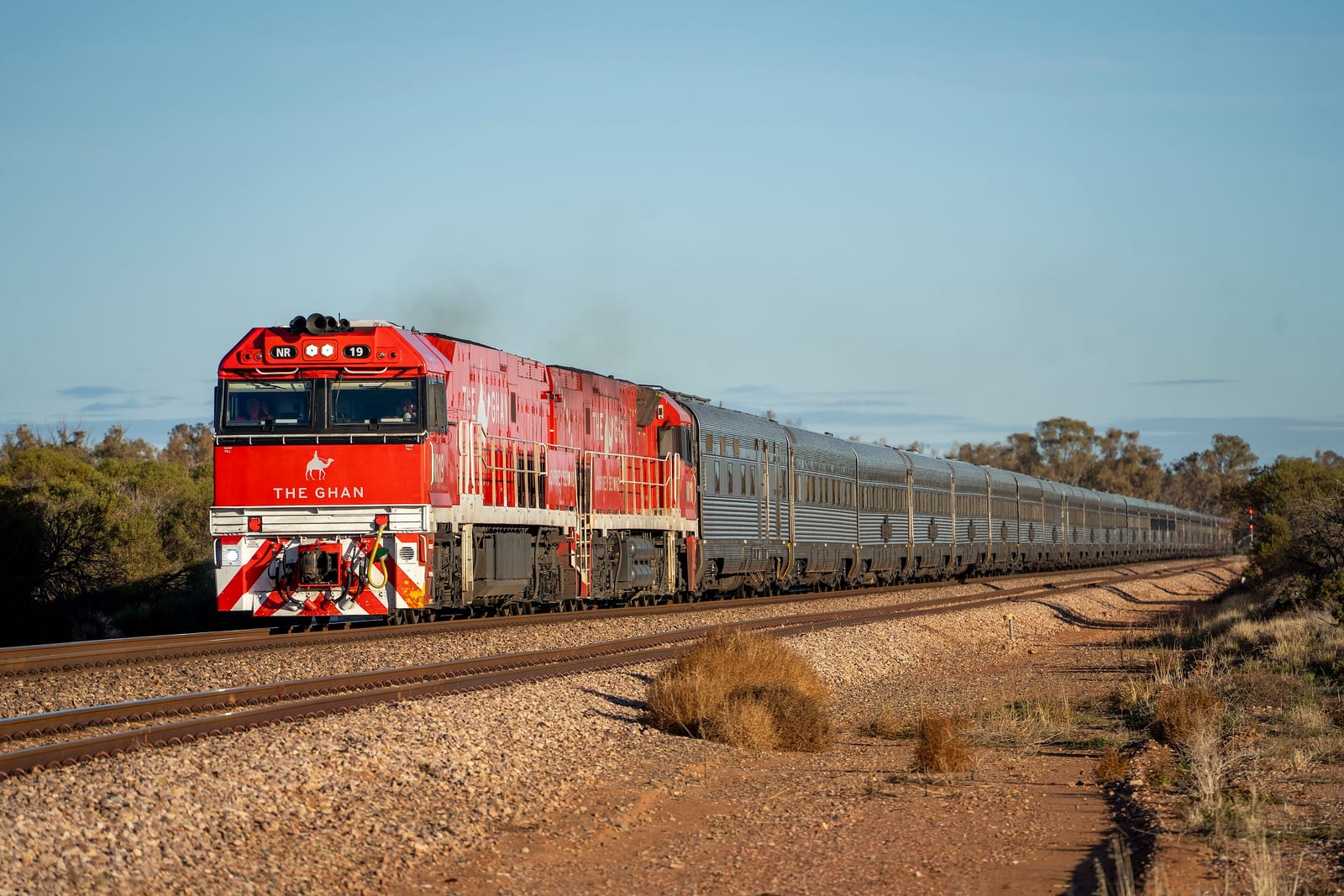
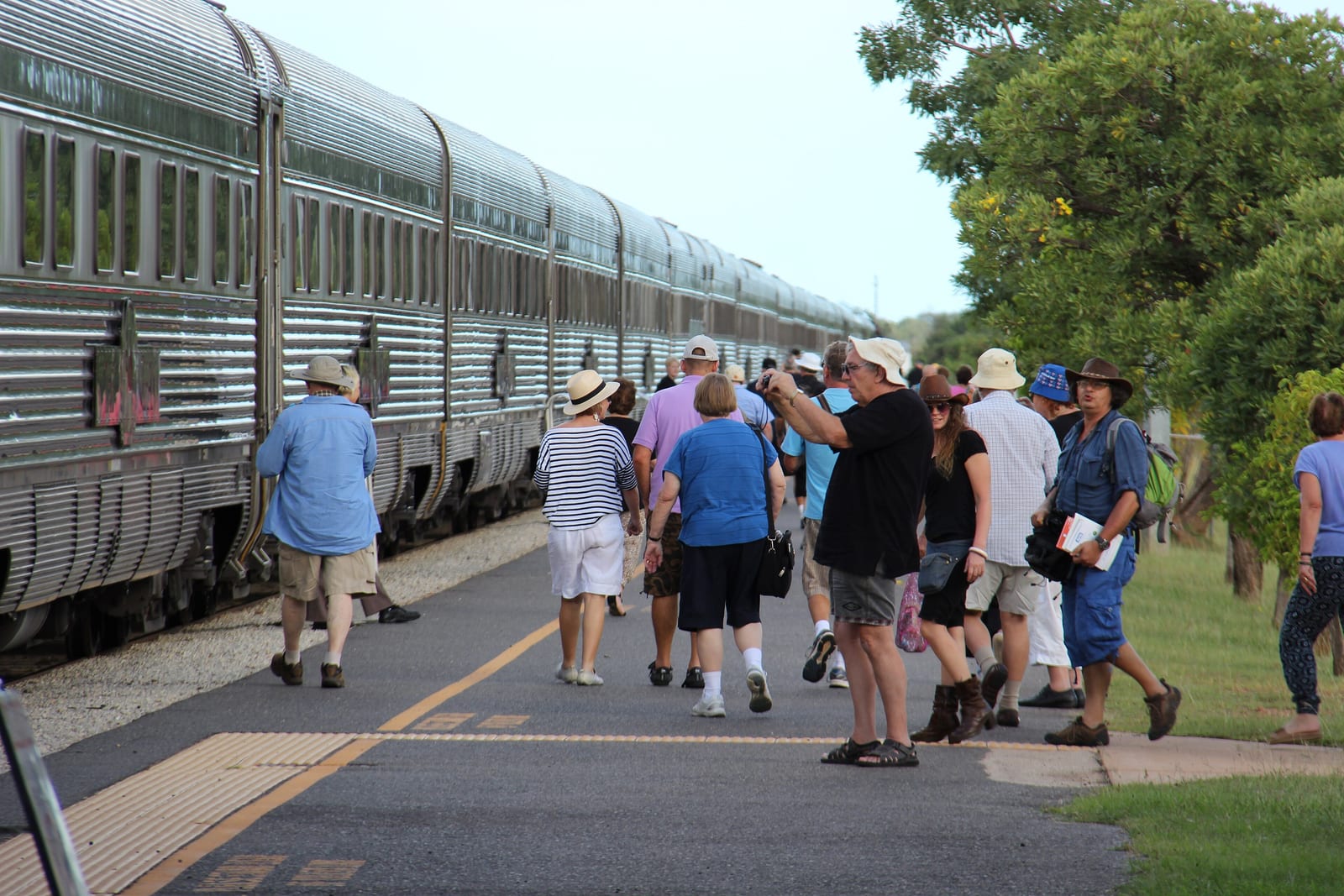
The Ghan. There is a camel on the side of every carriage.
It runs 2,979 kilometres from Adelaide on the southern coast to Darwin on the northern one, straight up through the centre of Australia — and it takes 53 hours and 15 minutes, which is two nights aboard, because the timetable includes long stops for getting off and looking at things.
The history is the best part, and it is faintly absurd. The first Ghan ran on 4 August 1929, reaching Alice Springs — and then it stopped there. For seventy-five years. The plan had always been Darwin; the money, the will and the war never quite lined up. The rails did not reach Darwin until 3 February 2004, which Wikipedia records with a straight face as coming "after 126 years of planning".
A hundred and twenty-six years. Australia spent longer intending to build this railway than most countries have had railways.
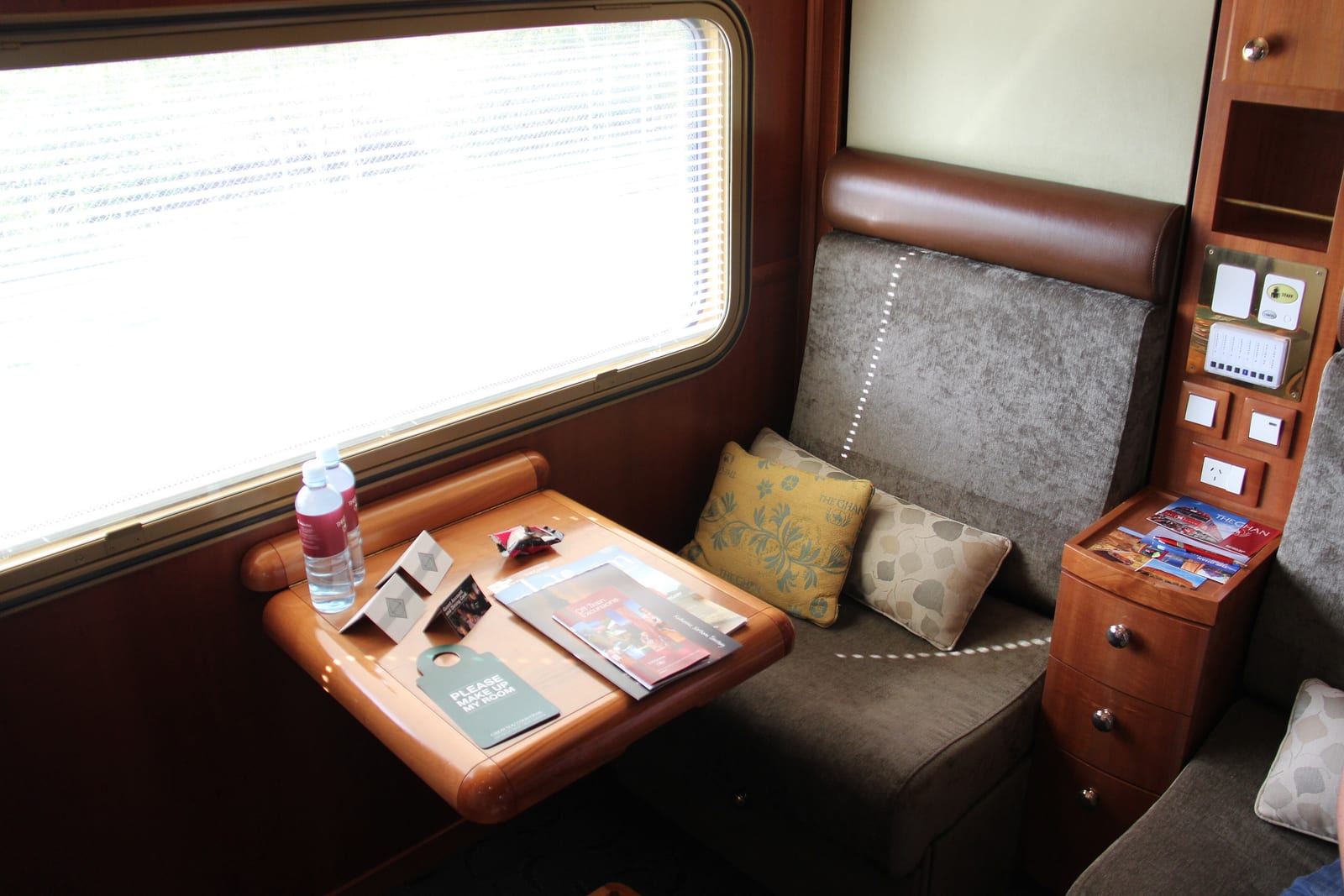
Now be clear about what you are buying, because it changed. Economy class was abolished in July 2016. Every passenger is now in a roomette or a twinette; there is no seat, no cheap option, no backpacker version. The Ghan is a luxury train run by Journey Beyond, once a week, and it is priced like one. Anything you read that suggests otherwise is out of date.
And what you get for it is emptiness. That is not a criticism — it is the entire product. For two days you cross country that has almost nothing in it: red dirt, scrub, sky, the occasional astonishing thing, and a very long silver train crawling up the middle of the largest empty space most people will ever see.
If that doesn't sound like a holiday, don't book it. If it does, there is nothing else quite like it.
The Journey
You leave Adelaide and within a couple of hours the argument is settled: there is nothing out here, and there is going to be nothing out here for a very long time.
That is the Ghan. Everything else — the cabin, the lounge, the food, the stops — is arrangement around the central fact that you are crossing 2,979 kilometres of a continent that is mostly empty, at ground level, slowly, with a window.
The country changes, but not quickly. South Australia's farmland gives out into saltbush, and the saltbush gives out into red. The colours are the thing nobody warns you about properly: the dirt is genuinely, violently orange, the scrub is grey-green, and the sky is a size that photographs cannot hold. Occasionally there is a cutting, a bridge, a siding with a name and no town attached to it. Mostly there is distance.
Alice Springs is halfway, and it is the hinge of the whole story. For seventy-five years — from 1929 to 2004 — this was the end of the line. The Ghan came up from Adelaide, arrived at the Alice, and stopped, because the rest of the plan hadn't happened yet. It is still the only town of any consequence for hundreds of kilometres in any direction, and the train's longest stop is here.
North of it you are on rails that did not exist when most of the passengers were born. The Darwin extension opened on 3 February 2004, and it changed the Ghan from a line into a crossing.
And then the country changes again, properly this time. The centre gives way to the Top End: the red goes, the green comes, the air thickens, and by the time you reach Darwin you are in the tropics, on the north coast, about as far from Adelaide in feel as you can get without leaving the country.
Onboard, the shape of the day is simple. You eat. You sit in the lounge car and talk to people who have also elected to spend two days crossing a desert by train, which is a decent filter. You get off at the scheduled stops for the off-train tours — these are built into the 53h 15m and are a large part of why it takes so much longer than the distance implies. And you look out of the window, for hours, at nothing, which turns out to be the thing you remember.
Two nights. One train a week. Nearly three thousand kilometres, straight up the middle of nowhere — on a railway that took a hundred and twenty-six years to make up its mind.
Along the route
Tomoyn / Wikimedia Commons · CC BY 4.0A hundred and twenty-six years late
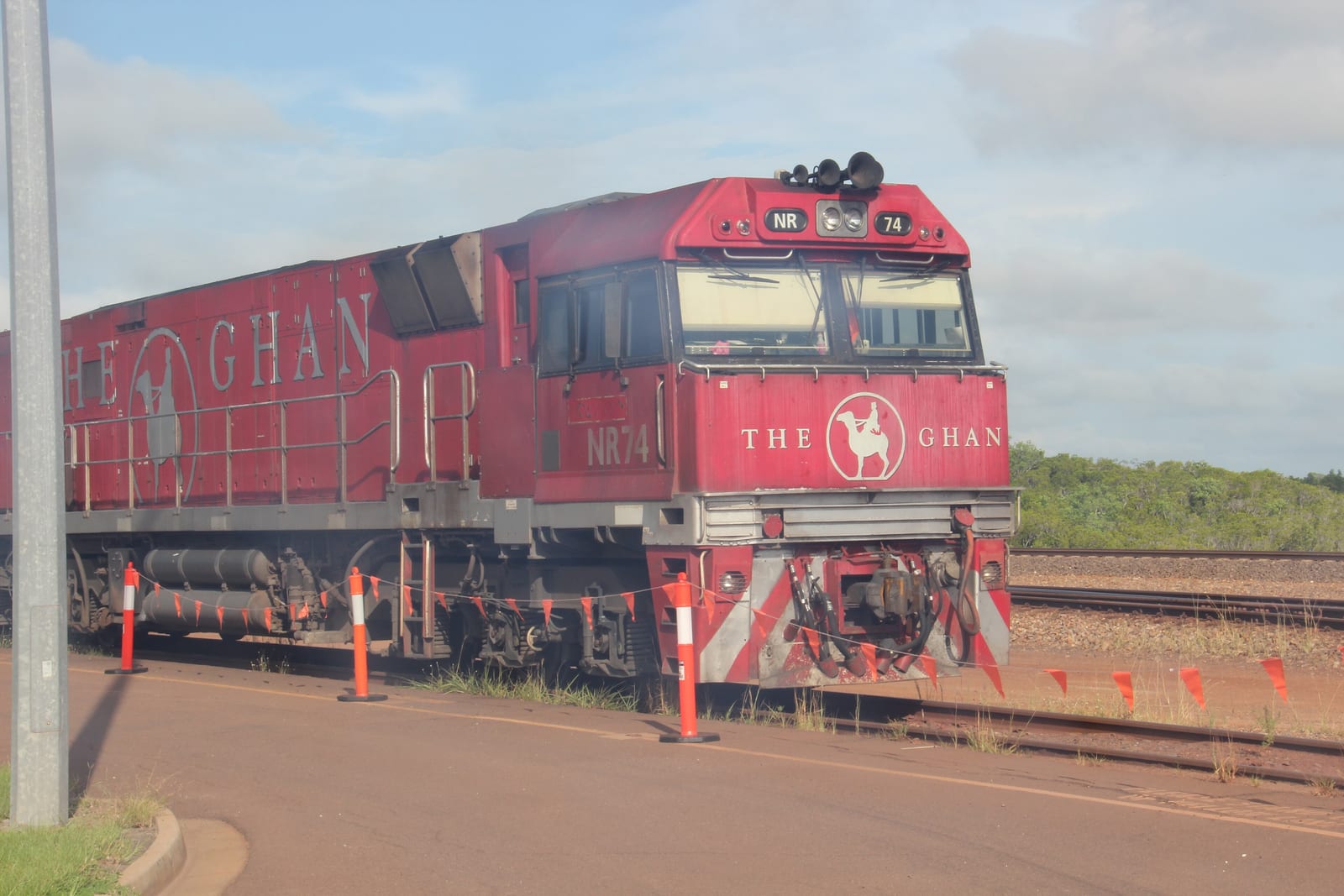
The railway reached Alice Springs in 1929. It reached Darwin on 3 February 2004 — which Wikipedia records, beautifully, as coming "after 126 years of planning". Australia spent more than a century intending to finish this line. Then it did.Beau Wade / Wikimedia Commons · CC BY 2.0Named after camels
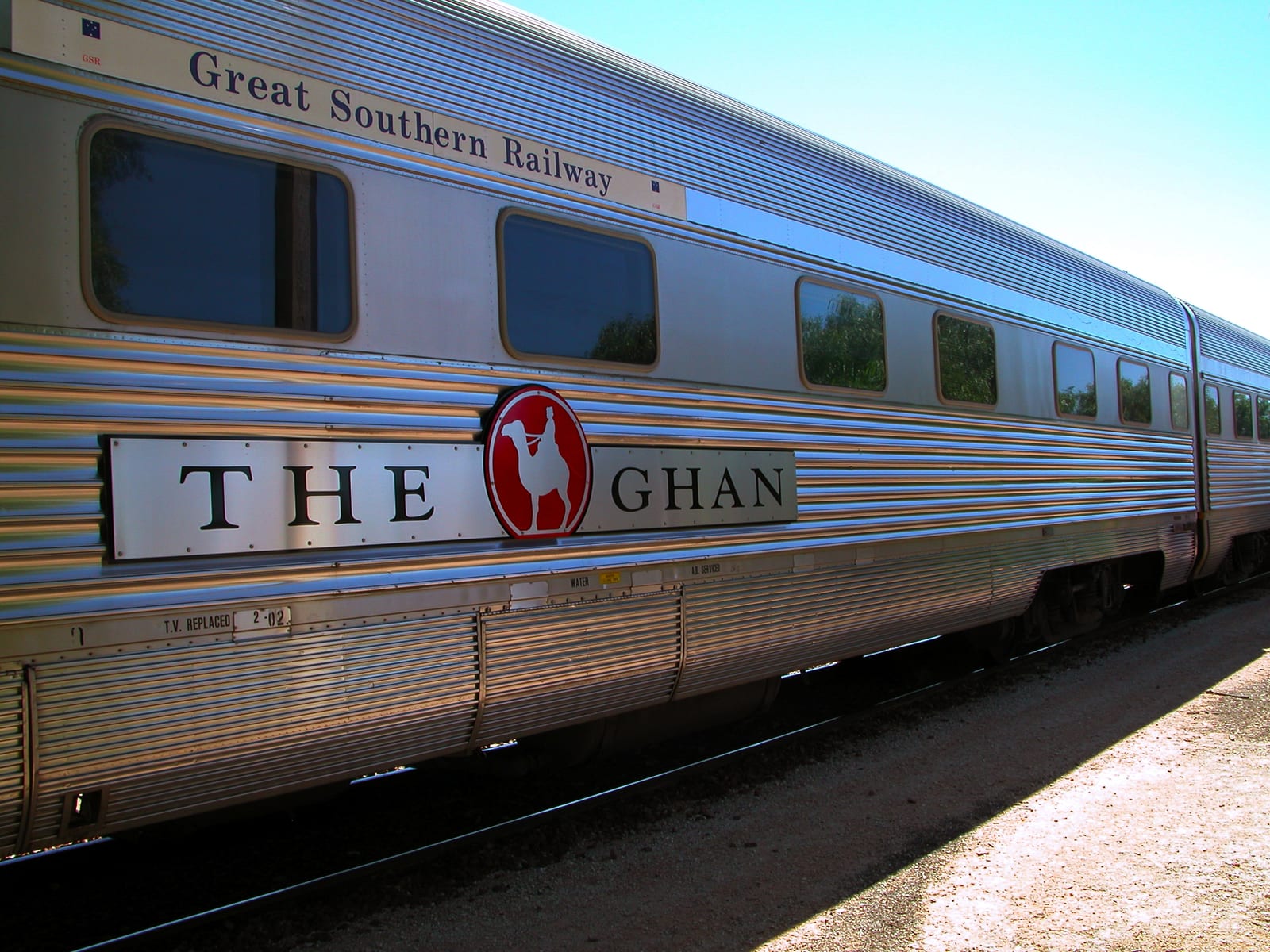
Before the railway there were Afghan cameleers — men brought out in the late 1800s with their camels because horses could not do what the interior required. The train is named for them, and there is a camel on the side of every carriage.Tips For Travellers / Wikimedia Commons · CC BY 2.02,979 km of not very much
This is the point and you should want it: two nights and 53 hours crossing the middle of Australia, most of it through country with nothing in it whatsoever. If empty does not appeal to you, this train is a very expensive mistake.A bit of history
Culture & experiences along the way
Tips For Travellers / Wikimedia Commons · CC BY 2.0The lounge car
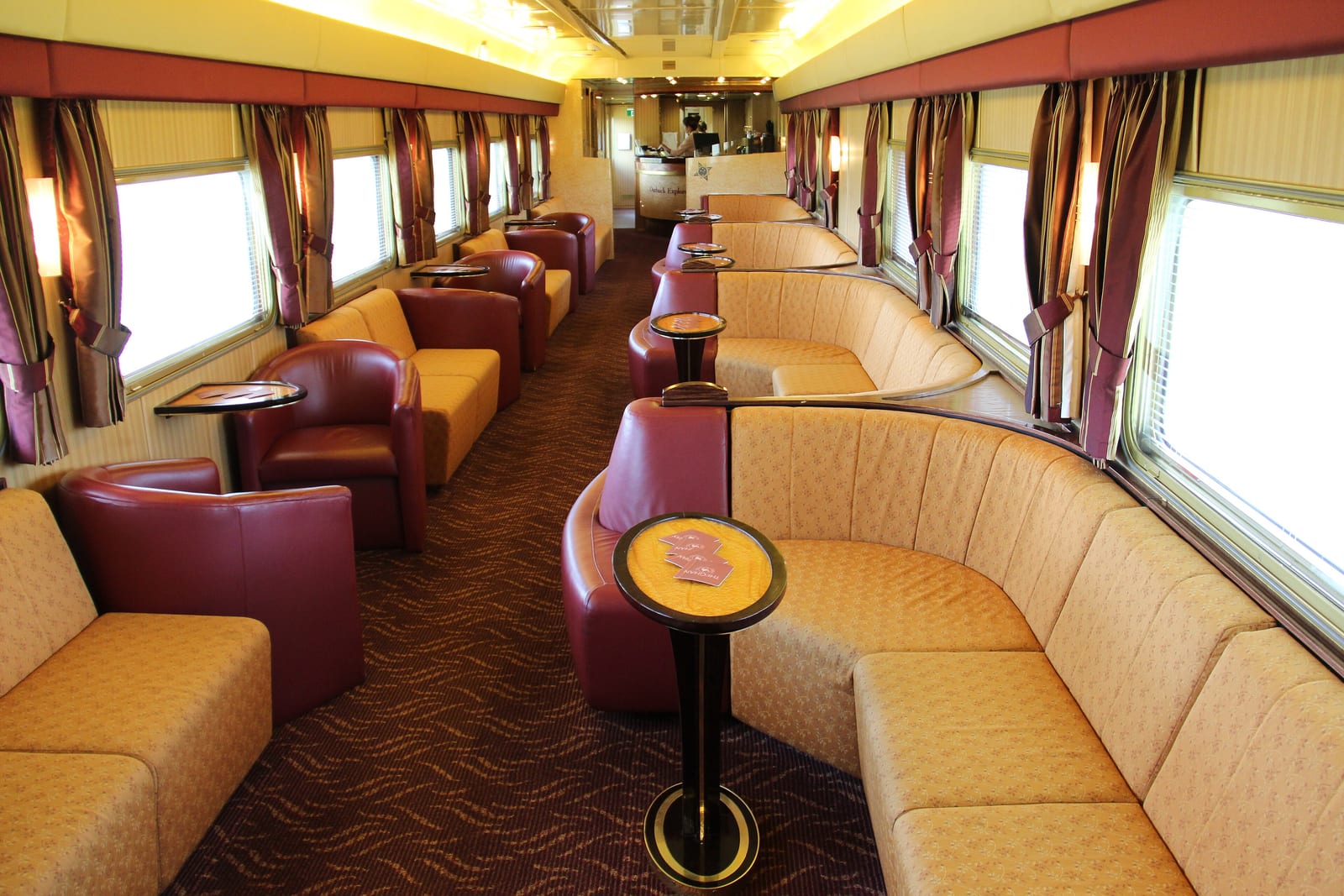
Where the journey actually happens. Two nights is a long time to look at scrub, and the Ghan's answer is a bar, an armchair and the other passengers — who have, by definition, all chosen to spend two days crossing a desert by train.Tips For Travellers / Wikimedia Commons · CC BY 2.0Getting off in the middle
The 53h 15m in the timetable includes long stops for off-train tours — which is why it takes so much longer than the distance suggests. What's on offer varies by season and departure, so check what your date actually includes before you book it.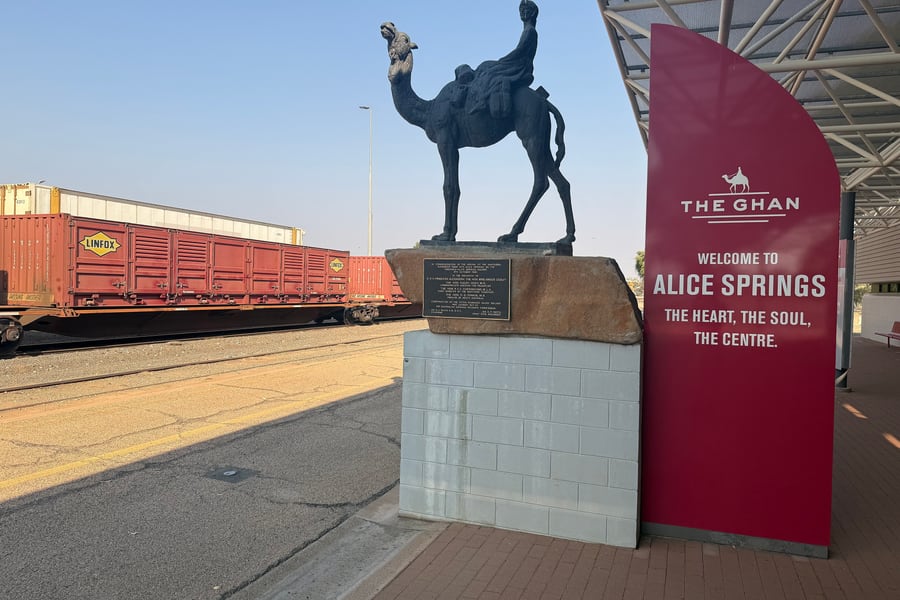 DaHuzyBru / Wikimedia Commons · CC BY-SA 4.0 · cropped
Alice Springs, halfway
The line's original terminus, reached in 1929 and its end of the line for seventy-five years. It is still the only town of any size for a very long way in any direction, and the train's longest stop.Timetables
One or two trains a week, two nights aboard, and a timetable that is mostly a formality — this is a cruise that happens to have rails. The single hardest constraint on planning is that it runs only on fixed departure days by season, so work those out first.
Real 2026 departures (Journey Beyond — confirm before booking):
| Direction | Days & time | Season |
|---|---|---|
| Adelaide → Darwin | Sunday 12:15 | March–November |
| Wednesday 12:10 | April–October (extra) | |
| Darwin → Adelaide (Expedition) | Wednesday 10:00 → Adelaide Sat 10:50 | March–November |
| Saturday 09:00 → Adelaide Tue 11:50 | April–October (extra) |
The scheduled run is about 53 hours over 2,979 km — including long off-train stops for tours, which is why it takes far longer than the distance suggests.
Good to know:
- Work out the departure day first, then build the rest of the trip around it — in the shoulder months it may be once a week.
- There is no economy class — Gold and Platinum only since 2016.
- Season matters at the Darwin end. The Top End dry (roughly May–September) is when the north is comfortable and the tours run predictably.
- Check what your departure includes — the off-train experiences vary by date and are part of what you pay for.
Departure days/times as of the 2026 season. Confirm the current schedule with the operator — see the Tickets section below.
Tickets
Tickets come from Journey Beyond, which has run the Ghan since 2015. There is one train a week and it is not large, so this is a book-early proposition — months ahead for the dry season and for Platinum. Gold Service is a roomette or twinette with meals included, and since economy was abolished in July 2016 there is nothing beneath it. Platinum buys significantly larger cabins and a private lounge, which on a train where the cabin is most of your world for 53 hours is a more meaningful upgrade than the same money buys on a flight.
The off-train tours are part of the ticket and part of why the schedule is what it is, so check which ones your date includes. Almost everyone flies one way — plan that before booking the train, not after — and watch the season at the Darwin end, because the wet is a genuinely different proposition in the Top End.
Book your tickets
Gold Service
The standard cabin
A roomette or twinette sleeper with meals included — the entry level, and since economy was abolished in 2016 there is nothing below it. Book far ahead: it is one train a week and it is not a big train.
Book Tickets (opens in a new tab, on Journey Beyond)via Journey BeyondPlatinum Service
The wide one
Larger cabins, a private lounge and more space over two nights — which, on a train where the cabin is most of your world for 53 hours, is a more meaningful upgrade than it sounds. Priced accordingly.
Book Tickets (opens in a new tab, on Journey Beyond)via Journey BeyondRail Passes
No rail pass covers the Ghan. Interrail and Eurail are European schemes, and Australia is not among the 33 countries in Interrail's list of covered railway companies (opens in a new tab). Journey Beyond sells the Ghan as Gold or Platinum cabins with meals included, one train a week.
Checked October 2026 against Interrail's list of covered railway companies (opens in a new tab).
Places to Visit
The Ghan connects two cities that could hardly be less alike, with one town in the middle and a great deal of nothing around it.
⚠️ Uluru is not on this railway. Worth saying plainly, because a lot of people assume it is. It lies well west of Alice Springs and needs a flight, a drive or a tour. The Ghan will not take you there.
A note on the Top End. The north has a wet season and a dry, and they are not a nuance — they are two different places. Roughly May to September is the dry, and it is when the north works. Plan the whole trip around that rather than around the train.
 DXR / Wikimedia Commons · CC BY-SA 4.0 · cropped
Adelaide
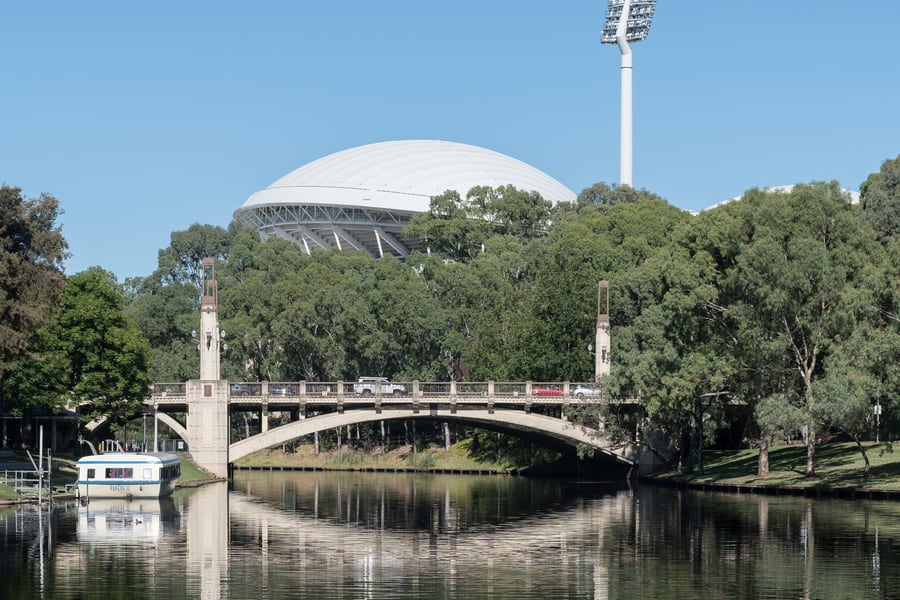
The southern terminus, and the natural place to spend a couple of days before committing to two nights on a train. It is a compact grid ringed by parkland, with the Torrens running through the middle and the Adelaide Oval just across the water. South Australia's wine country and the Adelaide Hills start about half an hour out, which makes the city an easy base rather than only a departure point.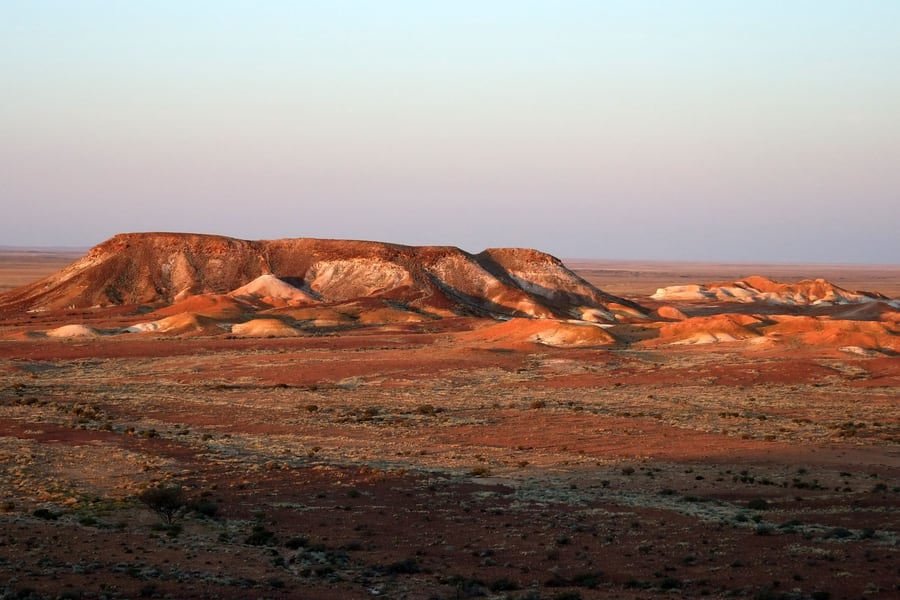 Sliverinverted / Wikimedia Commons · CC BY-SA 4.0 · cropped
Coober Pedy & the Breakaways
Opal was found here on 1 February 1915, and the town that grew around it went underground: dugouts cut into the hillsides stay cool while the surface bakes. The name comes from the Kokatha kupa piti. Outside town, the Breakaways are flat-topped mesas that turn orange at either end of the day. Note that this is an excursion on the four-day Ghan Expedition only, reached from Manguri siding — not a stop on every service.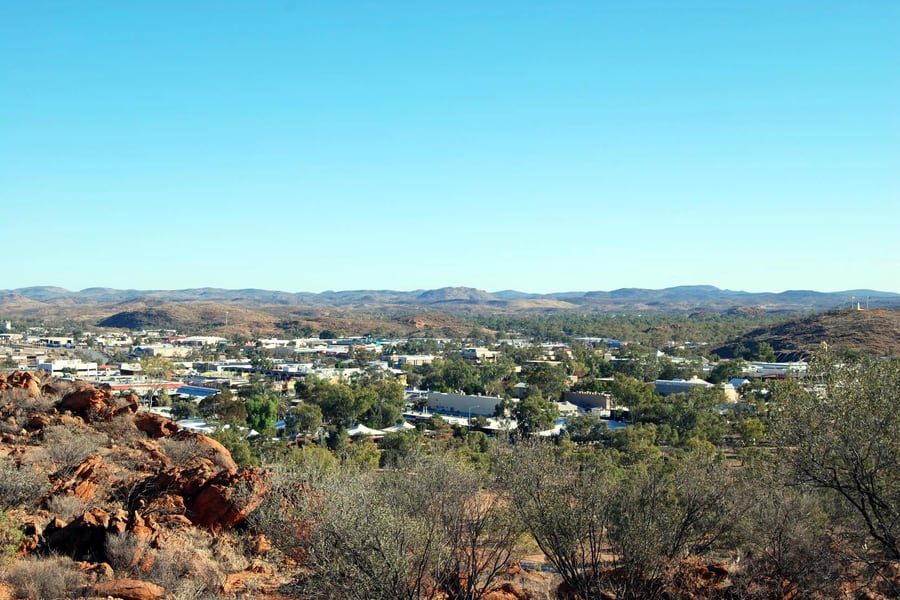 Richard Fisher / Wikimedia Commons · CC BY 2.0 · cropped
Alice Springs
Halfway, and the hinge of the whole story: the line's terminus from 1929 until 2004. Mparntwe to the Arrernte, it began as a telegraph station in 1872 and took its English name from Alice, Lady Todd. The town straddles the usually dry Todd River at 545 metres, hemmed in by the MacDonnell Ranges — whose gorges and waterholes, and the 223-kilometre Larapinta Trail, are the real reason to stay. The train's longest stop.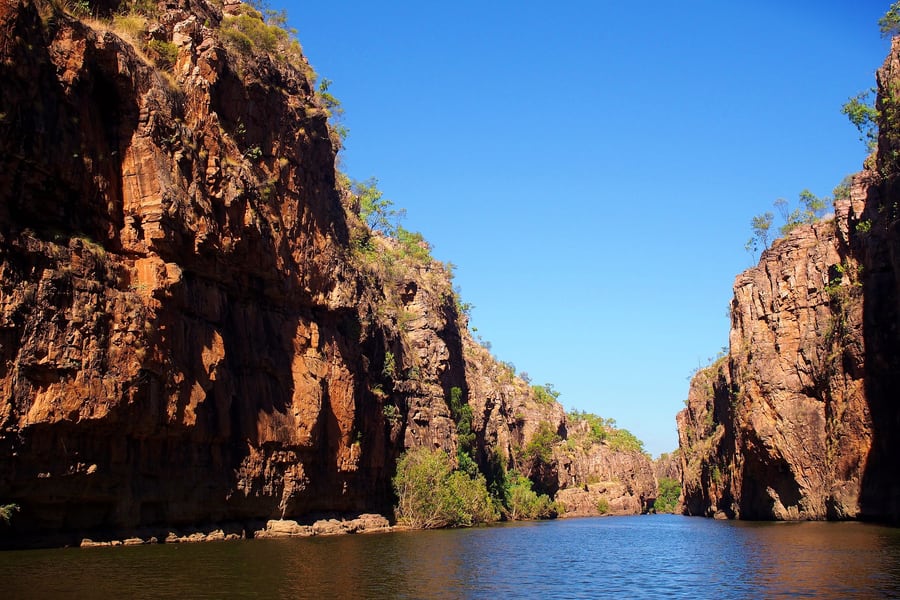 Reesa sc / Wikimedia Commons · CC BY-SA 4.0 · cropped
Katherine & Nitmiluk
Katherine is the Top End's crossroads, and 23 kilometres northeast of it is the reason to stop: Nitmiluk, thirteen sandstone gorges strung along the Katherine River. The name is Jawoyn for the place of the cicada dreaming, and the Jawoyn are its owners. Flat-bottomed boats run as far as the fifth gorge; you can also canoe it. Swimming is a dry-season activity — saltwater crocodiles come in on the wet-season flood.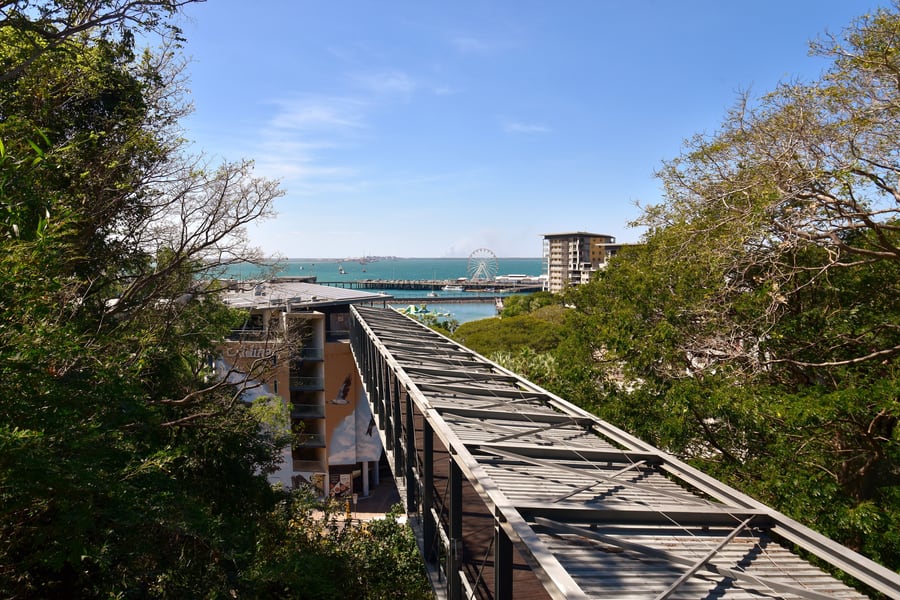 Bahnfrend / Wikimedia Commons · CC BY-SA 4.0 · cropped
Darwin
Small, hot and tropical, and closer in feel to Southeast Asia than to Sydney. Darwin has been destroyed twice in living memory — bombed by 188 Japanese aircraft on 19 February 1942, killing at least 243, then flattened by Cyclone Tracy on Christmas Day 1974, which took out more than 70 per cent of its buildings and forced the biggest airlift in Australian history. The rebuilt Waterfront Precinct is where the city now eats.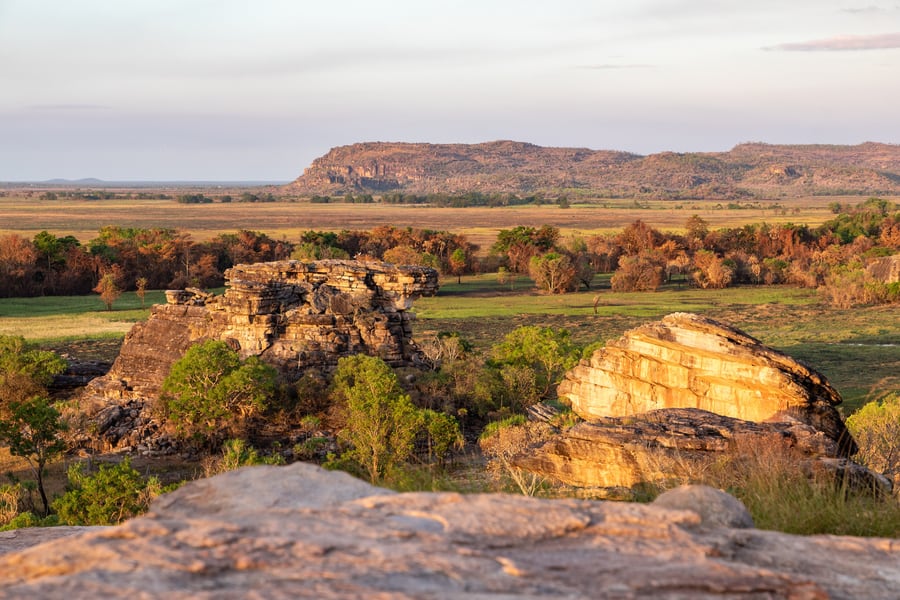 Dietmar Rabich / Wikimedia Commons · CC BY-SA 4.0 · cropped
Kakadu
A hundred and seventy-one kilometres southeast of Darwin, and nearly 20,000 square kilometres — about the size of Wales. Kakadu is World Heritage listed for both its landscape and its culture, a rare double, and the rock art at Ubirr and Nourlangie includes work up to 20,000 years old. The short climb at Ubirr ends on a rock platform above the Nadab floodplain. Give it days rather than hours, and go in the dry.Where to Sleep
The train is the hotel, for two nights, and there is no alternative — every passenger is in a cabin, because economy was abolished in July 2016.
So the only real decision is Gold or Platinum, and on this train it matters more than usual. A roomette or twinette in Gold is perfectly comfortable and includes your meals; Platinum buys a substantially bigger cabin and a private lounge. On a two-hour train, the upgrade is a luxury. On a 53-hour one, where the cabin is most of your world and there is nothing outside the window but scrub, the extra space is a different kind of purchase. Decide honestly how much time you spend in rooms.
At either end:
- Adelaide — a straightforward city to sleep in, with the full range and no particular trap. Arrive the night before; this is not a departure to gamble a connecting flight on.
- Darwin — hot and humid, and the hotels are built for it. Whatever you book, book air conditioning and don't be brave about it.
- Alice Springs — you can break the journey here rather than ride straight through, and it is the only place on the route where that's an option. It turns one long train into two shorter ones and gives you the centre properly. Worth considering if two consecutive nights aboard sounds like a lot.
The practical warning is the same as the ticketing one: one train a week. If you plan to sleep in Alice Springs and continue, you are not waiting a night — you are waiting seven. Almost nobody does this. Plan to ride it through, or plan to fly one leg.
Questions or corrections
Planning this trip and stuck on something, or spotted a time, fare or detail that has changed? Send us a message about The Ghan. We read every one, and we update this page when something has changed.