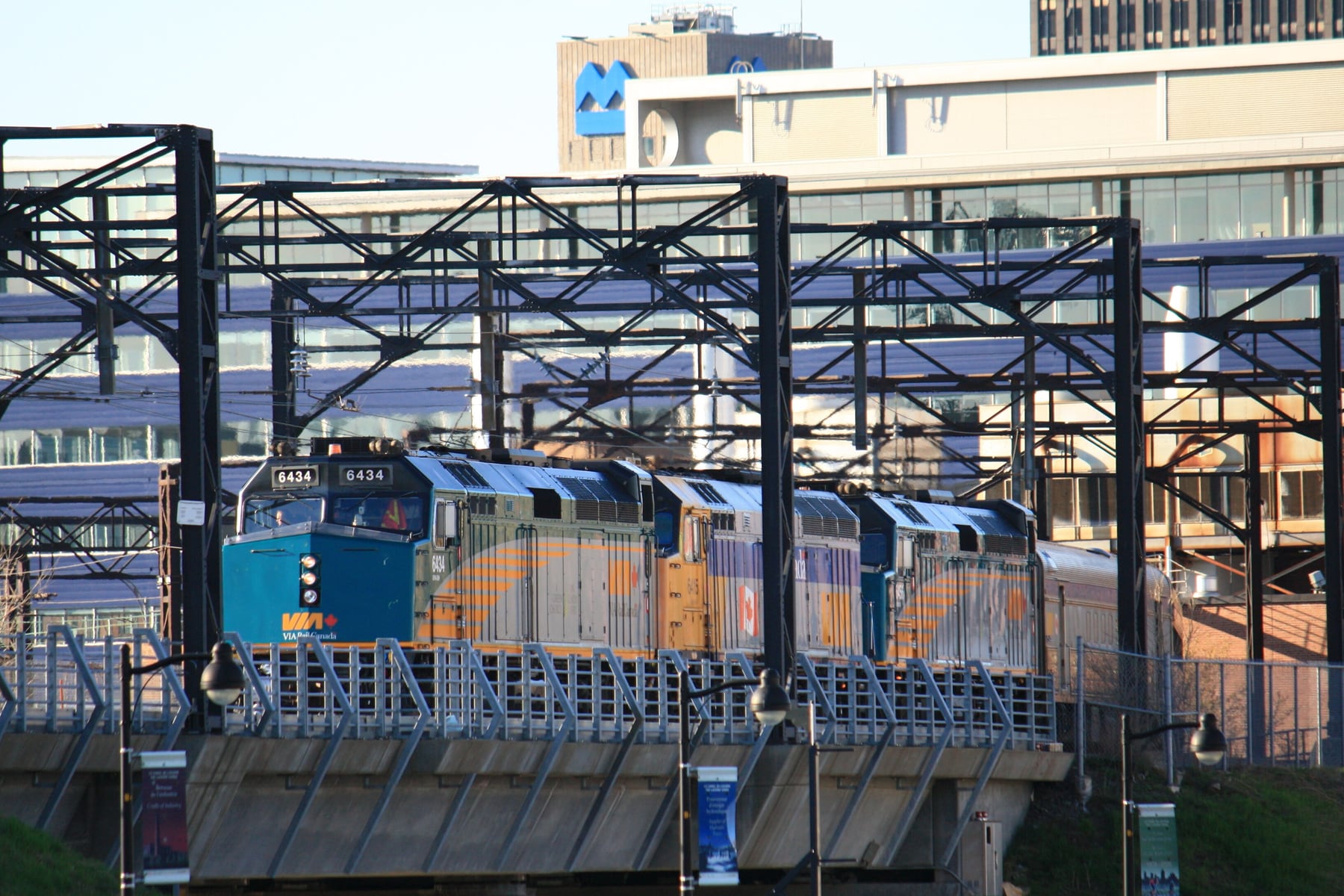
The Ocean
...some guy / Wikimedia Commons · CC BY 2.0 · cropped
- Distance1,352 km
- Duration23 hours
- Best seasonAll year · 3 departures a week
Introduction
This train exists because two provinces made it the price of joining a country. When Nova Scotia and New Brunswick agreed to Confederation in 1867, they wrote a railway into the constitution: section 145 of the British North America Act obliged the new government of Canada to begin, within six months of union, a line connecting the St Lawrence with the city of Halifax. Sandford Fleming — the engineer who would later give the world its standard time zones — was put in charge of building it, and finished the through route on 1 July 1876.
He did not take the short way. A line straight across central New Brunswick would have run close to the border with Maine, and with the American Civil War barely over, that was considered indefensible. The Intercolonial was pushed inland instead, down the Matapédia Valley and along the north shore of Chaleur Bay, adding hundreds of kilometres to keep the rails away from a possible invader. That decision is why the Ocean still takes twenty-three hours to cover 1,352 km, and why the best of its daylight is spent beside water on the Acadian coast rather than in the forests of the interior.
The Ocean Limited itself first ran on 3 July 1904, dropped the Limited from its name in 1966, and passed to VIA Rail in 1978. Today it leaves Montréal three evenings a week, runs through the night along the St Lawrence, wakes somewhere in the Gaspé mountains, and reaches Halifax the following evening. It is VIA Rail's only service in the Maritime provinces.
The Journey
The Ocean is the only train in Canada made of European stock, and the reason is one of the odder episodes in modern railway history. In the 1990s a consortium ordered a fleet of sleeping cars, coaches and diners from Metropolitan-Cammell for Nightstar, an overnight service meant to run through the Channel Tunnel between Britain and the Continent. The cars were built in 1995 and 1996 and put through 400,000 km of test running in Europe and Morocco, VIA's fleet notes say — and then the service was cancelled and never carried a passenger.
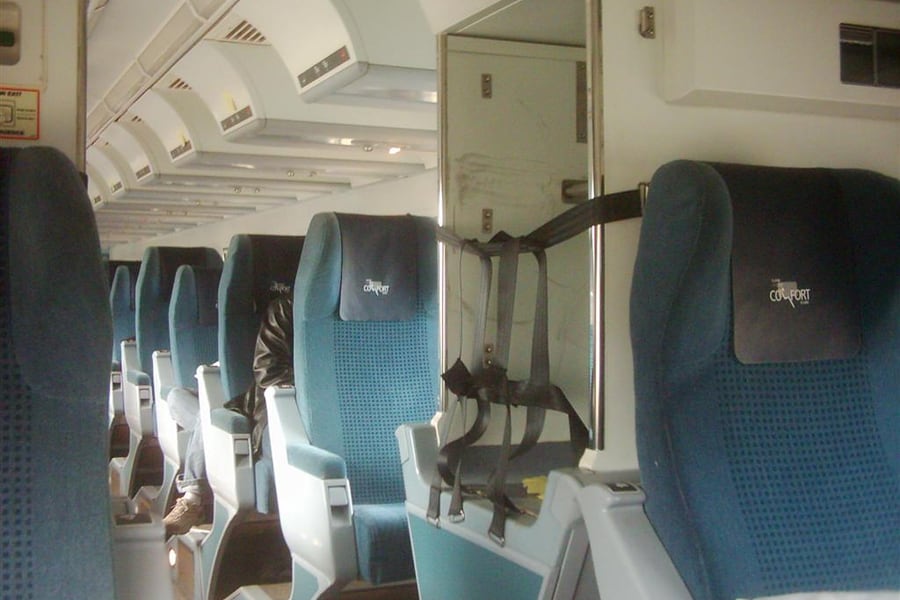
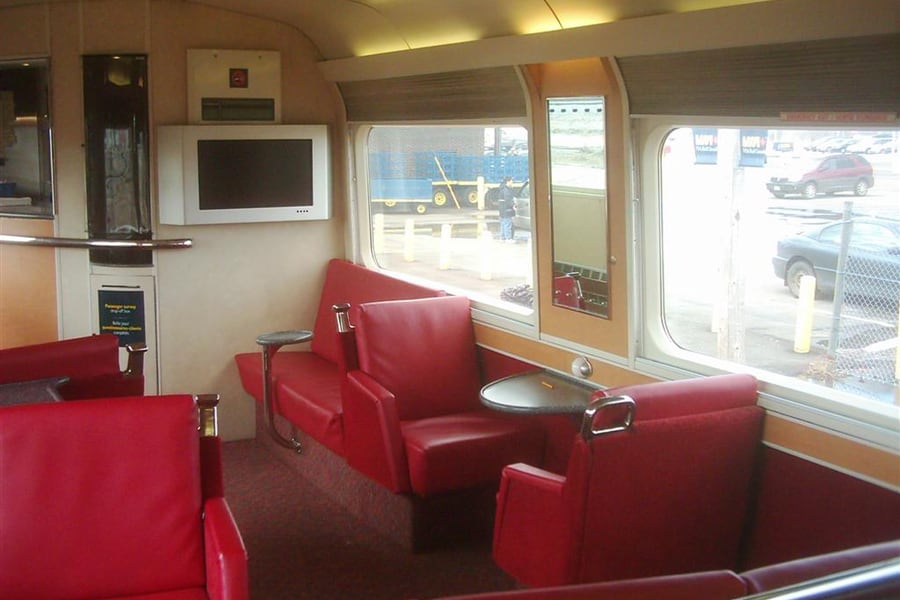
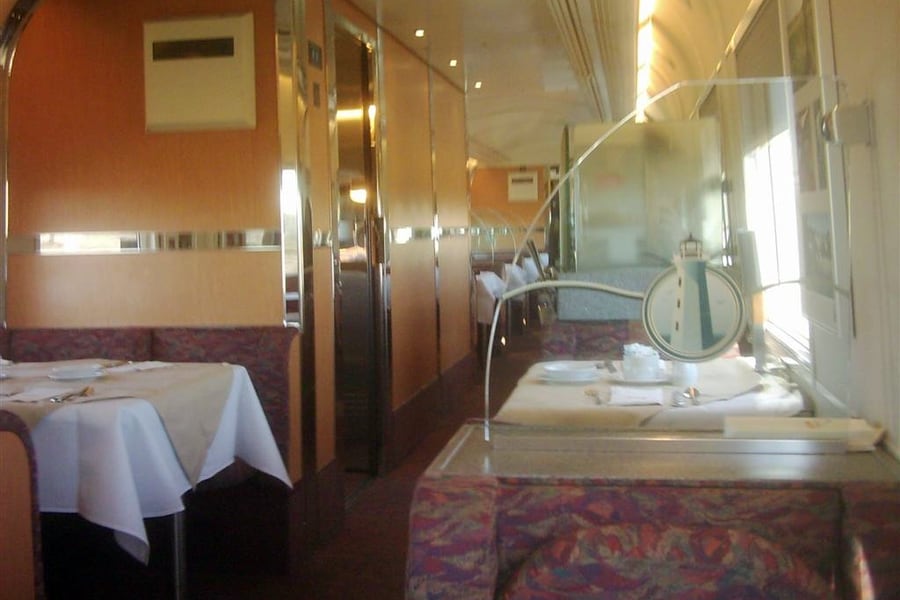
VIA Rail bought all 139 of them in December 2000. Only sixty-four were finished; the remaining seventy-five arrived as shells and were assembled in Canada. Renamed the Renaissance fleet, they entered service in the summer of 2002, and they are what you ride today: 7200-series coaches with forty-eight seats and overhead lockers modelled, by VIA's own admission, on a long-haul airliner cabin; 7500-series sleepers with ten twin rooms, a lavatory in every one and a shower in half of them; three dining cars; and twenty service cars with a lounge and a takeout counter. Some of the galley equipment still carries the logo of the British rail company that ordered the cars and then cancelled the purchase.
Two incompatible fleets, joined
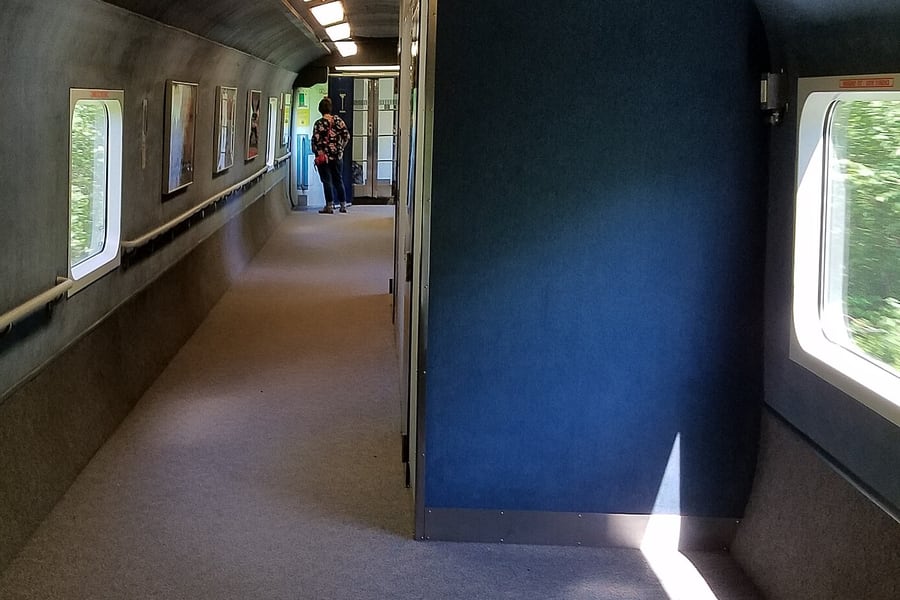
Renaissance cars are built to British loading gauge with European couplers, which means they cannot simply be coupled to the North American stock VIA runs everywhere else. The answer was the transition car: three Renaissance baggage vehicles — 7000, 7006 and 7010 — converted in 2005 into 7600, 7601 and 7602, each a baggage shell with a long carpeted corridor, a standard coupler at one end and a European one at the other. They were built for this train and nothing else.
What the Ocean does not have is a dome. VIA says so on the route page in plain words, and it is the sharpest difference between this train and The Canadian: no Skyline, no Park car, no glass roof. The view comes from the window beside your seat and from the service car lounge, which is open to everyone on the train and is where the Wi-Fi and the affordable food are.
The shape of the ride
Two classes are sold. Economy is a reclining seat with a power socket and access to the lounge. Sleeper Plus is a berth or a cabin for two, with meals in the dining car, a shower, lounge access and the bed made up for you. The dining car takes Sleeper Plus passengers first and runs a reservation system, and you will be seated with other passengers — this is a communal room, not a private one.
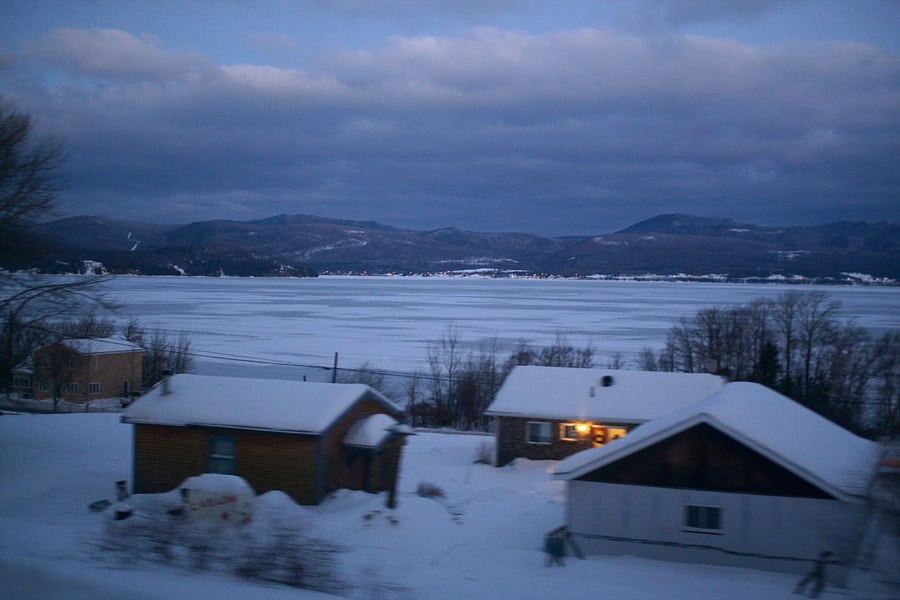
Leaving Montréal at 18:30 means the whole of Québec passes in darkness. That is not the loss it sounds: the compensation is that you wake into the Matapédia Valley and get the entire Acadian coast of New Brunswick in daylight — Chaleur Bay from Campbellton to Bathurst, the Miramichi, the run across the Tantramar marshes and into Nova Scotia. Eastbound the pattern reverses. Train 15 leaves Halifax at 11:30 in the morning, so Nova Scotia and the New Brunswick shore come first, in full light, and Québec is the night.
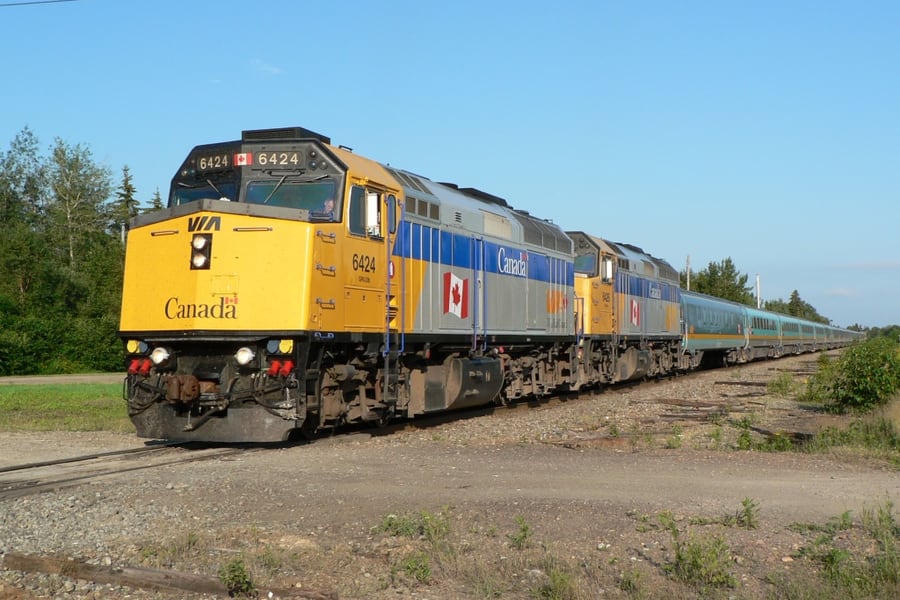
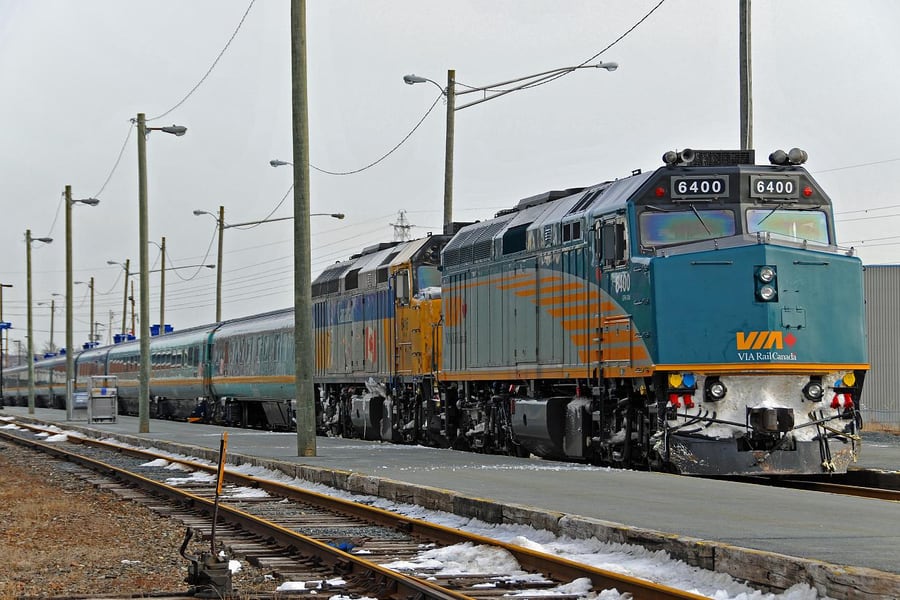
The traction is unchanged from the rest of VIA's long-distance network: a pair of F40PH-2s, 3,000 horsepower each, built by General Motors between November 1987 and April 1989. Fifty-three were built and VIA still runs all fifty-three.
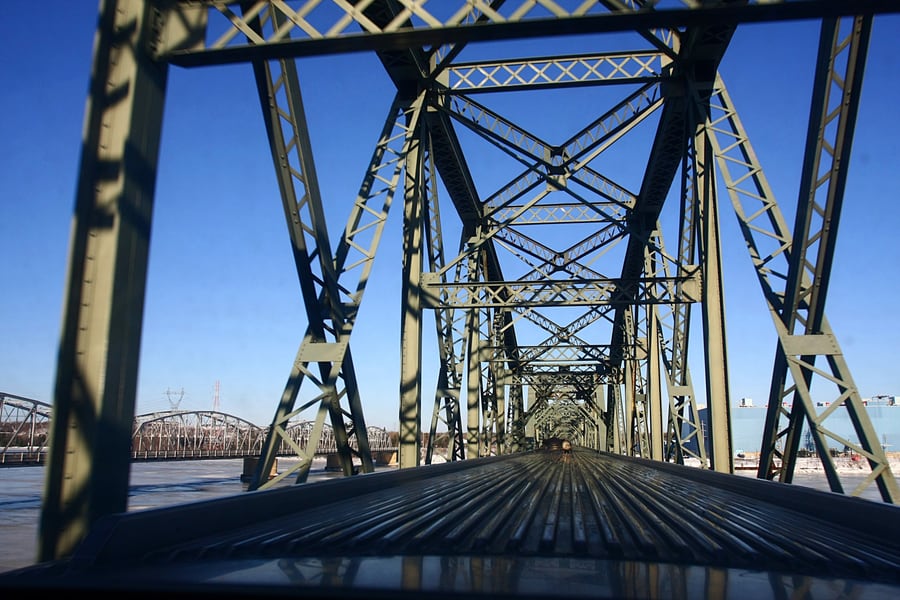
Along the route
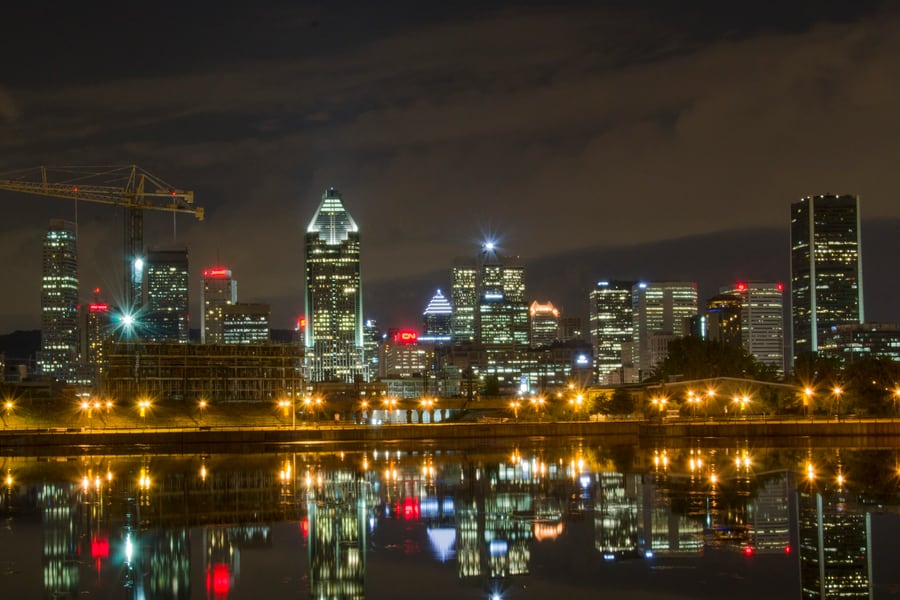 Matias Garabedian / Wikimedia Commons · CC BY-SA 2.0 · cropped
Out of Montréal in the dark
The train leaves Central Station at 18:30 and is over the St Lawrence within a quarter of an hour, calling at Saint-Lambert beside the seaway lock that opened in 1959. Québec goes by unseen: Drummondville, Sainte-Foy at 21:48, then the south shore all night.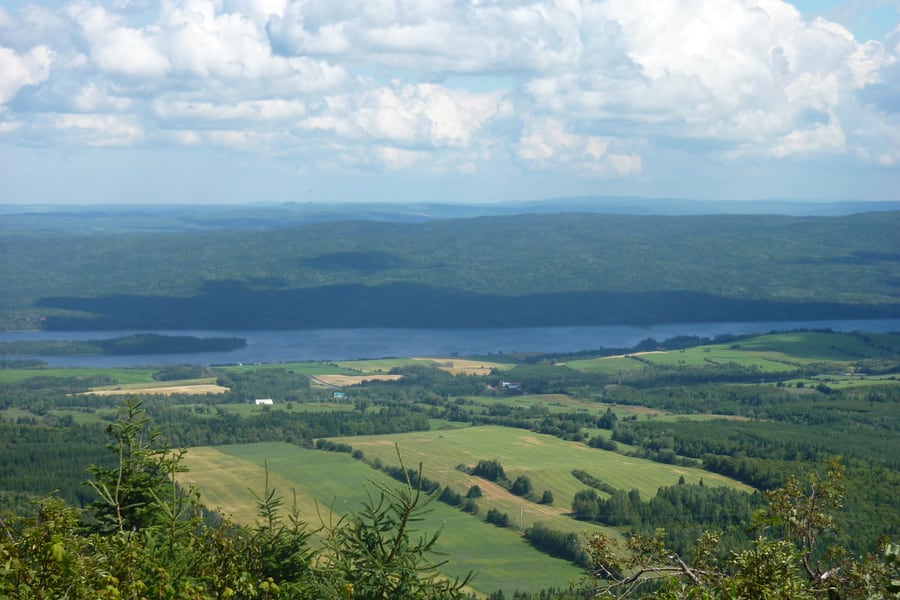 Amqui / Wikimedia Commons · CC BY-SA 3.0 · cropped
Dawn in the Matapédia Valley
Around Mont-Joli the line turns inland and drops through the Matapédia Valley, following one of the best salmon rivers in North America between the mountains that edge the Gaspé peninsula. The clocks go forward an hour at the New Brunswick border.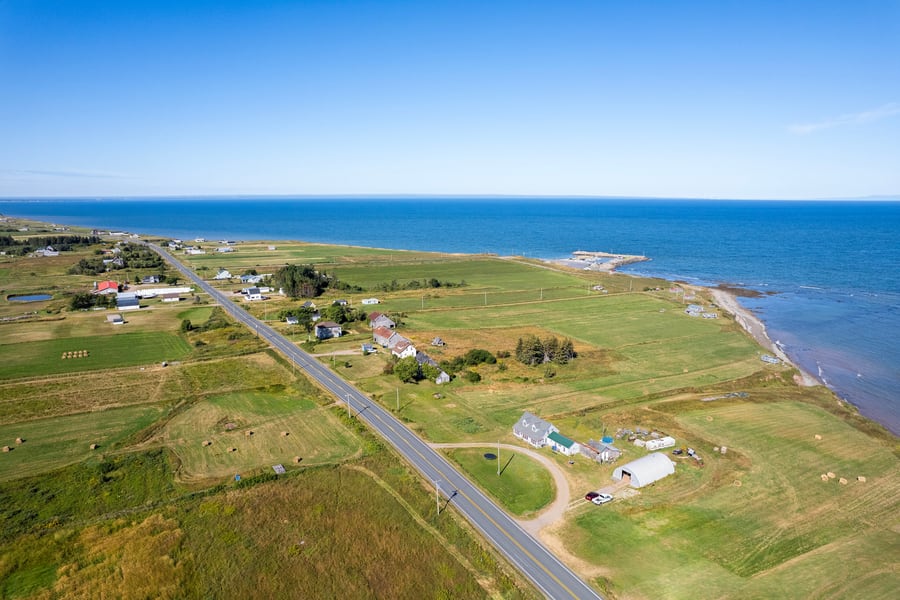 Gabriel Picard / Wikimedia Commons · CC BY-SA 4.0 · cropped
The Acadian shore
From Campbellton the railway runs the length of Chaleur Bay through Charlo, Jacquet River and Petit-Rocher to Bathurst — beaches, lagoons and, VIA reckons, some sixty lighthouses between here and Moncton. This is the best of the daylight. Larry / Wikimedia Commons · CC BY 2.0 · cropped
Across the isthmus into Nova Scotia
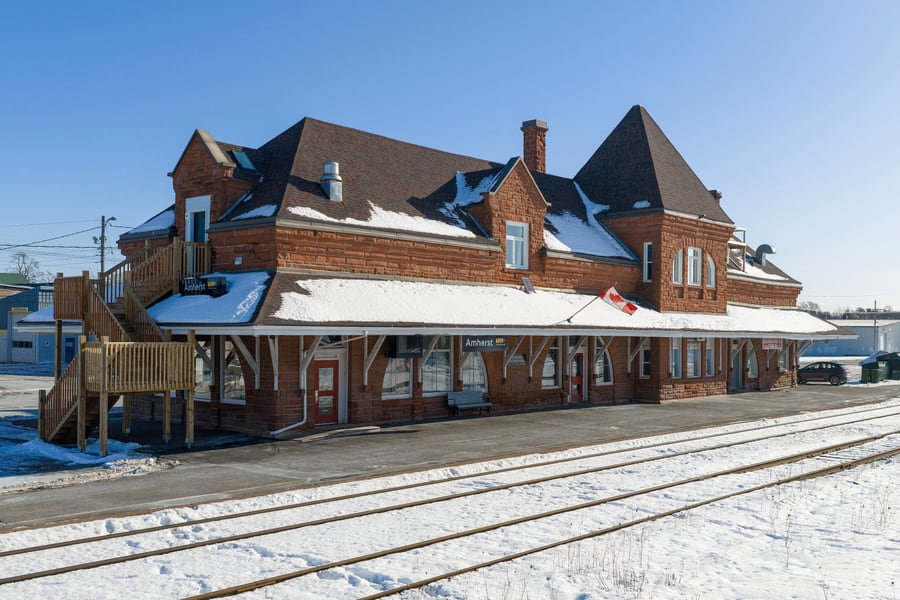
Past Moncton the train crosses the Tantramar marshes on the Chignecto Isthmus, thirty kilometres of dyked salt meadow that is all that joins Nova Scotia to the continent. Sackville, then Amherst, then Truro and the Atlantic.A bit of history
Culture & experiences along the way
 Shawn M. Kent / Wikimedia Commons · CC BY-SA 4.0 · cropped
Where the deportation began
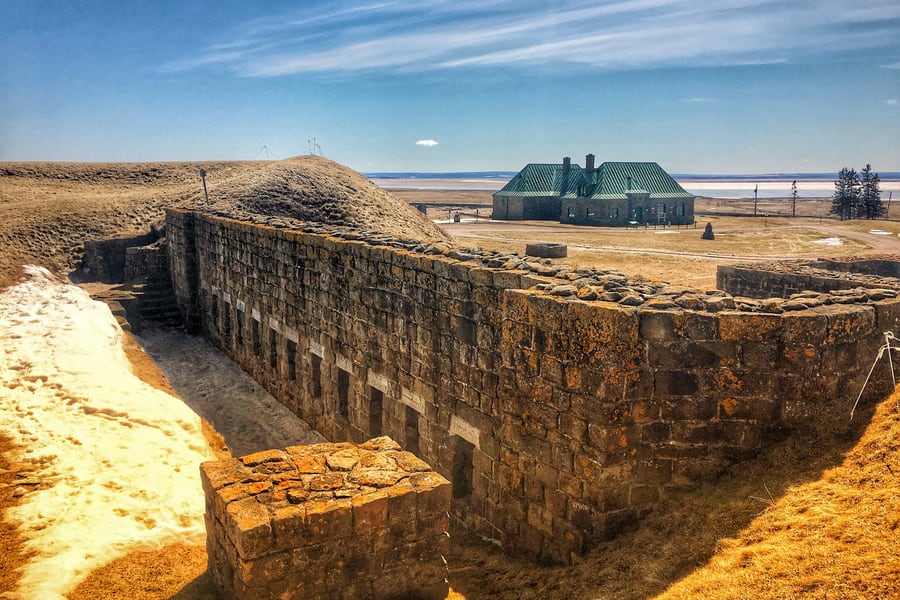
At Aulac, between Sackville and Amherst, Fort Beauséjour stands over the marshes. Built by France in 1751 on the colonial frontier, it fell to British troops in June 1755, and the expulsion of the Acadians followed within weeks. It is a national historic site now, and the train passes within sight of the ridge it sits on.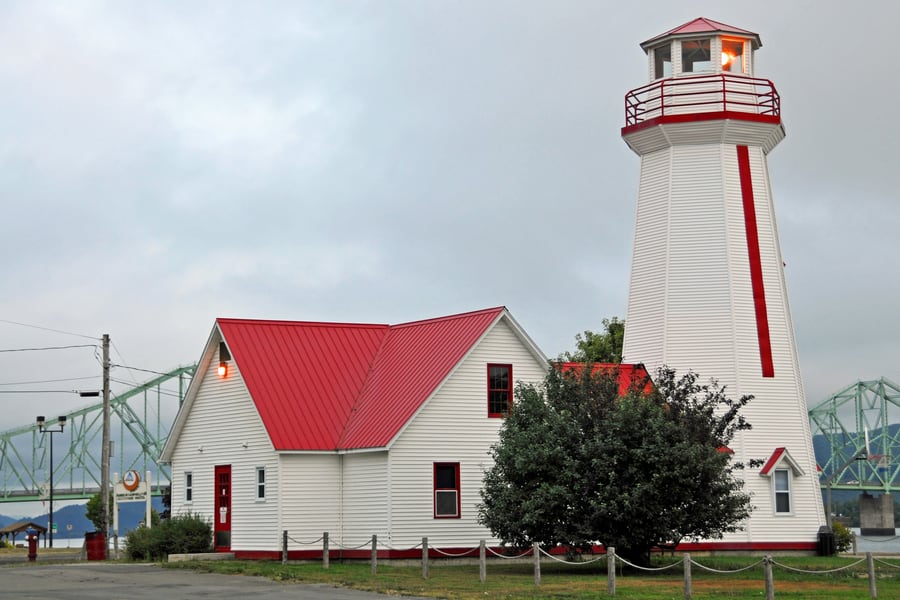 Dennis G. Jarvis / Wikimedia Commons · CC BY-SA 2.0 · cropped
Sixty lighthouses before Moncton
VIA's own description of this stretch tells passengers to count lighthouses, and there are about sixty of them between the Québec border and Moncton. The Campbellton range rear light, white with a red stripe, stands beside its keeper's cottage a few minutes' walk from the station where the train pauses ten minutes.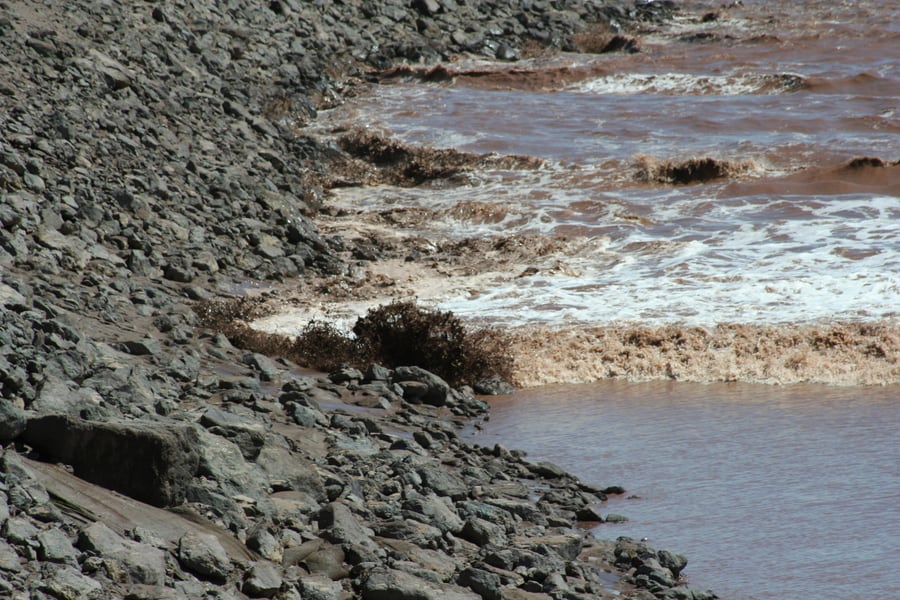 Auric / Wikimedia Commons · CC BY-SA 4.0 · cropped
The bore at Moncton
Twice a day the incoming Fundy tide reverses the Petitcodiac and pushes a wave upriver past the middle of Moncton. The train stands here twenty-five minutes westbound and fifteen eastbound — not long enough for the bore itself, but the riverfront park where people gather to watch it is a short walk from the centre.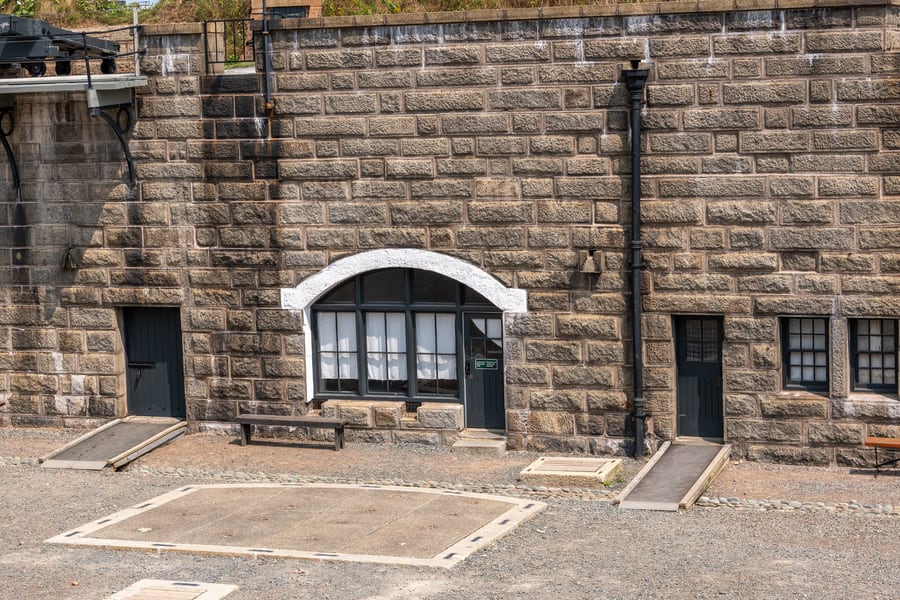 Dionysos1970 / Wikimedia Commons · CC BY-SA 4.0 · cropped
The noon gun on Citadel Hill
Halifax was founded as a garrison in 1749 and the star fort above the harbour still fires a gun at noon every day. The hill is a fifteen-minute walk uphill from the station, and from the ramparts you can see the whole harbour the town was built to guard.Timetables
The Ocean runs three times a week in each direction, all year. There is no summer timetable and no winter one — VIA publishes a single board, valid from January 2026 with no end date in sight. Westbound is train 14, leaving Montréal on Wednesdays, Fridays and Sundays at 18:30. Eastbound is train 15, leaving Halifax on the same three days at 11:30.
The train runs straight through: there is no compulsory overnight stop and no change of train. Montréal to Halifax takes 23 hours 6 minutes, Halifax to Montréal 23 hours 23 minutes. All times below are local, and the clocks move: everything from Matapédia west is Eastern time, everything from Campbellton east is Atlantic time, one hour ahead. The published journey times already account for it.
| Station | Westbound · train 14 | Eastbound · train 15 |
|---|---|---|
| Montréal (ET) | dep 18:30 · day 1 | arr 09:53 · day 2 |
| Saint-Hyacinthe | 19:23 · day 1 | 09:00 · day 2 |
| Drummondville | 20:04 · day 1 | 08:20 · day 2 |
| Sainte-Foy | 21:48 / 22:12 · day 1 | 06:13 / 06:28 · day 2 |
| Rivière-du-Loup | 00:31 · day 2 | 03:16 · day 2 |
| Rimouski | 02:25 · day 2 | 01:24 · day 2 |
| Mont-Joli | 03:03 · day 2 | 00:53 · day 2 |
| Matapédia (ET) | 05:35 · day 2 | 21:52 · day 1 |
| Campbellton (AT) | 07:20 / 07:30 · day 2 | 22:10 / 22:20 · day 1 |
| Bathurst | 09:36 / 09:44 · day 2 | 19:55 / 20:03 · day 1 |
| Miramichi | 11:25 / 11:30 · day 2 | 17:59 / 18:04 · day 1 |
| Moncton | 13:30 / 13:55 · day 2 | 15:44 / 15:59 · day 1 |
| Sackville | 14:40 · day 2 | 14:50 · day 1 |
| Amherst | 14:55 · day 2 | 14:34 · day 1 |
| Truro | 16:32 / 16:37 · day 2 | 12:56 / 13:00 · day 1 |
| Halifax (AT) | arr 18:36 · day 2 | dep 11:30 · day 1 |
Good to know:
- Half the intermediate calls are request stops — Montmagny, Trois-Pistoles, Sayabec, Causapscal, Charlo, Jacquet River, Petit-Rocher, Rogersville and Springhill Junction. The train stops only if somebody asks. Tell the crew, or arrange it when you book.
- Moncton gets the longest pause: twenty-five minutes westbound, fifteen eastbound. Campbellton gets ten in both directions. Nothing else on the line is long enough to leave the platform with any confidence.
- Québec City is served by a shuttle, not by the train. The Ocean calls at Sainte-Foy; VIA runs a connecting shuttle between Sainte-Foy and the Gare du Palais in both directions, and it must be reserved.
- The stations keep the train's hours. Moncton and Truro are shut on Tuesdays, when no train runs. Miramichi opens 09:45–13:15 on Mondays, Thursdays and Saturdays and 15:15–18:45 on Wednesdays, Fridays and Sundays — the windows either side of a booked call. Montréal (05:30–23:00 weekdays) and Halifax (08:00–19:00 weekdays) keep normal hours.
- Checked baggage is available at some stations only on this train, and VIA flags it on the schedule itself rather than listing the stations. Check yours before you rely on it.
- Connections. At Montréal the Ocean meets the whole Québec City–Windsor corridor, and Central Station sells Amtrak tickets over its own counter, 07:00–17:00 daily. Westward, The Canadian leaves from Toronto rather than Montréal, so a coast-to-coast trip means a corridor train between the two.
Times as of September 2026, from VIA Rail's published schedule, which carries no seasonal variation. Confirm before travelling on viarail.ca (opens in a new tab).
Tickets
Economy barely moves and Sleeper Plus moves a great deal. Sampling VIA's booking engine in September 2026 for one adult one-way, Montréal to Halifax came out at CA$152 in October, January and April, and CA$176 in July — a seated fare that hardly notices the season. Sleeper Plus does: CA$465 in January, CA$696 in April, CA$873 in July, and on a mid-October date it was already sold out while Economy was still on sale. Book the bed months ahead, not weeks.
Breaking the journey is not the bargain it is on some VIA routes. Montréal to Moncton is CA$133 seated and CA$445 in Sleeper Plus, against CA$152 and CA$465 for the whole run — so the last four and a half hours to Halifax cost about twenty dollars. Take them. Fares checked September 2026 at reservia.viarail.ca (opens in a new tab); Canadian dollars, per person, before taxes.
Book your tickets
Montréal to Halifax
The whole run, Economy class
A reclining seat for twenty-three hours, with the service car lounge and its takeout counter open to you.
Book Tickets (opens in a new tab, on viarail.ca)via viarail.caMontréal to Halifax, Sleeper Plus
A cabin for two, with meals
A berth or a cabin, the dining car, lounge access and a shower, at roughly three times the seated fare.
Book Tickets (opens in a new tab, on viarail.ca)via viarail.caMontréal to Moncton
Eighteen hours, off before the last leg
The overnight and the whole Acadian shore, ending in New Brunswick's largest city at lunchtime.
Book Tickets (opens in a new tab, on viarail.ca)via viarail.caRail Passes
No rail pass covers this journey. Interrail and Eurail do not apply in Canada at all, and VIA Rail's own products stop at the western edge of Québec City.
VIA sells exactly two discount cards. The Corridor Discount Card takes 25% off Economy fares anywhere between Québec City and Windsor; the Southwestern Ontario Discount Card takes 30% off between Toronto and Windsor, Sarnia or Niagara. Both are valid for sixteen one-way segments, both are restricted to the Economy fare in Economy class, and both exclude Fridays and Sundays — two of the three days the Ocean runs. The current pair are on sale for travel between 8 September and 15 December 2026.
Neither travel zone reaches east of Québec City, so at most a card could touch the first three and a half hours of this train, Montréal to Sainte-Foy — a stretch the corridor trains cover several times a day, faster and at the same fare. For the journey the page is about, the answer is simply no.
The old Canrailpass, which once covered the whole network, is gone: VIA's own /canrailpass
address redirects into the discount-card pages, and the page it lands on says there are no discount
cards available for sale beyond the two above.
So the fare in the tickets section is the fare. VIA's regular concessions — youth, student, senior over 65, and the periodic Discount Tuesday sales — do apply to the Ocean, and are the better place to look for a saving.
Pass conditions checked September 2026 on viarail.ca (opens in a new tab).
Places to Visit
The Ocean is a night train, and that shapes what you can actually see from it. Westbound, the whole of Québec passes in darkness and the daylight belongs to New Brunswick and Nova Scotia. Eastbound is the mirror image: the Maritimes in full light, Québec after dark. So half of what follows is a case for stopping rather than looking out of the window — and because the train runs only three days a week, a stopover means two or three nights, not one.
The places below run west to east, in the order train 14 reaches them.
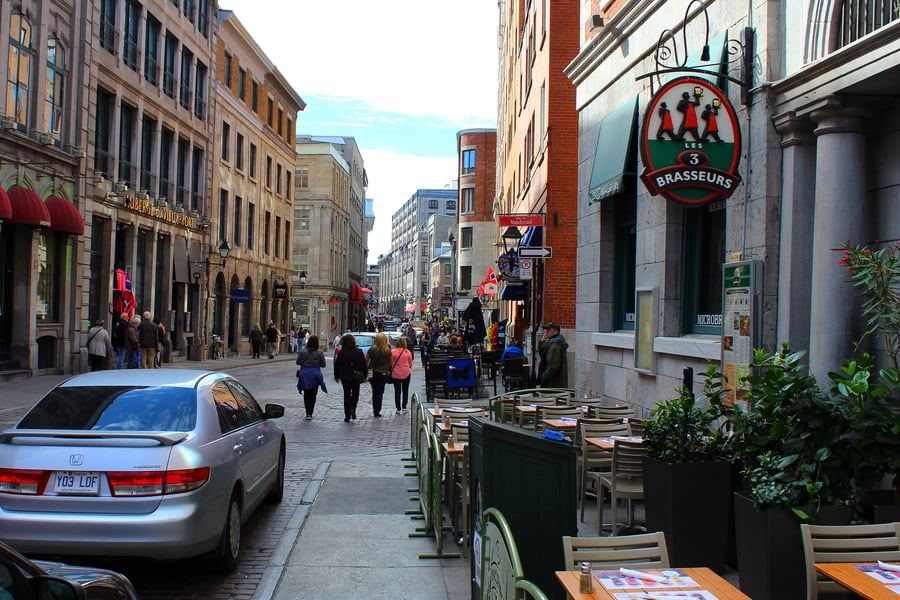 Ken Lund / Wikimedia Commons · CC BY-SA 2.0 · cropped
Montréal
The train leaves from Central Station, underground beneath de la Gauchetière, which is both the terminus of the Ocean and the busiest station in Québec — open 05:30 to 23:00 on weekdays and selling Amtrak tickets over the same counter. Old Montréal is twenty minutes on foot: cobbled streets, the 1829 basilica, and a waterfront that was the head of ocean navigation on the St Lawrence for three centuries.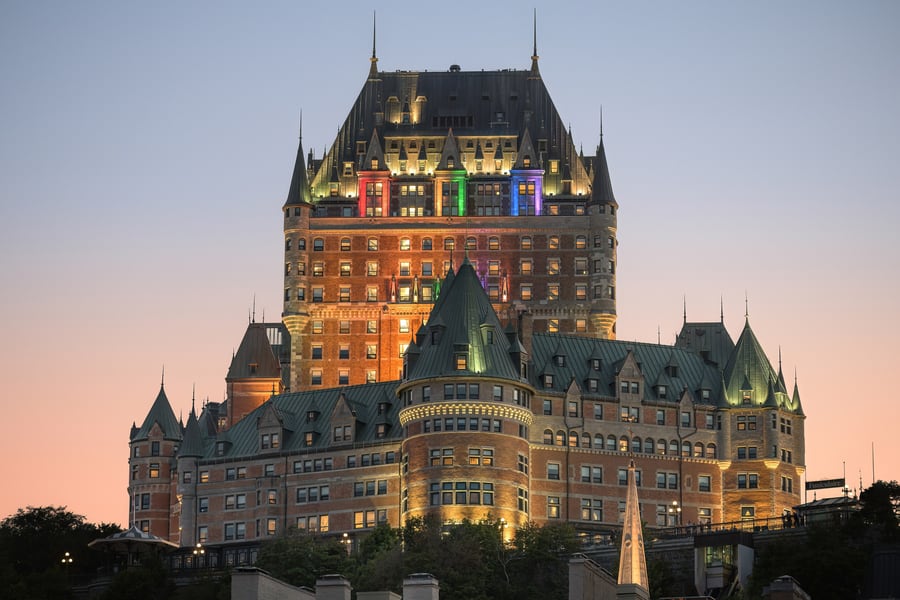 Wilfredor / Wikimedia Commons · CC0 · cropped
Sainte-Foy, for Québec City
The Ocean does not enter Québec City. It calls at Sainte-Foy, on the south-western edge of the built-up area, and VIA runs a reserved shuttle from there to the Gare du Palais in both directions. That puts the walled Upper Town within reach — the only fortified city north of Mexico, and the green copper roofs of the Château Frontenac above the river.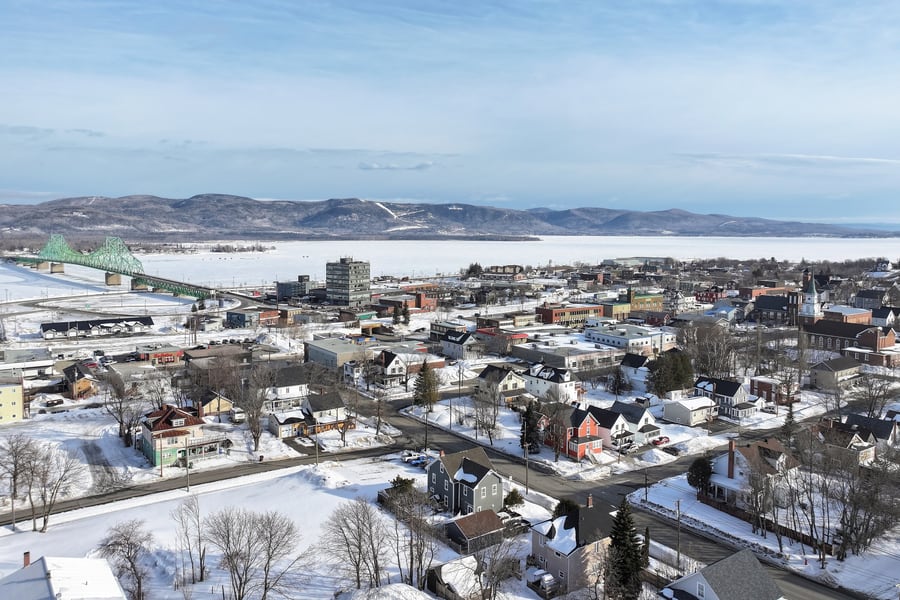 Quintin Soloviev / Wikimedia Commons · CC BY 4.0 · cropped
Campbellton
The first stop in New Brunswick, on the Restigouche estuary under Sugarloaf Mountain, and where your watch goes forward an hour. The railway arrived in the 1870s and tripled the town in fifteen years. The train stands ten minutes here, which is long enough to get off and look at the bridge across to Québec.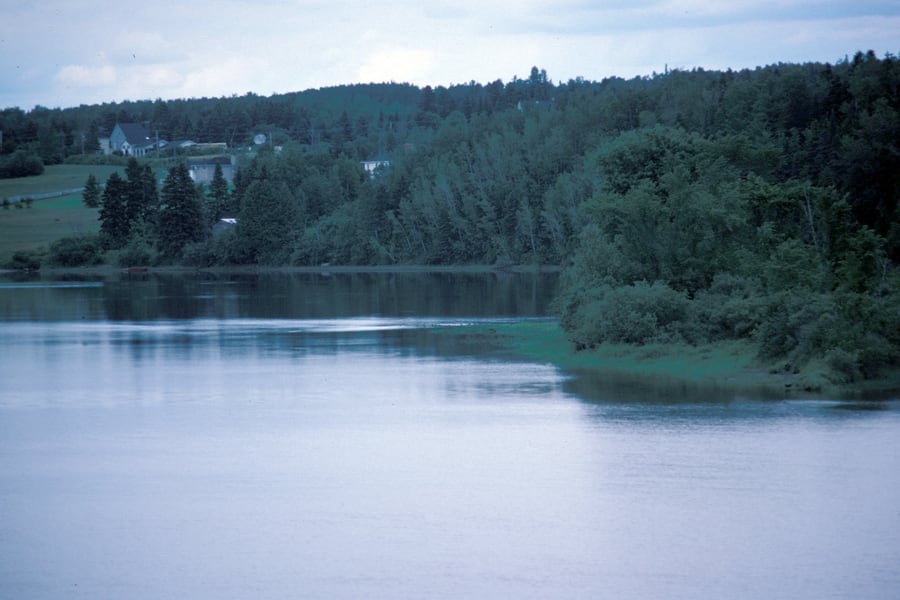 Lesfreck / Wikimedia Commons · CC BY-SA 3.0 · cropped
Miramichi
A city at the mouth of the river of the same name, built on two centuries of forestry and unusual on this coast for being mainly English-speaking — the descendants of Irish settlers, who hold a festival for it every July. The Miramichi is one of the great Atlantic salmon rivers, and the train crosses it on the way in.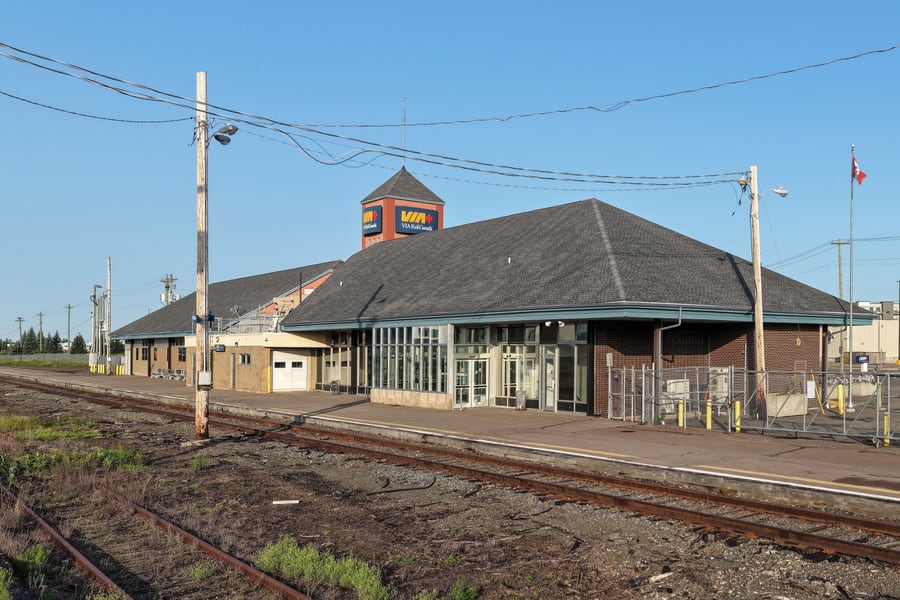 Quintin Soloviev / Wikimedia Commons · CC BY 4.0 · cropped
Moncton
The largest Acadian city and the cultural centre of French-speaking Maritime Canada, with the province's only French-language university. An Acadian settlement stood here on the Petitcodiac before the deportation of 1755; the town that replaced it grew on shipbuilding and then as the terminus and workshops of the Intercolonial Railway. It is named, awkwardly, after the British commander who took Fort Beauséjour.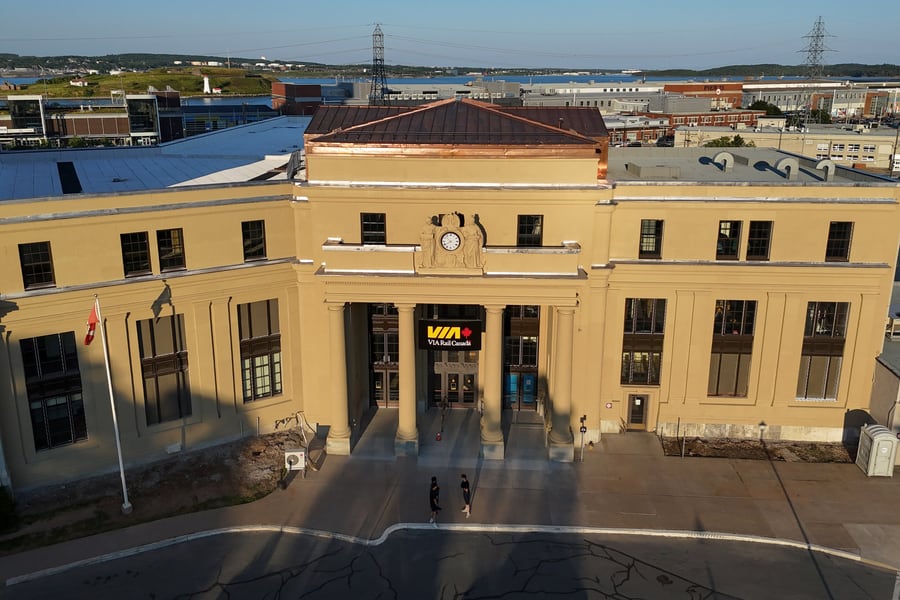 Quintin Soloviev / Wikimedia Commons · CC BY 4.0 · cropped
Halifax
The end of the line, and the station sits in the harbour at 1161 Hollis Street with the Seaport district and the waterfront boardwalk on the far side of it. Founded by Britain in 1749 on the second-largest natural harbour in the world, it is Atlantic Canada's largest city — a working port, a garrison town, and small enough to walk across.Where to Sleep
Both terminus stations have a hotel more or less on top of them, which is unusual and useful on a train that leaves Montréal in the evening and reaches Halifax after six. Between them, Moncton is the obvious place to break the journey: it is the longest booked stop, the largest city on the New Brunswick section, and the point where the two halves of the route change character.
Remember that the Ocean runs on Wednesdays, Fridays and Sundays only. A stopover is two nights at least, and three if the days fall awkwardly.
Where to stay
 Mdavids / Wikimedia Commons · CC0 · cropped
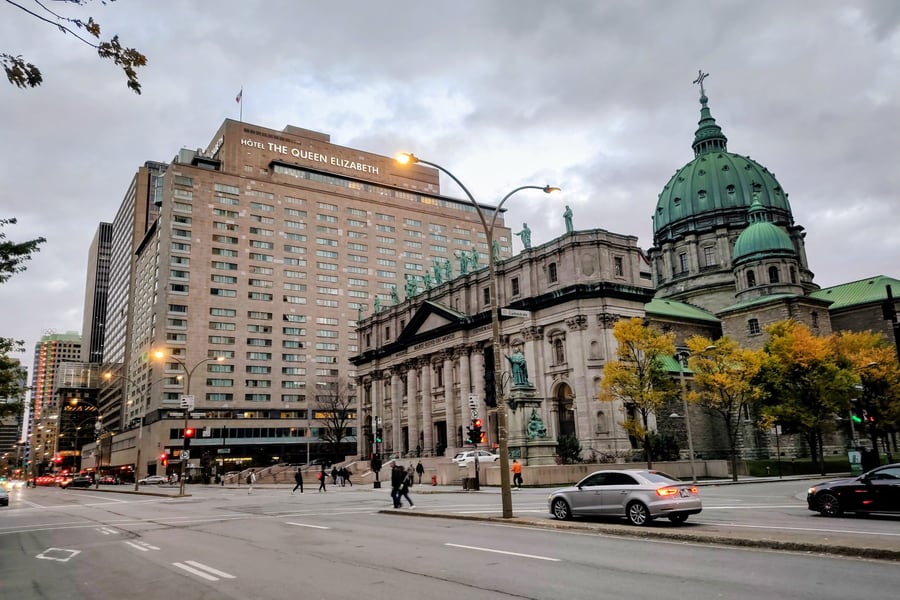
Fairmont The Queen Elizabeth
Montréal · directly above the station
Nine hundred and fifty rooms above Central Station, and the hotel's own claim is direct access to it.
Check Availability (opens in a new tab, on fairmont.com)via fairmont.com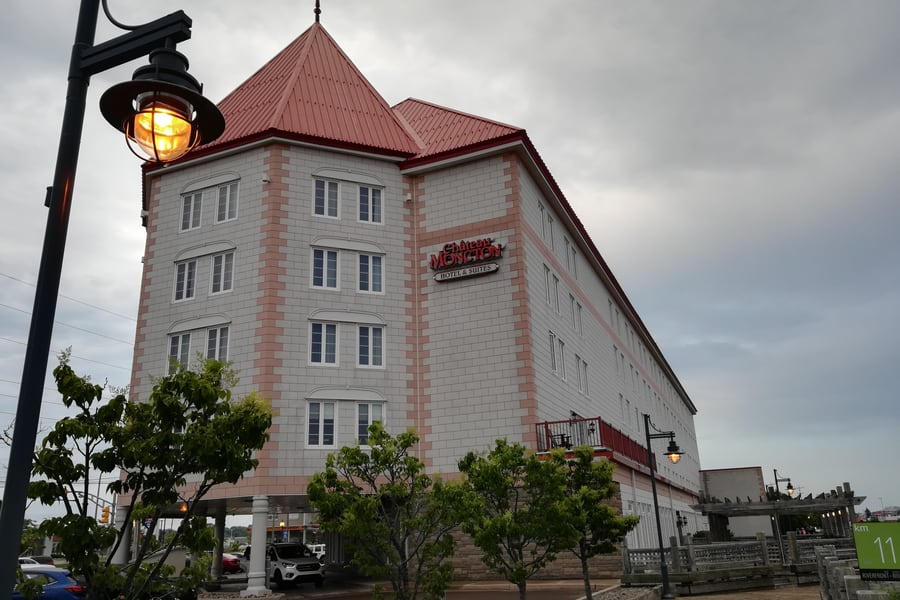 Clump / Wikimedia Commons · CC0 · cropped
Château Moncton Hotel & Suites
Moncton · on the Petitcodiac
On Main Street beside the riverwalk, a few minutes from the park where the tidal bore is watched.
Check Availability (opens in a new tab, on chateaumoncton.ca)via chateaumoncton.ca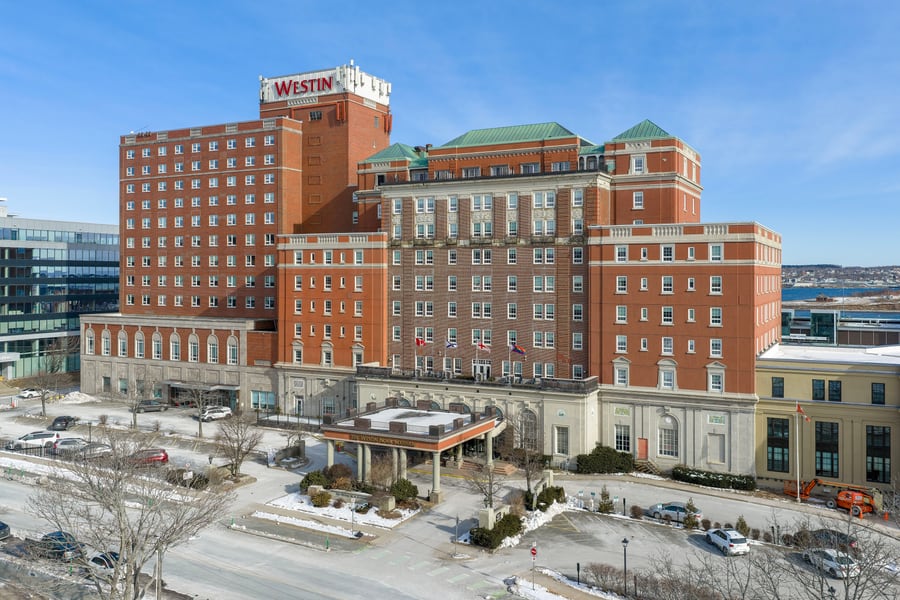 Quintin Soloviev / Wikimedia Commons · CC BY 4.0 · cropped
The Westin Nova Scotian
Halifax · next door to the station
Opened by Canadian National on 23 June 1930 beside the station, and still 310 rooms on Hollis Street.
Check Availability (opens in a new tab, on marriott.com)via marriott.comQuestions or corrections
Planning this trip and stuck on something, or spotted a time, fare or detail that has changed? Send us a message about The Ocean. We read every one, and we update this page when something has changed.