The Overland
Tomoyn / Wikimedia Commons · CC BY 4.0
- Distance828 km, Adelaide to Melbourne
- DurationAbout 10½ hours, by day
- Best seasonAll year, twice a week each way
Introduction
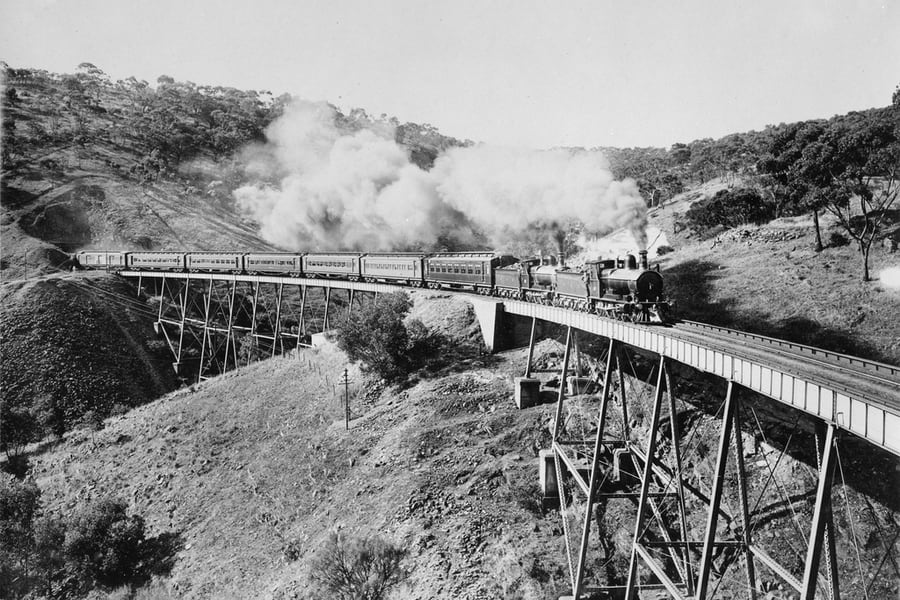
When the railways of South Australia and Victoria met at the border in January 1887, both colonies had laid the same 1600 mm broad gauge, so a train could run straight through from Adelaide to Melbourne — the first service in Australia to link two capitals. It is still running, as the Overland.
The border stopped it anyway. Each colony's crews could work only on their own railway, so at Serviceton, the station on the border, the locomotives and crews were changed. Until Federation in 1901 the station also held a customs house and two ticket offices, one for each colony; the engine change went on until 1984. In 1995 the whole route was converted to standard gauge, and the train was moved off its old line through Ballarat onto a longer one by way of Geelong.
Today it is a day train, run by Journey Beyond twice a week each way: 828 kilometres in about ten and a half hours, over the Adelaide Hills, across the River Murray and through the wheat country of the Wimmera, in reclining seats, with a café car called Café 828 — the line's length in kilometres.
The Journey
Adelaide to the border
The Overland leaves Adelaide Parklands Terminal at Keswick, 3 kilometres from the city centre, and spends its first hour climbing into the Adelaide Hills through Sleep's Hill and Eden Hills. Over the top, it runs down through farmland to Murray Bridge, crossing the River Murray on the railway bridge of 1925, and on across the south-east of South Australia to Bordertown, the last stop before the border.
Through western Victoria
Just inside Victoria the train passes Serviceton, where it no longer stops. Its grand station of 1889, built when the land under it was still claimed by both colonies, now houses a display of local and railway memorabilia. Beyond it the train calls at Nhill, Dimboola and Horsham on the plains of the Wimmera, then at Stawell and Ararat, under the ranges of the Grampians. At Ararat it leaves the line of 1887: since 1995 it has run south to Maroona and east to Geelong, where it stops at North Shore, before the last stretch into Southern Cross station in Melbourne.
The train
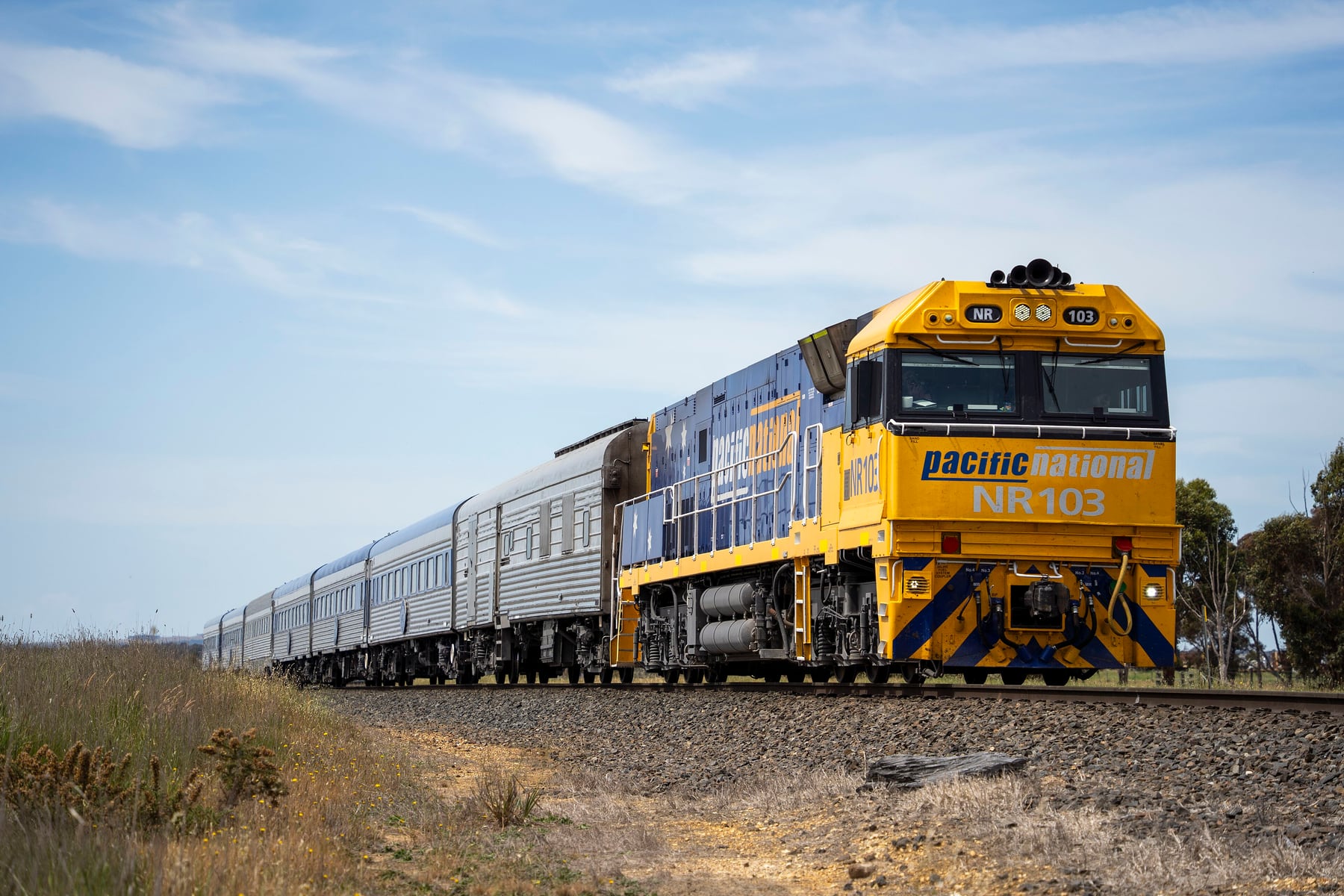
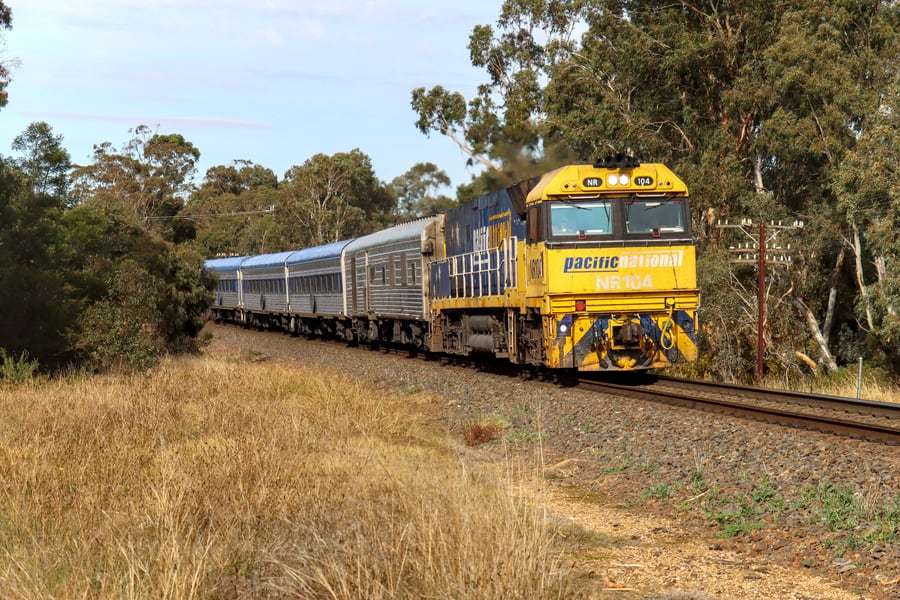
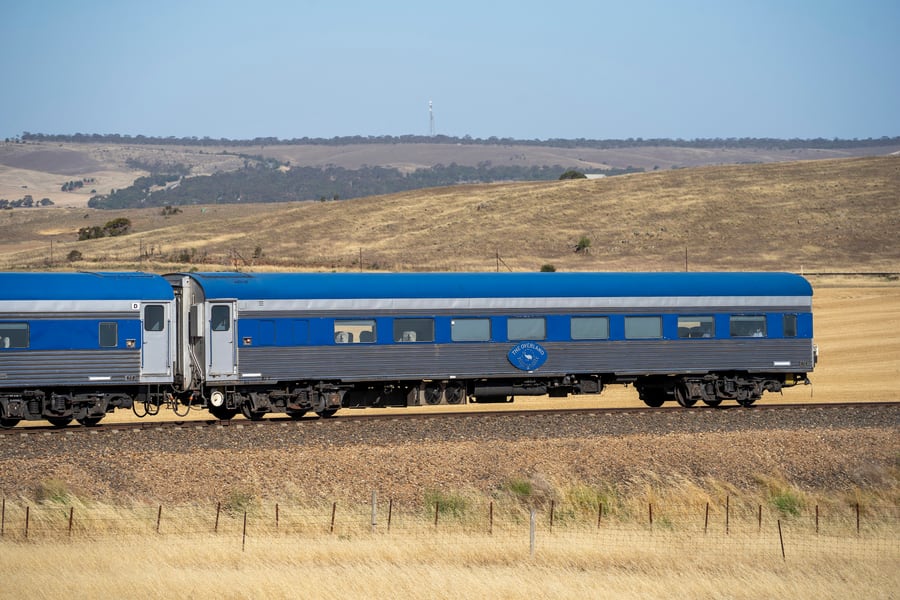
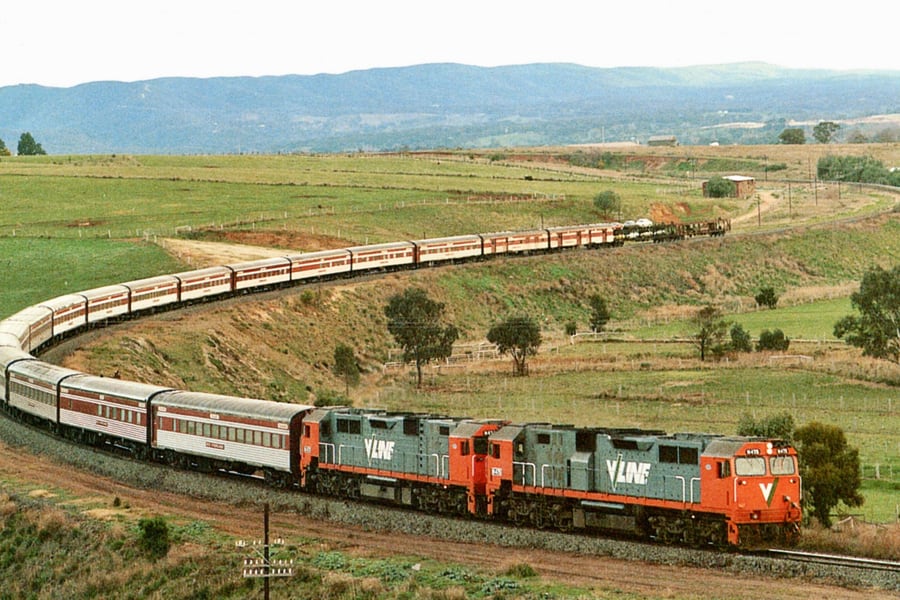
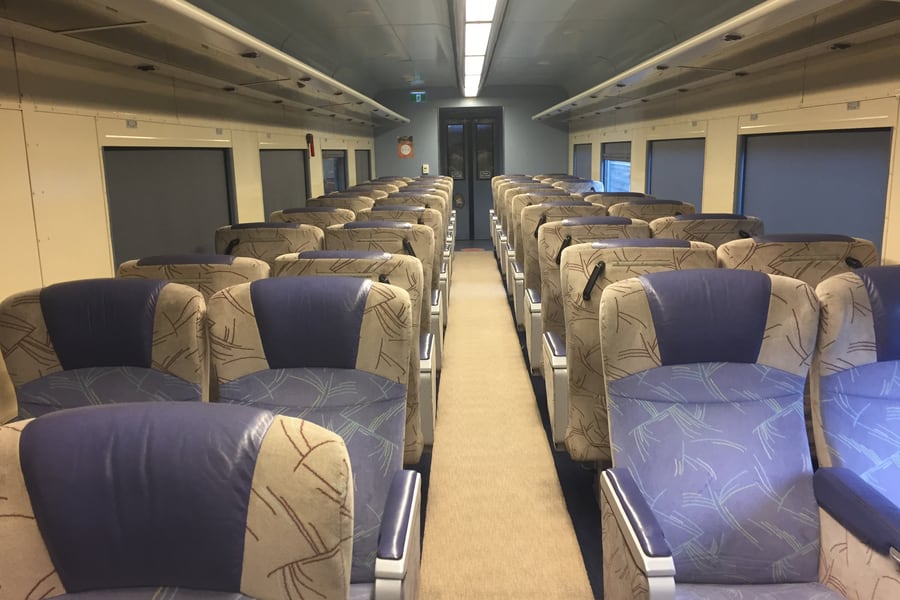
The Overland is an average of seven carriages and 189 metres long, behind a single locomotive — in recent years an NR class diesel in Pacific National colours — and its symbol, on the carriage sides, is the emu. There are two classes. Red Standard has reclining seats two and two, 60 to a carriage; Red Premium has 36 seats a carriage, two and one, with more legroom and breakfast, lunch and afternoon tea served at the seat. Both have the licensed Café 828, and a generous luggage allowance: two cases of 20 kilograms in Red Standard, two of 30 in Red Premium.
Along the route
 RegionVisitor90 / Wikimedia Commons · CC BY 4.0 · cropped
Up through the Adelaide Hills
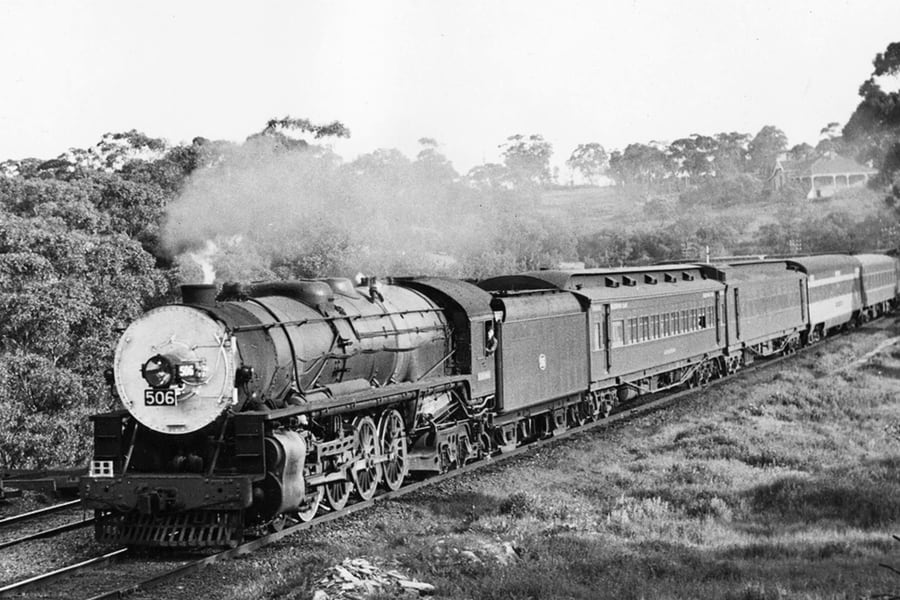
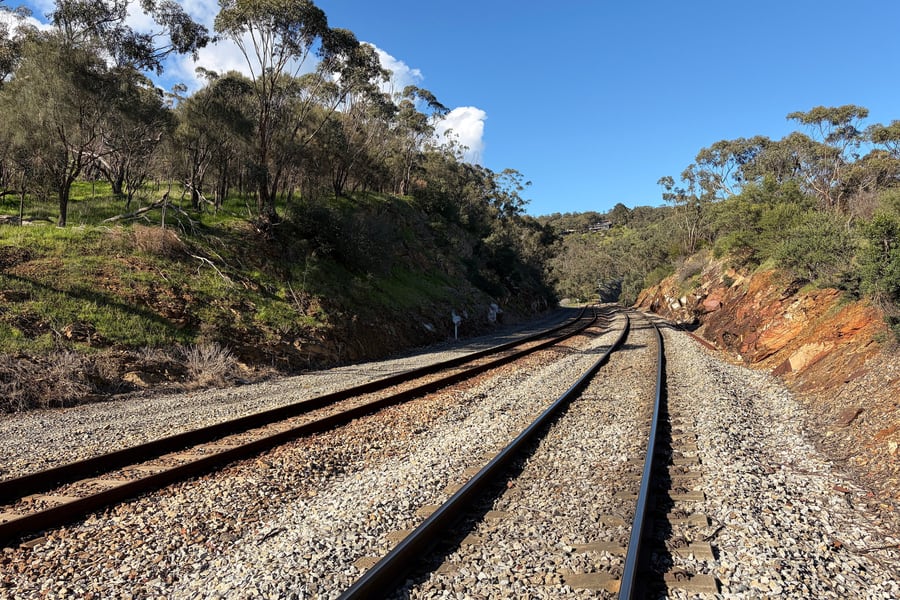
The first hour is a climb out of the plain through cuttings and tunnels in the Mount Lofty Ranges, past Sleep's Hill and Eden Hills, on curves and grades that in 1926 called for the largest locomotives in Australia.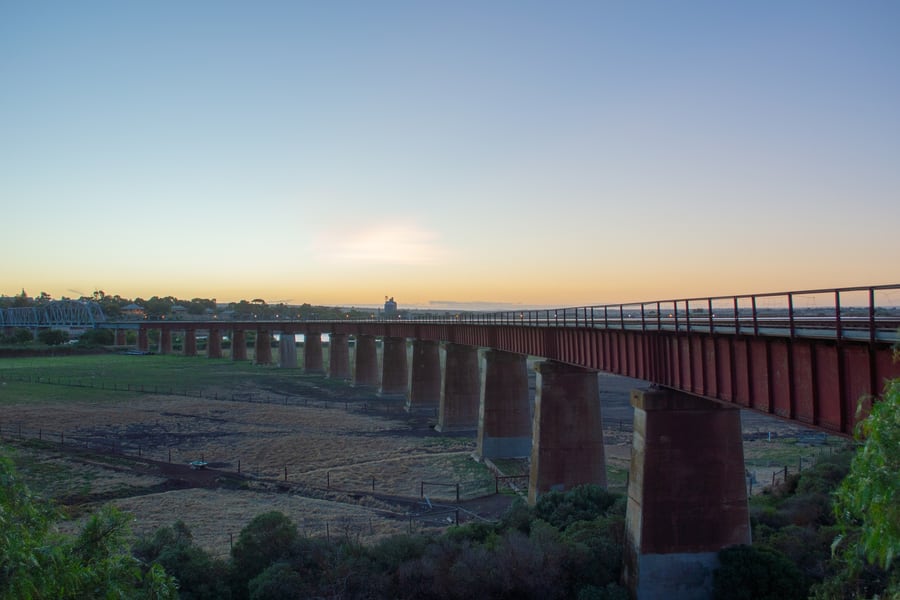 Solarence / Wikimedia Commons · CC BY-SA 4.0 · cropped
The River Murray at Murray Bridge
The train crosses the Murray on its own bridge of 1925. Until then it shared the road bridge of 1879, and the town took its name from that crossing in 1924; the Ngarrindjeri call the place Pomberuk.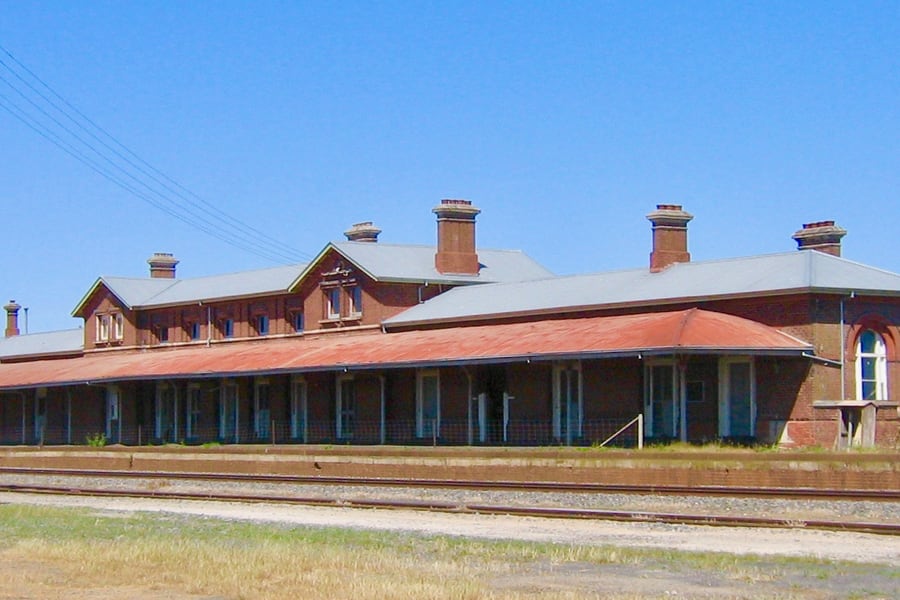 Scott Davis / Wikimedia Commons · CC BY 4.0 · cropped
The border at Serviceton
Just inside Victoria, the train passes the station where locomotives and crews were changed for nearly a century. Its customs hall and two ticket offices closed long ago; the building, restored in 2011, now holds a display of local railway history.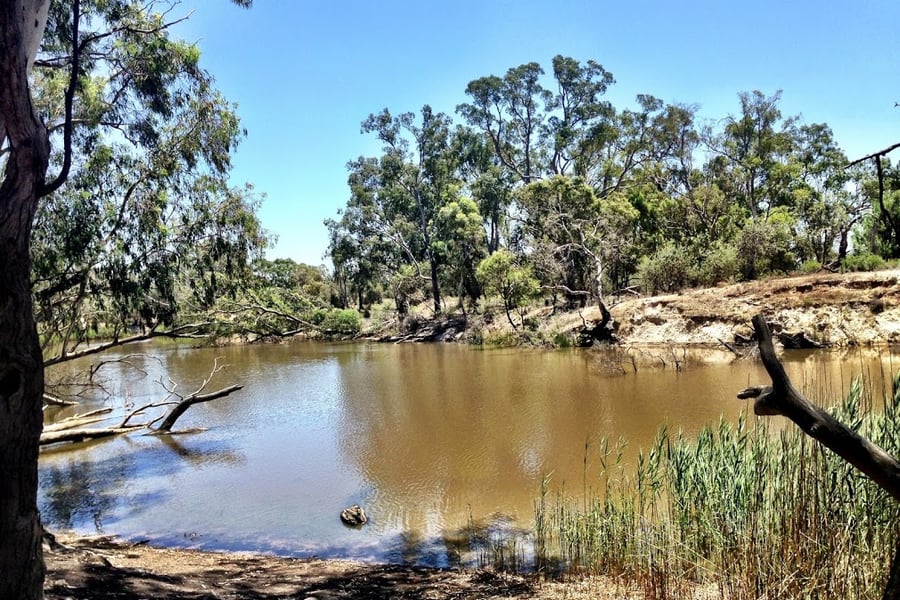 Enguerrand Blanchy / Wikimedia Commons · CC BY-SA 4.0 · cropped
The Wimmera
From Nhill to Horsham the line crosses the wheat and wool country of western Victoria, following the Wimmera River past Dimboola, where the Little Desert National Park reaches the riverbank.A bit of history
Culture & experiences along the way
 Philip Mallis / Wikimedia Commons · CC BY-SA 4.0 · cropped
Gum San Chinese Heritage Centre, Ararat
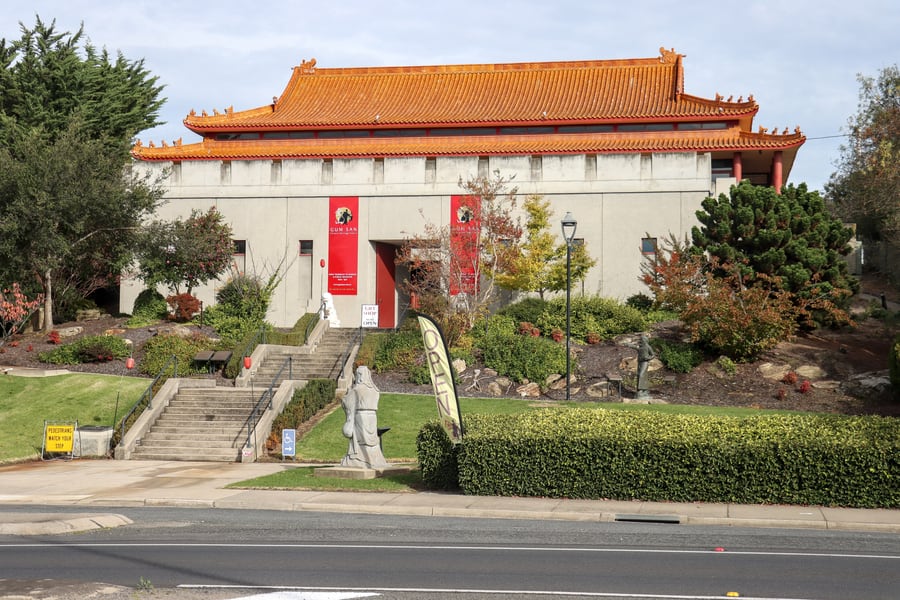
In April 1857 more than 700 miners from Canton landed at Robe in South Australia, to avoid Victoria's restrictions on Chinese landings, and walked overland to the goldfields. Stopping at a spring, they found the Canton Lead, and Ararat grew up on it. Gum San — Gold Mountain — stands on the field and tells their story.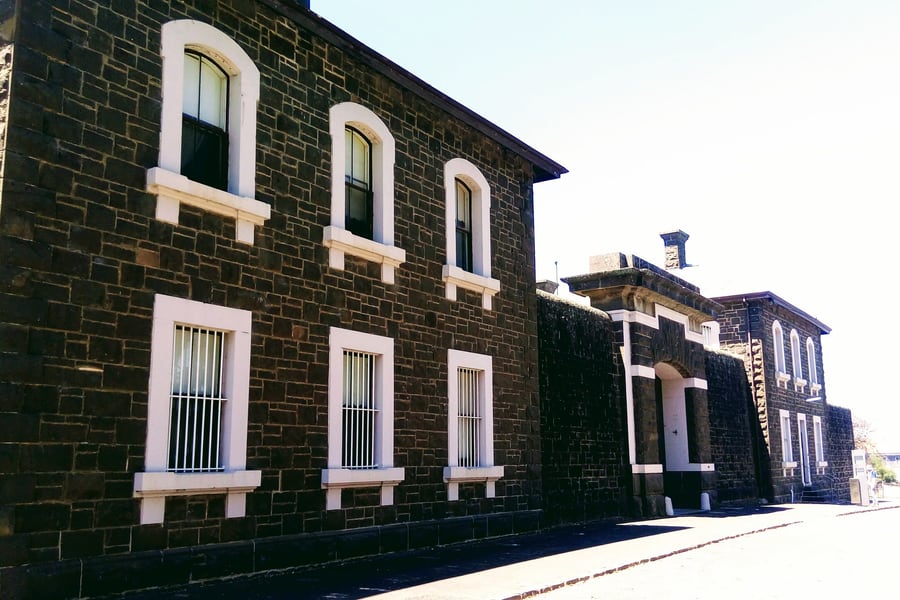 DenisFrolow / Wikimedia Commons · CC BY-SA 4.0 · cropped
A tour of J Ward
Ararat's bluestone goldfields gaol opened in 1861 and became, in 1887, a ward for the criminally insane, which held patients until 1991. It has been a museum since 1993, seen on guided tours that tell the stories of the people kept there.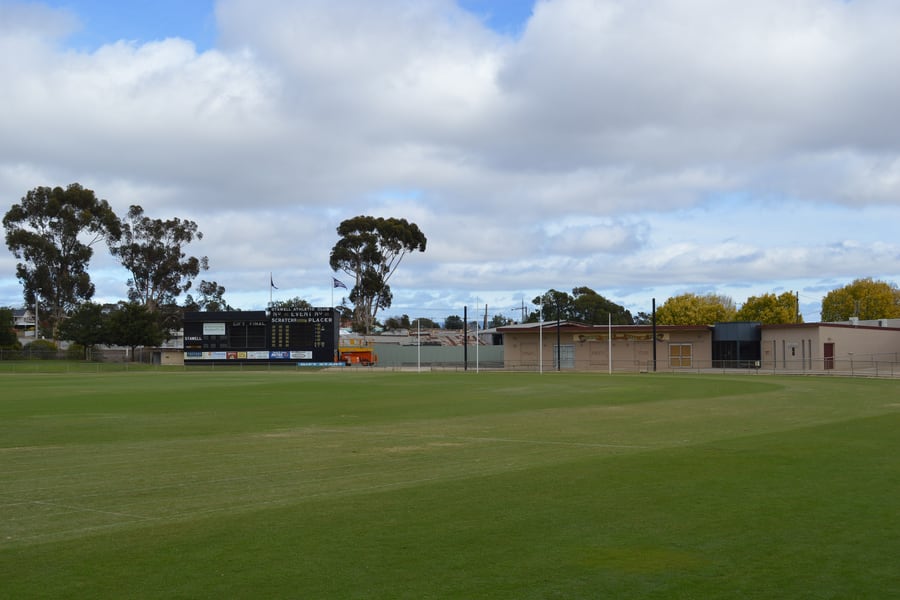 Mattinbgn / Wikimedia Commons · CC BY 3.0 · cropped
The Stawell Gift
Every Easter since 1878, bar the war years and 2020, Stawell has staged Australia's oldest and richest short-distance footrace: 120 metres uphill on grass at Central Park, with runners handicapped by metres so that, in theory, the whole field reaches the line together.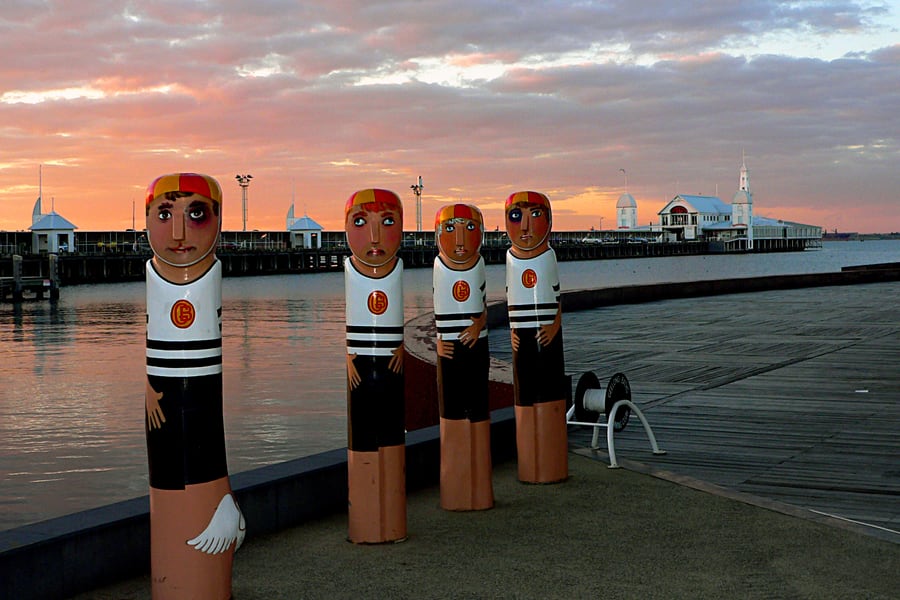 Bernard Spragg / Wikimedia Commons · CC0 · cropped
The Geelong bollards
Along the Geelong waterfront stand the painted figures of the artist Jan Mitchell: more than a hundred bollards made from old wharf pylons, each painted as a character from the city's history, set out along the foreshore of Corio Bay from the 1990s.Timetables
The Overland runs all year, twice a week in each direction: from Adelaide on Sundays and Thursdays, and from Melbourne on Mondays and Fridays. It is a day train, with no sleeping cars. Times are local.
Adelaide to Melbourne
| Day | Adelaide | Murray Bridge | Bordertown | Nhill | Dimboola | Horsham | Stawell | Ararat | Geelong (North Shore) | Melbourne |
|---|---|---|---|---|---|---|---|---|---|---|
| Sunday | 07:45 | 09:35 | 11:34 | 13:01 | 13:34 | 14:01 | 14:55 | 15:19 | 17:23 | 18:50 |
| Thursday | 06:55 | 09:10 | 11:09 | 12:36 | 13:10 | 13:37 | 14:31 | 14:55 | 17:40 | 18:50 |
Melbourne to Adelaide
| Day | Melbourne | Geelong (North Shore) | Ararat | Stawell | Horsham | Dimboola | Nhill | Bordertown | Murray Bridge | Adelaide |
|---|---|---|---|---|---|---|---|---|---|---|
| Monday | 08:05 | 09:35 | 11:35 | 12:00 | 12:51 | 13:20 | 13:47 | 14:11 | 16:10 | 18:00 |
| Friday | 08:05 | 09:15 | 11:15 | 11:40 | 13:00 | 13:28 | 13:55 | 14:21 | 16:18 | 18:05 |
Intermediate times are departures. The same times are published for the rest of 2026 and for 2027, though the operator notes that the 2027 timings may still change.
Getting to the train
In Adelaide the train uses Adelaide Parklands Terminal on Richmond Road, Keswick, which also serves the Ghan, the Indian Pacific and the Great Southern. In Melbourne it uses platform 2 at Southern Cross, on the corner of Collins and Spencer Streets: luggage check-in opens at 06:00 and closes 30 minutes before departure, and passenger check-in opens at 07:00.
Times are from Journey Beyond's 2026 and 2027 timetables — as of November 2026. Check them on Journey Beyond's Overland timetable (opens in a new tab) before travelling.
Tickets
Fares are per person, one way, and the same in both directions between Adelaide and Melbourne; tickets to and from the towns along the way cost differently. Each class has two fare types: Ready Rail, the cheaper, and Red Everyday. Red Premium includes every meal on board; in Red Standard, food and drinks are bought in the café.
Book online with Journey Beyond, or by phone on 1800 703 357. Fares checked November 2026.
Book your tickets
 Alison Newman / Wikimedia Commons · CC0 · cropped
Red Standard
Reclining seat, two and two
Adelaide to Melbourne or back from A$160 on a Ready Rail fare in 2027 (A$165 in 2026), or A$225 on a Red Everyday fare.
Book Tickets (opens in a new tab, on journeybeyondrail.com.au)via journeybeyondrail.com.auPhilip Mallis / Wikimedia Commons · CC BY-SA 4.0 · croppedRed Premium
More legroom, two and one, meals included
From A$305 on a Ready Rail fare or A$375 on a Red Everyday fare, with breakfast, lunch and afternoon tea served at your seat.
Book Tickets (opens in a new tab, on journeybeyondrail.com.au)via journeybeyondrail.com.auRail Passes
No rail pass covers the Overland. Journey Beyond sells it seat by seat, on its own fares.
Is it worth it? There is nothing to buy: book the fare.
Checked November 2026.
Places to Visit
The Overland stops in eight towns between the two capitals, and several of them are the gateway to country worth a few days: the wine valleys of the Adelaide Hills, the heath of the Little Desert, the cliffs of Mount Arapiles and the ranges of the Grampians.
 Bahudhara / Wikimedia Commons · CC BY-SA 4.0 · cropped
The Piccadilly Valley
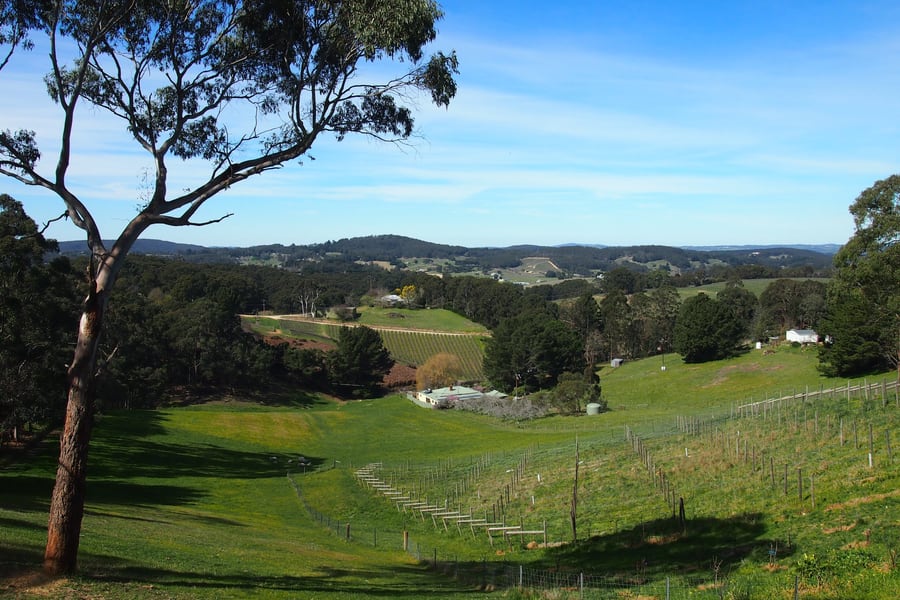
The Piccadilly Valley is a sub-region of the Adelaide Hills wine country, which runs along the Mount Lofty Ranges — the hills the train climbs out of Adelaide — from Mount Pleasant to Mount Compass. Across the region Sauvignon Blanc, Chardonnay and Pinot Noir make up most of the vines. From the Mount Lofty Scenic Route the view runs south-east over the valley to Mount Barker, 22 kilometres away.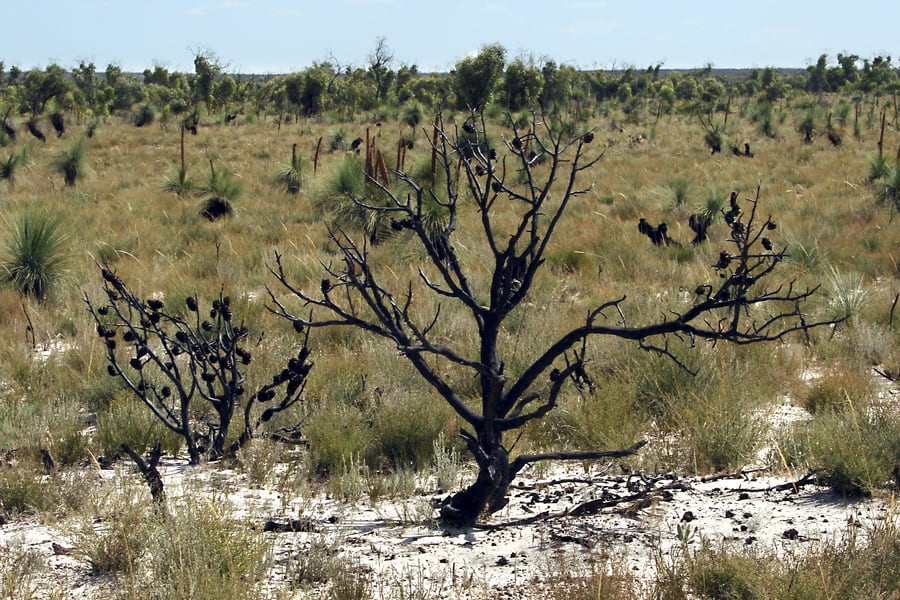 Mussklprozz / Wikimedia Commons · CC BY-SA 3.0 · cropped
The Little Desert National Park
Not a desert but 132,647 hectares of sandy heath and mallee running from the Wimmera River at Dimboola to the South Australian border. A plan to clear and sell it for farming in the 1960s raised such a storm that the minister lost his seat, and the land became a national park.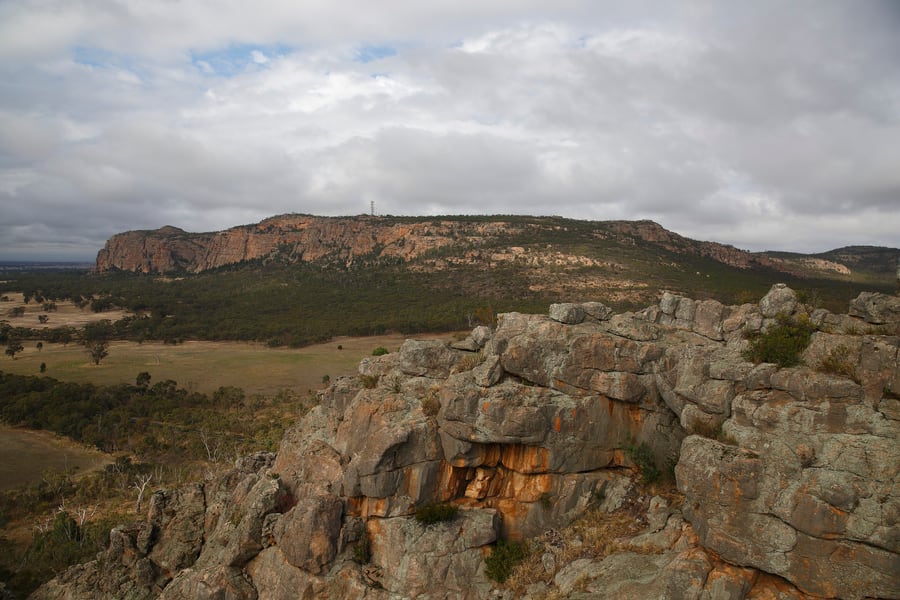 Ed Dunens / Wikimedia Commons · CC BY 2.0 · cropped
Mount Arapiles
Djurid to the Wotjobaluk people, whose Djurid Baluk clan made stone tools from its hard sandstone, the quartzite outcrop rises about 140 metres out of the Wimmera plain west of Natimuk. Major Thomas Mitchell climbed it in 1836 and named it after the hills of the Battle of Salamanca; it is now one of the premier rock-climbing sites in Australia.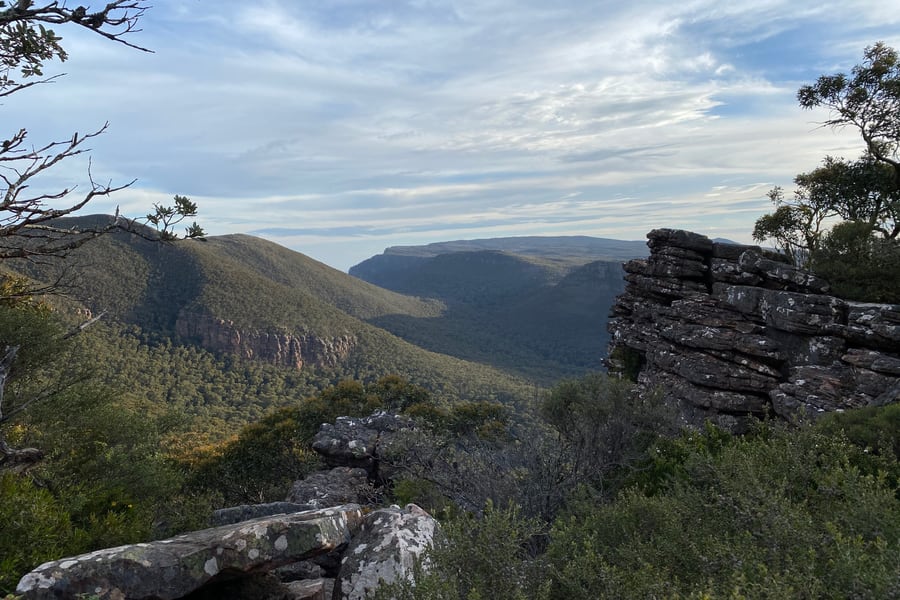 BennyG3255 / Wikimedia Commons · CC BY-SA 4.0 · cropped
The Grampians (Gariwerd)
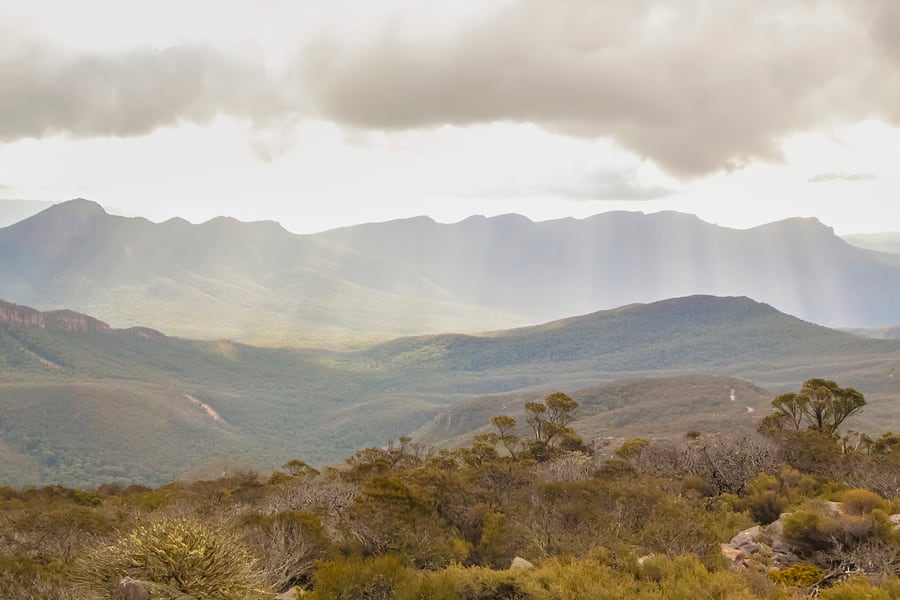
The sandstone ranges between Stawell, Horsham and Dunkeld hold about 90 per cent of the Aboriginal rock art in Victoria, and have been on the National Heritage List since 2006. Mount William, Duwil, is the highest point in the park: a car park part-way up, then a walk of 1.8 kilometres to the summit.Where to Sleep
The train leaves Adelaide early and arrives in Melbourne in the evening, so a night on either side is the easy way to take it. One hotel is on North Terrace in Adelaide; the other is across the road from Southern Cross, where the train arrives in Melbourne.
Where to stay
The Playford
North Terrace, Adelaide
A hotel on North Terrace in Adelaide's cultural precinct, decorated in an Art Nouveau style with South Australian art.
Check Availability (opens in a new tab, on theplayford.com.au)via theplayford.com.auBatman's Hill on Collins
Opposite Southern Cross station
A 190-room hotel on Collins Street directly opposite Southern Cross, where the Overland arrives in Melbourne.
Check Availability (opens in a new tab, on batmanshill.com.au)via batmanshill.com.auQuestions or corrections
Planning this trip and stuck on something, or spotted a time, fare or detail that has changed? Send us a message about The Overland. We read every one, and we update this page when something has changed.