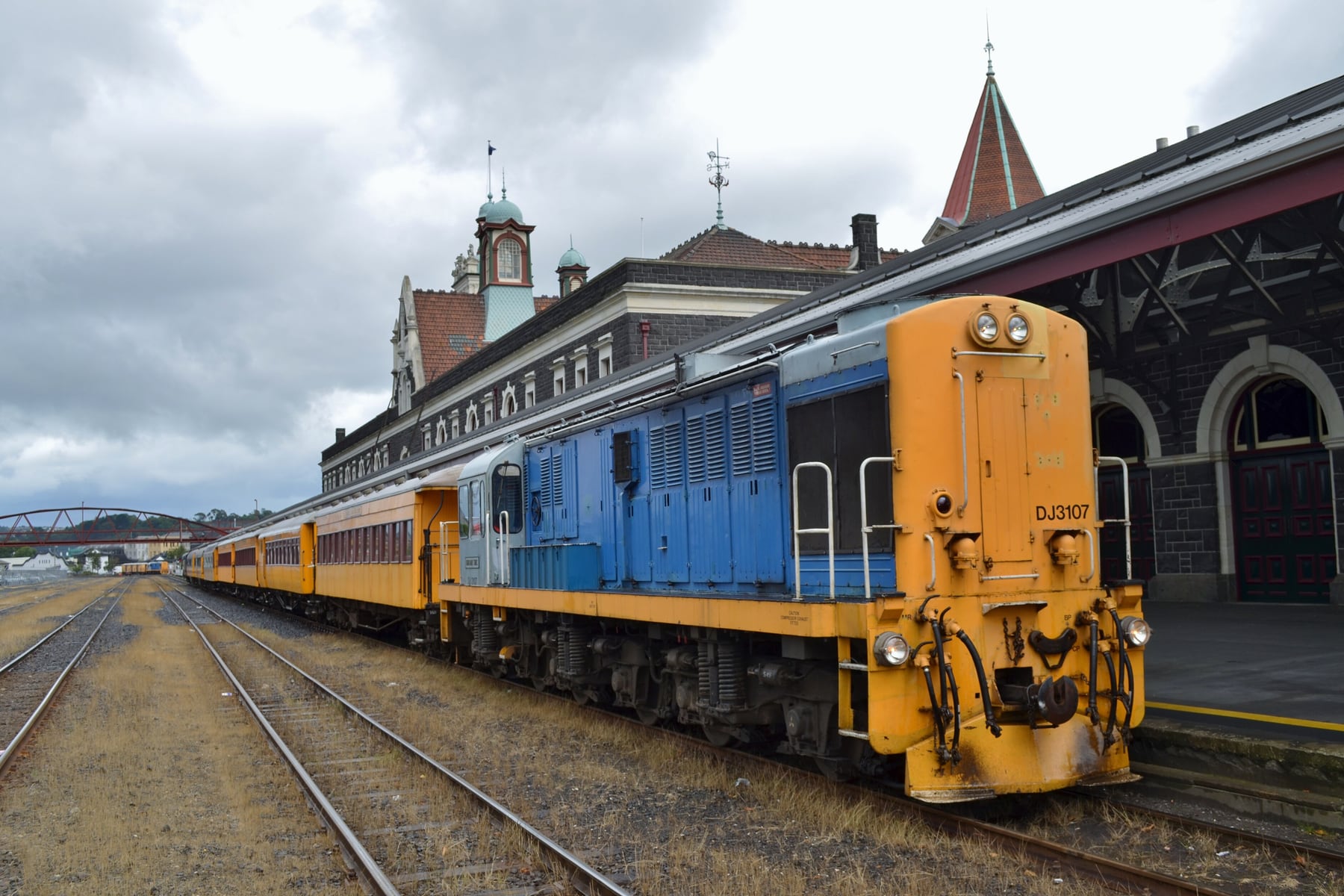
The Seasider
Bahnfrend / Wikimedia Commons · CC BY-SA 4.0 · cropped
- Distance~40 km each way
- Duration3h 30m return
- Best seasonYear-round · Saturdays
Introduction
When the Southerner made its last run between Christchurch and Invercargill on 10 February 2002, the Main South Line lost its scheduled passenger service and never got it back. What is left on the stretch north of Dunedin is one train: The Seasider, which leaves the city on a Saturday afternoon, follows the shore of Otago Harbour out to Port Chalmers, burrows through the hill behind Mihiwaka and comes out on the open coast. For three and a half hours it is the only passenger train on the line.
It is a short journey and an unusually good-looking one. Out of Dunedin the track is pinned between the hillside and the water for thirteen kilometres, past Deborah Bay and the container cranes at Port Chalmers. Then comes the tunnel — about 1.3 kilometres of it, dug in the 1870s and the reason the railway to Christchurch took as long as it did — and the line drops out onto Blueskin Bay, runs the length of a tidal estuary and turns north along beaches: Pūrākaunui, Warrington, Seacliff under its cliff ledge, Karitane at the mouth of the Waikouaiti River. The train runs out to a crossing loop in the farmland at Merton, reverses, and comes back in the evening light.
Halfway there is a choice that gives the trip its character. You can stay on board for the full run, or get off at Evansdale and walk to the Arc Brewing Co at the head of Blueskin Bay for ninety minutes, then stand at the same spot at quarter past five and flag the train down again. The carriages are New Zealand Railways stock from the 1930s, there is a storyteller working the length of the train, and the café car is run by a Dunedin kitchen. It is not a wilderness railway. It is an afternoon on a coast, done properly.
The Journey
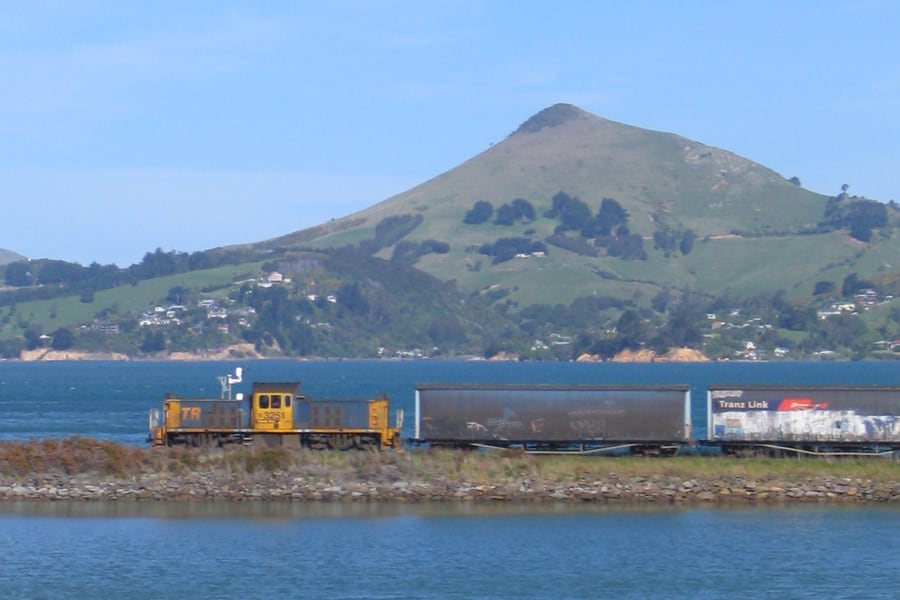
The first thirteen kilometres out of Dunedin are the oldest public railway in Otago. The Dunedin and Port Chalmers Railway was opened by the Governor on the last day of 1872, built to the 1,067 mm gauge that had just been made the national standard — the first line in New Zealand laid to it, and worked at first by a double-Fairlie locomotive called Josephine that now stands in a museum four minutes' walk from the departure platform. The track still runs where it was put, on a narrow shelf between the hillside and the water, with the harbour on one side and the Otago Peninsula across it.
Beyond Sawyers Bay the short branch to the Port Chalmers wharves drops away and the main line keeps climbing, above the container terminal and above Deborah Bay, to the mouth of the tunnel at Mihiwaka. It is roughly 1.3 kilometres long, it was the reason the railway from Dunedin to Christchurch took until September 1878 to open, and the operator calls it one of the longest tunnels in the country. The train goes in on the harbour and comes out on the Pacific.
Blueskin Bay and the coast
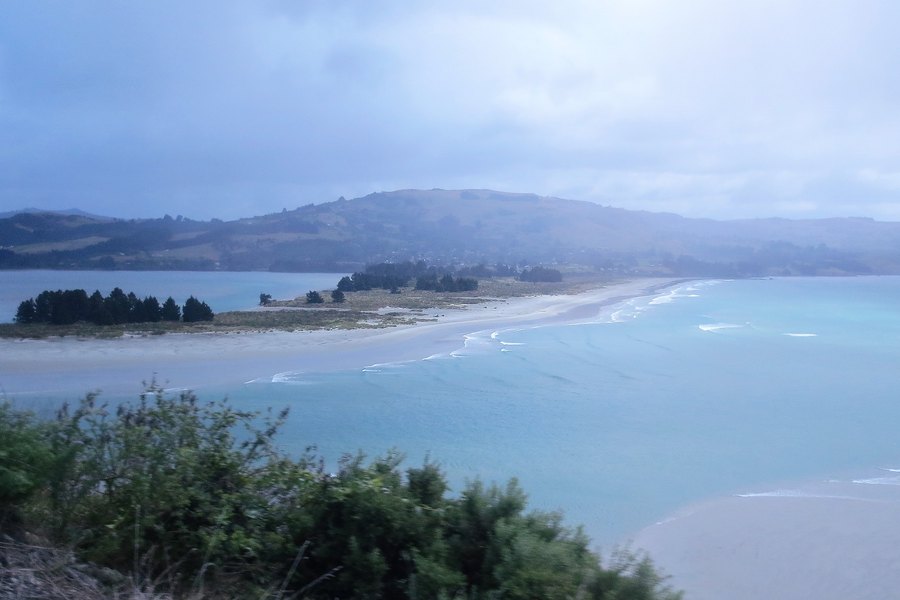
What follows is a tidal estuary the line runs the full length of. Blueskin Bay empties and fills twice a day around a low sandspit; at the seaward end is Warrington, at the head is Waitati, and between them the water goes from turquoise to mud and back. The train crosses at the top of the bay near Evansdale, where the Arc Brewing Co sits a few minutes' walk from the track and where half the passengers get off.
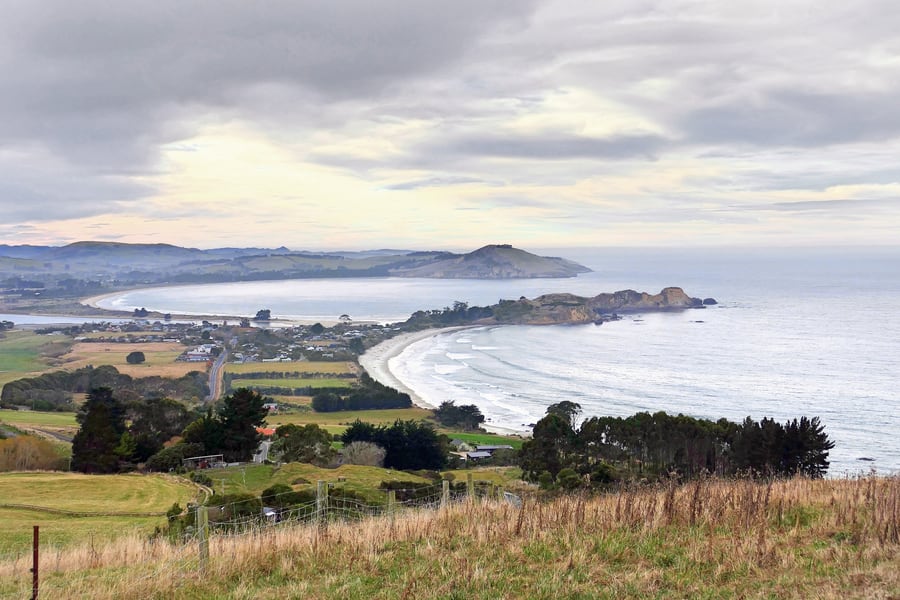
North of there the railway is properly coastal. It rounds Pūrākaunui, runs through Seacliff under the hillside where the asylum stood, and reaches Karitane, where the Waikouaiti River comes out beside the cliffs of the Huriawa peninsula and a pā that outlasted a siege because it had its own spring. A little further on the line turns inland into farmland and stops at the crossing loop at Merton. Nobody gets off — the operator does not permit it, and there is nothing at Merton but a loop — and the train comes back down the same coast with the light behind it.
What you ride in
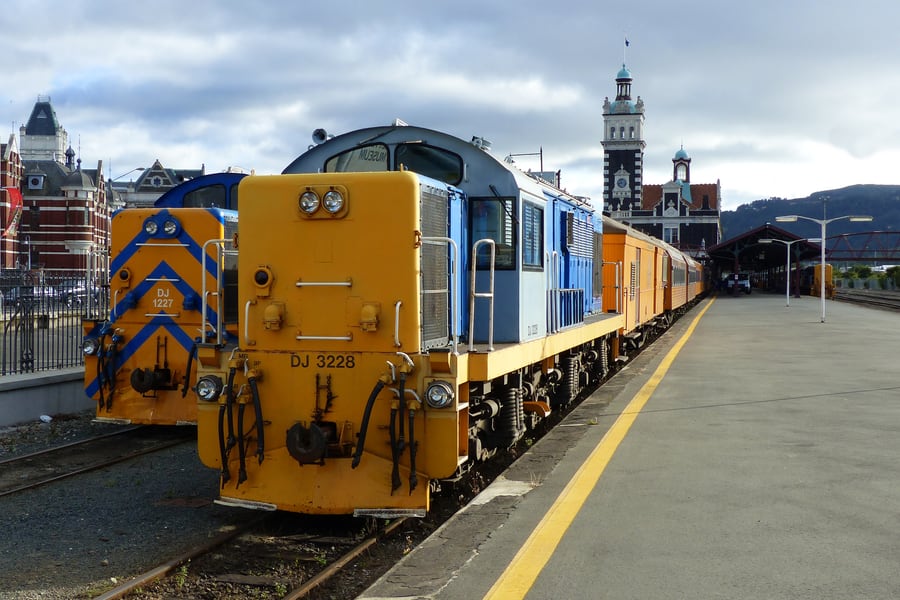
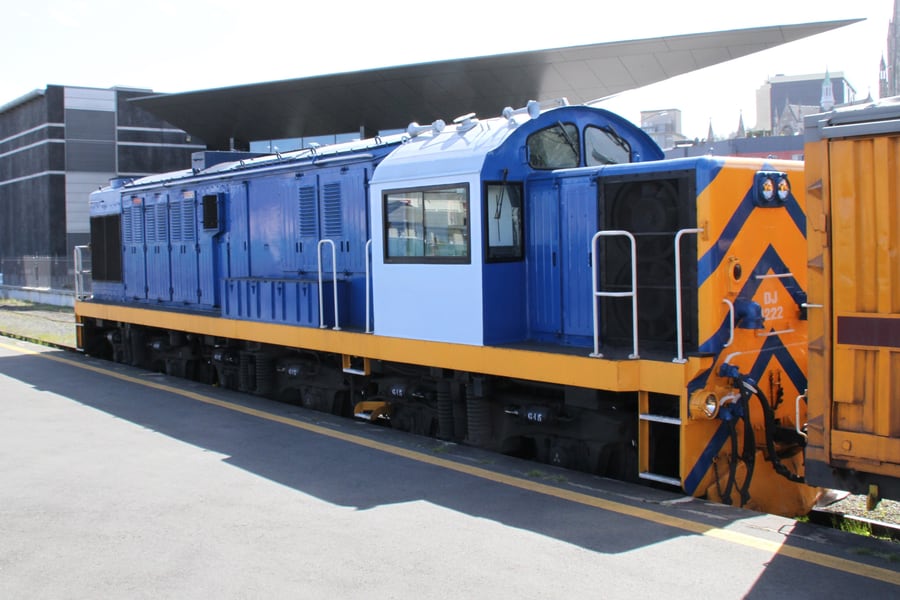
The carriages are New Zealand Railways stock from the 1930s, wooden-bodied 56-footers in the operator's blue and yellow, hauled by a DJ-class diesel-electric — Mitsubishi-built for New Zealand Railways in 1968–69, with three bogies to spread its weight over light track, and now the mainstay of a fleet that this company bought when the class was withdrawn. Every carriage has a toilet and heating; none has wi-fi. There is a live storyteller rather than a recording, and the café car is run by Precinct, a Dunedin kitchen.
For most of the 2010s the operator ran something quite different on this line: a leased Silver Fern railcar, RM 24 — one of three corrugated-stainless-steel twin sets built by Kawasaki and introduced in 1972 for the Auckland–Wellington daylight express — repainted in Dunedin Railways colours and sent up the coast to Waitati. It went back to KiwiRail in 2019. The heritage train is what is left, and it is slower, which on this particular stretch of coast is the point.
Along the route
 Benchill / Wikimedia Commons · Public domain · cropped
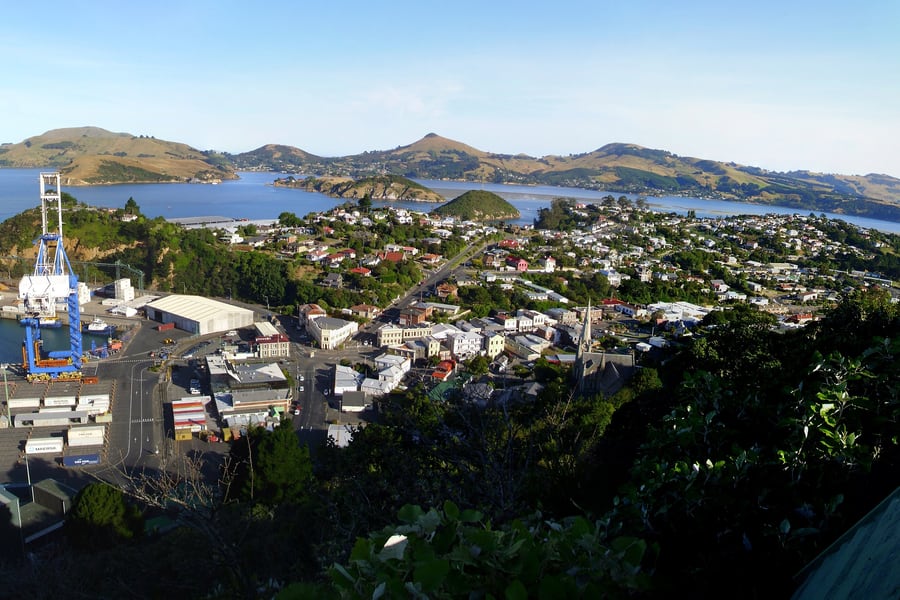
The harbour shelf to Port Chalmers
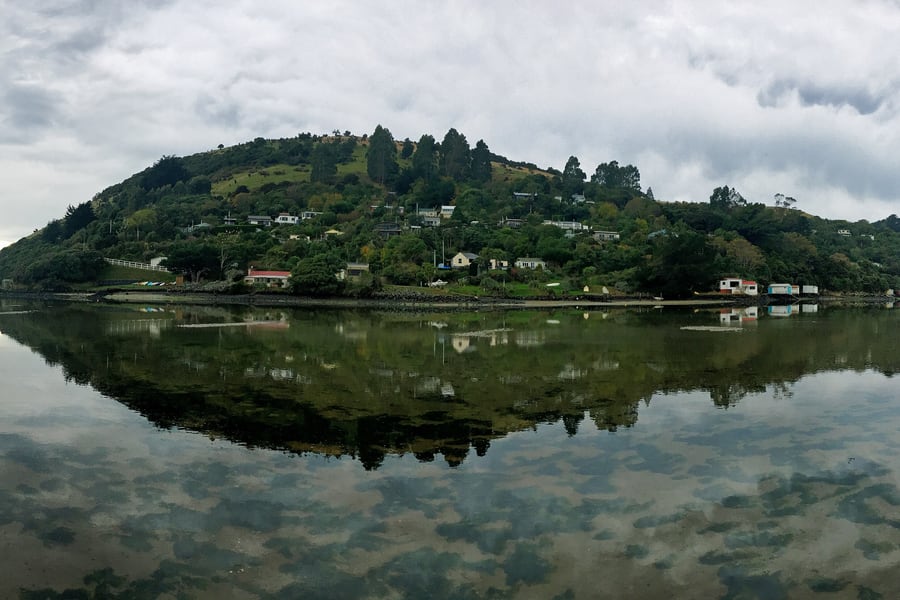
Thirteen kilometres pinned between the hillside and the water, on the alignment of the Dunedin and Port Chalmers Railway of 1872 — the first line in the country built to the national 1,067 mm gauge. Container cranes on one side, the Otago Peninsula on the other.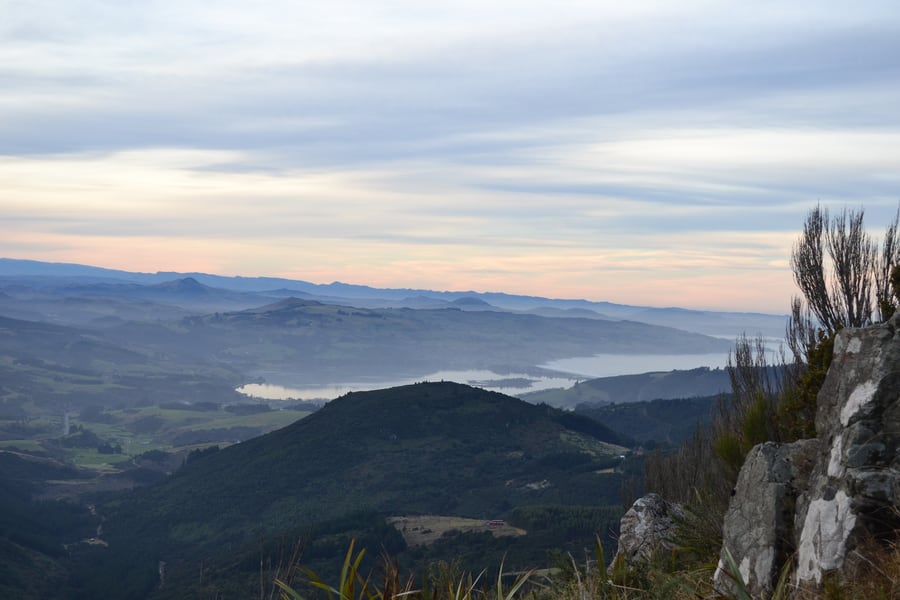 GeocacheNZ / Wikimedia Commons · CC BY-SA 3.0 · cropped
Through the hill at Mihiwaka
Above Deborah Bay the line leaves the harbour for about 1.3 kilometres of tunnel, cut in the 1870s and the reason the Christchurch railway took until 1878. You go in on a sheltered harbour and come out above the open Pacific.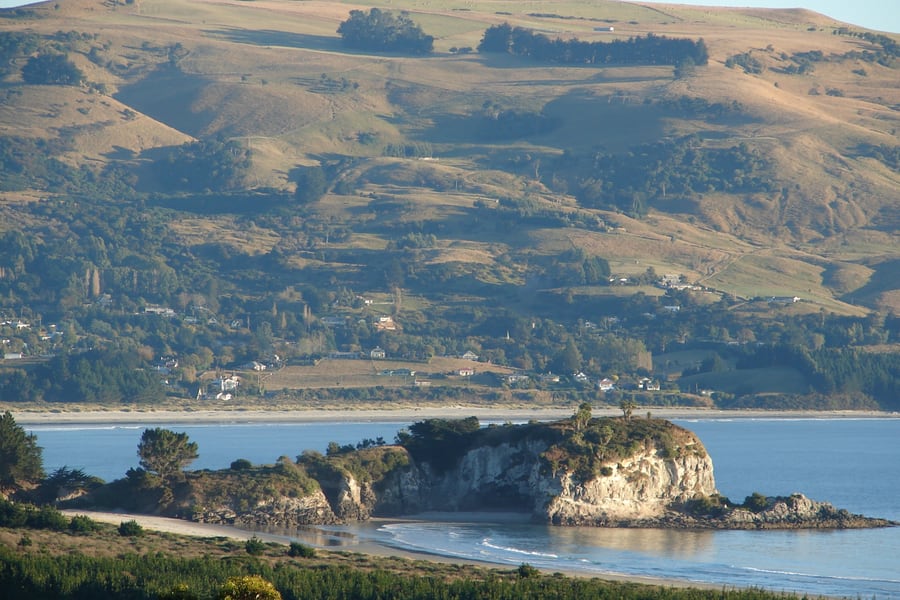 Alistair Paterson / Wikimedia Commons · CC BY-SA 2.0 · cropped
Blueskin Bay and the Arc stop
The line runs the full length of a tidal estuary that drains twice a day. At the head of it, by Evansdale, half the train gets off for ninety minutes at the Arc Brewing Co and waits at the same spot for the 5.15pm pick-up.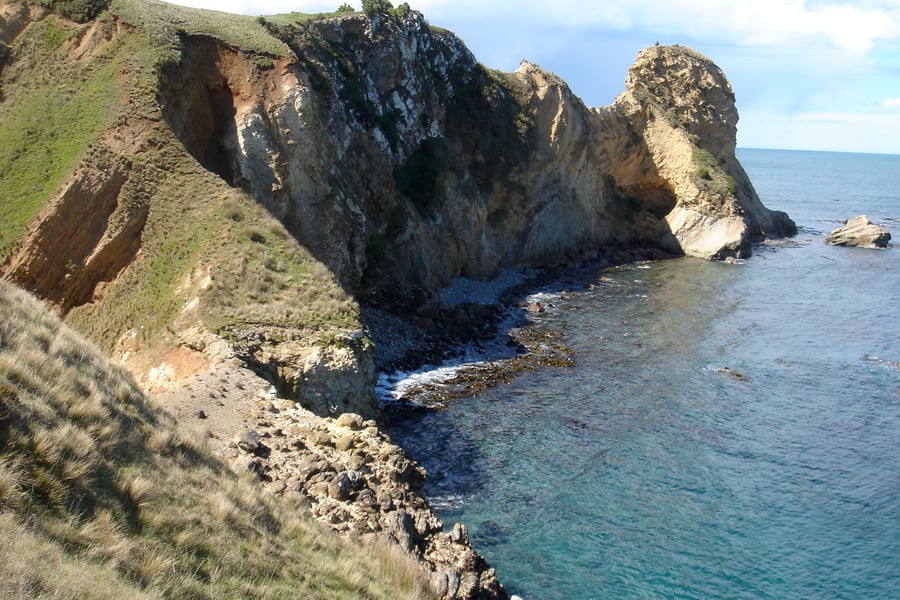 Dushan Jugum / Wikimedia Commons · CC BY-SA 4.0 · cropped
Seacliff, Karitane and the turn
The coastal half: Pūrākaunui, the cliff ledge at Seacliff, then Karitane under the Huriawa headland. The train turns at a crossing loop in the farmland at Merton — nobody is allowed off — and runs the same coast back in the evening light.A bit of history
Culture & experiences along the way
 Nankai / Wikimedia Commons · CC BY-SA 3.0 · cropped
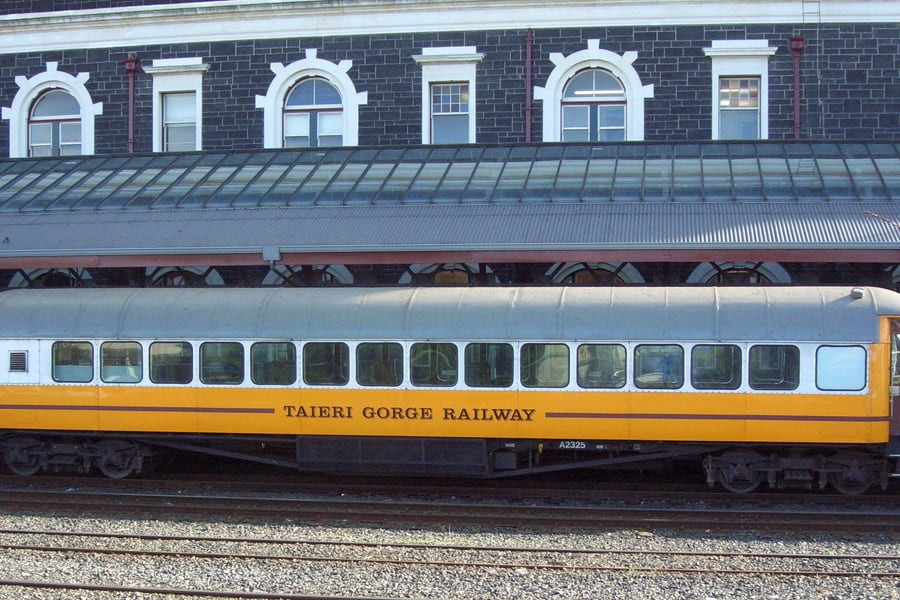
Wooden carriages and a live storyteller
The stock is New Zealand Railways from the 1930s — wooden-bodied 56-foot carriages in the operator's yellow, still lettered for the Taieri Gorge Railway this company used to be. Nothing is recorded: a guide works the train, and the café car is run by Precinct, a Dunedin kitchen, which cooks what it sells on board.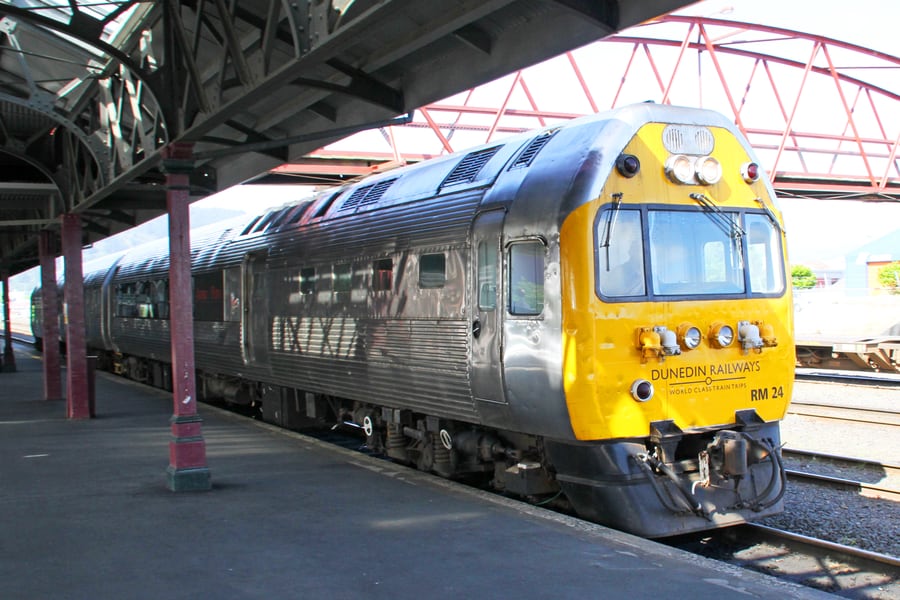 Tony Hisgett / Wikimedia Commons · CC BY 2.0 · cropped
The last passenger train on the line
The Southerner ran Christchurch to Invercargill until 10 February 2002, when it was withdrawn as uneconomic; since then no scheduled service has used this stretch. For most of the 2010s the Seasider was worked by a leased Silver Fern railcar, RM 24 — a 1972 Kawasaki-built stainless twin set — which went back to KiwiRail in 2019.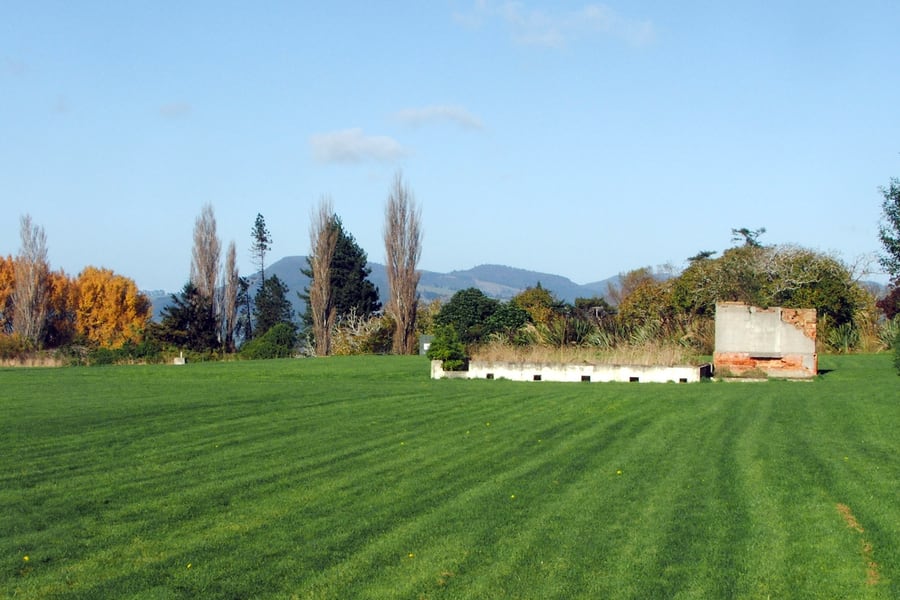 Grutness / Wikimedia Commons · CC BY-SA 3.0 · cropped
Seacliff, and the hill that beat the architect
The train passes below the site of Seacliff Asylum, finished in 1884 and then the largest building in New Zealand: four and a half million bricks, a 50-metre tower, and Robert Lawson, whose reputation the sliding hillside destroyed. Almost nothing is left. The ground is now the public Truby King Recreation Reserve.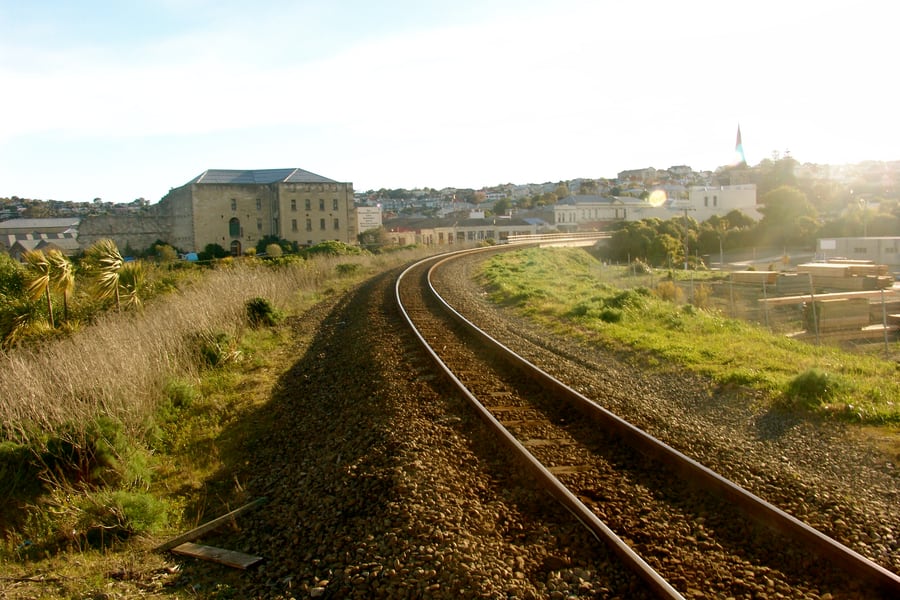 Bryce Edwards / Wikimedia Commons · CC BY 2.0 · cropped
The full day to Ōamaru
A handful of Saturdays a year the same train runs the Main South Line all the way to Ōamaru and waits four hours, timed to the town's two great dressing-up festivals — the Victorian Heritage Celebration in November and Steampunk NZ in early winter. It is nine and a half hours door to door.Timetables
One train, on a Saturday afternoon. The Seasider leaves Dunedin at 3.00pm and is back at 6.30pm — three and a half hours, and the only departure of the day. There is no morning service and no midweek service.
| Outward | Return | |
|---|---|---|
| Dunedin | dep 15:00 | arr 18:30 |
| Port Chalmers · Deborah Bay | passed | passed |
| Evansdale (Arc Brewing Co) | set down ~15:50 | pick up 17:15 |
| Seacliff · Karitane | passed | passed |
| Merton | turns | — |
Both trip options leave on the same train at the same minute and you choose between them when you book. Option 1 puts you down near the Arc Brewing Co at the head of Blueskin Bay for up to 90 minutes and picks you up at the same spot at 5.15pm. Option 2 stays aboard for the full run through Seacliff and Karitane to Merton; disembarking at Merton is not permitted.
Good to know:
- Fortnightly most of the year, weekly over the summer holidays. We swept the operator's booking system date by date from 8 September 2026 to 20 March 2027. Through spring it runs on alternate Saturdays — 12 and 26 September, 10 and 24 October, 7 and 21 November, 5 December. From mid- December it goes weekly: 12 and 19 December, then Friday 1 January (New Year's Day), then 9, 16, 23 and 30 January and 6 and 13 February. It drops back to fortnightly for 27 February, 13 and 20 March. Nothing is loaded beyond that yet.
- Check-in opens 60 minutes before departure and closes 15 minutes before it. Seating is allocated and confirmed at the ticketing desk in the station foyer.
- A separate full-day train runs to Ōamaru on the same line, timed to the town's festivals. The next one is Saturday 14 November 2026 for the Victorian Heritage Celebration: dep Dunedin 08:00, arr Ōamaru 10:45, dep Ōamaru 14:30, arr Dunedin 17:30 — nine and a half hours with something close to four in Ōamaru. Each leg is also sold one way. The operator has said the Steampunk NZ Festival train will run again for 3–7 June 2027 but has not yet published a date.
- The Seasider Express is not running. The operator's shorter 1h 45m cruise-ship version, which turns at Waitati and can set passengers down at Iona Church near Port Chalmers, is advertised as returning in summer 2026 and had no departures loaded when we checked.
- Trains run in all weather. Carriages are heated and air-conditioned and every one has a toilet; there is no wi-fi and no USB, and only limited mains power.
Times and running days as of September 2026, read from Dunedin Railway Station's own published information and verified departure by departure in its live booking system. Confirm before travelling at dunedinrailways.co.nz (opens in a new tab).
Tickets
Dunedin Railway Station sells this train direct, online or across the counter in the station foyer, and there is one class of travel. When we checked the operator's booking system in September 2026 a return was NZD 135 for an adult and NZD 45 for a child aged three to fifteen; infants under three travel free on an adult booking, and the same seat is sold as a family of four at NZD 309 or a family of five at NZD 369. Both trip options — the Arc Brewing Co stop and the full run to Merton — cost the same.
The full-day train to Ōamaru is priced separately: NZD 199 adult, NZD 59 child, NZD 459 and NZD 519 for the two family fares, or NZD 159 and NZD 49 one way. It carries bicycles, ten to a train. Otago residents pay a lower locals' rate on proof of address. Refunds run on a sliding scale — full at 21 days, half at seven, an exchange at 48 hours.
Book your tickets
The Seasider return
Dunedin to Merton and back
Three and a half hours up the coast and back, with the Arc Brewing Co stop-off sold at the same fare.
Book Tickets (opens in a new tab, on Dunedin Railway Station)via Dunedin Railway StationFamily return
Two adults and two children
Sold as one fare rather than four, with a five-person version for larger families.
Book Tickets (opens in a new tab, on Dunedin Railway Station)via Dunedin Railway StationThe Full Day+ to Ōamaru
Festival Saturdays only
Nine and a half hours with four in Ōamaru, and each leg also sold one way.
Book Tickets (opens in a new tab, on Dunedin Railway Station)via Dunedin Railway StationRail Passes
No rail pass covers this train. Interrail and Eurail are European products with no validity anywhere in New Zealand, and KiwiRail's Great Journeys brand — which has in the past sold a multi-trip Scenic Rail Pass for its three scenic trains and the Interislander ferry — does not include the Seasider. This is a different company: Dunedin Railway Station is owned by the Dunedin City Council, it runs over KiwiRail's Main South Line under its own arrangements, and its seats are sold only through its own booking system.
Two things do reduce the fare. Otago residents get a locals' rate on every standard journey, including this one, if they live in Dunedin City, Waitaki, Clutha, Central Otago or Queenstown-Lakes and can show an address at check-in — a household bill, a library card, a student ID or a driver's licence all count. And a family ticket is genuinely cheaper than the parts: four people travel for NZD 309 against NZD 360 bought singly, five for NZD 369 against NZD 405. Neither applies to the event trains, which the operator excludes from the locals' rate by name.
Checked against dunedinrailways.co.nz in September 2026.
Places to Visit
The Seasider is a Saturday afternoon, which leaves the rest of the weekend for the coast it runs along — and that coast is the reason to come. In thirty-five kilometres between Dunedin and Karitane there is a working container port with a Victorian main street, a fenced valley where kākā and takahē have been put back, the site of what was once the largest building in New Zealand, and a headland pā with a spring in it that made a siege pointless. All of it sits within an easy drive of the city, and most of it is free.
Further north, on the line the full-day train takes to Ōamaru, the country opens into North Otago: the oldest surviving farm buildings in the country on a clifftop above Waikouaiti, a beach of spherical boulders at Moeraki, and a limestone town that rebuilt itself around its own Victorian warehouses when the port trade left.
 Benchill / Wikimedia Commons · Public domain · cropped
Port Chalmers
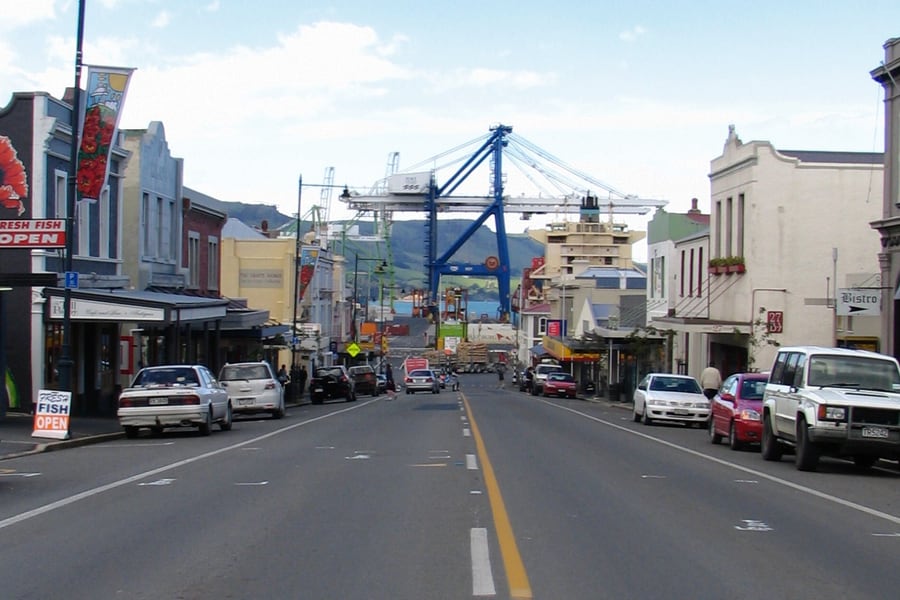
Otago's port and its oldest railway destination, and still a working container terminal — which is the joke of the main street, a row of Victorian shopfronts, galleries and a fish shop with three cranes standing at the end of it. The Otago Block was sold to the Otago Association here in 1844, and the town was named for the Free Church leader Thomas Chalmers by settlers who did not care for Kōpūtai, "full tide".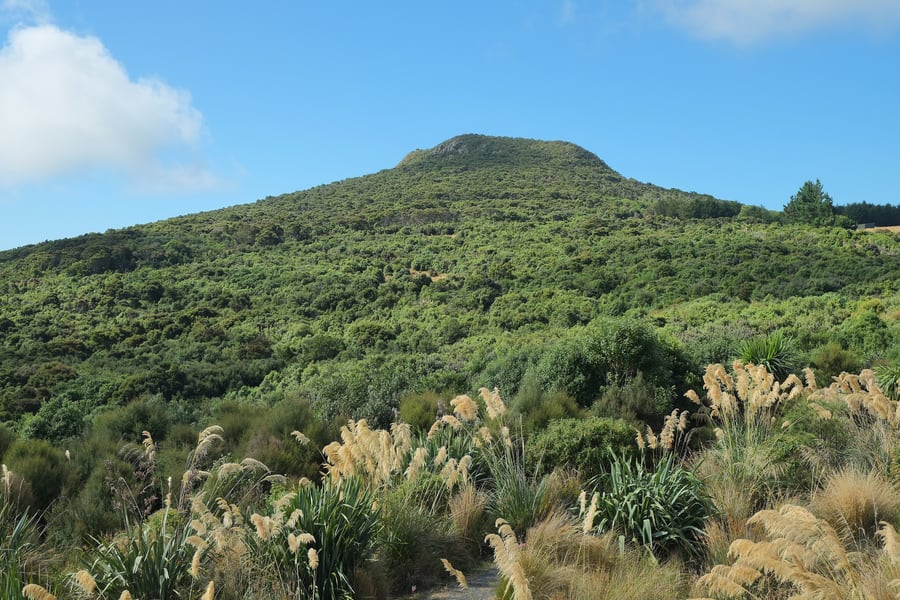 Pseudopanax / Wikimedia Commons · Public domain · cropped
Orokonui Ecosanctuary
Three hundred hectares of regenerating forest in the valley between Waitati and Pūrākaunui, ringed by nine kilometres of pest-proof fence with a buried skirt and a curved hood, and sealed in July 2007. Inside are kākā, takahē, tuatara, saddleback and the tallest measured tree in New Zealand — an 82-metre mountain ash left over from the plantation days. Visitor centre at the top of the valley.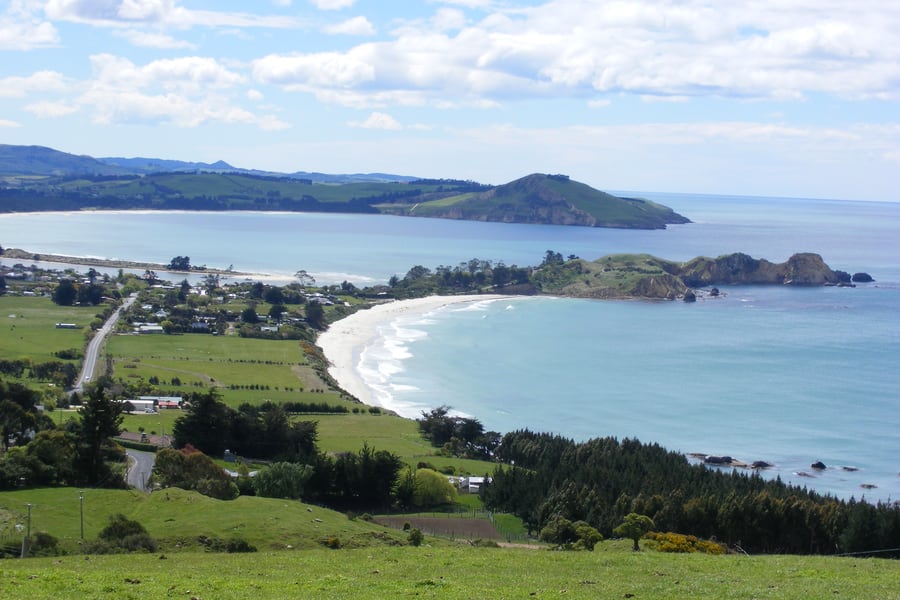 Dushan Jugum / Wikimedia Commons · CC BY-SA 4.0 · cropped
Huriawa, Karitane
A rocky headland a kilometre long, joined to the shore by an isthmus ninety metres wide, and the site of Te Pā a Te Wera — a Kāi Tahu fortress that outlasted a siege because it had its own spring, Te Punawai a Te Wera, inside the walls. Title was returned to the iwi in 1998; a 2.5-kilometre loop track runs round the reserve, above blowholes and sheer cliffs.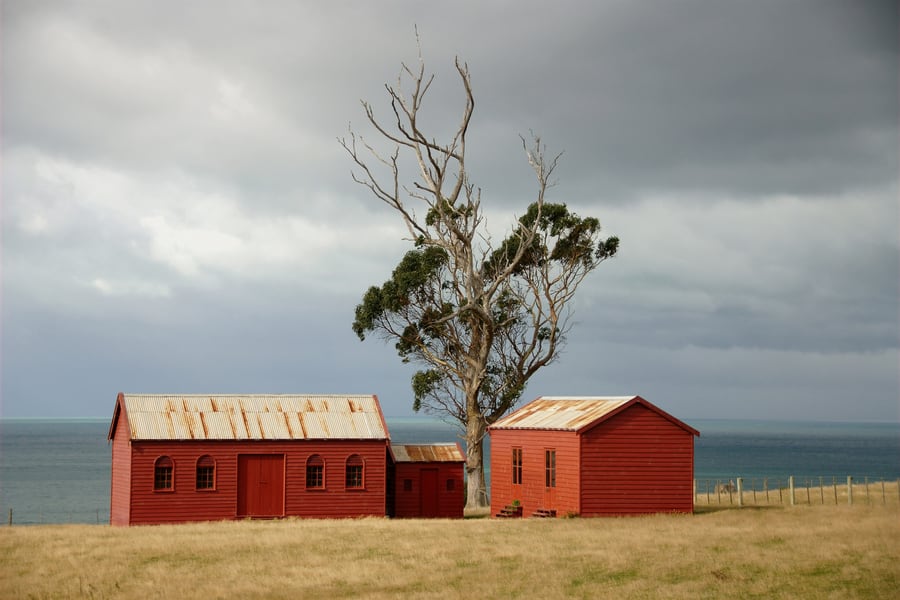 Karora / Wikimedia Commons · Public domain · cropped
Matanaka Farm
Five wooden buildings on a clifftop above the sea — a stable, a granary, a storehouse, a schoolhouse and a privy — put up from 1840 by the Sydney whaler Johnny Jones with timber brought across the Tasman. They are the oldest surviving farm buildings in New Zealand still standing where they were built, given to the nation in 1976 and now looked after by Heritage New Zealand. Open to the public; the homestead is not.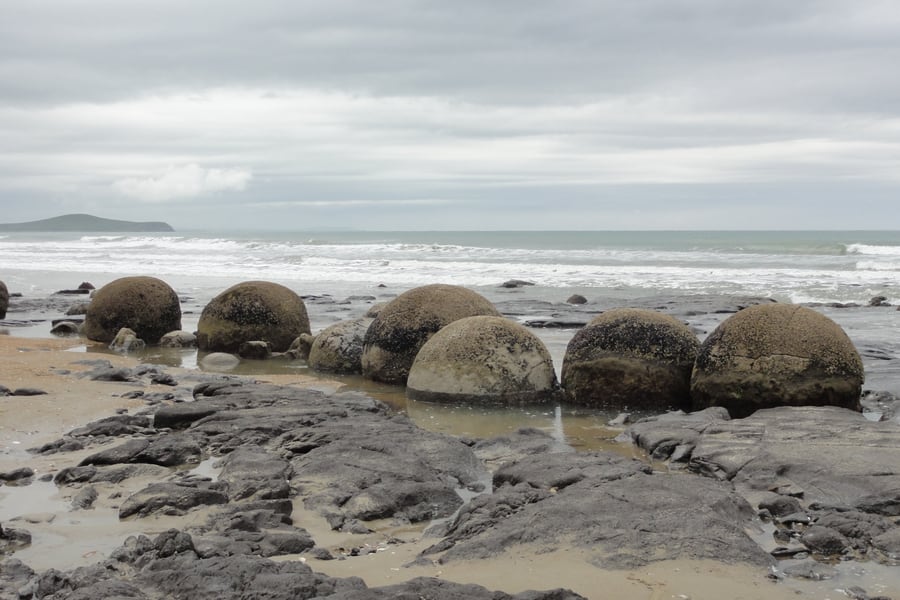 Andy king50 / Wikimedia Commons · CC BY-SA 3.0 · cropped
The Moeraki Boulders
Dozens of near-spherical concretions, the largest around two metres across, on a beach south of Ōamaru where the surf keeps uncovering them from the mudstone cliff behind. Māori tradition holds them to be the food baskets and gourds washed ashore from the wreck of the canoe Āraiteuru, which came apart off the Waitaki mouth. The full-day train runs past the top of the beach.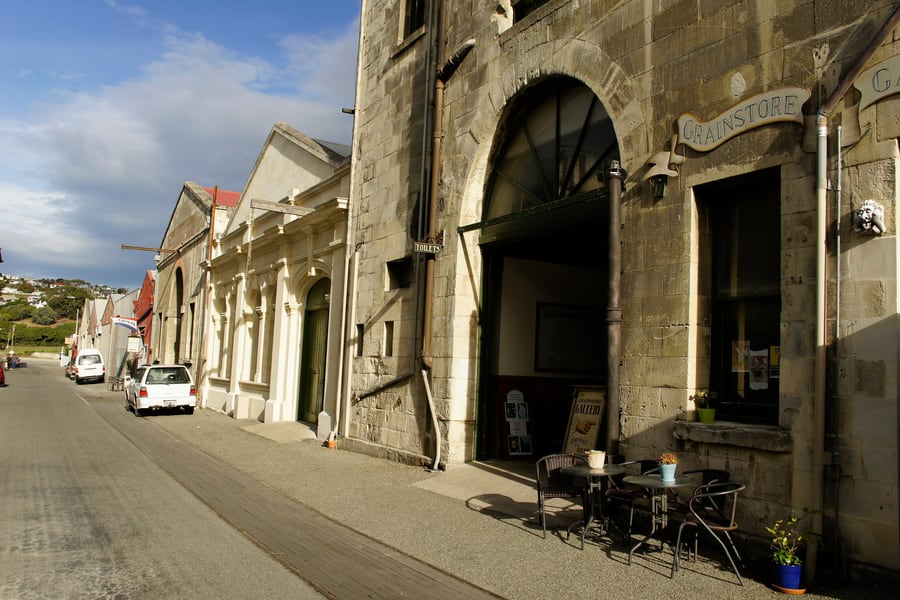 itravelNZ / Wikimedia Commons · CC BY 2.0 · cropped
Ōamaru's Victorian precinct
When the port trade collapsed, Ōamaru was left with the grandest set of Victorian commercial buildings in the country and no use for them — over seventy of them are now registered historic places, all cut from the soft white limestone quarried up the road. The warehouses around Harbour and Tyne Streets were taken on by a trust in 1987 and hold galleries, a bookbinder, a grain-store gallery and Steampunk HQ.Where to Sleep
The train starts and finishes at the same platform and gets back at half past six, so a bed in central Dunedin covers the whole day — and with check-in opening an hour before a 3pm departure, being able to walk to Anzac Avenue is worth more than a view. Parking around the station is pay-and-display and free on Sundays.
The one place on the route where staying out of the city makes sense is Port Chalmers, fifteen minutes up the harbour, which has its own galleries, pubs and fish. For the full-day train the other end matters instead: Ōamaru is ninety minutes' drive from Dunedin and the festival departures put you there for four hours, which is not long enough if the Victorian precinct is what you came for.
Where to stay
 AnnWoolliams / Wikimedia Commons · CC BY-SA 4.0 · cropped
Fable Dunedin
Princes Street, ten minutes' walk from the station
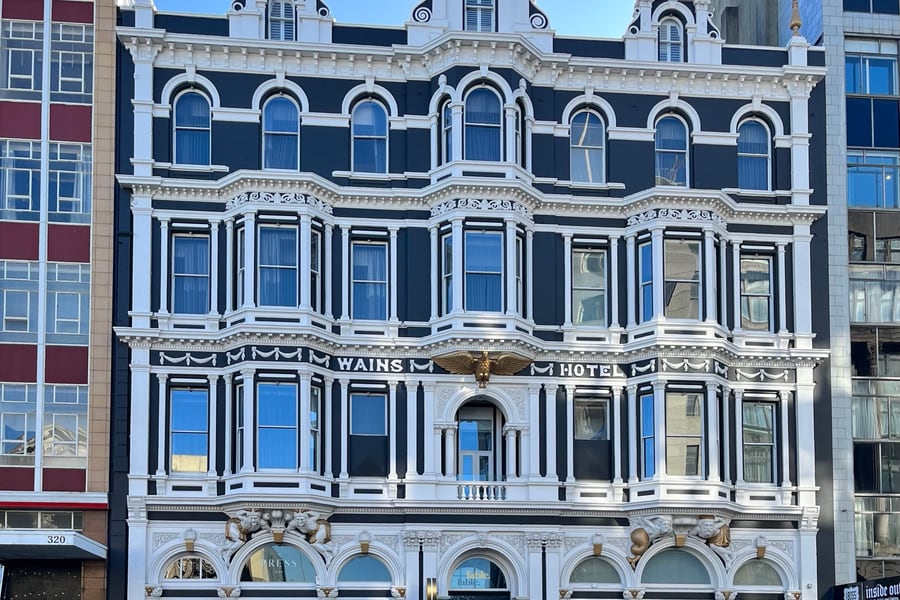
Fifty rooms and two suites inside the Wains Hotel of 1862, whose carved facade is one of the survivors of gold-rush Princes Street.
Check Availability (opens in a new tab, on fablehotelsandresorts.com)via fablehotelsandresorts.comArtica Art & Accommodation
Port Chalmers, fifteen minutes up the harbour
A ground-floor studio with its own entrance and deck in a villa of 1863, one of the oldest houses in the town.
Check Availability (opens in a new tab, on artica.co.nz)via artica.co.nzThe Brydone Hotel
115 Thames Street, Ōamaru
Built of carved Ōamaru limestone in 1881 and open ever since, in the middle of the town the full-day train runs to.
Check Availability (opens in a new tab, on brydonehotel.co.nz)via brydonehotel.co.nzQuestions or corrections
Planning this trip and stuck on something, or spotted a time, fare or detail that has changed? Send us a message about The Seasider. We read every one, and we update this page when something has changed.