Train de Charlevoix
Simon Legner / Wikimedia Commons · CC BY-SA 4.0 · cropped
- Distance125 km
- Duration4 h 30 each way
- Best season5 June to 1 November · every day
Introduction
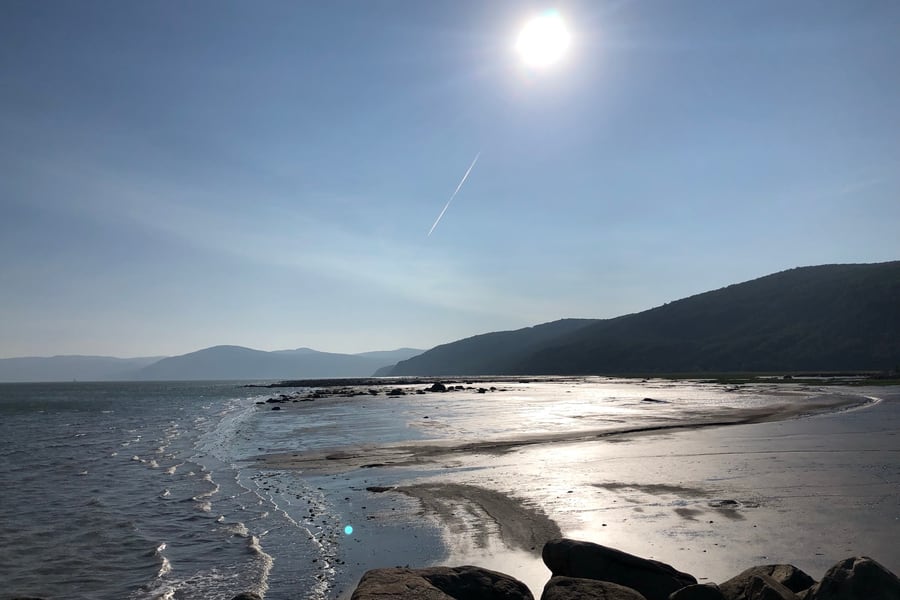
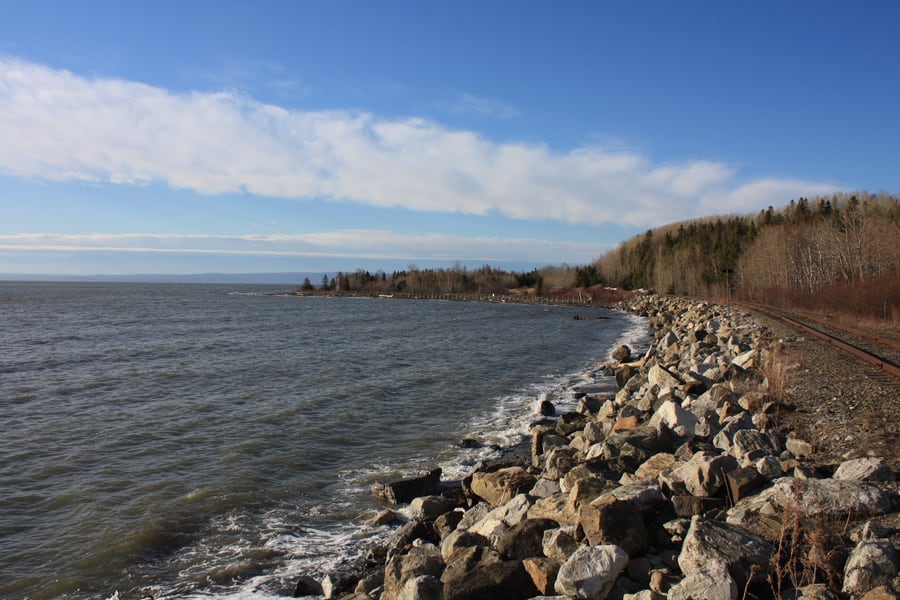
One train a day leaves the foot of the Chute Montmorency at eight in the morning and runs 125 kilometres north-east along the shore of the St Lawrence to La Malbaie, and one train comes back the same afternoon. There is no other passenger service on the line and no second departure. For most of the way the rails are between the Laurentian cliffs and the water, and in places — Cap Tourmente, Cap-aux-Oies, the run into Saint-Irénée — they are on the beach itself, with nothing between the track and the river but shingle.
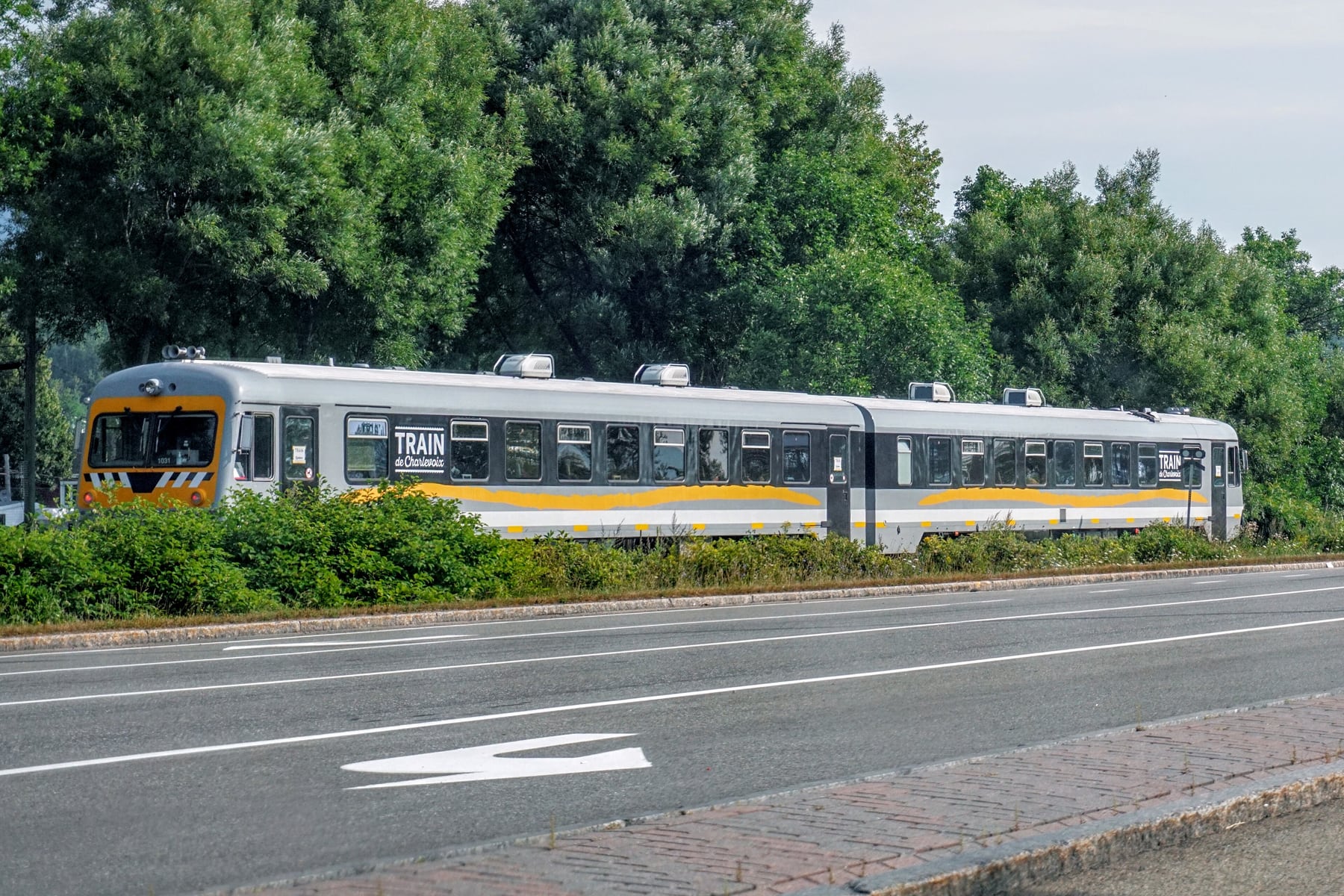
The train that does it is German. Two-car diesel railcars built for the Deutsche Bahn in 1981, bought second-hand after they were withdrawn at home, repainted grey and yellow and shipped across the Atlantic to work a line they were never designed for. They are ventilated rather than air-conditioned, and the operator says so on its own website.
The more surprising thing about this railway is that it is running at all. On 20 December 2024 the non-profit that operated it closed the books: public funding that had once been 55 per cent of turnover was down to five, the shortfall was CA$625,000, and the money did not arrive. The train stopped. Six months later it started again, restructured, with the tour operator Groupe Voyages Québec taking on the selling and the packages, and it carried close to 40,000 people in 135 days of 2025 — enough that the 2026 season opened a fortnight earlier than planned, on 5 June, and runs every single day until 1 November.
The Journey
The station at the Québec end is not in Québec City. It is at Chute-Montmorency, out along the Côte-de-Beaupré, in the Sépaq park at the foot of the falls, and the train crosses the Montmorency river on a girder bridge within a minute of leaving — the waterfall directly upstream, the St Lawrence and the Île d'Orléans bridge directly downstream. From there the first forty minutes run along the old pilgrimage railway to Sainte-Anne-de-Beaupré, through a strip of villages and market gardens with the escarpment always on the left.
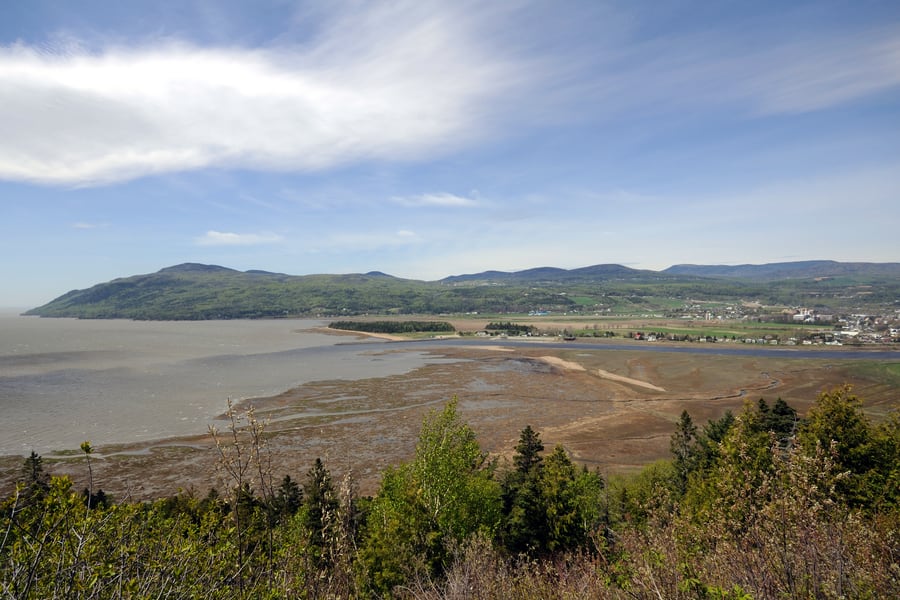
Past Sainte-Anne the plain runs out. The cliff comes down to the water at Cap Tourmente and the railway threads the gap below it, on the edge of a marsh where greater snow geese stop in tens of thousands each spring and autumn. This is the section that took the money and the years: two tunnels, and something in the order of nine hundred bridges and culverts between Beaupré and Clermont, which works out at roughly one every 165 metres. Le Massif and Petite-Rivière-Saint-François come next, at the point where the cliffs are highest and the ski hill above the line has the biggest vertical drop in eastern Canada.
Baie-Saint-Paul, two and a half hours out, is not on the through line. The train turns off on to a short dead-end branch that finishes on the lawn of the Hôtel Le Germain, stands for half an hour while people get off and on, and then reverses back to the junction to carry on. It does this in both directions, every day.
The last hour, on the shore
After Baie-Saint-Paul the line drops to sea level and stays there. Saint-Joseph-de-la-Rive, at the foot of Les Éboulements, is the ferry landing for Isle-aux-Coudres, three kilometres offshore. Then Cap-aux-Oies, then Saint-Irénée, where the station is on the sand of the Chemin des Bains, and finally La Malbaie at half past twelve, in the Pointe-au-Pic sector under the Manoir Richelieu. Everything between Baie-Saint-Paul and La Malbaie is inside the Charlevoix astrobleme, a 54-kilometre impact structure and the eleventh largest identified on Earth; the hill behind Saint-Joseph-de-la-Rive is its central peak and the ring of farmland the train crosses is the crater floor.
There is half an hour at La Malbaie and then the same train goes back — 13:00 from La Malbaie, another half-hour at Baie-Saint-Paul, and Chute-Montmorency at 17:30.
The trains
The railcars are Deutsche Bahn class 628 two-car units, built in 1981 and bought after they were taken out of service in Germany in 2008. One of them — the pair numbered 1023 and 1026 here — was 628 102, one of only three class 628.1 pre-production units ever built, all three of them based at Kempten in the Allgäu, and the version whose trials cleared the way for the series that followed. It was overhauled at Hennigsdorf outside Berlin before it crossed the Atlantic.
The train does not turn round at either end, so you face forward on the way out and backward on the way back. There is one washroom per car, a bar selling Charlevoix beer and wine, and three steps up from the platform with no wheelchair access through the doors. If facing forward both ways matters, the Espace Groupe — four seats round a table — is the way to do it.
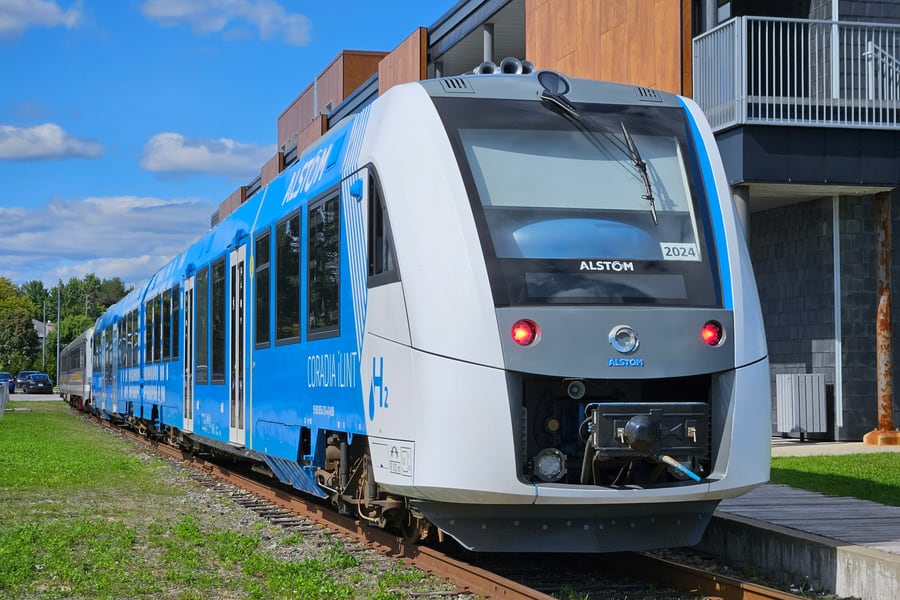
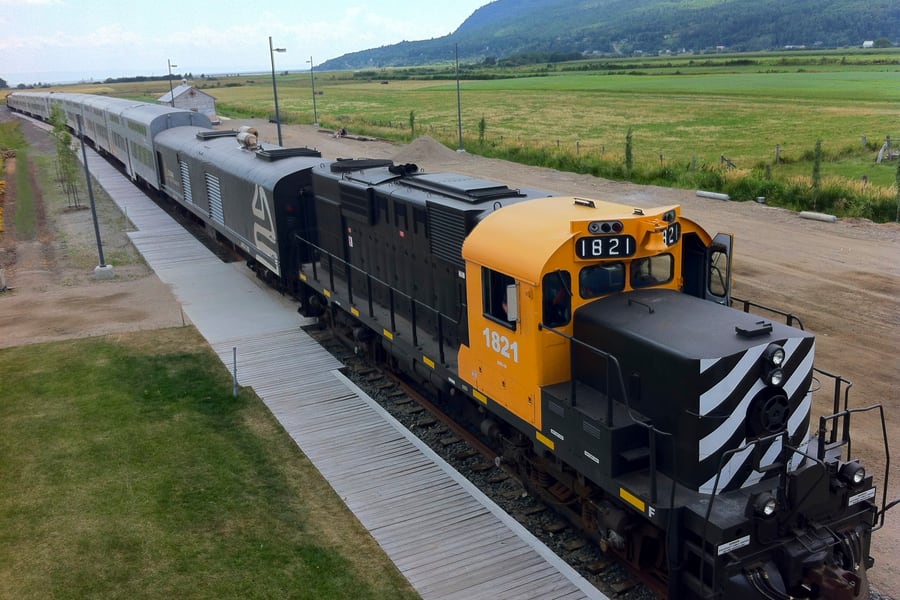
Two other formations have worked this line, and the operator's own description of what you will board is the German railcars. The first is a locomotive-hauled set — Montreal-built RS-18 diesels on the front of panoramic coaches rebuilt from double-deck Chicago commuter cars. The second ran for a few months in the summer of 2023, when an Alstom Coradia iLint — a hydrogen railcar — worked a demonstration service between Montmorency and Baie-Saint-Paul. That one was a trial, and it went home.
Along the route
 Wladyslaw / Wikimedia Commons · CC BY-SA 3.0 · cropped
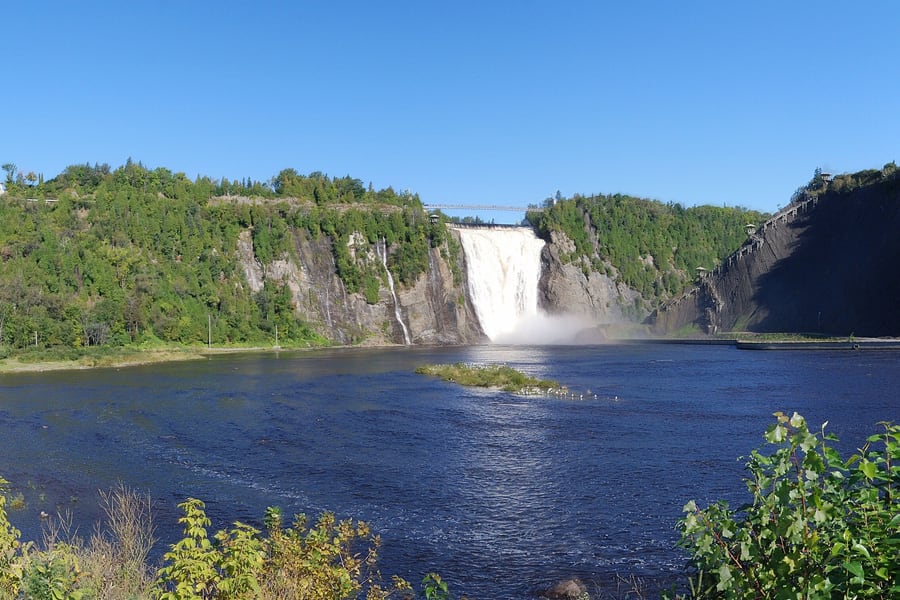
Out from under the falls
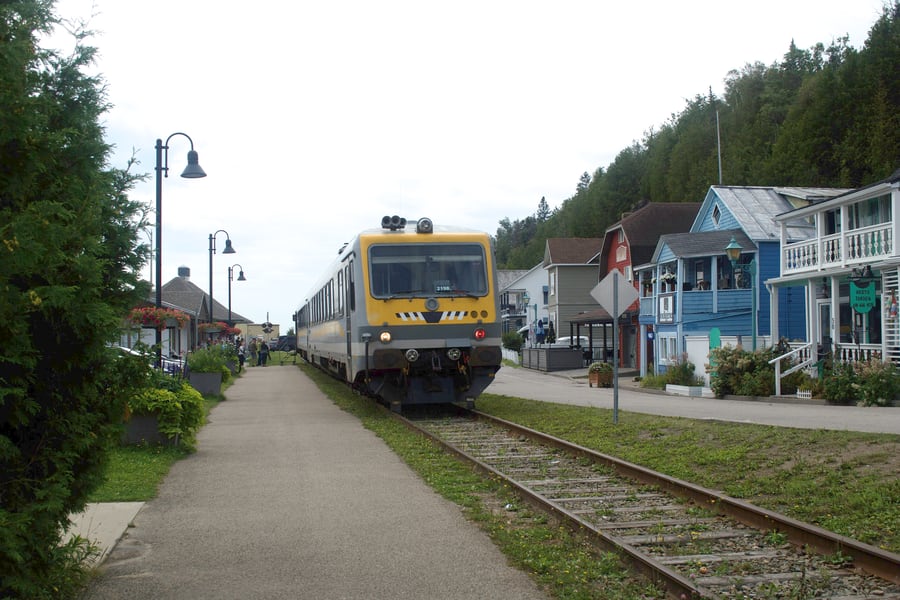
The train starts at the foot of the Chute Montmorency, 83 metres of water and thirty metres more than Niagara, and crosses the river on a girder bridge within a minute of leaving. Sépaq's park, its 487 steps and its footbridge are directly above the platform.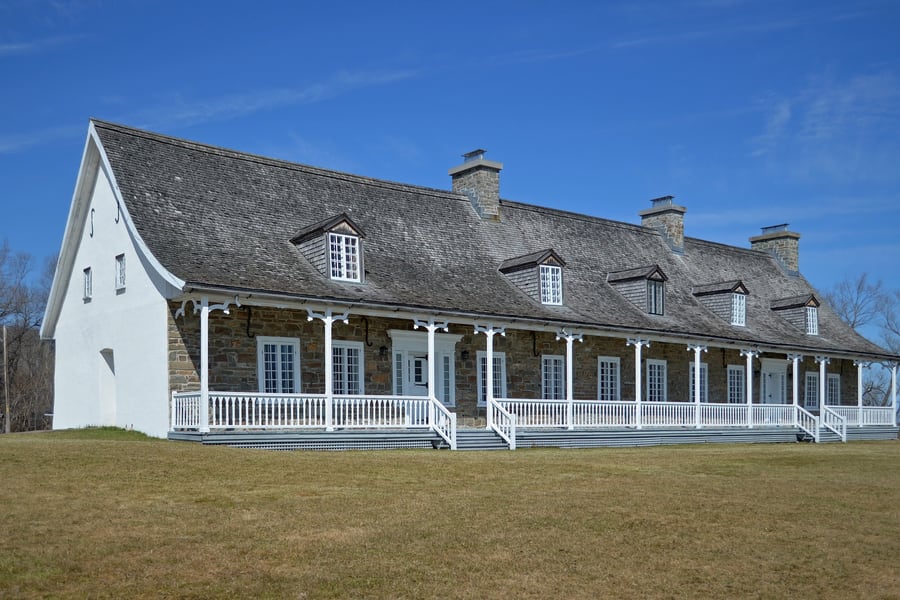 Selbymay / Wikimedia Commons · CC BY-SA 3.0 · cropped
Round Cap Tourmente
Past Sainte-Anne-de-Beaupré the plain narrows to a shelf between the escarpment and the river, and the line threads it below the cape on the edge of the wildlife area. Two tunnels and something like nine hundred bridges and culverts were needed to get through.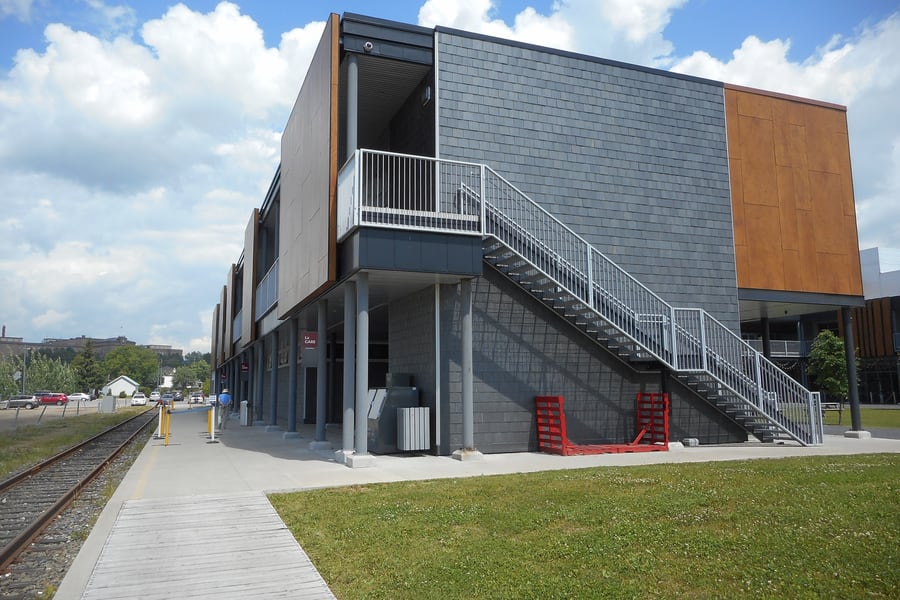 Jeangagnon / Wikimedia Commons · CC BY-SA 4.0 · cropped
The dead end at Baie-Saint-Paul
Baie-Saint-Paul is not on the through line. The train turns off on to a short branch that ends on the lawn of the Hôtel Le Germain, sits for half an hour, and reverses back out to the junction to carry on — both ways, each day.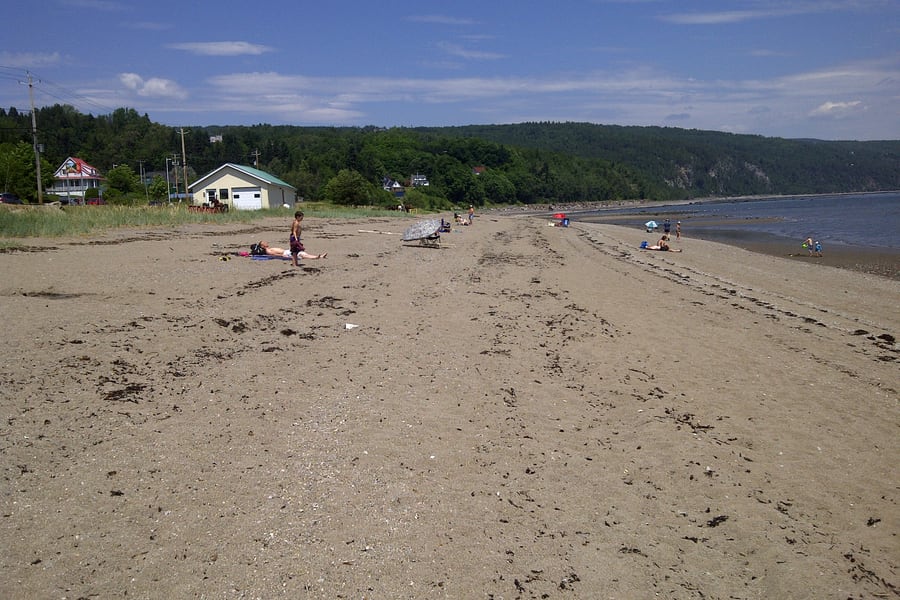 Gaétan Veillette / Wikimedia Commons · CC BY-SA 3.0 · cropped
The last hour on the beach
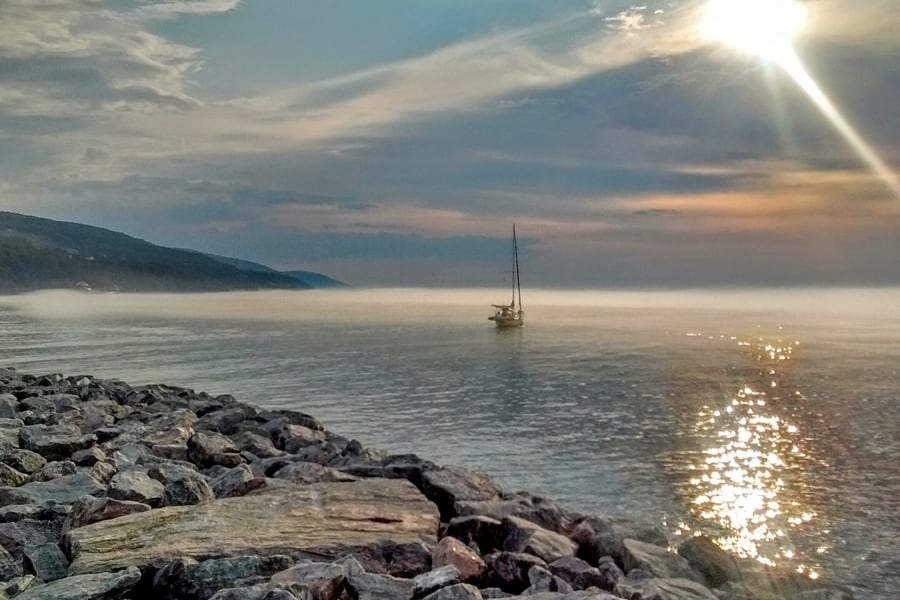
From Saint-Joseph-de-la-Rive the railway drops to sea level and stays there, running on the shingle past Cap-aux-Oies and into Saint-Irénée, where the station is on the sand. Isle-aux-Coudres sits three kilometres offshore for most of it.A bit of history
Culture & experiences along the way
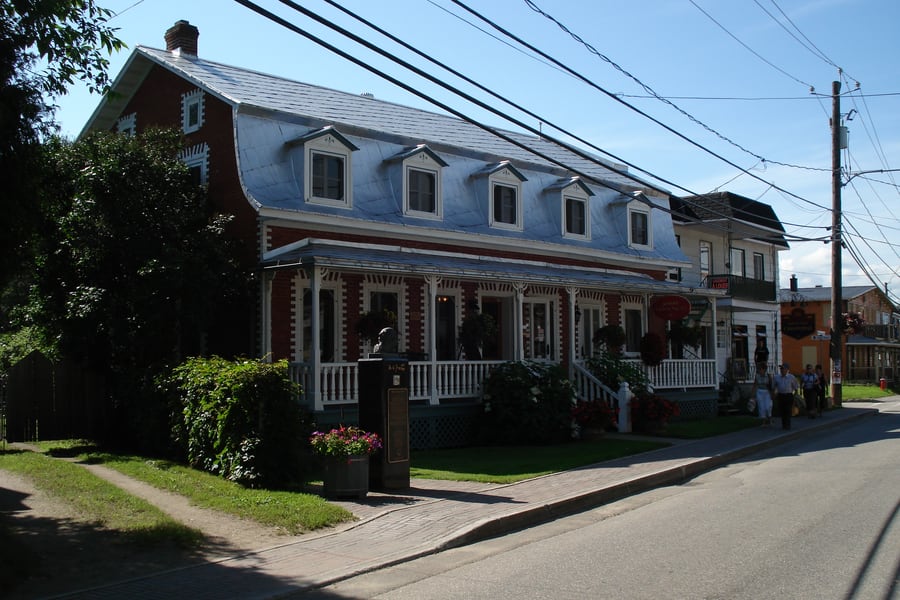 Mathieu Brossais / Wikimedia Commons · CC BY 4.0 · cropped
The circus that bought the railway
The Cirque du Soleil was founded in Baie-Saint-Paul in 1984 by three street performers. One of them, Daniel Gauthier, sold his stake and bought Le Massif in 2002; his group put the passenger service back on this line in 2011. The town is still full of galleries and studios, and it is a twenty-minute walk from the station.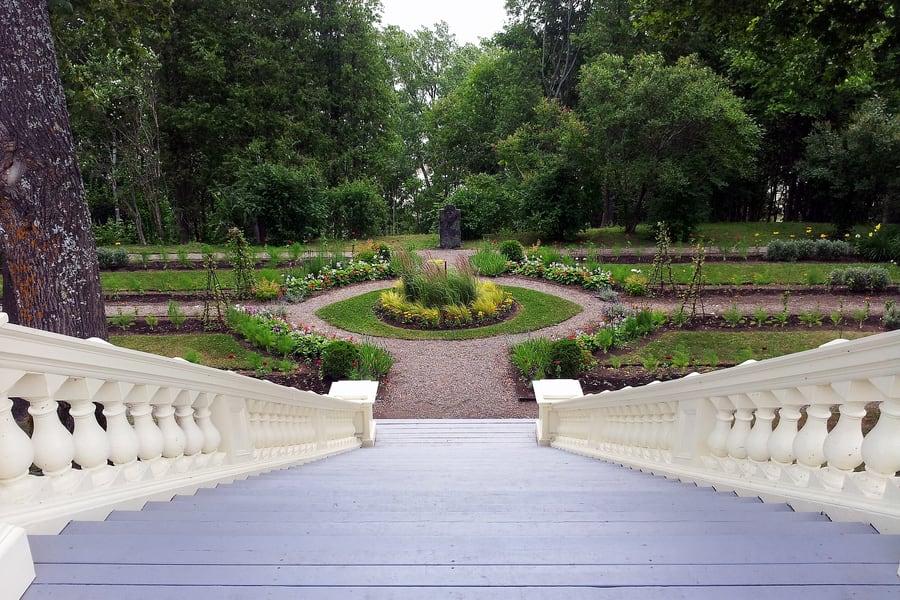 Guerinf / Wikimedia Commons · CC BY-SA 4.0 · cropped
A summer of music at Saint-Irénée
Domaine Forget de Charlevoix, on the hillside above the Saint-Irénée beach, is an international music and dance academy that runs a festival through the summer alongside its teaching. Its grounds — formal gardens, a sculpture garden and walking trails above the river — are open to visitors between concerts.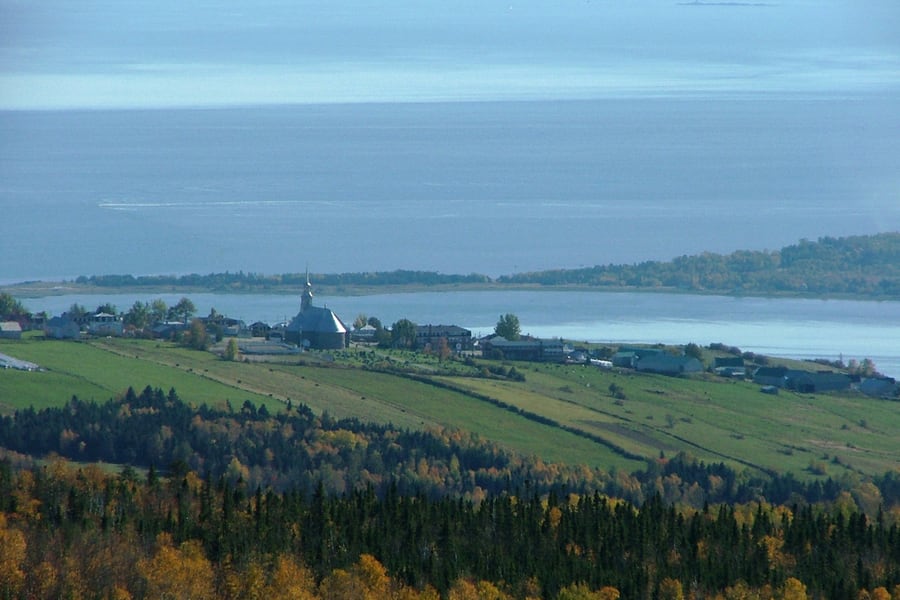 Malagauche / Wikimedia Commons · CC BY-SA 3.0 · cropped
Riding through an impact crater
Everything from Baie-Saint-Paul to La Malbaie sits inside the Charlevoix astrobleme, a 54-kilometre impact structure and the eleventh largest identified on Earth. Mont des Éboulements, the hill behind Saint-Joseph-de-la-Rive, is its central peak; the arc of farmland the train crosses is the crater floor.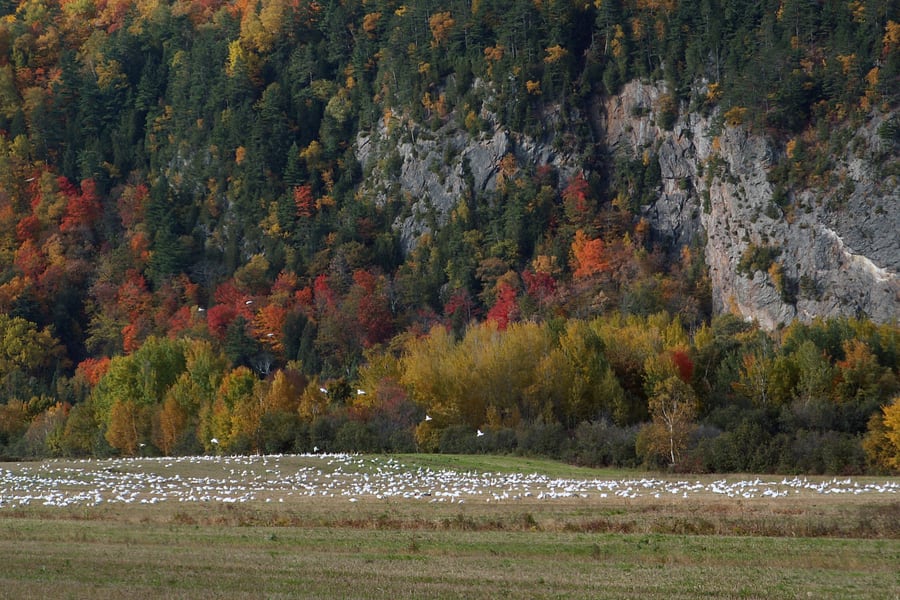 Cephas / Wikimedia Commons · CC BY-SA 3.0 · cropped
The geese at Cap Tourmente
The train's first half-hour runs along the edge of the Cap Tourmente National Wildlife Area — 2,308 hectares of bulrush marsh below the cape, a Ramsar wetland since 1981 and the first in North America. Greater snow geese stop here in tens of thousands each spring and autumn, on their way between the Arctic and the eastern seaboard.Timetables
One train a day, and it is the same train both ways. It leaves Québec (Chute-Montmorency) at 08:00, reaches La Malbaie at 12:30, turns round and leaves at 13:00, and is back at Chute-Montmorency at 17:30. There is a scheduled half-hour break at Baie-Saint-Paul in each direction, which is what makes the short hops possible.
The 2026 season runs from 5 June to 1 November and the train runs every day of it — 150 consecutive dates, with no rest day and no reduced week. There is no winter service.
| Station | Outbound | Return |
|---|---|---|
| Québec · Chute-Montmorency | dep 08:00 | arr 17:30 |
| Sainte-Anne-de-Beaupré | 08:40 | 16:20 |
| Le Massif · Club Med | 09:30 | 15:30 |
| Petite-Rivière-Saint-François | 09:40 | 15:25 |
| Baie-Saint-Paul | arr 10:30 · dep 11:00 | arr 14:30 · dep 15:00 |
| Saint-Joseph-de-la-Rive | 11:30 | 13:40 |
| Saint-Irénée | 11:50 | 13:20 |
| La Malbaie · Pointe-au-Pic | arr 12:30 | dep 13:00 |
Good to know:
- Arrival times at Baie-Saint-Paul and La Malbaie are approximate — the operator marks them as such on its own schedule. The departures are not.
- Only three of the eight stops sell tickets. Québec (in the Sépaq building at the foot of the falls, 08:00–16:00 daily), Baie-Saint-Paul and La Malbaie are staffed; Sainte-Anne-de-Beaupré, Le Massif, Petite-Rivière-Saint-François, Saint-Joseph-de-la-Rive and Saint-Irénée are boarding points with free parking and nothing else. You can buy on board at those, subject to seats being left. Book ahead: the train sells out, and in leaf season 2025 it had to be doubled more than fifteen times in six weeks.
- Be there thirty minutes before departure, which the operator asks for at every stop.
- The train does not run round its train. You face forward one way and backward the other, and the river is on your side either way.
- The Québec terminus is easy to miss on a GPS. Some devices route to the top of the falls rather than the base; the entrance faces the Île d'Orléans bridge and is reached from the Dufferin-Montmorency autoroute eastbound or Route 138 westbound.
- Bicycles travel for CA$20, panniers removed, and there is hire at Baie-Saint-Paul and La Malbaie. Electric bikes are refused — the staff are not permitted to lift them.
Times as of September 2026, from the operator's published schedule and cross-checked against its own booking calendars. Confirm before travelling at traindecharlevoix.com (opens in a new tab).
Tickets
Everything is sold as a return, and there is only one train to be on. Québec to La Malbaie is CA$268 round trip, Québec to Baie-Saint-Paul CA$169, and the short hop from Baie-Saint-Paul to La Malbaie CA$99 — per person over two, before tax. On Mondays and Tuesdays through the season the two Québec fares drop to CA$183.50 and CA$84.50; the discount falls on the Québec–Baie-Saint-Paul leg, which is why the short fare never moves.
Seats on the river side cost CA$40 more one way or CA$80 return, and a table for four is priced the same way. Read the conditions before you book: train tickets are not refundable and the date cannot be changed. Packages with a hotel can be cancelled up to fifteen days out for CA$100 a head.
Fares checked September 2026 at traindecharlevoix.com (opens in a new tab); Canadian dollars, per person, taxes not included.
Book your tickets
Québec to La Malbaie
The whole line, there and back in a day
Four and a half hours each way with two breaks, out at 08:00 and back at 17:30.
Book Tickets (opens in a new tab, on traindecharlevoix.com)via traindecharlevoix.comQuébec to Baie-Saint-Paul
Two and a half hours, and a day in the town
The cliff half of the line, with four and a half hours ashore before the train goes back.
Book Tickets (opens in a new tab, on traindecharlevoix.com)via traindecharlevoix.comBaie-Saint-Paul to La Malbaie
The shore section only, ninety minutes each way
The stretch that runs on the beach, joined and left in the middle of the day.
Book Tickets (opens in a new tab, on traindecharlevoix.com)via traindecharlevoix.comRail Passes
No rail pass covers this journey, and none exists that could. Interrail and Eurail do not apply anywhere in Canada. This is not a VIA Rail train either: the Charlevoix line is privately owned, the service is run by the non-profit Réseau Charlevoix, and every ticket is sold through the operator's own site or through Groupe Voyages Québec, which has been its exclusive package distributor since the 2025 relaunch.
VIA's two remaining discount cards are irrelevant here by geography as well as by operator. The Corridor Discount Card covers Québec City to Windsor and the Southwestern Ontario card covers Toronto to Windsor, Sarnia or Niagara — both of them west and south-west of Québec City, while this line goes north-east. The old Canrailpass, which once covered the whole VIA network, no longer exists.
There is also no single-leg ticket. Every fare on this line is a return, and the cheapest way to ride part of it is to buy the shorter return rather than to look for a pass or a concession: the Baie-Saint-Paul to La Malbaie round trip is CA$99 against CA$268 for the whole line. The only discount published is the Monday and Tuesday sale price on the two Québec fares, which is applied automatically at booking.
Pass conditions and fare products checked September 2026 at traindecharlevoix.com (opens in a new tab).
Places to Visit
Eight stops in 125 kilometres, and the timetable decides which of them you can actually use. The train gives you half an hour at La Malbaie and half an hour at Baie-Saint-Paul, so anything more than a look round the station means buying the shorter return and staying a night — or riding out one day and back the next. Below are the places worth the stop, in order from Québec.
 Cephas / Wikimedia Commons · CC BY-SA 3.0 · cropped
Chute-Montmorency
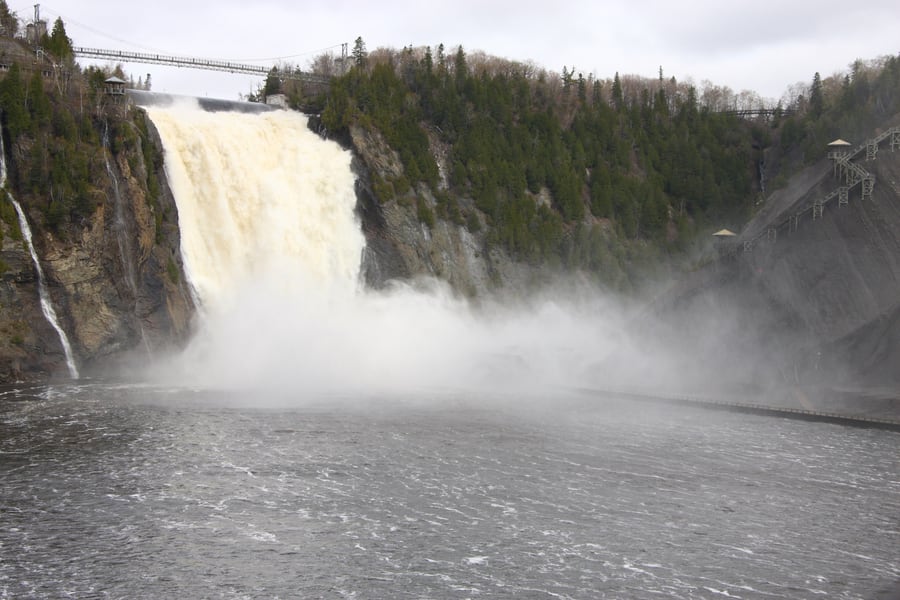
The departure point, and a destination in its own right: a waterfall of 83 metres at the mouth of the Montmorency river, the highest in Québec and thirty metres taller than Niagara. A staircase of 487 steps climbs the cliff beside it, a suspension bridge crosses the lip and a cable car saves the walk. The ticket office is in the Sépaq building at the foot of the falls, open 08:00 to 16:00 every day.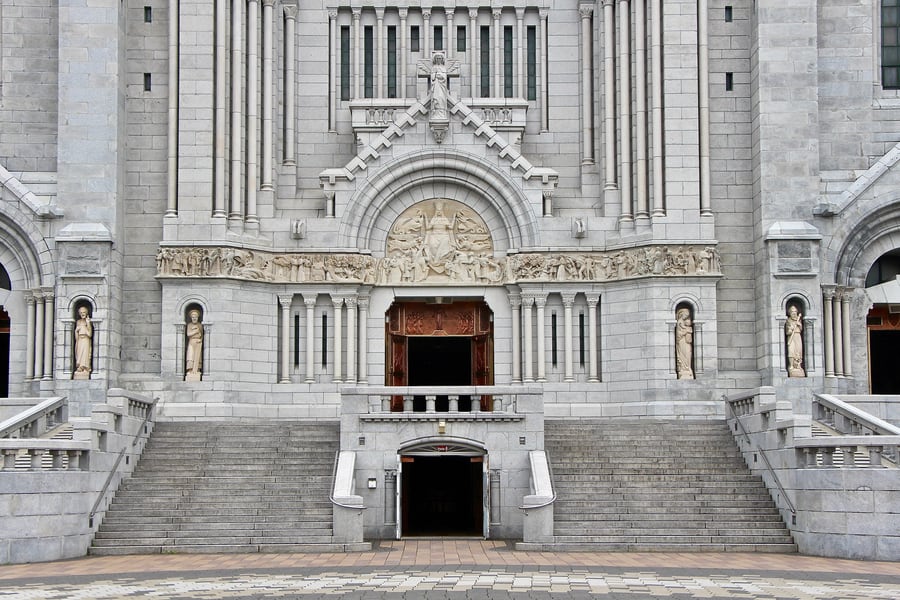 Thomas1313 / Wikimedia Commons · CC BY-SA 4.0 · cropped
Sainte-Anne-de-Beaupré
The reason the first section of this railway was built. Pilgrims have come to the shrine since the seventeenth century, and the line that opened in 1889 was known as the chemin de fer de la Bonne Sainte-Anne; in 1894 alone it carried 219,559 people. The church then standing burned in March 1922, and the basilica that replaced it was begun the next year and not topped out until 1962. The station is behind the museum, and sells no tickets.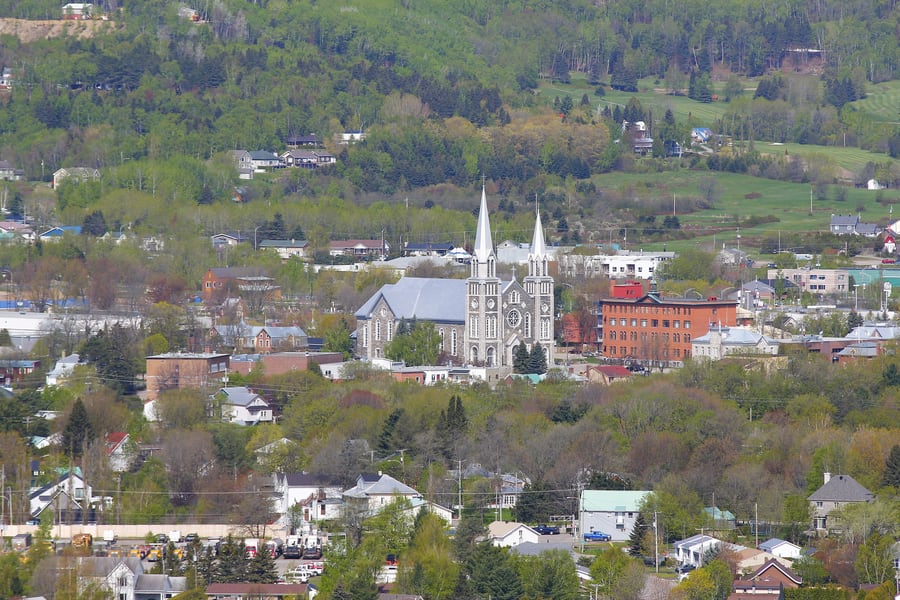 Veilleux79 / Wikimedia Commons · CC BY-SA 4.0 · cropped
Baie-Saint-Paul
A town of some seven thousand at the mouth of the rivière du Gouffre, and the one stop worth a whole day. Painters have worked here for a century, the galleries and the contemporary art museum are within a few streets of each other, and the Cirque du Soleil began in these streets in 1984. The station is on the grounds of the Hôtel Le Germain, at the end of its own branch line.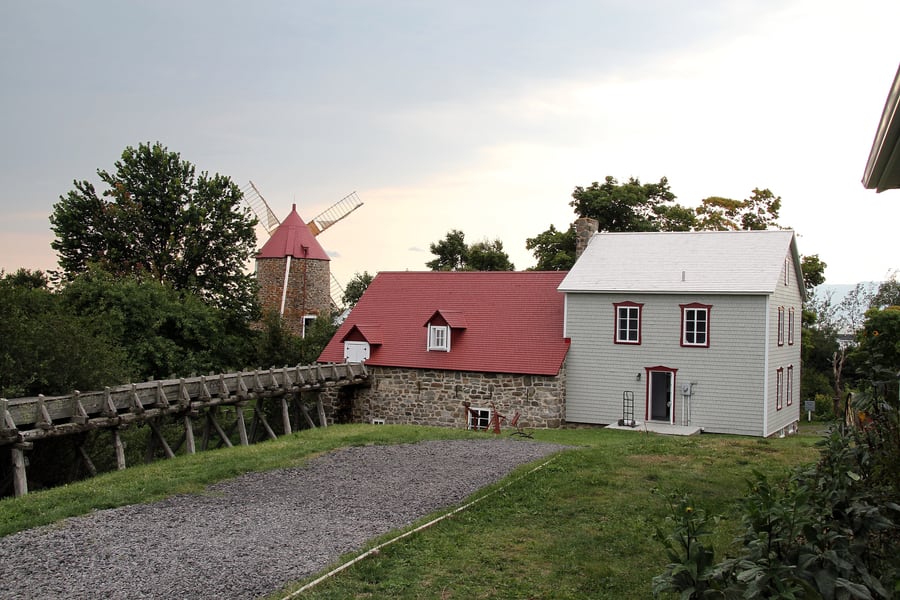 Malimage / Wikimedia Commons · CC BY-SA 3.0 · cropped
Isle-aux-Coudres
Ten kilometres long, four wide, three kilometres off the shore the train runs along, and reached by a free ferry from the quay at Saint-Joseph-de-la-Rive. Its two mills stand side by side: a water mill of 1825, built after a year of famine when the island had no way to grind its grain, and a windmill of 1836 added because the first one was too slow. Both were silenced in 1948 and restored from 1982.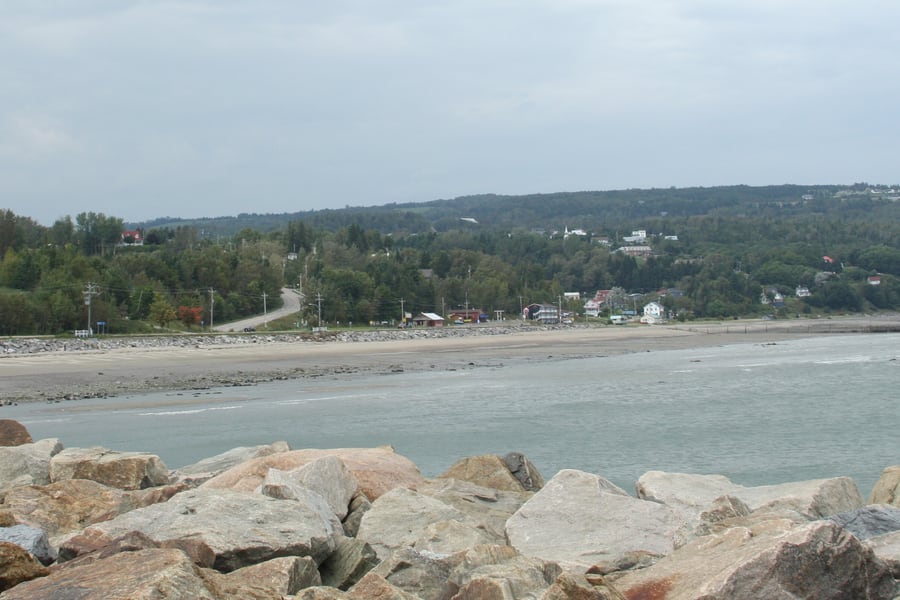 David Barillet-Portal / Wikimedia Commons · CC BY-SA 3.0 · cropped
Saint-Irénée
A village on the mouth of the Jean-Noël river where the station is on the beach itself, on the Chemin des Bains. The sand runs for a couple of kilometres and the part of the municipality along it is still called Saint-Irénée-les-Bains. Domaine Forget and its summer festival are on the hillside above. Boarding point only, free parking, no ticket office.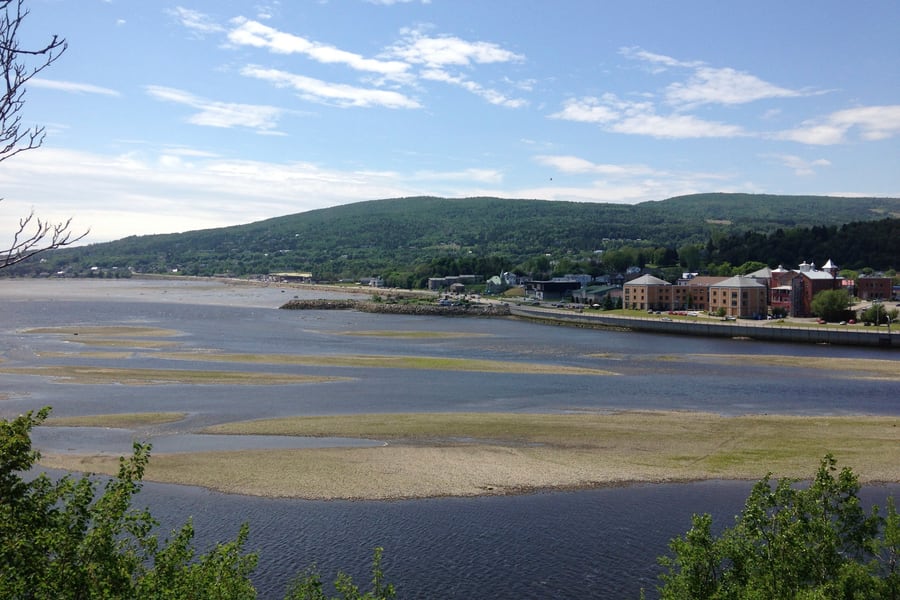 Tristan in Ottawa / Wikimedia Commons · CC BY-SA 2.0 · cropped
La Malbaie
The far end, named by Champlain in 1608 when he found the bay too muddy to anchor in and called it malle baye. The station is in the Pointe-au-Pic sector on the chemin du Havre, below the Manoir Richelieu and the Casino de Charlevoix. The train allows about half an hour here before it turns round, so this is the stop to break the journey at rather than simply visit.Where to Sleep
The train is sold as a day out, but the operator's own business is packages: it works with seven hotels in Charlevoix and prices train and room together, which is usually cheaper than buying the two separately. Baie-Saint-Paul and La Malbaie are where the rooms are, and the two below are the ones the line runs to the door of. Book early — Charlevoix fills for the autumn colours, which is also when the train is busiest.
Where to stay
 Jeangagnon / Wikimedia Commons · CC BY-SA 4.0 · cropped
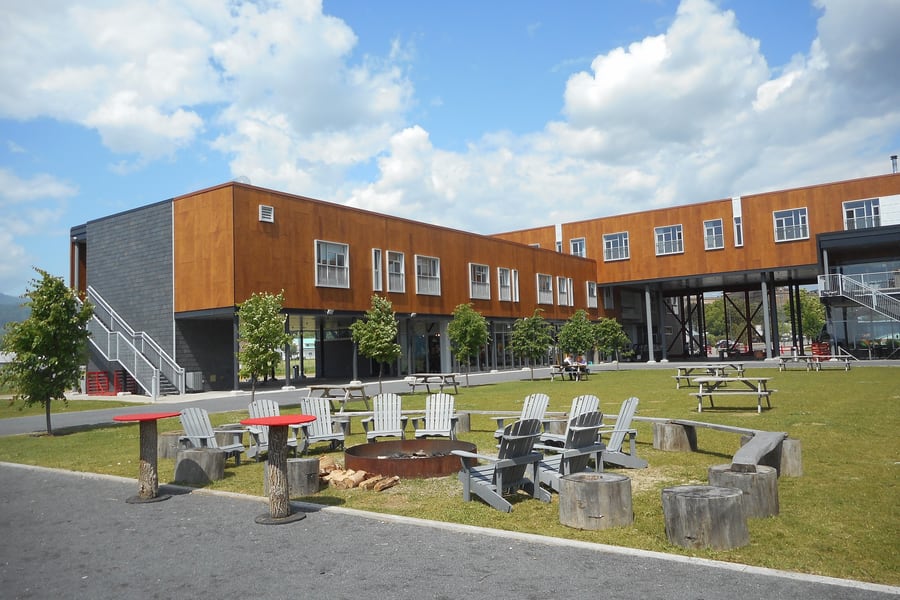
Le Germain Charlevoix Hotel & Spa
Baie-Saint-Paul · the station is on its grounds
A converted farm site whose lawn the branch line ends on, so the train stops at the door.
Check Availability (opens in a new tab, on germainhotels.com)via germainhotels.com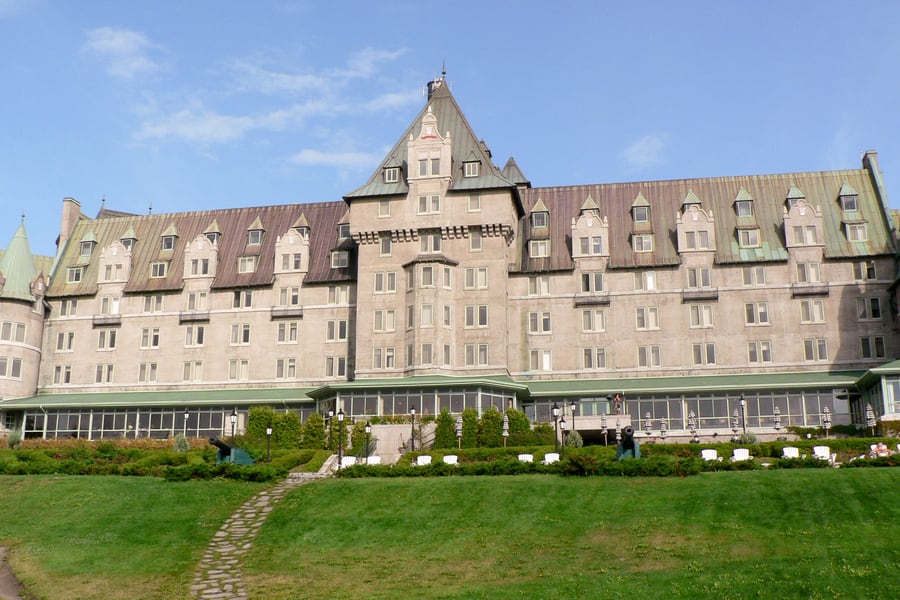 Emmanuel Huybrechts / Wikimedia Commons · CC BY 2.0 · cropped
Fairmont Le Manoir Richelieu
La Malbaie · above the Pointe-au-Pic station
The château-style hotel on the cliff at Pointe-au-Pic, a short climb from where the train stops.
Check Availability (opens in a new tab, on fairmont.com)via fairmont.comQuestions or corrections
Planning this trip and stuck on something, or spotted a time, fare or detail that has changed? Send us a message about Train de Charlevoix. We read every one, and we update this page when something has changed.