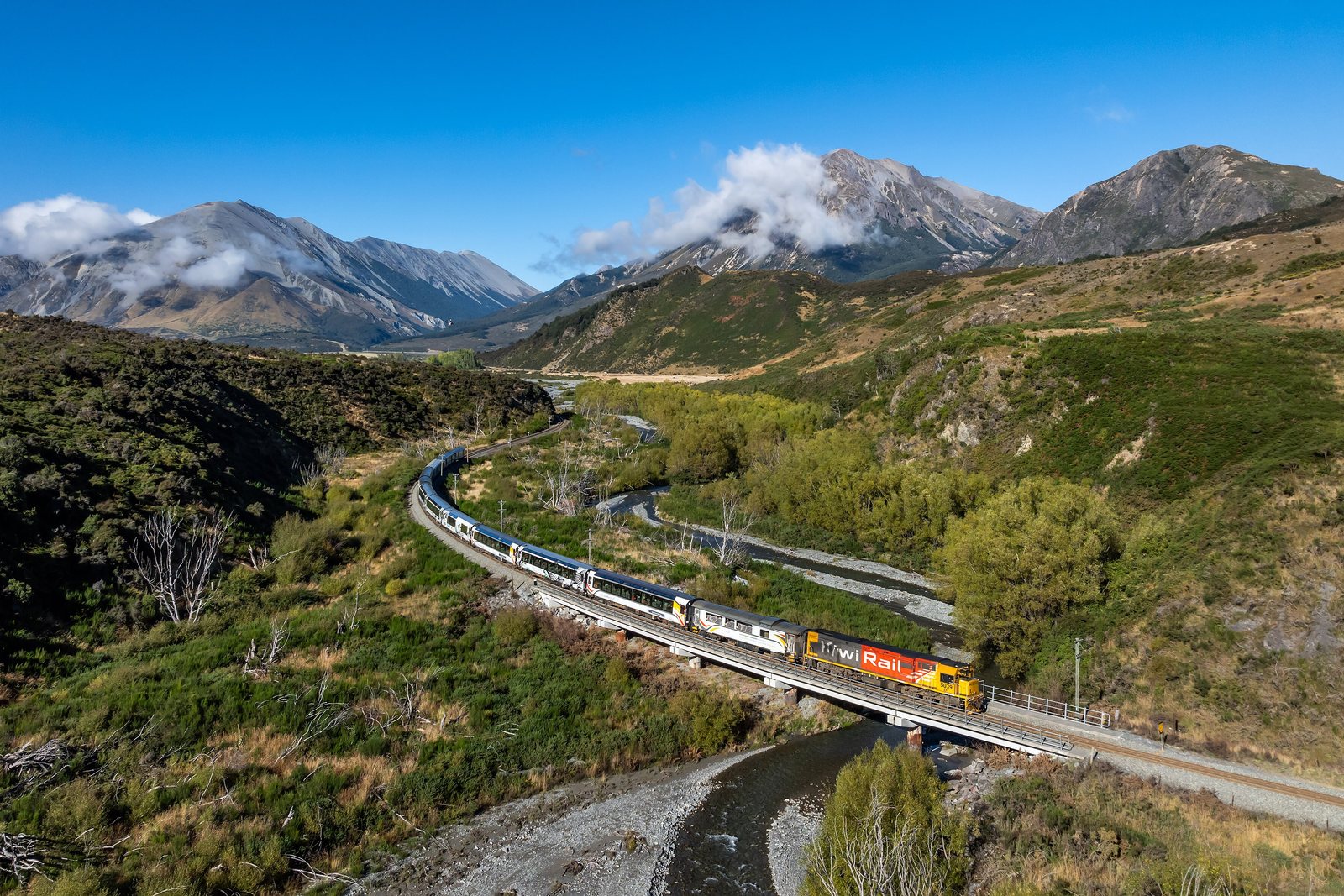
TranzAlpine
Kabelleger / David Gubler / Wikimedia Commons · CC BY 4.0 · cropped
- Distance223 km
- Duration~4h 50m
- Best seasonYear-round
Introduction
In just under five hours the TranzAlpine does something remarkable: it carries you clean across a country. Starting on the Pacific side of New Zealand's South Island, it climbs the Southern Alps, tunnels through their spine, and drops down to the Tasman Sea on the other coast — a full crossing of an island, and a full change of world, between breakfast and lunch.
It is regularly named one of the great train journeys on the planet, and the reason is the scenery, which barely pauses for breath. From the flat, golden Canterbury Plains the line follows a wild braided river up into the mountains, threading gorges and viaducts, before the alpine village of Arthur's Pass and the long Otira Tunnel deliver you to the rainforest and pounding surf of the West Coast.
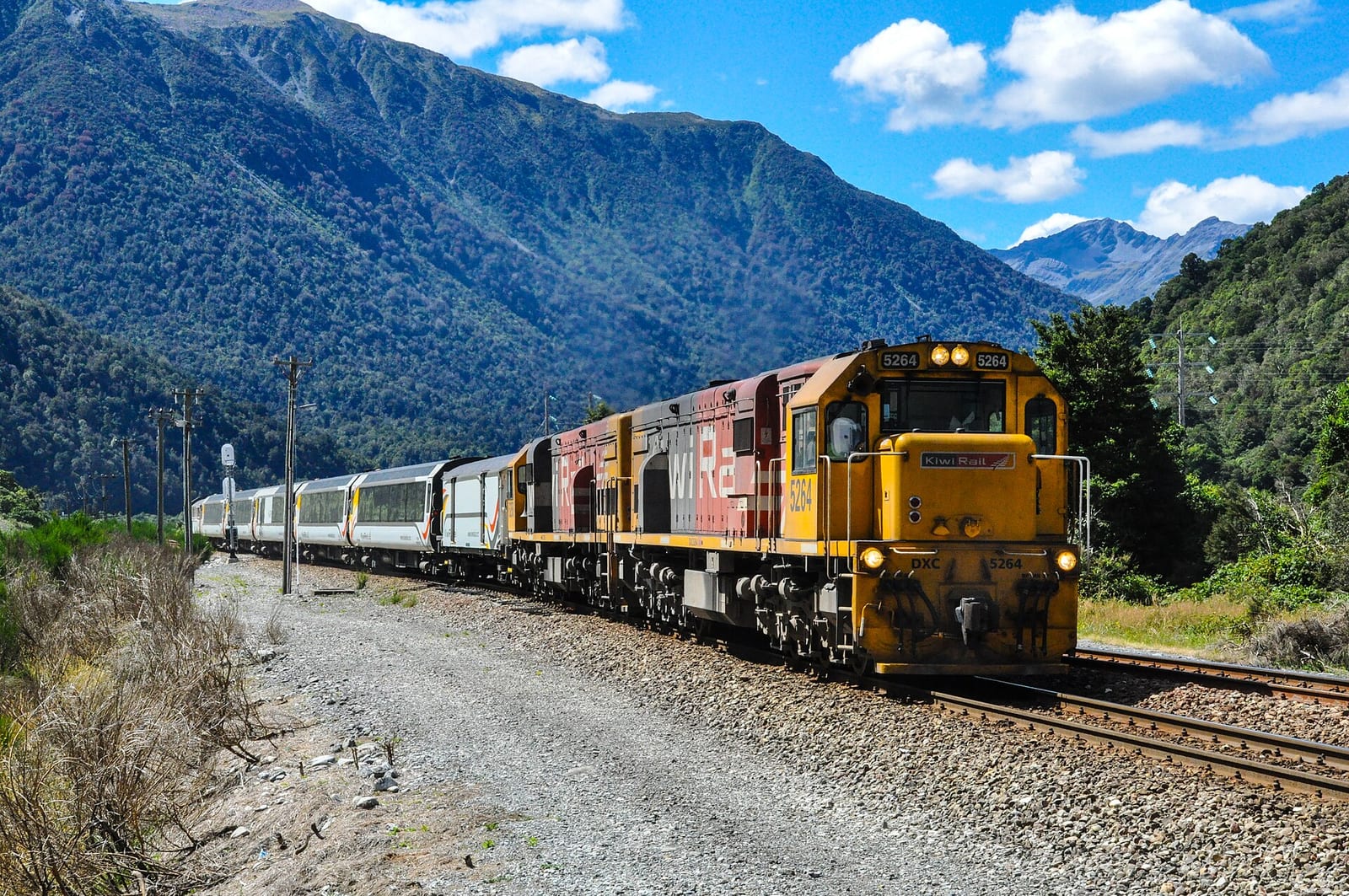
Best of all, you don't have to watch it through glass. The TranzAlpine's open-air viewing carriage lets you stand out in the mountain air as the peaks and rivers slide past — one of the finest ways to travel anywhere.
The Journey
The TranzAlpine runs 223 kilometres from Christchurch to Greymouth, coast to coast across the South Island, in about four hours and fifty minutes — daily, in each direction.
Leaving Christchurch, the train crosses the wide, flat Canterbury Plains, patchworked with farmland, with the Alps a blue wall on the horizon. At Springfield the climb begins. The line swings into the valley of the Waimakariri River — a classic New Zealand braided river, its pale channels weaving across a broad shingle bed — and works its way up through gorges and 16 tunnels and over four viaducts, the highest of which, the Staircase, stands 75 metres above the water.
Higher still, the country turns truly alpine: beech forest, tumbling rivers and snow-streaked peaks, arriving at the little village of Arthur's Pass, the summit of the line at 737 metres and the heart of its own national park. Then comes the great tunnel. The Otira Tunnel bores 8.5 kilometres straight through the main divide, and when the train emerges it is on the West Coast — instantly wetter, greener, wilder, all rainforest and rushing water. A final run down the valley of the Grey River brings you to Greymouth and the Tasman Sea.
Ride it one way and carry on exploring the coast, or — because it's a same-day return — simply cross the Alps and come back, having watched the whole width of a country roll past the window.
Along the route
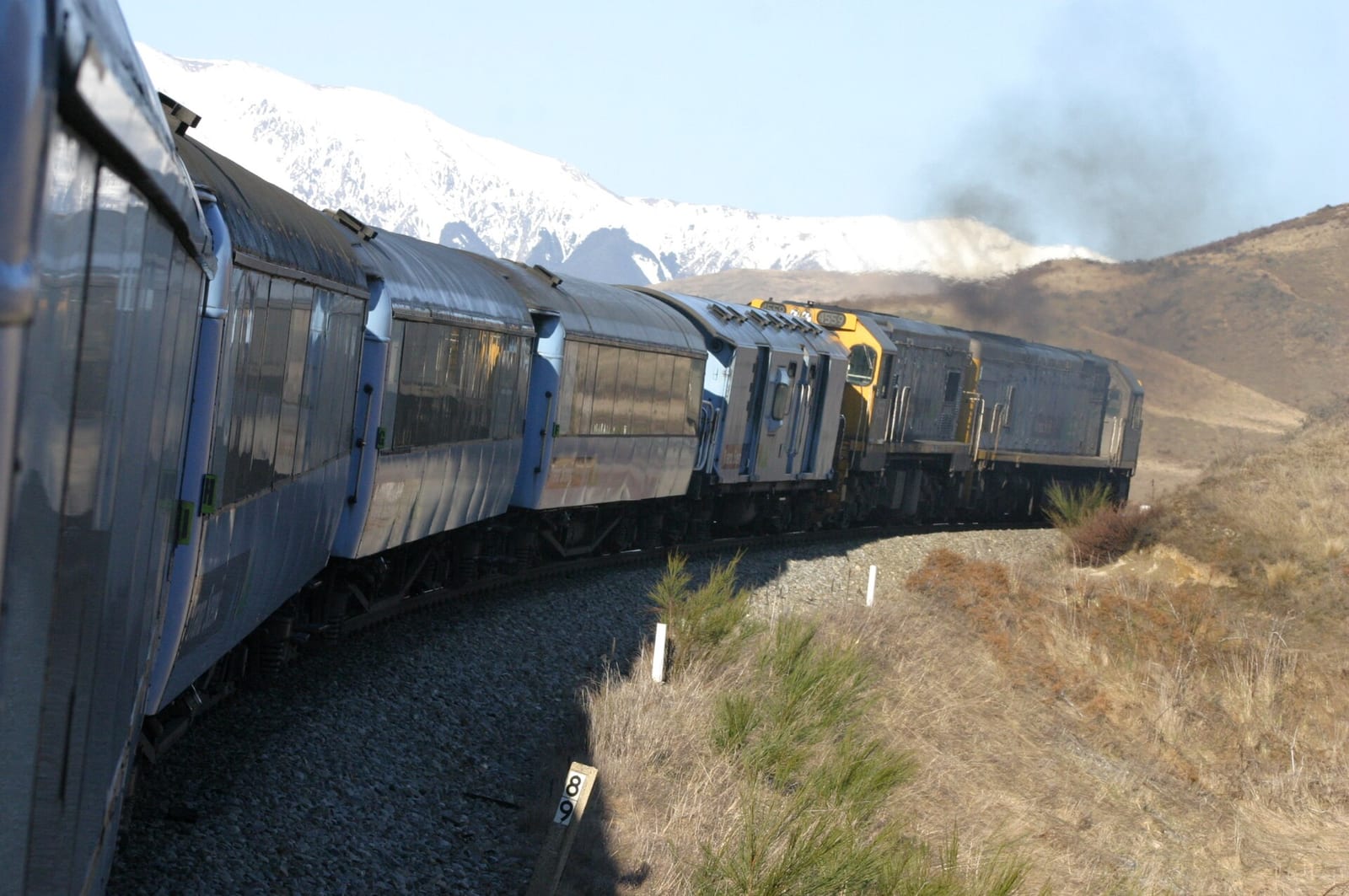
Maksym Kozlenko / Wikimedia Commons · CC BY-SA 3.0Into the Southern Alps
Beyond the Canterbury Plains the line follows the braided Waimakariri River up into the mountains, climbing through gorges and over viaducts — the Staircase alone carries the train 75 metres above the valley floor.Michal Klajban / Wikimedia Commons · CC BY-SA 4.0Arthur's Pass
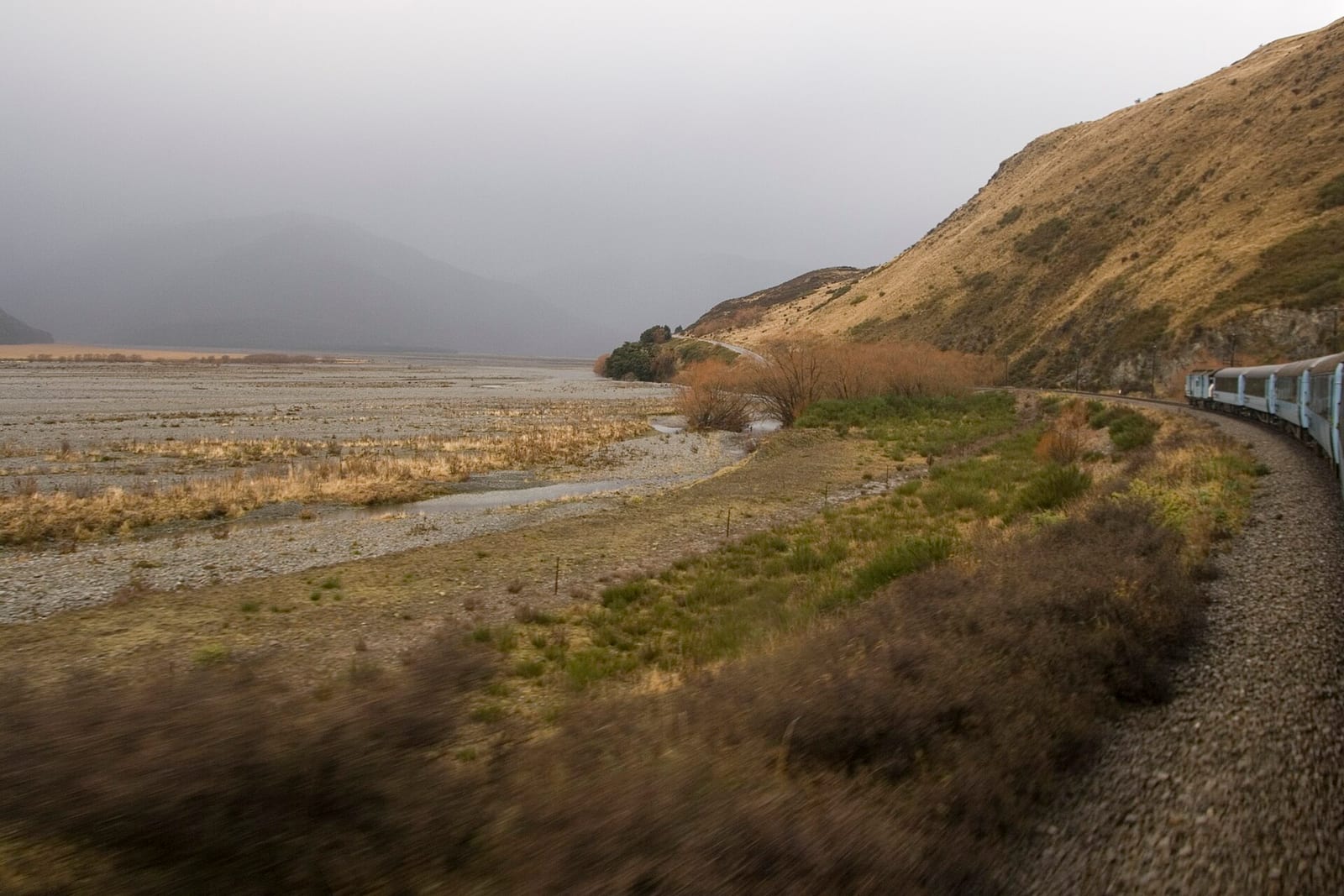
The summit of the crossing, a tiny alpine village ringed by the peaks of Arthur's Pass National Park — beech forest, kea parrots and mountain rivers, and the highest point of the line at 737 m.Kevin Prince / Wikimedia Commons · CC BY-SA 2.0The Otira Tunnel
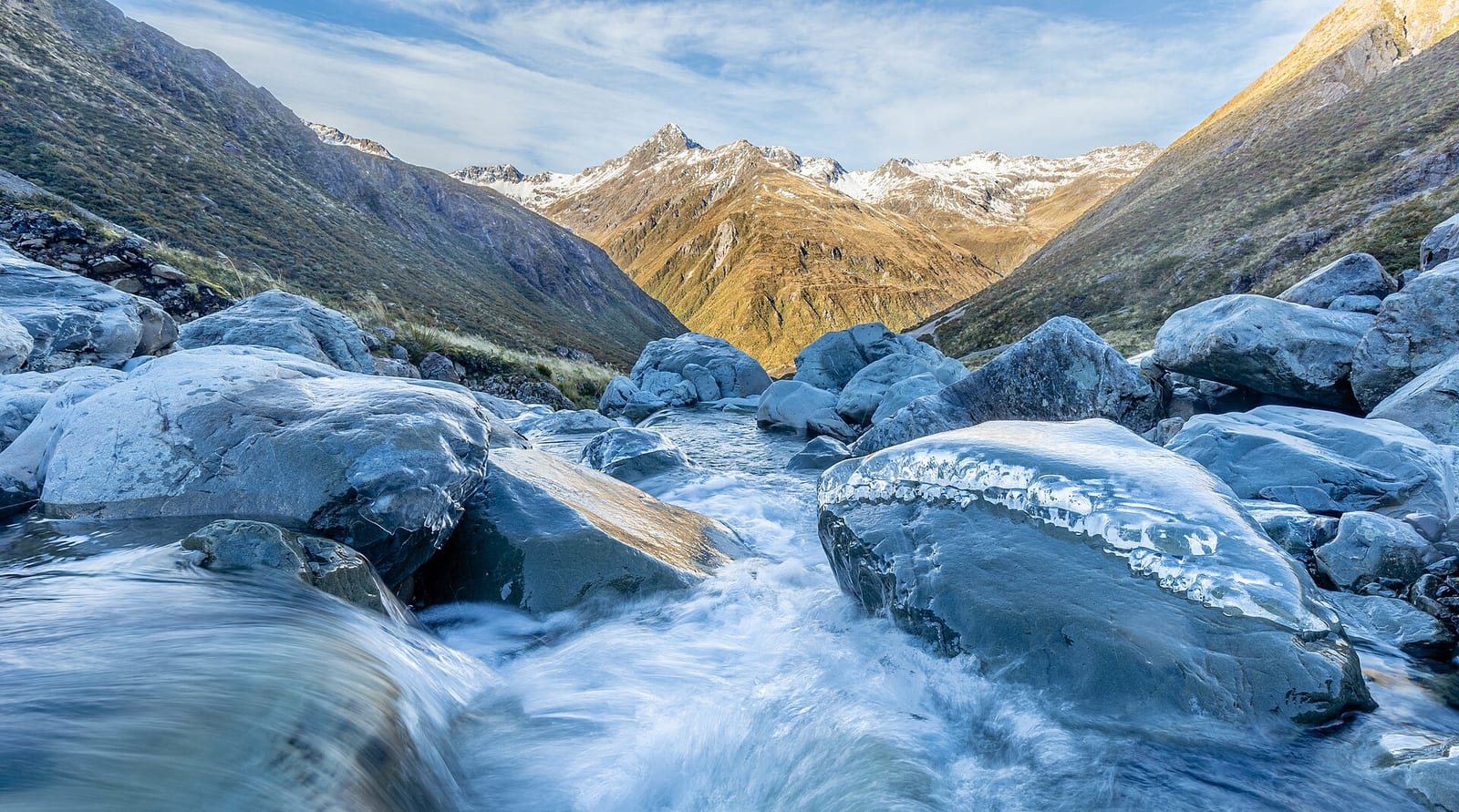
From Arthur's Pass the railway plunges into the 8.5-kilometre Otira Tunnel, boring right through the main divide and emerging on the wetter, wilder West Coast side of the alps.A bit of history
Culture & experiences along the way
DB Thats-Me / Wikimedia Commons · CC BY-SA 3.0The open-air viewing car
The best seat on the train isn't a seat at all — the open-air viewing carriage lets you stand in the alpine air, unglazed, as the mountains and rivers slide past close enough to smell the beech forest.Michal Klajban / Wikimedia Commons · CC BY-SA 4.0The wild West Coast
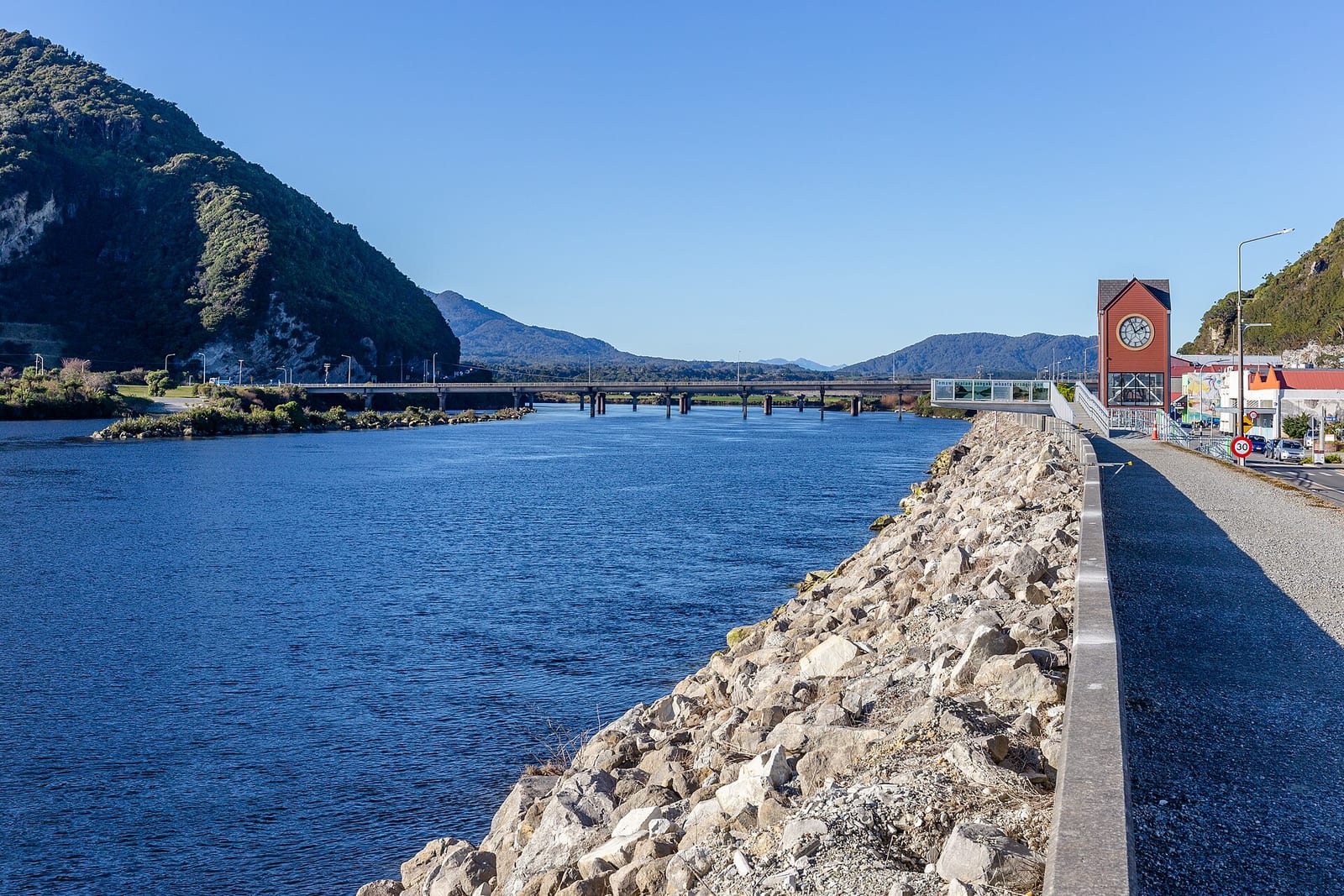
Greymouth and the surrounding coast are another New Zealand entirely — rainforest, pounding surf, pancake rocks and glaciers within reach, all under the Tasman Sea's moody skies.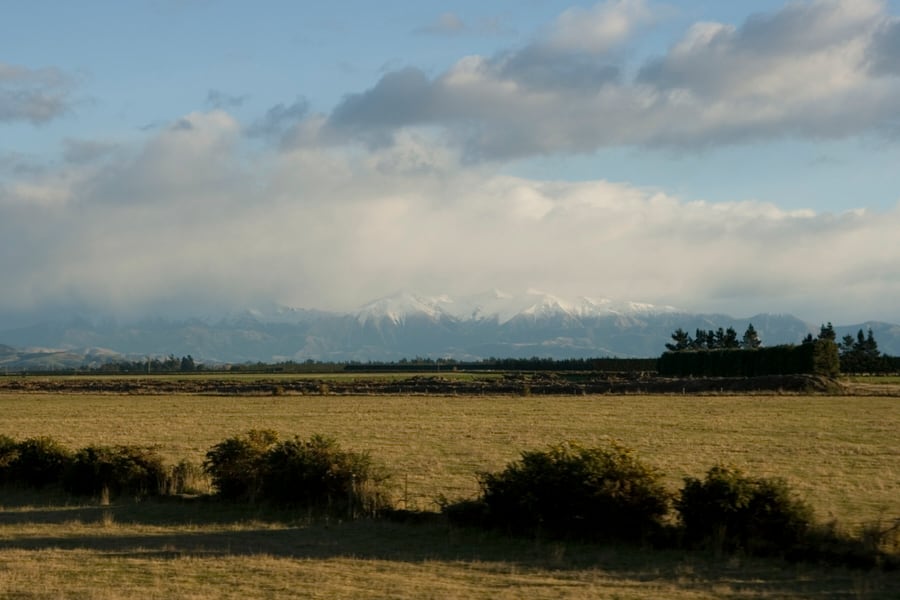 Maksym Kozlenko / Wikimedia Commons · CC BY-SA 3.0 · cropped
A day across the Alps
Because it runs daily each way in under five hours, the TranzAlpine also makes a superb day return from Christchurch — over the mountains for lunch on the coast, and back by evening.Timetables
The TranzAlpine is refreshingly simple to plan: one return service a day, with a morning departure from each end that crosses in the middle of the country — so you can travel out and back in a day.
Real times (2026 — confirm before travelling):
| Direction | Depart | Arrive |
|---|---|---|
| Christchurch → Greymouth | 08:15 | 13:05 |
| Greymouth → Christchurch | 14:05 | 19:00 |
The one-way run through Arthur's Pass takes about 4 hours 50 minutes. It returns to full 7-day-a-week service from 23 May 2026, and does not run on Anzac weekend or Christmas Day.
That timing makes three trips possible:
- Day return from Christchurch — over the Alps for lunch on the coast and back by evening; the most popular way to ride it.
- One way — carry on exploring the West Coast (Punakaiki, the glaciers).
- Part of a loop — combine with the Coastal Pacific for a grand South Island circuit by rail.
The open-air viewing-car seats and school-holiday departures fill up, so book ahead.
Times as of the 2026 timetable. Confirm current schedules with the operator — see the Tickets section below.
Tickets
The TranzAlpine is operated by Great Journeys New Zealand (part of KiwiRail) and booked directly through them. Fares vary by season and how far ahead you book, so we link you straight to the operator for live prices.
There is a single, comfortable class of travel — every ticket gets you:
- a reserved seat in a panoramic carriage with oversized windows,
- access to the open-air viewing car, and
- an on-board café serving food and drink, plus GPS-triggered commentary.
The real choice is how you use it:
- One way — to continue exploring the West Coast (or arrive from it).
- Day return — the classic Christchurch round trip, out and back in a day.
A few tips:
- Book ahead in the December–February summer and school holidays; the best window seats and the open-air car go first.
- Sit on the right heading west (Christchurch → Greymouth) for the finest of the river-gorge views — then swap to the viewing car for the mountains.
Book your tickets
Scenic seat — one way
Christchurch ⇄ Greymouth
A reserved seat in a panoramic carriage with access to the open-air viewing car and the café. Travel one way and continue exploring the West Coast, or return the same day.
Book Tickets (opens in a new tab, on Great Journeys New Zealand)via Great Journeys New ZealandDay return from Christchurch
There and back in a day
Cross the Southern Alps to Greymouth and return the same afternoon — the classic way to ride the TranzAlpine if you're based in Christchurch.
Book Tickets (opens in a new tab, on Great Journeys New Zealand)via Great Journeys New ZealandRail Passes
No rail pass covers the TranzAlpine. Interrail and Eurail are European schemes, and New Zealand is not among the 33 countries in Interrail's list of covered railway companies (opens in a new tab). Great Journeys New Zealand sells each journey with a reserved seat, and its current site lists packages rather than a rail pass.
Checked October 2026 against Interrail's list of covered railway companies (opens in a new tab).
Places to Visit
The TranzAlpine strings together two very different sides of the South Island, and rewards a stop at either end — or in the mountains between. Greymouth, at the western end, is the base for the coast: Punakaiki is an hour north, the glaciers a few hours south, and Hokitika a short hop down the line.
One expectation worth resetting before you go. The West Coast glaciers have pulled back so far that the old valley walks up to the ice are gone: at Franz Josef the river has cut the valley floor and the Department of Conservation has closed the route beyond the lookout, and getting onto the ice itself now means a guided helicopter trip. The view from the track is still worth the walk — but it is a view, not an approach.
 Robert Cutts / Wikimedia Commons · CC BY-SA 2.0 · cropped
Christchurch
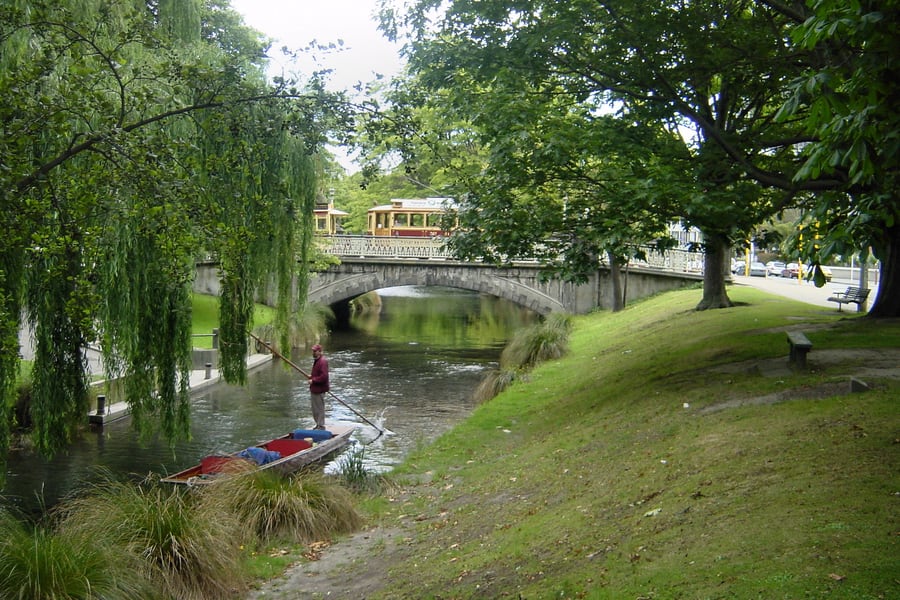
Still the Garden City, and still rebuilding. The Botanic Gardens date from 1863, when an English oak went in to mark a royal wedding, and now run to 21 hectares inside the loop of the Avon next to Hagley Park — you can be punted along the river beneath the willows in a flat-bottomed boat, which is exactly as agreeably absurd as it sounds. Give the city a day at least; the post-earthquake food scene and street art are worth the time.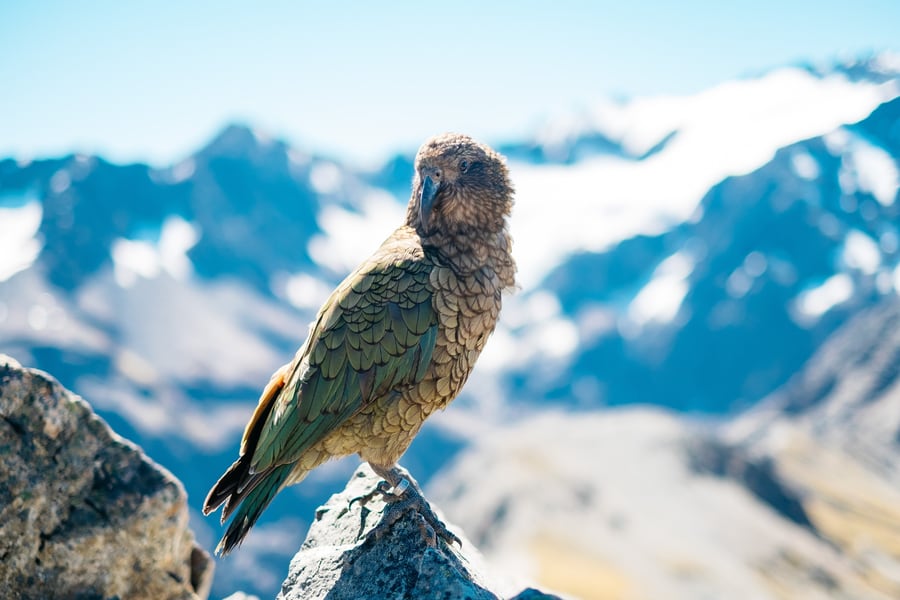 Pablo Heimplatz / Wikimedia Commons · CC0 · cropped
Kea at Arthur's Pass
Get off at the summit and something olive-green will almost certainly come and inspect your rucksack. The kea is a mountain parrot found nowhere but New Zealand, clever enough to solve multi-step puzzles and destructive enough to strip the rubber from a parked car. It is also Nationally Endangered, with DOC putting the wild population at somewhere between 1,000 and 5,000. Admire, photograph, and never feed one.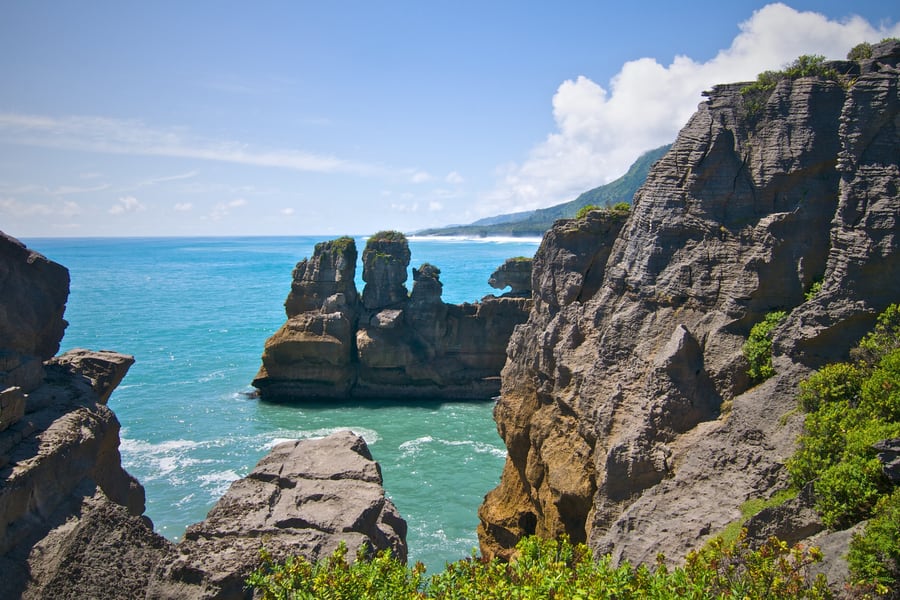 Christian Michel / Wikimedia Commons · CC BY 2.0 · cropped
Punakaiki
An hour up the coast from Greymouth, the limestone at Dolomite Point has weathered into stacks of thin horizontal layers that look uncannily like piles of pancakes — the effect geologists call stylobedding. A short, wheelchair-navigable loop takes you around them. Time it for high tide with a south-westerly swell and the Putai blowhole performs; get it wrong and you have walked round some admittedly excellent rocks.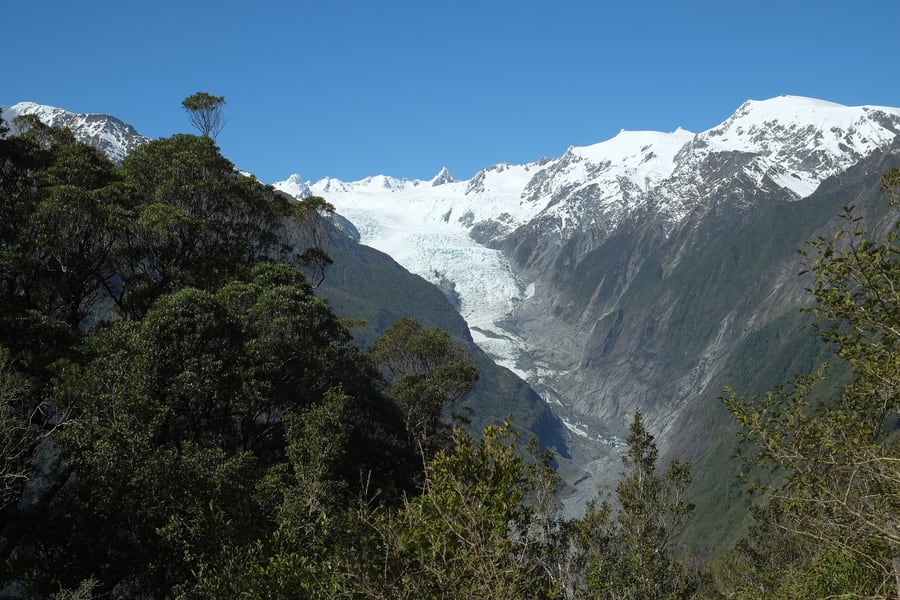 Pseudopanax / Wikimedia Commons · CC BY 3.0 · cropped
Franz Josef Glacier
Kā Roimata o Hine Hukatere, and this is what it looks like now — a tongue of ice pulled far back up its valley, seen from a lookout in the rainforest. You can no longer walk to it. DOC's own page is blunt: the river has cut off access up the valley, and people have died going past the barriers. To stand on the ice you take a guided helicopter flight. Come for the walk to the viewpoint and the scale of the valley, not for the ice.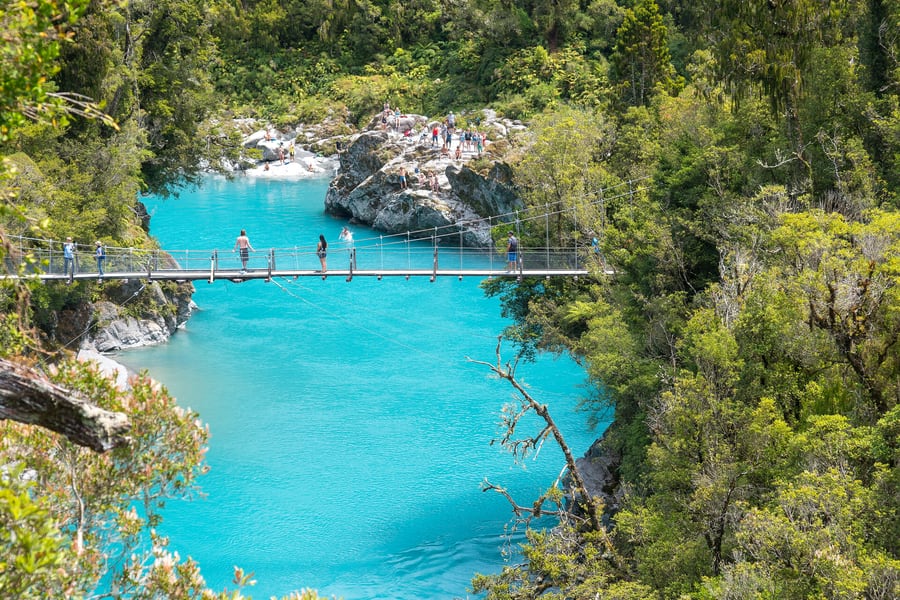 Stewart Nimmo / Wikimedia Commons · CC BY-SA 4.0 · cropped
Hokitika Gorge
Half an hour inland from Hokitika, the Hokitika River runs through a narrow gorge in a blue so saturated it looks retouched — rock flour, ground off the glaciers upstream and held in suspension. A swing bridge crosses it. The town at the coast is the centre of pounamu carving — the greenstone whose ownership was returned to Ngāi Tahu by statute in 1997 — and its driftwood beach is the other reason people come.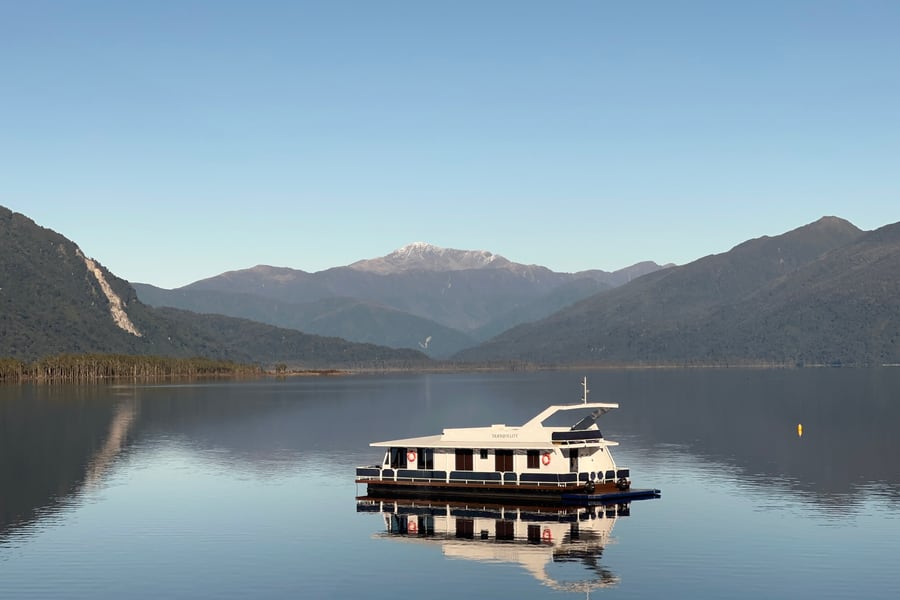 Tom Ackroyd / Wikimedia Commons · CC BY-SA 4.0 · cropped
Lake Brunner
Kōtuku moana — the sea of herons — is the West Coast's largest lake, 40 km² and 109 m deep, ringed by bush and usually still enough to hold the mountains upside down. The village on the north shore is called Moana, and it is on the map because of this railway: every train once stopped there to take on water, and it had its own station by 1892. It remains a good place to do very little.Where to Sleep
Because the TranzAlpine is a day train, where you sleep depends on how you use it — as a day return, or as a one-way crossing to a new base.
- Christchurch — the natural start and end: a full range from backpacker hostels to boutique and luxury hotels, most within easy reach of the railway station.
- Arthur's Pass — for the keen, a night in the alpine village puts you among the peaks for early walks; choices are limited (a lodge, motels and DOC huts), so book ahead.
- Greymouth & Hokitika — coast-side hotels, motels and B&Bs; Hokitika in particular has some lovely places to stay by the wild beach.
- Punakaiki — north of Greymouth, eco-lodges and retreats set between rainforest and the Tasman surf, near the Pancake Rocks.
If you're doing the day return, you don't need to move at all — just book two comfortable nights in Christchurch. For a one-way trip, reserve your West Coast accommodation ahead in the busy summer months.
Questions or corrections
Planning this trip and stuck on something, or spotted a time, fare or detail that has changed? Send us a message about TranzAlpine. We read every one, and we update this page when something has changed.