The Corcovado Rack Railway
Geogast / Wikimedia Commons · CC BY 4.0 · 2023 · cropped
- Distance3.8 km · Cosme Velho to the summit
- DurationAbout 20 minutes each way
- Best seasonDaily, year-round; every 20 minutes
Introduction
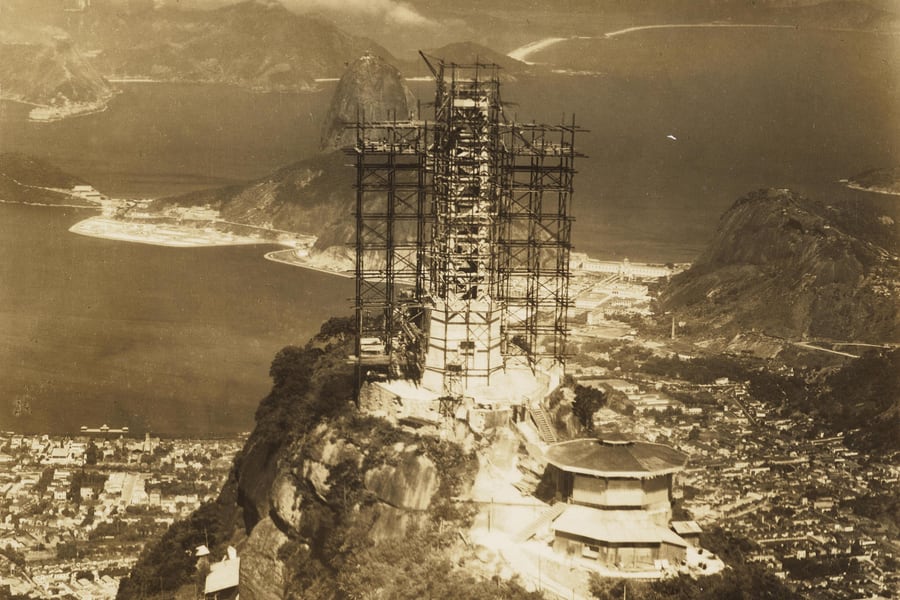
The railway is older than the reason almost everyone now rides it. Emperor Pedro II opened the line up Corcovado in 1884, when people went to the top of the granite peak above Rio de Janeiro for the view alone. The cornerstone of Christ the Redeemer was not laid until 1922, and the statue was inaugurated on 12 October 1931, 47 years after the railway opened. For four years in between, the operator says, the railway carried the pieces of the monument up the mountain.
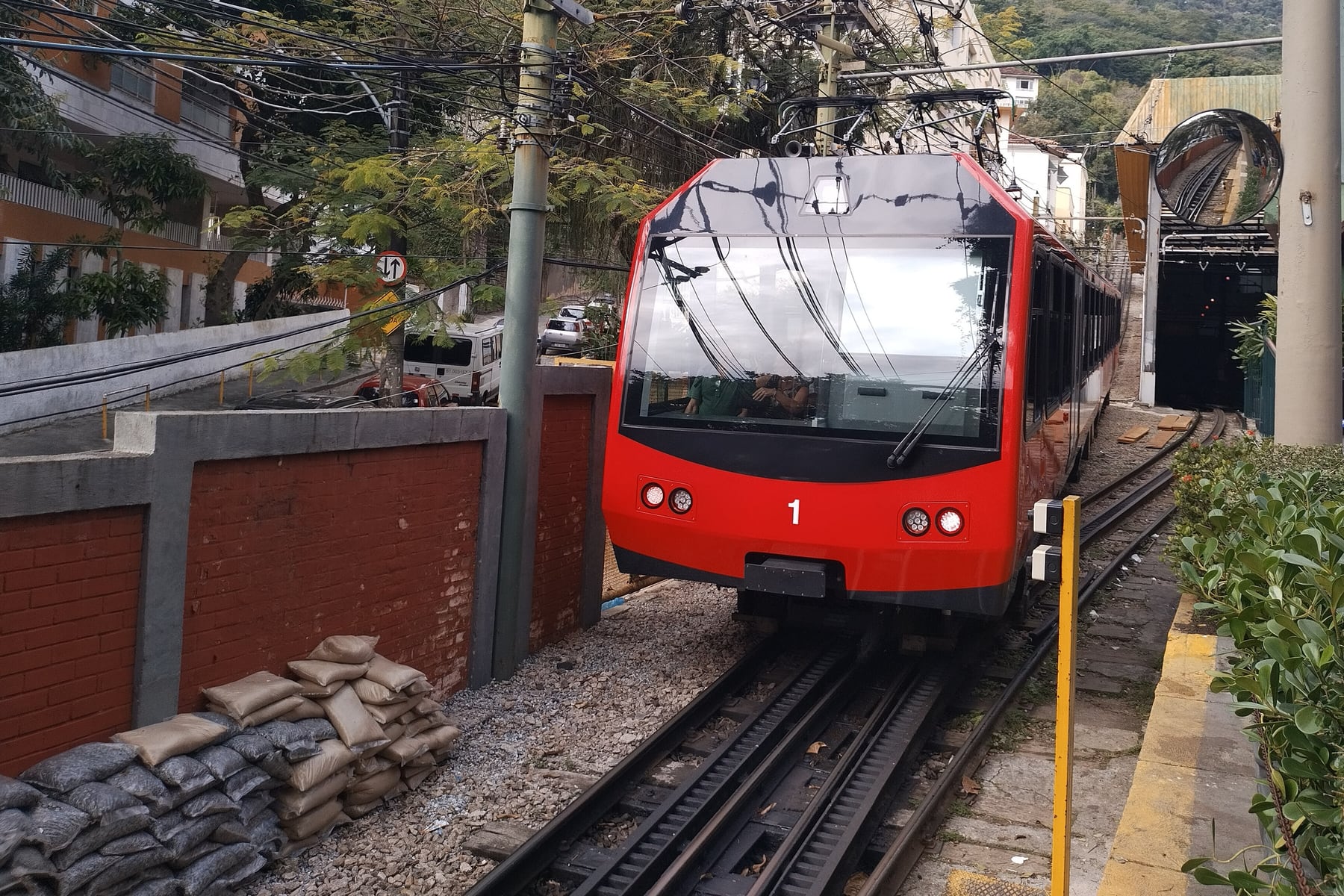
So the train built its own destination. More than 1.5 million people a year now ride the 3.8 kilometres from Cosme Velho to the foot of the statue, and the line that delivered it has kept pace: steam gave way in 1910 to electric traction, the first on any Brazilian railway, and since 2019 the climb has been made by three red two-car trains built by Stadler in Switzerland.
The ride takes about twenty minutes each way, on a metre-gauge track with a cogwheel rack up gradients of as much as 30 per cent, through the Atlantic forest of the Tijuca National Park. Part of every fare goes to ICMBio, the federal agency that runs the park.
The Journey
Trains leave from the station on Rua Cosme Velho, in the valley between Laranjeiras and the forest, every twenty minutes through the day. The line climbs 3,824 metres to the upper terminus just below the summit, and almost from the platform it is in the trees: the Tijuca National Park, a forest replanted on worn-out coffee land from 1861 onward, is the route for nearly the whole way up.
The line
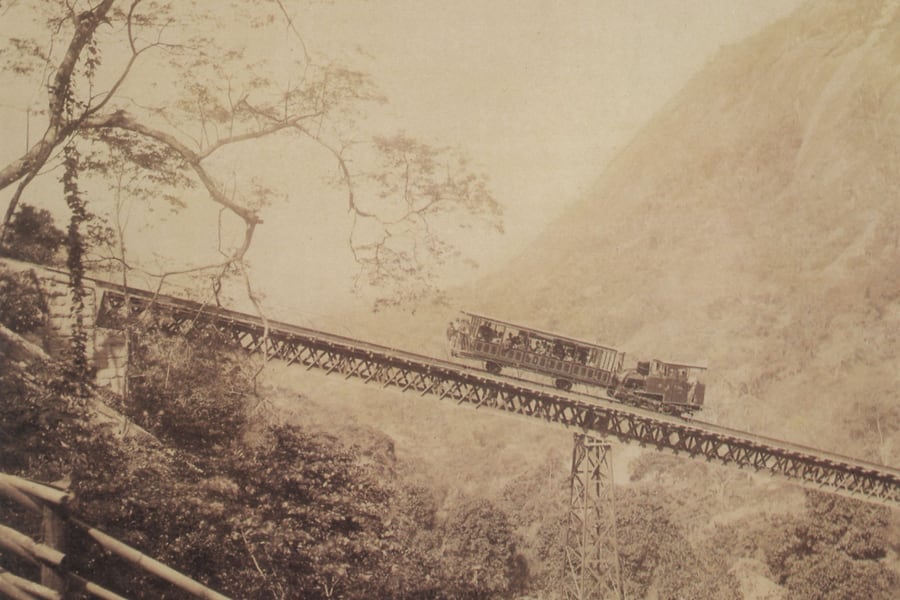
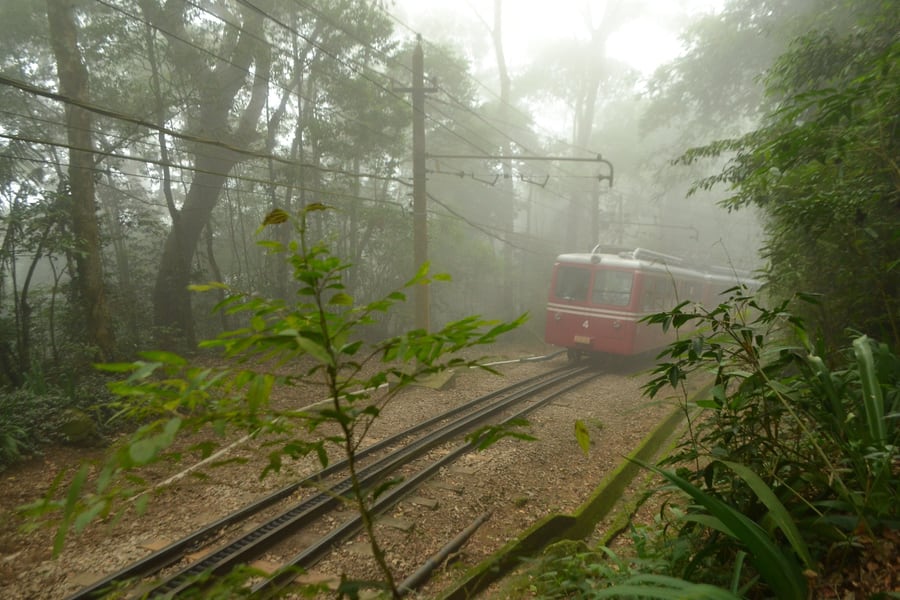
About a kilometre out the train crosses the Silvestre viaduct, a steel trestle over a valley that appears in Marc Ferrez's photographs of the first steam trains. Beyond it the line passes the stations at Silvestre, where the Santa Teresa tram terminates again, and Paineiras, before the last stretch to the top. Between the rails runs a Riggenbach rack, the ladder-like toothed rail that the train's cogwheels climb on gradients of up to 30 per cent; the minimum curve radius is 100 metres.
Power comes the unusual way, as three-phase alternating current at 900 volts, carried on two overhead wires rather than one, which is why every train runs with a pair of pantographs. Very few railways in the world still use the system.
The trains
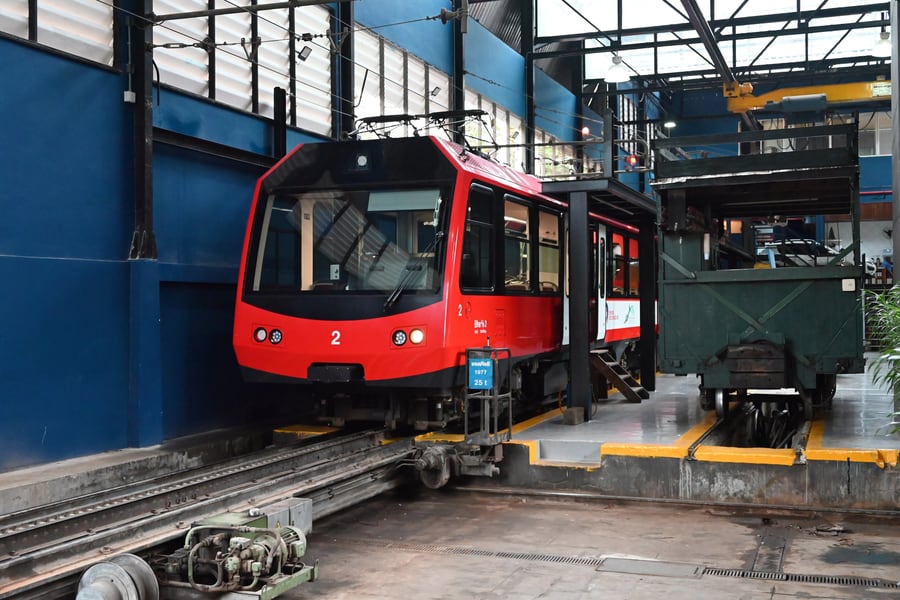
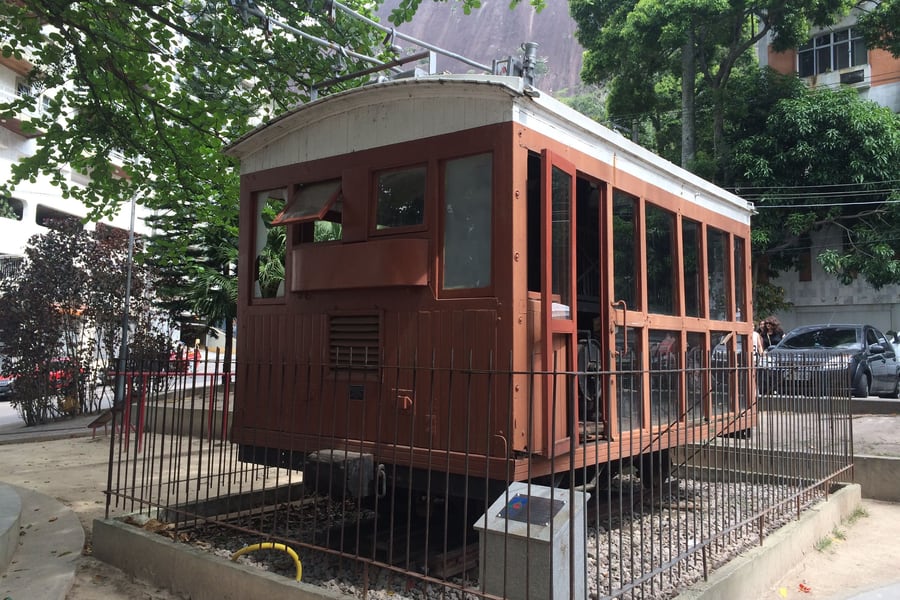
The present fleet is the line's fourth generation: three two-car electric units built by Stadler and introduced in 2019, with panoramic roof windows, at up to 25 km/h. They replaced the Swiss-built trains that arrived from 1979, when Esfeco took over the railway, and those had replaced the electric cars that took over from steam in 1910, one of which stands on display in the square beside the Cosme Velho station.
At the top
From the upper station to the statue's platform there are 220 stone steps. Since 3 August 2026 the escalators are being replaced, so the lifts carry visitors part of the way and the last 80 or so steps must be climbed; stair-climbing chairs are available for wheelchair users when it is dry, and the number of visitors allowed on the summit at one time has been cut.

Along the route
 Fulviusbsas / Wikimedia Commons · Public domain · cropped
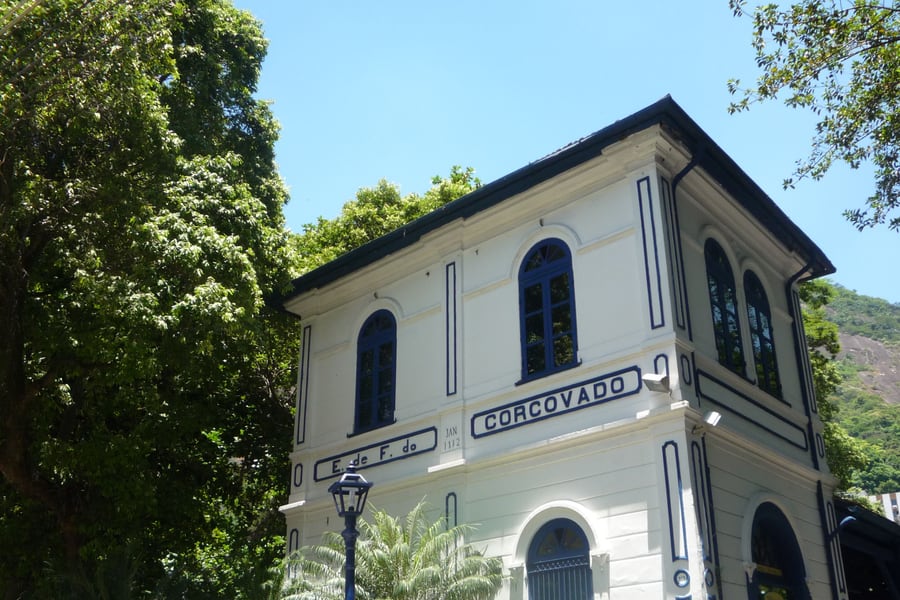
Cosme Velho station
The lower terminus on Rua Cosme Velho, where the railway has started since 1884. Tickets are collected at its office at least forty minutes before the departure printed on them.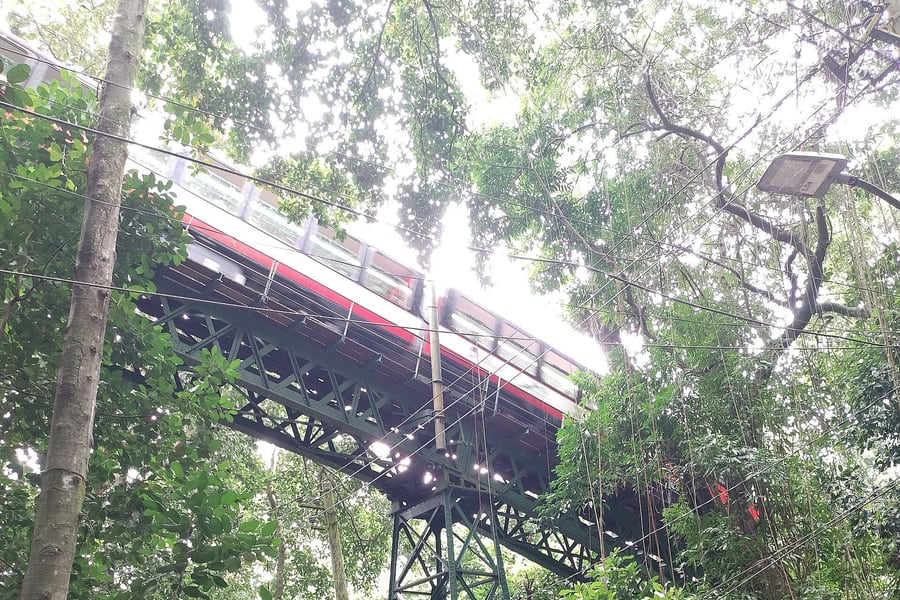 Geogast / Wikimedia Commons · CC BY 4.0 · 2023 · cropped
The Silvestre viaduct
About a kilometre up, the line crosses a valley on a steel viaduct, seen here from the Ladeira do Ascurra below. Silvestre station, under renovation, is where the Santa Teresa tram once again terminates.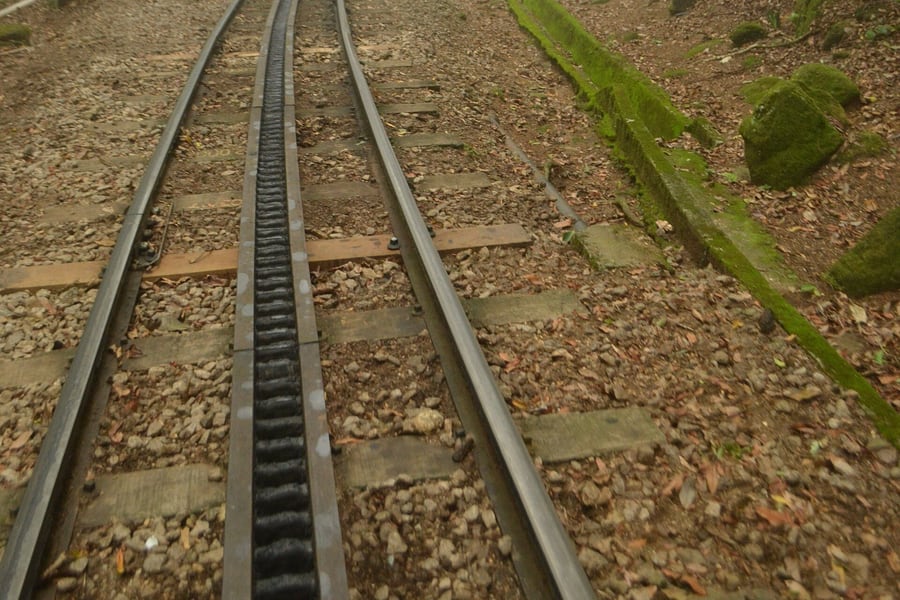 Janko Hoener / Wikimedia Commons · CC BY-SA 2.0 · 2015 · cropped
The rack through the forest
Between the rails runs a Riggenbach rack, a steel ladder the train's cogwheels climb on gradients of up to 30 per cent, through the replanted Atlantic forest of the Tijuca National Park.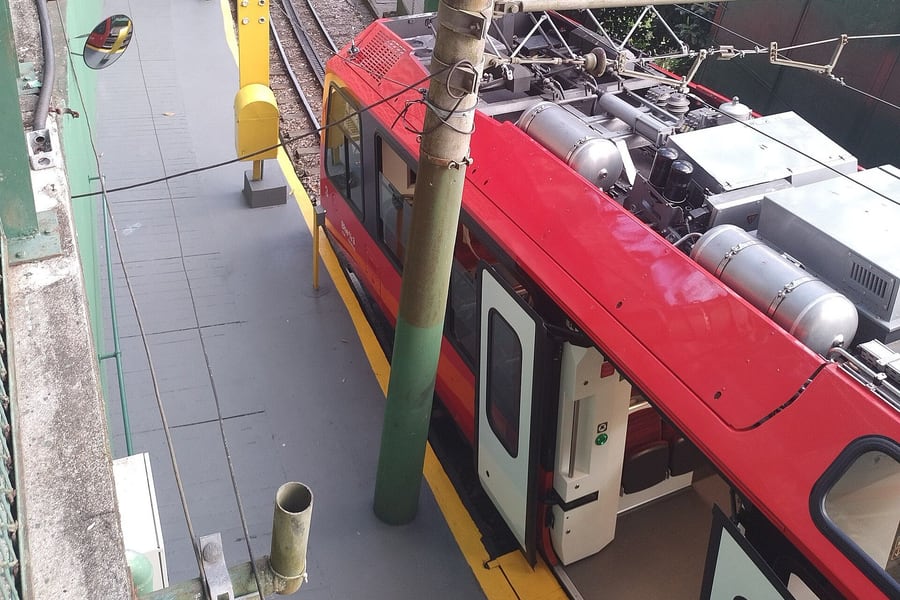 Geogast / Wikimedia Commons · CC BY 4.0 · 2023 · cropped
Cristo Redentor station
The upper terminus sits just below the summit. From the train to the statue's platform there are 220 stone steps; while the escalators are being replaced, lifts cover part of the way, leaving about 80.A bit of history
Culture & experiences along the way
 Fulviusbsas / Wikimedia Commons · Public domain · cropped
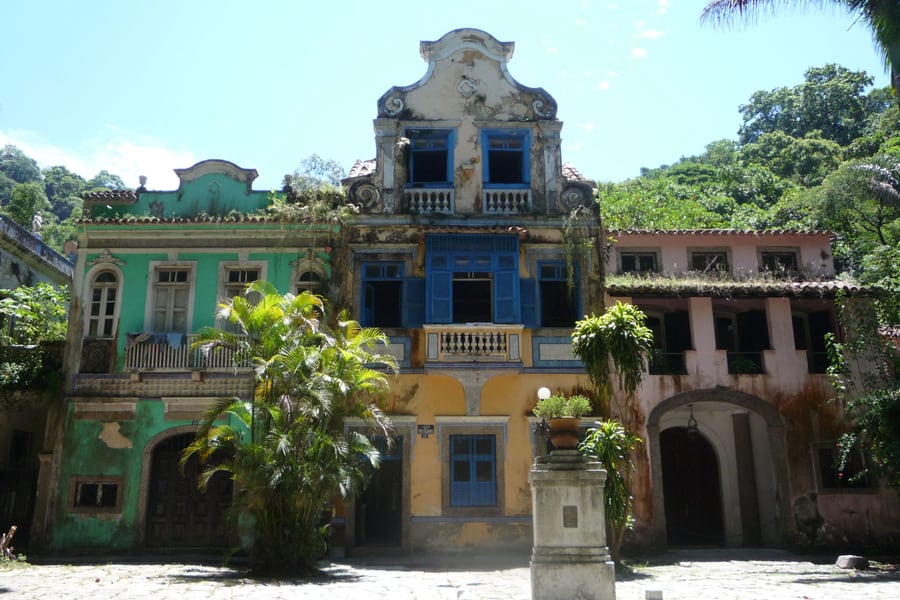
Largo do Boticário
A few minutes' walk from the station, a small square of neo-colonial houses built from the 1920s by Edmundo Bittencourt, founder of the Correio da Manhã, some refitted by Lucio Costa with materials saved from demolished colonial buildings. The Carioca River runs past it, one of the few places in the city where it can be seen.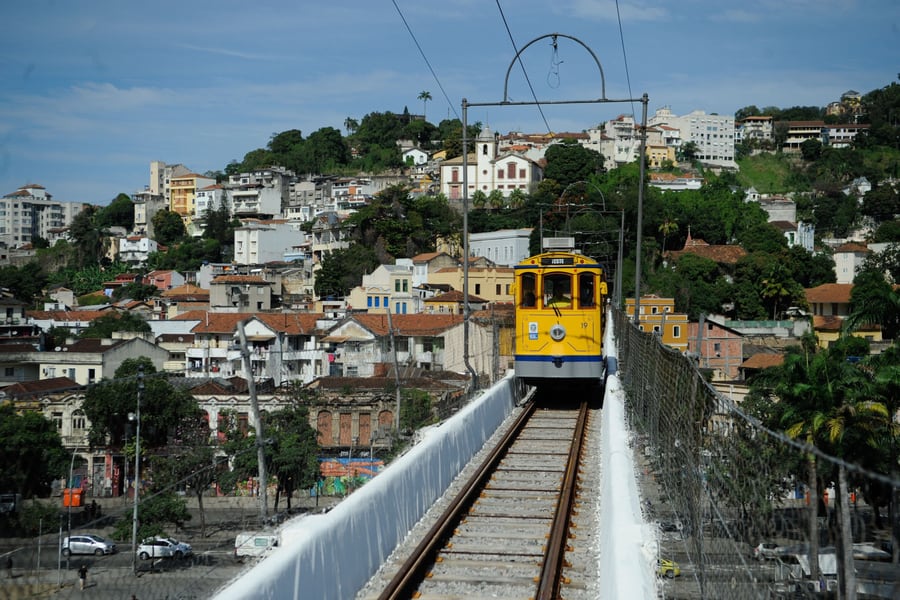 Tânia Rêgo / Agência Brasil / Wikimedia Commons · CC BY 3.0 BR · 2015
The Santa Teresa tram
Rio's heritage tram climbs from Largo da Carioca over the Carioca Aqueduct of 1750 and up the hill of Santa Teresa, every half-hour on its main route. Since June 2026 four trips a day run on to Silvestre, on the Corcovado line, for the first time in more than twenty years.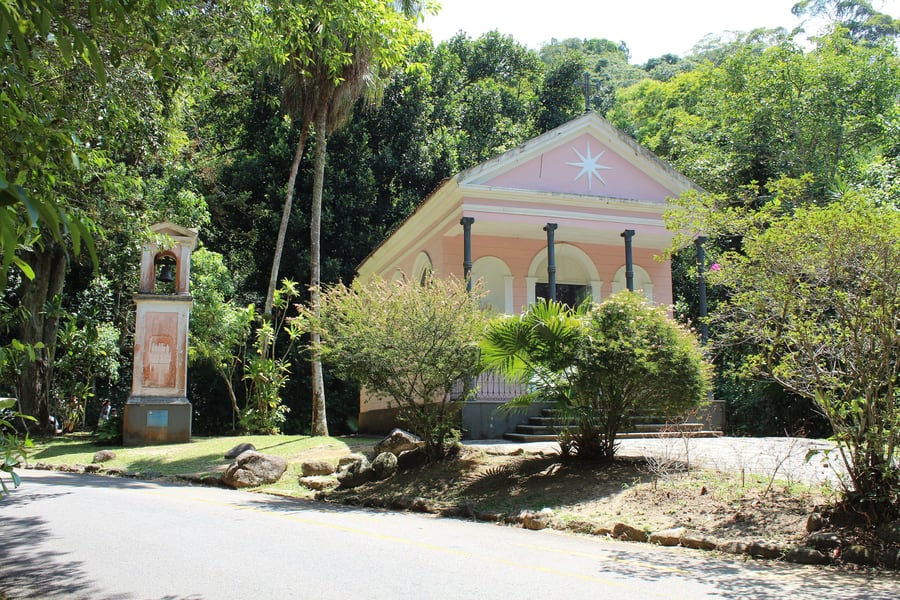 Marinelson Almeida / Wikimedia Commons · CC BY 2.0 · 2012 · cropped
The Mayrink Chapel
A small pink chapel in the forest sector of the national park, built in 1855 and renamed in 1896. Its altar carries replicas of four paintings Cândido Portinari made for it; the originals are in the Museu Nacional de Belas Artes. Open daily from 14:00 to 16:00, with a mass on the first Sunday of the month.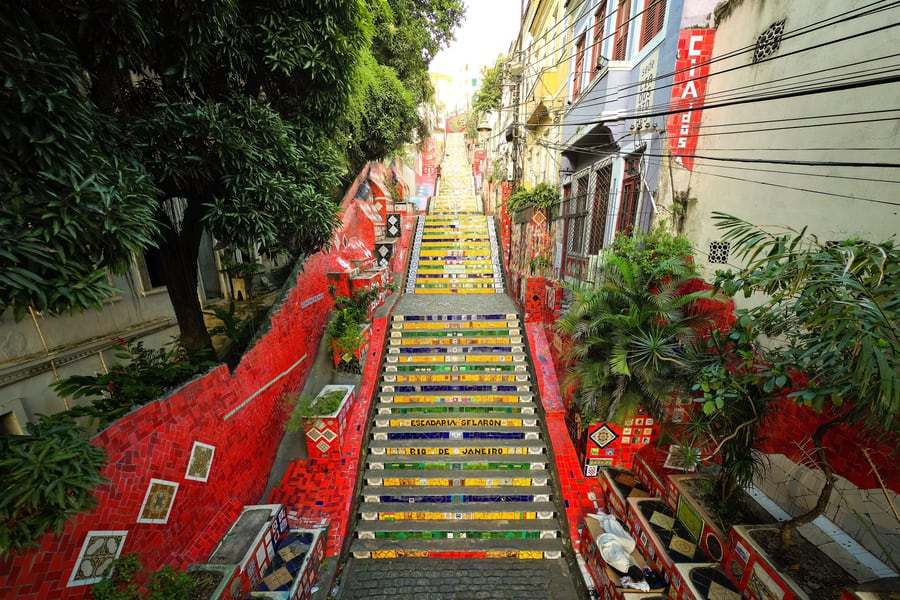 Donatas Dabravolskas / Wikimedia Commons · CC BY-SA 4.0 · 2024
The Selarón Steps
The 215 steps between Lapa and Santa Teresa that the Chilean-born artist Jorge Selarón began covering in 1990 in fragments of blue, green and yellow tile, the colours of the Brazilian flag, and later in more than 2,000 tiles gathered from over sixty countries. Selarón died in 2013.Timetables
Trains run every day, every twenty minutes, from the Cosme Velho station. Each ticket is for one timed departure up; the ride takes about twenty minutes, and the ticket covers the return and entry to the monument. The times below are the departure slots in the operator's own ticket shop, read on tremdocorcovado.rio in November 2026 for Sunday 20 December 2026.
Up from Cosme Velho
| Departs Cosme Velho | Arrives Cristo Redentor |
|---|---|
| 07:20 | about 07:40 |
| 07:40 | about 08:00 |
| 08:00 | about 08:20 |
| 10:00 | about 10:20 |
| 12:00 | about 12:20 |
| 14:00 | about 14:20 |
| 16:00 | about 16:20 |
| 18:00 | about 18:20 |
Booking a slot
Mornings sell out first: in early November 2026 every departure before midday was already gone for the following week, while slots a month ahead were still open. The shop was selling dates up to 31 December 2026. Check in at the ticket office at least forty minutes before the departure on the ticket, with the card used to pay and the cardholder's ID; after that, the slot counts as missed and boarding depends on space. The operator warns that times can change at short notice for technical reasons or weather. See the ticket shop on tremdocorcovado.rio (opens in a new tab) for the current slots.
Tickets
The adult fare is R$ 139.00 for any nationality and includes the train up and down and entry to the Christ the Redeemer monument. Children of seven to eleven pay R$ 112.00, and under-sevens ride free on an adult's lap. Concessions at R$ 74.00 for over-60s and R$ 112.00 for students, ID Jovem holders and people with disabilities are for Brazilians and residents, with documents shown.
Buy on tremdocorcovado.rio, the operator's own shop, or at the station; up to five tickets go on one booking. There is no luggage store, so travel light. Fares from the operator's website, November 2026.
Book your tickets
Adult return
R$ 139.00 · any nationality
The train up and down and entry to the Christ the Redeemer monument, for one timed departure.
Book Tickets (opens in a new tab, on tremdocorcovado.rio)via tremdocorcovado.rioChild return, ages 7–11
R$ 112.00 · under-7s free on a lap
The same ticket at the child fare, with a photo document or birth certificate shown at check-in.
Book Tickets (opens in a new tab, on tremdocorcovado.rio)via tremdocorcovado.rioBrazilian and resident concessions
R$ 74.00 over-60s · R$ 112.00 students, ID Jovem
Reduced fares for over-60s born or resident in Brazil, Brazilian students and ID Jovem holders, with documents.
Book Tickets (opens in a new tab, on tremdocorcovado.rio)via tremdocorcovado.rioRail Passes
No rail pass covers the Corcovado Rack Railway. Interrail and Eurail are European schemes, and Brazil is not among the countries in Interrail's list of covered railway companies. The operator sells only its own timed tickets, which include entry to the monument.
Checked November 2026 against Interrail's list of railway companies (opens in a new tab), updated 21 October 2026.
Places to Visit
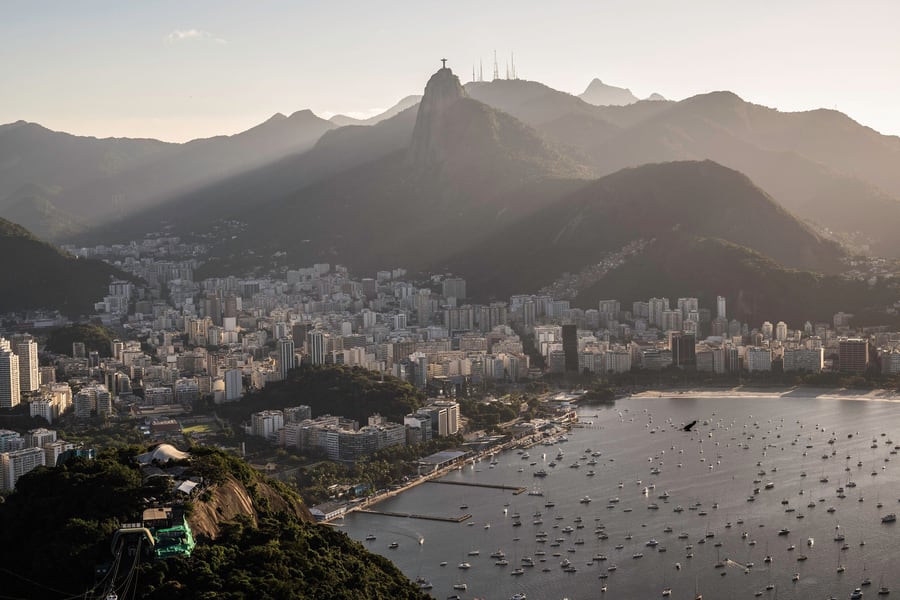
The statue is the obvious stop, but Corcovado is one peak of a national park that fills the middle of the city, and its other lookouts, waterfalls and chapels repay a day of their own, with the Sugarloaf across the bay.
 Artyominc / Wikimedia Commons · CC BY-SA 3.0 · 2010 · cropped
Christ the Redeemer
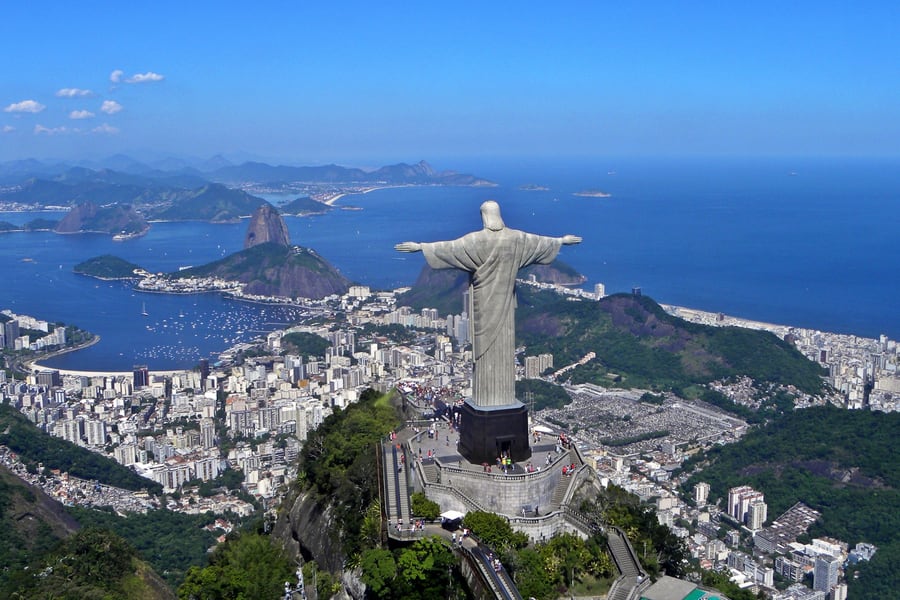
The Art Deco statue designed by Paul Landowski and built by the engineer Heitor da Silva Costa between 1922 and 1931, in reinforced concrete faced with soapstone. It stands 38 metres with its pedestal, weighs about 1,100 tonnes and was voted one of the New Seven Wonders in 2007. At its base is the Chapel of Our Lady of Aparecida, open for visits and prayer. Rodrigosilvestri / Wikimedia Commons · CC BY-SA 3.0
Mirante Dona Marta
A lookout in the national park 360 metres up that takes in the Sugarloaf, the Maracanã, Guanabara Bay and the statue itself in one sweep. It is open daily from 8:00 to 17:00, and staying overnight is not allowed.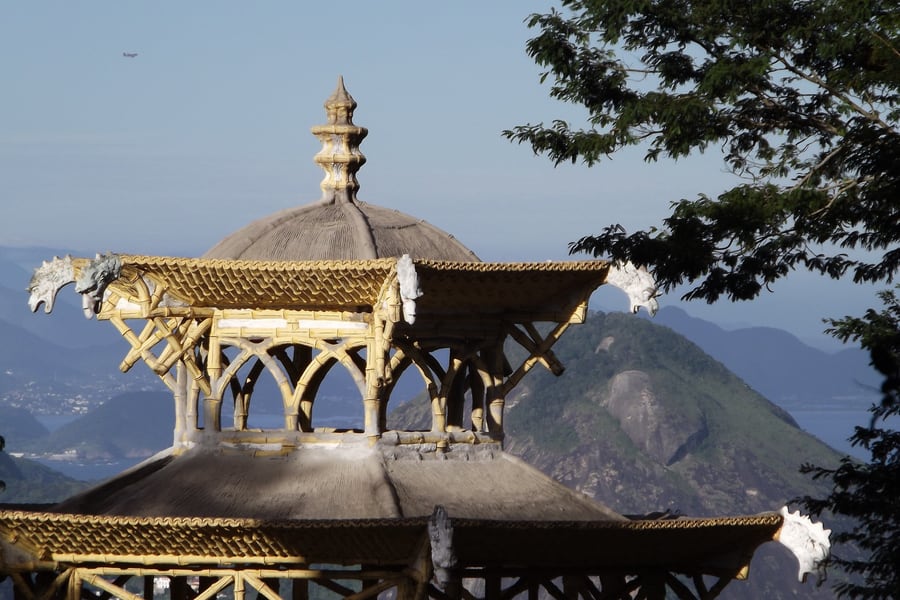 Jose Carlos RJ / Wikimedia Commons · CC BY-SA 4.0 · cropped
Vista Chinesa
A pagoda-roofed belvedere built between 1902 and 1906 above the Horto, in honour of the Chinese who brought tea growing to Brazil early in the nineteenth century. It looks over the whole south zone and the Lagoa Rodrigo de Freitas. Bus 409 runs to the Horto, and from there the road is for walkers and cyclists only.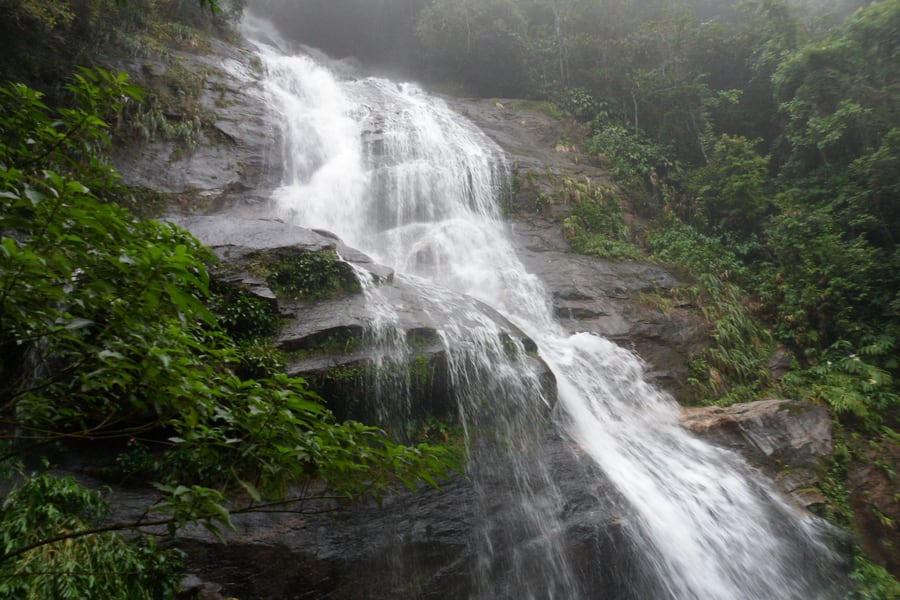 Ricardo Wagner e Silva / Wikimedia Commons · CC BY-SA 4.0 · cropped
Cascatinha Taunay
The highest waterfall in the national park, fed by the Tijuca and Conde rivers, named for the painter Nicolas-Antoine Taunay, who built a house beside it in 1817. Bathing under the fall is forbidden; the natural pool below the Roman-arched stone bridge of 1860 is where swimming is allowed.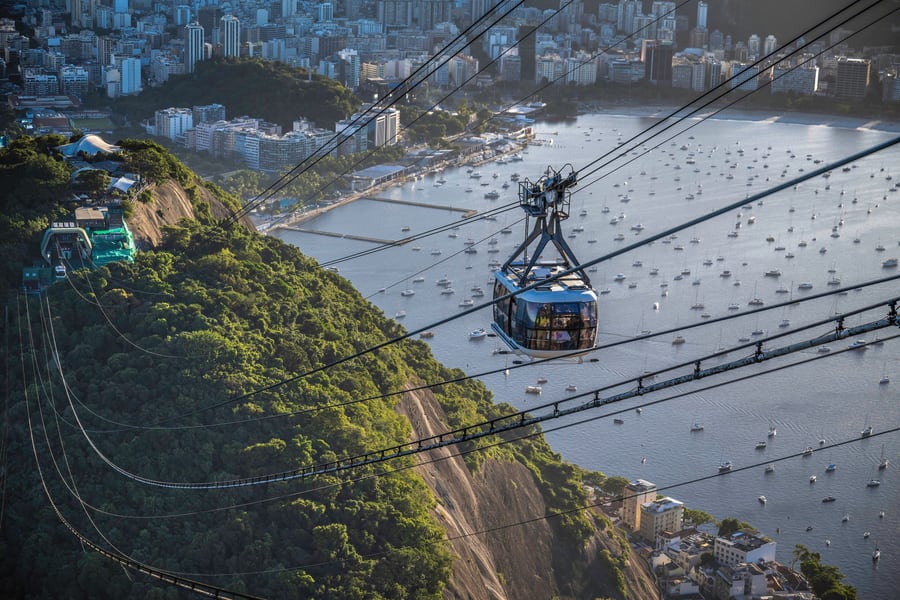 Wilfredor / Wikimedia Commons · CC0
The Sugarloaf
The granite peak at the mouth of Guanabara Bay, 396 metres above the harbour and the other half of the view from Corcovado. Two glass-walled cable cars climb it from a ground station below the Morro da Babilônia by way of the Morro da Urca, on a line first built in 1912 and rebuilt in the 1970s and again in 2008.Where to Sleep
Cosme Velho is a residential valley with no hotels of note at the station, but Santa Teresa is on the hill next door and the beaches of the south zone are a short ride away by bus.
Where to stay
Santa Teresa Hotel RJ – MGallery
In Santa Teresa, on the hill next to Cosme Velho
A hotel in an 1850 coffee farm on Rua Almirante Alexandrino, with gardens, a spa and views over Guanabara Bay.
Check Availability (opens in a new tab, on mgallery.accor.com)via mgallery.accor.com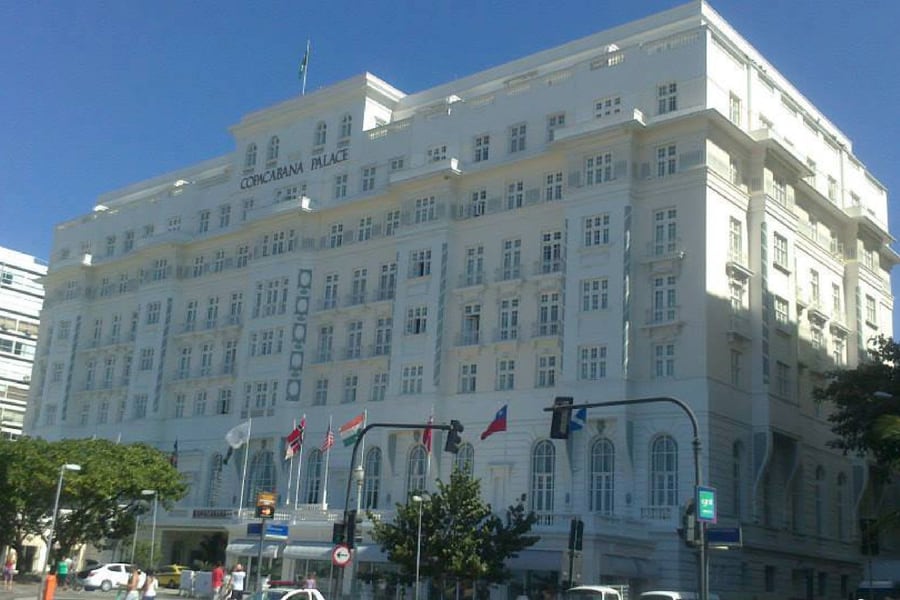 Fabio Gomes / Wikimedia Commons · CC BY-SA 4.0 · 2013 · cropped
Copacabana Palace
On the Copacabana seafront
Joseph Gire's hotel of 1923 facing Copacabana beach, run by Belmond, with 243 rooms in its main and annex buildings.
Check Availability (opens in a new tab, on belmond.com)via belmond.comQuestions or corrections
Planning this trip and stuck on something, or spotted a time, fare or detail that has changed? Send us a message about The Corcovado Rack Railway. We read every one, and we update this page when something has changed.