Tshiuetin: Sept-Îles to Schefferville
William Davies / Wikimedia Commons · CC0 · cropped
- DistanceAbout 575 km
- DurationA full day each way
- Best seasonAll year · 1 a week, 2 in summer and December
Introduction
No road reaches Schefferville. The town stands on the Quebec–Labrador border at the end of 575 kilometres of track from the St Lawrence, and the way in is by air or by this train: Sept-Îles to Schefferville, a full day each way up the Moisie valley, across the Labrador lake country and into the first tundra. It is a working train before it is anything else. It carries the town's food, supplies and medicine; most of its passengers are people going home; and they get on and off where they need to, to be met in winter by somebody on a snowmobile.
It is also a railway owned by the people it serves. The line was built by the Iron Ore Company of Canada in 1951–54 to bring ore down from the Knob Lake mines, and when the mines closed in 1982 the northern end was left with a thin subsidised service and an owner looking to sell. Three First Nations — the Innu of Matimekush–Lac John and of Uashat mak Mani-utenam, and the Naskapi of Kawawachikamach — formed Tshiuetin Rail Transportation in 2004, took over the 132.5 miles from Emeril Junction to Schefferville for a dollar, and ran their first train on 1 December 2005. It was the first railway in Canada owned by First Nations. Tshiuetin means "north wind" in Innu-aimun.
The train runs once a week most of the year, twice in summer and in December, and is booked by telephone rather than online.
The Journey
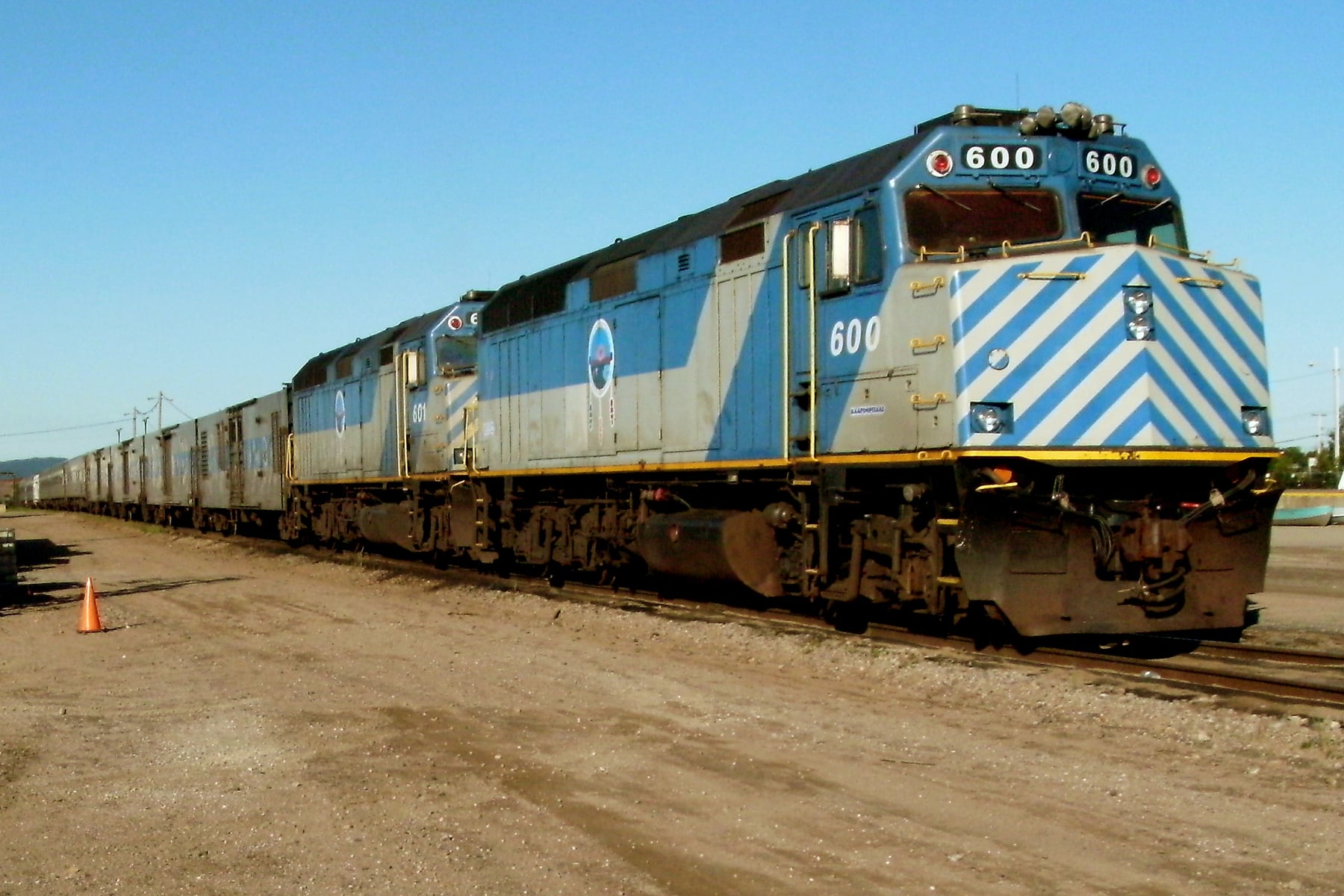
The train leaves Sept-Îles early in the morning, and in the photographs of it the baggage cars ride directly behind the locomotives, ahead of the coaches. The tariff explains why. Each passenger may check four bags of up to 23 kilograms, plus one to carry on; the tariff goes on to price refrigerated and frozen parcels, oversized loads, pets in carriers and canoes, because all of those travel north on this train as a matter of course. Photo ID is checked before boarding.
Up the Moisie
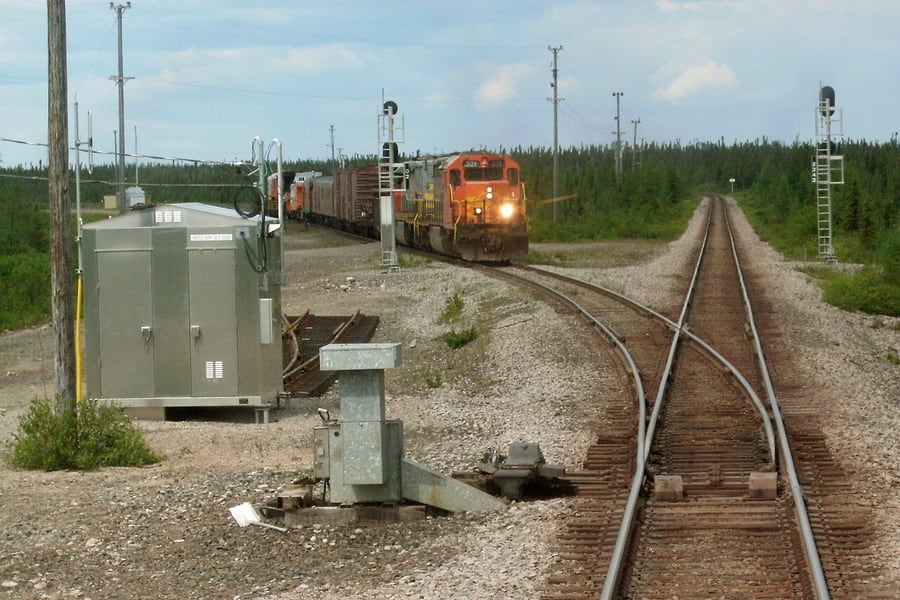
For its first stretch the line is the Iron Ore Company's, the Quebec North Shore & Labrador Railway, and the passenger train shares it with the ore. It climbs away from the coast into the valley of the Moisie, a fast river in a deep, wooded valley that the Innu call Mishta-shipu, the great river, and have used for generations as their road inland. Beyond the valley the country flattens into lakes — the operator's own description is "flat lands surrounded by lakes" — and the stops on the operator's fare list stop being places and become mileposts and lake names: Tika, Tonkas, Waco, Dufresne Lake, Seahorse, Pitaga, Dry Lake, and an outfitter's stop, Pourvoir M.41. None of them is a fixed station call: the train stops where someone wants to get off.
Emeril and the end of the road
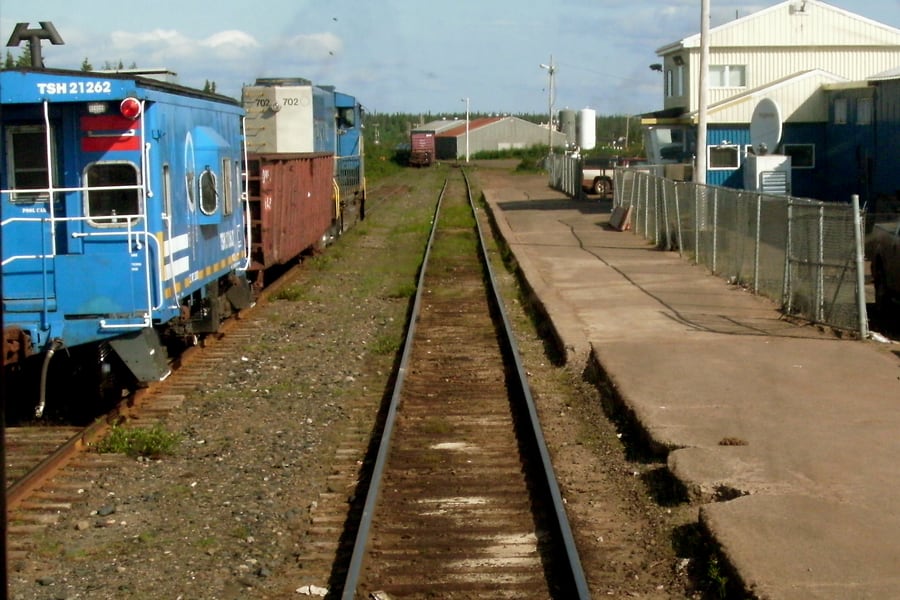
At Ross Bay Junction a freight branch joins the main line, and a little further on, at mile 225, is Emeril Junction, where the Trans-Labrador Highway crosses the line. Labrador City is 45 minutes away by road, and this is as close as the train goes; anyone heading there gets off here and arranges their own lift. Emeril is also where Tshiuetin's own railway begins. The 132.5 miles from here to Schefferville are the old Menihek Subdivision, the part of the iron line that the mining company sold to the three First Nations in 2005. Apart from a gravel track from Schefferville out to the Menihek dam, no road comes near it.
Menihek and the last miles
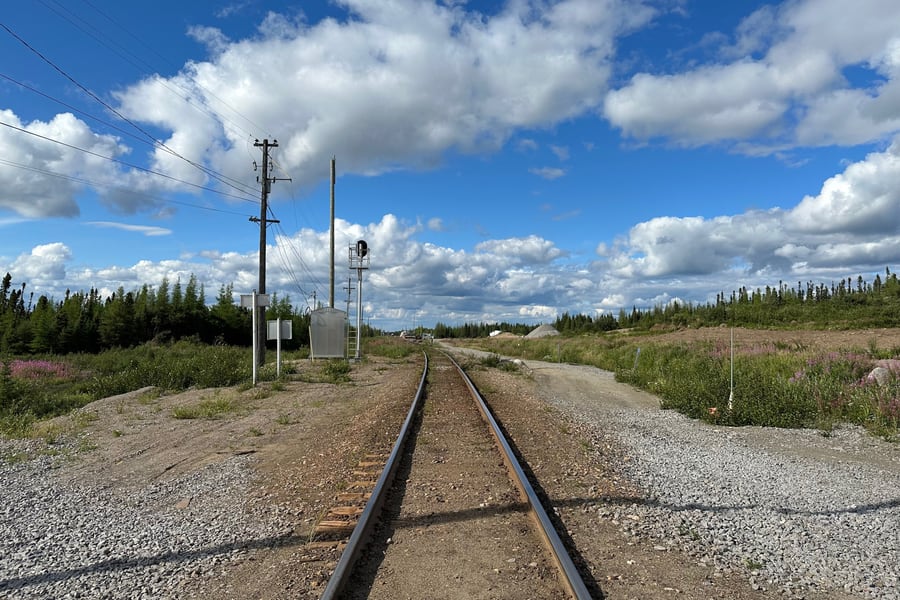
The northern section runs past Menihek, where a dam and powerhouse built in 1951–54 to supply the Knob Lake mines still provide Schefferville's electricity, and on through lake and lichen country that the operator calls the beginning of the tundra. Near the end the line crosses from Labrador into Quebec, passes Knob Lake Junction at mile 353, and runs into Schefferville station at mile 357.6, where the line ends. The station is Tshiuetin's own, opened in 2017.
The train itself
In 2011, when the photographs on this page were taken, the train was hauled by a pair of blue-and-silver diesels numbered 600 and 601. The operator has since renovated its passenger cars with funding from Transport Canada and the Canada Infrastructure Bank, for more comfort, Wi-Fi on board, and new intercoms and screens. The Wi-Fi also shows the train's position, and anyone waiting at either end can follow it on the operator's live map.
Along the route
 Cephas / Wikimedia Commons · CC BY-SA 3.0 · cropped
Up the Moisie
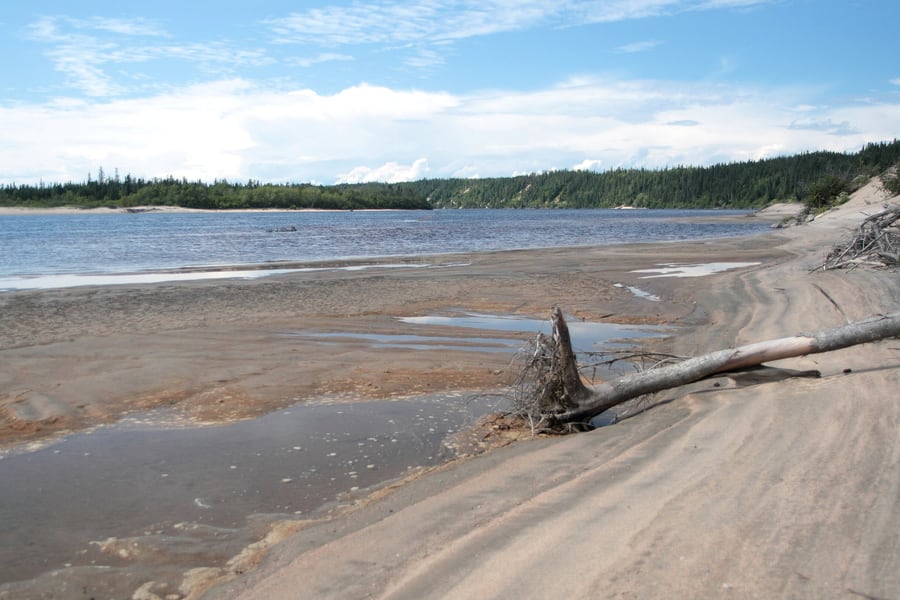
North of Sept-Îles the line follows the Moisie, a 410 km river the Innu call Mishta-shipu, the great river, and have long used as their road to the hunting grounds inland. The valley is deep, wooded and fast with rapids.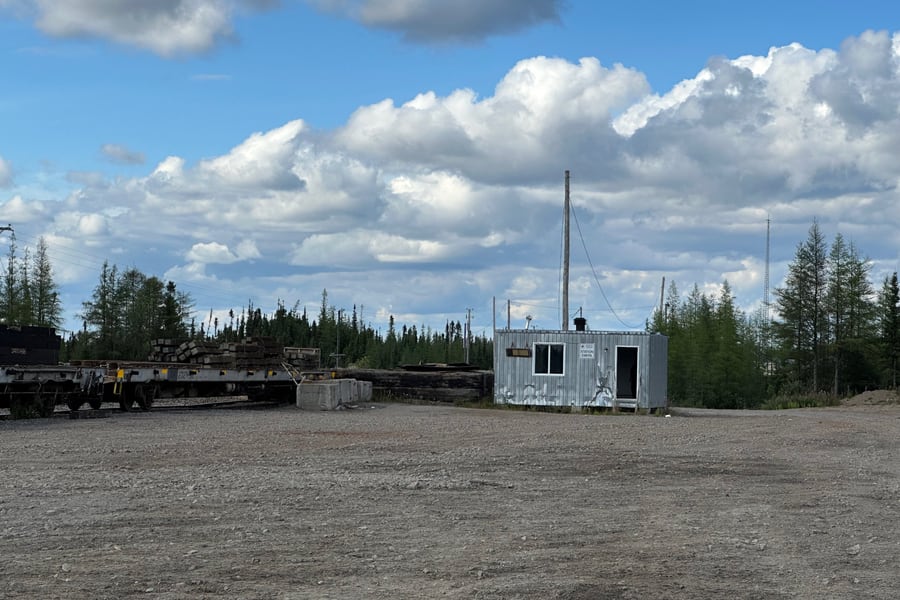 QuincyMorgan / Wikimedia Commons · CC0 · cropped
Emeril Junction
Mile 225, a siding and a few buildings where the Trans-Labrador Highway crosses the line. Tshiuetin's own railway starts here. Labrador City is 45 minutes away by road, and the train takes you to the junction and no further.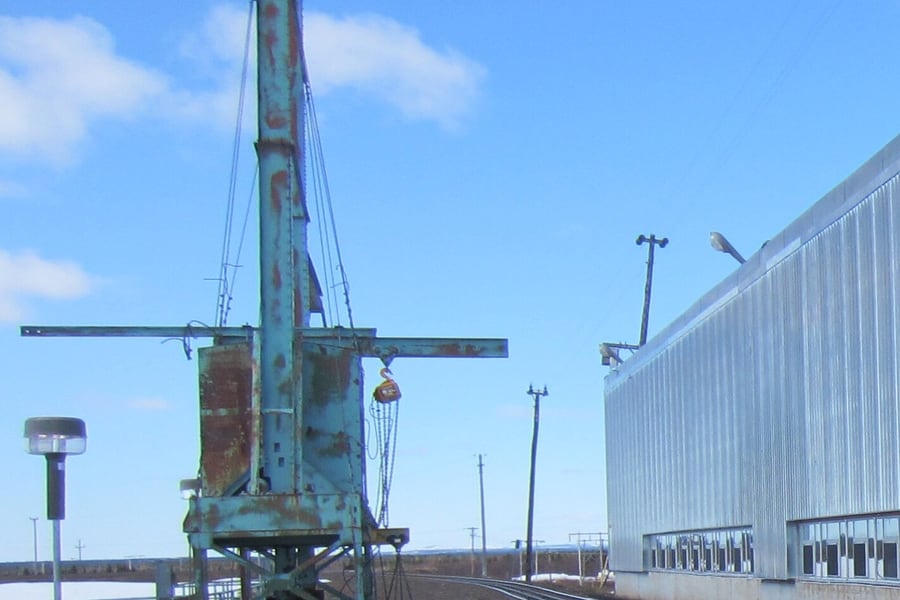 Wtshymanski / Wikimedia Commons · CC BY-SA 4.0 · cropped
Menihek and its dam
About 40 km short of Schefferville the line passes the Menihek dam, built in 1951–54 to power the Knob Lake mines. Like the railway it serves, it changed hands in 2005 for a single dollar, and it still lights Schefferville today.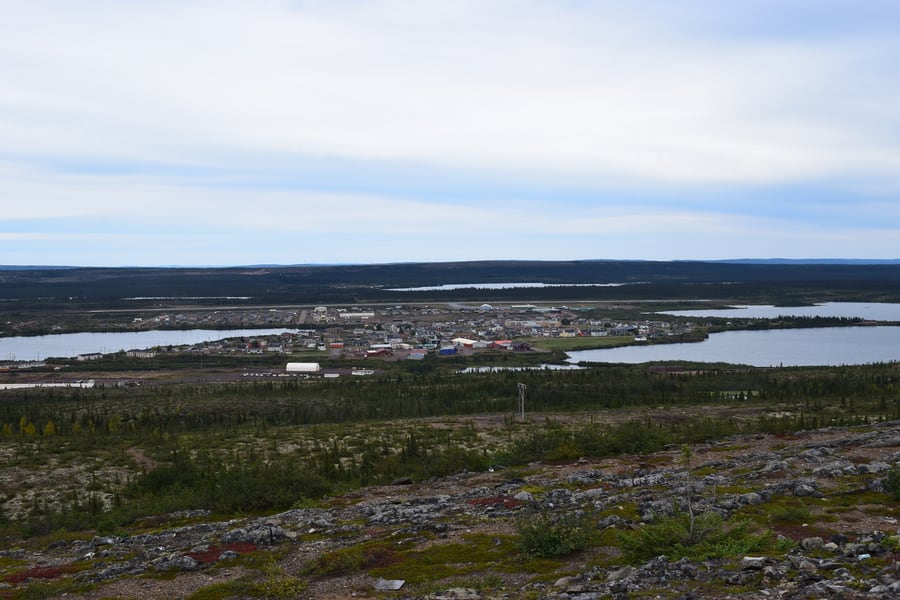 Smidkiff1776 / Wikimedia Commons · CC BY-SA 4.0 · cropped
Into Schefferville
The last miles climb out of Labrador across the provincial boundary, and Schefferville appears across its lakes: an iron-ore town of 1954 that lost its mine in 1982, with the Innu reserve of Matimekush at its heart.A bit of history
Culture & experiences along the way
 Matti&Keti, Lorenz King (JLU Giessen) / Wikimedia Commons · CC BY-SA 4.0 · cropped
A railway that still carries ore
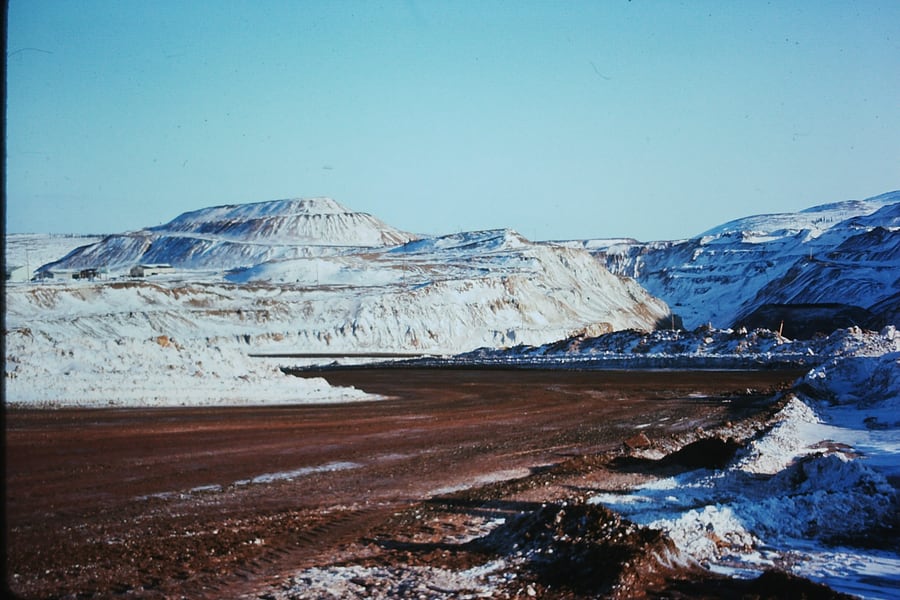
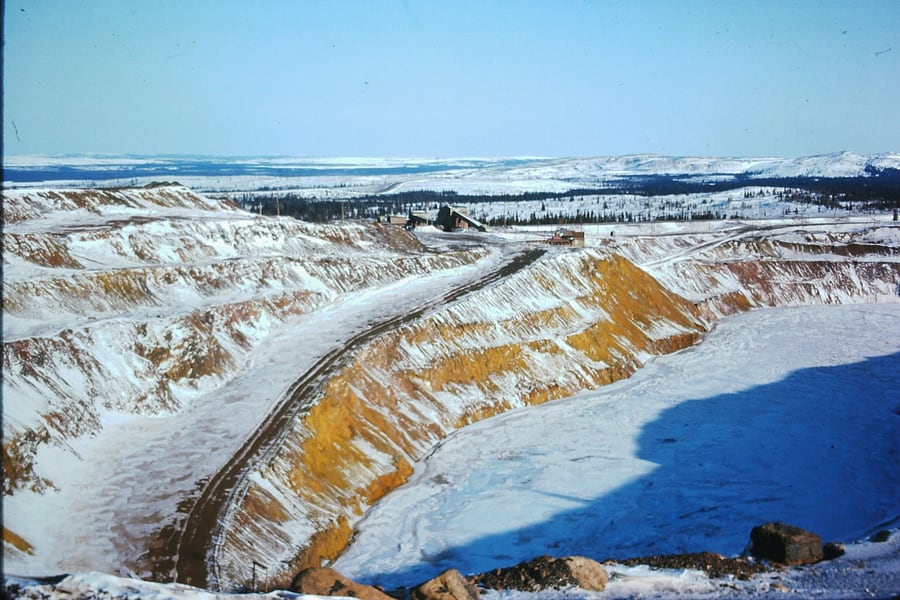
Schefferville's open pits closed in 1982, and for twenty years the line north of Emeril carried little but passengers. Mining returned from 2011, and Tshiuetin is now the only way Tata Steel's iron ore and mining equipment move between Schefferville and Emeril. The old pits on the ridges around town are still plain to see from the road out to them.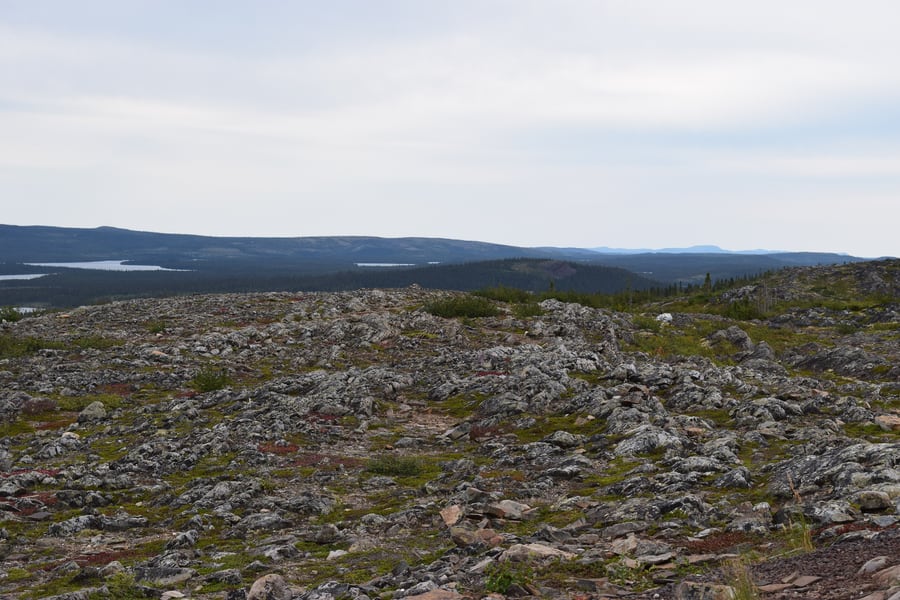 Smidkiff1776 / Wikimedia Commons · CC BY-SA 4.0 · cropped
Canoes in the baggage car
The train carries canoes and kayaks as baggage for CA$150, and stops wherever passengers need it to rather than at fixed halts. The operator's own page quotes a paddler who has ridden north three summers running to start a canoe-camping trip, and the lake country near Schefferville, bare rock and lichen with a lake in every hollow, is why.Timetables
One train north and one train south, on different days: the train goes up to Schefferville and comes back down the next day. Tshiuetin's director of operations describes the pattern as a 07:00 departure from Sept-Îles and, the following day, an 08:00 departure from Schefferville. The operator publishes no arrival time; the run takes the whole day.
The days are set month by month on the operator's calendar. Through the autumn the pattern is one round trip a week — north on Thursday, south on Friday, with the odd extra. In summer and around Christmas there are two: in August 2026 the train ran north on Mondays and Thursdays and south on Tuesdays and Fridays, and December 2026 follows the same pattern. September 2026 had extra trains on changing days. The dates the operator has published for the rest of 2026:
| Month | Sept-Îles → Schefferville · 07:00 | Schefferville → Sept-Îles · 08:00 |
|---|---|---|
| November 2026 | Mon 2 · Thu 5, 12, 19, 26 | Tue 3 · Fri 6, 13, 20, 27 |
| December 2026 | Thu 3 · Mon 7 · Thu 10 · Mon 14 · Thu 17 · Mon 21 · Mon 28 | Wed 2 · Tue 8 · Fri 11 · Tue 15 · Fri 18 · Tue 22 · Tue 29 |
Good to know:
- There are no fixed intermediate stops. Passengers get on and off where they need to — at a camp, a lake or a junction — so tell the ticket office where you want to leave the train when you book.
- Labrador City is not on the line. The train serves Emeril Junction, and from there it is a 45-minute drive that you must arrange yourself.
- The calendar can change at the management's discretion; the operator announces changes by memo and on its Facebook page. Its live map shows where the train is.
- There is no train on 24–25 December, and the offices close on public holidays.
Dates as of November 2026, from Tshiuetin's published monthly calendars (on the French-language horaire (opens in a new tab) page); departure times as given by the operator's director of operations. Confirm by telephone on 1 866 962-0988 before travelling.
Tickets
One class, booked by telephone. Tshiuetin sells no tickets online: reserve through the Sept-Îles office (418 962-5530, toll-free 1 866 962-0988) or the Schefferville office (418 585-2333). The operator's fare calculator gives CA$96.62 one way and CA$174.15 return from Sept-Îles to Schefferville for an adult, with a reduced fare for seniors and children (CA$48.31 one way) and for Indigenous passengers. Every intermediate stop has its own fare.
All sales are final, but a ticket is valid for a year and the first change of date is free; each later change costs CA$10. The fare includes four checked bags of up to 23 kg; extra bags are CA$10, a pet in its carrier CA$15 and a canoe or kayak CA$150. Fares checked November 2026 on tshiuetin.net (opens in a new tab); Canadian dollars, per person.
Book your tickets
Sept-Îles to Schefferville
The whole line, one way
An adult single over the full 575 km, booked by telephone or at the Sept-Îles or Schefferville ticket office.
Book Tickets (opens in a new tab, on tshiuetin.net)via tshiuetin.netSept-Îles to Schefferville and back
Adult return
The return fare, valid for a year from purchase, with one free change of travel date.
Book Tickets (opens in a new tab, on tshiuetin.net)via tshiuetin.netSept-Îles to Emeril
For Labrador City, one way
To the junction where the Trans-Labrador Highway crosses the line, 45 minutes by road from Labrador City.
Book Tickets (opens in a new tab, on tshiuetin.net)via tshiuetin.netRail Passes
No rail pass covers this journey. Tshiuetin is an independent railway owned by three First Nations; it sells its own tickets by telephone and at its two offices, and honours nothing else. This is not a VIA Rail train, so VIA's discount cards, which cover the Québec City–Windsor corridor and south-western Ontario, do not apply.
The discounts that exist are built into the fare: a reduced rate for seniors and children, and another for Indigenous passengers. Both are applied when you book, and there is nothing to buy in advance. A return ticket costs about ten per cent less than two singles.
Fare categories checked November 2026 on tshiuetin.net (opens in a new tab).
Places to Visit
There is a city at one end of this line and a small town at the other, and in between there are only lakes, sidings and camps. Sept-Îles is the last place you can drive to; Schefferville, and the two First Nations communities beside it, are reached by this train or by air.
 Cephas / Wikimedia Commons · CC BY-SA 3.0 · cropped
Sept-Îles
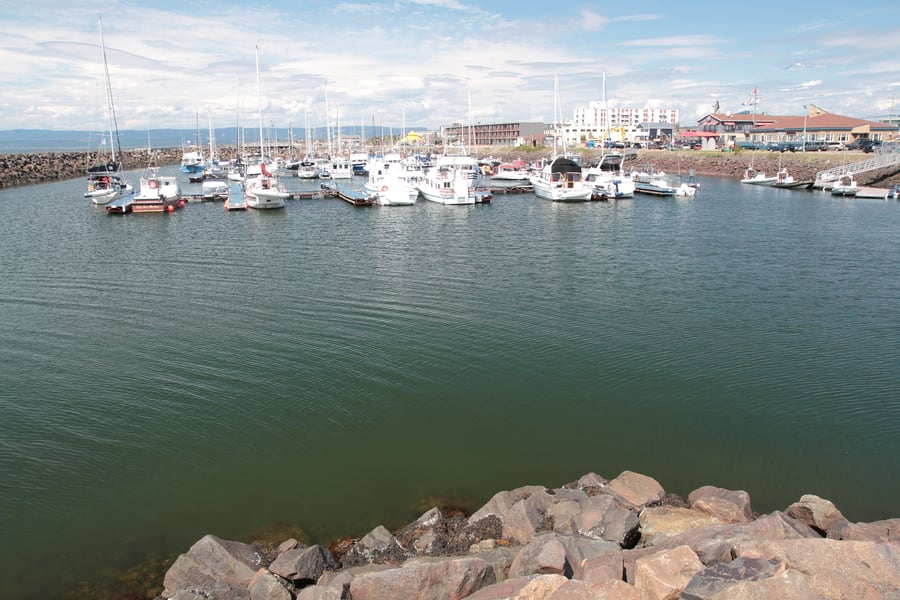
A city of about 24,500 on a round bay guarded by its seven islands, and one of the busiest iron-ore ports in Canada: the ore railways from Labrador all run down to it. The Innu community beside it is Uashat, "the bay" in Innu-aimun, and the Innu were here long before Jacques Cartier sailed past the islands in 1535. It is the last place on the line you can reach by paved road.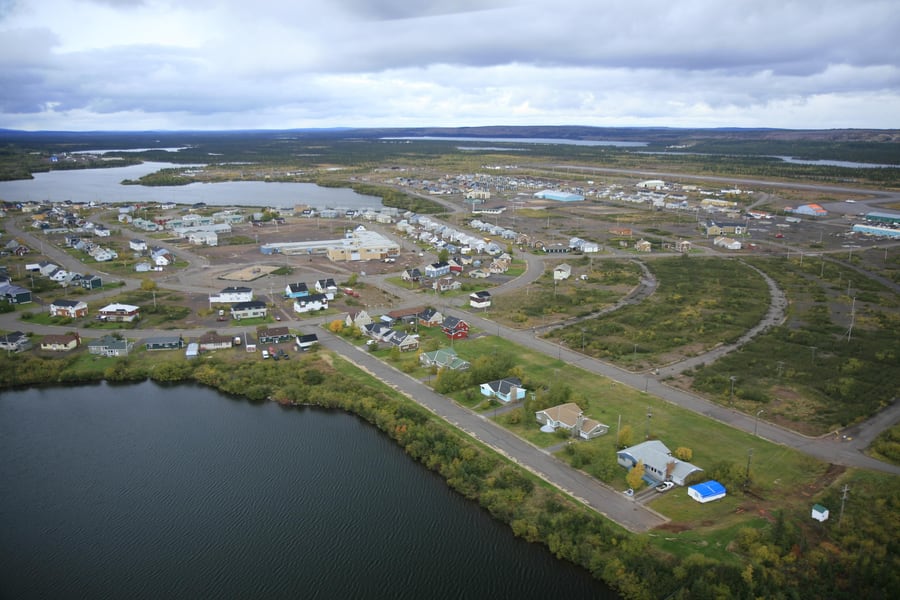 Copyright 2007 Pierre Bouchard Indico / Wikimedia Commons · free use with credit · cropped
Schefferville
Founded in 1954 by the Iron Ore Company of Canada as a company town on Knob Lake, and emptied when the mine shut in 1982: most of its four thousand non-Indigenous residents left, and 244 people lived in the town in 2021. It sits less than two kilometres from the Labrador border, on permafrost, with no road to the south. The station, opened by Tshiuetin in 2017, is the town's front door.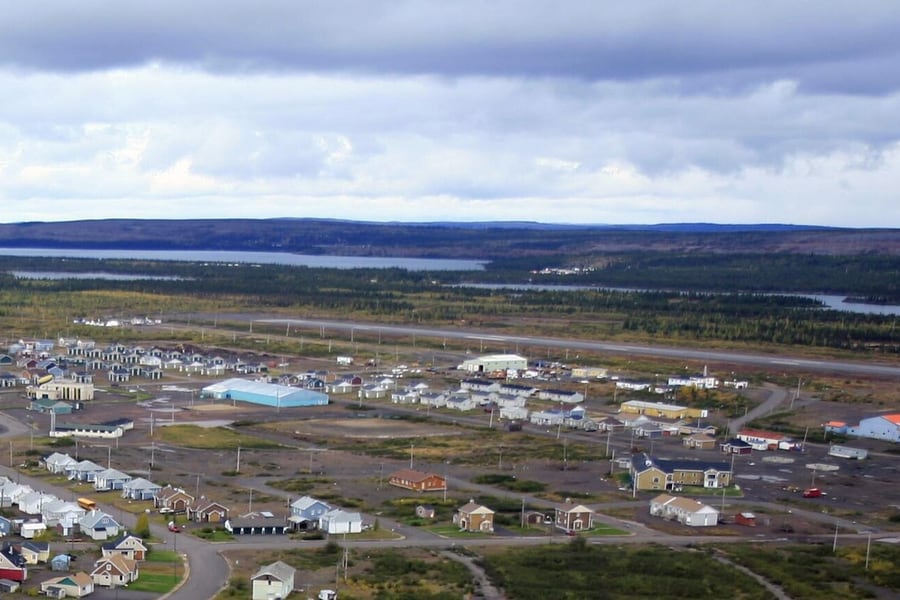 Copyright 2007 Pierre Bouchard Indico / Wikimedia Commons · free use with credit · cropped
Matimekush–Lac John
The Innu reserve of Matimekosh, "small trout", sits on Lake Pearce in the middle of Schefferville, with Lac John a few kilometres north-east. Innu families from near Sept-Îles came here in the 1950s as guides and railway builders; the reserve was created in 1968. Its people are one of the three nations that own Tshiuetin, and the Naskapi village of Kawawachikamach, another owner, lies 16 km to the north.Where to Sleep
The train leaves Sept-Îles early, so most travellers sleep there the night before. In Schefferville there are only a few places to stay and the train goes back the next morning, so book a room before you book the train.
Where to stay
Hôtel Les Mouettes
Sept-Îles · in the town centre
A town-centre hotel near the waterfront with five room categories and a reception open around the clock.
Check Availability (opens in a new tab, on hotellesmouettes.com)via hotellesmouettes.comHôtel Innutel
Schefferville · 300 rue Wishart
Rooms with a full hot breakfast included, three minutes' walk from the airport, with dinner served on site.
Check Availability (opens in a new tab, on hotelinnutel.com)via hotelinnutel.comQuestions or corrections
Planning this trip and stuck on something, or spotted a time, fare or detail that has changed? Send us a message about Tshiuetin: Sept-Îles to Schefferville. We read every one, and we update this page when something has changed.