Karaelmas Ekspresi
Kabelleger / Wikimedia Commons · CC BY-SA 4.0
- DistanceAnkara–Zonguldak · about 480 km
- DurationAbout 14 h out, 20½ h back · stops included
- Best seasonAutumn · four weekends, October–November
Introduction
In the early 1930s Karabük was thirteen households and a small station on a railway being built to carry coal from Zonguldak to Ankara. The railway is the reason it did not stay that way. When the young Republic chose a site for its first steelworks, it picked Karabük — on the line, and close to the coalfield — and laid the foundation in the rice fields on 3 April 1937. Two and a half years later the blast furnaces made the first Turkish pig iron, and a city grew up around them. The Karaelmas Ekspresi runs through it in the early hours, on its way to the coal the line was built for.
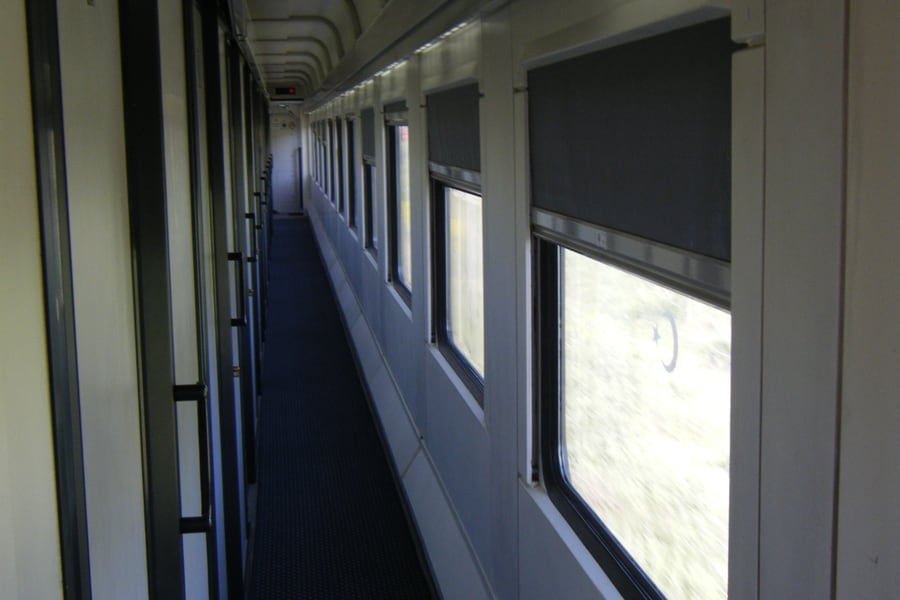
It is a sleeper. On four Friday nights in October and November a train of six sleeping cars and a restaurant car leaves Ankara Gar at eleven, carrying 120 passengers. At seven the next morning it stops for three hours in the forests at Yenice, then follows the Filyos river down to the Black Sea and reaches Zonguldak at one. It comes back on the Saturday night, stopping for the morning in Çankırı and the afternoon in Kalecik.
It is not sold as a train. The development agency that runs the project hands out whole carriages to travel agencies, and what a traveller buys is an agency's tour — usually the sleeper one way, a night in Zonguldak, and a coach home by way of Safranbolu.
The Journey
TCDD Taşımacılık runs the train, and the Western Black Sea Development Agency (BAKKA) runs the project, with the Governor of Zonguldak and the province's special administration. For 2026 it is six sleeping cars and a restaurant car, seven vehicles and 120 berths; the first season, in 2025, ran four sleepers, a couchette car and two diners. The first paying passengers reached Zonguldak on 14 June 2025, after two promotional runs.
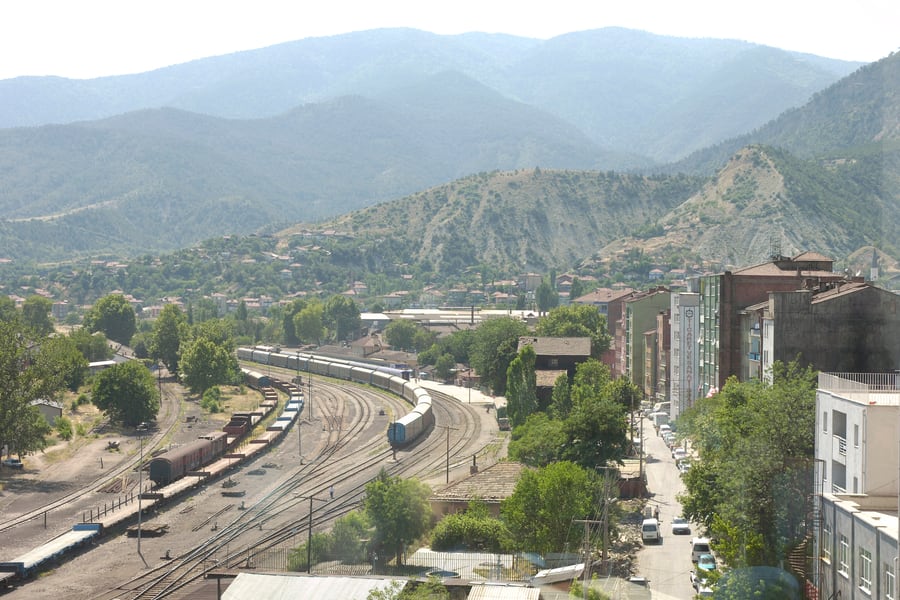
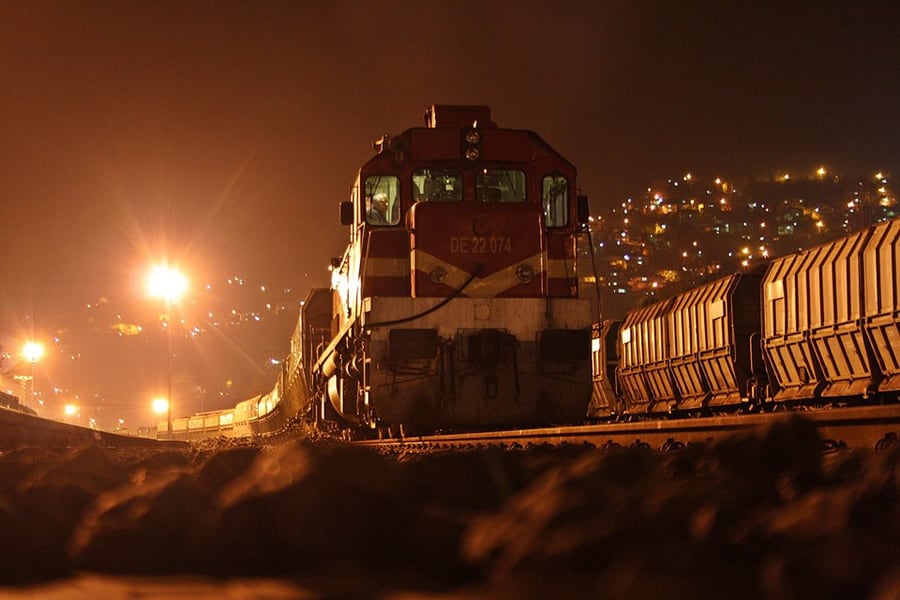
It leaves Ankara at 23:00 and runs east on the main line to Irmak, where it turns north onto the Irmak–Zonguldak railway — 415 km of single track built between 1931 and 1937 to bring Zonguldak's coal to the capital. The first coal train out of Çatalağzı reached Ankara on 20 November 1936, twenty-two hours after it set off. Kalecik and Çankırı go by in the dark; Karabük, its yards laid through the middle of the town, comes in the small hours.
The Filyos valley
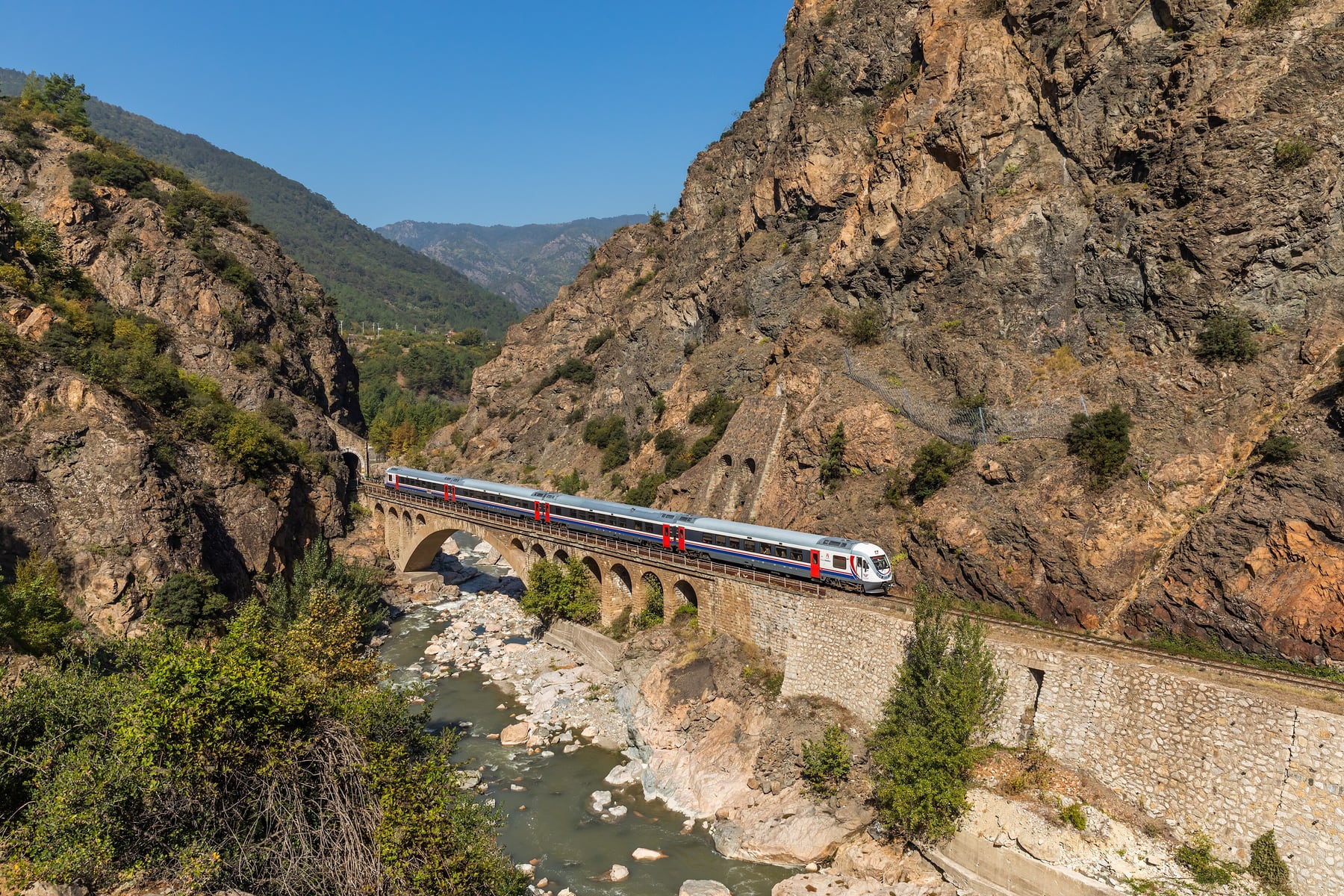
Between Karabük and Yenice the line follows the Filyos river into a gorge, crossing it on stone arch bridges with the rock close on either side. It is early morning by then. At Yenice the train stands from seven until ten while the passengers go up into the forest for breakfast; the stretch below it, down the valley through Gökçebey and Çaycuma to the sea at Filyos, is in full daylight. There the railway turns west along the coast, past the junction at Çatalağzı, and ends at Zonguldak's harbour at one in the afternoon.
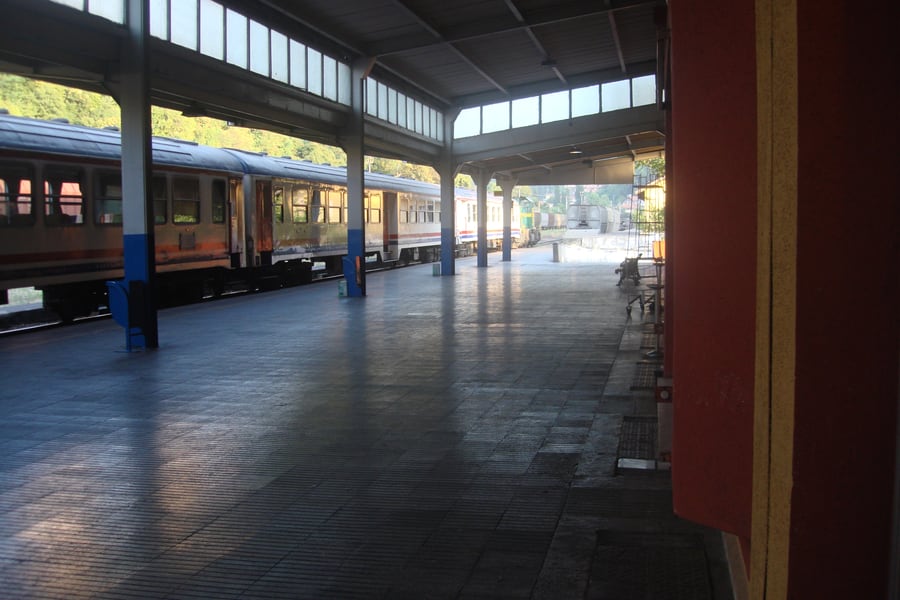
The ordinary trains on the line are regional railcars between Zonguldak and Karabük or Gökçebey — the train on the bridge at the top of this page is one of them, MT15441 on a Zonguldak–Karabük working. Everything else is coal and steel.
Black diamonds
Kara elmas, black diamond, is Zonguldak's word for its coal, and it was the name of the last scheduled passenger train between Ankara and Zonguldak. That Karaelmas Ekspresi ran three times a week until 1 January 2010, and the coalfield had no through train again until the tourist one borrowed its name.
The return leaves Zonguldak at 23:00 on Saturday and makes a day of Sunday: Çankırı from seven until noon, for the Underground Salt City and the old town, then Kalecik from two until six, before the last run into Ankara at half past seven.
Along the route
 Hajo-Muc / Wikimedia Commons · CC BY-SA 3.0 · cropped
Kalecik
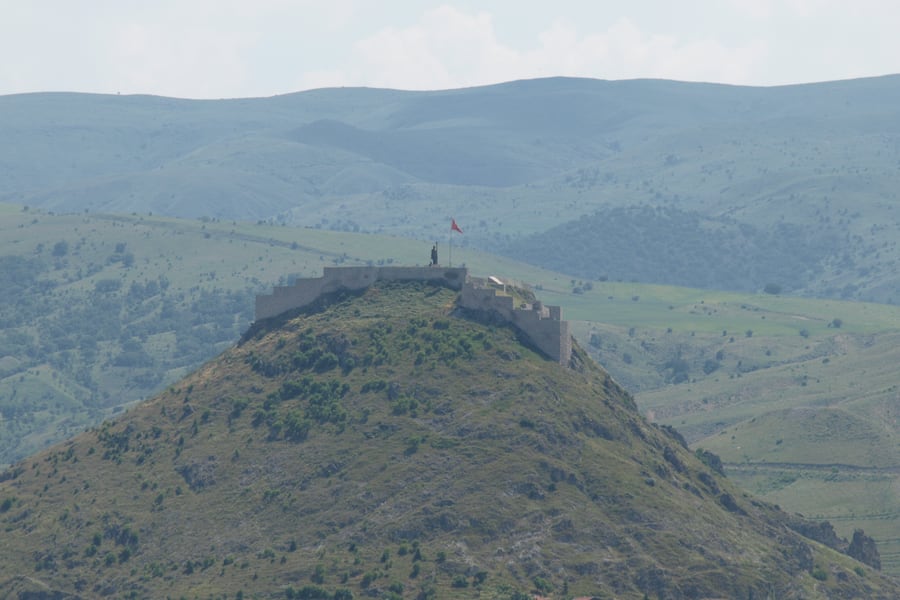
The last stop coming home: four hours on Sunday afternoon below a castle hill that has been held since Roman times, in the valley of the Kızılırmak. The vineyards around it grow the Kalecik Karası, a red wine grape.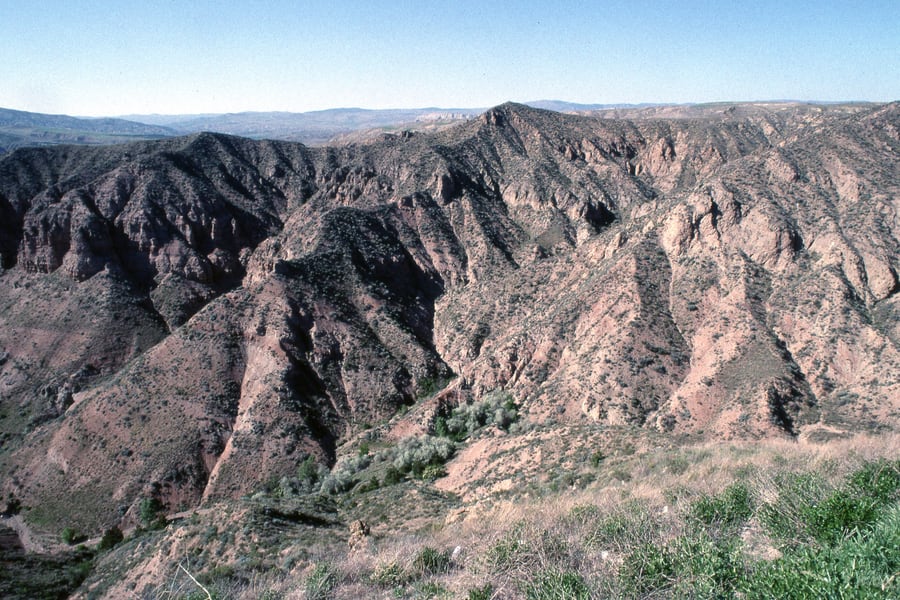 Dick Osseman / Wikimedia Commons · CC BY-SA 4.0 · cropped
Çankırı
The return pulls in at seven on Sunday morning and stays until noon, long enough for the Underground Salt City, a salt mine worked for thousands of years, and a walk round the old town beneath the castle.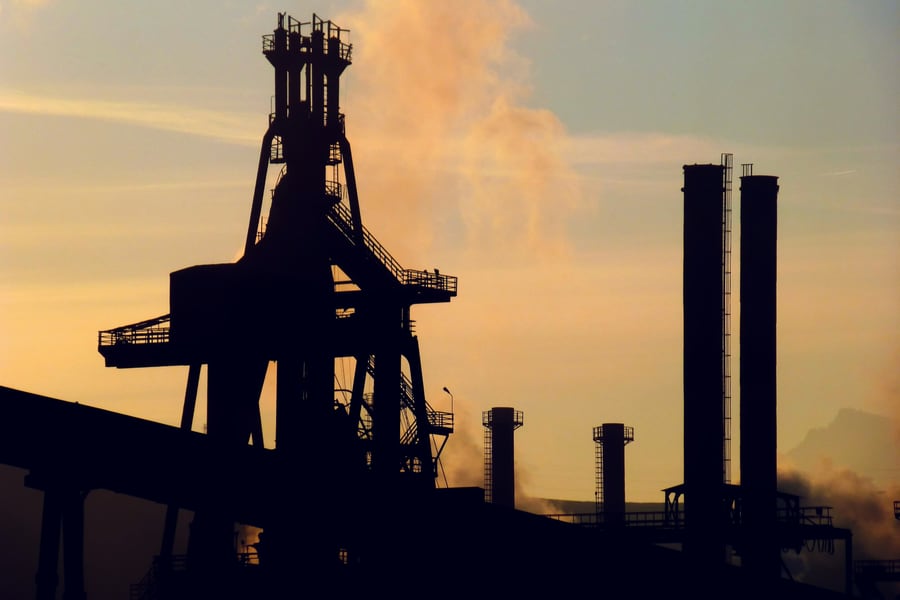 Nevit Dilmen / Wikimedia Commons · CC BY-SA 3.0 · cropped
Karabük
Turkey's first steelworks, founded here in 1937 because the coal railway already ran through. The blast furnaces made the country's first pig iron on 10 September 1939, and the town grew up around them. Kardemir still works the site.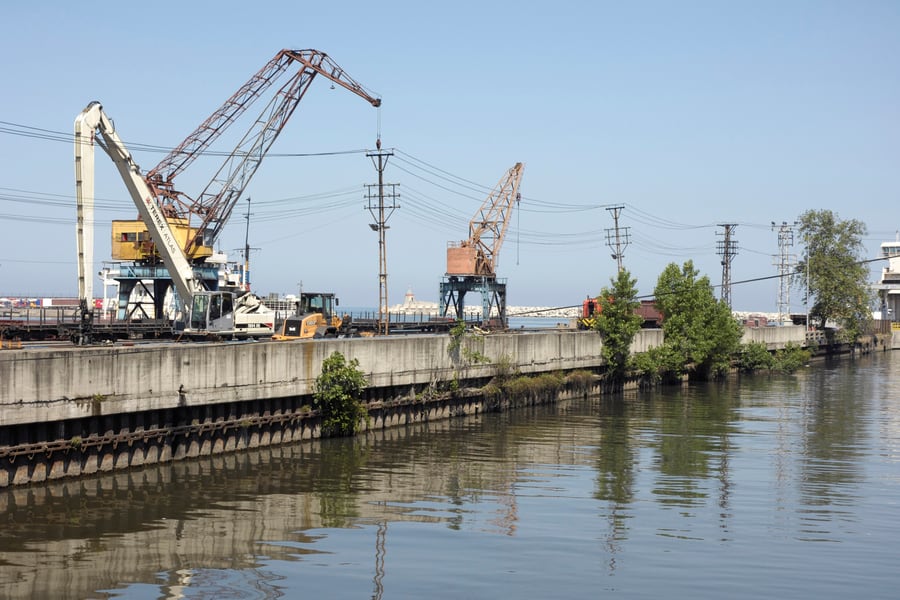 Dick Osseman / Wikimedia Commons · CC BY-SA 4.0 · cropped
The coal harbour
The line ends at Zonguldak's harbour, where the cranes of the state coal company, Türkiye Taşkömürü Kurumu, load what the pits bring up. The rails reached it on 12 August 1937, the last link in the road to Ankara.A bit of history
Culture & experiences along the way
 Dick Osseman / Wikimedia Commons · CC BY-SA 4.0 · cropped
Uzun Mehmet and the Coal Festival
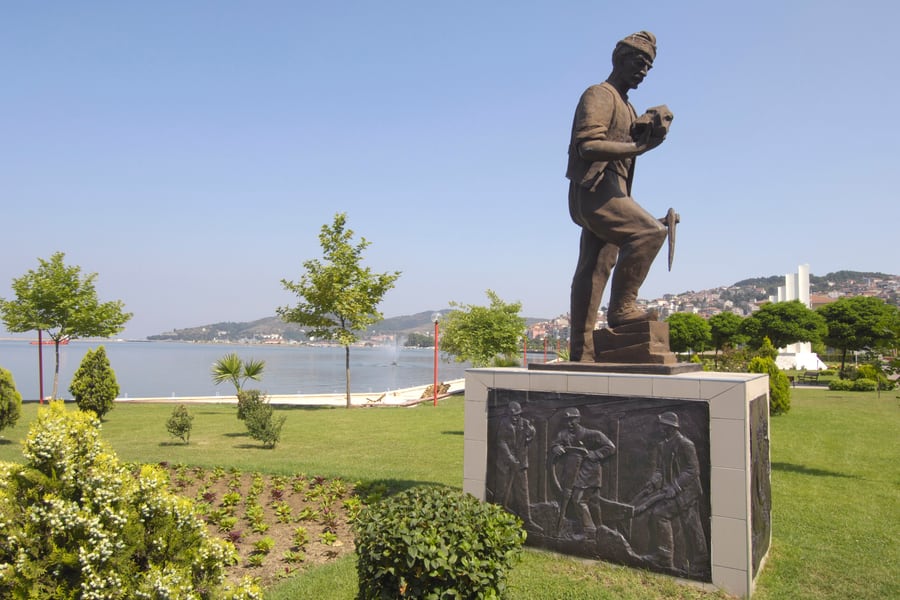
On 8 November 1829 a former navy man, Uzun Mehmet, picked up black stones by a mill stream near Neyren, threw them on a fire and watched them burn. Mahmud II gave him fifty gold coins. Since 1932 the date has been kept as the Uzun Mehmet Kömür Bayramı; his statue stands in Karadeniz Ereğli.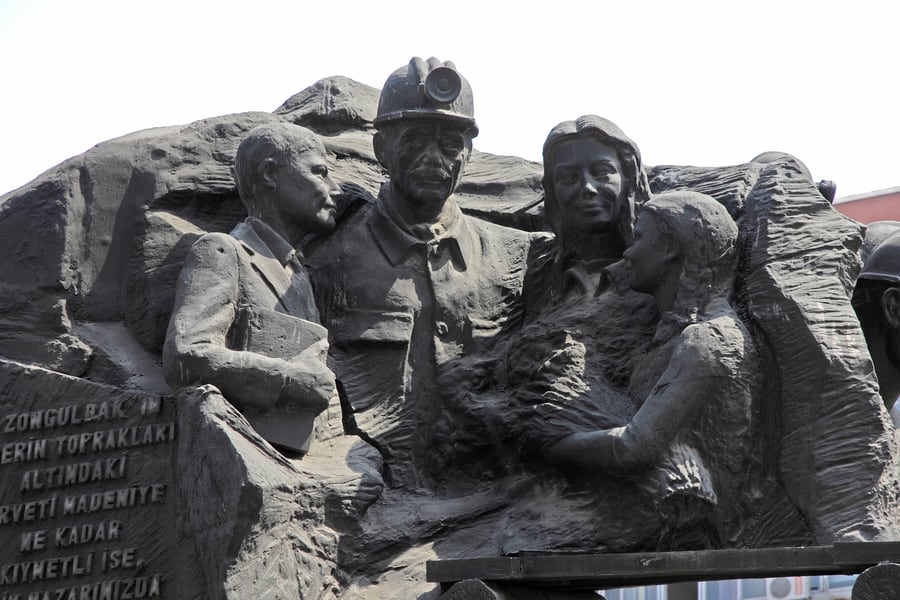 Dick Osseman / Wikimedia Commons · CC BY-SA 4.0 · cropped
The miners' city
Tankut Öktem's Madenci Anıtı of 1986 stands where Zonguldak's main streets meet: miners leaving the pit, a miner's family, and a figure modelled on a real miner, Hamza Adıbaş. The Mining Museum, opened in 2016, includes the Kömür Deneyim Ocağı, a real mine gallery you walk through.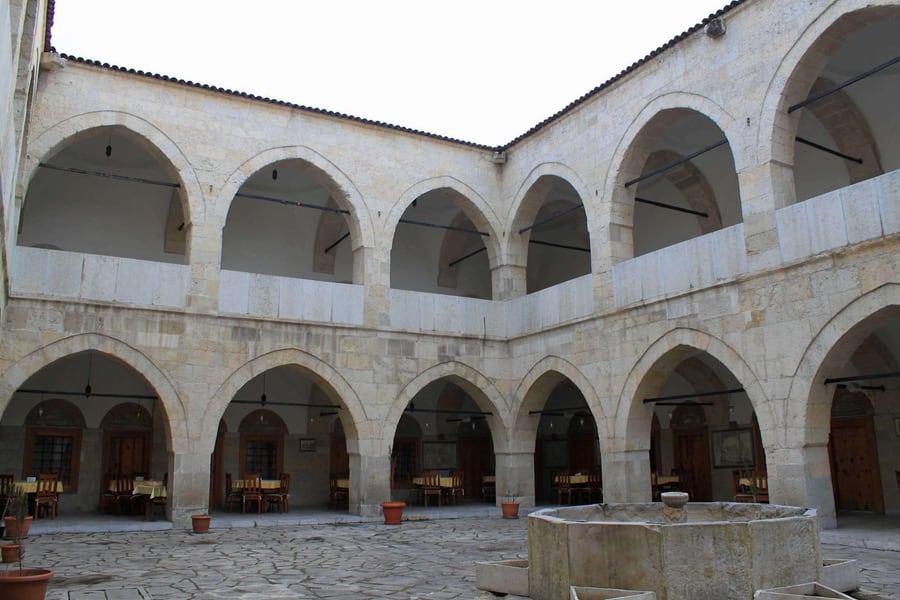 Vyacheslav Bukharov / Wikimedia Commons · CC BY-SA 4.0 · cropped
A night in a caravanserai
Safranbolu's Cinci Han was built around 1640–1648 for Cinci Hoca, a judge under Sultan İbrahim, and served the caravan road until the twentieth century, then as a store. It has been restored as a hotel, so the arcaded courtyard can be slept in as well as seen.Timetables
Four round trips in 2026, out on a Friday night and back on the Saturday night. Times and dates are TCDD's, as of September 2026; TCDD gives them as planned times, not a guarantee.
Ankara → Zonguldak
| Train | Ankara Gar | Yenice | Zonguldak |
|---|---|---|---|
| Turistik Karaelmas Ekspresi | Fri 23:00 | Sat 07:00 – 10:00 | Sat 13:00 |
Zonguldak → Ankara
| Train | Zonguldak | Çankırı | Kalecik | Ankara Gar |
|---|---|---|---|---|
| Turistik Karaelmas Ekspresi | Sat 23:00 | Sun 07:00 – 12:00 | Sun 14:00 – 18:00 | Sun 19:30 |
Which weekends
| Leaves Ankara (Friday) | Leaves Zonguldak (Saturday) |
|---|---|
| 2 October | 3 October |
| 16 October | 17 October |
| 30 October | 31 October |
| 13 November | 14 November |
The train stops nowhere else for passengers. Agencies usually pair one direction of the train with a coach the other way, so most travellers ride only one of them.
⚠️ The 2025 season ran to different times — out of Ankara at 21:00 and into Zonguldak before noon — and at least one agency's 2026 itinerary still gives the 21:00 departure. The 23:00 above is TCDD's own figure for 2026; check the time with whoever sells you the tour.
The train, the dates and both timetables are on TCDD Taşımacılık's Turistik Karaelmas Ekspresi page (opens in a new tab).
Tickets
There is no ticket for the train alone. BAKKA allocates the train to travel agencies by the carriage — at least two cars, forty people, per agency — and each agency sells its own tour. An Ankara-departing tour has to include at least one night in Zonguldak, so the usual shape is the sleeper out, a hotel night, and a coach home through Filyos and Safranbolu.
Prices are the agencies'. One three-day package for the 16 October departure costs 11,500 to 13,000 TL a person depending on group size, with the berth, a hotel night on half board, a guide and the coach back included and museum entries extra. Compare what each tour includes. Prices checked in September 2026.
Things to do
Sleeper one way, coach back
A three-day agency package, 16–18 October 2026
A berth to Zonguldak, one hotel night with breakfast and dinner, a guide and the coach home via Safranbolu.
Book Experience (opens in a new tab, on seyahat53.com)via seyahat53.comRail Passes
No pass is worth buying for this train. Turkey is in the Interrail and Eurail area, and Interrail's table of railway companies lists what a pass covers on TCDD Taşımacılık: regional, main-line, high-speed and night trains. It excludes two by name, the Marmaray and the Turistik Doğu Ekspresi. The Karaelmas is not on it, but the question does not arise: the berth is only sold as part of an agency tour, so there is nothing for a pass to buy.
A pass still has a use around it. The regional railcars between Zonguldak and Karabük are covered, and so are the night trains east from Ankara and the high-speed lines. Checked against Interrail's railway-companies table, last updated 28 August 2026, in September 2026.
Places to Visit
The tours are built around the stops: breakfast in Yenice's forest on the way out, then an afternoon in Zonguldak — the lighthouse quarter, the Mining Museum and the Gökgöl cave. The second day usually goes by coach along the coast to Filyos and inland to Safranbolu.
 Yavuz Çekirge / Wikimedia Commons · CC BY-SA 4.0 · cropped
Yenice's forests and the Ihlamur Teras
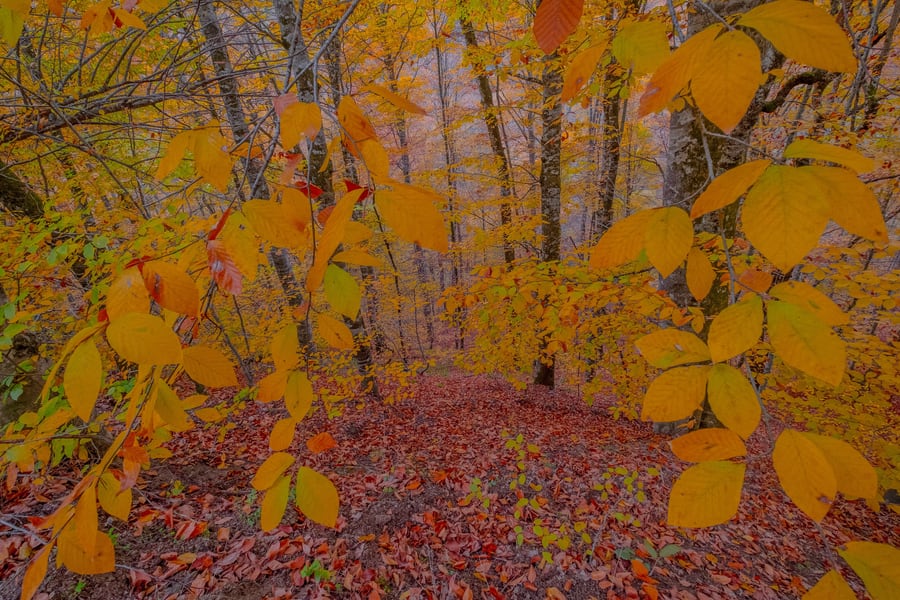
The breakfast stop. Yenice's forests are among the largest unbroken blocks of forest in Turkey, and are counted among Europe's hundred forest biodiversity hotspots. The Ihlamur Teras, a viewing terrace on a hill above the town, keeps a small museum of the forest's animals — brown bears, wolves, deer and 134 kinds of butterfly. The Şeker Canyon, 7 km long and up to 250 metres deep, starts five kilometres out.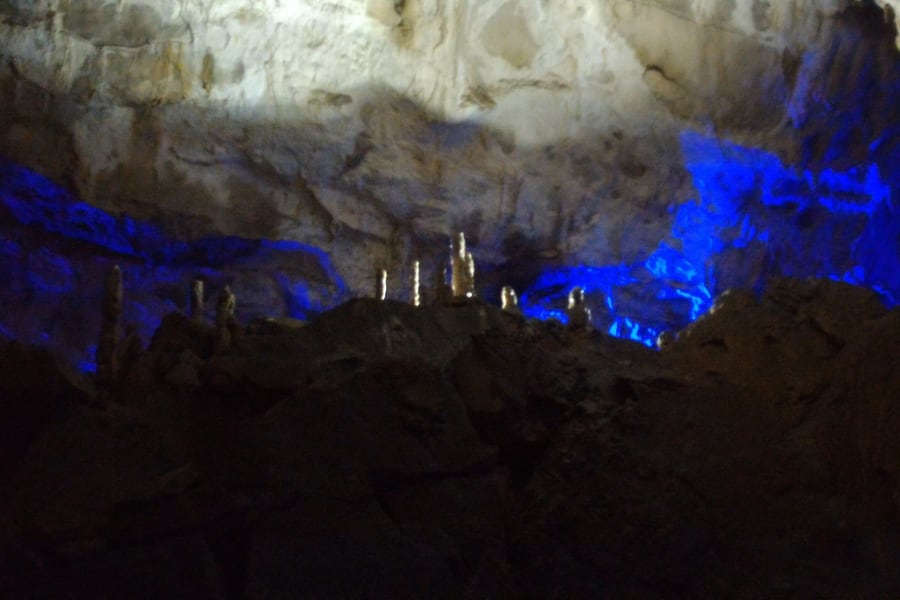 İncelemeelemani / Wikimedia Commons · CC BY-SA 4.0 · cropped
Gökgöl Mağarası
A cave four kilometres out of Zonguldak on the Ankara road: 3,350 metres long with its branches, of which 875 are on a lit walkway past stalactites, columns and an underground stream with fish in its pools. Turkish and British cavers explored it in 1975–77; it opened to visitors in 2001, and was shut from 2014 to 2016 after flood damage.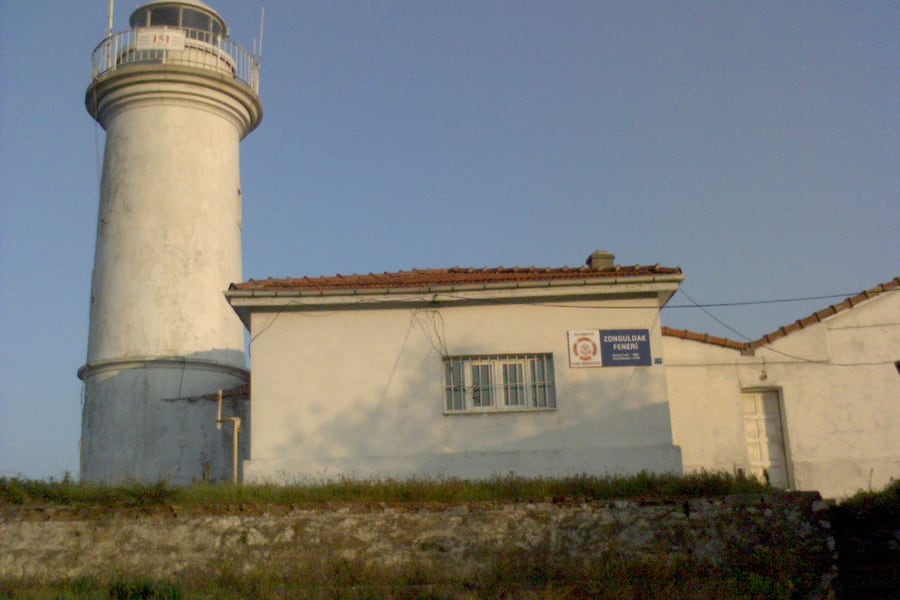 Berfu / Wikimedia Commons · Public Domain · cropped
Fener Mahallesi
The headland north-east of the centre, looking over the harbour and the Black Sea. The French company that worked the local pits settled its people here in the 1890s, and for a while it was the French Quarter; the lighthouse built on the point in 1908 gave it the name it keeps. It is now a protected historic quarter.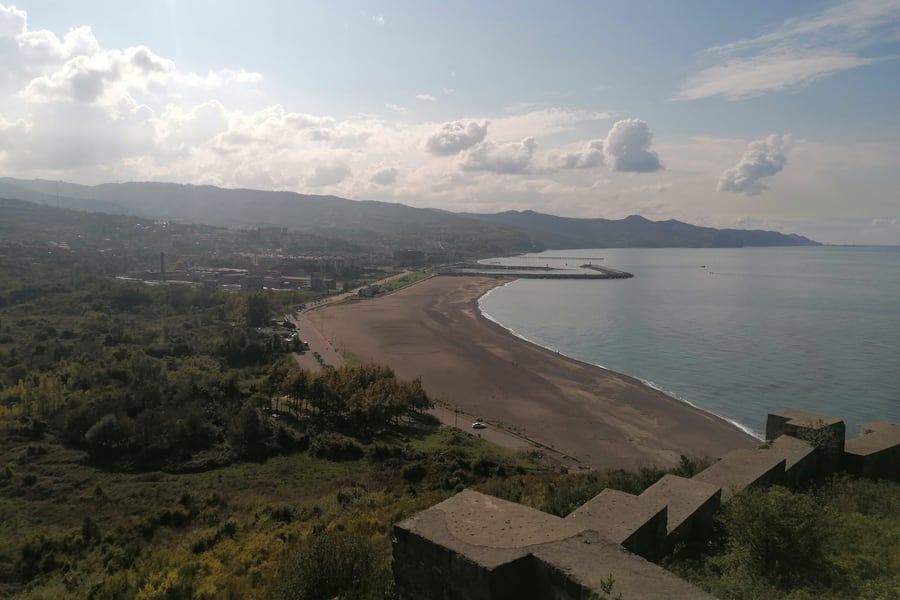 Gezgin67 / Wikimedia Commons · CC BY-SA 4.0 · cropped
Tios, at Filyos
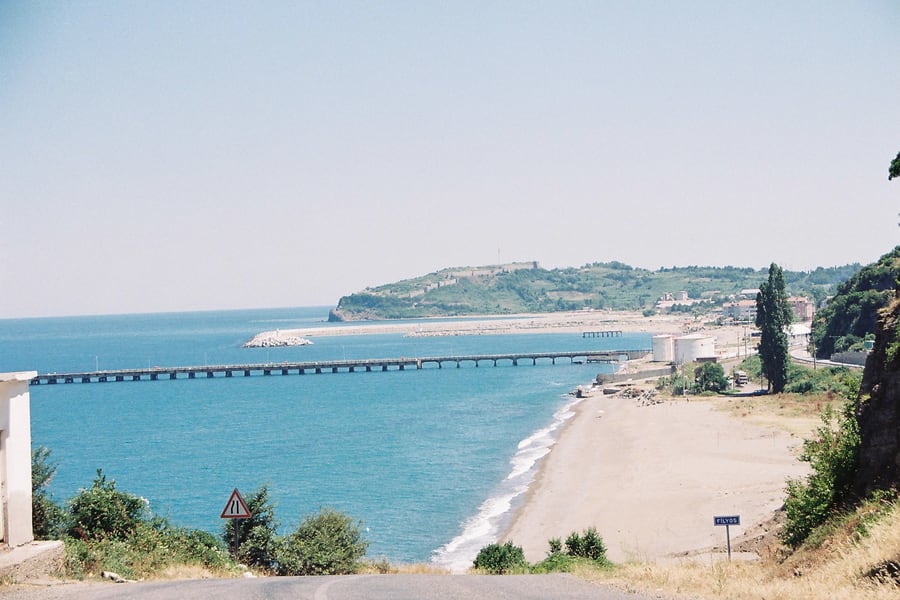
Where the Filyos river meets the sea, the ancient city of Tios was founded as a trading colony of Miletus. Its walls, open-air theatre, aqueducts and the breakwater of its harbour survive, with a medieval castle on the headland, and excavation is still going on. The view from the castle takes in the whole bay.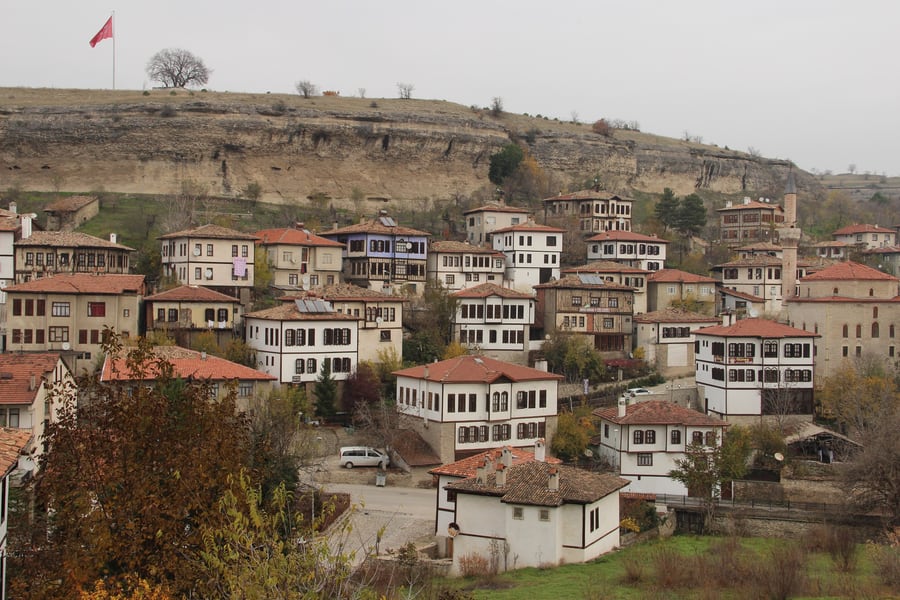 Hamdigumus / Wikimedia Commons · CC0 · cropped
Safranbolu
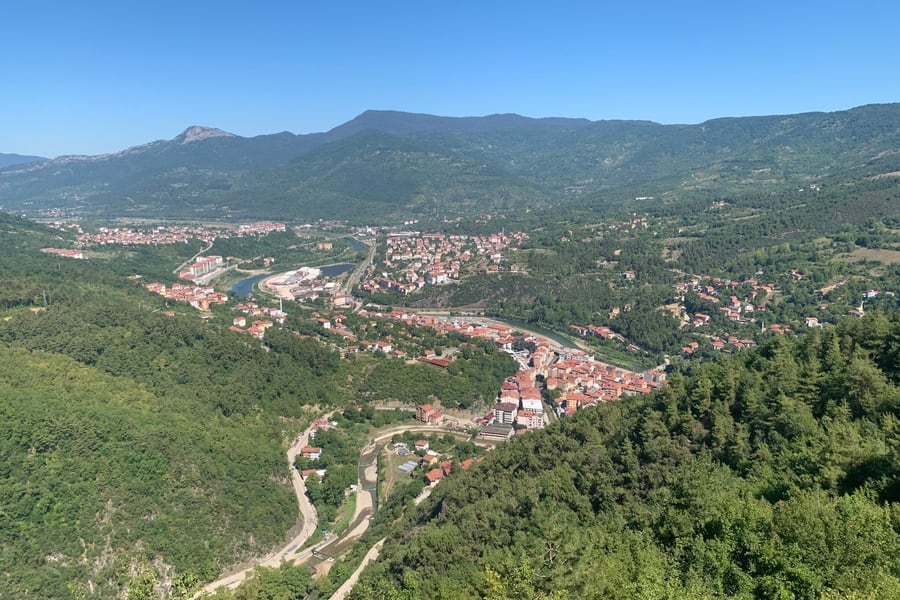
Nine kilometres north of Karabük, and on the UNESCO World Heritage List since 1994. Some 2,000 traditional houses from the eighteenth, nineteenth and early twentieth centuries stand in the old town, about 800 of them protected by law. The name is saffron's, and the crocus is still grown at Davutobası, east of the town. Most tours end here by coach.Where to Sleep
The first night is on the train. The second is in Zonguldak, and it is part of the rules: every tour leaving Ankara on the train has to include at least one hotel night there, and the agency books it. The hotel below is in the city centre.
The train leaves Ankara Gar at eleven at night, so the night before needs no planning. Coming back the other way, it arrives at half past seven on a Sunday evening, and Ulus, the old quarter around the station, is the easy place to stay.
Where to stay
Dedeman Zonguldak
Zonguldak, on Milli Egemenlik Caddesi
A city-centre hotel in İncivez, with deluxe rooms of 37 m² and suites looking out over the sea.
Check Availability (opens in a new tab, on dedeman.com)via dedeman.comRadisson Blu Hotel, Ankara
Ankara, in Ulus by Gençlik Park
Two hundred and two rooms on İstiklal Caddesi in the old city, next to a metro station.
Check Availability (opens in a new tab, on radissonhotels.com)via radissonhotels.comQuestions or corrections
Planning this trip and stuck on something, or spotted a time, fare or detail that has changed? Send us a message about Karaelmas Ekspresi. We read every one, and we update this page when something has changed.