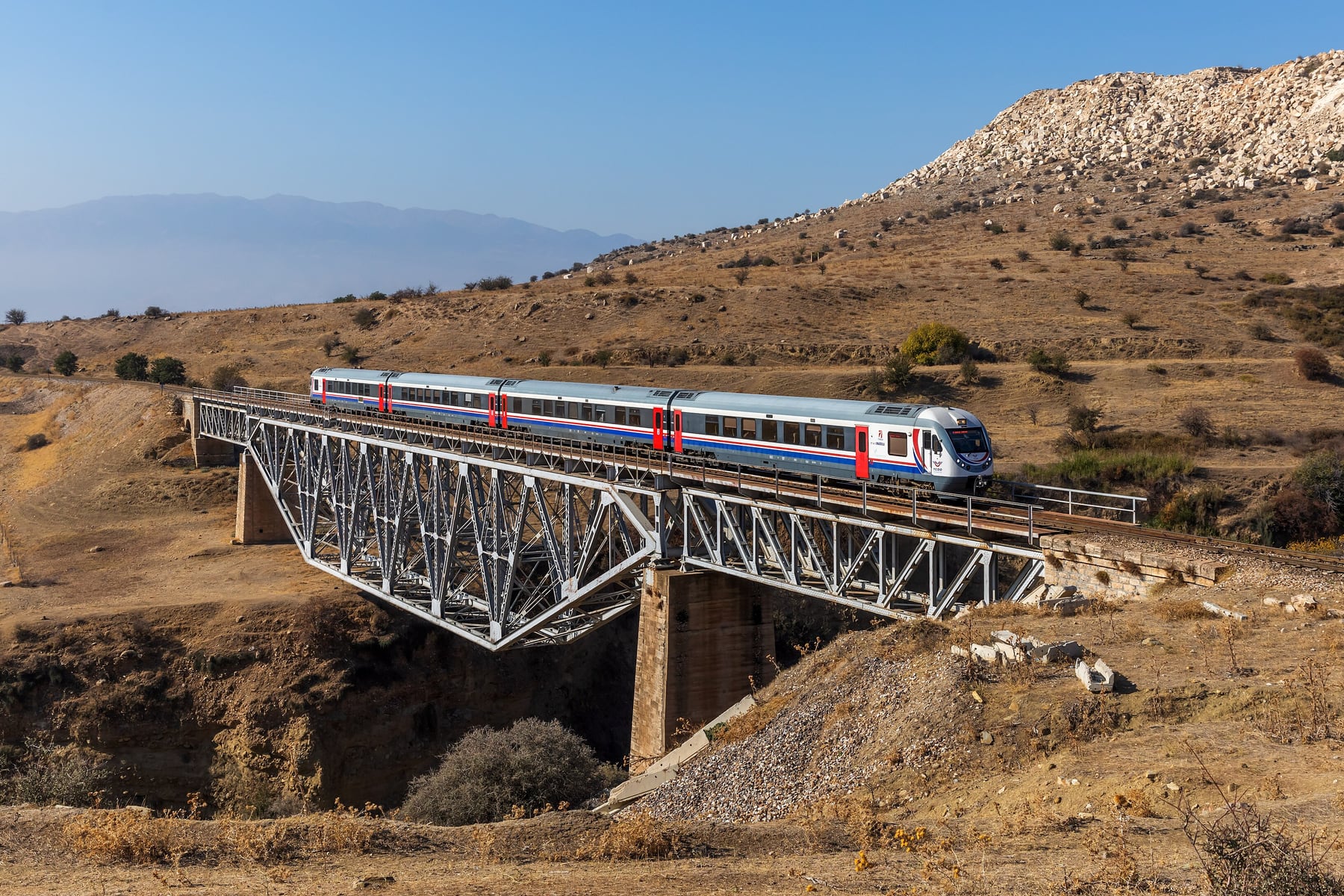
Tuz Ekspresi
Kabelleger / Wikimedia Commons · CC BY-SA 4.0
- DistanceAnkara–Çankırı · about 170 km
- DurationAbout 3 h each way · a 14½-hour day
- Best seasonSpring or autumn · Saturdays, April–November
Introduction
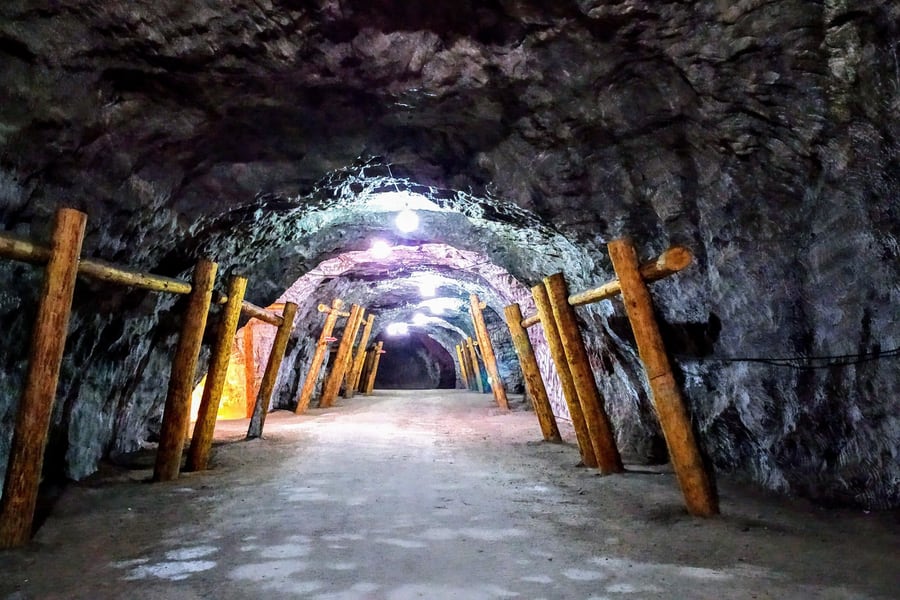
Every other train on Turkey's long-distance map is an overnight crossing of Anatolia. This one is a day out. On Saturdays from April to November a four-car diesel set leaves Ankara Gar at a quarter to eight, runs three hours north-east to Çankırı, and brings its 250 passengers home the same night — and the reason for going is a hole in the ground. Eighteen kilometres outside the town, at Balıbağı, is one of the oldest salt mines in the world, worked for some five thousand years, and its emptied galleries have been opened to visitors as the Yer Altı Tuz Şehri, the Underground Salt City.
The idea is older than it looks. Excursion trains — tenezzüh trenleri — ran from Ankara to Çankırı in 1934, and ninety years later the town's governor, its municipality and TCDD revived them. The first Turistik Tuz Ekspresi left Ankara on 18 May 2024 and sold out; it now runs to a published list of Saturdays through the season.
It is sold as a whole day rather than a seat. The fare buys breakfast and live music on the way out, a traditional Yâran welcome on the platform, a bus to the mine, a guided walk round the Seljuk and Ottoman town and every entry fee — and puts you back in Ankara at about ten at night.
The Journey
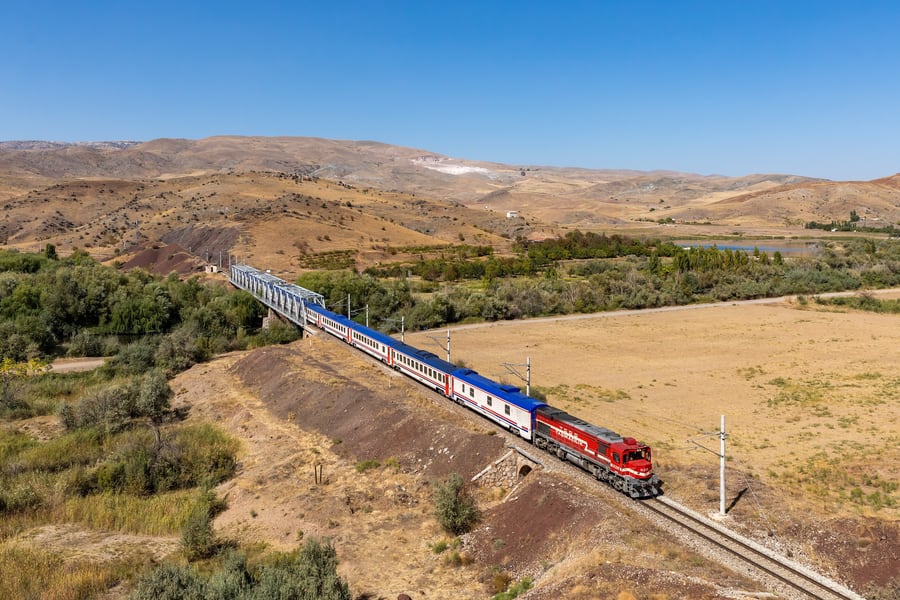
The train is an MT30000, the diesel multiple unit TÜVASAŞ built at Adapazarı under licence from Hyundai Rotem and TCDD calls Anadolu. The first twelve sets have three cars; the second dozen, from which the Tuz Ekspresi is drawn, have four, with 256 seats and a top speed of 140 km/h that this line never asks for.
It leaves from the 1937 station in Ulus and runs east on the electrified main line towards Kırıkkale. At Irmak, 103 km short of Çankırı, it turns north off the route to Kars onto the Irmak–Zonguldak railway, and the overhead wires stop. This is the kömüryolu, the coal road: built by the young Republic between 1931 and 1937 to carry Zonguldak's coal to the capital, and opened throughout on 20 November 1936, when the first coal train out of Çatalağzı reached Ankara twenty-two hours later. Çankırı's own station had opened five years earlier, on 23 April 1931.
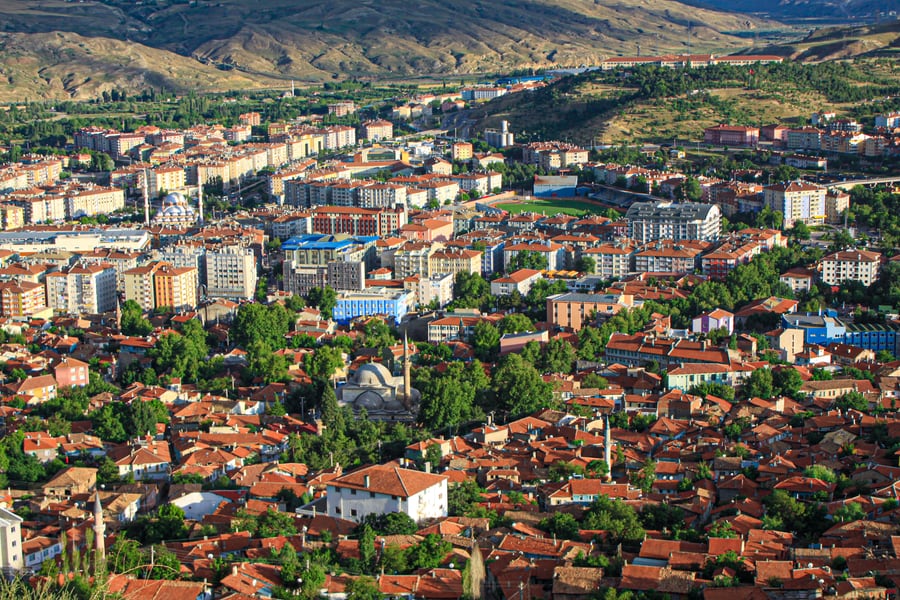
North of Irmak the line runs up to Kalecik, in the valley of the Kızılırmak, the Red River — vineyard country, home of the Kalecik Karası grape — and on through Alibey, Dümbelek, Tüney and Germece. The land around Çankırı is bare and eroded, having lost most of its forest two or three centuries ago, and the last miles in are through open, treeless hills.
A coal road, borrowed for a Saturday
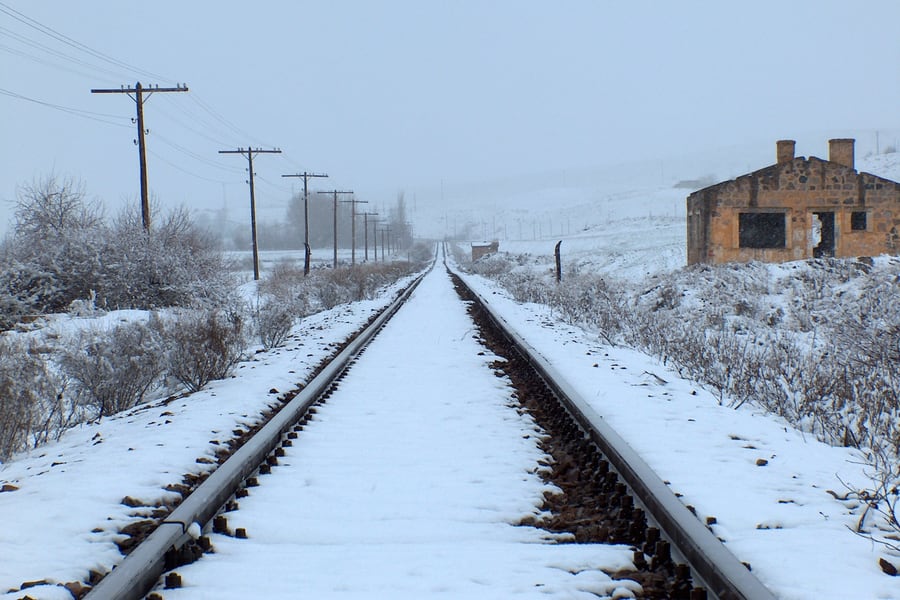
Scheduled passenger trains between Ankara and Zonguldak ended when the thrice-weekly Karaelmas Ekspresi was withdrawn on 1 January 2010, and the railway now earns its keep carrying coal and steel. Çankırı station has no regular passenger service, and a train of day-trippers pulling in on a Saturday morning is met on the platform with a Yâran welcome.
The morning run is the sociable one: breakfast is handed out — poğaça, fruit juice, water — and there is live music on board. The return is quieter, and ends in the dark.
Along the route
 Kabelleger / Wikimedia Commons · CC BY-SA 4.0 · cropped
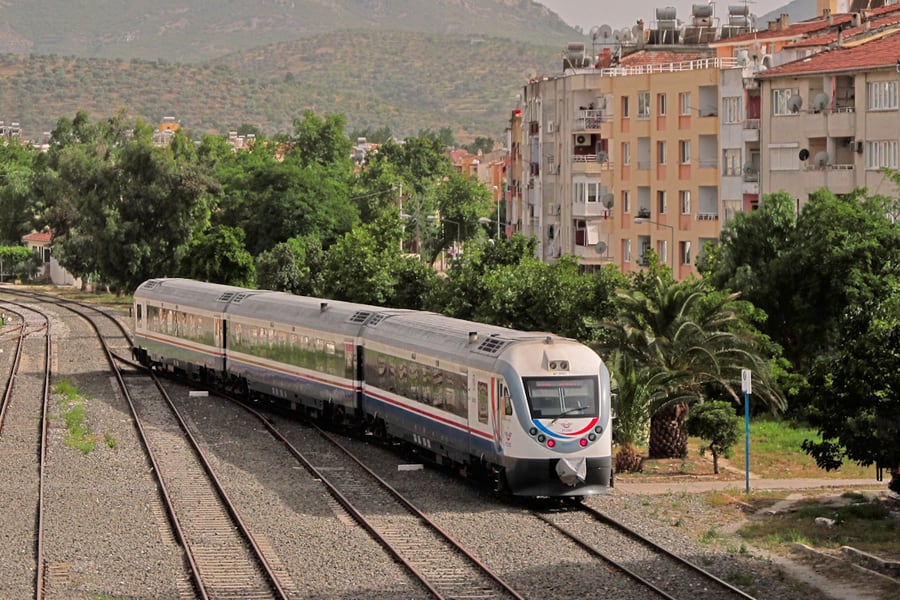
Irmak
The junction, 103 km short of Çankırı, where the train leaves the main line to Kars and turns north onto the Irmak–Zonguldak railway. The wires stop here: the branch is not electrified, which is why a diesel set works the train.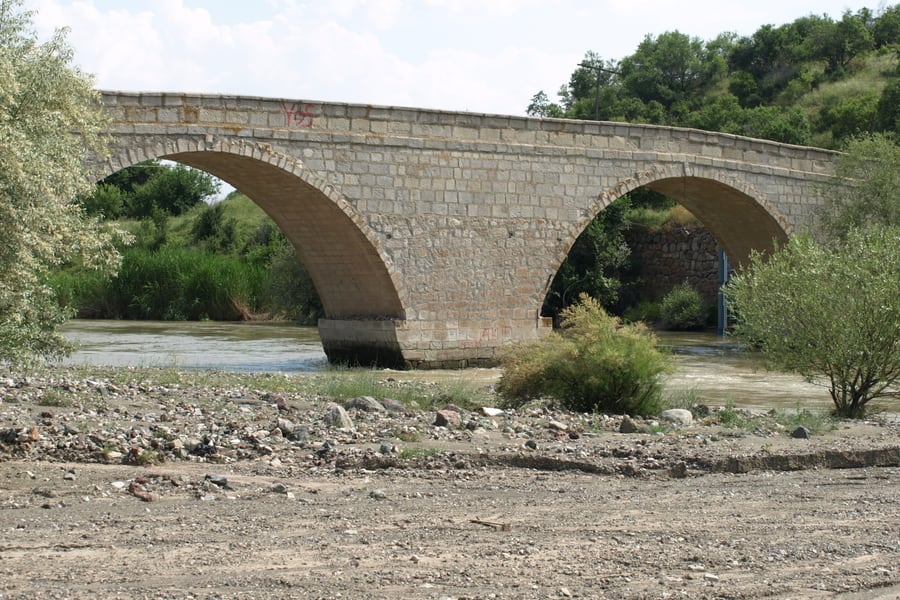 Hajo-Muc / Wikimedia Commons · CC BY-SA 3.0 · cropped
Kalecik and the Kızılırmak
The valley of the Red River, and the country of the Kalecik Karası grape. At Kalecik a seven-arched stone bridge, 136 metres long and probably Seljuk, still crosses the river; it was repaired in the late nineteenth century and again in 1967 and 1987.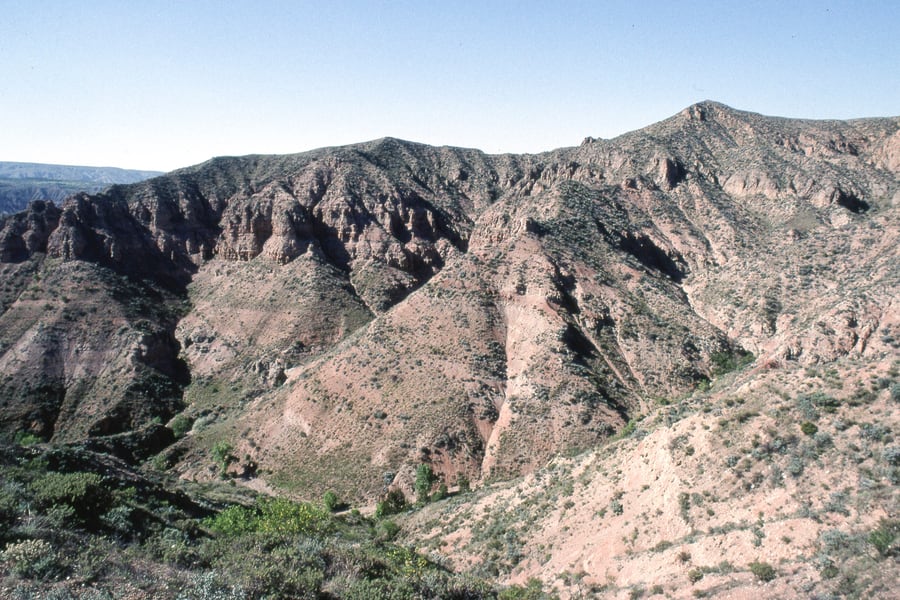 Dick Osseman / Wikimedia Commons · CC BY-SA 4.0 · cropped
The bare hills
Around Çankırı the land is bare and deeply eroded — this is the view from the castle hill. Two or three centuries ago most of it was forest; cleared for fields and grazing, it lost its soil, and today it is used for little but pasture.A bit of history
Culture & experiences along the way
 Acar54 / Wikimedia Commons · CC BY-SA 4.0 · cropped
The donkey in the salt
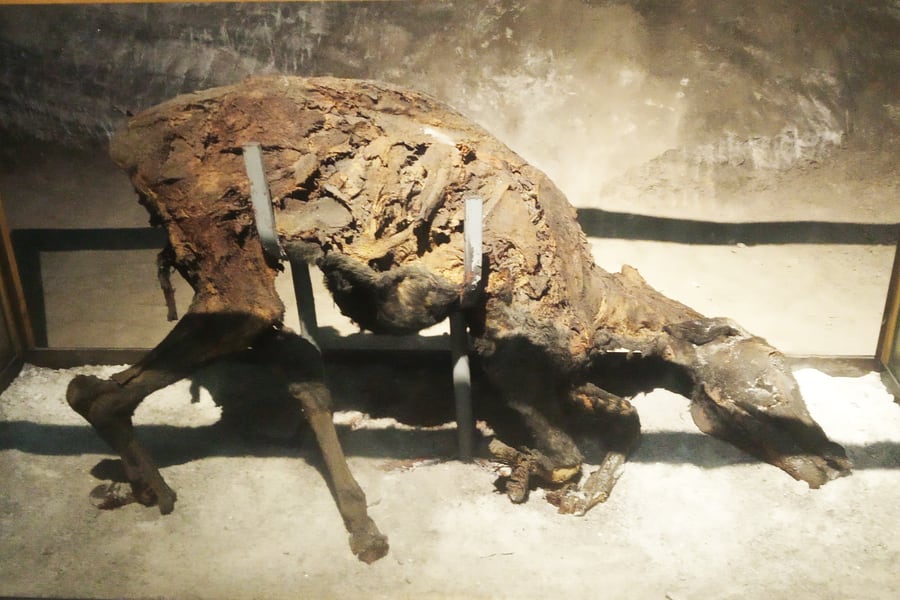
Some two hundred years ago a donkey fell into the salt bed at Balıbağı and died there, and the salt kept it. Moved to the MTA museum in Ankara, it began to decay, so it was brought back. It lies in a glass case in the galleries, beside a hare and a snake the salt has kept the same way.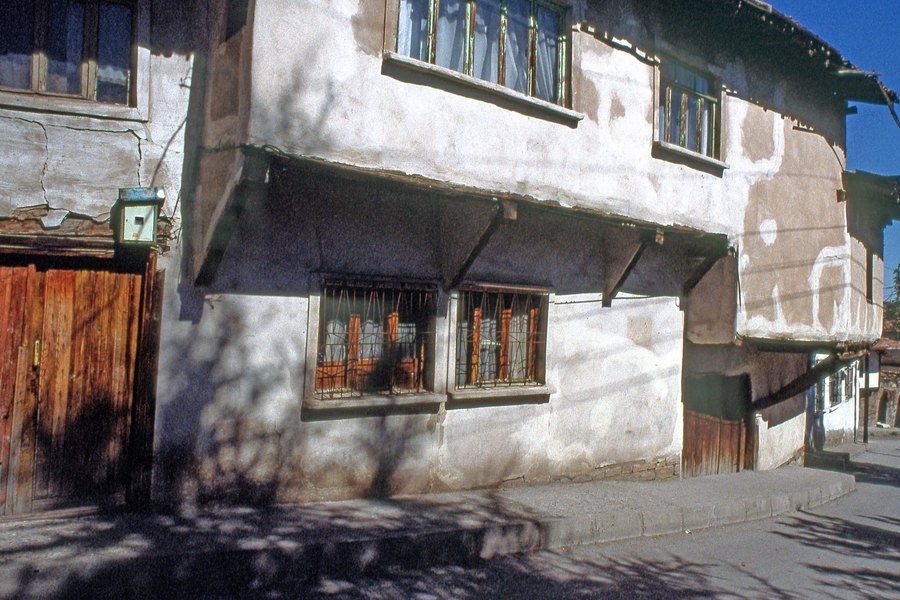 Dick Osseman / Wikimedia Commons · CC BY-SA 4.0 · cropped
The Çankırı house
Two storeys, and each has its season: the lower floor is for winter, where the cooking and the living were done, and the upper floor, jettied out over the lane, is for summer and the view. Land is short and the town sits in an earthquake zone, so the houses lock together along the street.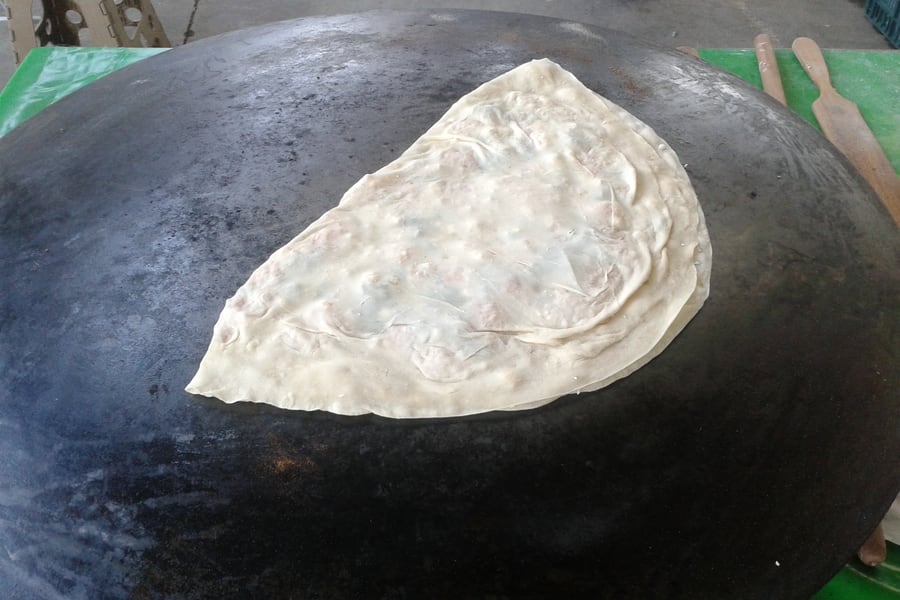 E4024 / Wikimedia Commons · CC BY-SA 4.0 · cropped
Gözleme in a medrese
The Buğday Pazarı (Hazımiye) Medresesi was built in the late 1700s and spent years as a wool store. It now keeps the town's crafts, rock-salt souvenirs made on the spot, a salt room, the costume and customs of the Yâran — and Çankırı's gözleme, cooked while you wait.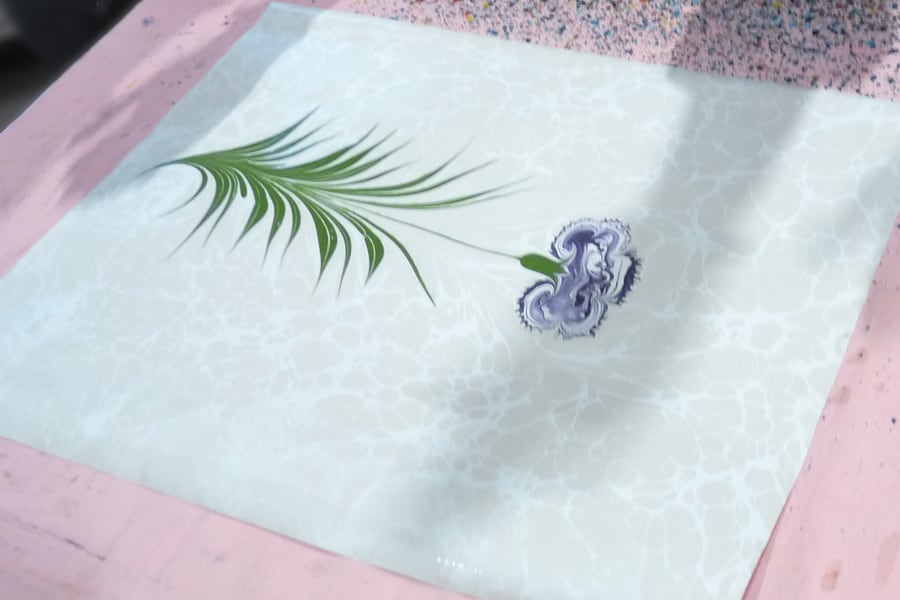 Ji-Elle / Wikimedia Commons · CC BY-SA 3.0 · cropped
Ebru, ney and gilding
The Çivitçioğlu Medresesi is a culture centre now, with each cell given to a craft: ebru, the marbling of paper on a tray of water, the reed flute called the ney, illumination, miniature painting and calligraphy. Both medreses are on the train's itinerary.Timetables
The train runs on Saturdays only, one round trip, from April to November. TCDD scheduled 24 departures for 2026, all at the request of Çankırı Municipality, which publishes the dates. Times and dates below are as of September 2026.
Ankara → Çankırı
| Train | Ankara Gar | Çankırı |
|---|---|---|
| 22803 | 07:45 | 10:42 |
Çankırı → Ankara
| Train | Çankırı | Ankara Gar |
|---|---|---|
| 22802 | 19:05 | 22:12 |
⚠️ The train leaves at 19:05, but the municipality's programme says 18:45 and the travel agency's itinerary 18:50. The guide brings the group back to the station, but if you break away in the free time, be on the platform by 18:45.
The opening run of the season, on 18 April, left Ankara at 09:30; every other date is 07:45.
Which Saturdays
| Month | Dates |
|---|---|
| April | 18 · 25 |
| May | 2 · 9 · 16 |
| June | 6 · 13 · 20 · 27 |
| July | 4 · 11 · 18 · 25 |
| August | no departures |
| September | 19 · 26 |
| October | 3 · 10 · 17 · 24 · 31 |
| November | 7 · 14 · 21 · 28 |
The municipality's list prints the last two June dates as 20 and 27 May, which are not Saturdays; they sit under the June heading and are counted here as June.
The day in Çankırı
After the welcome at the station a bus takes the group to the salt mine for about an hour, then back into town for lunch at about 13:30. The afternoon is a guided walk round the museums and medreses — the Ferit Akalın Radio and Communication House, the Kültür Evi, the 1885 laundry, the kilim museum, the Çivitçioğlu and Buğday Pazarı medreses and the city museum — with free time in the old streets before the walk back to the station.
The dates, the programme and the contact line are on the municipality's Tuz Treni page (opens in a new tab); TCDD describes the train at tcddtasimacilik.gov.tr (opens in a new tab).
Tickets
There is no rail-only ticket. TCDD runs the train but does not sell it; seats are sold as a day package through travel agencies, coordinated by Çankırı Municipality. The municipality's price for 2026 is 2,550 TL, and it covers the return train, breakfast on board, the bus in town, every entry fee and a guide. Lunch is 700 TL extra, and children up to six travel free if they do not take a seat of their own.
Book through the municipality's contact line or a travel agency selling the tour, and book early: the first season's opening runs sold out. Agencies selling their own versions of the day may price them differently, so compare what is included. Prices checked in September 2026.
Book your tickets
The day, all in
One fare, sold through the municipality
Return train, breakfast and live music on board, transfers, every entry and a guide; under-sevens free without a seat.
Book Tickets (opens in a new tab, on cankiri.bel.tr)via cankiri.bel.trRail Passes
No pass is worth buying for this train. Turkey is in the Interrail and Eurail area, and Interrail's table of railway companies lists what a pass covers on TCDD Taşımacılık: regional, main-line, high-speed and night trains. It excludes two by name, the Marmaray and the Turistik Doğu Ekspresi. The Tuz Ekspresi is not on it, and in practice the question does not arise: the seat is only sold as part of the day package, with the entry fees and the guide, so there is nothing for a pass to buy.
A pass holder starting from Ankara still has a good use for one — the Doğu Ekspresi to Kars and the high-speed lines west to Istanbul and south to Konya are covered — but budget for the Tuz Ekspresi separately. Checked against Interrail's railway-companies table, last updated 28 August 2026, in September 2026.
Places to Visit
The day in Çankırı is guided from the station and back again, so most of what follows is already in the fare: the salt mine, and the Seljuk and Ottoman town the walk winds through. Ankara Gar is where it starts. The castle hill is the one to save for the free time: it stands over everything else, and the whole town is laid out below it.
 Nosferatü / Wikimedia Commons · Public Domain · cropped
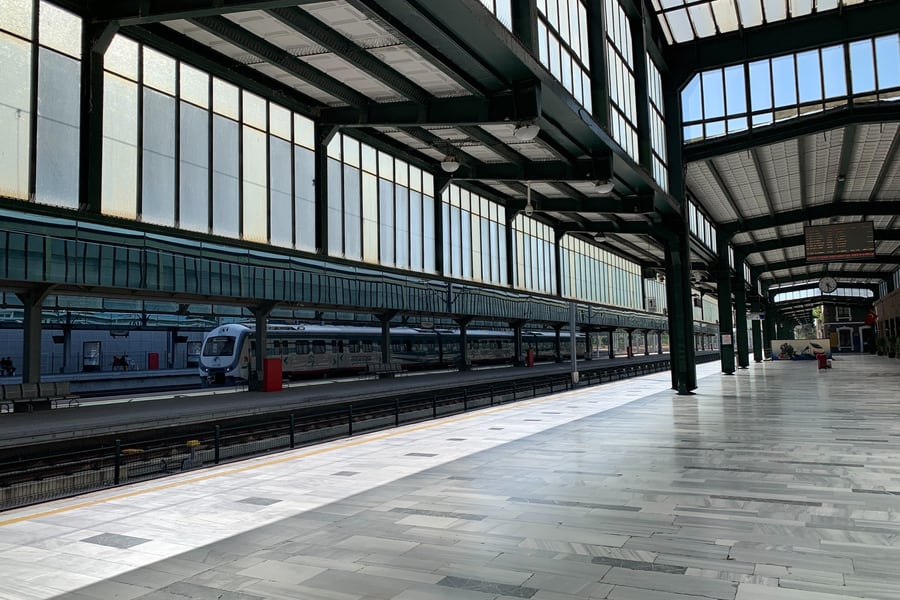
Ankara Gar
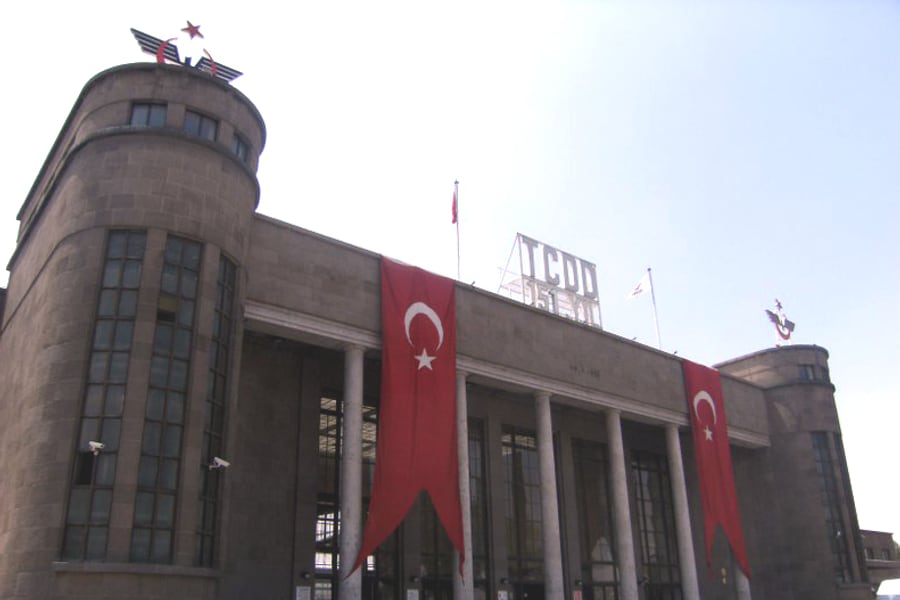
The departure is a building worth arriving early for: Şekip Akalın's Art Deco station of 1937, stone towers at either end and a colonnade between them, in the historic Ulus quarter. It was the hub from which the Republic's long-distance trains fanned out, and the high-speed station built alongside in 2016 is joined to it by a skybridge.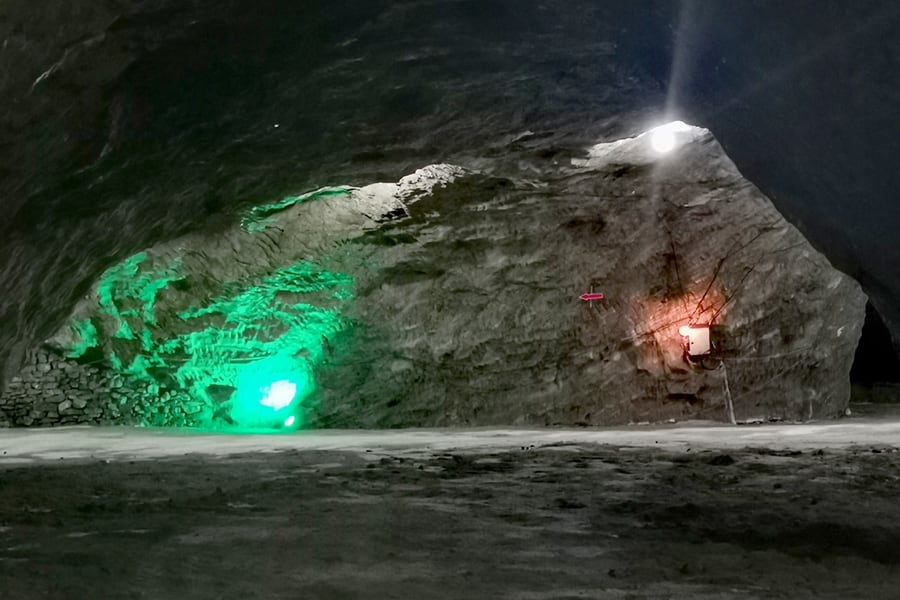 Murat Özsoy / Wikimedia Commons · CC BY-SA 4.0 · cropped
Yer Altı Tuz Şehri
The Underground Salt City, 18 km east of the town at Balıbağı: one of the oldest salt mines in the world, worked for some five thousand years and still worked alongside. The visitor section is 18,000 m² of emptied galleries, cleaned and lit, holding salt sculpture, exhibitions and the famous donkey. It draws more than ten thousand visitors a month.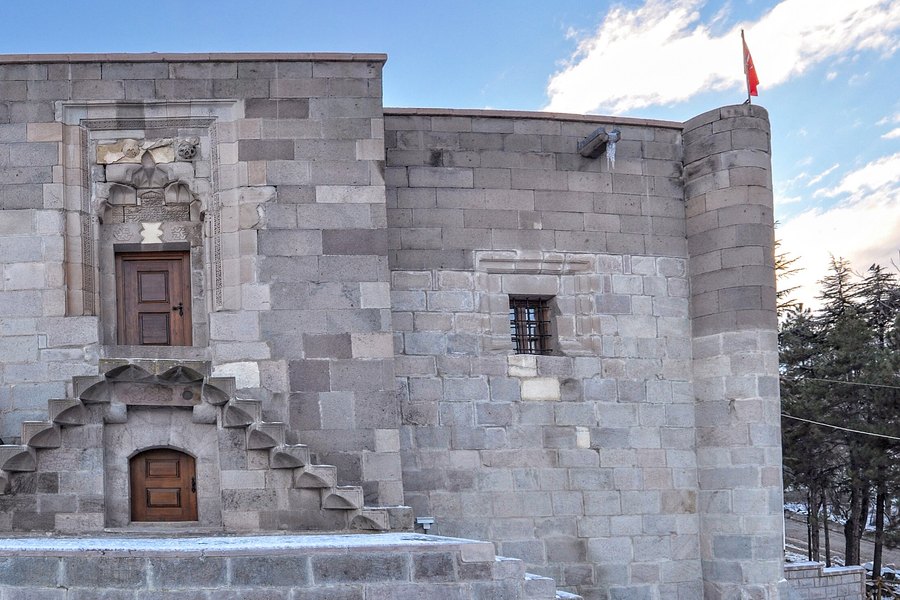 Arif miletli / Wikimedia Commons · CC BY-SA 4.0 · cropped
Taş Mescit
The most important Seljuk building in Çankırı. Atabey Cemaleddin Ferruh built a hospital here in 1235 and added a school of hadith in front of it seven years later; the hospital, of rubble stone, has gone, and the cut-stone school survives. On it is a relief of two intertwined serpents — used today as a symbol of medicine.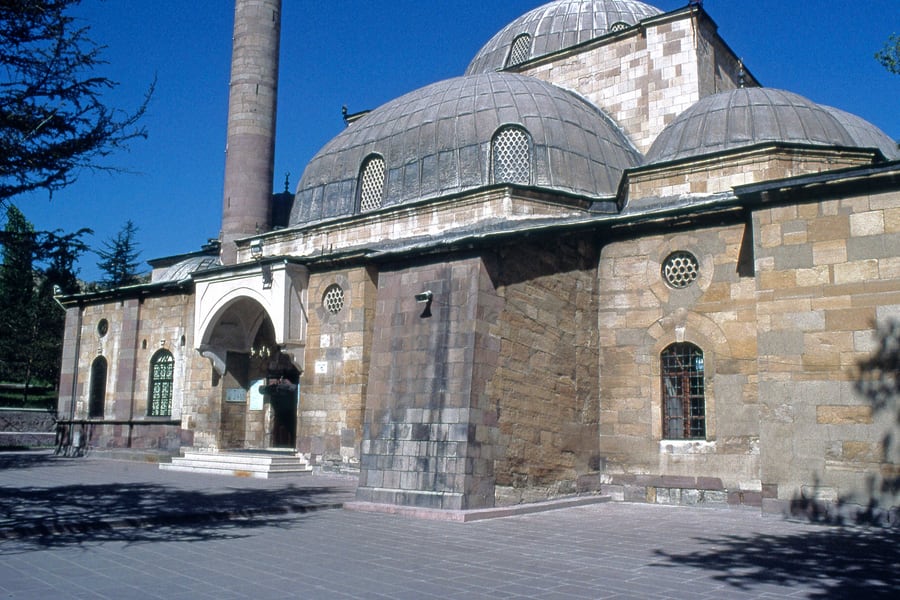 Dick Osseman / Wikimedia Commons · CC BY-SA 4.0 · cropped
Sultan Süleyman Camii
The town's great mosque, ordered by Süleyman the Magnificent and built by Sadık Kalfa, a pupil of Sinan; it opened for prayer in 1558. A square hall under one full dome with a half-dome on each side, walls and minaret of cut stone, and a lead-covered roof. It was last restored between 2012 and 2016.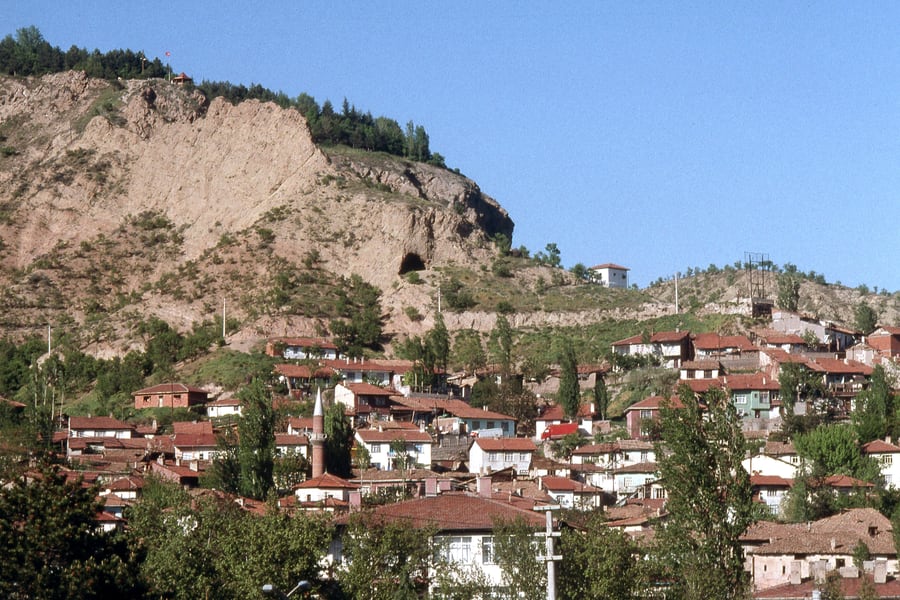 Dick Osseman / Wikimedia Commons · CC BY-SA 4.0 · cropped
Çankırı Kalesi
The castle hill, about 150 metres above the stream at its foot. Roman, Byzantine, Danishmendid, Seljuk and Ottoman in turn, and lived in until the last century; a few stretches of wall survive, with a Roman rock tomb and the tomb of Emir Karatekin, who took the town for the Turks. It is wooded now, and the town's favourite place to walk.Where to Sleep
The train is a round trip that leaves Ankara at 07:45 and brings you back at about ten at night, so the night that matters is the one before. Ulus, the old quarter around the station, is the place to be: the Gar is a short walk away, and there is no early cross-city journey to make before a fourteen-hour day.
A night in Çankırı is the other option, for anyone who wants the town at its own pace rather than the itinerary's. The train does not wait — it runs once, out and back, on the same Saturday — so the return to Ankara would be by road.
Where to stay
Radisson Blu Hotel, Ankara
Ankara, in Ulus by Gençlik Park
Two hundred and two rooms on İstiklal Caddesi in the old city, next to a metro station.
Check Availability (opens in a new tab, on radissonhotels.com)via radissonhotels.comJoyana Otel
Çankırı, in the station's own quarter
A central hotel in Cumhuriyet Mahallesi, on bed-and-breakfast terms, with a rooftop restaurant.
Check Availability (opens in a new tab, on joyanaotel.com)via joyanaotel.comQuestions or corrections
Planning this trip and stuck on something, or spotted a time, fare or detail that has changed? Send us a message about Tuz Ekspresi. We read every one, and we update this page when something has changed.