The Turksib — Almaty to Semey
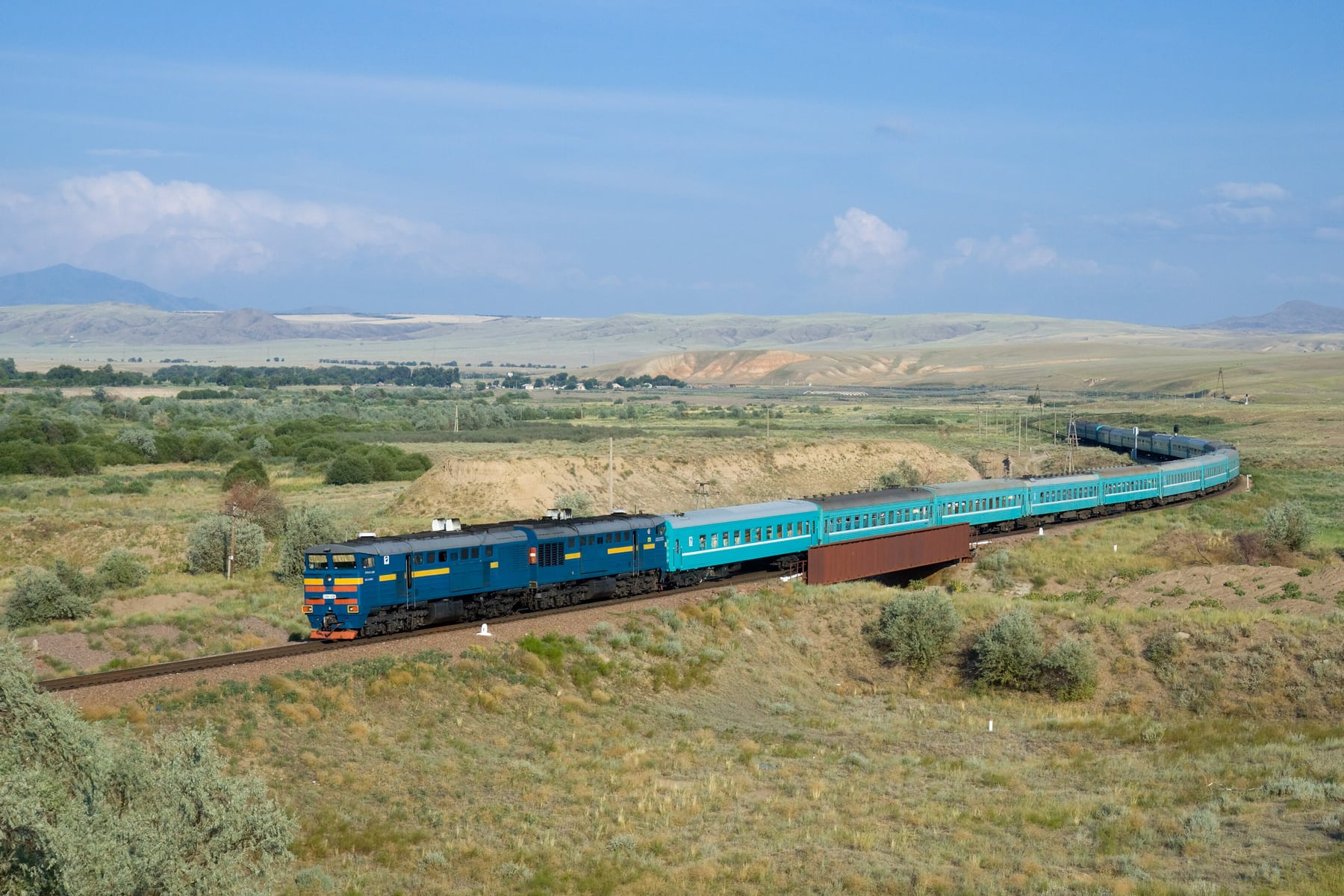
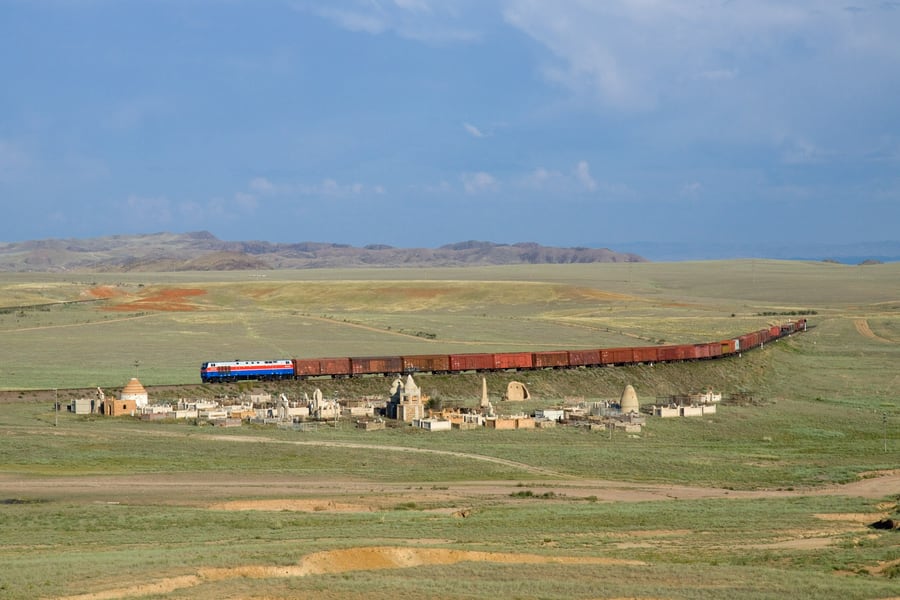
Kabelleger / David Gubler / Wikimedia Commons · CC BY-SA 3.0 · 2012 · cropped
- Distance1,025 km
- Duration20 hr 29 min to 22 hr 3 min
- Best seasonThree trains a day, all year
Introduction
Somewhere north of Sary-Ozek the last hills give out and the train runs into country with nothing in it at all. That is the point of the Turksib. It was built between 1927 and 1930 to close a gap of some fifteen hundred kilometres between the railhead at Semipalatinsk in Siberia and the railhead at Lugovaya in Turkestan, so that Siberian grain could go south and Central Asian cotton could come north, and the fifteen hundred kilometres it closed are still mostly empty. Train 22 leaves Almaty at 12:44 and reaches Semey at 09:13 the next morning: 1,025 kilometres, twenty and a half hours, sixteen stops on the way.
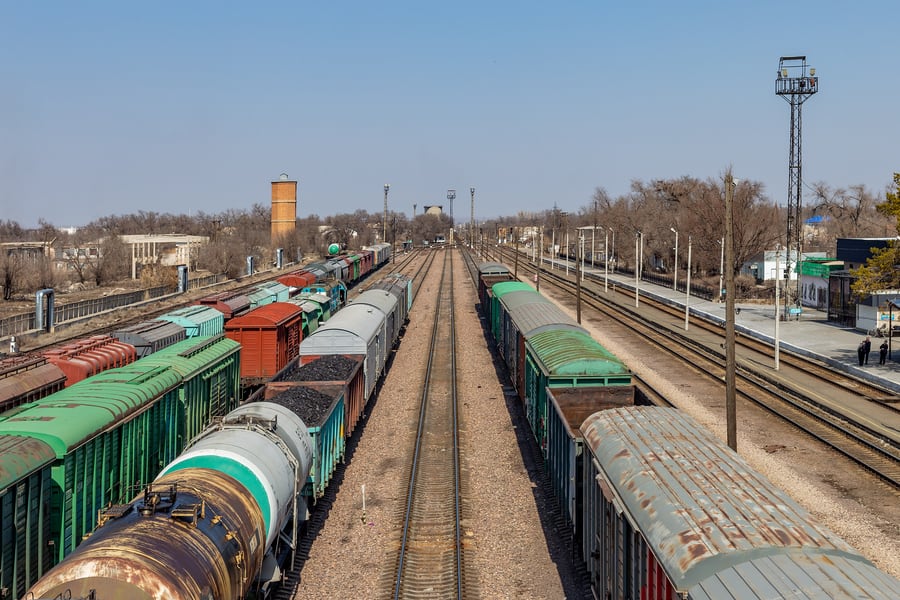
This is the northern half of the line, and the half where the story happened. The rails were joined on 21 April 1930 at a siding called Ogyz-Korgan, renamed Ayna-Bulak — mirror spring — for the occasion, and a silver spike went in at noon on 28 April, eight months ahead of schedule. Ilf and Petrov were there as reporters and put the whole scene into The Golden Calf. Viktor Turin had already made a film of the construction that went round the world under the line's own name. What runs over it today is unglamorous by comparison and much better for it: a skoryy train of compartment and open-berth coaches behind a diesel, bed linen made up at the depot, a restaurant car, and long deliberate stops at places most maps do not bother to mark.
The Journey
Train 22 backs into Almaty-1 in the late morning, having already come up from Kyzylorda overnight, and stands for fifty minutes before it goes anywhere. Almaty-1 is the northern station, out beyond the built-up city; the other two northbound trains use it as well, except the Novosibirsk service, which starts from Almaty-2 in the centre. The first hour is suburban and industrial — Zhetygen at 13:34, where the line to the Chinese border at Altynkol turns off east — and then the country opens.
At Kapchagay, an hour and a half out, the railway crosses the Ili below the dam that made the reservoir, sixty kilometres of open water in the middle of dry steppe. The town on the shore was renamed Konaev in 2022; the station board still says Kapchagay, and so does the ticket system, which is worth knowing when you are looking for it in a timetable.
The climb to the pass
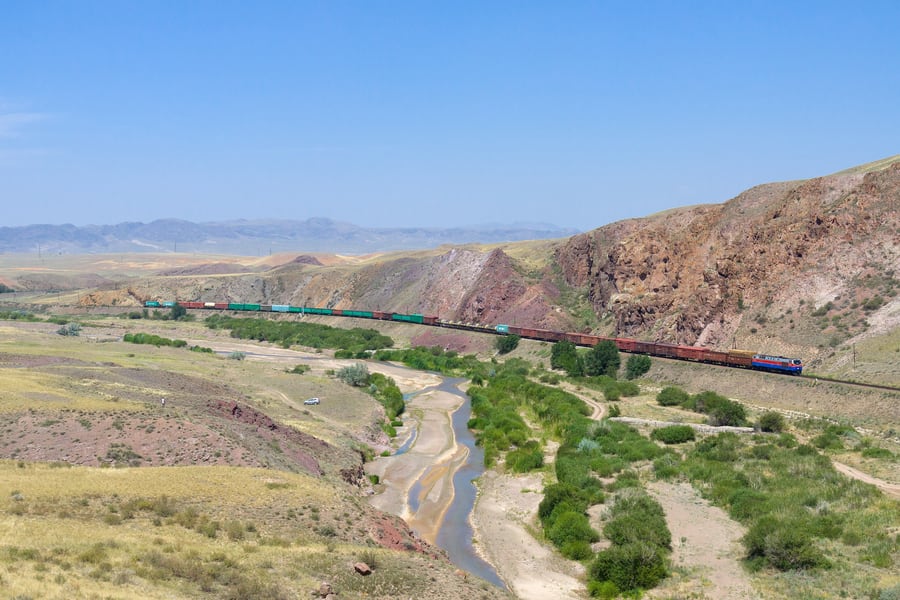
Beyond the reservoir the line begins to work. It climbs steadily through Joloman to Sary-Ozek, 932 metres up, which the train reaches at 16:24 and where it stands a quarter of an hour. This is where the Turksib crosses from the Ili basin into the Jetisu — the Seven Rivers — and the difference is visible from the window: irrigated green on one side of the pass, bare hill on the other. Sary-Ozek existed as a settlement because the railway came; a missile brigade was based there from 1965, and in 1988 and 1989 the range outside the town was where Soviet missiles were destroyed under the treaty, filmed for a documentary that took the place's name.
Traction, and what it replaced
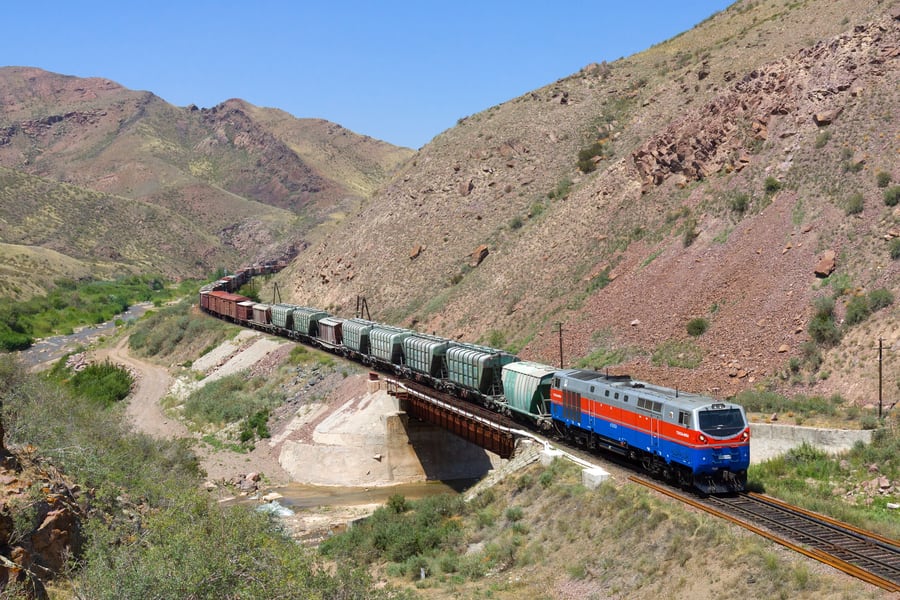
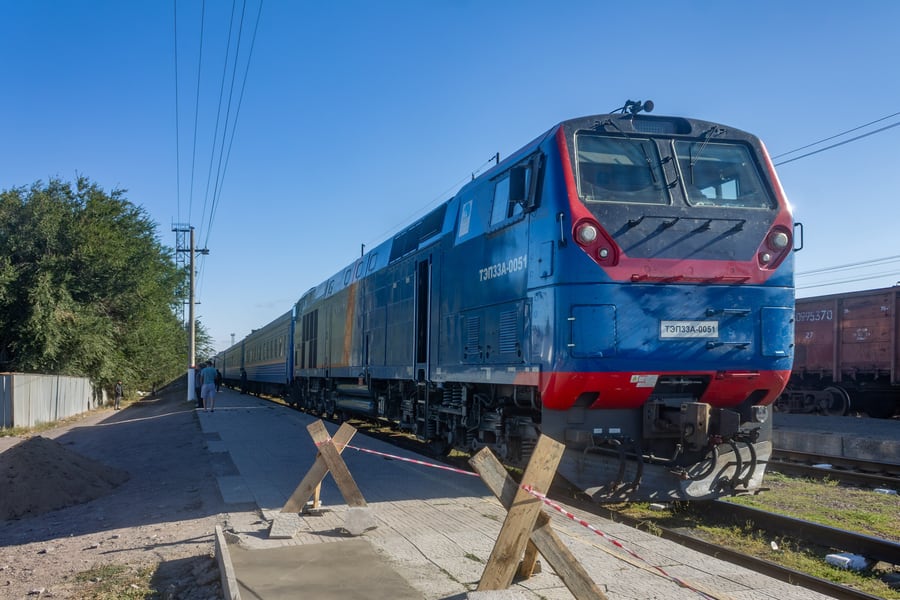
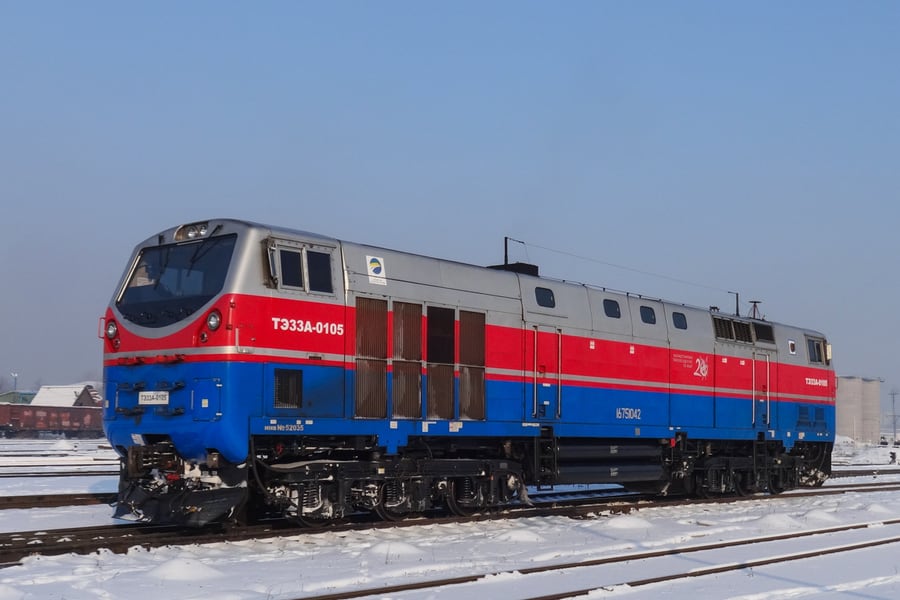
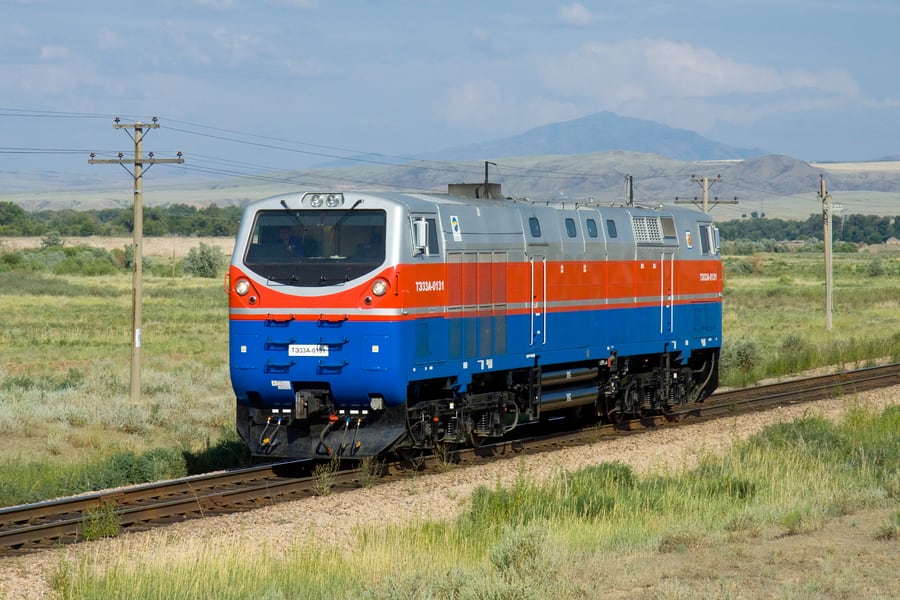
Almost everything on this line is diesel-hauled. The class to know is the TE33A and its passenger version the TEP33A — a General Electric Evolution design for 1,520 mm gauge, ordered in 2006, with the first ten built at Erie in Pennsylvania and every one since assembled in Astana. More than five hundred have been built in Kazakhstan. They are among the first AC-traction diesel-electrics to work in the former Soviet Union, and they were bought to replace the 2TE10, the twin-section Soviet machine that hauled these trains for forty years and still turns up on freight. The photograph at the head of this page is train 22 itself near Ayna-Bulak in 2012, behind a 2TE10U, on the day's work it still does now.
Ushtobe, and the trains of 1937
Ushtobe comes at 18:37, with fifteen minutes on the platform. It is the seat of Karatal District and a place with a particular history: it was the first place the Koreans deported from the Soviet Far East in 1937 were set down. Nearly 172,000 people were moved to Kazakhstan and Uzbekistan that autumn in 124 trains, and Ushtobe is where the first of them got off and dug in for the winter. The Kazakhstan–Korea Friendship Park in the town marks the site of that first settlement. From the train you see a small yard, a timber goods shed and a line of wagons, and no sign of any of it.
Through the night to Aktogay
Matay at 20:56 and Lepsy at 21:51 go by in the dusk, and at 23:30 the train reaches Aktogay and stands for thirty-one minutes. This is the junction that matters: the line east from here runs to Dostyk on the Chinese frontier, opened in 1960, and the line west runs to Balkhash and Karaganda. Everything between China and European Russia that goes by rail comes through here, which is why a station in the middle of nowhere has a platform long enough to lose sight of the end of.
Ayagoz at 02:18 gets twenty-five minutes. It was founded in 1831 and called Sergiopol until the Soviet renaming, and it was the Turksib's first destination: the first regular passenger train on the new line ran from Semipalatinsk to Sergiopol on 10 May 1929, before the rest of the railway existed. After that the stops come quickly in the dark — Ush-Biik, Zharma, Balykty-Kol, Zhangiz-Tobe at 05:53, Shar at 06:42 — and the country flattens out towards the Irtysh.
Zhana-Semey is reached at 08:40 and Semey itself at 09:13, across the river from the old town. The name changed from Semipalatinsk in 2007; the Russian fort that started it went up beside the Irtysh in 1718, named for the ruins of a seven-chambered Buddhist monastery that stood nearby. It is the last stop in Kazakhstan that anyone would call a city. Beyond it the Turksib carries on over the frontier to Barnaul and Novosibirsk, which is what train 301 does, every other day.
Along the route
 Kabelleger / David Gubler / Wikimedia Commons · CC BY-SA 3.0 · 2012 · cropped
The silver spike at Ayna-Bulak
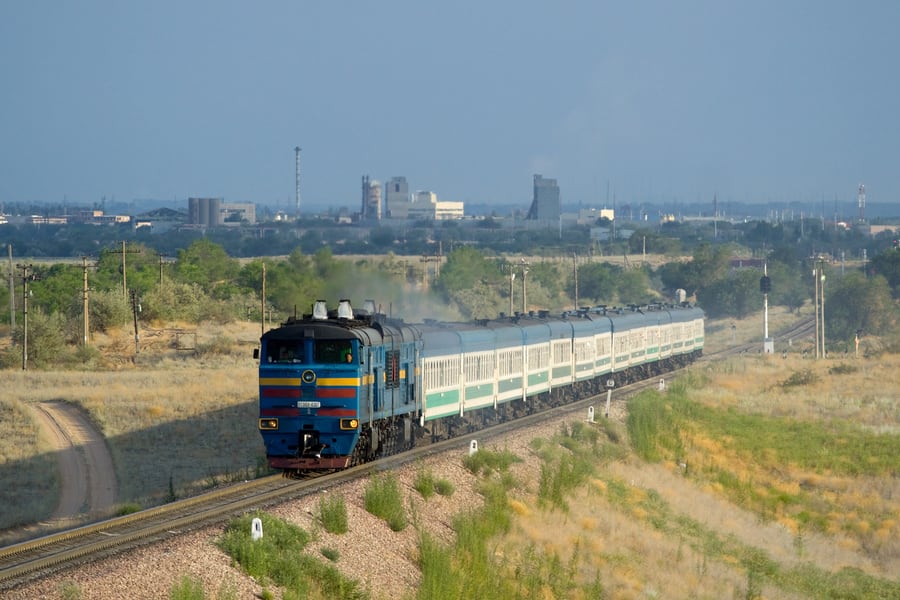
The two halves of the Turksib met on 21 April 1930 at a siding renamed Ayna-Bulak — mirror spring — for the occasion, eight months ahead of schedule. Ilf and Petrov were there as reporters and the scene went into The Golden Calf. There is no monument; there is the place, and a passing loop.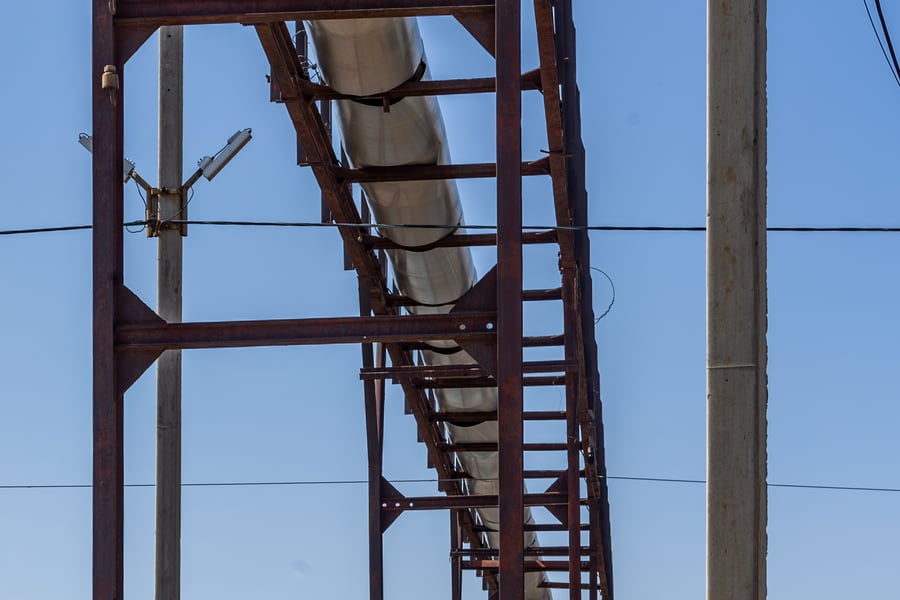 Nikolai Bulykin / Wikimedia Commons · CC BY-SA 4.0 · 2026 · cropped
Stations the railway had to invent
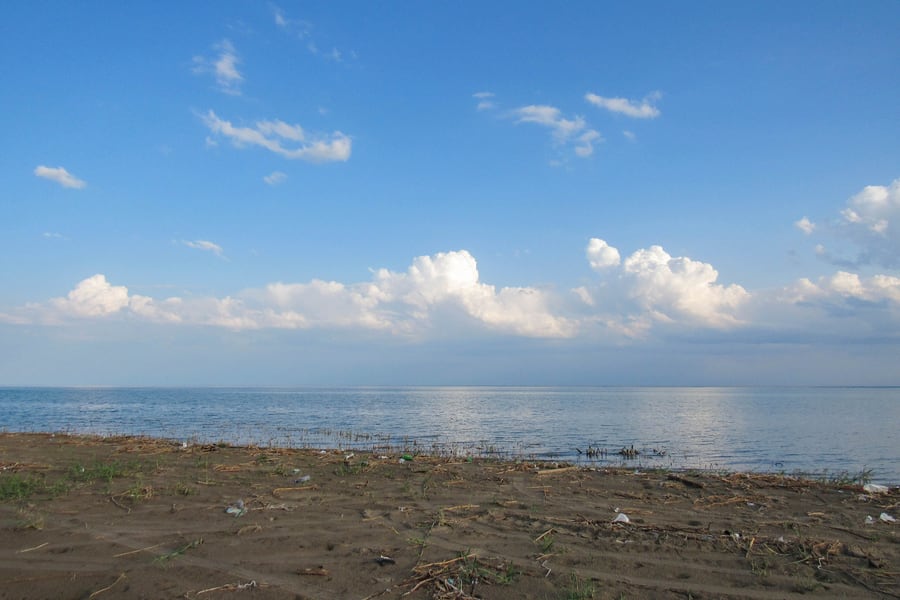
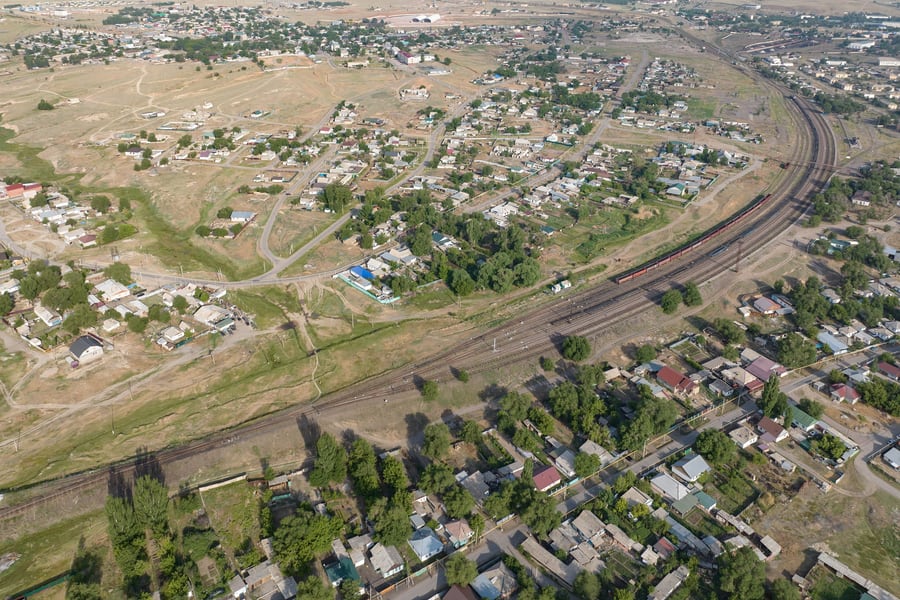
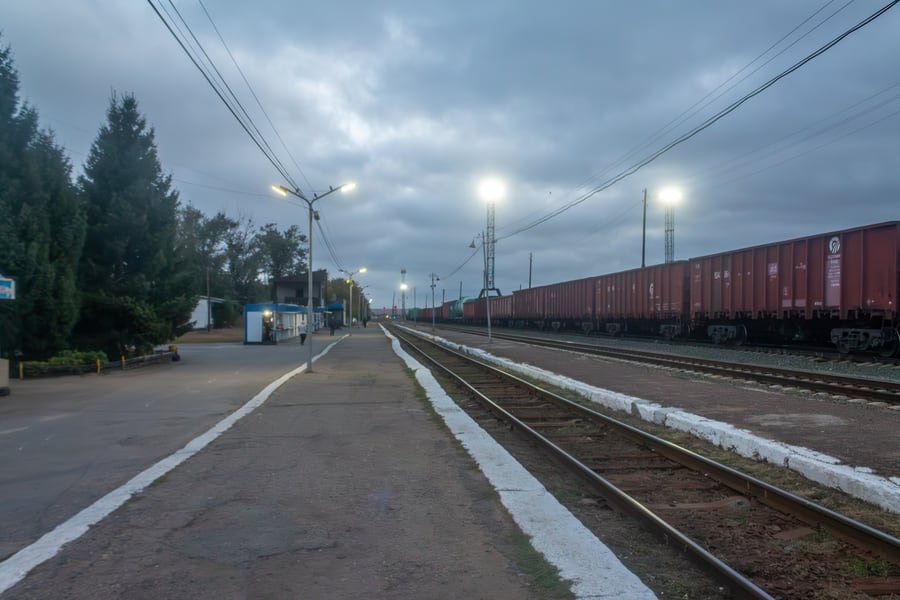
Nothing on this line predates it except Ayagoz and Semey. Everywhere else formed around a watering point or a crossing loop and then stayed — long low platforms, a water tower, a covered footbridge. Most of it is still in daily use, which is not the same as being looked after.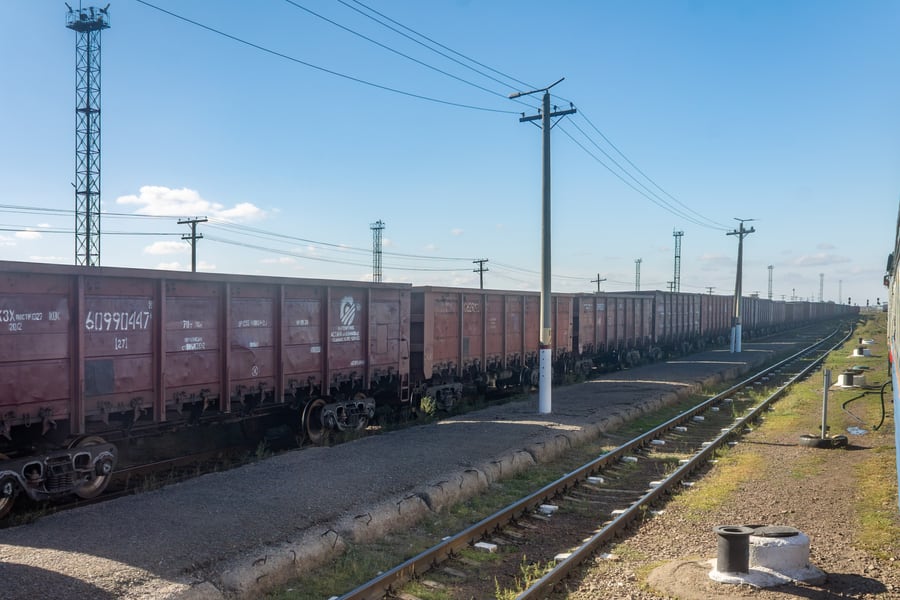 Nikolai Bulykin / Wikimedia Commons · CC BY-SA 4.0 · 2024 · cropped
Aktogay, and the gate to China
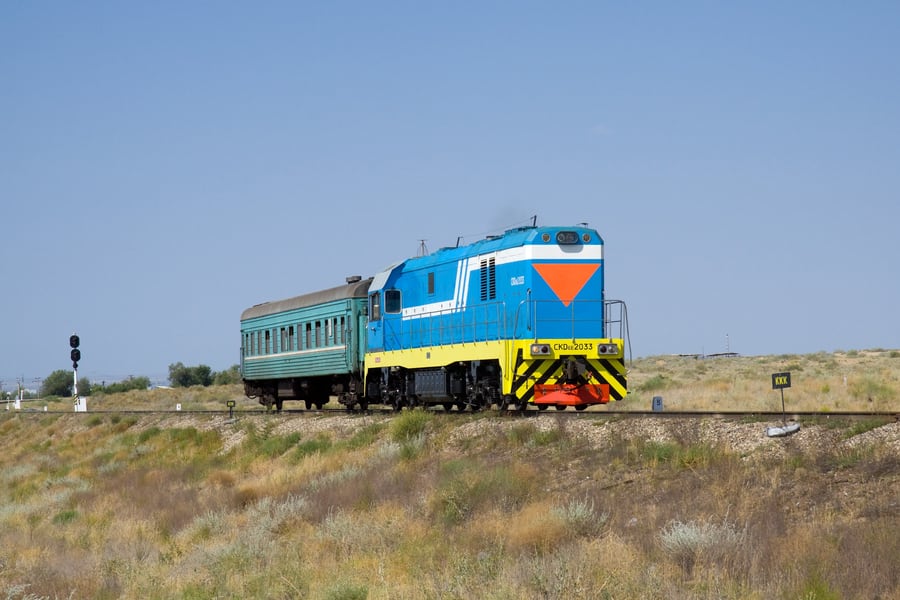
Roughly halfway, and the junction that gives the Turksib its modern purpose: the line east from here reaches the Chinese frontier at Dostyk, and container traffic between China and Europe has run through since 1960. Train 22 stands thirty-one minutes.A bit of history
Culture & experiences along the way
 Nikolai Bulykin / Wikimedia Commons · CC BY-SA 4.0 · 2024 · cropped
The stops are the journey
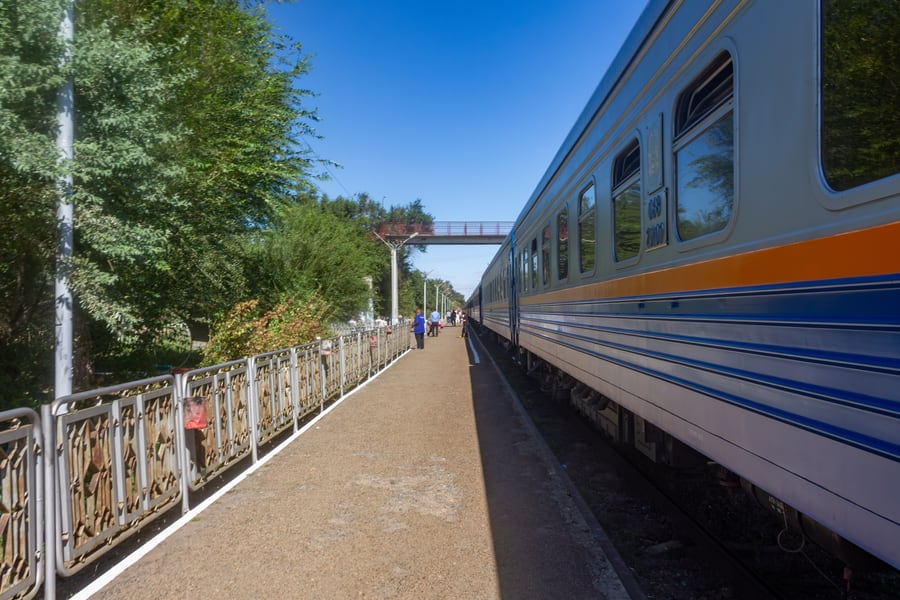
A European traveller reads a thirty-one-minute stop as a delay. Here it is the design. Train 22 stands half an hour at Aktogay, twenty-five minutes at Ayagoz and a quarter of an hour each at Sary-Ozek, Ushtobe and Matay, and the platform fills every time — passengers walking the length of the train, sellers with buckets, the locomotive being changed or watered. It is the only chance to stand on the ground the line was cut through.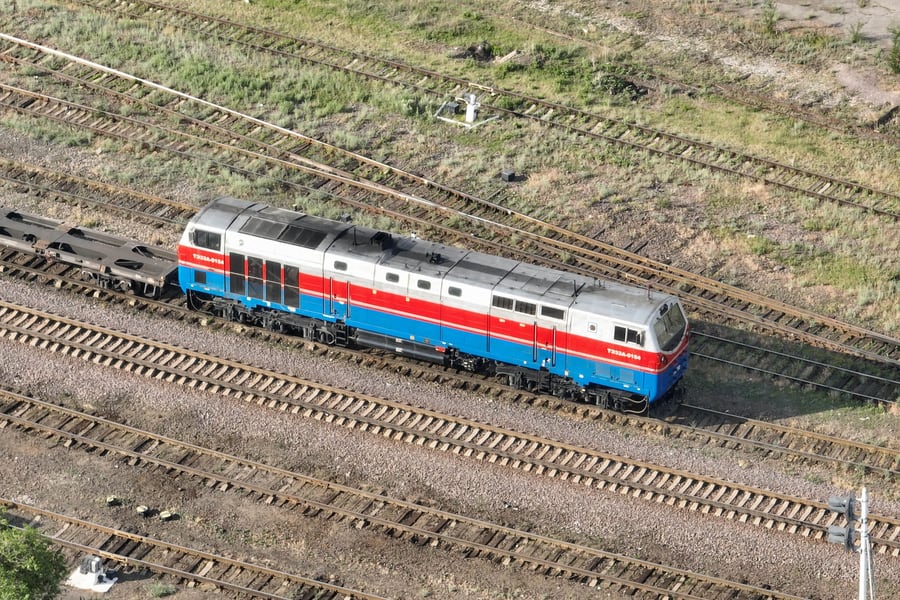 Nikolai Bulykin / Wikimedia Commons · CC BY-SA 4.0 · 2023 · cropped
Carrying on into Siberia
Semey is the end of this page but not of the railway. Every other day train 301 runs straight through and over the frontier — 1 hr 30 min standing at Aul on the Kazakh side, 1 hr 50 min at Lokot on the Russian — to Rubtsovsk, Barnaul and Novosibirsk, where the Turksib meets the Trans-Siberian. That connection is the whole reason the line was built, and it is still a single unbroken ride of a day and a half.Timetables
Three trains a day run north from Almaty over the Turksib to Semey, and three run south. All the times below are the operator's own, read from the route detail behind each train on bilet.railways.kz in August 2026 and checked across sixteen consecutive dates. They are local times, and Kazakhstan keeps a single time zone.
| Train | Runs | Leaves Almaty | Reaches Semey | Journey |
|---|---|---|---|---|
| 22 Kyzylorda – Semey | daily | 12:44, Almaty-1 | 09:13 next day | 20 hr 29 min |
| 301 Almaty – Novosibirsk | every other day | 16:40, Almaty-2 | 14:29 next day | 21 hr 49 min |
| 32 Almaty – Pavlodar | daily | 23:59, Almaty-1 | 22:02 next day | 22 hr 3 min |
Almaty to Semey
Departure times from each station.
| Station | 22 | 301 | 32 |
|---|---|---|---|
| Almaty | 12:44 | 16:40 | 23:59 |
| Zhetygen | 13:37 | 18:56 | 00:52 |
| Kapchagay | 14:11 | 19:31 | 01:22 |
| Sary-Ozek | 16:39 | 21:57 | 03:50 |
| Ushtobe | 18:52 | 00:26 | 06:40 |
| Matay | 21:11 | 02:55 | 08:58 |
| Lepsy | 21:53 | 03:38 | 09:43 |
| Aktogay | 00:01 | 05:30 | 11:50 |
| Ayagoz | 02:43 | 08:12 | 14:26 |
| Zhangiz-Tobe | 05:58 | 11:31 | 18:31 |
| Shar | 06:57 | 12:30 | 19:41 |
| Semey | 09:13 | 14:29 | 22:02 |
Semey to Almaty
| Station | 21 | 301 | 31 |
|---|---|---|---|
| Semey | 12:00 | 07:24 | 21:36 |
| Shar | 14:39 | 10:04 | 00:10 |
| Zhangiz-Tobe | 15:31 | 10:56 | 01:17 |
| Ayagoz | 19:06 | 15:16 | 05:31 |
| Aktogay | 21:43 | 17:51 | 08:54 |
| Lepsy | 23:15 | 19:27 | 10:25 |
| Matay | 00:11 | 20:23 | 11:21 |
| Ushtobe | 02:23 | 22:33 | 13:37 |
| Sary-Ozek | 04:41 | 00:49 | 15:53 |
| Kapchagay | 06:49 | 03:07 | 18:25 |
| Zhetygen | 07:20 | 03:38 | 18:55 |
| Almaty | 08:15 | 05:30 | 20:05 |
Southbound, 21 to Kyzylorda and 31 to Almaty-1 run daily, in 20 hr 15 min and 22 hr 29 min. 301 from Novosibirsk takes 22 hr 6 min and runs every other day, on the days between the northbound workings, and it is the one that ends at Almaty-2 in the city centre rather than at Almaty-1.
What the timetable is doing
The three are three different journeys that happen to share the same rails. 22/21 is a through working between Kyzylorda on the Trans-Aral line and Semey, so it has already come up the whole southern half of the Turksib — Turkestan, Shymkent, Taraz, Shu — before it reaches Almaty at all, and it stands fifty minutes there. 32/31 links Almaty to Pavlodar and carries on north-west beyond Semey. 301 is the international train to Novosibirsk: it stands 1 hr 30 min at Aul on the Kazakh side of the frontier and 1 hr 50 min at Lokot on the Russian side, and it needs whatever documents Russia requires of the passport you hold. Those two halts are printed in the timetable rather than sprung on you.
The intermediate stops are long by European habit and worth using: on train 22, thirty-one minutes at Aktogay, twenty-five at Ayagoz, and a quarter of an hour each at Sary-Ozek, Ushtobe and Matay.
Departures are published by the operator: Qazaqstan Temır Joly · bilet.railways.kz (opens in a new tab).
Tickets
Tickets are sold by Qazaqstan Temır Joly through its own system at bilet.railways.kz, which handles Kazakh, Russian and partial English, and at the station ticket offices. There is no rail pass to buy instead and no agency that does it better. Fares move day by day rather than being fixed: sampled across sixteen consecutive departures in August 2026, an open platskart berth ran 8,753–11,107 ₸ and a four-berth kupe 12,456–16,070 ₸. On some dates only one class was on sale, which is what a sold-out coach looks like on this system rather than an error.
The fare includes bed linen made up at the depot, a bottled-water dispenser and restaurant-car meals brought to the compartment; tea and the restaurant car itself are extra. The discount cards exist but are a domestic loyalty scheme, several tied to a Kazakh identification number, and none is aimed at a visitor making one journey.
Book your tickets
 Nikolai Bulykin / Wikimedia Commons · CC BY-SA 4.0 · 2026 · cropped
Almaty to Semey, platskart
8,753 – 11,107 ₸ across sixteen sampled departures
An open berth in a bay of four, with air conditioning, bio-toilets and USB charging.
Book Tickets (opens in a new tab, on bilet.railways.kz)via bilet.railways.kzAlmaty to Semey, kupe
12,456 – 16,070 ₸ across the same dates
A four-berth compartment with sockets and reading lights, and a door that shuts.
Book Tickets (opens in a new tab, on bilet.railways.kz)via bilet.railways.kzRail Passes
No rail pass covers Kazakhstan, and buying one would be money thrown away. Interrail and Eurail describe a network of 33 countries and Kazakhstan is not among them; there is no Central Asian equivalent, and no through pass reaches here from either the European or the Chinese side.
What Qazaqstan Temır Joly runs instead is a domestic loyalty scheme — cards called Altyn, Kumis, Zhastar, KETTIK33, Sayahatshy, QURMET and Meyirim. The discount applies only to journeys whose departure date falls inside the card's validity, and the concessionary ones are tied to a Kazakh identification number and a six-digit social code issued through the eGov mobile app. For a visitor riding the Turksib once, none of it applies.
So the answer for this journey is the plain fare, bought per journey from the operator, which for an open berth over 1,025 kilometres is around ten thousand tenge. Checked against the operator's own pages in August 2026.
Places to Visit
Almost every town on this line exists because the line does. Six of them are worth knowing before the train pulls in, if only so that a fifteen-minute stop on an unlit platform means something.
 Matti Blume / Wikimedia Commons · CC BY-SA 4.0 · 2024 · cropped
Almaty
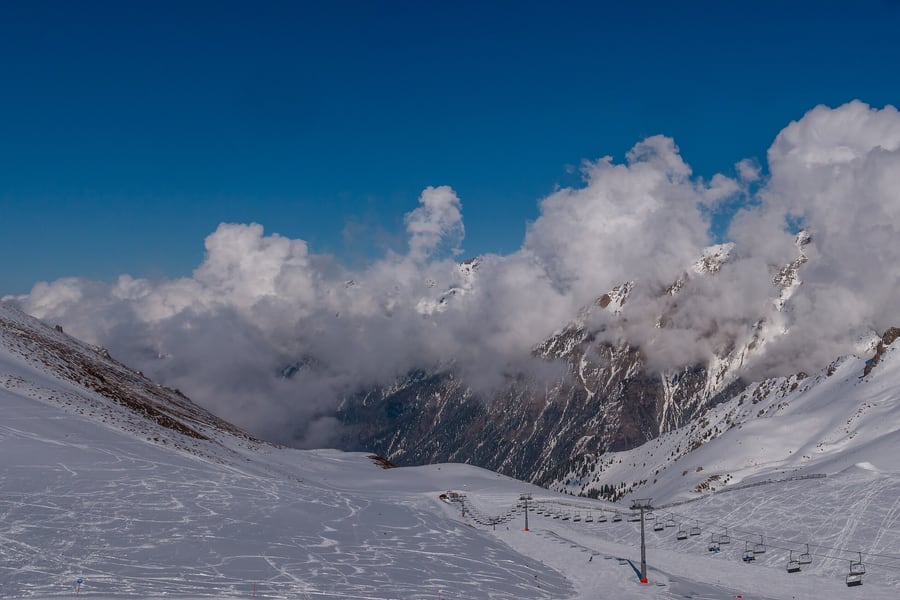
The largest city in the country, more than two million people, and the capital until 1997. What fixes it in the memory is the wall of the Tian Shan standing four thousand metres above the southern suburbs, close enough that the ski slopes at Shymbulak and the skating rink at Medeu are a bus ride from the centre. The two stations are a long way apart: Almaty-2 is at the head of the main avenue, Almaty-1 is out to the north, and trains 22 and 32 leave from Almaty-1.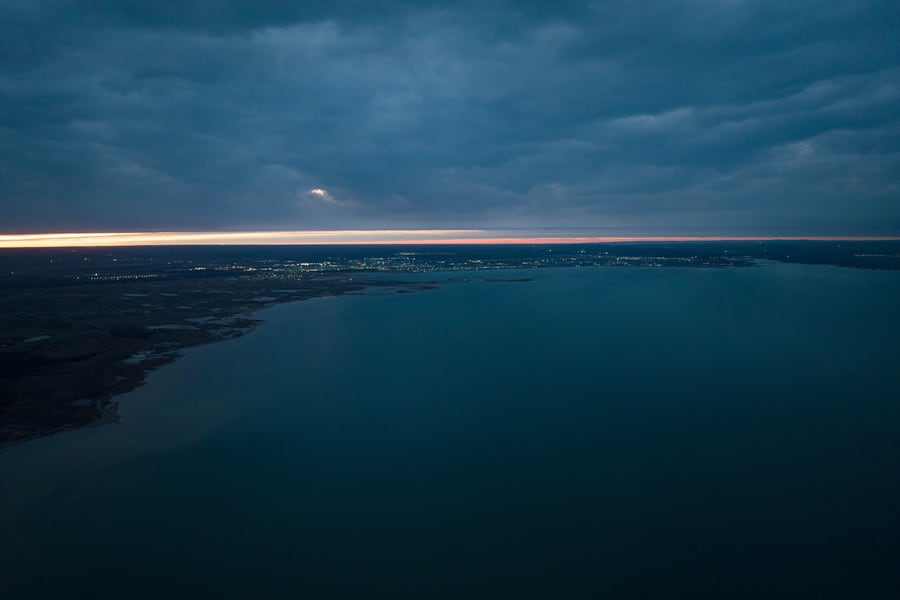 Nikolai Bulykin / Wikimedia Commons · CC BY-SA 4.0 · 2023 · cropped
Konaev
Built in the 1960s for the men constructing the Kapchagay dam, and now the seat of government for the Almaty Region. The dam turned a stretch of the Ili into sixty kilometres of open water in the middle of dry steppe, and the town has become the place Almaty goes to swim. It was renamed Konaev in 2022; the railway did not follow, so the station board, the timetable and the ticket system all still say Kapchagay.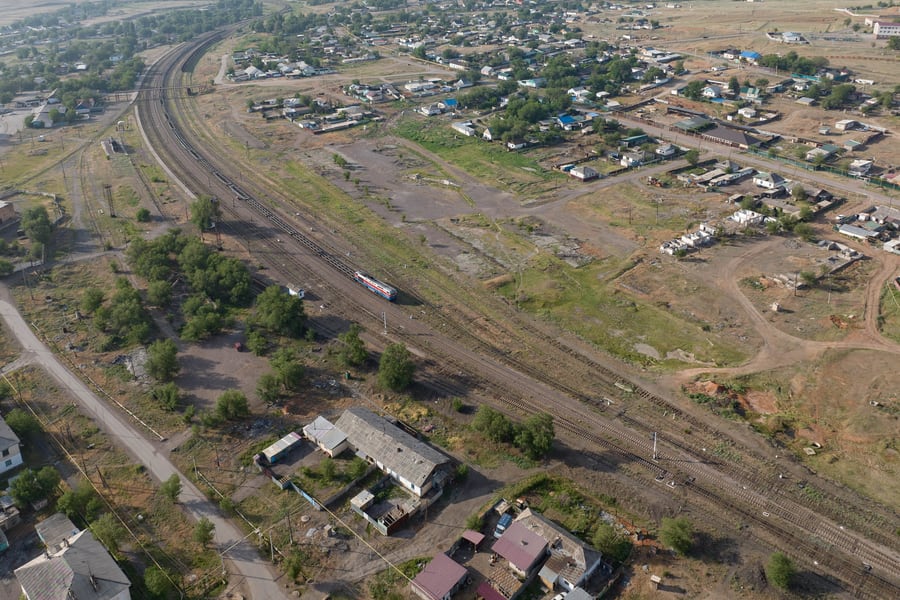 Nikolai Bulykin / Wikimedia Commons · CC BY-SA 4.0 · 2023 · cropped
Sary-Ozek
A village of about fourteen thousand at the top of the climb out of the Ili basin, seat of the Kerbulak district and eighty kilometres from Taldykorgan. A missile brigade was based here from 1965, and at the end of the 1980s the range outside the town was one of the places Soviet missiles were destroyed under the treaty with Washington — filmed at the time for a documentary that took the name of the place. The train stands a quarter of an hour.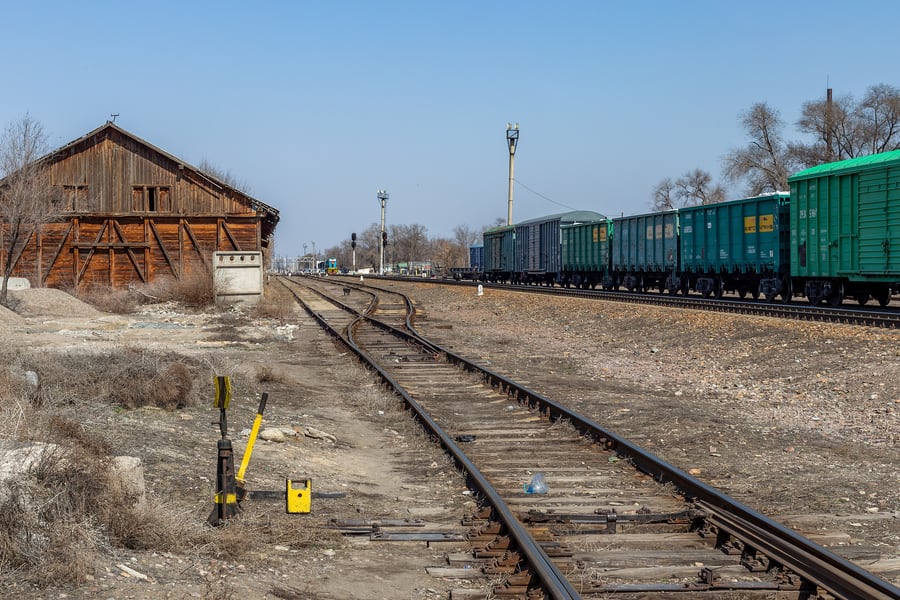 Nikolai Bulykin / Wikimedia Commons · CC BY-SA 4.0 · 2026 · cropped
Ushtobe
A town of about twenty-five thousand on the Karatal, seat of its district, and the first place the Koreans deported from the Soviet Far East were set down in the autumn of 1937. Nearly 172,000 people were moved to Kazakhstan and Uzbekistan that season in 124 trains, and the first of them got off here and dug in for the winter. The Kazakhstan–Korea Friendship Park in the town marks the site of that first settlement. From the platform you see a yard, a timber goods shed and a line of wagons.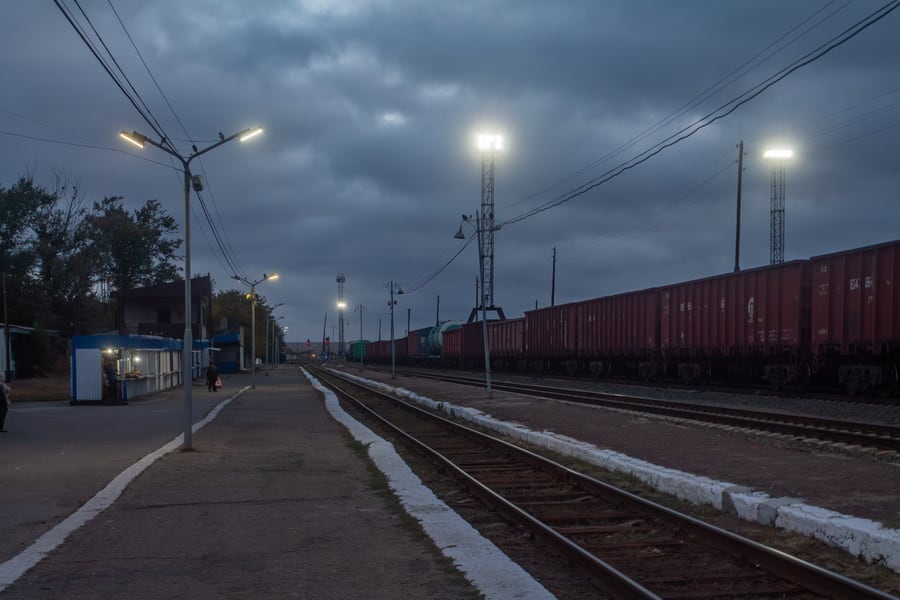 Nikolai Bulykin / Wikimedia Commons · CC BY-SA 4.0 · 2024 · cropped
Ayagoz
Founded in 1831 and called Sergiopol until the Soviet renaming, a town of some thirty-seven thousand and the administrative centre of its district. It was the Turksib's first destination: the first regular passenger train over the new railway ran from Semipalatinsk to Sergiopol on 10 May 1929, when the rest of the line did not yet exist, and 562 kilometres had been laid from the north against 350 from the south. Train 22 arrives at 02:18 and stands twenty-five minutes.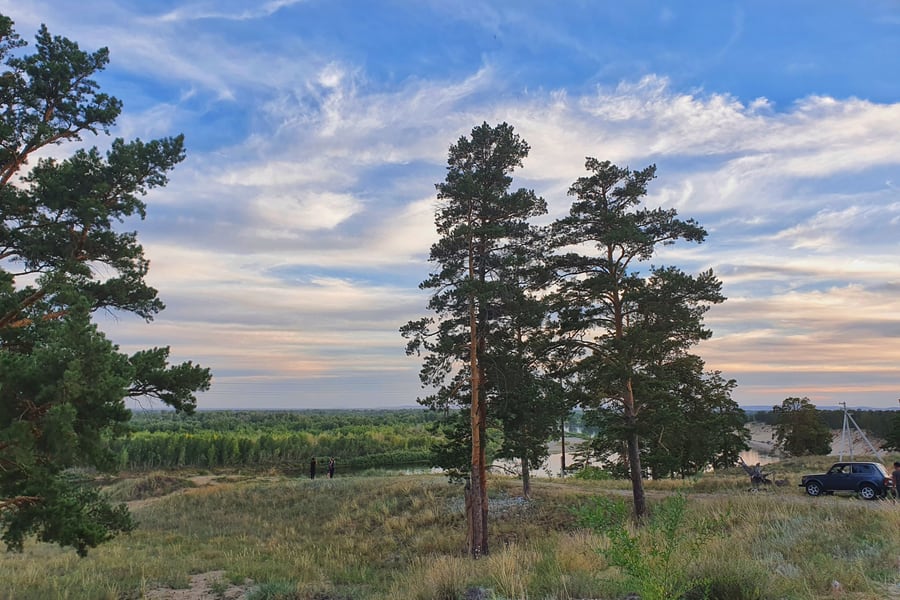 Mollydir / Wikimedia Commons · CC BY-SA 4.0 · 2020 · cropped
Semey
A city of three hundred thousand on the Irtysh, in the Kazakh part of Siberia, and the centre of the Abai Region since 2022. A Russian fort went up beside the river in 1718 and took its name — Semipalatinsk, the seven-chambered place — from the ruins of a Buddhist monastery nearby; the city dropped the Russian form in 2007. From 1917 to 1920 it was Alash-Qala, capital of the short-lived Alash Autonomy and the centre of Kazakh publishing. Pine forest runs along the river above the town.Where to Sleep
The journey itself is the bed for one night. What is needed is somewhere in Almaty before the midday departure and somewhere in Semey at the far end, and Semey is the one that takes a little finding: it is a city of three hundred thousand with very few hotels that keep a working website of their own.
Where to stay
Kazzhol Almaty
Gogol 127/1, in the centre of Almaty
The hotel's own site calls it a business hotel in the middle of Almaty and lists nine conference rooms of up to 120 m² and 250 seats, the Salt restaurant serving Kazakh and European cooking, and the AquaFit wellness centre with a swimming pool, sauna, massage and gym. Rooms run from a 20 m² standard double to a 60 m² business suite for four. It is part of a four-hotel Kazakh group with two more properties in the city and one in Astana.
Check Availability (opens in a new tab, on kazzhol.com)via kazzhol.comGrand Hotel Semey
Central Semey, near the railway station
Opened in March 2014 and, by its own account, close to both the bus station and the railway station in central Semey. The house is a two-storey building with fifteen rooms — nine semi-suites, four suites and two VIP rooms — with free wi-fi and satellite television throughout. It gives its guests breakfast, and a free transfer from the airport or the station to anyone who books the room in advance.
Check Availability (opens in a new tab, on grand-hotel.kz)via grand-hotel.kzQuestions or corrections
Planning this trip and stuck on something, or spotted a time, fare or detail that has changed? Send us a message about The Turksib — Almaty to Semey. We read every one, and we update this page when something has changed.