The Vale of Rheidol Railway
Jeremy Segrott / Flickr · CC BY 2.0
- Distance11¾ miles (18.9 km) · 1 ft 11¾ in gauge
- Duration1 hour each way
- Best seasonDaily from 20 March to 31 October 2027
Introduction
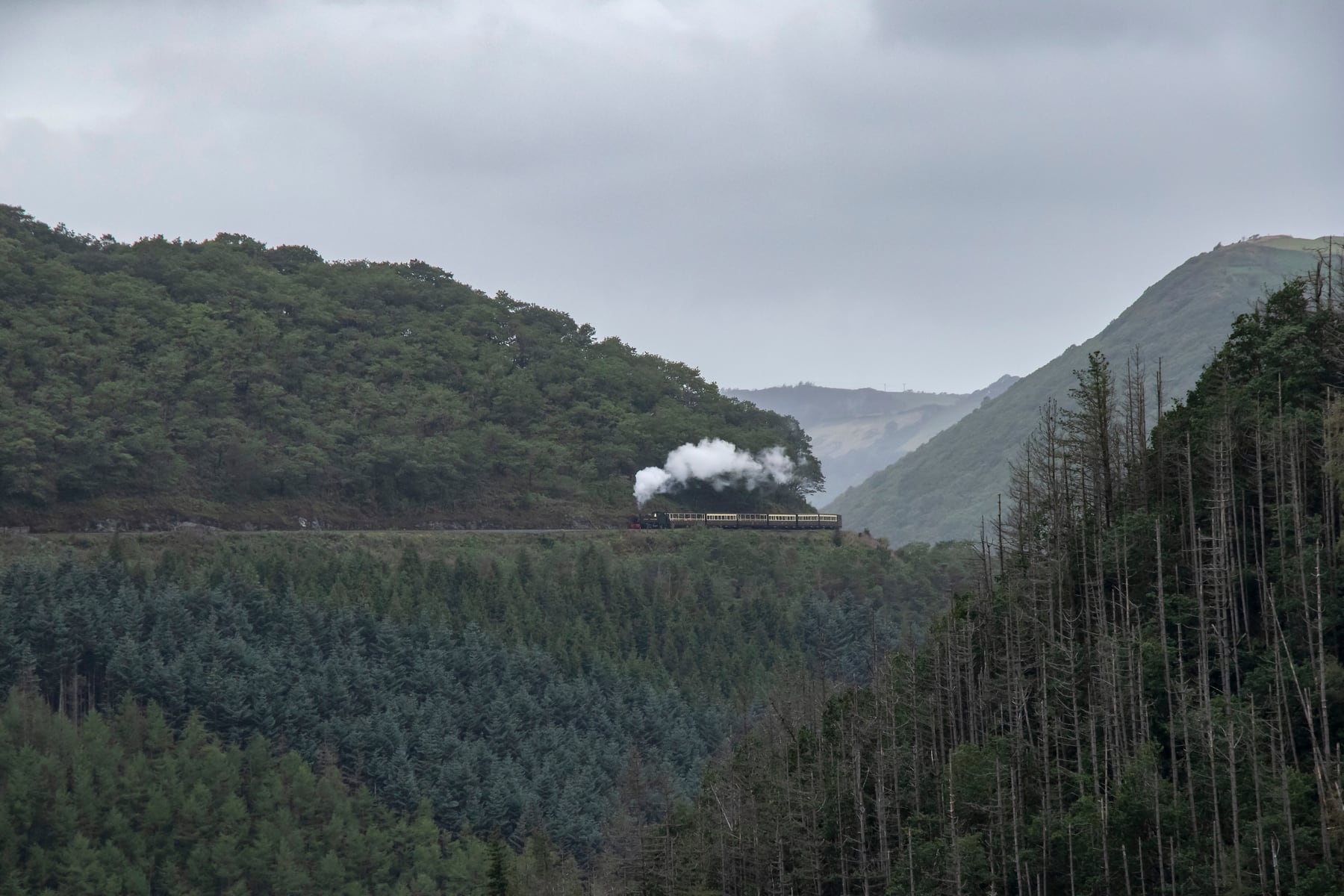
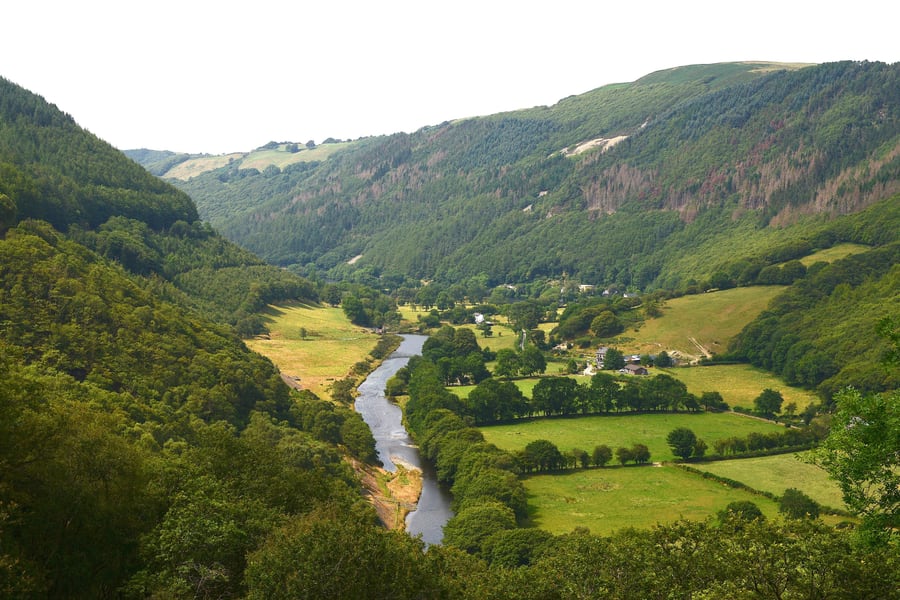
The Vale of Rheidol Railway climbs 11¾ miles from Aberystwyth, on the coast of Cardigan Bay, up the valley of the River Rheidol to Devil's Bridge, in the hills of mid Wales. The track is 1 ft 11¾ in apart, and the trains are steam-hauled. The journey takes an hour each way.
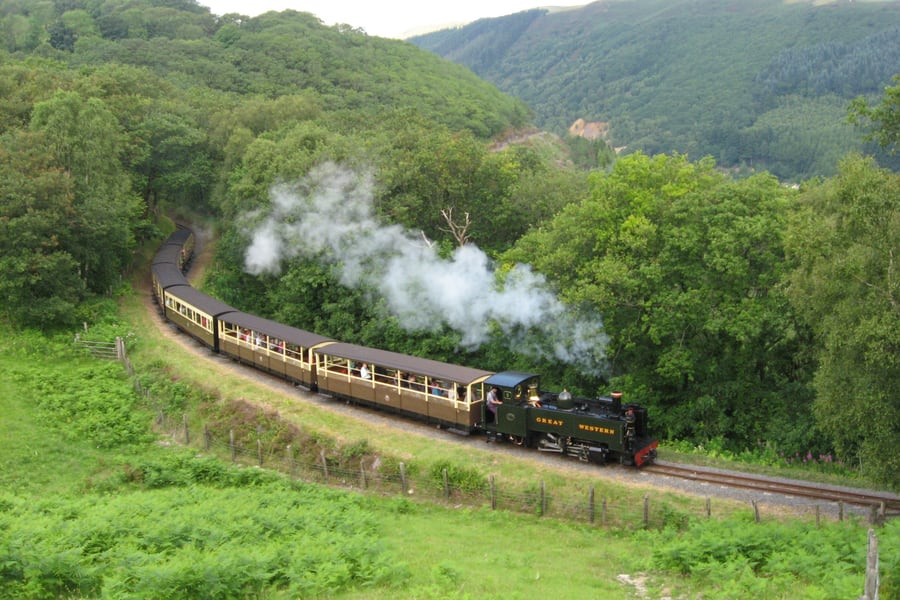
It opened in 1902 to carry lead ore and timber down the valley, but passengers soon became its main business. The Great Western built the line's three tank engines and its closed carriages between 1923 and 1938, and they are still the ones in service. When main-line steam ended in 1968, this was the only steam railway left on British Rail, and it stayed that way until it was sold in 1989. It never closed between its years on the national network and its life as a heritage line.
The first miles follow the flat valley floor out of town. Beyond Capel Bangor the line starts to climb, and for its last few miles it runs on a ledge high on the side of the valley, with no road nearby, to the station at Devil's Bridge, a short walk from the waterfalls and the three bridges the village is named after.
The Journey
Trains leave from the railway's own station on Park Avenue in Aberystwyth, beside the main-line station, the engine shed and the museum. The line runs east past Llanbadarn Fawr, crosses the Rheidol on a low timber trestle and follows the flat valley floor to Capel Bangor, where every train stops.
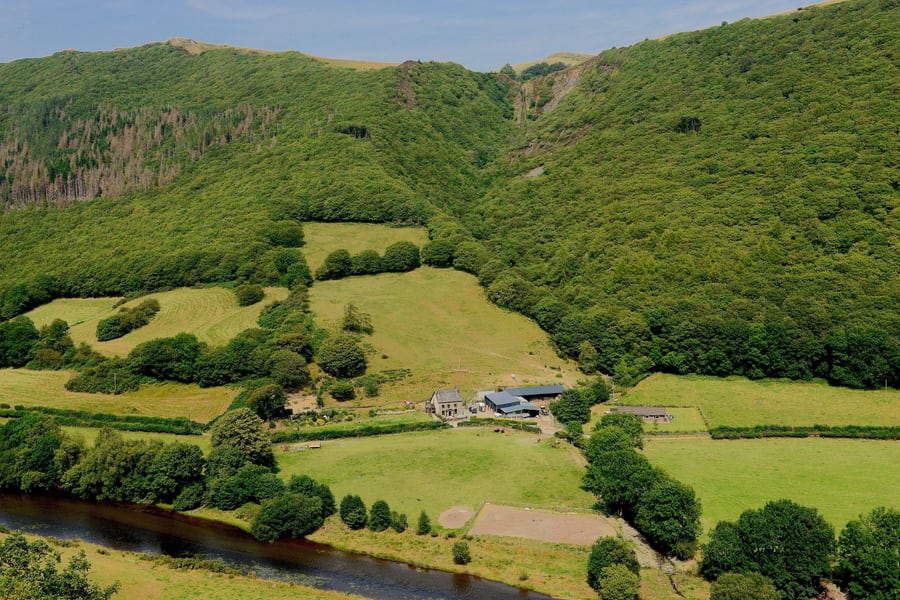
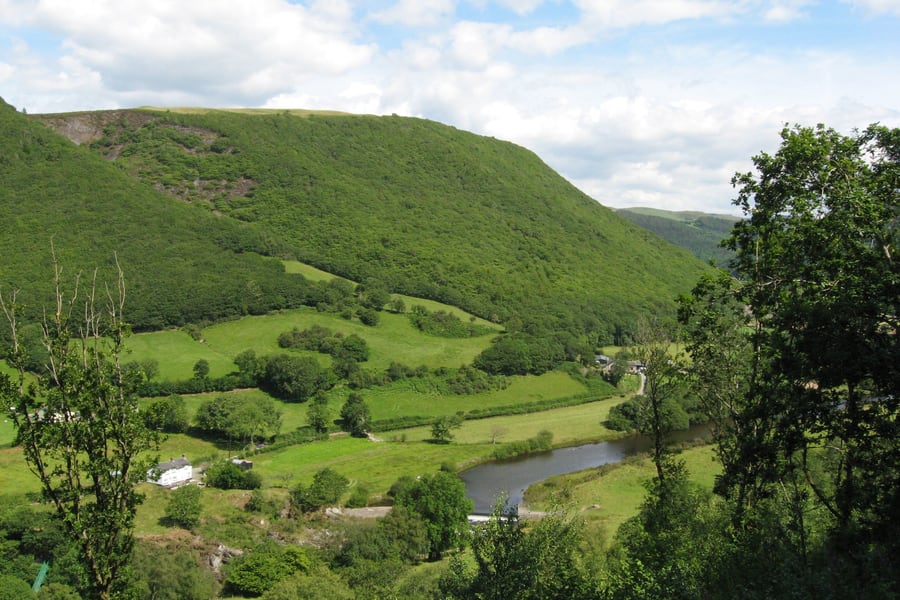
From Capel Bangor the climb begins, through the woods at Tanyrallt to Nantyronen, where the engine takes water, and on to Aberffrwd, the second passing loop. Beyond Aberffrwd the gradient stays at 1 in 50 all the way to the top. The track clings to a ledge cut into the valley side, the river drops further and further below, and the old lead mines and their spoil heaps show on the slopes across the valley. Trains call on request at Rheidol Falls and Rhiwfron before running into Devil's Bridge.
Seats are not allocated in standard class, and the open carriages, with no glass in the sides, are the best place for the view and the sound of the engine working hard on the climb.
The engines
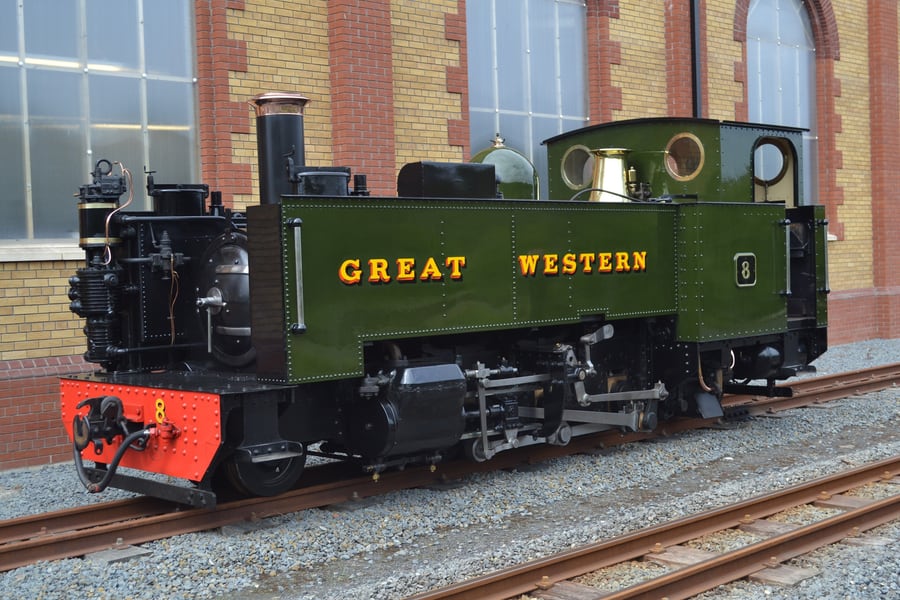
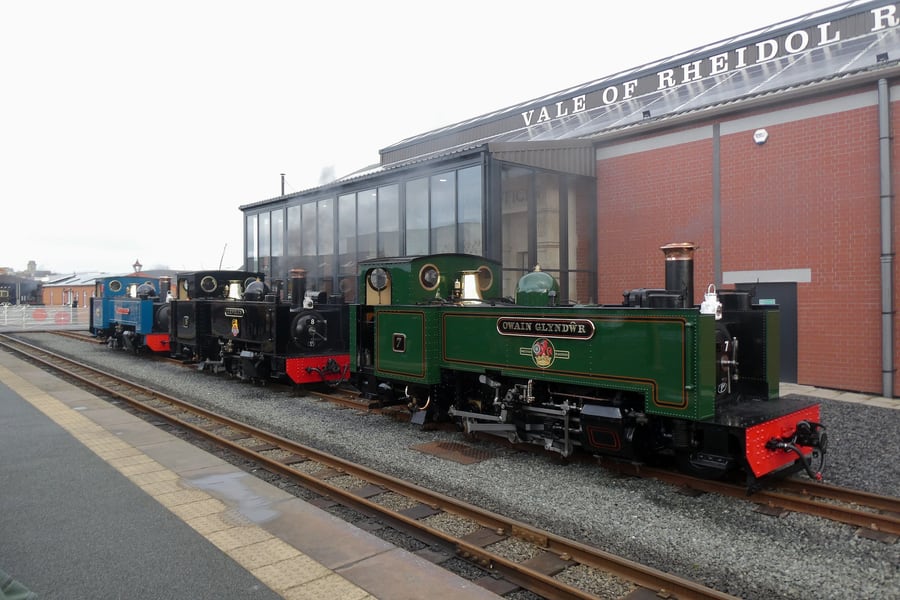
The trains are worked by three 2-6-2 tank engines built at Swindon by the Great Western Railway: No. 7 Owain Glyndŵr and No. 8 Llywelyn of 1923, and No. 9 Prince of Wales of 1924. Each weighs more than 25 tons and is over eight feet wide on track less than two feet apart, and the railway calls them the most powerful engines of their gauge built for a British line. Their names were given in the 1950s. No. 9 was converted to burn oil in 2026, to keep steam running on dry days when sparks from a coal fire could start lineside fires. The railway also owns No. 60 Drakensberg, a Garratt with two sets of driving wheels, built by Hanomag in 1927.
Along the route
 John Lucas / Geograph · CC BY-SA 2.0
Over the Rheidol
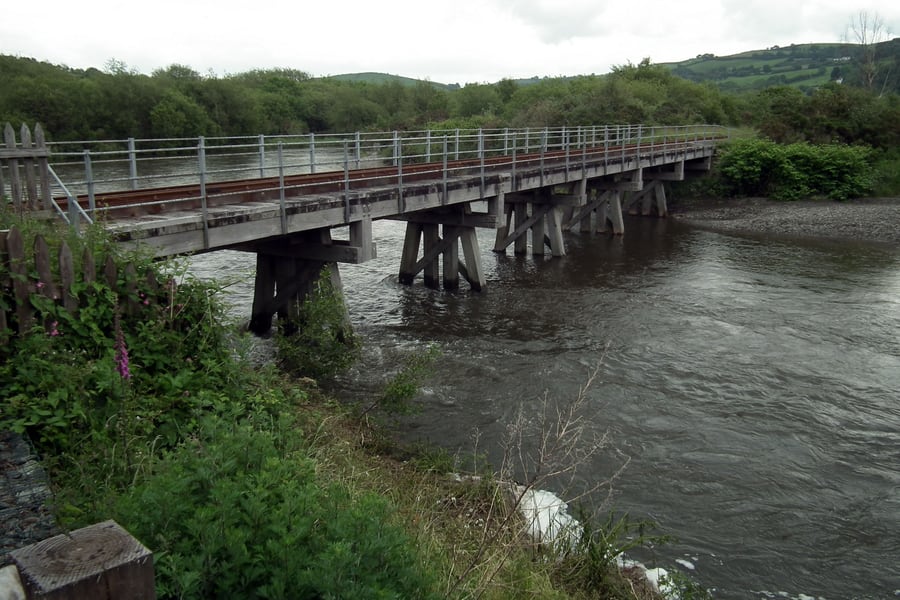
Leaving Aberystwyth the line passes Llanbadarn, where trains stop to work the level crossing, then crosses the River Rheidol on a low timber trestle, its only river crossing, and heads up the flat valley floor into open country.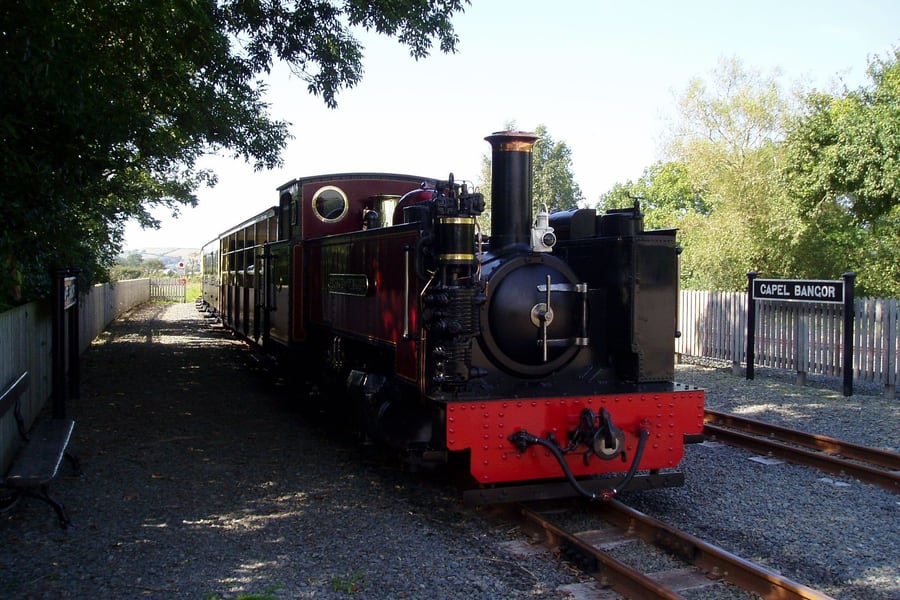 Pricey / Wikimedia Commons · CC BY 3.0
Capel Bangor
Four and a half miles out, Capel Bangor has a passing loop and a station building, and every train stops. Beyond it the line leaves the valley floor and starts climbing through the woods at Tanyrallt.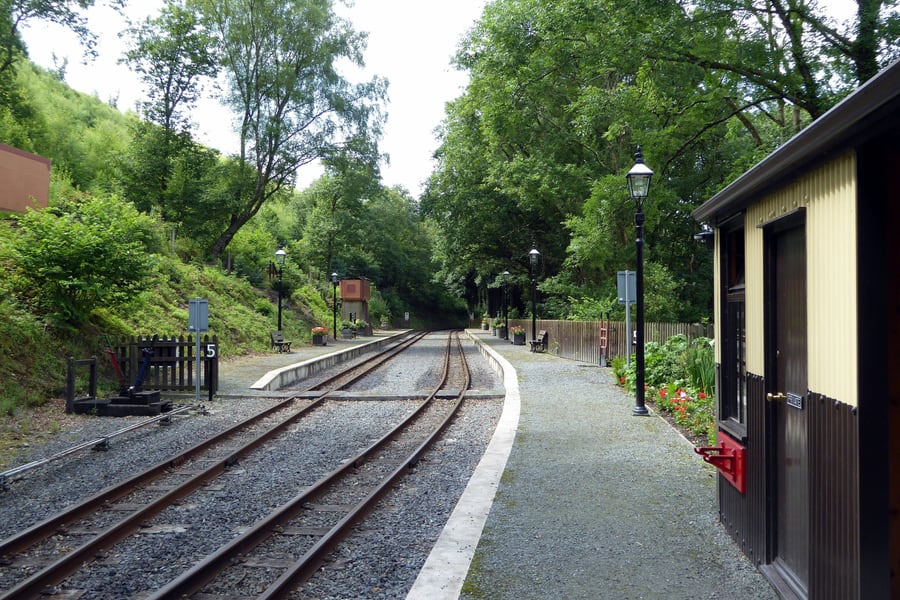 John Lucas / Geograph · CC BY-SA 2.0
Aberffrwd
Aberffrwd, 7½ miles and about forty minutes from Aberystwyth, is the second passing place, where trains up and down the valley meet. From here the line climbs at 1 in 50 all the way to Devil's Bridge.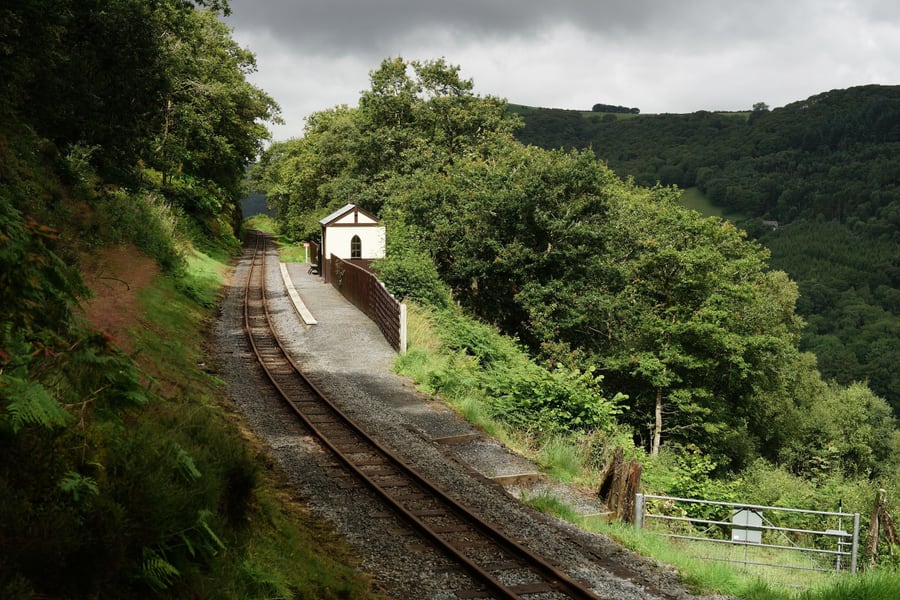 Peter Trimming / Flickr · CC BY 2.0
Rhiwfron
The last miles run on a ledge cut into the valley side, with no road anywhere near. Trains stop on request at the halts of Rheidol Falls and Rhiwfron, where an aerial cableway once brought ore down from the lead mines.A bit of history
Culture & experiences along the way
 Gerald England / Geograph · CC BY-SA 2.0
Water at Nantyronen
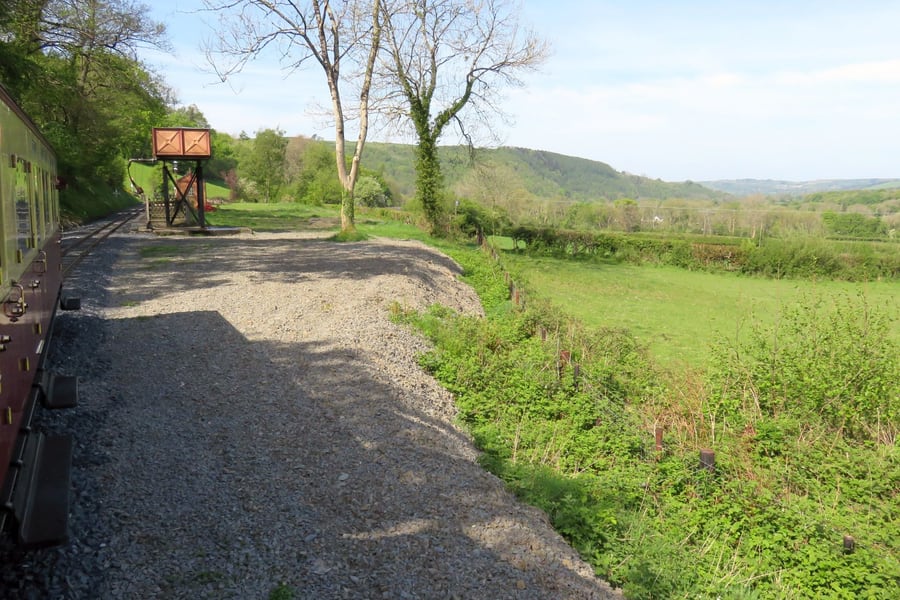
Halfway up the climb the engine stops at Nantyronen, one of the line's five original stations of 1902, to fill its tanks from the water tower beside the track before the climb on to Aberffrwd and the steepest miles to Devil's Bridge. For passengers it is a request stop.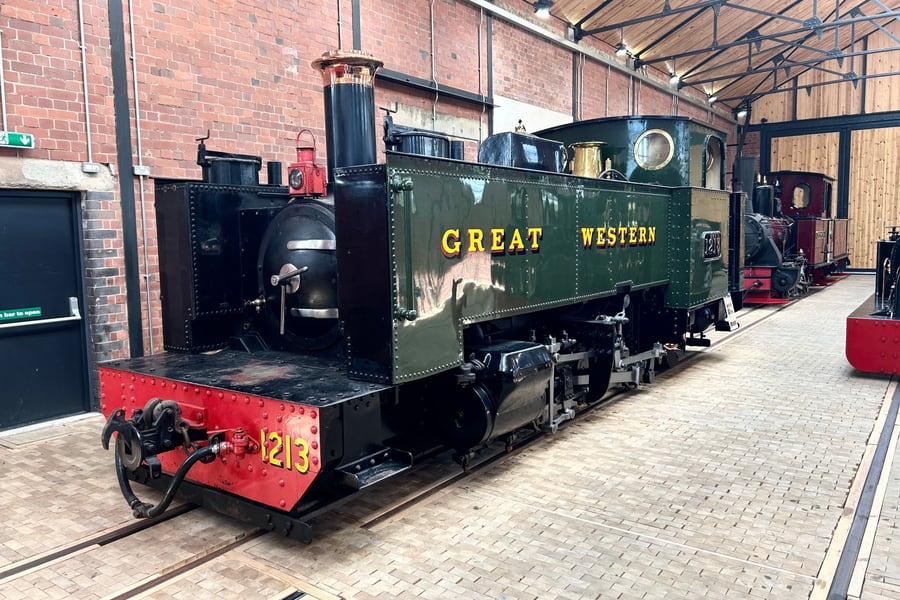 Peter Broster / Flickr · CC BY 2.0
The engine that fooled the accountants
In 1923 the Great Western's board would pay for only two new engines. Swindon built a third anyway, scrapped the old No. 1213 and sent the new one to Aberystwyth as an overhauled 1213. British Railways renumbered it No. 9 in 1948, and as Prince of Wales it still works the line, burning oil since April 2026.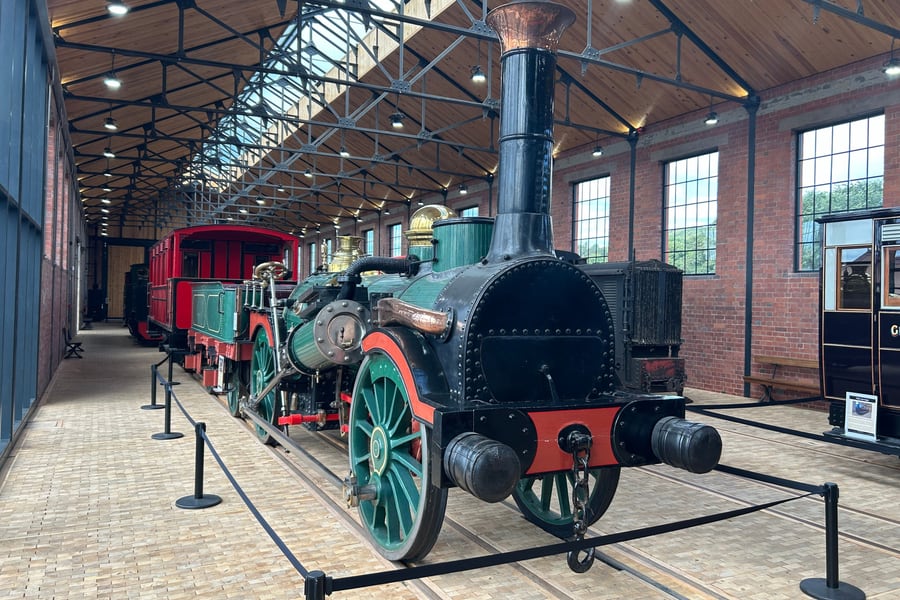 Peter Broster / Flickr · CC BY 2.0
The Engine Shed Museum
Across the tracks from the platform at Aberystwyth, the railway's museum shows narrow-gauge engines and carriages from Wales and abroad, many from the collection of its late chairman Peter Rampton. Exhibits change; Fire Queen of 1848 and the Padarn Railway director's saloon of 1896 are on show now. Entry is free.Timetables
Trains run daily from 20 March to 31 October 2027, the line's 125th year. Each day follows one of three colour-coded timetables, marked date by date on the operator's calendar. The trip takes an hour each way, and the round trip, with the stop at Devil's Bridge, takes 2 hours 45 minutes.
| Orange | Blue | Yellow | |
|---|---|---|---|
| Aberystwyth → Devil's Bridge | 10:30, 14:00 | 10:30, 12:00, 14:00 | 10:30, 12:00, 14:00, 15:30 |
| Devil's Bridge → Aberystwyth | 12:15, 15:45 | 12:15, 13:45, 15:45 | 12:15, 13:45, 15:45, 17:00 |
Good to know:
- Which colour. Yellow days, with four trains, run from late July through most of August and over the late-May half-term. Blue days, with three, are mostly Tuesdays to Thursdays from May to September, and the last week of October. The rest of the season is orange, with two.
- Time at the top. Coming straight back on the same train gives 45 minutes at Devil's Bridge, enough for the Three Bridges viewpoint. The waterfall trail needs the longer gap of an orange or yellow day.
- February half-term. From 6 to 14 February 2027 short trips run only as far as Capel Bangor, at 10:30, 12:00 and 14:00, twenty minutes each way.
Times as of November 2026, from the operator's 2027 timetable. Check your date on vor.wales (opens in a new tab), where each day of the season is marked with its colour.
Tickets
A standard-class return from Aberystwyth to Devil's Bridge costs £36 for an adult and £12.50 for a child aged 3 to 15; under-3s travel free. Tickets can be booked online, with a booking fee, or bought at the booking office, and a standard ticket lets you come back on any train that day. Single tickets are sold only at the booking office or by phone. Dogs travel in standard class for £4.
First Class costs £62 for an adult and £30 for a child, in a panelled carriage with reserved seats, and you return on the same train. A picnic from the railway's café can be ordered with it 48 hours ahead. Fares checked November 2026 on vor.wales (opens in a new tab); pounds sterling.
Book your tickets
Standard return
Adult · Aberystwyth to Devil's Bridge and back
The whole line and back, returning on any train that day.
Book Tickets (opens in a new tab, on vor.wales)via vor.walesFirst Class return
Adult · reserved seat · same train back
A seat in the panelled First Class carriage, coming back on the same train after 45 minutes at Devil's Bridge.
Book Tickets (opens in a new tab, on vor.wales)via vor.walesRail Passes
No rail pass is valid on the Vale of Rheidol Railway. Interrail's table of railway companies for Great Britain does not list it, and BritRail's conditions exclude privately owned, steam, heritage and tourist railways. You buy the railway's own ticket.
A pass will still bring you to the start. Aberystwyth is the end of the Cambrian line from Shrewsbury, served by Transport for Wales, which both passes cover, and the main-line platforms are next to the narrow-gauge station.
For this journey alone, a pass is not worth buying. It pays only if Aberystwyth is one stop on a longer rail trip round Wales or Britain.
Checked November 2026 against interrail.com (opens in a new tab) and britrail.com (opens in a new tab).
Places to Visit
Aberystwyth has a castle, a cliff railway and a long seafront within a short walk of the station, so it is worth an hour before or after the train. At the top of the line, Devil's Bridge is a small village on the edge of a gorge: the viewpoint over the three bridges is ten minutes' walk from the platform.
 Pymouss / Wikimedia Commons · CC BY-SA 4.0
Aberystwyth Castle
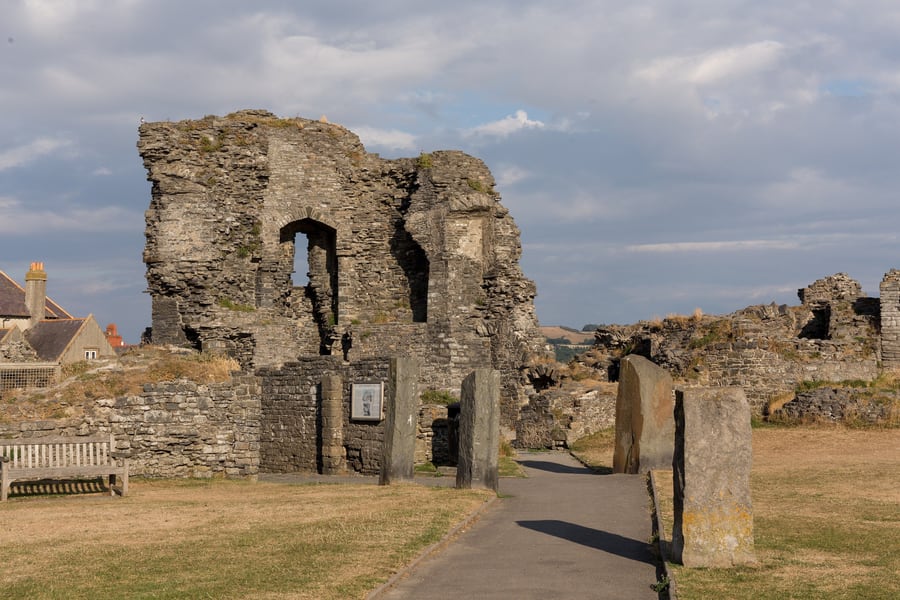
Edward I began the castle on the headland in 1277, and it was finished in 1289. Owain Glyndŵr took it in 1404 and held it for four years, and in 1405 a treaty between Glyndŵr and the King of France was signed here. Charles I's mint struck silver coins in it from 1637, before Cromwell's forces slighted it in 1649. The ruins stand on the seafront.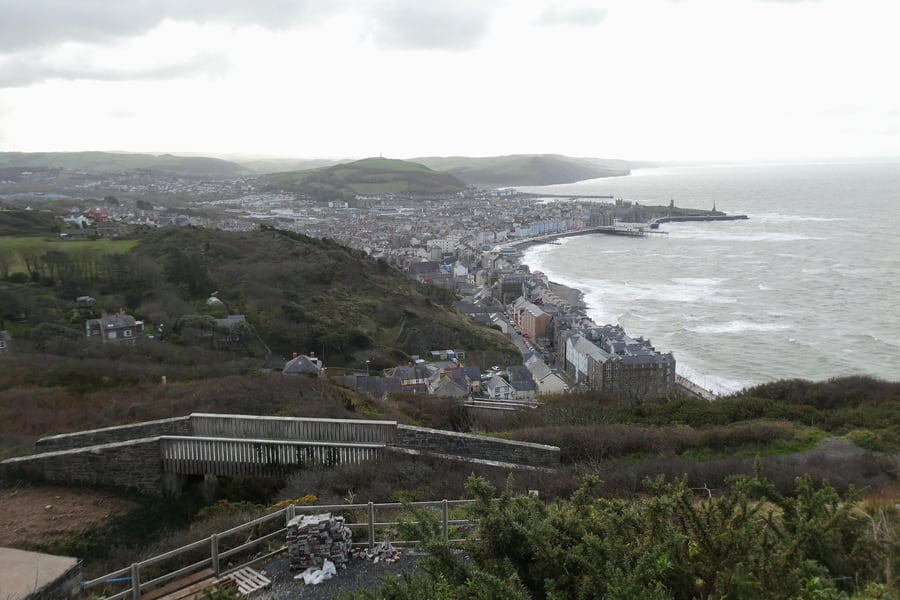 Gareth James / Geograph · CC BY-SA 2.0
Constitution Hill
At the north end of the promenade, the Cliff Railway has climbed Constitution Hill since 1 August 1896, rising about 430 feet in 778 feet of track. It began with water tanks for counterweights and has run on electricity since 1921. At the top are a camera obscura and the view along Cardigan Bay.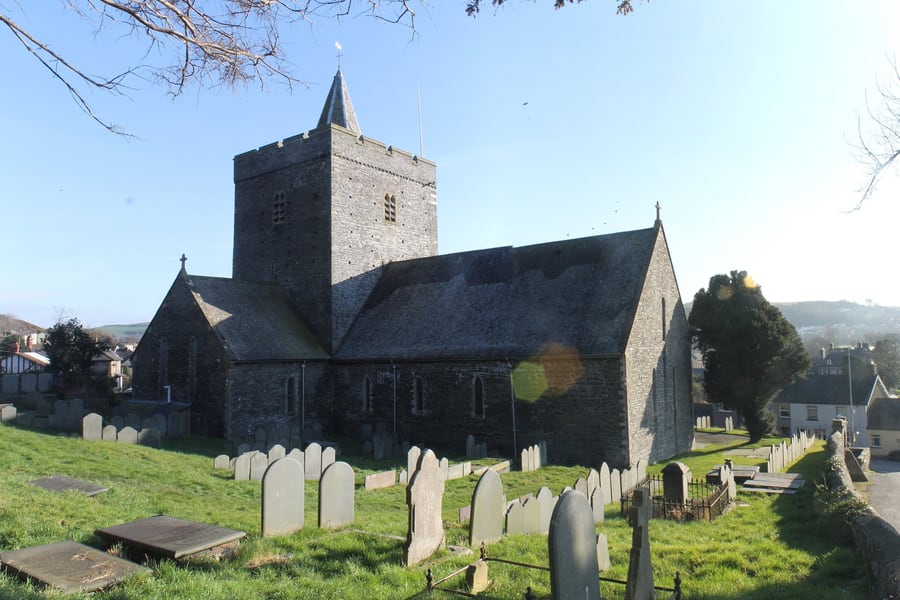 Llywelyn2000 / Wikimedia Commons · CC BY-SA 4.0
St Padarn's Church
The largest medieval church in mid-Wales stands on a site used for Christian worship since the early sixth century, when Saint Padarn is said to have founded a monastery here. It was one of the leading religious houses of early Wales and a centre of learning, where a Life of St David was written around 1090.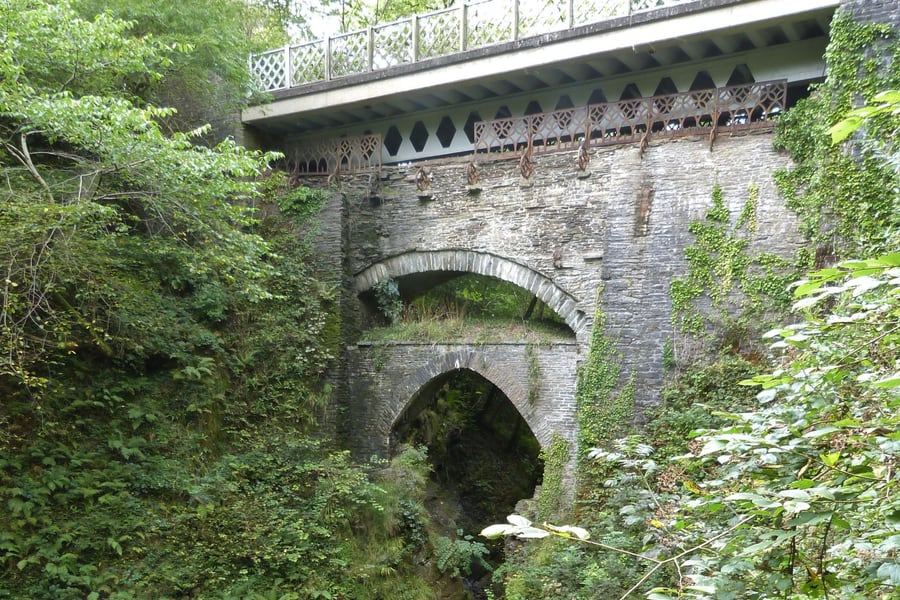 Derek Voller / Geograph · CC BY-SA 2.0
The Three Bridges
Three bridges stand one above the other over the gorge of the Mynach, built hundreds of years apart. The Welsh name, Pontarfynach, means the bridge over the Mynach. Turner painted them in 1795 and Wordsworth wrote a poem about them. A short walk down 220 slate steps leads into the Punchbowl, where the river churns beneath the arches.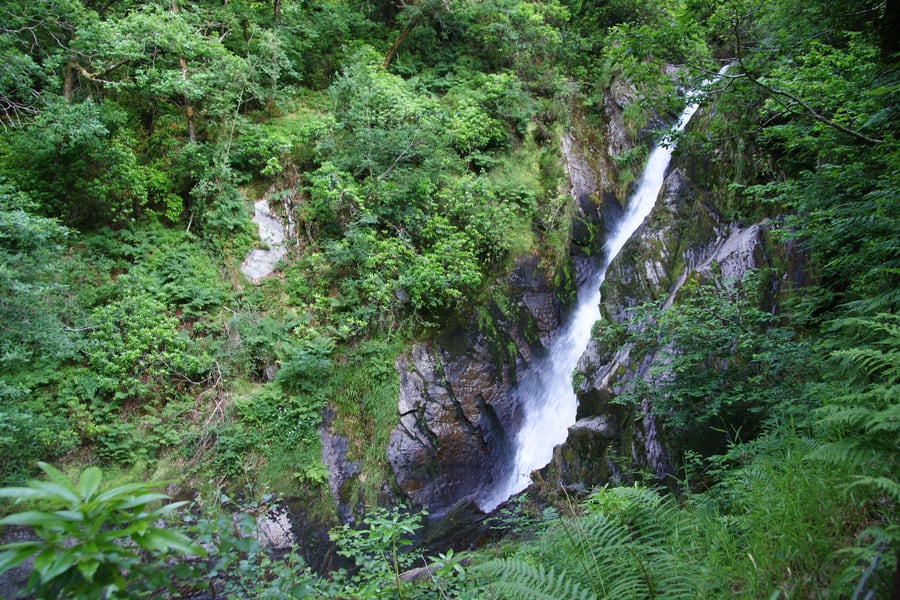 Bill Boaden / Geograph · CC BY-SA 2.0
Mynach Falls
Below the bridges the Mynach falls 90 metres in five steps down a narrow, wooded ravine to meet the Rheidol. The nature trail down to the falls and back is 675 steep stone steps and takes one and a half to two hours, so it needs the longer stopover of an orange or yellow timetable day.Where to Sleep
Aberystwyth is the place to stay, with hotels along the promenade and the main-line station next to the railway's own. Devil's Bridge has the historic Hafod Hotel, which overlooks the gorge, a few minutes' walk from the station.
Where to stay
 PKwicipics / Wikimedia Commons · CC BY-SA 3.0 · cropped
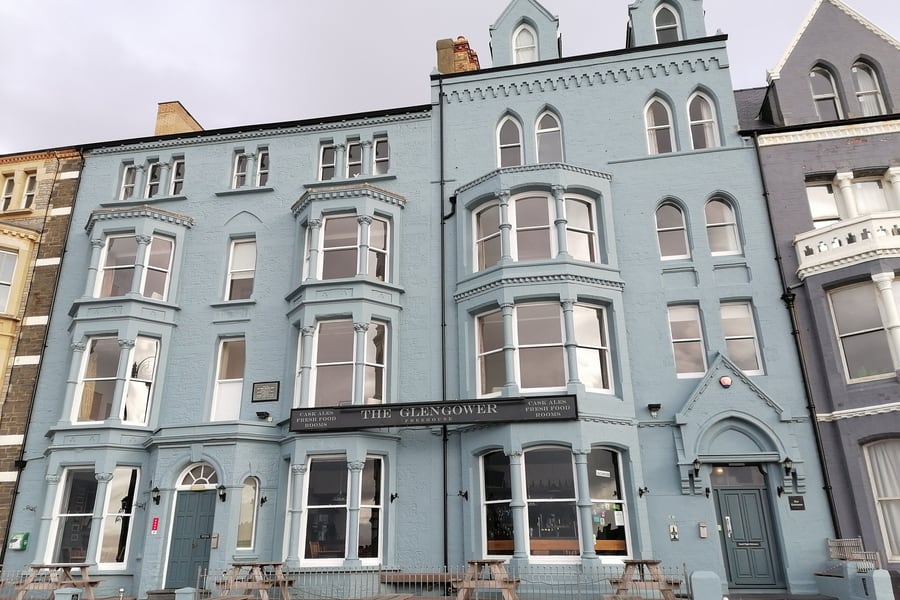
The Glengower
Aberystwyth · on the promenade
A seafront pub with 21 en-suite rooms on the Aberystwyth promenade, many of them looking out over Cardigan Bay.
Check Availability (opens in a new tab, on glengower.co.uk)via glengower.co.ukQuestions or corrections
Planning this trip and stuck on something, or spotted a time, fare or detail that has changed? Send us a message about The Vale of Rheidol Railway. We read every one, and we update this page when something has changed.