Van Gölü Ekspresi
Kabelleger / Wikimedia Commons · CC BY-SA 4.0
- DistanceAnkara–Tatvan · 1,352 km
- DurationAbout 26½ hours
- Best seasonMay–October
Introduction
Everybody has heard of the Doğu Ekspresi. Almost nobody has heard of its sister.
The Van Gölü Ekspresi — the Lake Van Express — leaves Ankara twice a week and spends around twenty-six hours crossing Anatolia to Tatvan, 1,352 kilometres away on the western shore of the largest lake in Turkey. It carries pullman seats, couchettes, sleeping cars and a dining car; it costs very little; and because it has never gone viral, you can usually get a berth on it.
It used to run all the way from Haydarpaşa, the grand old station on the Asian shore of Istanbul, until the Ankara–Istanbul high-speed line rearranged the map and the service was cut back to Ankara. Something was lost there — but what remains is still one of the longest and least-touristed rail journeys in the Middle East.
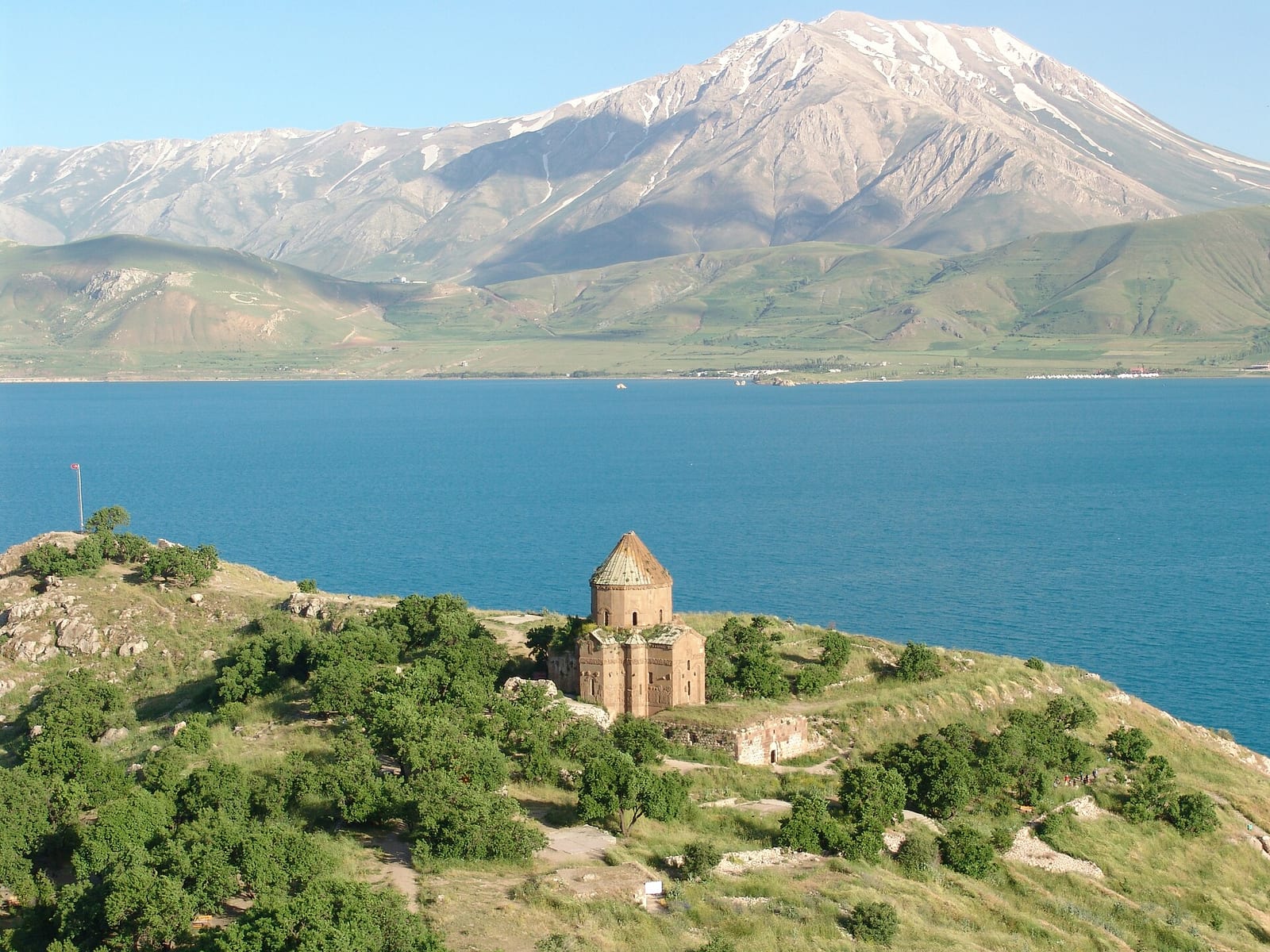
And the destination is genuinely strange. Lake Van sits at around 1,600 metres, ringed by volcanoes, and it is not fresh water but soda — so alkaline that the story goes you can wash your clothes in it without soap. It is an unreasonable shade of blue. On an island in the middle stands a tenth-century Armenian church carved with Adam and Eve and Jonah's whale, and on the far shore a fortress the kingdom of Urartu cut into a rock ridge three thousand years ago.
You get there slowly, through gorges, with tea. It is the better train, quietly.
The Journey
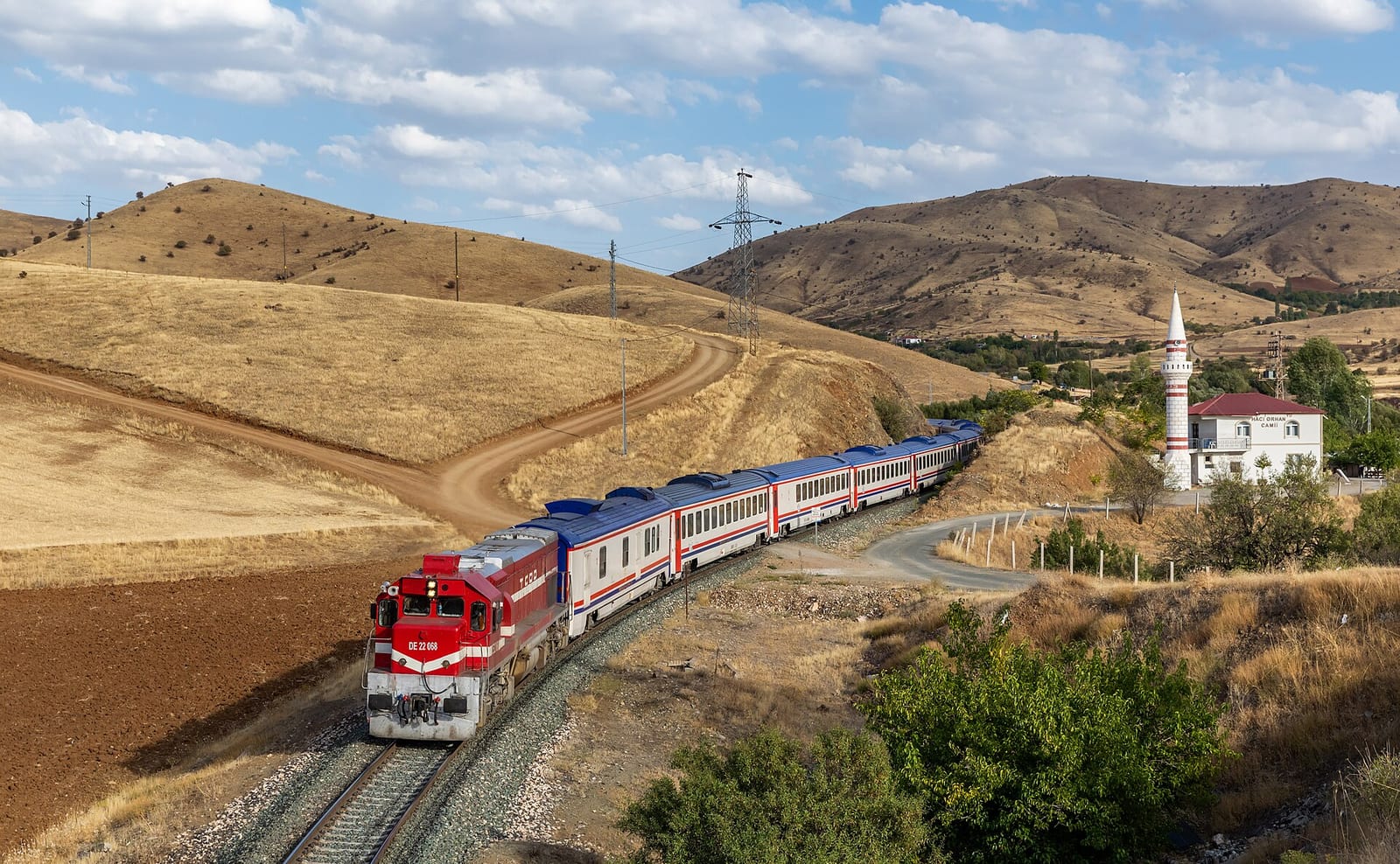
The Van Gölü Ekspresi shares its first stretch with the Doğu Ekspresi, and for a while the two trains describe the same Turkey: out of Ankara across the central plateau, past the volcano at Kayseri, on through the Seljuk stonework of Sivas. Then, where the Doğu Ekspresi swings north-east for Erzincan and Erzurum, this one turns south.
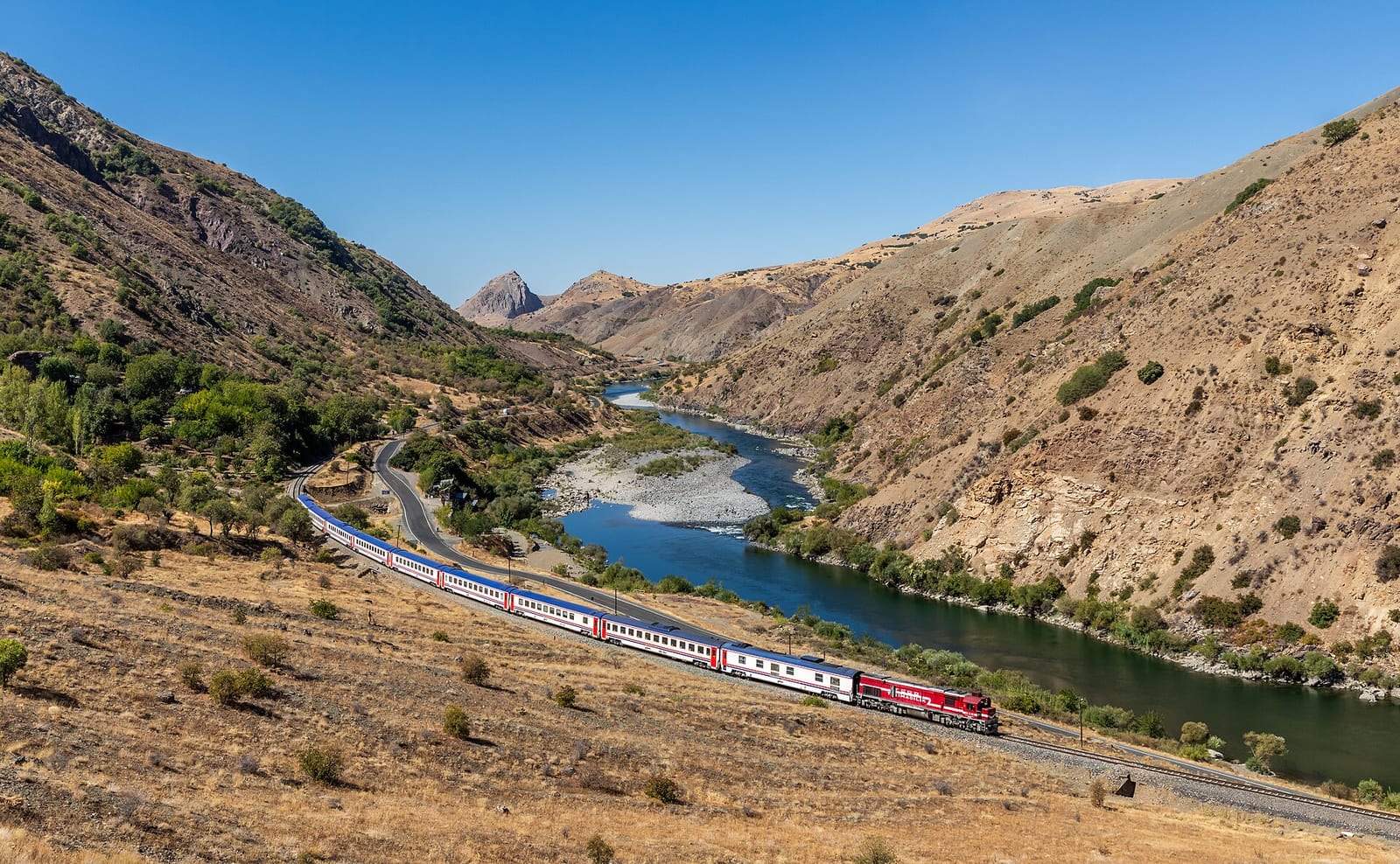
That divergence is what makes it. The line runs down to Malatya — apricot country, the orchards heavy with them in late summer — and then east to Elazığ, where it enters the finest section of the ride: a long succession of river gorges, the train hanging above green water, curving between rock walls, ducking through tunnels and out again. Around Palu and Beyhan the valley narrows and the whole train becomes visible ahead of you on the curve. Almost no road follows this; you are seeing country that is essentially only reachable by rail.
Beyond, the land opens into the wide, high plain of Muş, and the train climbs again onto the eastern highlands — bare, huge, cold in any season, with volcanic cones on the skyline. Late in the second day it comes down to Tatvan, on the western shore, and there is the lake: 1,600 metres up, ringed by mountains, and blue in a way that seems like a trick of the light.
From Tatvan you have arrived at the edge of somewhere rather than the middle of it. Van city, the castle, and the Akdamar boats are on the other side of the water — the lake is big enough that getting round it is a journey in itself. Above Tatvan sits Nemrut, a collapsed volcano with crater lakes in its caldera.
It is worth being straight about the character of this trip: there is no luxury, no dome car, no excursion programme. There is a corridor, a window, a great deal of tea, and a day and a night of country that most travellers to Turkey will never see.
Along the route
Adam Jones / Wikimedia Commons · CC BY-SA 2.0The lake at the end
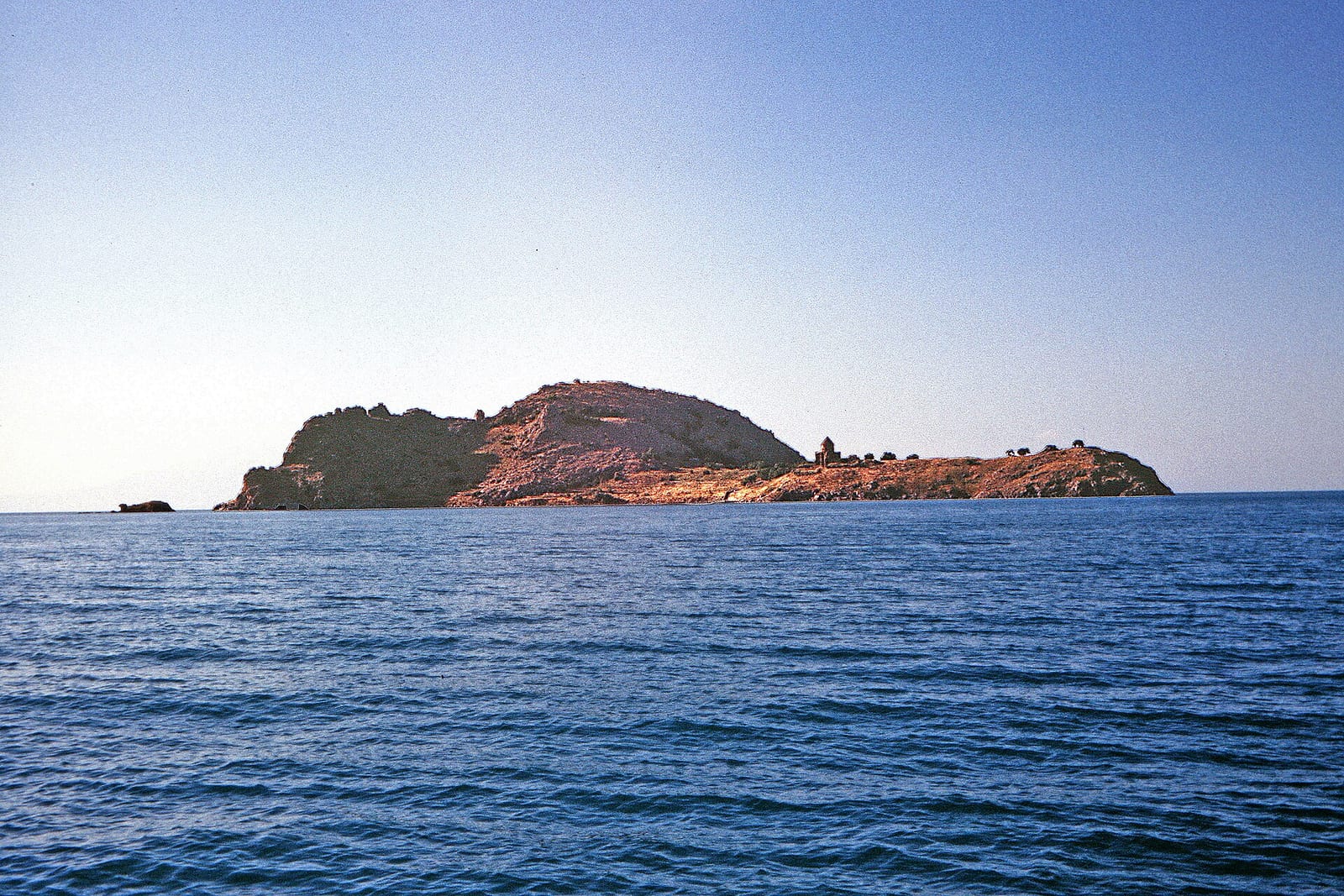
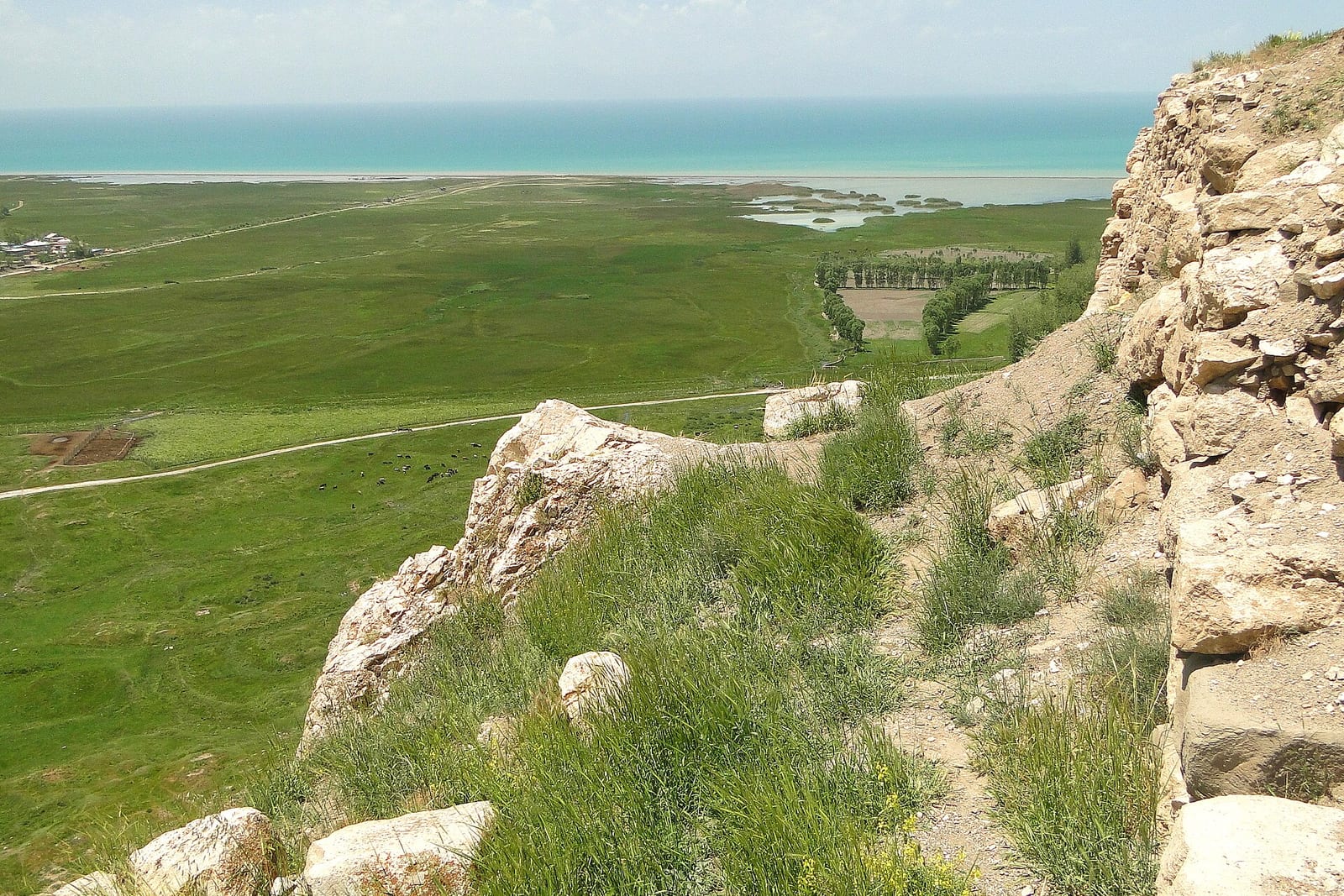
Lake Van is the largest in Turkey and one of the oddest on earth — a soda lake so alkaline you can allegedly wash clothes in it, ringed by volcanoes, an impossible blue at 1,600 metres above the sea.Kabelleger / Wikimedia Commons · CC BY-SA 4.0The Euphrates gorges
The best hours are spent above water: the line follows river valleys through eastern Anatolia in a long chain of gorges and tunnels, a stretch of country almost nobody sees from a road.Bryce Edwards / Wikimedia Commons · CC BY 2.0Akdamar's church
On an island in the lake stands the tenth-century Armenian Church of the Holy Cross, its outer walls carved with Adam and Eve, Jonah and his whale, and a David squaring up to Goliath — one of the treasures of medieval Christendom, on a rock in a soda lake.A bit of history
Culture & experiences along the way
Kabelleger / David Gubler / Wikimedia Commons · CC BY-SA 4.0The road less taken
If the Doğu Ekspresi has become a phenomenon, this is the one that hasn't: twice a week, far fewer tourists, the same enormous Anatolian distances. For many travellers it is the better ride precisely because nobody is filming it.Adam Jones / Wikimedia Commons · CC BY-SA 2.0Urartu at Van
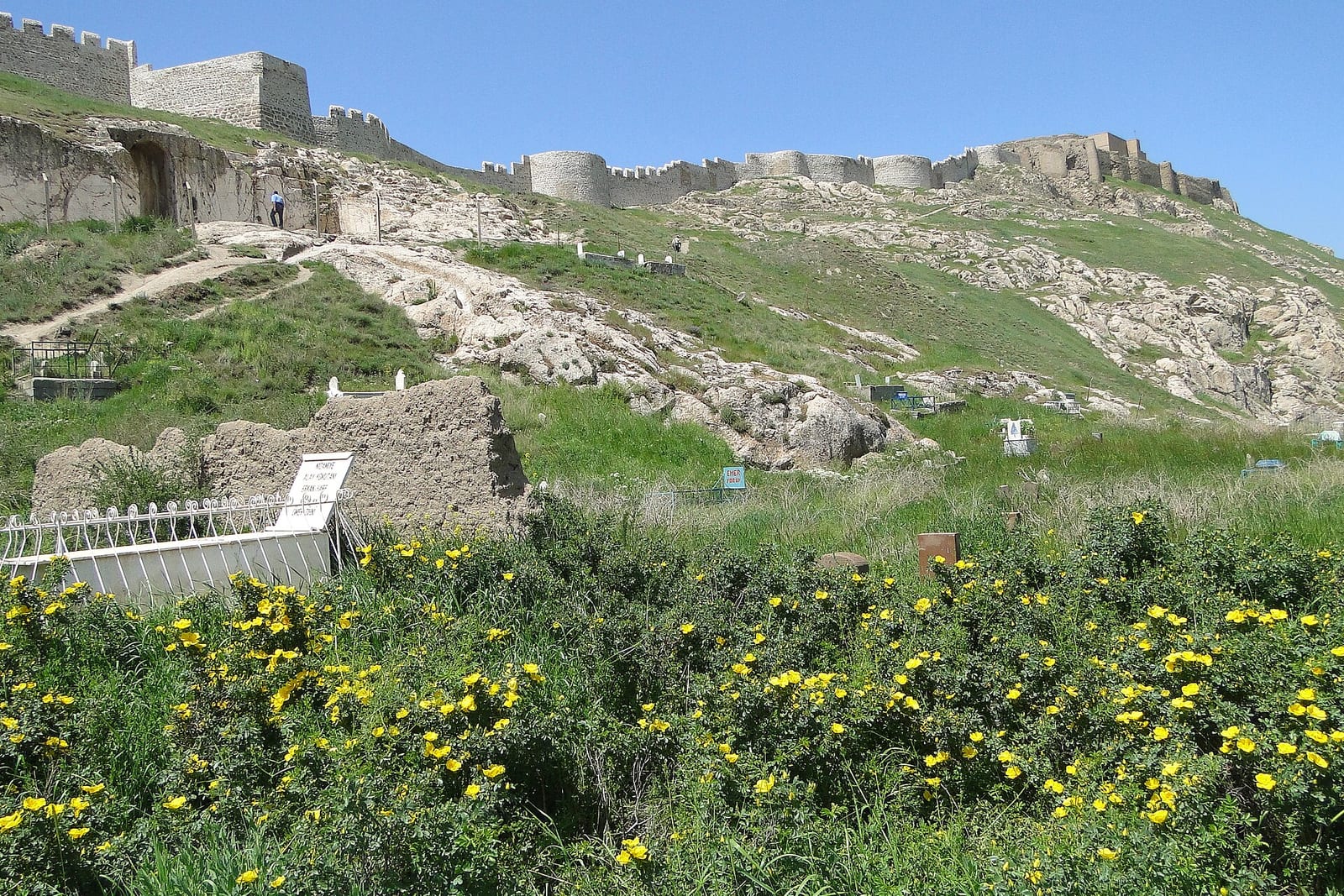
Across the lake, Van Castle is a fortress carved into a rock ridge by the kingdom of Urartu nearly three thousand years ago, with cuneiform inscriptions still cut into the cliff and the ghost of the old city spread below it.W. Bulach / Wikimedia Commons · CC BY-SA 4.0Sleepers and a dining car
The train carries pullman seats, couchettes, sleeping cars and a diner — the full old-fashioned overnight kit, at Turkish prices, for a day and a night across the country.Timetables
The Van Gölü Ekspresi is a regular TCDD service, not a tourist product — a real overnight train that local people use to cross the country. It runs twice a week in each direction, so the calendar rules your trip.
| Runs | Depart | Arrive | |
|---|---|---|---|
| Ankara → Tatvan · 22012 | Tue, Sun | 11:20 | 13:59 (next day) |
| Tatvan → Ankara · 52011 | Tue, Thu | 10:25 | 12:45 (next day) |
That's about 26½ hours over the 1,352 km, calling at Kırıkkale, Kayseri, Sivas, Malatya, Elazığ and Muş. Accommodation is Pullman seats, couchettes and sleeping cars, with a dining car.
Good to know:
- Twice a week, so the calendar rules. With only two departures each way, build the whole trip around them.
- The Güney Kurtalan Ekspresi fills the gaps — on alternate days a sister train covers much of the same line before branching to Kurtalan rather than Tatvan.
- The Turistik Tatvan Treni, a sleeper-only tourist train on the same route with a three-hour stop at Elazığ out and at Sivas back, ran twice in 2024, in June and August. No run has been announced since, and TCDD says it is still gauging demand.
- Tatvan is not Van. The train stops on the western shore; Van city, the castle and the Akdamar boats are across the enormous lake — allow time and transport.
- It no longer starts in Istanbul — the Ankara–Istanbul high-speed line ended that, so you connect via Ankara.
- Best May to October, when the highlands are green and passable (unlike its winter-pilgrimage sister, the Doğu Ekspresi).
Times are TCDD's own, as of September 2026, from its Trenim Nerede page (opens in a new tab), where each station's board lists the train and its stops.
Tickets
Tickets are sold by TCDD Taşımacılık, online or at the station. Ankara to Tatvan costs 970 TL in a Pullman seat, 1,635 TL in a couchette and 3,220 TL in a sleeper — very little for the distance, and, unlike the Doğu Ekspresi, you can generally get one. For twenty-six hours, the sleeper is the one to book. Prices checked in September 2026.
With two departures a week, plan the trip around them; if the days do not fit, the Güney Kurtalan Ekspresi covers much of the same route on the alternate days. Carry cash in lira and bring food and water. And have a plan for Tatvan: you arrive on the wrong side of a very large lake from most of what you came to see.
Book your tickets
Van Gölü Ekspresi
Ankara ⇄ Tatvan · twice weekly
The service itself, running twice a week in each direction with pullman seats, couchettes, sleeping cars and a dining car. Far easier to book than the Doğu Ekspresi, and just as cheap. Sold through TCDD.
Book Tickets (opens in a new tab, on TCDD Taşımacılık)via TCDD TaşımacılıkGüney Kurtalan Ekspresi
The alternate-day sister
On the days the Van Gölü Ekspresi doesn't run, the South Kurtalan Express covers much of the same route before branching to Kurtalan instead of Tatvan — about 27 hours, and a good fallback if your dates don't line up.
Book Tickets (opens in a new tab, on TCDD Taşımacılık)via TCDD TaşımacılıkRail Passes
Interrail passes are valid on the Vangölü Ekspresi. Interrail's table of railway companies lists TCDD Taşımacılık's night trains as included in Türkiye, and its Türkiye page names the Vangölü among them, so Ankara to Tatvan is covered by an Interrail Türkiye Pass or a Global Pass. Reservations are compulsory, and can be made only at a station ticket desk in Türkiye.
For this journey alone, a pass is not worth buying. A sleeper costs little for twenty-six hours. A pass pays as part of a longer trip around Türkiye.
Checked October 2026 against Interrail's railway companies (opens in a new tab) and its Türkiye page (opens in a new tab).
Places to Visit
This is a journey to a corner of Turkey that sees very few visitors — and rewards them disproportionately.
The scenic heart of the ride is the run east from Elazığ, where the line spends hours above the water between rock walls, threading the gorges around Palu before it climbs to the plain. Tatvan, at the far end on the lake's western shore, is modest in itself but is the gateway to everything here, with the caldera directly above it and boats and buses around the shore.
Van, across the water, is the real prize. The modern city sits beneath Van Castle, a fortress the Urartians cut into a rock ridge nearly three thousand years ago, with cuneiform inscriptions still legible on the cliff and the ruins of the old city spread on the plain below. Van is also home to the white, odd-eyed Van cat, famous for actually swimming in the lake, and to a breakfast culture that deserves its own pilgrimage — a table of twenty or thirty small dishes, herbed cheeses, clotted cream and honey.
Lake Van itself is the largest in Turkey and one of the strangest: a saline soda lake with no outlet, sitting at 1,640 m, holding well over a third of the country's surface water and so salty it almost never freezes.
 PWVDG / Wikimedia Commons · CC BY-SA 3.0 · cropped
Malatya
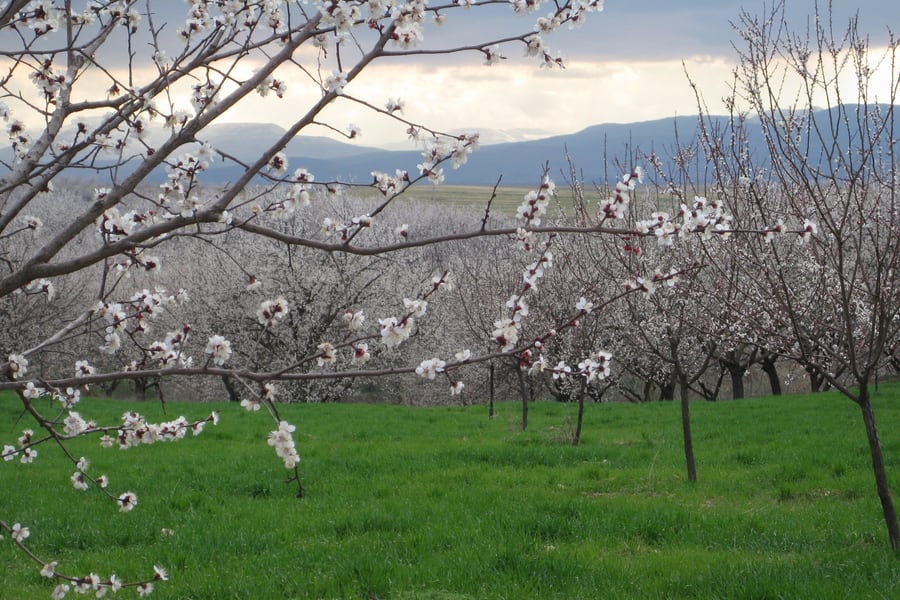
Malatya is the world's centre of apricot growing and drying, and in spring the orchards around the city flower for miles. The name may descend from the Hittite melid, honey. It is the jumping-off point for Nemrut Dağı, and the original city — ancient Melitene — lies out at Battalgazi, beside the Bronze Age mound of Arslantepe.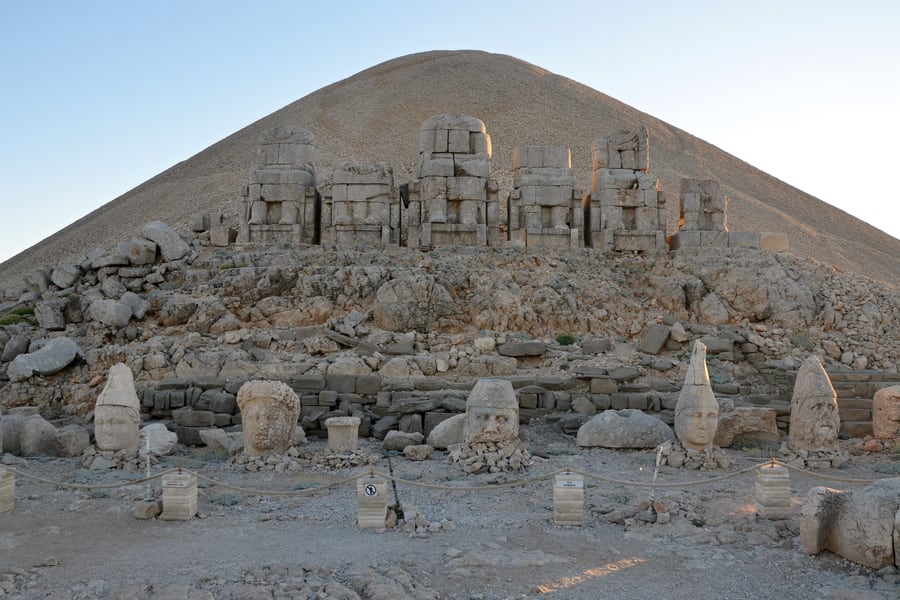 Carole Raddato / Wikimedia Commons · CC BY-SA 2.0 · cropped
Nemrut Dağı
At 2,134 m, a first-century BC king of Commagene built himself a tomb-sanctuary on the summit and ringed it with colossal seated gods. The heads have long since fallen from their bodies and now sit on the terraces at eye level, staring out over Anatolia. It is a long half-day from Malatya, and the whole point is to be up there for sunrise or sunset.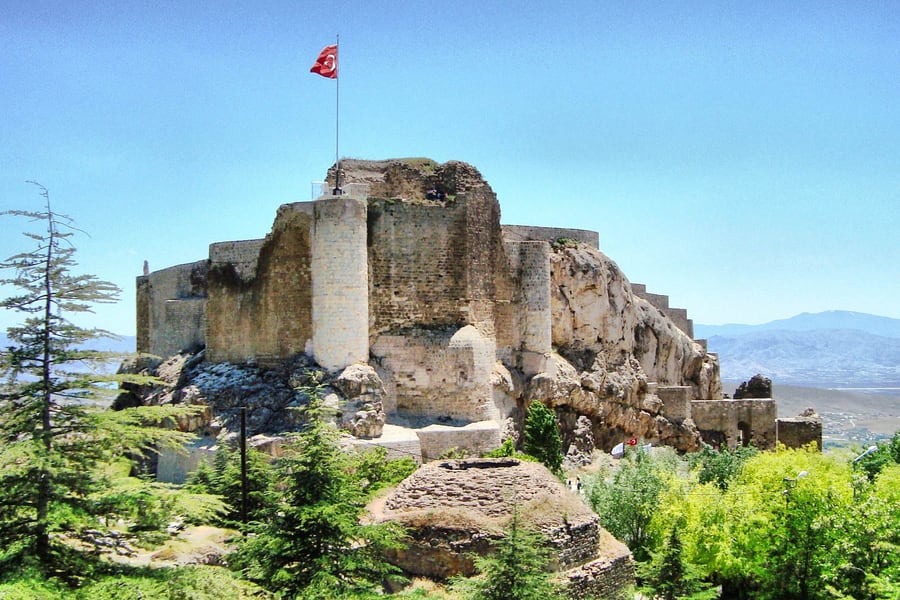 HALUK COMERTEL / Wikimedia Commons · CC BY 3.0 · cropped
Harput
The old town on the crag above Elazığ, where the line begins its run along the water. Harput has been occupied since about 2000 BC; its castle crowns the rock, and below it are old mosques, an Armenian church and a museum. The modern city on the plain grew in the nineteenth century as Mezre and only took the name Elazığ in 1937. The Buzluk ice cave is nearby.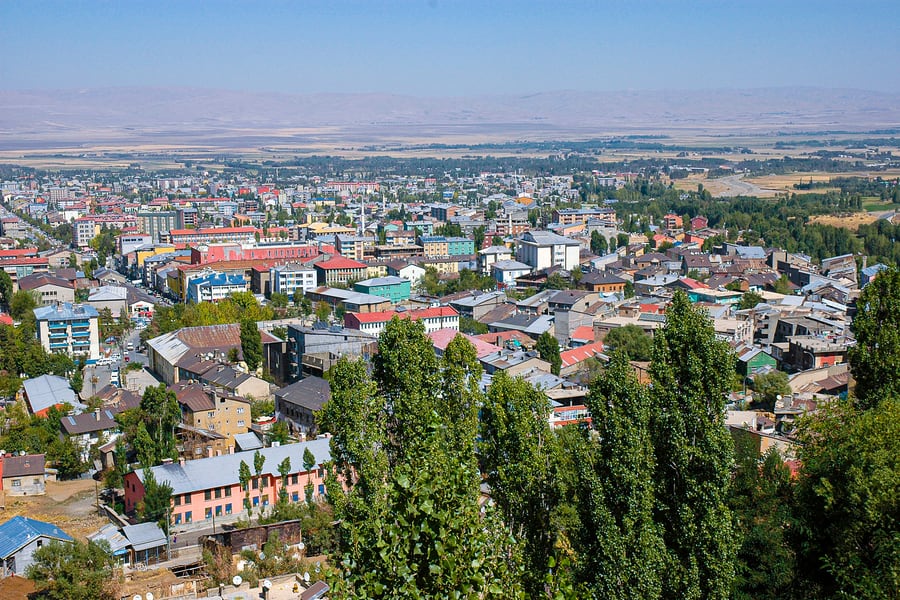 Dick Osseman / Wikimedia Commons · CC BY-SA 4.0 · cropped
Muş
A city of about 120,000 on the edge of one of eastern Anatolia's great upland plains, ringed by mountains and blazing with wildflowers in early summer. Muş is predominantly Kurdish and sees very few foreign visitors. It is exactly the kind of stop where getting off for a night buys you a completely different journey from the one printed in the timetable.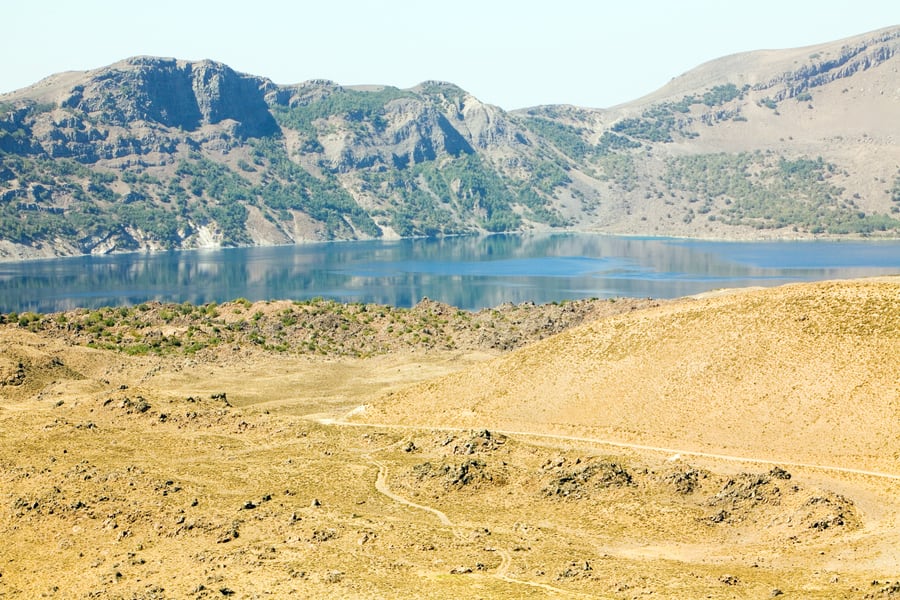 EvgenyGenkin / Wikimedia Commons · CC BY 2.5 · cropped
The Nemrut caldera
Not the mountain of heads — a different Nemrut, and just as startling. This one is a dormant volcano of 2,948 m rising behind Tatvan, its summit collapsed into a caldera holding three crater lakes, one of them warm enough to swim in. Its last eruption was as recently as 1650. Enormous, beautiful, and almost entirely unvisited.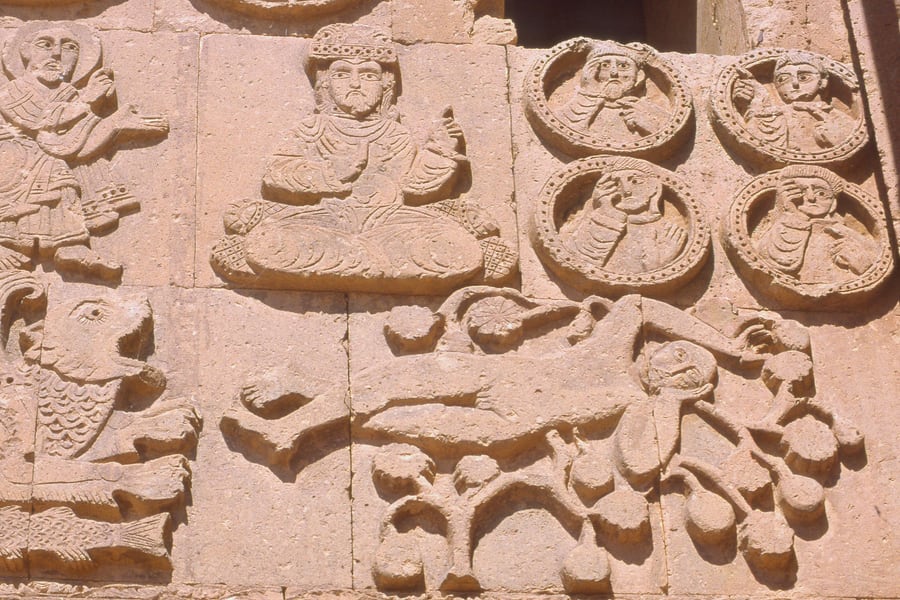 Dick Osseman / Wikimedia Commons · CC BY-SA 4.0 · cropped
The Akdamar reliefs
A short boat ride out to an island of 0.7 km², about 3 km offshore. The tenth-century Church of the Holy Cross stands there almost alone, its outer walls carved in deep relief with Adam and Eve, Jonah and the whale, David and Goliath. It was the seat of an Armenian Catholicosate from 1116 until 1895. Small, weathered, and one of the great buildings of the medieval world.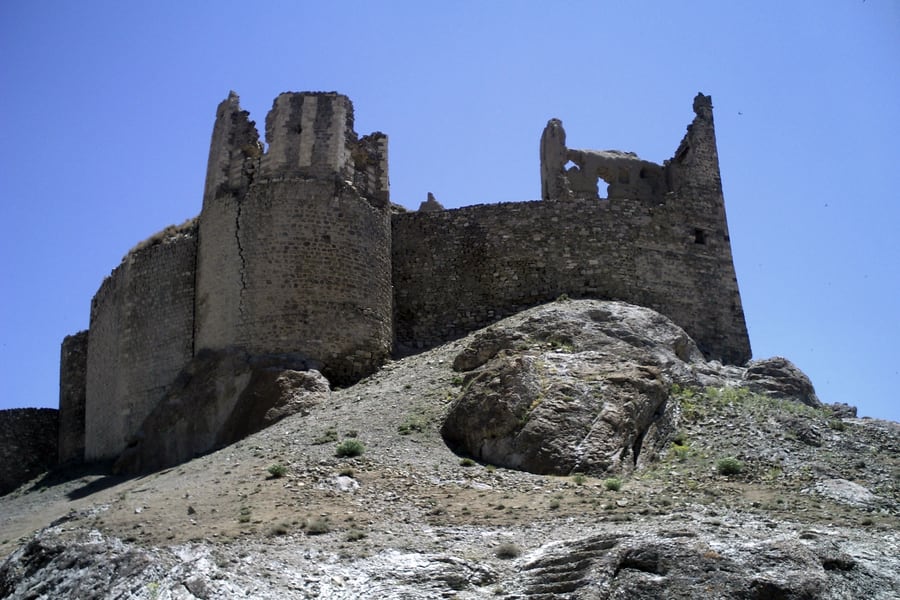 Mevlüt Kılıç / Wikimedia Commons · CC BY-SA 3.0 · cropped
Hoşap Castle
A Kurdish fortress of 1649 on a rock above the Güzelsu valley, thrown up by a local bey on the road towards the Iranian border — round towers, a carved gateway and a long curtain wall running down the ridge. It is well off any tour route and usually empty. Worth the drive from Van if you are carrying on east, and easily combined with the Urartian sites around the lake.Where to Sleep
For the night on board, the choice is the usual Turkish overnight ladder — and at twenty-six hours, spend the extra.
- Sleeping car — a proper compartment and a bed. Cheap by any international standard and the obvious choice for this distance.
- Couchette — berths shared with whoever's travelling; comfortable enough, and the sociable option.
- Pullman seat — a reclining seat for a day and a night. Doable, and what most locals use, but you will feel it.
At the far end, the geography matters more than the hotels: Tatvan is on the opposite shore from Van, and the lake is very large.
- Tatvan — modest, functional accommodation right where the train stops. Fine for a night, and the base for the Nemrut crater above town.
- Van — the better base by some distance, and where you should spend most of your time: a real city with hotels, the castle, the Akdamar boats within reach, and the celebrated Van breakfast to work through in the morning.
- Ankara — business hotels near the station at the start; no reason to linger.
- Malatya — worth a stop if you want Nemrut Dağı and its stone heads, which are a serious detour but a genuinely extraordinary sight.
Timing: aim for May to October. The east is high, and winter here is severe — this is not the winter train its famous sister is. Note too that eastern Turkey is remote; distances between towns are long, buses fill the gaps, and it pays to plan the days after the train as carefully as the train itself.
Questions or corrections
Planning this trip and stuck on something, or spotted a time, fare or detail that has changed? Send us a message about Van Gölü Ekspresi. We read every one, and we update this page when something has changed.