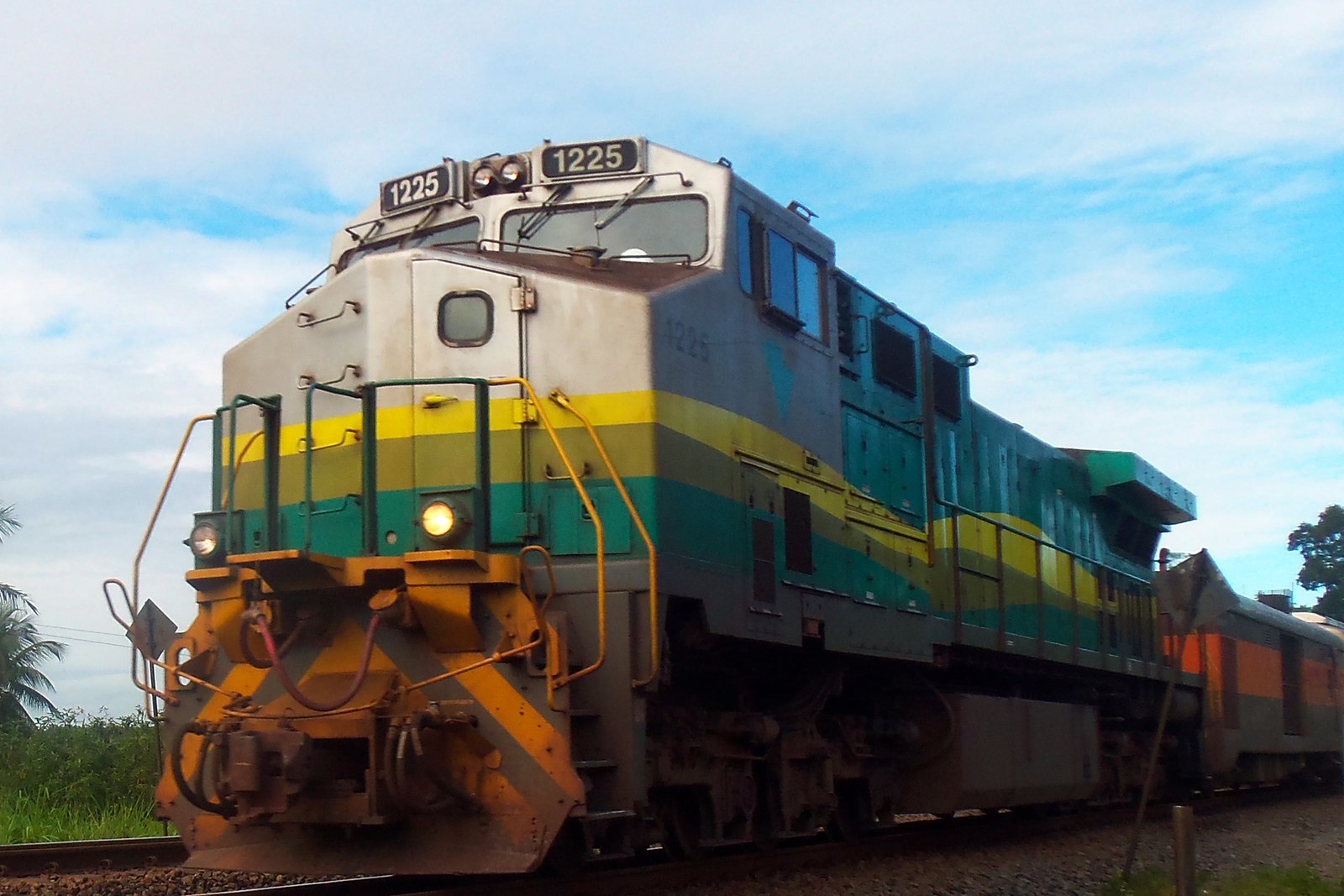
The Vitória a Minas Railway
Denis Rizzoli / Wikimedia Commons · CC BY-SA 3.0 · cropped
- DistanceBelo Horizonte–Vitória · 664 km
- DurationAbout 13½ hours, daily
- Best seasonYear-round
Introduction
Brazil is a country the size of a continent that has almost no passenger trains. A century ago it had a great network; today, of all the long-distance lines, just one daily passenger train survives — and this is it. The Vitória a Minas Railway, run by the mining giant Vale, carries ordinary travellers 664 kilometres across two states, from the mountains of Minas Gerais down to the Atlantic at Vitória, every single day.
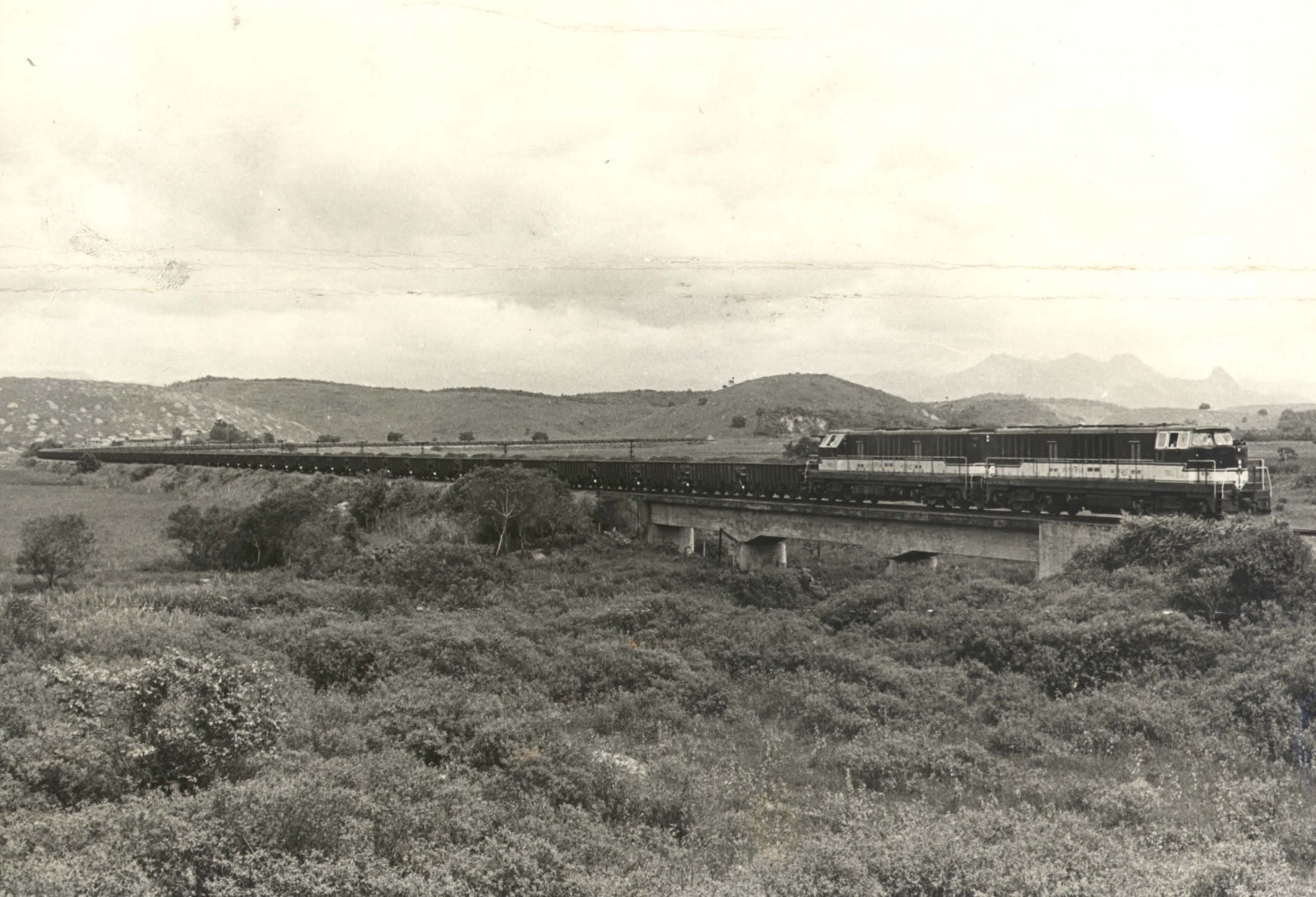
It is not a tourist train. It is a real, everyday service — cheap, sociable, full of families, traders and students crossing between the interior and the coast — running on one of the busiest iron-ore railways on earth. The line was built in the early 20th century to haul ore from the mines of Minas to the sea, and the single passenger train still threads its way between kilometre-long ore trains for the whole thirteen-and-a-half-hour run.
The reward is a slow, ground-level journey through a Brazil most visitors never see: the Rio Doce valley, green hills and granite peaks, small railway towns, and at the end the island city of Vitória with its bays and beaches. You travel in executive or economy class, with a restaurant car for the long day, and step off at dusk having crossed a whole slice of the country the way Brazilians once always did.
The Journey
The train leaves early — seven in the morning, from both ends at once, the two services passing somewhere in the middle of the day. From Belo Horizonte, the planned capital of Minas Gerais cradled in its ring of mountains, the line heads east into the Iron Quadrangle, the mineral-rich hills that are the reason the railway exists, past Nova Era and into the industrial Vale do Aço — the "Steel Valley" — around Ipatinga.
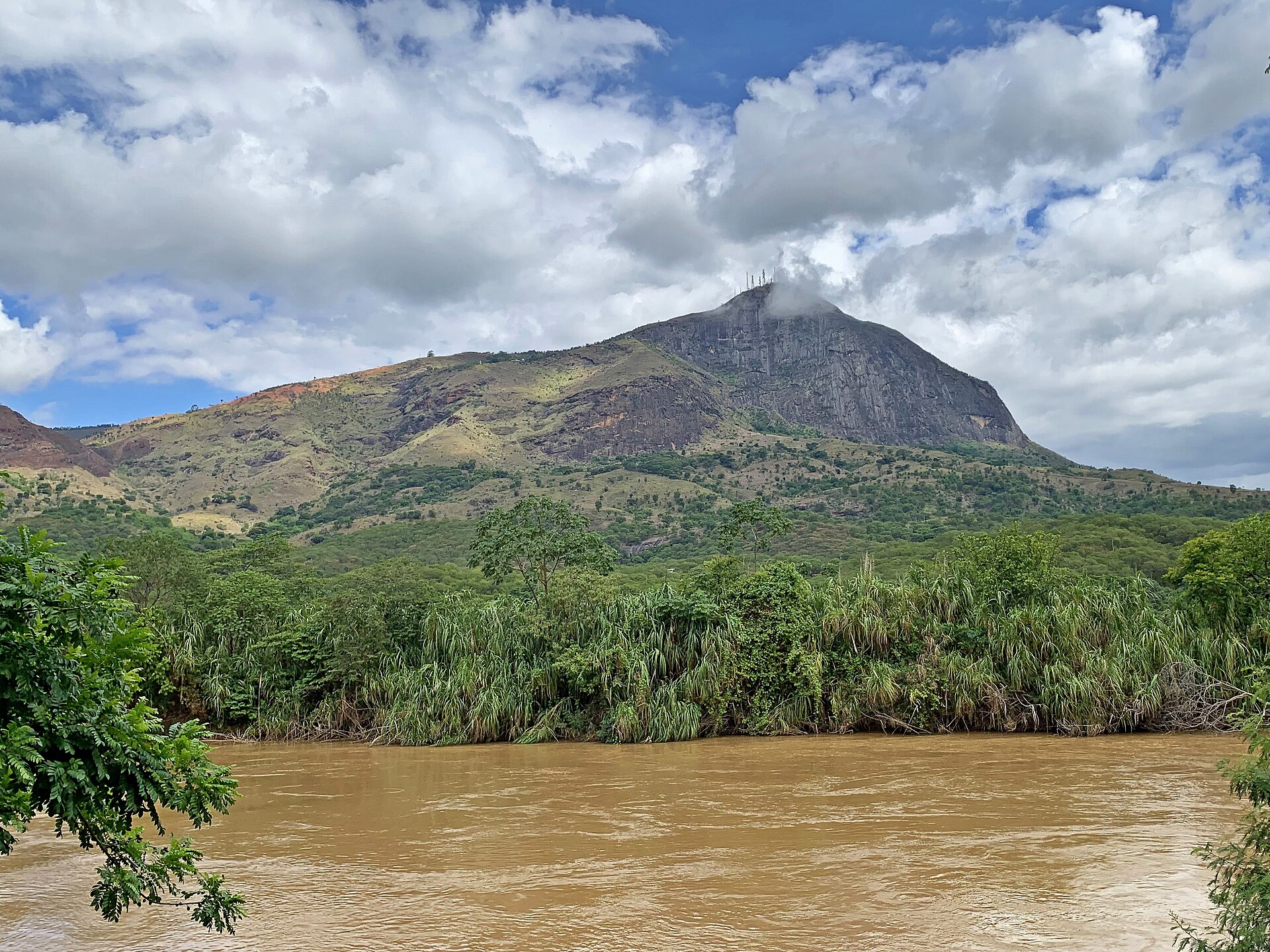
Then the line meets the Rio Doce, the "sweet river," and follows it for hundreds of kilometres through the interior. This is the heart of the journey: green hills and pasture, sugarcane and eucalyptus, the granite tower of the Pico da Ibituruna rising over Governador Valadares, and a string of small railway towns — Baixo Guandu, Colatina — that grew up along the tracks and still live by them. All day the passenger train shares the rails with iron-ore trains so long they take minutes to pass, a reminder of what the line is really for.
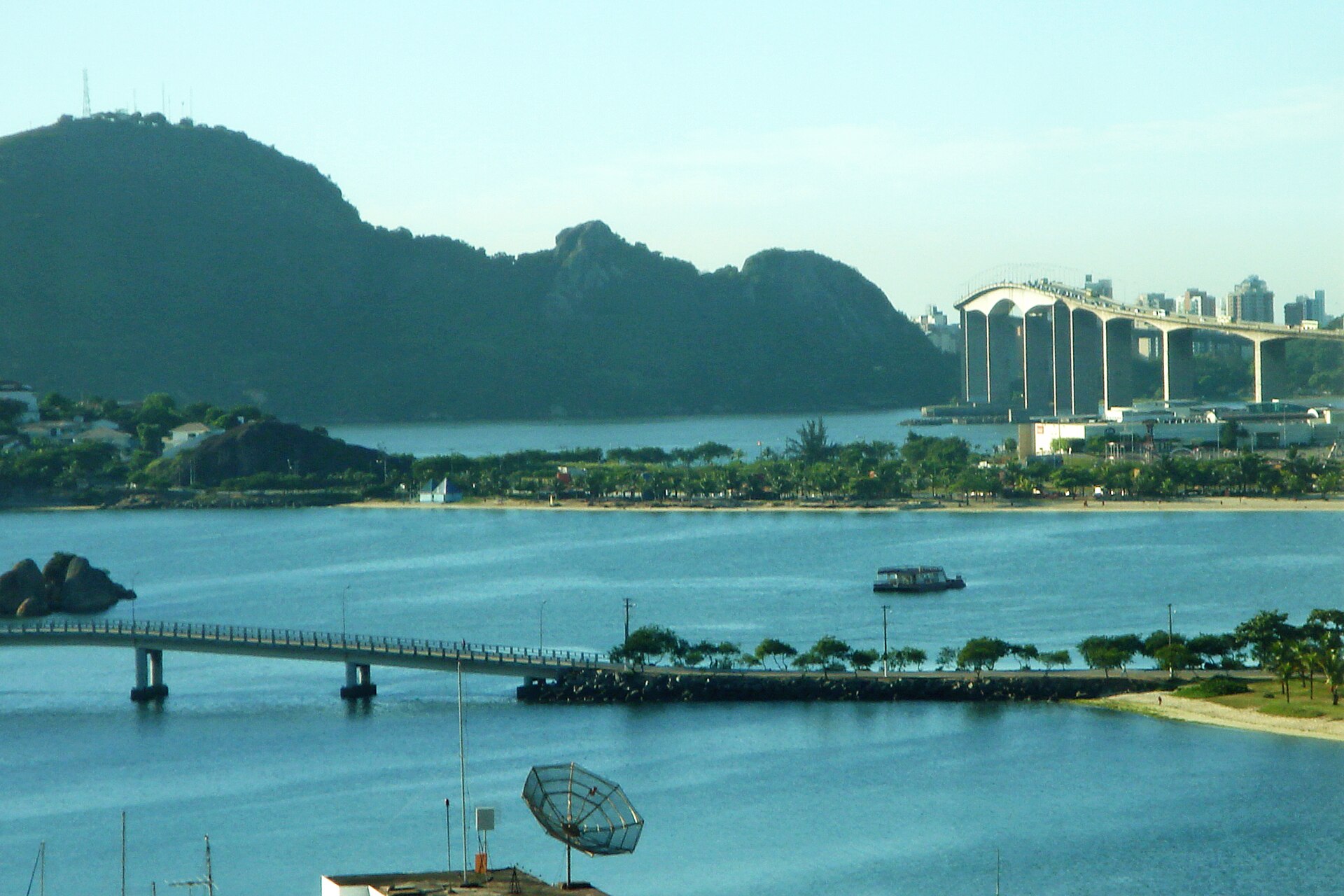
As the afternoon lengthens the country softens and warms toward the coast, and by evening the train rolls into Cariacica, in Greater Vitória — the ocean city of Espírito Santo, its bays spanned by the great Terceira Ponte. It is around half past eight at night; you have crossed the width of two states, at ground level, in a single day.
A few things worth knowing about the run:
- It runs on the Estrada de Ferro Vitória a Minas (EFVM), Vale's iron-ore railway — 664 km, metre gauge.
- It is the only daily long-distance passenger train in Brazil, leaving 07:00 from each end and arriving about 20:30.
- There are executive and economy classes, plus restaurant and snack-bar cars.
- New for 2026, a seasonal night "Trem de Férias" (Holiday Train) also runs the line in January, July and December.
It is slower than the bus and far slower than flying — and that, as ever, is the point: this is the last chance to cross a great swathe of Brazil the way the country once travelled.
Along the route
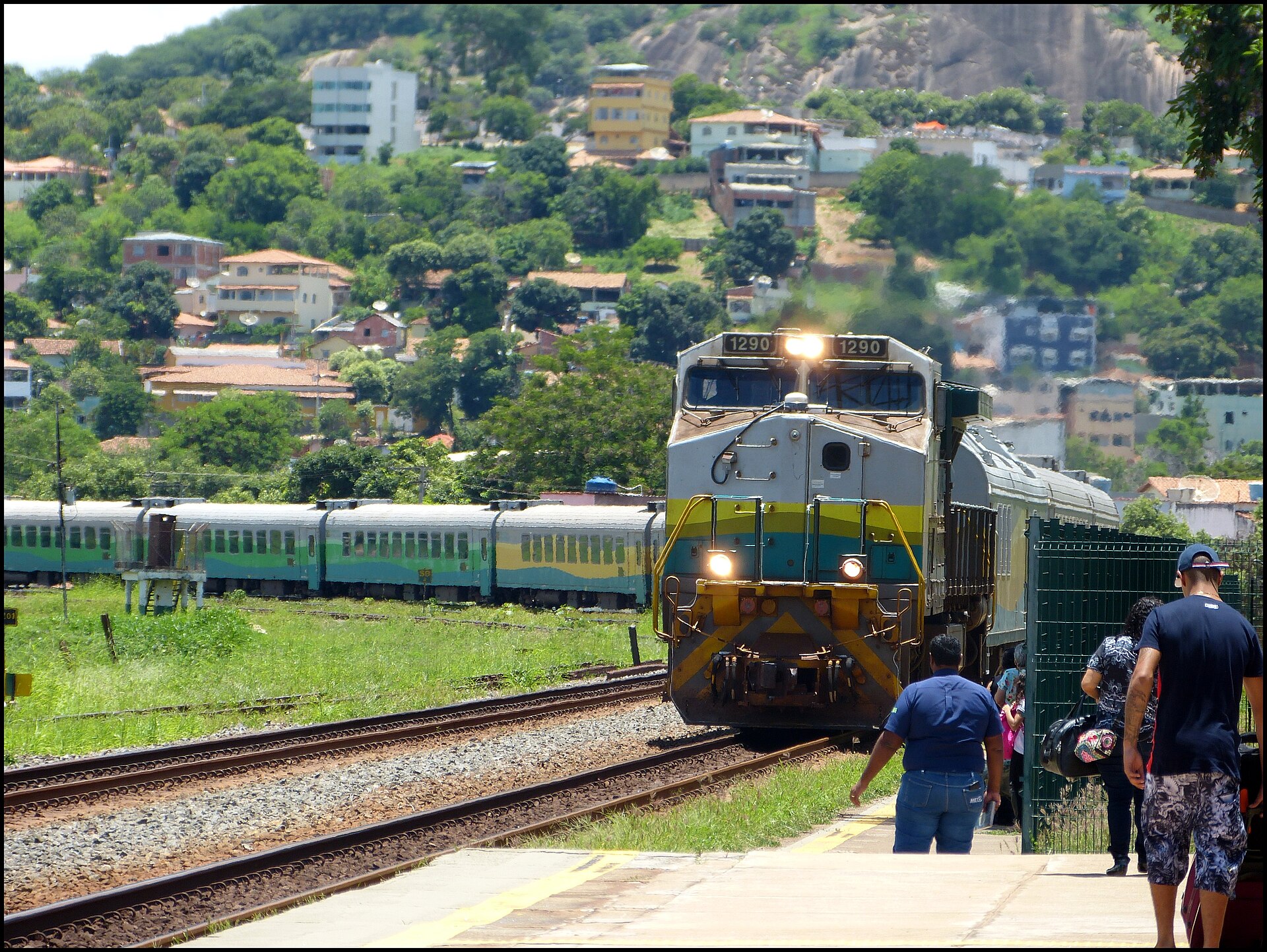
HVL / Wikimedia Commons · CC BY 4.0Brazil's last daily passenger train
Brazil once had a great passenger network; almost all of it is gone. The Vitória a Minas is the only long-distance passenger train still running daily — an everyday service people use to cross between two states, not a tourist special.HVL / Wikimedia Commons · CC BY 4.0Down the Rio Doce valley
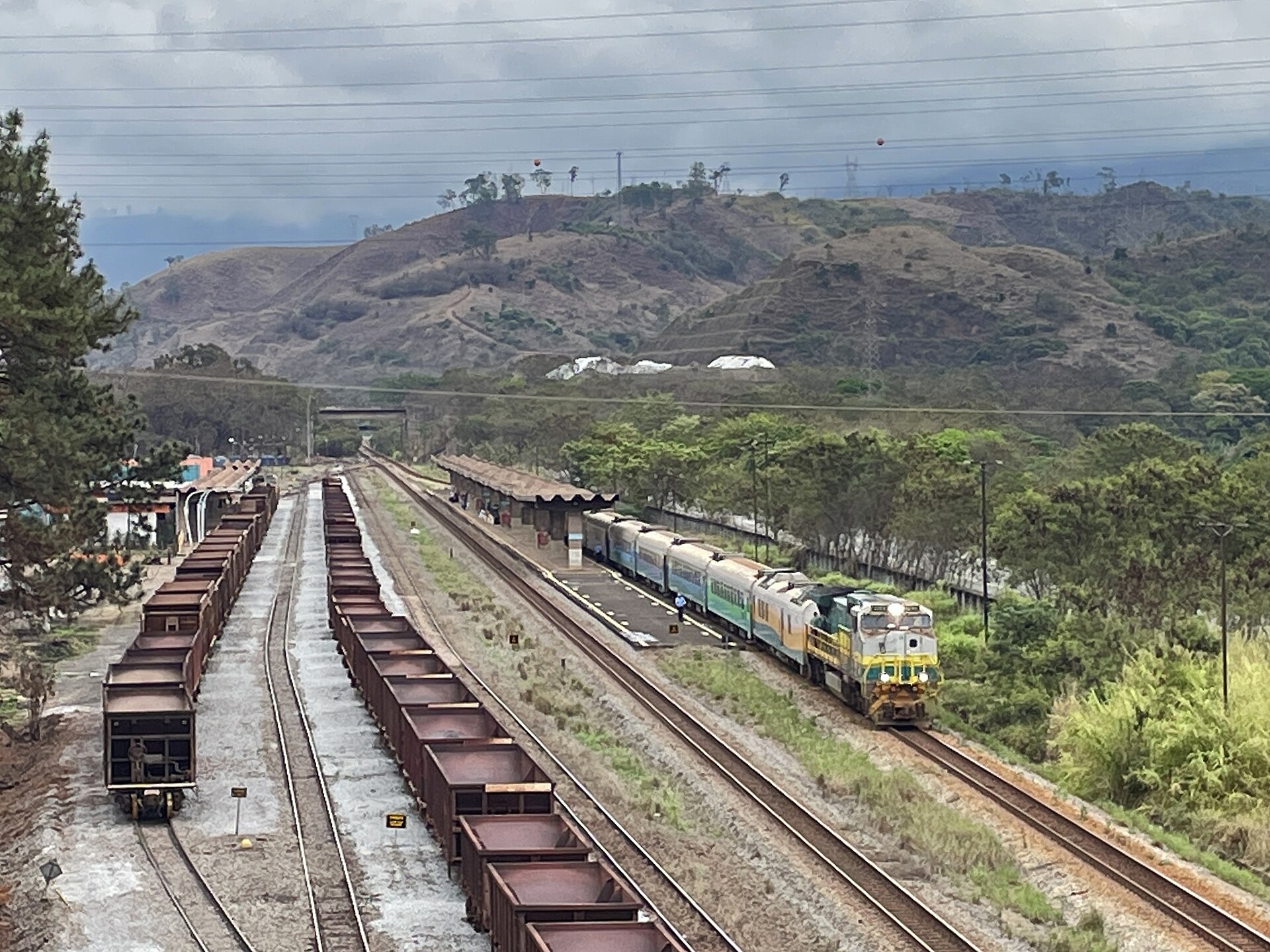
For most of its 664 kilometres the line follows the Rio Doce, the "sweet river," through the interior of Minas Gerais and Espírito Santo — a landscape of green hills, sugarcane and pasture, granite peaks like the Pico da Ibituruna at Governador Valadares, and small railway towns that grew up along the tracks.Wikimedia Commons · Public domainThe iron road to the sea
The railway exists for iron, built to carry ore from the Iron Quadrangle of Minas Gerais to the port of Vitória. It is one of the busiest heavy-haul freight lines on earth, and the passenger train threads its way between kilometre-long ore trains.A bit of history
Culture & experiences along the way
Pedro Nardi / Wikimedia Commons · CC BY 4.0Executive or economy
The train has two classes: executive cars, with wider, reserved seats (57 to a carriage), and economy (75 seats), plus restaurant and snack-bar cars for the long day. For a 13½-hour ride, executive is worth the modest extra — but either way it is a sociable, unhurried Brazilian train, cheap by any measure.Mariordo (Mario Roberto Durán Ortiz) / Wikimedia Commons · CC BY-SA 4.0Vitória, the ocean city
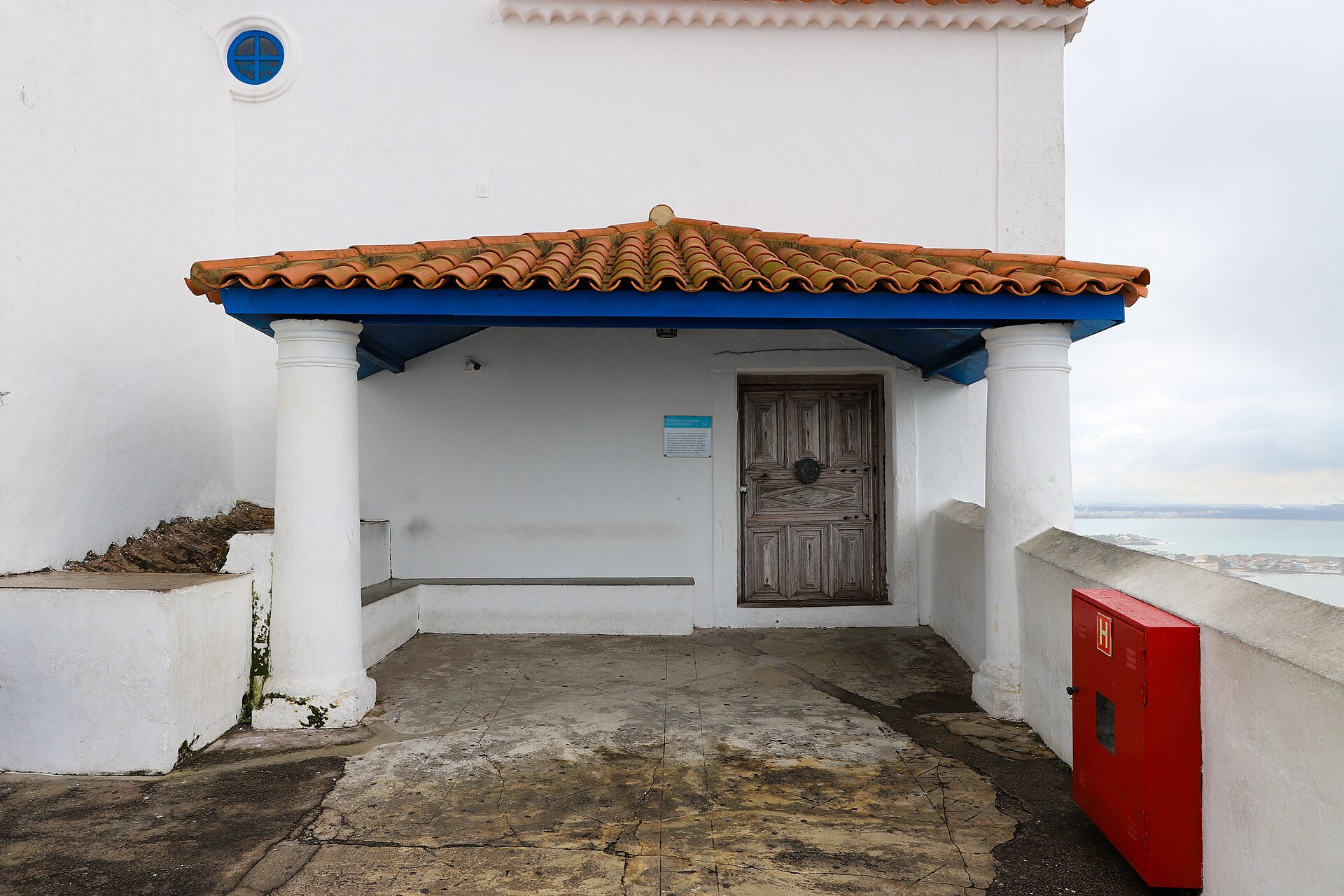
At the eastern end is Vitória, capital of Espírito Santo — an island city of beaches and bays, spanned by the great Terceira Ponte, with the 16th-century Convento da Penha on its crag above Vila Velha and fresh seafood along the shore. It is the point where the iron road finally reaches the Atlantic.Tet / Wikimedia Commons · CC0Belo Horizonte and Minas
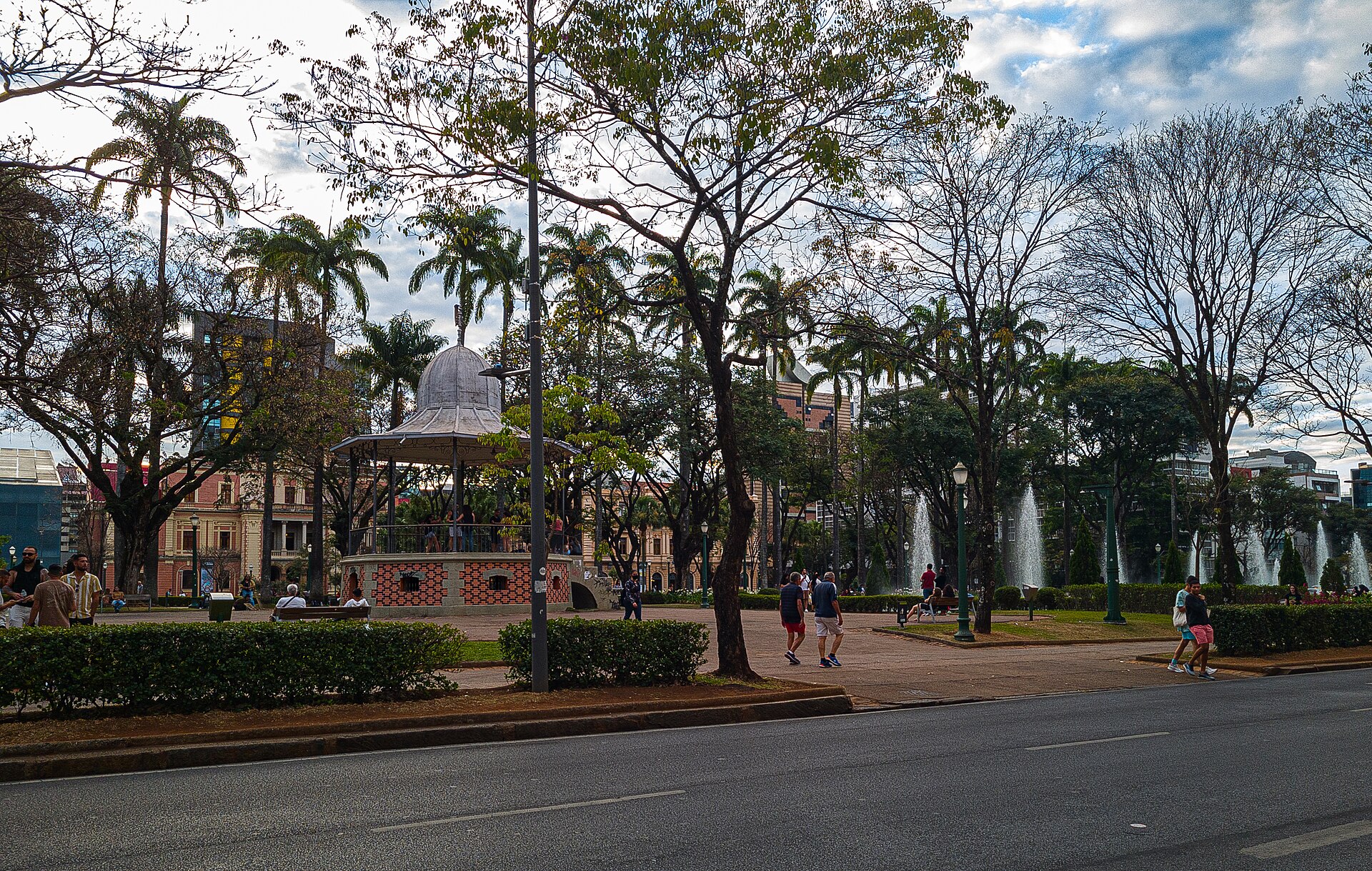
At the western end, Belo Horizonte is Brazil's first planned city, capital of Minas Gerais — a gateway to the baroque gold towns of Ouro Preto and Tiradentes, the modernist lakeside district of Pampulha by Oscar Niemeyer, and the region's famous farmhouse cooking. Minas is Brazil at its most traditional.Timetables
The Vitória a Minas is refreshingly simple: one train a day in each direction, leaving both ends at the same early hour and passing in the middle of the day.
Real times (2026 — confirm before travelling):
| Direction | Depart | Arrive |
|---|---|---|
| Belo Horizonte → Vitória (Cariacica) | 07:00 | ~20:30 |
| Vitória (Cariacica) → Belo Horizonte | 07:00 | ~20:30 |
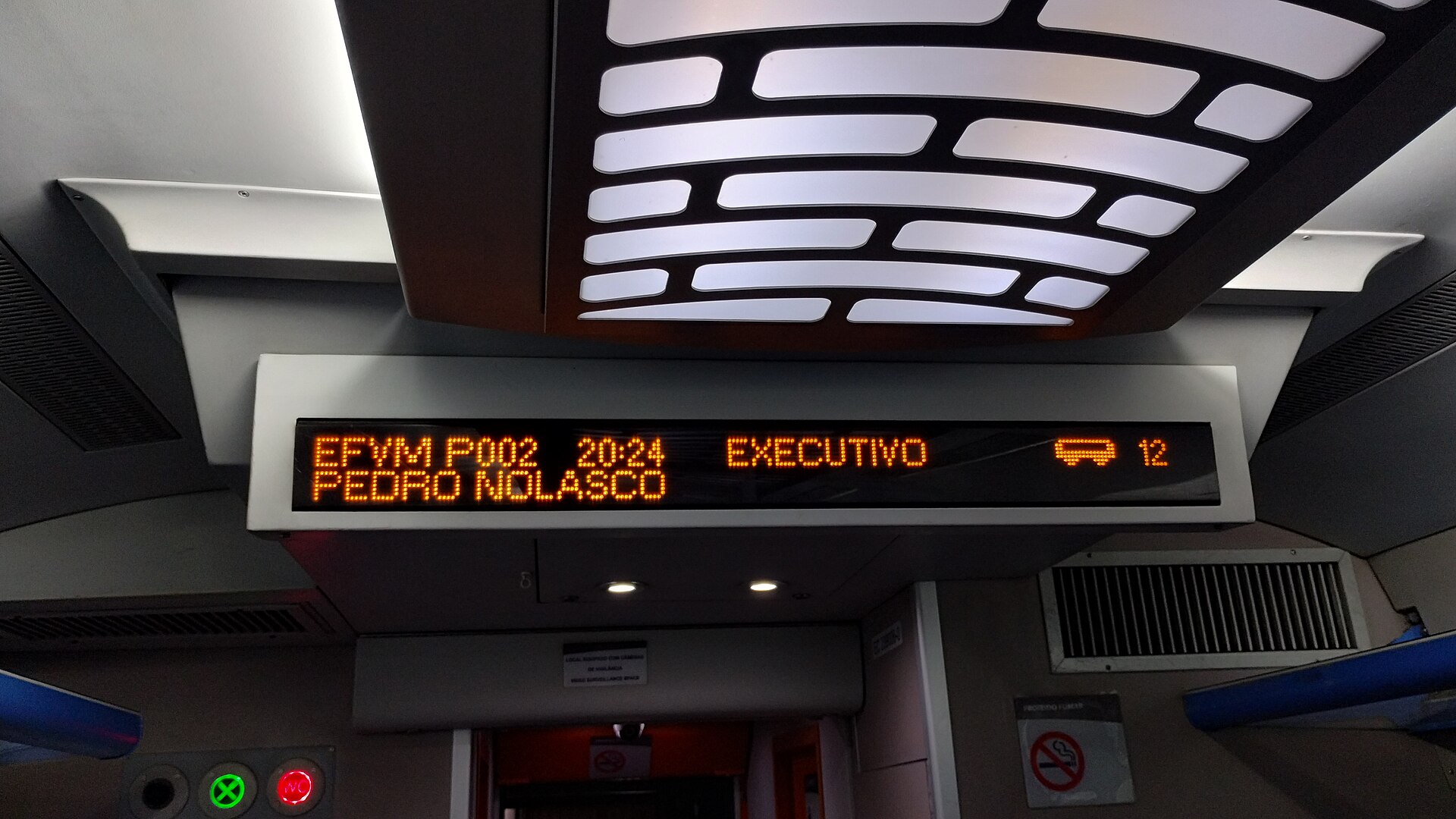
The full 664 km takes about 13½ hours, calling at many towns along the Rio Doce valley — among them Nova Era, Ipatinga, Governador Valadares, Baixo Guandu and Colatina. It runs daily, year-round. The Vitória-end terminus is Pedro Nolasco, in Cariacica in Greater Vitória.
New for 2026, Vale also runs a seasonal night service, the Trem de Férias ("Holiday Train"), on the same line in January, July and December.
Good to know:
- Book ahead in the school-holiday peaks (January, July) — the executive cars in particular fill up. Tickets are sold online at Vale's site and at the stations.
- It's an all-day journey, so bring what you need; there is a restaurant car and a snack bar, but the day is long.
- Sit on the river side through the middle of the run for the Rio Doce and the Pico da Ibituruna.
- You share the line with ore trains — occasional waits for heavy freight are part of the experience.
Times as of the 2026 timetable. Confirm current schedules with the operator — see the Tickets section below.
Tickets
The train is run by Vale, the mining company that owns the railway, and tickets are inexpensive and easy to buy:
- Online, at vale.com/passenger-train (opens in a new tab) (the ticketing site, vale.com/tremdepassageiros, is open 24/7).
- At the station, from the ticket offices at Belo Horizonte, Cariacica (Vitória) and the main stops along the line, during opening hours.
There are two classes:
- Executive — wider, reserved seats, 57 to a carriage, air-conditioned; well worth the small premium on a 13½-hour ride.
- Economy — 75 seats a carriage, still comfortable and remarkably cheap.
Both share the restaurant and snack-bar cars. Fares are low by any standard — this is a genuine public service, not a luxury product — but the executive cars sell out in the January and July holidays, so book ahead then.
For the seasonal Trem de Férias (the night "Holiday Train," running January, July and December 2026), tickets are sold through the same Vale ticketing. Because fares and schedules can change, we don't quote a figure here — check the current prices and times on the operator's site above.
Book your tickets
Vale passenger train · Belo Horizonte ⇄ Vitória
Executive & economy, daily
Brazil's only daily long-distance passenger train, the full 664 km between Belo Horizonte and Vitória in about 13½ hours, in executive or economy class. Run by Vale; book online or at the station.
Book Tickets (opens in a new tab, on Vale)via ValeTrem de Férias · the Holiday Train
Seasonal night service (2026)
New for 2026, Vale runs a night "Holiday Train" on the same line in January, July and December — a different way to ride the route, sleeping as the ore country slides by. Booked through the same Vale ticketing.
Book Tickets (opens in a new tab, on Vale)via ValeRail Passes
No rail pass covers the Vitória–Minas Railway. Interrail and Eurail are European schemes, and Brazil is not among the 33 countries in Interrail's list of covered railway companies. Vale sells each journey as a ticket, online or at the station, at low fares.
Checked October 2026 against Interrail's list of railway companies (opens in a new tab).
Places to Visit
The line joins two capitals and the valley between them, and each end opens onto a very different Brazil — baroque hill towns and modernist Belo Horizonte at one end, an island city and the Atlantic at the other.
Minas Gerais is the country's culinary heartland, and Belo Horizonte is worth an evening for its bars and farmhouse cooking alone. The gold towns are the real prize, and there are more of them than any one trip can hold: besides Ouro Preto, Mariana and Congonhas, Tiradentes is the loveliest of the smaller ones, an hour or two further south. In the middle of the line, Governador Valadares is the historic centre of Brazil's gemstone trade as well as its free-flight capital.
At the eastern end, Vitória is a compact ocean city of bays, bridges and beaches. The great Terceira Ponte arcs across to Vila Velha and the Convento da Penha, a monastery founded in the 1550s on a crag with huge views. The seafood is superb — this is the home of moqueca capixaba, cooked in a clay pot.
 clarissapacheco / Wikimedia Commons · CC BY 2.0 · cropped
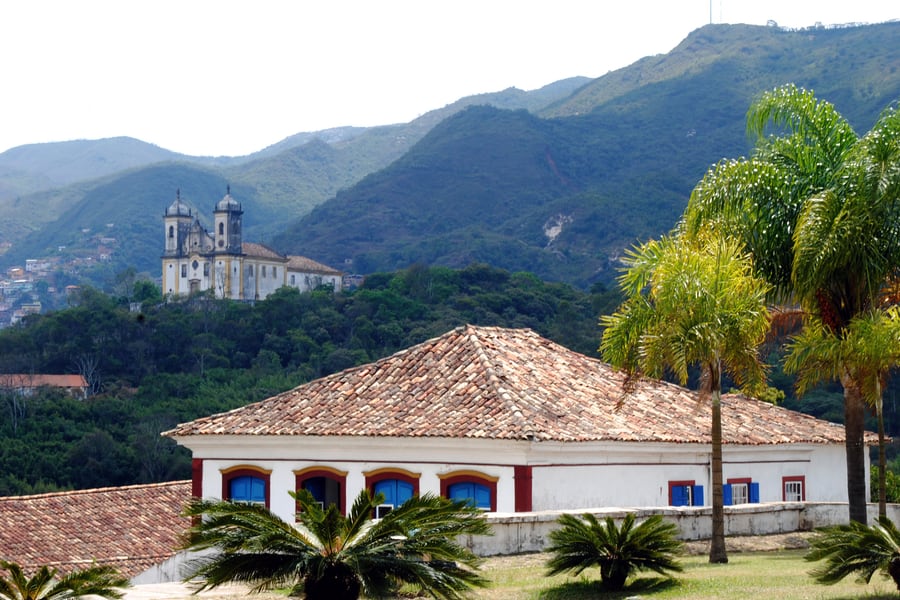
Ouro Preto
Founded as Vila Rica in 1711 and renamed Ouro Preto in 1823, this was the richest town in the Portuguese empire and it still looks it — baroque churches stacked up the sides of a steep valley at around 1,116 m, with cobbles that punish the ankles. UNESCO-listed in 1980, the first Brazilian site inscribed. The Escola de Minas, founded in 1876, holds a mineralogy museum worth an hour of anyone's time.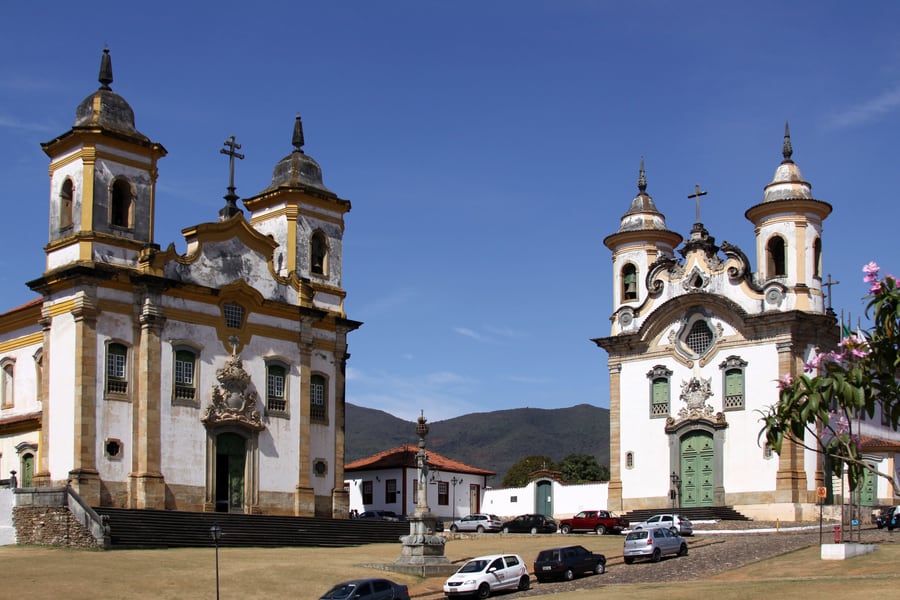 Halley Pacheco de Oliveira / Wikimedia Commons · CC BY-SA 4.0 · cropped
Mariana
Older than Ouro Preto — bandeirantes camped here around 16 July 1696 — and the de facto capital of the captaincy from 1711 until it lost the title to Vila Rica in 1720. On the Praça Minas Gerais two baroque churches face each other across the square, São Francisco de Assis (1763–94) and Nossa Senhora do Carmo (begun 1784). The pillory between them is a 1970 replacement; the 1750 original was pulled down in 1870.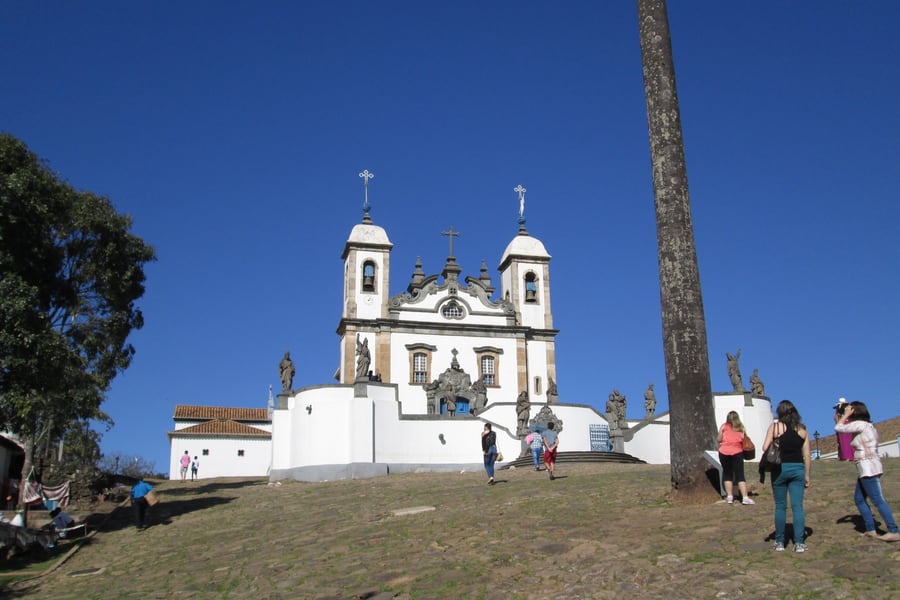 Ana Pismel / Wikimedia Commons · CC BY 2.0 · cropped
Congonhas
The Sanctuary of Bom Jesus de Matosinhos, and the reason to make the detour: twelve Old Testament prophets carved in soapstone by Aleijadinho between 1800 and 1805, ranged along the terrace above the steps, each holding a scroll. He carved the Stations of the Cross in the chapels below as well, working through the illness that cost him his fingers. UNESCO-listed in 1985, and unlike much of Minas it is rarely crowded.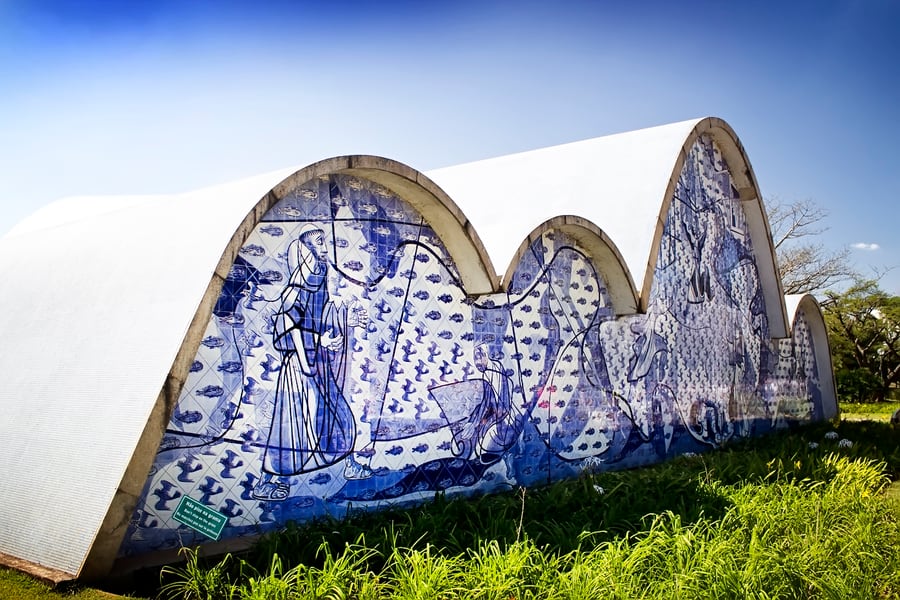 Antonio Thomás Koenigkam Oliveira / Wikimedia Commons · CC BY 2.0 · cropped
Pampulha
The lakeside district in Belo Horizonte where Oscar Niemeyer made his name, working with engineer Joaquim Cardozo and landscape architect Roberto Burle Marx. The Church of São Francisco de Assis, inaugurated in 1943, is a run of parabolic concrete vaults skinned in blue azulejos by Cândido Portinari. The archdiocese thought it looked like a shed and barred it from worship for fourteen years. UNESCO-listed in July 2016.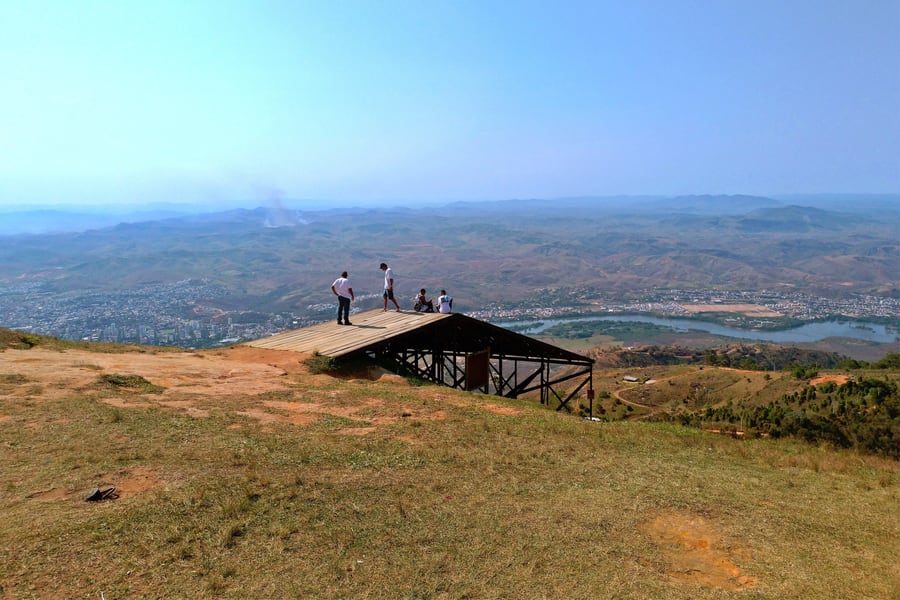 HVL / Wikimedia Commons · CC BY 4.0 · cropped
Pico da Ibituruna
The granite dome above Governador Valadares, halfway along the line: 1,123 m, and nearly 900 m of that straight up from the Rio Doce, which is what generates the thermals that made it famous. The Hang Gliding World Championship came here in 1989 and the Paragliding World Cup in 1994. The name is Tupi for "black mountain". You can drive to the launch ramp; the view down the valley is worth it even if you never leave the ground.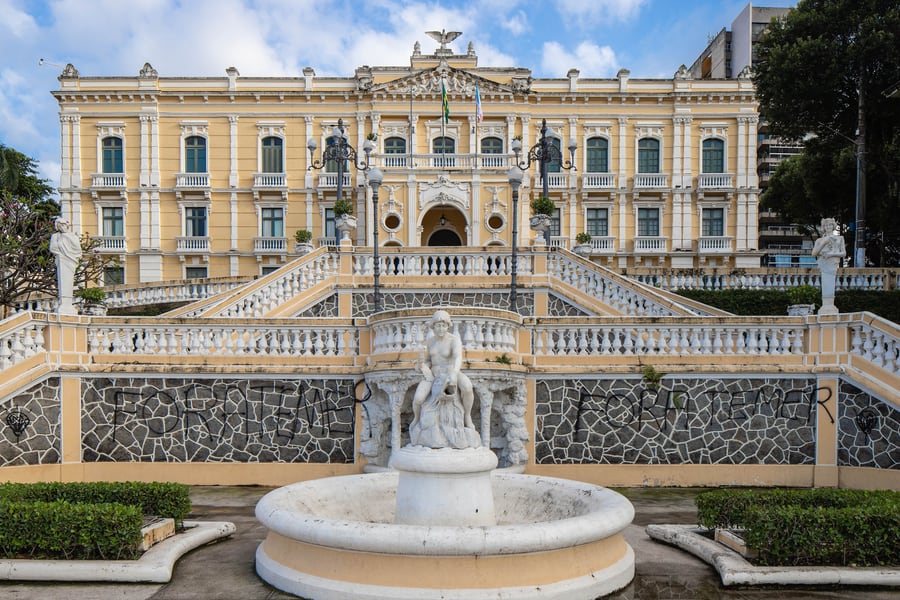 Paul R. Burley / Wikimedia Commons · CC BY-SA 4.0 · cropped
Palácio Anchieta
The seat of Espírito Santo's government, and the oldest thing in the city: the Jesuits under Fr. Afonso Brás began building here in 1551, with the church of São Tiago finished early in 1552. José de Anchieta, the Jesuit missionary the palace is named for, was buried in front of its altar; his remains went to Bahia in 1610, and a relic of him is kept here still. The yellow neoclassical front you see today is much later — French engineer Justin Norbert rebuilt it between 1908 and 1912.Where to Sleep
Because the train is an all-day journey that leaves at seven in the morning and arrives after dark, you sleep at the ends, not on the train (unless you take the seasonal night Holiday Train) — so the real question is where to base yourself before and after.
In Belo Horizonte, the pleasant areas to stay are the leafy Savassi and Lourdes districts and the central Centro, all with a good range of hotels and within reach of the station for the early departure. BH is a city that lives in its bars and restaurants, so an evening here — over a plate of Minas cooking and a cold beer — is part of the trip. It also makes the base for a side-trip to the gold towns.
In Vitória and Vila Velha, stay along the seafront — the beach neighbourhoods of Praia do Canto in Vitória and the long strand at Vila Velha, near the Terceira Ponte and the Convento da Penha, are the obvious choices, with sea-view hotels and easy access to the beaches and the seafood. It is a relaxed, warm-water city to arrive in after a long day on the rails.
Along the valley, Governador Valadares has practical hotels if you want to break the journey partway and climb the Pico da Ibituruna.
As with all our journeys, we keep this to the shape of the trip rather than specific bookings: sleep in Belo Horizonte for the mountains and the gold towns, or on the coast at Vitória for the beaches and the seafood, and let the train carry you between the two.
Questions or corrections
Planning this trip and stuck on something, or spotted a time, fare or detail that has changed? Send us a message about The Vitória a Minas Railway. We read every one, and we update this page when something has changed.