Weka Pass Railway
TrainboyMBH / Wikimedia Commons · CC BY-SA 4.0 · cropped
- Distance12.8 km each way
- Duration2h return
- Best seasonSelected Sundays · September to April
Introduction
In the 1870s the colony argued about how to get a railway north out of Christchurch. One camp wanted the coast; the other wanted an inland route through a gap in the limestone called the Weka Pass, and for a while the inland camp won. Navvies moved the clay and the rock by hand, cut the embankments, walled them with limestone and opened the line to Waikari on 6 April 1882 — as the first stage of the South Island Main Trunk. It never became that. Two reports had already favoured the coast, the railhead stalled at Culverden for decades, and in the 1920s the main line was rerouted along the sea. What had been built as a trunk route spent the rest of its life as the Waiau Branch, carrying sheep, lime and logs until it closed on 15 January 1978.
A union ban on lifting the rails left the track in place, and that delay is the reason there is anything to ride. A public meeting at Waipara in 1982 produced a society; the society was registered in March 1983, bought two English Electric diesels and leased the line, and ran its first passengers on 4 June 1984. It has been repairing, relaying and extending ever since, and every person you meet on the train is a volunteer.
What you ride now is 12.8 kilometres of that main line that never was, from Glenmark Station at Waipara to Waikari. It begins on the flat between vineyards, then climbs for most of an hour on a grade that reaches 1 in 47, through cuttings whose walls hold seashells and fossils, past two weathered outcrops called Frog Rock and Seal Rock, and over the summit at Timpendean into a village of fewer than three hundred people. Two hours, there and back, on selected Sundays.
The Journey
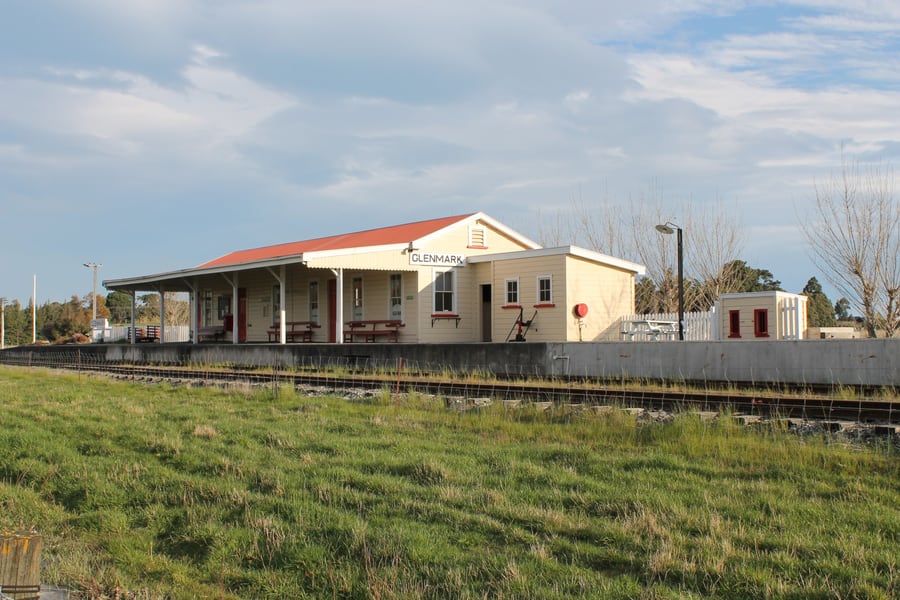
Glenmark Station is not where the maps put Waipara's station. KiwiRail still has one of those, on Ferguson Avenue, and no passenger train has stopped at it for years. The heritage railway's platform is on Glenmark Drive, under the verandah of a wooden building that used to stand at Mina, forty kilometres up the Main North Line; when Mina closed in 1980 the society bought the station, took it apart in 1986 and put it back together here. The ticket office opens about half past ten on a running day. There is a shop that sells ice creams and railway books, and a yard behind it with a three-road workshop, a carriage shed and a turntable.
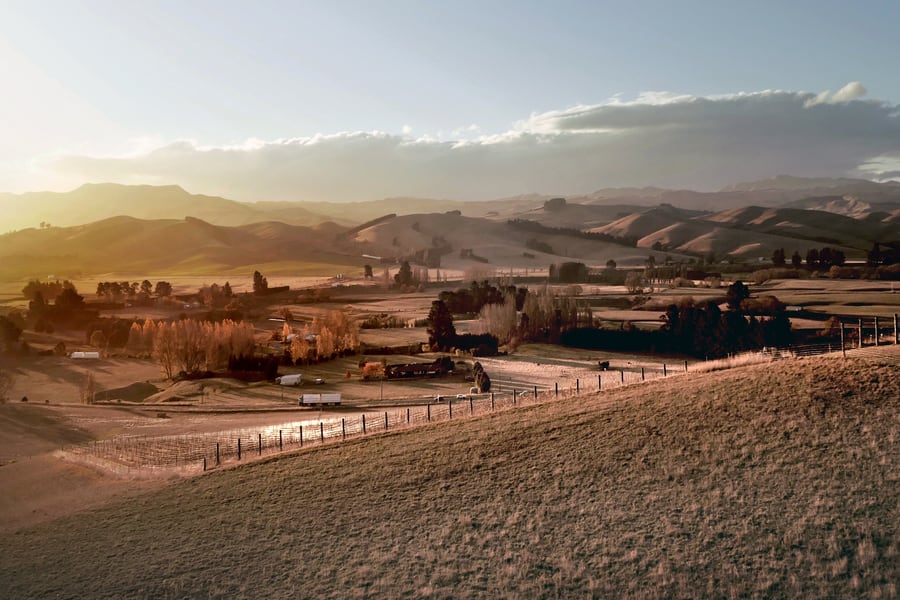
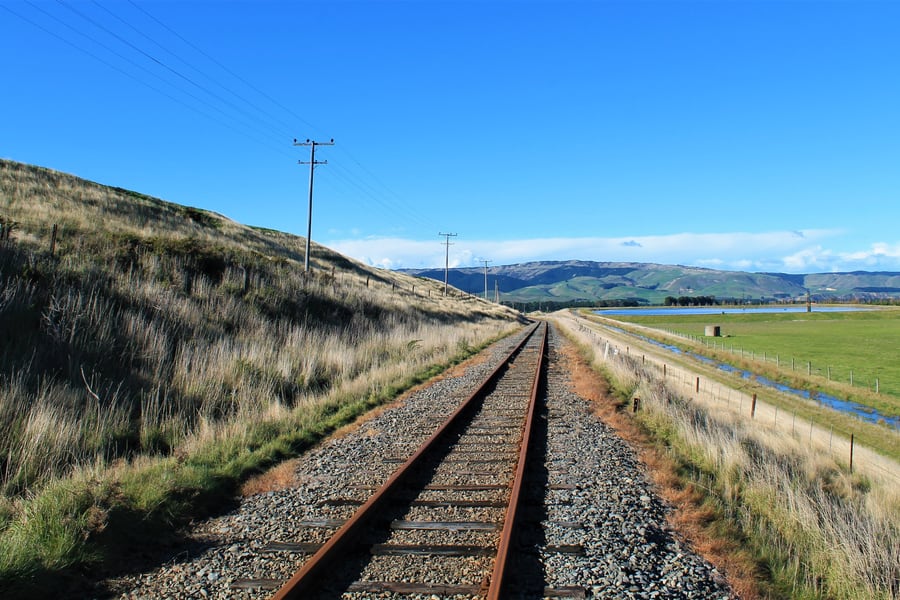
The first three kilometres are flat and straight, across the alluvial fan on the floor of the Waipara valley. Vineyards on both sides, an olive grove, the Teviotdale hills behind the train. Then the track tilts — 1 in 55 at first — and passes an irrigation reservoir at McCaskeys Dam. Beyond it the view opens up the Weka Creek valley, and the line begins to work: an 1880s gangers' hut standing where the branch left it, a pair of old trolleys, the lower slopes of Mount Donald, and the first serious limestone cutting.
Frog Rock, and the ruling grade
The railway crosses private farmland, so twice the train stops at a gate that a volunteer keeper opens and closes. Above Gate No. 2 the line strings together five sweeping left-hand curves on high embankments, walled on both sides by limestone, and it is here that the gradient reaches 1 in 47 — the steepest on the line, and close to what the whole climb feels like. This is the only place in New Zealand where a steam locomotive regularly works a long, sustained bank, and it is the reason the crews describe the line as one that has to be driven rather than merely handled.
About nine kilometres out come the two rocks. Frog Rock squats beside a corrugated-iron hut with its name painted on the gable; Seal Rock is close by. Both are limestone weathered into shapes that once belonged to a seabed — the cutting walls on either side are full of shells and fossils, and the whole district was under the ocean before it was pushed up. A little further on the train passes the site of the Weka Pass viaduct, a structure the Railways Department simply buried under fill in the 1930s rather than maintain.
Timpendean, Waikari, and back
The summit is at Timpendean, with two protected limestone faces standing out on the right. Then the only bridge on the entire twelve kilometres — a very small one — and Waikari, about 240 metres above the sea. The station here is another salvaged building: the 1939 station from Hundalee in the Conway Valley, one of the standard Troup-designed Class A stations, bought and moved in 1991 and opened for its first train in 1999, when the railway finally got the whole way through after sixteen years of relaying.
A morning train lies over for 45 minutes, an afternoon train for 25. That is long enough for a picnic on the platform, or a walk down to the pub and the two cafés on the highway. The railway has a turntable at each end — Waikari's since 2002, Glenmark's since 2009 — so a steam locomotive can be turned rather than run home tender-first. On the way back down there is a photo stop out on the line, where anyone who wants to can get off and watch the train pass. Then the gradient does the work, and the Waipara flats come back into view.
Along the route
 MatthewMorison / Wikimedia Commons · CC BY-SA 4.0 · cropped
The flat, and McCaskeys Dam
Three kilometres of dead-straight track across the floor of the Waipara valley, past vineyards and an olive grove, with the Teviotdale hills behind the train. Then the gradient starts at 1 in 55, an irrigation reservoir slides by on the left, and the climbing begins.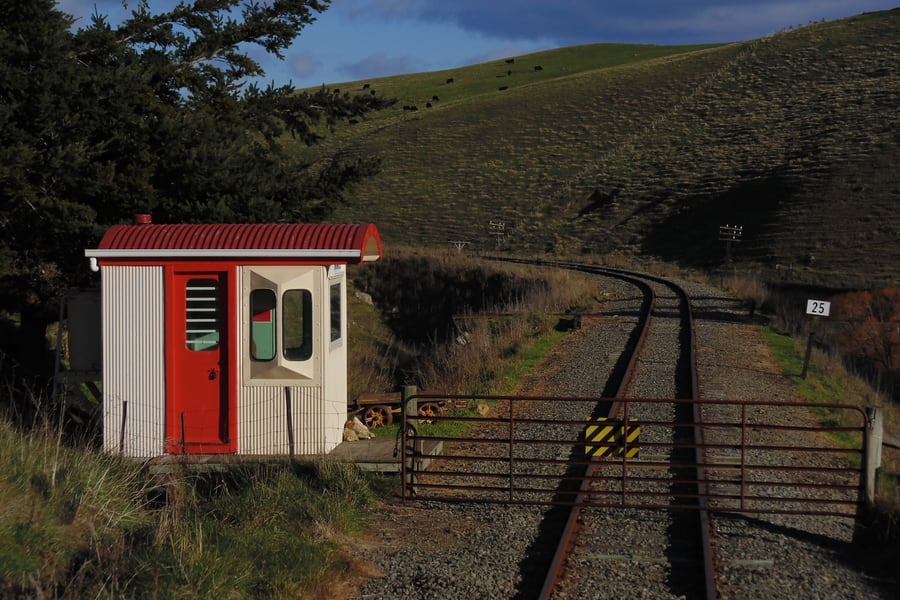 TrainboyMBH / Wikimedia Commons · CC BY-SA 4.0 · cropped
Gate No. 2, and a railway through a farm
The line runs across private farmland, so two of its crossings are manned gates with a volunteer keeper and a hut apiece. Between them the train passes an 1880s gangers' hut and a couple of abandoned trolleys, left where the branch closed.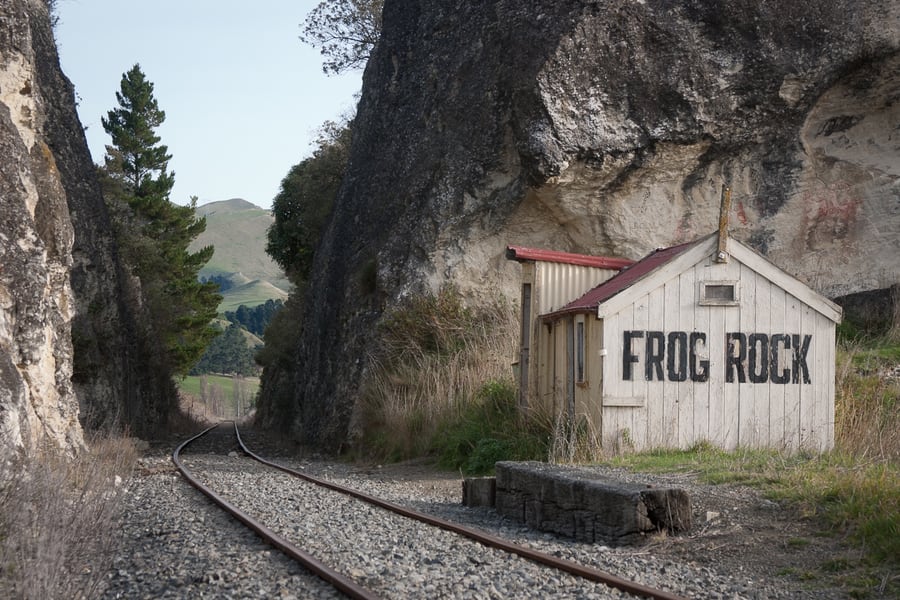 alstewartnz / Wikimedia Commons · CC BY-SA 2.0 · cropped
Frog Rock and Seal Rock
Five sweeping curves on high embankments, walled on both sides by limestone, deliver the train to the two weathered outcrops that give the Pass its postcard. They come up about nine kilometres out. There are seashells and fossils in the cutting faces.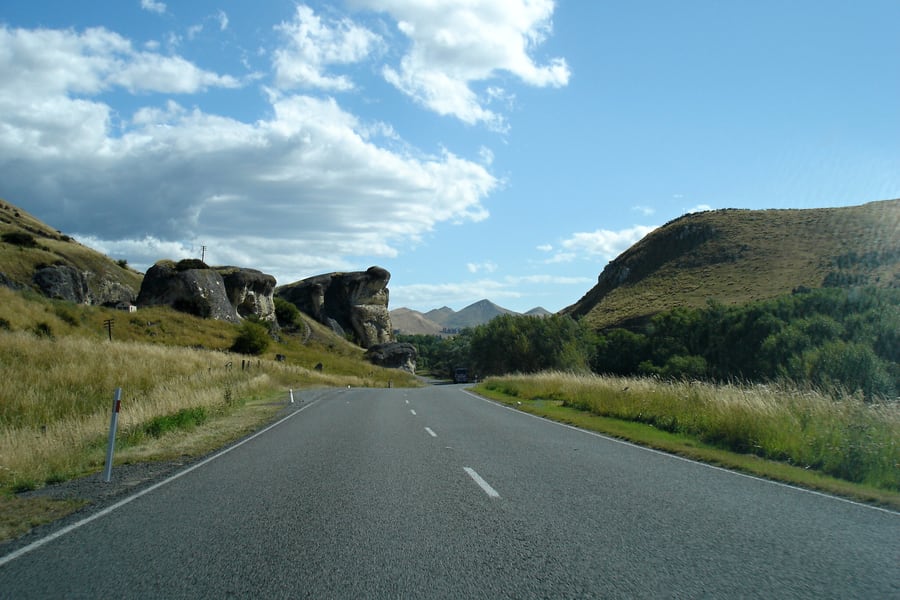 Pavel Špindler / Wikimedia Commons · CC BY 3.0 · cropped
Timpendean, and down to Waikari
Past two protected limestone faces on the right, over the only bridge on the whole twelve kilometres, and into Waikari at about 240 metres. Morning trains lie over for 45 minutes here, afternoon trains for 25.A bit of history
Culture & experiences along the way
 TrainboyMBH / Wikimedia Commons · CC BY-SA 4.0 · cropped
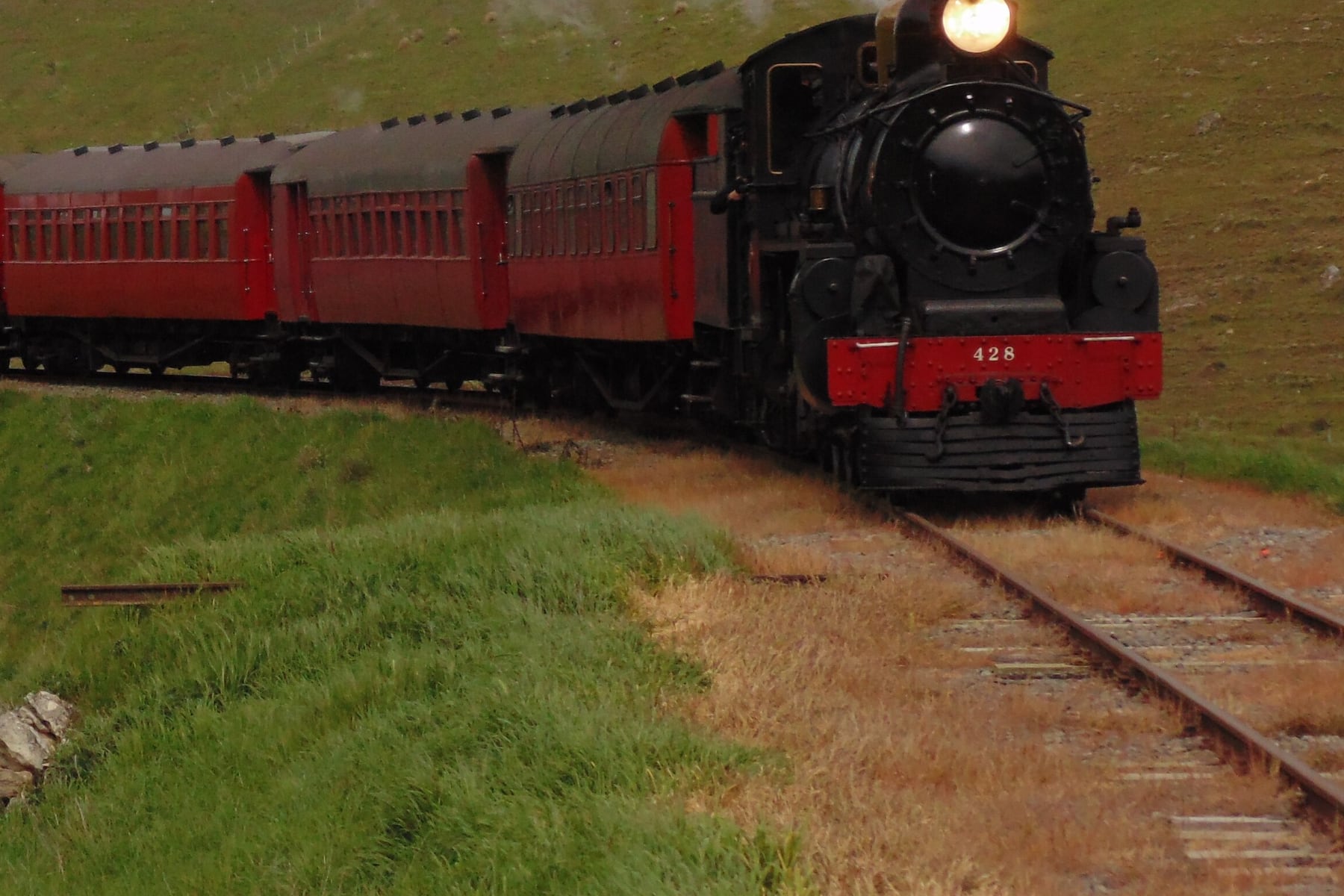
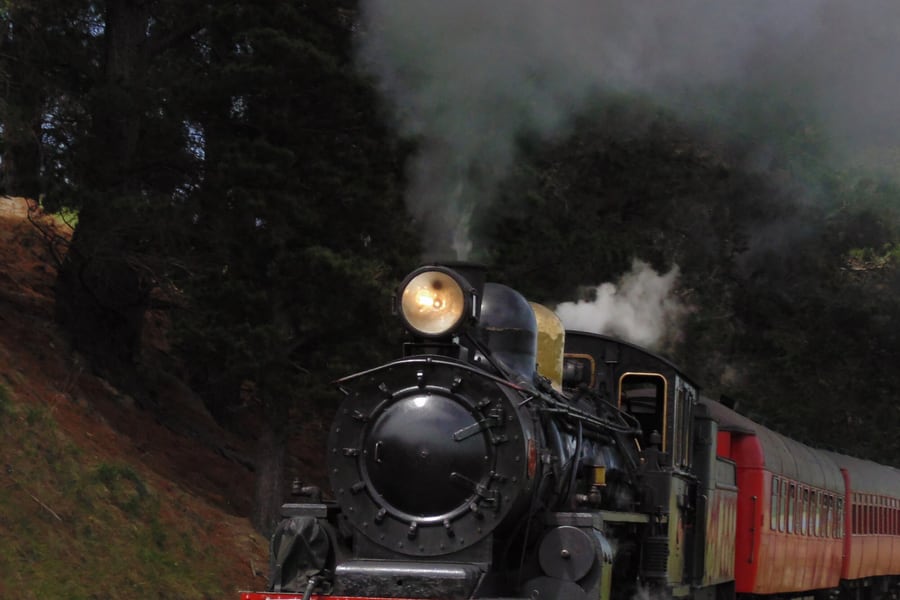
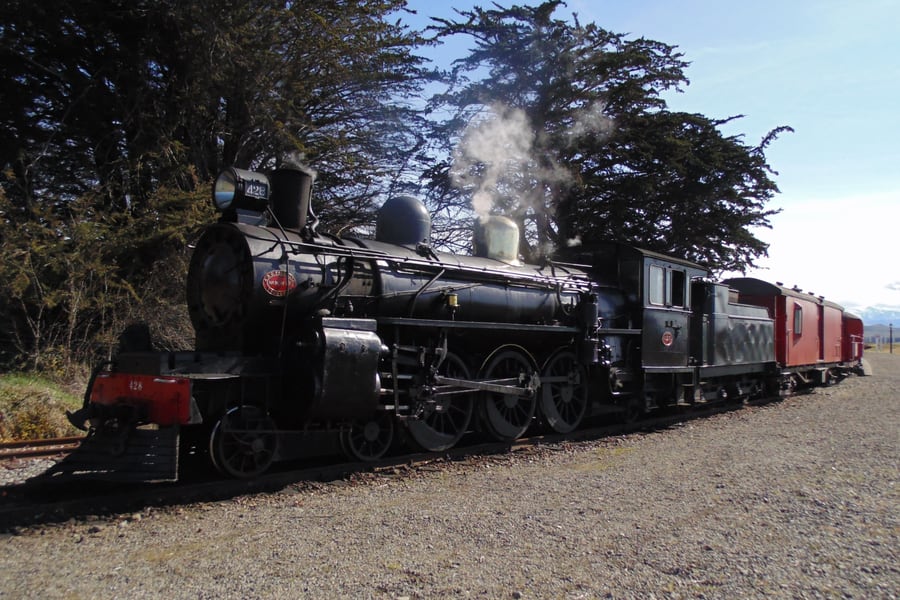
A 428, a Pacific of 1909
The railway's steam locomotive is an NZR A class 4-6-2, works number 31 from A & G Price of Thames, built in 1909 and preserved since 1973. It came here in 1983 and returned to traffic in September 1993 after a ten-year restoration. Weka Pass is the only place in New Zealand where steam regularly works a long, sustained bank.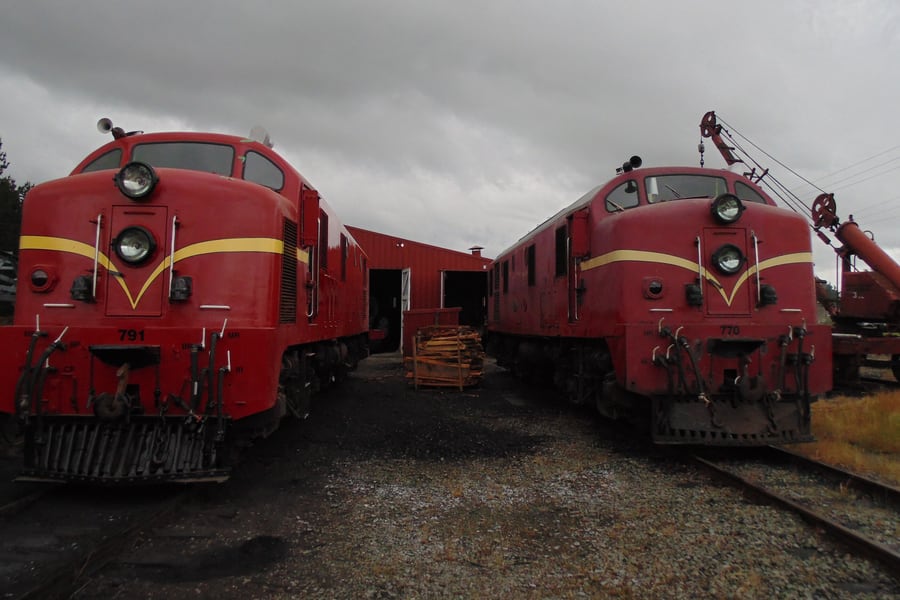 TrainboyMBH / Wikimedia Commons · CC BY-SA 4.0 · cropped
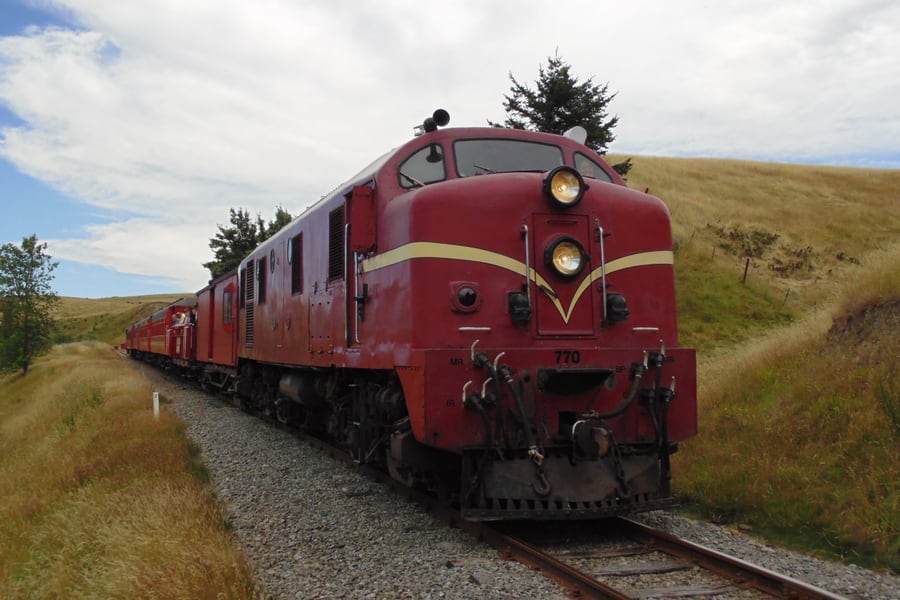
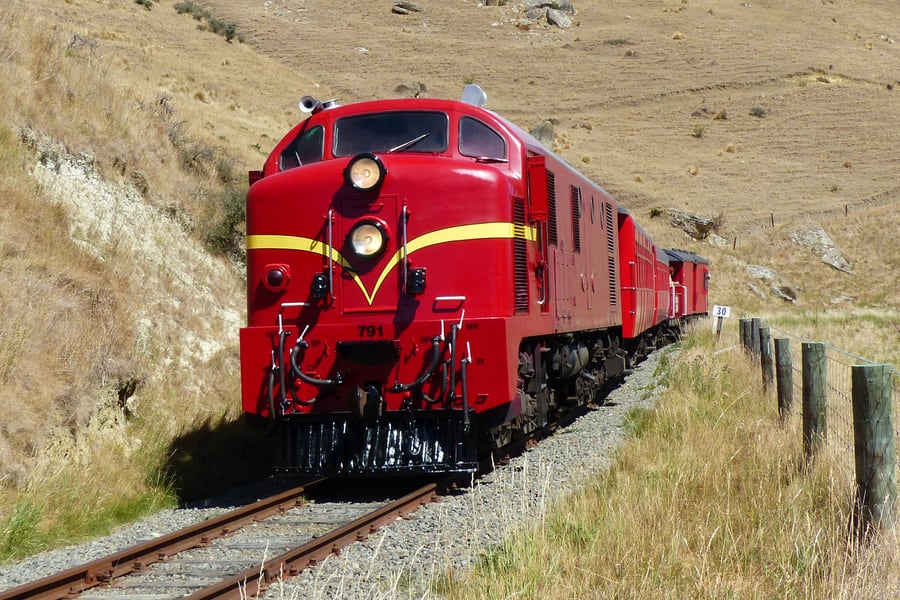
Two English Electric survivors
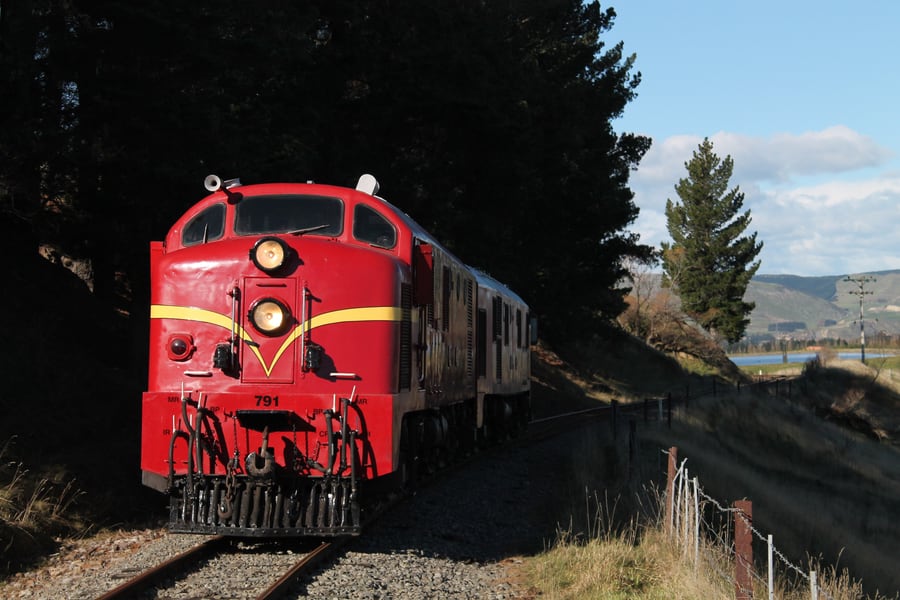
DG 770 and DG 791 were bought in 1983, before the society owned any track. 770 spent its working life on the Cabbage Train, the overnight Christchurch–Picton mixed that ran South Island produce to the ferry, and was rebuilt after a tunnel accident in the Dashwood Pass in 1966. Both still haul the public trains.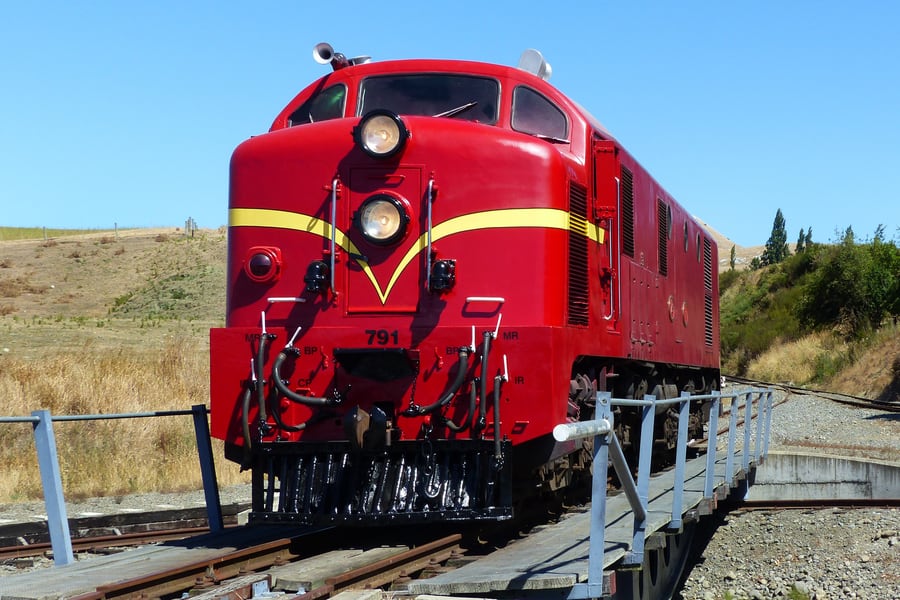 Bernard Spragg. NZ / Wikimedia Commons · CC0 · cropped
Two turntables out of a scrap heap
Waikari's 55-foot turntable was found in a scrap pile in Christchurch's Middleton Yard, bought in the mid-1990s and installed in 2002. Glenmark's 62-footer took fourteen months to restore and reopened in 2009 — which is why the locomotive faces the right way both ways. The pair won a national heritage award in 2010.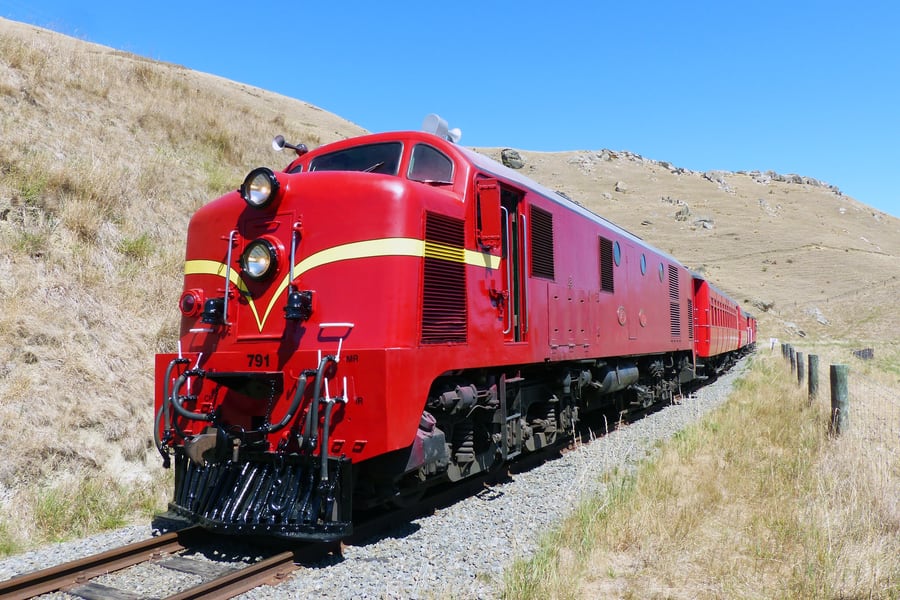 Bernard Spragg. NZ / Wikimedia Commons · CC0 · cropped
A film set that happens to be a railway
Twelve kilometres of period track with no overhead wires and no modern buildings has been rented out for four decades. Dry tussock stands in for Africa or Arizona, green paddocks for rural England. Television first came in 1984, for the mini-series Hanlon; bank commercials and children's programmes have followed.Timetables
Two trains, on selected Sundays. The board does not change: a morning departure at 11:30 and an afternoon one at 14:00, both returning to Glenmark Station at Waipara.
| Departs Glenmark | At Waikari | Back at Glenmark | Layover |
|---|---|---|---|
| 11:30 | 12:10 | 13:35 | 45 minutes |
| 14:00 | 14:40 | 15:45 | 25 minutes |
The operator publishes the start and end of each train and the length of the layover, not the arrival at Waikari; the middle column is those two figures worked back to a forty-minute run each way.
The running days. These are the dates loaded in the railway's booking system when we swept it in September 2026:
| Month | Sundays |
|---|---|
| 2026 | 20 Sep · 4 and 18 Oct · 15 Nov |
| December 2026 | 6, 13 and 20 — sold as the Christmas Train, same two departures |
| January 2027 | 3, 10, 17 and 24 — every Sunday of the school holidays |
| February–April 2027 | 7 and 21 Feb · 7 and 21 Mar · 4 and 18 Apr |
Two evening specials sit outside that pattern. The Night Train runs on Saturday 17 October 2026, 17:15 to 20:45, and the Summer Twilight Train on Saturday 9 January 2027, 18:00 to 21:20 — both three hours and twenty minutes, and both worth it for the same reason: on the lower slopes of Mount Donald the lights of Christchurch are visible sixty kilometres away, and once the train is into the first limestone cutting they vanish and the sky takes over.
Good to know:
- Book, and book before the day. Online sales close one hour before departure; after that the railway's own message is to enquire at Glenmark Station, which may or may not have a seat. Parties of up to 50 can be booked online.
- Nothing runs in winter. May to August is empty, and no dates beyond April 2027 had been loaded when we looked. Public holidays are added to the Sunday pattern from time to time.
- Steam or diesel is not published in advance. The railway runs a 1909 A-class Pacific and two 1950s English Electric diesels, and does not say which will be on a given date. Turn up for the line, not for a particular locomotive.
- Wheelchair users are carried, in one carriage, on a ramp set up by the crew — but the space has to be reserved with the ticket, and a wheelchair user cannot get off at the photo stop, because the ramp only works at the two platforms.
- Bicycles travel if you book a space for them. E-bikes and e-scooters are not carried.
- On any other day of the year the whole train can be chartered, which is how a good deal of the railway's income arrives.
Times and dates as of September 2026, read from the railway's own booking system date by date. Confirm before travelling at wekapassrailway.co.nz (opens in a new tab).
Tickets
The railway sells its own seats through its booking system, and there is one class. When we checked in September 2026 a return on a Sunday train was NZD 40 for an adult and NZD 20 for a child aged five to fifteen; a preschooler travels free on a lap, and a family ticket for two adults and two children is NZD 105. The Christmas Trains in December are sold at the same fares.
The two evening specials carry a single flat fare for everyone: NZD 43 on the Night Train and NZD 48 on the Summer Twilight. A wheelchair space and bicycle stowage cost nothing but must be reserved with the booking, and a wheelchair user still needs an adult or child ticket. The ticket office at Glenmark Station takes cash, EFTPOS and cards on a running day. This is a registered charity run entirely by volunteers, so the fare goes into track, boilers and paint.
Book your tickets
Sunday train · adult
Return, Waipara to Waikari
About two hours, including the layover at Waikari and a photo stop on the way back.
Book Tickets (opens in a new tab, on wekapassrailway.co.nz)via wekapassrailway.co.nzFamily ticket
Two adults and two children
Sold as one fare rather than four, on the Sunday and Christmas trains.
Book Tickets (opens in a new tab, on wekapassrailway.co.nz)via wekapassrailway.co.nzChild fare
Ages five to fifteen
Under-fives ride free on a lap, and wheelchair spaces and bicycle stowage cost nothing extra.
Book Tickets (opens in a new tab, on wekapassrailway.co.nz)via wekapassrailway.co.nzNight Train · Summer Twilight
One flat fare, all ages
Three hours and twenty minutes after dark, with the lights of Christchurch visible from the lower slopes.
Book Tickets (opens in a new tab, on wekapassrailway.co.nz)via wekapassrailway.co.nzRail Passes
No rail pass covers this railway. Interrail and Eurail are European products with no standing in New Zealand, and KiwiRail's Great Journeys brand — which has sold multi-trip passes for its own scenic trains and the Interislander ferry — has nothing to do with the Weka Pass. This is twelve kilometres of preserved branch line owned outright by a volunteer society, and the society sells every seat on it itself.
There is one thing that behaves a little like a pass. Society membership carries free rides on the ordinary public trains, on conditions the railway publishes plainly: you show a current card, paying passengers get seats first, you may be turned away if the train is full, and it does not apply to special events or charters. Junior membership, for under-eighteens, is half the ordinary subscription. It is a subscription to a preservation society rather than a travel product — you are buying a share in the work, and the rides come with it.
Checked against wekapassrailway.co.nz in September 2026.
Places to Visit
The train takes two hours and runs on Sundays, so the rest of the day belongs to North Canterbury — and the two ends of the line are very different places. Waipara is a wine district at the junction of two state highways, sixty kilometres north of Christchurch, with more cellar doors than it has streets. Waikari is a village of under three hundred people on the road to Hanmer Springs, with a stone sheep, a steel moa and a pub.
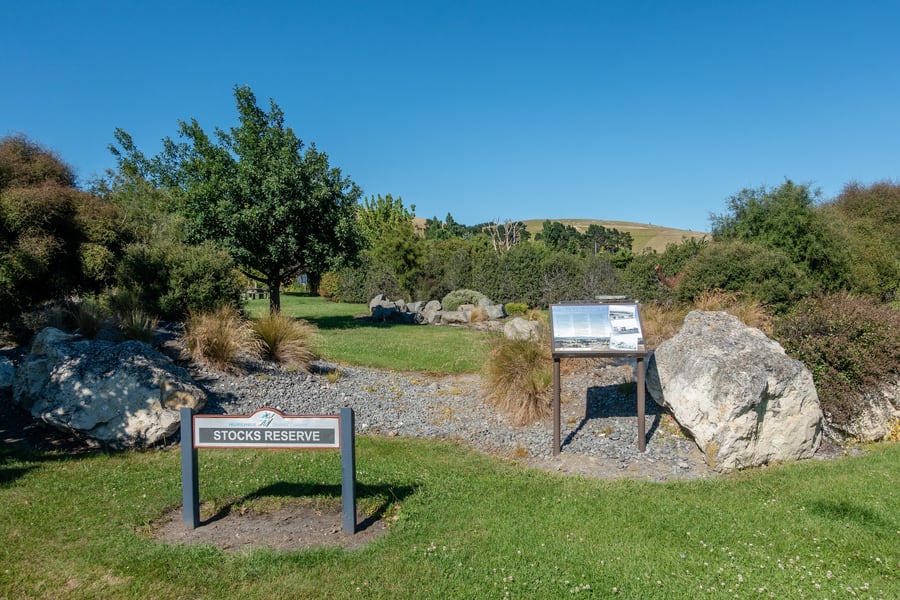
The best thing near the line is not on the railway at all. Weka Pass Historic Reserve protects a large limestone overhang whose wall carries early Māori rock drawings — human figures, fish and dogs, in charcoal from the fires and red ochre, made by people camping overnight on the seasonal food- gathering round. Julius Haast of the Canterbury Museum made the first scientific record of them in 1876, and a floor-to-ceiling fence now protects them. The walk is forty minutes each way, and it starts from the Waikari Village Walkway — the easiest entry is beside the Star and Garter Hotel on State Highway 7. It crosses working farmland, so no dogs, and it is closed for lambing from 1 August to 1 October, which takes in the first running day of the season.
 Michal Klajban / Wikimedia Commons · CC BY-SA 4.0 · cropped
Waikari
A single street on State Highway 7 with a pub, two cafés, a supermarket and a war memorial, and the station a short walk from all of them. The name is usually translated "dig for water". The train gives you 45 minutes here in the morning and 25 in the afternoon, which is a picnic on the platform or a fast lunch, not both.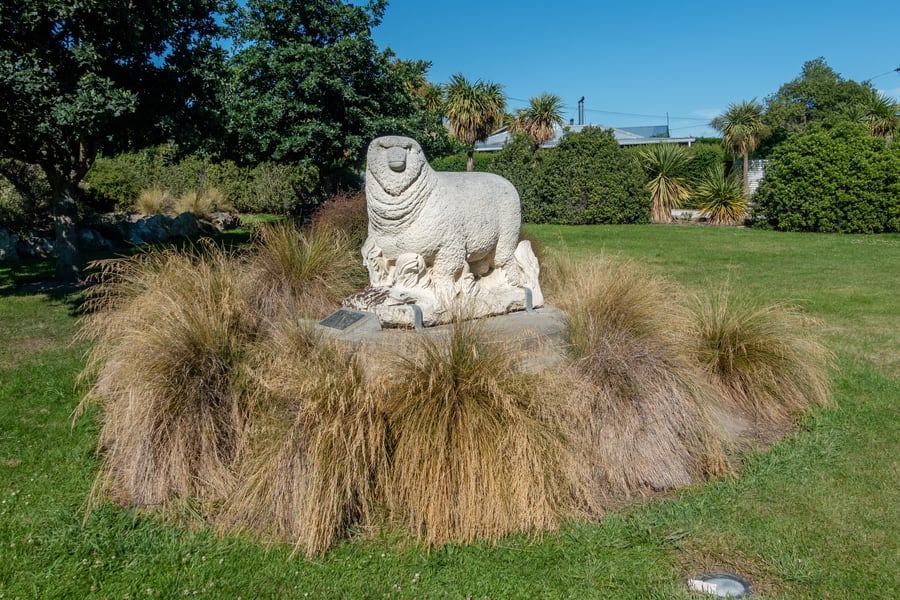 Michal Klajban / Wikimedia Commons · CC BY-SA 4.0 · cropped
The Corriedale
A life-size stone sheep on a mound of tussock, put up for James Little, who crossed Merino ewes with Lincoln rams from about 1882 and later farmed at Allandale here. The plaque credits the breeders "whose vision and skill ensured the spread of the Corriedale from this area to all the major sheep rearing regions of the world". It was recognised as a breed in 1911; there are over five million of them now.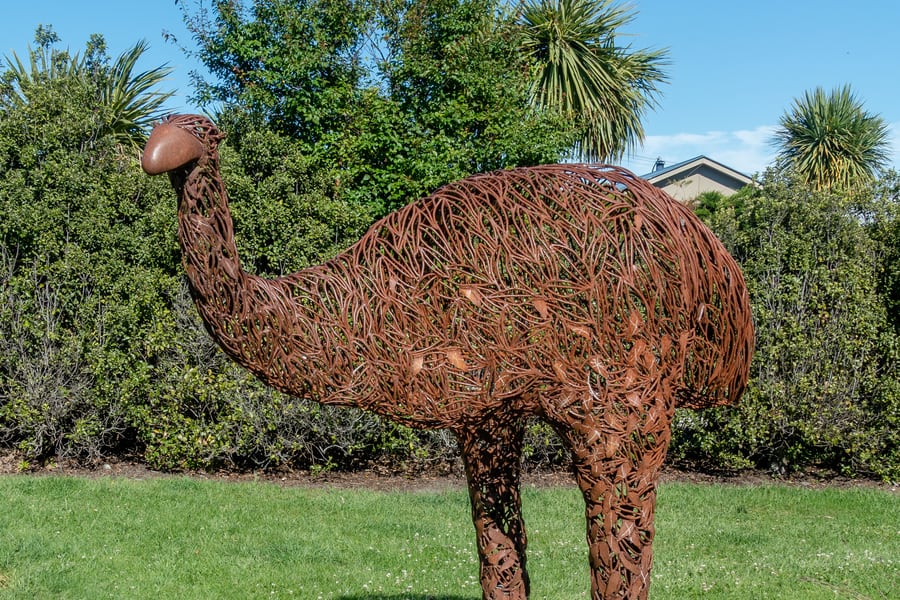 Michal Klajban / Wikimedia Commons · CC BY-SA 4.0 · cropped
The Waikari moa
A moa the height of a person, woven out of rusted steel rod by the sculptor Sharon Earl and standing in the grass as though it had walked out of the limestone. It is not a whim. A few kilometres away at Pyramid Valley, two farmers burying a dead horse in 1938 hit moa bones; the swamp turned out to be New Zealand's richest moa site, and gave up more than 180 complete skeletons.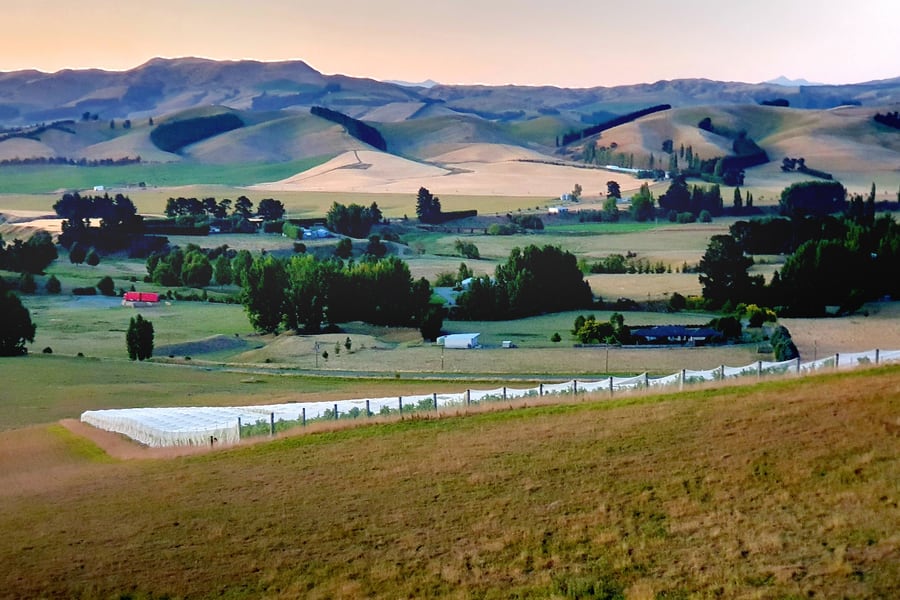 Bernard Spragg. NZ / Wikimedia Commons · Public domain · cropped
The Waipara Valley
Twenty-six wineries and eighty vineyards in one small valley, producing something like 100,000 cases a year. The Teviotdale hills block the cold easterly off the sea, and Waipara ends up with the highest summer temperatures and the lowest rainfall of any New Zealand wine region — which is why the Pinot Noir and Riesling are what they are. Most cellar doors pour, and several have restaurants.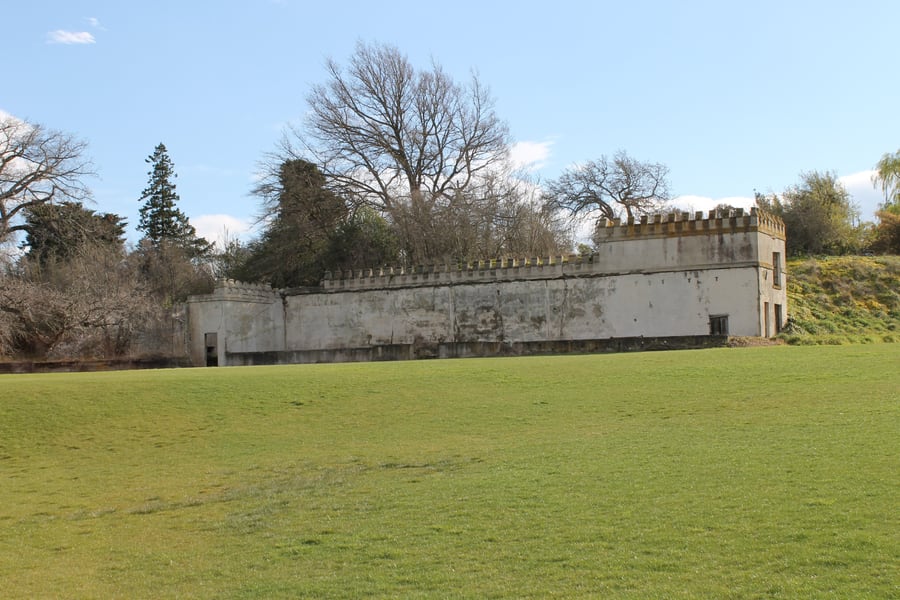 Schwede66 / Wikimedia Commons · CC BY-SA 3.0 · cropped
The Glenmark ruins
A castellated wall standing in a paddock is what is left of the mansion at Glenmark Station, once New Zealand's largest sheep run and the source of the railway platform's name. George Henry Moore took seven years to build it, finished it in 1888 for about £15,000, and watched it burn out on 23 January 1891, uninsured. The concrete stables of 1881 — built for fifty horses — are still standing nearby.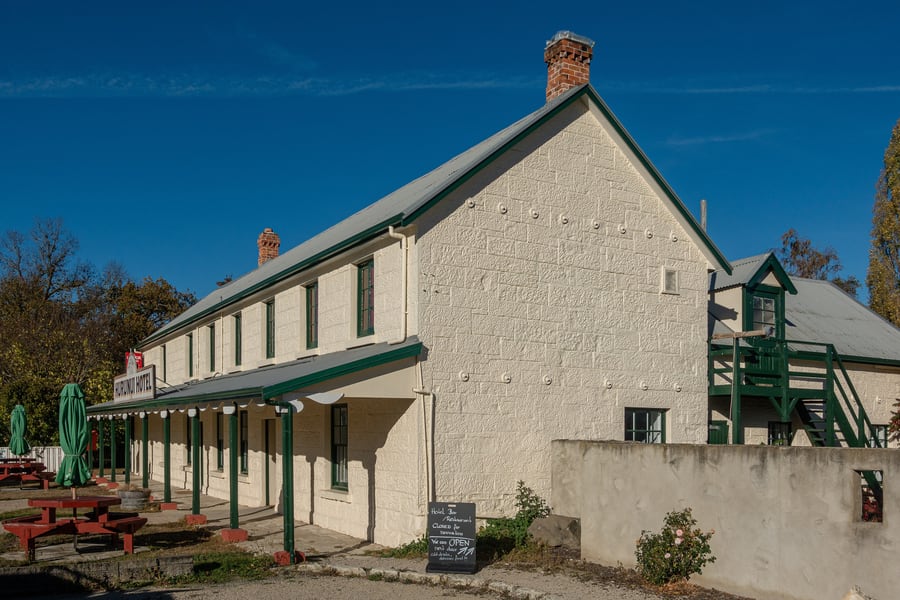 Michal Klajban / Wikimedia Commons · CC BY-SA 4.0 · cropped
The Hurunui Hotel
Two storeys of locally quarried limestone on the old coach road, licensed continuously since 1868 and listed by Heritage New Zealand as a Category 1 historic place. It shut for more than a year when nobody would buy it and reopened in November 2025 under a new lease — bar and restaurant, seven days. Vineyards run right up to the car park.Where to Sleep
Waipara is forty-five minutes north of Christchurch on State Highway 1, so a day trip is entirely possible and plenty of people do exactly that. Staying the night makes sense for a different reason: the train only runs on Sundays, the ticket office opens at half past ten, and this is a wine district where the point of the afternoon is a cellar door you should not drive away from in a hurry.
Two ends, two kinds of bed. At Waipara you are next to Glenmark Station and inside the vineyards — including, on the same road as the station, four decommissioned 1940s railway carriages that have been beds since the early 1990s, which is either the most obvious choice on this page or the only one. At Waikari, forty minutes up the line, the pub by the highway has rooms above the bar and a kitchen that does Thai as well as chops, and the walkway to the Māori rock art starts at its door. Book ahead for January, when the trains run every Sunday and the valley is full.
Where to stay
Waipara Sleepers
12 Glenmark Drive — the same road as the station
Four 1940s New Zealand Railways carriages, three of them still standing on rails, plus a railway workers' hut and a cabin.
Check Availability (opens in a new tab, on waiparasleepers.co.nz)via waiparasleepers.co.nz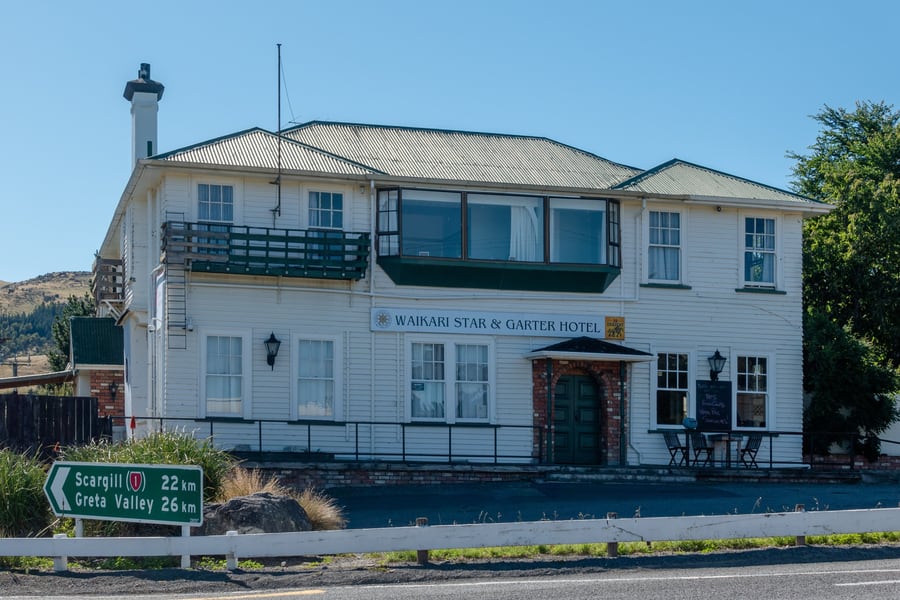 Michal Klajban / Wikimedia Commons · CC BY-SA 4.0 · cropped
The Star Hotel
Weka Pass Road, Waikari — a short walk from the terminus
A country pub with four rooms and a self-contained apartment above the bar, open Wednesday to Sunday.
Check Availability (opens in a new tab, on starhotel.co.nz)via starhotel.co.nzKumiko's Guest House and Russell's Cabins
618 Omihi Road, in the vineyards north of Waipara
A Japanese-designed guest house and two off-grid cabins set high above the Ōmihi valley, ten minutes from Glenmark Station.
Check Availability (opens in a new tab, on kumikosnz.com)via kumikosnz.comQuestions or corrections
Planning this trip and stuck on something, or spotted a time, fare or detail that has changed? Send us a message about Weka Pass Railway. We read every one, and we update this page when something has changed.