The West Coast Wilderness Railway
Jimmyjrg / Wikimedia Commons · CC BY-SA 4.0 · cropped
- Distance34.5 km, Queenstown to Regatta Point
- Duration1 h 30 min to 3 h return, by journey
- Best seasonYear-round; most departures December to April
Introduction
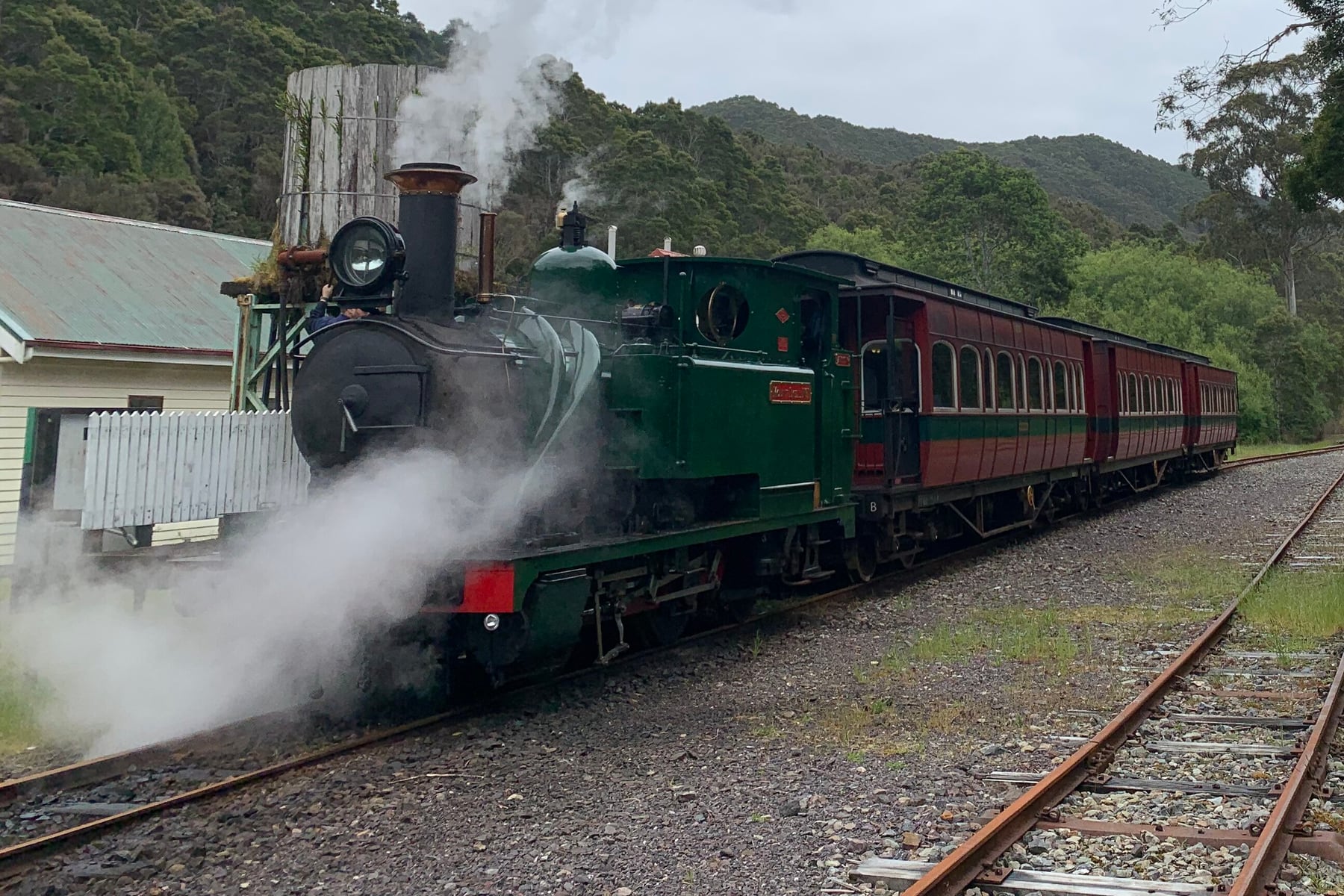
The West Coast Wilderness Railway runs 34.5 kilometres from the copper town of Queenstown to Regatta Point in Strahan, on the harbour, through the rainforest of Tasmania's west coast. The Mount Lyell Mining and Railway Company built it in the 1890s to take its copper to the sea, on track 1,067 millimetres wide, and until a road arrived in 1932 it was the only way in or out of Queenstown.
Between the two towns the line has to climb over the Rinadeena Saddle, and on the Queenstown side it does it on an Abt rack — a toothed third rail that the engines grip with a cog — at a gradient of 1 in 16. Four of the steam locomotives built for that climb, the first of them assembled here in 1896, haul the trains today.
The railway closed in 1963 and was rebuilt to reopen in 2002. No train runs the whole line at present: steam trains run from Queenstown up the rack to Rinadeena and back, and diesel trains run from Strahan a short way along the harbour and the King River and back. This page covers the whole line, and says which part each train reaches.
The Journey
Queenstown to Lynchford
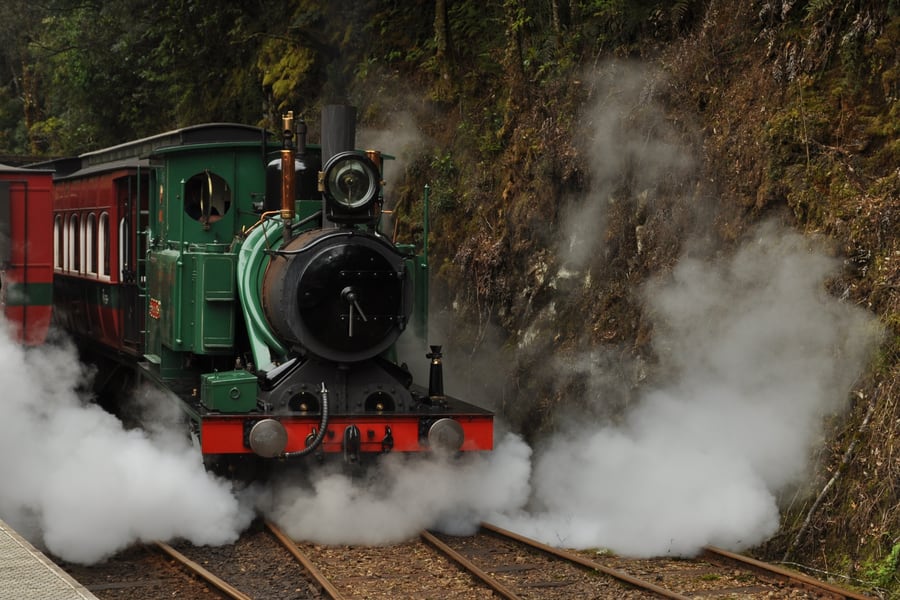
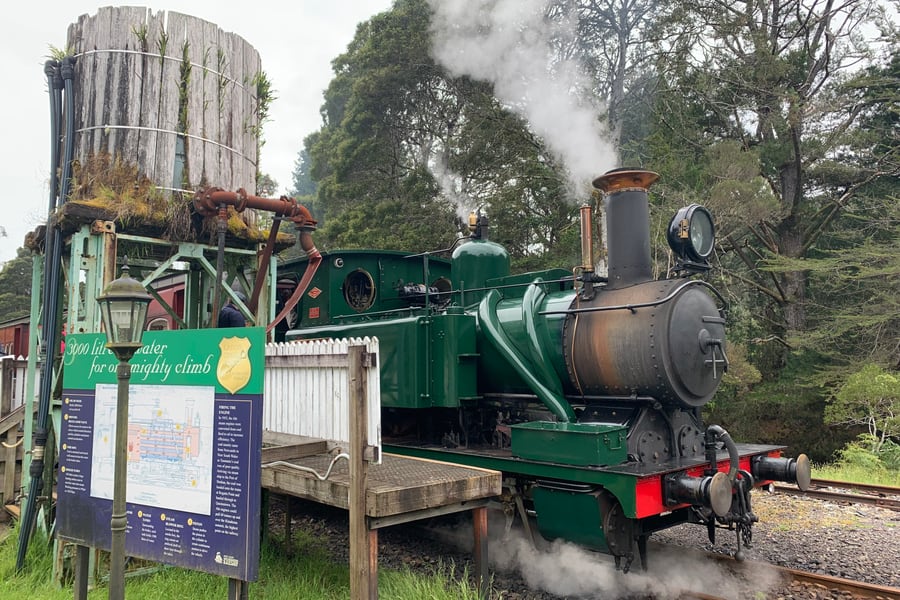
The steam trains leave Queenstown station on Driffield Street, on the site of the original yard, and run south down the Queen River valley out of town. After about twenty minutes they stop at Lynchford, where Cornelius Lynch found a gold nugget the size of a cricket ball in 1881 and started a rush. The engine takes water from a timber tank, and there is time to pan for gold, look into the old mine shafts and the Pioneer's Room.
Up the rack to Rinadeena
Beyond Lynchford the line meets the rack. For about seven kilometres, between Lynchford and Dubbil Barril, a toothed rail runs between the running rails, and the locomotive engages it with a pinion to climb gradients of up to 1 in 16 — what the operator calls the steepest steam haul in the southern hemisphere. The climb is through cool temperate rainforest of myrtle, leatherwood, Huon pine and man ferns, which gets more than three metres of rain a year. The steam trains turn at Rinadeena, once a small settlement on the ridge whose families depended on the railway; there is a lookout, a short forest walk and something to eat before the train goes back down the rack.
The King River
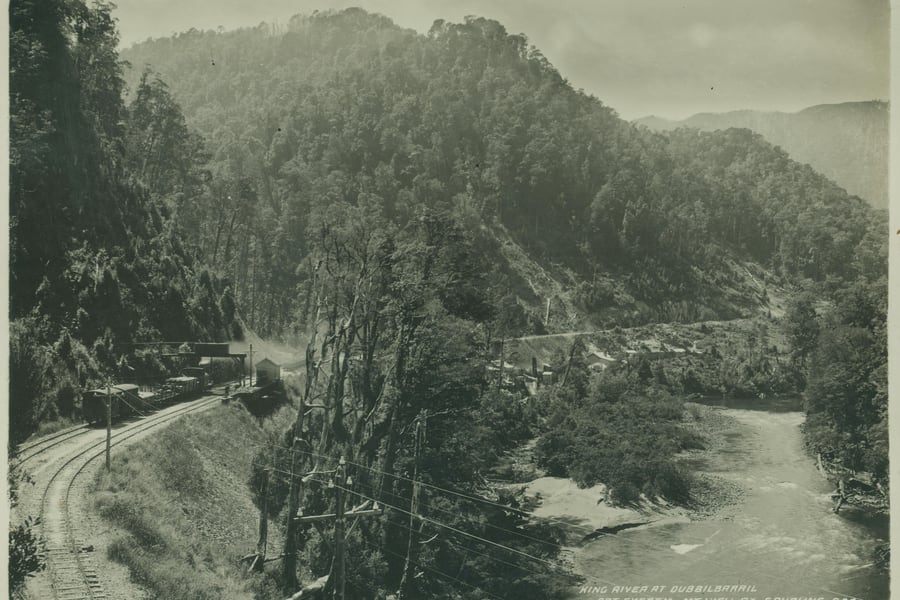
From the saddle the line drops to Dubbil Barril, at the foot of the rack, and follows the gorge of the King River down to the harbour. It crosses the river twice. The Iron Bridge at Teepookana, a 110-tonne span bought ready-made in London, was rolled across on rail carts in 1899 and is the only original bridge left on the line. The Quarter Mile Bridge began as a 240-metre timber trestle that floods kept damaging; today it is an ex-army Bailey bridge of about 90 metres. Four men died building the railway. No passenger train runs this middle section at present: the operator's Teepookana trip is suspended for bridge and track works.
Strahan
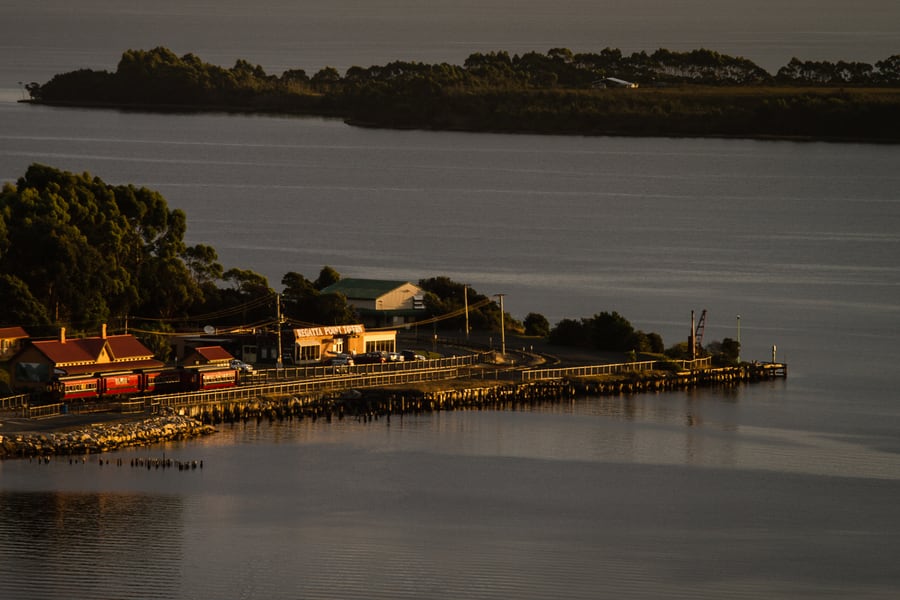
From Strahan the diesel trains leave Regatta Point station, where the copper was once loaded onto ships, and run along the edge of Macquarie Harbour past Lowana, then up the King River into the rainforest. They pause near the 28-kilometre peg, where water runs through the forest beside the track, and come back.
The trains
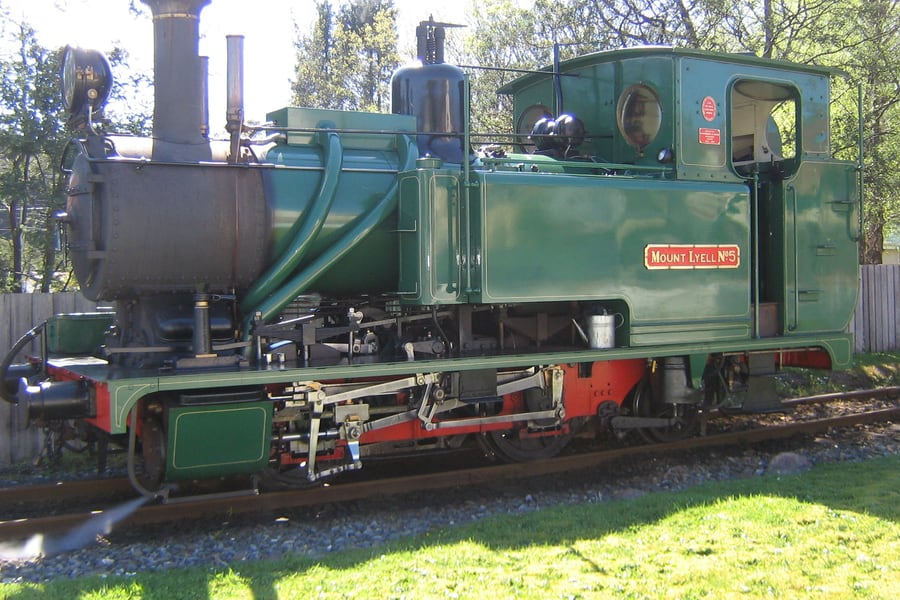
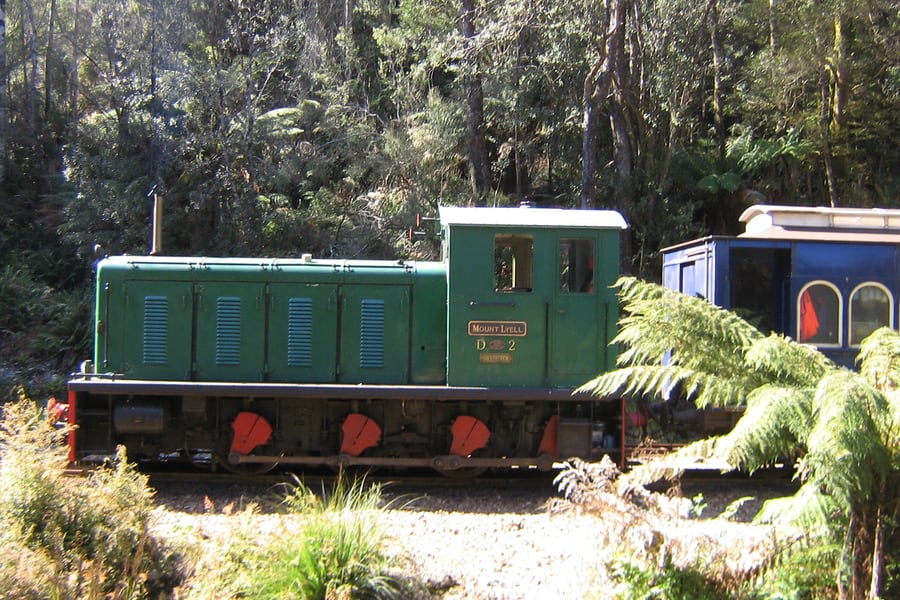
The steam engines are the railway's own Abt tank locomotives: No. 1, assembled at Camp Spur in 1896; No. 2, lost overboard at Hells Gates on its way in and hauled back up, in service from 1899 and bought back in 2019; No. 3, the first to return when the line reopened; and No. 5, built by North British in 1938. Drewry diesels, which the company bought in the 1950s, work the Strahan trains, because they are not built for the rack.
Along the route
 Jimmyjrg / Wikimedia Commons · CC BY-SA 4.0 · cropped
Lynchford and its gold
The first stop out of Queenstown, where Cornelius Lynch found a gold nugget the size of a cricket ball in 1881. The engine takes water here from a timber tank, and passengers try their hand at panning before the climb.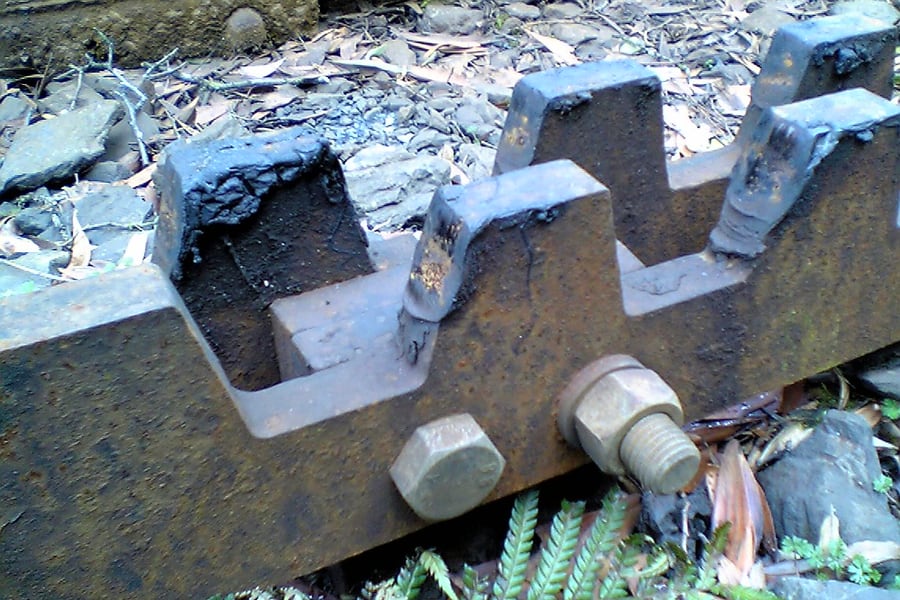 Tom Worthington / Wikimedia Commons · CC BY-SA 2.0 · cropped
The rack to Rinadeena
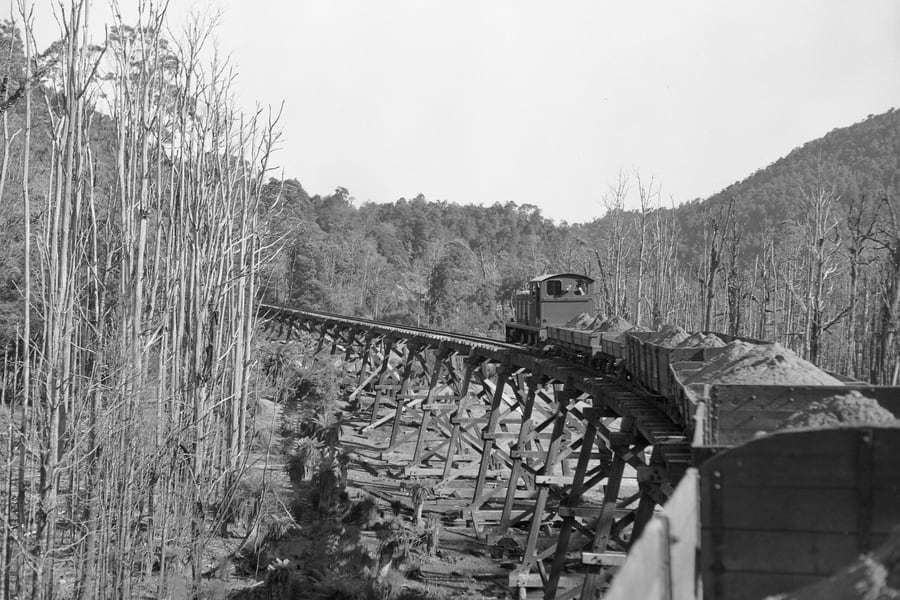
Between Lynchford and Dubbil Barril a toothed third rail runs between the running rails for about seven kilometres. A pinion under the engine engages it, which is how the line climbs at 1 in 16, a gradient no ordinary engine of the 1890s could manage.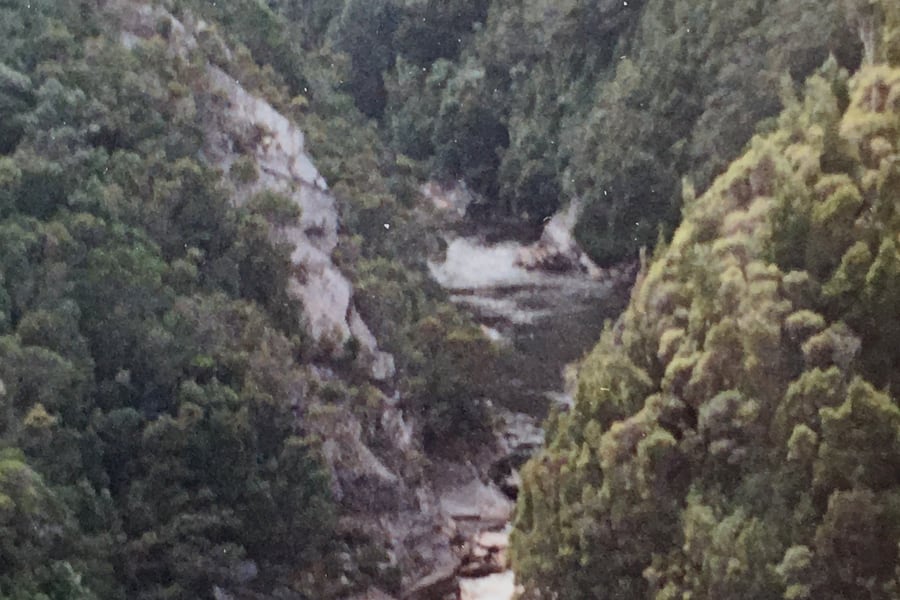 JarrahTree / Wikimedia Commons · CC BY 2.5 AU · cropped
The King River gorge
Below Dubbil Barril the line follows the King River gorge and crosses the river twice: by the Iron Bridge at Teepookana, bought ready-made in London in 1899, and by the Quarter Mile Bridge, now in its third form. No passenger train runs this stretch at present.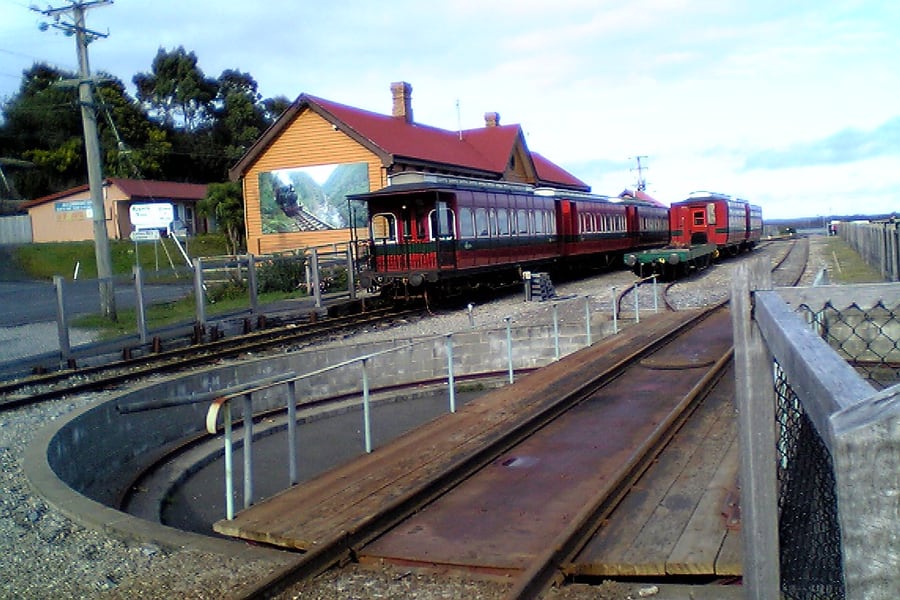 Tom Worthington / Wikimedia Commons · CC BY-SA 2.0 · cropped
Regatta Point, Strahan
The line ends on the harbour at Strahan, where the copper went on to ships. The diesel trains start here, from the restored station with its turntable and a museum room of things left by the people who lived along the line.A bit of history
Culture & experiences along the way
 JJ Harrison / Wikimedia Commons · CC BY-SA 3.0 · cropped
Huon pine in Strahan
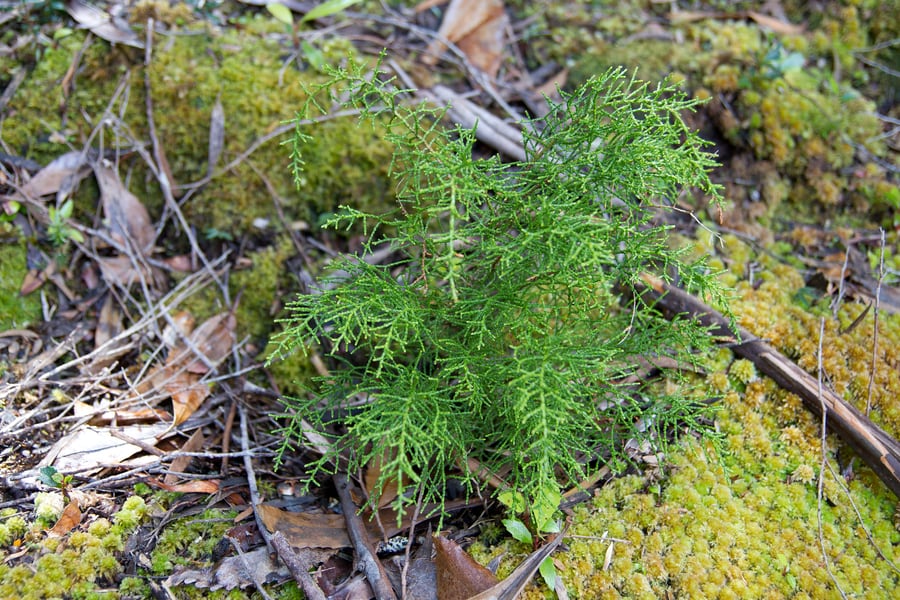
Huon pine grows only in Tasmania's wet south-west and can live for more than 2,000 years. The Morrison family has worked it since 1920, when a mill opened at the mouth of the King River; today they salvage fallen logs for the turned pieces sold at their Huon Pine Shop and Gallery.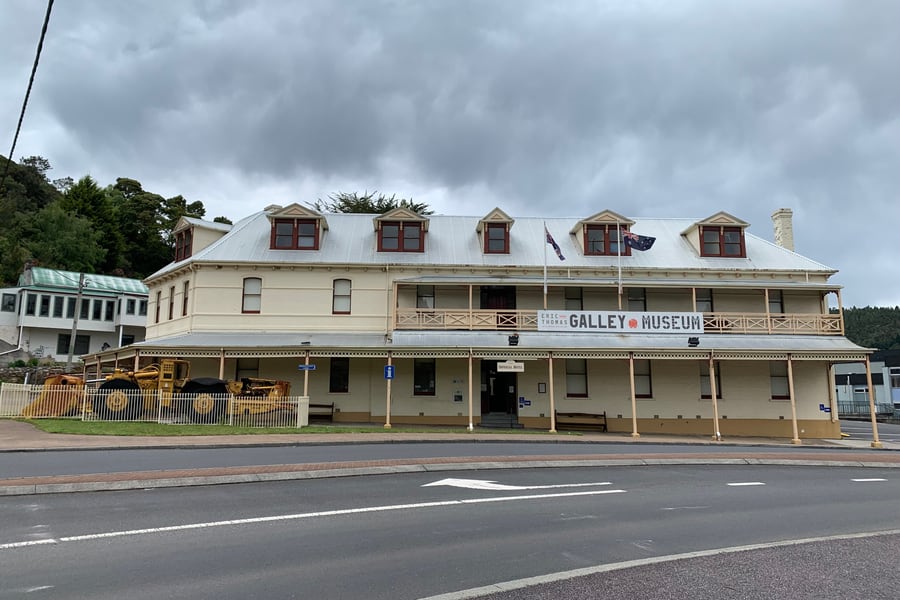 Jimmyjrg / Wikimedia Commons · CC BY-SA 4.0 · cropped
The Galley Museum
Queenstown's history museum fills the 1897 Imperial Hotel on Driffield Street, a short walk from the station. Its photographs of the mining towns are the core of it, many taken or printed by Eric Thomas, with a large collection on the North Mount Lyell disaster of 1912.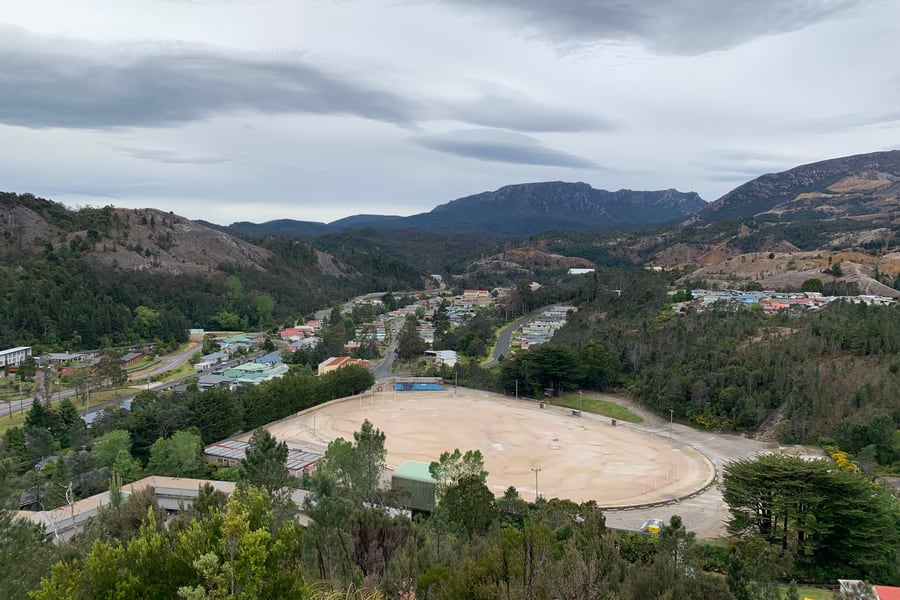 Jimmyjrg / Wikimedia Commons · CC BY-SA 4.0 · cropped
Football on gravel
Queenstown Oval, "the Gravel", has had no grass since it was built in 1895, and the Queenstown Crows still play Australian rules on it. It was the first ground in Tasmania to sound a siren at the end of each quarter, borrowed from the Mount Lyell mine.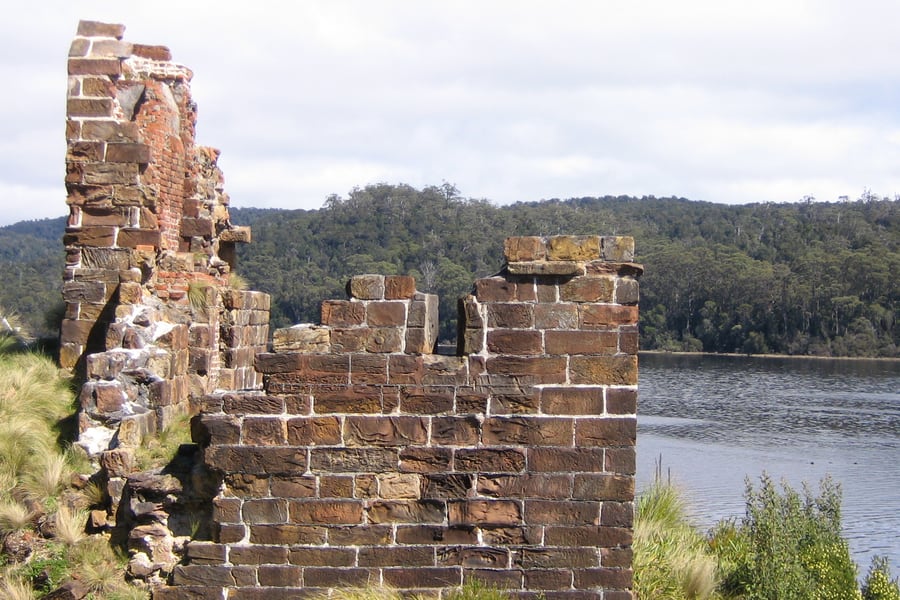 Scott Davis / Wikimedia Commons · CC BY 2.5 · cropped
The convicts of Sarah Island
From 1822 to 1833 Sarah Island, in Macquarie Harbour, held the colony's worst re-offenders, and had a name as one of the harshest penal stations in Australia. Its ruins are kept by the Tasmania Parks and Wildlife Service, and the Gordon River cruises from Strahan land there.Timetables
No train runs end to end. There are three return journeys: two steam trains from Queenstown and one diesel train from Regatta Point, Strahan. Each leaves and returns to the same station.
| Journey | Leaves | Back after | Days, October to December 2026 |
|---|---|---|---|
| Rinadeena, Rack & Rainforest (steam) | Queenstown 10:00 | about 3 h | Tuesday to Saturday |
| Lynchford Express (steam) | Queenstown 14:15 | about 1 h 30 min | Saturday |
| The Cryptic Express (diesel) | Regatta Point 10:00 | about 1 h 45 min | Monday, Tuesday, Thursday, Saturday |
| The Cryptic Express (diesel) | Regatta Point 13:30 | about 1 h 45 min | Monday and Thursday in most weeks |
From 28 December 2026 to 24 January 2027 there are more trains: the Lynchford Express runs Tuesday to Saturday, and the Cryptic Express runs Monday, Tuesday and Thursday to Saturday at both 10:00 and 13:30. In the winter season, from 3 May to 19 September 2027, the Rinadeena train runs on Wednesday, Thursday and Saturday, and the Cryptic Express at 10:00 on Monday, Tuesday and Friday. A few weeks differ around public holidays — the operator's calendar for each journey shows every day.
Rinadeena trains stop at Lynchford and Rinadeena; the Lynchford Express at Lynchford only; the Cryptic Express is fully seated and does not stop to let passengers off.
Getting there
There is no other railway on the west coast. Queenstown is about three hours' drive from Launceston, and Strahan another 30 to 35 minutes; from Hobart it is three and a half to four and a half hours by the Lyell Highway.
Times are from the operator's journey calendars, read on 10 October 2026 — as of October 2026. Check the day on the West Coast Wilderness Railway (opens in a new tab) before travelling.
Tickets
Tickets are sold by the railway, online or by phone, for one journey at a time. Every train has Standard carriages, with booth seats and blankets, and a Premium carriage with tables, a balcony at the back and food included. Standard fares run from A$40 for an adult on the Cryptic Express to A$99 on the Rinadeena steam train, and family tickets cover two adults with one or two children.
The railway advises booking four to six weeks ahead, and further in the summer; seats left over are sold on the day, more often in winter. To ride the rack, take the Rinadeena train — it is the only one that climbs it.
Book your tickets
WikiWookie / Wikimedia Commons · CC BY-SA 4.0 · croppedRinadeena, Rack & Rainforest
Steam, Queenstown · 3 h return
Standard A$99 adult, A$75 child, A$270 for two adults and two children; Premium A$140 with a glass of sparkling wine and a light meal.
Book Tickets (opens in a new tab, on wcwr.com.au)via wcwr.com.auJimmyjrg / Wikimedia Commons · CC BY-SA 4.0 · croppedLynchford Express
Steam, Queenstown · 1 h 30 min return
Standard A$55 adult, A$35 child, A$145 for two adults and two children; Premium A$90.
Book Tickets (opens in a new tab, on wcwr.com.au)via wcwr.com.auScott Davis / Wikimedia Commons · CC BY 2.5 · croppedThe Cryptic Express
Diesel, Strahan · 1 h 45 min return
Standard A$40 adult, A$20 child, A$100 for two adults and two children; the Premium carriage, A$80, serves a menu by the chef Rodney Dunn.
Book Tickets (opens in a new tab, on wcwr.com.au)via wcwr.com.auRail Passes
No rail pass covers the West Coast Wilderness Railway. Interrail and Eurail are European schemes, and Australia is not among the 33 countries in Interrail's list of covered railway companies (opens in a new tab). The railway is run by the Tasmanian government and sells its own tickets, one journey at a time.
Checked October 2026 against Interrail's list of covered railway companies (opens in a new tab).
Places to Visit
Queenstown and Strahan are about half an hour apart by road, so most visitors stay in one and visit the other. The Gordon River cruise, Hells Gates and the Henty Dunes are reached from Strahan; Nelson Falls is on the road from Hobart.
 Jimmyjrg / Wikimedia Commons · CC BY-SA 4.0 · cropped
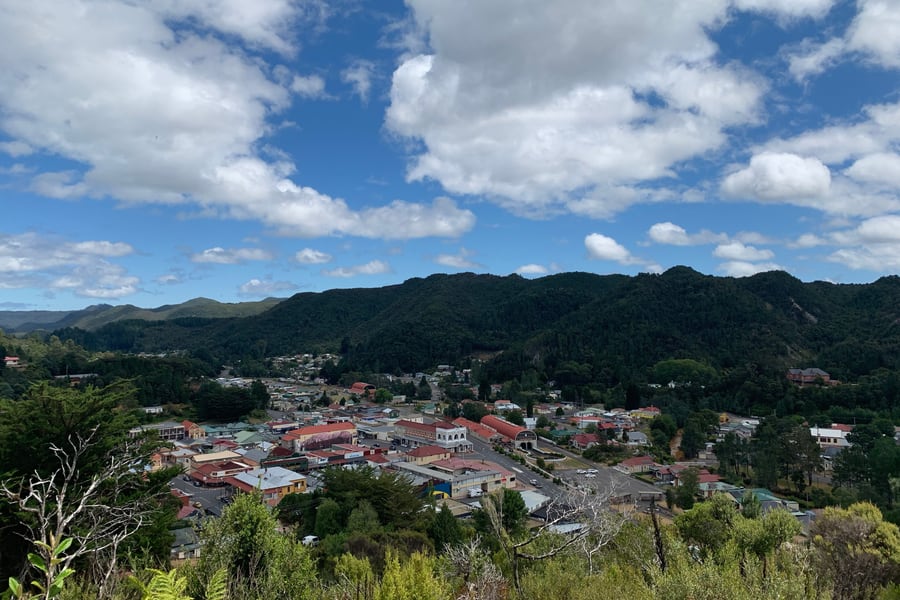
Queenstown
A copper town of about 1,800 people in a valley under Mount Owen, on the western slopes of the West Coast Range. Alluvial gold brought the first miners in the 1880s, and copper, from 1892, kept the town going for a century. The Spion Kopf lookout, a short climb above the centre, shows the whole valley at once.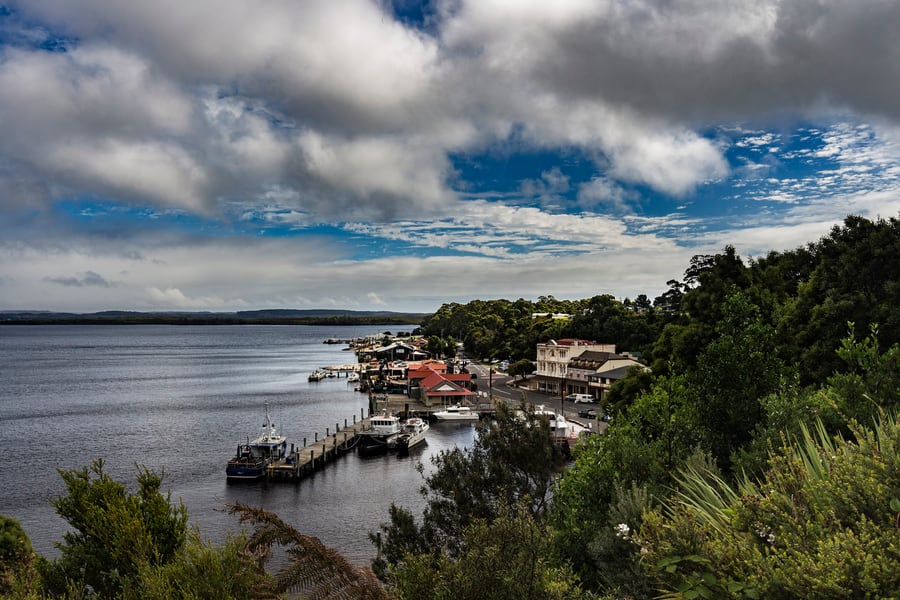 Steven Penton / Wikimedia Commons · CC BY 2.0 · cropped
Strahan
The old port for the copper, at the head of Macquarie Harbour, and now a town of about 630 people that lives mainly on visitors. It was called Long Bay or Regatta Point until 1881, when it took the name of the colony's new governor. Boats, planes and helicopters leave from here for the south-west wilderness.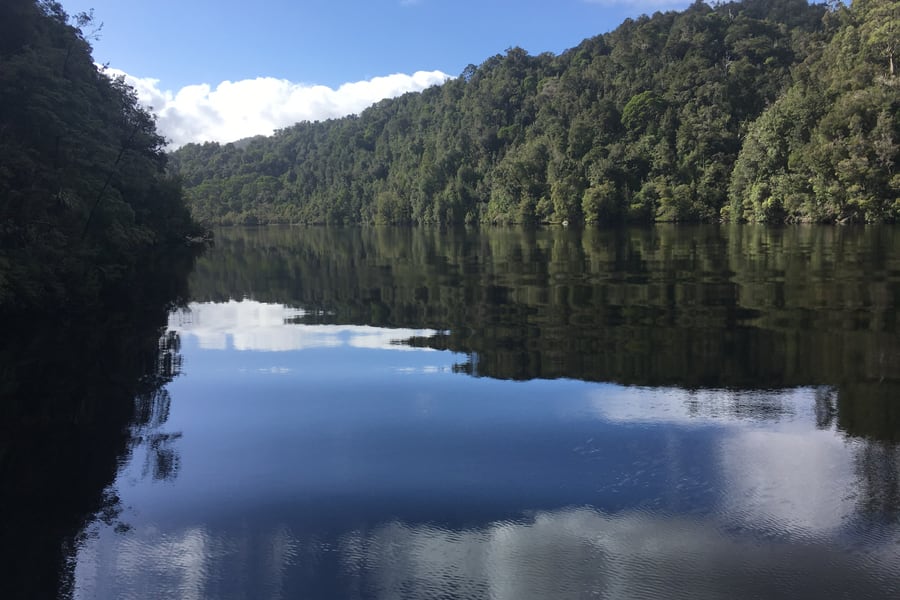 HilACT / Wikimedia Commons · CC BY-SA 4.0 · cropped
The Gordon River
The lower Gordon runs through the Tasmanian Wilderness World Heritage Area, its water stained the colour of weak tea by the forest and still enough to mirror the banks. Cruise boats cross Macquarie Harbour from Strahan, go upriver into the rainforest and stop at Sarah Island on the way back.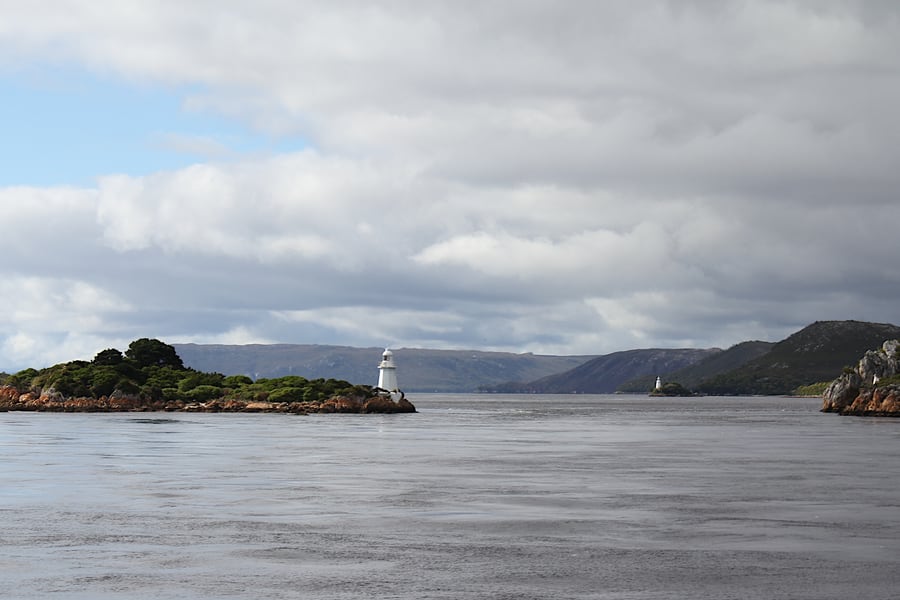 Kristina D.C. Hoeppner / Wikimedia Commons · CC BY-SA 2.0 · cropped
Hells Gates
The narrow, shallow channel between Macquarie Heads and Entrance Island is the harbour's only way to the sea. The convicts sent to Sarah Island named it, as their entrance to hell. A breakwater was built and the channel dredged between 1900 and 1902, and the Gordon River cruises run out to it first.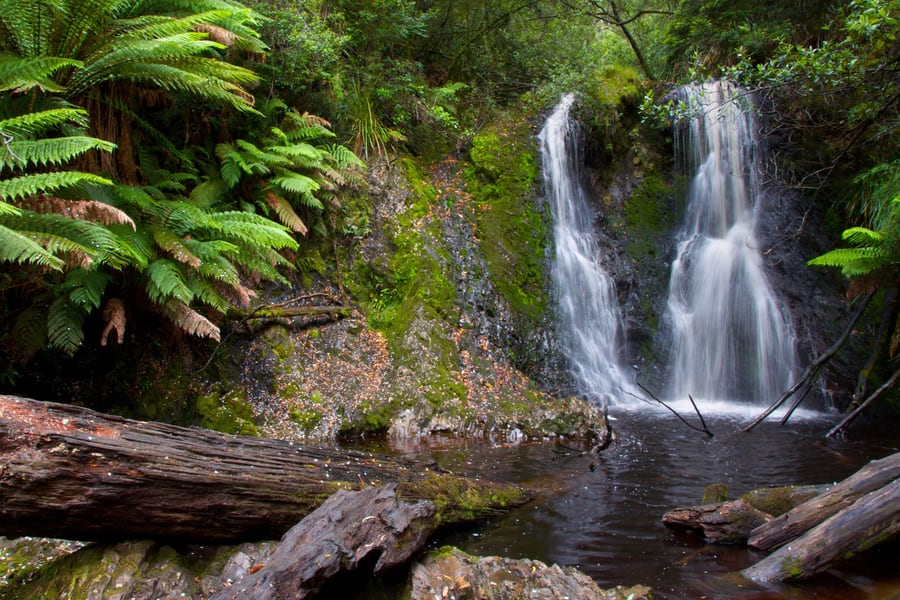 BriYYZ / Wikimedia Commons · CC BY-SA 2.0 · cropped
Hogarth Falls
An easy walk of 2.4 kilometres return, 40 to 50 minutes, from People's Park in Strahan, between the town and Regatta Point. The track follows a creek through tall forest and rainforest to the falls, and platypus are sometimes seen in the creek below them.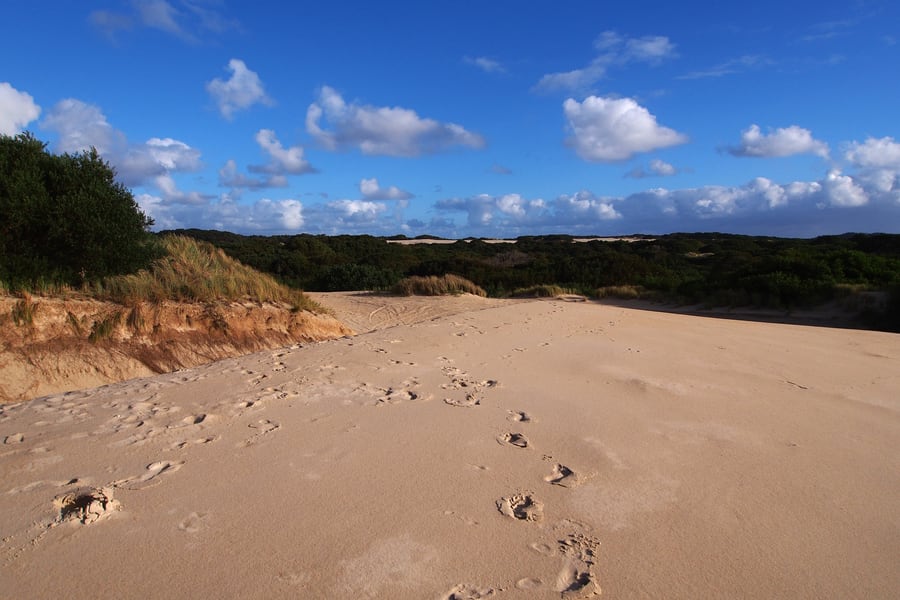 rheins / Wikimedia Commons · CC BY 3.0 · cropped
The Henty Dunes
Fourteen kilometres north of Strahan on the road to Zeehan, sand dunes 30 metres high run 15 kilometres along the coast, piled up by the Roaring Forties with rainforest behind them. They are big enough to sandboard, and a 90-minute return walk crosses them to Ocean Beach, the longest beach in Tasmania.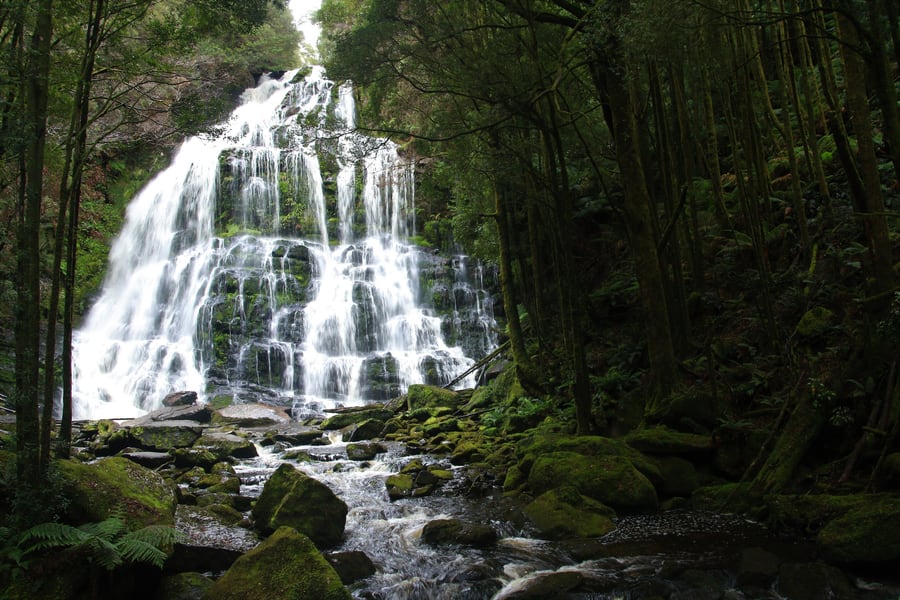 Juan Jose Basagoiti Mancera / Wikimedia Commons · CC BY-SA 4.0 · cropped
Nelson Falls
The last short walk on the Lyell Highway before Queenstown, 27 kilometres east of the town in the Franklin-Gordon Wild Rivers National Park. A boardwalk of 1.4 kilometres return, about 20 minutes, runs beside the river past at least seven kinds of fern to a cascade of about 30 metres.Where to Sleep
Strahan has more places to stay and is the base for the Gordon River cruises; Queenstown is where the steam trains leave from. The two hotels below are one at each end of the line.
Where to stay
 Michael Short / Wikimedia Commons · Public domain · cropped
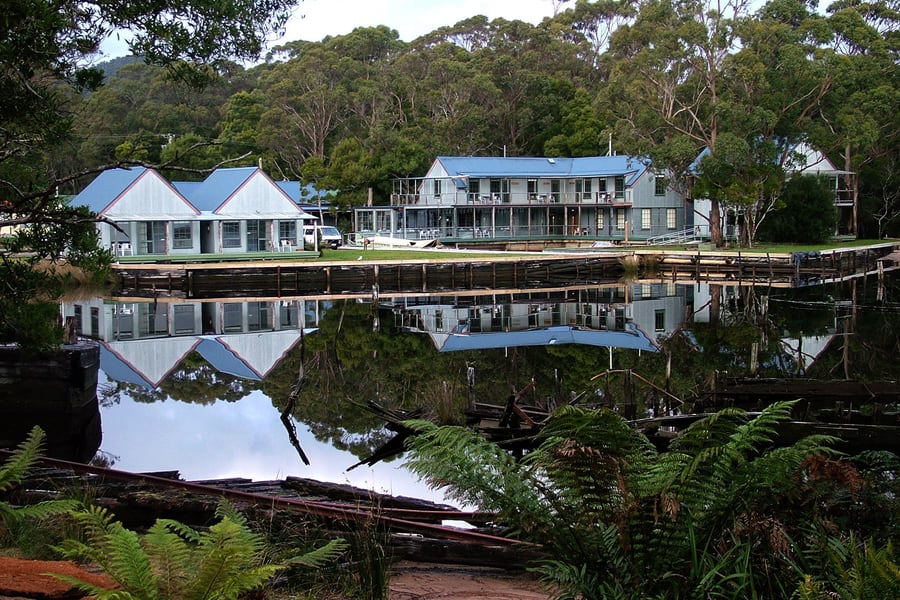
Risby Cove
On the harbour at Strahan
Twelve suites and a restaurant on the water's edge of Macquarie Harbour.
Check Availability (opens in a new tab, on risbycove.com.au)via risbycove.com.auPenghana
Bed and breakfast above Queenstown
A Queen Anne mansion of 1898, listed by the National Trust, looking over Queenstown to Mount Owen.
Check Availability (opens in a new tab, on penghana.com.au)via penghana.com.auQuestions or corrections
Planning this trip and stuck on something, or spotted a time, fare or detail that has changed? Send us a message about The West Coast Wilderness Railway. We read every one, and we update this page when something has changed.