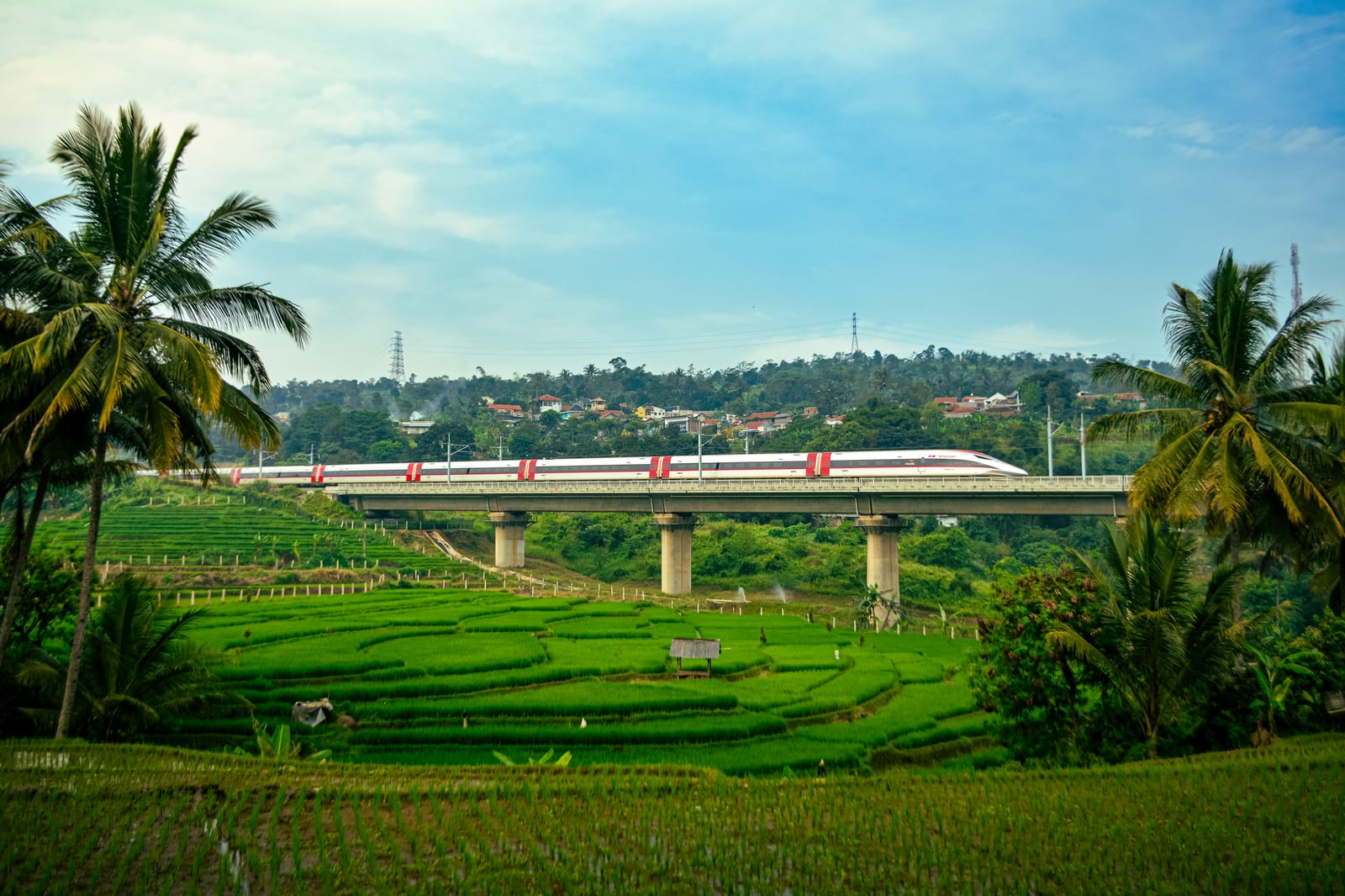
Whoosh — the Jakarta–Bandung Bullet Train
Dwifa Bagaskoro S A / Wikimedia Commons · CC BY-SA 4.0
- DistanceJakarta–Bandung · 142.8 km
- DurationAbout 40 minutes
- Best seasonYear-round (an all-weather, all-season service)
Introduction
For as long as anyone could remember, the run from Jakarta to Bandung meant the best part of a day. The old railway climbs and twists through the hills of West Java, beautiful but slow — three hours and more — and the toll road is worse, a byword for weekend gridlock. Then, in October 2023, Indonesia did something no other country in Southeast Asia had done: it opened a bullet train.
They call it Whoosh, and the name is a joke that stuck — partly the sound the thing makes as it goes by, partly an acronym the president coined on the spot (Waktu Hemat, Operasi Optimal, Sistem Hebat — "time-saving, optimal operation, great system"). It leaves Halim, on the eastern side of Jakarta, and is at the edge of Bandung in about forty minutes, running at up to 350 kilometres an hour across the rice fields — faster than any train has ever run in this part of the world.
It is a strange and wonderful thing to ride. Outside the window, the deep green of Java blurs past: paddy terraces, palm groves, tin-roofed villages, the blue cones of volcanoes standing still on the horizon while the foreground streaks. Inside, it is cool, quiet and airline-smooth, and a little screen counts the speed up to a number that seems impossible for the landscape you are crossing. The whole trip is over almost before you have settled — which is rather the point.
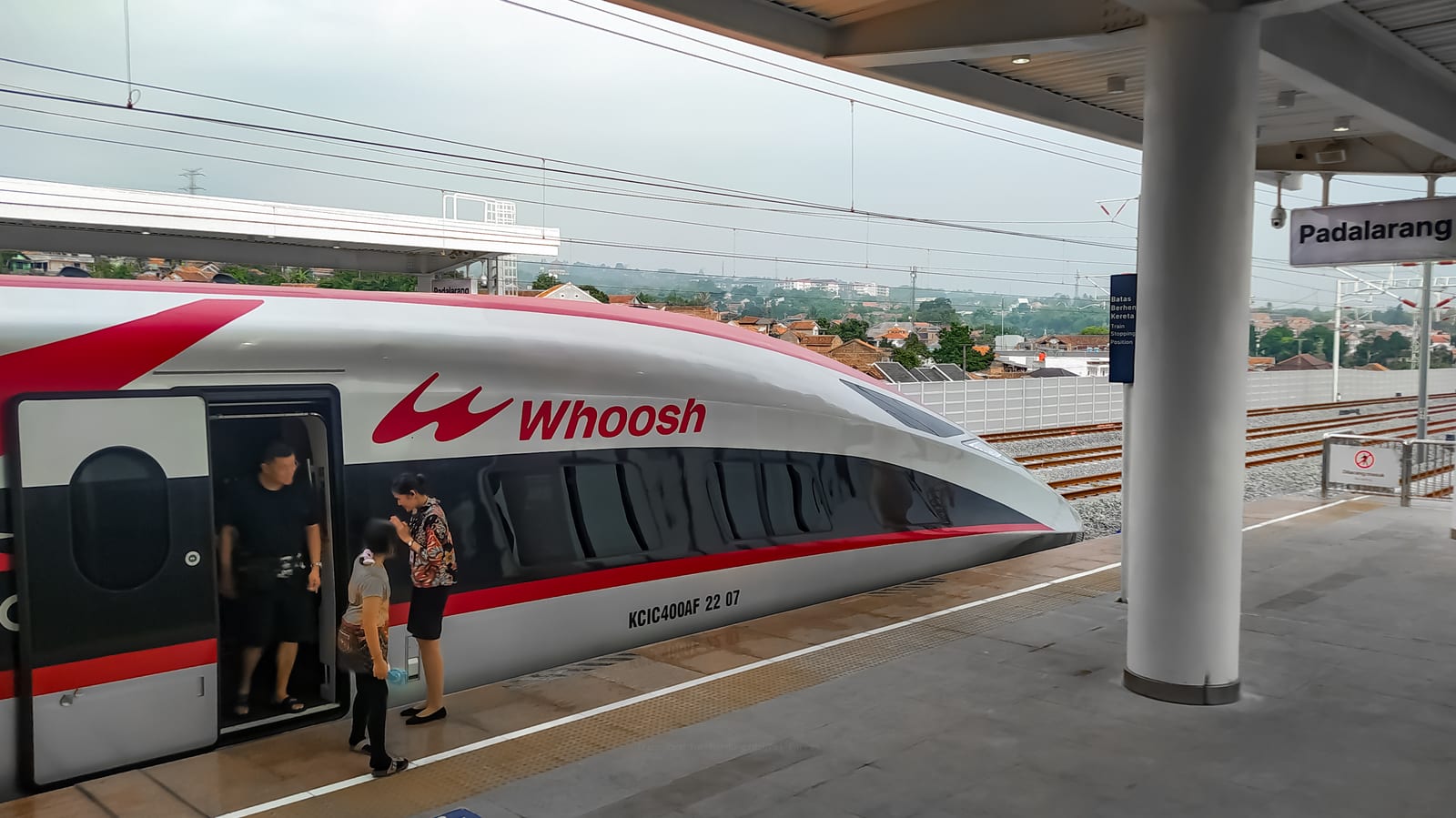
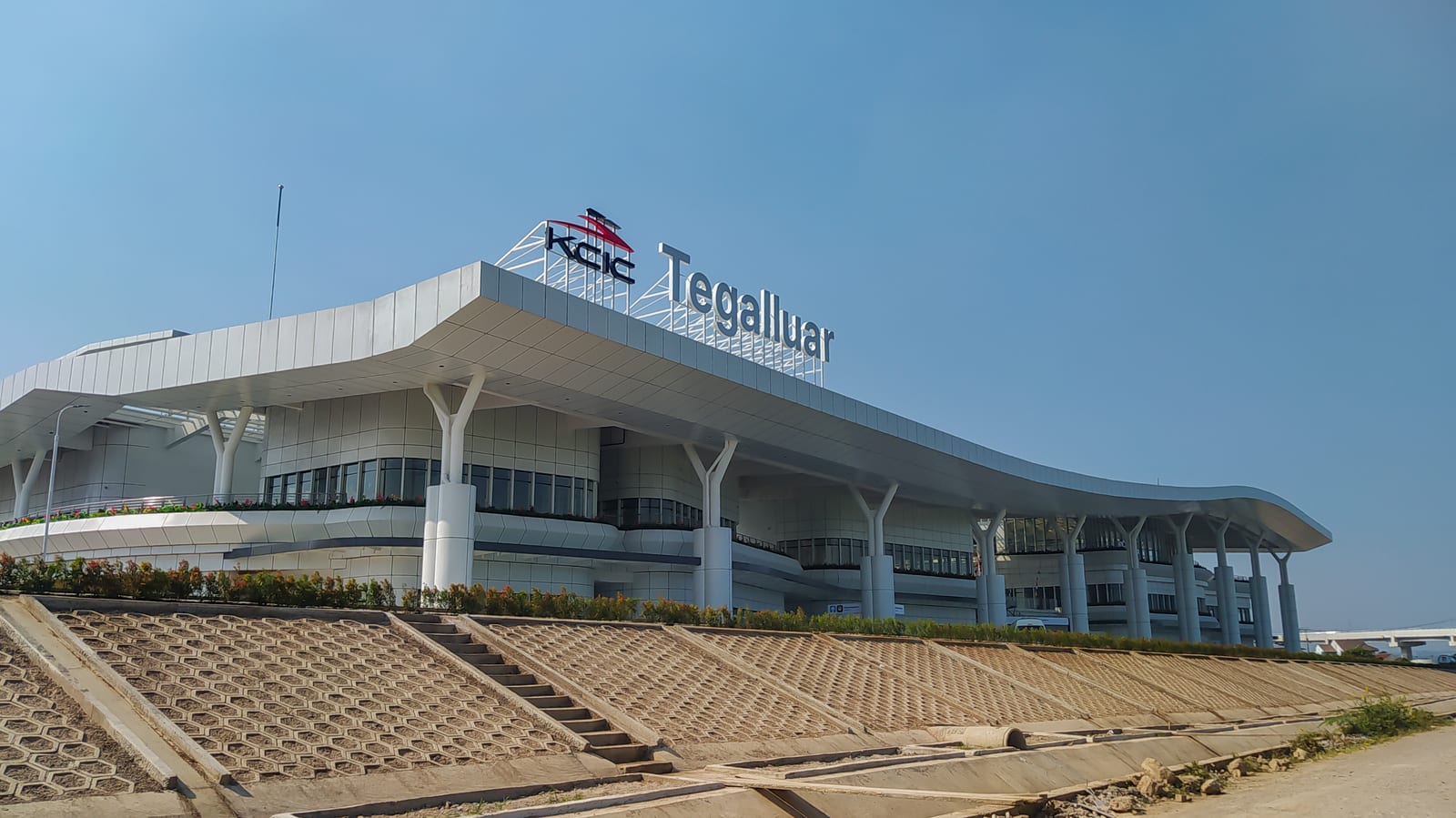
One thing to know before you board: Whoosh does not run into the centre of Bandung. Its city-end station, Tegalluar, is on the far southeastern fringe, so most travellers get off one stop earlier at Padalarang and take a free connecting feeder train into Bandung Station. It is quick and included in your ticket — but it is worth knowing, so it doesn't catch you out.
The Journey
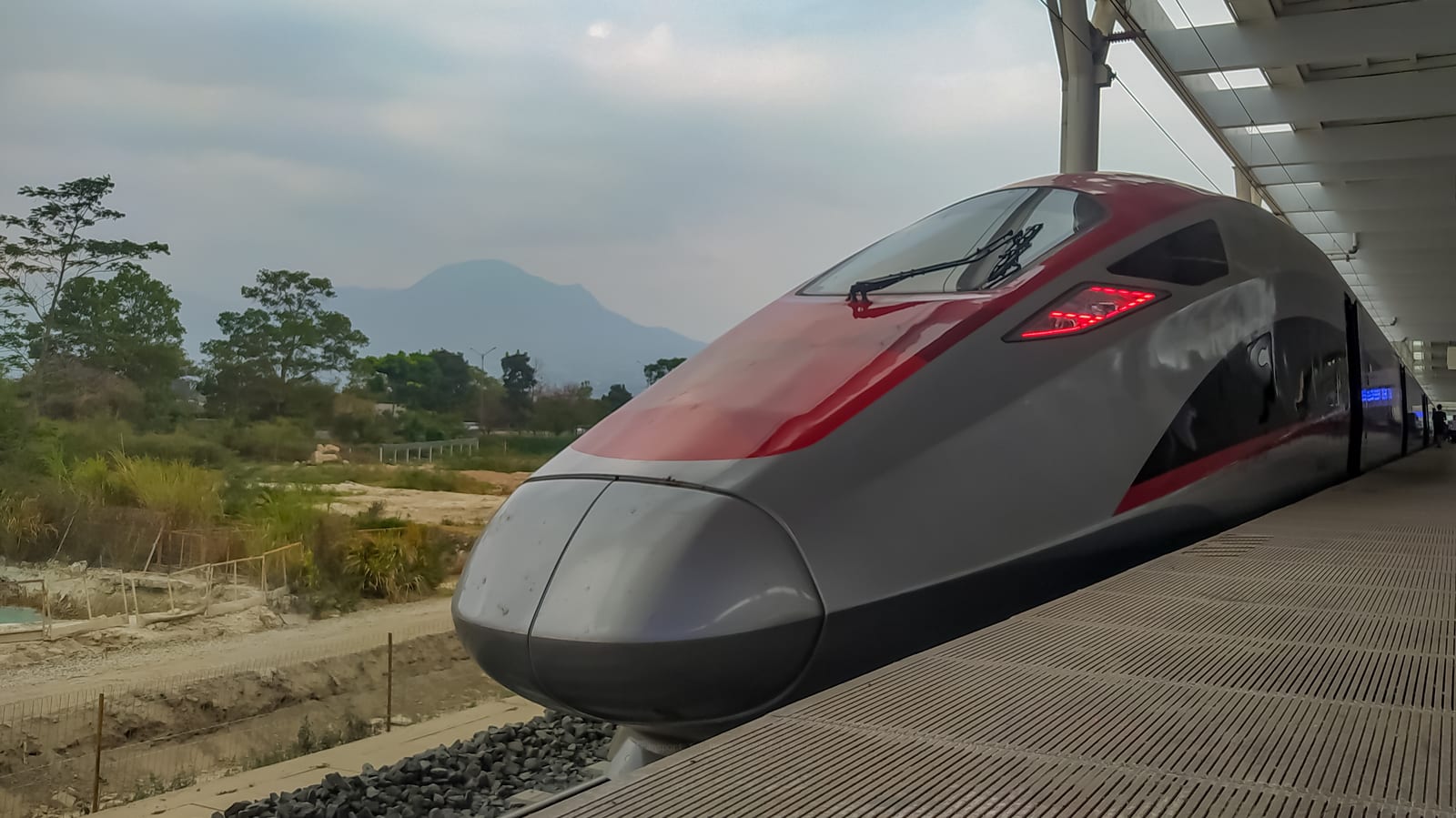
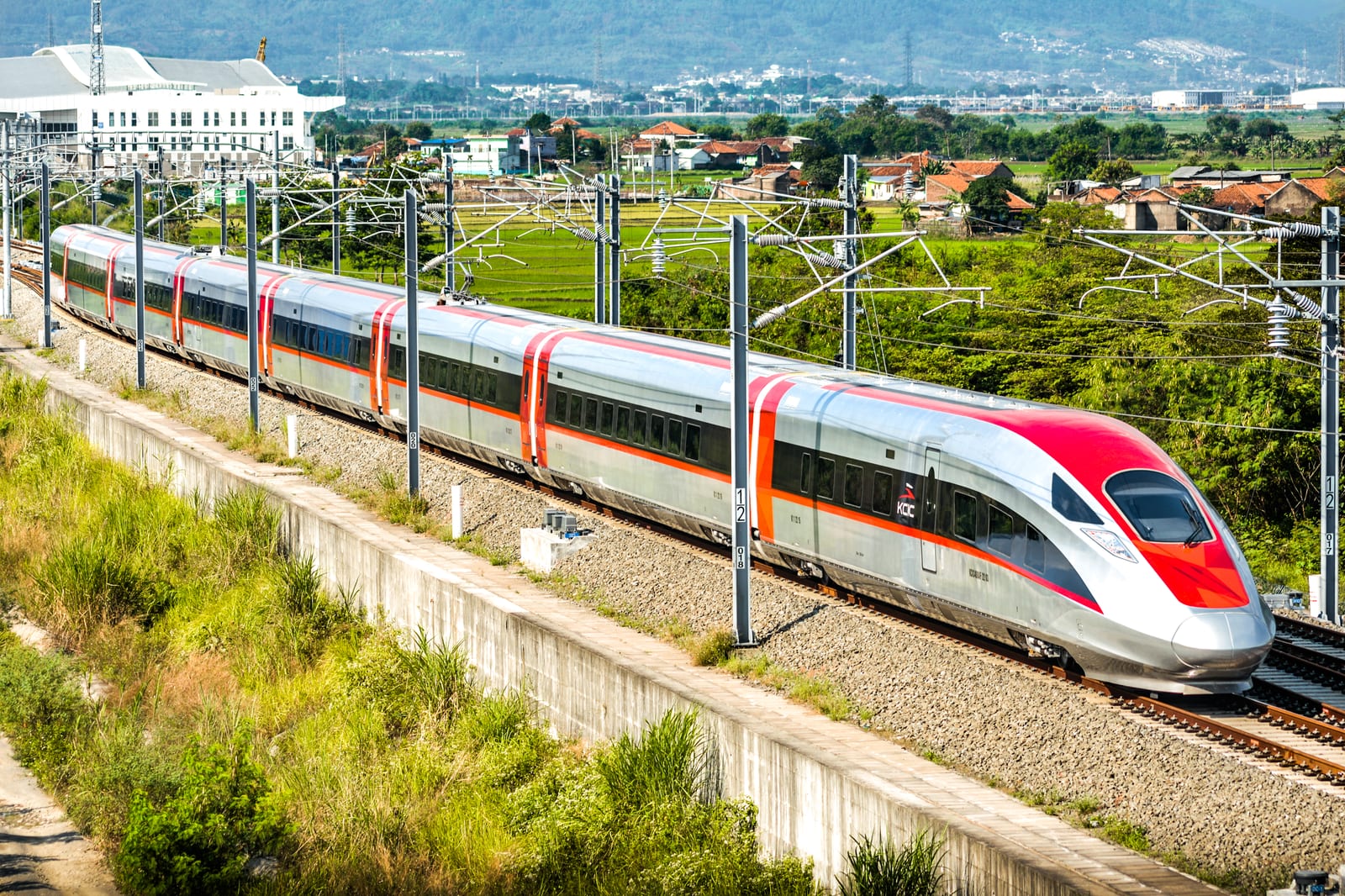
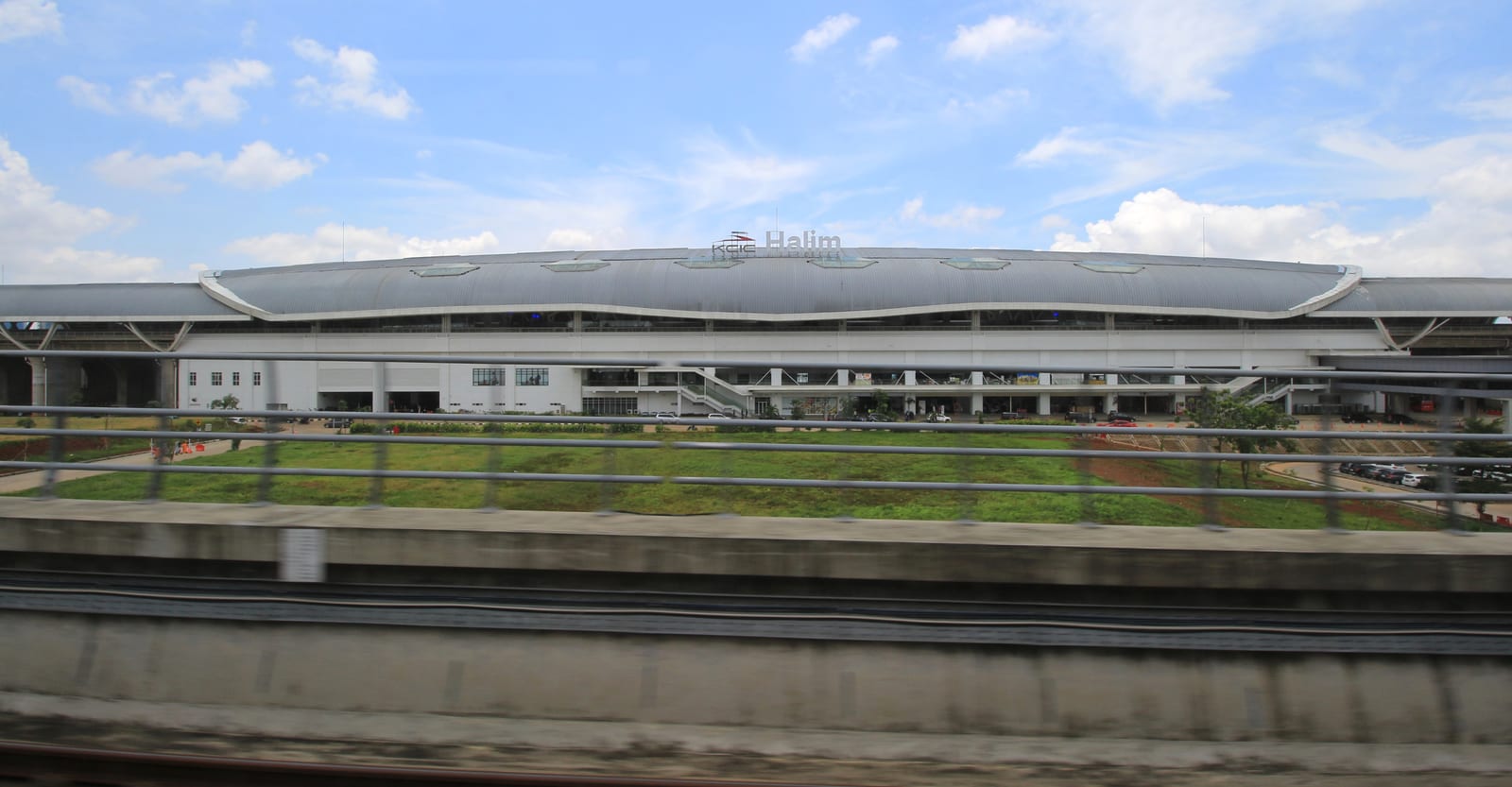
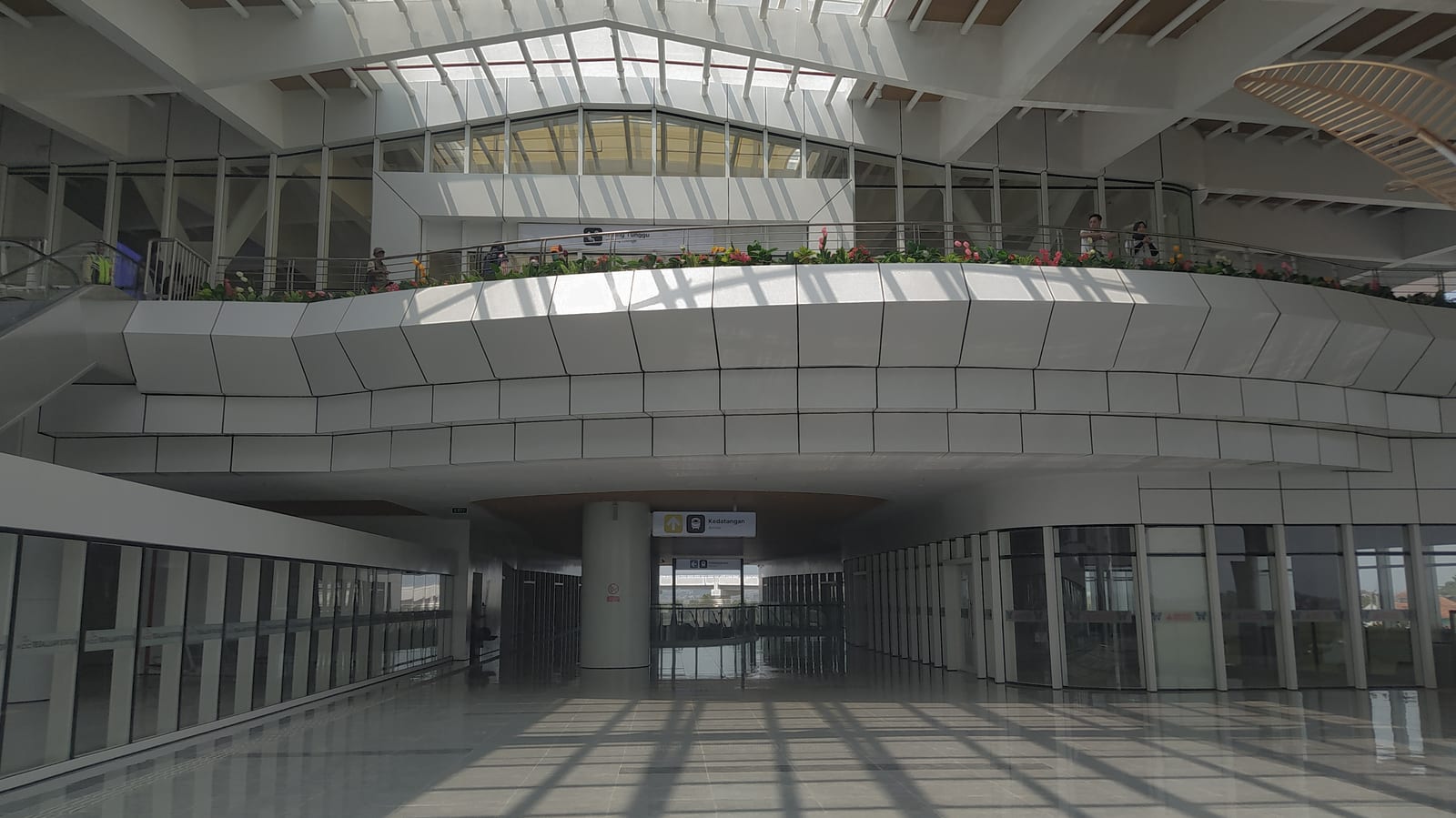
The journey begins underground-modern. Halim station, tucked beside the old Jakarta airport of the same name, is all glass and pale stone, wired into the capital's LRT so you can arrive without touching a road. The trains that wait there are KCIC400AF sets — sleek, red-and-white, a version of China's Fuxing high-speed train, eight cars long and built by CRRC. You board through wide automatic doors into cabins that feel like a good airline: broad seats, big windows, a hush.
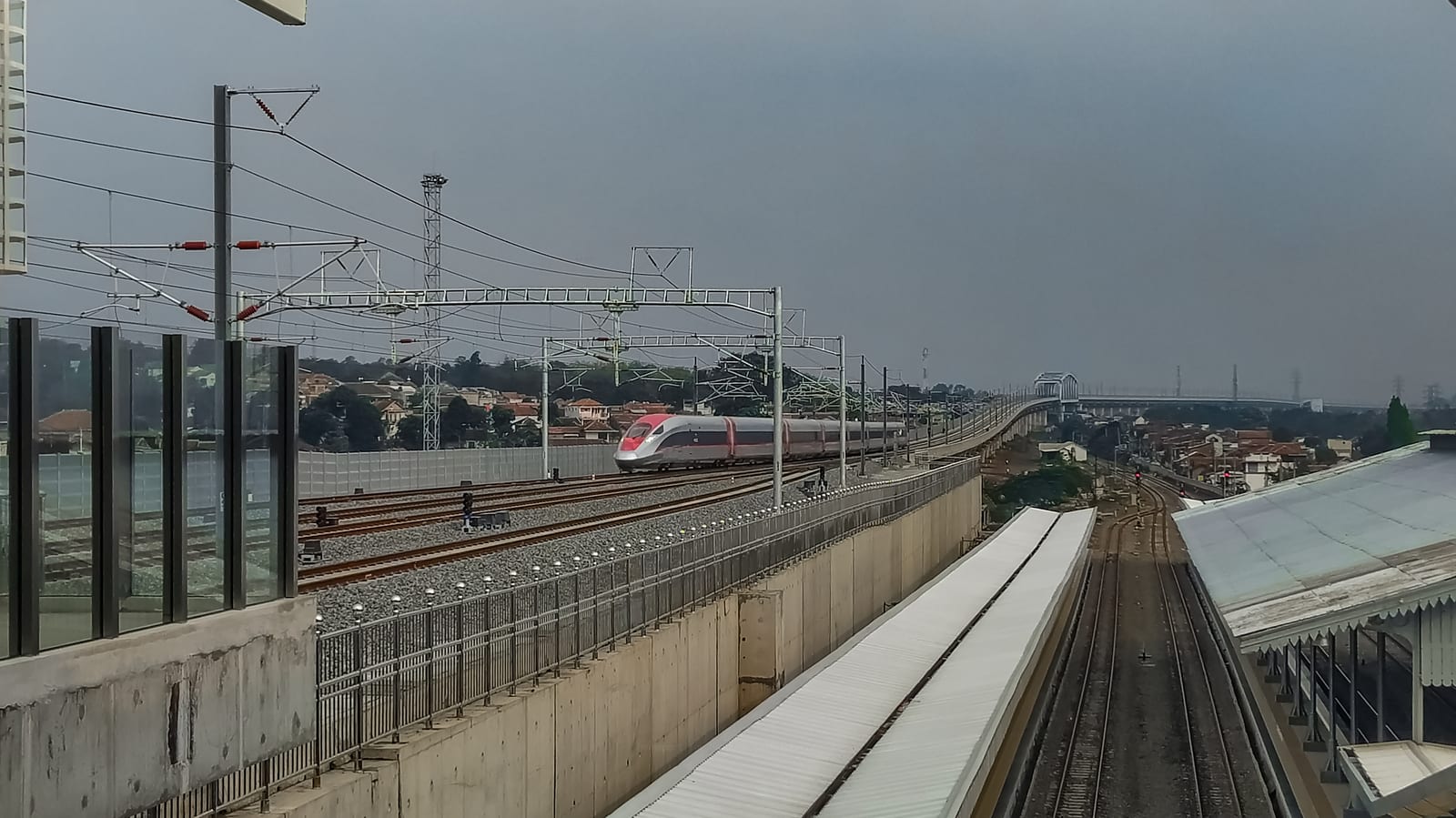
Pull out of Halim and the acceleration is deceptively gentle — no lurch, just a steady, relentless gathering of pace. Within a few minutes the near ground has become a smear of green and the little speed display at the end of the carriage is reading 300, then 350. The engineering is doing the work: to hold that speed across crowded, folded Java, the builders put much of the 142-kilometre line up on elevated viaduct or drove it through thirteen tunnels, the longest nearly four and a half kilometres. You feel almost none of it. Coffee sits flat on the tray table while the world outside tears past.
There is a single intermediate stop for most services, Karawang, added at the end of 2024 out in the industrial plains east of Jakarta. Then the land begins to lift and crumple as you approach the highlands, and the train slows for Padalarang, on the northwestern edge of Bandung. This is where the majority of passengers step off — not because the line ends, but because Padalarang is where the feeder train connects into the old city, eighteen minutes down the valley. The bravest carry on the last few minutes to Tegalluar, the official terminus, a vast new station standing among half-built suburbs on the far side of Bandung.
For all the noise around it — the delays, the debt, the years of argument over whether Indonesia needed a bullet train at all — the thing that remains, once you have ridden it, is how ordinary it feels to do something so extraordinary. You sit down in Jakarta, you read a few pages, and you stand up in the cool green hills, three hours of old road-and-rail misery folded into forty painless minutes. That is what high-speed rail does to a country, and Java is the first place in Southeast Asia to feel it.
Along the route
NFarras / Wikimedia Commons · CC BY-SA 4.0The fastest train in Southeast Asia
Whoosh runs at 350 km/h, quick enough to turn the old three-hour crawl between Jakarta and Bandung into a 40-minute hop. It opened in October 2023 as Southeast Asia's first high-speed railway.Dwifa Bagaskoro S A / Wikimedia Commons · CC BY-SA 4.0Flying over the rice fields
For much of its 142 kilometres the line runs on elevated viaduct or dives through one of thirteen tunnels, so the view keeps opening out: paddy fields, villages and the volcanoes of West Java, at a speed that blurs the near ground while the mountains hang still.Agna ihsan / Wikimedia Commons · CC BY-SA 4.0A bullet train with a backstory
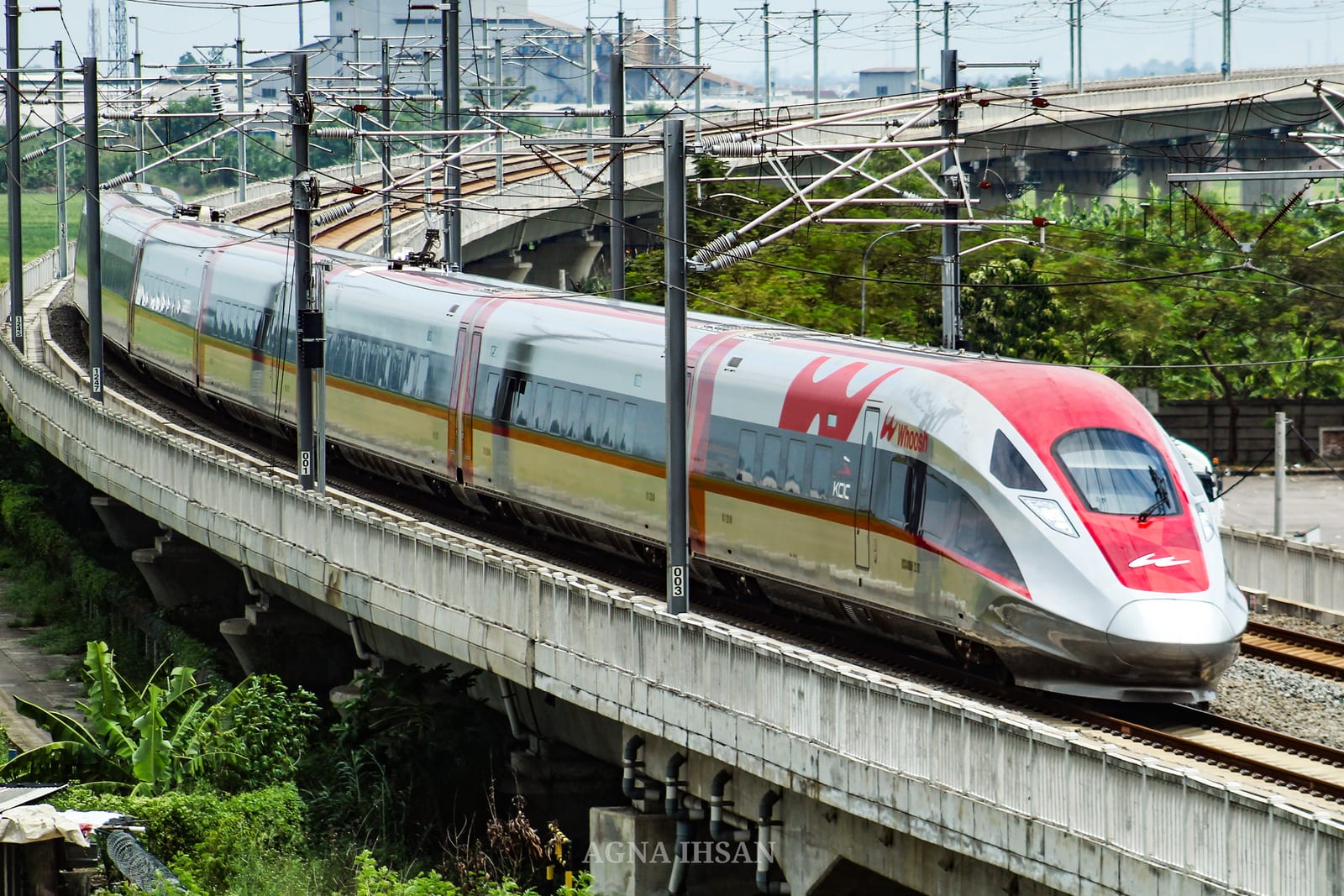
The trains are KCIC400AF sets, a version of China's Fuxing, built by CRRC and run by a joint venture. The 7-billion-dollar project was years late and hugely debated, which only makes the finished thing more striking.A bit of history
Culture & experiences along the way
NFarras / Wikimedia Commons · CC BY-SA 4.0Watching the numbers climb
The best show on board is the little speed display at the end of the carriage. It ticks up fast — 200, 300 — and settles at 350 km/h, and yet a coin will nearly stand on the tray table. The cabins are wide, quiet and airline-smart; the whole run is over so quickly you will want to ride it back just to watch the number again.NFarras / Wikimedia Commons · CC BY-SA 4.0The change at Padalarang
Here is the one thing to plan for: Whoosh does not run into central Bandung. The city-end terminus, Tegalluar, is out on the southeastern fringe, so most travellers get off one stop earlier at Padalarang and cross to a free feeder train that runs into Bandung Station in about twenty minutes. It is simple and included in the fare — just don't expect to step straight out into the old town.Dwifa Bagaskoro S A / Wikimedia Commons · CC BY-SA 4.0Bandung for the day
Whoosh makes Bandung an easy day trip from Jakarta. The old Dutch hill capital sits about 700 metres up, cooler and greener than the coast, famous for its Art Deco streets, its weekend crowds hunting the factory outlets on Jalan Riau, and some of the best street food in Java. Go up in the morning, eat your way around, and be back in the capital by night.Timetables
Whoosh is a turn-up-and-go railway rather than a once-a-day event. Since a big frequency increase on 1 February 2025, the operator runs around 60 services a day each way, spaced as little as 30 minutes apart at busy times — so you rarely wait long, though popular departures still sell out at weekends and holidays.
Departure window (as of 2026 — confirm current times before travelling):
| First departure | Last departure | Frequency | |
|---|---|---|---|
| Halim (Jakarta) → Bandung | 06:25 | 21:25 | ~every 30–60 min |
| Tegalluar (Bandung) → Jakarta | 06:05 | 21:05 | ~every 30–60 min |
The nonstop run takes about 40 minutes (Halim to Padalarang around 30 minutes; on to Tegalluar about 47).
Good to know:
- Book the feeder into the timing. If you are heading for central Bandung, get off at Padalarang and cross to the free KA Feeder train, which is timed to meet Whoosh arrivals and takes about 18 minutes into Bandung Station. Coming back, allow for the feeder before your Whoosh departure.
- Classes. Trains carry Premium Economy (the bulk of the seats), plus Business/VIP and a small First cabin at the ends. All are comfortable; the cheaper seats are perfectly pleasant for so short a ride.
- Buy ahead at peaks. Weekday commutes, Friday evenings, Sunday returns and public holidays are the busy times. Book through the operator's app or website, or a partner platform, to be sure of a seat.
- Getting to Halim. Halim station connects to Jakarta's LRT, which is the easiest way in from much of the city and avoids the notorious road traffic.
Times and frequencies as of 2026 and subject to change; the schedule has already been revised more than once as ridership grows. Confirm current departures — and the feeder connection — with the operator before you travel (see the Tickets section below).
Tickets
Whoosh is run by Kereta Cepat Indonesia China (KCIC), the Indonesian–Chinese joint venture that built the line. Tickets are sold through the operator's official website and "Access by KAI / Whoosh" app, at station counters and kiosks, and through travel platforms such as Traveloka.
Fares are dynamic — they rise on busy departures and for the higher classes — but the ride is inexpensive by any high-speed standard, with Premium Economy the most affordable and largest cabin, then Business/VIP, and a small First class. A single ticket covers the whole journey including the Padalarang feeder train into Bandung, so you don't buy that separately.
Buy ahead for weekend and holiday travel, when the best departures fill up; midweek and off-peak, there is often space on the day. Below, the operator's booking channel and its main site for live times and fares.
Book your tickets
Whoosh · Jakarta to Bandung
Southeast Asia's first bullet train
The 40-minute high-speed run from Halim in East Jakarta toward Bandung, with a free feeder connection from Padalarang into the city. Frequent daily departures; classes from First down to Premium Economy. Book through the operator's official channels.
Book Tickets (opens in a new tab, on KCIC / Whoosh)via KCIC / WhooshTimetable & booking · Whoosh
Departures and the feeder connection
Live departure times, fares and the Padalarang feeder-train schedule from the operator, Kereta Cepat Indonesia China. Trains run roughly hourly through the day; buy ahead at peak times and around holidays, when popular departures fill up.
Book Tickets (opens in a new tab, on KCIC / Whoosh)via KCIC / WhooshRail Passes
No rail pass covers Whoosh. Interrail and Eurail are European schemes, and Indonesia is not among the 33 countries in Interrail's list of covered railway companies. KCIC sells each journey as a reserved ticket at a dynamic fare, through its website and app or at the station.
Checked October 2026 against Interrail's list of railway companies (opens in a new tab).
Places to Visit
Whoosh is really a bridge between two very different cities, and the pleasure of it is having both within easy reach: Bandung, the cool Art Deco hill capital in its ring of volcanoes, and Jakarta, the vast, humming, not-conventionally-pretty capital at the other end. Jakarta has more than fits on this page — the colossal Istiqlal mosque facing the neo-Gothic cathedral, and a restaurant-and-bar scene to match any Asian megacity.
Because the train is so quick, either city works as a base for a day trip to the other — up to Bandung for the cool air and the food, or down to Jakarta for the museums and the nightlife, and home again the same evening.
 RaiyaniM / Wikimedia Commons · CC BY-SA 4.0 · cropped
Bandung
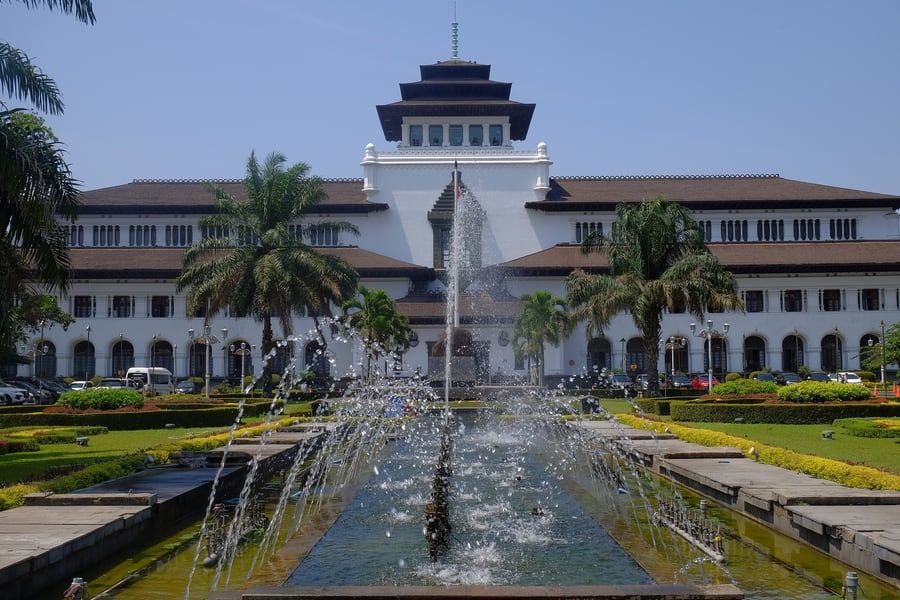
The reason most visitors ride. Bandung sits about 700 metres up in a ring of volcanoes, cooler and greener than the steaming capital, and the Dutch who called it the Paris of Java left it a remarkable stock of 1920s architecture. Gedung Sate is the emblem: begun in July 1920 and finished in 1924, its central pinnacle carries six spheres that look like a satay skewer and stand for the six million guilders it cost. It is the West Java governor's seat today, and a museum.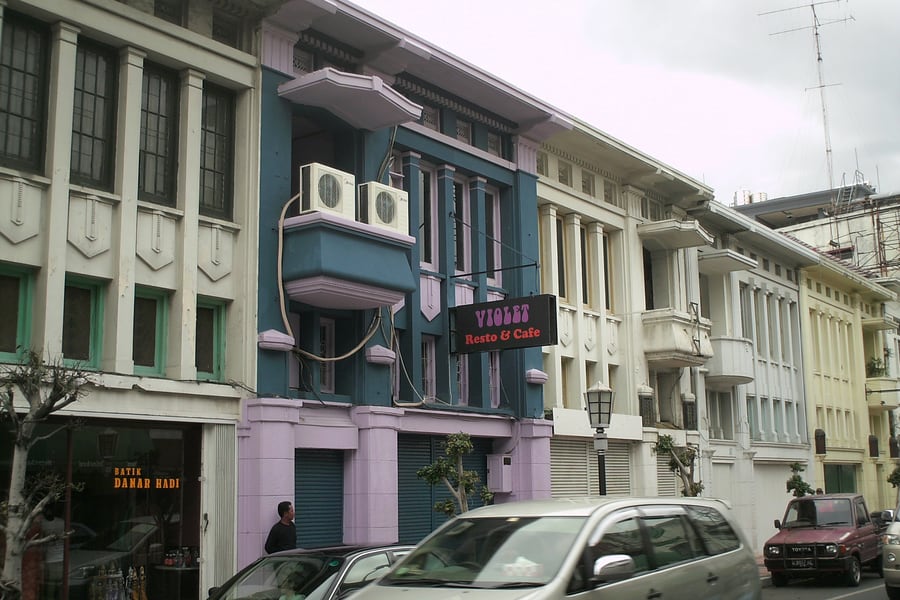 Jagawana / Wikimedia Commons · CC BY-SA 3.0 · cropped
Braga and the Art Deco quarter
Jalan Braga was the shopping promenade of colonial Bandung, and its parade of shopfronts still carries the city's Art Deco reputation. The Savoy Homann and the Preanger hotels stand close by, and Villa Isola out at the teacher-training campus. Modern Bandung runs on much the same instincts — factory outlets along Jalan Riau and Jalan Dago, coffee houses on Braga, and street food that many Indonesians rate the best on Java.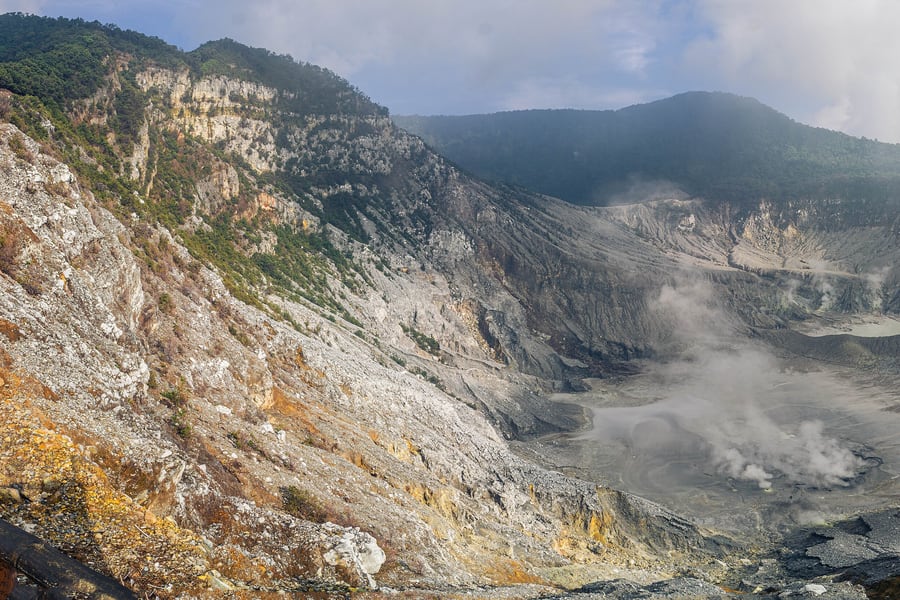 DimasSepur / Wikimedia Commons · CC BY-SA 4.0 · cropped
Tangkuban Perahu
North of Bandung, a 2,084-metre volcano you can drive very nearly to the top of. Kawah Ratu, the Queen's Crater, is the big one — a grey, steaming amphitheatre you look straight down into from the rim. The name means "upturned boat" in Sundanese, after Sangkuriang, who kicked over the boat he had failed to finish before dawn. It last erupted in July 2019, so check the alert level before setting out.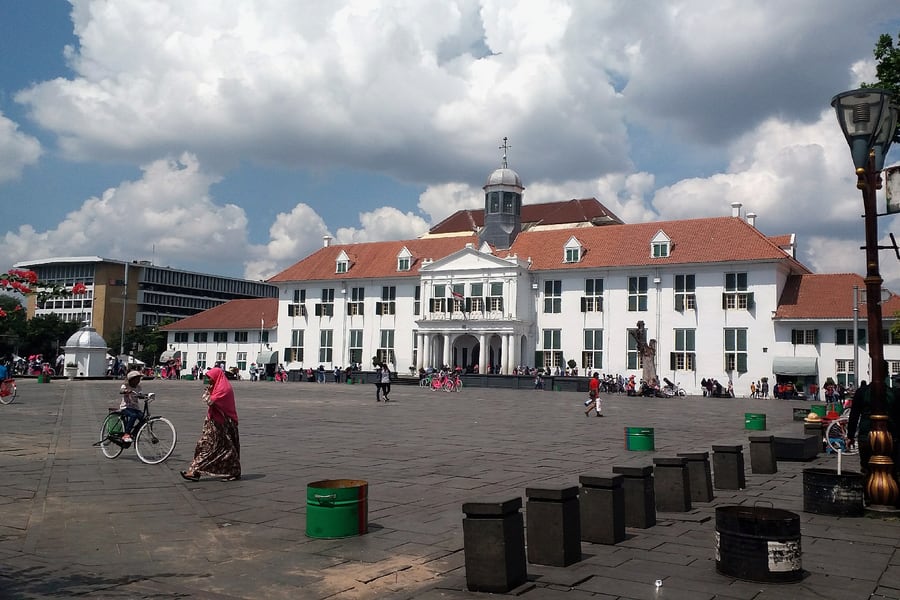 J-lorentz / Wikimedia Commons · CC BY-SA 4.0 · cropped
Kota Tua
Jakarta is not conventionally pretty, but its old Dutch quarter rewards a walk. Fatahillah Square is the heart of it, faced by the Stadhuis — the city hall of Batavia, rebuilt to the form you see by 1710 and the Jakarta History Museum since 1974. A Portuguese cannon and a colonial fountain sit on the cobbles, hired bicycles in straw hats wobble across them, and shuttered warehouses and cafés close the square in.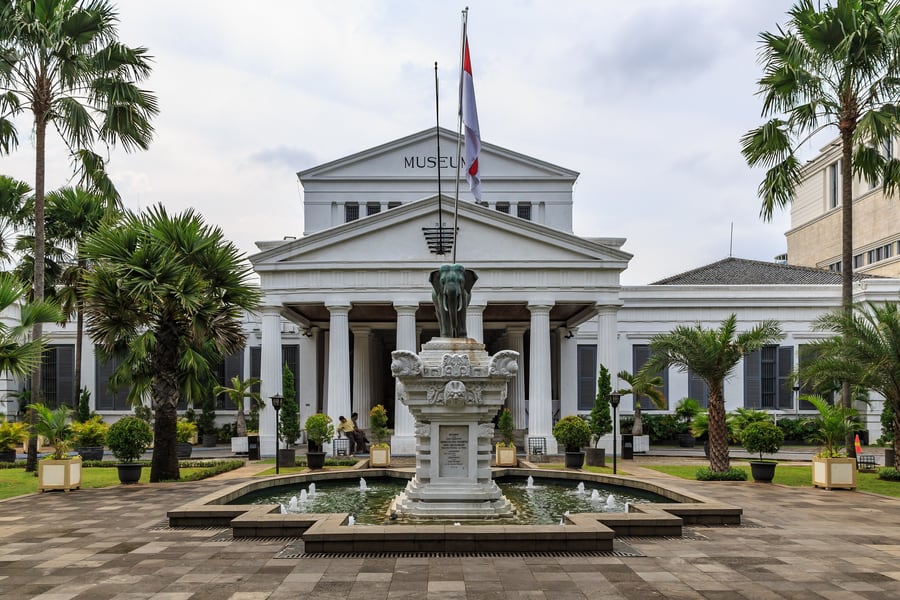 Photo by CEphoto, Uwe Aranas / Wikimedia Commons · CC BY-SA 3.0 · cropped
The National Museum
The best single collection in the country, and the obvious first stop in Jakarta. It grew out of a learned society founded in 1778; the neoclassical building opened in 1868, and everyone calls it Gedung Gajah, the Elephant Building, after the bronze elephant King Chulalongkorn of Siam gave the city in 1871. Some 141,000 objects. A fire in September 2023 shut it for over a year — it reopened in October 2024.Where to Sleep
Whoosh is a day-trip train for many people, but both ends reward an overnight stay — and the choice is huge at every price.
In Bandung, the romantic option is one of the grand old hotels the Dutch left behind. The Grand Hotel Preanger and the Savoy Homann, both on the central Asia–Afrika street, are living Art Deco landmarks and a treat to stay in; around them are plenty of smart modern business hotels and, up in the hills toward Dago and Lembang, cooler resort-style places with valley views. Backpackers and mid-range travellers do well around Braga and the university district.
In Jakarta, the international chains cluster in the central business triangle around Sudirman and Thamrin, close to the malls and the metro; the quieter, more characterful boutique places are scattered through Menteng and Kemang. If your trip is really about the train, staying somewhere with easy access to the LRT — which feeds Halim station directly — will make catching your Whoosh painless.
Wherever you land, book ahead around Indonesian public holidays and the long Idul Fitri travel season, when both cities and every train between them fill to bursting.
Questions or corrections
Planning this trip and stuck on something, or spotted a time, fare or detail that has changed? Send us a message about Whoosh — the Jakarta–Bandung Bullet Train. We read every one, and we update this page when something has changed.