Yerevan to Gyumri — the line to Armenia's second city
Ліонкінг / Wikimedia Commons · Public domain · 2009 · cropped
- DistanceAbout 154 km
- Duration2 hr 10 min by express, about 3 hr 10 min stopping
- Best seasonAll year; the express runs Fridays to Sundays
Introduction
Gyumri is Armenia's second city, 154 kilometres north-west of Yerevan and 1,509 metres above the sea, and the train is the plain way to reach it. Three stopping trains a day in each direction take a little over three hours, calling at the small stations of the Ararat plain and the high ground below Aragats. On Fridays, Saturdays and Sundays a two-car express runs between the two cities without a stop in 2 hours 10 minutes.
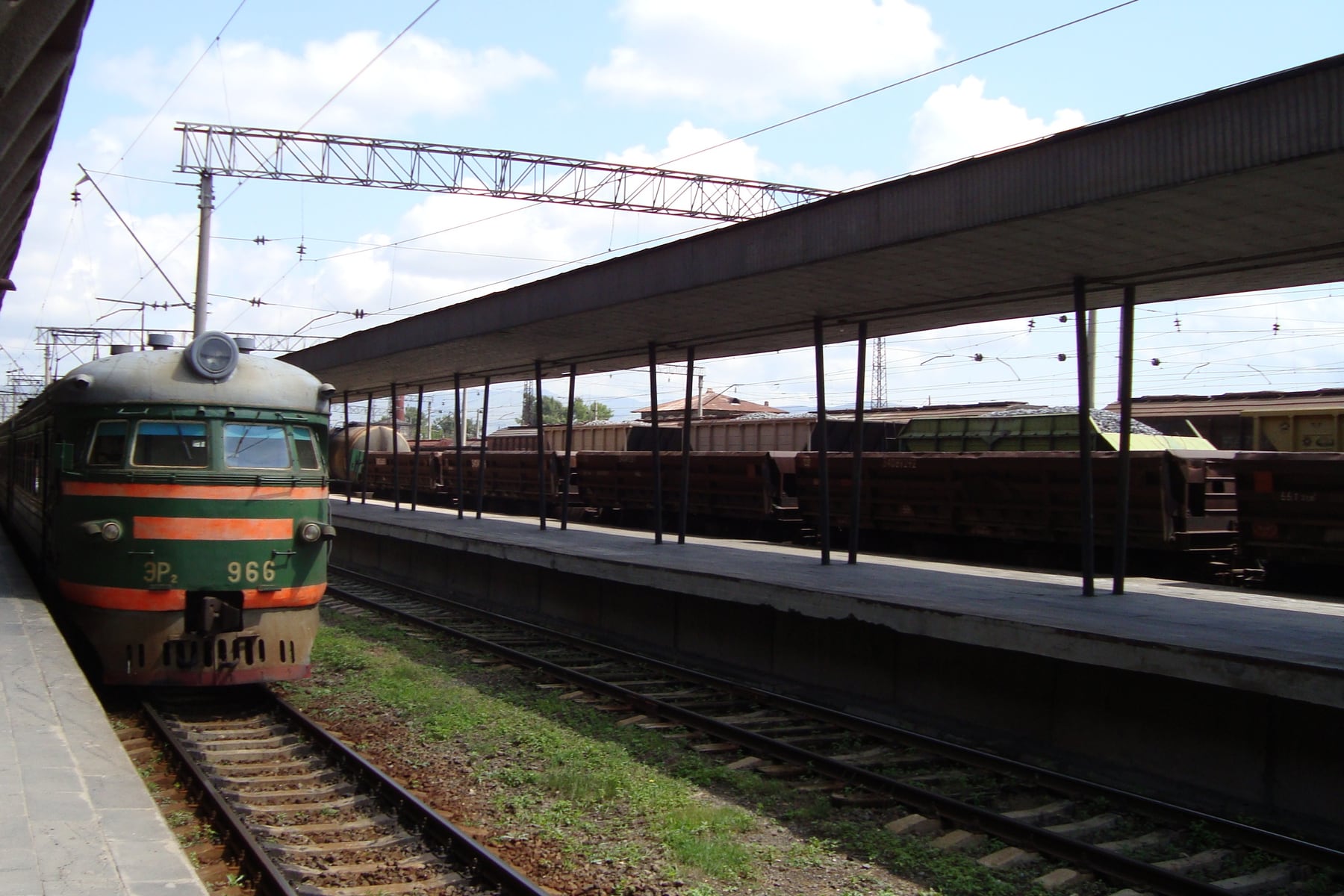
The city at the end of the line is the reason to go. The Kumayri district, mostly from the 19th century and largely intact through the 1988 Spitak earthquake that devastated the rest of Gyumri, is one of the few places where old urban Armenian architecture survives at this scale. The photograph at the head of this page shows an ER2 at Gyumri station in 2009, in the green the class wore then.
The Journey
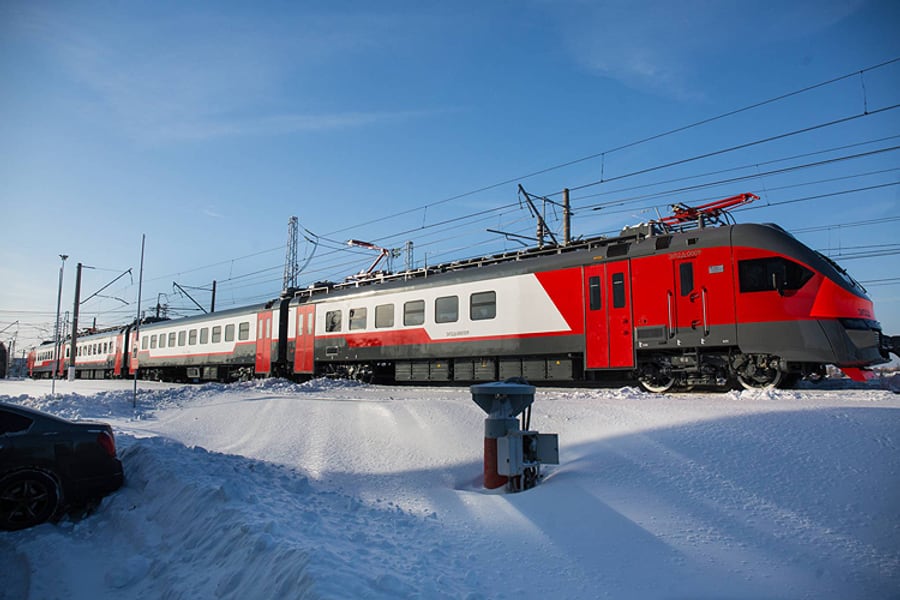
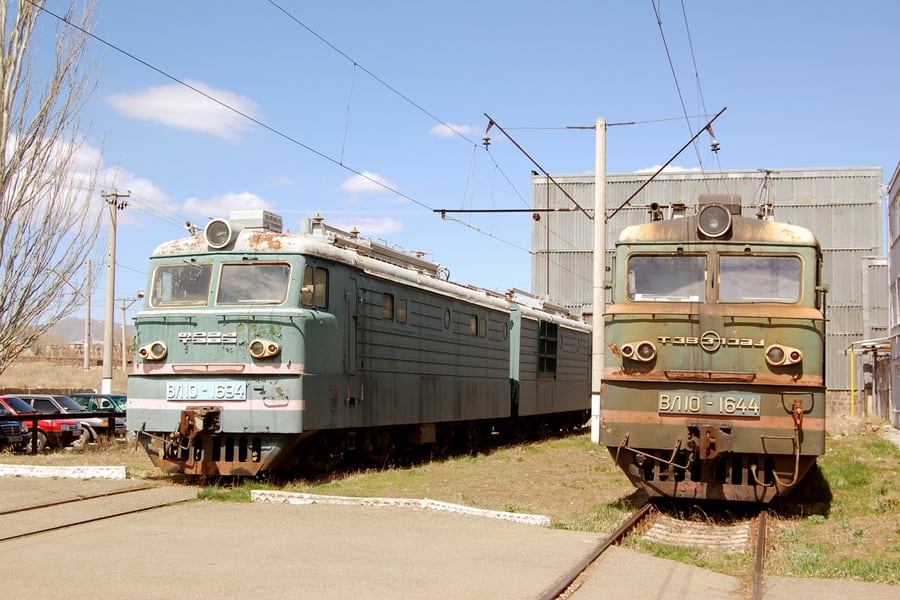
Two kinds of train work this line, and the booking system names which one you get. The older is the ER2, the suburban electric unit built at Riga for the Soviet railways. The newer is the EP2D, a Russian-built electric unit in a two-carriage formation, bought by South Caucasus Railway for this route, where the express began in March 2018. In November 2026 the EP2D worked the express, trains 684 and 687 every day, and trains 685 and 686 from Monday to Friday. The ER2 worked trains 681 and 682 every day and took over 685 and 686 at weekends.
The train leaves Yerevan's main station and runs out across the Ararat plain, calling at Noragavit after nine minutes and Masis after nineteen. Mount Ararat stands to the south, in Turkey, and Masis takes its name from the mountain's Armenian one. Ejmiatsin, the seat of the Armenian Church, comes up at 34 minutes. Armavir is the longest stop on the stopping trains, up to four minutes at a station of red and black stone.
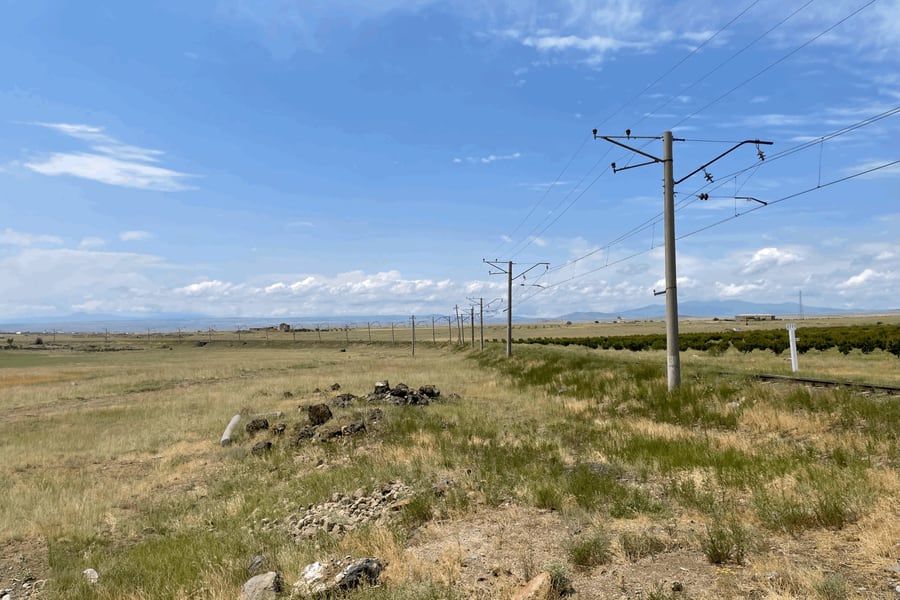
Past Araks and Dalarik the line turns north and starts to rise. Karakert, Arteni and Aragats are small stations on the open land below the western side of Mount Aragats, at 4,090 metres the highest point in Armenia. The next call is named Ani, for the medieval capital of the Bagratid kings, but the ruins are out of reach by rail. They stand across the Akhurian River in Turkey, beside a border that is closed.
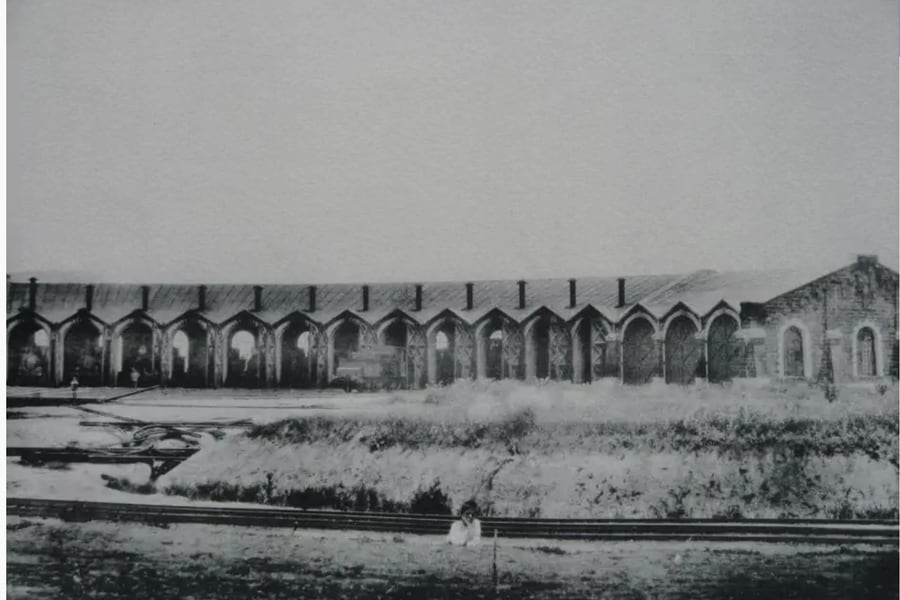
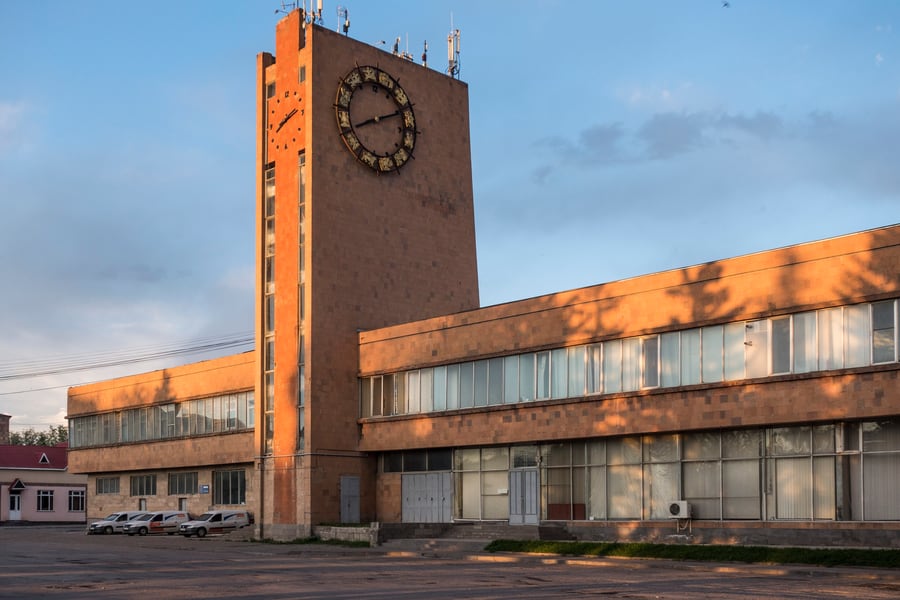
The last stretch crosses the Shirak plain through Agin and Bayandur. Gyumri was called Alexandropol when the railway reached it from Tiflis in 1899, and its junction, formed two years earlier, is the oldest and largest in Armenia. Trains finish at a brick station with a clock tower.
Along the route
 Well-read MountainMan / Wikimedia Commons · CC BY-SA 4.0 · 2023 · cropped
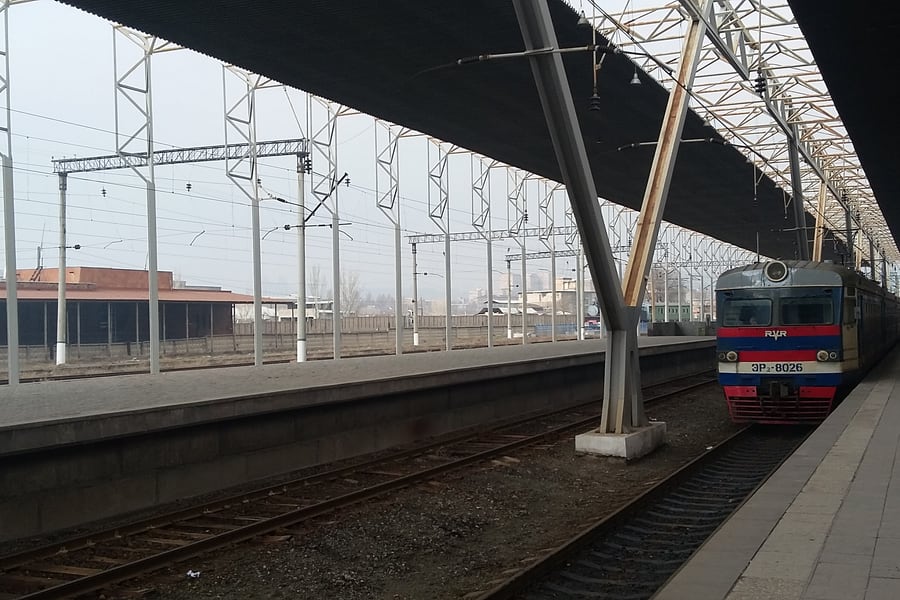
Masis, nineteen minutes out
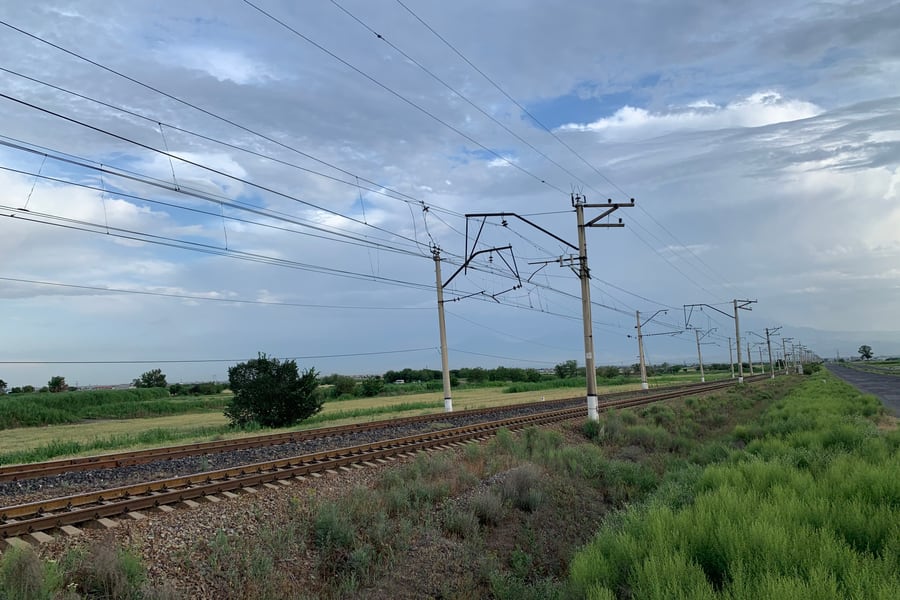
The line runs out across the Ararat plain and calls at Masis, which carries the mountain's Armenian name. Ararat stands to the south, in Turkey, beyond a border that is closed.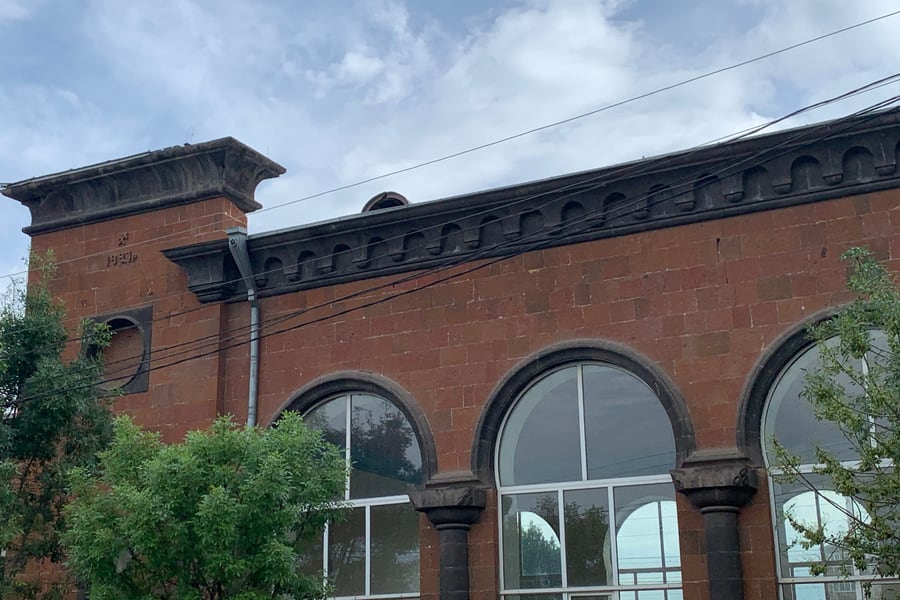 Well-read MountainMan / Wikimedia Commons · CC BY-SA 4.0 · 2023 · cropped
The long stop at Armavir
The stopping trains stand here for up to four minutes, the longest pause of the run, at a station of red and black stone.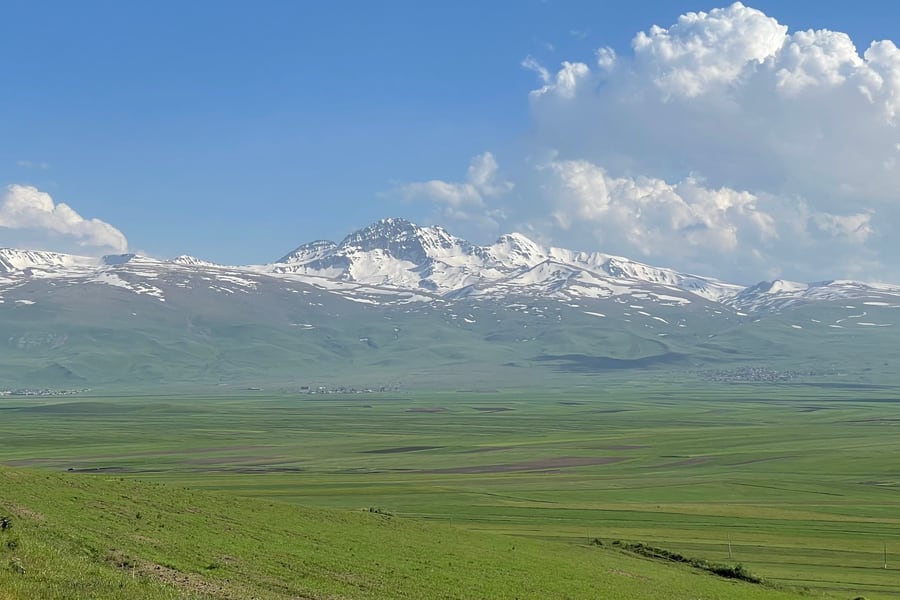 M.D. Shahinyan / Wikimedia Commons · CC BY-SA 4.0 · 2026 · cropped
Below Aragats
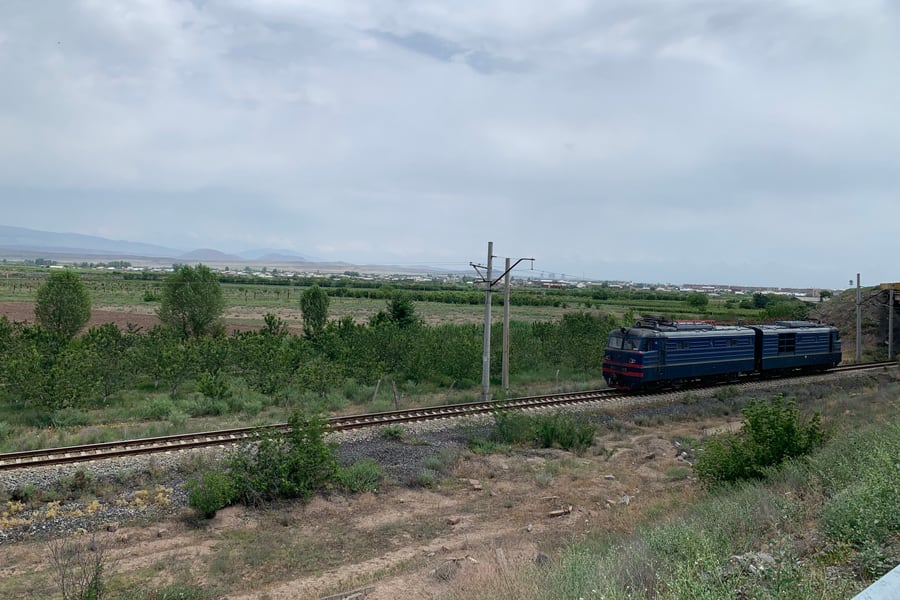
Karakert, Arteni and Aragats are small stations on the high ground to the west of the massif, whose northern summit, at 4,090 metres, is the highest point in Armenia.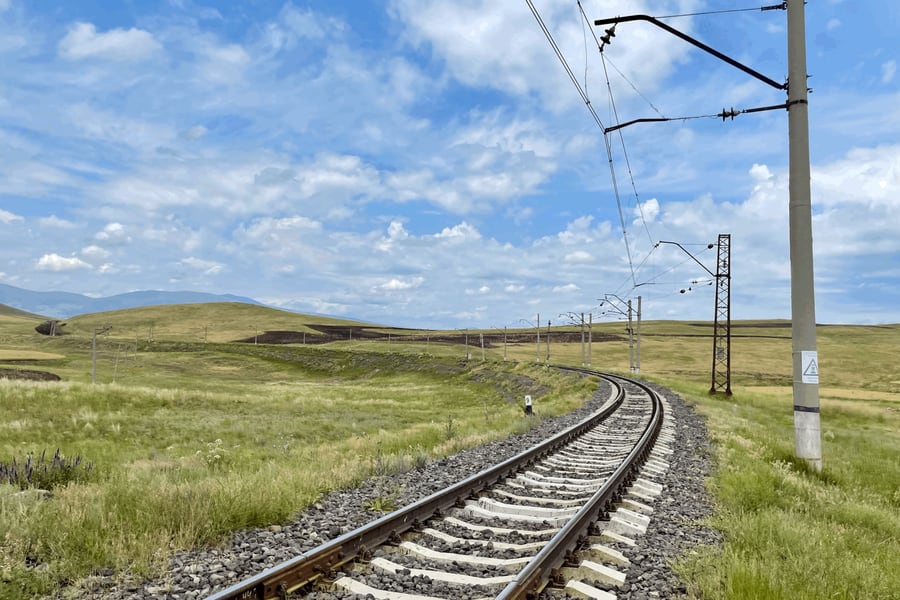 Well-read MountainMan / Wikimedia Commons · CC BY-SA 4.0 · 2024 · cropped
A station called Ani
The halt is named for the medieval capital across the Akhurian River, in Turkey. The train stops here, and the ruins stay on the other side of a closed border.A bit of history
Culture & experiences along the way
 Vacio / Wikimedia Commons · CC BY-SA 3.0 · 2013 · cropped
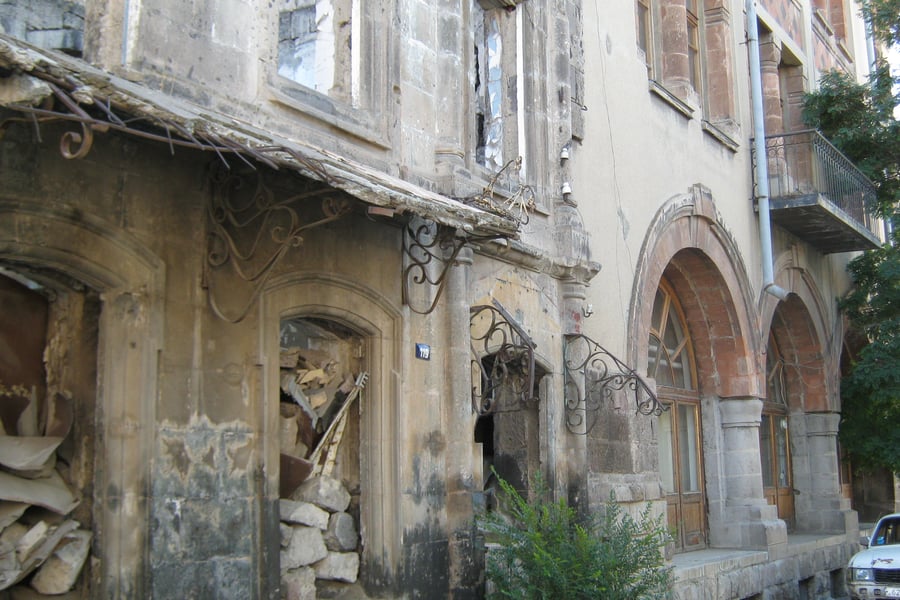
The stone streets of Kumayri
The old town of Gyumri occupies the centre and west of the modern city, and most of it dates from the 19th century. The operator points visitors to its black tuff buildings. Not every house has been repaired: some still stood empty, like this one, when it was photographed in 2013.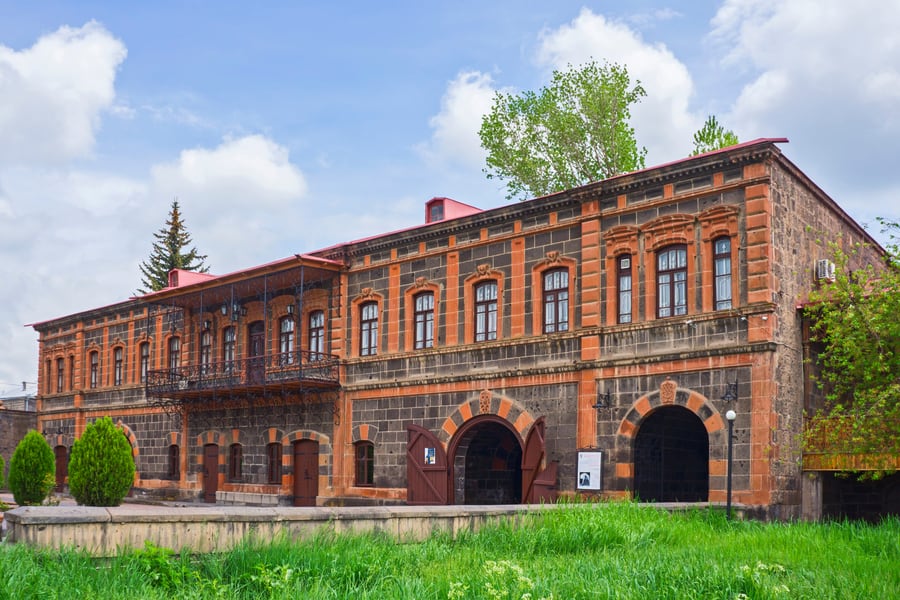 Armenak Margarian / Wikimedia Commons · CC BY-SA 4.0 · 2019 · cropped
The Dzitoghtsyan house museum
The Dzitoghtsyan Museum of Social Life and National Architecture fills an old mansion of black and orange stone. Its collections cover Gyumri's history and everyday life, and hang paintings alongside them. The operator recommends it as the place to get to know the city's old urban way of life.Timetables
Three stopping trains run each way every day, and the express runs Fridays, Saturdays and Sundays. Times are as of November 2026, from South Caucasus Railway (opens in a new tab)'s published timetable and its booking system. Intermediate times are arrivals; stops last one minute, and up to four at Armavir. The express left Gyumri at 19:40 through the summer of 2026 and has left at 17:55 since 25 September.
Yerevan to Gyumri
| Train | Runs | Yerevan | Ejmiatsin | Armavir | Ani | Gyumri |
|---|---|---|---|---|---|---|
| 684 | Daily | 07:55 | 08:29 | 08:51 | 10:10 | 11:03 |
| 100 express | Fri, Sat, Sun | 09:15 | no stop | no stop | no stop | 11:25 |
| 686 | Daily | 14:25 | 14:59 | 15:21 | 16:36 | 17:30 |
| 682 | Daily | 18:25 | 18:58 | 19:21 | 20:52 | 21:46 |
Gyumri to Yerevan
| Train | Runs | Gyumri | Ani | Armavir | Ejmiatsin | Yerevan |
|---|---|---|---|---|---|---|
| 681 | Daily | 07:45 | 08:40 | 09:55 | 10:22 | 10:57 |
| 687 | Daily | 11:55 | 12:48 | 14:03 | 14:27 | 15:05 |
| 101 express | Fri, Sat, Sun | 17:55 | no stop | no stop | no stop | 20:05 |
| 685 | Daily | 18:15 | 19:10 | 20:26 | 20:50 | 21:23 |
A day in Gyumri works on any day of the week by train 684 and the 18:15 back, which allows about seven hours in the city. At a weekend the express out and back leaves six and a half.
Tickets
Tickets are sold at station counters and through the operator's local train site (opens in a new tab), which requires an account. The express sells numbered seats in its two carriages, 132 in all. The stopping trains do not, so a ticket on those is good for any free seat. Under-sevens travel free with an adult if they do not take a separate seat, and 10 kilograms of hand luggage is included.
The stopping fare depends on which train is running that day, because the EP2D costs a little more than the ER2. Prices are the operator's for one adult, one way, read from its booking system in November 2026.
Book your tickets
Express
Yerevan to Gyumri, trains 100 and 101, one way
A numbered seat on the two-carriage express, Fridays to Sundays.
Book Tickets (opens in a new tab, on railway.am)via railway.amStopping train, EP2D
Yerevan to Gyumri, one way
The fare on the days the newer electric unit is running, with any free seat.
Book Tickets (opens in a new tab, on railway.am)via railway.amStopping train, ER2
Yerevan to Gyumri, one way
The fare on the older electric unit, with any free seat.
Book Tickets (opens in a new tab, on railway.am)via railway.amRail Passes
No rail pass covers this train. Armenia has no Interrail or Eurail One Country Pass, and it is not among the countries the Global Pass covers. At 2,500 dram for the express, a pass would have very little to save in any case. Tickets come straight from South Caucasus Railway, at the station or through its local train site.
Places to Visit
Gyumri takes a day on foot. The sights of the Ararat plain lie near the stations at Ejmiatsin and Armavir, and with three stopping trains a day it pays to check the next one before leaving the platform.
 P. Hughes / Wikimedia Commons · CC BY 4.0 · 2024 · cropped
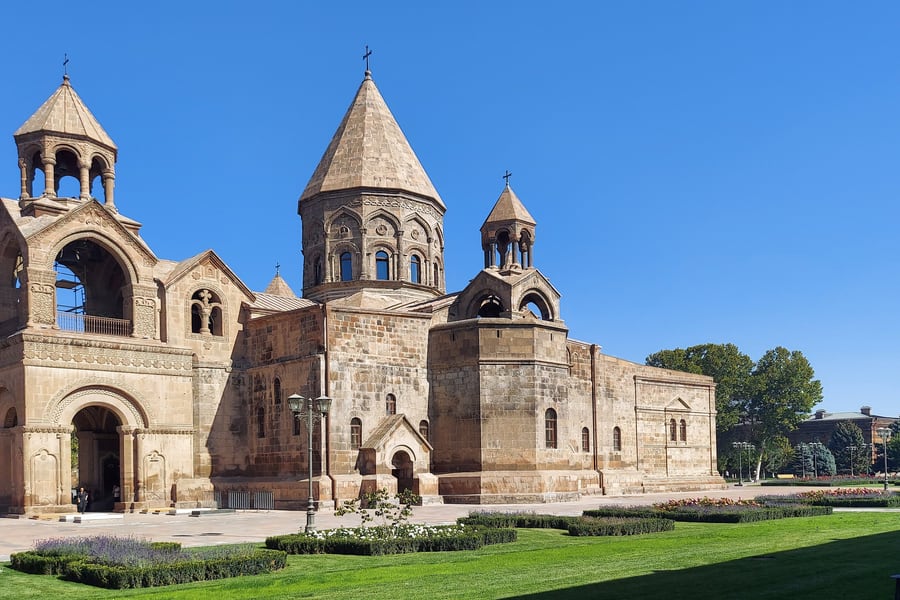
Etchmiadzin Cathedral, at Ejmiatsin
The mother church of the Armenian Apostolic Church and often called the oldest cathedral in the world. Tradition dates the first building to between 301 and 303, and the core of the present one to 483 or 484. UNESCO listed it in 2000 with the churches of Saint Hripsime, Saint Gayane and Saint Shoghakat. Train 684 calls at Ejmiatsin 34 minutes out of Yerevan.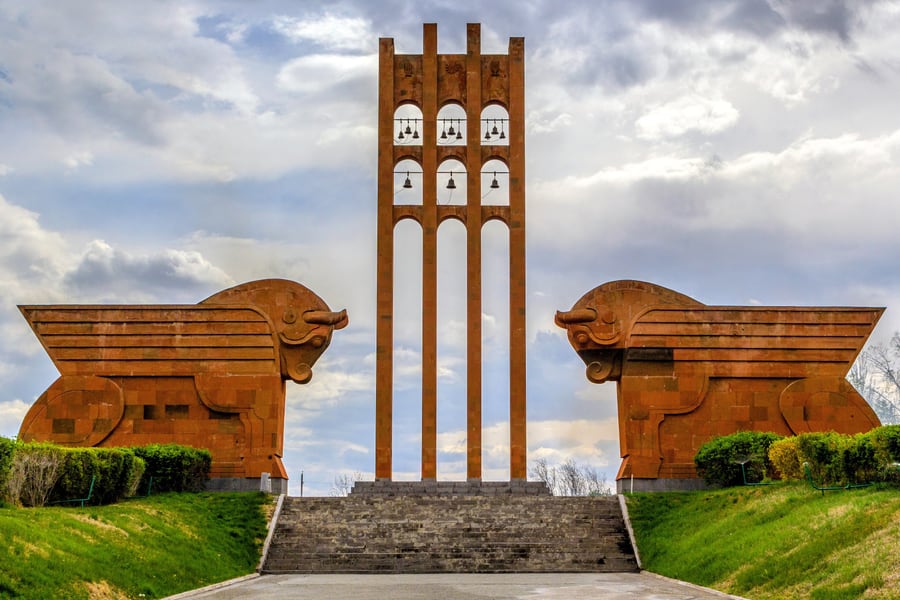 Սէրուժ Ուրիշեան (Serouj Ourishian) / Wikimedia Commons · CC BY-SA 3.0 · 2014 · cropped
Sardarapat Memorial, near Armavir
Eleven kilometres south-west of Armavir town, this complex marks the battle fought here from 21 to 29 May 1918. Winged oxen of red tufa flank the entrance to a 26-metre bell tower with twelve bells, which ring each year on the day of the victory. The architect was Rafael Israelyan.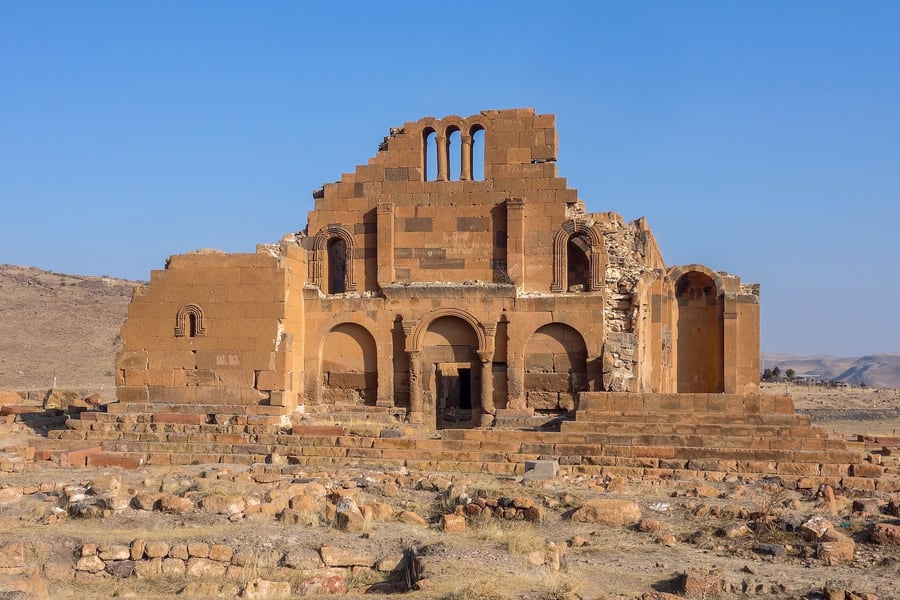 Armenak Margarian / Wikimedia Commons · CC BY-SA 4.0 · 2019 · cropped
Yererouk, beyond Ani station
One of the earliest Christian churches left standing in Armenia, on a plateau near the Akhurian River and the Turkish frontier, about 5 kilometres south-east of the ruins of Ani. It was begun in the 4th century and finished by the 6th, and is on UNESCO's Tentative List. The village of Anipemza lies 7 kilometres south of Ani station.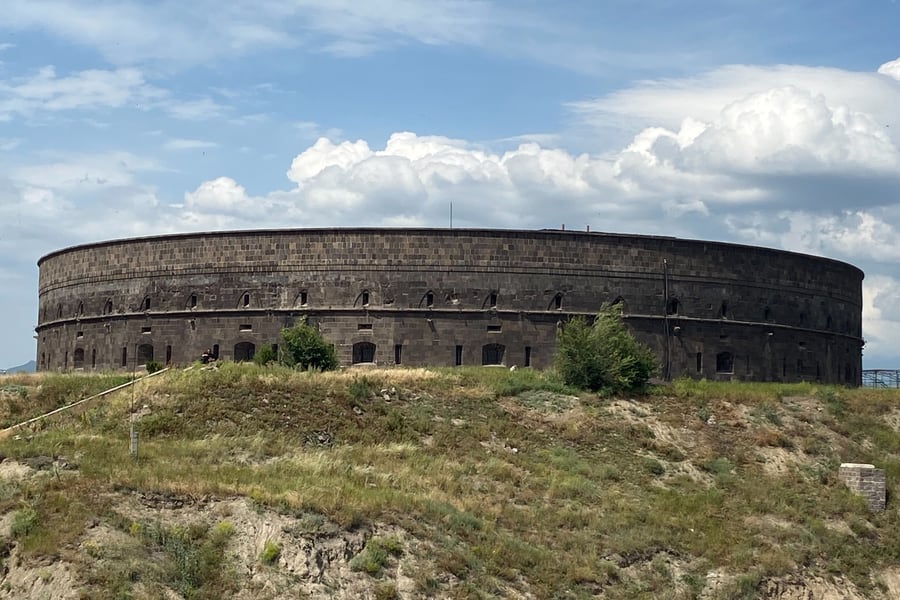 Textfabrikant / Wikimedia Commons · CC BY-SA 4.0 · 2023 · cropped
The Black Fortress, Gyumri
A round Russian imperial fortress of dark stone on the edge of the city, built between 1834 and 1847 and now abandoned, 8 kilometres from the closed border with Turkey. The operator recommends it for the wide view from the hill.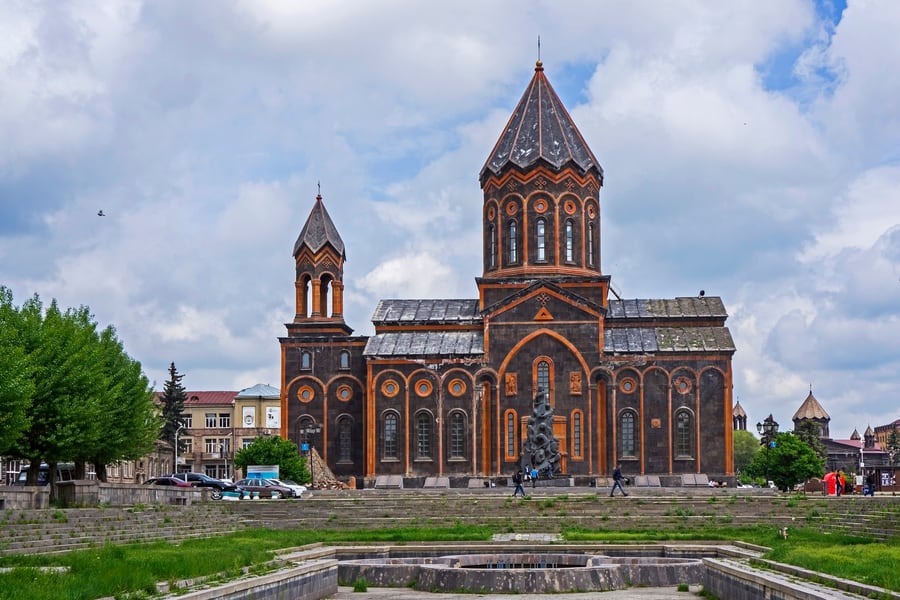 Armenak Margarian / Wikimedia Commons · CC BY-SA 4.0 · 2019 · cropped
Vardanants Square and Holy Saviour's Church
The centre of the old town. The church on its southern side was built between 1858 and 1872 under the architect Tadeos Andikyan and consecrated in 1873, with a design drawn from the Cathedral of Ani but on a far larger scale. The operator calls the square the heart of the city.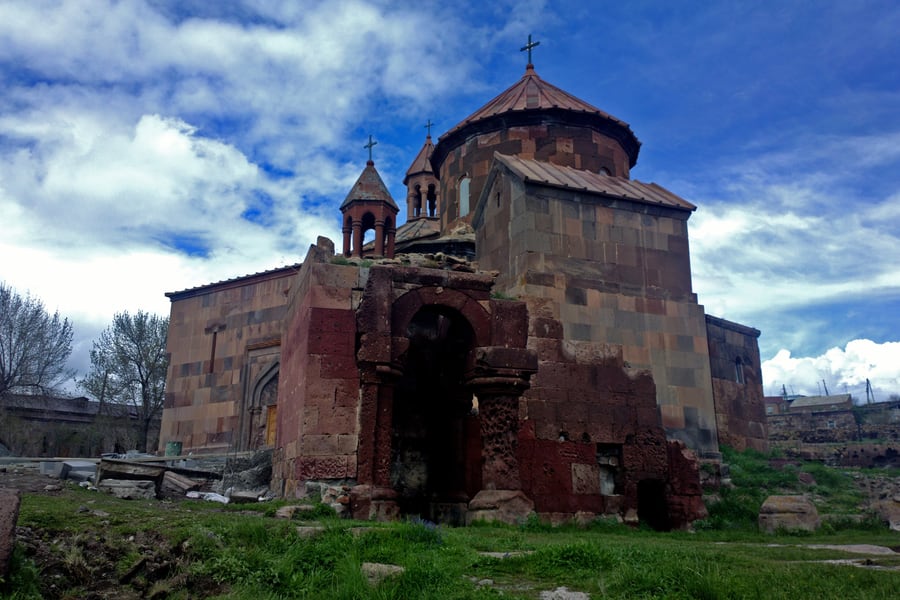 Soghomon Matevosyan / Wikimedia Commons · CC BY-SA 4.0 · 2017 · cropped
Harichavank, by road from Gyumri
A monastery near the village of Harich, 3 kilometres south-east of Artik, known in the Middle Ages for its school and scriptorium. Its oldest church, Saint Gregory the Enlightener, stands from no later than the 7th century. Kipchak Turks held and altered the monastery from 1120 to 1191, and the Zakarid princes restored its traditional decoration afterwards.Where to Sleep
The morning trains make Gyumri a day trip, so a night there is a choice rather than a need. It is worth making for an evening in the old town, and train 681 leaves at 07:45 for the return.
Where to stay
Tufenkian Historic Yerevan
In central Yerevan, near Republic Square
A boutique hotel with rooms furnished with natural materials such as basalt and wool, a swimming pool and the Kharpert restaurant.
Check Availability (opens in a new tab, on tufenkianheritage.com)via tufenkianheritage.comBerlin ART Hotel
In the centre of Gyumri
A hotel that began as a guest house in 1996, with 20 rooms that each show the work of a local artist and a gallery on site.
Check Availability (opens in a new tab, on berlinarthotel.am)via berlinarthotel.amQuestions or corrections
Planning this trip and stuck on something, or spotted a time, fare or detail that has changed? Send us a message about Yerevan to Gyumri — the line to Armenia's second city. We read every one, and we update this page when something has changed.