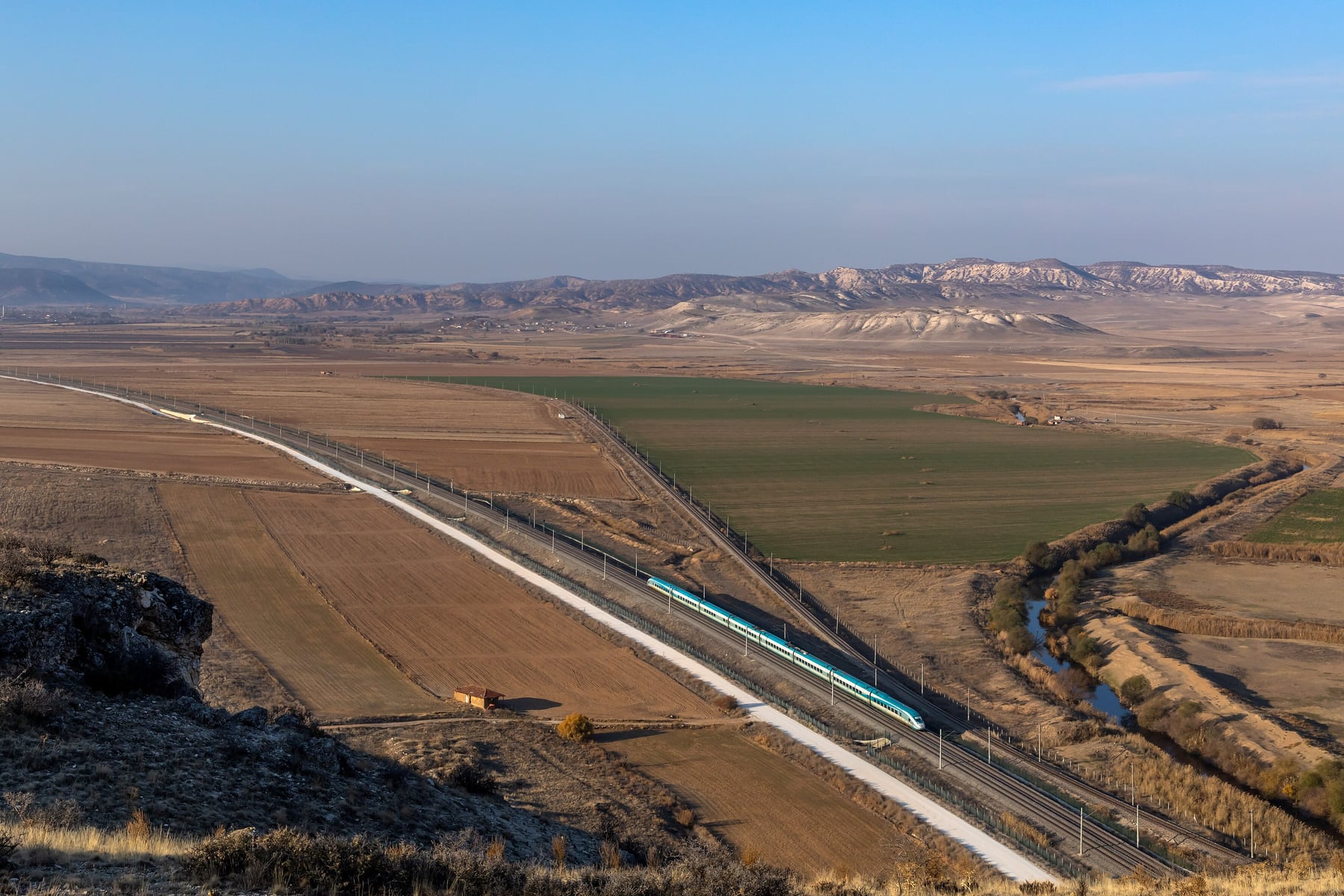
Ankara–Konya YHT
Kabelleger / David Gubler / Wikimedia Commons · CC BY-SA 4.0
- DistanceAbout 317 km · 211 of them new line
- Duration2 hours 16 minutes
- Best seasonAll year · 7–17 December for Şeb-i Arus
Introduction
The biggest week in Konya's year is a death anniversary. Rumi — Mevlânâ, the poet of the Masnavi — died in the city on 17 December 1273, and his followers call the night Şeb-i Arus, the wedding night: the night he went to meet the one he loved. Every year from 7 to 17 December Konya marks it with the sema, the turning ceremony of the Mevlevi dervishes, which UNESCO has listed as intangible heritage since 2008.
Getting there from the capital used to be a whole day. Before 2011 there was no direct railway between Ankara and Konya, and a train went the long way round, through Eskişehir and Afyonkarahisar, in more than ten hours. On 23 August 2011 Turkey opened its second high-speed line, 211 kilometres of new track from the junction at Polatlı, and the journey fell to under two.
Today the YHT — Yüksek Hızlı Tren, the high-speed train — leaves Ankara Gar for Konya six times a day, seven on Fridays to Sundays, and takes 2 hours 16 minutes. In fifteen years it has carried 22.8 million passengers, and about 3,500 make the trip every day.
The Journey
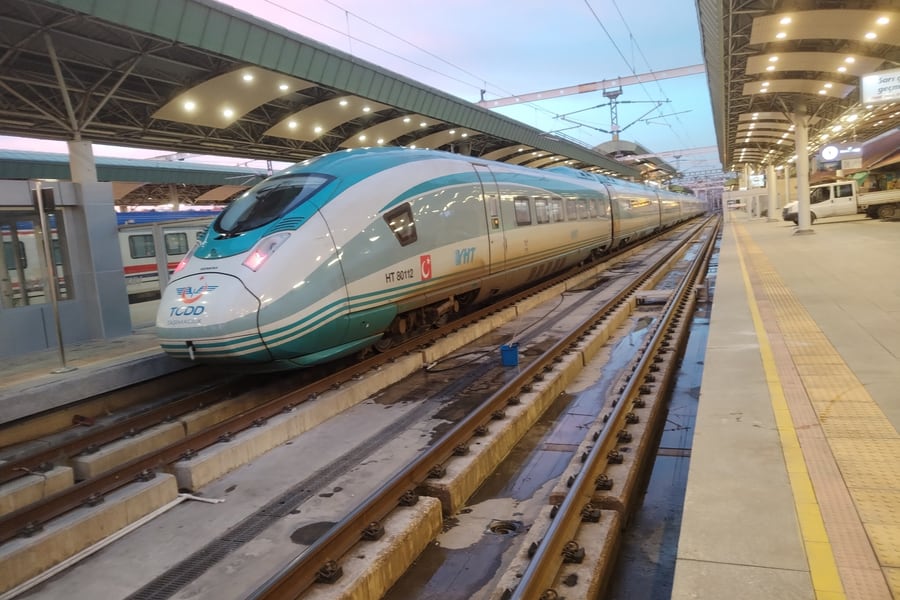
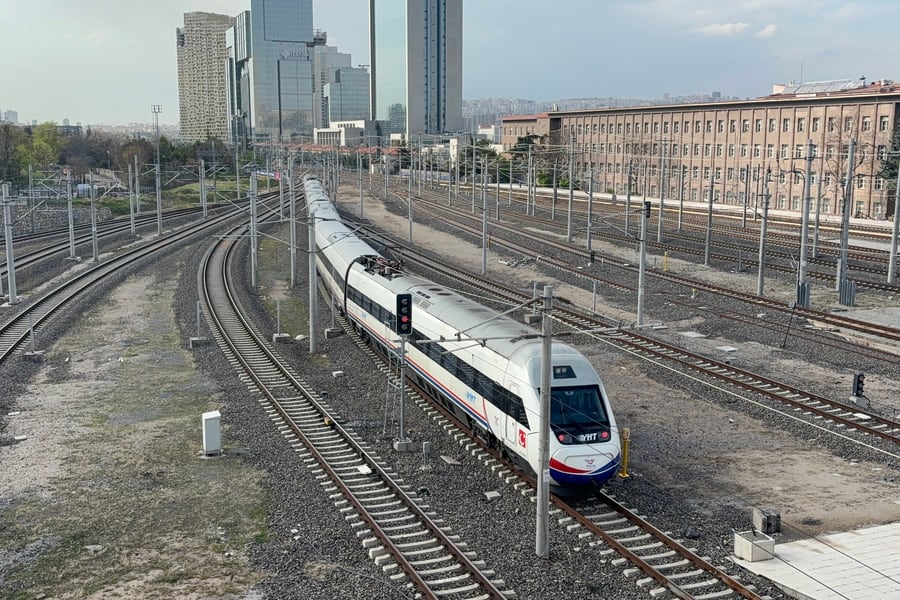
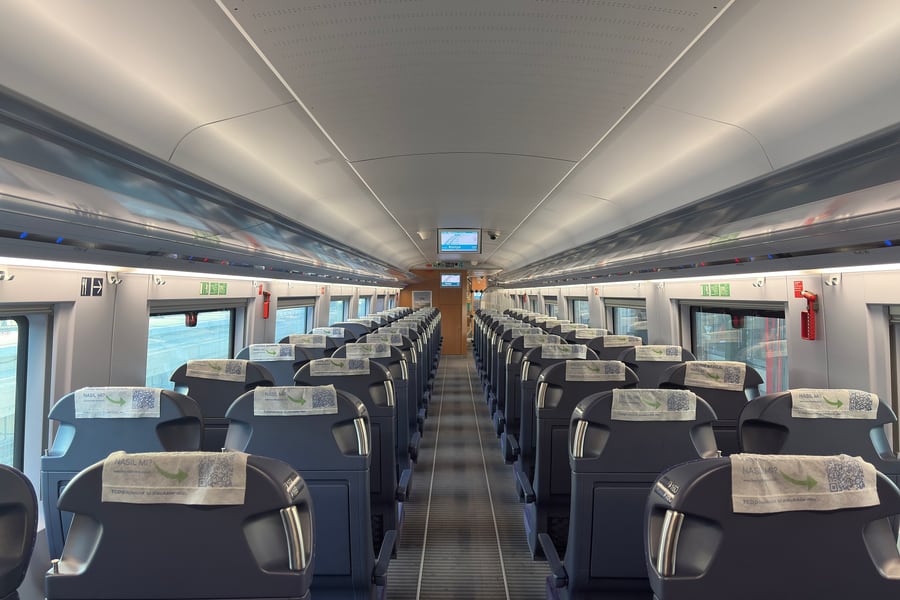
Two kinds of train work the line. The HT65000 sets, built by CAF in Spain, have six cars and a top speed of 250 km/h; the HT80000 is Siemens' Velaro, eight cars and built for 300 km/h. Both are white with TCDD's colours down the side, and both carry economy and business class and a dining car. Which one comes is a matter of the day.
Ankara to Polatlı
The train leaves Ankara's high-speed station, opened in 2016 beside the old Ankara Gar, and runs west on the Istanbul line. It calls at Eryaman and, twenty minutes later, at Polatlı, the junction where the Konya line branches off. Near the town lies Gordion, the Phrygian capital, and the burial mound of the kings who ruled there.
Across the plateau
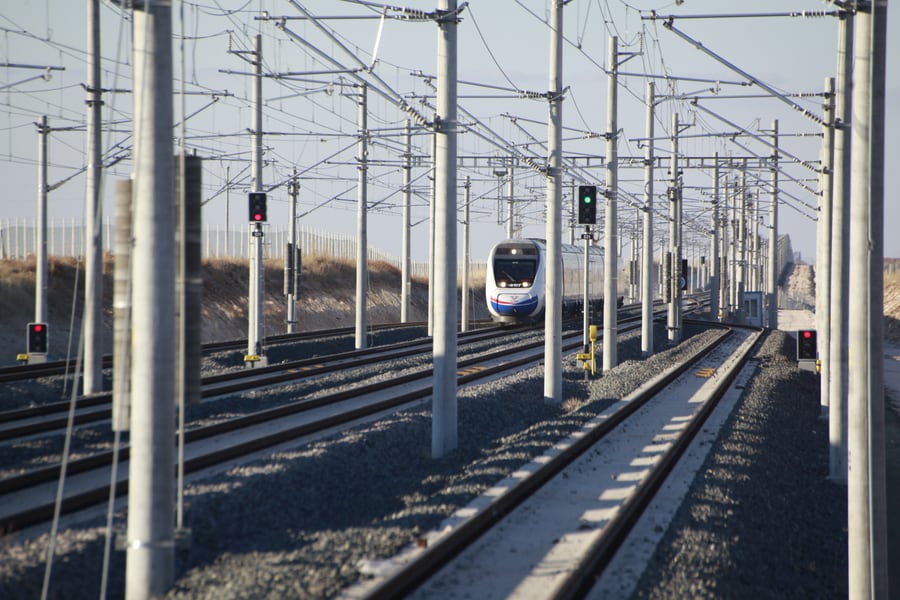
From Polatlı to Konya the line is new: 211 kilometres of double track, opened in 2011, with one tunnel, of 2,030 metres. The train runs south across the Anatolian plateau for an hour and a half without a stop. Near the end it passes Pınarbaşı, where the old line from Eskişehir comes in alongside, and Horozlu Han, a Seljuk caravanserai at the side of the tracks.
Into Konya
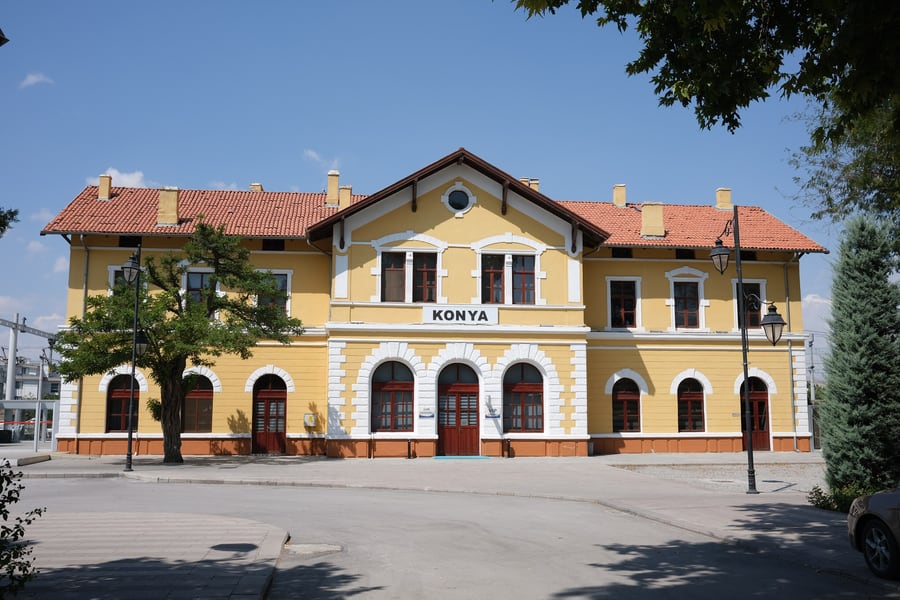
The first stop is Selçuklu, Konya's main high-speed station, the largest in Turkey after Ankara's. The train goes on a few minutes more to Konya Gar, the station the Anatolian Railway opened in 1896, where the Ankara and Istanbul trains end. Two a day continue to Karaman, stopping at Çumra, the town for Çatalhöyük.
When the line opened the timetable allowed about 1 hour 45 minutes; it now allows 2 hours 16.
Along the route
 Carole Raddato / Wikimedia Commons · CC BY-SA 2.0 · cropped
Gordion
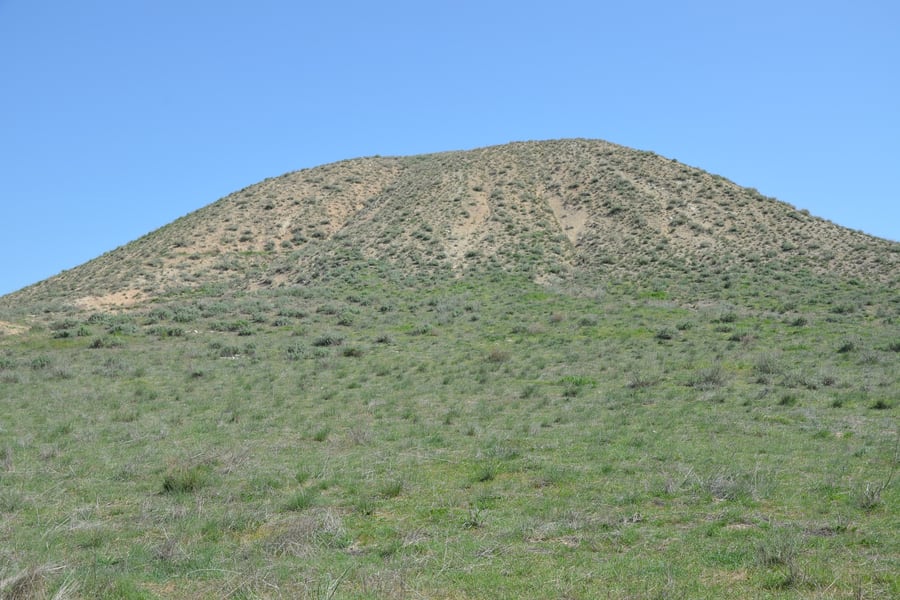
By Polatlı, where the Konya line leaves the Istanbul one, lies Gordion, capital of the Phrygian kingdom and a World Heritage Site since 2023. Its Midas Mound, 53 metres high, covers a burial chamber of about 740 BC — the oldest standing wooden building known.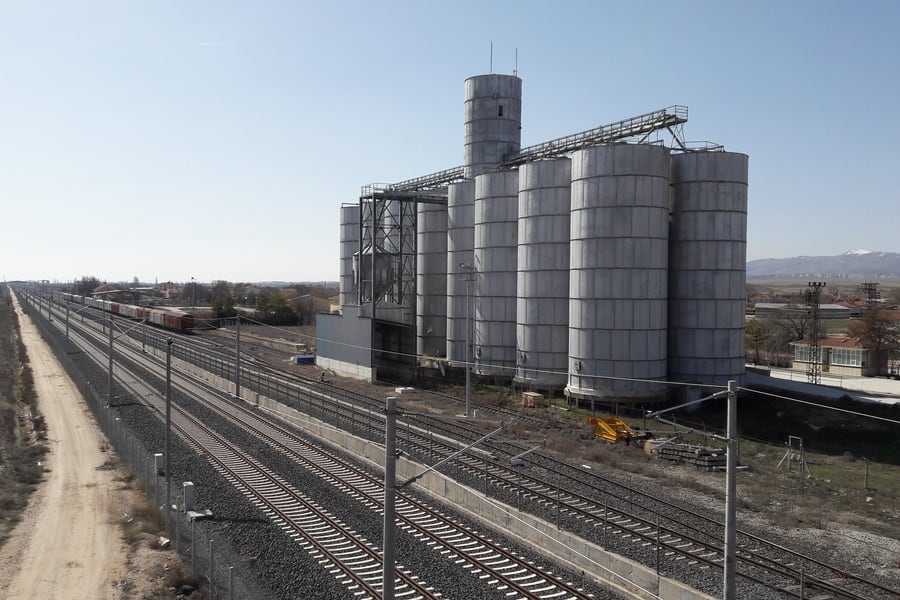 Btian P. Dorsam / Wikimedia Commons · CC BY-SA 4.0 · cropped
The plateau
From Polatlı the train runs for an hour and a half without a stop, south across the Anatolian plateau. Near Konya it passes Pınarbaşı, where the grain elevators stand between the high-speed line and the older one from Eskişehir.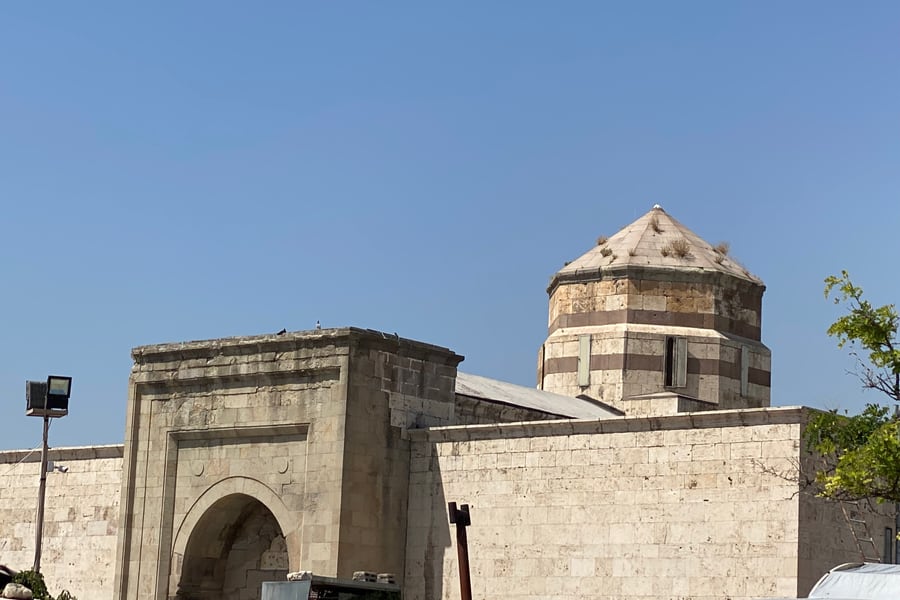 Christian1311 / Wikimedia Commons · CC BY-SA 4.0 · cropped
Horozlu Han
Seven kilometres short of Konya, the railway passes the door of a Seljuk caravanserai of about 1246–49, the last stop before the city on the old caravan road. The panel over its gateway was never inscribed, so no one knows for certain who built it.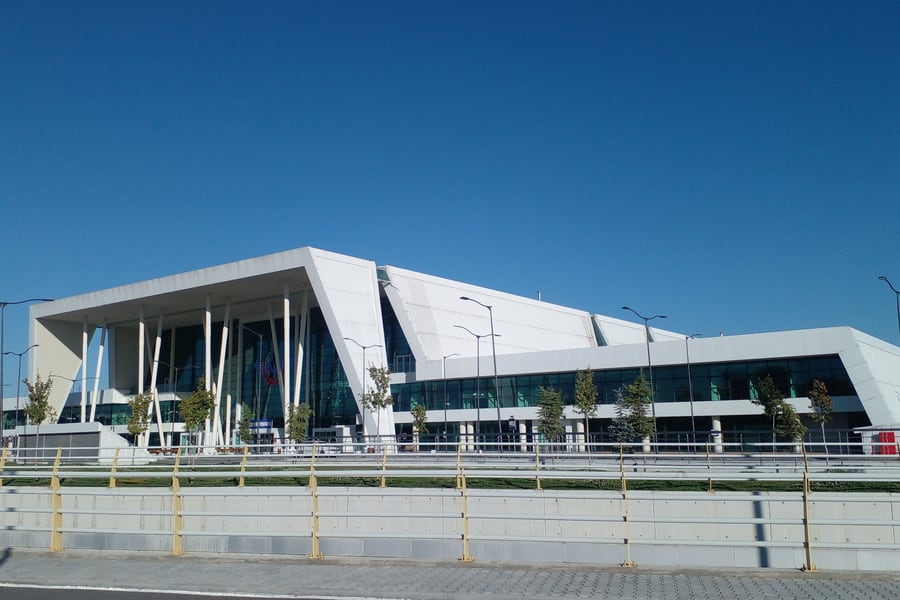 Notlacanian / Wikimedia Commons · CC BY 4.0 · cropped
Selçuklu station
Konya's high-speed station, in the Selçuklu district: three island platforms and seven tracks, the largest high-speed station in Turkey after Ankara's. Trains stop here a few minutes before they reach the old station, Konya Garı.A bit of history
Culture & experiences along the way
 Dick Osseman / Wikimedia Commons · CC BY-SA 4.0 · cropped
Sema on Saturday night
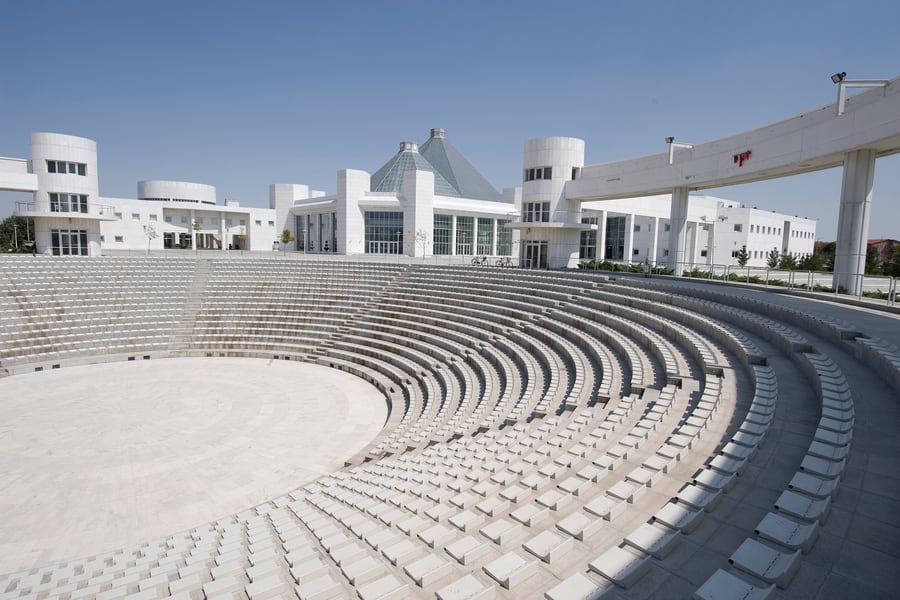
Every Saturday at seven the Konya Turkish Sufi Music Ensemble performs a sema — the Mevlevi ceremony of the whirling dervishes, on UNESCO's intangible heritage list since 2008 — in the Sema Hall of the Mevlana Cultural Centre. The music changes through the season; tickets are sold through the Culture Ministry's Sanat Cepte.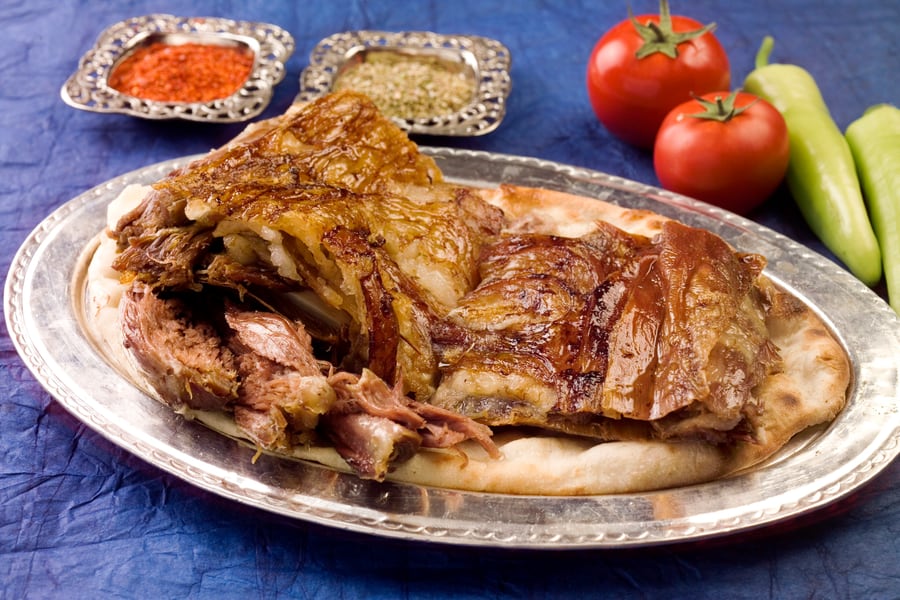 Muratkkara / Wikimedia Commons · CC BY-SA 4.0 · cropped
Fırın kebabı
Konya's oven kebab is lamb, and only the forearm and ribs: laid in a copper pan and cooked for five or six hours in a stone oven over an oak fire, until three kilos of meat have become one. It comes with an onion, and it is eaten without a fork.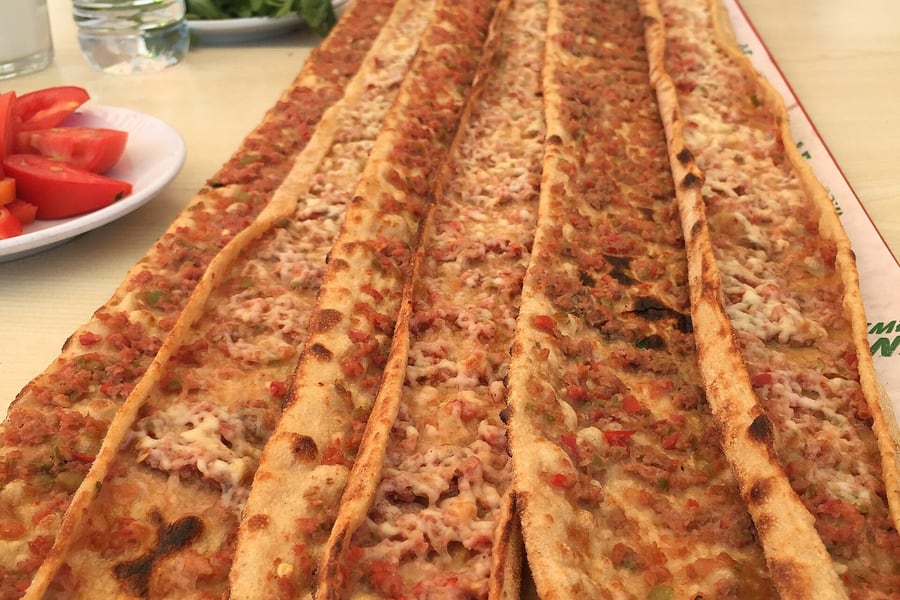 Mardetanha / Wikimedia Commons · CC BY-SA 3.0 · cropped
Etli ekmek
The city's everyday meal is etli ekmek, meat bread: a thin dough spread with beef, tomato, green pepper, onion and parsley and baked long and narrow — by the city's own rule no more than 90 centimetres long and 20 wide.Timetables
Six trains a day each way, seven on Fridays, Saturdays and Sundays, all year. Times are TCDD's own, as of September 2026. Every train calls at Eryaman, Polatlı and Selçuklu; the two marked Karaman run on beyond Konya.
Ankara → Konya
| Train | Ankara | Polatlı | Selçuklu | Konya | Runs |
|---|---|---|---|---|---|
| 81271 Karaman | 06:10 | 06:45 | 08:19 | 08:27 | Daily |
| 81201 | 08:55 | 09:30 | 11:04 | 11:11 | Daily |
| 81203 | 13:15 | 13:50 | 15:24 | 15:31 | Daily |
| 81273 Karaman | 15:30 | 16:05 | 17:39 | 17:47 | Daily |
| 81205 | 18:05 | 18:40 | 20:14 | 20:21 | Daily |
| 81207 | 21:15 | 21:50 | 23:24 | 23:31 | Daily |
| 81209 | 21:40 | 22:15 | 23:49 | 23:56 | Fri, Sat, Sun |
Konya → Ankara
| Train | Konya | Ankara | Runs |
|---|---|---|---|
| 81200 | 06:20 | 08:35 | Daily |
| 81202 | 09:30 | 11:45 | Daily |
| 81270 from Karaman | 11:39 | 13:55 | Daily |
| 81204 | 14:35 | 16:50 | Daily |
| 81206 | 17:50 | 20:05 | Daily |
| 81272 from Karaman | 20:53 | 23:09 | Daily |
| 81208 | 21:25 | 23:40 | Fri, Sat, Sun |
- From Istanbul four trains a day reach Konya, calling at Eskişehir and Selçuklu: from Söğütlüçeşme at 06:00, 10:40 and 15:10, arriving 11:21, 15:48 and 20:32, and from Halkalı at 07:05, arriving 13:13 and going on to Karaman. Back to Istanbul they leave Konya at 05:55, 08:55, 12:05 and 16:39.
- For Çatalhöyük, the 06:10 from Ankara reaches Çumra at 08:54, and the 15:30 at 18:14.
The timetable is on TCDD Taşımacılık's Ankara–Konya page (opens in a new tab), where each train's stops are listed by date.
Tickets
Tickets are sold by TCDD Taşımacılık, on its booking site and app and at station ticket offices, for Ankara to Konya or any stretch of it. There are two classes: 485 TL in economy and 730 TL in business, with no discount fares in business.
The trip is two and a quarter hours, so economy does the job. From Friday to Sunday, when a seventh train is added each way, book the evening departures a few days ahead. Checked in September 2026.
Book your tickets
Economy
The standard class
The class most passengers travel in, with a dining car on the train.
Book Tickets (opens in a new tab, on tcddtasimacilik.gov.tr)via tcddtasimacilik.gov.trBusiness
The higher class
Sold on the same site as economy, at a higher fare.
Book Tickets (opens in a new tab, on tcddtasimacilik.gov.tr)via tcddtasimacilik.gov.trRail Passes
A pass covers this train. Turkey is in the Interrail and Eurail area, and Interrail's table of railway companies lists TCDD Taşımacılık's high-speed trains, the YHT, among what a pass includes, and does not exclude them. Ask at a TCDD ticket office for the seat before you travel.
For a return trip to Konya on its own a pass is not worth buying. It earns its keep on a longer journey through Turkey that adds the high-speed line to Istanbul and the night trains east from Ankara, except the Turistik Doğu Ekspresi, which the table excludes. Checked against Interrail's railway-companies table, last updated 28 August 2026, in September 2026.
Places to Visit
Most of what Konya is known for stands close together in the old centre: the Mevlana Museum, and Alaeddin Hill, with the Seljuk madrasas at its foot. Sille is on the edge of the city, and Çatalhöyük is a day out by way of Çumra.
 Falk2 / Wikimedia Commons · CC BY-SA 4.0 · cropped
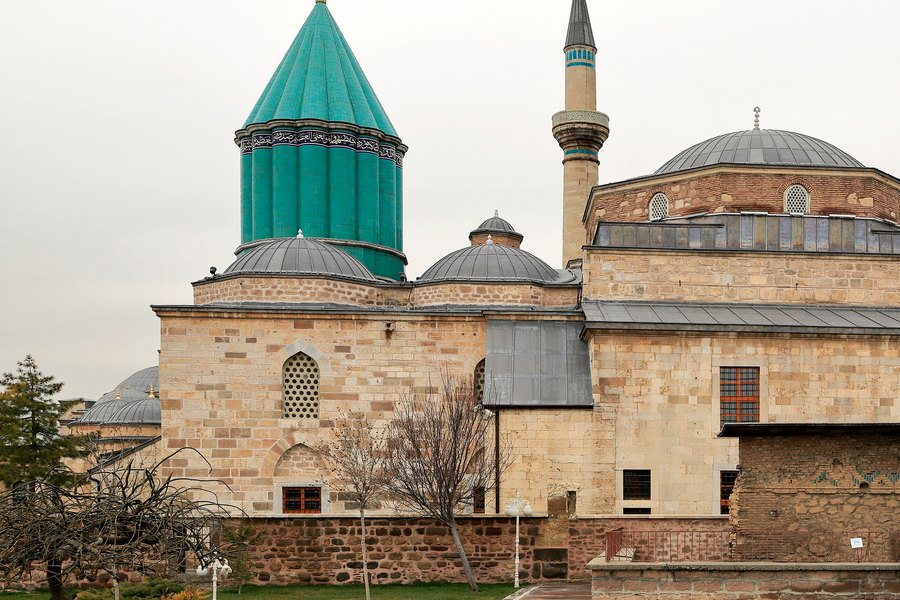
The Mevlana Museum
The lodge of the Mevlevi order, and Rumi's tomb. He died on 17 December 1273 and was buried beside his father, in the rose garden the Seljuk sultan had given for his father's grave; the mausoleum over the grave, under its dome of turquoise tiles, was finished in 1274. The lodge grew around it until the nineteenth century, and has been a museum since 1927.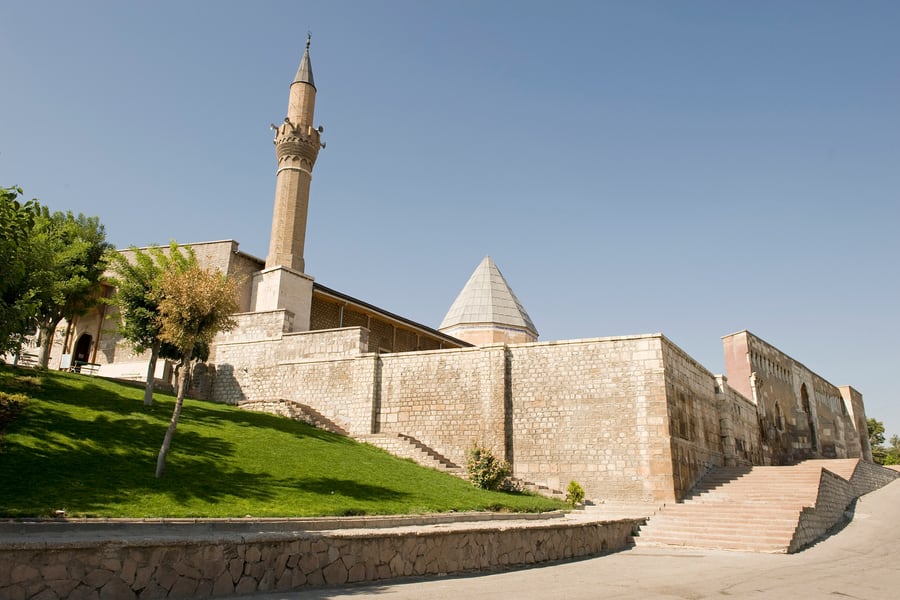 Dick Osseman / Wikimedia Commons · CC BY-SA 4.0 · cropped
Alaeddin Hill
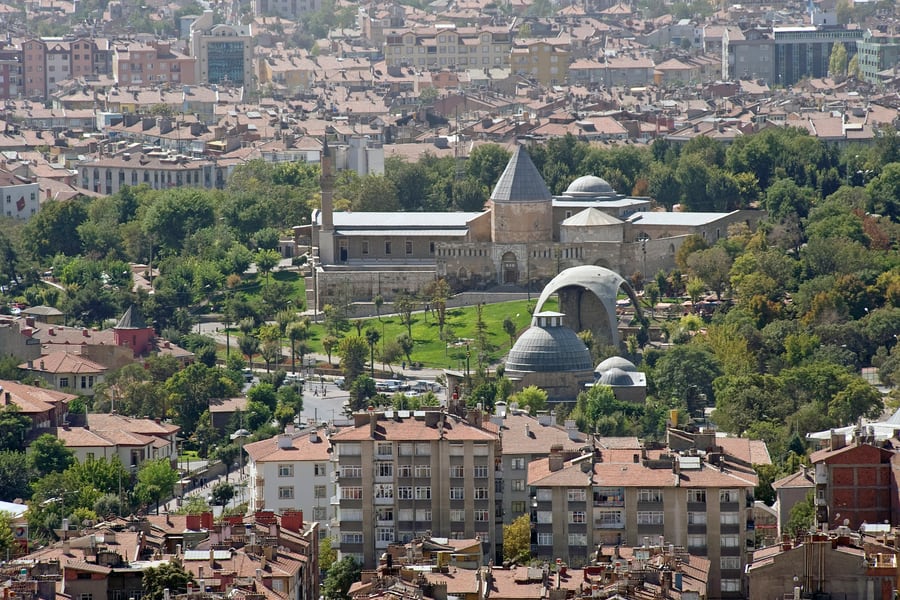
The citadel mound in the middle of the city, and on it the mosque of the Seljuk sultans of Rum, built in stages from the 1150s into the thirteenth century, with several sultans buried in its courtyard. Its ebony pulpit carries the date 1155, the earliest dated work of Seljuk art in Anatolia. Hill and mosque are named for Sultan Alaeddin Keykubad I, who invited Rumi to Konya.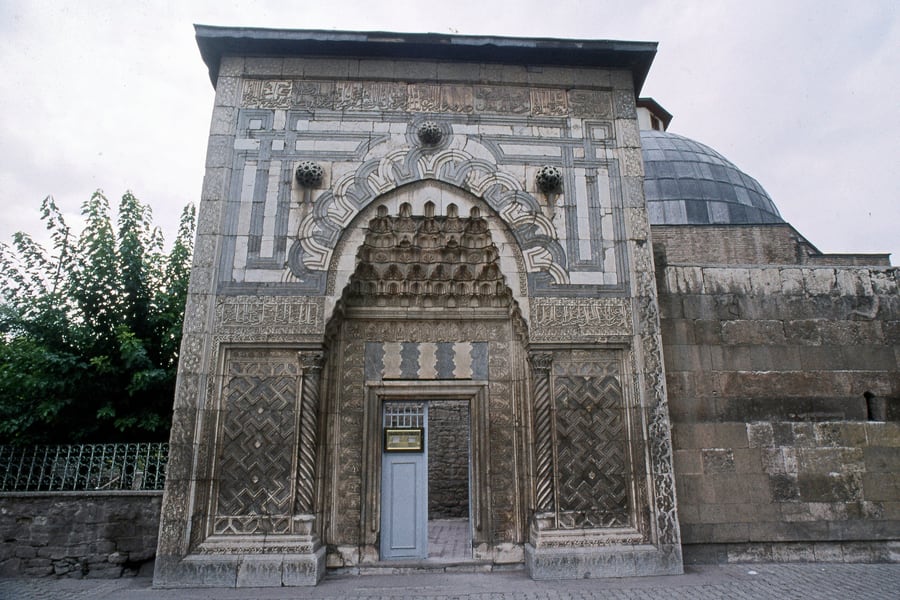 Dick Osseman / Wikimedia Commons · CC BY-SA 4.0 · cropped
Karatay Madrasa
A college founded in 1251 by the vizier Celaleddin Karatay at the foot of Alaeddin Hill, behind a tall carved gateway. Its tilework was probably overseen by a master from Tus in Khorasan. Rumi's biographer Aflaki records gatherings of Sufis and scholars here; since 1954 the building has been Konya's museum of tiles.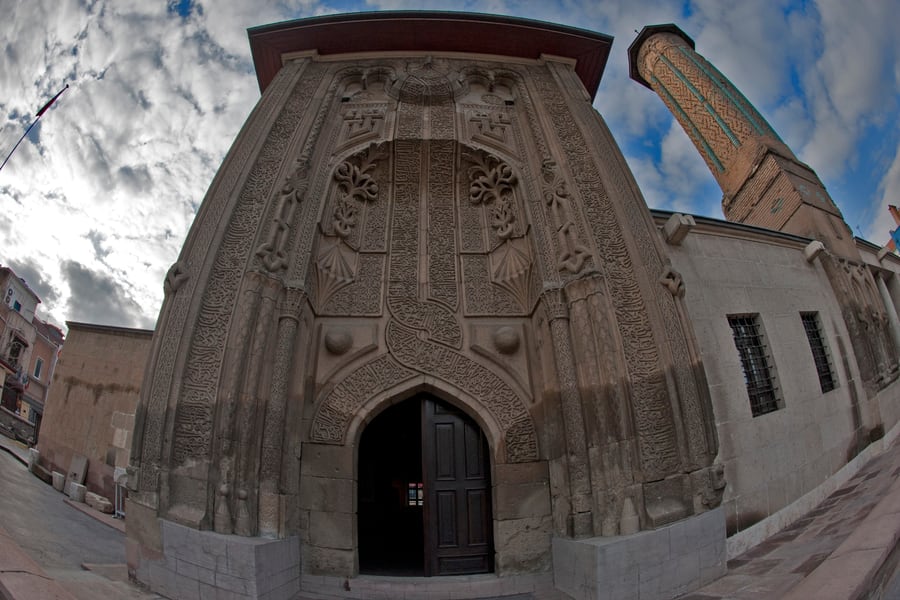 Dick Osseman / Wikimedia Commons · CC BY-SA 4.0 · cropped
İnce Minareli Madrasa
The Madrasa of the Slender Minaret, built in 1265 for the vizier Sahib Ata. Its gateway is a tall panel of carved stone, with bands of inscription knotted across it; the minaret it is named for was cut short in 1901. It now holds the Museum of Stone and Wood Art.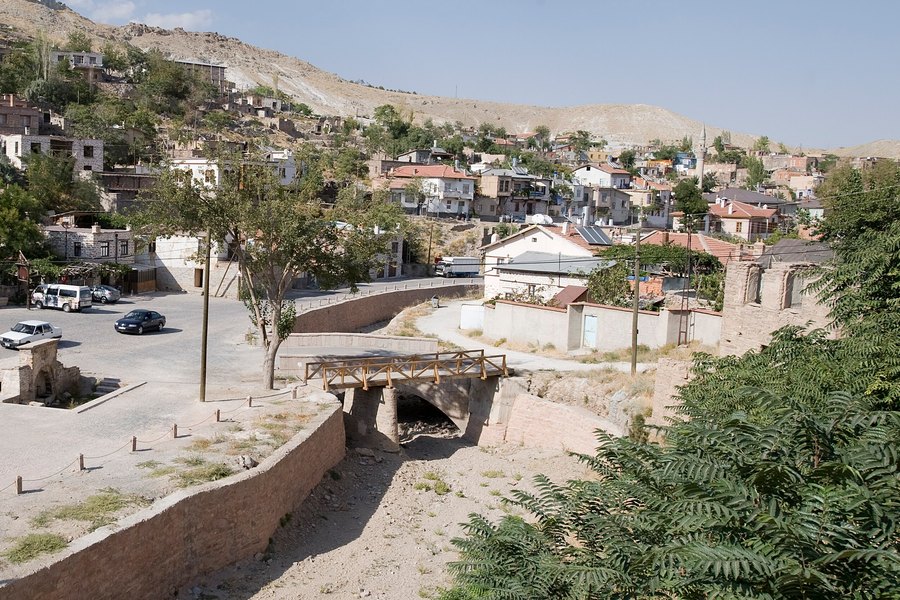 Dick Osseman / Wikimedia Commons · CC BY-SA 4.0 · cropped
Sille
A village in a valley, now part of Konya, whose people spoke a Cappadocian Greek until 1922. The story told there is that Rumi's son was saved from a fall near the monastery of Saint Chariton, and that Rumi built a small mosque inside it — the dervishes sent the monastery oil every year afterwards.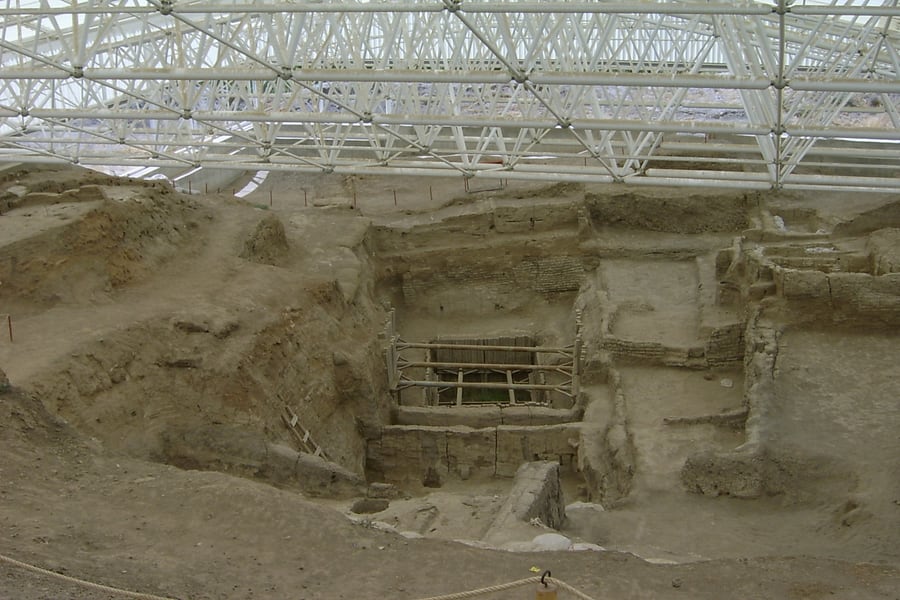 Stipich Béla / Wikimedia Commons · CC BY 2.5 · cropped
Çatalhöyük
Two mounds on the Konya plain, 10 km east of Çumra, where people lived from 7400 BC for two thousand years in houses built back to back, with no streets, entered through the roof. The walls carry the paintings and reliefs that put it on the World Heritage List in 2012. The Karaman trains stop at Çumra.Where to Sleep
In Konya stay near the Mevlana Museum, where the old city's monuments are within a walk of one another. In Ankara, the hotel in the high-speed station building puts the platforms directly beneath you for an early train.
Where to stay
The Ankara Hotel
Ankara, inside the high-speed station
A hotel inside Ankara's high-speed station building, with rooms of about 45 square metres.
Check Availability (opens in a new tab, on theankarahotel.com)via theankarahotel.comHich Hotel Konya
Konya, beside the Mevlana Museum
A small hotel with only a garden wall between it and the Mevlana Museum.
Check Availability (opens in a new tab, on hichhotel.com)via hichhotel.comQuestions or corrections
Planning this trip and stuck on something, or spotted a time, fare or detail that has changed? Send us a message about Ankara–Konya YHT. We read every one, and we update this page when something has changed.