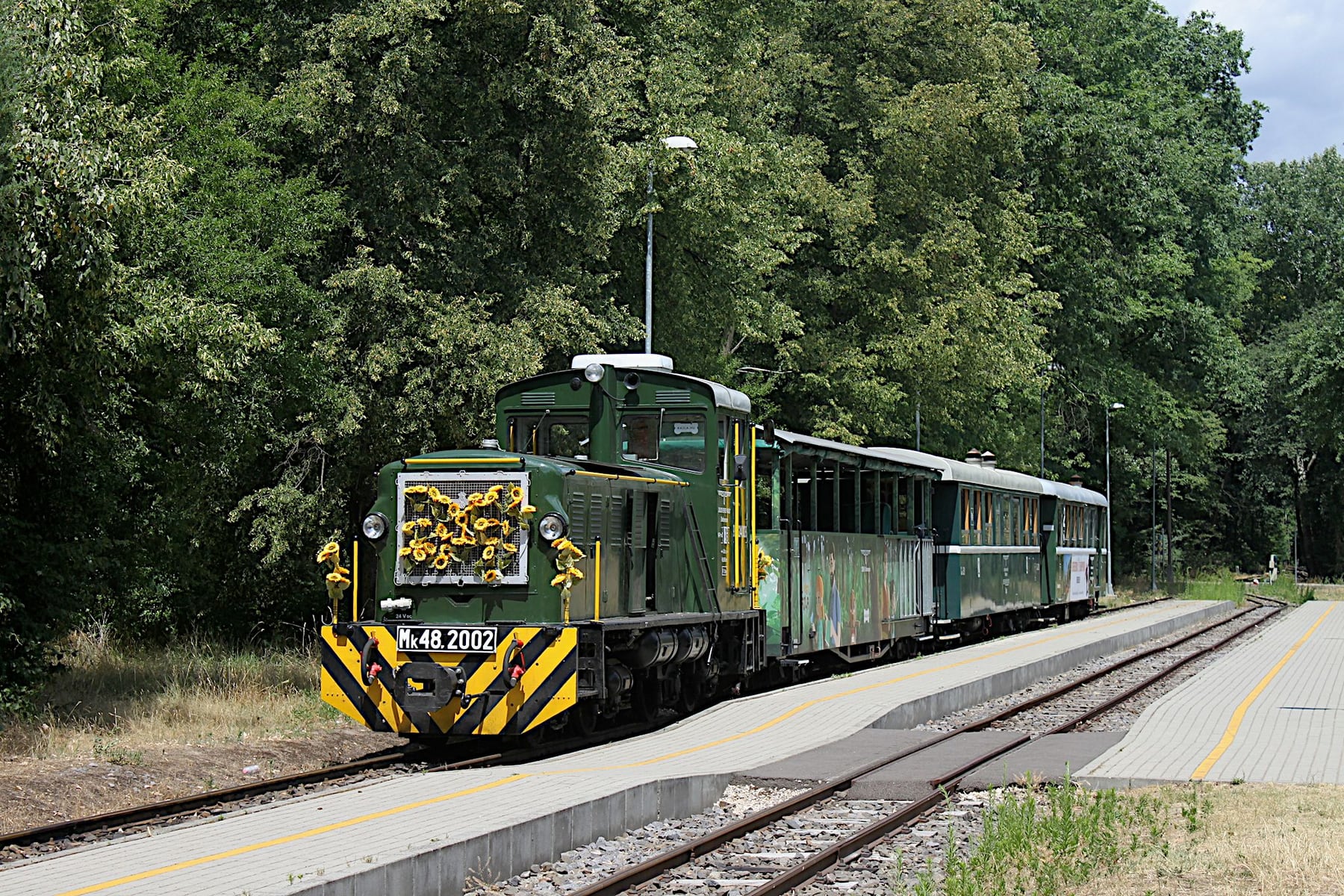
The Zsuzsi Forest Railway
NAC / Wikimedia Commons · CC BY-SA 4.0
- Distance16.6 km · 760 mm gauge
- DurationAbout 55 minutes each way
- Best seasonMay to September, Wednesdays and weekends
Introduction
When the city of Debrecen laid a railway out to its forests in 1882, it chose a track gauge of 950 mm, and no other railway in Hungary ever used it. For almost eighty years that made every engine and every wagon a one-off: parts could not be borrowed, and anything bought second-hand had to be rebuilt to fit. In 1961 the state railway gave up and relaid the whole line to the national narrow gauge of 760 mm. The old stock went for scrap, and with it went the little wood-burning engine of 1882 called Zsuzsi, whose name the railway still carries.
The line was built to bring timber in from the city's woods near Gúth, 24 to 38 kilometres out, to a timber yard on what was then the edge of town. Passengers came later, from 1923, and by 1950 the track ran 48 kilometres to Nyírbéltek, carrying market traders, workers and schoolchildren from farmsteads and villages along the way. It was closed on 31 August 1977, against loud local protest. Only the first 16.6 kilometres survived, handed to the city as a pioneer railway for children, and when the council voted to close even that in 1995, a circle of friends took it over and has run it since July 1996.
Today it is a summer outing from the city: diesels that came with the regauging, coaches of 1961, and an hour through the sandy woods of the Erdőspuszta to a lake and a lookout tower.
The Journey
Trains leave from Debrecen-Fatelep, the old municipal timber yard, on Ruyter utca in the east of the city. The first stretch is the oldest, laid in 1882: a long, almost straight run out through the suburbs past the Hétvezér utca stop, with a cycle path alongside, to Fancsika and the former station at Csereerdő beside main road 48.
Into the woods
At Csereerdő the line turns north in a wide curve into the forest and makes the steepest climb on the route, about six in a thousand. Erdészlak, the forester's lodge, is the one place where two trains can pass. Beyond it the train crosses the Panoráma road and winds between acacia, oak and pine, past fields and scattered farmsteads. At Sámsoni út the remains of an old timber-loading siding still lie by the track, and from there the banks and cuttings grow deeper: they were dug in 1939, when the line between Haláperdő and Hármashegyalja was straightened and shortened.
Hármashegyalja
The terminus, about 55 minutes from Debrecen, is named for three sand hills, the highest 151 metres above sea level. It is a recreation ground in the woods, with a nature centre, a forest school, a nature trail, a five-hectare lake dug in 1980 and a 25-metre timber lookout tower of 101 steps, from which Nagyvárad, now Oradea in Romania, can be seen on a clear day. Past the station a short spur runs into the trees and stops at a buffer: this is where the line to Nyírbéltek once carried on.
The locomotives and coaches
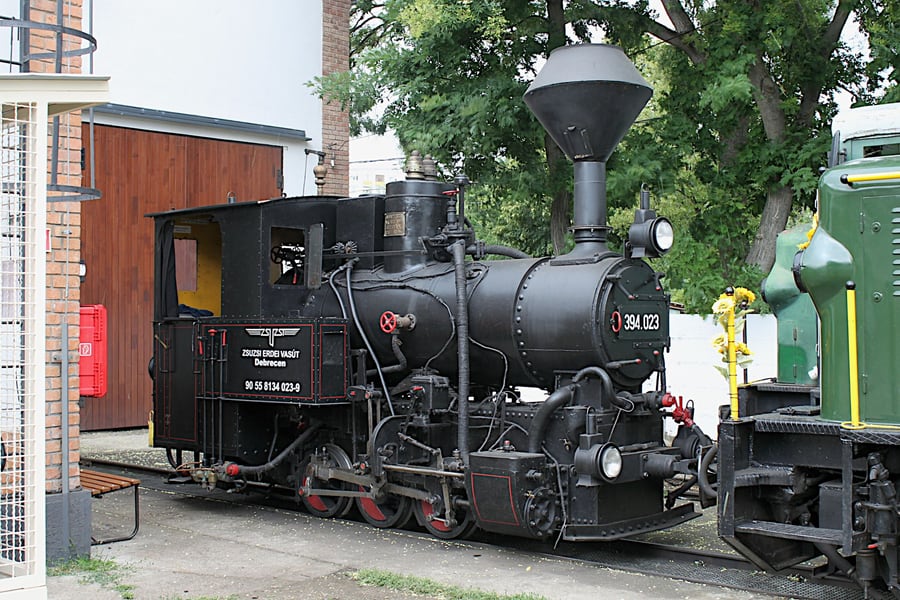
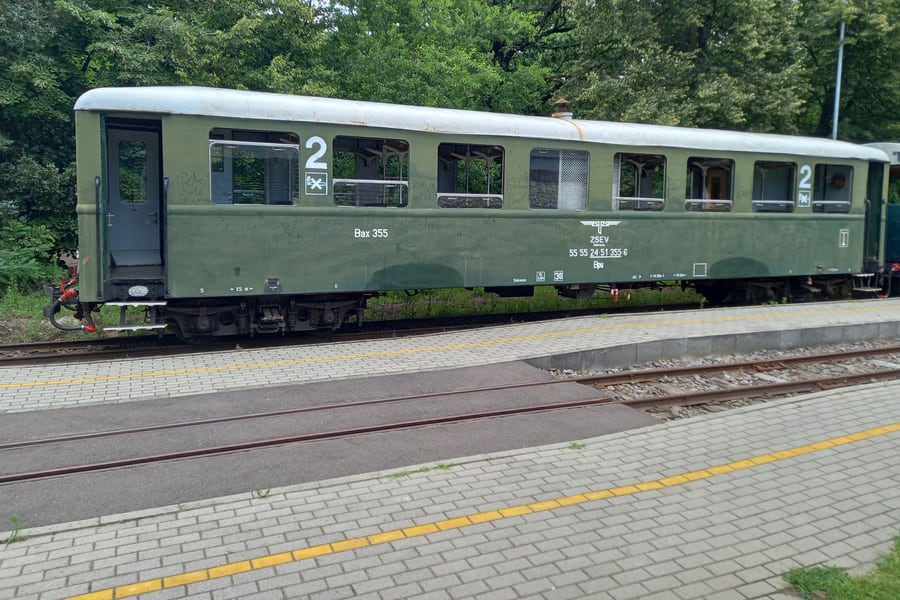
Scheduled trains are worked by one of three Mk48 diesel-hydraulic locomotives, 2002, 2006 and 2009, which came from the narrow-gauge lines at Nyíregyháza in 1977–78. Mk48 2002 is the prototype of a class of forty, delivered in 1960. Behind them run green Bax coaches of 1961, second class only, and an open summer coach. On special days the steam engine 394,023 takes the train instead: built in Budapest in 1923 and owned by the Transport Museum, it came to Debrecen in 2006 and carries the name Zsuzsi.
Along the route
 Matej Grochal / Wikimedia Commons · CC BY-SA 4.0 · cropped
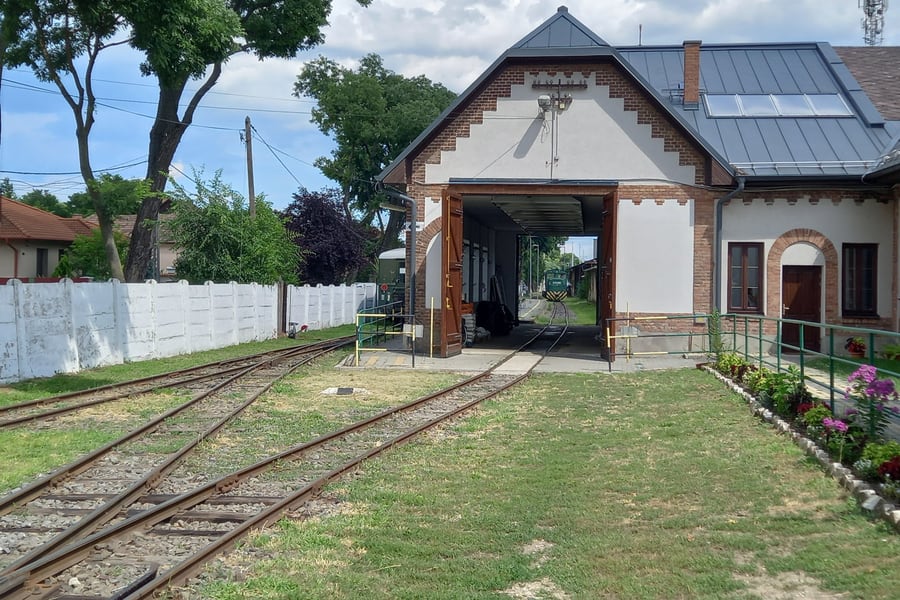
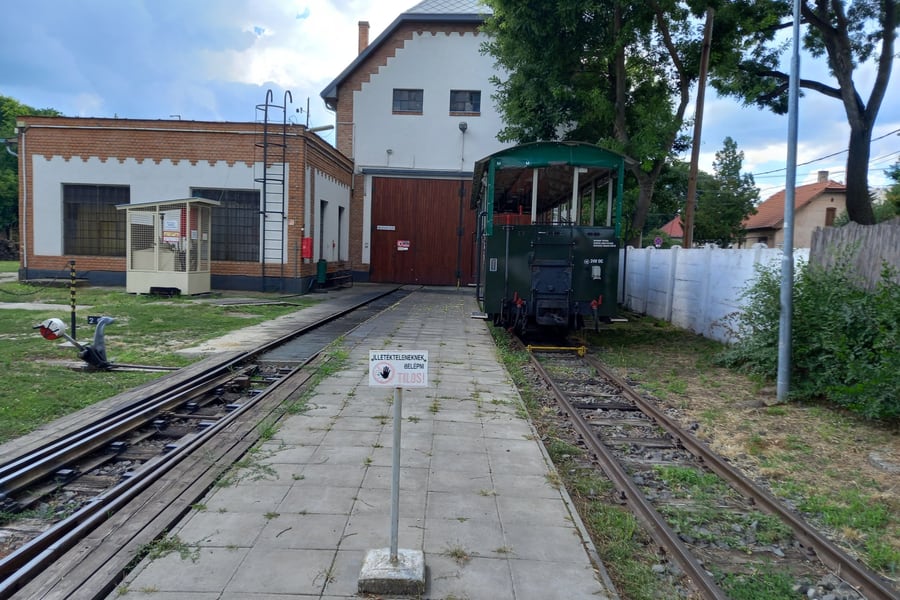
Debrecen-Fatelep
The line starts at the old city timber yard, now a station on Ruyter utca, beside the two-road engine shed of 1928. Its workshops once built the railway's own motor cars and most of its wagons.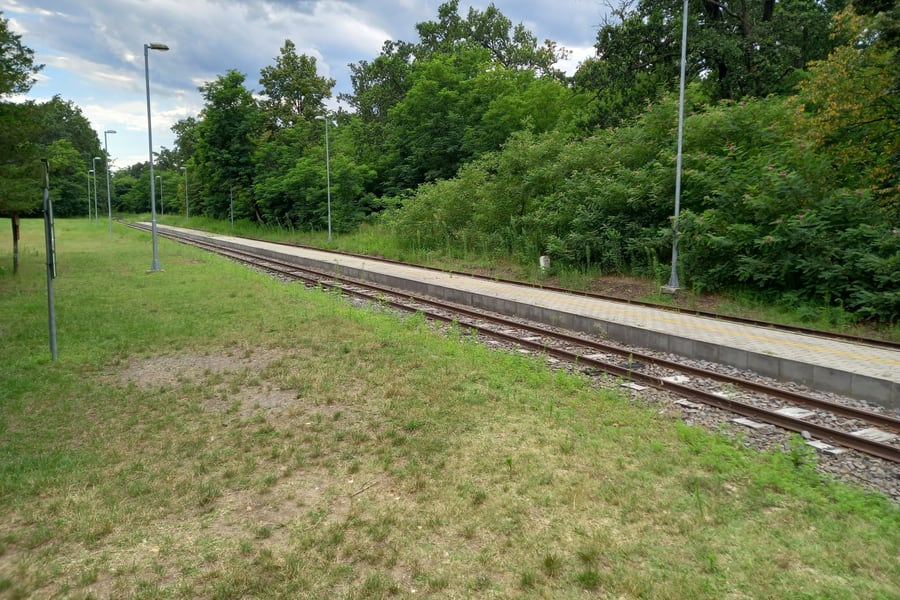 Matej Grochal / Wikimedia Commons · CC BY-SA 4.0 · cropped
Into the Erdőspuszta
After Csereerdő the track swings north into the woods for its steepest climb, about six per thousand, then winds past acacia, oak and pine, farmsteads and fields, through the banks and cuttings of a 1939 shortcut.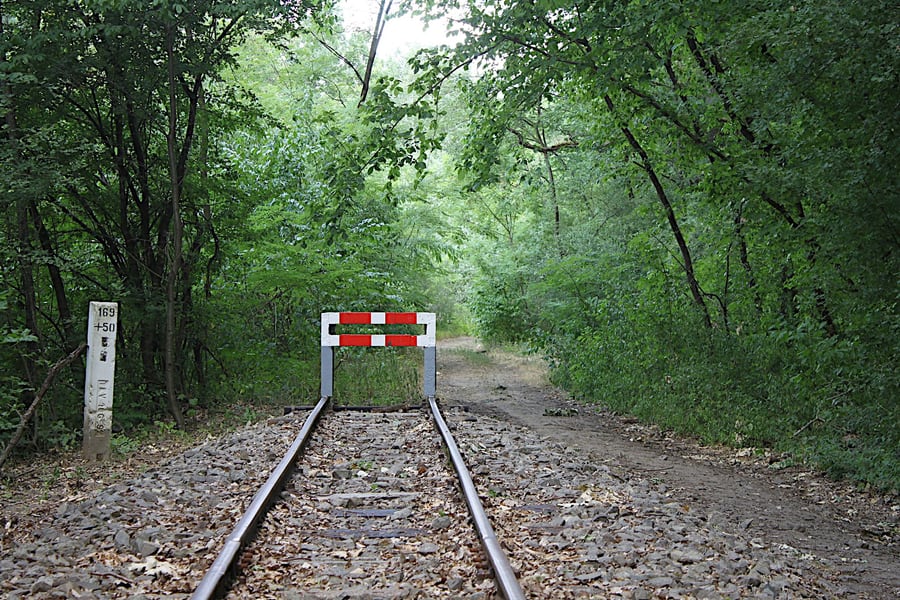 NAC / Wikimedia Commons · CC BY-SA 4.0
The end of the track
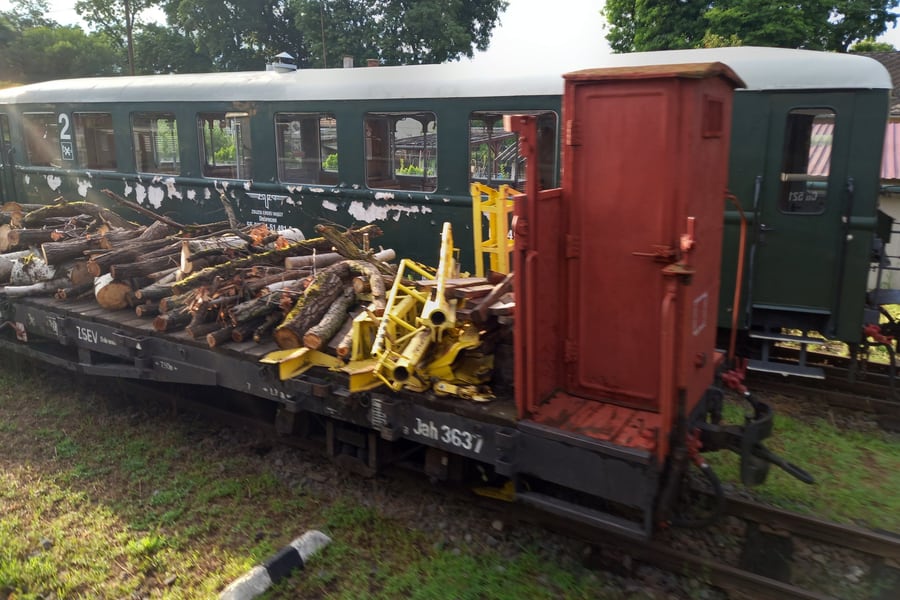
Hármashegyalja has been the terminus since 1977. A short spur beyond the station ends at a buffer stop in the trees: the line once carried on another 30-odd kilometres to Nyírbéltek.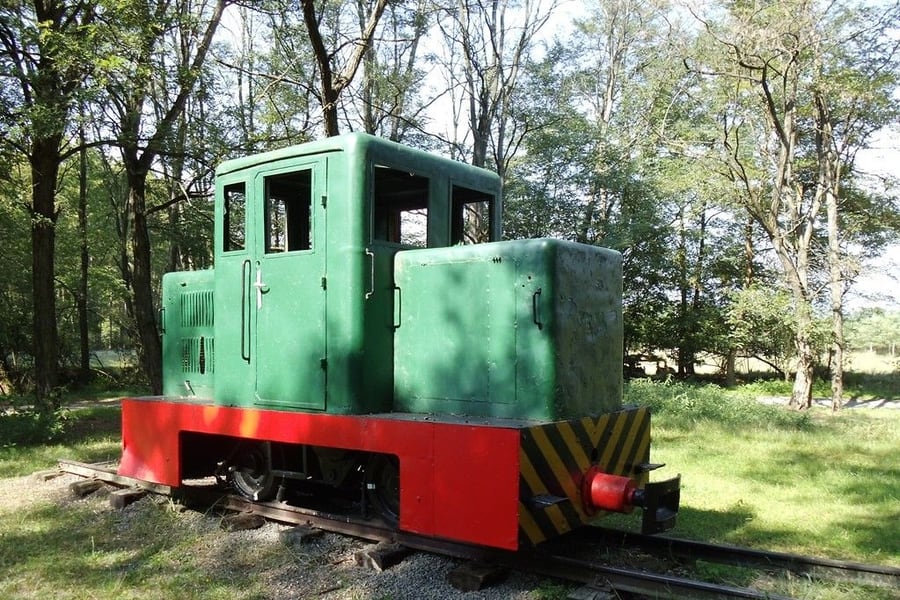 Petrás Bence / Flickr · CC BY-SA 2.0 · cropped
Where the line used to go
Near Nyíracsád, on the lifted section, a C-50 diesel has stood at the edge of the Gúth forest since 1997, set up for the twentieth anniversary of the closure. It is reached by road, not by train.A bit of history
Culture & experiences along the way
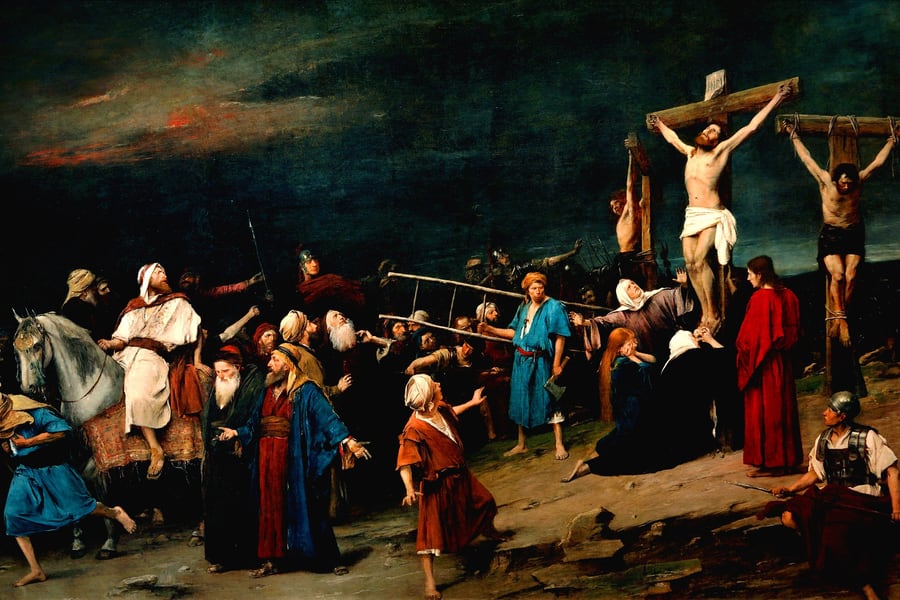 Mihály Munkácsy, Golgotha (1884) / Wikimedia Commons · Public domain
Munkácsy's trilogy at the Déri Museum
Mihály Munkácsy's three great paintings of Christ's Passion, Christ before Pilate, Golgotha and Ecce Homo, hang together in Debrecen's Déri Museum. The painter never saw all three side by side; they were first shown together here in 1995, and are the museum's most famous room.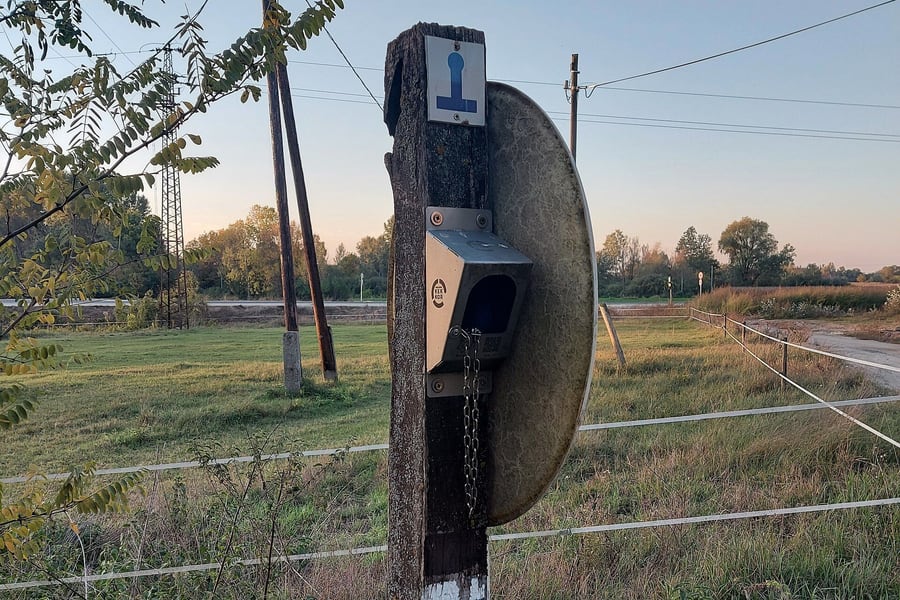 Csernus L. Gábor / Wikimedia Commons · CC BY-SA 4.0 · cropped
The Great Plain Blue Trail
The Alföldi Kéktúra, opened in 1996, is Hungary's second-longest marked trail, and it meets the railway at Hármashegyalja on its stretch from the Vekeri lake to Nyírbátor. Walkers collect a stamp in a booklet at each checkpoint; the nearest is at the Haláp inn.Timetables
The Zsuzsi runs from 1 May to 30 September, on Wednesdays, weekends and public holidays only. Every train runs the whole line, Debrecen-Fatelep to Hármashegyalja, in about 55 minutes. There are no scheduled trains from October to April. There is nothing to book: buy your ticket at the Ruyter utca station or on the train.
1 May to 31 August 2026
| From Debrecen-Fatelep | Back from Hármashegyalja | |
|---|---|---|
| Wednesday | 08:30 · 12:30 | 11:00 · 14:30 |
| Weekends and holidays | 09:30 · 14:00 | 12:30 · 16:30 |
1 to 30 September 2026
| From Debrecen-Fatelep | Back from Hármashegyalja | |
|---|---|---|
| Wednesday | 08:30 | 14:30 |
| Weekends | 09:30 · 14:00 | 12:30 · 16:30 |
As of October 2026, from the railway's own 2026 timetable on zsuzsivasut.hu (opens in a new tab).
Special trains
The steam train runs only to order or on announced days, and the railway puts on themed trains outside the season: in autumn 2026, Bátrak erdeje on 24 October and the goose feast Libasokadalom on 7 November, both listed on the railway's events page (opens in a new tab). Groups can charter a train all year round.
Getting to the start
MÁV InterCity trains leave Budapest-Nyugati for Debrecen every hour at 55 minutes past and take three hours; slower InterRégió trains leave at 19 past. From Debrecen station, city buses 25, 41 and 45, among others, run to the Ruyter utca terminus.
Tickets
One fare covers the whole line. At the Ruyter utca station you can pay by card, SZÉP card or cash; on the train it is cash only, in forints, and the railway asks for the right money. Reduced and free tickets follow the railway's conditions of carriage, and there is a family return. A bicycle needs its own ticket; a pram, a sledge or a pair of skis travels free.
The steam train has its own, higher fares, and groups of more than 25 pay a group rate if they book ten days ahead. From the railway's fare page, as of October 2026.
Book your tickets
Single or return
1,200 Ft single · 2,400 Ft return · reduced 900 Ft
One fare for the whole line, bought at Ruyter utca or in cash on the train.
Book Tickets (opens in a new tab, on Zsuzsi Erdei Vasút)via Zsuzsi Erdei VasútFamily return
5,800 Ft for the family
One return ticket to Hármashegyalja for the whole family.
Book Tickets (opens in a new tab, on Zsuzsi Erdei Vasút)via Zsuzsi Erdei VasútSteam nostalgia train
1,700 Ft single · reduced 1,300 Ft
The fare when 394,023 hauls the train, which it does only on announced or chartered days.
Book Tickets (opens in a new tab, on Zsuzsi Erdei Vasút)via Zsuzsi Erdei VasútRail Passes
No rail pass covers the Zsuzsi. Interrail's table of railway companies lists MÁV, GySEV, RegioJet and the international carriers for Hungary, and no forest railway. Everyone pays the railway's own fare.
A pass still gets you to Debrecen. MÁV's trains from Budapest are covered by an Interrail Hungary Pass or a Global Pass; InterRégió trains need no reservation, and InterCity trains need one.
For this trip alone a pass is not worth buying: the fare is a few thousand forints. It pays only if Debrecen is one stop on a longer journey through Hungary or beyond.
Checked October 2026 against Interrail's table of railway companies (opens in a new tab) and the Zsuzsi's fares (opens in a new tab).
Places to Visit
The railway starts in Debrecen, Hungary's second city, and the best of it is in the city centre. The Hortobágy, the great grassland west of the city, is a day trip of its own.
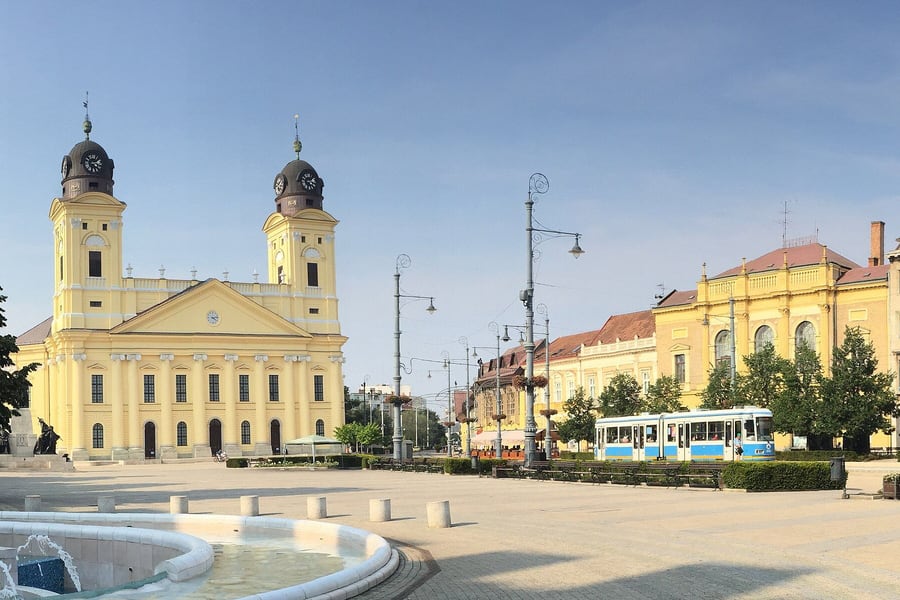 cisko66 / Wikimedia Commons · CC BY 3.0 · cropped
The Reformed Great Church
Debrecen's twin-towered landmark was built between 1805 and 1824 to plans by Mihály Péchy, after fire destroyed the church before it. With 1,500 square metres of floor it is the largest Protestant church in Hungary, and the reason Debrecen is called the Calvinist Rome. On 14 April 1849 Hungary's revolutionary government, which had fled to Debrecen, declared the Habsburgs deposed here and proclaimed independence.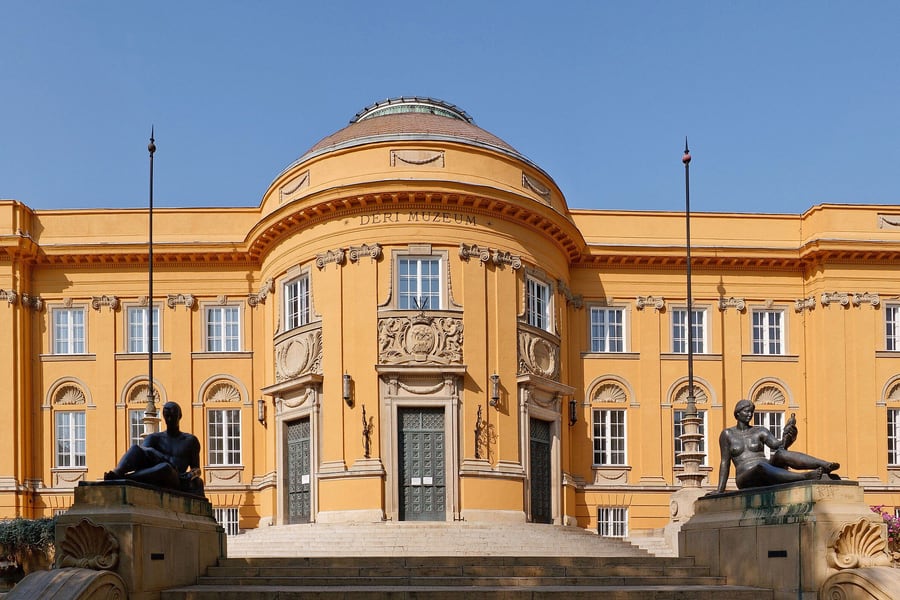 eospower / Wikimedia Commons · CC BY 2.5 HU · cropped
The Déri Museum
Built to plans by Dénes Györgyi with Aladár Münnich in 1923–29 and opened in 1930, the museum grew from the collection the Viennese silk manufacturer Frigyes Déri gave the city in 1920. Ferenc Medgyessy's four bronzes at the steps stand for archaeology, science, art and ethnography. Inside are Munkácsy's trilogy, a samurai house and Egyptian antiquities.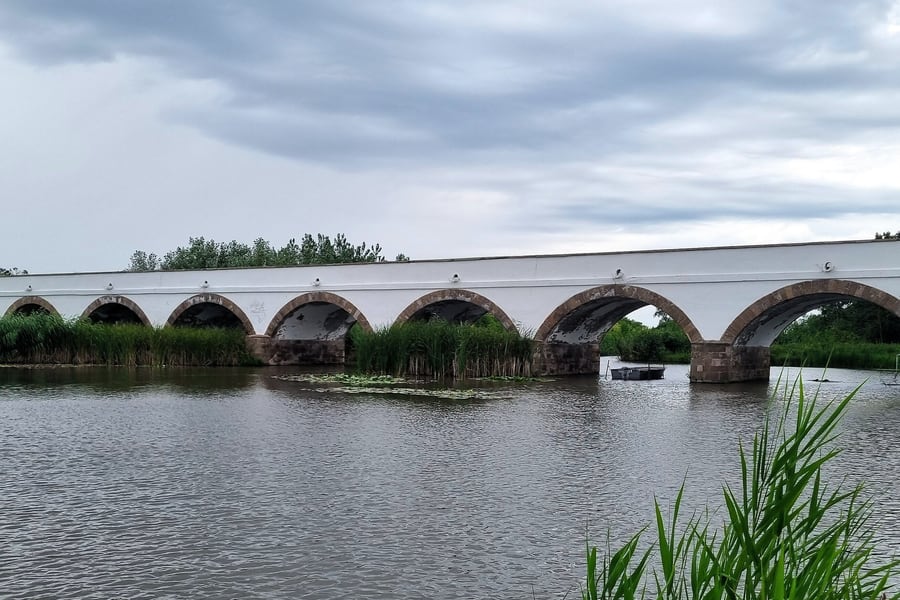 Ondřej Žváček / Wikimedia Commons · CC BY 4.0 · cropped
The Nine-Arch Bridge, Hortobágy
Debrecen built this stone bridge over the Hortobágy river in 1827–33, to plans by Ferenc Povolny, on the road its cattle dealers drove their herds along towards Szolnok and Vienna. At 167 metres it was the longest road bridge in historic Hungary. It stands in Hortobágy National Park, Hungary's first, a UNESCO World Heritage Site since 1999.Where to Sleep
The line is a day out from Debrecen, so stay in the city, ideally by its Great Forest park.
Where to stay
Hotel Divinus
At the edge of the Nagyerdő, Debrecen
A large modern hotel of 156 rooms and suites at the gate of the city's Great Forest park, a few minutes' walk from the Aquaticum baths.
Check Availability (opens in a new tab, on hoteldivinus.hu)via hoteldivinus.huQuestions or corrections
Planning this trip and stuck on something, or spotted a time, fare or detail that has changed? Send us a message about The Zsuzsi Forest Railway. We read every one, and we update this page when something has changed.