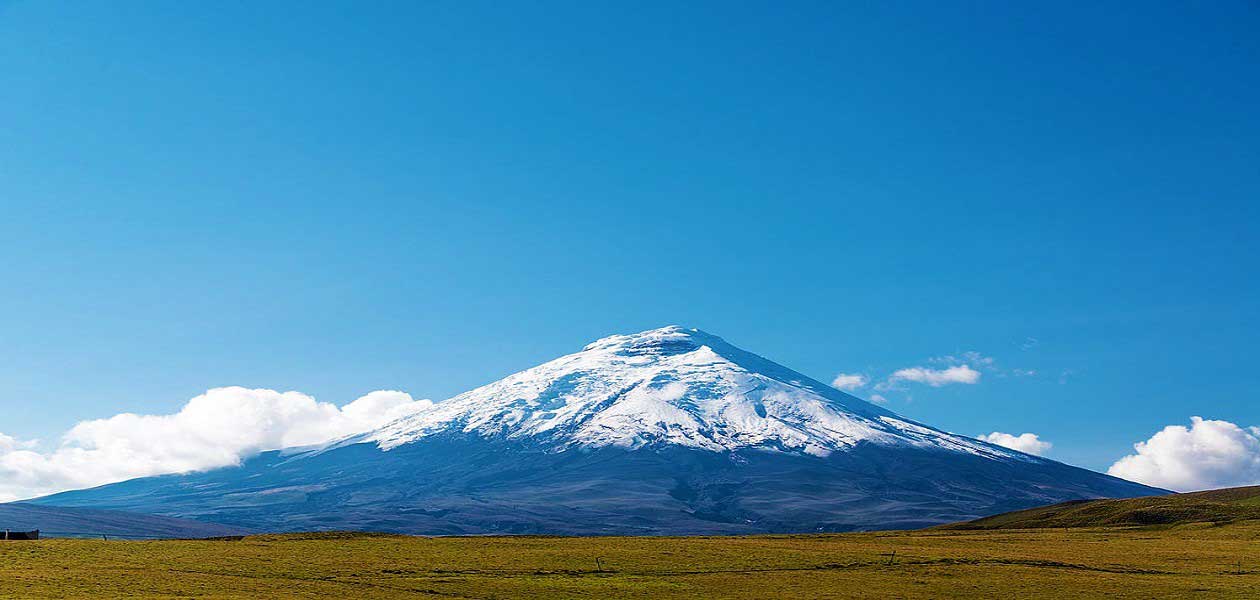
Ecuador
Ecuador built one of the boldest railways ever attempted. The contract signed in 1897 called it, without exaggeration, "the most difficult railway in the world": a line from the Pacific coast to Quito, nearly 450 kilometres, climbing to around 3,600 metres with gradients of one in eighteen. Its most famous stretch, the Nariz del Diablo, is a zigzag cut into a near-vertical rock face so that the train can climb by reversing. Four thousand Jamaicans were brought to build the tunnels and bridges; half of them are said to have died.
The trains reached Quito in 1908. They stopped in 2020 — every service in the country, with the state railway company wound up by presidential decree. What survives is two local tourist routes, both of them worth travelling for, and both of which you should confirm are running before you go.
Rail journeys in Ecuador
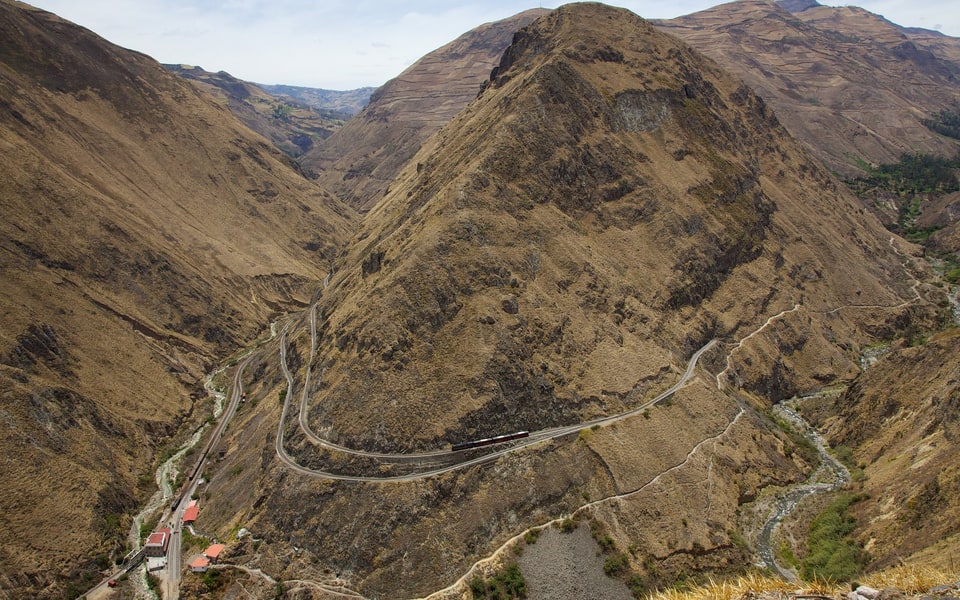
The Devil's Nose
A zigzag cut into a near-vertical Andean rock wall, so a train can climb it by reversing. Four thousand Jamaicans were brought in to build it.
View journey →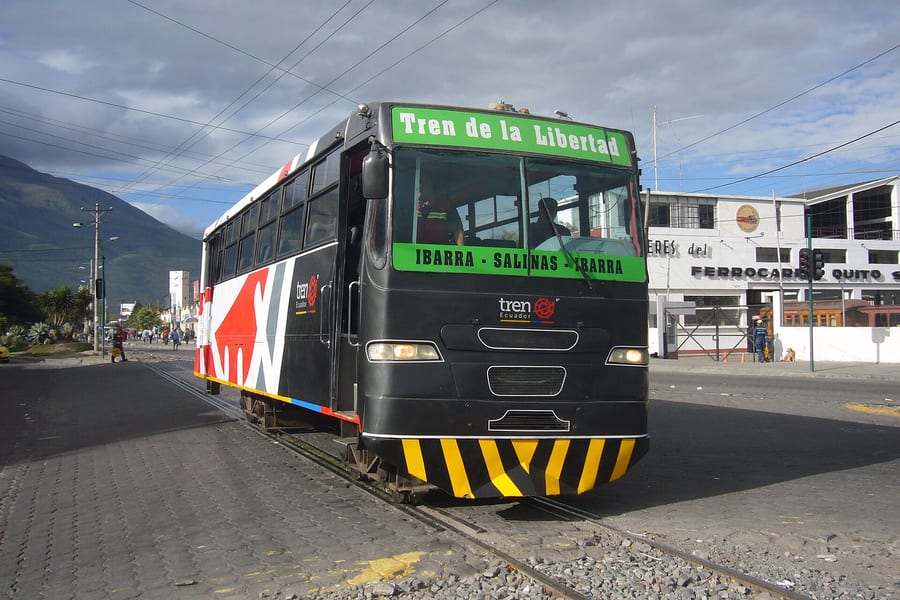
The Tren de la Libertad
Ninety minutes from Ibarra through seven hand-cut tunnels to a village of Afro-Ecuadorians descended from enslaved people — the Freedom Train.
View journey →Good to know
What rail journeys can you still do in Ecuador?
Two. The Devil's Nose runs from Alausí down the famous switchback to Sibambe and back — about two hours, Thursday to Sunday, operated by the Alausí municipality. The Tren de la Libertad runs ninety minutes from Ibarra through seven hand-cut tunnels to the Afro-Ecuadorian village of Salinas. That is the whole of Ecuador's passenger railway. The long-distance services, including the luxury Tren Crucero that once ran coast to capital, are gone.
What happened to Ecuador's railways?
They were finished off by a combination of weather, roads and money. The El Niño rains of 1997–98 did severe damage, and the Pan-American Highway had already taken most of the traffic. President Correa declared the railway national cultural patrimony in 2008 and spent heavily rebuilding it as a heritage operation — and for about a decade it worked beautifully. Then in 2020 all services ceased and the state railway company was put into liquidation by presidential decree. The two routes running today were revived locally, not nationally.
Do the trains actually run? How do I check?
Sometimes, and you must check. The Devil's Nose reopened on 6 June 2026 after a mudslide in February destroyed five kilometres of track; before that it had been out of service from 2020 until 2025. The Ibarra–Salinas service pauses and restarts around holidays and demand. Book the Devil's Nose through Ticket Éxito and watch the Ministry of Infrastructure and Transport for service notices; for the Freedom Train, ask a hotel or operator in Ibarra. Build a fallback day into any itinerary that depends on a train.
When is the best time to go?
June to September is the drier season in the sierra and the safest bet — the rains, roughly October to May, are when the landslides happen, and landslides are what close these lines. Ecuador is on the equator, so temperature depends on altitude rather than month: Alausí is at 2,347 m and cool, while the Chota valley at the end of the Freedom Train is hot and dry. Allow a day or two to acclimatise if you have flown into Quito at 2,850 metres.