The Tren de la Libertad
Anidaat / Wikimedia Commons · CC BY-SA 4.0
- DistanceIbarra–Salinas · about 90 minutes each way
- DurationA full day · back in Ibarra late afternoon
- Best seasonJune–September · but check the train is running at all
Introduction
There are two freedoms in the name of this train.
One is the obvious one — the independence Ecuador won from Spain two hundred years ago, which every South American country commemorates in its street names and its statues. The other is more particular, and it is why the route ends where it does.
Salinas, ninety minutes down the line from Ibarra, is one of very few places in Ecuador with a native Afro-Ecuadorian population: a village of people descended from Africans brought here as slaves, who have lived in this corner of Imbabura since the late seventeenth century and who built a community here after abolition. The Tren de la Libertad is named for their freedom as much as for the nation's, and the journey is designed around arriving among them.
The ride
It is a short run and a good one. The train leaves Ibarra — the "white city", 2,200-odd metres up in the northern sierra — and works its way down and out of the Andes toward the coastal lowlands, through seven tunnels hacked by hand through the rock of the cordillera and across gorges on bridges between them.
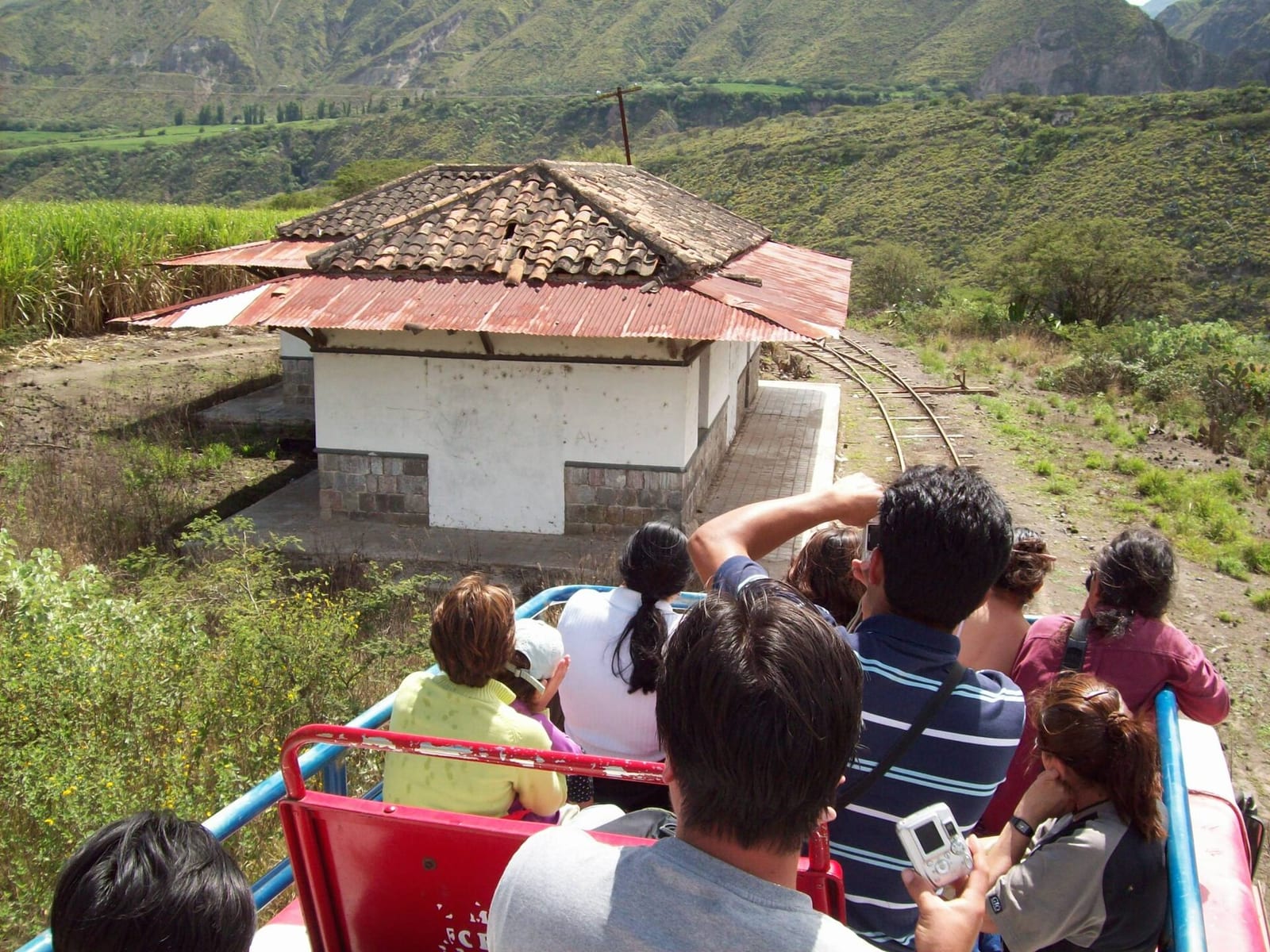
The altitude falls from around 2,200 metres to about 1,600, and in ninety minutes the country changes completely: from cool green Andean valley to the hot, dry, cactus-and-sugar-cane basin of the Chota, which is where Ecuador's Afro-descendant communities are concentrated.
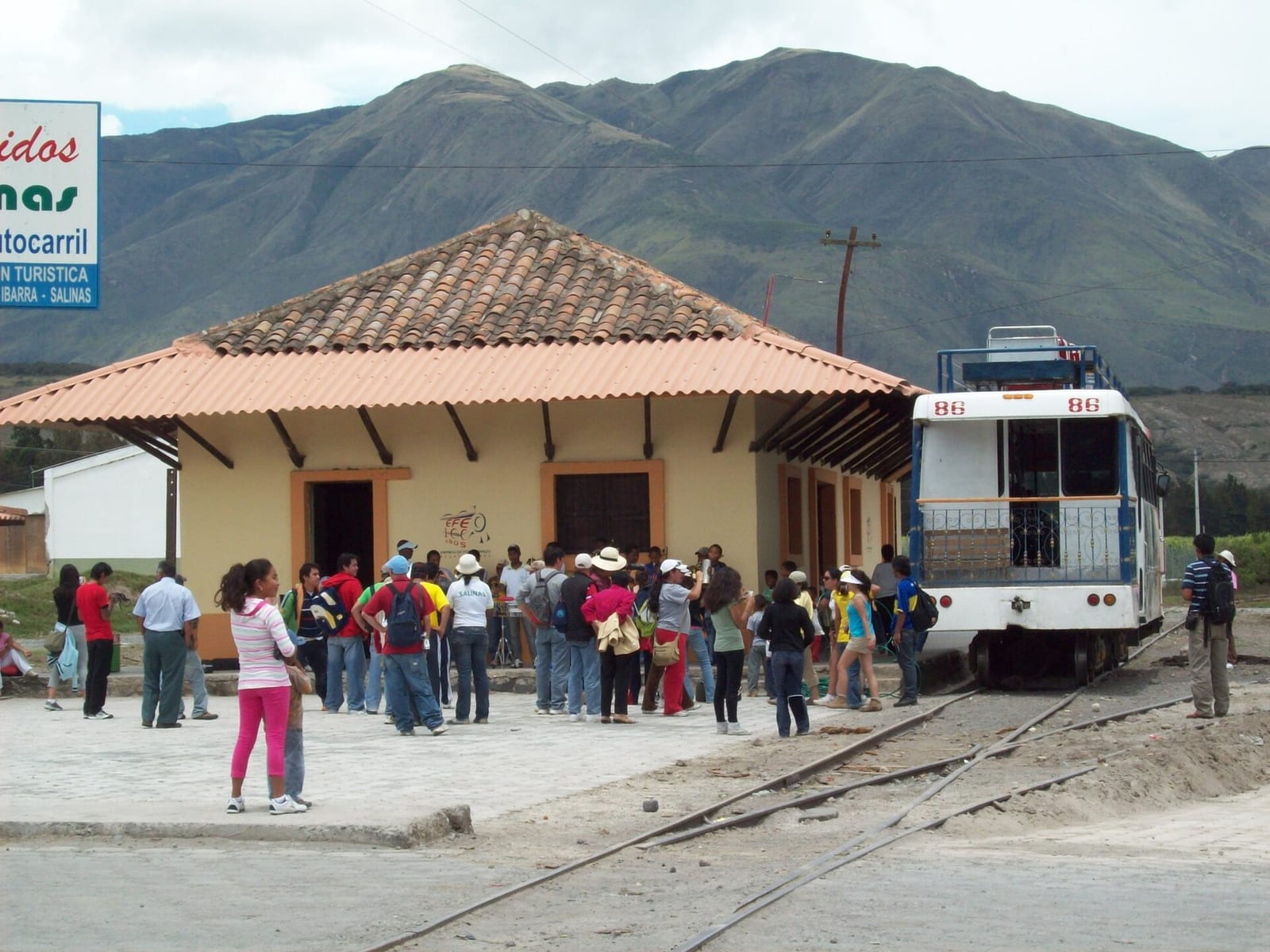
At Salinas the village comes out to meet the train with Bomba del Chota — the drum music of these valleys, played on a goatskin bomba and danced with a bottle balanced on the dancer's head. There is a small ethnographic museum, a salt museum (Salinas means salt pans, and that is what was worked here), murals of the community's own history along the walls, and stalls selling cheese, chocolate and preserves.
Then the train goes back up.
What is left of Ecuador's railways
You should understand what you are riding on.
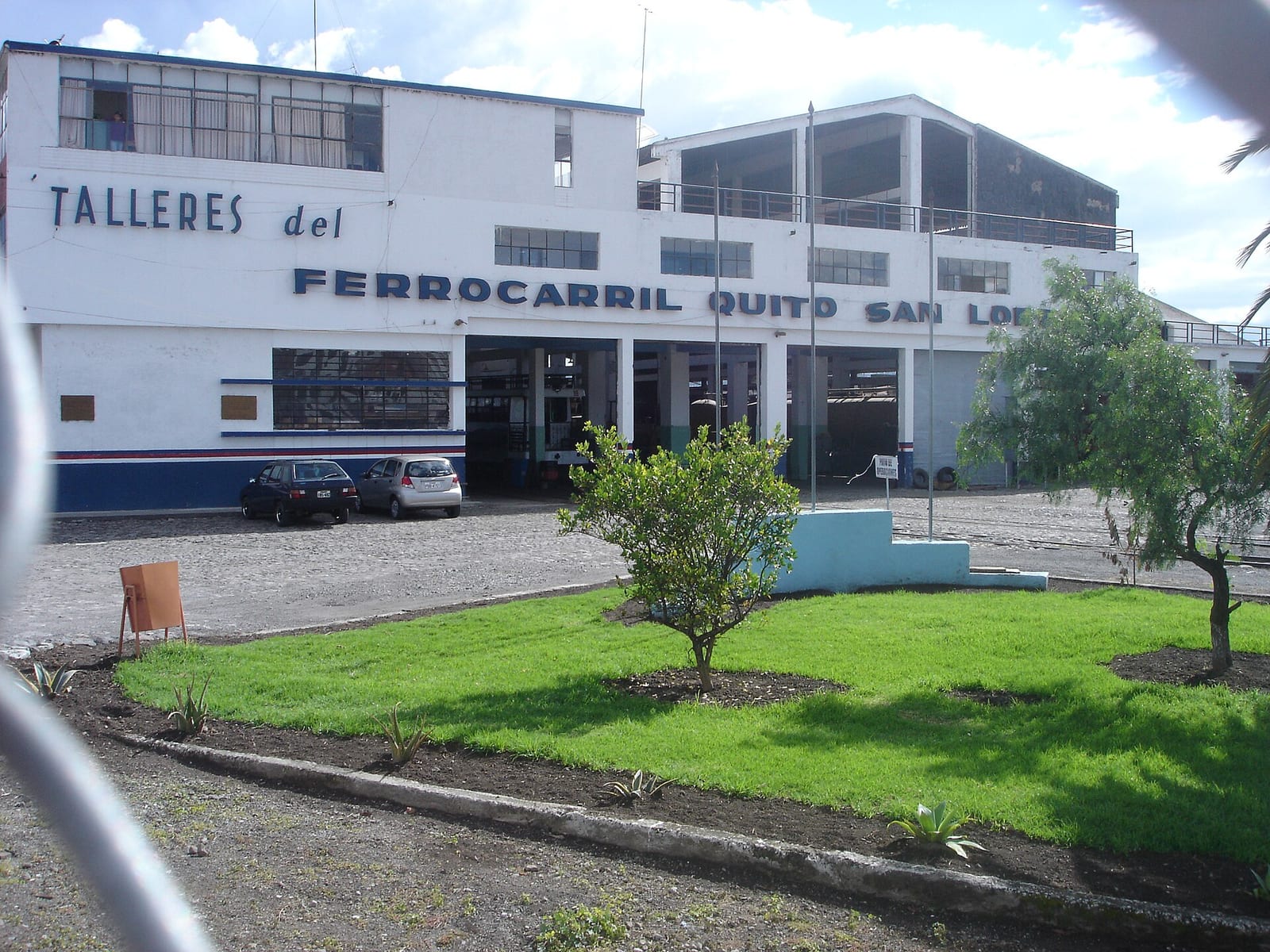
Ecuador built one of the boldest railways in the Americas — the line from the coast at Guayaquil up to Quito, finished in 1908, which includes the Devil's Nose. A third route ran north from Quito through Ibarra to the Pacific at San Lorenzo, and this train is a surviving fragment of it.
The whole network was battered by the El Niño rains of 1997–98 and hollowed out by road competition. In 2008 President Correa declared the railway national cultural patrimony and spent heavily restoring it as a heritage operation, and for about a decade Ecuador ran a set of genuinely delightful tourist trains.
Then in 2020 every railway service in the country stopped, and the state railway company was put into liquidation by presidential decree.
What survives is two local tourist routes: the Devil's Nose in Chimborazo, and this one in Imbabura. That is the entire passenger railway of Ecuador.
So check before you go
This is the honest warning. Service on the Ibarra–Salinas line has been intermittent — it pauses, and it comes back around holidays or when there is enough demand. It is not a dependable scheduled railway and it would be wrong to describe it as one.
One caution before you read on, because it governs everything else: as of August 2026 this train is not on sale anywhere we can find, and the short Ibarra run that Ecuador's ticketing platform does sell is a different trip on a different stretch of line. The Timetables section below sets out what we could and could not confirm. Everything here describes the journey as it last operated — which is worth knowing, because the line and the village at the end of it are still there.
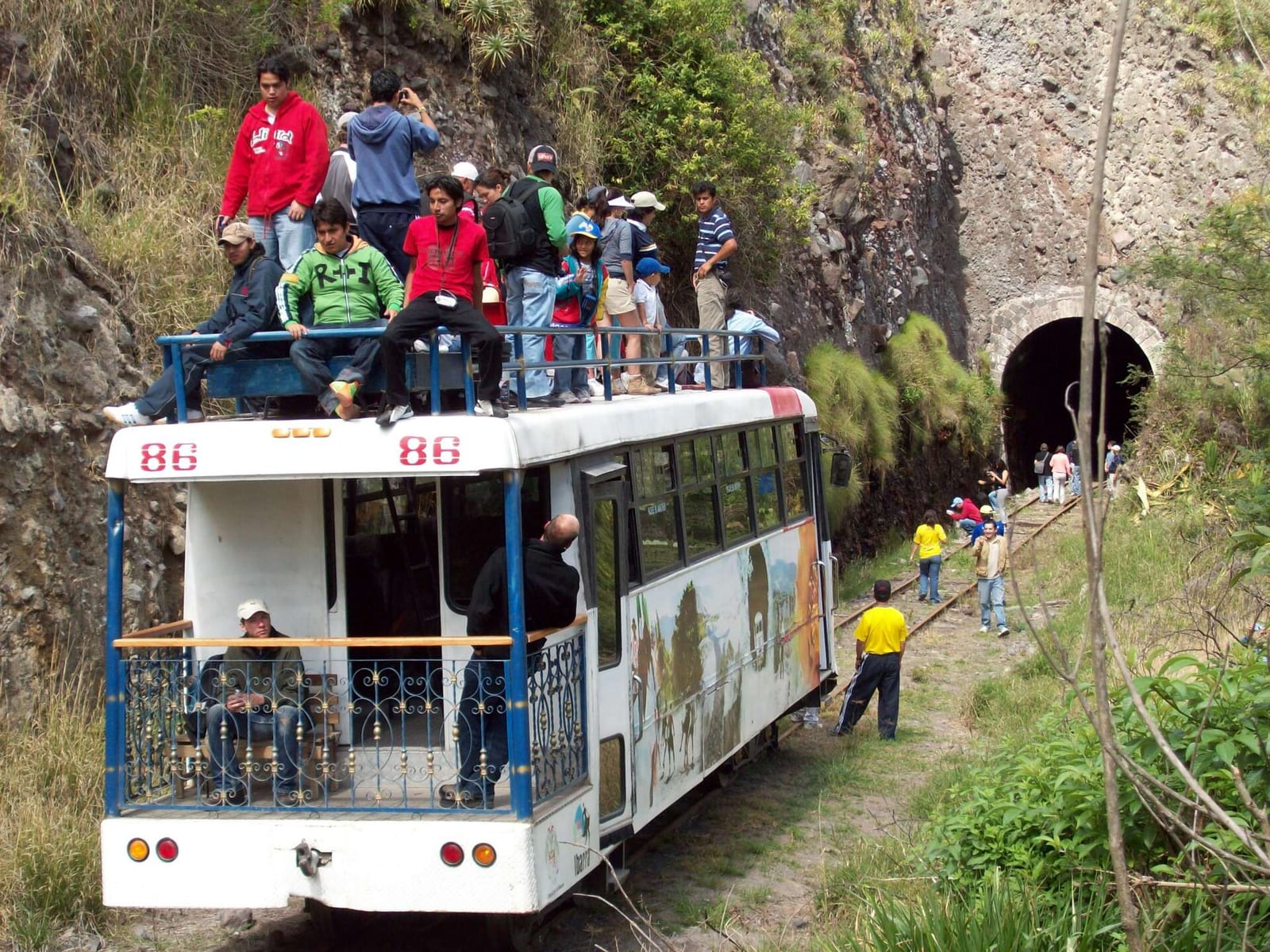
One other thing worth knowing, because you will see the photographs: passengers used to ride on the roof, and it looks wonderful in pictures from 2008. That stopped after two Japanese tourists were killed on the roof of the Devil's Nose train in 2007. You will be inside — and going through seven tunnels, you will see why.
The Journey
Ibarra is the largest town in Imbabura province, 126 kilometres north of Quito, known as la ciudad blanca — the white city — for the whitewashed colonial centre it rebuilt after an earthquake flattened it in 1868. It sits in a bowl of volcanoes at around 2,200 metres, and the railway station is a short walk from the middle of it.
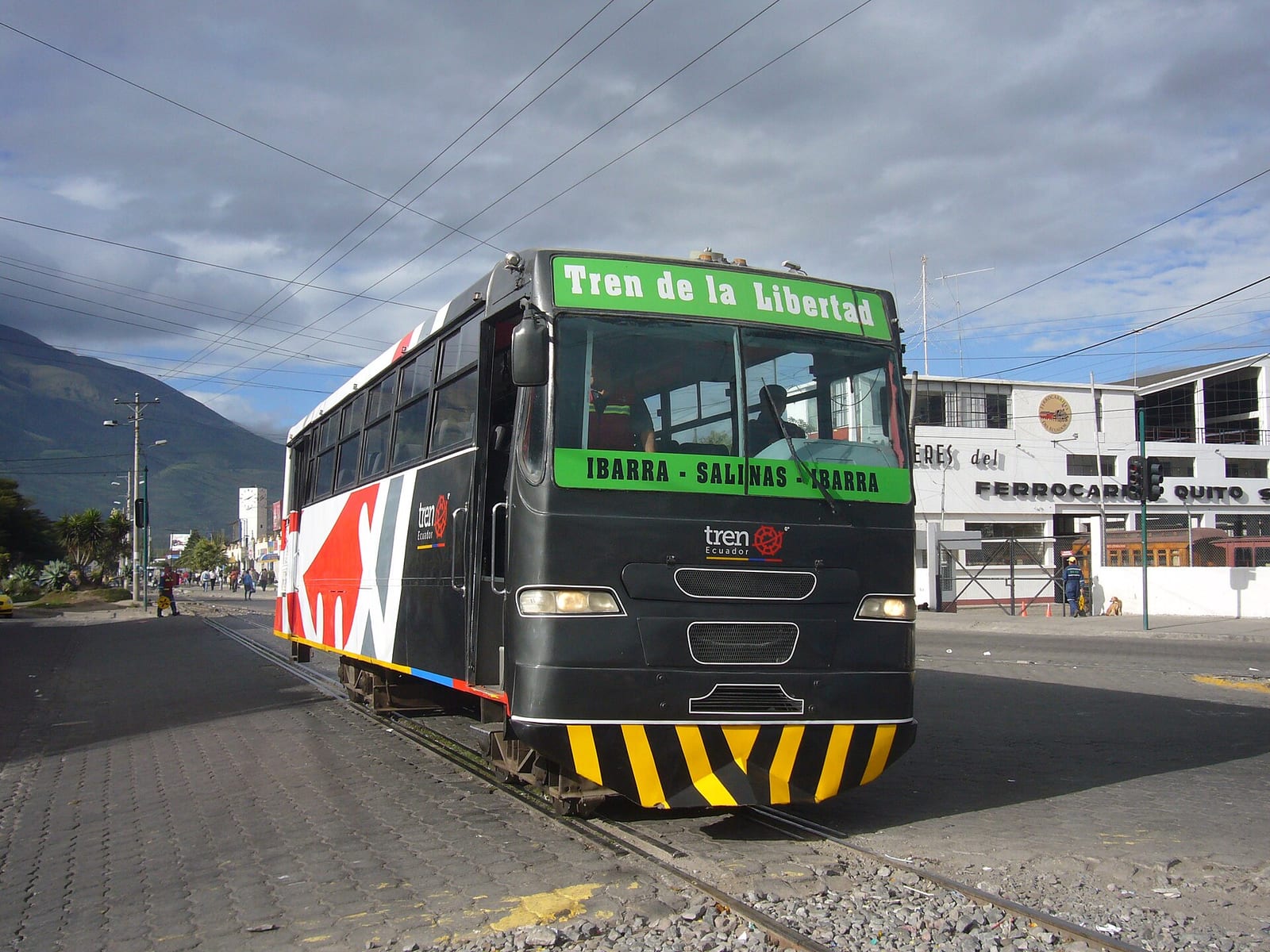
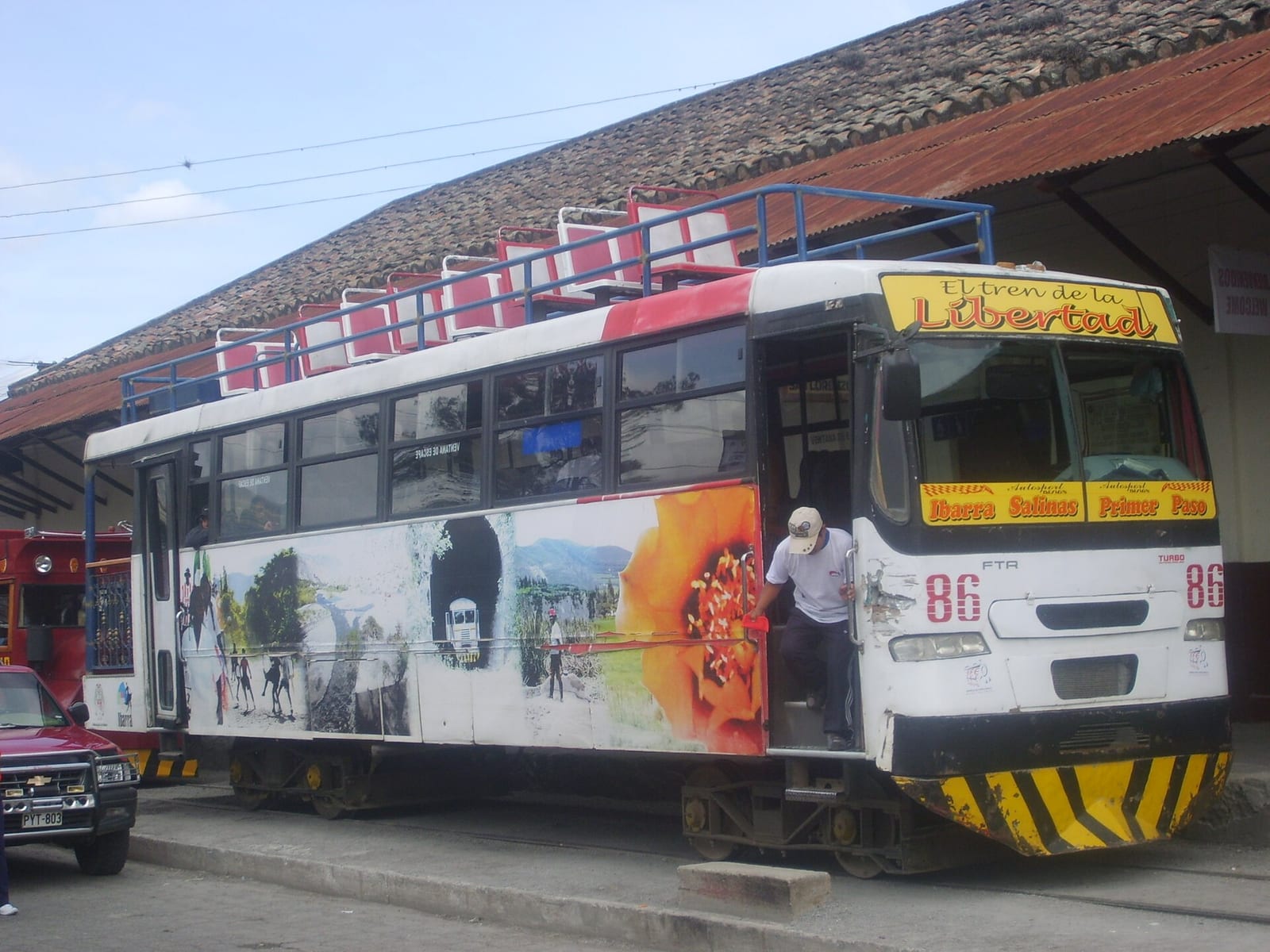
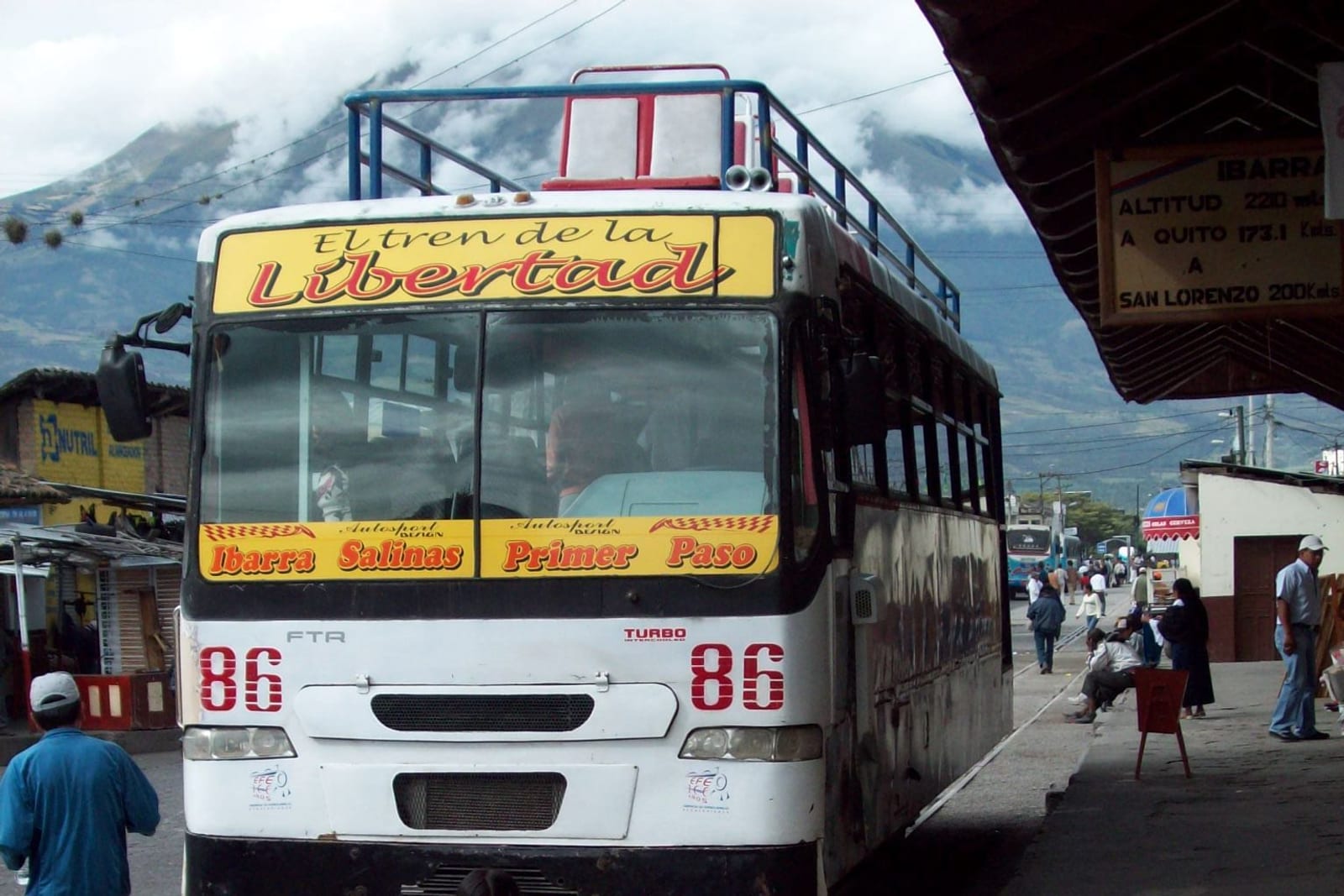
The train that leaves from here is a railcar rather than a locomotive and coaches — a descendant of Ecuador's autoferros, which were literally bus bodies mounted on railway chassis and were the practical answer to running a thin service over a difficult mountain railway.
Out of the sierra
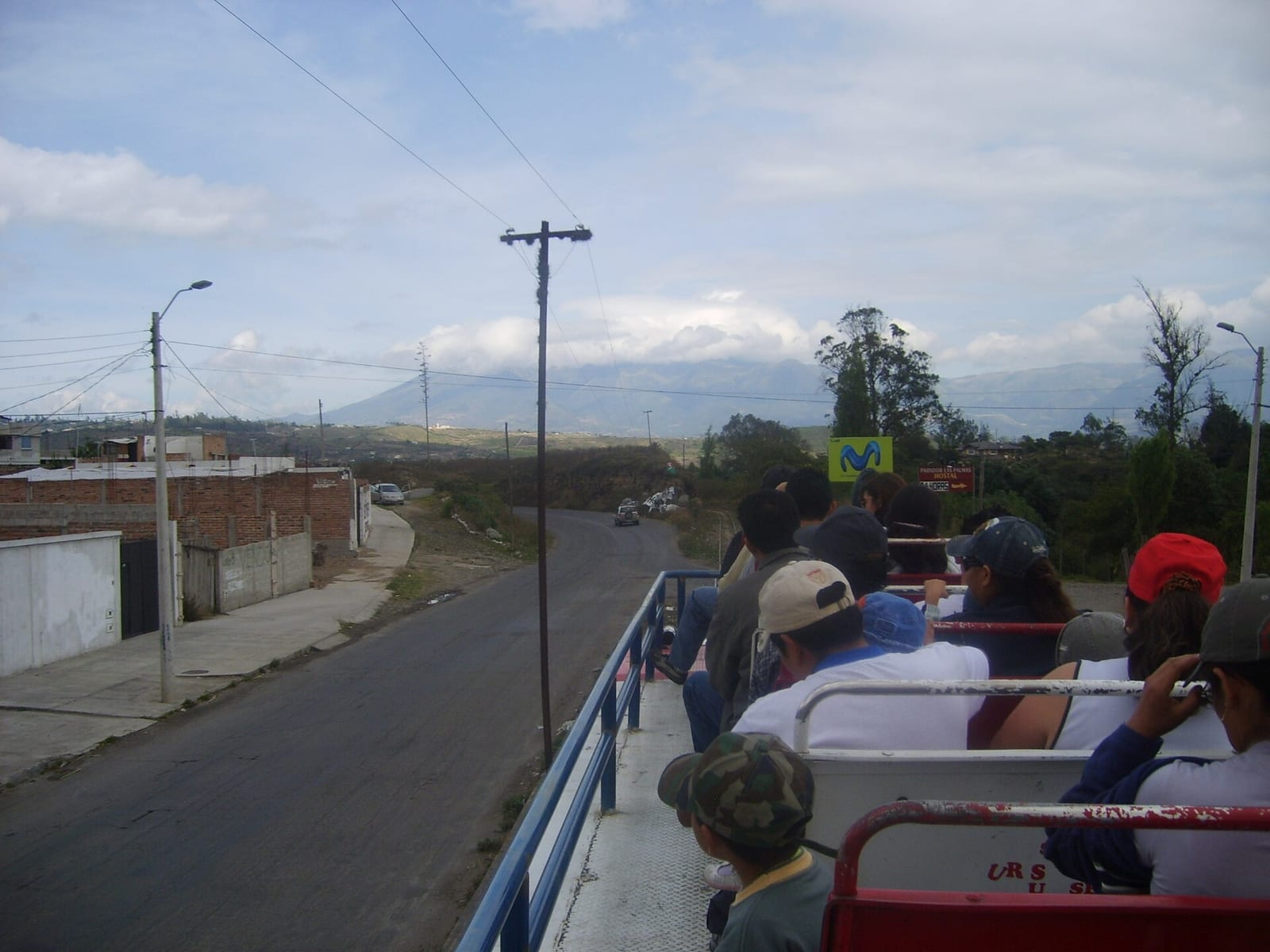
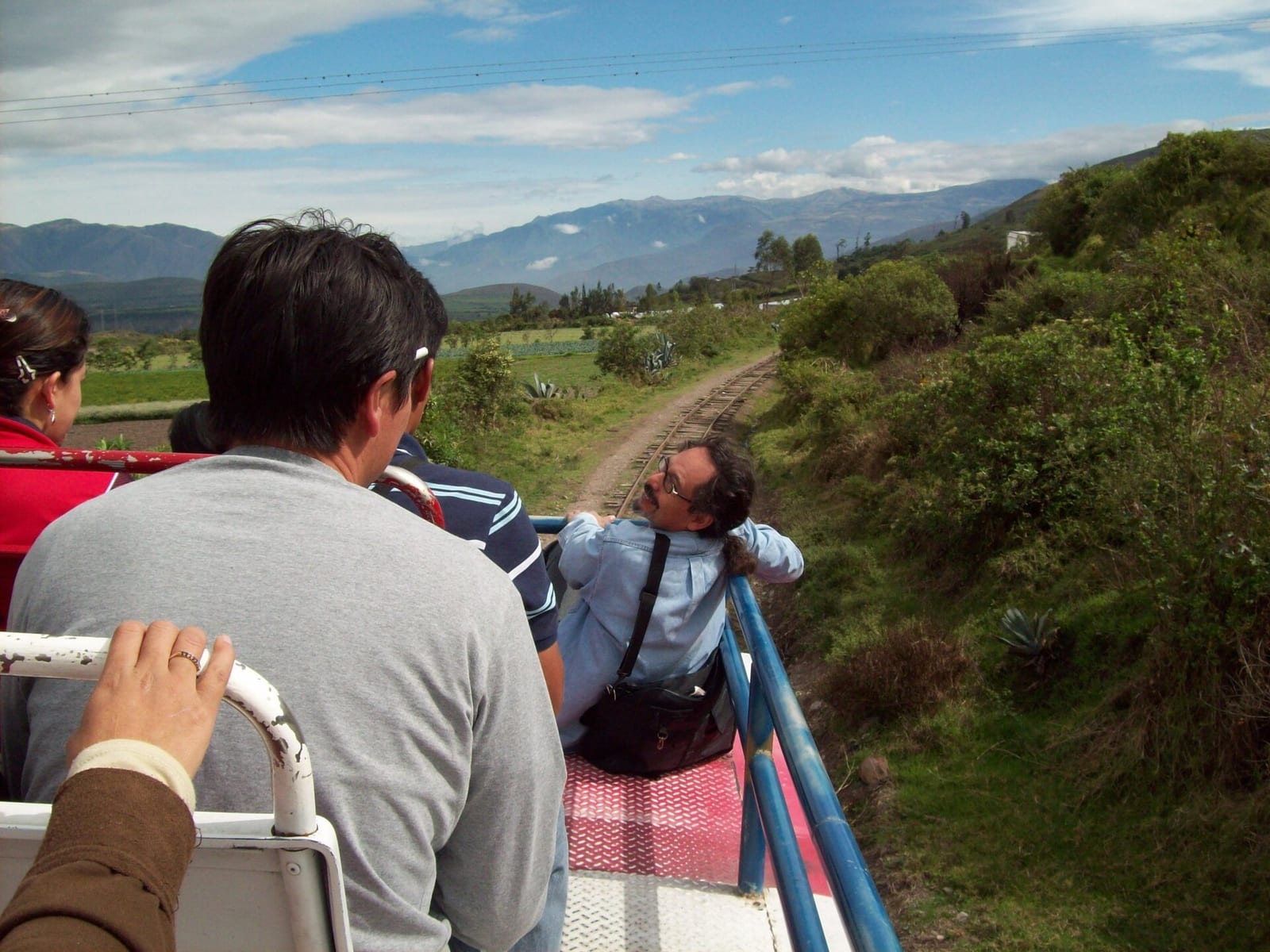
The line heads north-east out of Ibarra and begins to descend, and the descent is the journey. Within a few kilometres the green, cool, cultivated Andean country starts to dry out; within half an hour there is cactus on the slopes and the air coming through the windows is warm.
This is the drop into the Chota valley, a hot basin in the rain shadow of the mountains, planted with sugar cane and famous in Ecuador for two things: its Afro-Ecuadorian communities, and — genuinely — for producing a remarkable share of the national football team.
The seven tunnels
The rock in between is dealt with by seven tunnels, all of them hand-excavated, with bridges over the gorges in between. They come in quick succession on the steepest part of the descent, and the alternation — black, light, black, light, a drop beside the track — is the most memorable stretch of the ride.
It is also the reason nobody rides on the roof any more. Photographs from 2008 show the carriage tops crowded with passengers, feet over the side, going straight at a tunnel mouth. After two Japanese tourists were killed on the roof of the Devil's Nose train in 2007, roof riding was prohibited across Ecuador's railways.
Salinas
The end of the line for this service, about ninety minutes out.
Salinas de Ibarra is a small, hot village of low houses. Its name comes from the salt pans that were worked here for centuries — first by pre-Columbian peoples trading salt into the highlands, later under the haciendas — and salt is the reason enslaved Africans were brought to this valley in the first place, along with sugar.
The community that came out of that has been here since the late seventeenth century, and it is one of the very few Afro-Ecuadorian settlements in the country. What happens when the train arrives is theirs: Bomba del Chota played on the drum the music is named for, dancing with a bottle balanced on the head, a small ethnographic museum, a salt museum, murals along the walls telling the village's own version of its history, and stalls of cheese, chocolate, jams and preserves.
It is community tourism in the proper sense — run by the village, for the village — and the sensible thing to do is spend money there.
Then the railcar runs back up the hill to Ibarra, arriving late in the afternoon.
Practical notes
- It is much hotter at Salinas than at Ibarra. Six hundred metres of descent and a rain shadow; dress in layers you can shed.
- Take the all-inclusive if it is offered. There is not much else to eat in the village and the package money goes to the community.
- Cash. Ecuador uses US dollars; card acceptance in Salinas is limited.
- Confirm the train is running. This bears repeating: the service pauses, sometimes for long periods.
- Otavalo is half an hour south of Ibarra by road. Several operators bundle the two; that is a bus plus this train, not a longer railway journey.
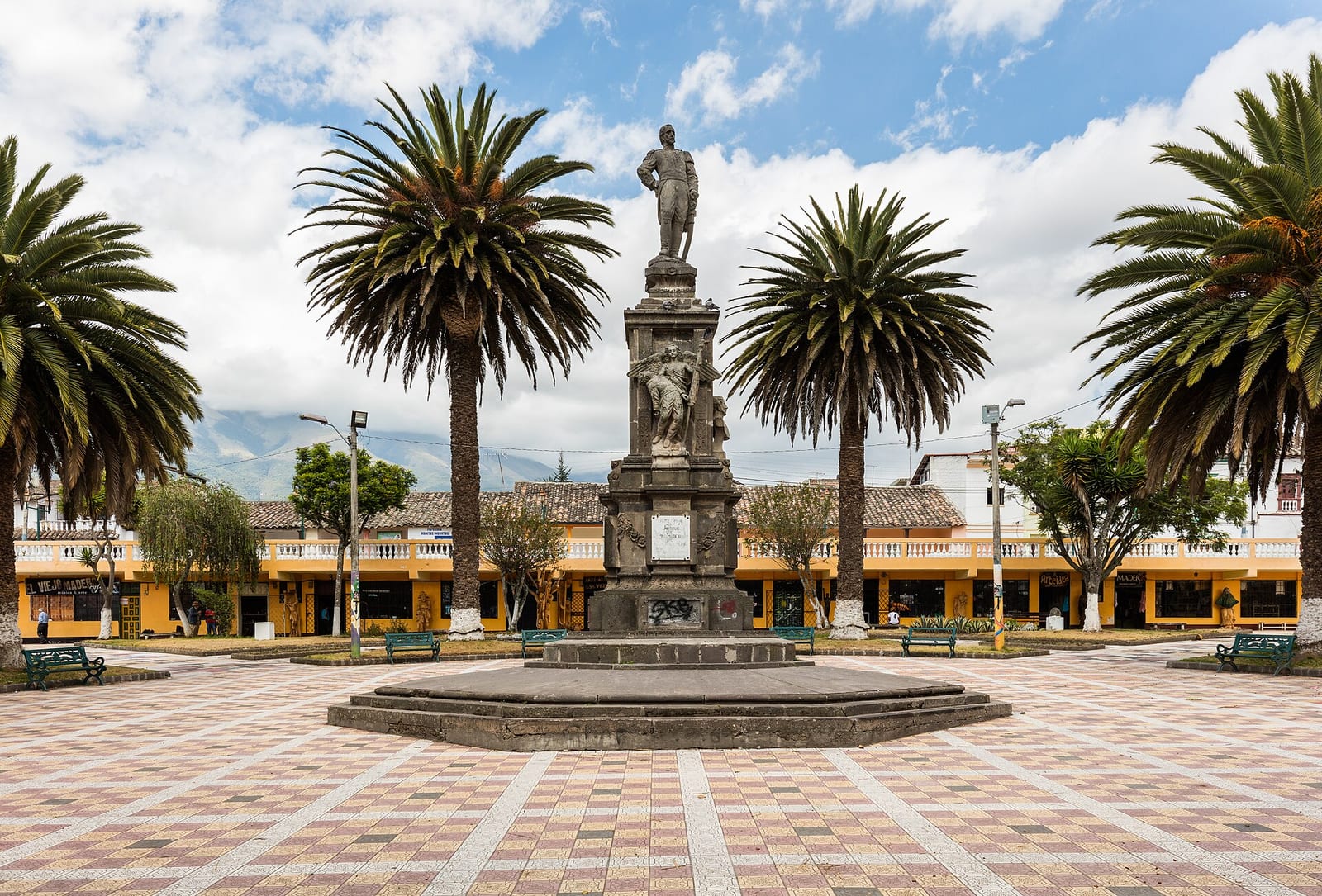
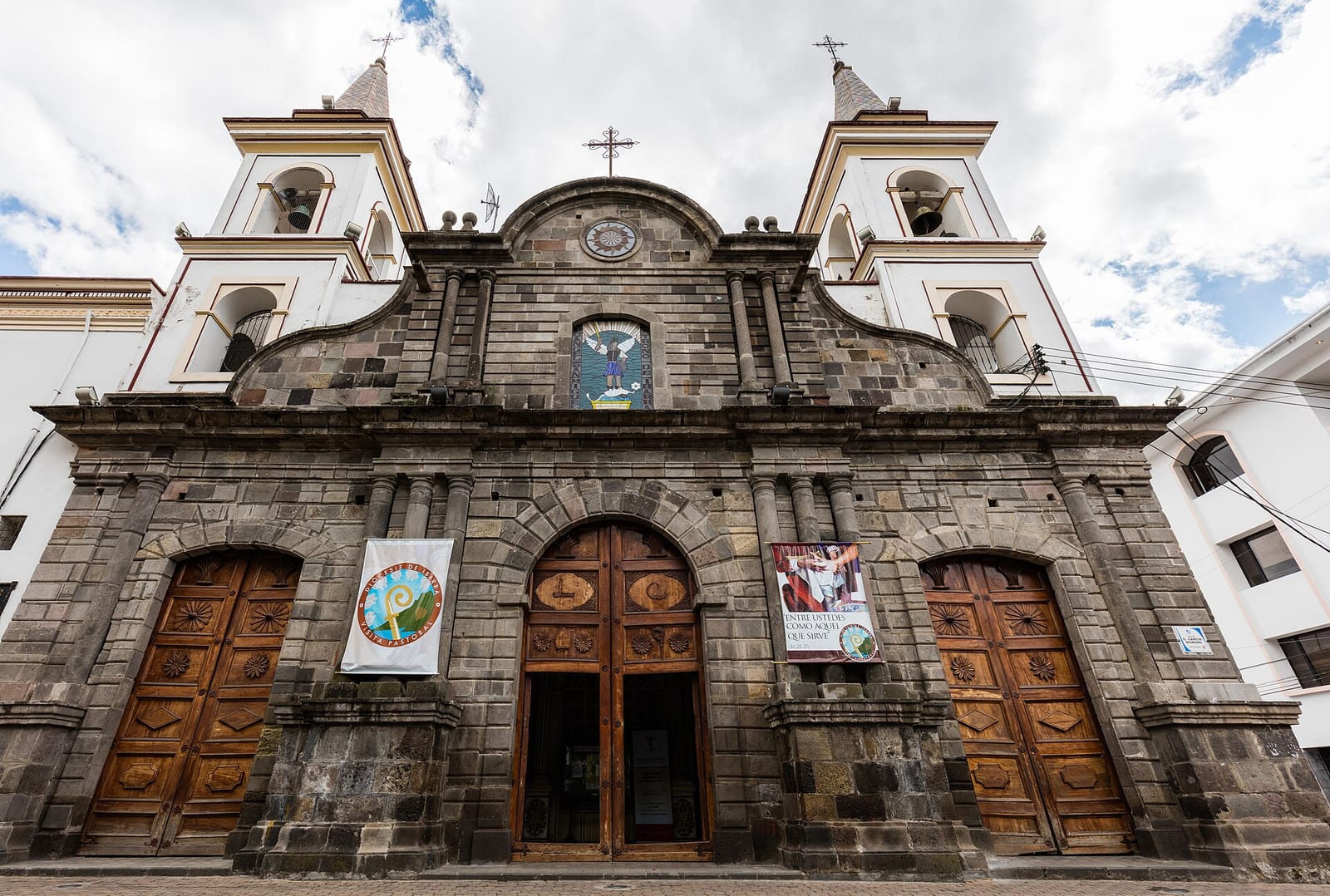
Along the route
Anidaat / Wikimedia Commons · CC BY-SA 4.0Why it is called the Freedom Train
Two freedoms: the independence won from Spain, and the emancipation of enslaved people, whose descendants still live along this line. Salinas is one of very few places in Ecuador with a native Afro-Ecuadorian population. The train is named for them.TupakAmaruIshkay / Wikimedia Commons · CC BY-SA 4.0Seven tunnels cut by hand
To get out of the sierra the line drives through seven tunnels hacked through the rock of the Cordillera Andina. The route falls from around 2,200 metres to about 1,600, and the climate changes with it — cool Andean valley to hot cactus country in about an hour.Jan Pešula / Wikimedia Commons · CC0Bomba del Chota
The train is met at Salinas with Bomba del Chota — the drum-driven music of the Afro-Ecuadorian communities, played on a goatskin bomba and danced with a bottle balanced on the head. The village has murals of its own history and stalls of cheese and chocolate.A bit of history
Culture & experiences along the way
TupakAmaruIshkay / Wikimedia Commons · CC BY-SA 4.0Spend the time in Salinas, not on the train
The ride is ninety minutes each way and pleasant enough, but the village is the reason to come. Salinas is small, hot and welcoming, and the tourism here is genuinely community-run — the museums, the food and the music are the village's own enterprise rather than a concession. Buy something. That is the entire economic logic of the train.Bernard Gagnon / Wikimedia Commons · CC BY-SA 4.0Combine it with Otavalo
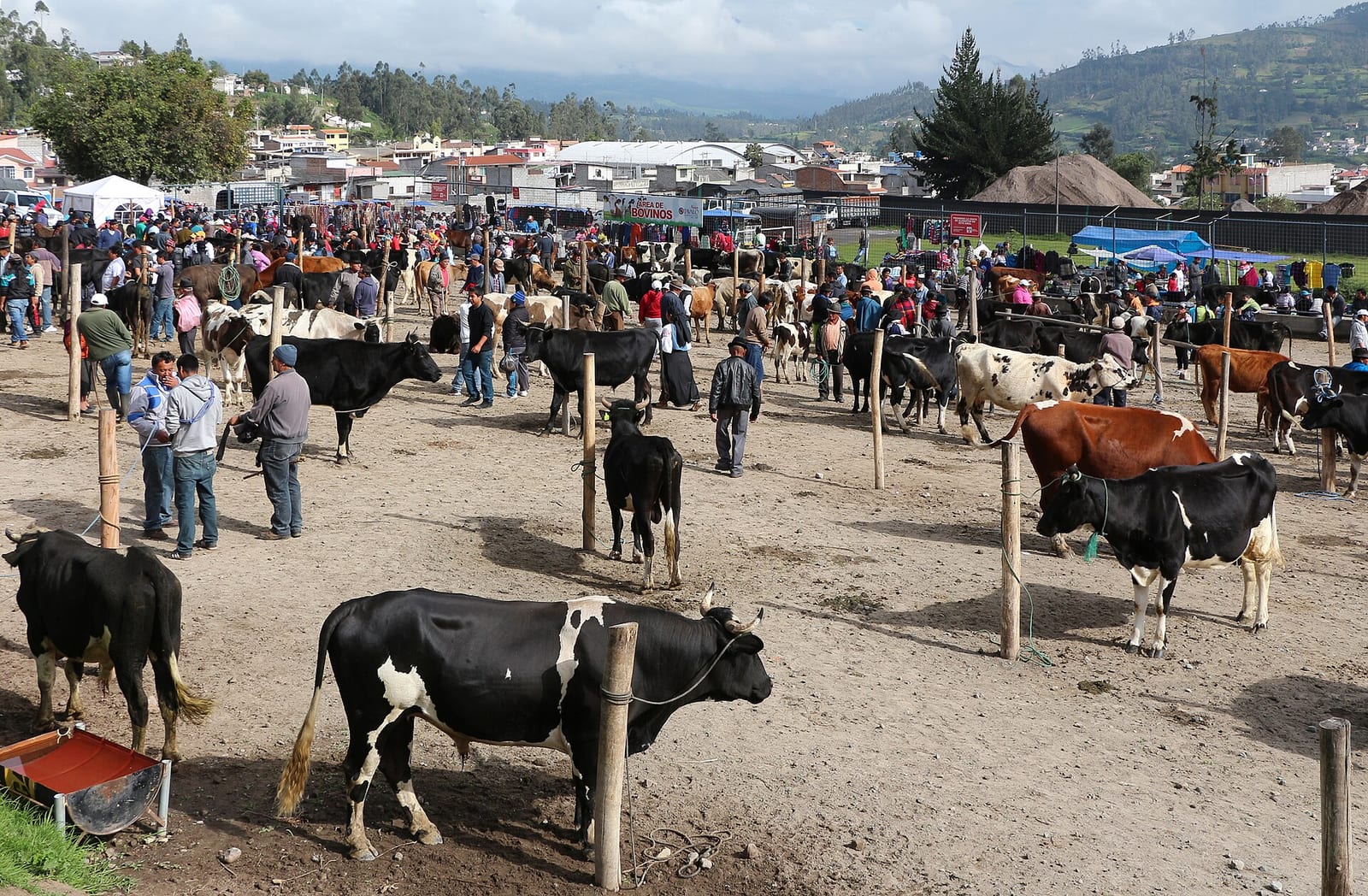
Half an hour south of Ibarra is Otavalo, whose Saturday market is the most famous in the Andes — textiles in the Plaza de Ponchos, and, from dawn, an extraordinary livestock market on the edge of town that most visitors miss entirely. Several operators sell the train as an "Otavalo–Ibarra–Salinas" package; that is road transport plus the train, not a longer rail journey.TupakAmaruIshkay / Wikimedia Commons · CC BY-SA 4.0Look at the 2008 photographs, and be glad
Older pictures of this line show passengers sitting all over the carriage roofs with their legs hanging down, and it looks tremendous fun. It is banned now, everywhere in Ecuador, because in 2007 two Japanese tourists riding on the roof of the Devil's Nose train were killed. You will travel inside, through the same seven tunnels, and the tunnels are the reason the rule exists.Timetables
As of August 2026 we cannot find the Ibarra–Salinas train on sale anywhere, and you should not plan a trip around it.
Ecuador's national railway ceased operating in 2020 and the state company went into liquidation. What has come back has come back piecemeal, run by municipalities rather than by a national operator, and the Imbabura end of it has changed shape:
- What is on sale in Imbabura today is not this journey. Ecuador's ticketing platform is currently selling a "Tren Tayta Imbabura" coffee tour — a short run from Ibarra's Obelisco station at $20 — and nothing over the full Ibarra–Salinas route.
- The segment the government actually reactivated in Imbabura is Ibarra–Andrade Marín, about 13 km, branded the "Tren a la Fábrica" and operated by the municipalities of Ibarra and Antonio Ante. That is a different line in a different direction from Salinas.
- The Devil's Nose is the one that is definitely running. That journey is on sale for dates through to the end of December 2026.
So treat everything below as the Ibarra–Salinas service as it last operated, not as a timetable you can book. If you are set on it, ask in Ibarra — the municipality and local operators are the only reliable source now that there is no national railway to ask.
The service as it last ran
| Route | Ibarra → Salinas → Ibarra |
| Days | Thursday to Sunday |
| Departs Ibarra | 11:25 |
| Back in Ibarra | about 16:40 |
| Journey time | About 90 minutes each way |
| Check-in | 30 minutes before departure |
The gap in the middle is the point — roughly two and a half hours at Salinas for the community reception, the museums and lunch.
Fares
| Standard | All-inclusive | |
|---|---|---|
| Adults | $33 | $39 |
| Children, over-65s, disabled | $25 | $29 |
The all-inclusive covers lunch and the guided activities at Salinas. Ecuador uses the US dollar.
The route
| Altitude | About 2,200 m at Ibarra down to about 1,600 m at Salinas |
| Temperature | Roughly 14 °C to 25 °C across the route |
| Tunnels | Seven, hand-excavated |
Getting to Ibarra
There is no train to Ibarra — the line north from Quito no longer carries passengers. Ibarra is 126 km from Quito, about 2½ to 3 hours by road, with frequent buses from the Carcelén terminal. Otavalo is half an hour south.
Because the train leaves at 11:25, a day trip from Quito is possible but tight; staying in Ibarra or Otavalo the night before is far more comfortable.
A note on "Otavalo–Ibarra–Salinas"
Several agencies advertise the trip under that name. It is a road transfer from Otavalo plus this train — the railway does not run from Otavalo, and you should not expect a longer rail journey than Ibarra to Salinas.
Status re-checked August 2026, against Ecuador's ticketing platform (which lists a different Ibarra train) and against reporting on which segments the transport ministry reactivated. Because there is no single national operator any more, the reliable sources are local: ask in Ibarra.
Tickets
There are two fares: $33 standard for an adult and $39 all-inclusive, with $25 and $29 for children, over-65s and disabled passengers. The all-inclusive adds lunch and the guided activities at Salinas — the ethnographic and salt museums, the murals and the Bomba del Chota reception. For six dollars it is the obvious choice: there is limited eating in the village, and the difference goes into the community that runs the whole thing. Ecuador uses the US dollar.
Book through a hotel or tour desk in Ibarra or Otavalo: the national railway company no longer exists, so there is no single official booking site. ⚠️ Confirm the service is operating on your date — this is not boilerplate. Ecuador's railways all closed in 2020, this route came back as one of only two survivors, and it has run in fits since. Take cash in small notes, layers, and sun protection.
Book your tickets
Ibarra to Salinas and back
The standard fare
The round trip, leaving Ibarra in the late morning and back in the afternoon, with the community reception at Salinas. Reduced rates for children, over-65s and disabled passengers. Confirm the train is running before you travel — service on this route has been intermittent.
Book Tickets (opens in a new tab, on Tren de la Libertad)via Tren de la LibertadAll-inclusive
With lunch and the village activities
A package covering the round trip plus lunch and the guided activities at Salinas — the ethnographic and salt museums, the murals and the Bomba del Chota. Worth it: there is not much else to eat in the village and the money stays there.
Book Tickets (opens in a new tab, on Tren de la Libertad)via Tren de la LibertadRail Passes
No rail pass covers the Tren de la Libertad. Interrail and Eurail are European schemes, and Ecuador is not among the 33 countries in Interrail's list of covered railway companies. The trip is sold as a single fare, through hotels and tour desks in Ibarra and Otavalo.
Checked October 2026 against Interrail's list of railway companies (opens in a new tab).
Places to Visit
Imbabura is the most visited part of the Ecuadorian sierra after Quito, and everything below is within an hour of the train.
Salinas, the destination, is worth the trip in itself. Beyond the reception for the train are the salt pans the village is named for, still worked on a small scale, a salt museum and an ethnographic museum, and murals along the streets recording the community's history in its own words. Small, hot and friendly.
San Antonio de Ibarra, on the edge of the city, is the woodcarving capital of Ecuador: a plaza surrounded by workshops turning out everything from religious statuary to abstract sculpture, in a tradition going back to the colonial guilds. Cotacachi, below Cuicocha, is the leather town — an entire main street of workshops and shops. Ibarra itself is pleasant to walk, with whitewashed colonial streets, wide plazas and a local obsession with helados de paila, sorbets made by hand in a copper pan set on ice.
The road continues north-west toward the coast at San Lorenzo, the railway's original destination, through cloud forest into Esmeraldas province. The train no longer goes there, but the road does.
 Arabsalam / Wikimedia Commons · CC BY 4.0 · cropped
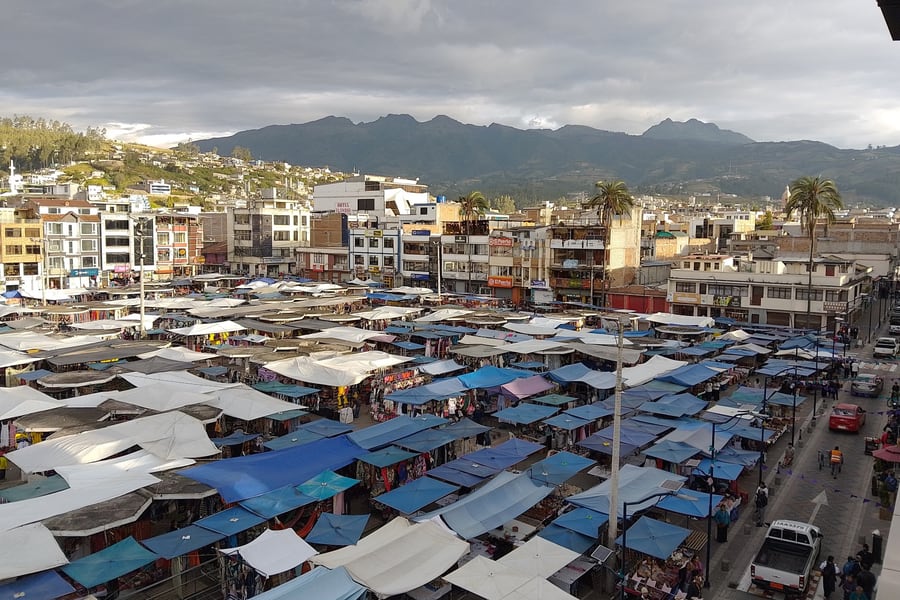
Plaza de Ponchos, Otavalo
Half an hour south of Ibarra at 2,532 m, and the best-known market town in the Andes. The plaza trades every day and overflows on Saturday, when close to a third of the town fills with stalls. The Otavaleño people are famous as weavers and, unusually, as traders who sell their own work worldwide. Get up before dawn on Saturday for the livestock market on the edge of town, which has essentially no tourists in it.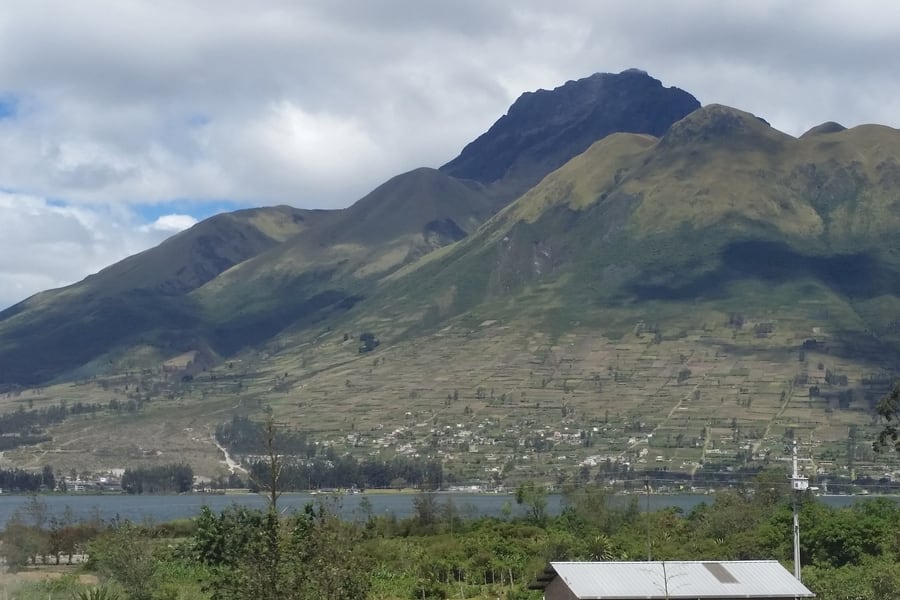 David C. S. / Wikimedia Commons · CC BY-SA 4.0 · cropped
Lago San Pablo
The lake at the foot of Imbabura (4,609 m), the extinct volcano that dominates the whole province and is personified locally as Taita — Father — Imbabura, protector of the region. Its last eruption was something like 14,000 years ago. The lake sits between Otavalo and Ibarra with reed beds along its edges and a road right round it, and it is the view that defines this corner of the sierra.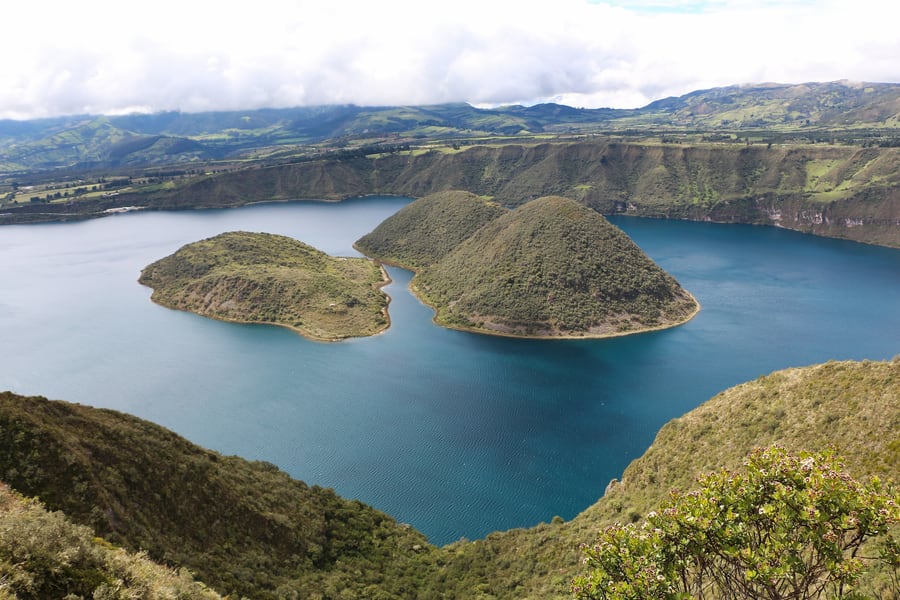 Bernard Gagnon / Wikimedia Commons · CC BY-SA 3.0 · cropped
Cuicocha
A caldera lake at 3,246 m in the flank of Cotacachi volcano, formed about 3,100 years ago and 200 m deep at its deepest. Two forested lava domes sit in the middle — Teodoro Wolf and the smaller Yerovi. The Kichwa name means "lake of guinea pigs", after the shape of the larger island. A trail runs right round the rim, and boats cross to the gap between the two domes. Below it, Cotacachi town is a street of leather workshops.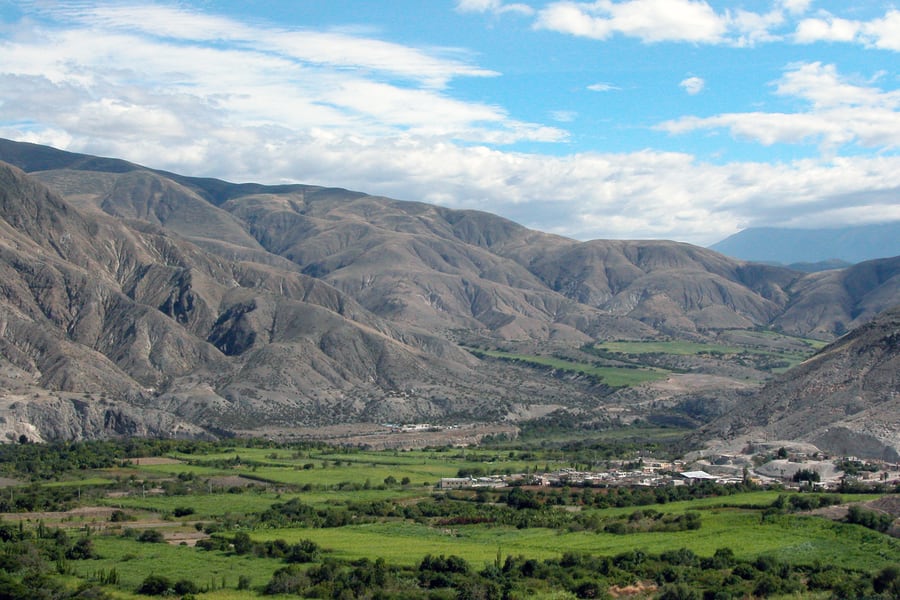 amalavida.tv / Wikimedia Commons · CC BY-SA 2.0 · cropped
The Chota valley
The hot, dry basin the train drops into, walled by bare mountains with an irrigated green floor of sugar cane and fruit. This is the heart of Afro-Ecuadorian Ecuador, settled by the descendants of people enslaved on the colonial sugar estates, and its villages have their own music — bomba del Chota — food and history. It is also, improbably, the source of a large share of Ecuador's national footballers.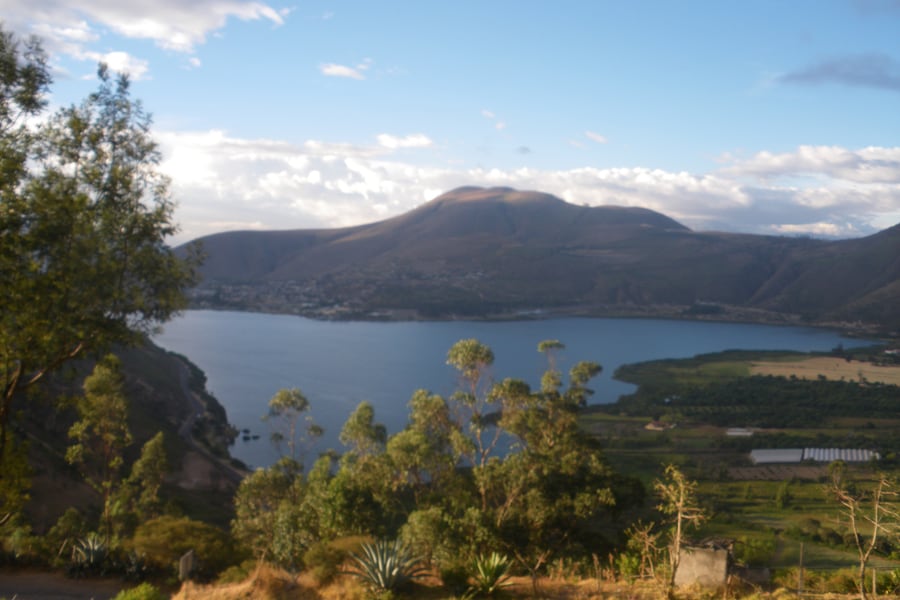 Sylvain2803 / Wikimedia Commons · CC BY-SA 3.0 · cropped
Laguna Yahuarcocha
Just outside Ibarra, and the name is Kichwa for "lake of blood" — after a massacre during the Inca conquest of the Cañari and Caranqui peoples, whose bodies are said to have turned the water red. Its afterlife is stranger than its history: the lake is now ringed by a motor-racing circuit and a long row of fish restaurants, and Ibarra comes out here at weekends to eat tilapia and watch whatever is running.Where to Sleep
The 11:25 departure is civilised enough that you do not need to be in Ibarra the night before — but you probably want to be, and Imbabura is a good place to spend several days.
Ibarra
The obvious base, five minutes from the station. A range of ordinary, comfortable, inexpensive city hotels plus a handful of restored colonial houses in the white-walled centre. Ibarra is a working provincial capital rather than a tourist town, which is much of its appeal: the plazas are full of people who live there.
Otavalo
Half an hour south, and where most visitors to Imbabura actually stay. More choice, more atmosphere and better restaurants than Ibarra, with the market on the doorstep. Perfectly workable for the train if you leave in good time.
The haciendas
The best reason to linger in this province. Imbabura has a remarkable concentration of colonial haciendas converted into country hotels — some of them working farms, some dating to the seventeenth century, set in gardens under the volcanoes with fires lit in the evening. They are the classic Ecuadorian highland experience and are not expensive by international standards.
Most are between Otavalo and Ibarra, which puts them within half an hour of the station. Ask about a transfer.
Cotacachi and around Cuicocha
Quieter still, with a few small hotels and lodges near the crater lake, and the leather town below. Good if you want walking as well as markets. Around forty-five minutes from Ibarra.
Chachimbiro
Thermal springs in the hills north-west of Ibarra, with a resort built around them. A local favourite rather than a foreign one, and a decent way to spend the day after the train.
Salinas itself
The village has a small amount of community-run accommodation. It is basic, it is hot, and it is the only way to be in the Chota valley in the evening after the day trippers have gone. If you want the trip to be about the place rather than the train, this is how.
A note on planning
Quito is 2½ to 3 hours away by road, so Imbabura works either as a two- or three-day trip out of the capital or as the first stop heading north toward the Colombian border. Given the train's unreliability, do not build a tight itinerary around it — come for Otavalo, Cuicocha and the haciendas, and treat the railway as a bonus if it is running.
Questions or corrections
Planning this trip and stuck on something, or spotted a time, fare or detail that has changed? Send us a message about The Tren de la Libertad. We read every one, and we update this page when something has changed.