The Devil's Nose
David Brossard / Wikimedia Commons · CC BY-SA 2.0 · cropped
- DistanceAlausí–Sibambe · about 12 km there and back
- DurationAbout 2 hours
- Best seasonJune–September, the drier months · the line closes for landslides
Introduction
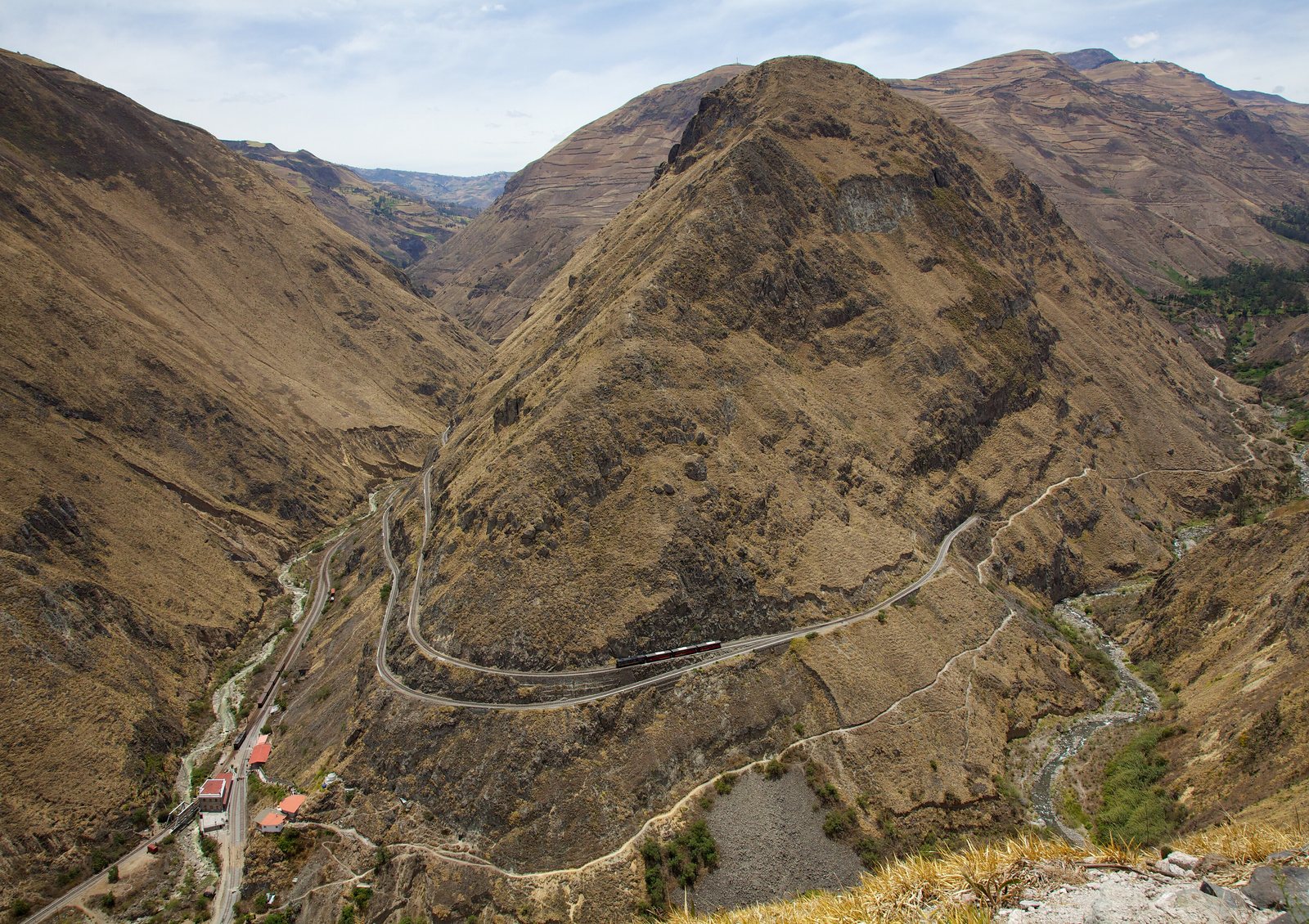
The rails come round the side of the valley, run out onto a ledge cut into a wall of rock, and stop. A man climbs down and throws a set of points by hand. Then the train sets off backwards, down a second ledge below the first, and stops again. Points, forward, down a third.
That is the Nariz del Diablo — the Devil's Nose — and it is how a railway gets down an almost vertical Andean rock face without a rack, a cable or a tunnel. It is a staircase, and the train walks down it.
There is no more famous piece of railway in South America, and for six years there was no train on it at all.
The most difficult railway in the world
That was the phrase in the contract. On 17 June 1897 the government of Ecuador signed an agreement to build a line from the coast at Guayaquil to Quito, 2,800 metres up in the Andes, with an American contractor named Archer Harman of Staunton, Virginia. The company was incorporated in New Jersey. Work began in 1899.
The president driving it was Eloy Alfaro, and he was doing it against near-universal opposition — conservatives and liberals alike thought the Andes could not be crossed by rail and that the money would be wasted. When Harman explained just how bad the rock at the Devil's Nose was going to be, Alfaro is supposed to have answered: "Primero tomaremos un whisky, después, venceremos al diablo." First we'll have a whisky, then we'll beat the devil.
They beat it. Locomotive No. 8, driven by Arturo Munizaga, ran into Quito on 25 June 1908, and for a moment the country stopped arguing with itself.
What it cost
In November 1900, a subcontractor called J.P. McDonald landed four thousand workers from Kingston, Jamaica. They were brought specifically for the tunnels and the bridges — the dynamite, pick and shovel work — and the Devil's Nose is their work more than anyone's.
They were employed for barely two years, until McDonald went bankrupt. In that time, by the record that survives, half of the four thousand died in workplace accidents. Some of the survivors left because of the way they had watched their countrymen die. Some went home to Jamaica. About three hundred stayed in Ecuador, and there are Ecuadorians descended from them today.
Others died too. Harman's own brother, Major John Harman, chief engineer of the line, died of disease on the works, as did his assistant George Davis. But the Jamaicans are the number that should stay with you, because it is not a rounding error in a project — it is one in two.
And then it stopped
The railway limped through the twentieth century, undercut by the Pan-American Highway and repeatedly wrecked by weather — the El Niño rains of 1997–98 did enormous damage. In 2008 President Correa declared it national cultural patrimony and poured money into restoring it as a tourist operation, and for a decade Ecuador had a genuinely lovely set of heritage trains.
Then, in 2020, every railway service in the country ceased, and the state railway company was put into liquidation by presidential decree.
It is running again — sometimes
The Devil's Nose came back in 2025, run now not by a national company but by the municipal government of Alausí, the small town at the top of the descent whose economy the railway largely is.
On 18 February 2026 a mudslide took out about five kilometres of it, displacing the formation at several points and destroying the trackbed. It reopened on Saturday 6 June 2026.
So: yes, you can ride it. It runs Thursday to Sunday, three times a day, and it takes about two hours to go down to Sibambe and back. But it has been closed more than it has been open these last six years, and the ground it is built on is not stable. Its status on a given date is worth establishing properly before a trip is built around it — and it is worth that trouble, because there is nothing else quite like it.
The Journey
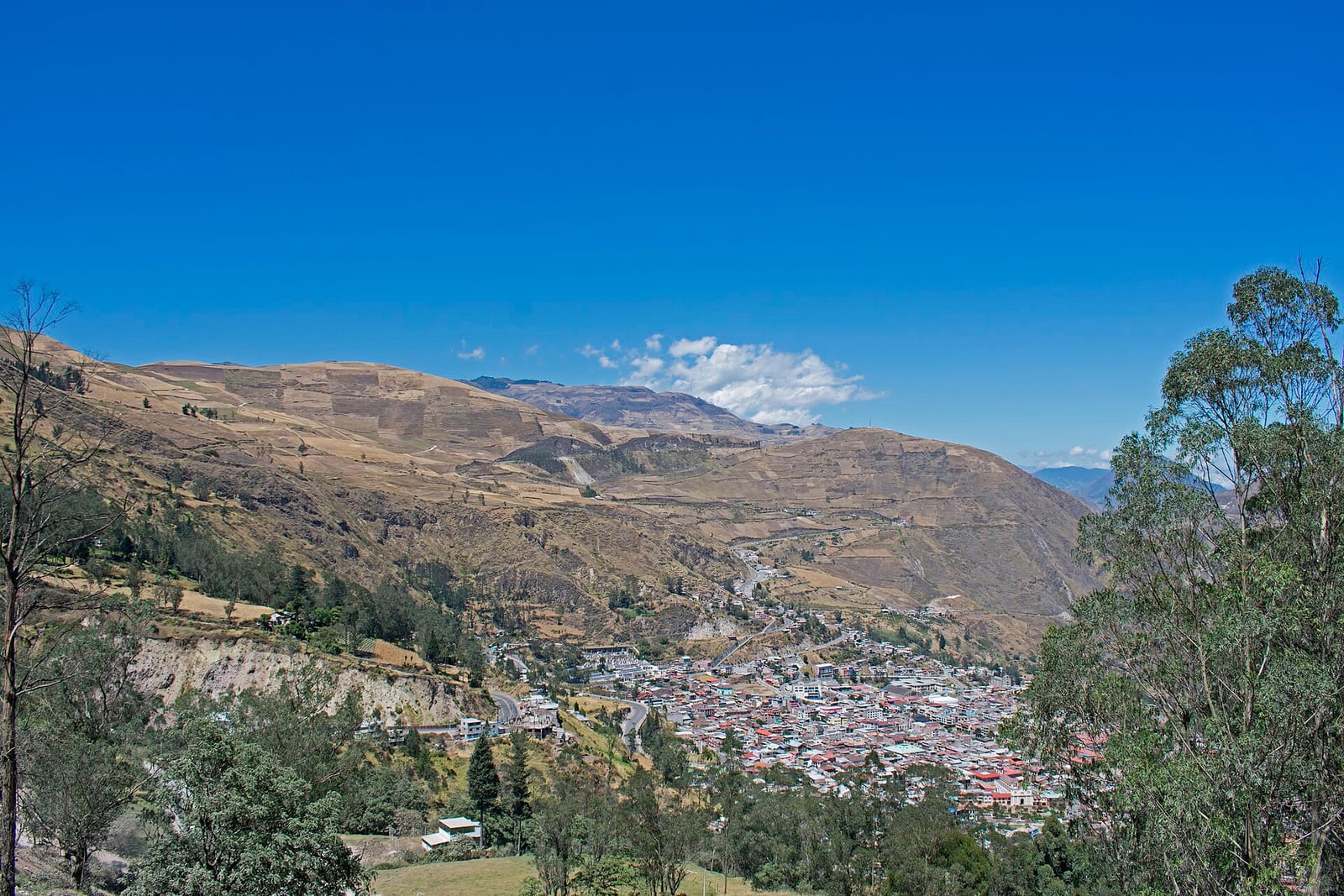
Alausí sits at 2,347 metres in a narrow green valley in Chimborazo province, a small Andean town of painted balconies with an enormous statue of St Peter on the hill above it. It exists in the modern world largely because of the railway, and the three years without trains hurt it badly.
The train leaves from the station at the bottom of the town — but it does not start there in any tidy sense.
Down the street
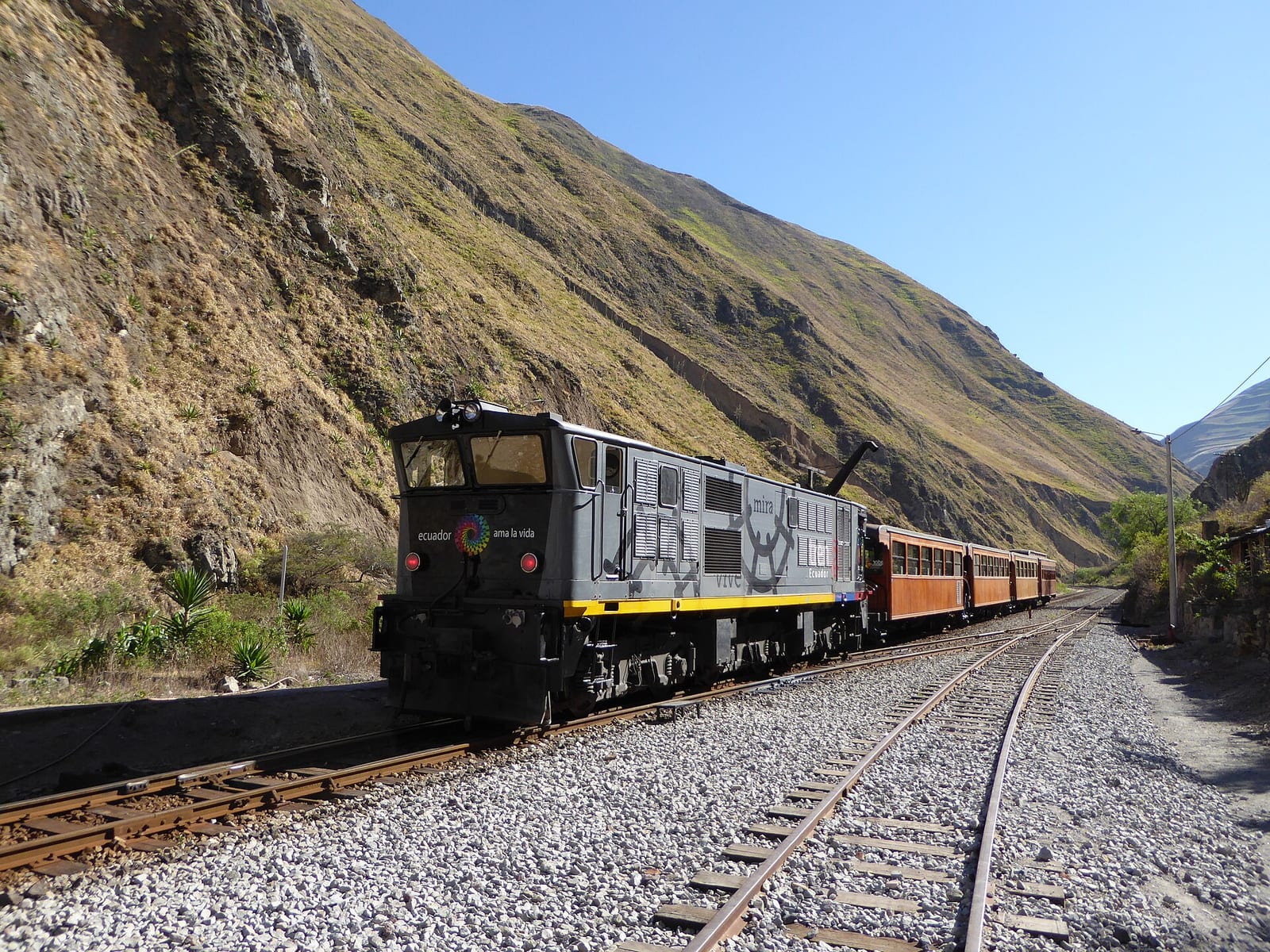
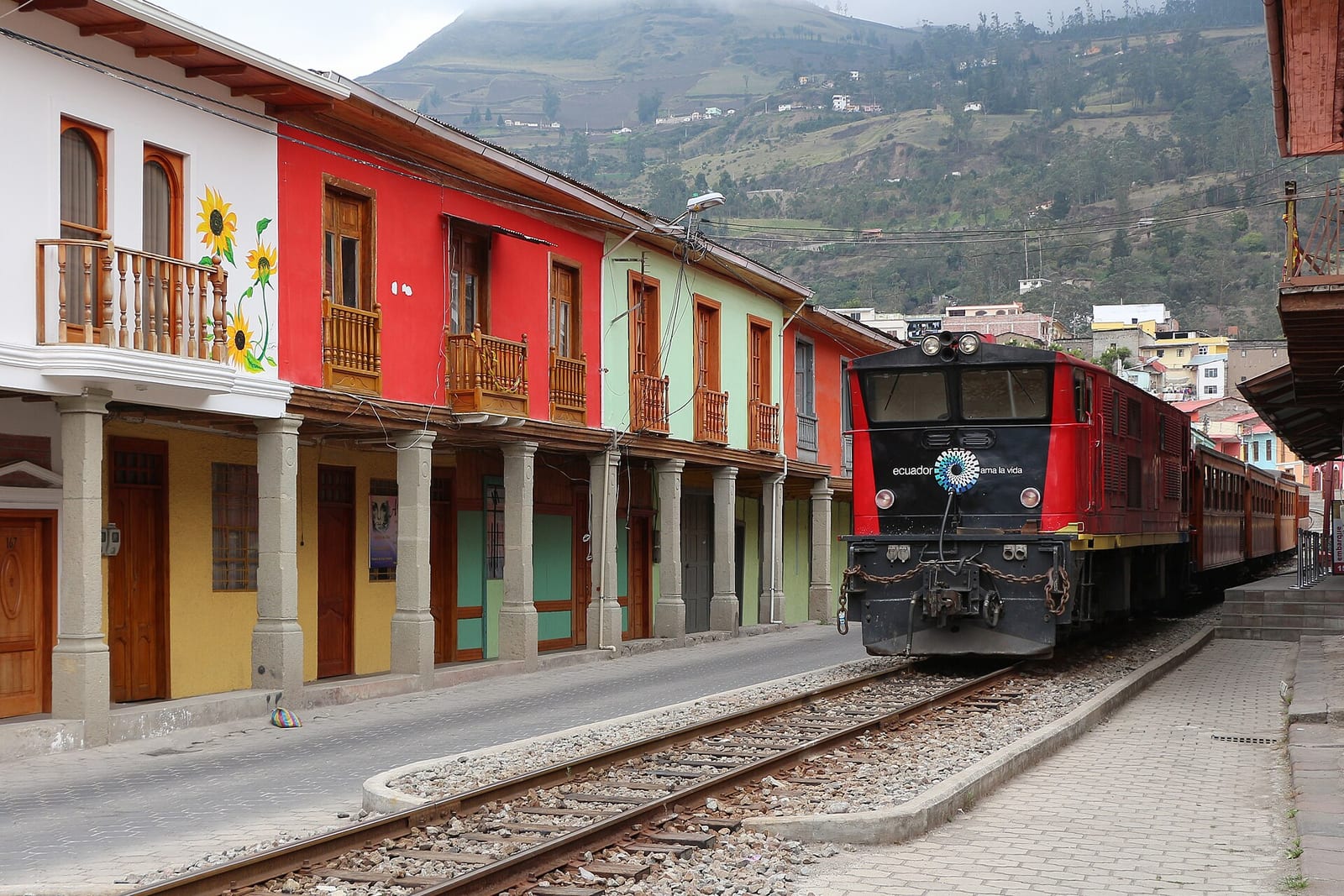
To reach the station the train runs down the middle of a public street, between the parked cars and the painted colonial fronts, with someone walking ahead of it. Locals do not look up. It is worth standing on the pavement to watch, and it sets the tone: this is a piece of infrastructure a town grew around, not a heritage attraction with a car park.
Out along the valley
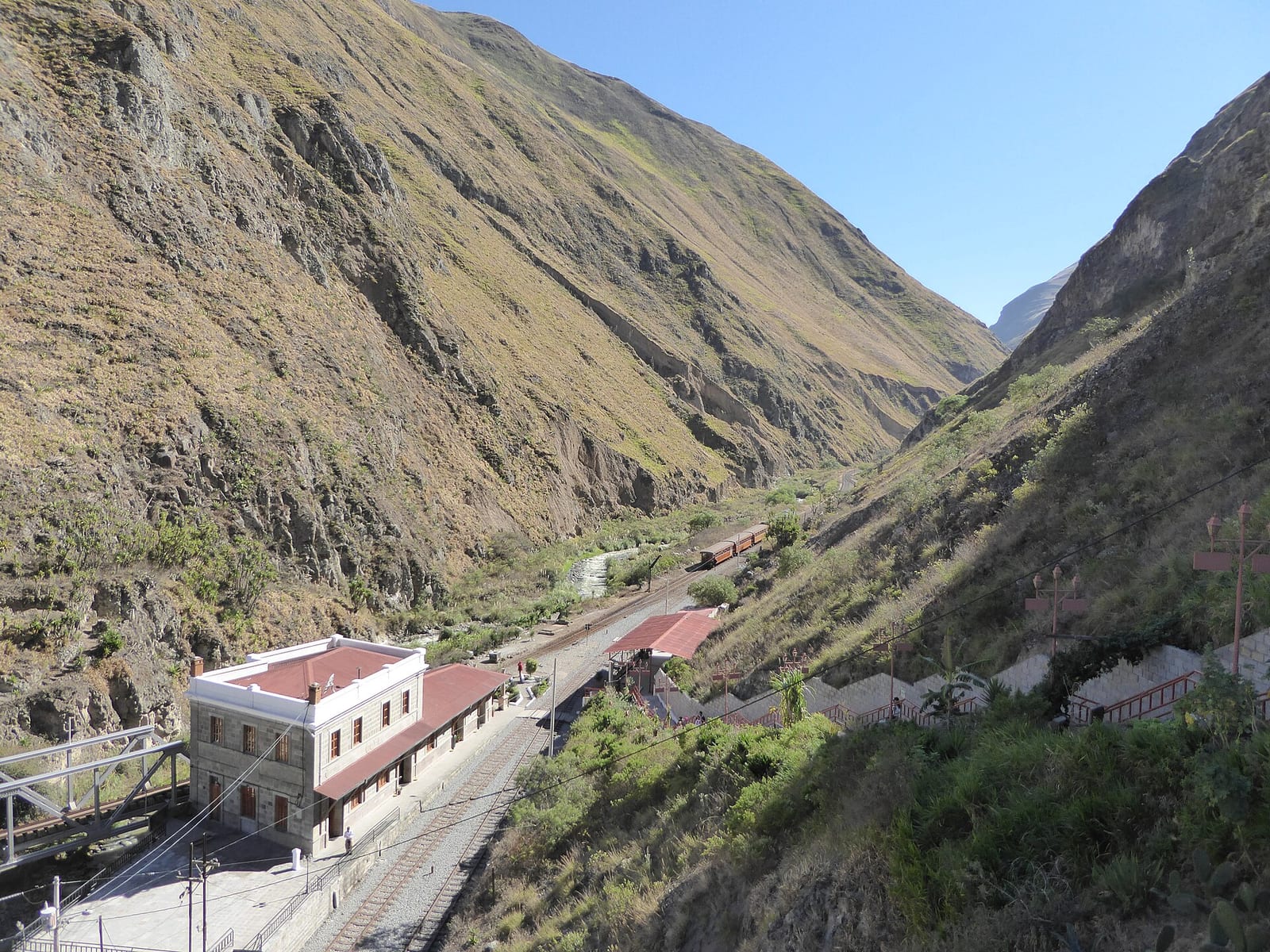
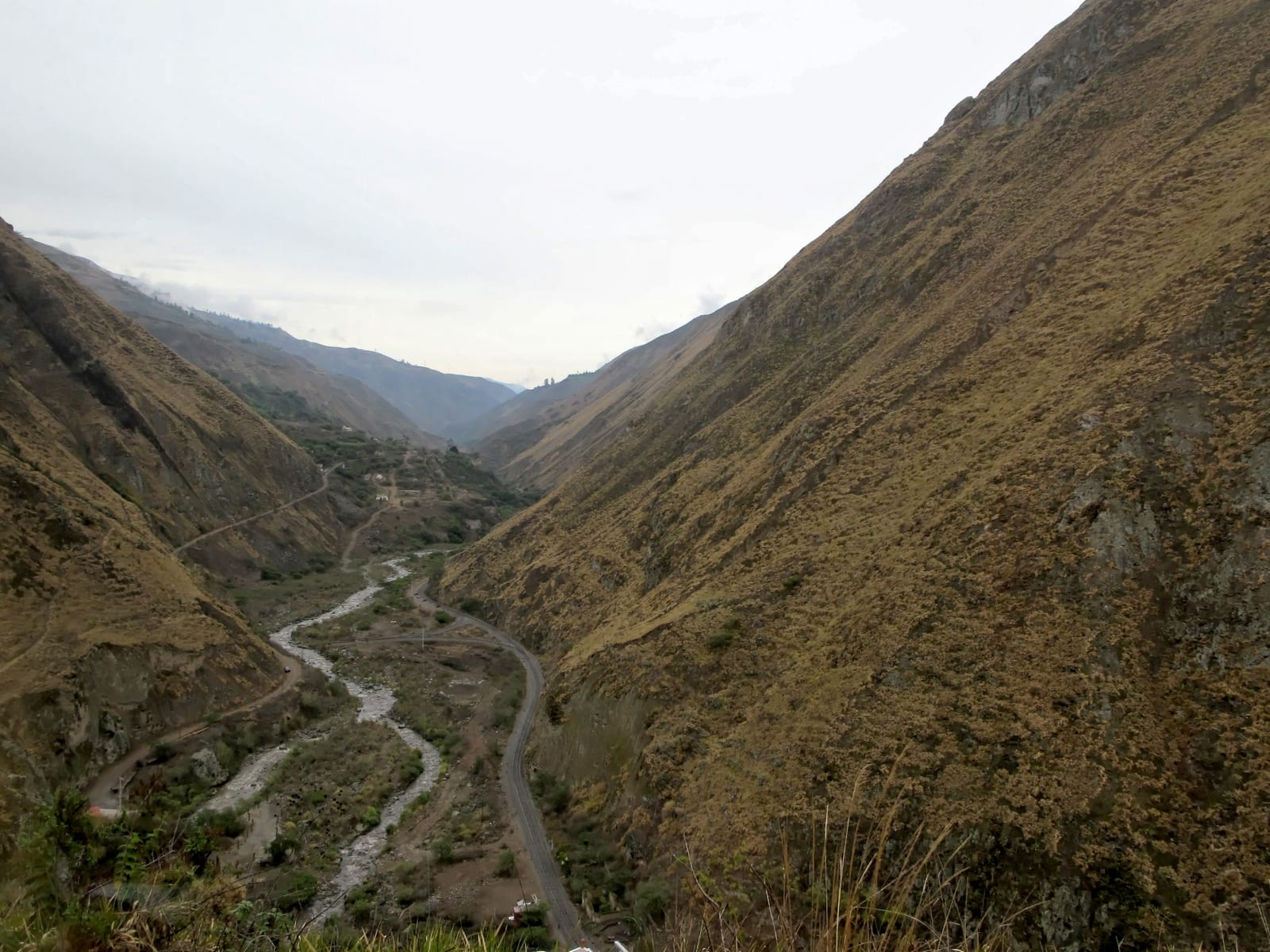
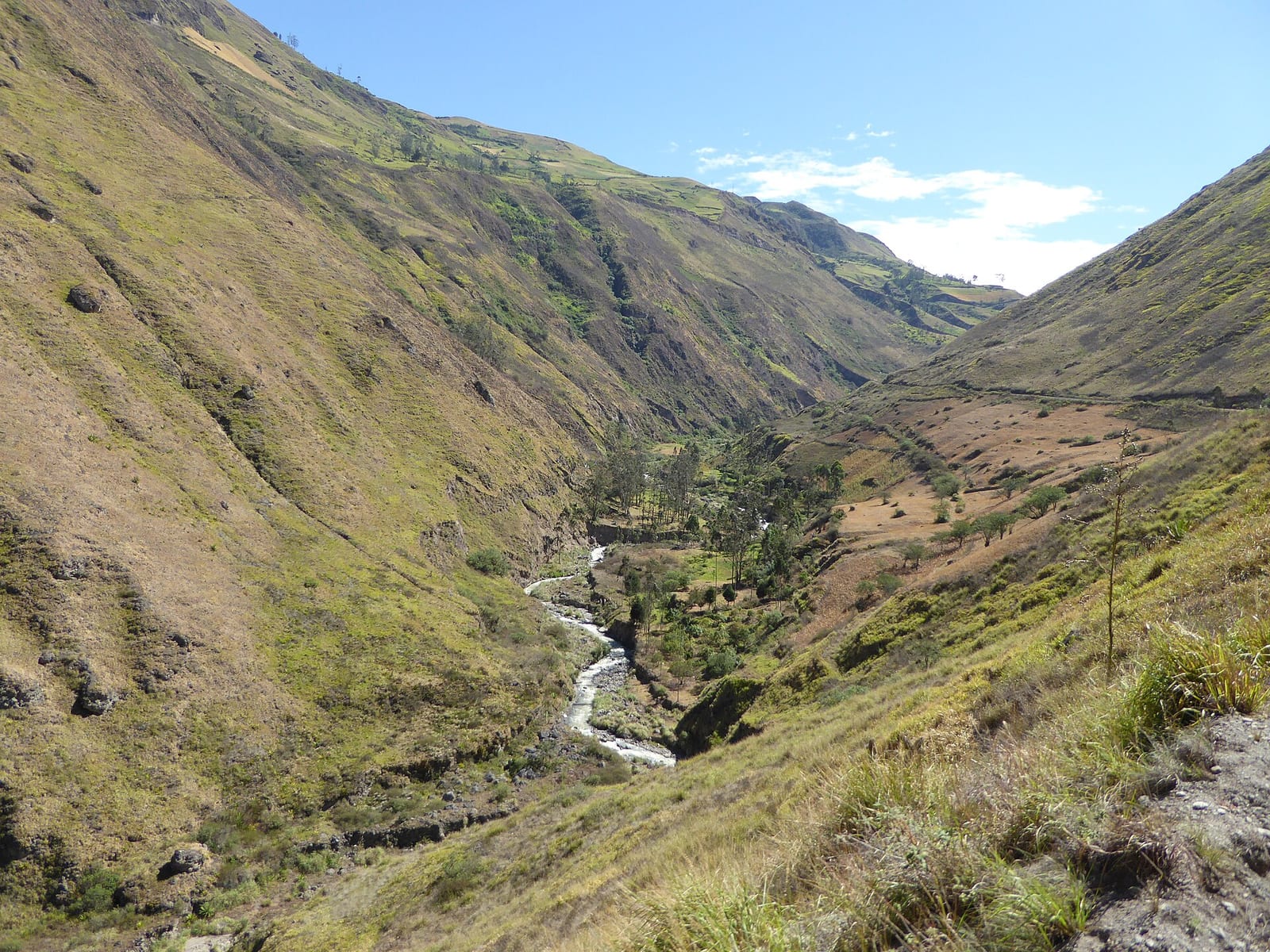
From Alausí the line curves away south along the flank of the Chanchán valley, losing height gently on a shelf cut into the hillside. The country is steep, dry and pale green — cactus and agave and eucalyptus, tiny fields on impossible slopes, a scatter of houses. Below, a long way below, the Río Chanchán runs down toward the coast.
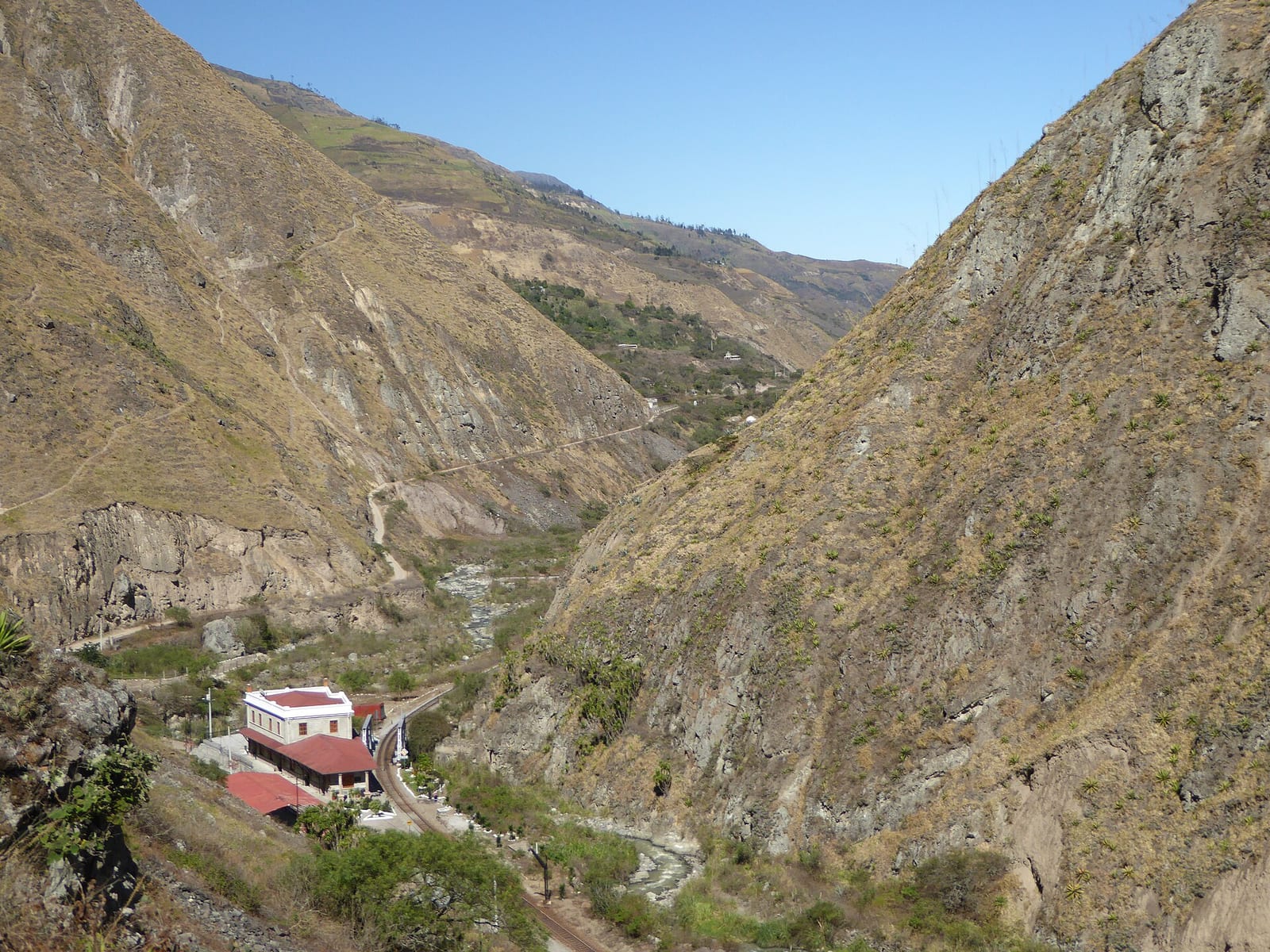
You can see where you are going almost immediately, which is part of the drama. Somewhere down there, on the valley floor, is a cluster of red-roofed buildings: Sibambe. The problem is the several hundred metres of near-vertical rock in between.
The Nose
Then the train stops on a ledge, and everything changes.
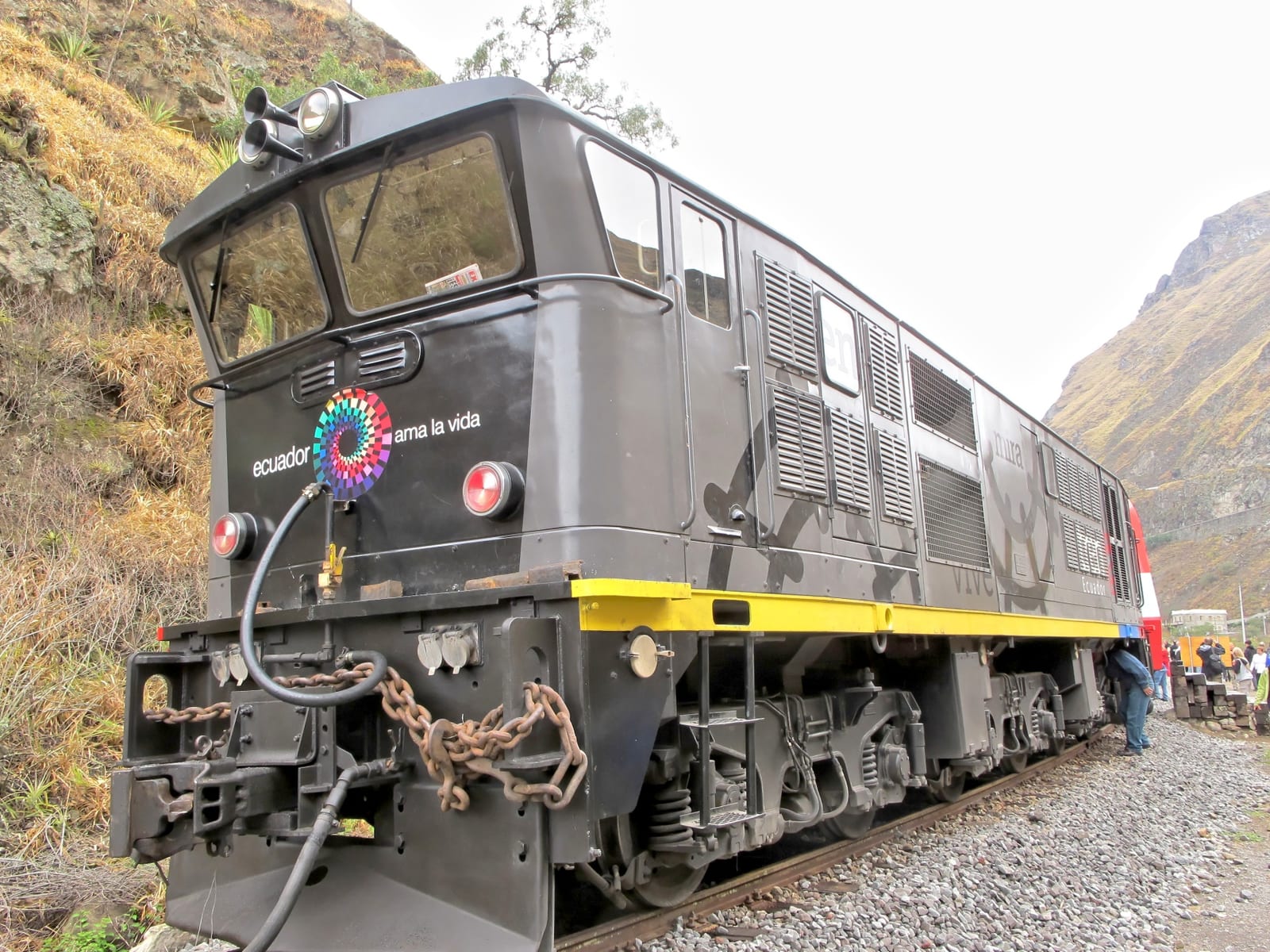
The zigzag is three legs of track cut into the face of the mountain, one below the other, connected by points at each end. The train runs forward to the end of the first leg. It halts. A crew member gets down and throws the switch by hand. The train reverses down the second leg, halts, the switch is thrown again, and it goes forward down the third.
It takes only a few minutes. There is no fuss about it, no announcement, and if you are looking the wrong way you will half miss it. What makes it extraordinary is not speed or engineering elegance but the sheer nerve of the thing: someone looked at a wall of rock, decided a railway was going down it, and cut a staircase.
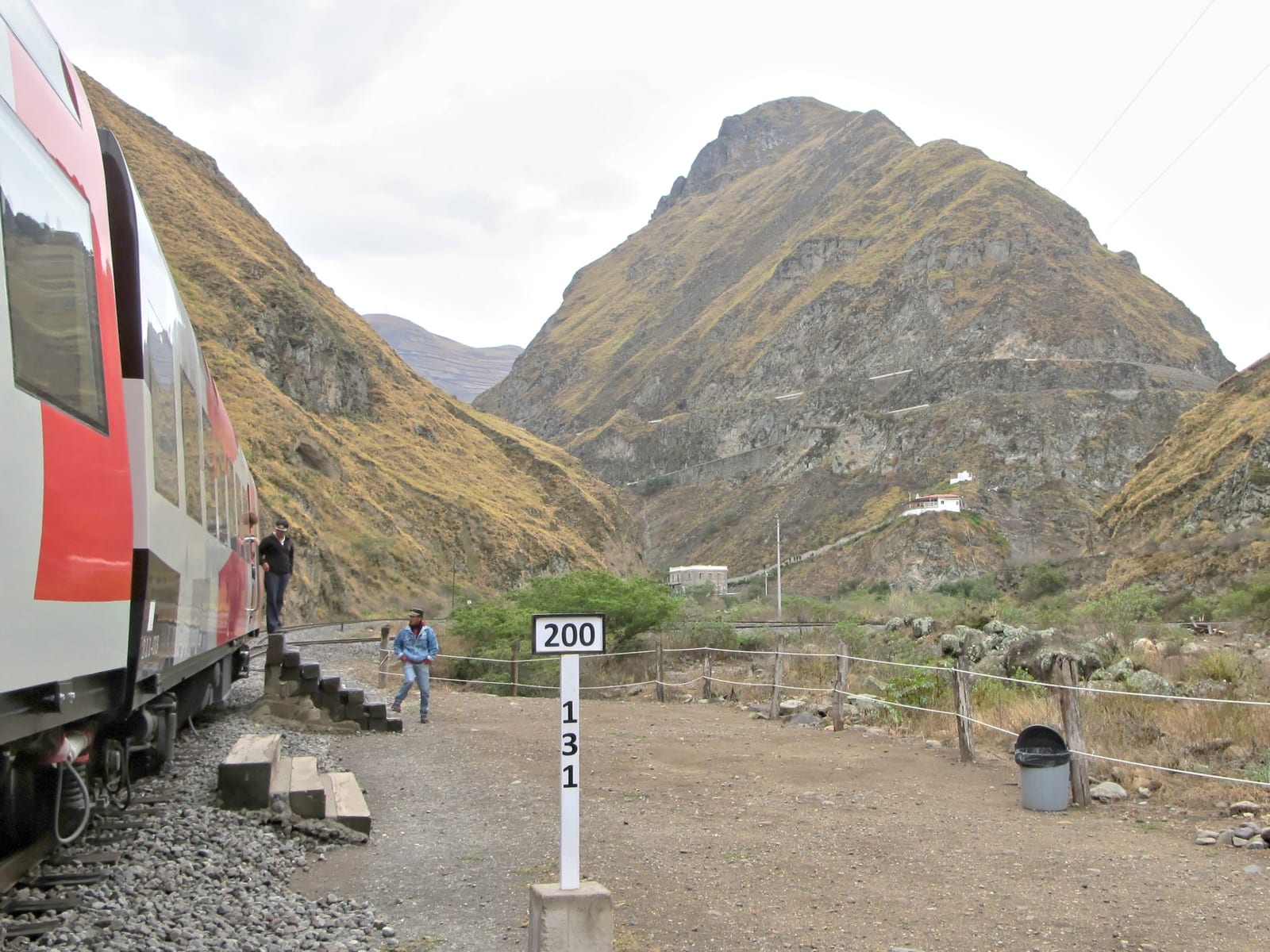
There is a scheduled stop at the Nariz del Diablo viewpoint — about ten minutes — where you can get out and look back up at the ledges you have just come down.
Sibambe
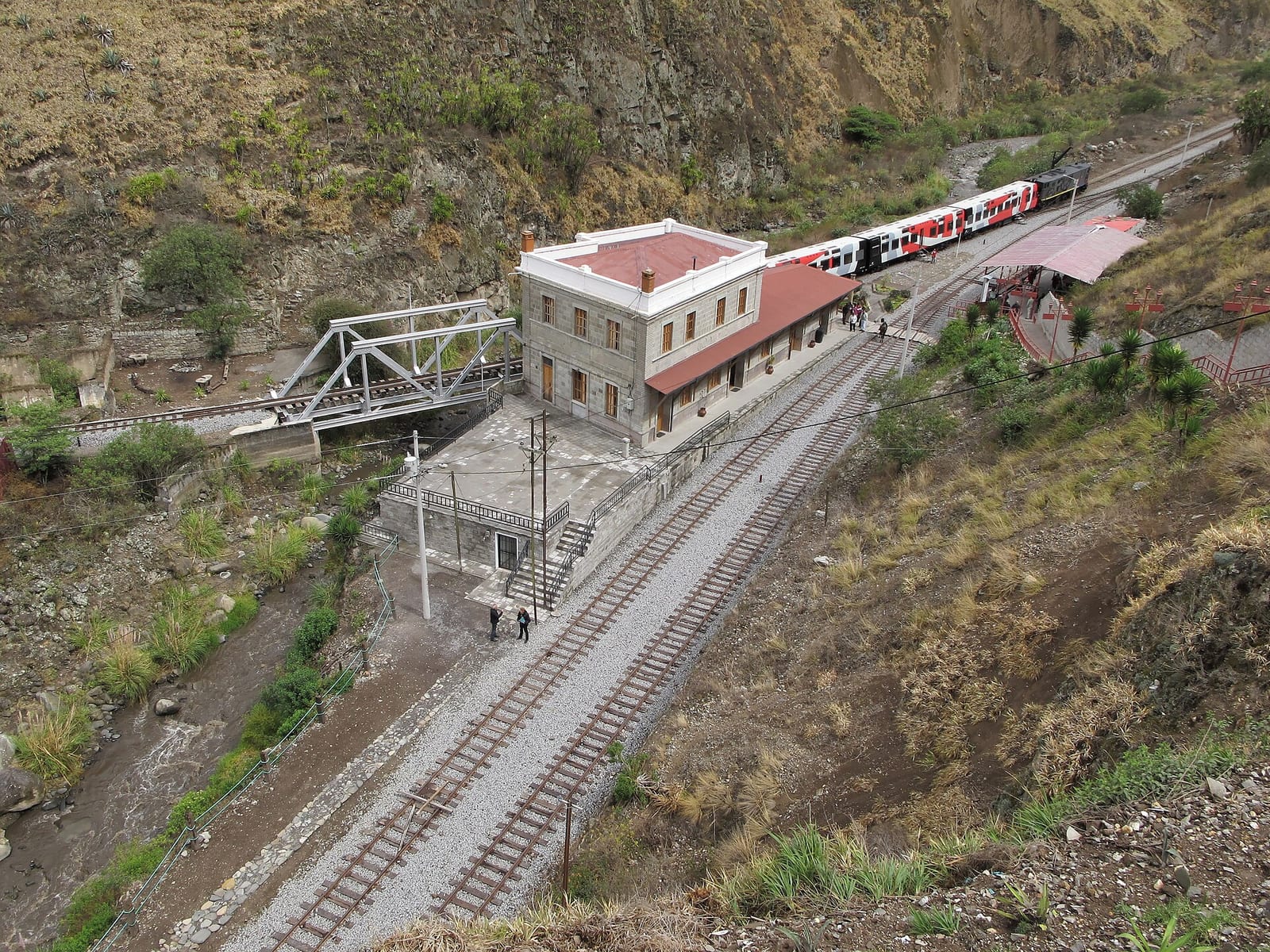
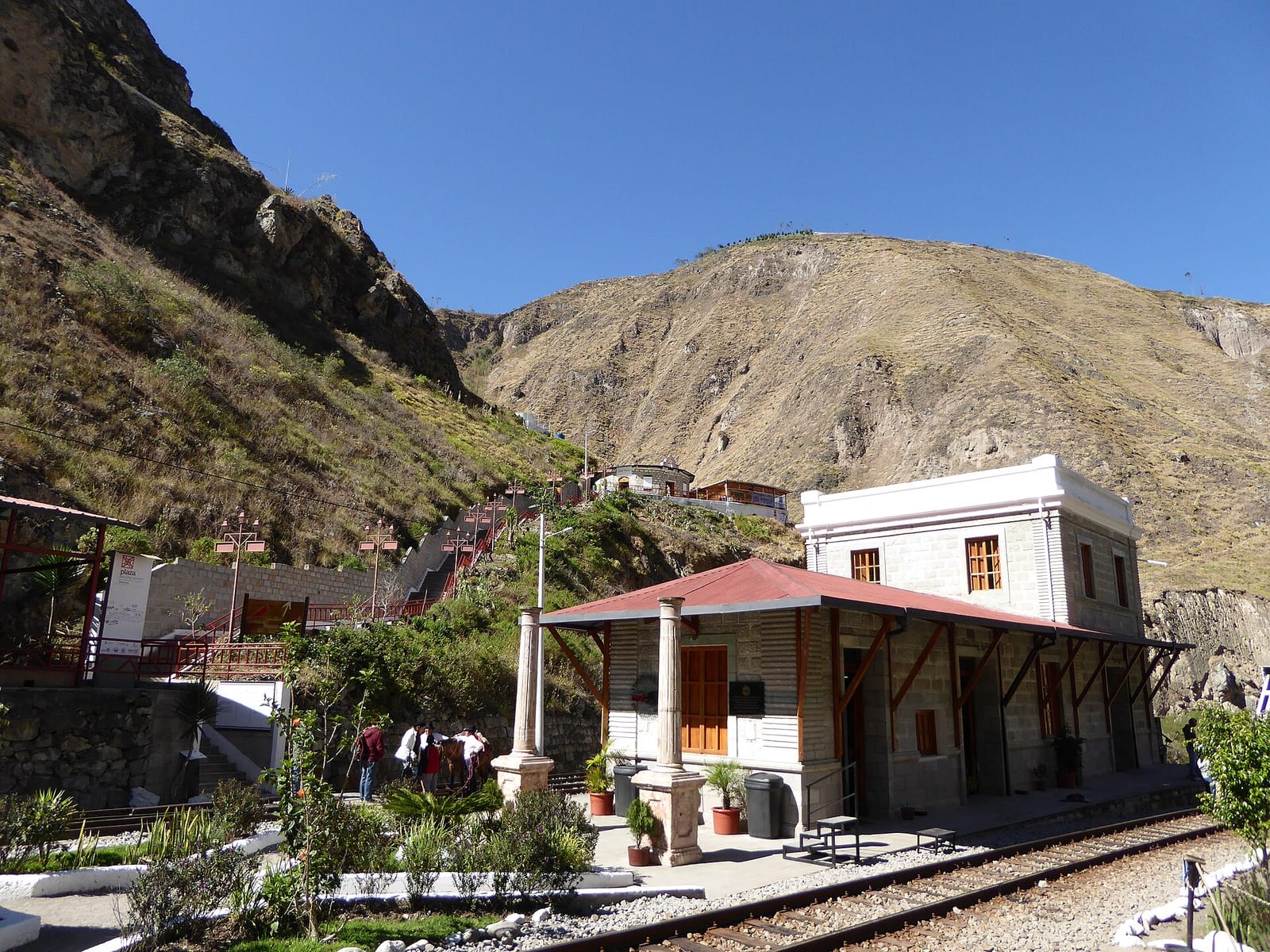
The bottom of the descent. Sibambe is a station with no road to it: a platform, a handful of buildings, a museum, a café, and the confluence of two rivers in a bowl of very steep hills.
The train stops for about twenty-five minutes. There is music and dance from the surrounding indigenous communities, crafts for sale, coffee. It is a staged reception and makes no pretence otherwise — and it is also, precisely, the point of the reopening. Alausí and Sibambe lobbied for years to get the trains back because this is where the money comes from.
Then the train reverses back up the Nose and returns to Alausí. The whole thing is about two hours and roughly twelve kilometres there and back.
About the roof
Photographs of this train from before about 2010 show passengers sitting all over the carriage roofs, feet dangling, and for a long time that was the famous thing about the Devil's Nose.
It is not allowed any more, for a good reason. In 2007 two Japanese tourists riding on top were killed. Accounts of exactly how differ — a snagged cable, a lineside post, a tunnel — but the outcome does not: roof riding was prohibited, and passengers now travel inside.
If you see it offered anywhere, that offer is out of date.
Practical notes
- Sit on the left going down (the valley side) for the drop and the view of the zigzag legs below.
- It is high. Alausí is at 2,347 m, and Quito, where most people arrive, is at 2,850 m. Give yourself a day.
- Mornings are clearer. The 08:00 departure has the best chance of sun on the rock; cloud tends to build through the afternoon.
- Take cash and a jacket. It is warm in the sun and cold as soon as it goes in.
Along the route
David Brossard / Wikimedia Commons · CC BY-SA 2.0 · croppedA staircase cut into a cliff
The rails ran out of options at a near-vertical wall the builders called the Nariz del Diablo. The answer was a zigzag: three ledges cut into the face, the train running forward onto one and reversing up the next. Not a clever solution so much as a brutal one.Arabsalam / Wikimedia Commons · CC BY-SA 4.0Four thousand Jamaicans
In November 1900 a subcontractor brought 4,000 workers from Kingston to do the tunnels and the dynamite work. It is recorded that half of them died in workplace accidents. About three hundred stayed in Ecuador, and their descendants are still here.Anidaat / Wikimedia Commons · CC BY-SA 4.0First we'll have a whisky
President Eloy Alfaro staked his government on this railway against fierce opposition. When his engineer explained how bad the Devil's Nose would be, Alfaro is supposed to have replied: first we'll have a whisky, then we'll beat the devil.A bit of history
Culture & experiences along the way
Bbb-Commons / Wikimedia Commons · CC BY-SA 3.0Ride the reversal
The switchback takes only a few minutes and it is the entire reason to come. Watch out of the window as the train stops dead on a ledge, a man gets down and throws the points by hand, and the whole thing sets off backwards down the next leg with a drop beside it. Then it does it again. Sit on the valley side if you have a choice, and have the camera ready before you start — there is no warning.Arabsalam / Wikimedia Commons · CC BY-SA 4.0Get out at Sibambe
At the bottom the train stops at Sibambe, a station with no road to it, and everybody gets off for about twenty-five minutes. There is a small museum, a café, local crafts and music and dance from the surrounding communities — the tourism the reopening was meant to bring back. It is unashamedly staged, and it is also the whole economic point of the railway to the people who live here.Bernard Gagnon / Wikimedia Commons · CC BY-SA 3.0Watch the train come down the street
Before it gets anywhere near the mountain the train runs down the middle of a public street in Alausí, between parked cars and painted colonial balconies, with a man walking ahead of it. Stand on the pavement and watch it go past. It is a good reminder that this is a piece of working infrastructure a small Andean town is built around, not an attraction bolted on afterwards.Timetables
Check this before you build a trip around it. The Devil's Nose has been closed more often than open since 2020, and the ground it runs on moves.
What is running (July 2026)
The Alausí–Sibambe route reopened on Saturday 6 June 2026 after a closure of nearly four months. It is administered, operated and maintained by the municipal government of Alausí.
| Route | Alausí → Sibambe → Alausí |
| Days | Thursday to Sunday |
| Departures | 08:00 · 11:00 · 14:00 |
| Duration | About 2 hours |
| Distance | About 12 km there and back |
| Check-in | 30 minutes before departure; boarding 10 minutes before |
| Booking | Online at ticketexito.com |
One caveat on the days. The Ecuadorian Ministry of Infrastructure and Transport gave Thursday to Sunday when it announced the June 2026 reopening, and that is what we have used. Some Ecuadorian press has reported Wednesday to Sunday plus public holidays. Confirm when you book — and note that holiday weekends usually mean extra trains, not fewer.
What you get for the two hours
- The descent from Alausí, and the zigzag itself.
- A 10-minute stop at the Nariz del Diablo viewpoint.
- About 25 minutes at Sibambe, with music, dance and crafts from the local communities, a museum and a café.
- The climb back up the switchback to Alausí.
Fares
Set by the municipality, and different for residents and visitors. Before taxes and booking fees:
| Ecuadorians | Foreign visitors | |
|---|---|---|
| Adults (12–64) | $18 | $30 |
| Children 5–11, over-65s, disabled | $9 | $15 |
Ecuador uses the US dollar.
Why you must check
This is not ordinary caution. The recent record:
- 2020 — every railway service in Ecuador ceased, and the state railway company was put into liquidation by presidential decree.
- 2025 — the Alausí–Sibambe route was reactivated, now under municipal management.
- 18 February 2026 — an aluvión, a mudslide, destroyed about 5 kilometres of the line, displacing and wrecking the formation at several critical points. The route closed.
- 6 June 2026 — reopened, after the trackbed was rebuilt and a technical assessment found the infrastructure fit to operate.
The valley is steep, bare and unstable, and the rainy season runs roughly October to May. Landslides are a recurring feature of this railway's life, not a freak event.
Getting to Alausí
There is no train to Alausí — the national network is gone. Alausí is on the Pan-American Highway about 4 hours south of Quito and 2 hours south of Riobamba by road, and buses run frequently. Most visitors come on a day trip from Riobamba or Cuenca, or break the Quito–Cuenca journey here.
Given the 08:00 departure and the driving times, staying the night in Alausí is the sensible plan.
Operator: GAD Municipal de Alausí. Tickets at ticketexito.com (opens in a new tab). Service notices from the Ministerio de Infraestructura y Transporte at mit.gob.ec (opens in a new tab). Position as of July 2026.
Tickets
Tickets are sold online through Ticket Éxito, the platform the Alausí municipality uses; you give each passenger's name, document and age, and a reservation is held for fifteen minutes while you pay. Fares are set by the municipality, with different rates for residents and visitors: $30 for a foreign adult and $15 for children, over-65s and disabled passengers, before taxes. Ecuador uses the US dollar. The fare covers the round trip, the Nariz del Diablo viewpoint and twenty-five minutes at Sibambe with the community reception.
⚠️ Confirm the train is running on your date. This line closed for nearly four months in early 2026 after a mudslide, and was out of service entirely from 2020 until 2025. Book ahead for weekends, take the 08:00 if you can — cloud builds over the valley through the day — and stay the night in Alausí, because there is no railway to it.
Book your tickets
Alausí to Sibambe and back
The switchback, twice
The full excursion, about two hours: down the zigzag to Sibambe, a stop at the Devil's Nose viewpoint, twenty-five minutes at the bottom, and back up. Booked online through Ticket Éxito. Foreigners and Ecuadorians pay different fares, and reduced rates apply to children, over-65s and disabled passengers.
Book Tickets (opens in a new tab, on GAD Municipal de Alausí)via GAD Municipal de AlausíCheck before you travel
The line closes, and it closes often
This railway has been shut more than it has run in recent years — the national network ceased in 2020, this route came back in 2025, a mudslide closed it again in February 2026 and it reopened that June. The Ministry of Infrastructure and Transport posts service notices, and the Alausí municipality runs the line.
Book Tickets (opens in a new tab, on Ministerio de Infraestructura y Transporte)via Ministerio de Infraestructura y TransporteRail Passes
No rail pass covers the Nariz del Diablo. Interrail and Eurail are European schemes, and Ecuador is not among the 33 countries in Interrail's list of covered railway companies. The round trip is sold as a single fare set by the Alausí municipality, through its online ticket platform.
Checked October 2026 against Interrail's list of railway companies (opens in a new tab).
Places to Visit
Alausí sits roughly halfway down Ecuador's Andean spine, on the corridor between Quito and Cuenca, so the train fits naturally into a longer journey through the highlands. The stops below are all within a few hours of it.
Alausí itself is worth more than the hour most people give it — a small town of painted wooden balconies strung along one main street, with a colossal statue of San Pedro on the hill above; climb to it for the view down the valley and along the railway. The Sunday market draws people in from the surrounding communities. The town was badly affected by a major landslide in March 2023 that destroyed part of the settlement and killed dozens; it has rebuilt, and the return of the train matters here in a way that goes well beyond tourism.
Sibambe, at the bottom of the zig-zag, is reachable only by the train: a station in a bowl of steep hills at the meeting of two rivers, with a small railway museum and community tourism run by the surrounding villages. Two hours north, Riobamba is the obvious base for the region — a handsome provincial capital of squares and churches, once the terminus of the railway from the coast, with a fine Saturday market.
 Bernard Gagnon / Wikimedia Commons · CC BY-SA 3.0 · cropped
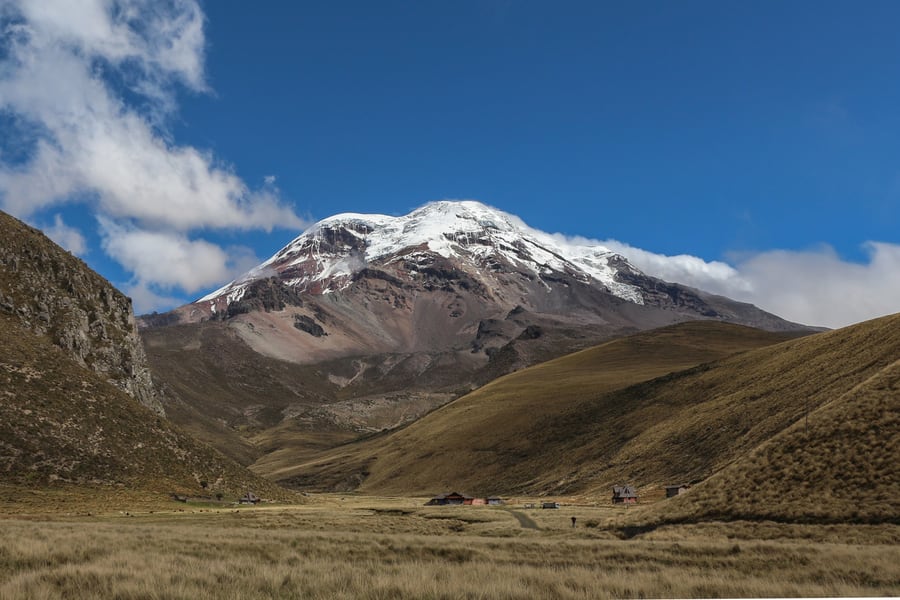
Chimborazo
At 6,263 m it is not the world's highest mountain, but because the planet bulges at the equator its summit is the point on the surface furthest from the Earth's centre — further out than Everest. It stands over Riobamba, two hours north of Alausí, and the reserve around its base is the best place in Ecuador to see vicuña grazing the páramo. A road reaches the first refuge; the walking above it is thin-aired and superb.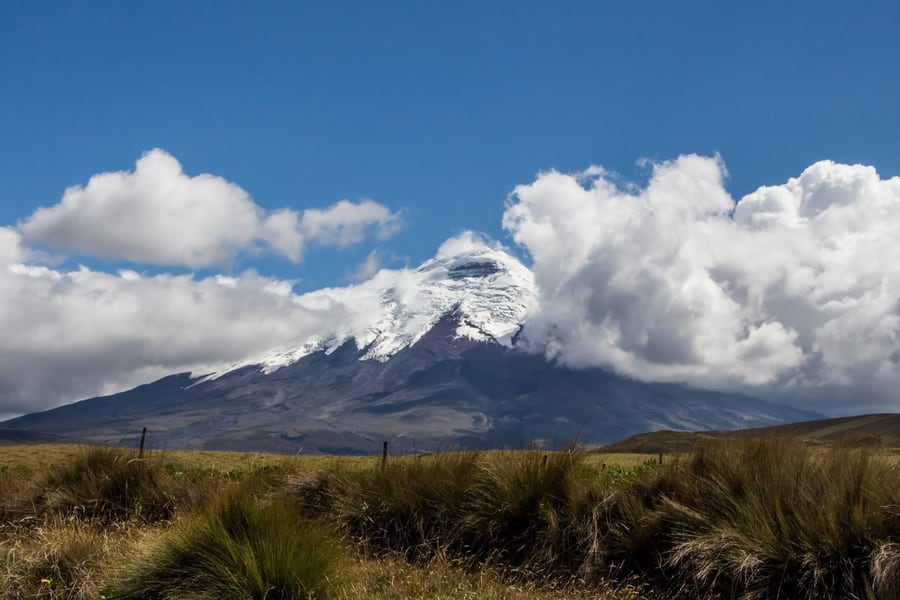 Bernard Gagnon / Wikimedia Commons · CC BY-SA 3.0 · cropped
Cotopaxi
The near-perfect glaciated cone that gives the corridor between Quito and Riobamba its name — 5,897 m, Ecuador's second-highest summit, standing over high páramo grassland in its own national park. ⚠️ It began a new eruptive phase in October 2022 and remains under close watch; the park is open and the climbing route reopened in 2024, but access tracks the daily alert level, so check before you plan around it.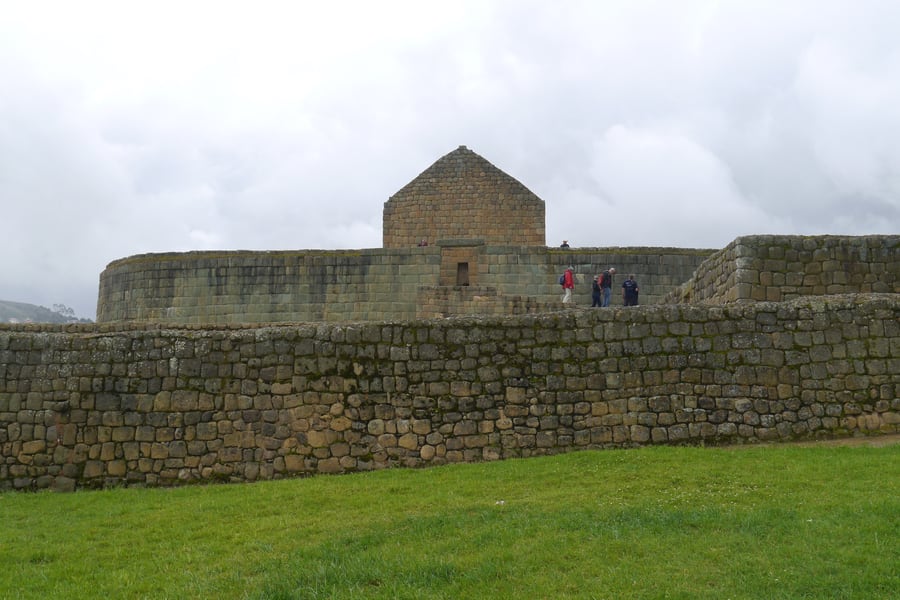 Edjoerv / Wikimedia Commons · CC BY-SA 4.0 · cropped
Ingapirca
About two hours south of Alausí, on the way to Cuenca: an elliptical Temple of the Sun built in mortarless Inca stonework around a great rock, its blocks chiselled to fit without a gap. It went up under Huayna Capac on top of an older Cañari settlement, and the two peoples' work sits side by side. On the solstices the sun falls straight through the doorway of the chamber at the top. Modest beside Peru — and usually almost empty.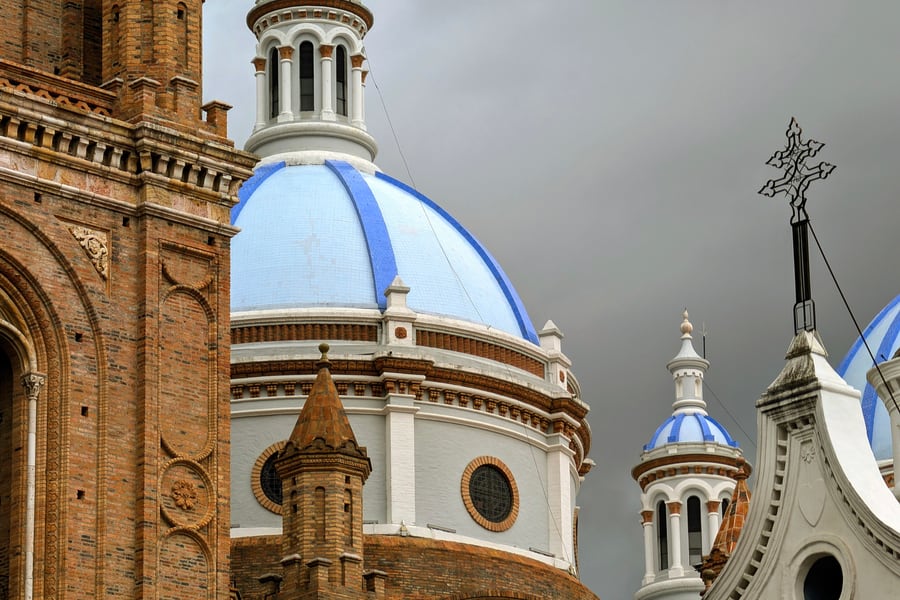 Martín Vasco / Wikimedia Commons · CC BY-SA 4.0 · cropped
Cuenca
Four hours south, at 2,560 m, and a UNESCO World Heritage centre of cobbles, courtyards and river walks. The New Cathedral was begun in 1885 to a design by the German architect Juan Bautista Stiehle and finished only in 1975; its three domes are faced in blue-and-white glazed tile brought from Bohemia. The bell towers look stunted because they are — a design error left the building unable to carry their intended height.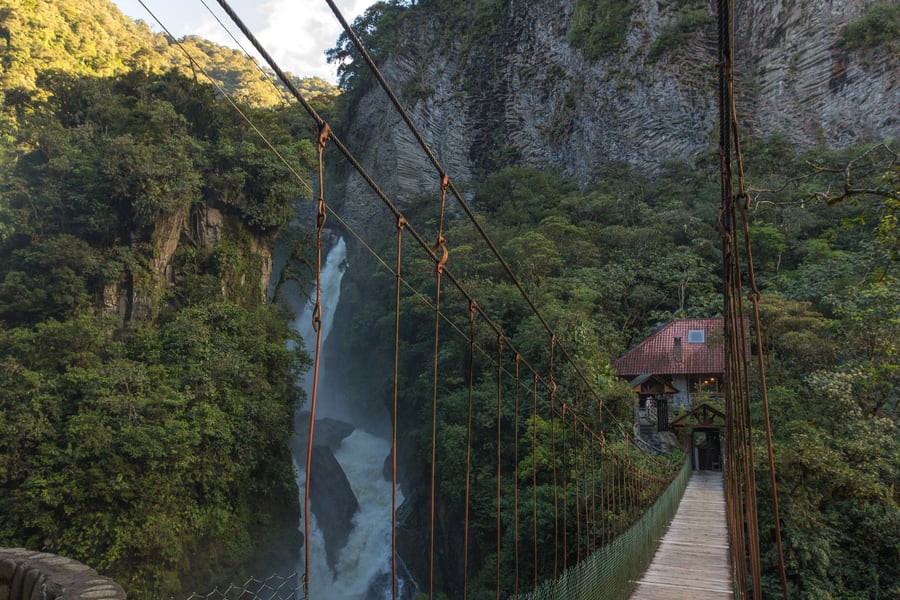 Sebastian Reategui / Wikimedia Commons · CC0 · cropped
Pailón del Diablo
North-east at Río Verde, near Baños: an 80-metre fall where the Río Verde drops into a gorge before joining the Pastaza. A path of steps and suspension bridges takes you right into the spray, and there is a crawl-through passage behind the water for anyone who does not mind getting soaked. Baños itself is the staging post between the highlands and the Amazon — hot springs, zip-lines and a canyon full of cycle routes. amalavida.tv / Wikimedia Commons · CC BY-SA 2.0 · cropped
Guamote
Half an hour north of Alausí on the old railway line, and worth timing a week around. The Thursday market is one of the largest and least touristed indigenous markets in the Andes — livestock, produce and textiles filling the streets of a small highland town that sees almost no foreign visitors the rest of the week. Come on any other day and there is very little to see, which is rather the point.Where to Sleep
The 08:00 departure and the driving distances make this a poor day trip from anywhere large. Sleep close.
Alausí
The right answer. A small selection of family-run hotels and hostales along and around the main street, plus a few restored houses with balconies over it — simple, inexpensive and a few minutes' walk from the station. Nothing here is luxurious and nothing needs to be: you want to be able to walk to an eight o'clock train.
Booking direct or on arrival is usually fine except at weekends and Ecuadorian holidays. Nights are cold at 2,347 metres — check there are enough blankets.
The haciendas
The most rewarding option in this part of the Andes, and not expensive by international standards. Several working haciendas in the countryside around Alausí and toward Riobamba take guests: eighteenth- and nineteenth-century estate houses with courtyards, open fires, horses and enormous breakfasts. Some are on the old railway. You will need a car or a transfer, and you should ask about the drive to the station for a morning train.
Riobamba
Two hours north, and the practical base if you want a wider choice, better restaurants and a city to walk round. It works for the 11:00 or 14:00 departures if you leave early; it does not really work for the 08:00.
Cuenca
Four hours south. Too far for the train on the same day, but the natural place to go afterwards — and the drive south from Alausí, through Ingapirca and over the páramo, is one of the best in Ecuador.
Guamote
Half an hour north, tiny, and with a couple of community-run guesthouses. Worth it if you are combining the train with the Thursday market, which is the real thing.
A note on altitude
Quito is at 2,850 m, Alausí at 2,347 m. If you have just flown in, give yourself a night in Quito or Riobamba before doing anything strenuous, drink more water than you want to, and go easy on the first day. The train itself asks nothing of you, but the walk up to the San Pedro statue at Alausí will tell you quickly whether you have acclimatised.
Questions or corrections
Planning this trip and stuck on something, or spotted a time, fare or detail that has changed? Send us a message about The Devil's Nose. We read every one, and we update this page when something has changed.