Montenegro
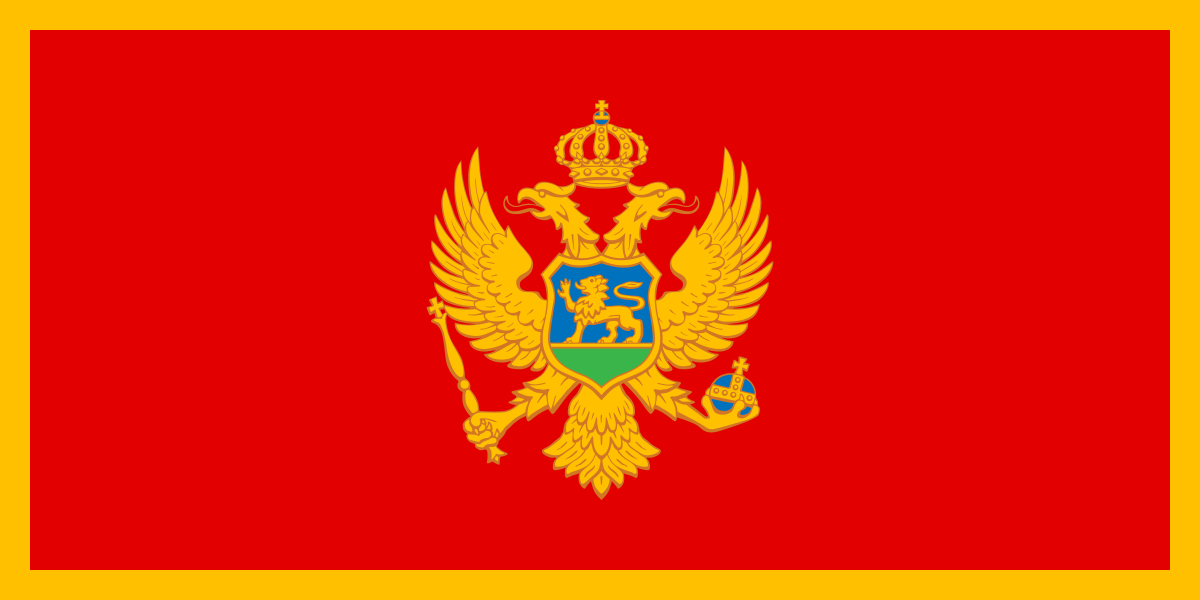
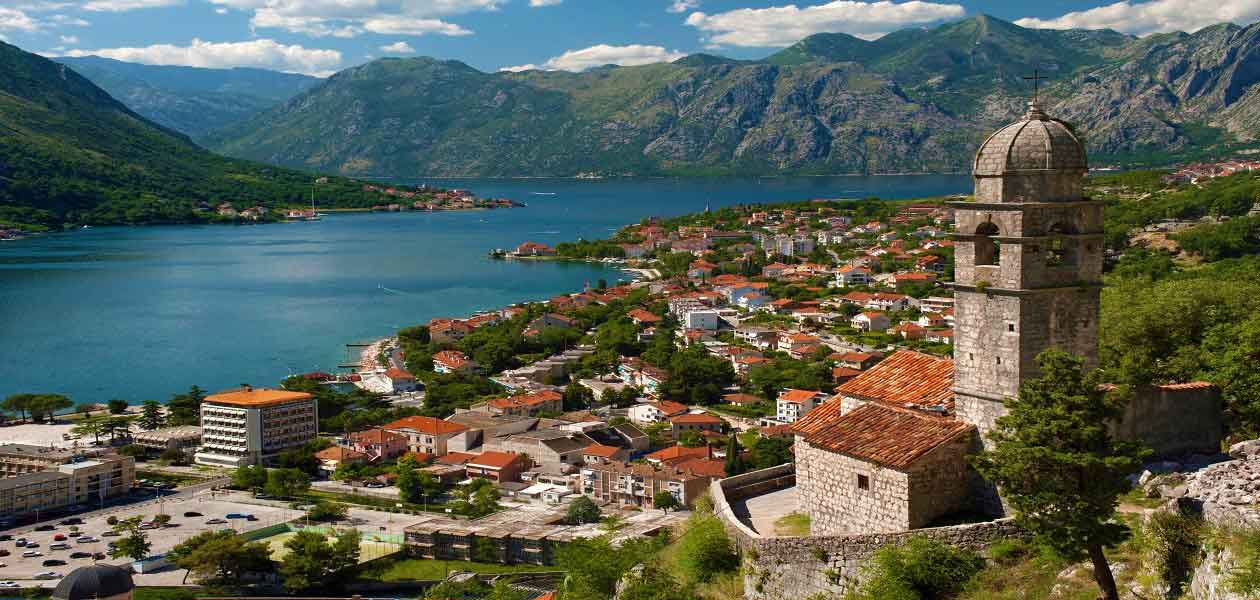
Montenegro is one of the smallest countries in Europe: about 633,000 people in 13,883 square kilometres on the Adriatic side of the Balkan Peninsula, with Serbia, Bosnia and Herzegovina, Kosovo, Albania and Croatia around it. It is also one of the most abrupt — a crumple of grey limestone mountains falling more or less straight into the sea. Podgorica is the capital and largest city, while Cetinje, in the hills behind it, is the old royal capital and cultural centre.
A country this steep does not get much railway, and Montenegro has little: one electrified main line from the northern border down to the port of Bar, and a single branch off it. What it has, though, is extraordinary. Carrying a railway across this landscape meant viaducts over canyons and a near-continuous succession of tunnels, and the Montenegrin stretch is the spectacular part of a route that begins in Serbia. Trains are run by ŽPCG, fares are low, and arriving from inland means descending most of a mountain range to reach the Adriatic.
Rail journeys in Montenegro
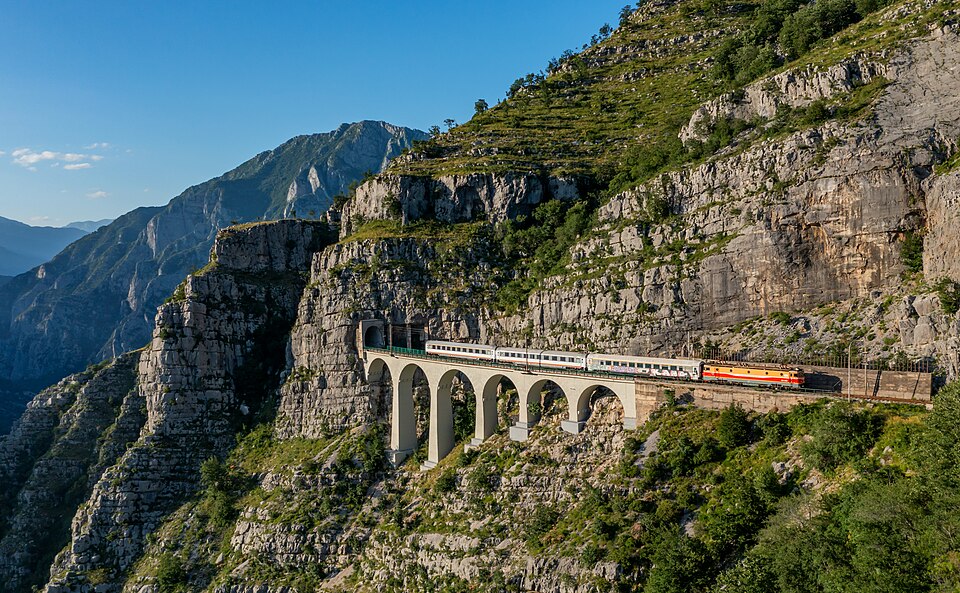
The Belgrade–Bar Railway — Over the Mountains to the Adriatic
Belgrade over the wild mountains of Montenegro to the Adriatic — 254 tunnels, 435 bridges, and a viaduct once the highest railway bridge on earth.
View journey →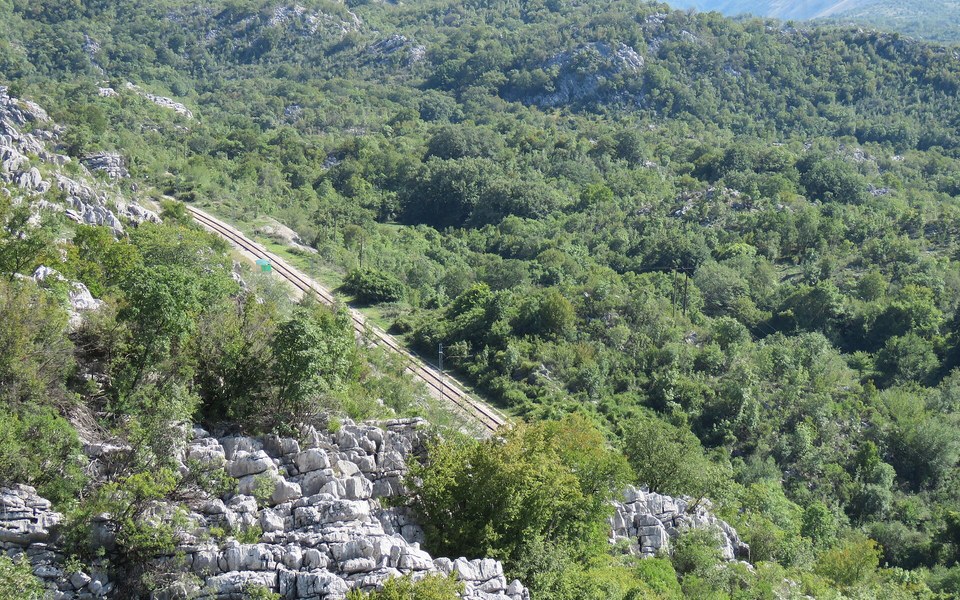
Podgorica to Nikšić — Montenegro's Own Railway
Montenegro's homegrown electric railway — an easygoing run up the green Zeta plain, past the cliff-hanging monastery of Ostrog to Nikšić.
View journey →Good to know
What is the best train journey in Montenegro?
The Belgrade–Bar railway, one of the most spectacular lines in Europe. Its finest scenery lies in Montenegro — the Morača canyon, the mountain resort of Kolašin, and the Mala Rijeka viaduct, once the highest railway bridge in the world — before it drops through a long tunnel to the Adriatic at Bar. Ride the summer day train for the views, or the overnight Lovćen sleeper.
How high is the Mala Rijeka viaduct?
The Mala Rijeka viaduct, on the Belgrade–Bar line north of Podgorica, carries the railway about 200 metres above the river on slender concrete piers. When it opened in 1973 it was the highest railway bridge in the world, and it held that record until 2001. Crossing it is the highlight of the whole journey — sit on the right-hand side heading south.
Can you take a train to Ostrog Monastery?
Almost. The Podgorica–Nikšić railway stops at Ostrog station in the valley below the monastery; from there a taxi or tour makes the steep climb up the switchback road to the cliff church itself. It is the most characterful way to reach Ostrog, Montenegro's holiest site, on a very cheap local electric train.
Is there a night train to the Montenegrin coast?
Yes — the Lovćen runs every night of the year between Belgrade and Bar on the Belgrade–Bar line, with sleeping cars (1-, 2- and 3-bed compartments) and cheaper 4- and 6-berth couchettes. Leave Belgrade in the evening and wake on the Adriatic coast at breakfast. For the mountain scenery, though, the summer daytime train is the one to catch.