The Belgrade–Bar Railway — Over the Mountains to the Adriatic
Kabelleger / David Gubler / Wikimedia Commons · CC BY-SA 4.0
- DistanceBelgrade–Bar · 476 km
- DurationAbout 11 hours, day train or overnight sleeper
- Best seasonLate spring to early autumn (green rivers; the daytime train runs)
Introduction
Ask rail travellers to name the most spectacular railway in the Balkans and, sooner or later, they will say the Belgrade–Bar line. It is one of the great mountain-to-sea journeys of Europe — a single ribbon of track that runs from the plains of Serbia, up over the wild high mountains of Montenegro, and down through a succession of deep canyons to the blue Adriatic at the port of Bar.
The numbers alone are staggering. In 476 kilometres the line climbs to 1,032 metres and crosses some of the most difficult terrain in Europe, and to do it the engineers bored 254 tunnels and built 435 bridges. Chief among them is the Mala Rijeka viaduct, which strides across a gorge 200 metres up in the air — when it opened in 1973 it was, quite simply, the highest railway bridge in the world, and it held that record for close to thirty years. Finished in 1976, the whole line was one of socialist Yugoslavia's proudest achievements, and it remains a monument to sheer engineering nerve.
But you don't ride it for the statistics; you ride it for the scenery, which in the Montenegrin stretch is almost continuous drama. The train hangs on ledges above the emerald Morača, dives in and out of the rock, crosses viaduct after viaduct with the valley floor dizzyingly far below, and threads a landscape of bare grey peaks and green river gorges that few roads can match.
You can travel by day in summer — the way to see it all — or on the year-round overnight sleeper, the Lovćen, waking as the train drops out of the mountains to the sea. Either way it is slow, gloriously old-fashioned, absurdly cheap, and unforgettable: the finest way there is to arrive on the coast of Montenegro.
The Journey
The train pulls out of Belgrade Centre and settles into the long run south across Serbia — at first through gentle, rolling country, past Valjevo and up into the wooded hills around Užice and the Zlatibor highlands. Even here the line is working hard, curving through tunnels and along river valleys, but the real drama waits over the border. Somewhere after Prijepolje the train crosses into Montenegro, and the mountains begin in earnest.
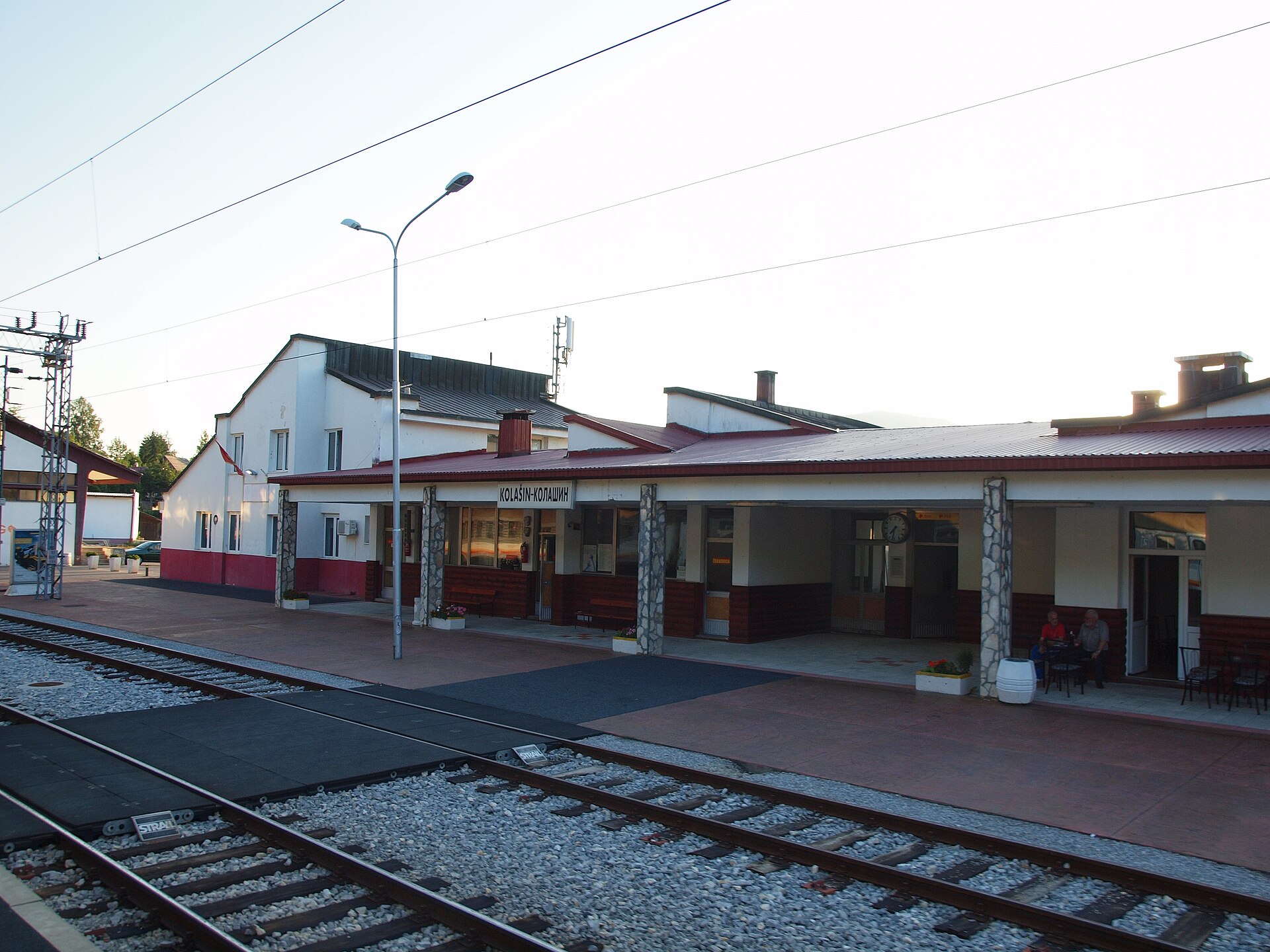
From Bijelo Polje the line climbs into the high country of the Bjelasica and Sinjajevina ranges, reaching its summit at Kolašin, the highest station on the route at 1,032 metres — a mountain resort town wrapped in forest and, in winter, snow. And then the line begins its extraordinary descent, and the best hour of the whole journey.
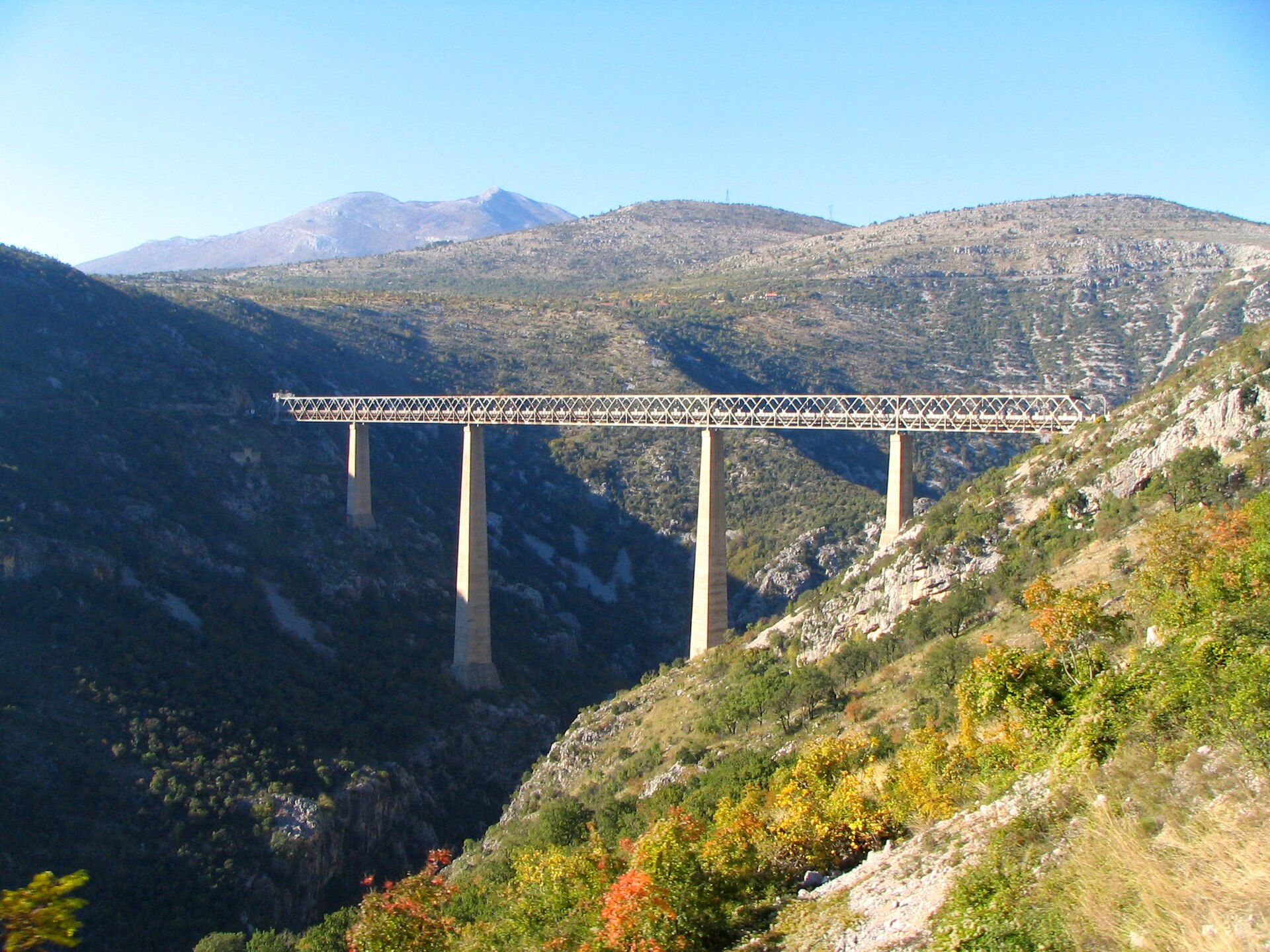
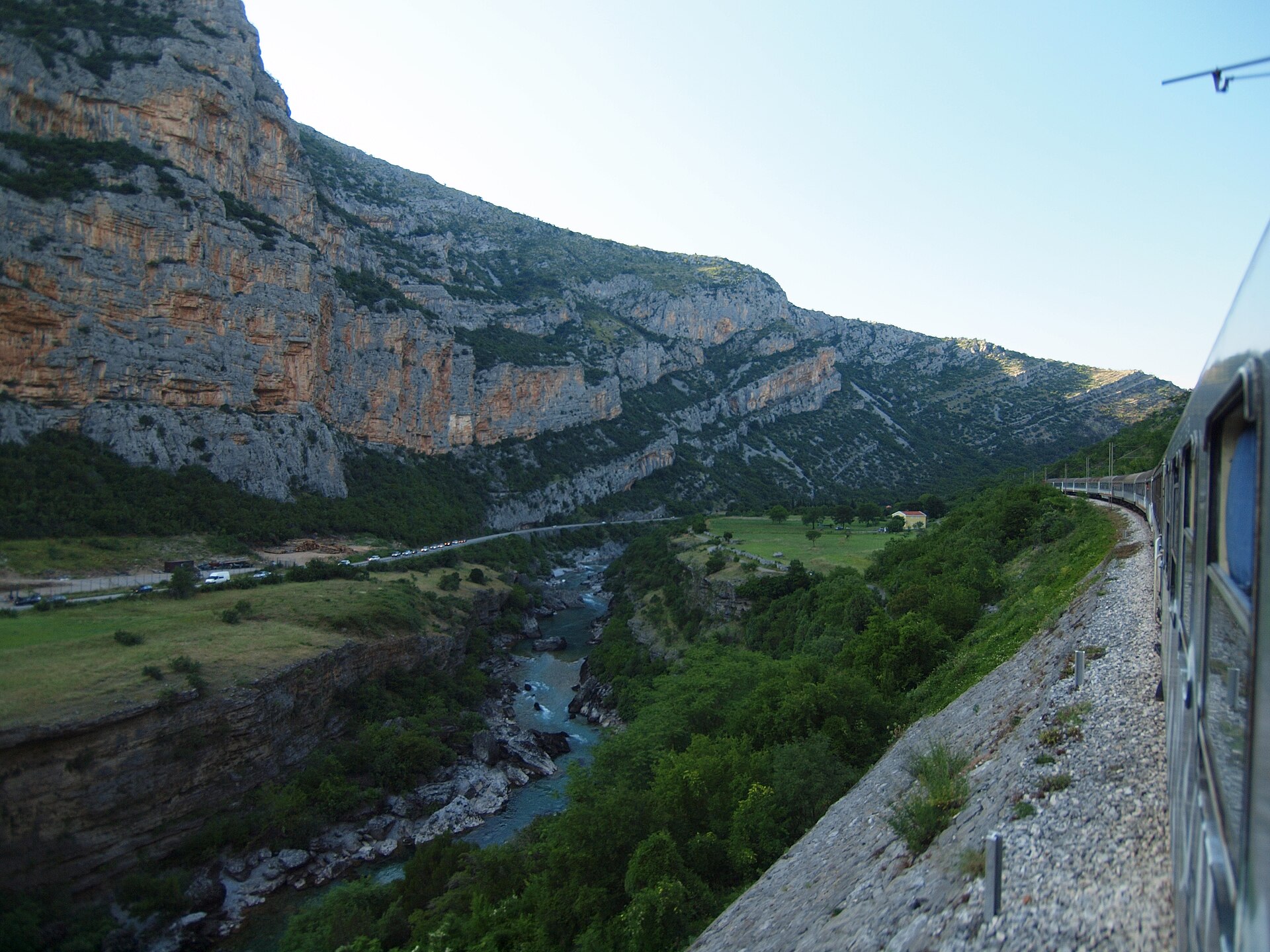
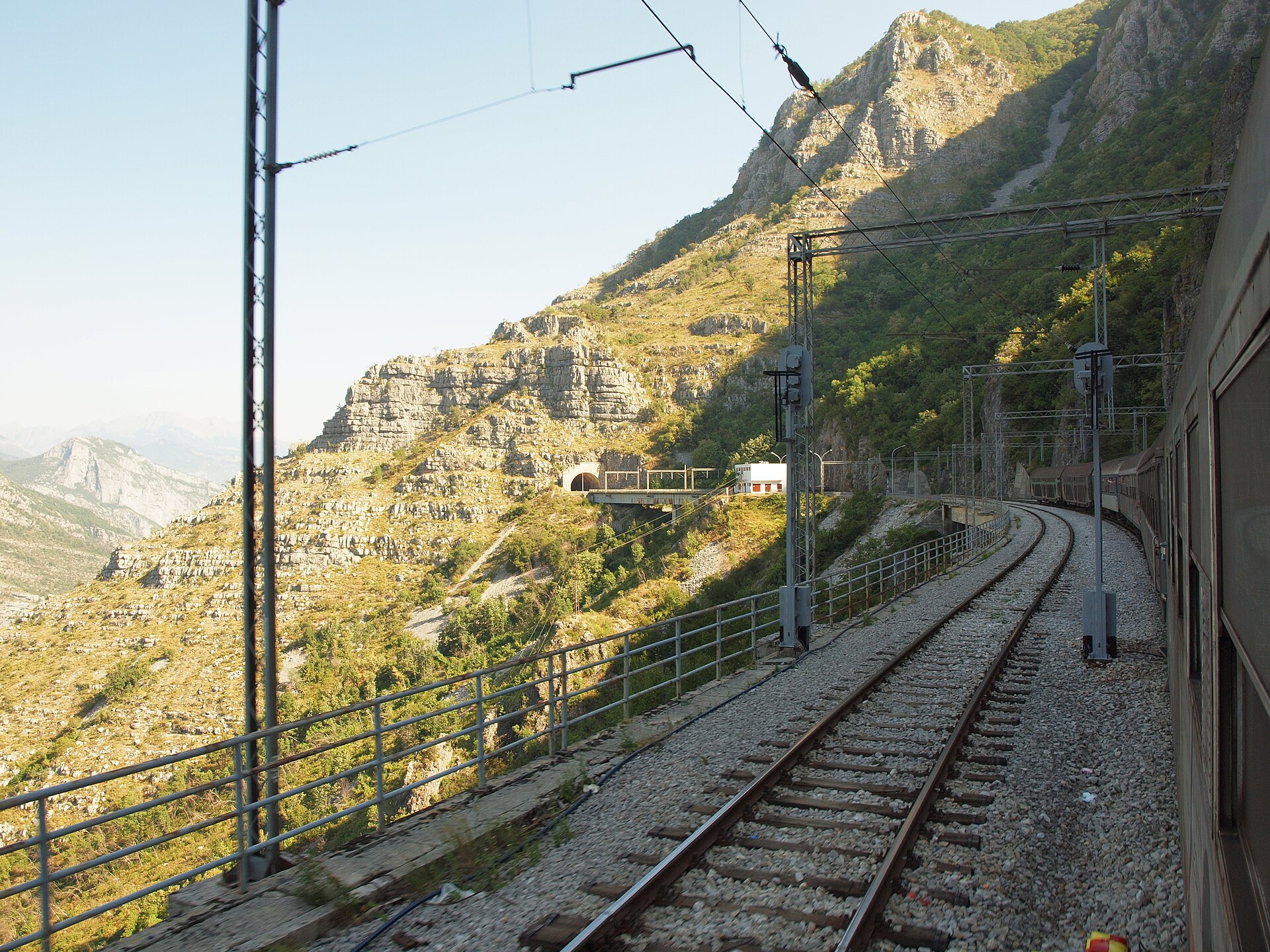
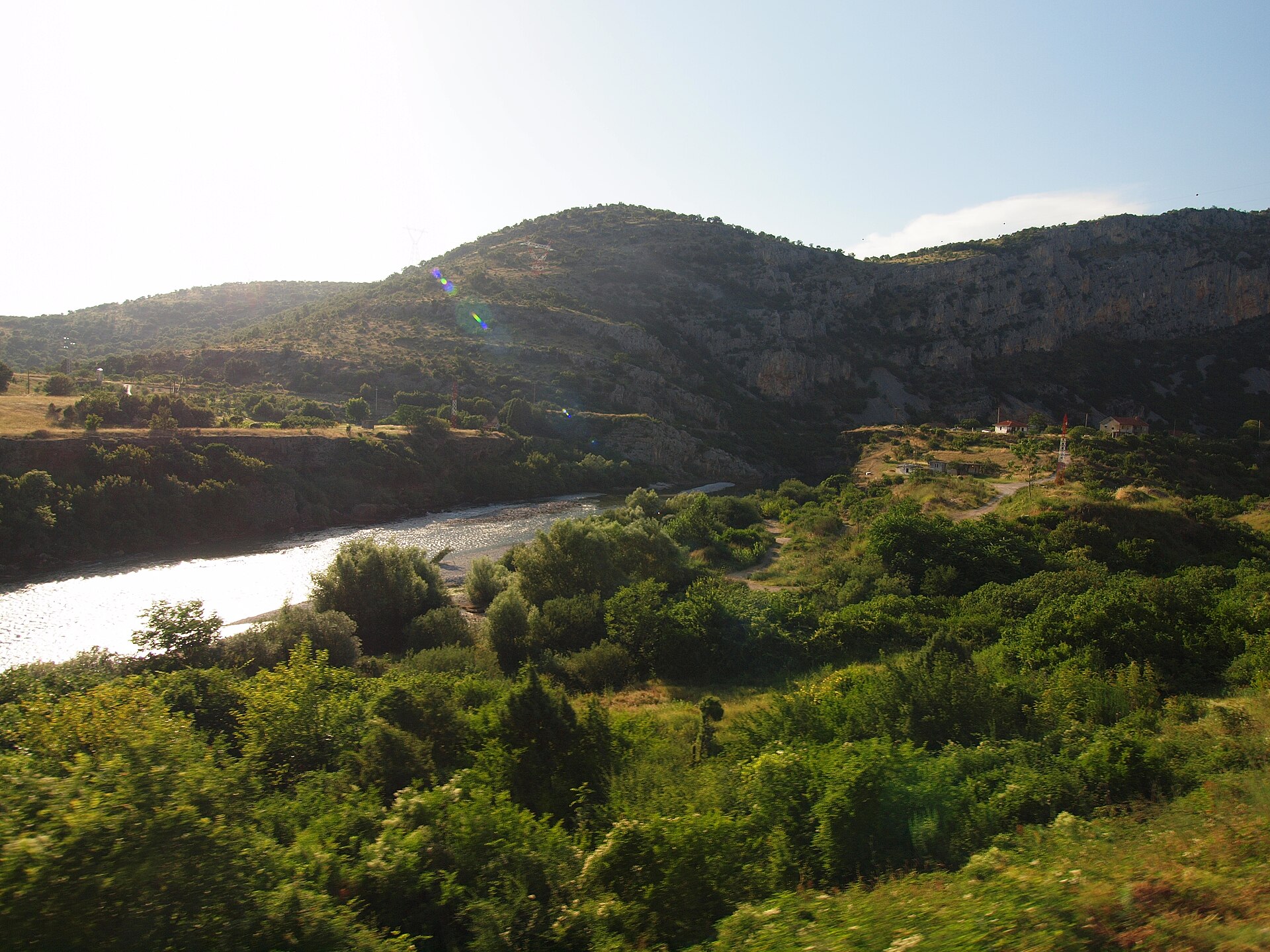
Below Kolašin the railway plunges into the Morača canyon, and for mile after mile it performs a high-wire act along the sheer valley wall: bursting out of tunnels onto narrow ledges, striding across the gorge on viaducts, the green river a thread far below. The moment everyone waits for is the Mala Rijeka viaduct, where the train runs 200 metres above the water on impossibly slender piers — cross it on the right-hand side and you look straight down into the void. It is worth staying glued to the window all the way down to Podgorica, Montenegro's low-lying capital in its bowl of hills.
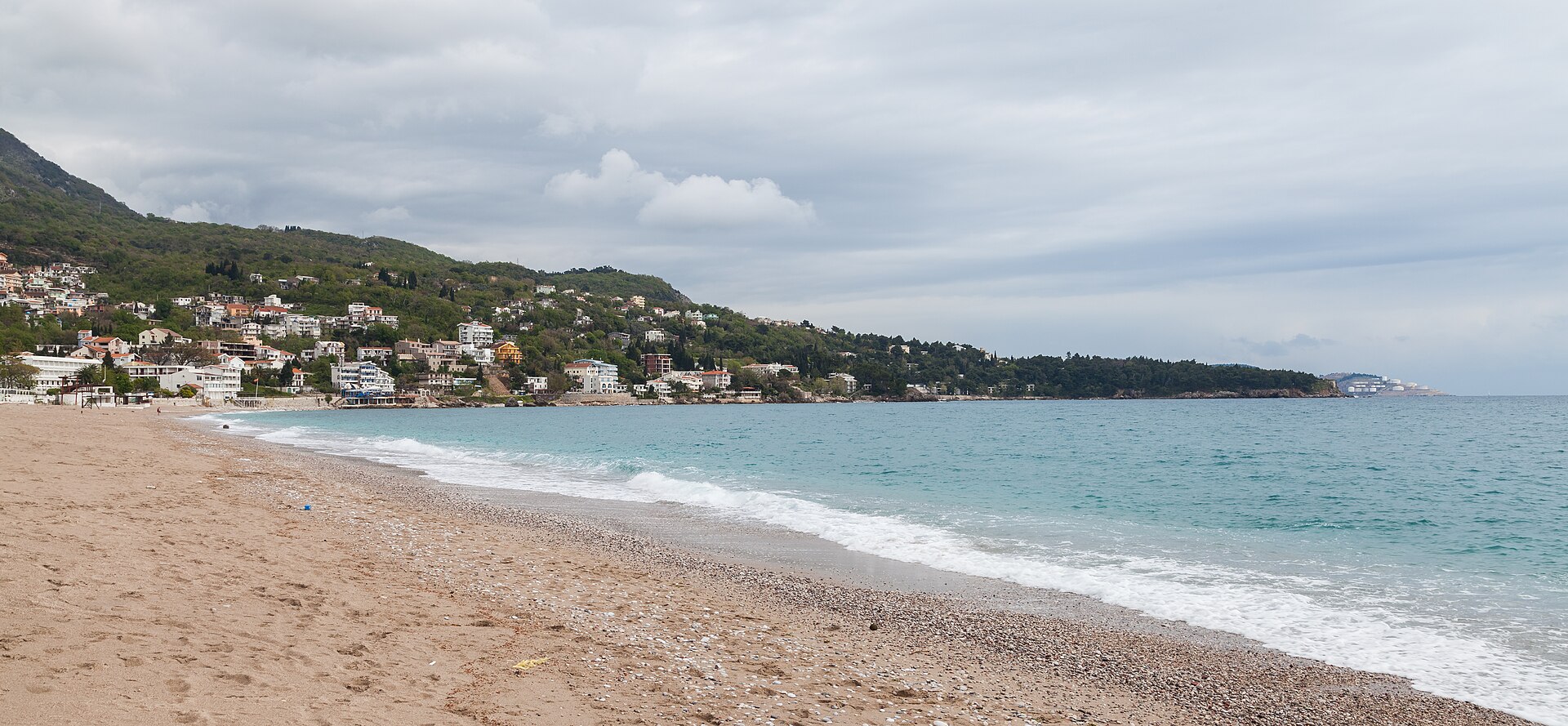
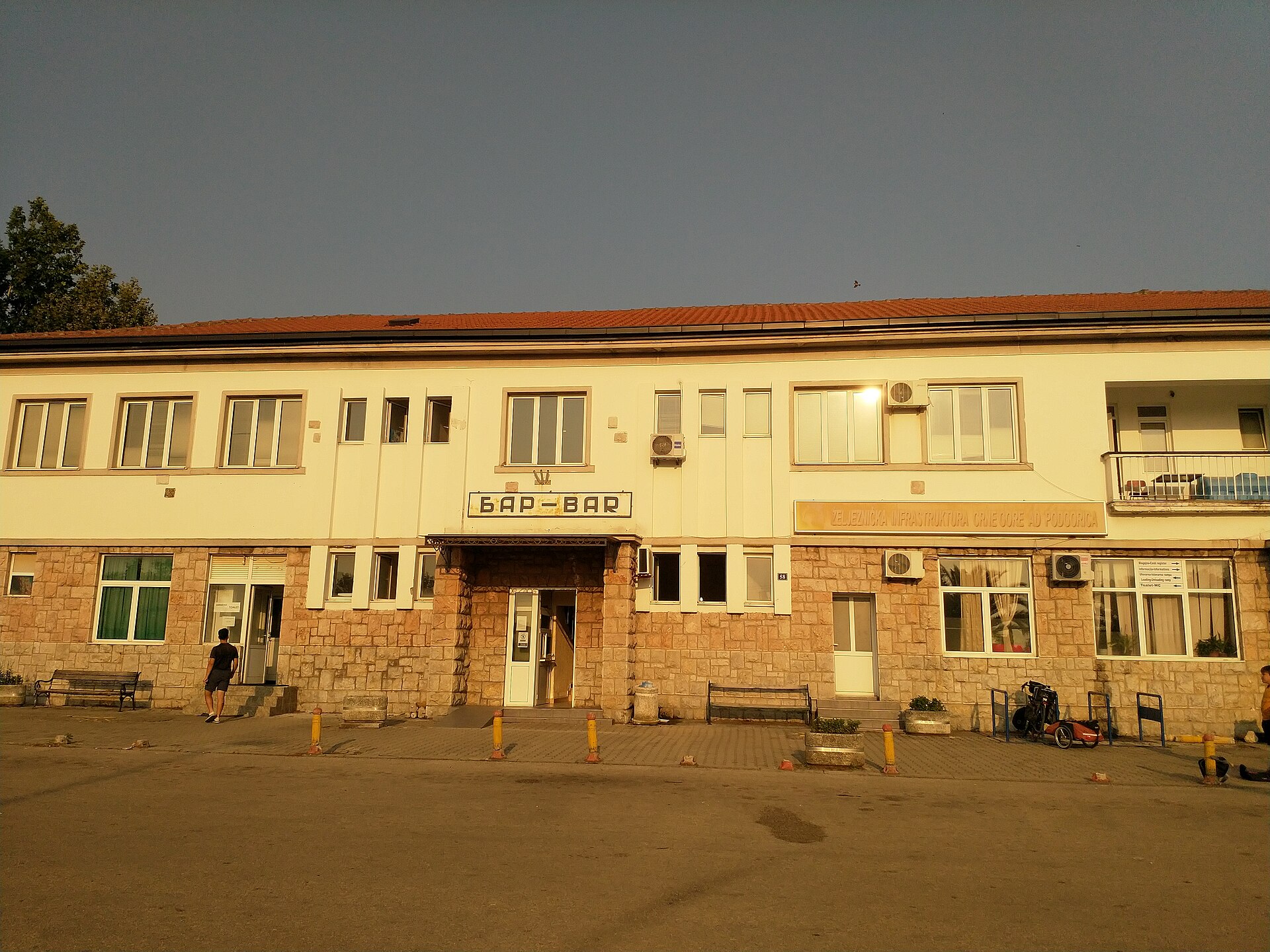
From Podgorica the finale comes quickly. The train swings toward the coast, dives through the long Sozina tunnel under the last ridge, and emerges into a different world — warm, bright, Mediterranean — at Sutomore, with its beaches and blue water. A few minutes more and it rolls into Bar, the Adriatic port at the end of the line. Eleven hours after leaving the plains of Serbia, you step out to the smell of the sea.
Along the route
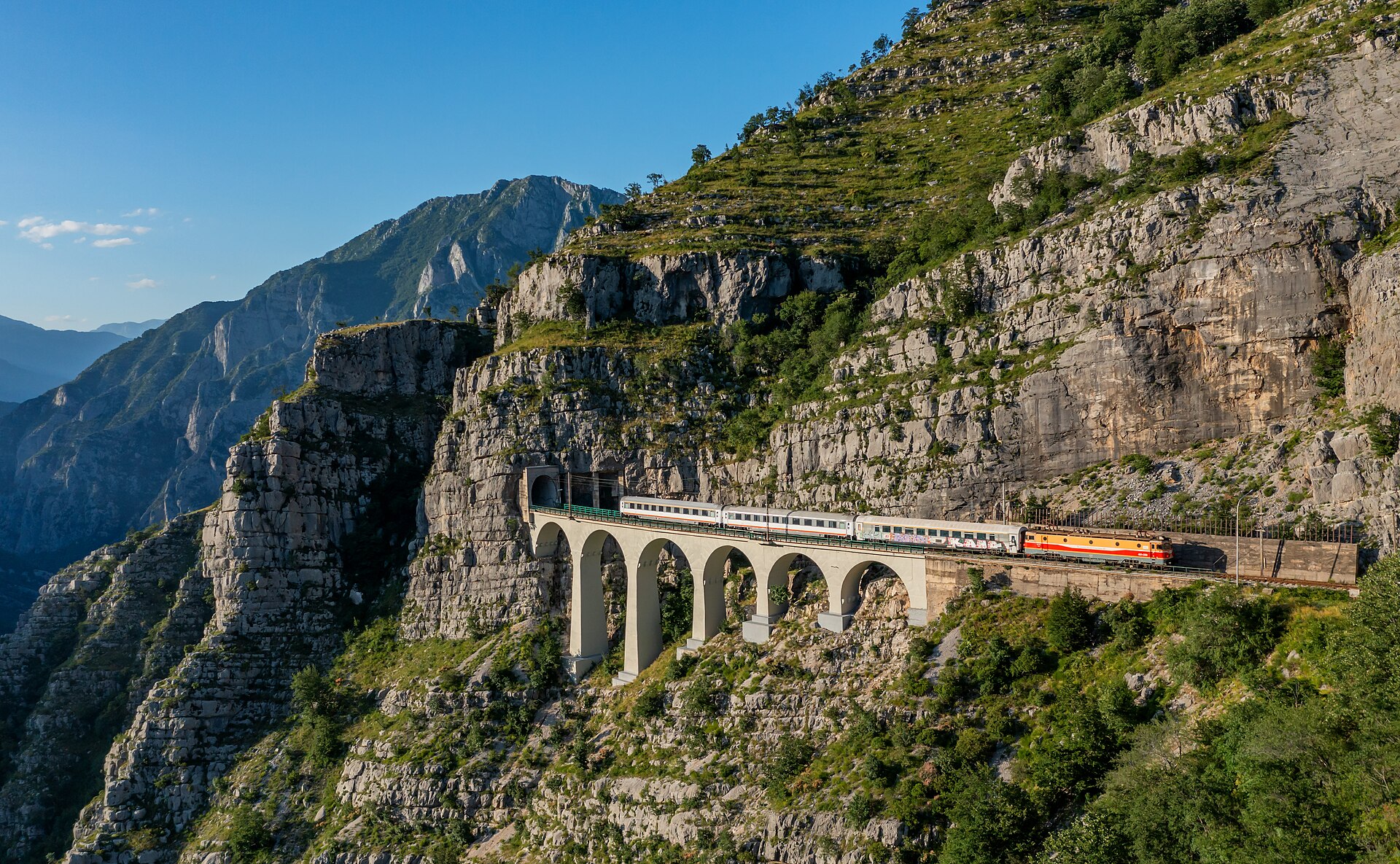
Kabelleger / David Gubler / Wikimedia Commons · CC BY-SA 4.0Over the mountains to the sea
In 476 kilometres the line climbs from the plains around Belgrade to 1,032 metres at Kolašin, then plunges down the canyons of Montenegro to the Adriatic. To do it, the builders bored 254 tunnels and threw 435 bridges across the gorges.Vicuna R / Wikimedia Commons · CC BY-SA 2.0The Mala Rijeka viaduct
The line's signature carries the railway 200 metres above the river on slender concrete piers. When it opened in 1973 it was the highest railway bridge in the world, a record it held for nearly thirty years.Pavle Cikovac / Wikimedia Commons · CC BY-SA 4.0The Morača canyon
The finest scenery is in Montenegro, where the line threads the deep Morača canyon on ledges and viaducts with the green river far below. Sit on the right going south, from Kolašin down towards Podgorica.A bit of history
Culture & experiences along the way
Pavle Cikovac / Wikimedia Commons · CC BY-SA 4.0The Lovćen overnight sleeper
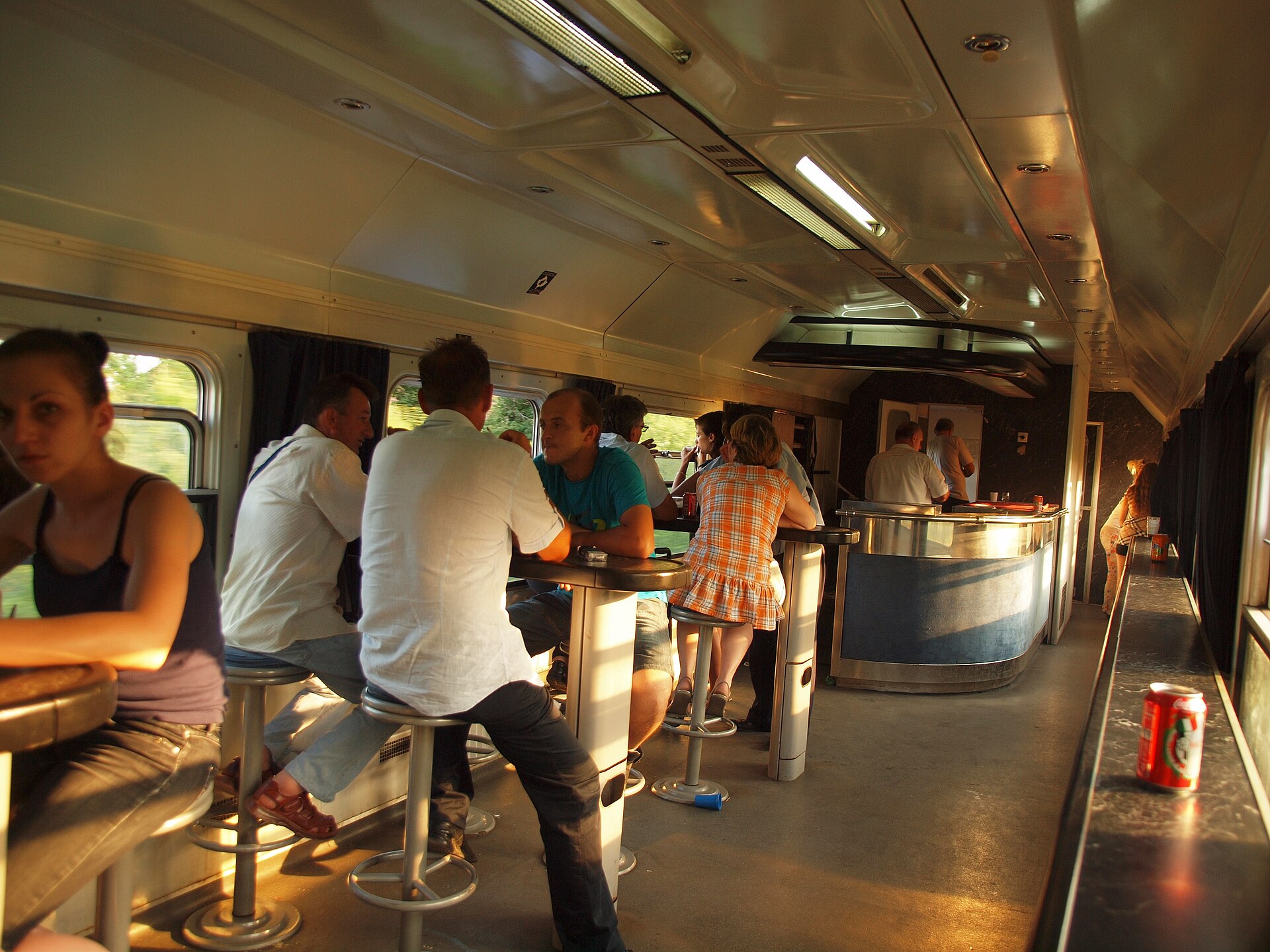
The classic way to ride is the Lovćen, the year-round overnight train, which leaves Belgrade in the evening and reaches the coast at breakfast. Book a berth in a sleeper (with washbasin) or a cheaper couchette, and wake as the train drops through the mountains to the sea. For the full scenic show, though, take the daytime train — the sleeper passes the best canyons in the dark.Pavle Cikovac / Wikimedia Commons · CC BY-SA 4.0The daytime express
In summer a daytime train runs the whole way in daylight — the one to catch if scenery is why you came. It is a proper old-fashioned express, often with a bar-restaurant car where you can nurse a coffee or a Nikšićko beer and watch the canyons unfold. Slow, sociable and gloriously scenic; bring snacks and water too, as the ride is a long one.Diego Delso, delso.photo, License CC BY-SA · Wikimedia CommonsDown to the Adriatic
The finale is pure theatre. After the mountains the train dives through the long Sozina tunnel and bursts out on the coast at Sutomore, all beaches and blue sea, before rolling the last few minutes into Bar. From there the walled old town of Stari Bar, the resorts of Budva and the fjord of Kotor are all within easy reach.Timetables
Two through trains link Belgrade and Bar: a seasonal daytime express, which runs the whole way in daylight and is the one to catch for the scenery, and the overnight sleeper Lovćen, which runs all year. Both take about eleven hours for the full run.
Real times, as of the 2026 timetable:
| Train | Departs | Arrives |
|---|---|---|
| Daytime (daily ~12 Jun–13 Sep) | Belgrade Centre 09:45 | Bar 21:10 |
| Daytime (northbound) | Bar 09:00 | Belgrade Centre 20:17 |
| Lovćen sleeper (daily, all year) | Belgrade Centre 19:54 | Bar 06:54 |
| Lovćen sleeper (northbound) | Bar 20:10 | Belgrade Centre 07:08 |
Good to know:
- Day or night? Take the daytime train if you possibly can — it is on for a few months in summer only, but it is the one that shows you the canyons and the Mala Rijeka viaduct in daylight. The Lovćen sleeper runs year-round but passes the best mountain scenery in the dark.
- Which side to sit. The great views down into the Morača canyon are on the right-hand side heading south (left heading north). Grab that side from Kolašin down toward Podgorica.
- Sleeper classes. The Lovćen carries proper sleeping cars (1-, 2- and 3-bed compartments with a washbasin) and cheaper couchettes (4- and 6-berth). Book a berth ahead for busy summer nights.
- It is slow — by design. Years of under-investment mean the trains crawl in places, so don't expect express speeds; treat the long, gentle pace as part of the experience, and bring water and snacks.
- Podgorica is a stop on the way, so you can ride just the scenic Montenegrin section (Bijelo Polje or Kolašin down to Podgorica or Bar) if you don't want the full day.
Times as of the 2026 timetable and subject to change; the daytime train is seasonal. Confirm current schedules and running dates with the operator before you travel (see the Tickets section below).
Tickets
The line is worked jointly by Srbija Voz in Serbia and ŽPCG in Montenegro, and for such an epic ride it is remarkably cheap: a through ticket from Belgrade to Bar is around €24 in second class, a daytime seat reservation adds a couple of euros, and a berth on the overnight Lovćen runs from about €8 for a shared couchette. Tickets are sold at the stations and, on the Montenegrin side, online through ŽPCG. Reserve a berth ahead in summer, because the popular nights sell out.
A word of realism: this is a lovingly atmospheric but under-funded railway, and delays and slow running are part of the deal. Carry cash in euros, bring water and food for the long ride, and treat the schedule as a good intention rather than a promise.
Book your tickets
Belgrade → Bar · day train & Lovćen sleeper
Over the mountains to the Adriatic
The full ride from Belgrade to the sea at Bar — a seasonal daytime express and the year-round overnight Lovćen sleeper. Very inexpensive; sleepers and couchettes bookable on the Montenegrin side. Buy at the station or online; reserve a berth ahead in summer.
Book Tickets (opens in a new tab, on ŽPCG (Railways of Montenegro))via ŽPCG (Railways of Montenegro)Timetable & sleeper booking · ŽPCG
Day train, sleeper berths and the season
Schedules, fares and berth reservations from Montenegro's railway. Check whether the daytime train is running (it is seasonal) and book a sleeper or couchette on the Lovćen ahead for busy summer nights. Tickets are also sold at Belgrade, Bar and Podgorica stations.
Book Tickets (opens in a new tab, on ŽPCG (Railways of Montenegro))via ŽPCG (Railways of Montenegro)Rail Passes
Interrail passes are valid on both sides of the border. Interrail's table of railway companies lists Srbija Voz and ŽPCG as included in Serbia and Montenegro. A One Country Pass covers one country only, so the through journey needs a Global Pass.
Reservations are compulsory on the day train and the night train. Interrail puts the reservation on the international express to Bar at about €3; a berth costs more. Interrail's Montenegro page gives the through trains summer dates: the fast train from 14 June to 15 September, the night train from 20 June to 18 September.
For this journey alone, a pass is not worth buying. The through fare is low. A pass pays when the line is one leg of a longer trip through the Balkans.
Checked October 2026 against interrail.com (opens in a new tab), Interrail's Serbia page (opens in a new tab) and Interrail's Montenegro page (opens in a new tab).
Places to Visit
Few railways connect such different worlds — a great Balkan capital, high mountain resorts, and the beaches and old towns of the Adriatic — and the line rewards stops along the way.
At the northern end, Belgrade is a big, spirited capital where the rivers Sava and Danube meet below the Kalemegdan fortress, with famous nightlife, buzzing café quarters and a hearty food scene. Down the line in Serbia, the Zlatibor highlands and the town of Užice make a fine pause — and put you within reach of the Šargan Eight heritage railway.
In Montenegro, the mountains are the draw. Kolašin is a walking and skiing base beside the Biogradska Gora national park, one of Europe's last primeval forests, and the vast Tara canyon — the deepest in Europe — is not far off. Podgorica, the capital, is modest but a useful hub, close to the huge Lake Skadar with its birdlife and island monasteries.
The coast is the reward. From Bar, with its ruined Ottoman-Venetian old town of Stari Bar just inland, the whole Montenegrin Adriatic is within easy reach: the walled town and fjord-like bay of Kotor, the beaches and nightlife of Budva, and the famous islet of Sveti Stefan. Arriving here by train, down off the mountains, is one of travel's great pleasures.
 Albinfo / Wikimedia Commons · Public domain · cropped
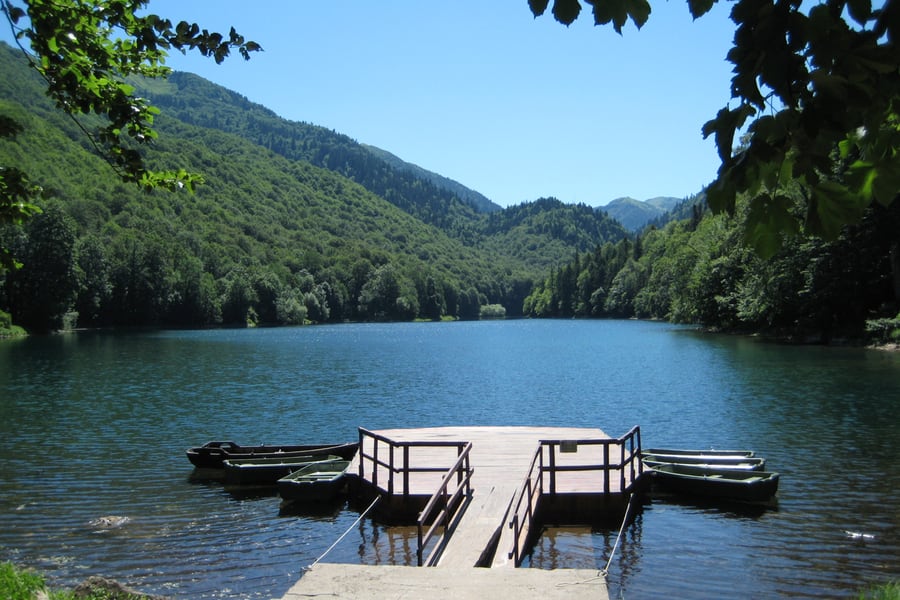
Biogradska Gora
One of the last primeval forests in Europe — 16 km² that has never been cut, with trees over five hundred years old — wrapped around a glacial lake on the valley floor. It survives because of a gift: when Kolašin was freed from Ottoman rule in 1878, the people of Morača and Rovca presented the forest to King Nikola, who fenced it off as his preserve. It became a national park in 1952. Five more lakes lie high above.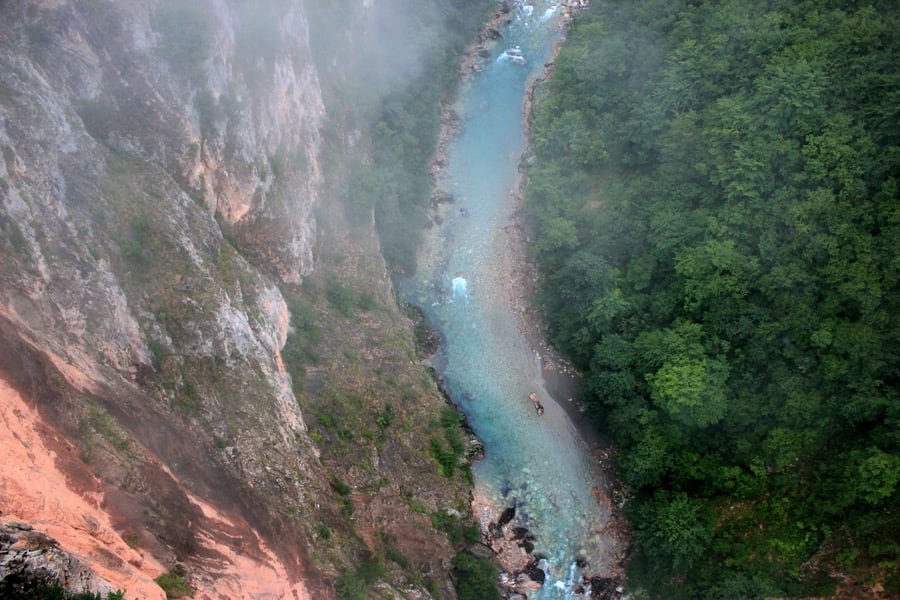 Julian Nyča / Wikimedia Commons · CC BY-SA 4.0 · cropped
The Tara canyon
1,333 metres at its deepest: the deepest canyon in continental Europe, and third deepest in the world behind the Grand Canyon. The Tara cuts 82 km through the limestone, most of it inside Durmitor National Park, a World Heritage Site, and UNESCO added the river itself to its Man and the Biosphere network in 1977. The water drops 3.6 metres every kilometre over 69 rapids, which is why the rafting is famous.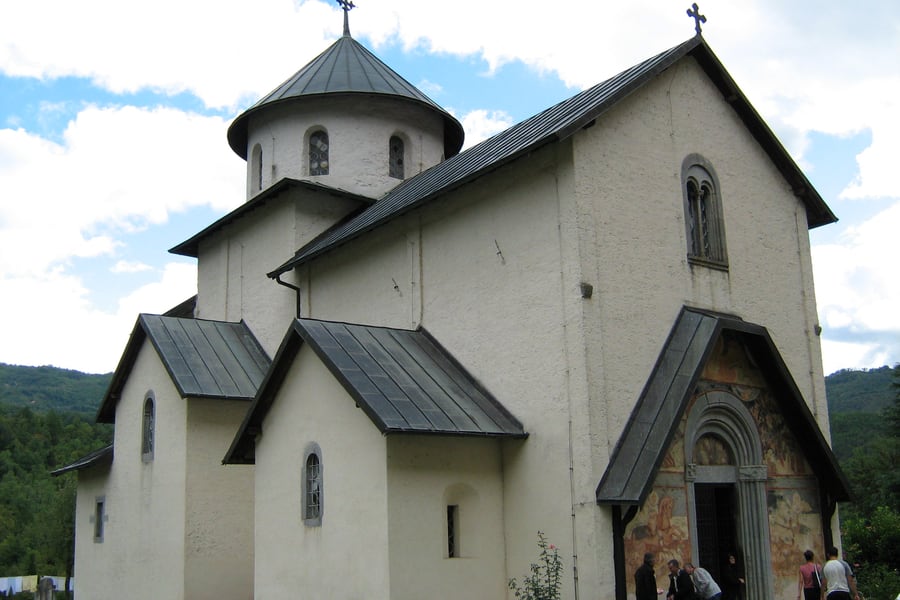 Djordje Stakić / Wikimedia Commons · CC BY 3.0 · cropped
Morača Monastery
Founded in 1252 by Stefan Vukanović of the Nemanjić dynasty, and standing in the same gorge the railway threads all afternoon. The Ottomans burned it in 1505 and it lay empty some seventy years before local money rebuilt it between 1574 and 1580. What survived the fire is the treasure: eleven 13th-century panels on the life of the prophet Elijah, among the finest late-Byzantine painting in the Balkans.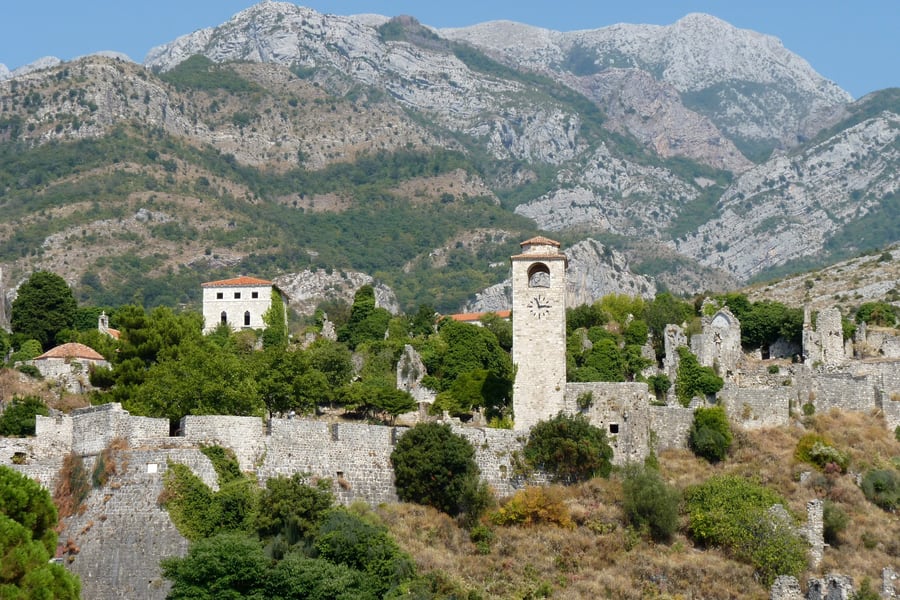 Dudva / Wikimedia Commons · CC BY-SA 3.0 · cropped
Stari Bar
A whole ruined town on a crag inland of modern Bar — Byzantine, then Serbian, briefly Venetian, and Ottoman from 1571. Montenegro took it in January 1878 by detonating 225 kg of explosive inside the aqueduct that watered it, and it never fully recovered; the 1979 earthquake finished the job, and most of what was left was abandoned. Today it is a hillside of roofless churches, arches and a clock tower under the wall of Rumija.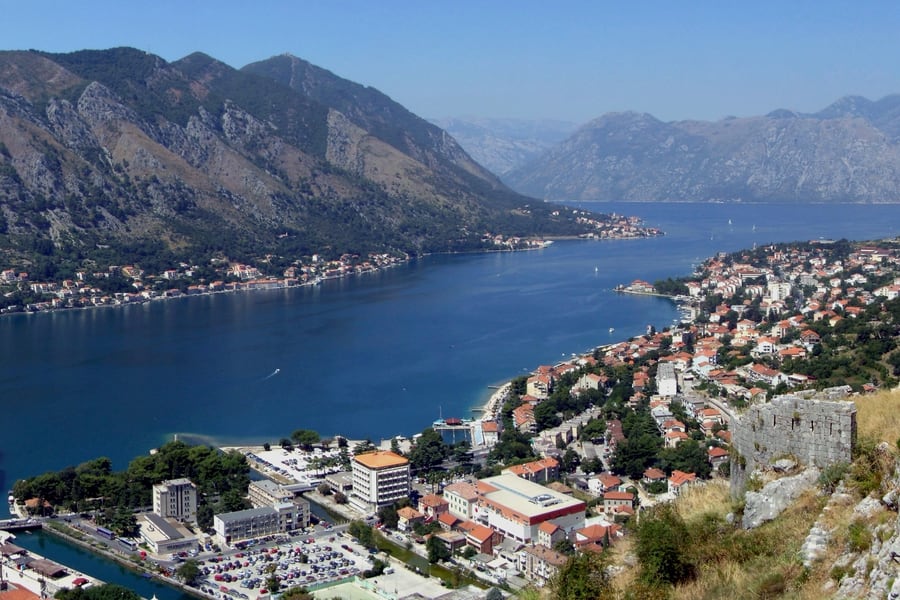 Pudelek (Marcin Szala) / Wikimedia Commons · CC BY-SA 3.0 · cropped
Kotor
It looks like a fjord and isn't. The Bay of Kotor is a ria — a river canyon drowned by the sea — which is why the mountains fall so sheer into it. The walled town at its head has 4.5 km of fortifications climbing the cliff behind to the fortress of St John, and the cathedral of St Tryphon was built in 1166. UNESCO listed the whole bay in 1979 as a natural and cultural-historical region.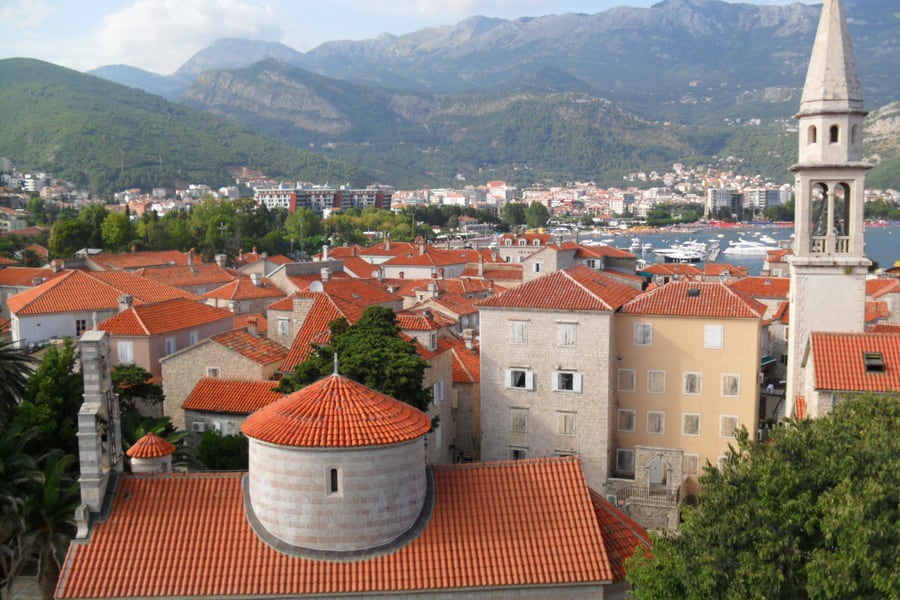 DinoMNE / Wikimedia Commons · CC BY-SA 3.0 · cropped
Budva
Two and a half thousand years old — the first record dates from the 5th century BC, and legend gives the founding to Cadmus of Thebes, washed up here in exile. The walled old town is a knot of lanes and churches, one of them Santa Maria in Punta of 840, ending in a citadel on the point. The 1979 earthquake wrecked it and the rebuilding took eight years; you would never know. Beyond the walls, the busiest beaches in Montenegro.Where to Sleep
The natural plan is to sleep at the two ends — a night in Belgrade, a stay on the Montenegrin coast — with the option of breaking the journey in the mountains.
In Belgrade, base yourself in the walkable centre around Knez Mihailova and Kalemegdan, or in the lively riverside districts of Dorćol and Savamala; there is everything from grand hotels to stylish apartments, and the station is a short ride away. If you ride the daytime train, you'll want a good night's sleep here first, as it leaves in the morning.
Up in the mountains, Kolašin makes a lovely stop — a small resort town of chalets and guesthouses, cool in summer and snowy in winter, handy for the Biogradska Gora forest. Podgorica has business-style hotels if you need a hub, though most travellers press on to the sea.
At the coast, Bar itself is a workaday port with simple hotels and apartments, fine for an early train; but the prettier bases are a short hop away — the beaches of Sutomore and Čanj, the resort town of Budva, or the incomparable walled town of Kotor on its bay. Montenegro's coast books up in July and August, so reserve ahead in high summer; the rest of the year it is quieter and cheaper. If you take the overnight Lovćen, of course, your bed is the train itself — arrive on the coast rested and ready for the beach.
Questions or corrections
Planning this trip and stuck on something, or spotted a time, fare or detail that has changed? Send us a message about The Belgrade–Bar Railway — Over the Mountains to the Adriatic. We read every one, and we update this page when something has changed.