Podgorica to Nikšić — Montenegro's Own Railway
Calistemon / Wikimedia Commons · CC BY-SA 4.0
- DistancePodgorica–Nikšić · 56 km
- DurationAbout 1 hour 7 minutes
- Best seasonSpring to autumn (green plain; clear mountain light)
Introduction
Almost every train that runs in Montenegro is really part of the great Belgrade–Bar line, sweeping through on its way from the Serbian plains to the Adriatic. The little Podgorica–Nikšić railway is the country's one true exception — Montenegro's very own, homegrown domestic line, and a gentle pleasure in its own quiet way.
It is a modest thing, and honest to say so: 56 kilometres of standard-gauge track, rebuilt and electrified in 2012, worked by clean modern electric trains that run a handful of times a day between the capital and the old town of Nikšić. This is an everyday local railway, not a tourist spectacle — but it carries you through the green heart of the country, up the fertile Bjelopavlići plain and the Zeta valley, ringed all the way by the pale grey walls of the karst mountains.
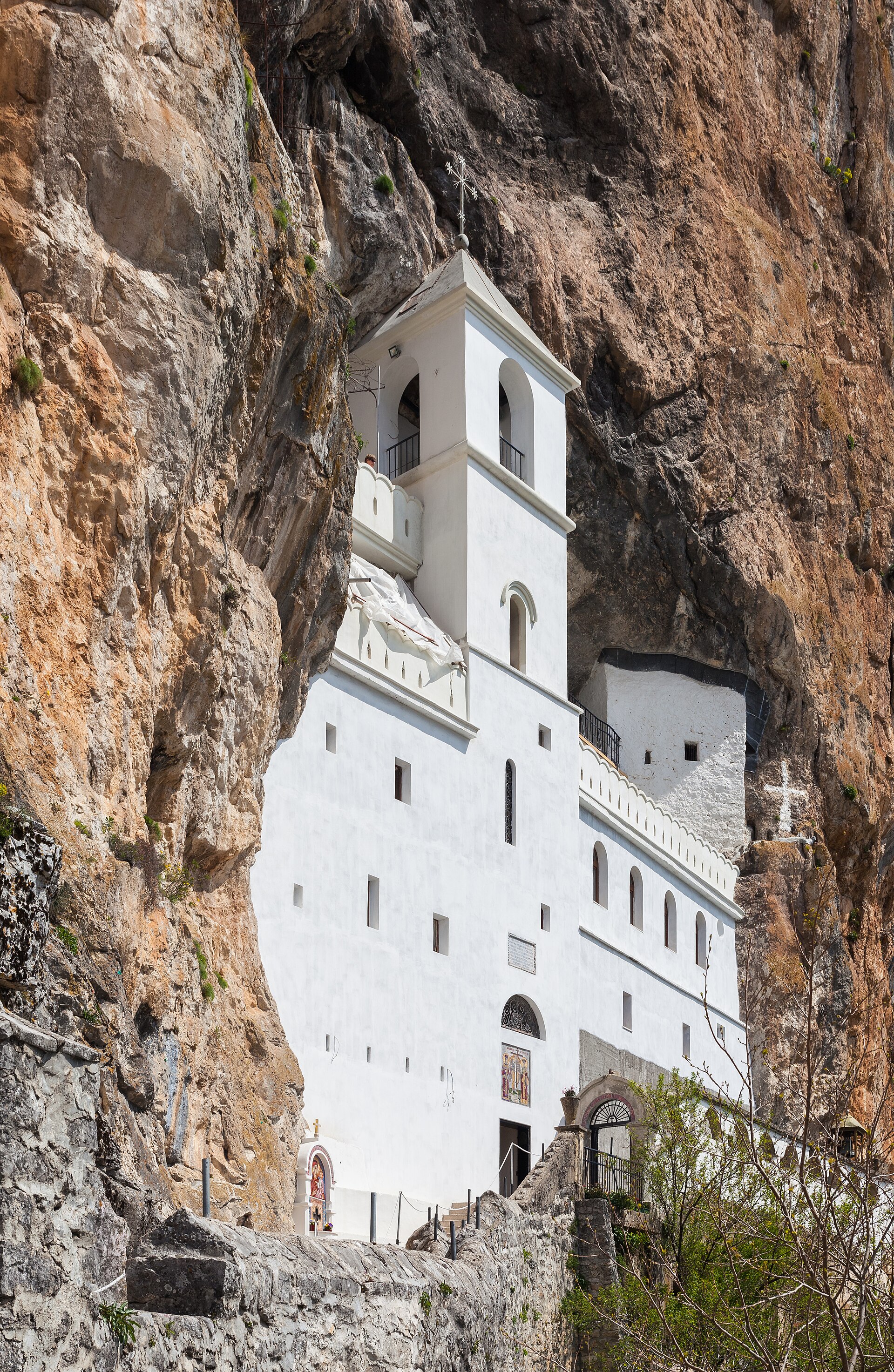
And it has one genuinely great card to play. High on a cliff above the line stands the Monastery of Ostrog — a white church built impossibly into a vertical rock face, Montenegro's holiest site and a place of pilgrimage for the whole Orthodox Balkans. The train stops in the valley below, at Ostrog station, making the rails an easy and characterful way to reach one of the most extraordinary buildings in Europe.
Add in fares of just a couple of euros, the handsome fortress town of Nikšić at the end, and the karst lakes of the interior, and this becomes more than a branch line. Ride the epic Belgrade–Bar route down off the mountains, then branch out here for an afternoon — it is the perfect low-key companion to Montenegro's mighty main line.
The Journey
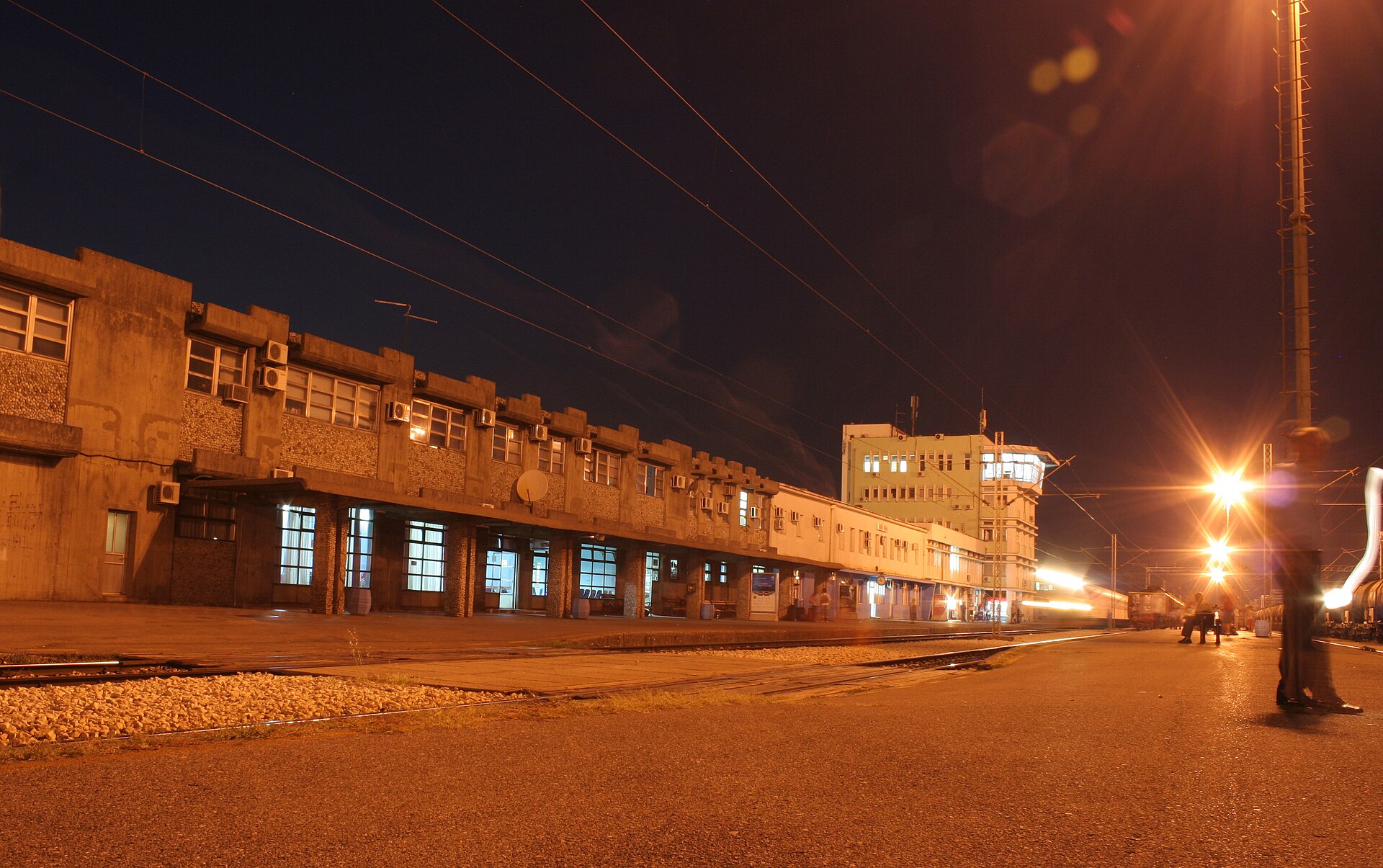
The ride begins at Podgorica, Montenegro's low-key capital, spread across a plain where several rivers meet. This is the junction with the main Belgrade–Bar line, so the little Nikšić train slips away from the same station that sees the long-distance expresses — and immediately the mood is different: local, unhurried, everyday.
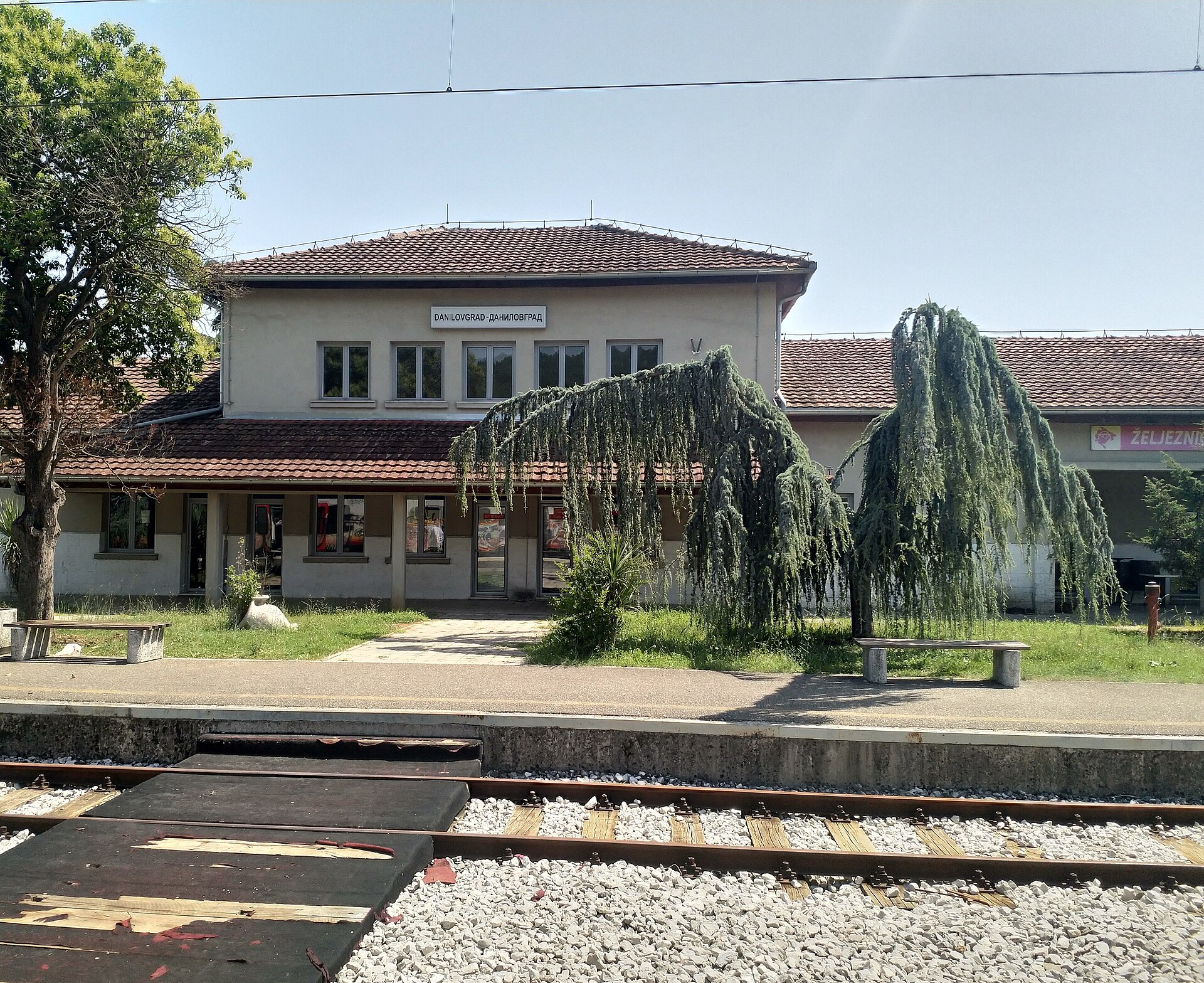
Heading north-west, the electric train runs up the broad Zeta valley and out across the Bjelopavlići plain, the most fertile corner of a famously stony country — vineyards, orchards and small farms, with the grey limestone mountains rising on every side. It calls at Spuž and then Danilovgrad, a neat little market town midway along the line, before pressing on toward the hills.
The stop that matters most is Ostrog. The station sits in the valley, but the reason to get off is high above: the Monastery of Ostrog, gleaming white in its cleft of vertical rock, one of the great sights of the Balkans. It cannot be reached on foot from the train in any comfort, but taxis and tours wait to carry pilgrims and visitors up the steep switchback road — and the effort is repaid many times over.
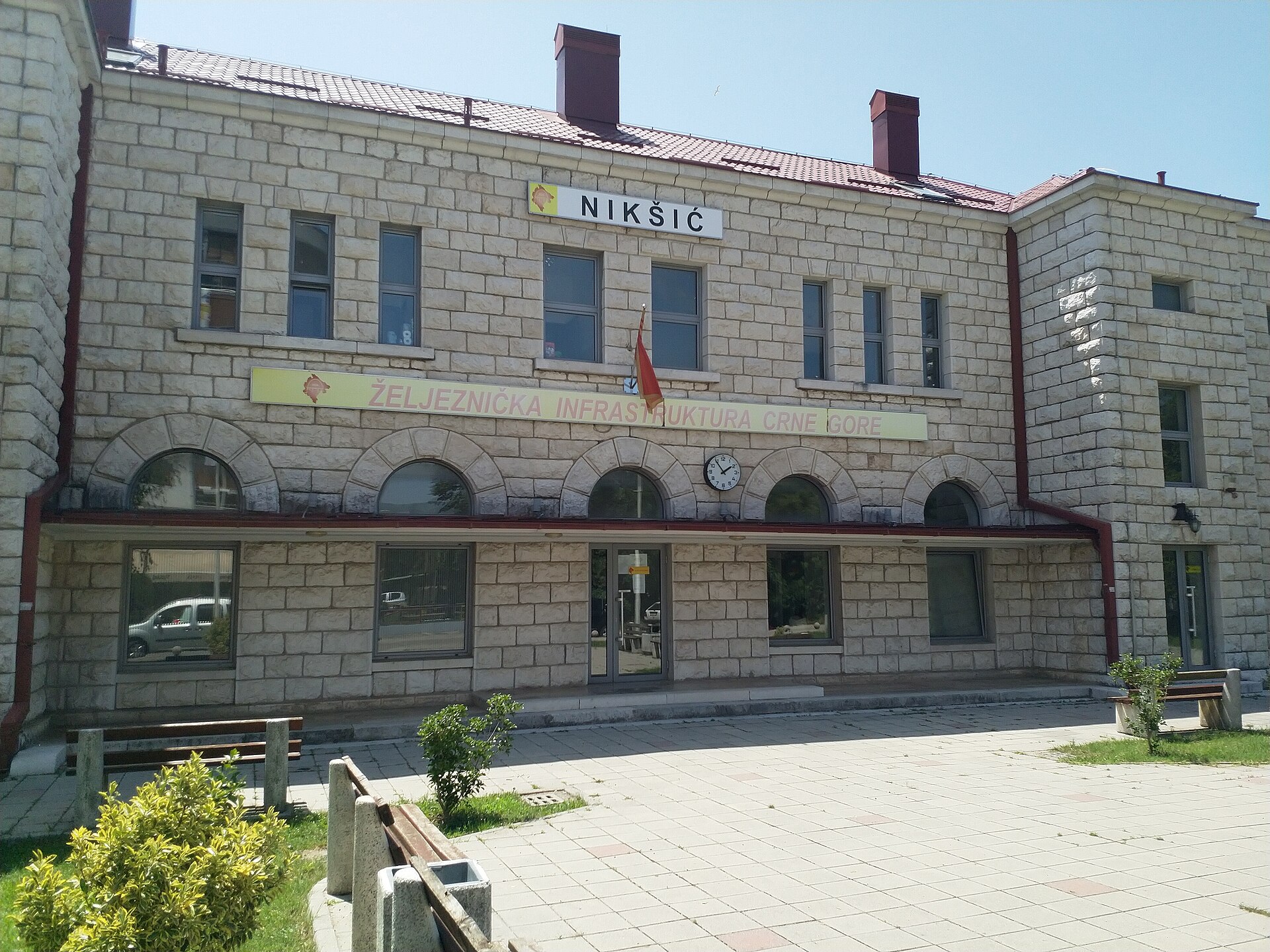
Beyond Ostrog the line climbs gently into rougher karst country, the landscape growing wilder and greyer, and ends at Nikšić — Montenegro's second city, an old town of a fortress, an Orthodox cathedral and the country's famous brewery, home of Nikšićko beer. It is a little over an hour from the capital, and while no one would call the ride dramatic, it is a genuinely enjoyable slice of inland Montenegro that most visitors, glued to the coast, never see.
Along the route
Phil Richards / Wikimedia Commons · CC BY-SA 2.0Montenegro's own railway
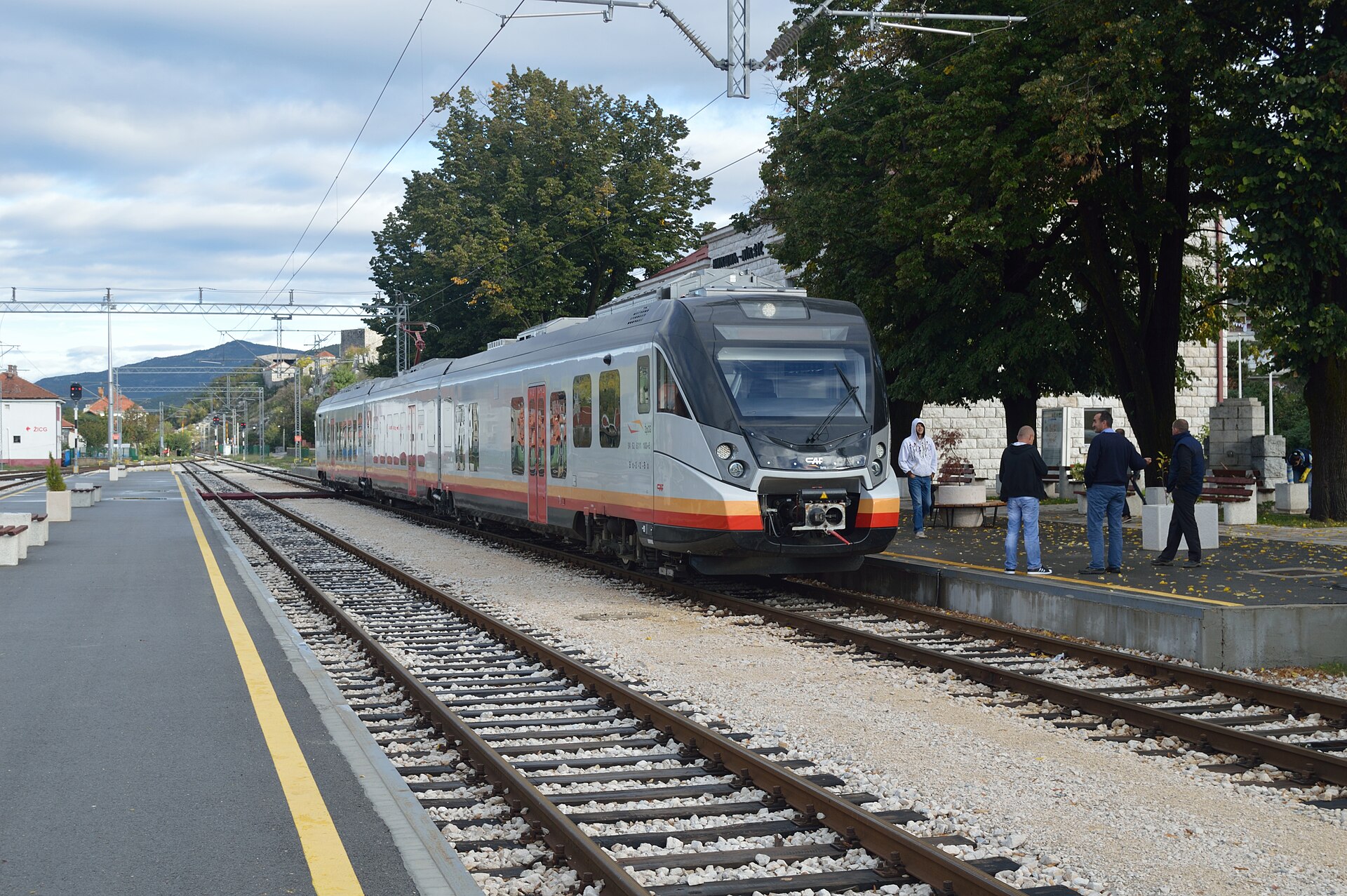
Almost every train in Montenegro is really part of the great Belgrade–Bar line. The Podgorica–Nikšić railway is the exception — the country's own homegrown route, rebuilt and electrified in 2012. Short and unpretentious, an everyday local line rather than a spectacle.Diego Delso, delso.photo, License CC BY-SA · Wikimedia CommonsGateway to Ostrog
The line's great draw stands high above it: the Monastery of Ostrog, built impossibly into a sheer white cliff, Montenegro's holiest site. The train stops in the valley below, from where taxis climb the dizzying road up to it.Calistemon / Wikimedia Commons · CC BY-SA 4.0The Bjelopavlići plain
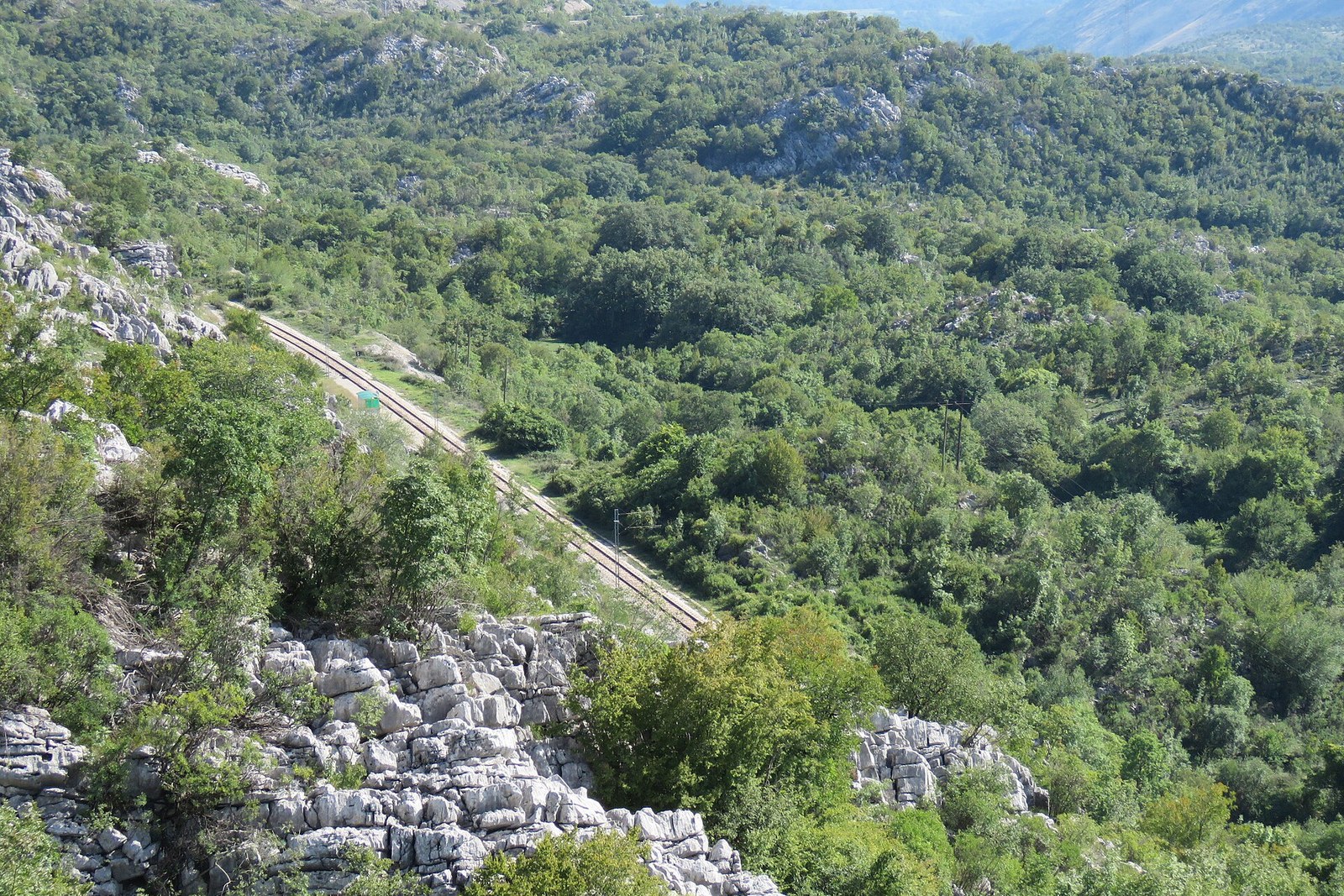
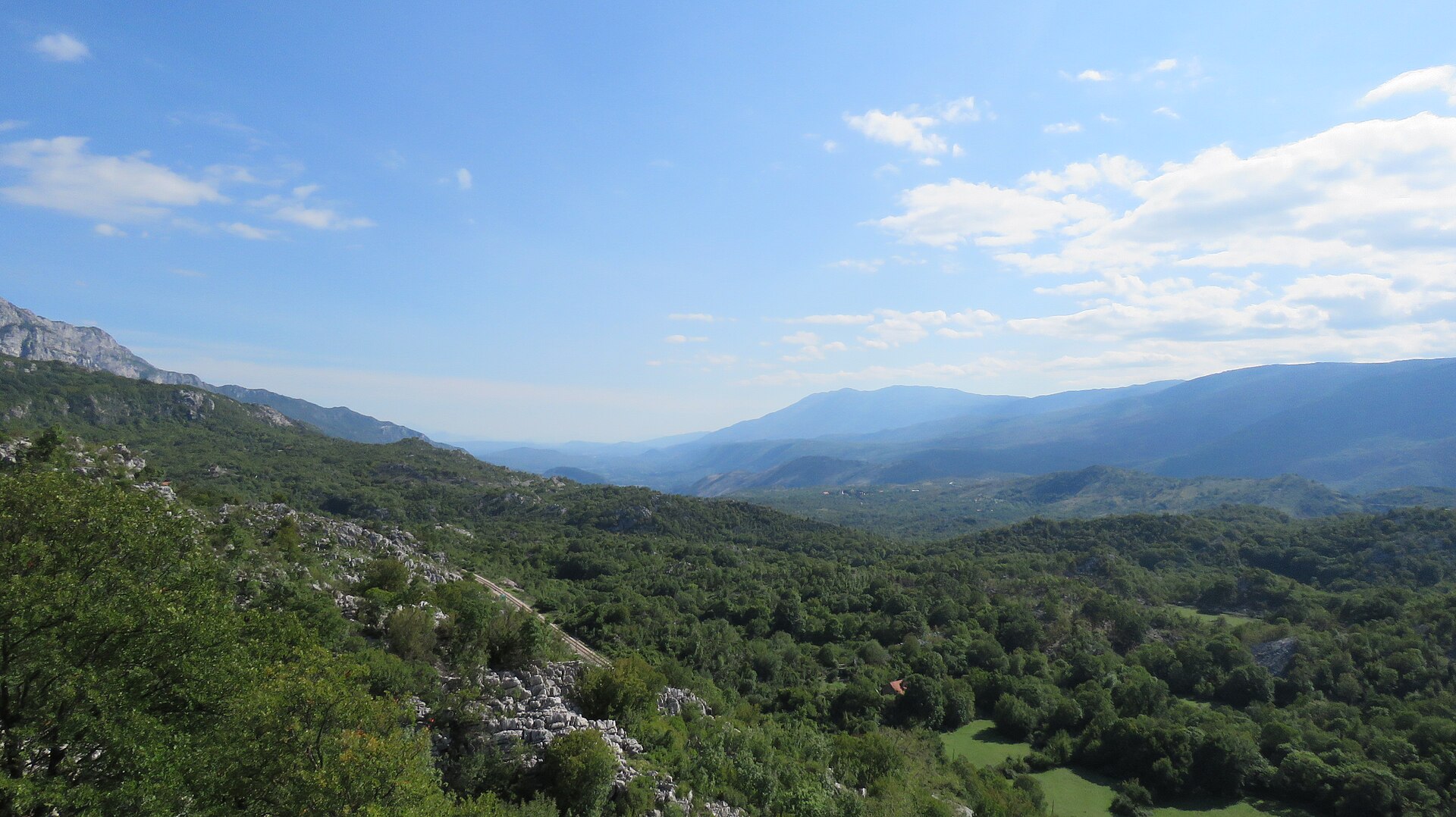
The railway runs up a broad, fertile plain ringed by grey karst mountains — vineyards and orchards below, bare limestone peaks above. Beyond Nikšić the plateau hides a scatter of lakes, a reminder of how strange Montenegro's interior can be.A bit of history
Culture & experiences along the way
Niegodzisie / Wikimedia Commons · CC BY-SA 4.0An easy electric ride
This is the relaxed opposite of the epic Belgrade–Bar run: a clean, modern electric train, a little over an hour end to end, a handful of times a day. Fares are tiny — a couple of euros — and the trains are rarely crowded, so it's an effortless way to see a slice of everyday Montenegro away from the coast.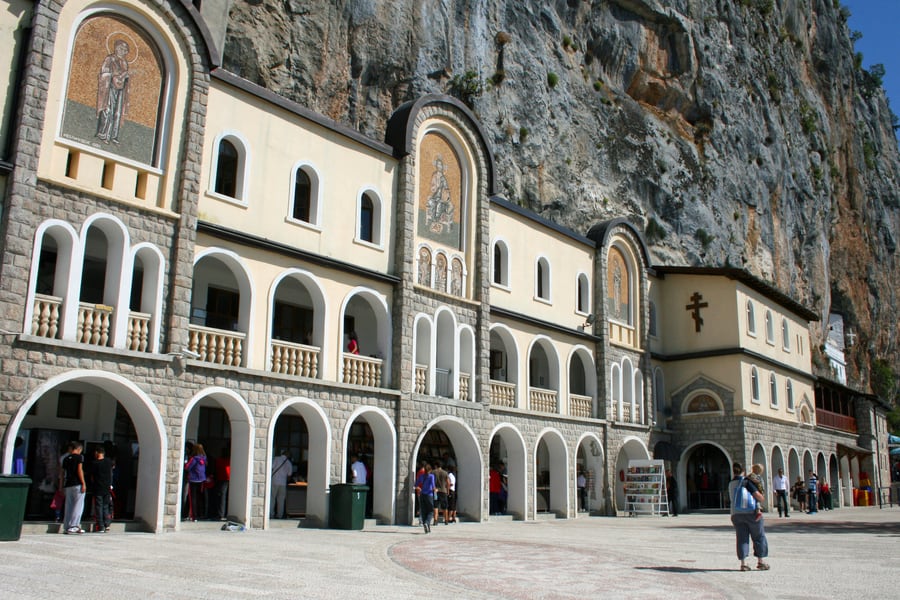 Gavinevans / Wikimedia Commons · CC BY-SA 3.0 · cropped
A pilgrimage to Ostrog
Use the train to reach Ostrog: alight at the valley station and arrange the short, steep climb up to the cliff monastery, where pilgrims queue to venerate the relics of St Basil and the views over the Bjelopavlići plain are magnificent. Dress modestly — it is a living, working monastery — and go early to beat the summer crowds.Niegodzisie / Wikimedia Commons · CC BY-SA 4.0Pair it with the big line
Because the line starts at Podgorica — a stop on the Belgrade–Bar railway — it slots neatly into a wider rail trip. Come down off the mountains on the great line, then branch out to Nikšić and Ostrog before carrying on to the coast. Old town Nikšić, with its fortress, brewery and cathedral, makes a worthwhile turn-around point.Timetables
The Podgorica–Nikšić line runs a simple local timetable: five trains a day in each direction, taking a little over an hour for the 56-kilometre run. There are big gaps between departures, so it pays to check the times before you set out — especially if you are heading up to Ostrog and back in a day.
Real times, as of the 2026 (ŽPCG 2025/2026) timetable:
| Podgorica → Nikšić | Nikšić → Podgorica | ||
|---|---|---|---|
| 08:00 | 06:20 | ||
| 12:50 | 10:15 | ||
| 15:35 | 14:15 | ||
| 18:30 | 17:04 | ||
| 21:45 | 20:00 |
The journey takes about 1 hour 7 minutes end to end.
Good to know:
- Plan around the gaps. With only five trains a day, connections matter. For Ostrog, pick an outbound train that gives you a few hours before a sensible return — the monastery visit plus the climb up and down takes time.
- All stops. Trains call at Spuž, Danilovgrad and Ostrog as well as several minor halts, so any of these is reachable — handy for the Bjelopavlići plain towns.
- It connects with the big line. Podgorica is a stop on the Belgrade–Bar railway, so you can arrive from the mountains or the coast and change onto the Nikšić train (allow time — the two timetables aren't tightly coordinated).
- Turn up and go. Fares are tiny and trains rarely full; just buy at the station.
Times as of the 2025/2026 ŽPCG timetable and subject to change. Confirm current departures with the operator before you travel (see the Tickets section below).
Tickets
This is the easiest ticket in Montenegro. The line is run by ŽPCG — the Railways of Montenegro — and a ride the full length from Podgorica to Nikšić costs only about €3.20 in second class, or €4.80 in first. There is no reservation and no fuss.
Just buy at the station on the day — Podgorica, Nikšić or any of the stops in between — and board. Trains are seldom crowded, so there is no need to plan ahead beyond checking the departure times, which is the one thing that really matters on a line with only five trains a day. If you are combining this with the main Belgrade–Bar route, buy the two tickets separately at Podgorica.
For Ostrog, remember that the train only gets you to the valley station; you will need a taxi or a tour for the steep road up to the monastery, so factor that cost and time into your day. The operator's site, linked below, carries the current local timetable and fares.
Book your tickets
Podgorica ↔ Nikšić
Montenegro's local electric line
The short domestic run up the Zeta plain, five trains a day each way, run by ŽPCG. Very cheap — a couple of euros — and useful for reaching Ostrog. Buy at the station on the day; no need to book ahead.
Book Tickets (opens in a new tab, on ŽPCG (Railways of Montenegro))via ŽPCG (Railways of Montenegro)Local timetable · ŽPCG
Departure times both ways
The current local timetable for the Podgorica–Nikšić line from Montenegro's railway, with departure times in both directions. Check the times before you set out, as there are only a few trains a day and gaps of several hours between them.
Book Tickets (opens in a new tab, on ŽPCG (Railways of Montenegro))via ŽPCG (Railways of Montenegro)Rail Passes
Interrail passes are valid. Interrail's table of railway companies lists ŽPCG's regional trains as included in Montenegro, so Podgorica to Nikšić is covered by an Interrail Montenegro Pass or a Global Pass, with no reservation.
For this journey alone, a pass is not worth buying. The full run costs a few euros.
Checked October 2026 against interrail.com (opens in a new tab) and Interrail's Montenegro page (opens in a new tab).
Places to Visit
Short as it is, this line links three worthwhile places and one truly extraordinary one.
Podgorica, at the southern end, is Montenegro's workaday capital — not a beauty, but a relaxed, leafy, café-loving city with a couple of good museums, the old Ottoman quarter of Stara Varoš by the Ribnica river, and easy access to the vast Lake Skadar just to the south, a haven of pelicans, water lilies and island monasteries.
Ostrog is the star. The cliff Monastery of Ostrog — a dazzling white church wedged into a vertical rock face 900 metres up — is the holiest site in Montenegro and one of the most visited in the Balkans, drawing pilgrims of several faiths to the relics of St Basil. The setting alone, and the view back over the Bjelopavlići plain, make the detour unforgettable.
Nikšić, at the end of the line, is Montenegro's second city: an easygoing place with a hilltop fortress, the handsome Cathedral of St Basil, a pleasant central park and the country's beloved brewery, maker of Nikšićko beer. Around it the karst interior opens up — the Slano and Krupac lakes, the wild uplands toward the Piva canyon and the high Durmitor mountains beyond, some of the least-visited and most striking country in Montenegro.
 Maja1407 / Wikimedia Commons · CC BY-SA 4.0 · cropped
Lake Skadar
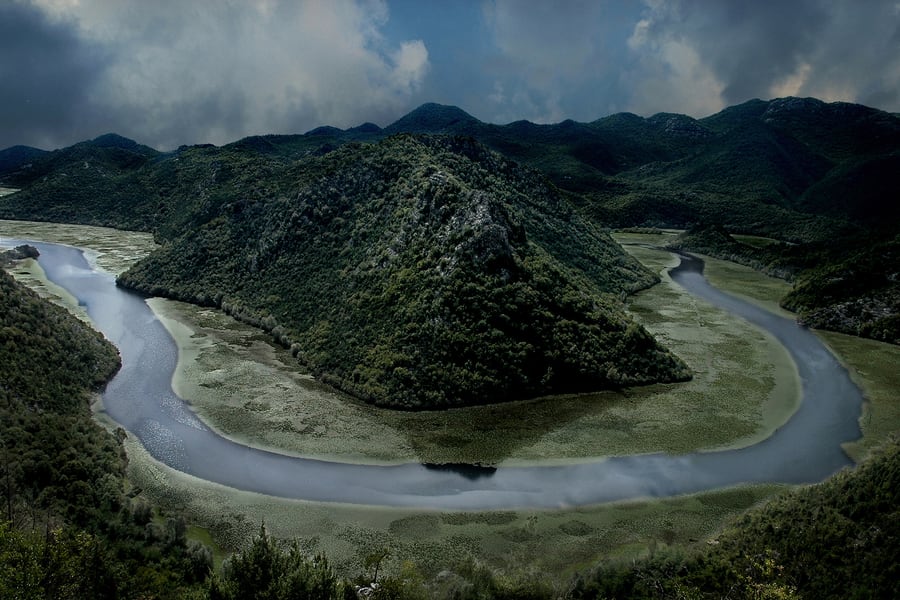
The largest lake in southern Europe, swelling from 370 to 530 km² between summer and spring, and split about two-thirds Montenegro to one-third Albania. It is a cryptodepression — the bed lies below sea level — fed by karst springs welling up through the floor. 270 bird species have been counted here, including some of the last pelicans in Europe. A national park since 1983. This is the Pavlova Strana bend.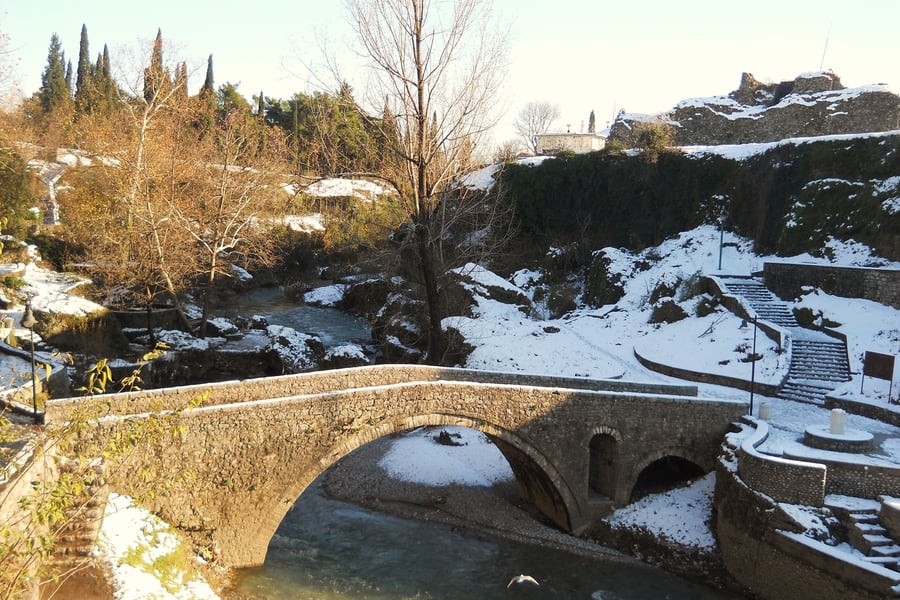 Rasho992 / Wikimedia Commons · CC BY-SA 3.0 · cropped
Stara Varoš
Podgorica keeps its Ottoman quarter where the Ribnica runs down to meet the Morača — low houses, a clock tower, and this single stone arch, the oldest bridge in the city. Its foundations are Roman; it was rebuilt in the 18th century by Adži-paša Osmanagić, whose name it now carries. The ruins on the bluff above are the Ribnica fortress, and the whole corner feels a world away from the modern centre.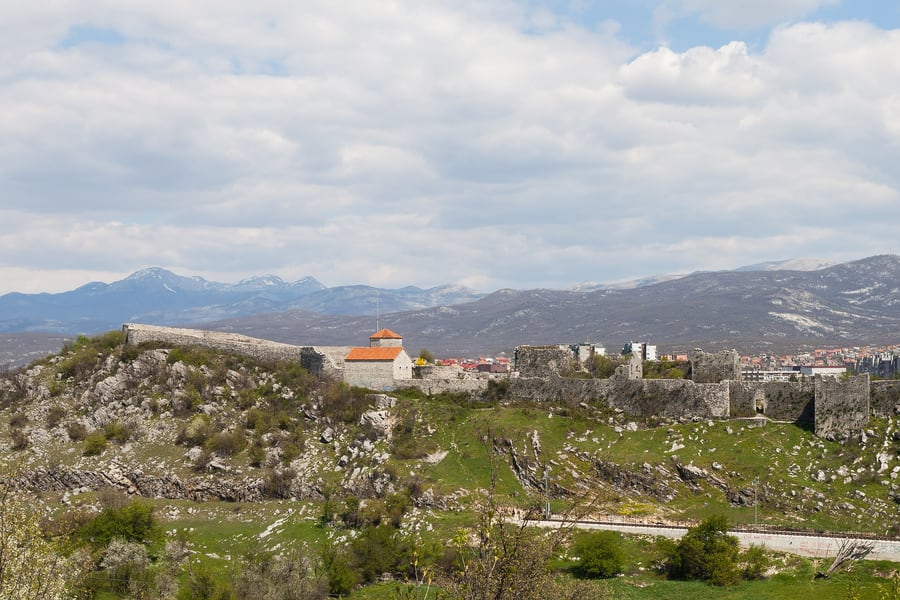 Diego Delso, delso.photo, License CC BY-SA · Wikimedia Commons · cropped
Bedem
Nikšić has been fortified for sixteen centuries. The Romans put a camp here in the 4th century; after 459 it was the Ostrogothic stronghold of Anagastum, which the Slavs turned into Onogošt — the town's name right through the Middle Ages, until the Nikšići tribe gave it the present one in the 1400s. The ramparts standing today are Ottoman, finished in 1713, and run 214 metres with eleven towers.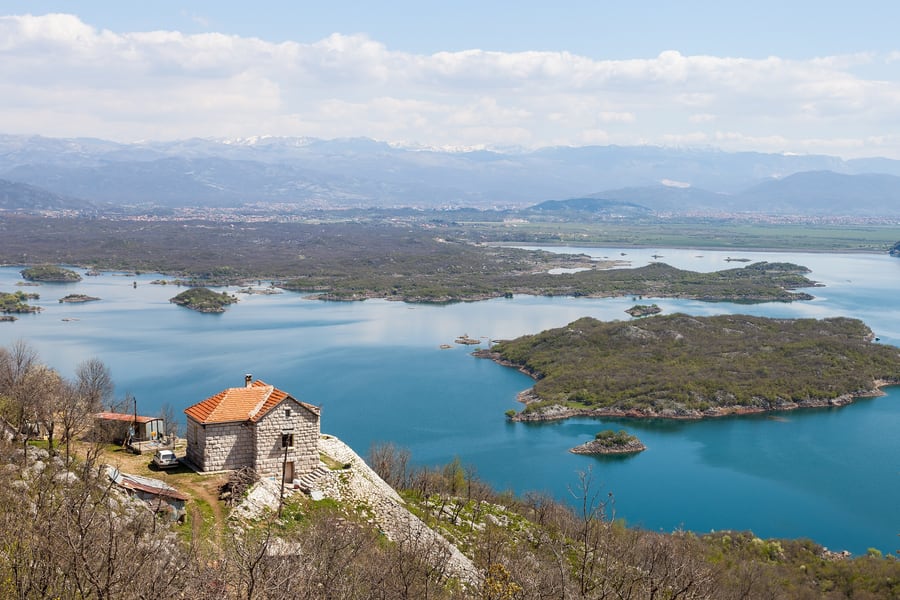 Diego Delso, delso.photo, License CC BY-SA · Wikimedia Commons · cropped
Slano Lake
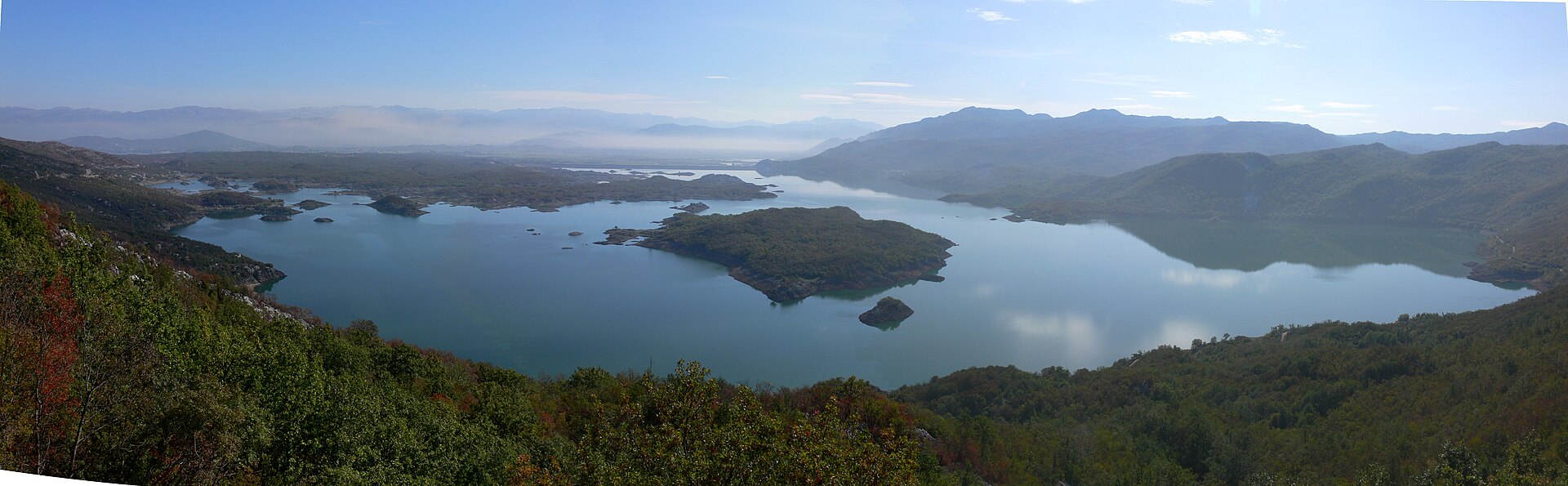
Not a natural lake at all: part of the Nikšić field was flooded in 1950 to feed the Perućica hydro station, and the islands scattered across it are the tops of drowned hills. Slano is one of three reservoirs built here — Krupac and Vrtac are the others — and its retaining dam runs over 1.6 km. It has since become the local summer lake, with the snow lying late on the mountains behind.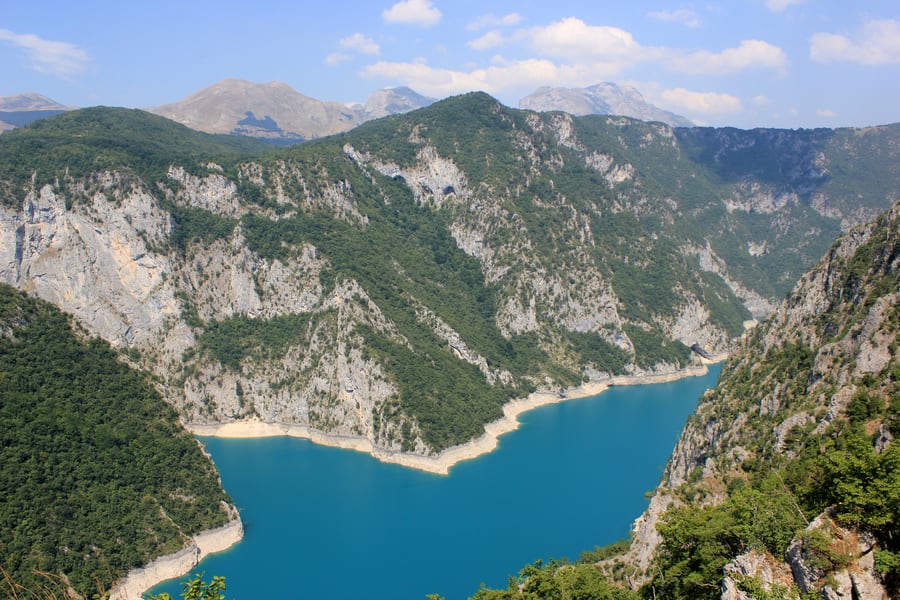 Julian Nyča / Wikimedia Commons · CC BY-SA 4.0 · cropped
Piva Lake
45 km long and 188 metres deep, the largest lake lying wholly inside Montenegro — and entirely man-made, drowned behind the Mratinje dam. The old town of Plužine is down there. So very nearly was the Piva Monastery: instead it was taken apart and moved 3.5 km, frescoes and all, in a job that ran from 1969 to 1982. The road along the water is one of the great drives in the Balkans.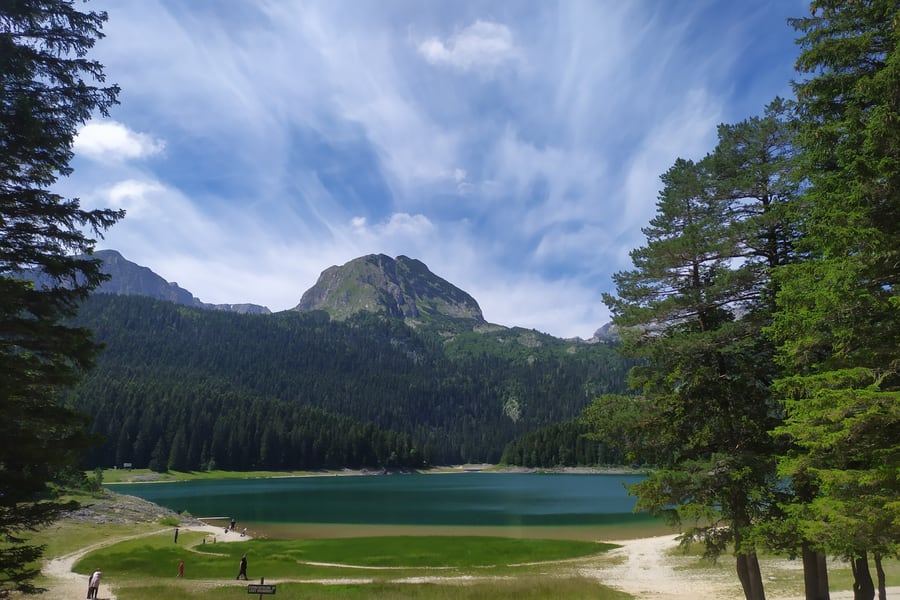 Mathieu Mars / Wikimedia Commons · CC BY-SA 4.0 · cropped
The Black Lake
Montenegro's best-loved lake sits at 1,416 m below the Međed peak, a short walk from Žabljak. It is really two lakes, the Great and the Little, joined by a strait that dries up every summer and splits them in two; the current between them reverses with the seasons. The Little is much the smaller and much the deeper, at 49 metres. What drains out underground forks and leaves as two rivers, the Tara and the Piva.Where to Sleep
Because the whole line is only an hour long, most people don't sleep on it at all — they ride it as a day trip from Podgorica or slot it into a wider Montenegrin rail journey. But there are good reasons to linger.
In Podgorica, the capital has the widest choice: modern business hotels, boutique places in the centre and plenty of apartments, all at reasonable prices and handy for the station and the main Belgrade–Bar line. It makes the natural base for exploring both railways and nearby Lake Skadar.
If you want to be close to Ostrog, there are simple guesthouses and konaks in the valley around the monastery and in Danilovgrad, and the monastery itself offers very basic pilgrim lodging — a memorable, spartan night for the devout. Waking below the cliff and climbing to the church before the crowds arrive is a special experience.
At the northern end, Nikšić has a handful of hotels and guesthouses and works well as a launch-pad for the wild interior — the Piva canyon, the lakes and the Durmitor mountains. Accommodation across inland Montenegro is inexpensive and rarely needs booking far ahead outside the peak of summer; the coast is where the crowds go, and this quiet line is a fine way to escape them.
Questions or corrections
Planning this trip and stuck on something, or spotted a time, fare or detail that has changed? Send us a message about Podgorica to Nikšić — Montenegro's Own Railway. We read every one, and we update this page when something has changed.