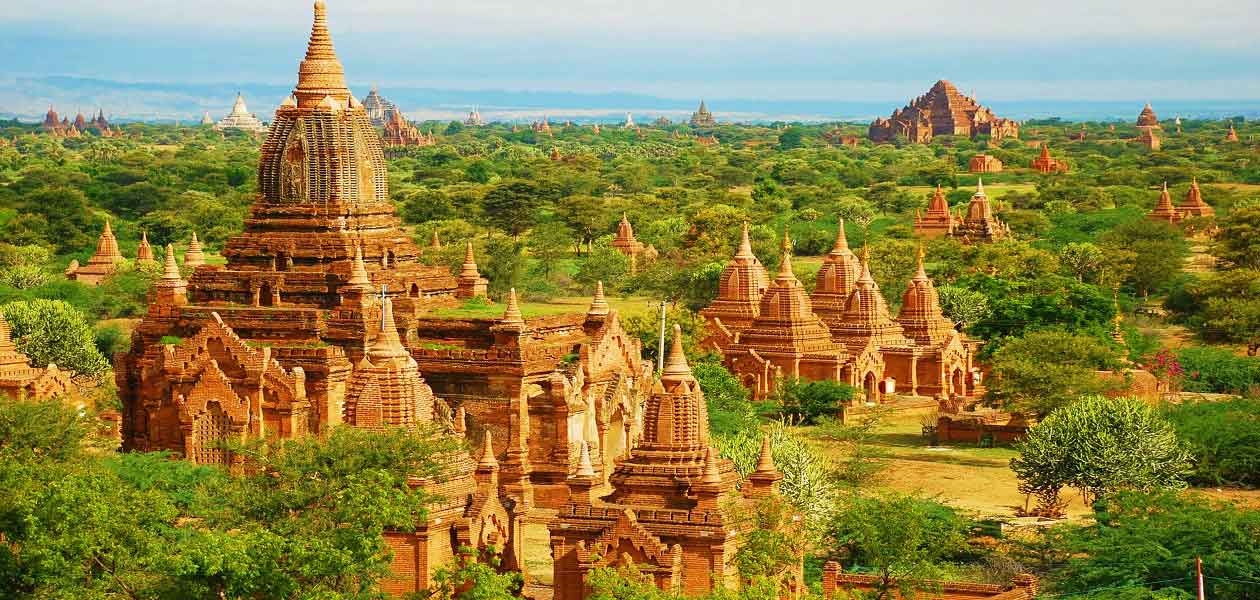
Myanmar

Myanmar — Burma, as the British knew it — is the largest country in mainland Southeast Asia, home to about 55 million people and bordered by India, Bangladesh, China, Laos and Thailand, with the Bay of Bengal and the Andaman Sea to the south. Naypyidaw is the capital; Yangon, the old colonial port on the delta, is much the largest city. Between them the land rises from the rice plains of the Irrawaddy to the Shan highlands in the east.
Its railway is a colonial-era metre-gauge network, begun in the 1870s and pushed within a generation across those plains and up into the hills, and it has changed remarkably little since: slow trains, open windows, and station platforms that double as marketplaces. It has to be said plainly, though, that Myanmar is in civil war. Most Western governments advise against travel to large parts of the country, and services have been cut, attacked and repaired again. These pages document Myanmar's railways honestly, advisories and all, for the day the country can be travelled freely again.
Rail journeys in Myanmar
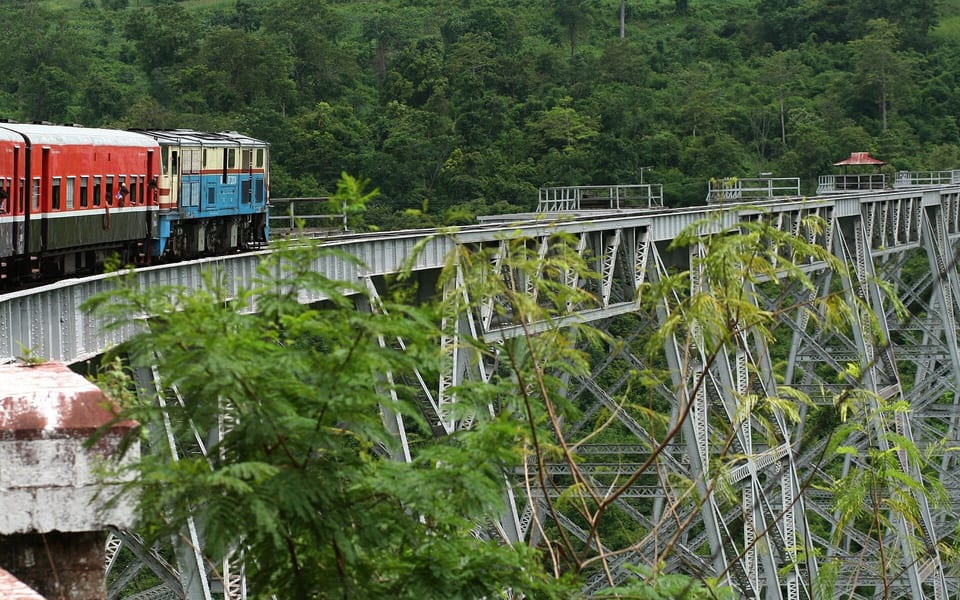
The Gokteik Viaduct
In 1900 American engineers flung the largest railway trestle in the world across a jungle gorge — 102 metres up. Trains from Mandalay still creep across it.
View journey →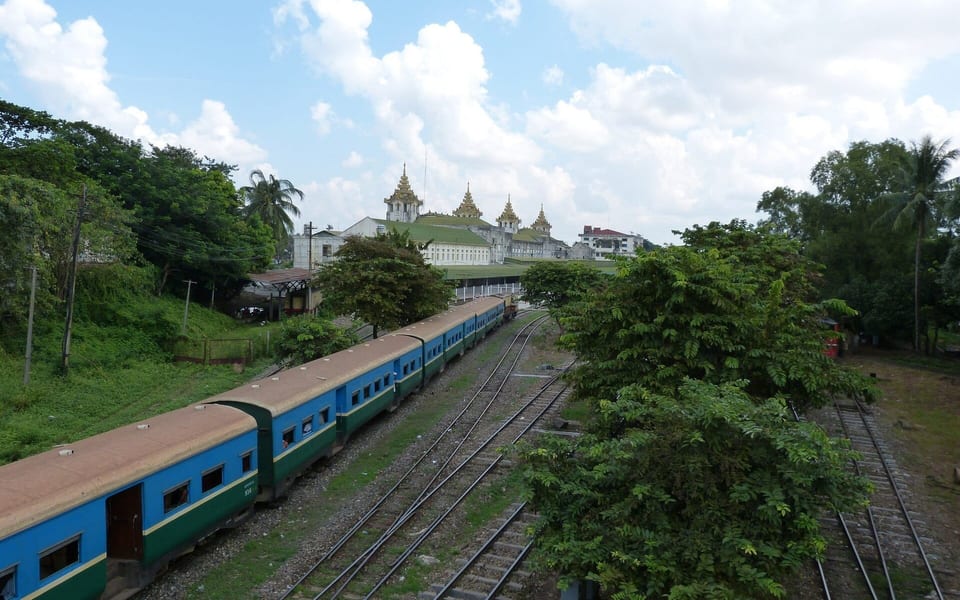
The Yangon Circular Railway
For the price of a cup of tea, Yangon's circle line delivers the whole city in three hours — 45.9 kilometres, 39 stations, and platform life throughout.
View journey →Good to know
Is it safe to travel Myanmar by train at the moment?
Mostly, no — and it is important to say so plainly. Myanmar has been in civil war since 2021, and the UK FCDO and most Western governments advise against all travel to much of the country, including northern Shan State, where the Gokteik Viaduct stands, and against all but essential travel to the Mandalay Region. Yangon is not on the restricted lists at the time of writing, and the Circular Railway runs daily — but check your own government's current advice before planning anything.
Is the famous Gokteik Viaduct train running again?
Remarkably, yes — in a limited form. The viaduct was damaged by an explosion in August 2025 during fighting in northern Shan State, repaired in 76 days, and in December 2025 Myanma Railways began running special RBE scenic trains from Pyin Oo Lwin across the viaduct to Gokteik station and back. The classic through trains from Mandalay to Hsipaw and Lashio, the ride backpackers knew, cannot currently be relied on — and Western travel advisories still cover the entire route.
What is the Yangon Circular Railway?
A 45.9-kilometre loop of metre-gauge track around Myanmar's biggest city — 39 stations, about three hours all the way round, and one of the cheapest and most vivid city journeys in Asia. Secondhand Japanese railcars trundle past markets, monasteries and paddy-fringed suburbs; since 2024 they have been joined by brand-new Spanish-built CAF trains. Read the full story on our Yangon Circular Railway page.
How do you buy train tickets in Myanmar?
At the station, in cash. Myanma Railways has no functional website and no online booking — tickets are sold at station counters, usually shortly before travel, and are priced in kyat. On the Yangon Circular Railway you simply buy a ticket at the platform booth (about K400 on the older railcars, K1,000 on the new CAF trains). For the Gokteik scenic train, seats are sold at Pyin Oo Lwin station.