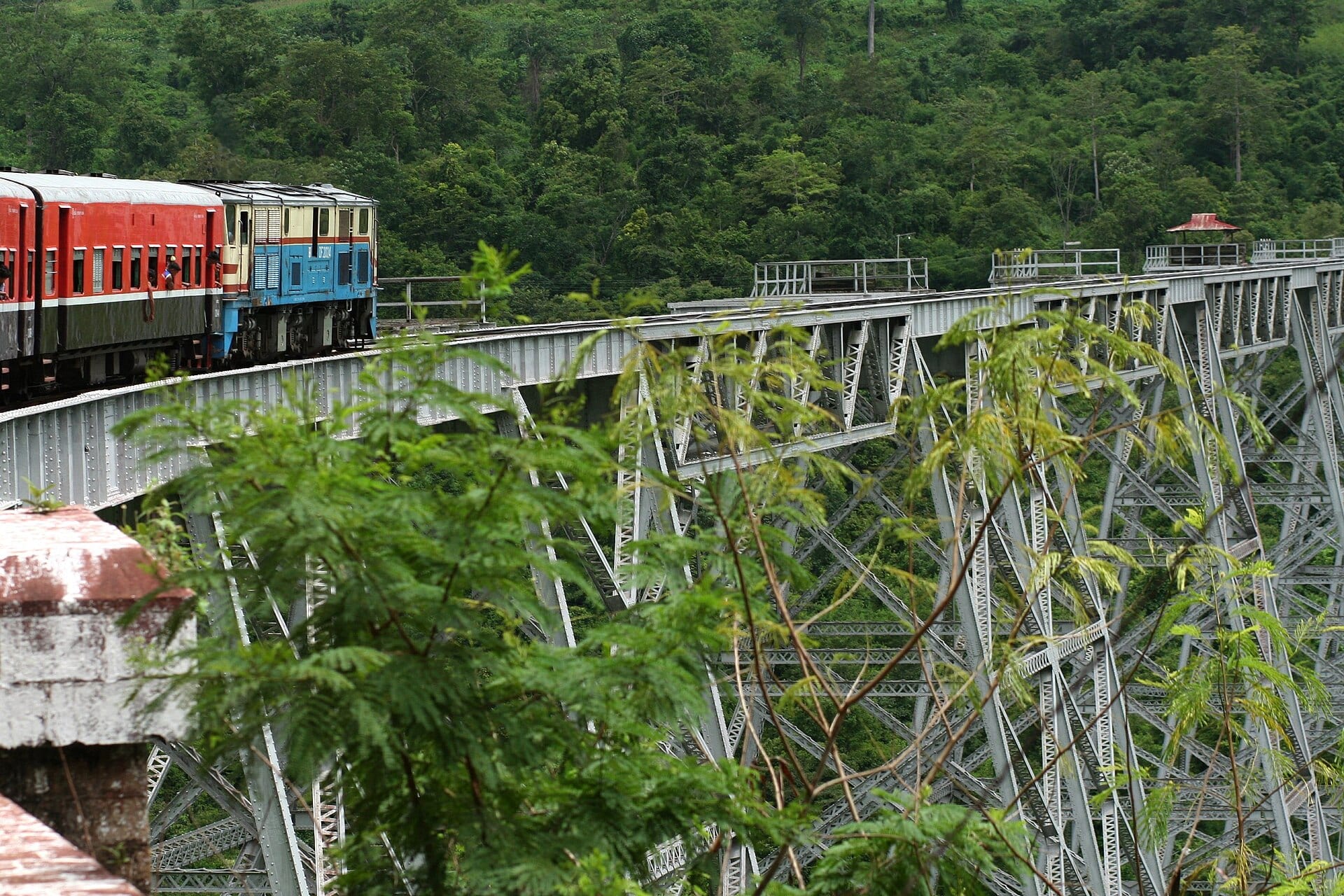
The Gokteik Viaduct
lacest20 / Wikimedia Commons · CC BY 2.0
- DistanceMandalay–Pyin Oo Lwin–Gokteik–Lashio · 286.5 km
- DurationPyin Oo Lwin–Gokteik scenic train ~3½ h each way
- Best seasonNovember to February — the cool, dry season in the Shan hills
Introduction
There are famous railway bridges, and then there is Gokteik. In the last year of the nineteenth century, American engineers arrived in the hills of British Burma with crates of steel shipped from Pennsylvania and, in barely nine months, flung the largest railway trestle in the world across a jungle gorge. Fifteen latticework towers, 689 metres end to end, a single metre-gauge track running 102 metres above the rocks — and, far below, a river that vanishes underground beneath the bridge itself. It opened on 1 January 1900 and it has never stopped astonishing people since. Paul Theroux crossed it in 1975 and called it "a monster of silver geometry".
The viaduct is the centrepiece of the Mandalay–Lashio line, opened in 1903 — a British-built railway that climbs out of Mandalay's heat to the hill station of Pyin Oo Lwin, zigzags through the highlands, and creeps across the gorge on its way toward the tea country of Hsipaw and the old China-trade town of Lashio. For years the eleven-hour ride was one of Southeast Asia's great budget adventures.
Honesty demands the rest of the story. Myanmar is in civil war. In August 2025 the fighting reached the gorge: an explosion tore a sixty-foot section from the viaduct, and for a while the junta declared the bridge destroyed. It was repaired in seventy-six days — new steel piers, a 209-tonne test train — and in December 2025 special scenic railcars began crossing again from Pyin Oo Lwin. But the UK Foreign Office still advises against all travel to the region the viaduct stands in, and the classic through trains to Hsipaw cannot currently be relied on. This page documents one of the world's great railway crossings, plainly and completely — for the day it can be ridden freely again.
The Journey
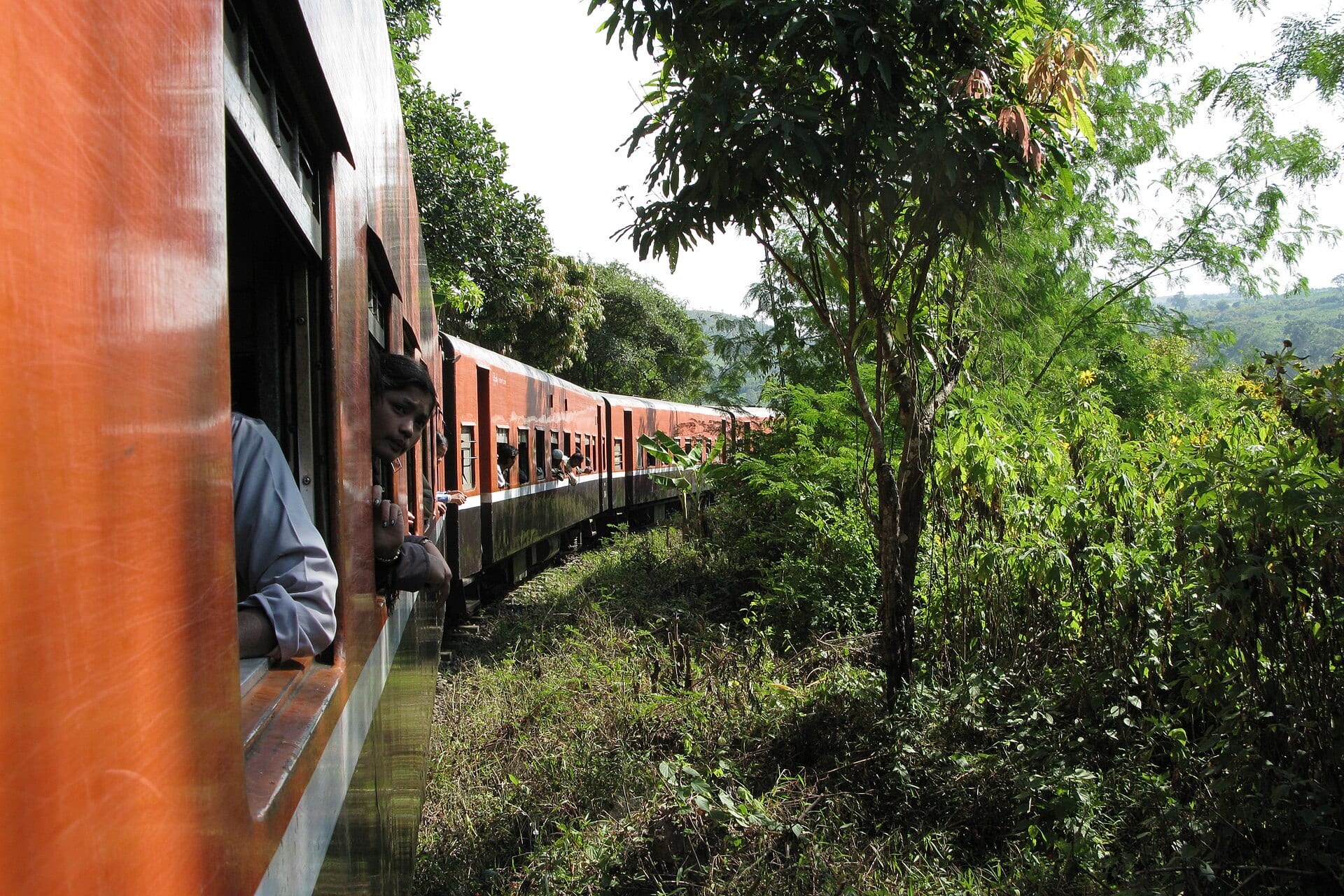
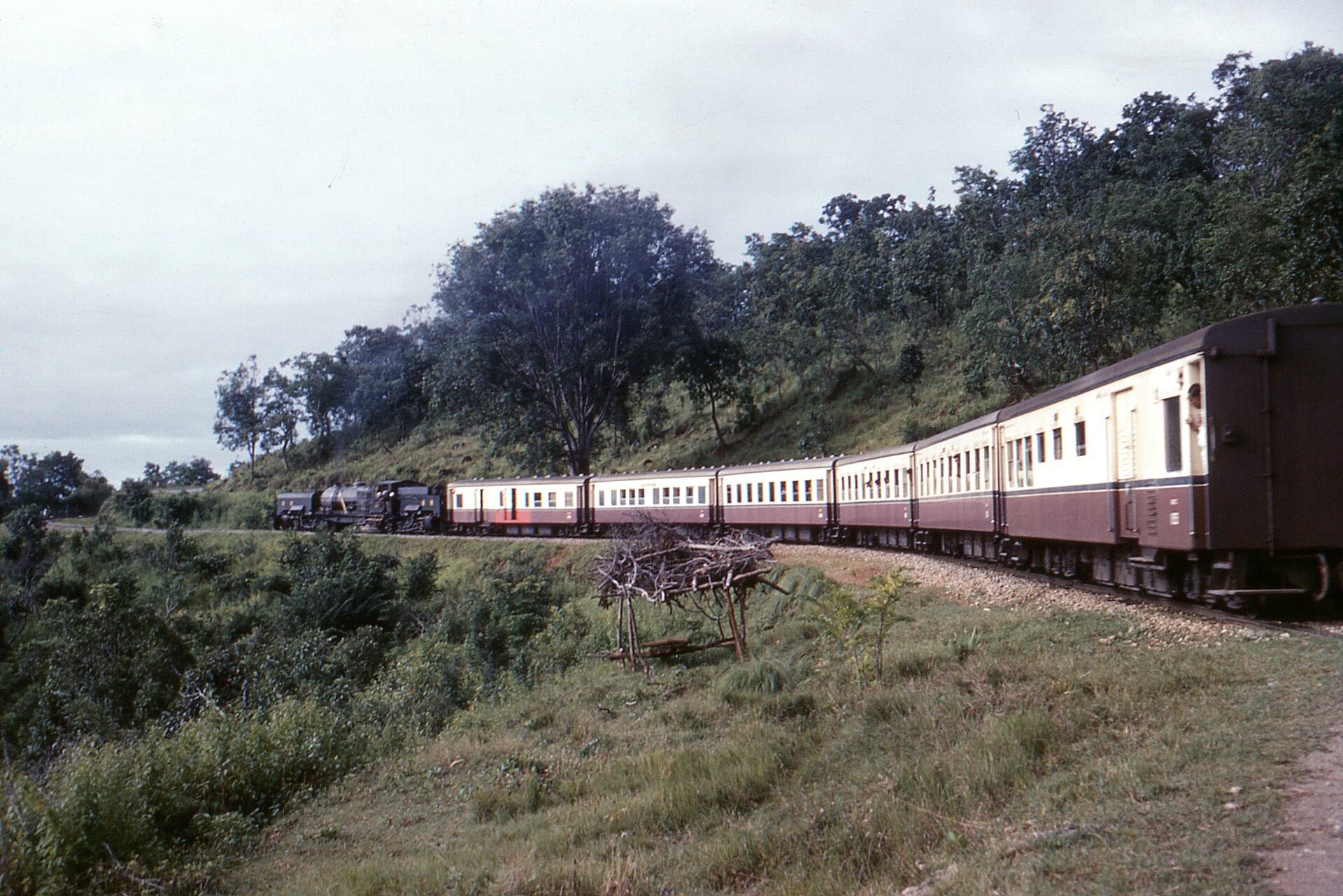
The journey begins, in its classic form, at Mandalay — the last royal capital of Burma, its station a few streets from the walls of the old palace. The Lashio train leaves before dawn and immediately starts to climb, gaining more than a thousand metres in the first four hours. The line hauls itself up the escarpment through a switchback zigzag, the train reversing direction to gain height, headlights picking out the jungle as the plains of the Irrawaddy fall away behind.
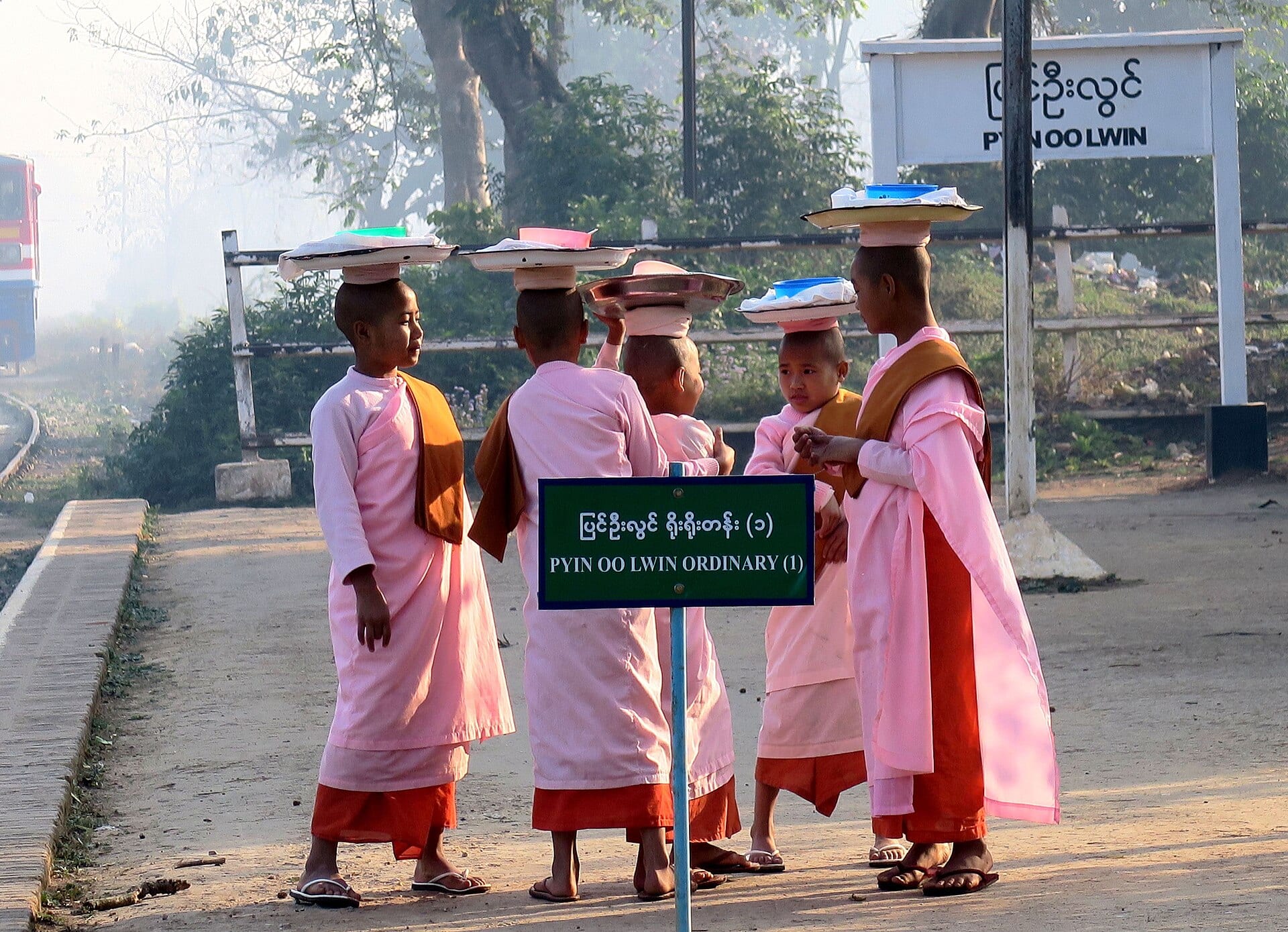
By mid-morning you are in another climate. Pyin Oo Lwin, the British hill station of Maymyo, sits at 1,070 metres among pines and flower gardens — the summer capital of colonial Burma, all brick chimneys, horse-drawn carriages and strawberry stalls. Its little station, with its clipped hedges and pink-robed nuns waiting on the platform, is where today's scenic RBE railcars set out for the viaduct.
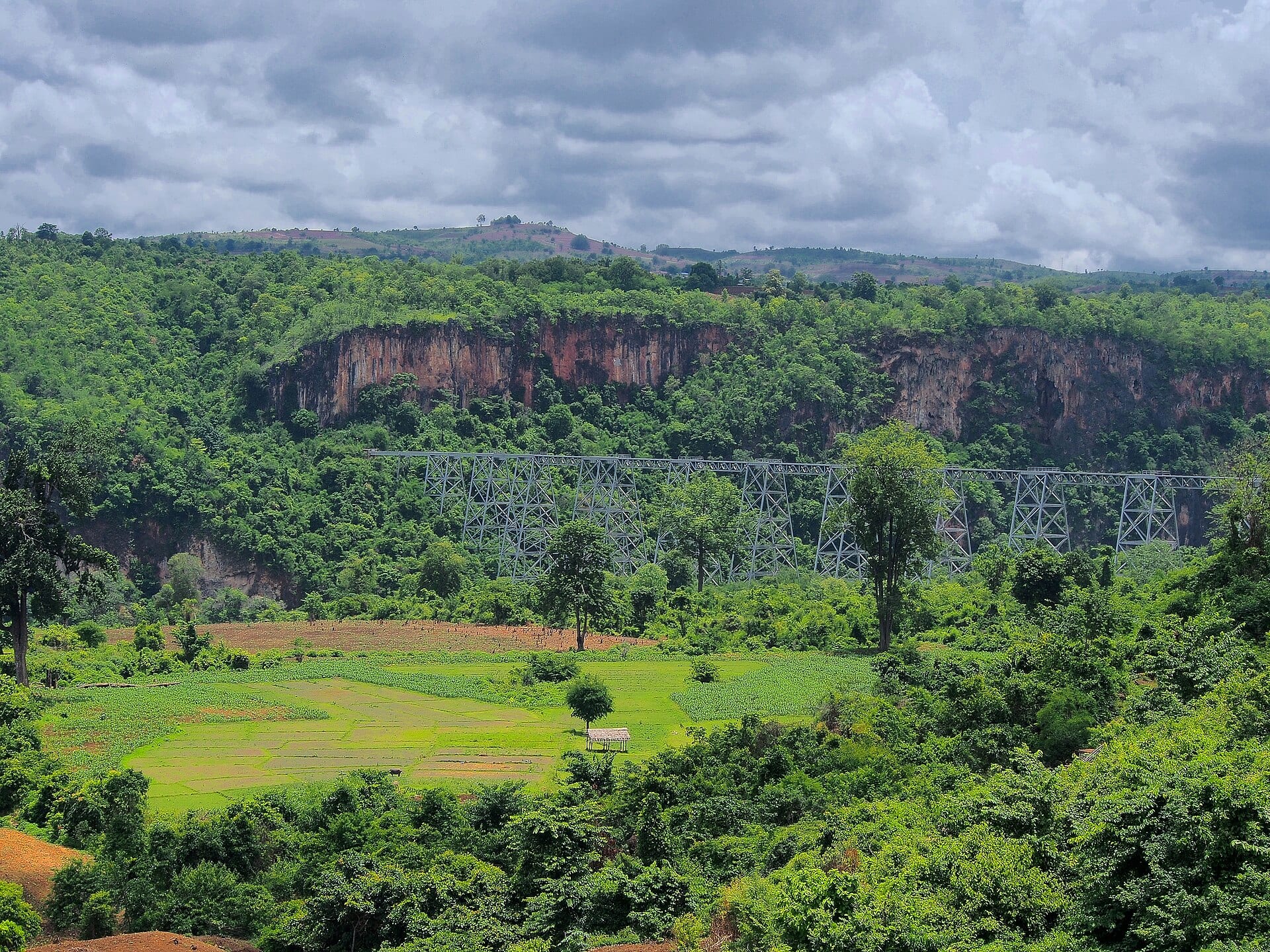
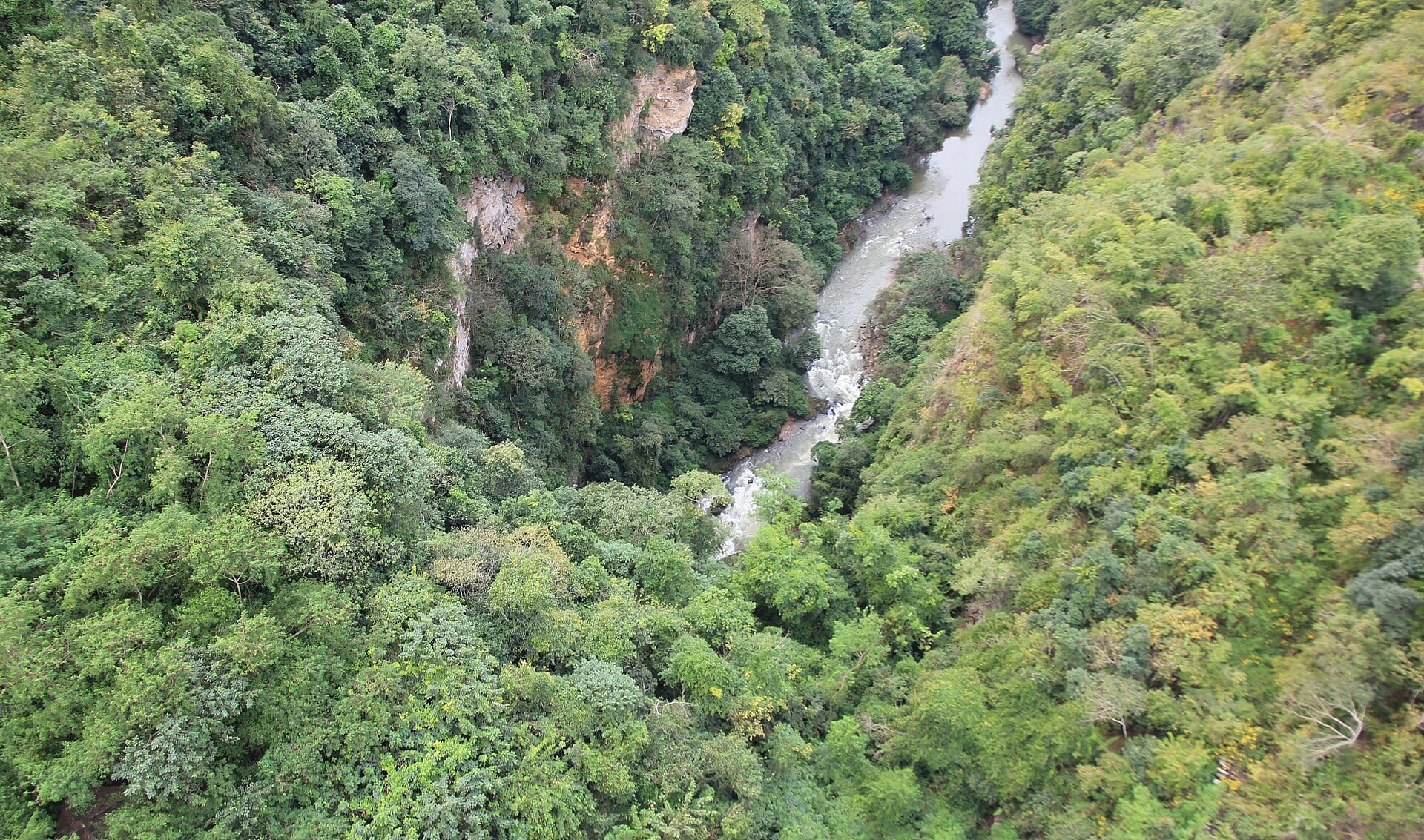
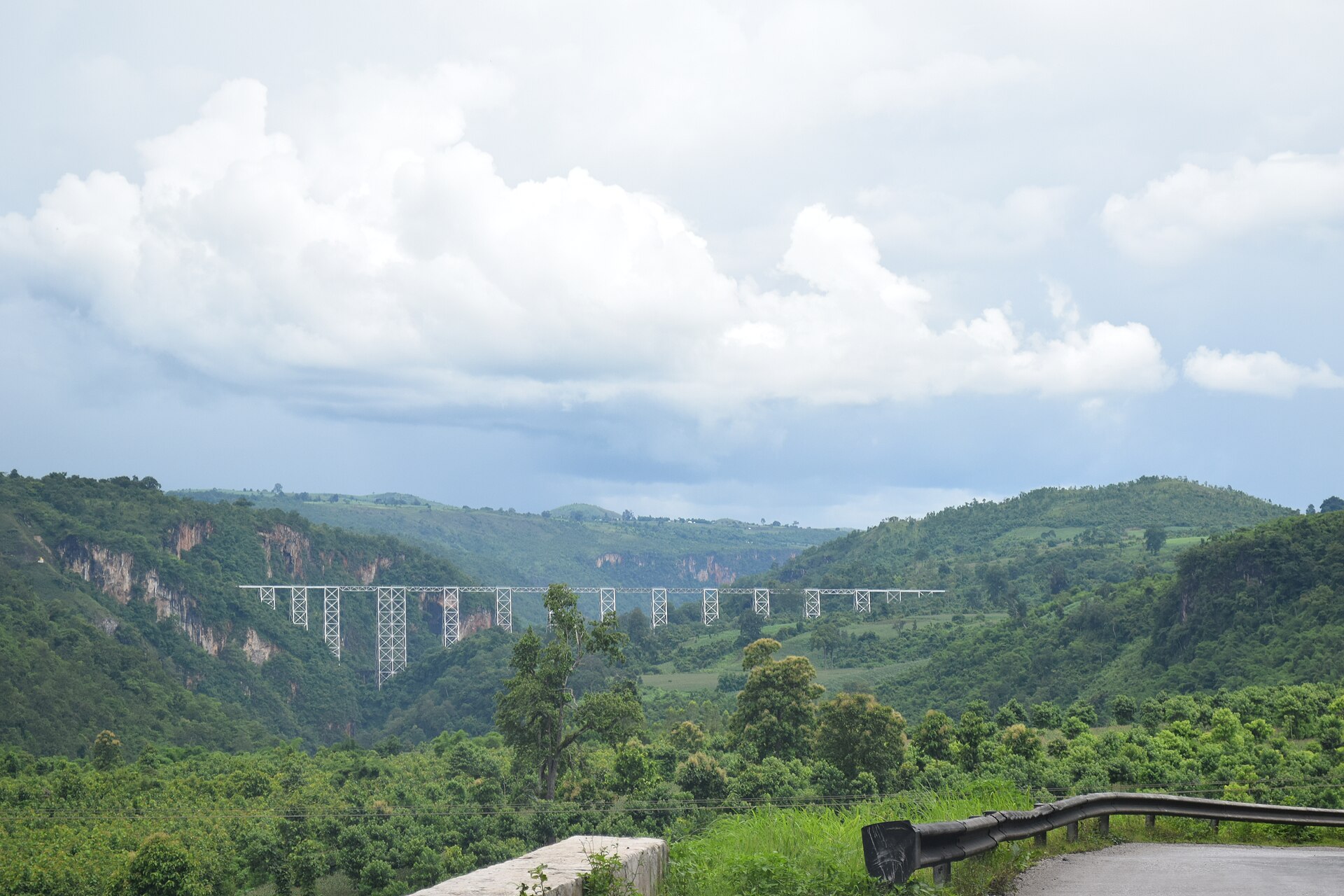
Beyond Pyin Oo Lwin the railway runs through market villages — Pwe Kauk, Wet Wan, Sam Sel — and the land begins to fold. Then, past Nawnghkio, the train slows almost to walking pace, the trees open, and the gorge appears: a green chasm cut by the Gohtwin stream, and across it, impossibly, the silver steel of 1899.
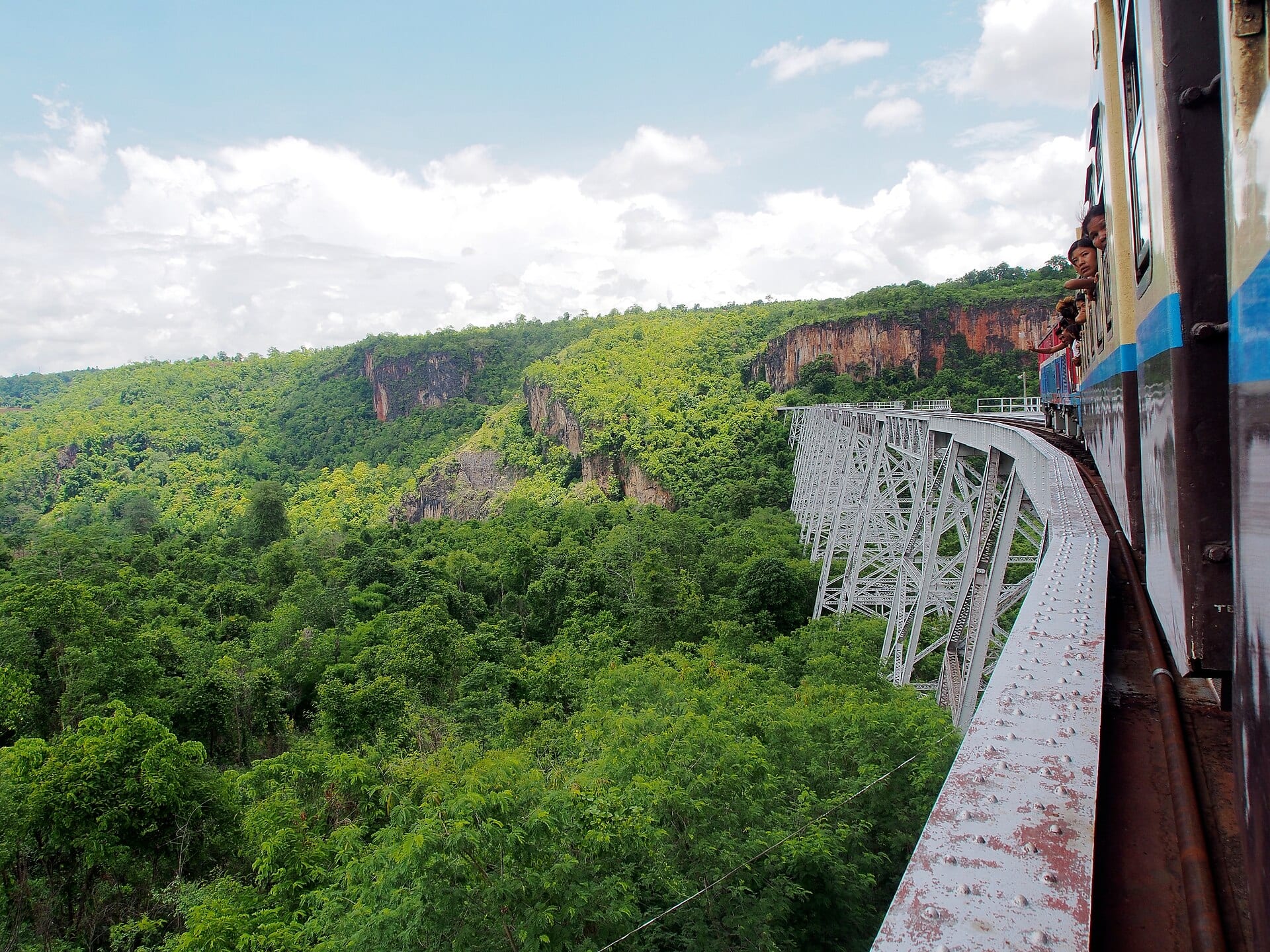
The crossing takes several minutes and nobody spends them sitting down. The train inches out onto the trestle, every window full of leaning passengers, the towers ticking past in slow perspective. On the downstream side the drop is 102 metres — the oft-repeated figure of 250 metres belongs to the river where it runs underground beneath the bridge, not to the rails. Steel built to Victorian tolerances creaks and rings under the wheels. Then the far rim rises to meet the track, the train regains its nerve, and Gokteik station appears in the trees — where today's scenic service pauses and turns for home.
In better times the journey went on: down the line to Kyaukme and its tea markets, to sleepy, riverside Hsipaw with its Shan palace and trekking trails, and finally to Lashio, the railhead of the old Burma Road, 286.5 kilometres and eleven slow, wonderful hours from Mandalay. That through ride — trains 131 and 132, a few dollars in upper class — made this line a backpacker legend. It is recorded in the timetable below as history, and as hope.
Along the route
Clay Gilliland / Wikimedia Commons · CC BY-SA 2.0The largest trestle on earth
When it opened on 1 January 1900 the Gokteik Viaduct was the largest railway trestle in the world — 689 metres of steel shipped across the Pacific from Pennsylvania and bolted together above a Burmese gorge in barely nine months. It is still the highest bridge in Myanmar.Clay Gilliland / Wikimedia Commons · CC BY-SA 2.0The crossing
The train slows to walking pace and the steel starts to sing. Out of one window the gorge falls 102 metres; out of the other, the towers of 1899 march away in silver perspective. Paul Theroux, crossing in 1975, called it a monster of silver geometry.Etan J. Tal / Wikimedia Commons · CC BY-SA 4.0Pyin Oo Lwin, the hill station
The line climbs from Mandalay's heat to Pyin Oo Lwin — colonial Maymyo — at 1,070 metres, once the summer capital of British Burma. A town of flowers and strawberries, horse-drawn carriages and the 1915 botanical gardens.A bit of history
Culture & experiences along the way
 ::::=UT=:::: / Wikimedia Commons · CC BY-SA 3.0
Read the advisories first
Myanmar is in civil war. The UK FCDO advises against all travel to Shan State North — where the viaduct stands — and to the townships north of Pyin Oo Lwin, and against all but essential travel to the Mandalay Region. Travel insurance is generally void in these zones. This page documents the journey; it does not urge you to make it. Check your government's current advice.© Vyacheslav Argenberg / http://www.vascoplanet.com/ · CC BY 4.0The scenic train, reborn
Since December 2025 Myanma Railways has run special RBE scenic trains from Pyin Oo Lwin across the repaired viaduct to Gokteik station and back — an upper-class railcar of just 24 seats and an ordinary car of 40, sold at the station. It is the first regular tourist service over the trestle since the fighting reached the gorge.Clay Gilliland / Wikimedia Commons · CC BY-SA 2.0The classic ride to Hsipaw
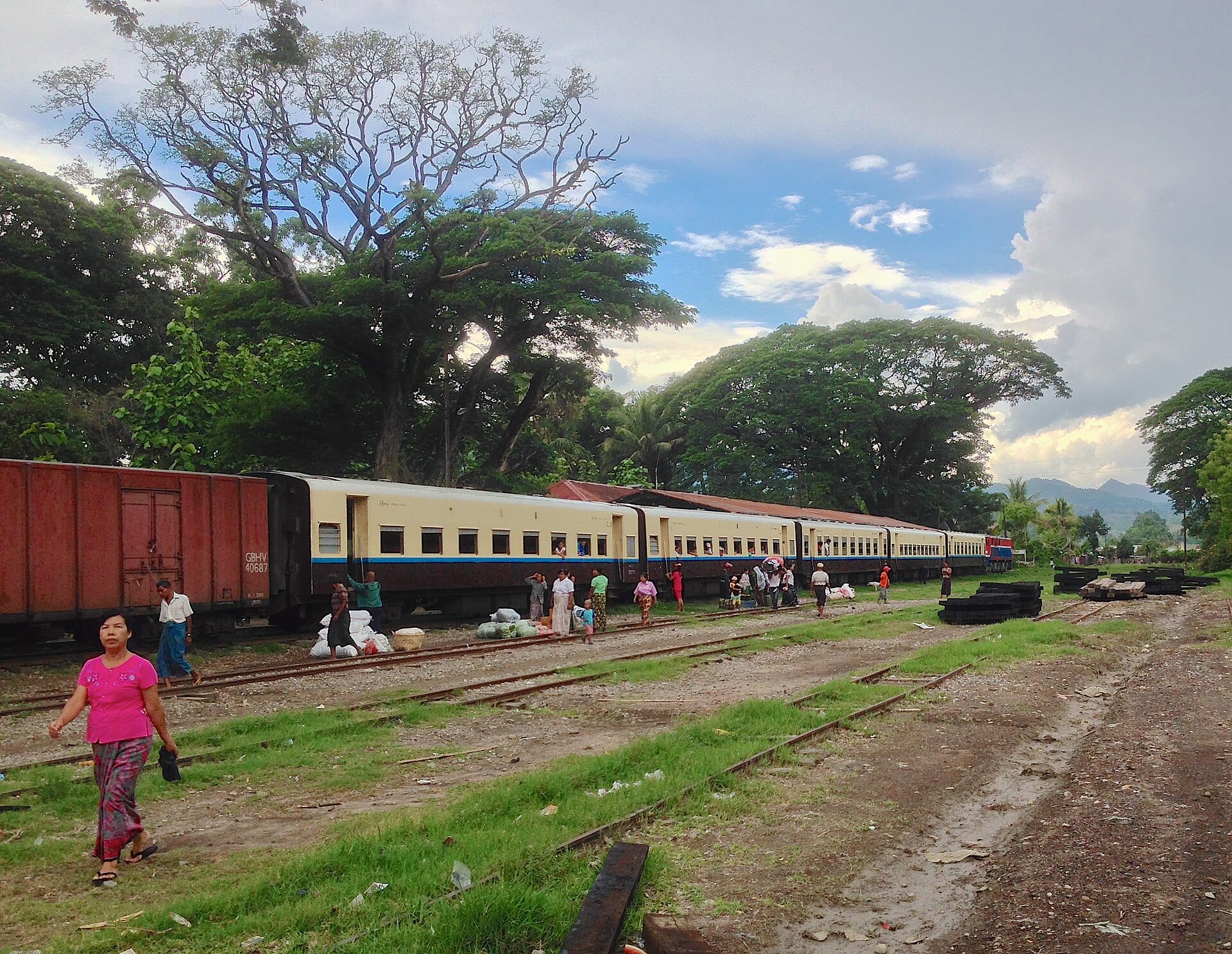
In better times the way to do this line was the daily through train from Mandalay to Hsipaw and Lashio — eleven hours of markets, zigzags and open windows for a few dollars. That ride made the line a backpacker legend, and this page keeps its timetable as an historic record, waiting for the day it can be trusted again.Timetables
Read this first. Myanmar is in civil war, and the UK FCDO currently advises against all travel to Shan State North — where the Gokteik Viaduct stands — and to the townships north of Pyin Oo Lwin, and against all but essential travel to the Mandalay Region. The times below are given for the record, not as an encouragement to travel; check your own government's advice before planning anything.
The Gokteik scenic train — the service running today. After the viaduct was repaired in November 2025, Myanma Railways began running special RBE railcars from Pyin Oo Lwin across the viaduct, at weekends from 1 December 2025 and daily from 22 December, as of January 2026:
| Train | Route | Departs | Arrives |
|---|---|---|---|
| Gokteik (1) RBE | Pyin Oo Lwin → Gokteik | 08:00 | 11:30 |
| Gokteik (2) RBE | Gokteik → Pyin Oo Lwin | 12:30 | 16:00 |
The train calls at Pwe Kauk, Wet Wan, Sam Sel and Nawnghkio, and carries an upper-class railcar of 24 seats (sold as packages and charters) plus an ordinary car of 40 seats. Over 900 passengers rode in the first seven weeks.
The historic through trains — pre-conflict reference only. The classic daily Mandalay–Lashio service (trains 131/132) ran to this pattern before the disruption; its current status cannot be verified and tickets have reportedly not been sold to foreigners "for security reasons":
| Train 131 | Time | Train 132 | Time | |
|---|---|---|---|---|
| Mandalay dep | 04:00 | Lashio dep | 05:00 | |
| Pyin Oo Lwin | 07:52 | Hsipaw | 09:25 | |
| Gokteik | 11:03 | Kyaukme | 11:05 | |
| Kyaukme | 13:19 | Gokteik | 13:23 | |
| Hsipaw | 14:55 | Pyin Oo Lwin | 16:05 | |
| Lashio arr | 19:35 | Mandalay arr | 22:40 |
Scenic-train times as reported in January 2026; historic times as last recorded before services were disrupted. Myanma Railways has no website — information changes at the station and by announcement only.
Tickets
Buying a train ticket in Myanmar is a resolutely offline affair. Myanma Railways has no functional website and no online booking — tickets are sold at station counters, in cash, in kyat, usually shortly before travel. For the Gokteik scenic train, seats are sold at Pyin Oo Lwin station: the 24-seat upper-class railcar as packages and private charters, the 40-seat ordinary car as walk-up tickets. Agencies in Mandalay and Pyin Oo Lwin can arrange both.
Fares in Myanmar remain very low, and no current price is quoted here: in a country at war, with a volatile currency, any figure printed today would mislead tomorrow. ⚠️ And the plain warning again — most Western governments currently advise against all travel to the region the viaduct stands in. Going anyway means travelling uninsured against official advice.
Book your tickets
Gokteik scenic train
Pyin Oo Lwin – Gokteik return, by RBE railcar
The current way over the viaduct: a special RBE scenic service from Pyin Oo Lwin across the trestle to Gokteik station and back, running since December 2025. Tickets are sold at Pyin Oo Lwin station — Myanma Railways has no online booking. Note that Western governments currently advise against travel to this region; check the advisories before planning anything.
via Myanma RailwaysUpper-class seats & charters
The 24-seat RBE upper-class car
The scenic train carries a small upper-class railcar — 24 seats, sold as packages and private charters — alongside the 40-seat ordinary car. Both are booked in person through Myanma Railways; the official tourism portal is the best English-language starting point for current arrangements.
via Myanma RailwaysRail Passes
No rail pass covers this train. Interrail and Eurail are European schemes, and Myanmar is not among the 33 countries in Interrail's list of covered railway companies. Myanma Railways sells tickets only at station counters, in cash, and the scenic train's seats are sold at Pyin Oo Lwin.
Checked October 2026 against Interrail's list of railway companies (opens in a new tab).
Places to Visit
This line strings together three quite different places: the last royal capital of Burma, a British hill station, and a Shan town at the far end of a gorge. Pyin Oo Lwin — in the Mandalay Region rather than Shan State — is the more accessible end of it.
Two things the cards below leave out. Mandalay Hill rises beyond the palace walls, stairway after covered stairway of shrines climbing to a summit view over the whole plain; the pavilions at the top are post-war rebuilds, but the climb and the view are the point. And the viaduct itself can be seen without crossing it: the Gokteik gorge viewpoint on the Mandalay–Lashio road looks across to the full sweep of the trestle, silver against the green wall of the gorge — the view that has stopped travellers in their tracks since 1900.
A word on timing. Much of what follows lies in or beyond Shan State, and access has been uncertain since 2021. Check current advice before planning around it.
 Hybernator / Wikimedia Commons · CC BY-SA 3.0 · cropped
Pyin Oo Lwin
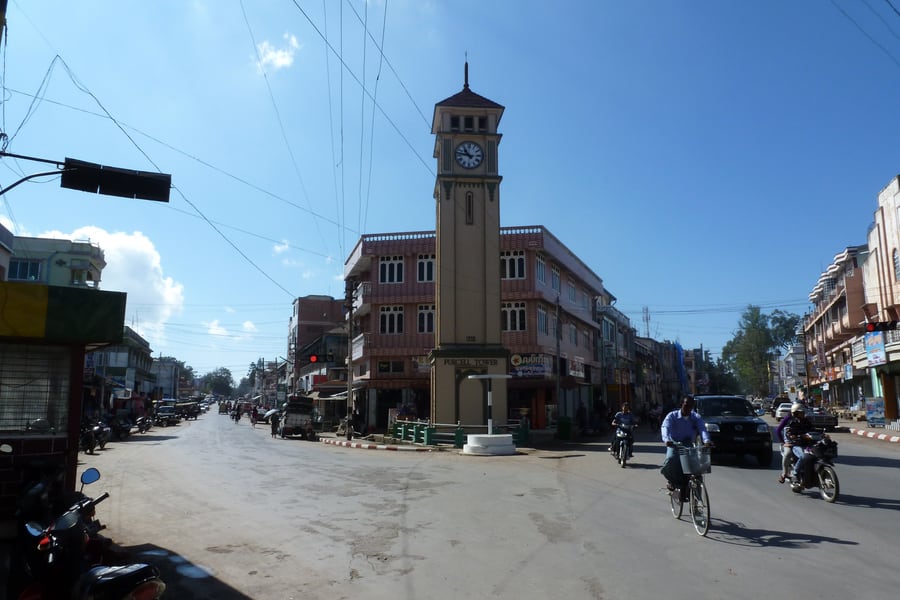
Formerly Maymyo, and the accessible end of this journey: a hill town 67 km east of Mandalay at 1,070 metres, where the British moved their government every hot season. It still wears the part — half-timbered mansions, brick chimneys among the pines, horse-drawn carriages between the coffee shops, and the Purcell Tower of 1936 chiming over the market. Myanmar's "City of Flowers", and famous for strawberries and sweaters.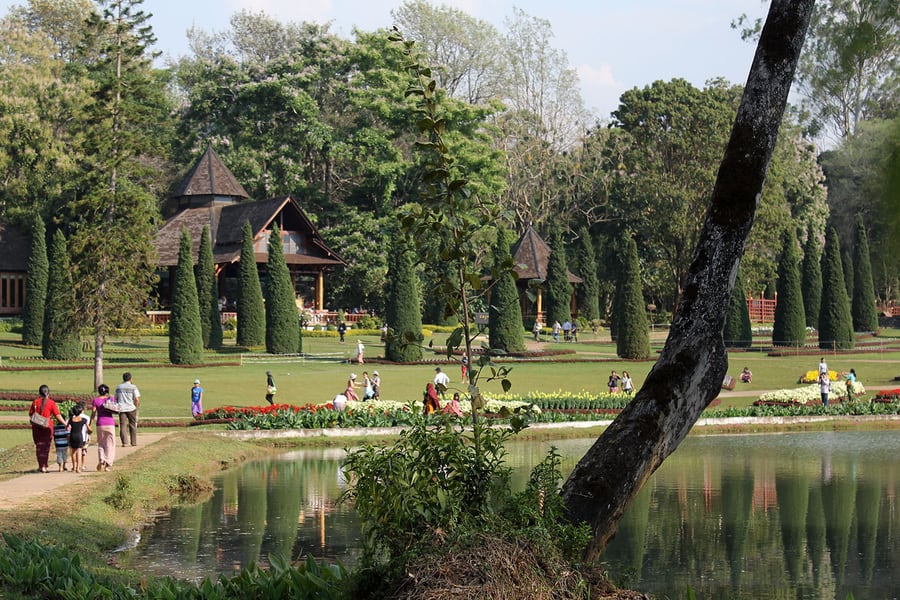 Lionslayer / Wikimedia Commons · CC BY-SA 3.0 · cropped
National Kandawgyi Gardens
Among the loveliest gardens in Southeast Asia, and now 177 hectares of lawns, lakes and clipped conifers. They were laid out in 1915 as the Maymyo Botanical Gardens by the forest officer Alex Roger, modelled on Kew with the help of the botanist Lady Charlotte Wheeler-Cuffe, and declared a Government Botanical Reserve in 1924 — the date the sign at the gate still records. Easily half a day, and pleasant in any weather.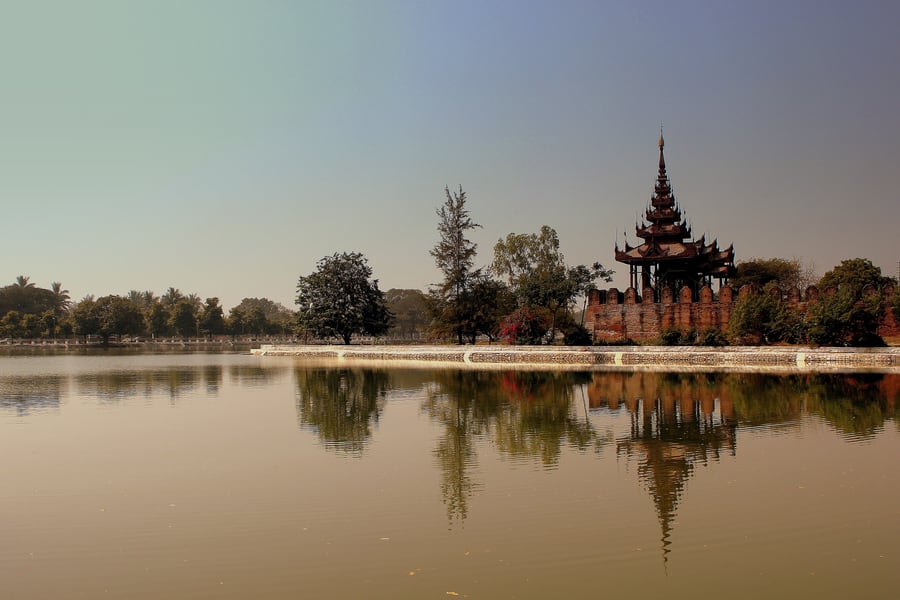 calflier001 / Wikimedia Commons · CC BY-SA 2.0 · cropped
Mandalay Palace moat
King Mindon founded Mandalay and built his palace inside this square fort between 1857 and 1859 — walls two kilometres to a side, a broad moat around all four, and inside it a city of single-storey timber halls where the number of spires told you how important the room below was. The palace burned in March 1945 and what stands there now is a 1990s reconstruction. The moat and the crenellated walls are the originals.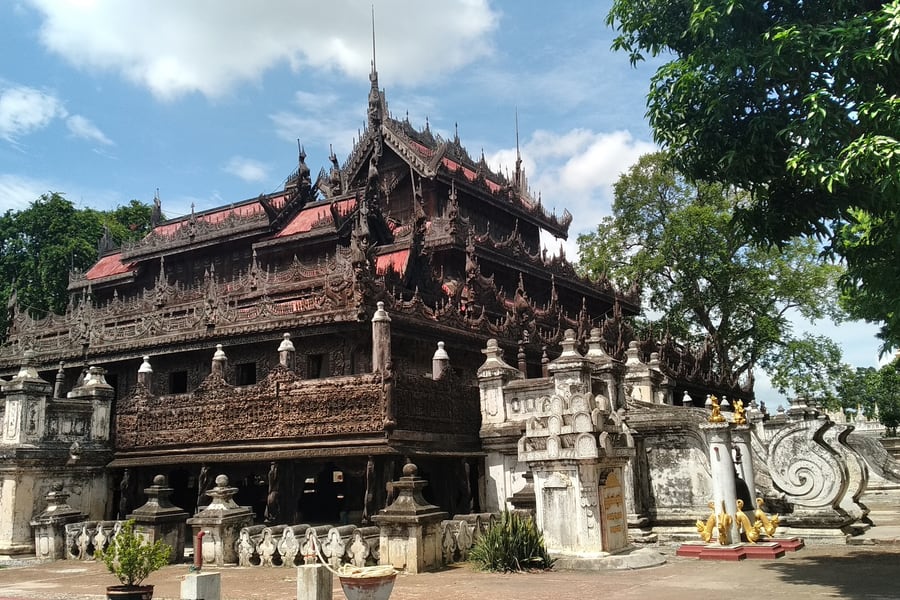 Kotraveller / Wikimedia Commons · CC BY-SA 3.0 · cropped
Shwenandaw Monastery
The one building of Mindon's palace still standing, and it survived by being moved. King Thibaw had his late father's apartment dismantled on 10 October 1878 — believing it haunted by Mindon's spirit — and rebuilt on a plot by Atumashi Monastery by the end of that month, at a cost of 120,000 rupees. Every surface is carved teak. It once stood gilded inside the walls; go and see what the whole palace looked like.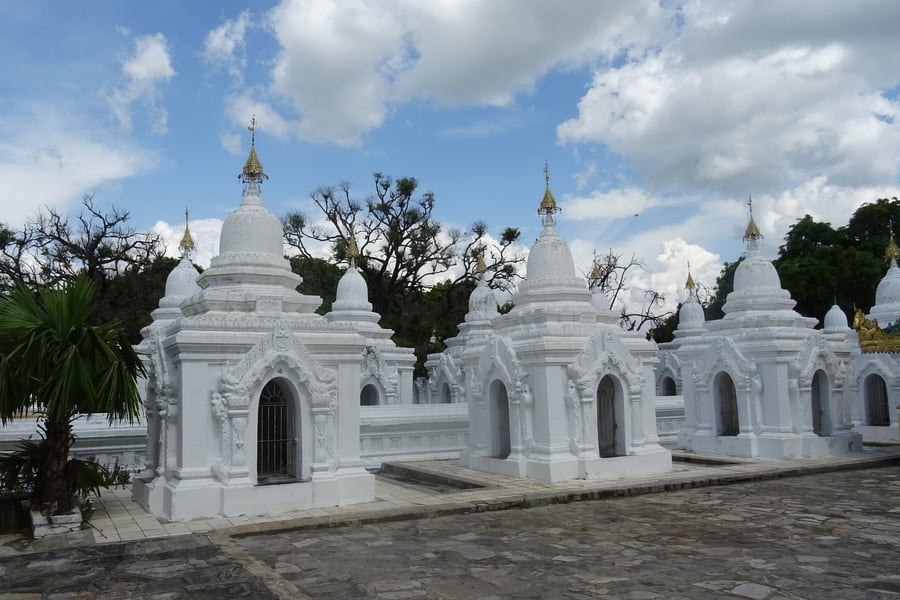 Christophe95 / Wikimedia Commons · CC BY-SA 4.0 · cropped
Kuthodaw Pagoda
At the foot of Mandalay Hill, King Mindon's 57-metre gilded stupa — modelled on the Shwezigon at Nyaung-U — stands at the centre of a grid of 729 small white shrines. Each houses a marble slab inscribed on both sides with a page of the Tipitaka, the entire Pali Canon of Theravada Buddhism cut into stone: the world's largest book, and one you walk through rather than read. The avenues of white stupas are extraordinary. Adam Jones from Kelowna, BC, Canada / Wikimedia Commons · CC BY-SA 2.0 · cropped
Hsipaw
200 km north-east of Mandalay on the banks of the Duthawadi, and in gentler times the favourite overnight stop on this line: morning markets, monastery bells, weathered teak monasteries in the fields outside town, and the memory of Sao Kya Hseng, the last prince of Hsipaw, who ruled until 1959 and vanished into the events of 1962. Treks into the Shan hills and river trips filled everyone's days here. Its time will come again.Where to Sleep
Pyin Oo Lwin is the natural base for the scenic train, and the most rewarding place to sleep on the whole line. The town's colonial inheritance survives as hotels: half-timbered hill-station houses with fireplaces and rose gardens, converted mansions along tree-lined avenues, and simpler guesthouses near the market. Nights are genuinely cool at 1,070 metres — pack a sweater and enjoy the novelty of a blanket in Myanmar. Staying overnight also makes the 08:00 departure to the viaduct a civilised affair rather than a dawn scramble from Mandalay.
Mandalay has the country's usual range, from backpacker hostels to business-style high-rises, most usefully clustered between the palace moat and the station — convenient for an early start up the hill if travel patterns normalise.
Hsipaw, when it is reachable, is a guesthouse town: family-run places by the river, garden bungalows, and small hotels that have hosted a generation of trekkers off the morning train. Rooms are simple, welcomes are famously warm, and the town rewards more than one night.
A practical note for the present: accommodation in Myanmar cannot reliably be booked on the big international platforms, and the situation on the ground changes quickly. Book directly or through a Myanmar-based agent, and confirm shortly before you travel.
Questions or corrections
Planning this trip and stuck on something, or spotted a time, fare or detail that has changed? Send us a message about The Gokteik Viaduct. We read every one, and we update this page when something has changed.