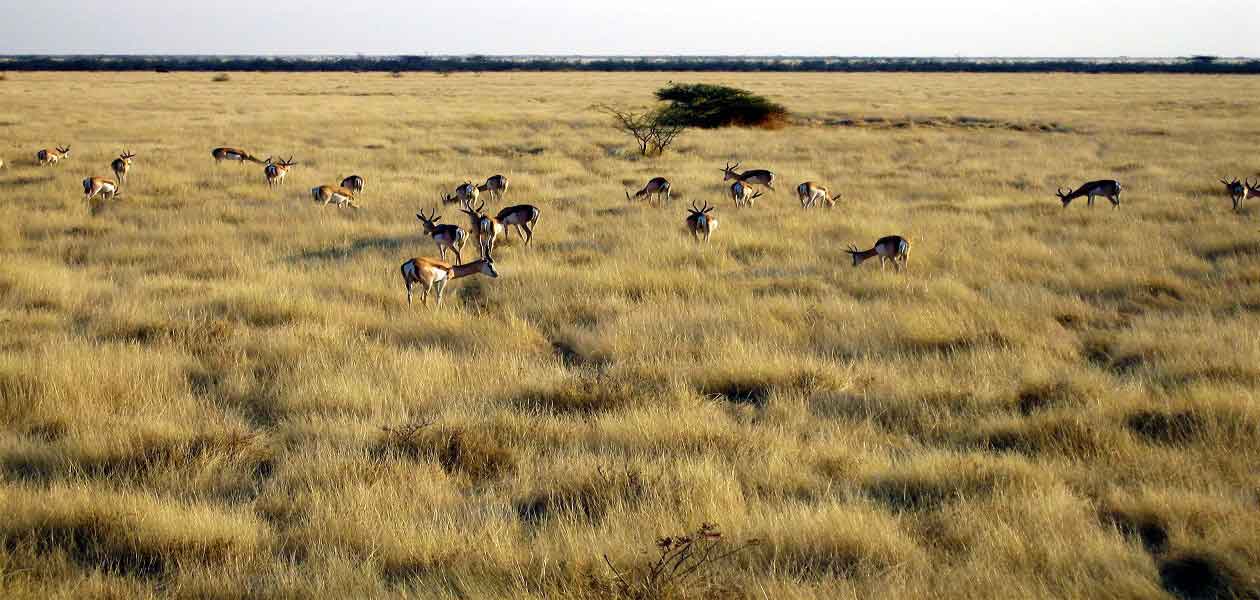
Namibia
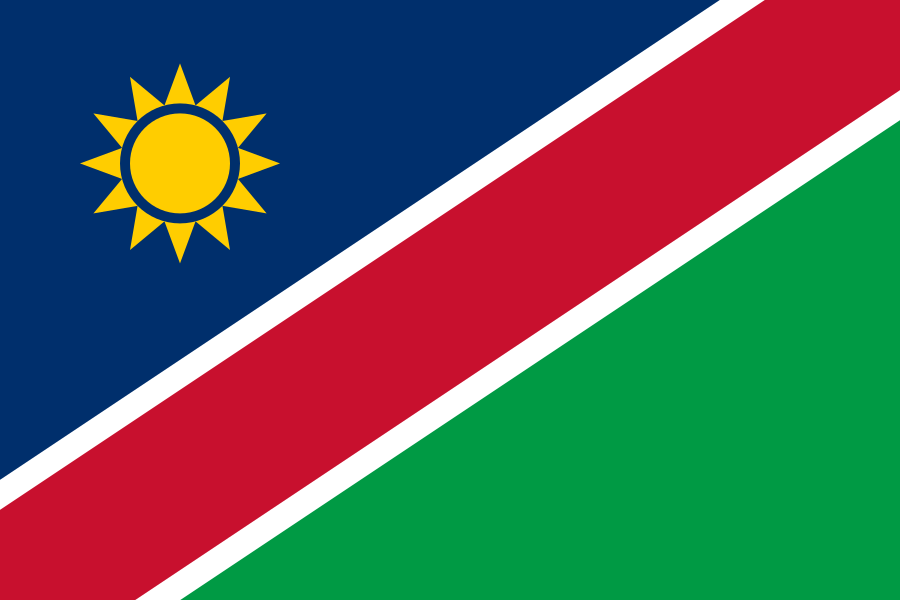
Namibia covers 825,615 km² of south-western Africa and holds only about 2.5 million people, which makes it one of the least densely populated countries on earth. The Atlantic forms its western edge, Angola and Zambia lie to the north, Botswana to the east and South Africa to the south. The Namib, thought to be the oldest desert in the world, runs the whole length of the coast; behind it the land climbs to a central plateau where Windhoek stands, and falls away again into the Kalahari.
The railway is German colonial infrastructure that outlived the colony. It began in 1895 with a 21 km mining line at Cape Cross, and the first serious route — Swakopmund on the coast to Windhoek — was built between 1897 and 1902. By 1914 there were several systems on four different gauges, including the 673 km Otavi line at 762 mm. South Africa took over after the First World War and standardised everything on 1,067 mm Cape gauge, which is what TransNamib runs today across some 2,687 km.
Rail journeys in Namibia
Good to know
Can you catch a train in Namibia?
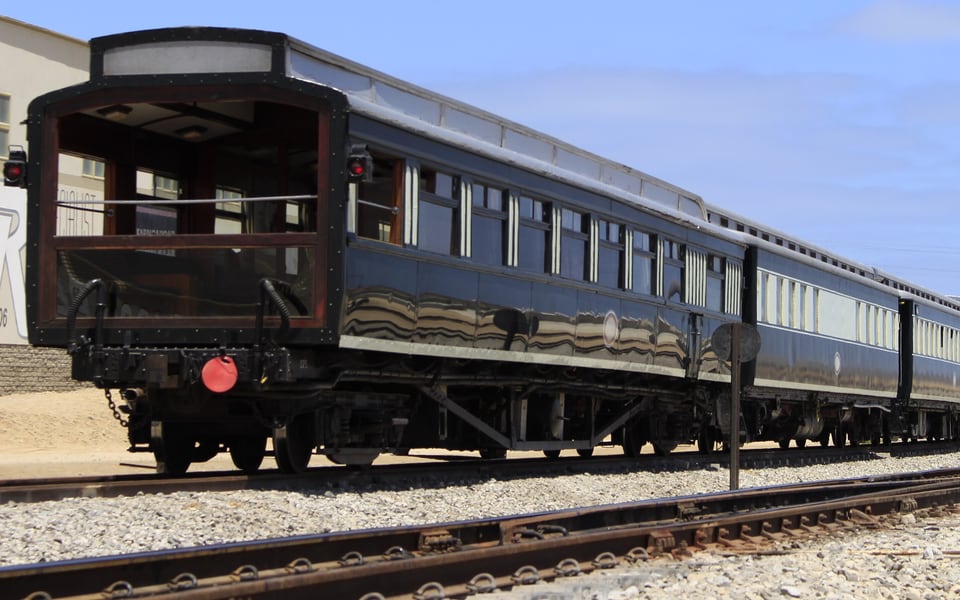
Not a scheduled one. TransNamib's StarLine passenger services stopped in early 2021 and have not resumed, and on 2 April 2025 the operator invited tenders for "the rehabilitation and operation of three tourist trains" — StarLine, the Desert Express and the Omugulugwombashe Star. What still runs on Namibian rails is the visiting private charter, which TransNamib hauls with its own locomotives.
What about the Desert Express?
The weekend tourist train between Windhoek and Swakopmund is the service most people associate with Namibian railways, and it is not running. It is one of the three trains named in TransNamib's own 2025 tender for rehabilitation and operation, and the operator's marketing pages still describing it in the present tense have not been updated.
So what can be ridden today?
The African Explorer, a chartered private train that works Windhoek to Cape Town two or three times a year — eight nights on board, across the Namib and down the length of the country to the South African border. It is booked as a whole tour, months ahead, rather than boarded on the day.
Why are there so many different gauges in Namibia's railway history?
Because several unconnected systems were built for different purposes. By 1914 the territory had the 1,067 mm state railway, a 762 mm line at Cape Cross, the 673 km Otavi Mining and Railway Company line also at 762 mm, and assorted 610 mm mine branches. South African Railways absorbed the network after the First World War and converted it to a single Cape gauge.
Is there a rail pass?
No. Namibia has never been in the international pass schemes, and with no scheduled passenger service there is nothing for a pass to cover.