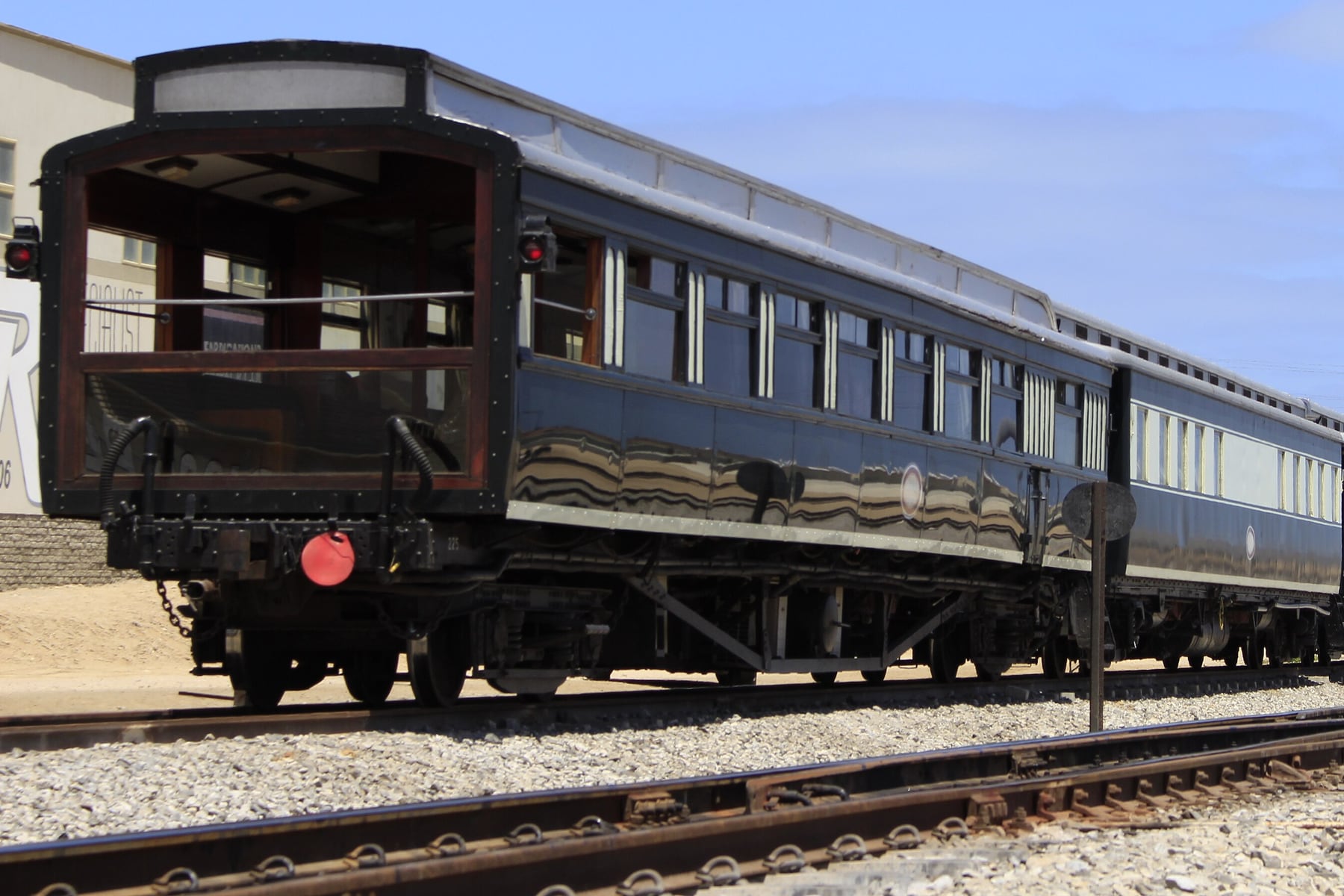
The African Explorer — Windhoek to Cape Town
Mayamona Jose Neto / Wikimedia Commons · CC BY-SA 4.0 · 2018 · cropped
- DistanceOver 3,000 km by rail, Windhoek to Cape Town
- Duration14 or 16 days, 8 nights on board
- Best seasonTwo or three departures a year, October–November and February–March
Introduction
Namibia has 2,687 kilometres of railway and no scheduled passenger train. TransNamib's StarLine services stopped in early 2021 and never came back; the Desert Express, the weekend train between Windhoek and Swakopmund that everybody remembers, stopped with them. On 2 April 2025 the operator put all three of its passenger trains — StarLine, the Desert Express and the Omugulugwombashe Star — out to tender for "the rehabilitation and operation of three tourist trains", which is about as plainly as a state railway ever admits that its coaches are standing still.
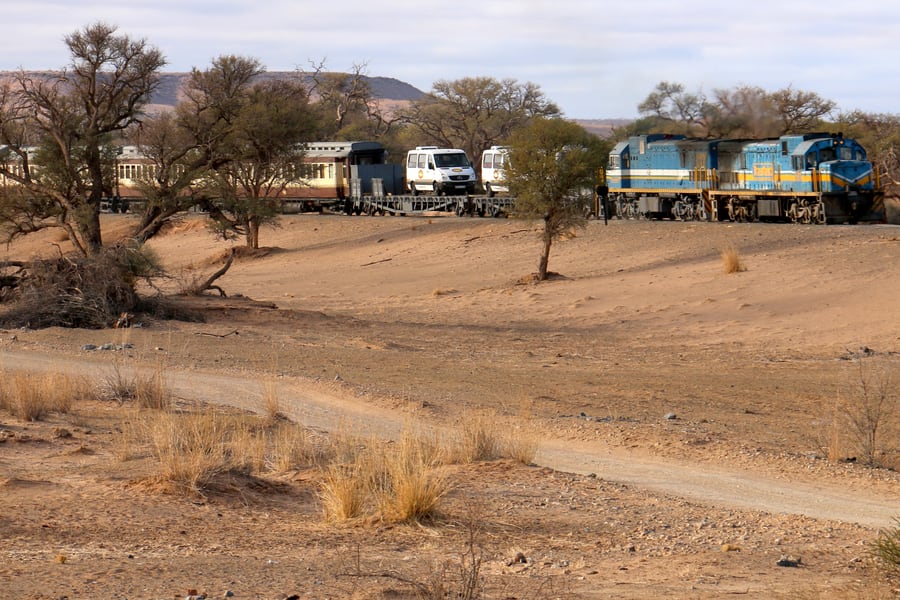
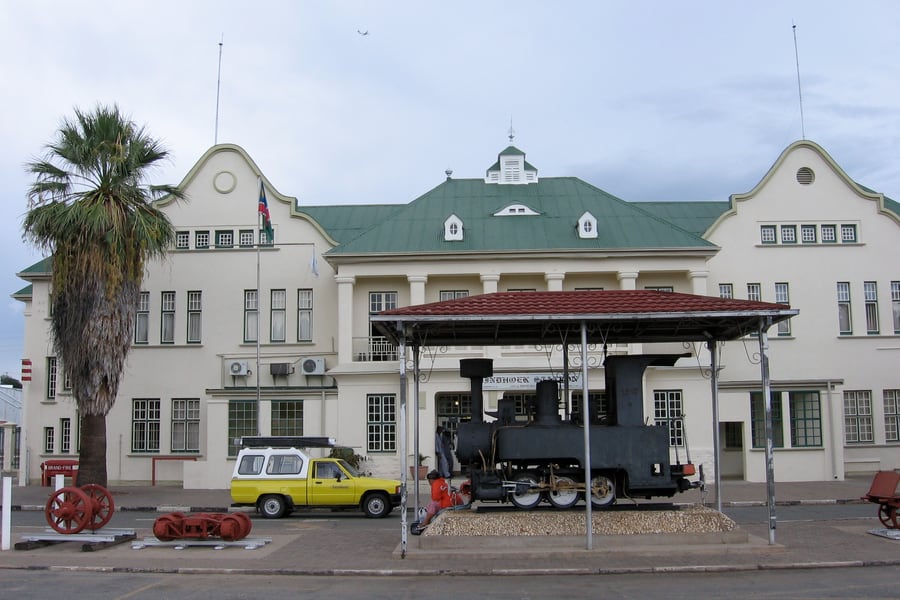
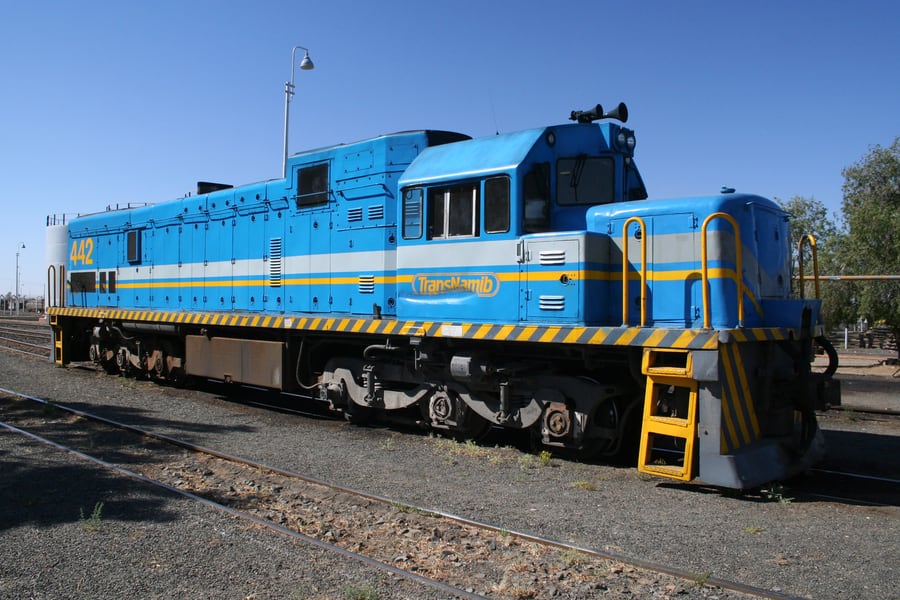
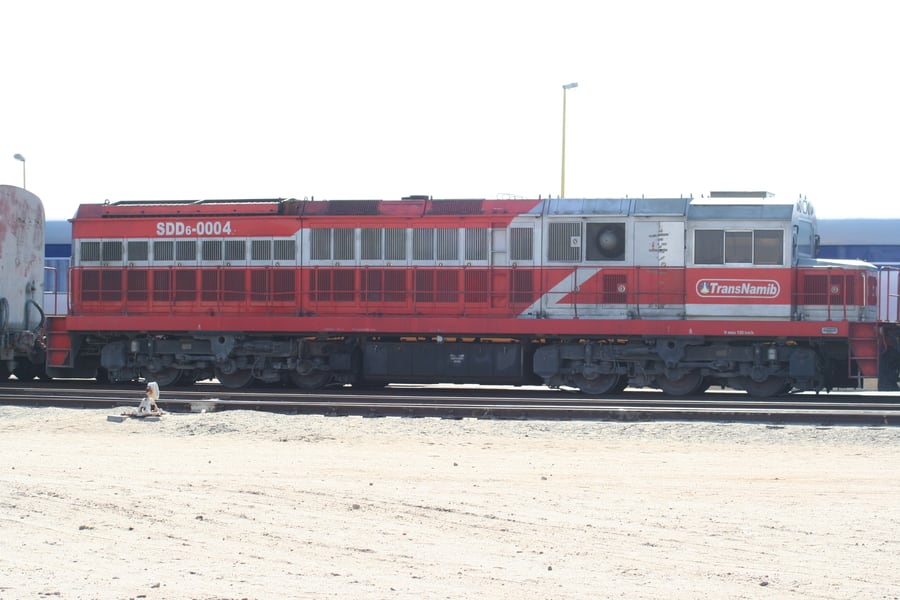
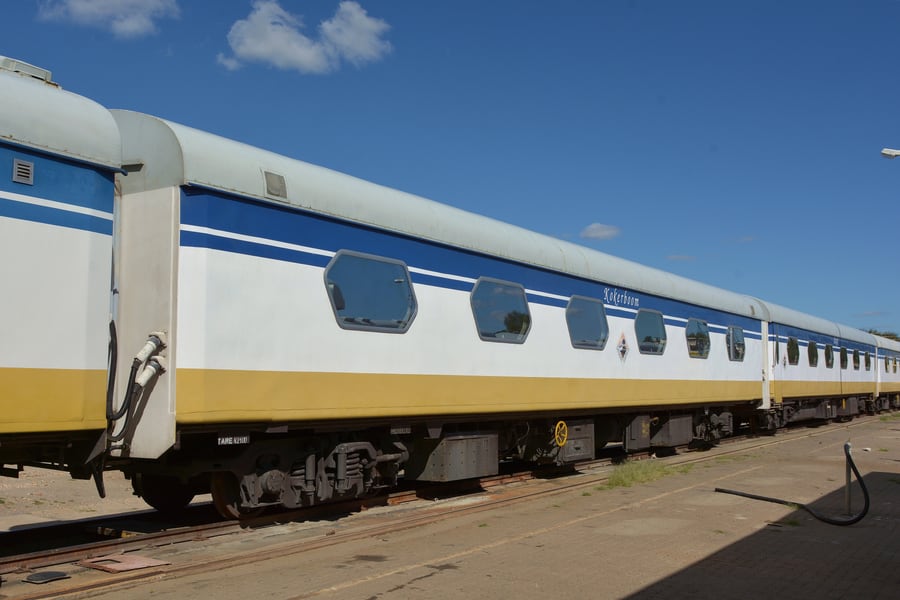
What does still cross the Namib is a charter. Two or three times a year the African Explorer — a rake of Rovos Rail sleeping cars, chartered and run as a tour by the Berlin operator Lernidee — is drawn out of Windhoek's small colonial station behind a pair of TransNamib diesels, worked north towards Etosha, west to the Atlantic at Swakopmund, then the whole length of the country to the South African border and on across the Karoo to Cape Town. Over 3,000 kilometres of that is on rails, eight of the nights are spent in a compartment, and at each stop the train is met by its own buses.
So this is not a train anyone catches. It is a train booked a year ahead for a fixed date, at a fixed price, with a doctor on board and a maximum of twenty-five guests to a guide — and for the moment it is the only way to ride a Namibian railway at all.
The Journey
The train leaves from Windhoek, 1,600 metres up in the Khomas Highland, and it leaves slowly. The first afternoon is spent on the old main line north through private game farms, where giraffe, springbok and ostrich stand off from the fence and the schedule is loose enough to let people photograph them. There is almost no other traffic to get in the way: TransNamib is a freight railway with a thin timetable, and a charter can be given the road.
North to Etosha, then west to the sea
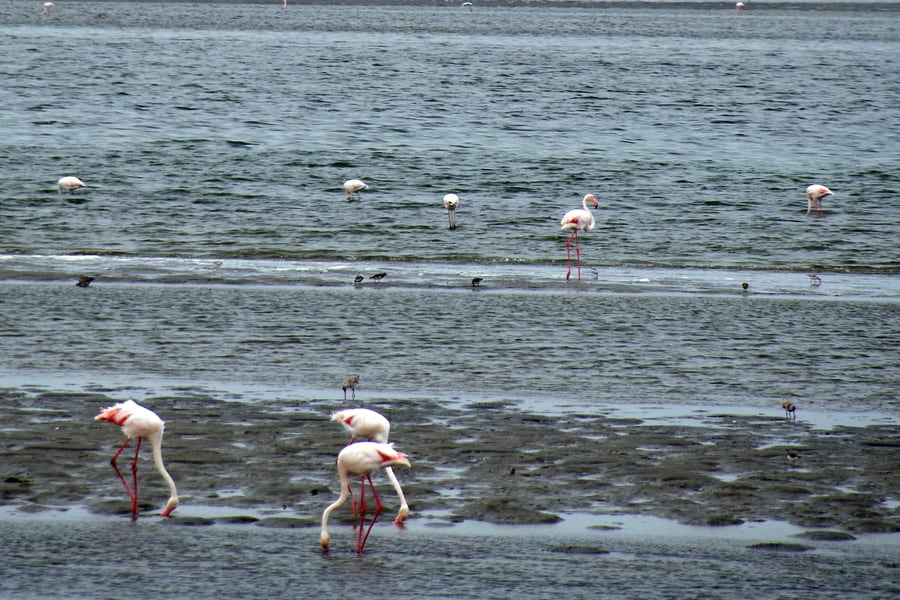
Guests leave the train for two nights around Etosha, driving in from the railhead and rejoining at Otjiwarongo. The train then runs back south and turns west onto the country's oldest alignment — Swakopmund to Windhoek, 383 kilometres, inaugurated on 19 June 1902 by the German colonial administration and still the spine of the network. It stops short of the coast, near Usakos, for the granite domes of the Spitzkoppe and the San rock art beneath them, and comes down into Swakopmund in the late afternoon: a German seaside town of gables and half-timbering with the Atlantic fog rolling over it.
The long run south
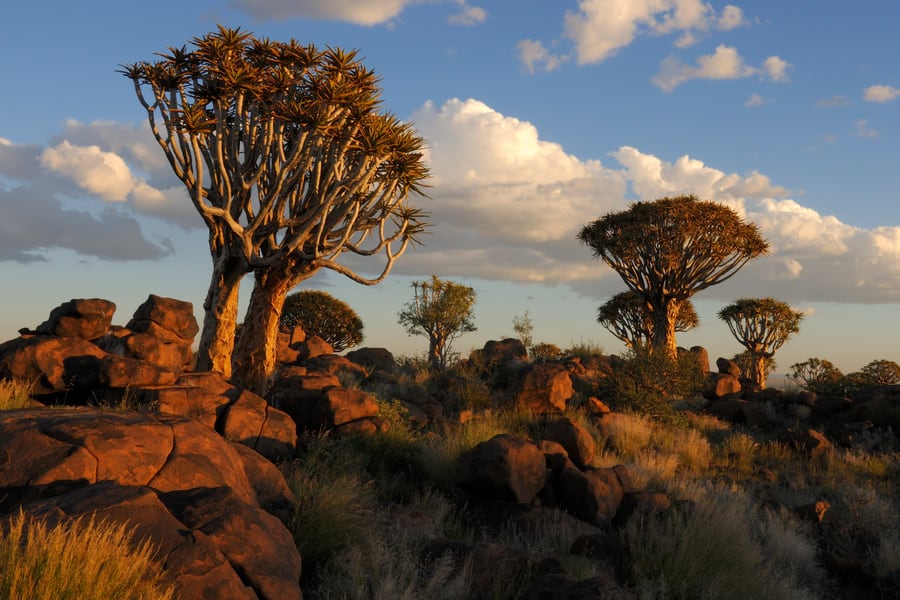
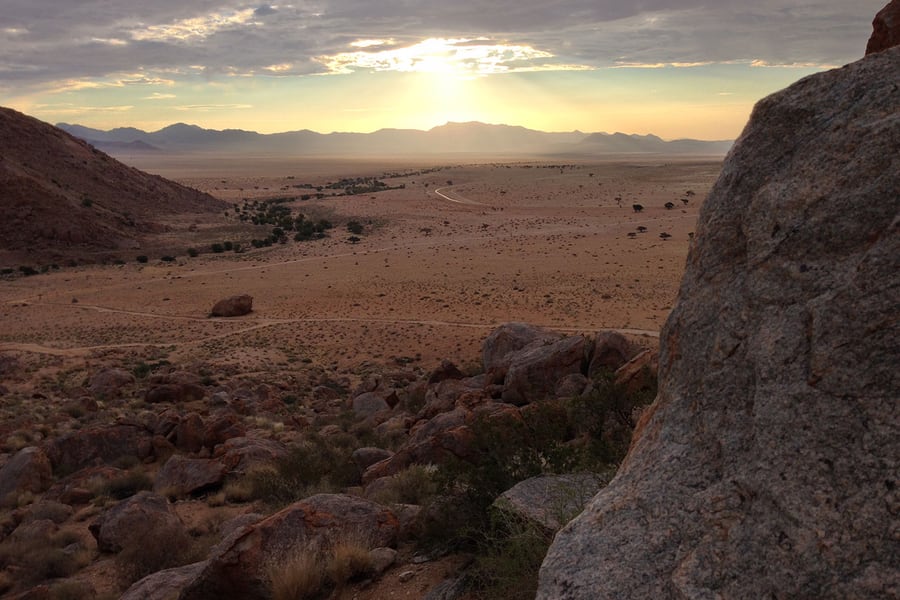
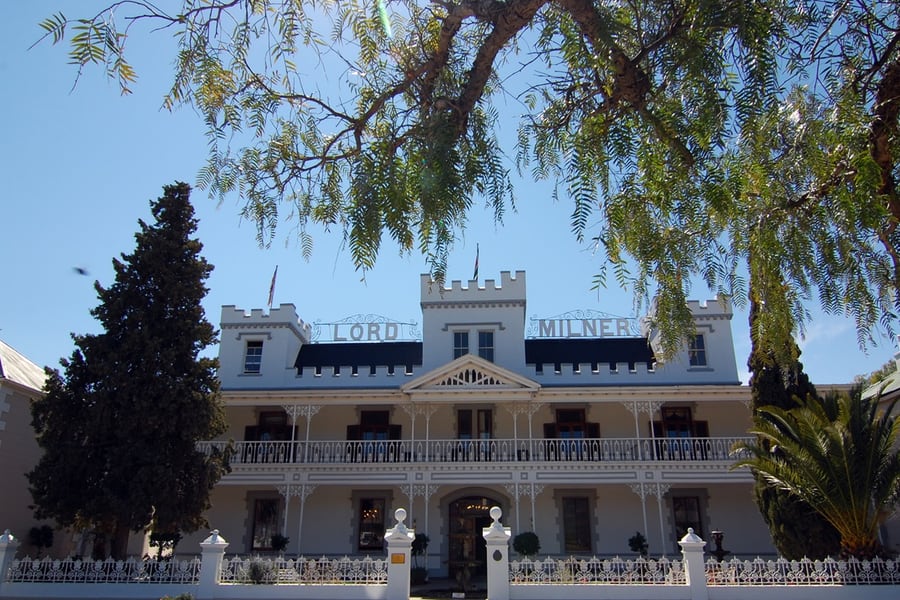
From the coast the pattern inverts. Guests go by road into the Namib for two nights at a desert lodge while the train repositions nearly 300 kilometres inland, and they rejoin it at Mariental. The last Namibian day is the emptiest: the train sets them down at Holoog, a halt with nothing at it, for the seventy-kilometre drive to the Fish River Canyon, then rolls south again and crosses into South Africa in the dark. Upington comes up next morning, then two days across the Karoo through Matjiesfontein and down into Cape Town.
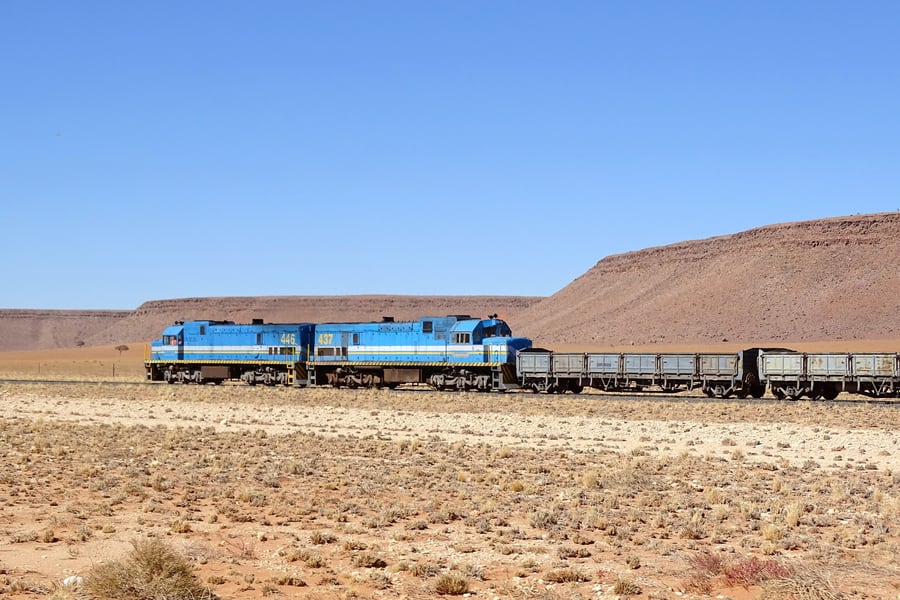
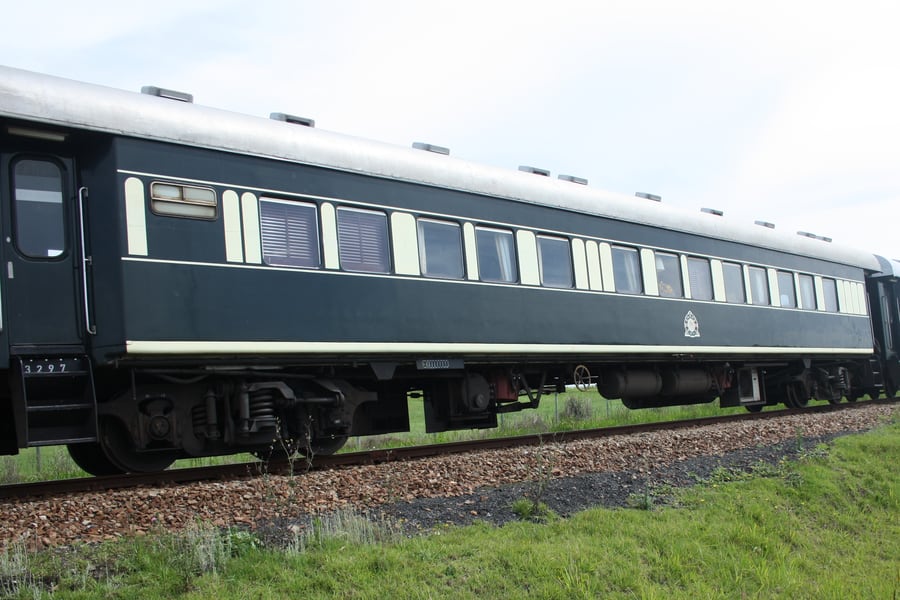

Along the route
 Wynand Vermeulen / Wikimedia Commons · CC BY-SA 3.0 · 2012 · cropped
Out of Windhoek, slowly
A city tour, then the small station, then an afternoon north through private game farms where giraffe and ostrich stand beside the fence and nothing else is on the road.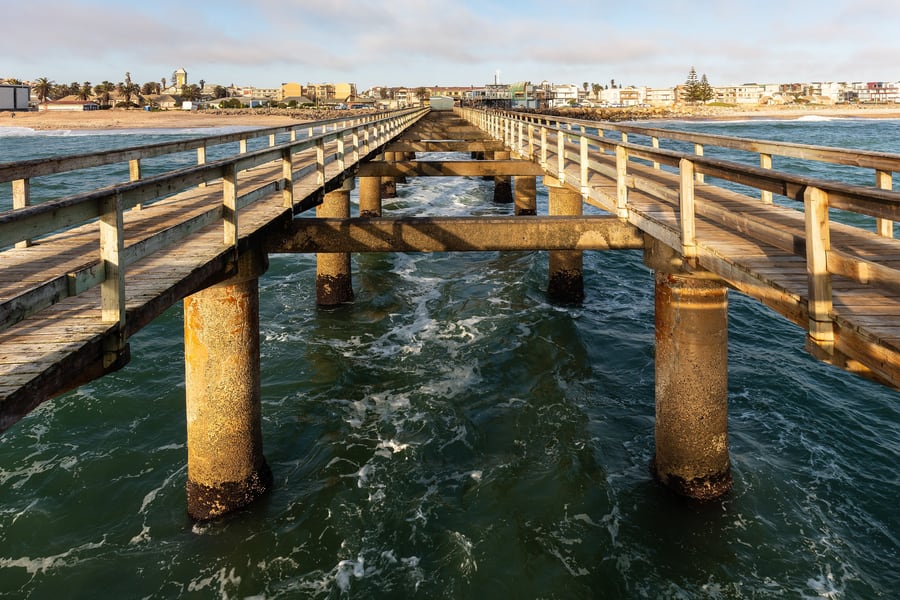 Diego Delso, delso.photo, License CC BY-SA · Wikimedia Commons · cropped
Down to the Atlantic
West on the 1902 alignment, a stop near Usakos for the Spitzkoppe, and Swakopmund in the late afternoon — German gables, a wooden jetty and cold sea fog.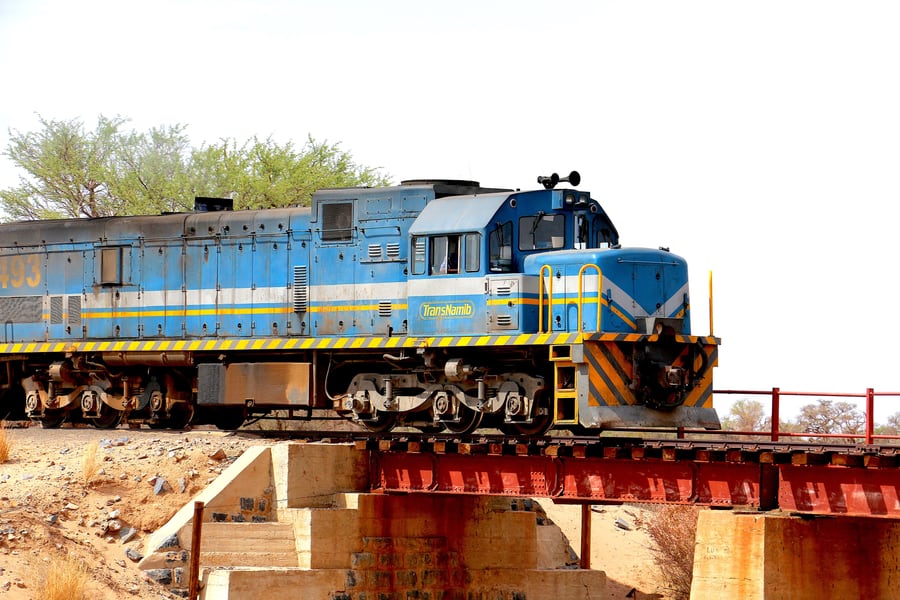 Hp.Baumeler / Wikimedia Commons · CC BY-SA 4.0 · 2015 · cropped
The long run south
Back aboard at Mariental, then down through empty country to Holoog — a halt with nothing at it, seventy kilometres from the Fish River Canyon.A bit of history
Culture & experiences along the way
 Ralph Timmermann / Wikimedia Commons · CC BY-SA 4.0 · 2015 · cropped
The train that stopped
The Desert Express ran weekend overnights between Windhoek and Swakopmund and is the train Namibians name when rail comes up. It has not worked since the StarLine services were suspended in early 2021, and in April 2025 TransNamib advertised for someone to rehabilitate and operate it.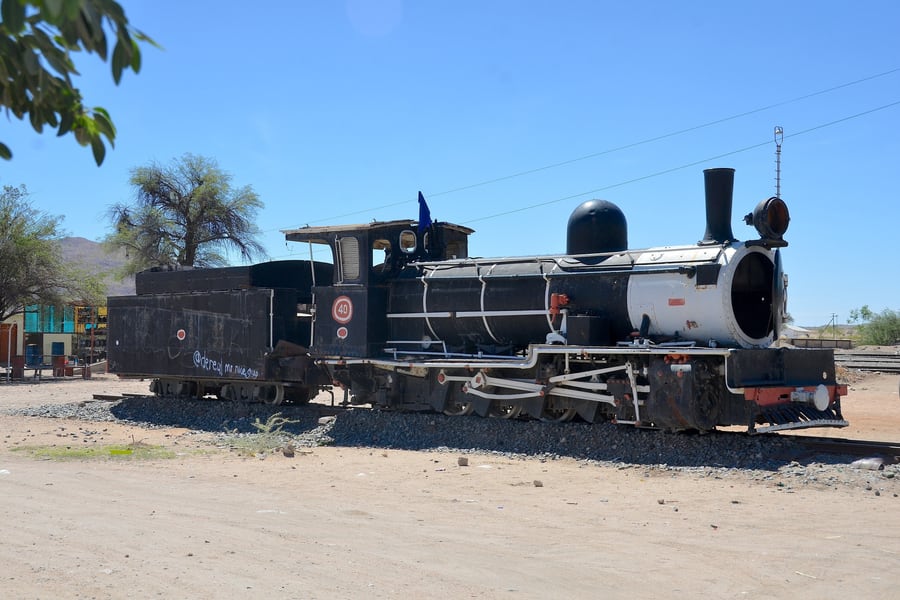 Olga Ernst / Wikimedia Commons · CC BY-SA 4.0 · 2024 · cropped
Usakos, where the line turned west
Usakos was the workshop town of the colonial railway, and a locomotive from that fleet still stands in the open there. The train stops just short of it, at Ebony, for the Spitzkoppe — so the halt and the engine share a stretch of the oldest track in Namibia.Timetables
There is no timetable to consult, because there is no scheduled service. The African Explorer runs as a chartered tour on fixed dates, in both directions, and every departure is sold as a package with its hotel and lodge nights, its excursions and its guides. Booking is compulsory and the train carries nobody who has not booked.
Windhoek to Cape Town runs in two lengths off the same train: 16 days including flights from Germany, and 14 days starting and ending on the ground in Africa. Both spend eight nights on board.
| Departure from Windhoek | Arrival in Cape Town | Length | Guided in |
|---|---|---|---|
| 24 October 2026 | 8 November 2026 | 16 days | German |
| 25 October 2026 | 7 November 2026 | 14 days | English |
| 18 February 2027 | 5 March 2027 | 16 days | German |
| 19 February 2027 | 4 March 2027 | 14 days | English |
| 28 November 2027 | 13 December 2027 | 16 days | German |
| 29 November 2027 | 12 December 2027 | 14 days | German |
The same train works the reverse direction, Cape Town to Windhoek, on its own set of dates, and a second route runs from Pretoria to the Victoria Falls. A 2028 Windhoek departure, 10–25 November, is listed as a preview date rather than a bookable one.
Seasons are the two that suit the desert: late October into November, and February into March. Nothing runs in the southern winter.
The February window is also the wet one. Southern Namibia takes its rain in summer, and it can arrive hard: on 1 March 2026 a washaway took the last span of a bridge from under a private train near Naute, south of Keetmanshoop, and the line was closed while it was rebuilt. TransNamib appointed South Africa's Railway Safety Regulator to investigate and had the findings back by June. It is a reason to treat a February departure as weather-dependent, not a reason to avoid one.
Dates as of August 2026, from Lernidee Erlebnisreisen (opens in a new tab), which charters the train, and Discovery Trains (opens in a new tab) for the English-guided departures. Both confirm before travel; the October 2026 English departure was already waitlisted when this page was written.
Tickets
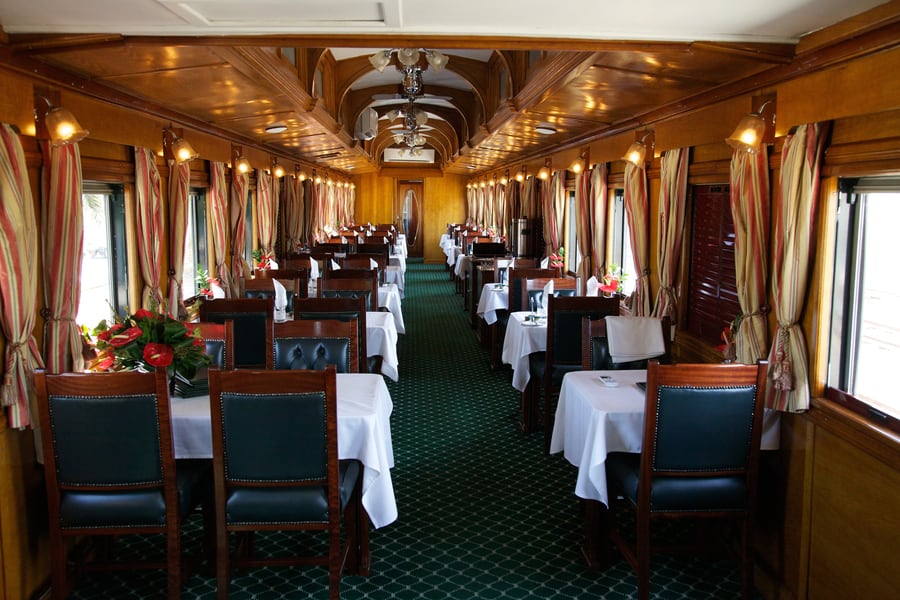
Everything is in the fare: the compartment, all meals on board, the hotel and lodge nights off it, every excursion and entrance fee, the guides and the doctor. What sits outside it is the Namibian e-visa, tips, insurance, and — on the 14-day version — the international flights.
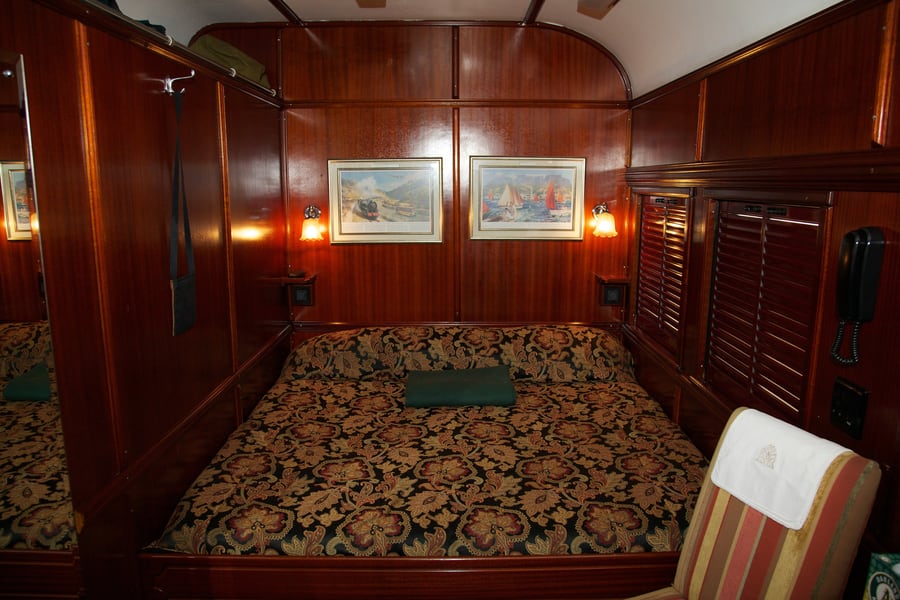
Two compartment grades are sold. The smaller is about 7 m², with a private shower and lavatory; the larger is about 10 m², with a small sitting area and a berth in the Deluxe cars. A third grade of three compartments, at about 6 m², exists on the German-guided departures. Prices below are per person sharing, from the two operators that sell this train.
Things to do
14 days, English-guided
Windhoek to Cape Town, smaller compartment
The seven-square-metre compartment on the English-guided departure, flights not included.
Book Experience (opens in a new tab, on discoverytrains.net)via discoverytrains.net14 days, the larger compartment
Windhoek to Cape Town, ten square metres
The Deluxe-car compartment with its own sitting area, on the same English-guided departure.
Book Experience (opens in a new tab, on discoverytrains.net)via discoverytrains.net16 days, with flights
German-guided, Frankfurt to Frankfurt
The charterer's own package, including return flights from Frankfurt and two extra nights.
Book Experience (opens in a new tab, on lernidee.de)via lernidee.deRail Passes
No rail pass applies. Namibia has never been in the Eurail or Interrail systems, TransNamib sells nothing of the kind, and South Africa's Shosholoza Meyl network — which the train touches only in that it uses the same metals south of the border — has no pass either.
Nor would one help if it existed. The African Explorer is a private charter sold as a whole tour, and the rail movement is not separable from the lodge nights, the buses and the guides that come with it. The fare buys a fortnight, not a seat.
The nearest thing to a discount is the length of the trip: the 14-day version costs less than the 16-day one because it leaves out the flights from Germany, so anyone booking their own flights is buying the shorter package by default.
Places to Visit
Almost everything the journey is taken for lies off the railway, and the train is honest about it: guests are set down at a station or a bare halt and driven to the thing itself, sometimes for a couple of hours and sometimes for two nights. The five below are the fixed points of the Namibian half, in the order the train reaches them.
 Olga Ernst / Wikimedia Commons · CC BY-SA 4.0 · 2014 · cropped
Etosha National Park
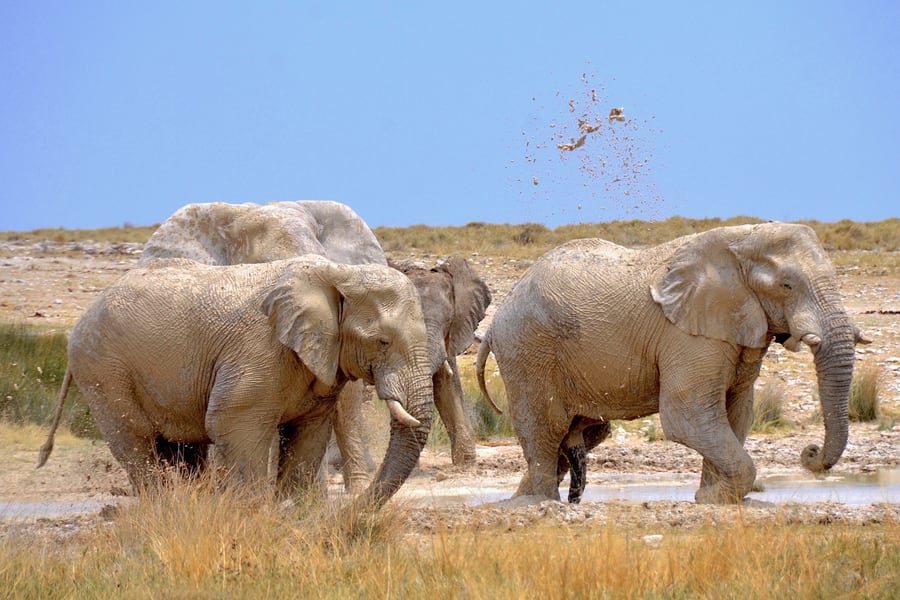
More than 22,000 square kilometres around a salt pan so large it is visible from orbit, and dry enough that for most of the year the game has to come to the waterholes rather than the other way round. Elephant, zebra, wildebeest, black rhino and lion are all here. The train sets guests down for two nights and picks them up again at Otjiwarongo.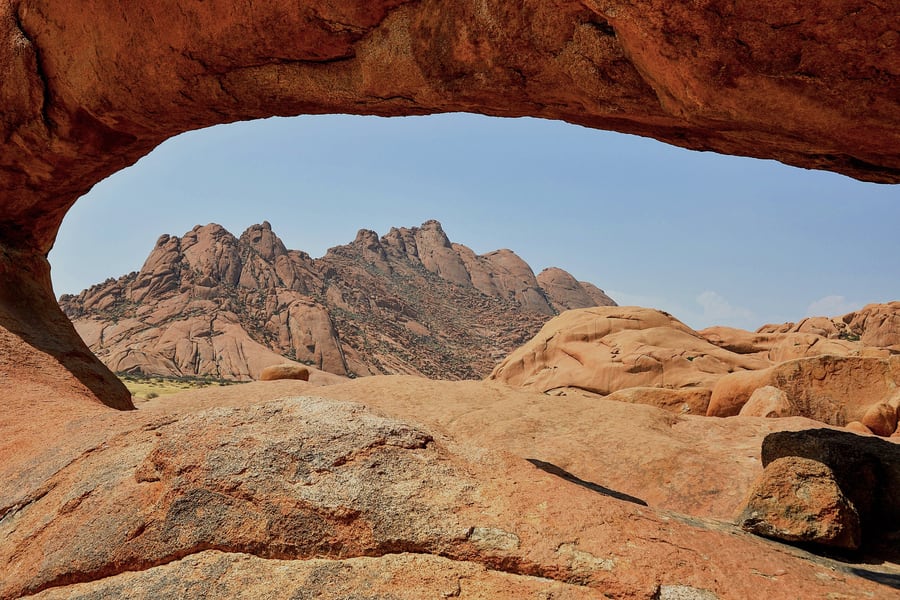 Pavel Špindler / Wikimedia Commons · CC BY 3.0 · cropped
The Spitzkoppe
A group of granite domes standing clear of the gravel plain west of Usakos, weathered into arches and hollows and glowing orange in the early light. San painters used the overhangs beneath them, and the rock art is still there. It is a short drive from the line, and the buses are waiting when the train stops.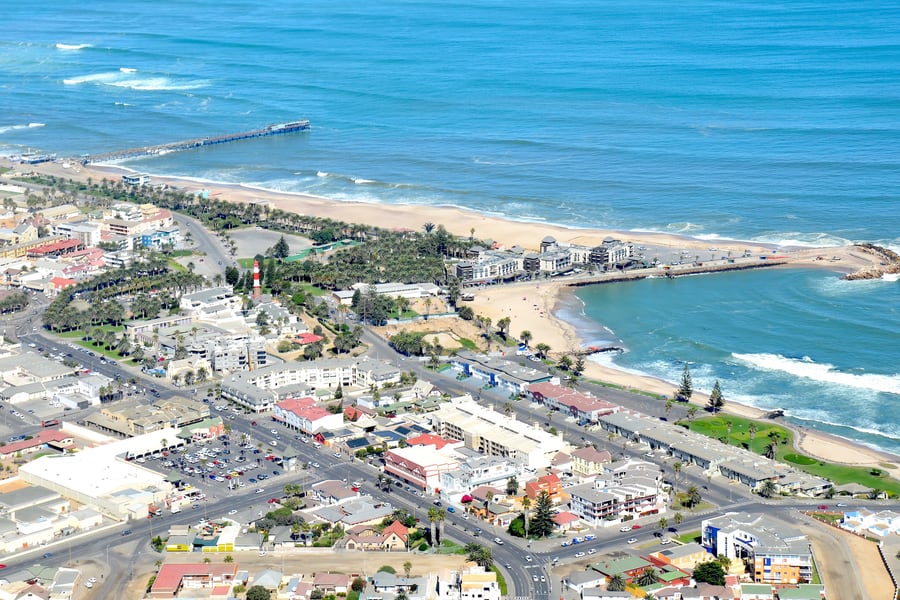 Olga Ernst / Wikimedia Commons · CC BY-SA 4.0 · 2017 · cropped
Swakopmund
A German seaside town that never stopped being one: gabled houses, a lighthouse, a wooden jetty running out into a cold Atlantic, and cake shops that take the idea seriously. The desert begins at the last street. The train stands here overnight, which leaves an afternoon and an evening on foot.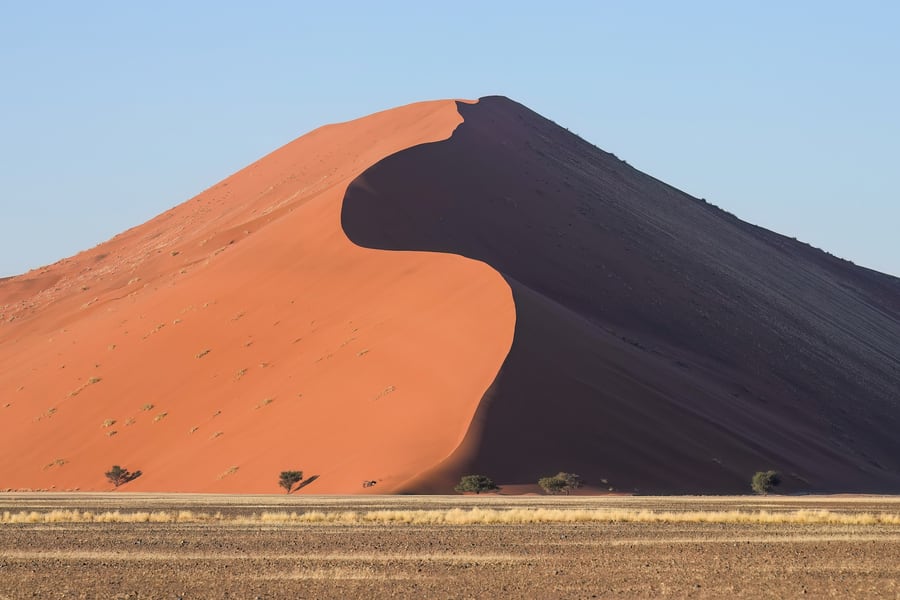 Giles Laurent / Wikimedia Commons · CC BY-SA 4.0 · 2025 · cropped
Sossusvlei and the Namib Sand Sea
The dunes above Sossusvlei run to over 300 metres and turn from grey to deep red as the sun comes up; Deadvlei, the white clay pan below them, holds camel thorns that died around 900 years ago and never rotted. The sand sea was inscribed as a World Heritage site in 2013. Two nights, reached by road.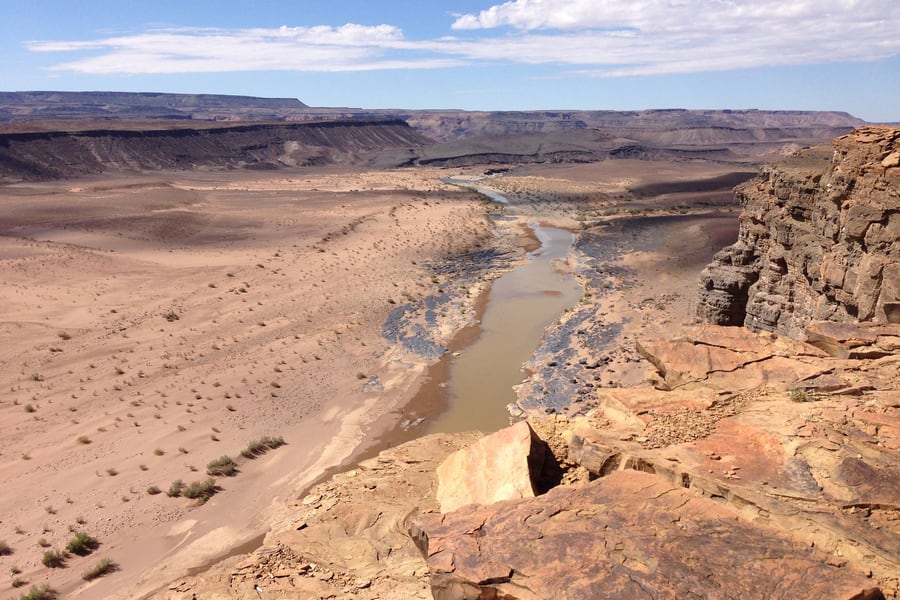 Ralf Junghanns / Wikimedia Commons · CC BY-SA 3.0 · 2014 · cropped
The Fish River Canyon
About 160 kilometres long, up to 27 wide and in places almost 550 metres deep — the largest canyon in Africa, and cut by a river that runs only after the summer rains. The rim walk from the main viewpoint is the excursion; the five-day hike along the floor is for people with more time than this train allows.Where to Sleep
Four of the fifteen nights are spent off the train, and the tour books them: a hotel in Windhoek, a lodge at the Etosha gate, two nights at a lodge in the Namib, and a hotel in Cape Town. The Etosha night is at Etosha King Nehale, forty chalets a kilometre from the park's King Nehale Gate, and the desert nights at Namib Desert Lodge.
The cards below are for the nights either side of the tour — arriving in Windhoek early, or staying on in Cape Town — plus the two lodges the train itself uses. One of them is a railway building: the Swakopmund Hotel occupies the town's old station, which is a reasonable place to break a journey the train only gives you an afternoon of.
Where to stay
Boutique Hotel Heinitzburg
On a hill above Windhoek
Sixteen rooms in a castle of 1914 on the ridge above the city, a few minutes from the centre.
Check Availability (opens in a new tab, on heinitzburg.com)via heinitzburg.comSwakopmund Hotel and Entertainment Centre
In the old Swakopmund station
Built in and around the town's former railway station, a few minutes' walk from the seafront.
Check Availability (opens in a new tab, on legacyhotels.co.za)via legacyhotels.co.zaNamib Desert Lodge
The tour's own desert nights
Sixty-six rooms at the foot of fossilised dunes, 60 km north of Sesriem in the Sossusvlei area.
Check Availability (opens in a new tab, on gondwana-collection.com)via gondwana-collection.comThe Commodore Hotel
At the end of the line, Cape Town
On the Victoria & Alfred Waterfront, looking across the harbour to Table Mountain and Robben Island.
Check Availability (opens in a new tab, on legacyhotels.co.za)via legacyhotels.co.zaQuestions or corrections
Planning this trip and stuck on something, or spotted a time, fare or detail that has changed? Send us a message about The African Explorer — Windhoek to Cape Town. We read every one, and we update this page when something has changed.