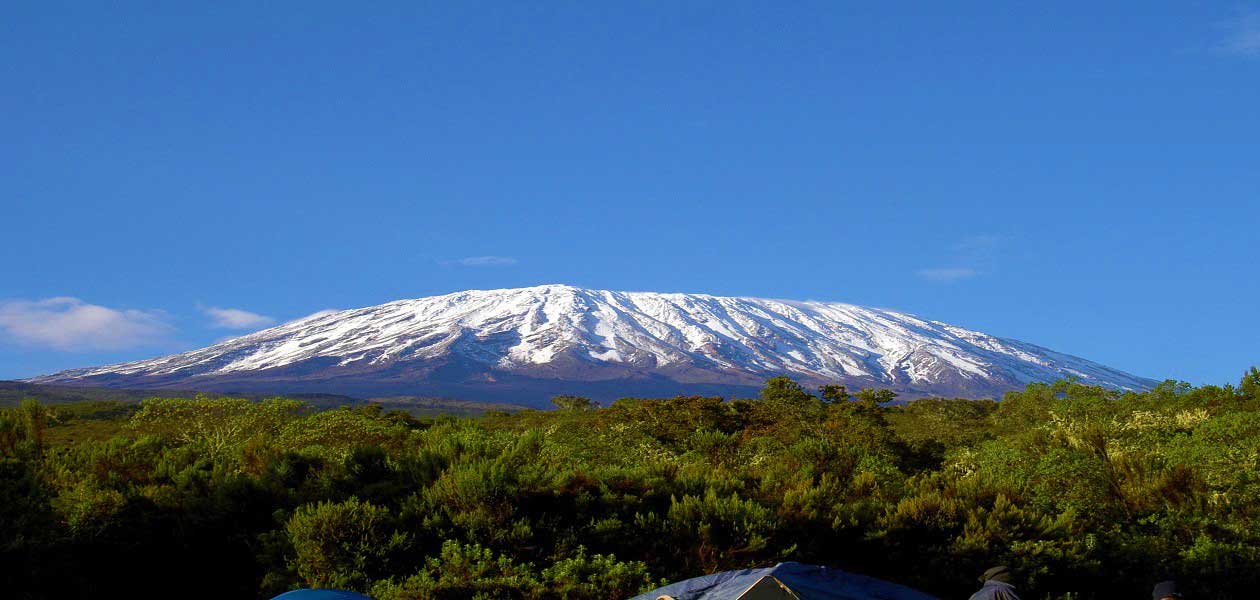
Tanzania
In the 1960s newly independent Zambia could only reach the sea through Rhodesia, apartheid South Africa or Portuguese Africa. Tanzania and Zambia asked the West for a railway that would go the other way, to the Indian Ocean, and were refused. China said yes — and between 1970 and 1975 built the 1,860-kilometre TAZARA, the Great Uhuru Railway, at a cost of US$406 million and over 160 lives.
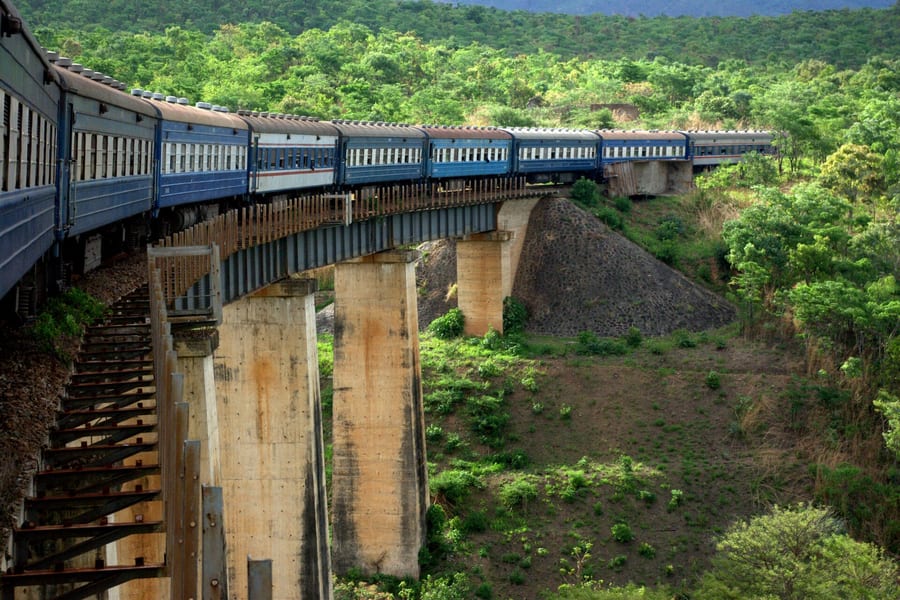
It remains one of the most extraordinary railways in the world: two nights from Dar es Salaam to the Zambian Copperbelt, straight through the Selous with giraffe beside the track, then over the Udzungwa Mountains on forty-six bridges. It is also, in its own authority's words, running on ageing equipment — cross-border trains were suspended for twenty months and came back in February 2026 at half the old frequency.
Rail journeys in Tanzania
Good to know
What rail journeys can you do in Tanzania?
The great one is the TAZARA Railway — about forty-six hours and 1,860 kilometres from Dar es Salaam to Kapiri Mposhi in Zambia, through Nyerere National Park and over the Udzungwa Mountains. TAZARA also runs a shorter domestic train, the Udzungwa, twice a week between Kidatu and Makambako, which covers the most spectacular section. Tanzania additionally has the old metre-gauge Central Line to Kigoma and Mwanza, and a new standard-gauge railway from Dar es Salaam toward Dodoma and Mwanza.
Is the TAZARA actually running?
Yes, but only just, and you must check. Cross-border services were suspended in June 2024 for technical reasons and resumed on 10 February 2026 — reorganised, with weekly trips cut from four to two, the Kilimanjaro cancelled and the Mukuba reduced to one train a week in each direction. TAZARA states plainly that "fleet availability remains constrained due to ageing equipment". A US$1.4 billion rehabilitation backed by China is under way. Confirm your date before travelling, and never book a flight for the day the train is due to arrive.
Can you see wildlife from the train?
Genuinely, yes. The railway runs straight through Nyerere National Park — the Selous — one of the largest protected areas in Africa, and giraffe, elephant, zebra, antelope and warthog along the line have been ignoring these trains since 1975. It is not a game drive: nobody stops and there is no guide. But on the westbound run the reserve comes in the early morning, and it is a remarkable hour or two at the price of an ordinary railway ticket.
When is the best time to travel?
June to October, the dry season. The corridor through the Tanzanian lowlands floods in the rains, and drainage is one of the priorities of the current rehabilitation — delays are worse and cancellations likelier from roughly November to May. Whenever you go, take food, water, a torch and a great deal of patience, and expect the forty-six-hour timetable to be an opening bid.