The TAZARA Railway
Richard Stupart / Wikimedia Commons · CC BY 2.0
- DistanceDar es Salaam–Kapiri Mposhi · 1,860 km
- DurationAbout 46 hours
- Best seasonJune–October, the dry season
Introduction
Zambia has no coast. In the 1960s that was not a geographical inconvenience but a political stranglehold: every route from the Copperbelt to the sea ran through Rhodesia, apartheid South Africa or Portuguese Africa, and every one of them could be closed at will by a government that regarded the newly independent Zambia as an enemy.
Kenneth Kaunda and Julius Nyerere went looking for a railway that would go the other way — north-east, across Tanzania, to the Indian Ocean. They asked the World Bank, the British and the Americans. Everyone said no: too expensive, too remote, no economic case.
China said yes.
The Great Uhuru Railway
What they built between 1970 and 1975 runs 1,860 kilometres from Dar es Salaam to Kapiri Mposhi in central Zambia, and it is one of the very few railways anywhere constructed primarily as an act of foreign policy. Uhuru is Swahili for freedom, and the name is not decoration: this line existed so that Zambian copper could reach a port without passing through white-ruled territory.
It was, at completion, the longest railway in sub-Saharan Africa and the largest single foreign-aid project China had ever undertaken, at a cost of US$406 million.
How it was built
Before anything was laid, twelve Chinese surveyors walked the route — nine months on foot from Dar es Salaam to Mbeya, choosing where the railway would go.
Construction began in July 1970, run largely by the Railway Engineering Corps of the People's Liberation Army. Between 1965 and 1976 China sent about 50,000 people, of whom 30,000 to 40,000 were labourers; some 60,000 Africans worked alongside them, and Chinese engineers lived under the same conditions as their African colleagues. Nearly everything — rail, machinery, much of the food and the medicine — came by ship from China.
They moved 89 million cubic metres of earth and rock, laid 330,000 tonnes of rail, and built 93 stations, 320 bridges, 22 tunnels and 2,225 culverts.
Over 160 workers were killed in construction accidents, 64 of them Chinese.
All this happened during the Cultural Revolution. Liu Shaoqi, the Chinese president who made the original offer to Nyerere in 1965, was purged in 1966, publicly vilified, and died in 1969 without seeing it built. In Tanzania, Abdulrahman Mohamed Babu, the minister who had persuaded the Chinese to back the scheme, was sentenced to death in 1972 for allegedly plotting against the Zanzibar government; Nyerere pardoned him in 1978.
The first passenger train reached Dar es Salaam on 24 October 1975 — chosen because it was the eleventh anniversary of Zambia's independence.
And then the reason for it went away
Namibia became independent in 1990. South Africa held multiracial elections in 1994. The civil wars in Angola and Mozambique ended. Suddenly Zambian copper had a dozen ways out, most of them shorter, and Zambia's mines were privatised and no longer obliged to use the state railway.
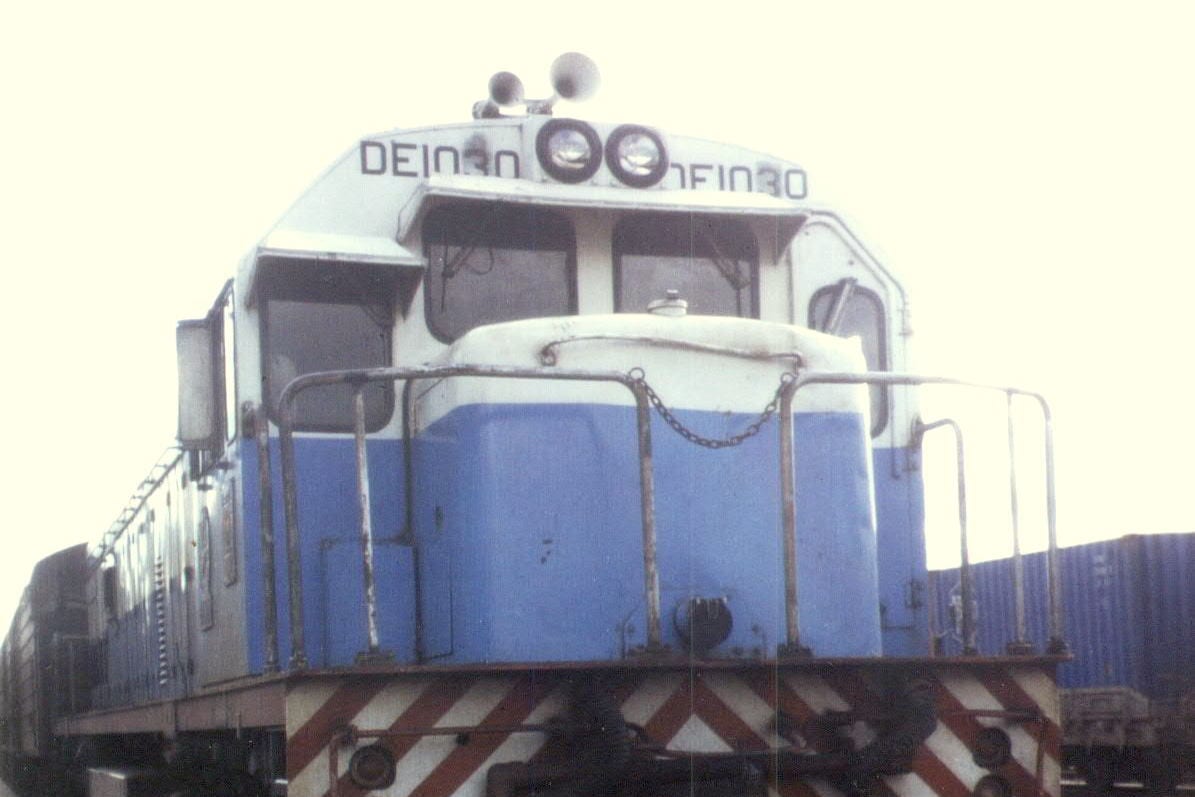
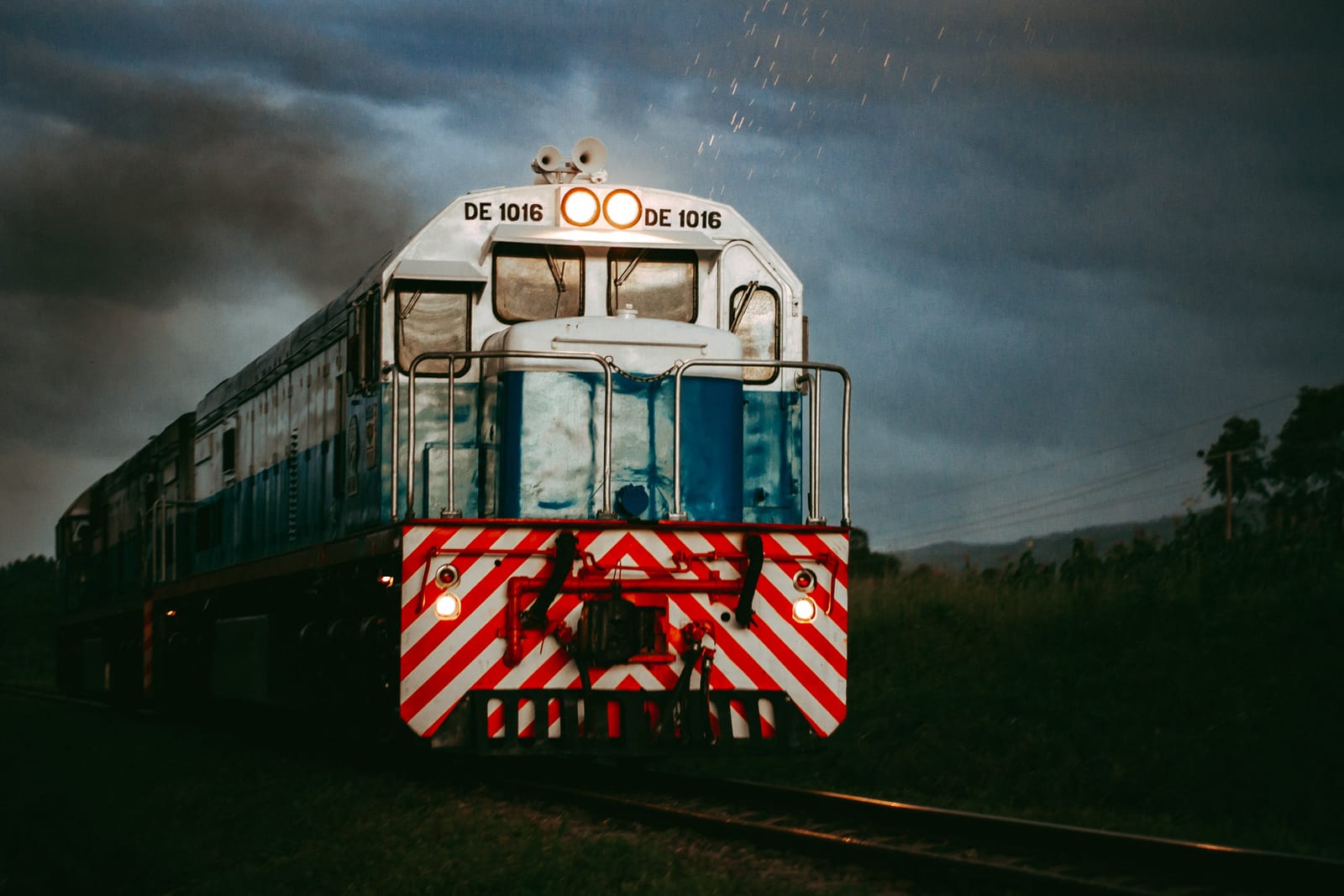
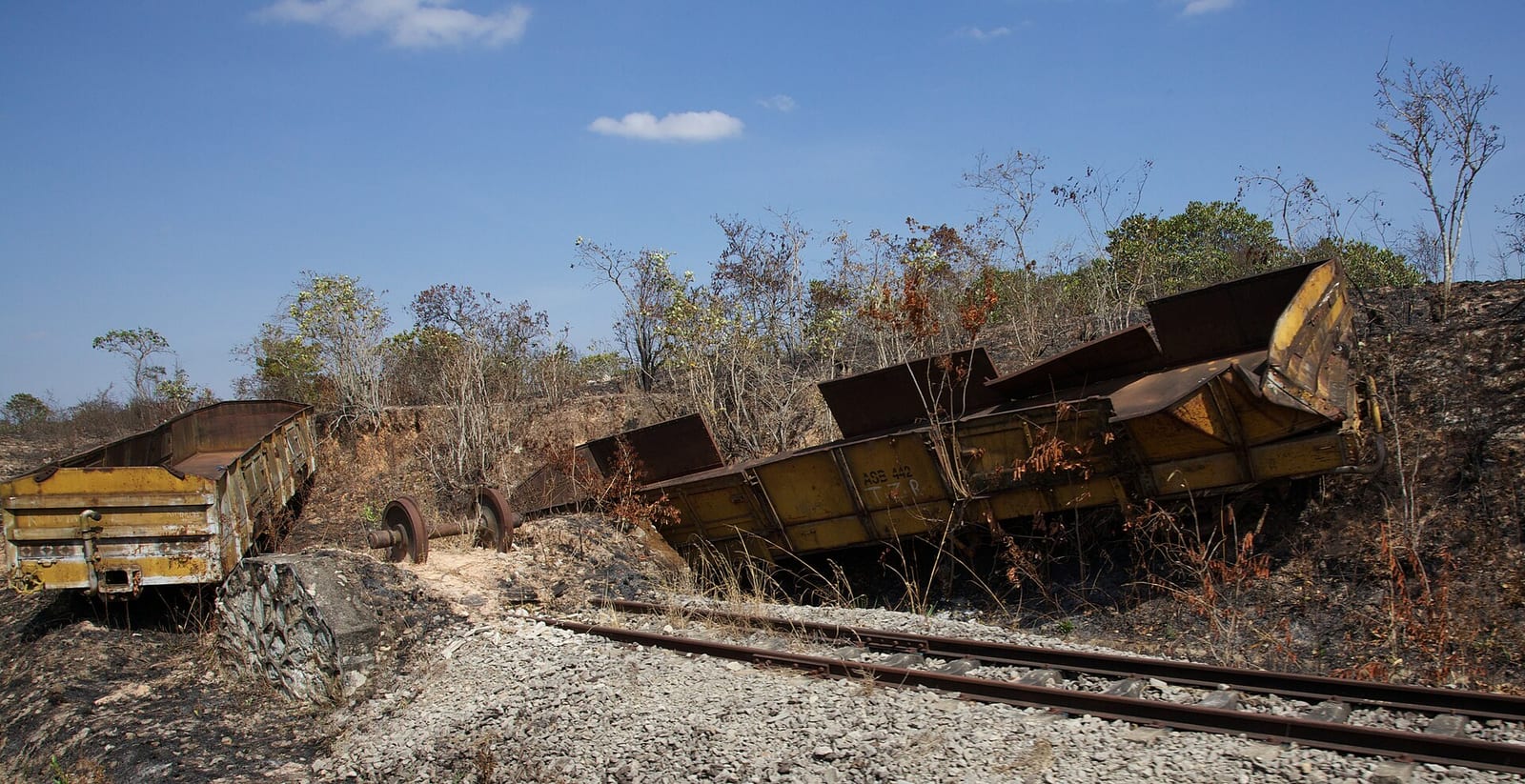
Traffic collapsed. By 2008 the line was described as on the verge of collapse; by 2012 TAZARA had ten working main-line locomotives. Wikipedia's infobox gives its status, bluntly, as "minimally operational". TAZARA's own estimate of what it would take to become commercially viable is US$770 million.
Where it stands now
Cross-border passenger services were suspended in June 2024 on technical grounds and resumed on 10 February 2026 — but restructured. The weekly cross-border trains were cut from four to two, the Kilimanjaro was cancelled altogether, and the surviving Mukuba now runs once a week in each direction, so that TAZARA could, in its own words, "consolidate coaches and locomotives to strengthen the Mukuba service". It says frankly that "fleet availability remains constrained due to ageing equipment, maintenance requirements, and phased rehabilitation programmes."
Money is coming, again from China: a memorandum signed at the Forum on China-Africa Cooperation in Beijing in September 2024, and reporting in March 2025 of a US$1.4 billion rehabilitation by CCECC — a billion on track, safety and efficiency, four hundred million on new locomotives and wagons — with the railway moving toward a public-private partnership.
Why go
Because for two nights and about forty-six hours you cross a continent on a railway that shouldn't exist, through the Selous with giraffe beside the line, over the Udzungwa Mountains on forty-six bridges, and out onto the Zambian plateau — and because everywhere the train stops, people come to the windows to sell you lunch.
Whether it is running in any given week is the first thing worth establishing. After that, there is nothing else like it.
The Journey
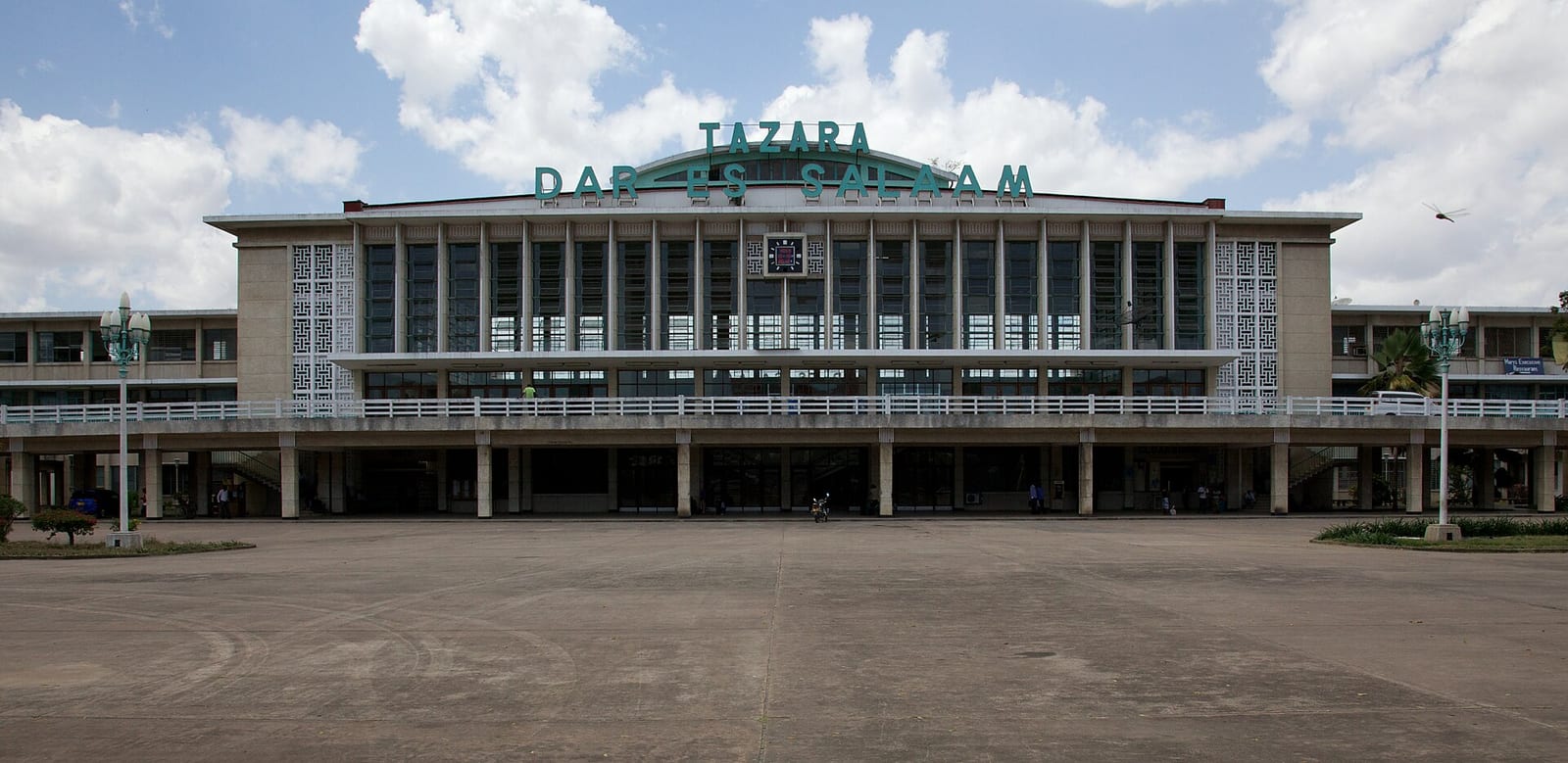
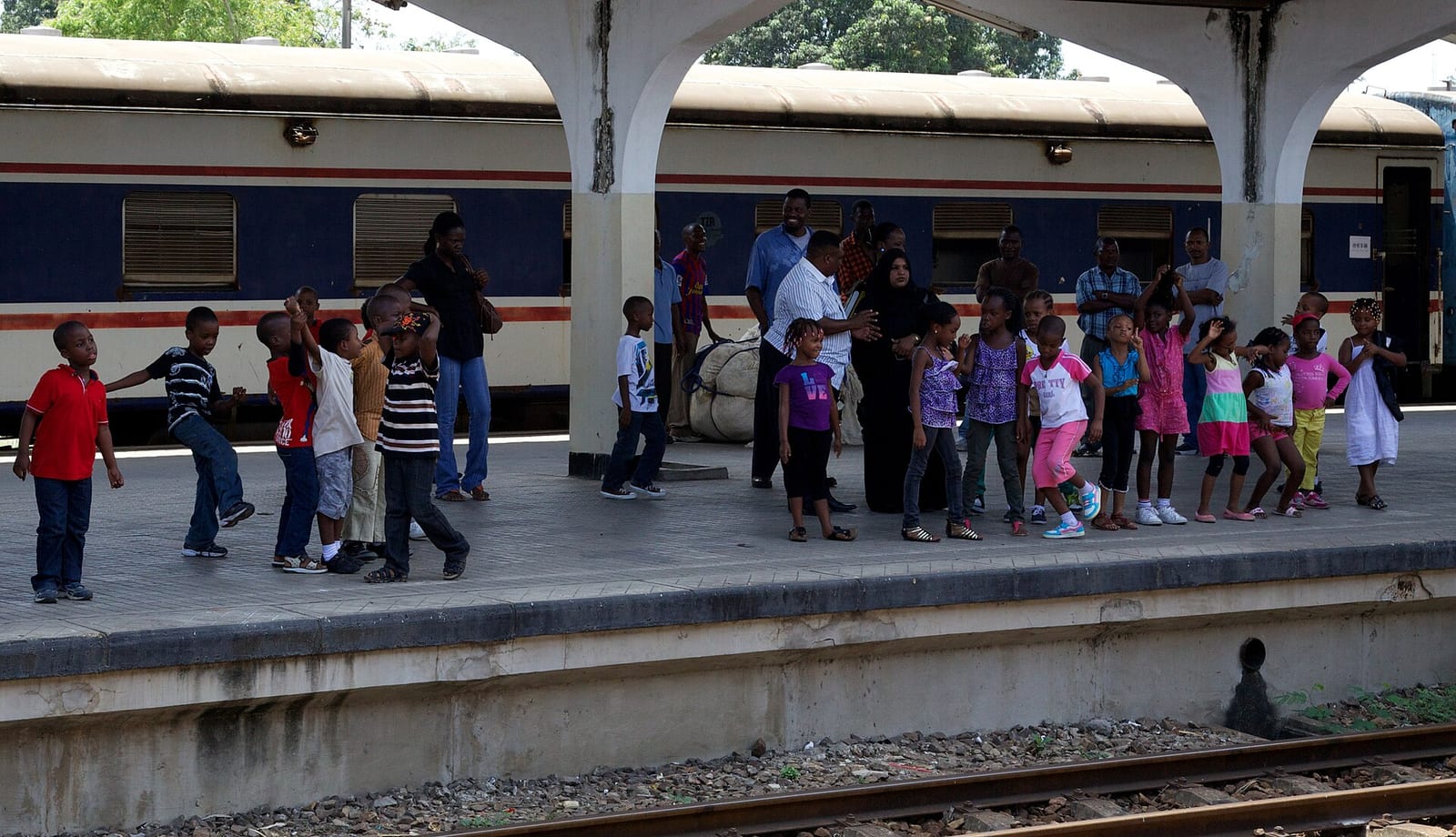
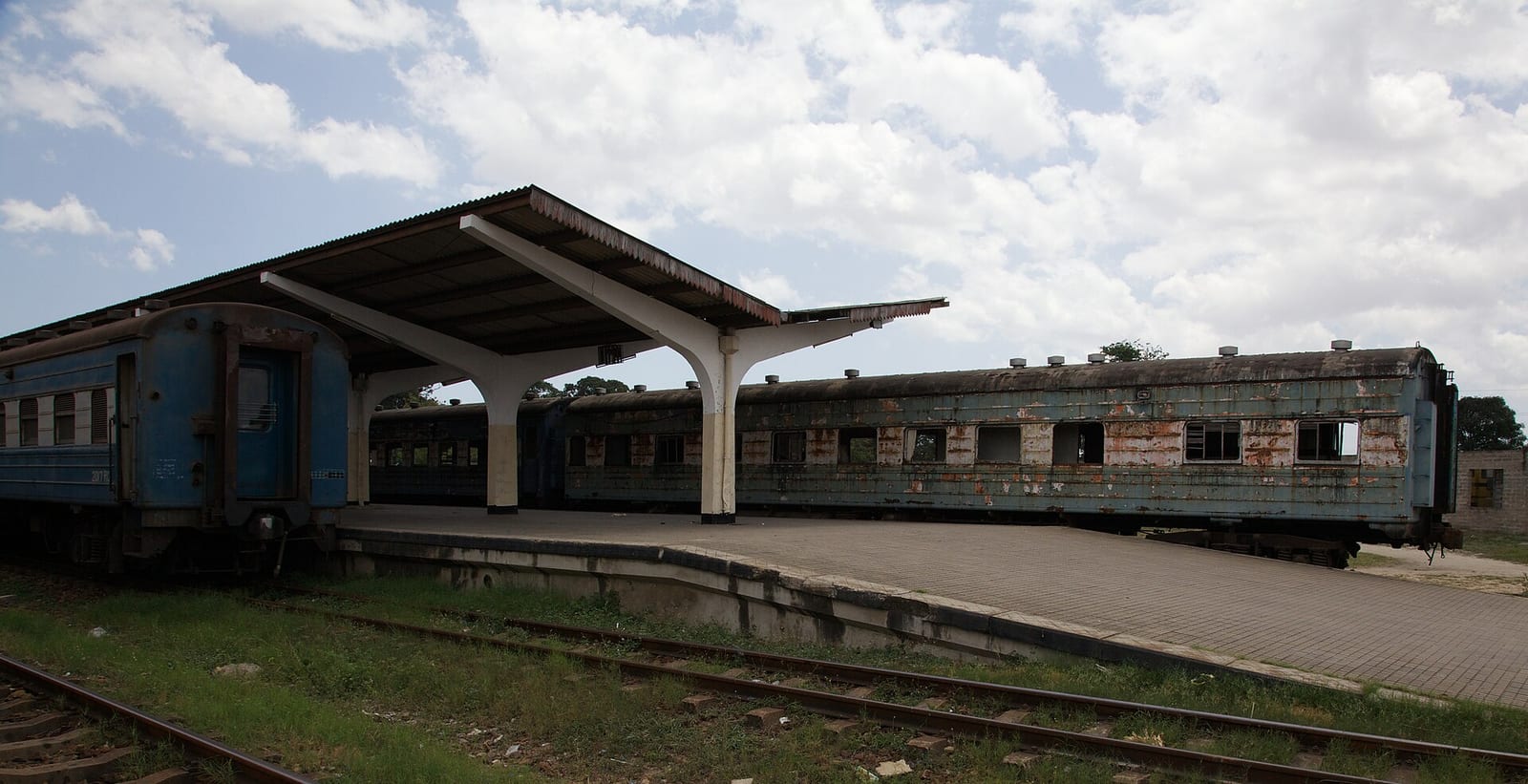
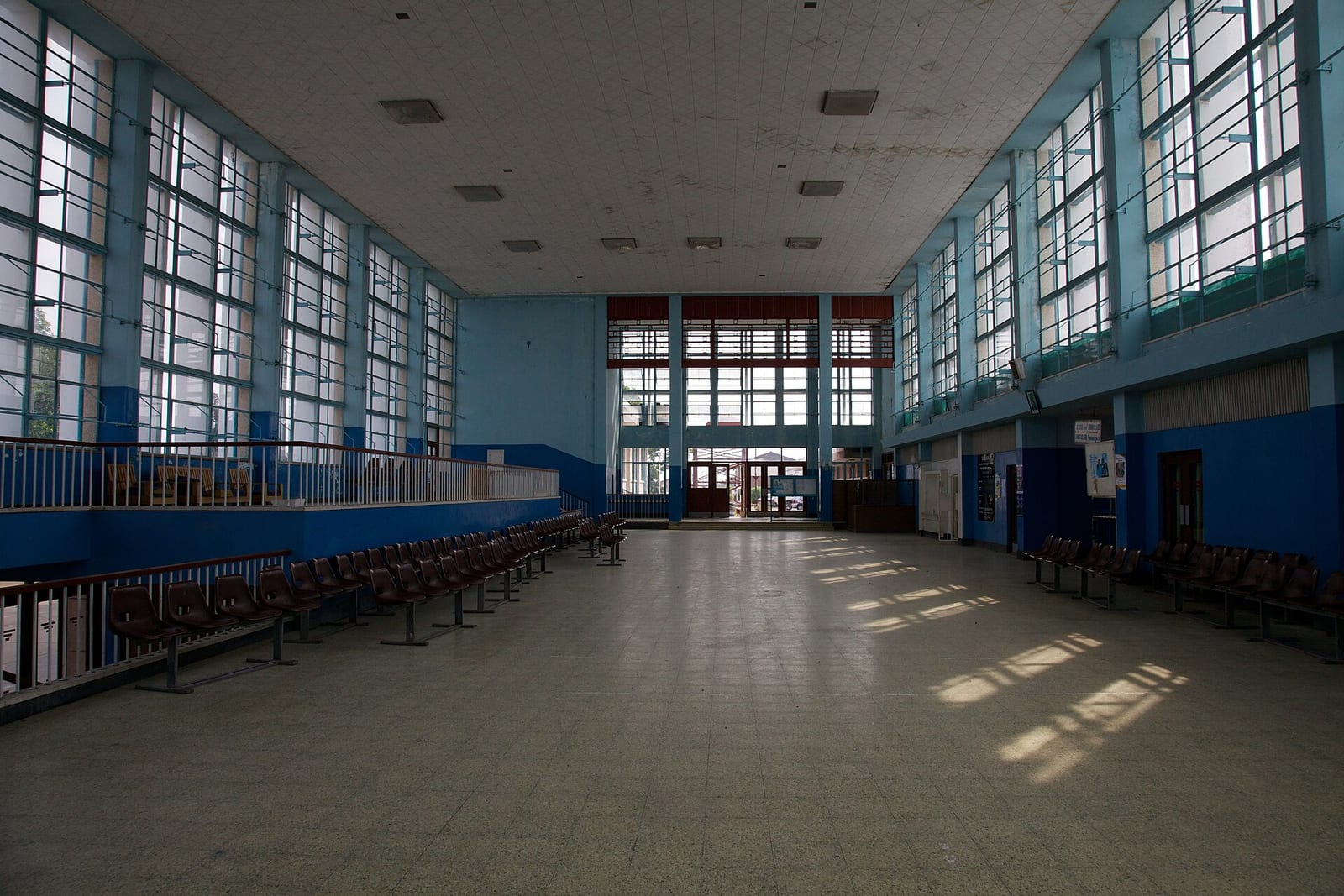
The TAZARA terminal in Dar es Salaam is a large, low, Chinese-built modernist building a few kilometres out of the centre, and it has the particular atmosphere of a station built for far more trains than it now sees. In 2008, when Beijing hosted the Olympics, the Tanzanian leg of the torch relay started here.
The Mukuba leaves in the late afternoon on a Friday.
The first night, and the Selous
The line runs west out of the coastal strip through Pwani region, and by the time you have had supper it is dark. You will sleep through the first stretch.
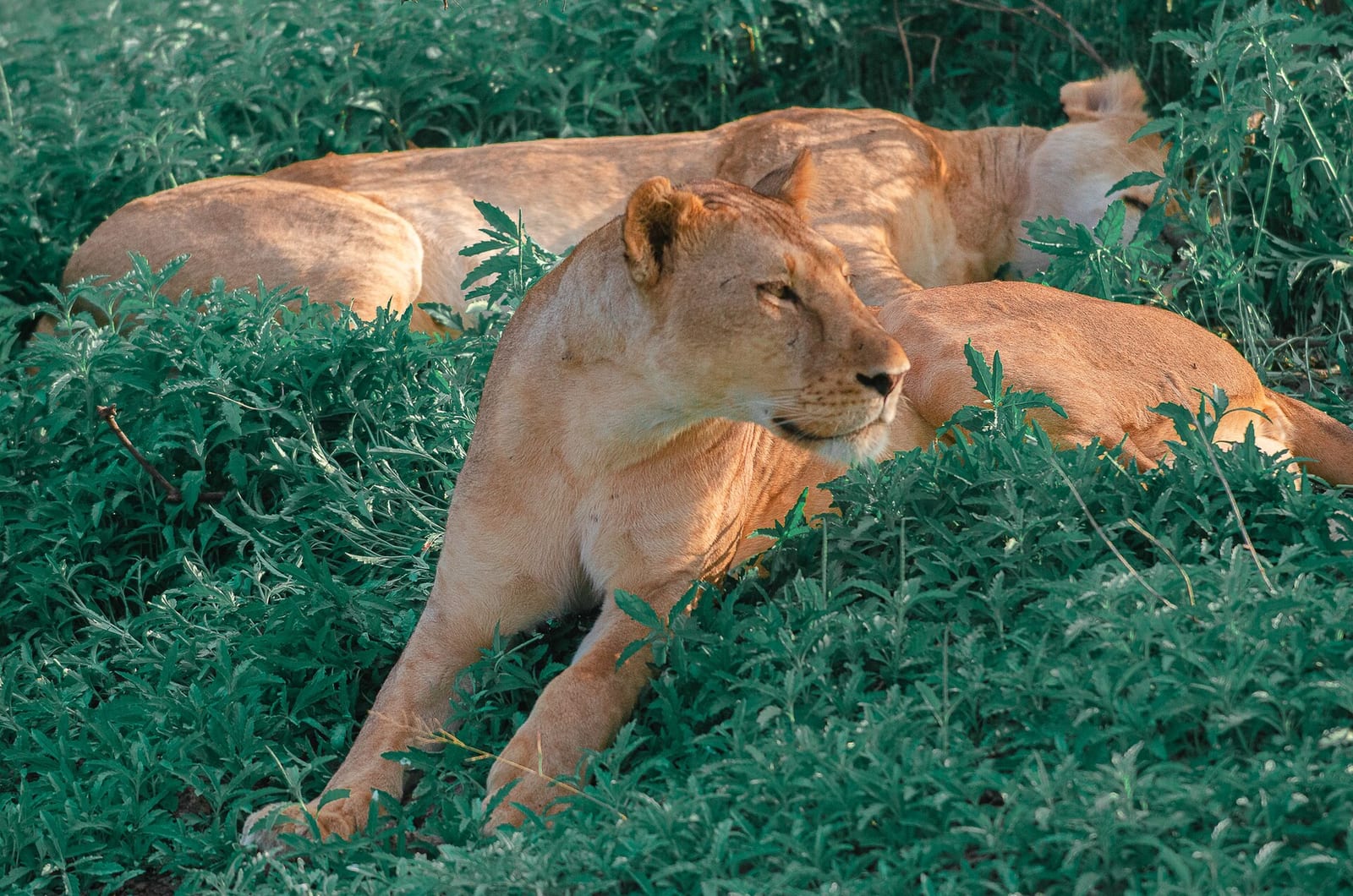
You wake in Nyerere National Park — the Selous, one of the largest protected areas on the planet — and this is the part nobody quite believes until they have done it. The railway simply runs through it. There is no fence, no game drive, no guide. There are giraffe standing above the scrub, and elephant, zebra, antelope and warthog, all of them entirely indifferent to a passing train because they have been listening to this one since 1975.
The train crosses the Great Ruaha River for the first time in here.
Nobody stops for photographs. Sit by a window and pay attention.
Into the mountains
Beyond the Selous the line cuts through the fertile Kilombero valley and skirts the Kibasira swamp, then reaches Kidatu — where a metre-gauge branch runs off to meet Tanzania's Central Line, and where a break-of-gauge transshipment station was built in 1998, because TAZARA is Cape gauge and the rest of Tanzania's railways are not.
Then comes the hard part, and the best part.
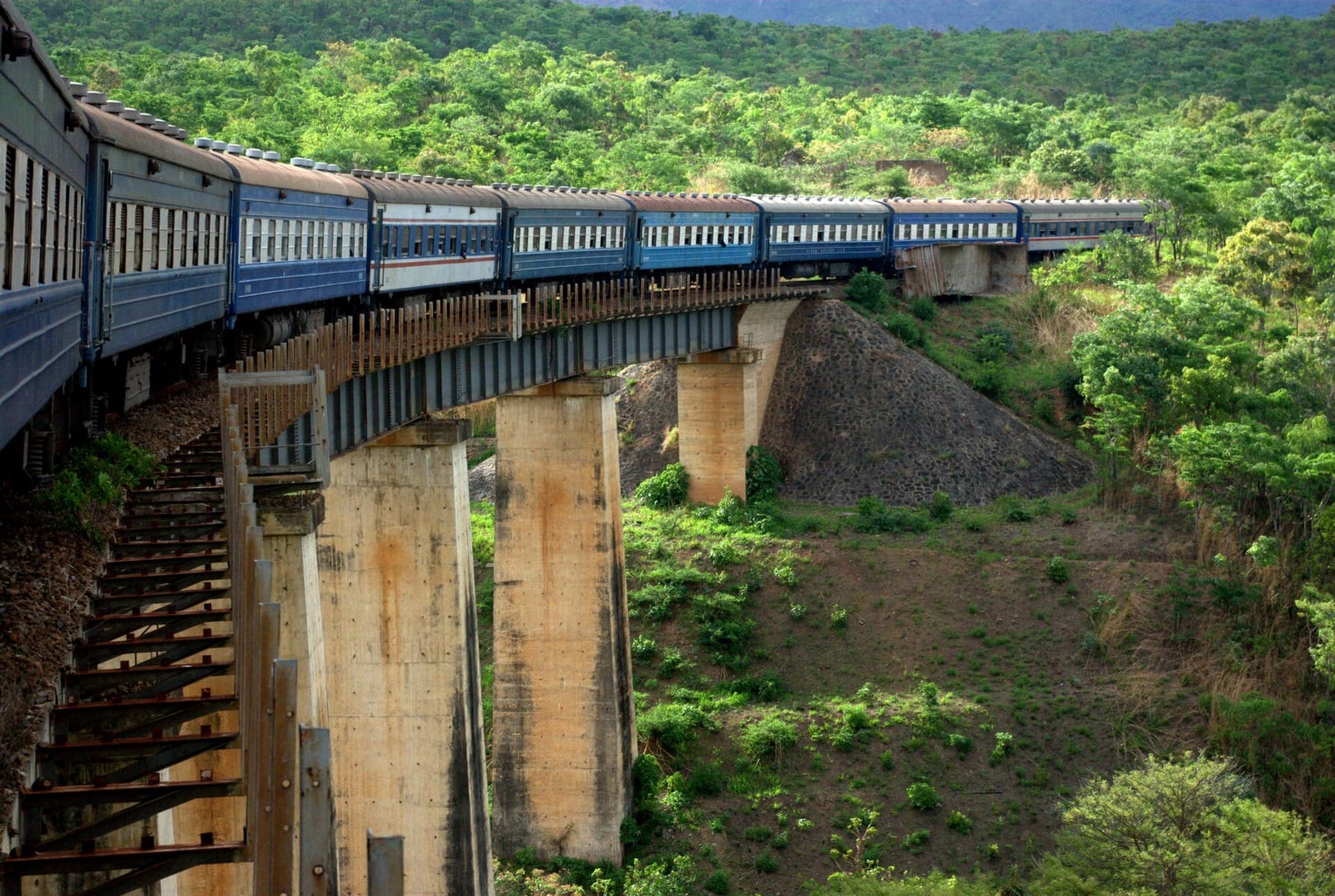
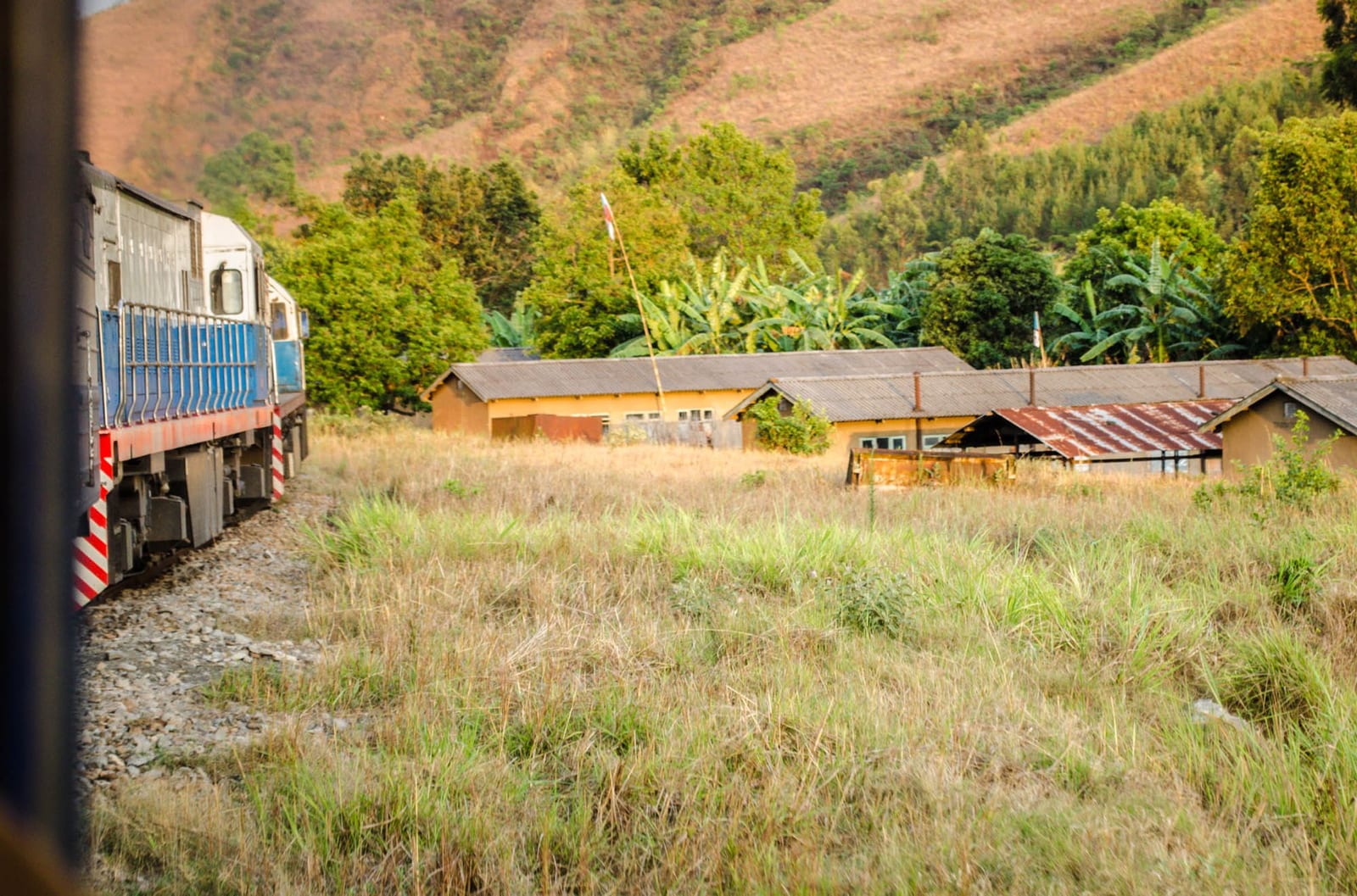
Mlimba, at 550 metres, means "the Kingdom of Elephants". Makambako, 158 kilometres further on, means "the Place of Bulls". Between the two the railway climbs into the Udzungwa Mountains on 46 bridges and 18 tunnels, with heavy rainfall requiring drainage works built into almost every structure. Nearly thirty per cent of all the engineering on the entire 1,860-kilometre railway is concentrated in a ten-mile stretch of this section.
The showpiece is the bridge over the Mpanga River, standing 160 feet above the water on three tall pillars. The longest bore is Irangi No. 3, a mile and a half.
If you only ride one part of this railway, ride this one — and there is a way to, because TAZARA's domestic Udzungwa train runs twice a week between Kidatu and Makambako.
The high plateau
Above Makambako the air is noticeably cooler and sharper: this is the tea and coffee country of Njombe, with the Udzungwa mountains behind and the Kipengere Range ahead. Railway and highway run side by side toward Mbeya, and just beyond it, at Uyole, the line touches its summit — 1,789 metres.
At Tunduma you cross into Zambia. Expect the border formalities to take a while; officials work through the train.
Zambia
The Zambian half is a different railway to look at: emptier, flatter, higher, running south-west across the plateau through Nakonde, Kasama, Mpika, along the northern foothills of the Muchinga Mountains past Serenje and Mkushi. Mwenzo, at 1,660 metres, is the highest point in Zambia.
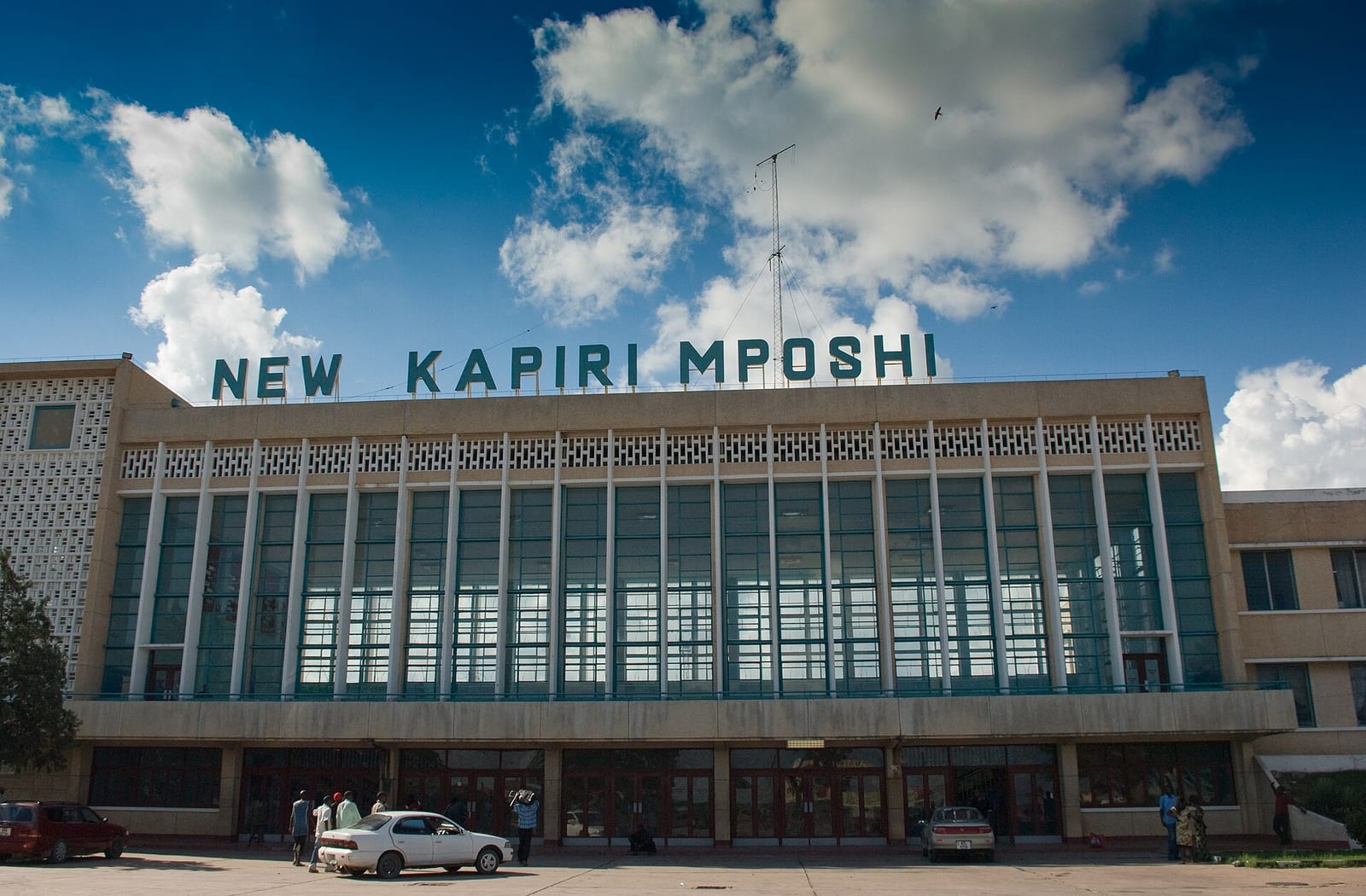
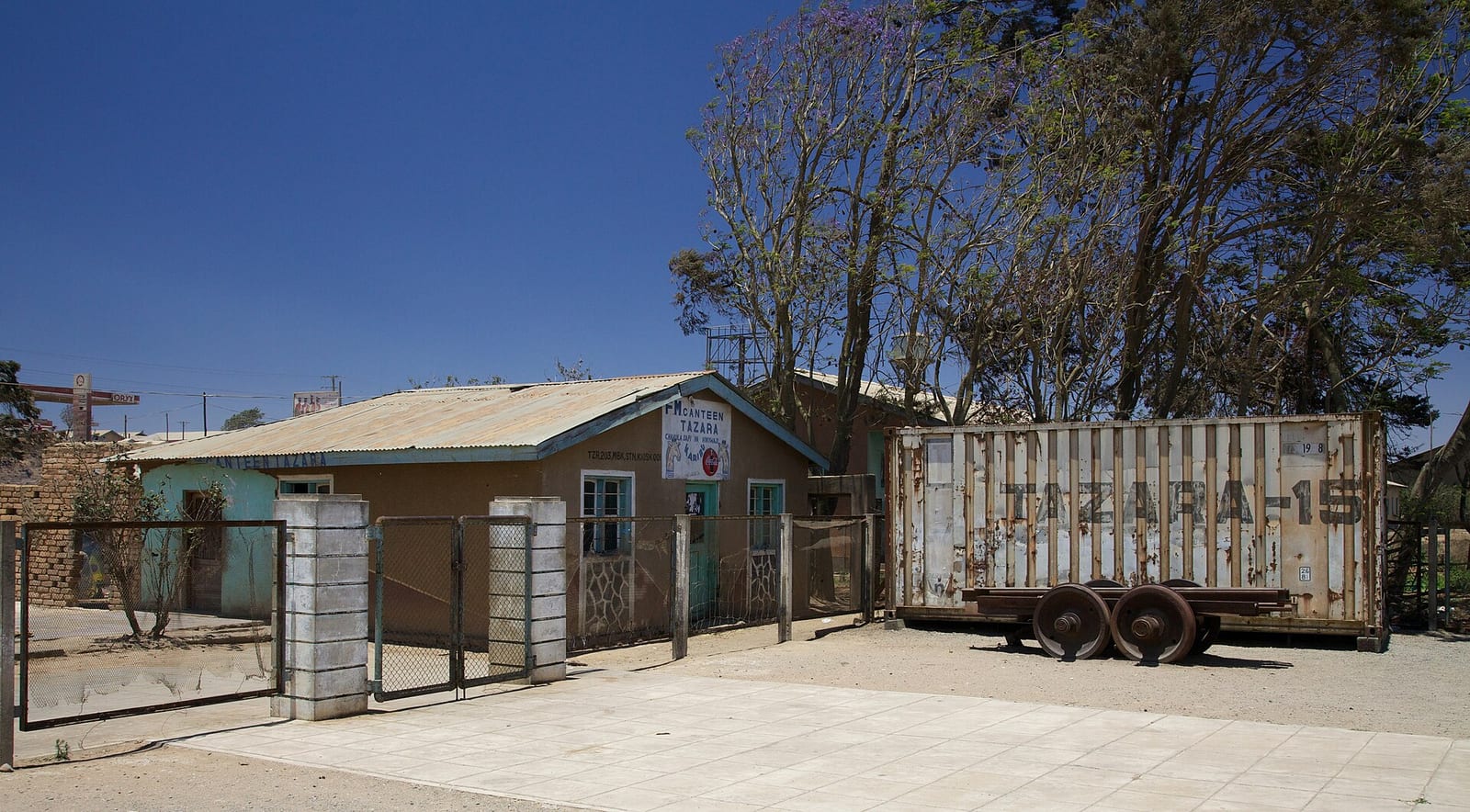
The stations out here are large concrete structures with almost nothing around them, built in the 1970s for a traffic that never came in the volumes anyone hoped.
The train ends at New Kapiri Mposhi, 1,274 metres above the sea and a couple of hours north of Lusaka, where TAZARA meets Zambia Railways.
On board
Three classes. First is a two-berth compartment, second is four or six berths, third is seating. Compartments are segregated by sex unless you book a whole one. There is a restaurant car, and it works — but its stock is limited, and the honest advice is to bring supplies.
What you should not bring is a schedule. This is a railway TAZARA itself describes as constrained by ageing equipment, and delays of many hours are normal. The forty-six hours in the timetable is a starting point.
The windows
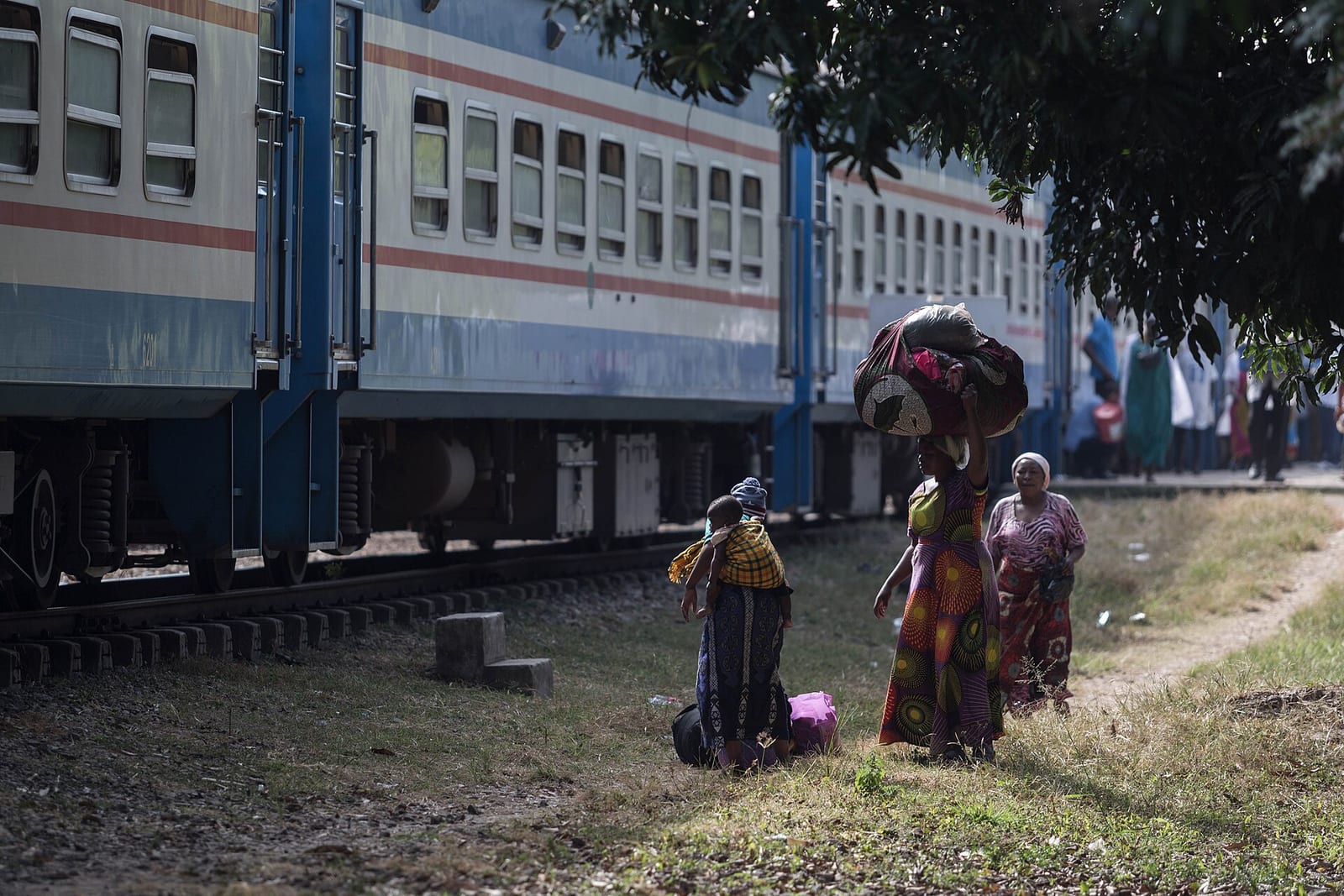
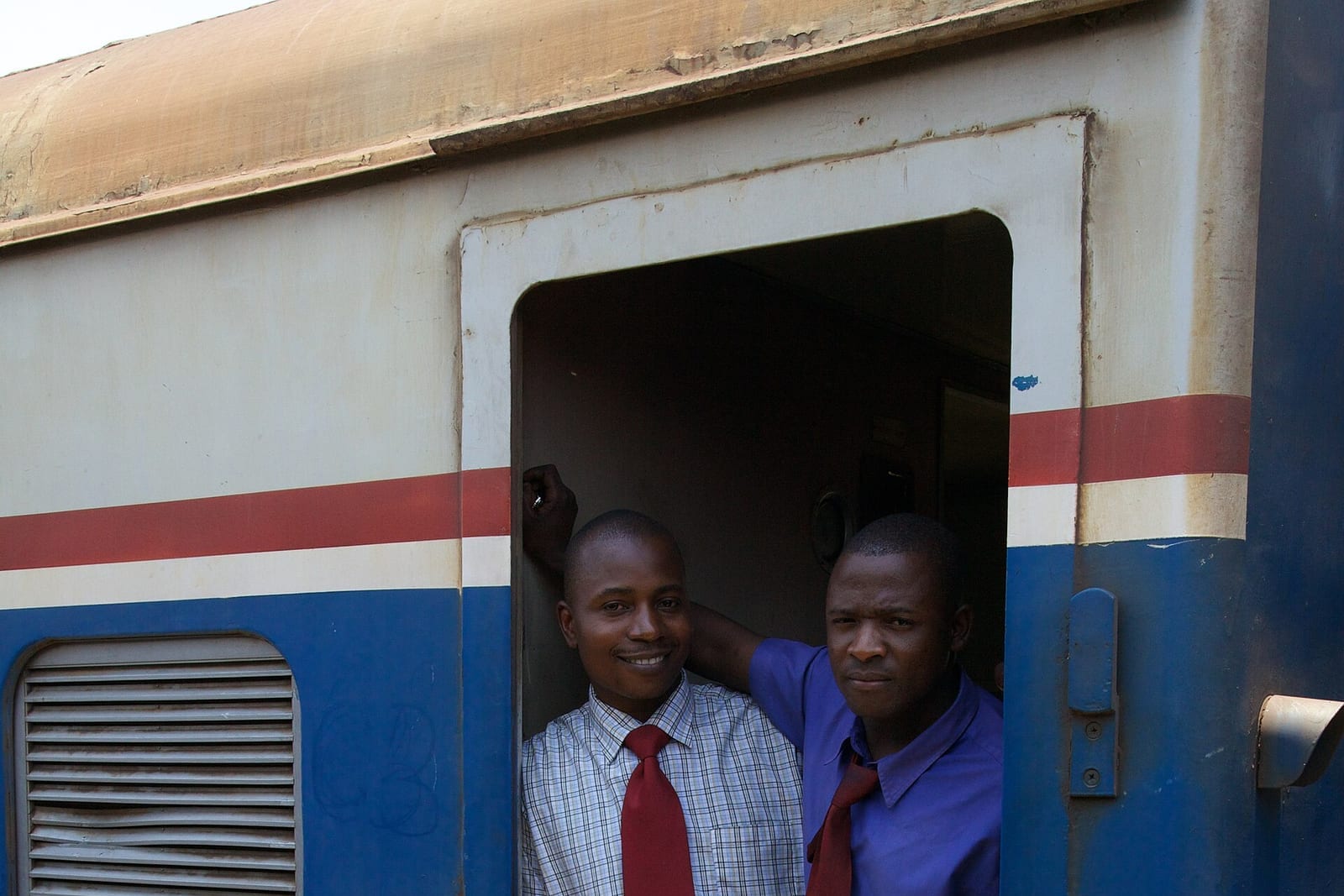
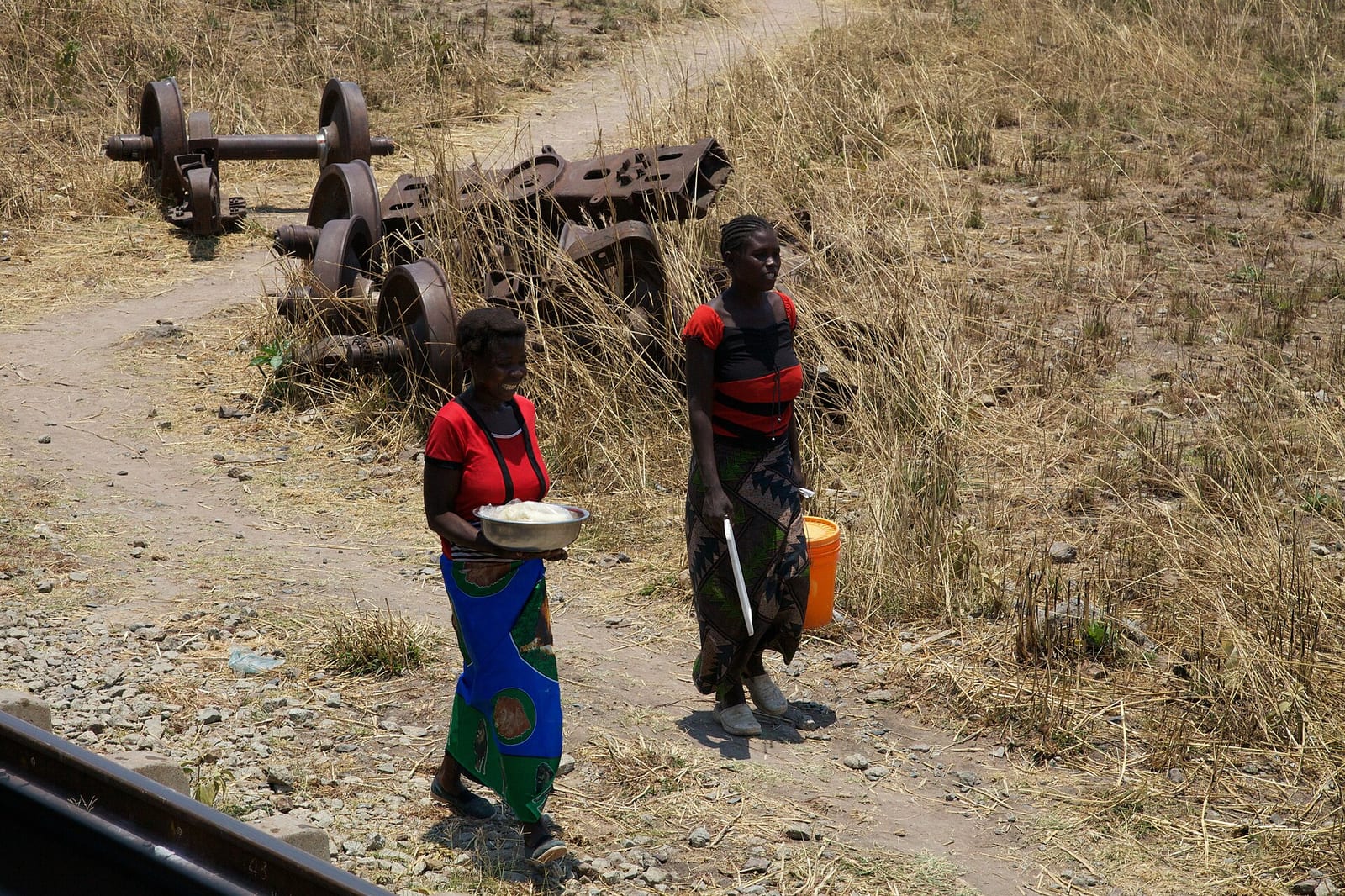
At every stop — and there are a great many — the train is met by sellers. Fruit, maize, cassava, fried fish, boiled eggs, drinks, all held up to the windows and paid for through them.
This is not a tourist performance. When the railway was built, Tanzania resettled villagers into ujamaa communities along it; when the economy liberalised in the 1990s, those villages started using the train to trade. Forty years on, buying your lunch through a window at a halt in the middle of Tanzania is simply how this railway works, and it is the best thing about it.
Practical notes
- Take water, food, a torch and toilet paper. All of it.
- Bring your passport to hand for the border at Tunduma, and check visa requirements for both countries before you go.
- Dry season, June to October, is much the more reliable time — the corridor floods, and drainage upgrades are a priority of the current rehabilitation.
- Expect delay. Then expect more.
Along the route
Richard Stupart / Wikimedia Commons · CC BY 2.0A railway built to break a blockade
Zambia is landlocked, and in the 1960s every route from its Copperbelt to the sea ran through white-minority-ruled territory that could squeeze it. Tanzania and Zambia asked the West to build them a way out and were refused. China said yes — and uhuru is Swahili for freedom.Richard Stupart / Wikimedia Commons · CC BY 2.0Five years, 50,000 Chinese, 160 dead
Twelve Chinese surveyors walked for nine months from Dar es Salaam to Mbeya to pick the route. China sent about 50,000 people and some 60,000 Africans worked alongside them. Over 160 workers died. It cost US$406 million — then the largest foreign-aid project China had undertaken.Erasmus Kamugisha / Wikimedia Commons · CC BY-SA 4.0Through the Selous, and over the mountains
The line runs straight through Nyerere National Park, where giraffe, elephant and zebra have long since stopped looking up at trains. Then it climbs: 158 kilometres over the Udzungwa Mountains on 46 bridges and 18 tunnels.A bit of history
Culture & experiences along the way
Davidktorza / Wikimedia Commons · CC BY-SA 4.0Two nights, and a continent
It takes about forty-six hours — two nights on board — to cross from the Indian Ocean to the middle of Zambia. There are first, second and third class; first is a two-berth compartment. You will watch the coast turn to game reserve, game reserve to mountains, mountains to the high plateau, and you will do it very slowly. Take food and water beyond what you think you need.David Brossard / Wikimedia Commons · CC BY-SA 2.0Buy your lunch through the window
At every halt the train is met by people selling food — fruit, maize, fried fish, boiled eggs — held up to the windows. In the 1970s Tanzania resettled villagers into ujamaa communities along the new railway; when the economy liberalised in the 1990s those villages started trading along it. This is one of the few long-distance trains anywhere where the lineside economy is genuinely the point.Erasmus Kamugisha / Wikimedia Commons · CC BY-SA 4.0Watch for game from the window
Between roughly the fourth and tenth hours out of Dar es Salaam the train runs through the Selous. This is not a game drive and nobody stops for photographs, but it is a real chance — giraffe are the ones people see most, standing above the scrub. Sit on either side; it makes no difference. Daylight does: the westbound train leaves in the afternoon, so the reserve comes early the next morning.Timetables
Read all of this before you plan around the TAZARA. Cross-border services were suspended for twenty months and only came back in February 2026, at half the previous frequency.
What is running (July 2026)
Cross-border passenger services resumed on Tuesday 10 February 2026, after a suspension since June 2024 caused by technical problems.
They came back reorganised. TAZARA halved the weekly cross-border trips from four to two, so that it could — in its own words — "consolidate coaches and locomotives to strengthen the Mukuba service".
- The Kilimanjaro is cancelled.
- The Mukuba runs once a week in each direction.
- The domestic Udzungwa continues, twice a week, between Kidatu and Makambako.
The Mukuba Express
| From New Kapiri Mposhi (Zambia) | Tuesdays |
| From Dar es Salaam (Tanzania) | Fridays |
| Journey time | About 46 hours |
| Distance | 1,860 km |
| Classes | First (2 berths), second (4–6 berths), third (seats) |
On the departure times, TAZARA contradicts itself. Its own timetable page gives 16:00 from New Kapiri Mposhi on Tuesdays and 15:50 from Dar es Salaam on Fridays. Its own announcement of the February 2026 resumption gives 14:00 from New Kapiri Mposhi. We have used the timetable page, but this is precisely the sort of thing to confirm directly — the contact details are below.
The Udzungwa — the section actually worth planning for
If the full two-night crossing is too much, the domestic Udzungwa runs twice weekly between Kidatu and Makambako. That is the 158-kilometre climb through the Udzungwa Mountains on 46 bridges and 18 tunnels — the hardest engineering on the whole railway, and by a distance the most spectacular part of it. Far easier to fit into a Tanzanian trip than forty-six hours.
Fares
TAZARA does not publish a fare table we could verify, and we will not invent one. Fares are low by international standards and are payable in local currency. Ask when you book.
How to check and book
- Website: tazarasite.com (opens in a new tab)
- Email: info@tazarasite.com
- Telephone: +255 739 998 855
Book at the station in Dar es Salaam or New Kapiri Mposhi, ideally several days ahead — with one train a week, first-class berths go early.
Why this needs checking, not assuming
The record speaks for itself. Traffic collapsed after 1990 as Zambia gained other export routes; by 2008 the railway was described as being on the verge of collapse; by 2012 it had ten working main-line locomotives. TAZARA estimates it needs US$770 million to become commercially viable. Its formal status is minimally operational.
Rehabilitation is genuinely under way — a memorandum signed at the China–Africa forum in Beijing in September 2024, and reporting in March 2025 of US$1.4 billion from CCECC, with $1 billion for track, safety and efficiency and $400 million for new locomotives and wagons, under a public-private partnership. Flood-prone sections are being prioritised for drainage.
None of that means there will be a train on the day you want one. Ask first.
Getting to and from the ends
Dar es Salaam: the TAZARA terminal is a few kilometres from the city centre; taxis are easy.
New Kapiri Mposhi: about two hours north of Lusaka by road, with frequent buses. Note that TAZARA's station is New Kapiri Mposhi, separate from Zambia Railways' own station in the town.
Operator: Tanzania–Zambia Railway Authority — tazarasite.com (opens in a new tab). Position as of July 2026.
Tickets
Book at the station, in person, several days ahead. With one train a week each way this is not a service you can leave to chance, and TAZARA publishes no fare table we could verify, so no figure is printed here. Pay cash in local currency — shillings at the Dar end, kwacha at Kapiri Mposhi. First class is a two-berth compartment and the one to want; compartments are segregated by sex unless the whole compartment is booked. Hotels in Dar es Salaam will often send someone to buy for you.
The train crosses an international frontier at Tunduma / Nakonde, so check the visa requirements for both countries and keep the passport accessible. Take water, food, a torch, a power bank and warm layers for the plateau. And leave time: delays run to hours, not minutes — do not book a flight out for the day the train is due to arrive.
Book your tickets
The Mukuba Express
The one cross-border train, about forty-six hours
Dar es Salaam to New Kapiri Mposhi, once a week each way, in three classes.
Book Tickets (opens in a new tab, on TAZARA)via TAZARAThe Udzungwa · Kidatu to Makambako
The domestic Tanzanian service, twice a week
The mountain climb — the hardest and best section — in a manageable day.
Book Tickets (opens in a new tab, on TAZARA)via TAZARARail Passes
No rail pass covers the TAZARA. Interrail and Eurail are European schemes, and neither Tanzania nor Zambia is among the 33 countries in Interrail's list of covered railway companies (opens in a new tab). Tickets are bought in person at the station, in local currency, several days ahead.
Checked October 2026 against Interrail's list of covered railway companies (opens in a new tab).
Places to Visit
The TAZARA runs through and past some of the greatest wilderness in Africa, and ends in the Zambian Copperbelt.
Three places on the route did not take a card. The Kilombero valley beyond the Selous is the fertile country the line crosses — rice, sugar cane, the great Kibasira swamp and a river alive with hippo — and Ifakara is its town. Kasama, the centre of Bemba country in northern Zambia, is the jumping-off point for the Chishimba Falls as well as for Kalambo. And Kapiri Mposhi, where the line ends, is a junction rather than a destination: Ndola, Kitwe and the mining towns of the Copperbelt are a short way west, and Lusaka two hours south.
If you continue on to Livingstone, the Royal Livingstone Express runs a steam-hauled dinner train out onto the Victoria Falls Bridge.
 Rob / Wikimedia Commons · CC BY 2.0 · cropped
Nyerere National Park
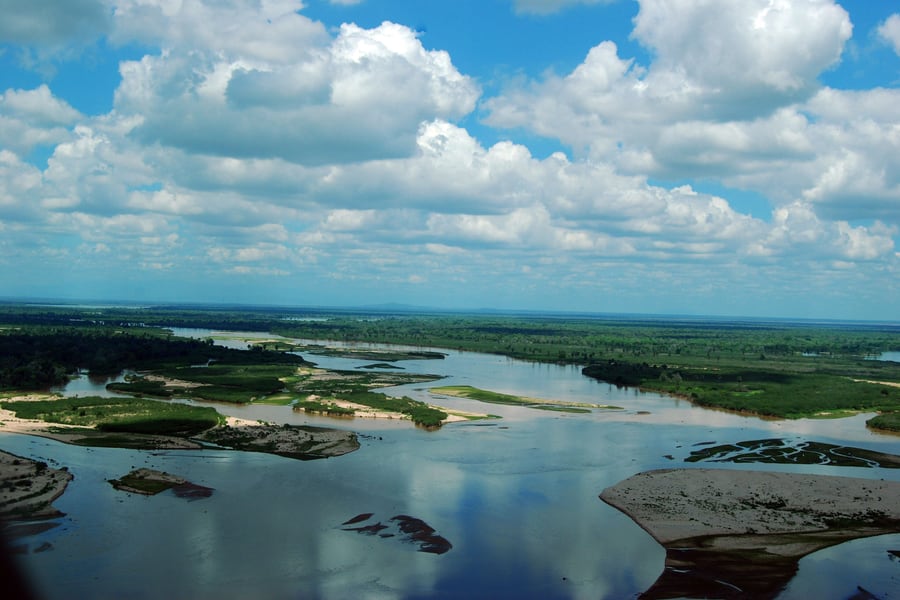
Gazetted in 2019 out of the northern Selous and at 30,893 km² now the largest national park in Tanzania — bigger than Belgium, and one of the great protected areas anywhere. The Rufiji braids through the middle of it in sandbanks and side channels, carrying one of Africa's largest populations of hippo and crocodile. Most visitors fly in to the northern camps. The train gives you an hour or two of it for nothing.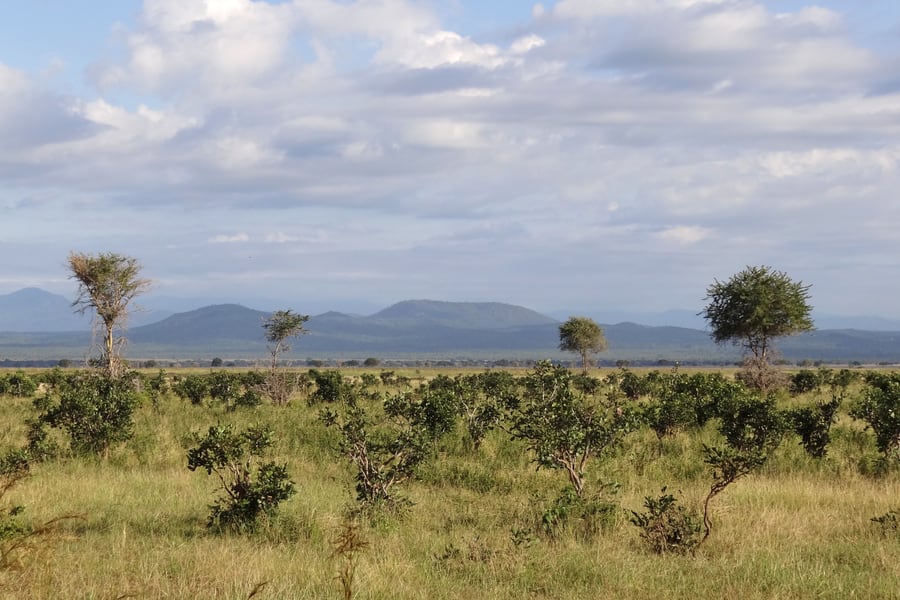 Adam Jones / Wikimedia Commons · CC BY-SA 2.0 · cropped
Mikumi National Park
The line dips south of Mikumi, and Mikumi is the practical one: reachable by road from Dar in a morning, where the Selous needs a flight. The Mkata floodplain is open country with hills around it — lion, giraffe, elephant, zebra and buffalo on grass rather than in thick bush, which makes it much the easier place to actually see things. Worth a couple of nights on the way out or back rather than a rushed day trip.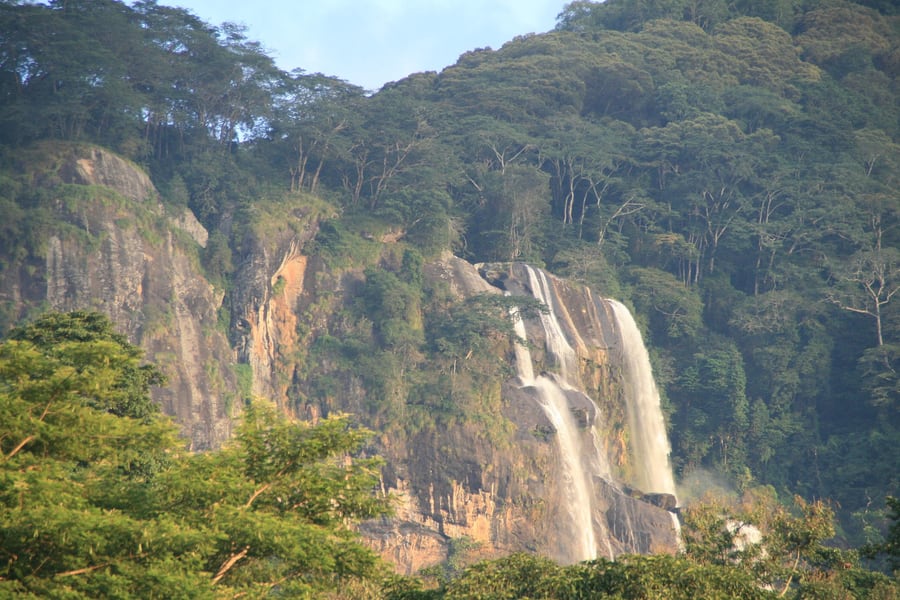 Marc Veraart / Wikimedia Commons · CC BY 2.0 · cropped
Udzungwa Mountains
Beside the hardest stretch of the whole railway, and a rainforest park rather than a savannah one: no roads inside it at all, only walking trails climbing to waterfalls through forest full of primates found nowhere else on earth — the Iringa red colobus and the Sanje mangabey among them. Sanje Falls is the set piece, dropping in stages down a forested cliff. Get off at Mlimba or Kidatu; both are stations on the line.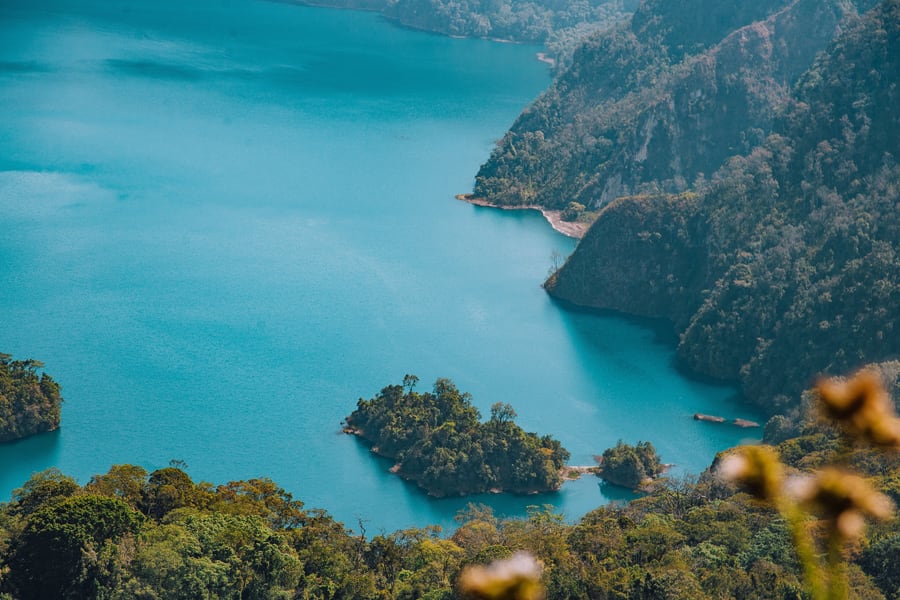 Daniel Msirikale / Wikimedia Commons · CC BY-SA 4.0 · cropped
Lake Ngozi
Around Mbeya the country turns cool, green and high — tea, coffee and bananas rather than bush. Ngozi is a crater lake in the Poroto mountains, reached on a steep forest walk that comes out abruptly on the rim above a long sheet of turquoise water. Nearby is the Kitulo Plateau, called the Garden of God locally and carpeted with orchids in the wet season; Matema on Lake Nyasa is a couple of hours further on.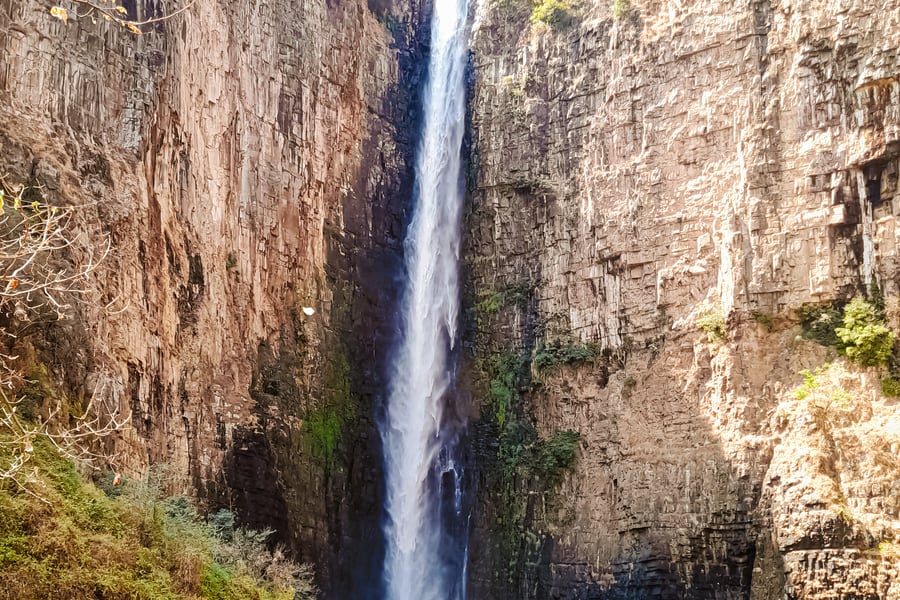 Humphrey Kaburu / Wikimedia Commons · CC BY-SA 4.0 · cropped
Kalambo Falls
A single uninterrupted drop of 235 m on the Tanzanian border, among the highest in Africa. What makes it extraordinary is underfoot: the site has been occupied for over 447,000 years, and in 2023 archaeologists reported worked, notched wooden beams from the riverbank dated to about 476,000 years ago — the oldest known wooden structure anywhere, built by a hominin species that was not yet us.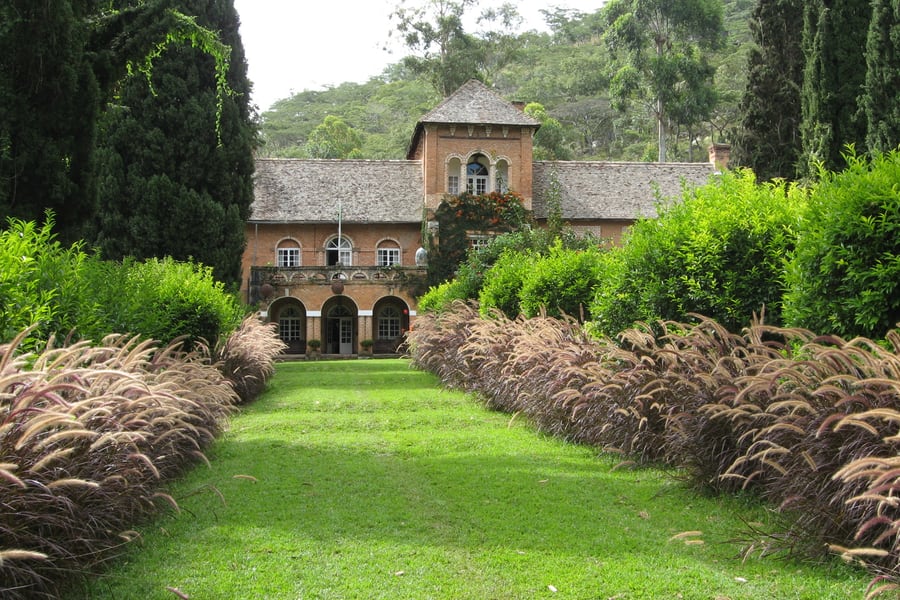 Marcus Rozbitsky / Wikimedia Commons · CC BY 2.0 · cropped
Shiwa Ng'andu
An English country house in the Zambian bush, begun in 1920 by Sir Stewart Gore-Browne and still being added to in the 1950s: gatehouse, tower, colonnaded porticoes, terraces and a library, at the centre of a 12,500-hectare estate that ran its own schools, hospital, shops and post office. One of the strangest buildings in Africa, and still a family concern — Gore-Browne's eldest grandson runs it, with tours and rooms for visitors.Where to Sleep
You sleep on the train for two nights of this journey. The question is where you sleep at each end, and whether you break it in the middle.
Dar es Salaam
The TAZARA terminal is a few kilometres out of the city centre, so anywhere central works with a taxi. The city centre and Upanga have business hotels; the Msasani peninsula and Oyster Bay, north of town, are where the beaches, the seafront hotels and most of the restaurants are, and are pleasanter for a night before or after.
Given a Friday afternoon departure, arrive with the day to spare — the ferry to Zanzibar is two hours and makes an obvious add-on.
Breaking the journey: Mbeya
The natural place to stop, near the summit of the line and about two-thirds of the way to Zambia. A working highland town rather than a resort, with straightforward hotels and guesthouses, cool air, and access to the Kitulo Plateau and Lake Nyasa. If forty-six hours in one go does not appeal, this is where to split it.
The mountain section: Udzungwa
Mang'ula, at the gate of Udzungwa Mountains National Park and near Kidatu, has lodges and guesthouses aimed at walkers. This is the best base if you are riding the domestic Udzungwa train over the mountain section rather than the full crossing, and the forest walks are excellent.
Selous / Nyerere National Park
There are safari camps along the Rufiji, most reached by air or road rather than by the train, ranging from tented camps to genuinely expensive lodges. The railway passes through the northern part of the park but is not a practical way to arrive at a camp — treat the two as separate trips that happen to share a landscape.
The Zambian end
New Kapiri Mposhi itself has very little. Most travellers go straight on: Lusaka is about two hours south by bus or taxi and has the full range of city hotels, while the Copperbelt towns of Ndola and Kitwe are a similar distance west.
Arrange your onward transport in advance rather than arriving after two days on a train and negotiating in the dark — and remember the train may well be hours late.
Further afield in Zambia
Shiwa Ng'andu, near Mpika on the line, takes guests in the extraordinary 1920s manor house and at a nearby lodge with hot springs — one of the more memorable places to stay anywhere in Africa. South Luangwa, Zambia's best game park, is reached from Mpika or Chipata.
A note on timing
Because the Mukuba runs once a week each way, a missed connection costs you seven days. Build slack at both ends, and do not book an international flight for the arrival day.
Questions or corrections
Planning this trip and stuck on something, or spotted a time, fare or detail that has changed? Send us a message about The TAZARA Railway. We read every one, and we update this page when something has changed.