Abakan to Tayshet
Arthur Jameson / Wikimedia Commons · CC BY-SA 3.0 · cropped
- Distance647 km
- Duration12 hours 35 minutes
- Best seasonJune to September, when the climb is in daylight
Introduction
Russians call this railway the Трасса мужества — the Track of Courage — and for once the name is not decoration. Six hundred and forty-seven kilometres of single track run east from Abakan, the capital of Khakassia, to Tayshet in Irkutsk Oblast, and the middle two hundred of them climb straight over the Eastern Sayan through nine tunnels, a viaduct sixty-five metres above a creek and two full horseshoe turns. It was surveyed by a party that walked into the mountains in October 1942 and never came out, built between 1958 and 1965 by some thirty-five thousand Komsomol volunteers, and wired for electric traction while the earthworks were still going in — the first railway in the Soviet Union to be electrified as it was built rather than afterwards.
Today it is a freight artery. Coal and timber move over it in trains of a hundred and forty wagons, and the passenger service is an afterthought: one through train, running on alternate days, which leaves Abakan at 07:25 and reaches Tayshet at nine that evening. Twelve hours and thirty-five minutes, six hundred and forty-seven kilometres, a time-zone change somewhere in the forest between Abakumovka and Saranchet, and not one tourist coach anywhere in the formation.
That is exactly why it is worth doing. The line crosses the Yenisei and the Tuba in open lake-steppe, climbs the Kazyr and the Kizir into the taiga, tops out at Shchetinkino at around eight hundred metres — the highest station on the whole Krasnoyarsk Railway — and then runs down the Mana and out along the southern flank of the Trans-Siberian to the junction where the Baikal– Amur Mainline begins. Very few foreigners have ever ridden it.
The Journey
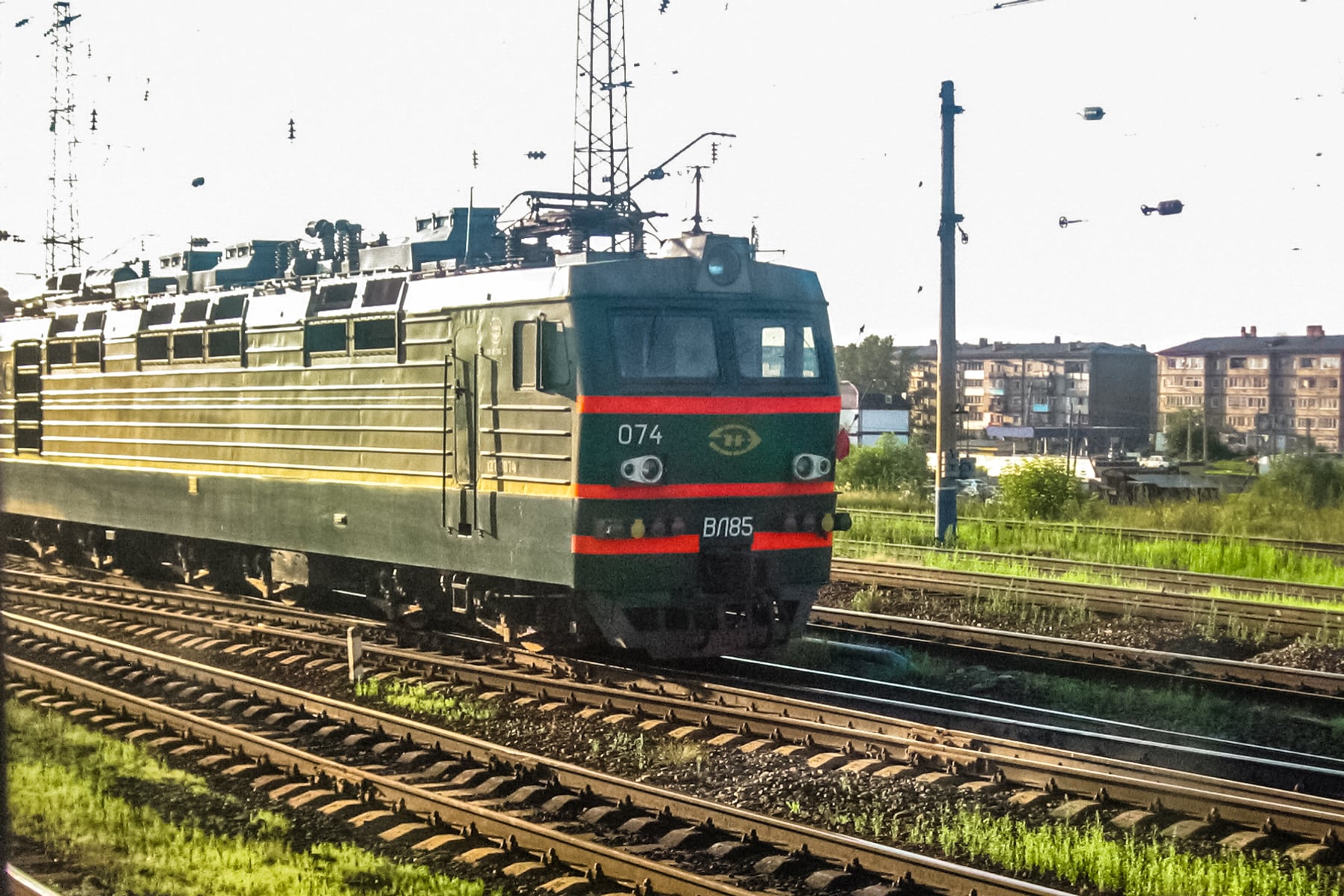
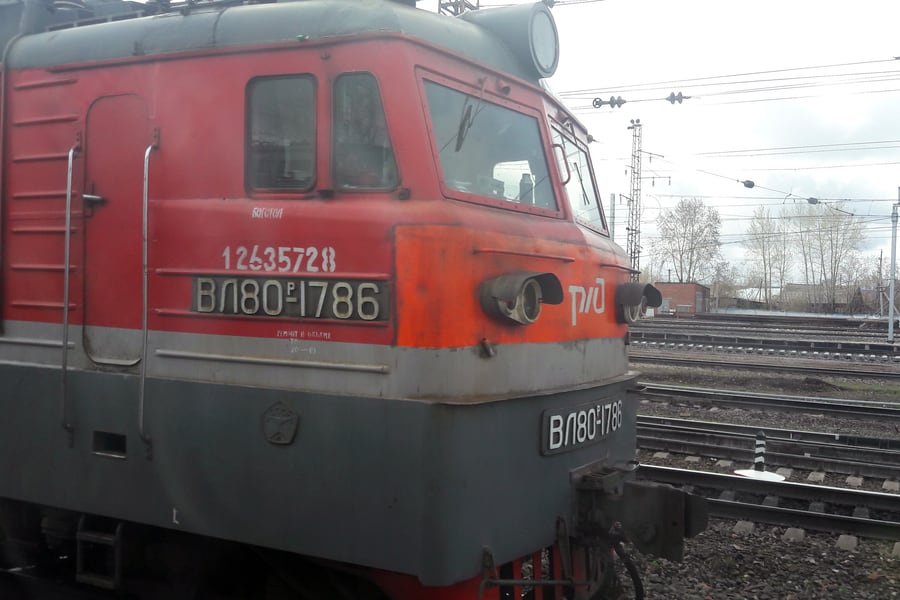
Train 138 stands at Abakan in the half-light of a Siberian morning with a red-and-grey electric locomotive on the front and, if you are lucky, one of the big twelve-axle VL85s on an adjacent road. The formation is ordinary Russian long-distance stock: open-plan platskart and four-berth kupe, no observation car, no commentary. Everything this journey has to offer is outside the window, and for the first hour it offers steppe.
Abakan sits at the mouth of its own river where it joins the Yenisei, in the Minusinsk basin — a bowl of forest-steppe ringed by mountains on every side, warm enough in summer to grow tomatoes and famous across Siberia for doing so. The train calls at Minusinsk twenty minutes out, crosses the Tuba on a long girder bridge with the bare shoulder of Tepsey standing over the water, and runs up the valley to Kuragino. This is the last easy ground for two hundred kilometres.
Into the Sayan
From Kuragino the railway turns north-east and begins to climb. The Kizir comes in, then the Kazyr, both of them fast, clear and boulder-strewn, and the forest closes over the line. Koshurnikovo — a railway settlement of a few thousand people named after the engineer who died surveying this ground — is the operating heart of the mountain section: the banking locomotives that push heavy trains up the grade are based here, and the station has kept a museum of the line's construction since 1964.
Beyond it comes the hardest stretch of railway in Krasnoyarsk Krai. Between Dzheb and Shchetinkino the track lifts at sixteen to eighteen in the thousand, turns through a hundred and eighty degrees twice, and threads three tunnels — the 2nd Dzhebsky, the 3rd Dzhebsky and the Kozinsky — with the Kozinsky viaduct slung between two of them, sixty-five metres above the ground. Shchetinkino station, at roughly eight hundred metres, is the summit and the highest station on the Krasnoyarsk Railway. Train 138 does not stop there; the daily Krasnoyarsk train does, for one minute, in the middle of the night.
Down the Mana, out to the Trans-Siberian
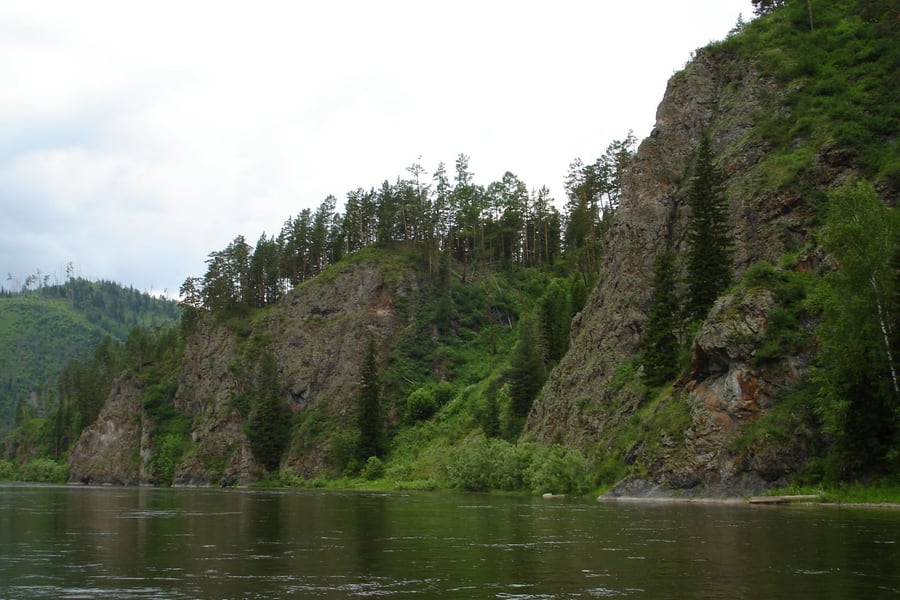
The descent runs through the two long bores — the Krolsky at 2,250 metres and the Mansky at 2,487, which was the longest railway tunnel in Asia when it opened — and comes out beside the Mana, a river of grey cliffs and rafting parties that Krasnoyarsk treats as its own back garden. At Sayanskaya the train stands forty-seven minutes, the longest booked stop of the day, while the locomotive is changed and the Uyar branch curves away north towards Krasnoyarsk.
After that the character changes completely. For the last two hundred and fifty kilometres the line runs due east, flat and fast, a few dozen kilometres south of the Trans-Siberian and parallel to it, through Irbeyskaya and Abakumovka and a string of halts with no road to them. Somewhere in here the clocks go forward an hour: Abakumovka keeps Krasnoyarsk time, Saranchet keeps Irkutsk time, and the timetable's two-hour gap between them is really one. The Biryusa appears, then the yards, and at nine in the evening the train draws into Tayshet — Trans-Siberian junction, western terminus of the Baikal–Amur Mainline, and the end of the South Siberian Mainline that began at Novokuznetsk, one thousand and thirty-four kilometres back.
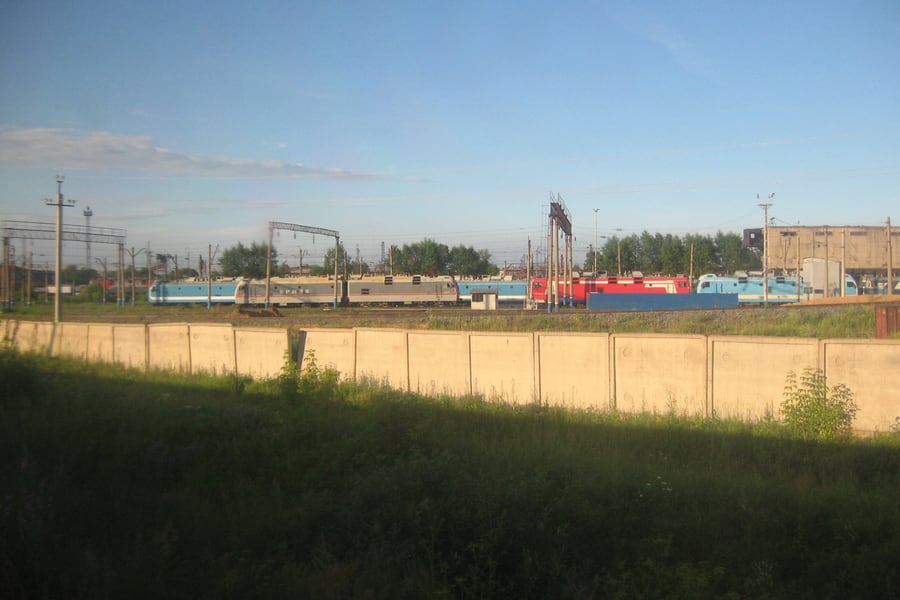
Along the route
 Завируха / Wikimedia Commons · CC BY-SA 4.0 · cropped
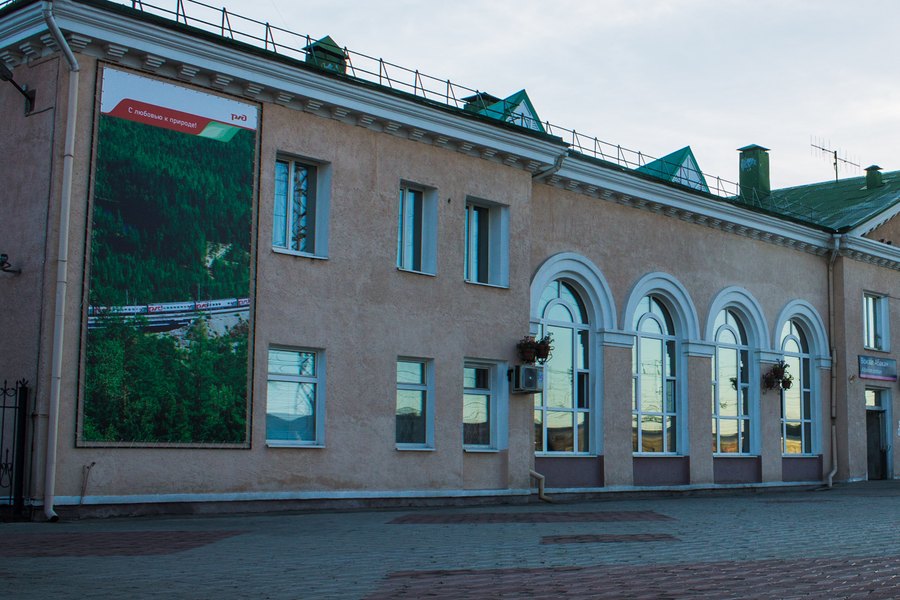
Out of the Minusinsk basin
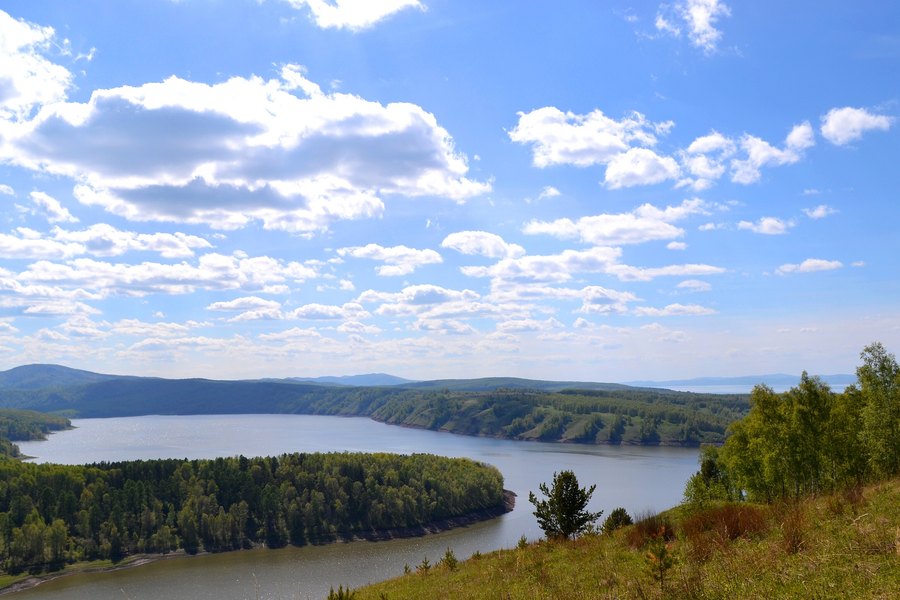
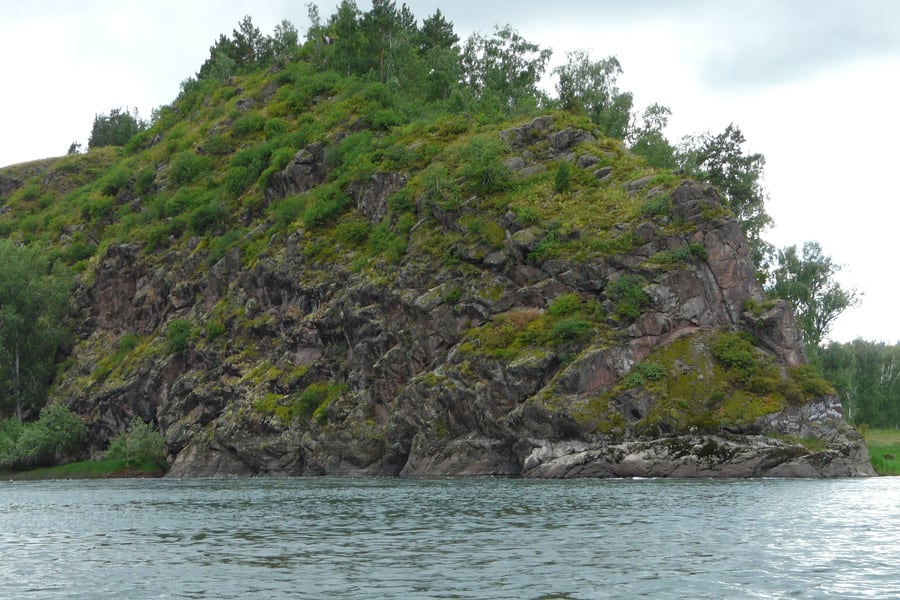
The first ninety minutes cross flat forest-steppe in a bowl of mountains — the warmest corner of southern Siberia. The line crosses the Tuba under the bare shoulder of Tepsey, then turns up the valley towards Kuragino.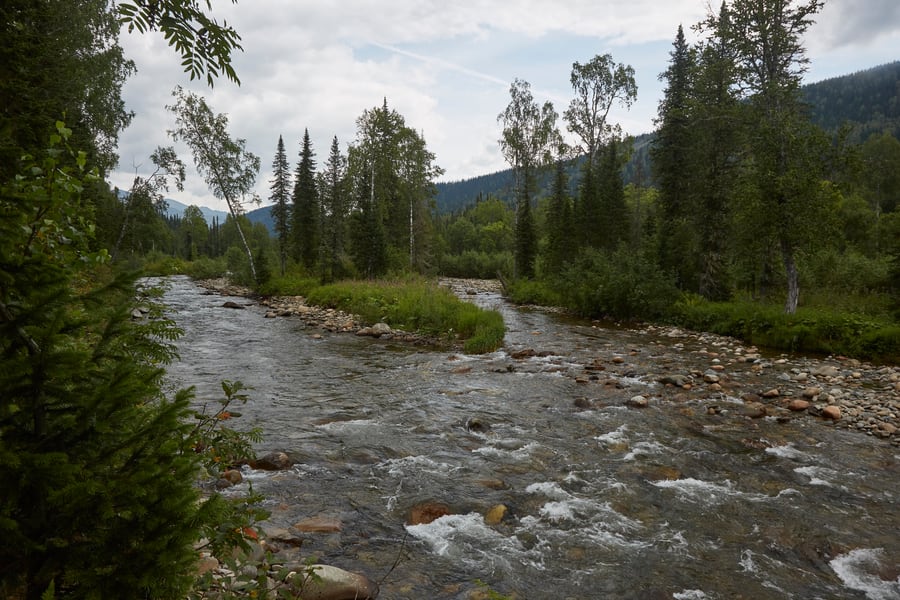 Aysa t / Wikimedia Commons · CC BY-SA 4.0 · cropped
Up the Kazyr and the Kizir
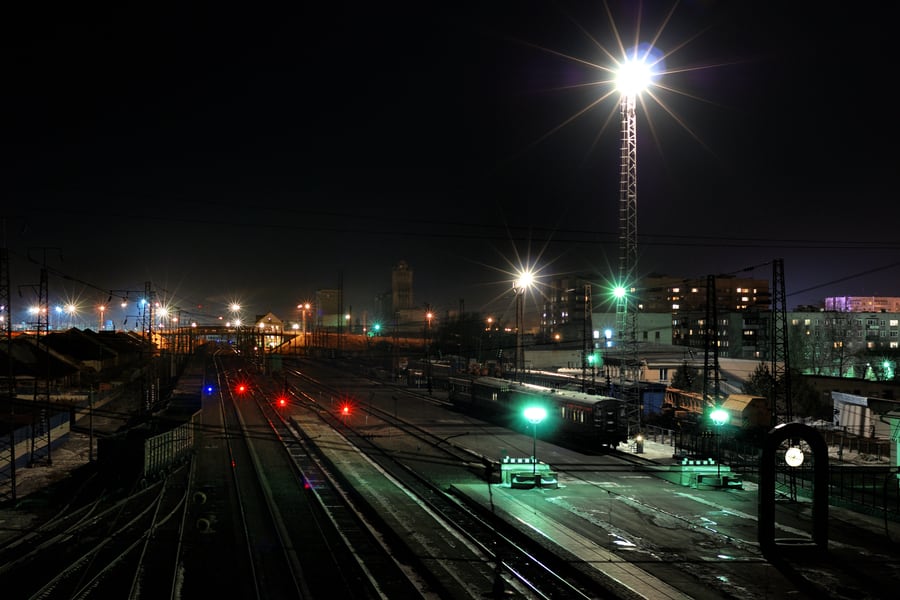
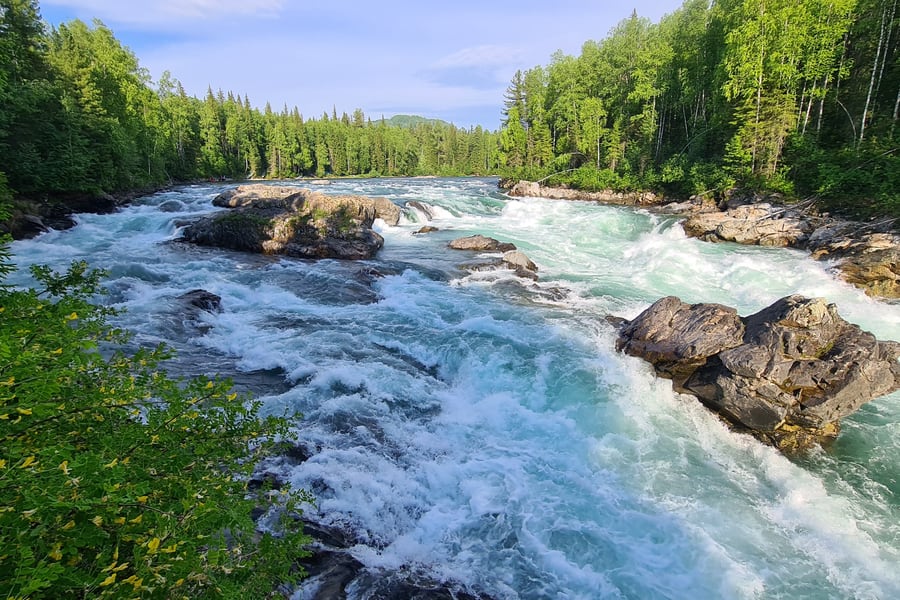
Past Kuragino the railway swings north-east into the Eastern Sayan alongside two fast, clear, boulder-strewn rivers. This is the ground the 1942 survey party walked into, and it is where the forest finally closes over the track.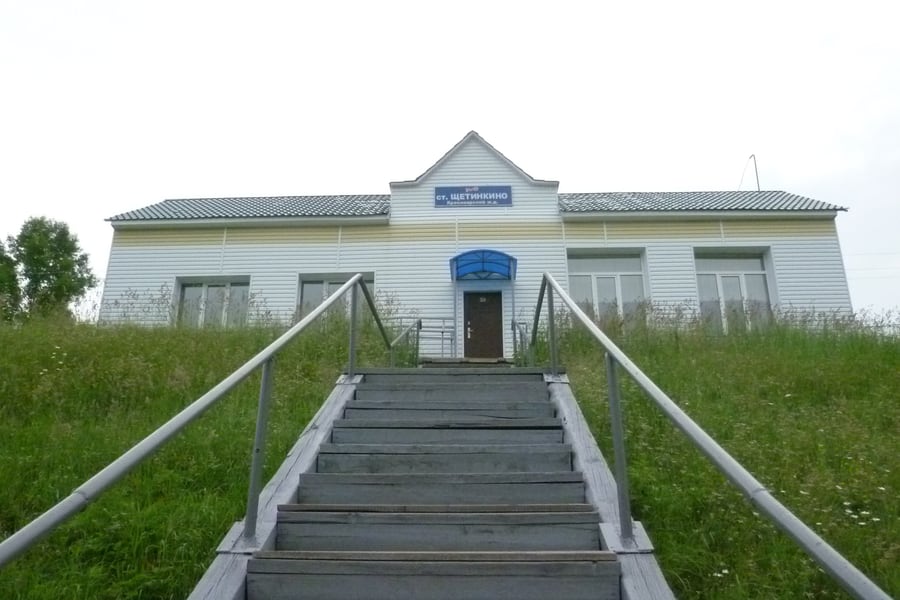 Никич / Wikimedia Commons · CC BY-SA 3.0 · cropped
Dzheb to Shchetinkino
The hardest section on the Krasnoyarsk Railway: sixteen to eighteen in the thousand, two complete horseshoe turns, three tunnels and the Kozinsky viaduct sixty-five metres up. Bankers based at Koshurnikovo push the heavy trains over it.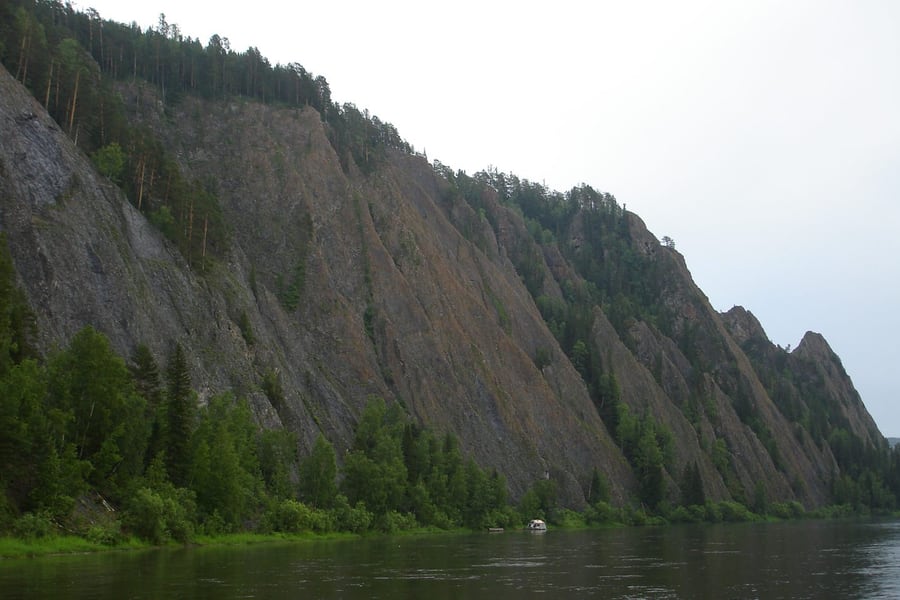 Abrashitov / Wikimedia Commons · CC BY 2.5 · cropped
Two long tunnels to Sayanskaya
Two long bores — the Krolsky and the Mansky, the latter the longest railway tunnel in Asia when it opened — drop the line into the Mana valley and on to Sayanskaya, where the train stands forty-seven minutes and the Uyar branch goes north.A bit of history
Culture & experiences along the way
 Stunzhayte / Wikimedia Commons · CC BY-SA 4.0 · cropped
Silver Rails
On 5 October 1942 the engineer Aleksandr Koshurnikov set out from Nizhneudinsk with Aleksey Zhuravlyov and Konstantin Stofato to find a route through the Sayan. All three died on the Kazyr that November; Koshurnikov kept his diary to the end. Three stations on the finished railway carry their names.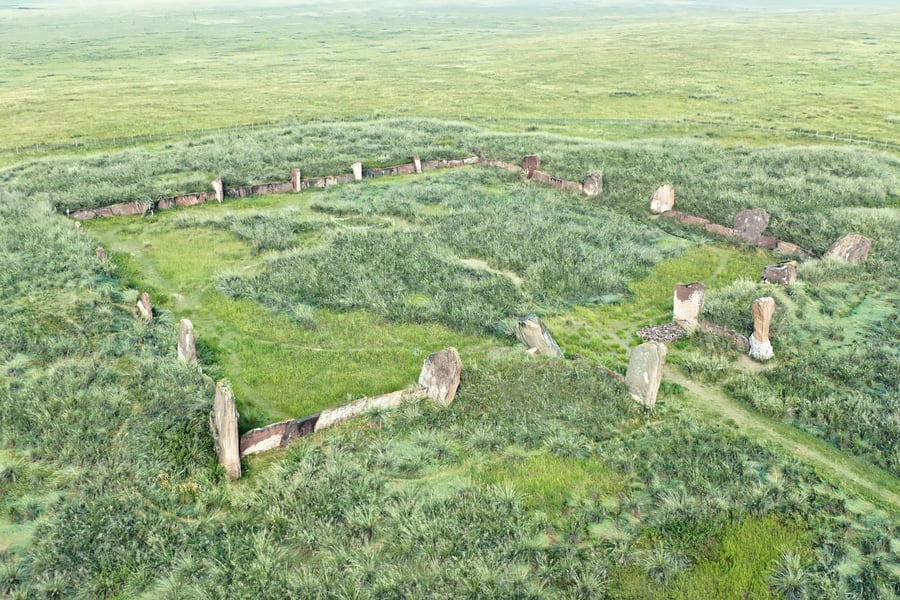 Kartazon Dream / Wikimedia Commons · CC BY-SA 2.0 · cropped
The Valley of the Kings
An hour from Abakan, the Khakassian steppe is stitched with Bronze Age burial mounds, and the largest of them is ringed by standing slabs of sandstone dragged there from the Yenisei. Locals call the plain the Valley of the Kings, and it was old before anyone thought of a railway.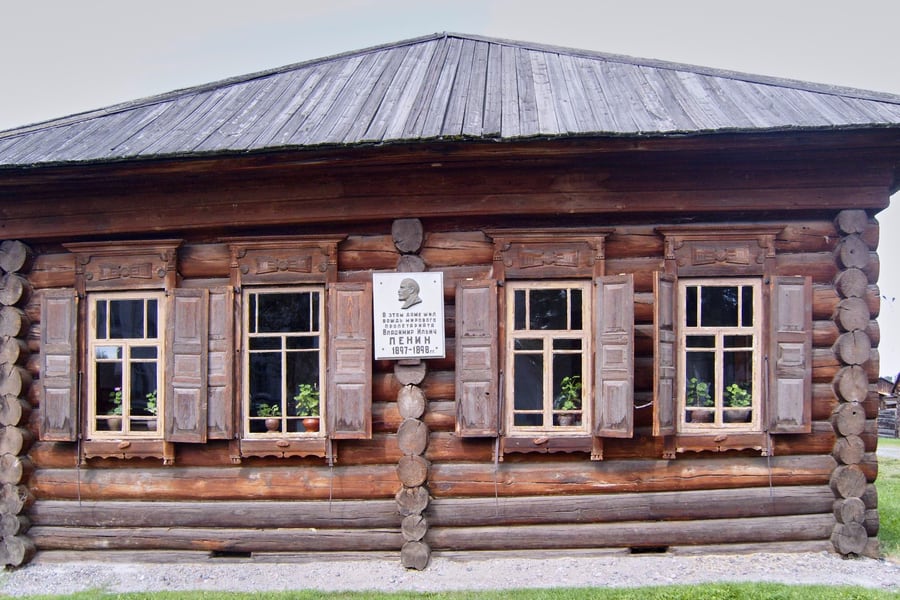 Vyacheslav Bukharov / Wikimedia Commons · CC BY-SA 4.0 · cropped
The exile village
Shushenskoye, a bus ride south of Minusinsk, keeps a whole quarter of nineteenth-century log houses as an open-air museum. It is on the map because Lenin served three years of internal exile here from 1897, but the draw now is the woodwork, the stoves and the farmyards.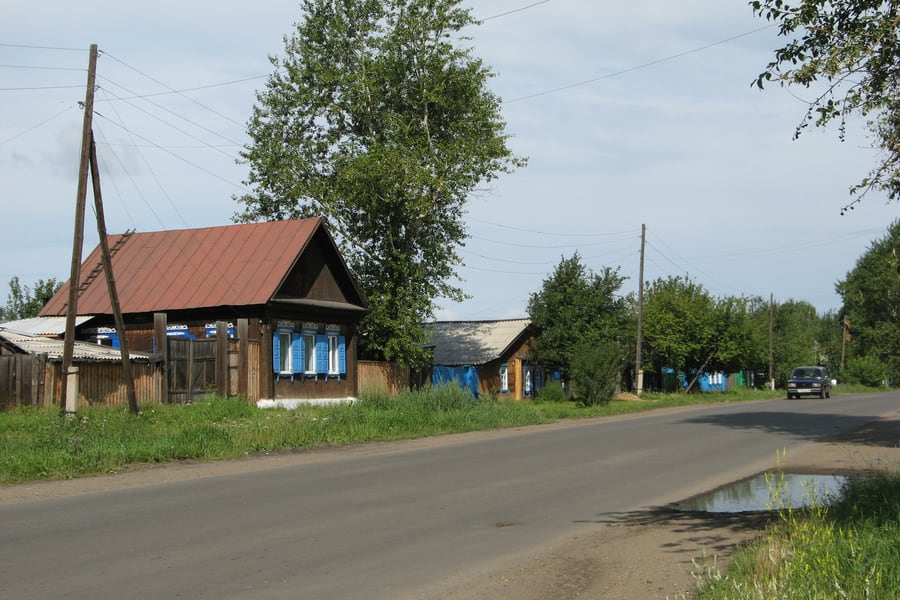 Zinaida experimenter / Wikimedia Commons · CC BY-SA 3.0 · cropped
What Tayshet was before
The junction town grew up around the Trans-Siberian in 1897 and spent the 1930s to the 1950s as the headquarters of two Gulag administrations, Yuzhlag and Ozerlag. Japanese and German prisoners of war worked on the first stretch of the BAM out of here. Wooden streets like this one are what is left of that century.Timetables
One passenger train runs the whole line, and it runs on alternate days. Eastbound it is 138, booked as Abakan – Irkutsk; westbound it is 137, Irkutsk – Abakan, and it carries a through carriage for Barnaul. Both are worked by Russian Railways' long-distance arm, FPK.
Eastbound — Abakan to Tayshet, departures on even-numbered dates
| Arrive | Depart | |
|---|---|---|
| Abakan | — | 07:25 |
| Minusinsk | 07:46 | 07:48 |
| Tuba | 08:47 | 08:51 |
| Kuragino | 09:12 | 09:14 |
| Koshurnikovo | 10:32 | 10:37 |
| Mana | 12:49 | 12:51 |
| Sayanskaya | 14:20 | 15:07 |
| Irbeyskaya | 15:53 | 15:56 |
| Abakumovka | 17:06 | 17:10 |
| Saranchet | 19:14 | 19:24 |
| Tagul | 20:38 | 20:40 |
| Tayshet | 21:00 | 21:45 |
Twelve hours thirty-five minutes. All times are local, and the clocks go forward an hour between Abakumovka and Saranchet — the jump from 17:10 to 19:14 is really two hours and four minutes of running.
Westbound — Tayshet to Abakan, departures on odd-numbered dates
Train 137 leaves Irkutsk at 19:05 the previous evening, arrives at Tayshet at 07:15 and stands there seventy minutes before setting off west at 08:25. It reaches Koshurnikovo at 17:12, Kuragino at 18:29 and Abakan at 20:13 — twelve hours forty-eight minutes, with the same forty-seven-minute stop at Sayanskaya, taken at midday.
The daily alternative, and the local trains
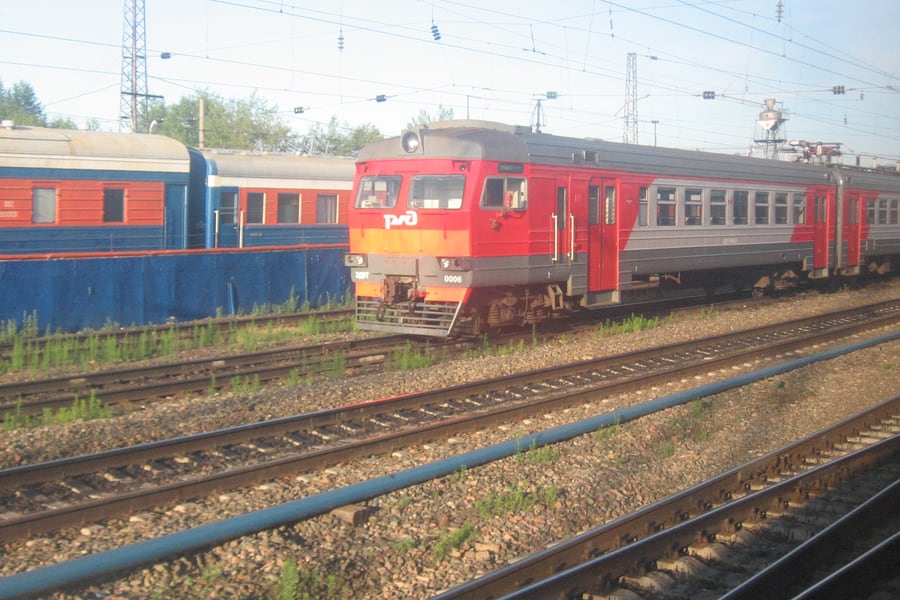
Train 124 runs Abakan to Krasnoyarsk every day, leaving at 19:10 and turning off the line at Sayanskaya at 03:10. It covers the whole mountain section, but overnight and in the dark, which is the single strongest argument for waiting for train 138. Three local electric services also work parts of the route: 6620 from Abakan to Koshurnikovo daily at 08:20, arriving 12:17, with 6619 back at 13:26; and 6740/6742 from Saranchet to Tayshet on Mondays and Fridays only.
Reservations are compulsory on 137 and 138 and sell against a named passenger. The local trains are walk-up. Times as of September 2026, taken from the operator's published boards; check before you travel at rasp.yandex.ru (opens in a new tab).
Tickets
Train 138 carries two classes and no seated coach: open-plan platskart, fifty-four bunks to a car, and four-berth kupe compartments. For a daylight run that starts before breakfast and ends after dark, platskart is the better deal and the better view — the side bunks put you against a window for the whole climb.
Fares move with demand and with how far ahead you book. The figures below were the lowest published in roubles across five departure dates in September 2026. Every berth is reserved against a named passenger, so bring the passport you booked with; the conductor takes your ticket at the coach door and returns it before your station.
Book your tickets
Platskart
Open-plan bunks, and the better view
Fifty-four berths to a carriage with no partitions; the side bunks sit against a window for the whole climb over the Sayan.
Book Tickets (opens in a new tab, on rasp.yandex.ru)via rasp.yandex.ruKupe
Four-berth compartment
A closed compartment with a door, for anyone who would rather sleep through the flat two hundred and fifty kilometres at the eastern end.
Book Tickets (opens in a new tab, on rasp.yandex.ru)via rasp.yandex.ruRail Passes
No rail pass covers this journey. Interrail and Eurail are a thirty-three-country scheme and Russia is not one of the thirty-three — it appears nowhere in the pass network's own list of participating railway companies, so a pass bought in Europe buys nothing on the Trassa Muzhestva, and there is no through service from the nearest pass territory in any case.
There is no Russian equivalent to fall back on either. The national operator sells a loyalty scheme and occasional round-trip discounts rather than a period pass, so a week of unlimited travel on this railway is not something you can buy at any price.
Nor would it help here. Only one train a day runs any distance over the line, every berth on it is individually reserved, and a pass holder would still be buying that reservation. The local electric trains between Abakan and Koshurnikovo, and between Saranchet and Tayshet, are walk-up and cost a few hundred roubles — cheap enough that no pass could improve on them. Buy point-to-point. Checked September 2026.
Places to Visit
The Trassa Muzhestva crosses three very different countries in a day. It starts in the Minusinsk basin — the warmest, oldest-settled corner of southern Siberia, full of Bronze Age burial mounds and nineteenth-century merchant brick — climbs into taiga where the settlements exist only because the railway does, and ends in a Trans-Siberian junction town with a history nobody there is keen to discuss.
Breaking the journey is awkward but not impossible. The through train runs on alternate days, so a stop means a minimum of two nights; the daily Krasnoyarsk train and the Abakan – Koshurnikovo local give you more room to manoeuvre at the western end. Everything below is within reach of a station on the line, with the single exception of Shushenskoye, which is a bus ride from Minusinsk and worth the detour.
 Fopeteh / Wikimedia Commons · CC0 · cropped
Abakan
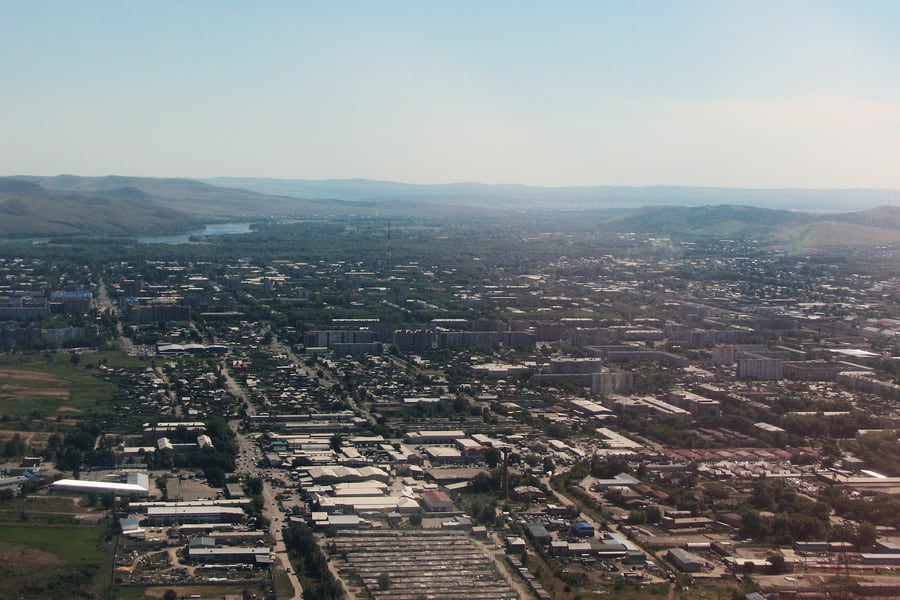
The capital of Khakassia, and the reason a third of the republic's people live in one place. A Russian stockade was thrown up at the mouth of the Abakan river in 1675; the town that grew from it became a city in 1931 and is now the ninety-ninth largest in Russia, laid out flat and green at two hundred and forty-five metres with mountains on the horizon in every direction. The station is ten minutes from the centre.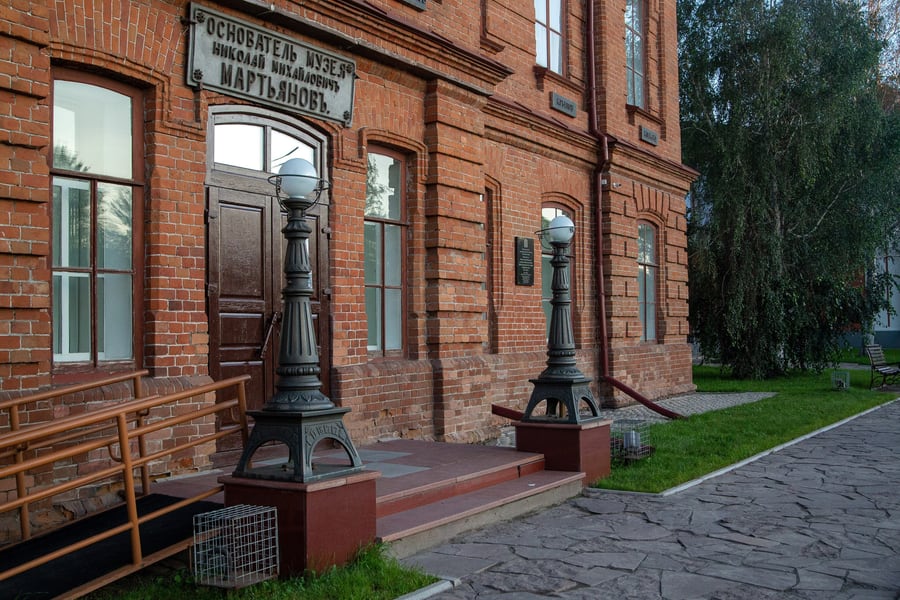 FelixSummer / Wikimedia Commons · CC BY-SA 4.0 · cropped
Minusinsk
One of the oldest towns in eastern Siberia, founded in 1739 and a city since 1822, with sixty-eight thousand people and a centre of merchant brick that has barely been touched. Decembrist officers served their sentences here. Its regional museum, founded by the pharmacist Nikolay Martyanov in 1877, is the oldest in Siberia and still occupies the building put up for it, cast-iron lamps and all.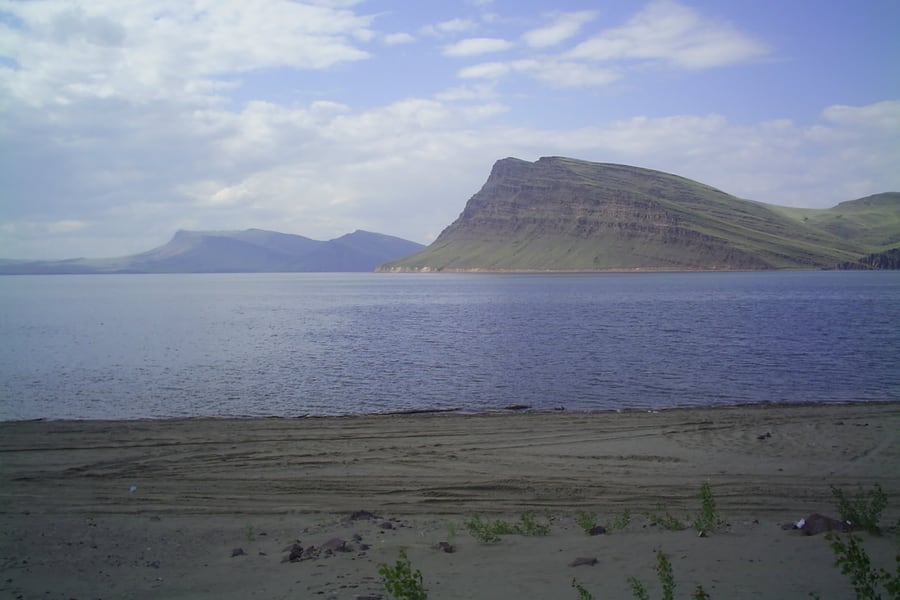 АлександрВв / Wikimedia Commons · Public domain · cropped
Tepsey and the Tuba
The train crosses the Tuba an hour out of Abakan, where the river runs into the Yenisei under a bare-shouldered mountain called Tepsey. The rock faces here carry some of the densest concentrations of petroglyphs in southern Siberia, cut over several thousand years, and the shoreline below them is a long grey beach that appears and disappears with the level of the reservoir.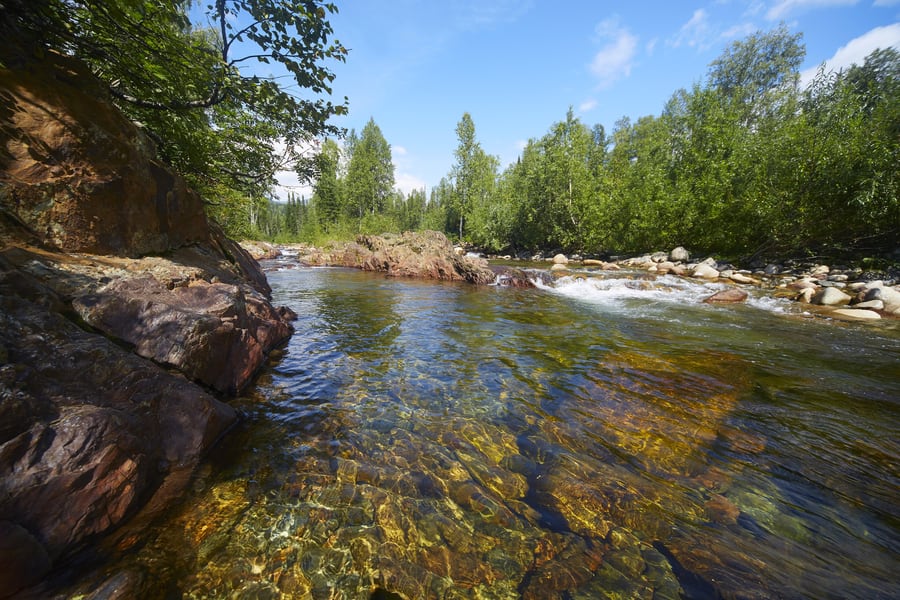 Aysa t / Wikimedia Commons · CC BY-SA 4.0 · cropped
Koshurnikovo and the Kazyr
A settlement of a few thousand on the Dzheb, named for the engineer whose survey party died on the Kazyr a few valleys away in November 1942. It is the operating base for the banking locomotives that push trains over the summit, and its station has kept a museum of the line's construction since 1964. An obelisk stands at Koshurnikov's grave on the riverbank.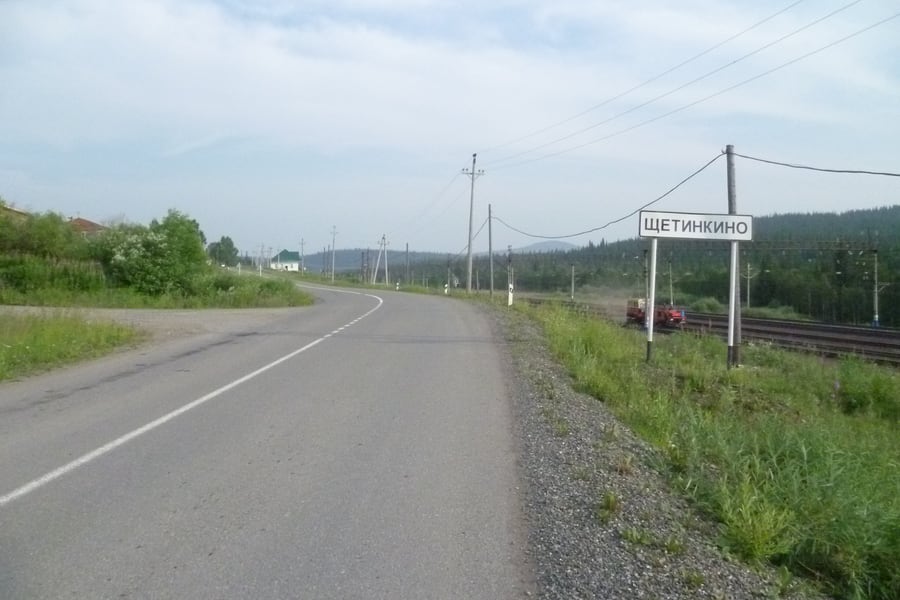 Никич / Wikimedia Commons · CC BY-SA 3.0 · cropped
Shchetinkino
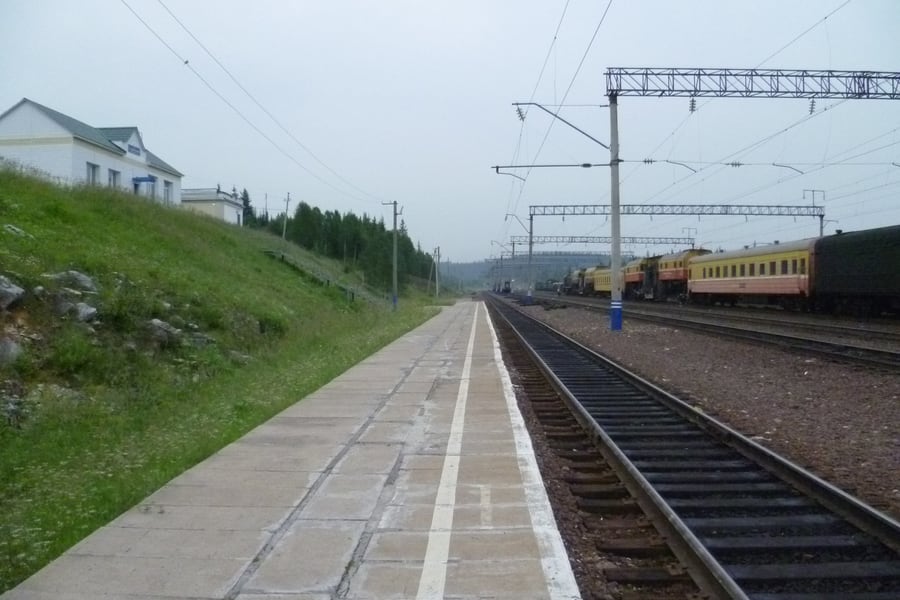
A village and a station at around eight hundred metres, opened with the line in 1965 and named for Pyotr Shchetinkin, who led the partisans in Yenisei Governorate during the Civil War. Nothing about it announces that it is the highest station on the Krasnoyarsk Railway: a white weatherboard hut at the top of a flight of steps, a name board, and the hardest two hundred metres of climbing in the region just behind it.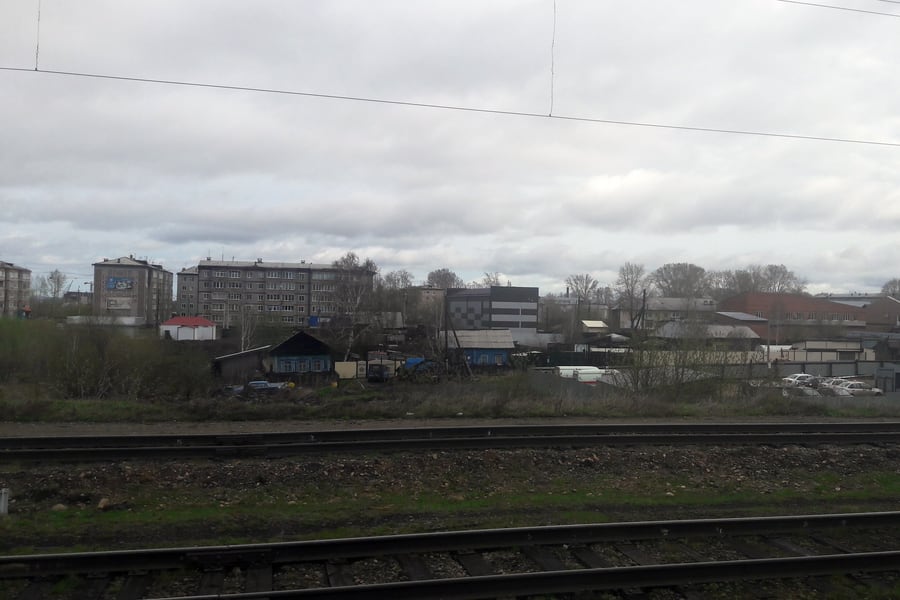 MikSed / Wikimedia Commons · CC BY-SA 4.0 · cropped
Tayshet
Thirty-three thousand people, and a name from the extinct Kott language — ta cold, shet river. It appeared in 1897 as a settlement beside the new Trans-Siberian, got a locomotive depot in 1903 and became a city in 1938. Three main lines meet here: the Trans-Siberian, the South Siberian Mainline that ends at the buffer stops of this journey, and the Baikal–Amur Mainline, which starts.Where to Sleep
Abakan is where you will start and almost certainly where you will sleep the night before, because the train leaves at 07:25 and the alternative is an overnight arrival from Krasnoyarsk or Novokuznetsk. The city has proper hotels in the centre, ten minutes from the station.
Along the line the options thin out fast. Minusinsk, twenty minutes out, has small family-run hotels in the old town and is the one intermediate stop where booking ahead is straightforward. Kuragino and Koshurnikovo have guest rooms rather than hotels, arranged by telephone. Tayshet has several mini-hotels near the station and a sauna in most of them, but none of them publishes a website you can book on — so we have listed no card for the eastern end rather than send you to a booking aggregator we cannot vouch for. Ask at the station, or carry on: the Trans-Siberian and the BAM both leave Tayshet within the hour.
Where to stay
Otel Abakan
Prospekt Lenina, in the city centre
The city's long-established central hotel on Lenin Avenue, with eight grades of room from economy singles to apartments and a short walk to the station.
Check Availability (opens in a new tab, on abakan-hotel.ru)via abakan-hotel.ruMini-gostinitsa YuG
Minusinsk, ulitsa Krupskoy
A small family-run guest house in Minusinsk with a booking calendar on its own site and a discount for longer stays.
Check Availability (opens in a new tab, on минусинск-гостиница.рф)via минусинск-гостиница.рфQuestions or corrections
Planning this trip and stuck on something, or spotted a time, fare or detail that has changed? Send us a message about Abakan to Tayshet. We read every one, and we update this page when something has changed.