Russia
No country on earth is more defined by its railways than Russia. Spanning eleven time zones from the Baltic to the Pacific, it is simply too vast for any other kind of travel to feel its true scale — and it was the railway, above all the Trans-Siberian, that stitched this immense country together.
To ride it is to watch a continent unspool from the window over days rather than hours: birch forest and taiga, the Ural gateway from Europe into Asia, and the deep blue eye of Lake Baikal — the greatest railway journey in the world.
Rail journeys in Russia
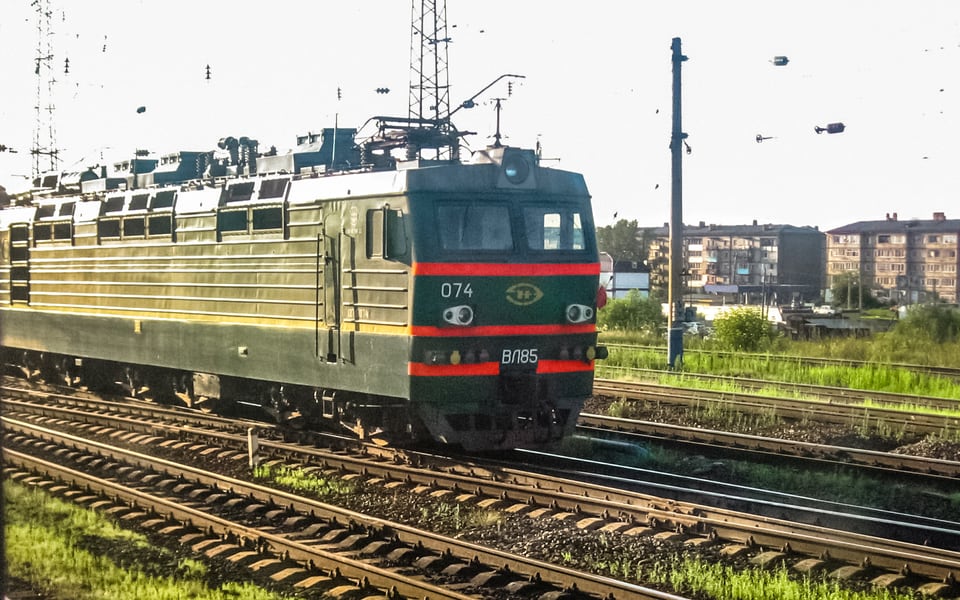
Abakan to Tayshet
One train every other day over the Trassa Muzhestva — 647 km of Komsomol-built railway through the Eastern Sayan and nine tunnels.
View journey →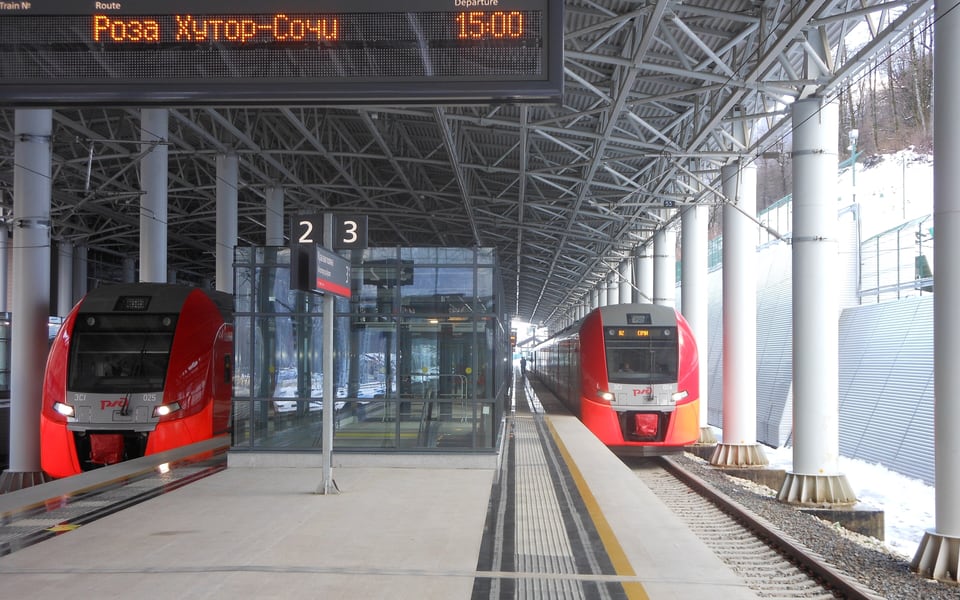
Adler to Roza Khutor
Half an hour from a Black Sea beach to a Caucasus ski resort, up a gorge drilled with ten kilometres of tunnel for the 2014 Olympics.
View journey →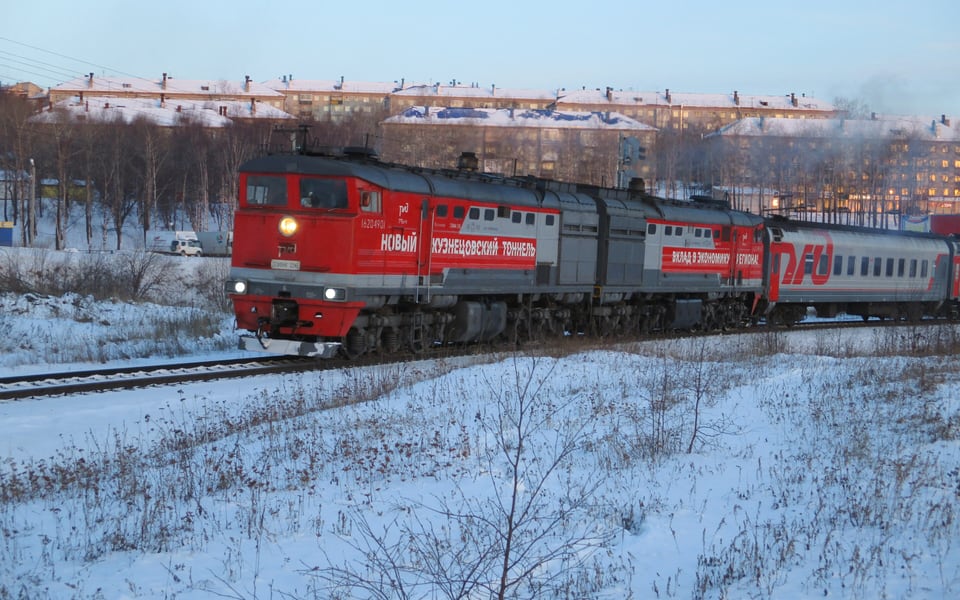
Baikal–Amur Mainline
Russia's other trans-Siberian — 4,287 km through permafrost north of Baikal, begun by prisoners in 1932 and finished by volunteers in 1984.
View journey →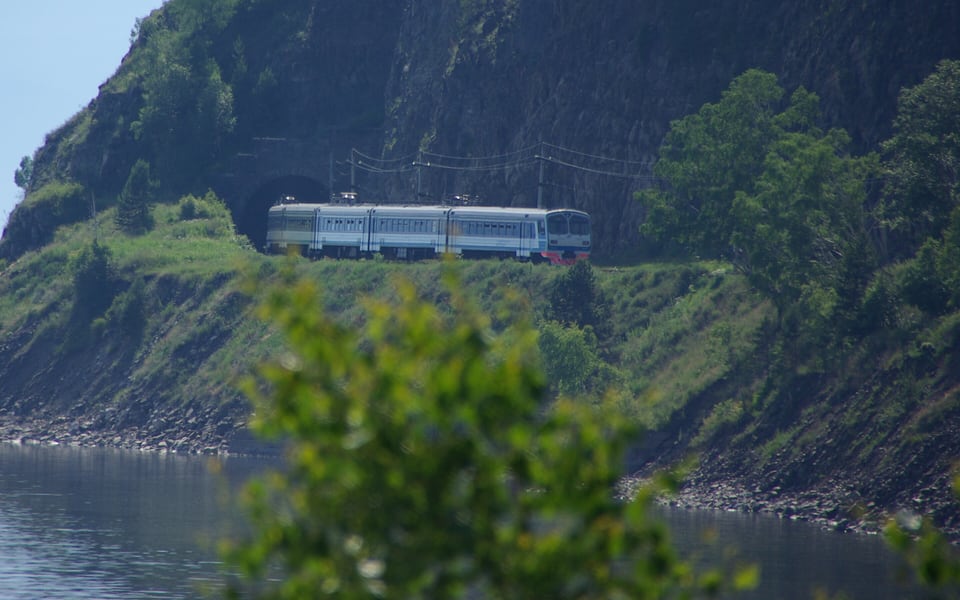
Circum-Baikal Railway
The Trans-Siberian abandoned this shore in 1956. Its 39 tunnels still stand, and a slow train still runs the 94 km along Lake Baikal.
View journey →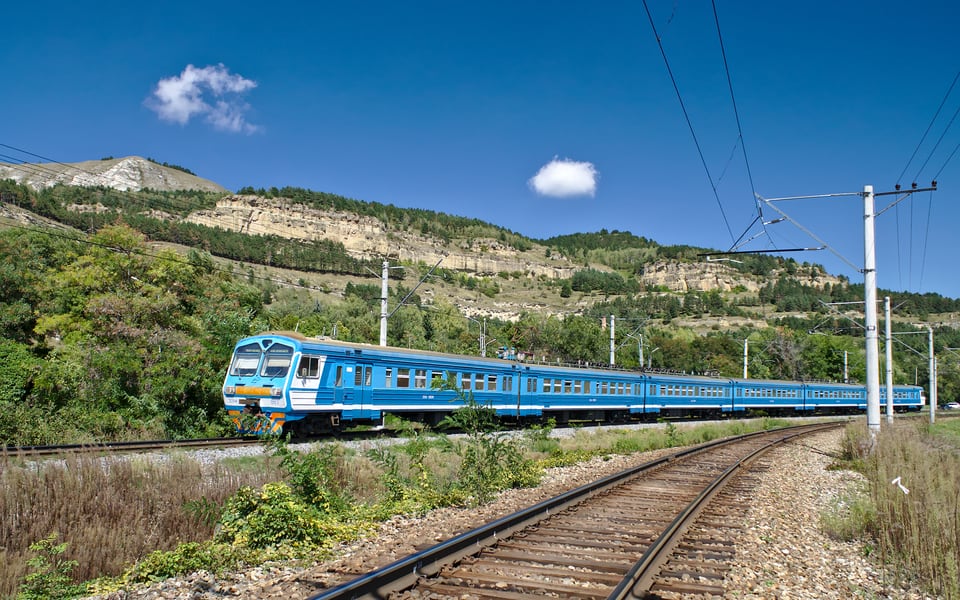
Kislovodsk to Mineralnye Vody
Sixty-four kilometres and four spa towns, with a train every half hour — and the first railway in the North Caucasus to be electrified.
View journey →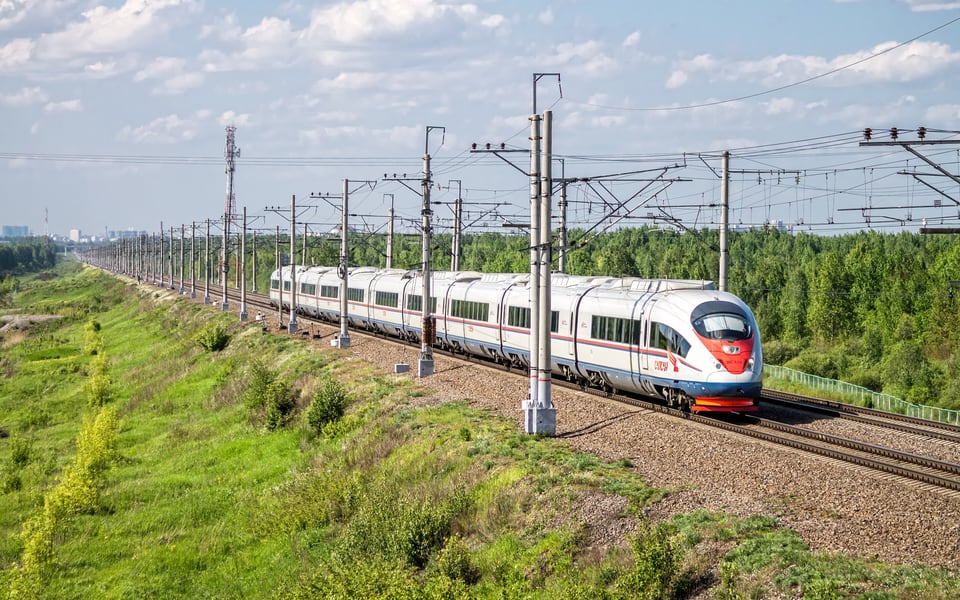
Moscow to St Petersburg
Twelve high-speed departures a day over the ruler-straight line of 1851 — Moscow to St Petersburg in four hours flat, at up to 250 km/h.
View journey →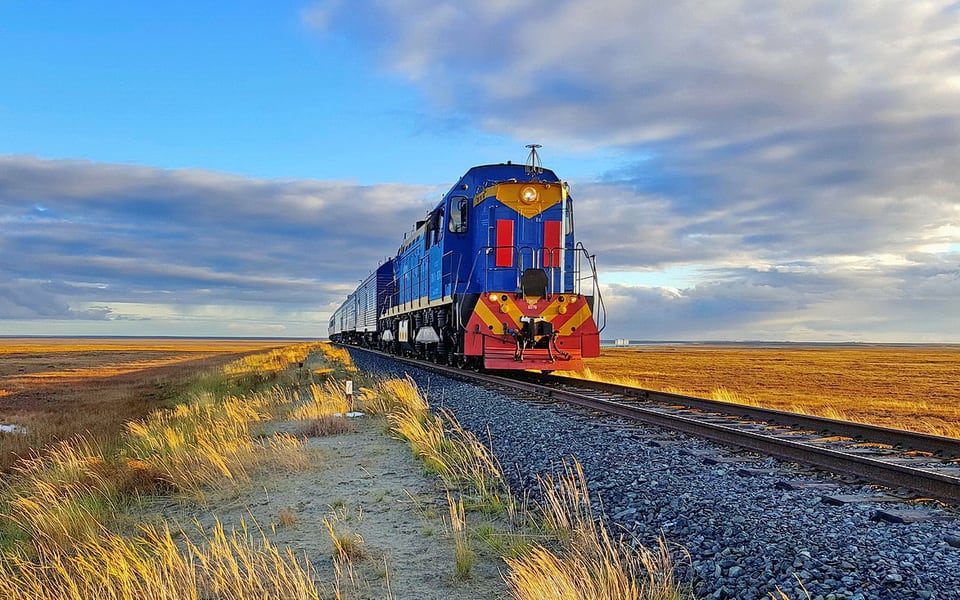
Obskaya to Bovanenkovo
The northernmost railway on earth — 572 km over Yamal permafrost to a gas field, on a viaduct four kilometres long. Gazprom's alone.
View journey →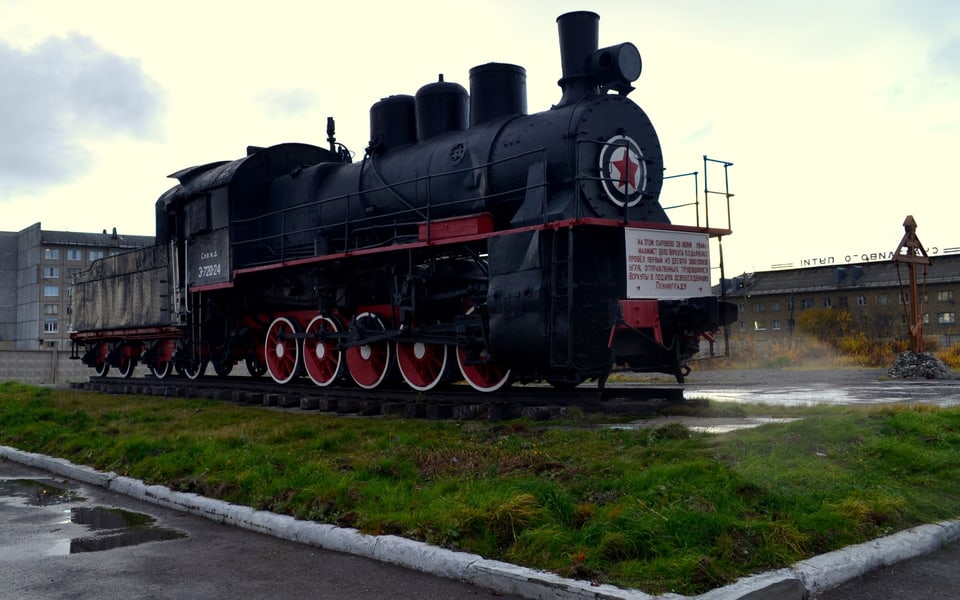
Pechora to Vorkuta
The coal railway the war built — 448 km from the Pechora across the tundra to a city 150 km inside the Arctic Circle.
View journey →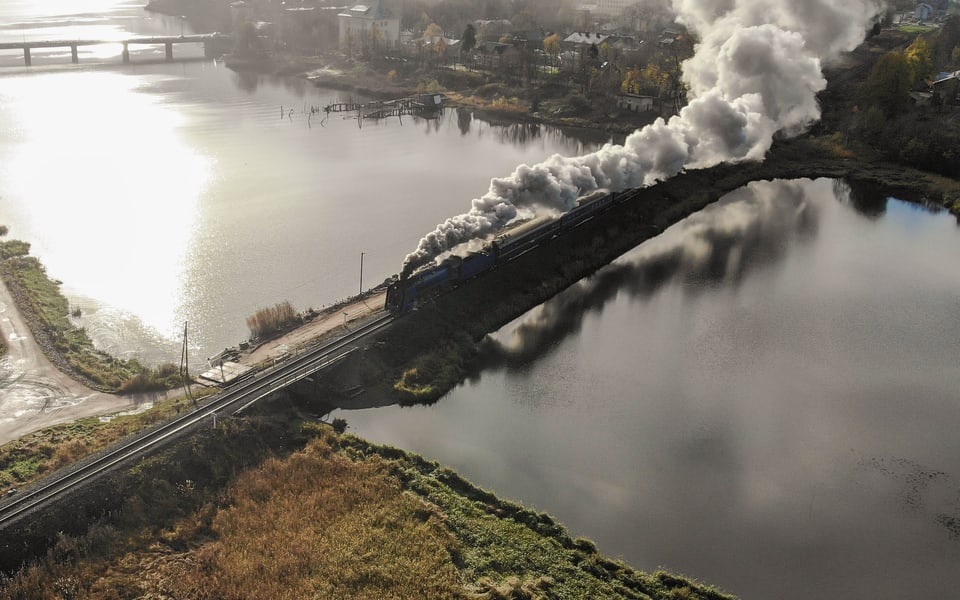
Sortavala to Ruskeala
Russia's only daily steam train — an hour from Sortavala to a flooded marble quarry that faced St Isaac's Cathedral.
View journey →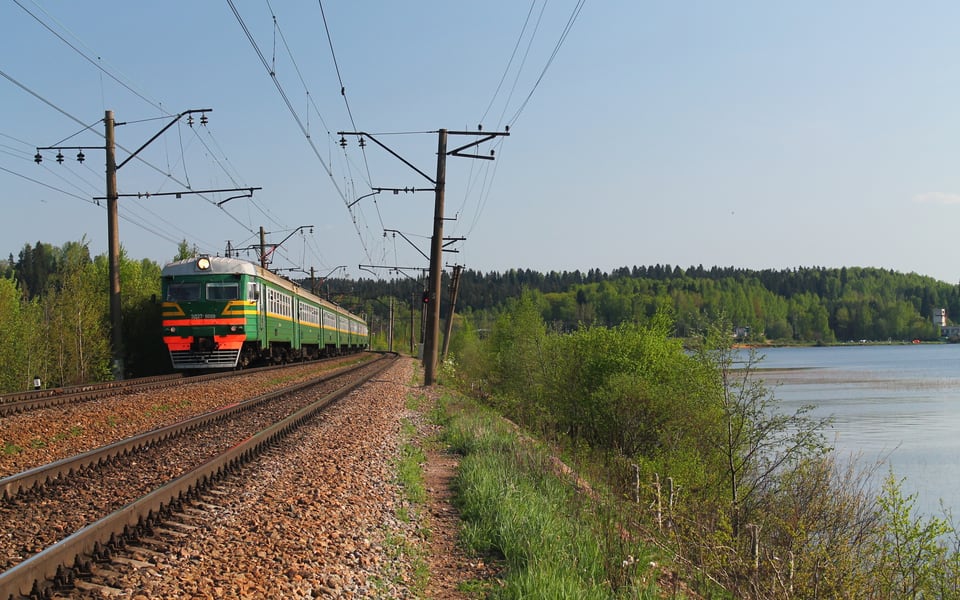
St Petersburg to Kuznechnoye
The dacha train from the Finland Station — 156 km across the Karelian Isthmus to where the overhead wires simply stop.
View journey →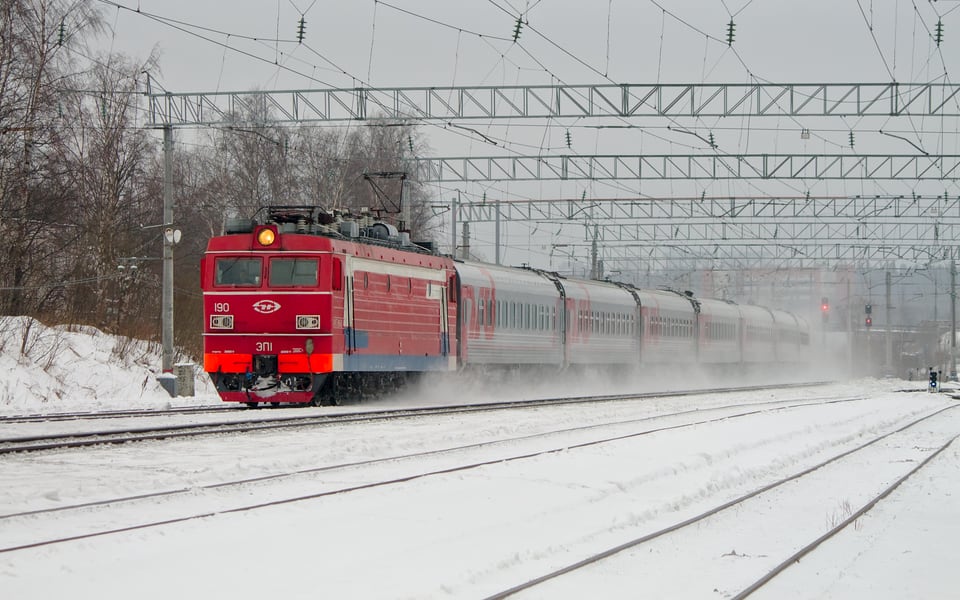
St Petersburg to Murmansk
A day and a night north to the largest city inside the Arctic Circle, on a line driven through 1,053 km of bog and granite in twenty months.
View journey →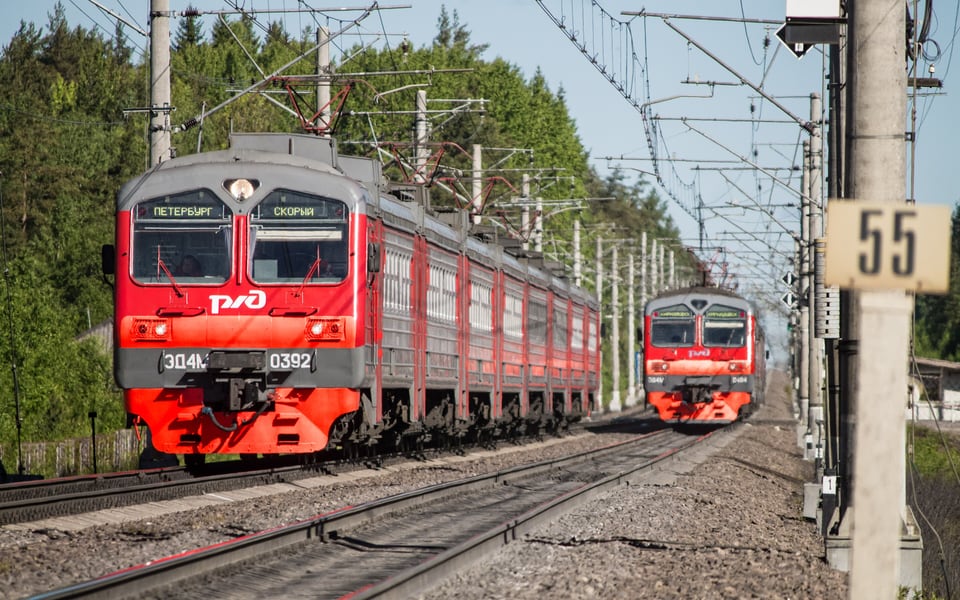
St Petersburg to Vyborg
The last 130 km of the old St Petersburg–Helsinki main line — 72 minutes through the Karelian pines to a Swedish castle.
View journey →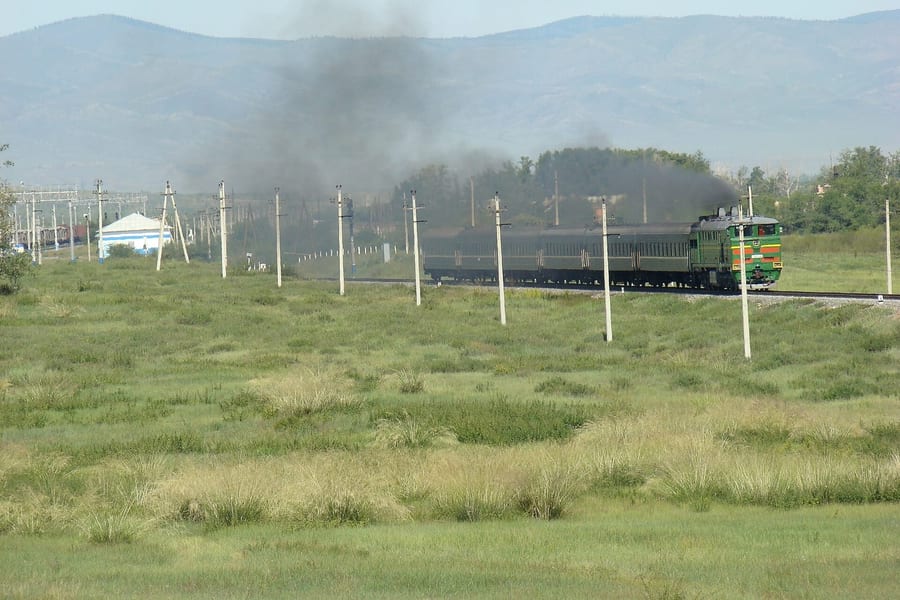
Trans-Siberian Railway
The longest railway on earth — seven days and 9,289 km from Moscow to the Pacific at Vladivostok, across eight time zones and the whole breadth of Russia.
View journey →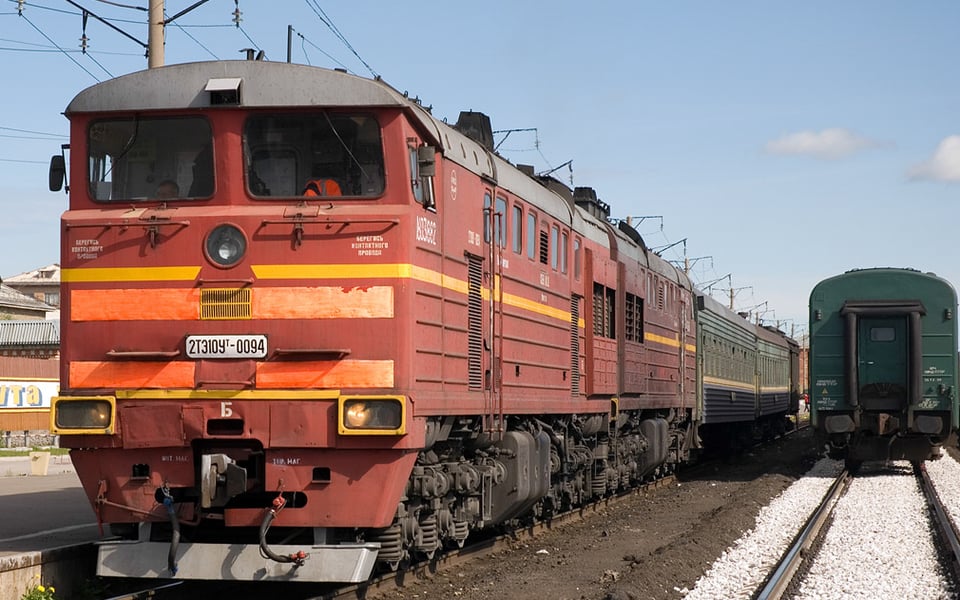
Vorkuta to Labytnangi
The only passenger train across the Polar Urals — ten hours from Europe's easternmost city to the last rails before the Ob.
View journey →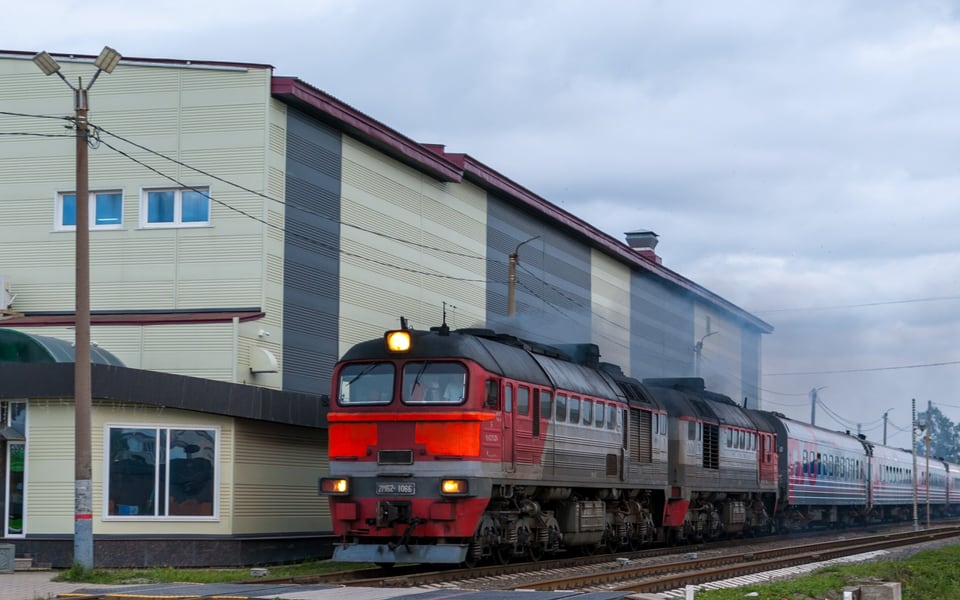
Yuzhno-Sakhalinsk to Nogliki
One overnight train, 613 km up an island — on a railway Japan laid to its own narrow gauge and Russia finally re-laid in 2019.
View journey →Good to know
Is Russia easy to explore by train?
For a country spanning eleven time zones, the train is the classic way to travel. Russian Railways (RZD) runs a vast network with frequent long-distance sleepers; the Trans-Siberian is its spine. Book ahead, as popular trains and the summer season fill up.
What are the carriage classes?
Three, in descending price: 1st class (spalny vagon / SV) is a two-berth compartment; 2nd class (kupe) is a four-berth compartment with a lockable door; 3rd class (platskart) is an open-plan dormitory car — cheap, sociable, and for many the most authentic way to travel.
When is the best time to travel Russia by rail?
Summer (June–September) is warmest and greenest and best for stops around Lake Baikal; winter turns Siberia into a spectacular frozen world, with Baikal itself freezing solid. The trains are heated and run year-round, so it comes down to the scenery you want.
What are Russia's great rail journeys?
The Trans-Siberian above all — the flagship Rossiya covers 9,289 km from Moscow to Vladivostok in about seven days. Its variants branch off in eastern Siberia: the Trans-Mongolian south through Ulaanbaatar to Beijing, and the Trans-Manchurian to Beijing via north-east China.