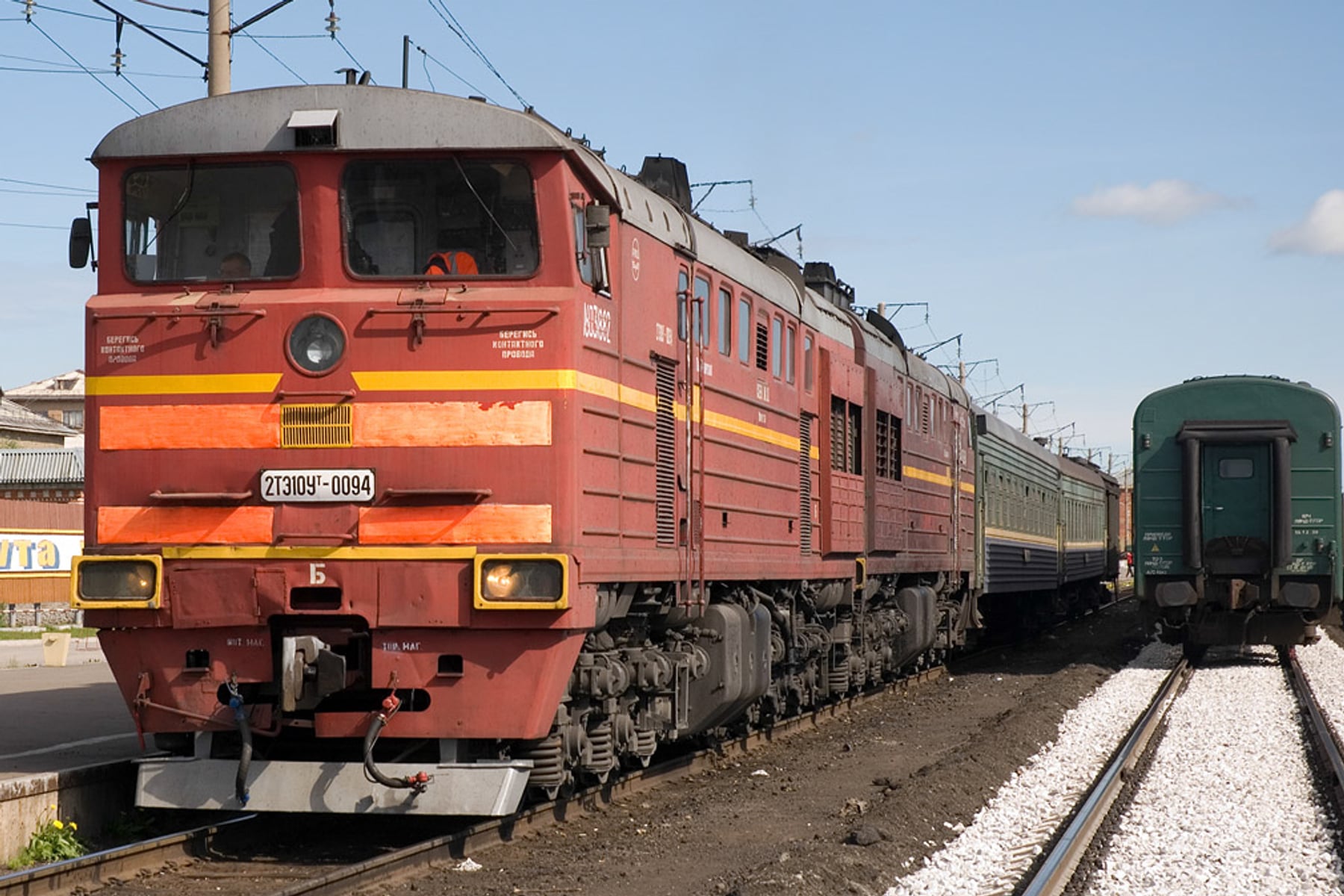
Vorkuta to Labytnangi
dsbalandin / Wikimedia Commons · CC BY-SA 3.0 · cropped
- Distance277 km
- Duration10 hours 5 minutes
- Best seasonYear-round; July to September for the mountains
Introduction
Vorkuta is the easternmost city in Europe, a coal town a hundred and fifty kilometres north of the Arctic Circle whose name comes from the Nenets for abounding in bears. At nine in the morning a train leaves its platform behind a twin-section Soviet diesel and turns south into open tundra. Ten hours later it stops at Labytnangi, on the left bank of the Ob, and there are no rails beyond it in any direction. In between it does the one thing that makes it worth the ticket: it climbs through the Ural mountains well inside the Arctic Circle, and carries you out of Europe and into Asia through the one pass anybody ever put a railway through.
The line it uses was Construction 501, begun in 1947 as the western end of Stalin's Transpolar Mainline — Chum to Salekhard to Igarka, a railway meant to run across the top of Siberia and built by the Gulag's own railway directorate. Working trains reached the Ob at the end of 1948. Everything east of Salekhard was abandoned where it stood when Stalin died in 1953 and is still out there in the swamp, wagons and all. The 195 kilometres from Chum to Labytnangi are the only part that ever became a real railway, and even they were not taken into permanent service until 1955.
One train a day does it, each way, every day of the year. It is not a tourist train and nothing about it is dressed up: no dome car, no commentary, no glass roof. It is how people on the Yamal side reach the rest of the country, and it is how the Polar Urals open up to anybody willing to get off at a halt in the mountains with a rucksack and wait a day for the next one.
The Journey
The first hour is the Bolshezemelskaya tundra, and it is as flat as anything in Europe. The train runs south out of Vorkuta past halts with Nenets names — Yun-Yaga, Khanovey, Pesets, Kykshor — over ground that is mustard and rust-red in September and white for most of the rest of the year. There are no trees to speak of. What there is, every few kilometres, is a line of concrete poles marching off to the horizon, because this is also the corridor that carries the power and the gas.
At kilometre 66 the train reaches Chum, the junction, and then does something that surprises everybody the first time. It carries straight on past the turning for another eight kilometres to Seida, stops, and sits there for the better part of two hours. Then it reverses out, comes back through Chum, and this time takes the branch. The detour is the reason the ride is 277 kilometres long when the railway between the two towns is only 261, and it is the longest booked stop of the day by a wide margin: the two ends of the train change places, the crew changes, and the coaches that came down from Vorkuta are marshalled for the run east.
Into the mountains
Past Chum the country starts to lift. Yeletskaya, at kilometre 133, is the last station in the Komi Republic and the last flat place; from its platform the Polar Urals are a blue line along the eastern sky. The next fifty kilometres climb steadily through country with nothing on it, and the blue line resolves into what the Urals actually are up here — low, bare, dark tabletop massifs with snow lying in the corries into August, nothing like the forested ridges further south.
The summit is around Polyarny Ural station, 179 kilometres out, on the watershed that is also the conventional boundary between Europe and Asia. There is a station building, a handful of houses, and mountains on both sides. Thirteen kilometres further the train calls at a halt named simply 110 km — 110 from Chum, that is — where a settlement called Polyarny was built for the geological expeditions and is now a base they come back to. From here to Kharp the line follows the Sob, a fast, pale, braided river that rises on the eastern slope and runs 185 kilometres to the Ob. The railway and the river share the valley, crossing and re-crossing; the halts have names like Bear, Cross Mountain and Red Rock.
Out onto the plain
Kharp is the one place on the branch that looks like a town, and its full station name is the best on the Russian network: Kharp – Severnoye Siyaniye, "Kharp – Northern Lights", which is a translation of itself, because kharp is Nenets for the aurora. It sits on the 67th parallel, sixty kilometres north of the Arctic Circle, under the Rai-Iz massif. The train stands here thirty minutes — long enough to get down on the ballast and look back at the mountains it has just come through.
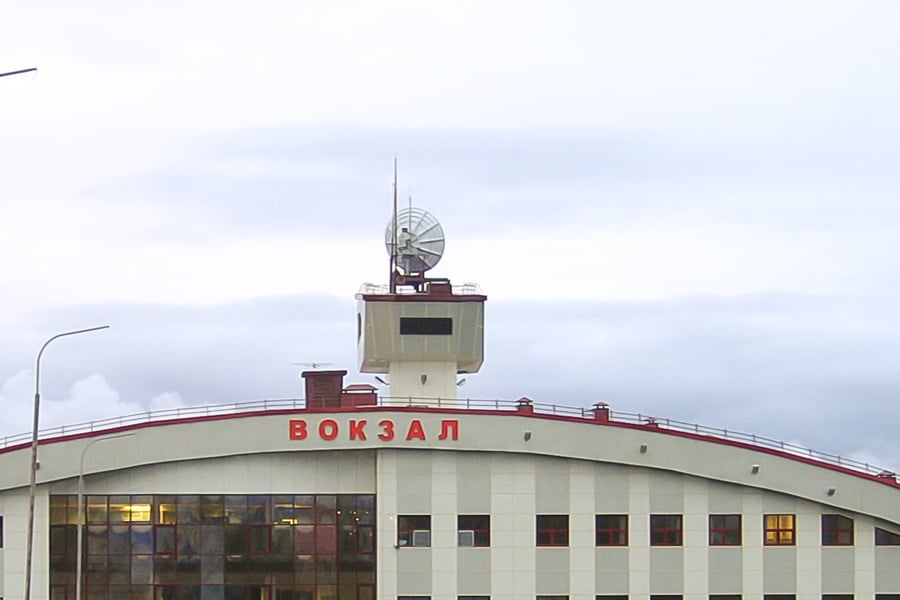
After Kharp the Urals drop away behind and the last forty kilometres run out across wet forest tundra to the Ob. The train passes Obskaya, a freight yard that is the junction for the Yamal gas railway, and pulls into Labytnangi at five past seven in the evening, Moscow time — five past nine by the clock on the wall, because Yamal runs two hours ahead. Labytnangi is Khanty for seven larches. It has a station with an arched roof and a radar dome on top, a river port, and no railway going anywhere except back the way you came. Salekhard, the regional capital and one of the few cities standing on the Arctic Circle itself, is two kilometres away across the water, and there is still no bridge.
Along the route
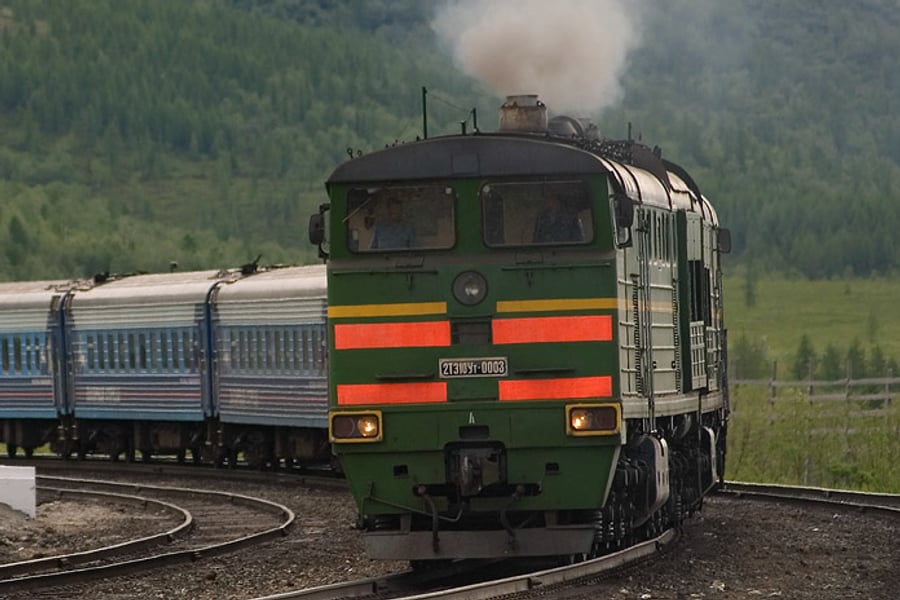
 APL / Wikimedia Commons · CC BY-SA 3.0 · cropped
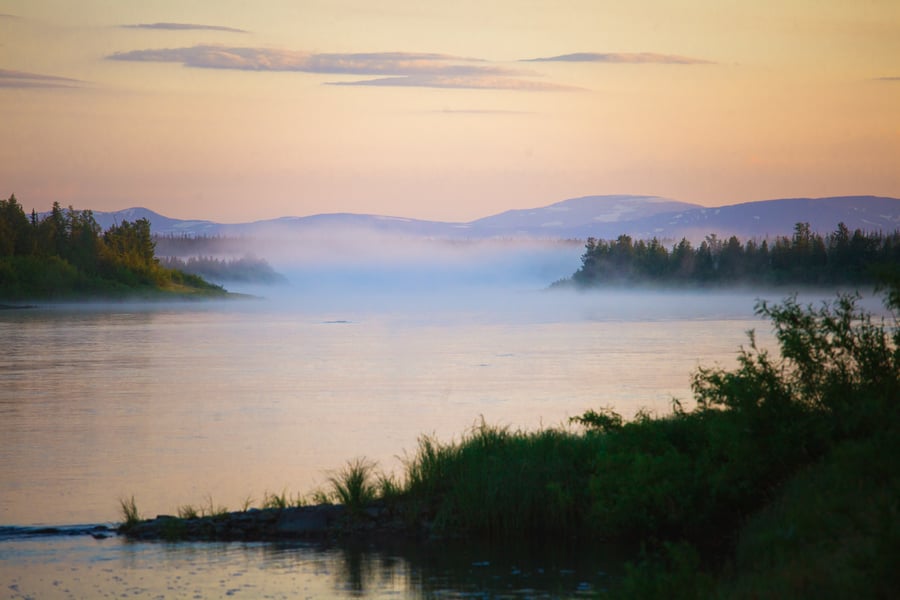
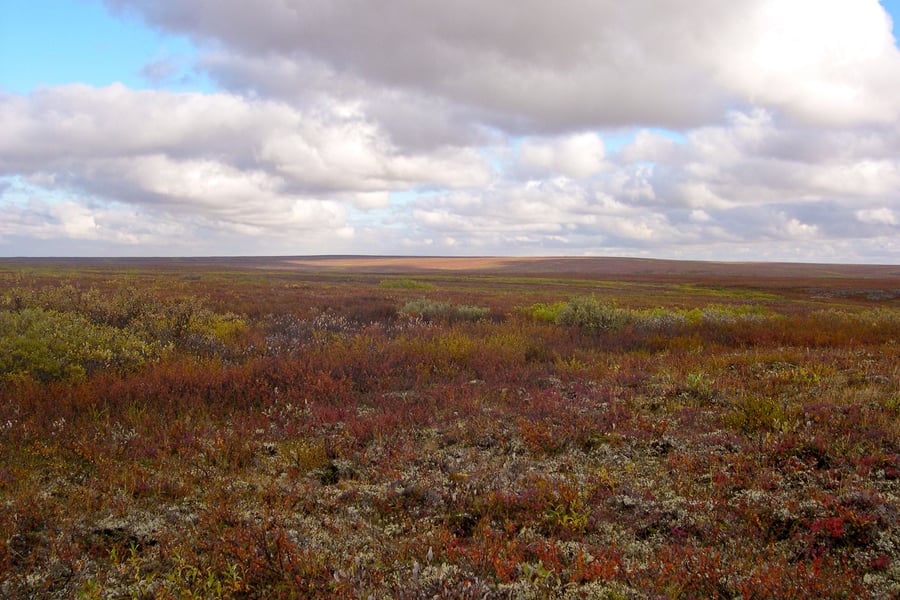
The Bolshezemelskaya tundra
The first hour out of Vorkuta crosses flat, treeless ground that turns rust and mustard for three weeks in September and is white for most of the rest of the year. The halts have Nenets names — Yun-Yaga, Khanovey, Pesets — and almost nothing else.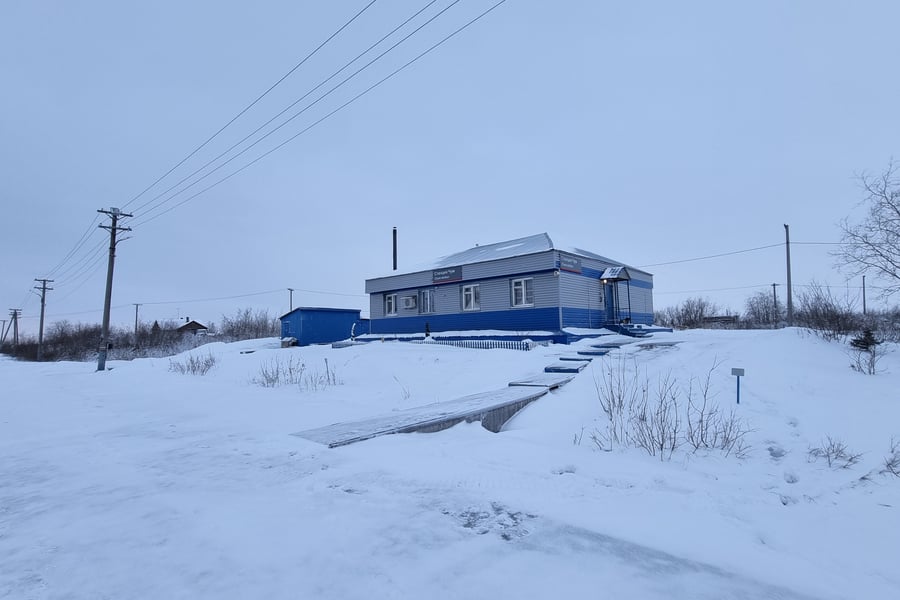 Ferents ds / Wikimedia Commons · CC BY-SA 4.0 · cropped
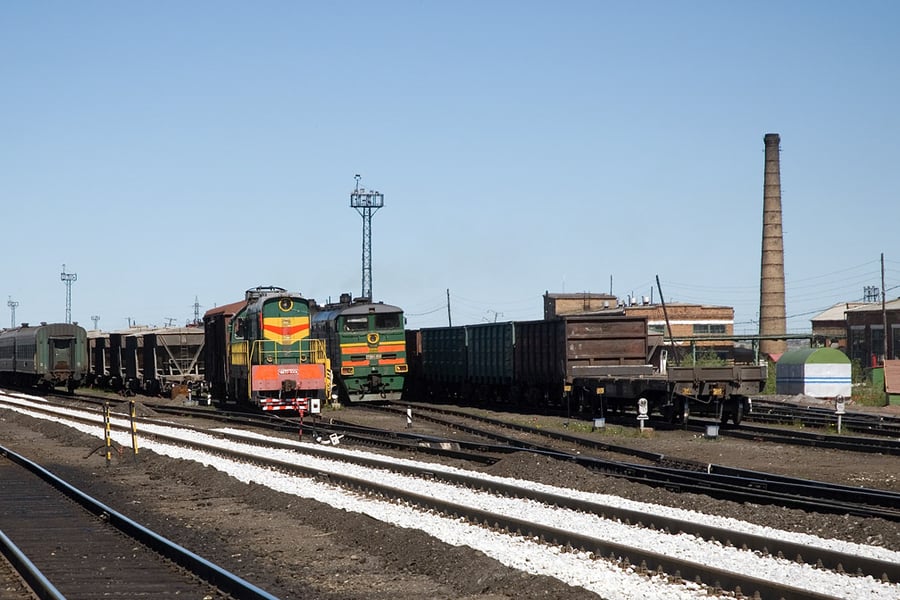
Chum, and the reversal at Seida
The branch leaves the Pechora main line at Chum, kilometre 66 — but the train runs eight kilometres past it to Seida, stands there an hour and three-quarters, then reverses and comes back through. Chum appears twice on its own timetable.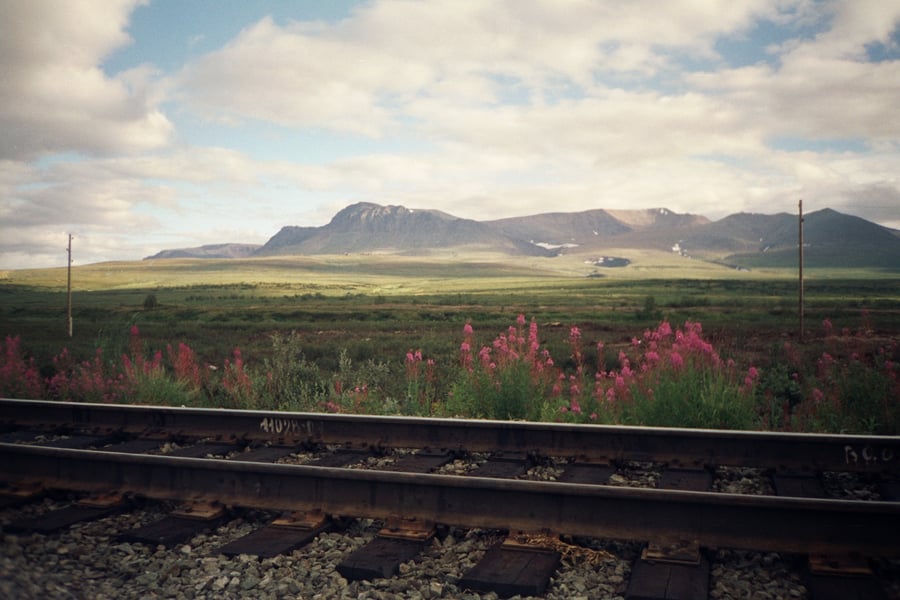 Михаил Александр / Wikimedia Commons · Public domain · cropped
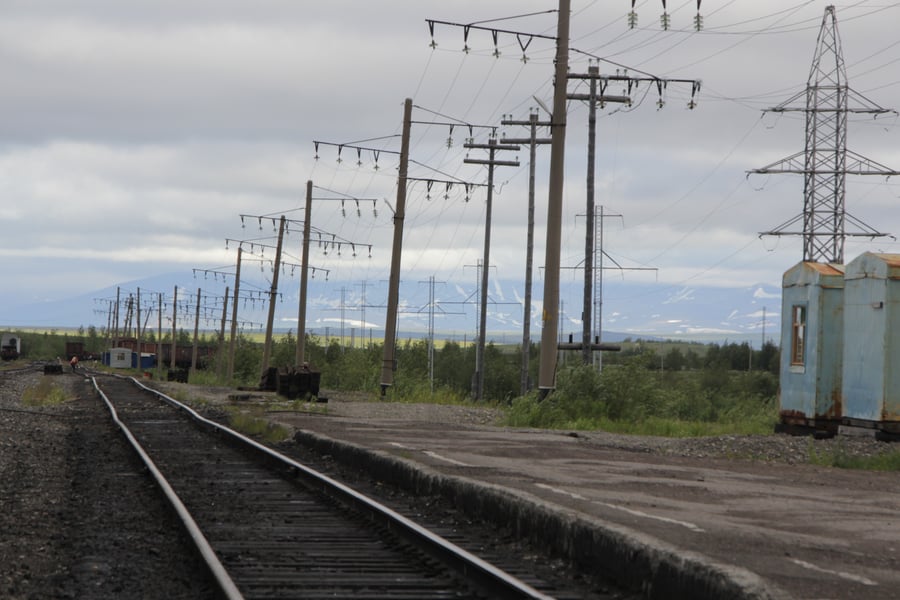
The watershed, and the 110th kilometre
The summit is at Polyarny Ural station, on the divide that is also the boundary between Europe and Asia. Thirteen kilometres further is a halt called simply 110 km, built for the geological expeditions that still work out of it.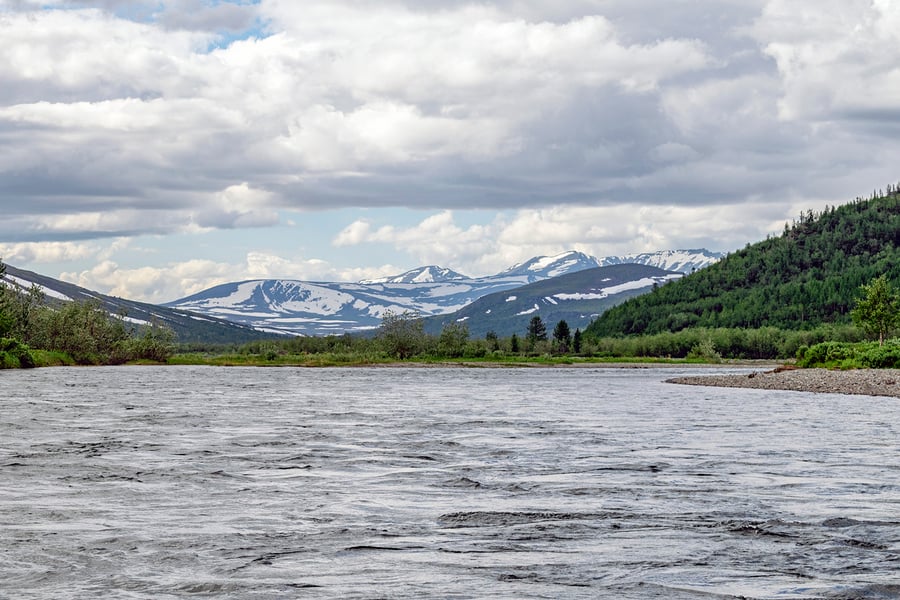 Александр / Wikimedia Commons · CC BY-SA 4.0 · cropped
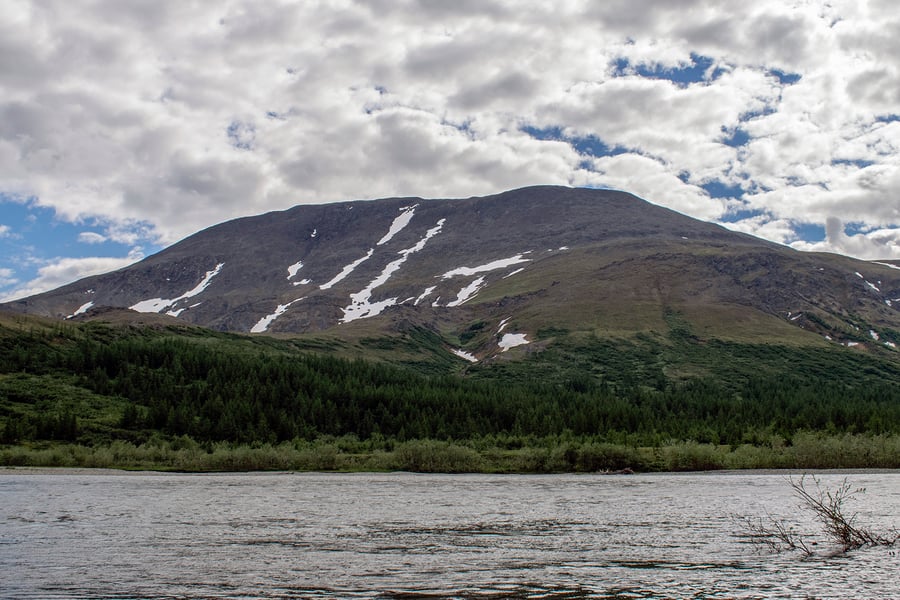
Down the Sob
From the watershed the line drops beside a pale braided river with the mountains standing over it, through halts named Bear, Cross Mountain and Red Rock. It is the best hour of the journey and it is entirely from the window.A bit of history
Culture & experiences along the way
 Aysa t / Wikimedia Commons · CC BY-SA 4.0 · cropped
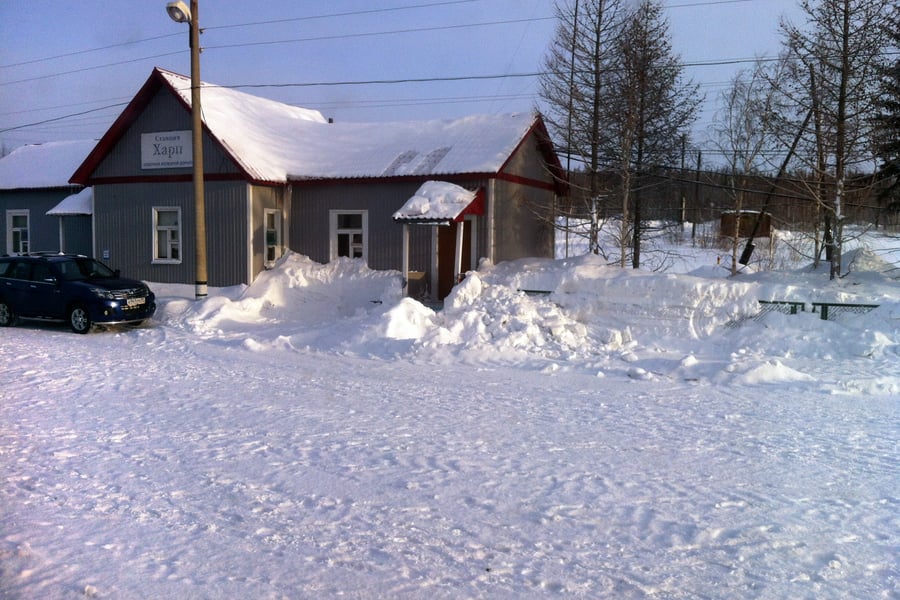
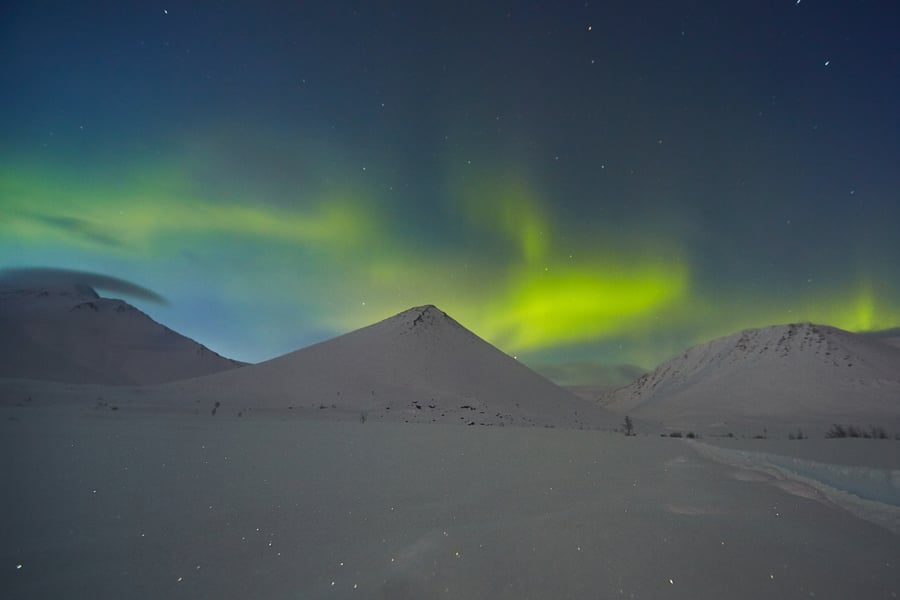
Kharp means northern lights
The station is called Kharp – Severnoye Siyaniye, and the two halves say the same thing twice: kharp is Nenets for the aurora. Sixty kilometres north of the Arctic Circle the sky puts on the display the place is named after for most of the dark half of the year.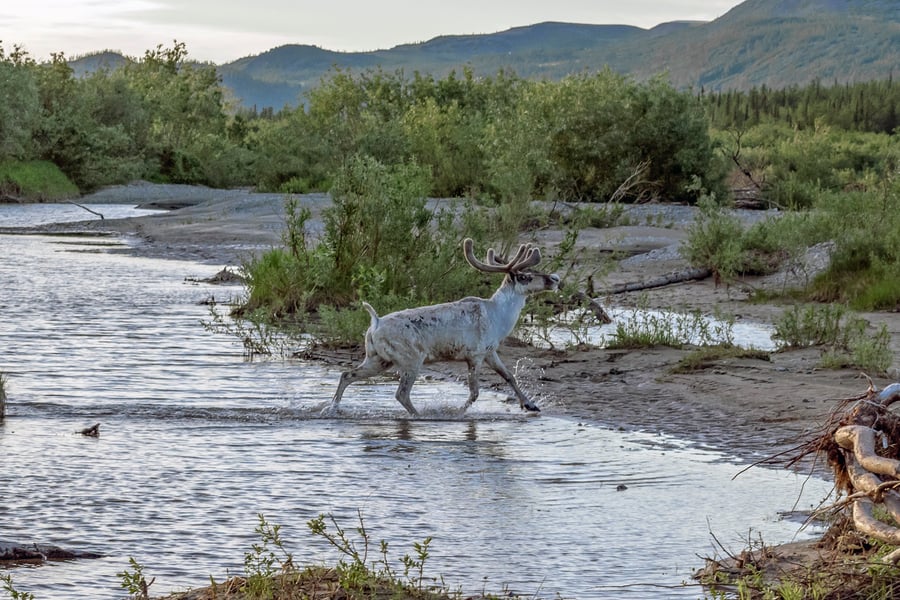 Александр / Wikimedia Commons · CC BY-SA 4.0 · cropped
Reindeer on the line
Nenets herders have moved animals across this ground for centuries and still do. The Sob valley is inside a protected area created for exactly that reason, and in July the herds ford the river within sight of the railway, unbothered by it.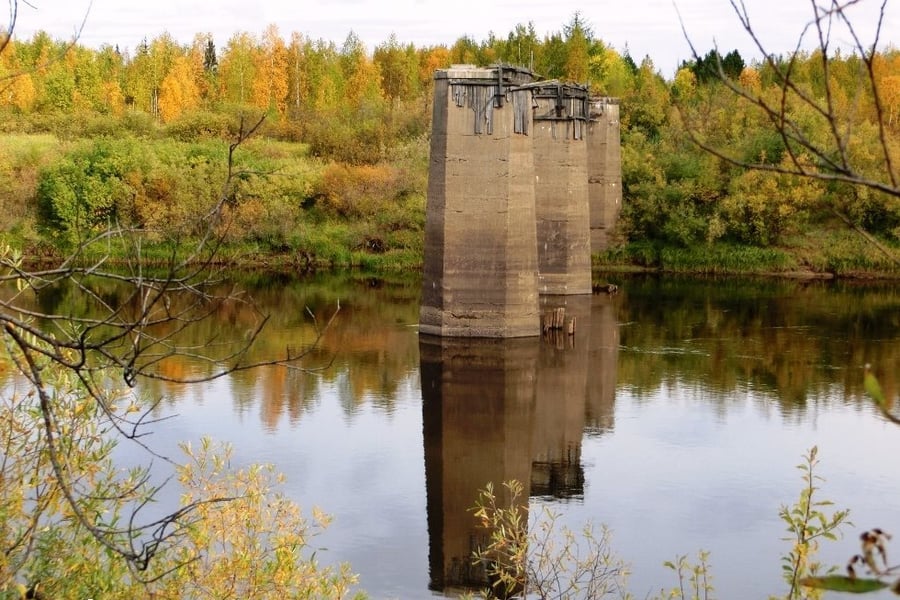 Charly1234 / Wikimedia Commons · CC BY-SA 4.0 · cropped
The road that was never finished
This bridge pier stands in the Turukhan, a thousand kilometres and more east of Labytnangi, on the half of the Transpolar Mainline that was abandoned in 1953 and never taken up again. Everything you ride today is the western end of it.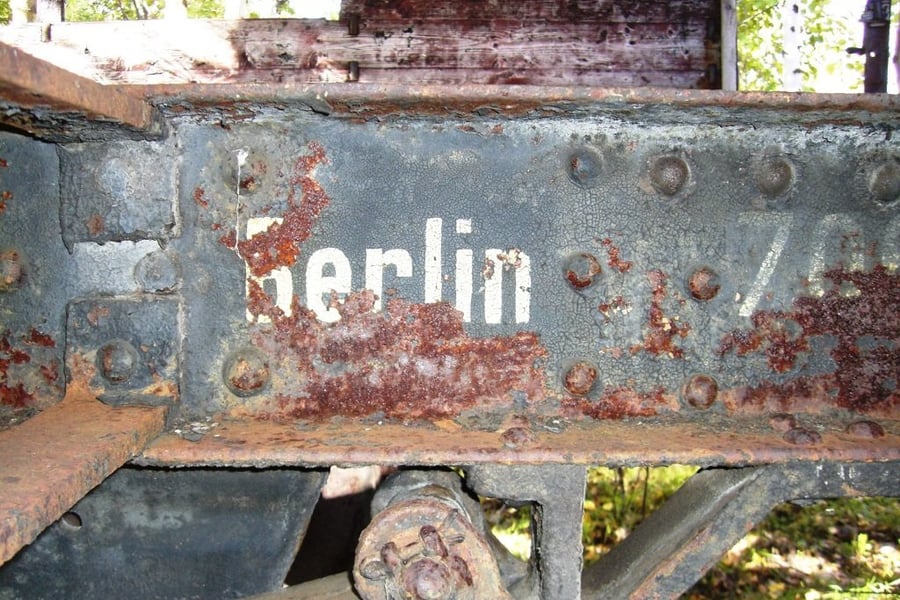 Charly1234 / Wikimedia Commons · CC BY-SA 4.0 · cropped
A wagon out of Berlin
Rolling stock for Construction 501 came from wherever the Soviet Union could find it, and some of it came out of occupied Germany as war booty or reparations. Wagons still lettered Berlin, regauged to Russian track, sit on the abandoned embankment east of the Ob.Timetables
One train works the route in each direction, every day of the year, and it is numbered 353/354 with a suffix that changes with the direction — 353Я going east, 353М coming back. Russian railways post their timetables in Moscow time, and so does the table below; Vorkuta keeps Moscow time, but Labytnangi and everything east of the Urals watershed is two hours ahead, so add two to read the clock on a Yamal platform.
| Direction | Train | Depart | Arrive | Journey | Runs |
|---|---|---|---|---|---|
| Vorkuta → Labytnangi | 353Я | 09:00 | 19:05 (21:05 local) | 10 h 05 | Daily |
| Labytnangi → Vorkuta | 353М | 11:00 (13:00 local) | 20:20 | 9 h 20 | Daily |
Where it stops, eastbound
Twenty intermediate calls, of which these are the ones that matter. Kilometres are the train's own, counted from Vorkuta — which is why they run past the 261 kilometres of railway between the two towns.
| Station | km | Arrive | Stop |
|---|---|---|---|
| Vorkuta | 0 | — | depart 09:00 |
| Chum | 66 | 10:32 | 1 min |
| Seida | 74 | 10:43 | 1 h 43 min |
| Chum (again) | 82 | 12:37 | 1 min |
| Yeletskaya | 133 | 14:10 | 18 min |
| Polyarny Ural | 179 | 15:28 | 12 min |
| 110 km | 192 | 15:55 | 2 min |
| Sob | 200 | 16:10 | 20 min |
| Kharp – Severnoye Siyaniye | 235 | 17:30 | 30 min |
| Obskaya | 262 | 18:42 | 1 min |
| Labytnangi | 277 | 19:05 | — |
The stop at Seida is not a delay. The train runs eight kilometres past the junction at Chum, reverses, and comes back through it to take the Labytnangi branch — so Chum appears twice on the timetable, once at 10:32 and again at 12:37. Coming the other way the same manoeuvre takes an hour.
The stop at Kharp is the one to use. Half an hour on a platform under the Rai-Iz massif is the only scheduled chance to stand still in the mountains, and it comes at half past five Moscow time — half past seven locally, which in June is full daylight and in December is the middle of the night.
Times as of September 2026, read from the operator's own booking system in both directions. Tickets go on sale about ninety days ahead, and a date past that horizon returns an empty board, which is not the same thing as no train. Check before you travel at rasp.yandex.ru (opens in a new tab).
Tickets
Every seat and berth is reserved and sold against a named passenger, so buy before you turn up. The train carries three kinds of accommodation, which is generous for a ten-hour daylight run: ordinary seated coaches, open-plan platskart with bunks, and four-berth kupe compartments. For a journey that starts after breakfast and ends the same evening a seat does the job, and it costs about as much as a cinema ticket.
Fares move with demand and with how far ahead you book; the figures below are the lowest published for each class in September 2026, in roubles. Bring the passport you booked with, because it is checked at the coach door — the conductor holds your ticket for the whole journey and hands it back before your station, which on this train means somebody will wake you at Kharp if you ask.
Book your tickets
Seated, or platskart
The two cheap ways to do it
A seat is enough for a journey that starts after breakfast and ends the same evening; platskart buys you an open-plan bunk and somewhere to put a rucksack.
Book Tickets (opens in a new tab, on rasp.yandex.ru)via rasp.yandex.ruKupe
Four-berth compartment
A closed compartment for the Urals crossing, and the only class on the train with a door you can shut.
Book Tickets (opens in a new tab, on rasp.yandex.ru)via rasp.yandex.ruRail Passes
No rail pass covers this journey. Interrail and Eurail are a 33-country scheme and Russia is not one of the 33 — it appears nowhere in the pass network's own list of participating railway companies, so a pass bought in Europe buys nothing here, and there is no through service from the nearest pass territory in any case.
There is no Russian equivalent either. The national operator sells a loyalty scheme and occasional round-trip discounts rather than a period pass, so you cannot buy a week of unlimited travel on this railway at any price.
For this particular run it would change nothing. Every seat on the train is individually reserved, so a pass holder would still be buying a reservation for the one departure of the day, and the walk-up fare for a seat across the Polar Urals is small enough that the arithmetic never gets interesting. Buy a point-to-point ticket. Checked September 2026.
Places to Visit
This is a line with two towns on it and a mountain range in between, and the mountains are the reason to break the journey. The Polar Urals here are low, treeless and genuinely accessible — the railway runs through the middle of them, and a halt in the Sob valley puts you at the foot of a massif in a way that no other Arctic range in Russia does. Anything you get off for, you will be waiting a day to leave again: one train each way, every day, and nothing else.
 Lopaev89 / Wikimedia Commons · CC BY-SA 4.0 · cropped
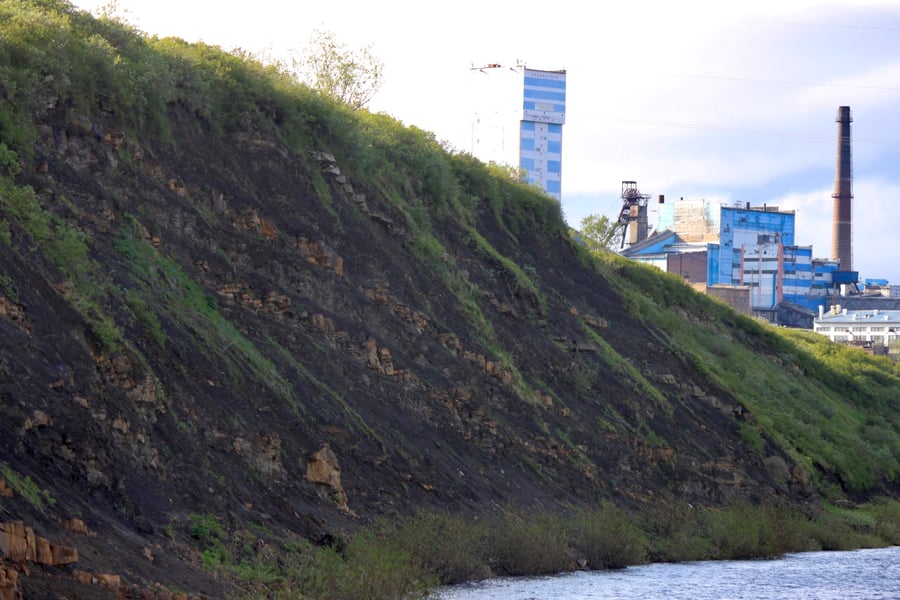
Vorkuta, the far end of Europe
No city in Europe lies further east, and only three inside the Arctic Circle hold more people. Vorkuta was built on coal in the 1930s and 1940s and the seams are still visible in the river bluffs, with a pithead on the skyline above them. Its population is falling faster than that of any other Russian city, so whole districts around the ring road stand empty — a place that is genuinely hard to compare to anywhere else you will have been.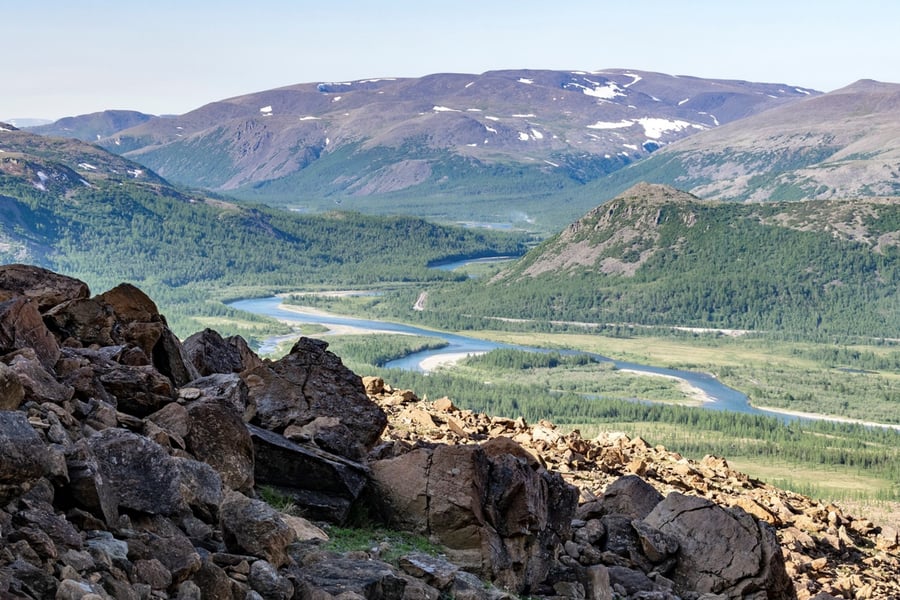 Александр / Wikimedia Commons · CC BY-SA 4.0 · cropped
The Sob valley
The river the railway follows down from the watershed, and the reason there is a railway at all: the Sob valley cuts the Polar Urals in two. North of it the range spreads 125 kilometres wide; south of it the ridge narrows and the summits go to almost 1,500 metres. The river runs 185 kilometres to the Ob, fast and braided and cold, and it is the easiest way into Arctic mountains in Russia — the train sets you down at the foot of them.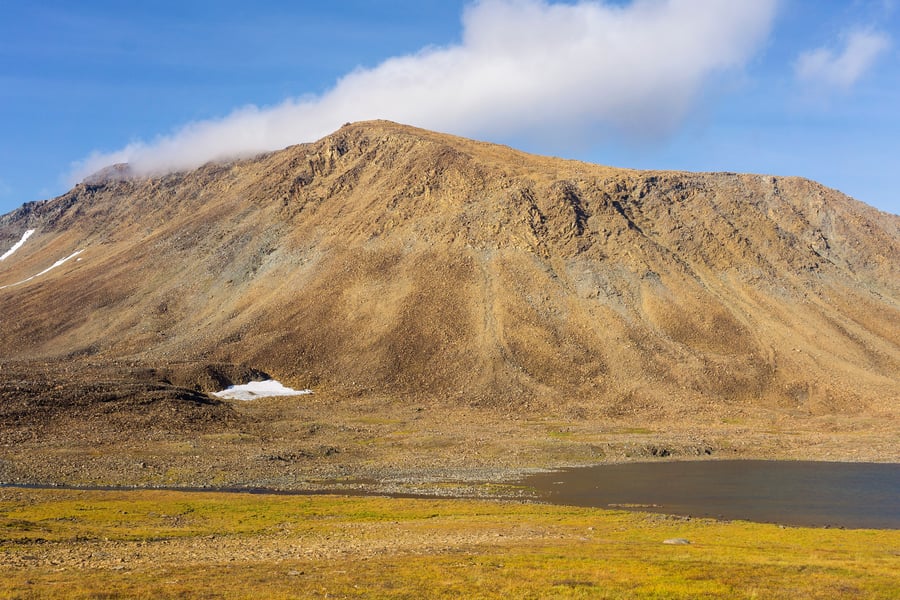 T1000robot / Wikimedia Commons · CC BY-SA 4.0 · cropped
Rai-Iz
The massif that stands over the line between Sob and Kharp: a flat-topped block with corries cut into its edges and a cold lake in the bottom of most of them. It is the mountain the geologists came for. Rai-Iz holds the largest explored chromite reserves in Russia, worked open-cast at the Tsentralnoye deposit, and the same rock yields jadeitite and nephrite — jade — which is why the halt below it was named for polar geologists.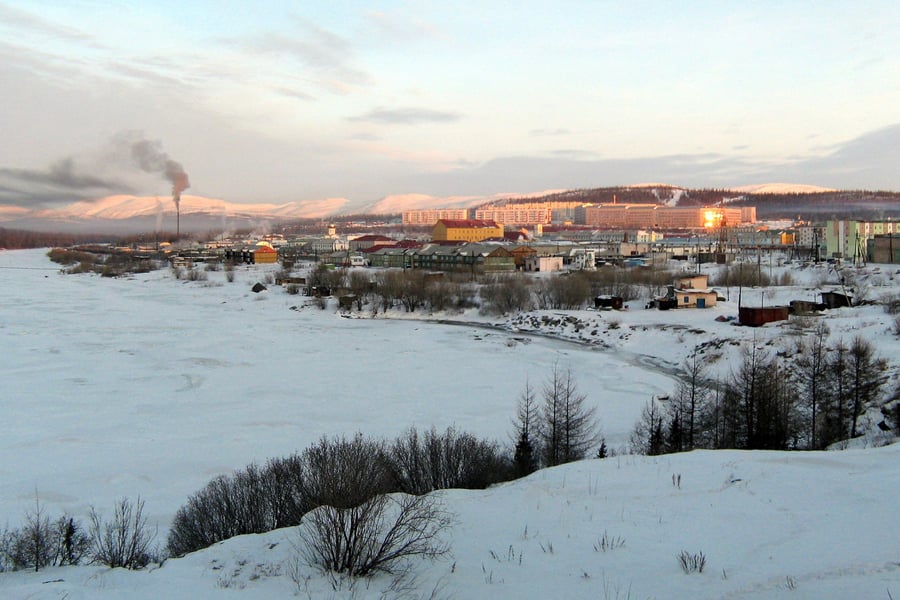 ValeryZatolochny / Wikimedia Commons · CC BY 3.0 · cropped
Kharp
A settlement of about five thousand people on the Sob, sixty kilometres north of the Arctic Circle and thirty from Labytnangi, in the last foothills. It began as a railway halt called Podgornaya, became Kharp in 1968 and a town in 1981. For anyone heading into the mountains it is the place to get off, because it is the only stop with a road, a shop and somewhere to sleep.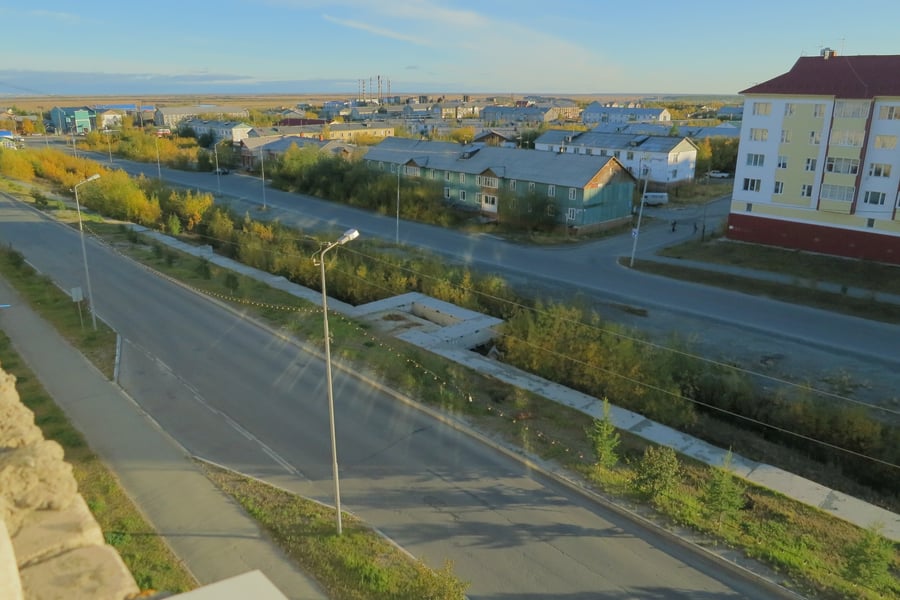 Qweasdqwe / Wikimedia Commons · CC BY-SA 3.0 · cropped
Labytnangi
Khanty for seven larches, a settlement first recorded in 1868 and a town of about twenty-six thousand now. It exists because the rails stop here: everything bound for Yamal is transferred at Labytnangi, and the town is laid out around that fact. Salekhard, the regional capital, is two kilometres away across the Ob — by ferry in summer, over the ice in deep winter, and by hovercraft in the weeks between.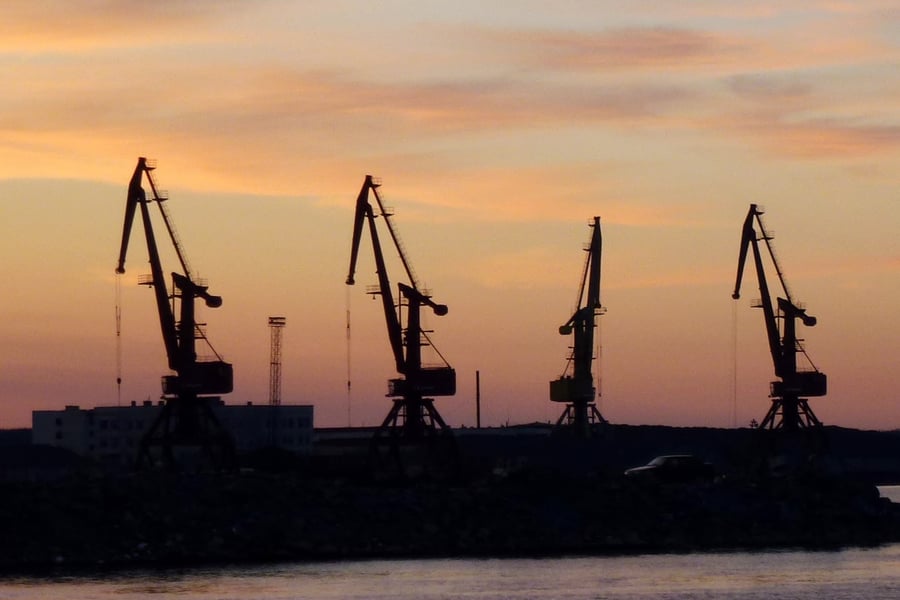 Николай Максимович / Wikimedia Commons · CC BY 3.0 · cropped
The river port
Cranes on the Ob at midnight in summer, and the real reason the railway was driven here in 1948: this is where rail meets water, and the lower Ob is a highway. Cargo for the whole of Yamal came off trains and onto barges at this quay for seventy years. A rail bridge to Salekhard has been promised repeatedly and ordered again in 2025 for completion by 2029; until it is built, the port is still how the north gets its freight.Where to Sleep
There are beds at each end of the line and not much in between. Vorkuta and Labytnangi both have proper hotels that take bookings directly, and both are a short walk or a short taxi ride from their station — which matters when the one train of the day leaves at nine in the morning.
In the mountains it is different. The halts between Yeletskaya and Kharp serve settlements of a few dozen people, several of them survey bases rather than villages, and nothing there publishes rooms online. Walkers and rafters on the Sob carry a tent and arrange anything else by telephone from Salekhard or Labytnangi before they travel. If you want the Polar Urals with a roof over you, Kharp is the place to aim for and the half-hour stop is not long enough to find one — you need the ticket that ends there.
Where to stay
Gostinitsa Gornyak
Central Vorkuta, Mira Street
The municipal hotel of the coal city, on Mira Street in the centre, with rooms from economy to suite and a shared kitchen.
Check Availability (opens in a new tab, on hotel-gornyak.ucoz.ru)via hotel-gornyak.ucoz.ruSem Listvennits
Labytnangi, with a restaurant and sauna
"Seven Larches" borrows the Khanty words behind the town's own name, and is the one hotel at the end of the line that takes bookings directly.
Check Availability (opens in a new tab, on sevenlbt.ru)via sevenlbt.ruQuestions or corrections
Planning this trip and stuck on something, or spotted a time, fare or detail that has changed? Send us a message about Vorkuta to Labytnangi. We read every one, and we update this page when something has changed.