Moscow to St Petersburg
Neu-Zwei / Wikimedia Commons · CC BY-SA 4.0 · cropped
- Distance650 km
- Duration4 h 00 min
- Best seasonYear-round
Introduction
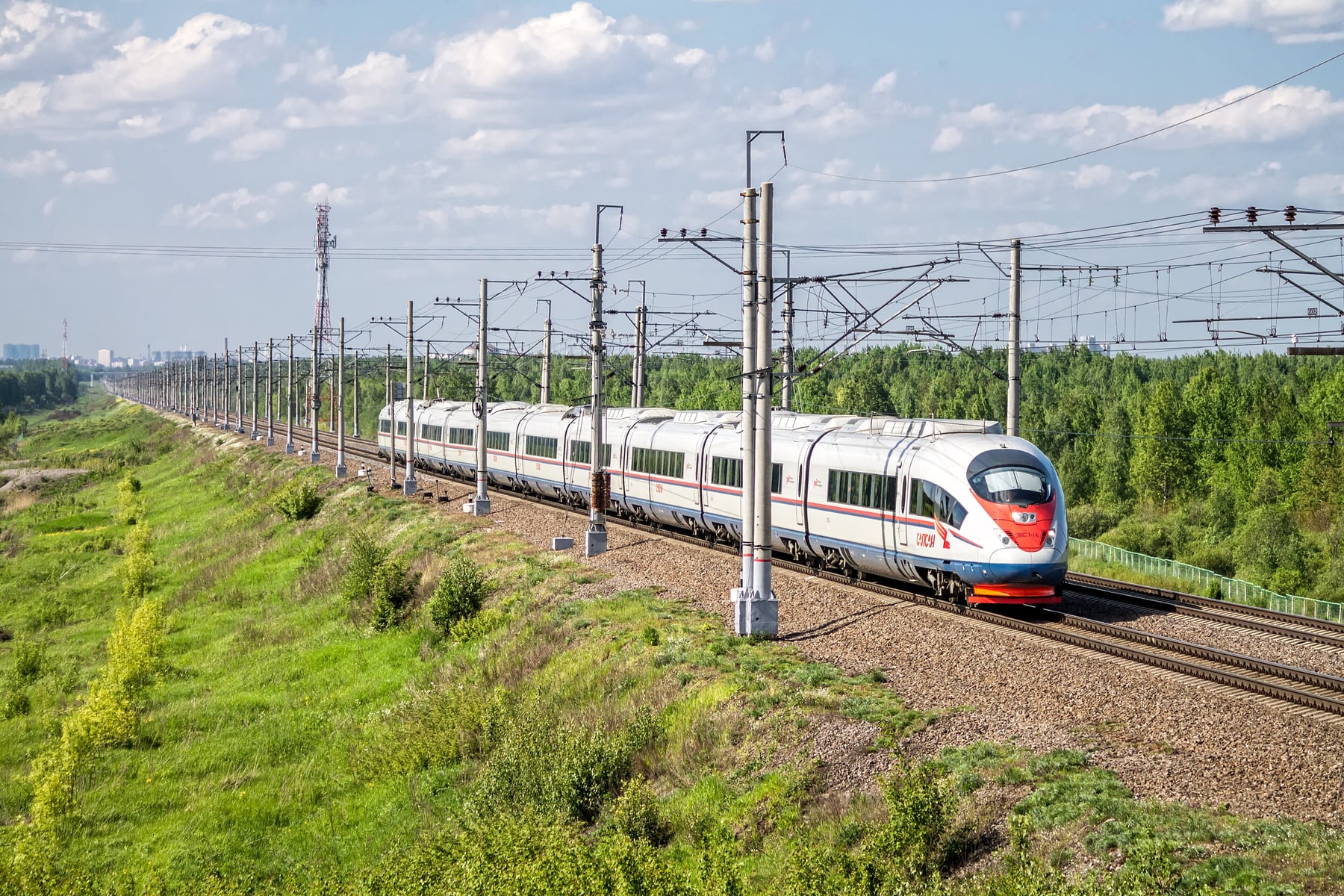
Moscow and St Petersburg are 650 kilometres apart, and twelve times a day in each direction a high-speed train covers the distance in four hours. Nothing about that is remarkable in Europe. What makes this journey worth taking is the railway underneath it: the trains run at up to 250 km/h along an alignment surveyed in the 1840s, on the country's first double-track state railway, opened in 1851. The line was straight when it was built, and the modern service has spent twenty years making it straighter.
The ride itself is undramatic and that is the point. Ten silver cars leave Moscow Oktyabrskaya — Leningradsky station to everyone who uses it — and run north-west through the Moscow suburbs, across the Volga at Tver, over the northern edge of the Valday Hills, down the Msta valley and out onto the Novgorod plain to the Neva. The quickest departures make no intermediate stop at all. The rest call once, twice or four times, for a minute each, at towns that exist because the railway put them there.
It is also the only Russian journey where you can watch the next railway being built alongside the old one. A dedicated high-speed line to St Petersburg by way of Veliky Novgorod has been under construction since March 2024, and half an hour out of Moscow the train runs past its bridges and embankments. When it opens, the four hours become two and a quarter, and this line goes back to being what it was for a century and a half: a very fast way of travelling on a very old railway.
The Journey
The line is 649 kilometres and 700 metres from buffer stop to buffer stop, which puts its exact midpoint at the 325th kilometre, six kilometres short of Bologoye. Everything about the journey follows from that number being so nearly a straight line.
It runs between the capital and the old capital, and in 1842 that was the other way round: St Petersburg had been the seat of the Russian Empire since 1712, and Moscow was the city it had displaced. Nicholas I ordered a railway joining the two, surveying began in February 1842, construction started on 27 May 1843 and the line opened on 1 (13) November 1851 — the third railway in the Empire and its first double-track state line, the beginning of a national network rather than a curiosity. It cost 67 million roubles, took 46 million cubic metres of earthworks, and left two great terminals, 34 stations and 190 bridges. The government moved back to Moscow after the revolution of 1917, which is why the direction of travel feels reversed today.
A passenger train in 1851 was a locomotive and tender, one baggage van, one mail van and five carriages, running at 40 km/h; with station stops the run between the two cities took 22 hours. First class cost 19 roubles, second 13, third 7. Twenty years earlier the stagecoach had cost 95 roubles and taken four or five days.
The kink that wasn't the tsar's finger
There is a story that Nicholas I laid a ruler on the map, drew the line himself, and that the pencil jumped where his finger got in the way — which is why the railway had one inexplicable bend near the Msta. It is a good story and it is not true. The line was built straight. The bend arrived thirty years later, and for an engineer's reason.
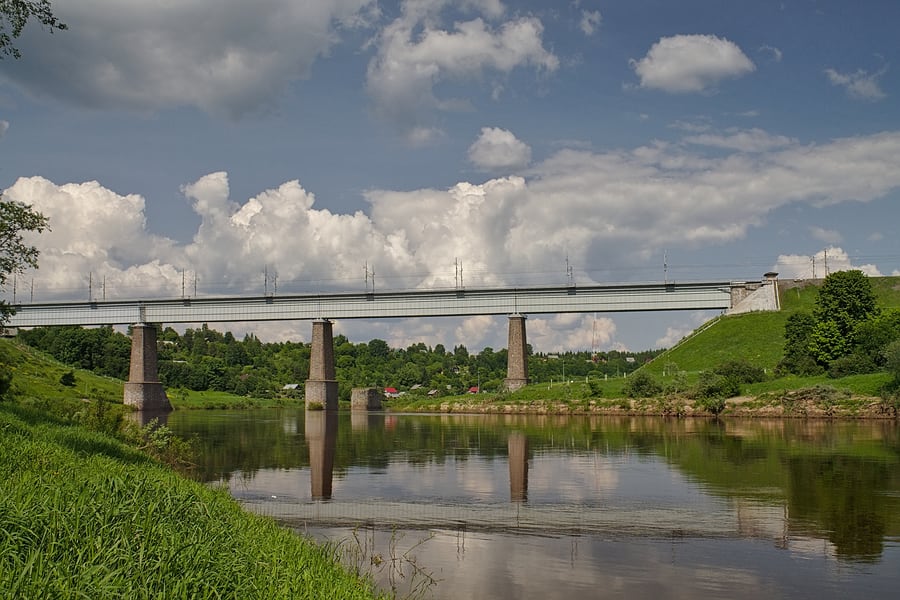
Climbing away from Mstinsky Most towards Moscow, the railway faced 15.5 kilometres of rising grade at 7.8 ‰, steeper than anything else on the route, and it crossed the Verebye ravine on a timber viaduct by Dmitry Zhuravsky: nine spans of 49.7 metres, fifty metres above the water, the tallest and longest railway bridge in Russia when it opened. As freight grew, trains had to be double-headed or split in two to get up the bank. Rather than rebuild the bridge, the railway built round the problem: the Verebye bypass opened on 14 September 1881, seventeen kilometres of easier gradient with two new stations, Verebye and Oksochi, and the old viaduct was abandoned.
That detour survived for 120 years. In 2001 it was undone. A new bridge — 536 metres long, 53 metres high, one 55-metre span — was begun on 15 February and opened to traffic on 26 October the same year, putting the trains back on the alignment of the 1840s and saving five kilometres. The bypass and its two stations were lifted by 2012. The line on the map is straight again, and now it is true.
What runs on it
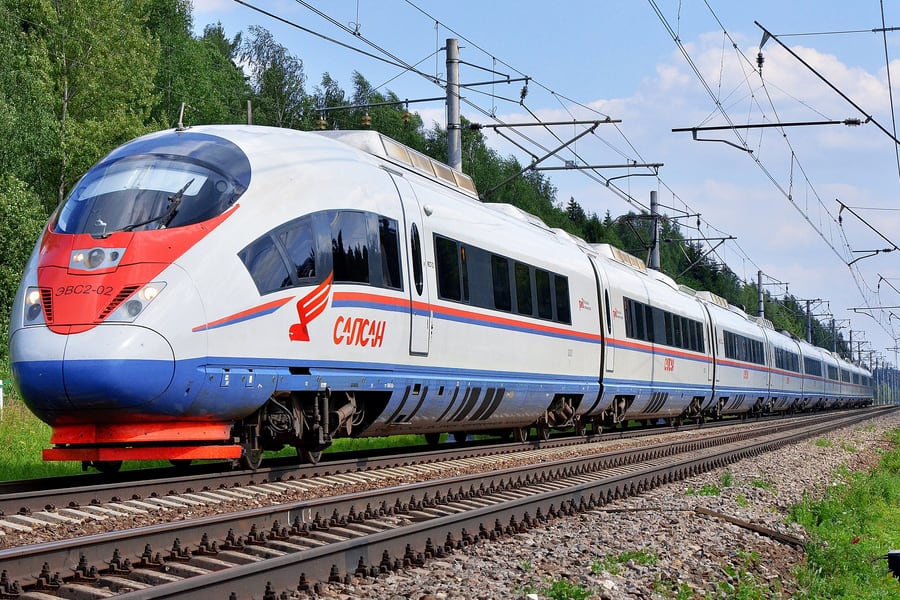
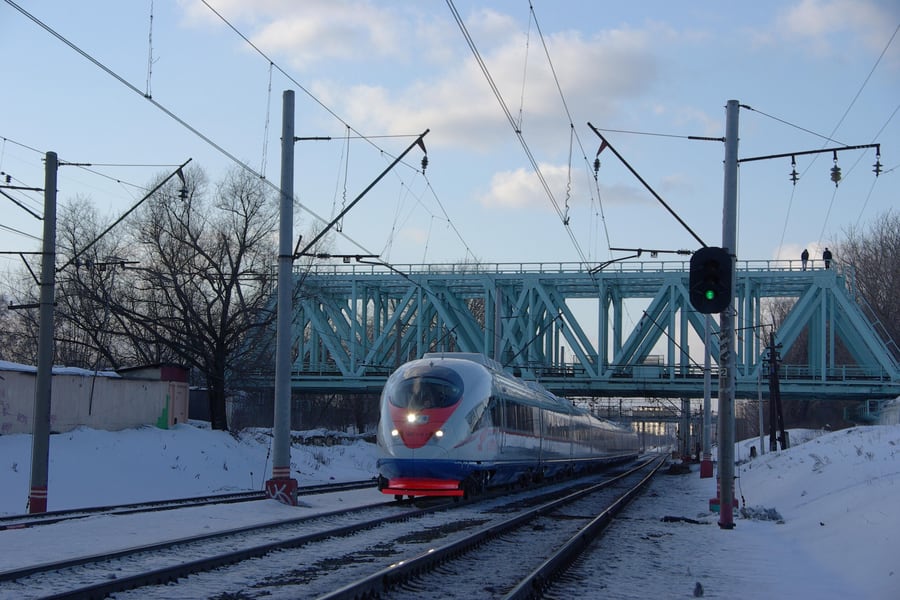
The high-speed stock on this railway is the Siemens Velaro RUS, series ЭВС1 (3 kV DC) and ЭВС2 (dual-voltage), built at Krefeld-Uerdingen from 2007 and designed around Russian conditions rather than adapted to them: the body is almost 30 centimetres wider than the European standard to suit the CIS loading gauge, the air intakes sit on the roof, and the train is rated to work at −50 °C. Regular high-speed service began on 18 December 2009, at three pairs a day. Since 1 August 2014 two ten-car sets have been coupled at peak times into a single twenty-car, 1,050-seat train more than 500 metres long, driven from one cab.
The trains are built for 300 km/h and limited to 250 on Russian track. In practice most of the run is at 200, and there is exactly one stretch where the full 250 is used: between Okulovka and Malaya Vishera, around Mstinsky Most. The rest of the time you are travelling fast on a railway shared with everything else, which is the fundamental constraint here and the reason a separate line is being built.
What it cost the line
Running high-speed trains on mixed traffic has a price, and it was paid by the freight. Every pair of fast passenger trains put on this route displaced roughly six pairs of goods trains, which were sent round instead — by Volkhov, Cherepovets, Vologda and Yaroslavl, or by Dno and Novosokolniki — turning a 660-kilometre haul into 1,110. Daytime stopping services were withdrawn at the same time, which is why Vyshny Volochyok, Bologoye and Okulovka are now reachable in the middle of the day mainly by the expensive train. It is a real cost, and it is the argument the new line was built on.
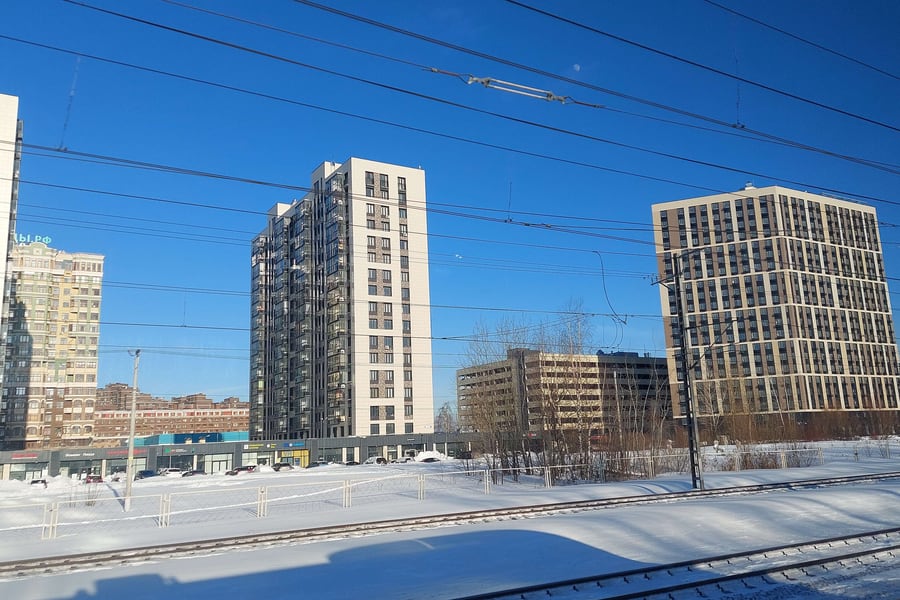
Along the route
 Artyom Svetlov / Wikimedia Commons · CC BY 4.0 · cropped
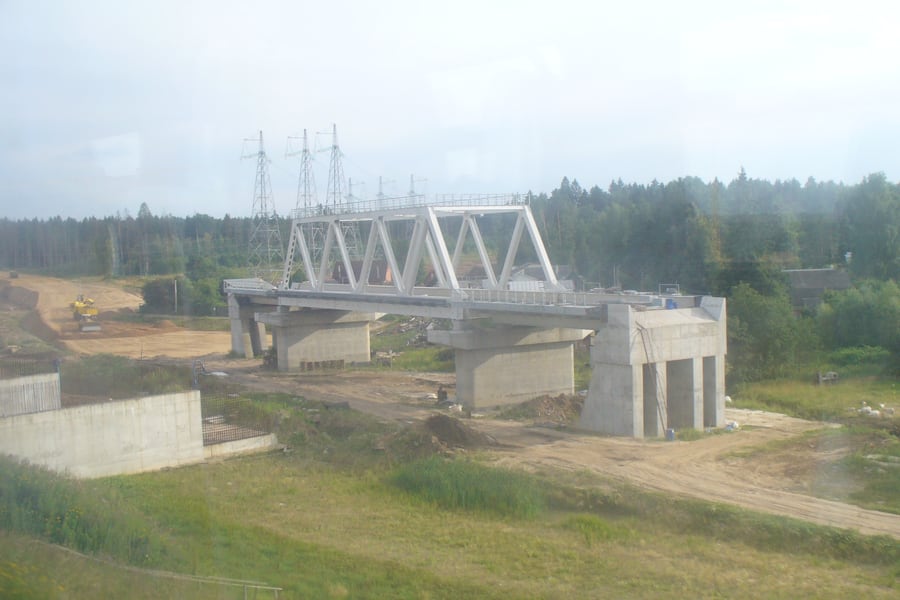
Kryukovo and the new line
Half an hour out, the train passes the earthworks of a second railway. A dedicated high-speed line to St Petersburg via Veliky Novgorod — 679 km, 2 h 15 min — has been under construction since March 2024, with a stop planned here.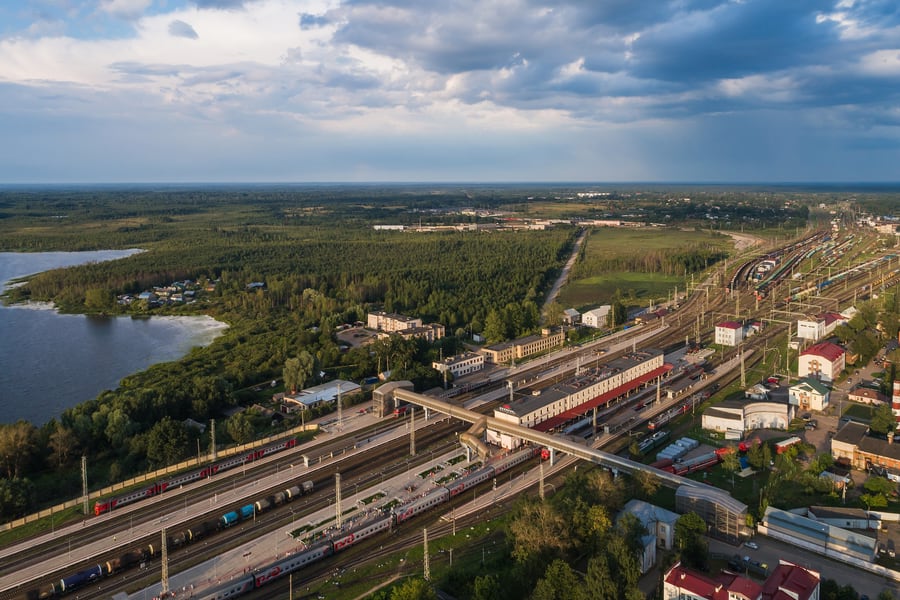 A.Savin, Wikipedia · cropped
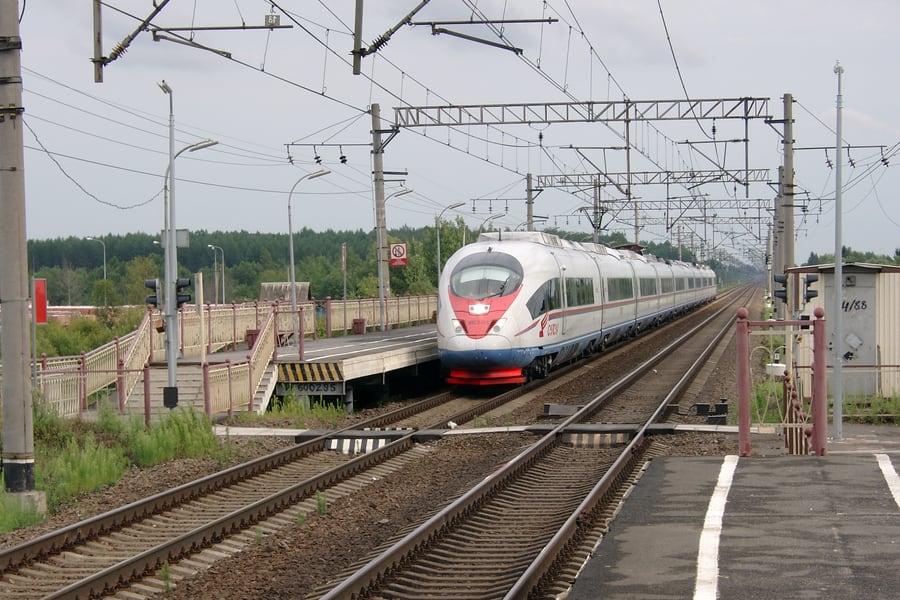
Bologoye, the midpoint
The line measures 649 km 700 m end to end, so its exact middle falls 6 km short of here. A junction town of 19,000 on the edge of the Valday Hills; the fast trains that call stop for one minute.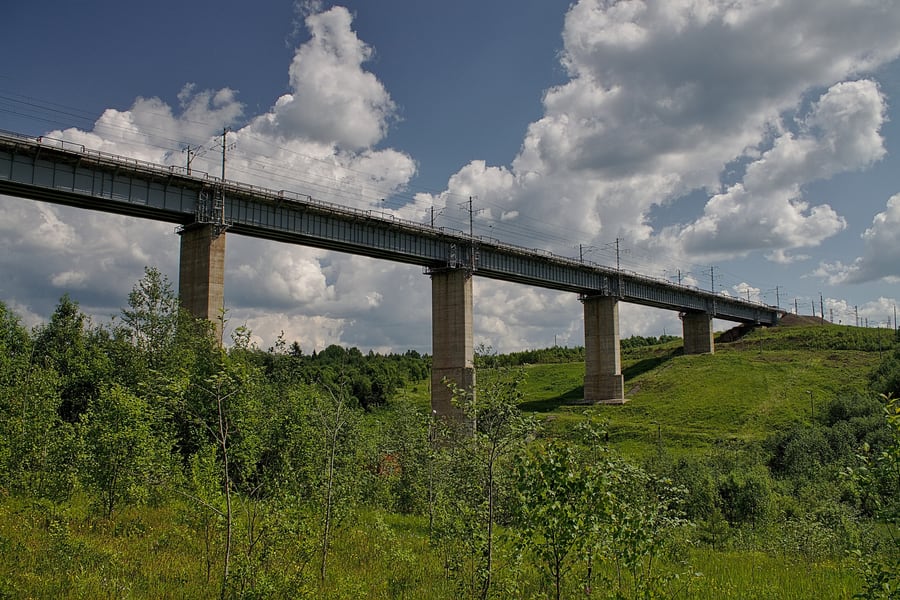 Neu-Zwei / Wikimedia Commons · CC BY-SA 4.0 · cropped
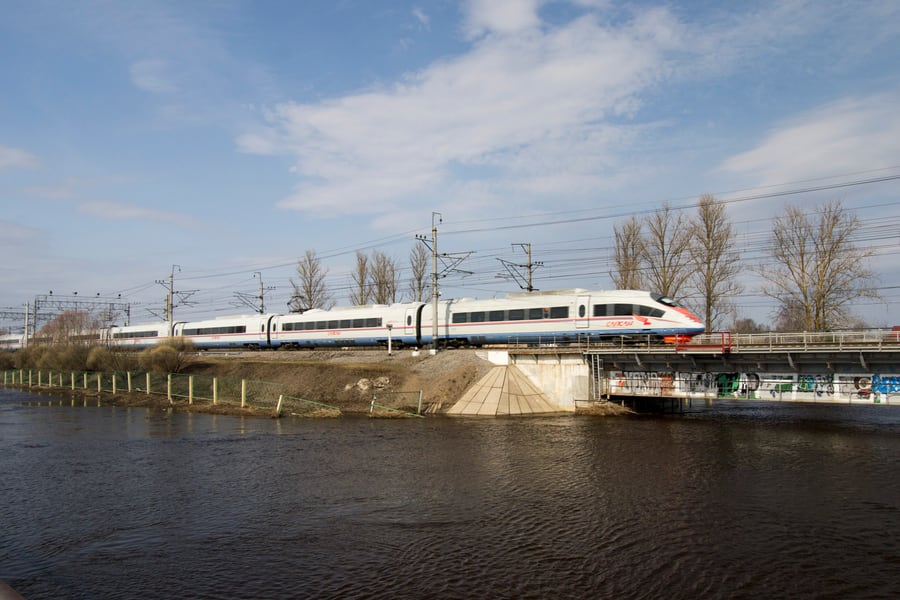
The Verebye ravine
A 536-metre viaduct, 53 metres above the stream, opened in October 2001. It carries the line back onto the alignment surveyed in the 1840s and abandoned in 1881 — see below for why it was ever left.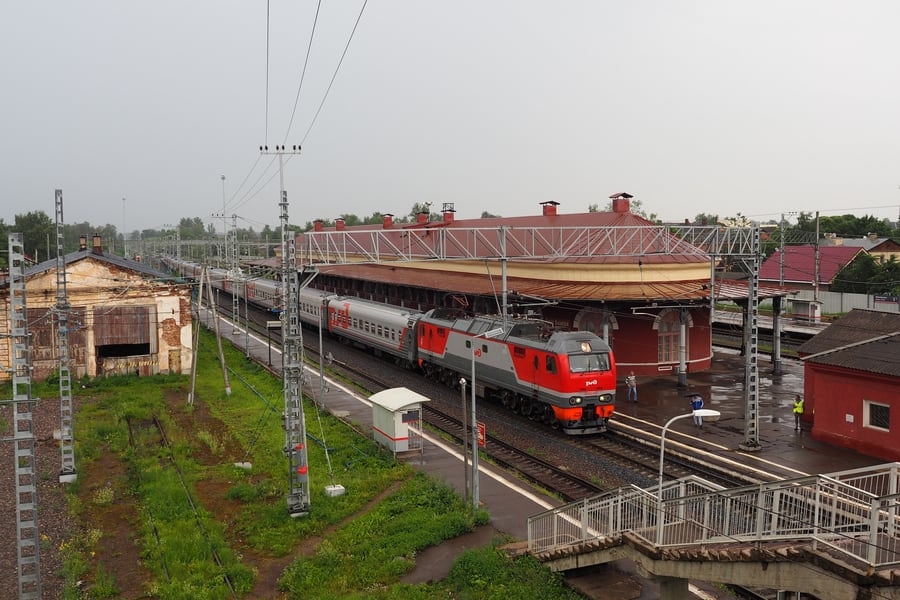 Artem Svetlov / Wikimedia Commons · CC BY 2.0 · cropped
Malaya Vishera
A town of 9,000 that exists only because the railway came through: it grew up around the station in the second half of the nineteenth century and was not incorporated until 1921. The fast trains do not stop.A bit of history
Culture & experiences along the way
 Craig Nagy / Wikimedia Commons · CC BY-SA 2.0 · cropped
The two terminals are twins
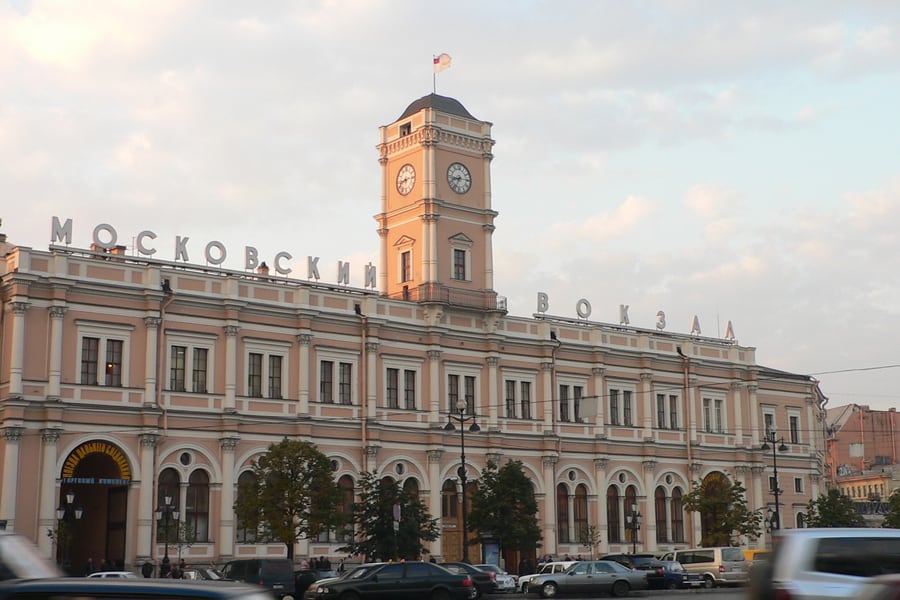
Konstantin Thon won the competition and built both ends to one neo-Renaissance design in 1844–1851, borrowing the clock tower from west European town halls. Moscow's is the city's oldest station. Arrive at either and you have seen the other.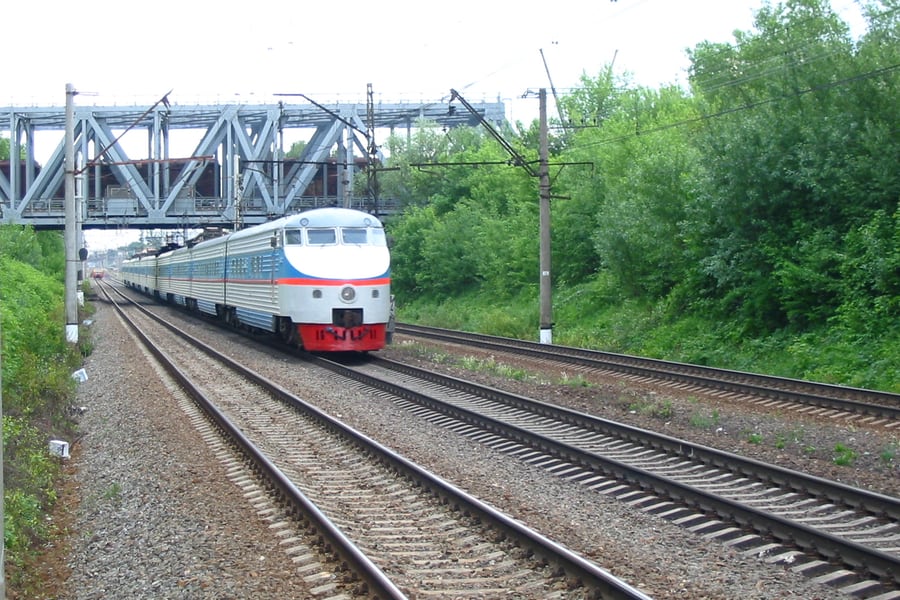 Artem Svetlov / Wikimedia Commons · CC BY 2.0 · cropped
The train that came before
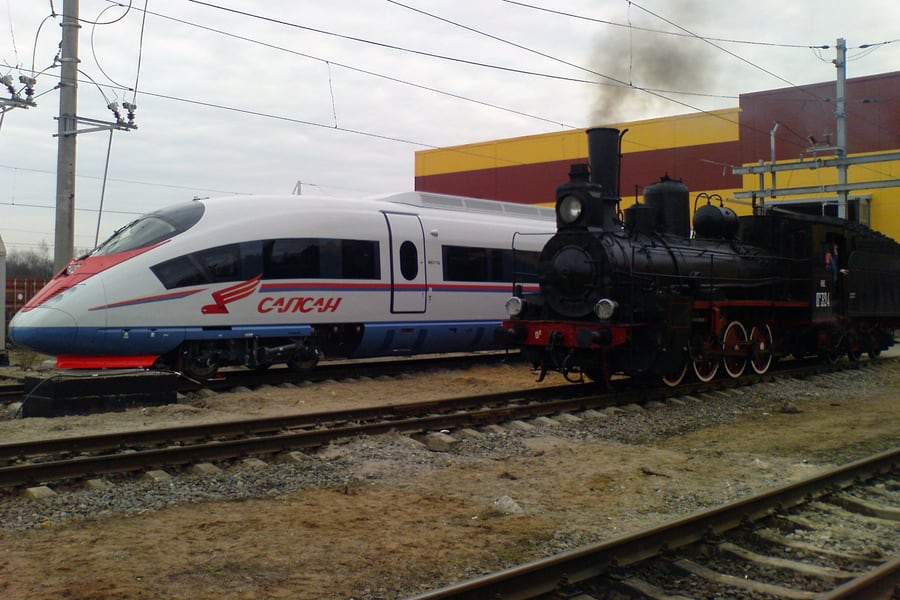
The ER200 — Riga electric train, 200 km/h — entered service on 1 March 1984, the first Soviet high-speed set. Its last run with passengers, on 28 February 2009, went only as far as Lyuban, where Russia's first railway minister is buried.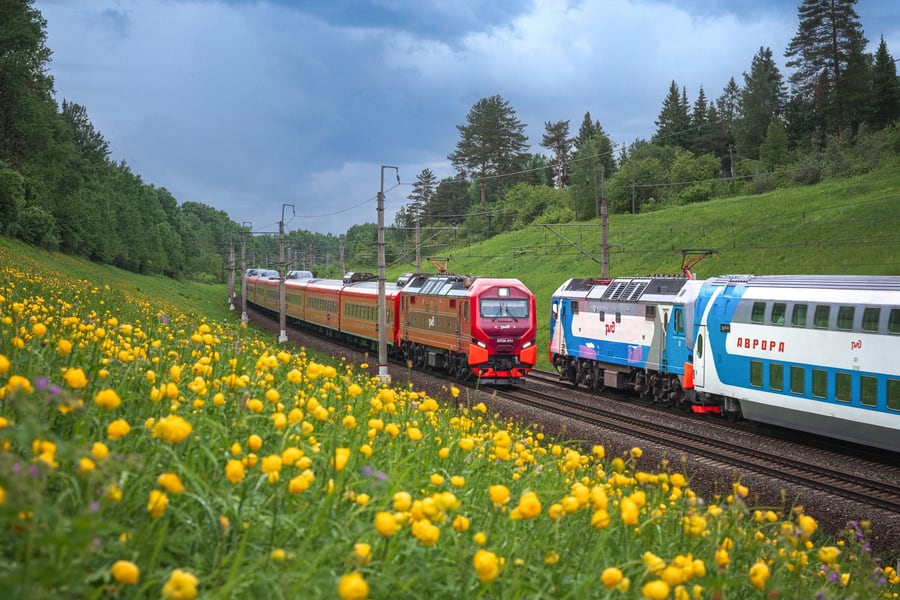 Ulan3 / Wikimedia Commons · CC BY 4.0 · cropped
Leaving to Glière
Train 001А has left St Petersburg at 23:55 since 1931, the first named express in the Soviet Union. Since 1965 the station announcer plays Reinhold Glière's Hymn to the Great City over the platform as it goes. Eight hours, arriving 07:55.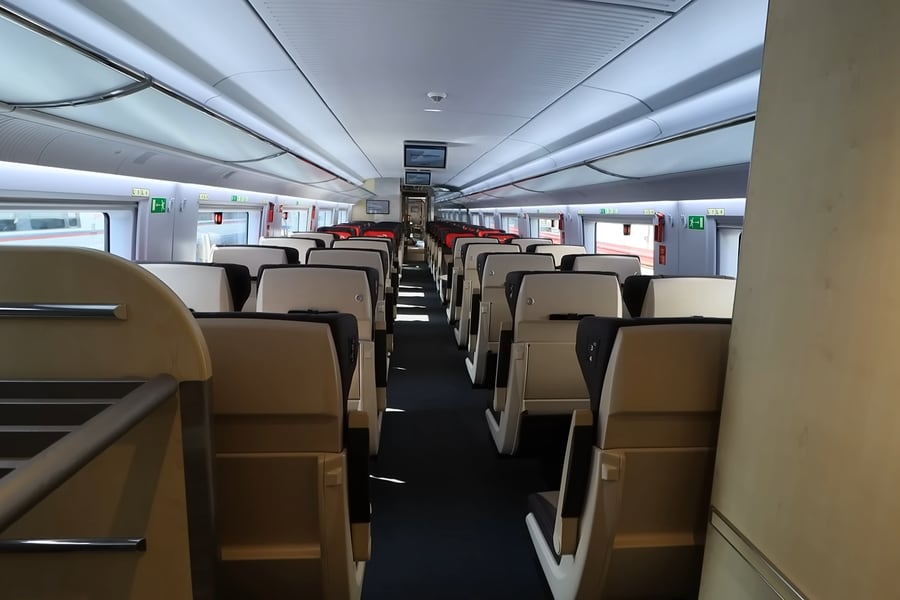 KmbbMedia / Wikimedia Commons · CC BY 4.0 · cropped
Three classes, one saloon
Economy, business and first, all seated, all in open coaches — there are no compartments and no berths on a four-hour train. A bistro car sells hot food, and the fare varies with the date, the day of the week and the departure time.Timetables
Twelve high-speed departures run each way, every day, all year. They are scheduled at 4 h 00 to 4 h 19, and the pattern is genuinely daily: the boards for a Wednesday, a Saturday and a Sunday in September 2026 were identical, train for train and minute for minute. Alongside them run slower seated services taking 5 h 35 to 6 h 25, and a fleet of overnight sleepers.
All times are Moscow time, which is the only time this railway keeps, and are correct as of September 2026.
Moscow (Oktyabrskaya) → St Petersburg (Glavny)
| Train | Departs | Arrives | Journey | Calls |
|---|---|---|---|---|
| 754А | 05:45 | 09:49 | 4 h 04 | non-stop |
| 756А | 07:20 | 11:30 | 4 h 10 | Tver, Bologoye |
| 758А | 07:30 | 11:45 | 4 h 15 | Kryukovo, Vyshny Volochyok, Uglovka, Chudovo |
| 760А | 09:30 | 13:35 | 4 h 05 | Tver, Bologoye |
| 762А | 09:40 | 13:54 | 4 h 14 | Uglovka, Okulovka, Chudovo |
| 768А | 13:30 | 17:30 | 4 h 00 | Vyshny Volochyok, Uglovka, Chudovo |
| 770А | 13:40 | 17:40 | 4 h 00 | Tver, Bologoye |
| 772А | 15:12 | 19:27 | 4 h 15 | Vyshny Volochyok, Chudovo |
| 778А | 17:25 | 21:28 | 4 h 03 | Tver, Uglovka |
| 780А | 19:30 | 23:49 | 4 h 19 | Tver, Bologoye, Okulovka, Chudovo |
| 782А | 19:40 | 23:58 | 4 h 18 | non-stop |
| 784А | 21:00 | 01:00 | 4 h 00 | Kryukovo, Tver, Chudovo |
St Petersburg (Glavny) → Moscow (Oktyabrskaya)
| Train | Departs | Arrives | Journey |
|---|---|---|---|
| 751А | 05:30 | 09:40 | 4 h 10 |
| 755А | 07:03 | 11:21 | 4 h 18 |
| 757А | 07:13 | 11:31 | 4 h 18 |
| 759А | 09:00 | 13:19 | 4 h 19 |
| 761А | 09:10 | 13:29 | 4 h 19 |
| 767А | 13:00 | 17:19 | 4 h 19 |
| 769А | 13:10 | 17:29 | 4 h 19 |
| 771А | 15:00 | 19:19 | 4 h 19 |
| 777А | 16:45 | 21:04 | 4 h 19 |
| 779А | 19:38 | 23:54 | 4 h 16 |
| 781А | 19:48 | 00:05 | 4 h 17 |
| 785А | 21:00 | 01:10 | 4 h 10 |
Northbound trains carry even numbers and southbound odd ones, which is the Russian convention and a quick way to tell which board you are reading. The stopping patterns above were checked train by train; where a train calls, it stands for exactly one minute. Only two run through — the 05:45 and the 19:40 — and the number of stops is a poor guide to the timing: the 21:00 makes three calls and still does the whole line in four hours flat, while the non-stop 19:40 takes eighteen minutes longer.
The slower way
If four hours is not the point, the same railway carries seated trains at 5 h 35 to 6 h 25 — 742У at 06:00, 744У at 13:45 and 746У at 17:45 from Moscow, calling at Tver, Bologoye and Chudovo, and 724В at 15:55 which stops nearly everywhere: Kryukovo, Tver, Spirovo, Vyshny Volochyok, Bologoye, Okulovka, Mstinsky Most, Malaya Vishera, Chudovo and Tosno. That last one is the way to actually see the line.
Overnight, six sleepers leave Moscow Oktyabrskaya for the same platform in St Petersburg between 18:57 and 23:55, taking 7 h 34 to 9 h 58 — long enough to be worth a berth, and the reason the sleeper survived the high-speed train instead of being killed by it. Most are soft-class (SV); the 18:57 also carries open sleeping cars.
⚠️ Check before you travel. The twelve fast departures are stable, but the additions around them are not: an extra 06:30 seated train was running on alternate dates only until late October 2026 — 748А on even dates, 740У on odd. Times here come from the Belarusian Railways booking system, which queries the same CIS reservation network as the Russian operator and returns the Russian board.
Tickets
These are reserved-seat trains: the booking system allocates a numbered place, so buy before you go rather than turning up. Three classes share the same open saloons — economy, business and first — with no compartments and no berths, because four hours does not need them. One car is a bistro, with its own waiters and bar staff, and there are four more stewards for the business-class cars.
Fares are dynamic. The operator prices by date, by day of the week and by departure time, so the 05:45 on a Tuesday and the 19:40 on a Friday are not the same money, and the number you are quoted depends on when you ask. We do not print a fare here, because the only figures we could verify come from a foreign railway selling at the inter-state tariff in a different currency, which is not what you would pay. Book through the Russian operator's own channels and take the price it gives you on the day.
Rail Passes
No rail pass covers this journey. The Interrail and Eurail Global Pass is a 33-country scheme and Russia is not one of them, so a pass bought in Europe buys you nothing on this railway.
Nor is there a substitute worth chasing. The Russian operator sells its own loyalty and multi-journey products, and the published discounts on these trains are tied to holding its electronic card or to buying both directions at once — neither of which is a pass in the Interrail sense, and neither of which can be confirmed from outside the country while the operator's own sites are unreachable from much of Europe.
For a single trip between the two cities there is nothing a pass would save you in any case. The fare is dynamic, and every one of the twelve daily departures needs its own reserved seat regardless. Buy a point-to-point ticket for the train you actually want.
Places to Visit
This is a journey whose two ends need no introduction and whose middle is almost never visited. The fast trains make that worse: they turn the 650 kilometres into a corridor, and the towns along it into names on a departure board. All of them are reachable, and several are worth a night.
The practical shape of a stopover is this. Tver is an hour and ten minutes out of Moscow and has frequent trains in both directions, so it works as a half-day on the way. Vyshny Volochyok and Bologoye are served by only a few of the twelve fast departures each day — check the calls in the timetable above before you plan to get off at either. Valday and its monastery are an onward trip from Bologoye rather than a walk from the platform. Veliky Novgorod is the big omission of this railway, which was surveyed to miss it. The junction is Chudovo, though the easier approach is a direct train from St Petersburg — and the new high-speed line is being routed through the city, which will settle the matter.
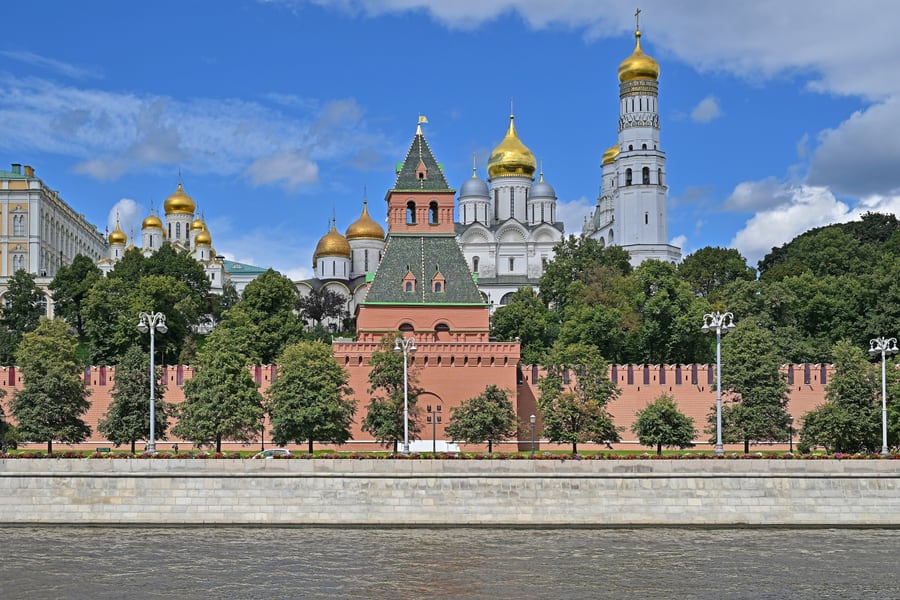 Юрий Д.К. / Wikimedia Commons · CC BY 4.0 · cropped
The Moscow Kremlin
The fortress on the Borovitsky hill, where the Neglinnaya meets the Moskva, and the oldest part of the city. The brick walls and towers standing today went up from 1485, over a decade, under Italian architects working for Ivan III, replacing the white stone they found. The view from the Sofiyskaya embankment across the river is the one that shows the whole ensemble at once; the terminal is four kilometres away.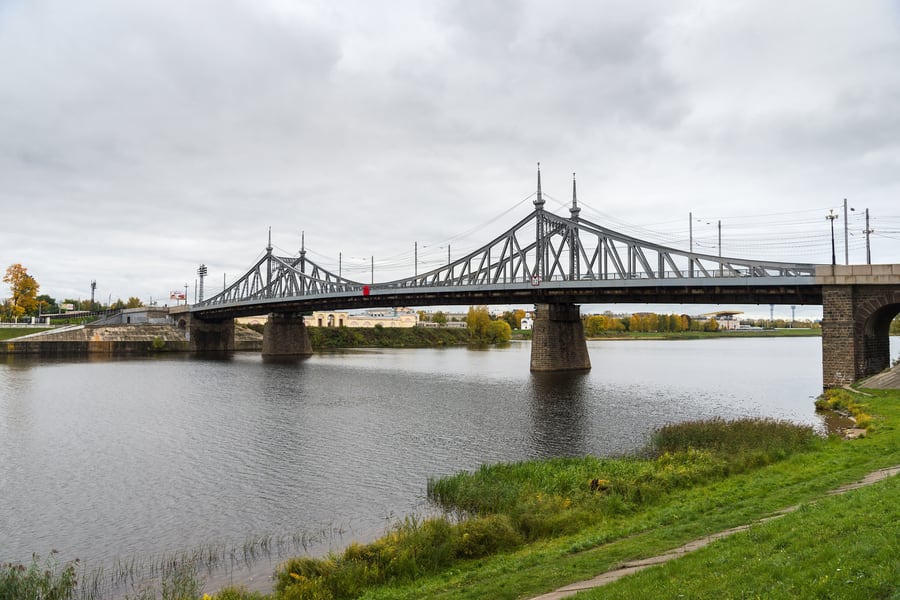 © Sergey Pesterev / Wikimedia Commons · CC BY-SA 4.0 · cropped
Tver and the Volga
The first city the train reaches, and the only one on the route that stands on the Volga. The Old Volga Bridge was designed in 1895 for the Ministry of Ways of Communication and built at state expense for 481,272 roubles, its metalwork made by the Kolomna works: two anchored cantilevers and a 25-metre Gerber beam floated between them. Walk it for the embankments on either side.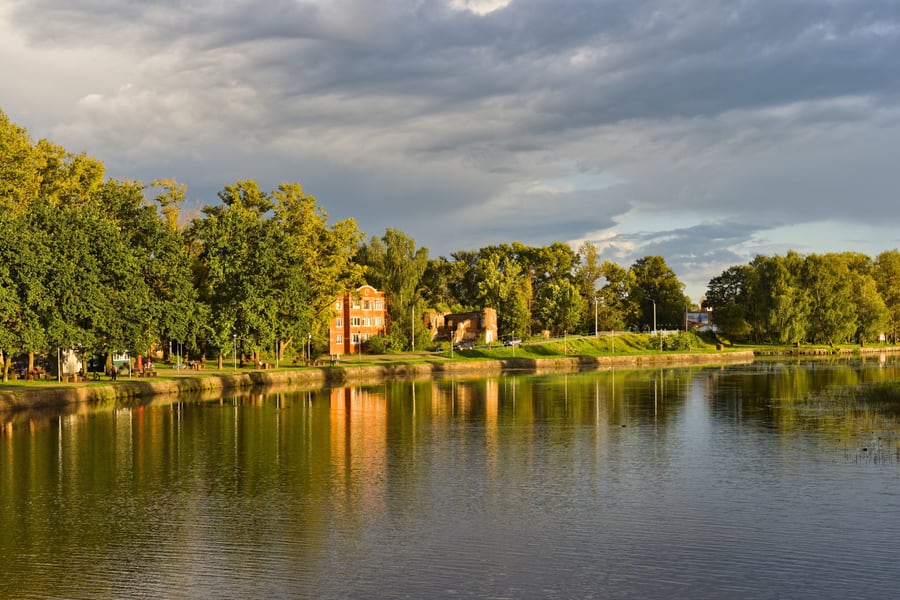 Alexxx1979 / Wikimedia Commons · CC BY-SA 4.0 · cropped
Vyshny Volochyok
Before the railway there was a canal, and it ran through here. Peter I ordered a cut between the Tsna and the Tvertsa on 12 January 1703 to join the Volga to the Baltic; Dutch engineers built it too shallow, and it took the Novgorod merchant Mikhail Serdyukov, granted a fifty-year concession in 1719, to make it work. The town is still laid out around its water.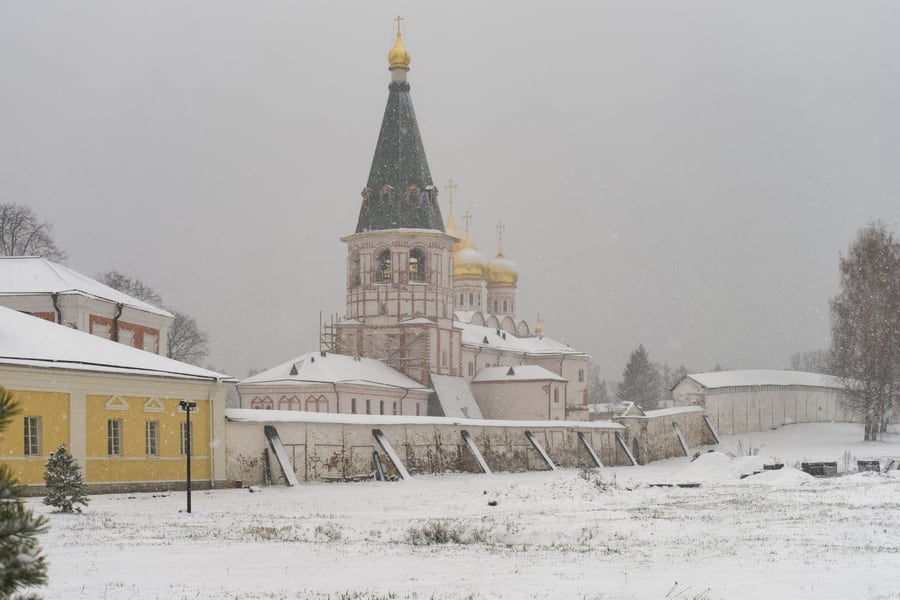 Alexxx1979 / Wikimedia Commons · CC BY-SA 4.0 · cropped
The Valday Iversky Monastery
On Selvitsky Island in Lake Valday, ten kilometres from the town of Valday and reachable from the halfway station. Patriarch Nikon began building in the summer of 1653, meaning it as a copy of the Iviron monastery on Mount Athos; the Dormition cathedral was consecrated on 16 December 1656. It is a working monastery, and the walk round the island is as much the point as the churches.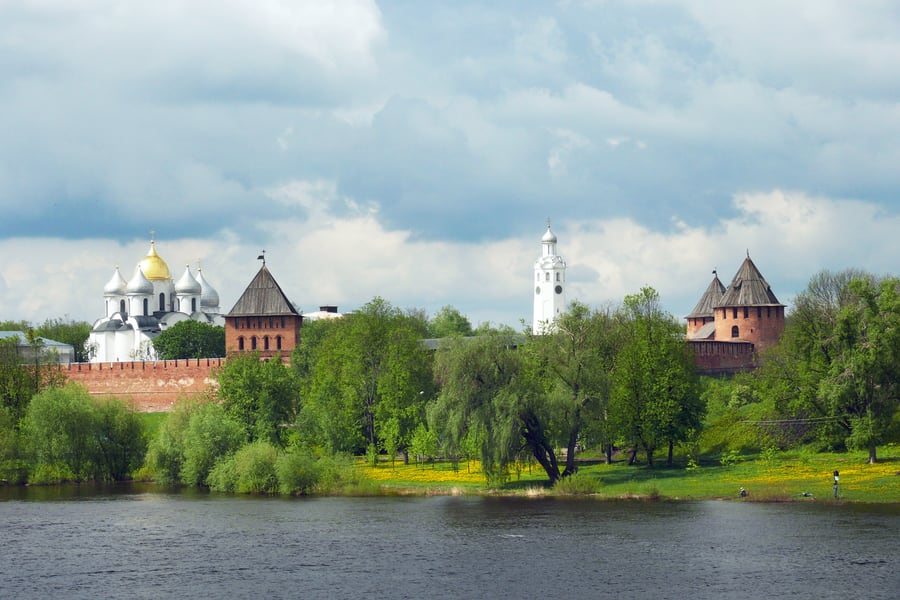 Konstantin hramov / Wikimedia Commons · CC BY-SA 4.0 · cropped
Veliky Novgorod
The city the new high-speed line is being routed through, and the one this railway has always passed at a distance. Its Detinets — the kremlin on the Volkhov — holds the cathedral of St Sophia, built in 1045–1050 and the earliest Old Russian church still standing on Russian soil. Chudovo, on this line, is the junction for it; there are also direct trains from St Petersburg.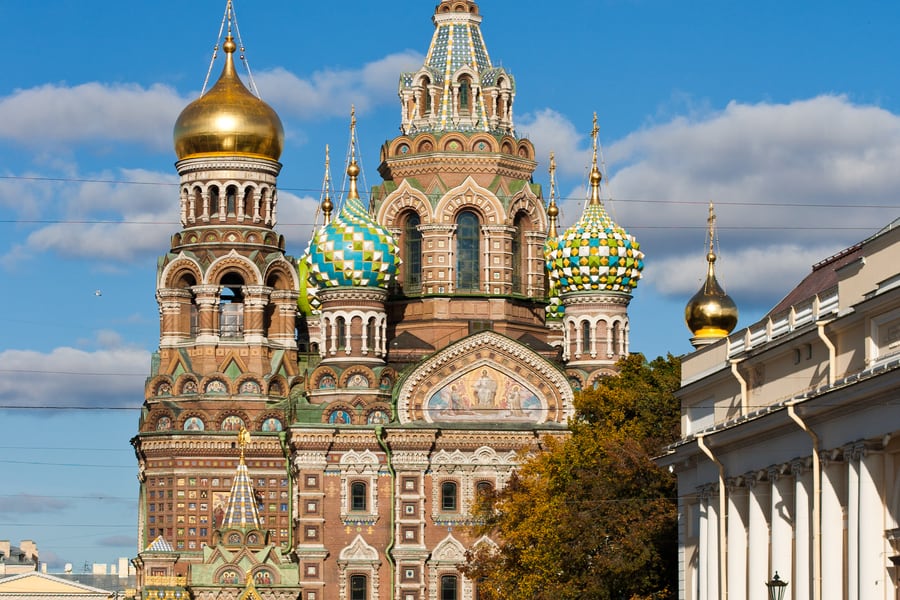 AndreyWi / Wikimedia Commons · CC BY-SA 3.0 · cropped
The Church of the Savior on Spilled Blood
On the Griboyedov canal, a walk from the arrival platform. It stands on the spot where Alexander II was fatally wounded on 1 March 1881, was paid for by subscription across Russia, and is deliberately unlike its neoclassical surroundings. Inside are 7,065 square metres of mosaic, made in Vladimir Frolov's workshop to designs by more than thirty artists — which is the reason to go in rather than only look.Where to Sleep
Four hours means you can do this journey and be back the same day, so most people do not sleep at either end because of the train. If you are staying, the useful distinction is between the two terminals: in Moscow the station is on Komsomolskaya Square, a good way from anything you came to see, while in St Petersburg it is on Ploshchad Vosstaniya, halfway along Nevsky Prospekt and in the middle of everything.
That makes St Petersburg the end where staying by the station is the sensible choice, and Moscow the end where you should ignore the station and stay central instead. Both hotels below are historic buildings still trading under their own names, and both are a short walk from the trains that matter — one from the platform, the other from the Kremlin.
Where to stay
Metropol
Teatralny proezd, central Moscow
Built in 1899–1905 for Savva Mamontov to William Walcot's design, on Teatralny proezd, a few minutes' walk from the Kremlin, Red Square and the Bolshoi.
Check Availability (opens in a new tab, on metropol-moscow.ru)via metropol-moscow.ruOktyabrskaya
Facing the arrival platform
On Ploshchad Vosstaniya where Nevsky meets Ligovsky, directly opposite the St Petersburg terminal, in a building A. P. Gemilian designed as a hotel.
Check Availability (opens in a new tab, on oktober-hotel.spb.ru)via oktober-hotel.spb.ruQuestions or corrections
Planning this trip and stuck on something, or spotted a time, fare or detail that has changed? Send us a message about Moscow to St Petersburg. We read every one, and we update this page when something has changed.