Trans-Siberian Railway
Аркадий Зарубин (Arkady Zarubin) / Wikimedia Commons · CC BY 3.0
- Distance9,289 km
- Duration~7 days
- Best seasonYear-round
Introduction
Every list of the world's great railway journeys has the same name at the top. The Trans-Siberian is the longest railway on earth — 9,289 kilometres of track from Moscow to the Pacific — and to ride its full length is to cross a continent the slow way, watching a fifth of the way around the planet slide past the window over the better part of a week.
It is less a scenic ride than an epic. There is no single killer view to wait for; instead there is scale — day after day of birch and taiga, of wide Siberian rivers and remote wooden towns, of stations where the clocks stubbornly keep Moscow time even as you cross eight time zones on your way east. And then, roughly halfway, the payoff: Lake Baikal, the deepest lake on the planet, with the line threading its shore.
The flagship service, the Rossiya, runs the whole way in about seven days without a change of train. But the Trans-Siberian is really a family of journeys — including the Trans-Mongolian to Beijing — and the great pleasure of it is to break the trip, stepping off into Siberia for a few days before climbing aboard the next train east.
The Journey
The classic journey begins under the great departure boards of Moscow's Yaroslavsky station and ends, seven days later, on the Pacific at Vladivostok — though it can be ridden either way.
Out of Moscow the train crosses the plains of European Russia and climbs, almost imperceptibly, over the Ural Mountains — the low, forested range that marks the boundary between Europe and Asia, near the city of Yekaterinburg. Beyond it lies Siberia proper: the industrial hub of Novosibirsk on the mighty Ob, then Krasnoyarsk on the Yenisei, then the long haul to Irkutsk, the elegant old exile city that is the jumping-off point for the journey's centrepiece.
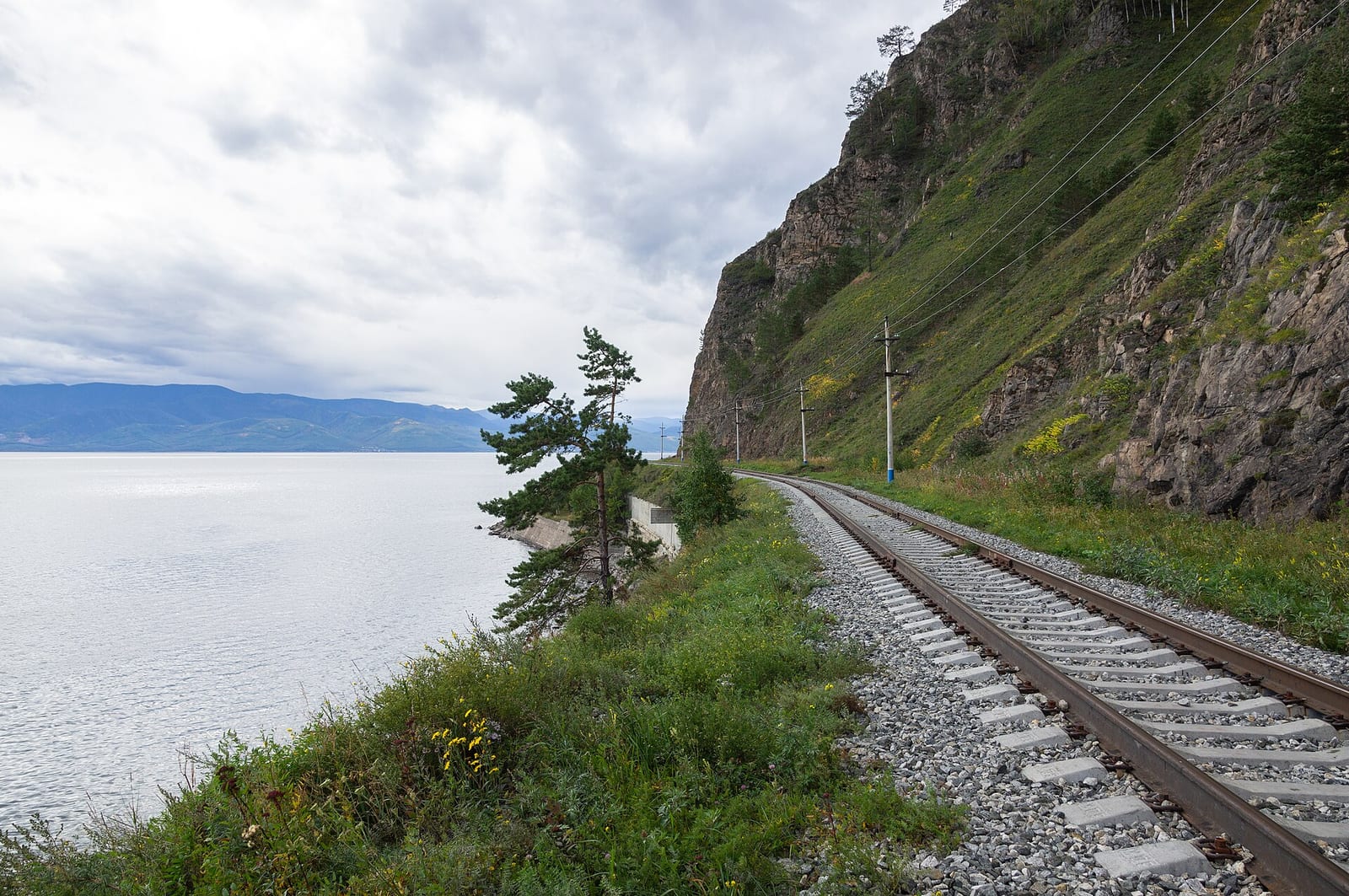
That centrepiece is Lake Baikal. The line curves down to the water and runs along its southern shore for miles — the oldest, deepest lake in the world, so vast it holds a fifth of all the unfrozen fresh water on earth. From Ulan-Ude, capital of Buddhist Buryatia, the rails fork: south to Mongolia and China, or on eastward through Chita and Khabarovsk to the end of the line.
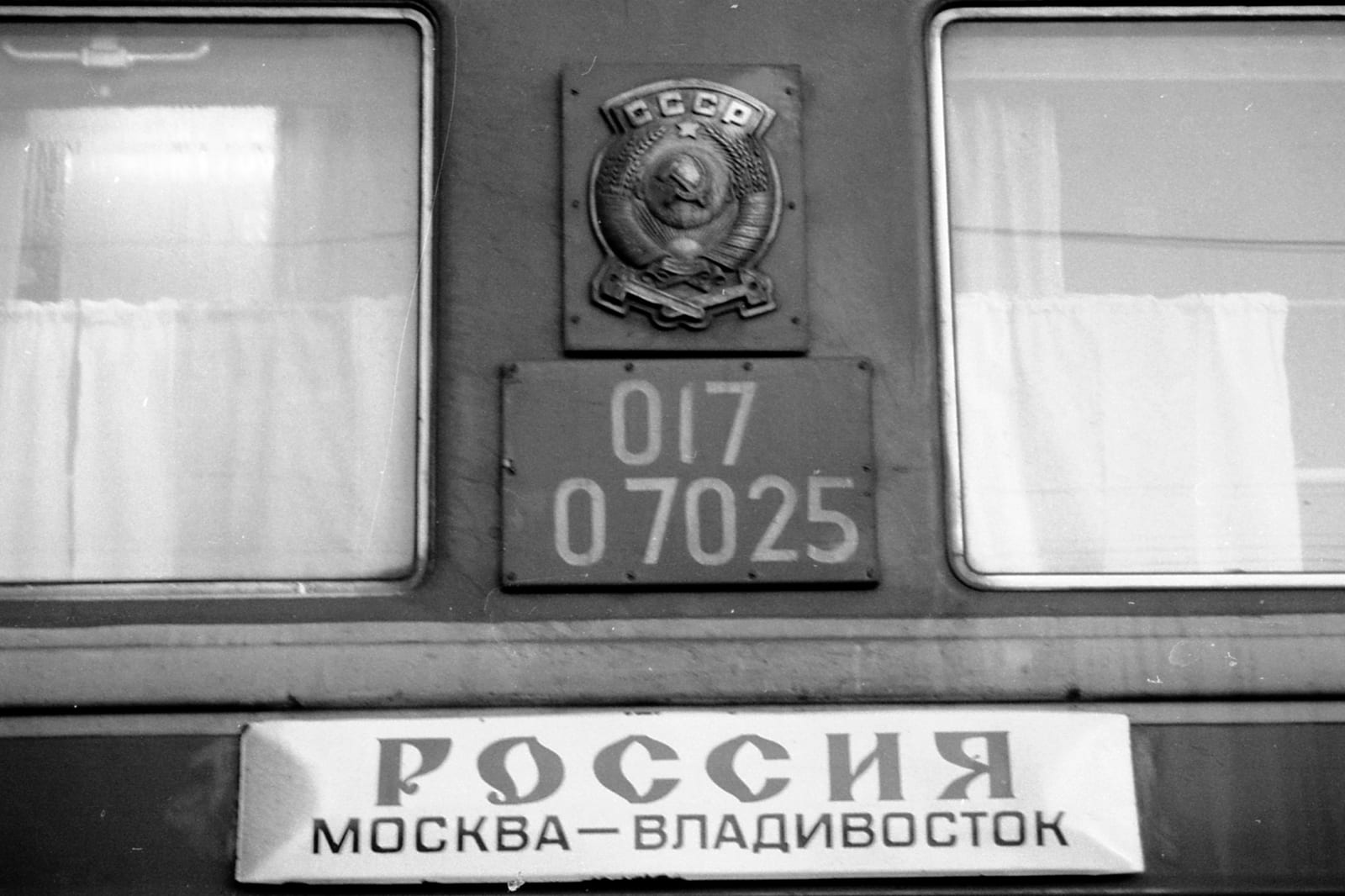
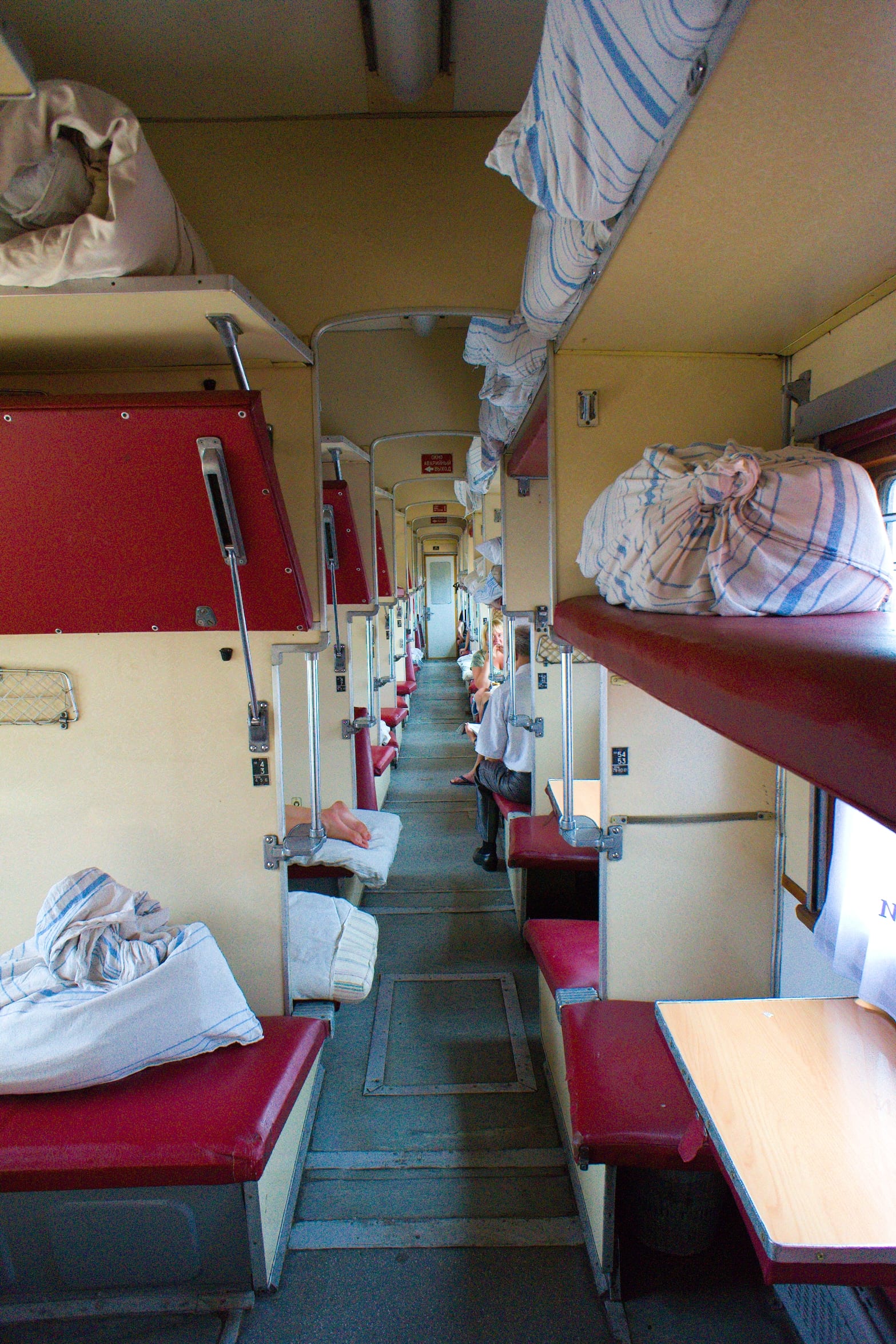
Between the landmarks, the journey is about the train itself. Life settles into the rhythm of the carriage — the ever-boiling samovar at the end of the corridor, the provodnitsa (car attendant) who rules it, tea in glass holders, shared meals, and the scramble onto the platform at longer stops to buy smoked omul fish, dumplings and berries from the babushkas who meet the train. By the time Vladivostok appears, the marker on the platform — 9,288 km from Moscow — feels thoroughly earned.
Along the route
© Vyacheslav Argenberg / http://www.vascoplanet.com/ · CC BY 4.0Lake Baikal
Roughly halfway across Siberia the railway meets Lake Baikal — the oldest and deepest lake on the planet, holding a fifth of the world's unfrozen fresh water. The line runs for miles along its shore; the old Circum-Baikal loop is an engineering marvel of tunnels and galleries.Аркадий Зарубин (Arkady Zarubin) / Wikimedia Commons · CC BY 3.0The endless taiga
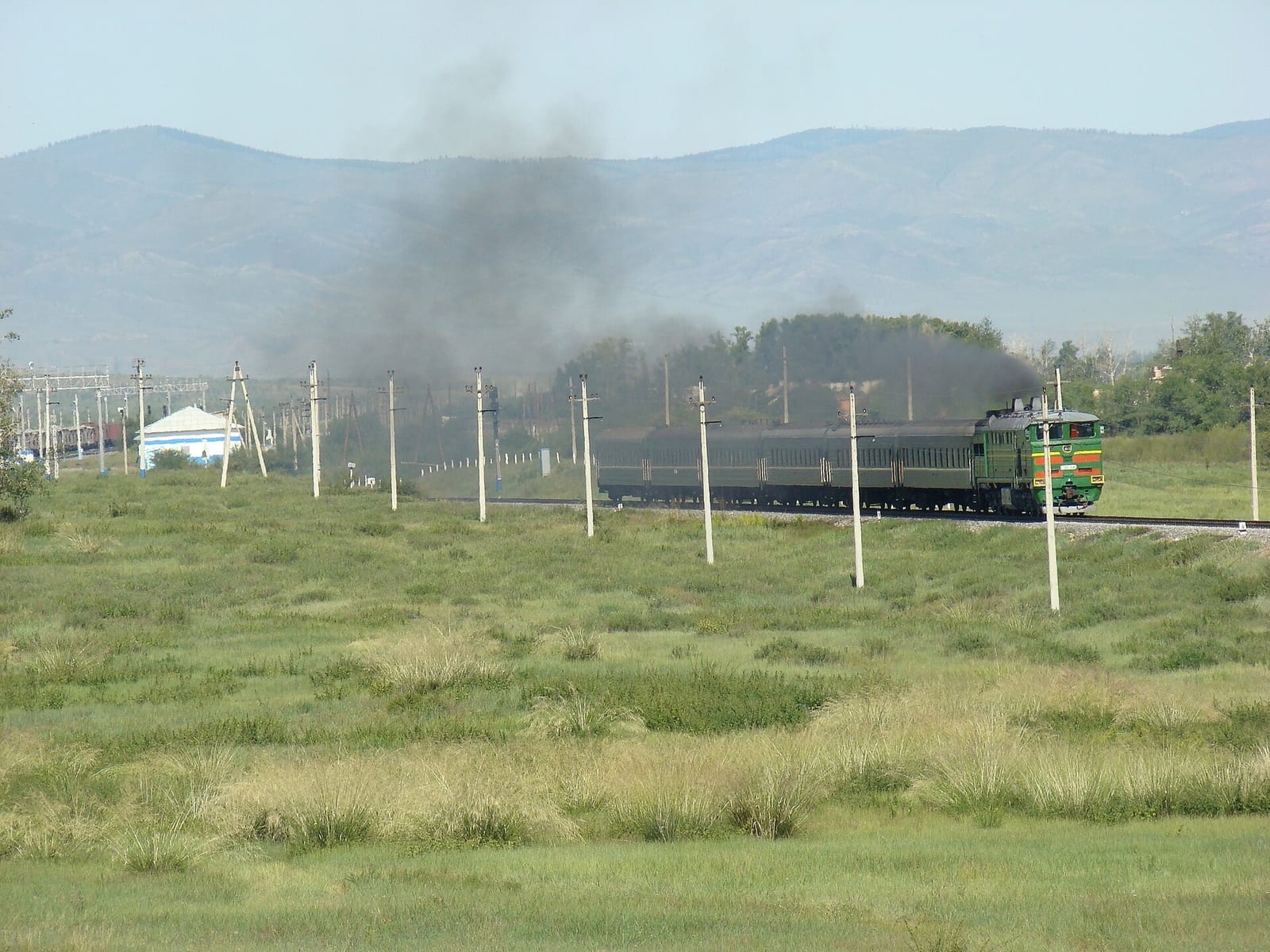
For days the window fills with the same hypnotic sweep of birch and pine — the taiga, the largest forest on earth — broken by wooden villages, wide rivers and the occasional onion-domed church.Alexxx1979 / Wikimedia Commons · CC BY-SA 4.0Vladivostok
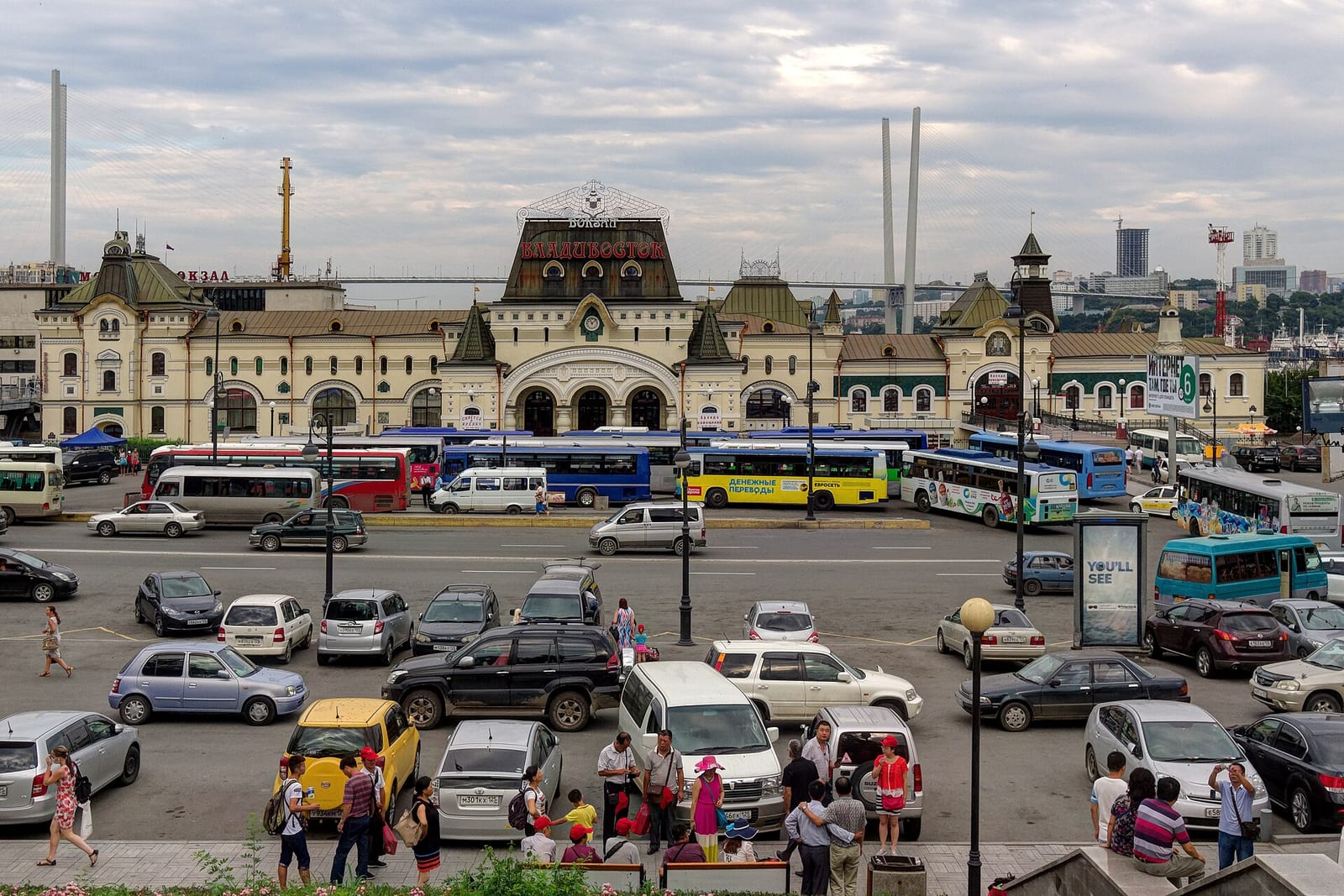
The eastern terminus, a hilly naval city on the Pacific where a marker on the platform records the distance back to Moscow: 9,288 kilometres. The end of the longest train ride in the world.A bit of history
Culture & experiences along the way
Petar Milošević / Wikimedia Commons · CC BY-SA 3.0Life in the compartment
Days on the Trans-Siberian settle into a rhythm all their own — tea from the carriage samovar, instant noodles and shared food, chess and conversation with strangers, and the platform dashes to buy smoked fish and dumplings from babushkas at the stops.Sergey Pesterev / Wikimedia Commons · CC BY-SA 4.0Baikal in winter
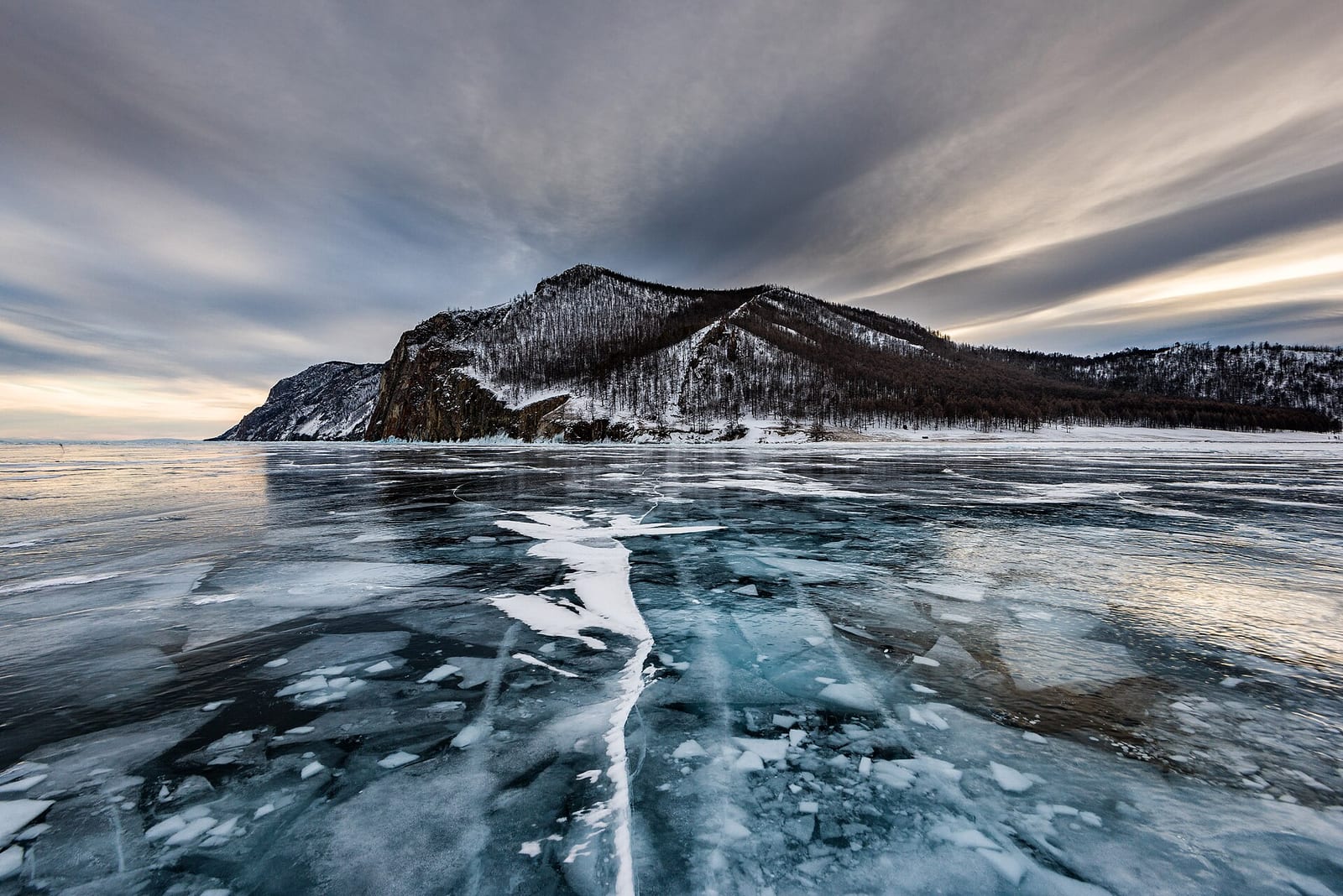
Come in the depths of winter and Baikal becomes an unearthly sheet of clear black ice you can walk — or drive — across, the taiga silvered with frost and the stations wrapped in steam.fdecomite / Wikimedia Commons · CC BY 2.0The branches to Mongolia & China
At Ulan-Ude the rails fork: the Trans-Mongolian peels south through the grasslands to Ulaanbaatar and on to Beijing, while the Trans-Manchurian reaches China through the north-east — two of the world's other great train journeys.Timetables
The Trans-Siberian is a year-round, everyday railway, not a seasonal tourist train — a network of long-distance services rather than a single departure. The one to know is the flagship Rossiya (trains №1 and №2), which runs the full 9,259 km Moscow ⇄ Vladivostok route in about six days and two hours (~60 stops), leaving Moscow around 00:35 on alternate days in each direction.
A quirk worth knowing: for most of its history the entire network ran on Moscow time, whatever the local hour outside — so timetables, and the clocks on stations, could be hours out of step with the daylight. Always check whether a schedule is quoted in Moscow or local time.
The great decision is through or in stages:
| Style | What it means |
|---|---|
| Straight through | ~7 days non-stop on the Rossiya, Moscow to Vladivostok — the purist's ride |
| In stages | Break the journey (Yekaterinburg, Irkutsk / Lake Baikal, Ulan-Ude…), buying a separate ticket for each leg — far more rewarding for most travellers |
| To China | The weekly Trans-Mongolian (via Ulaanbaatar) or Trans-Manchurian trains run Moscow to Beijing in about six days |
Trains and berths book up in the summer peak, so reserve well ahead — a berth is effectively your bed for the nights on board.
Schedule as of 2026. Confirm current times (and whether they're quoted in Moscow or local time) with the operator — see the Tickets section below.
Tickets
Tickets are sold by Russian Railways (RZD) and, for a mark-up and a lot less hassle, by specialist agencies who will also handle stopovers and, if you need it, visa support. Fares depend on the class, the specific train and how far ahead you book, so we point you to the operator for live prices.
There are three classes, and choosing between them shapes the whole experience:
- 1st class — Spalny Vagon (SV) — a two-berth compartment; the most space and privacy for the long nights.
- 2nd class — Kupe — a four-berth compartment with a lockable door; the popular middle choice.
- 3rd class — Platskart — an open-plan carriage of bunks with no compartments; cheapest, most sociable, and for many travellers the real Trans-Siberian.
A few tips:
- Book ahead, especially June–September; berths on the best trains go early.
- Lower berths cost a little more and give you the seat and the window by day.
- Riding in stages? Buy each leg as a separate ticket, and leave buffer time — miss a connection and the next train might not run until tomorrow.
Book your tickets
2nd class — Kupe
Four-berth compartment
The most popular choice: a lockable four-berth compartment, a good balance of comfort, privacy and price for the long haul east.
Book Tickets (opens in a new tab, on Russian Railways (RZD))via Russian Railways (RZD)1st class — Spalny Vagon
Two-berth compartment
The comfortable option — a two-berth compartment with more room to spread out over several days and nights on board.
Book Tickets (opens in a new tab, on Russian Railways (RZD))via Russian Railways (RZD)Rail Passes
No rail pass covers the Trans-Siberian. Interrail and Eurail are European schemes, and Russia is not among the 33 countries in Interrail's list of covered railway companies. Russian Railways sells each leg as a ticket for a named train and berth, so a stopover means buying the next leg separately.
Checked October 2026 against Interrail's list of railway companies (opens in a new tab).
Places to Visit
Before anything else: check your government's travel advice. The UK Foreign, Commonwealth and Development Office currently advises against all travel to Russia, citing security incidents, the absence of direct flights home, a heightened risk of detention for foreign nationals and very limited consular support. Other governments say much the same. What follows describes the route as it stands; whether it is a route you can responsibly take right now is a separate question, and one worth answering before you plan anything.
The whole point of riding in stages is the places you can step off into, west to east: Moscow, Yekaterinburg, Irkutsk and Lake Baikal, Ulan-Ude and finally Vladivostok. Two things worth doing that are not cards below — ride the Moscow metro before you board at Yaroslavsky, where the deep Stalin-era stations are a museum you pay a flat fare to walk through, and stand in front of the enormous bronze Lenin head on Ulan-Ude's main square, which is exactly as strange as it sounds.
 © Vyacheslav Argenberg / http://www.vascoplanet.com/ · CC BY 4.0 · cropped
Moscow
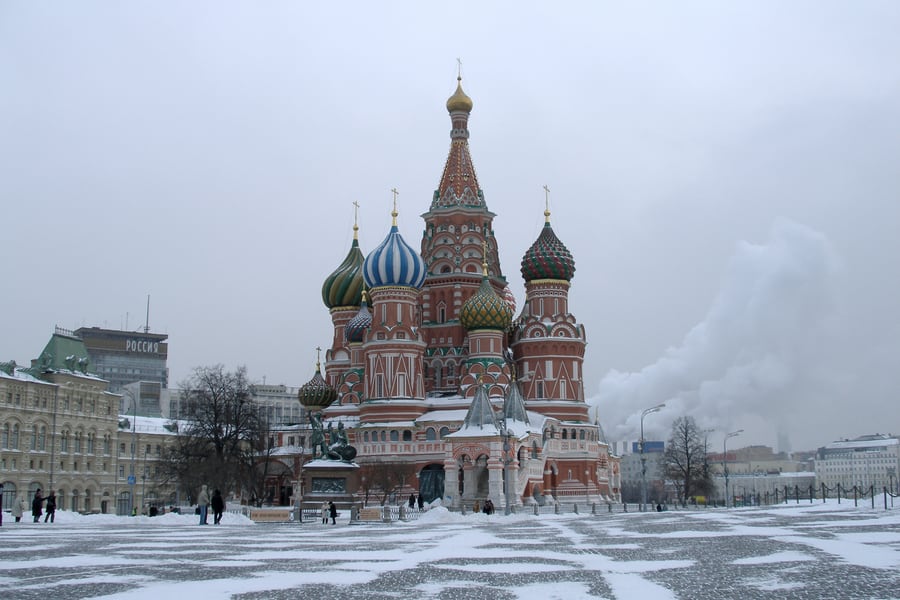
Give the capital several days before you take the train east from Yaroslavsky. Red Square is the obvious start and St Basil's the obvious photograph — Ivan IV's cathedral of 1555–61, nine chapels bundled into one silhouette, and far stranger close up than it looks in pictures. Come in winter if you can bear it: the square empties, the domes stand against low cloud, and the whole thing stops feeling like a postcard.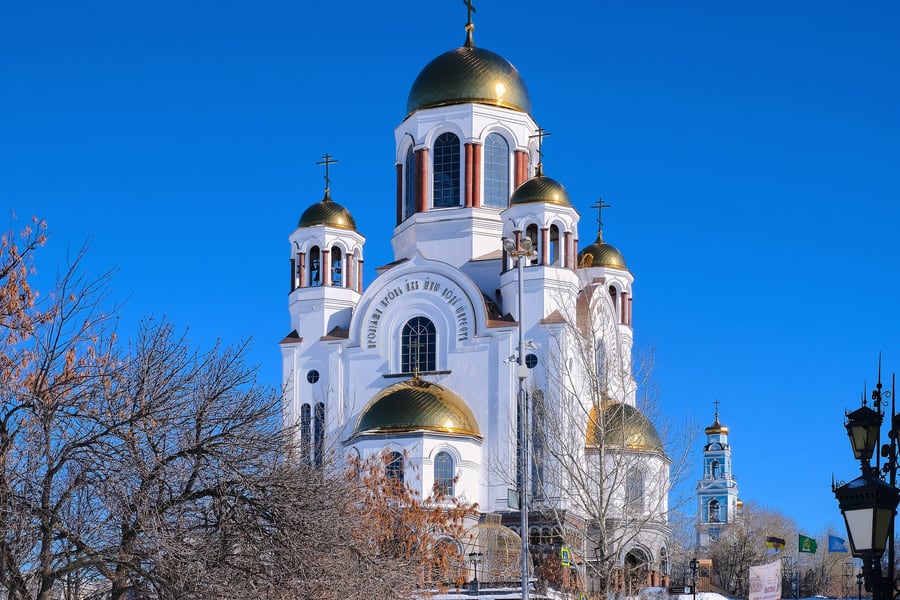 Vyacheslav Bukharov / Wikimedia Commons · CC BY-SA 4.0 · cropped
Yekaterinburg
The city on the Europe–Asia line, and the site of the Soviet century's most notorious night. The Church on the Blood, begun in 2000 and consecrated on 16 July 2003, stands where the Ipatiev House did — the merchant's villa in whose basement the Romanovs were shot in the early hours of 17 July 1918. The house itself was pulled down on 22 September 1977 on Politburo orders, carried out by the local party boss: Boris Yeltsin.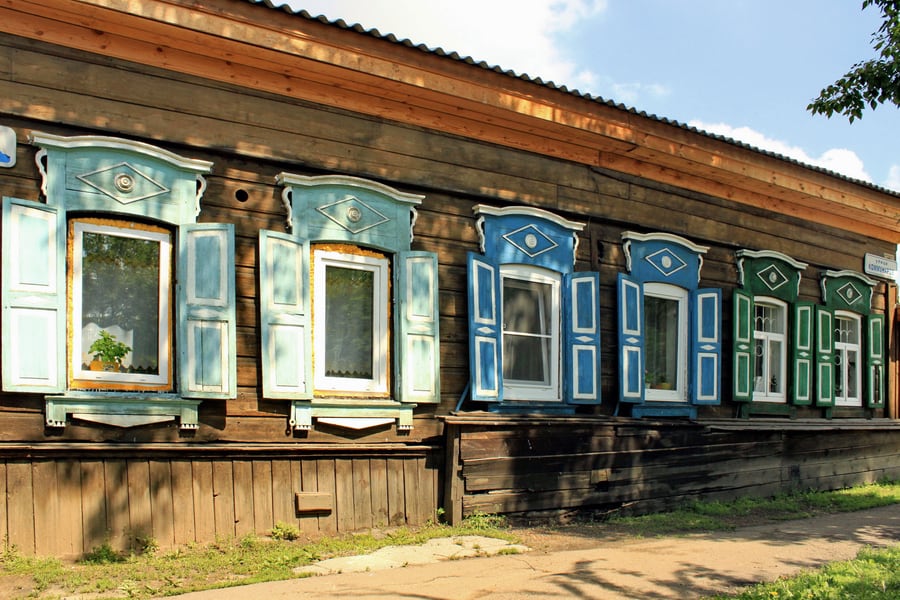 Marcin Konsek / Wikimedia Commons · CC BY-SA 4.0 · cropped
Irkutsk
A fort in 1661, a gold-and-fur boomtown by the 1800s, and "the Paris of Siberia" by 1900. What survives from that is street after street of log houses under fretted, painted window surrounds — many of them built for Decembrist officers exiled here after the 1825 revolt against Nicholas I, who arrived as convicts and stayed as the city's intelligentsia. Baikal is 72 km downstream of the lake's outflow, an easy day trip.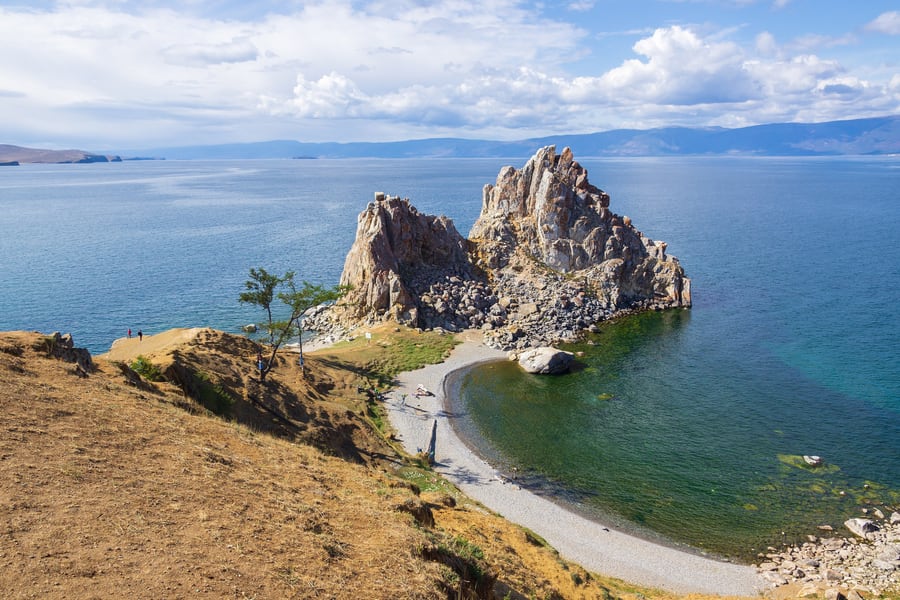 © Vyacheslav Argenberg / http://www.vascoplanet.com/ · CC BY 4.0 · cropped
Olkhon Island
Baikal's great island — 730 km², the fourth-largest lake island anywhere — reached by ferry, and once across it is all steppe, sand and larch. At Khuzhir on the west coast the white marble of Shamanka Rock juts into the water at Cape Burkhan, among the most sacred places in Buryat shamanism: a cave in it is held to be the dwelling of Burkhan himself. Approach quietly. This is a shrine, not a viewpoint.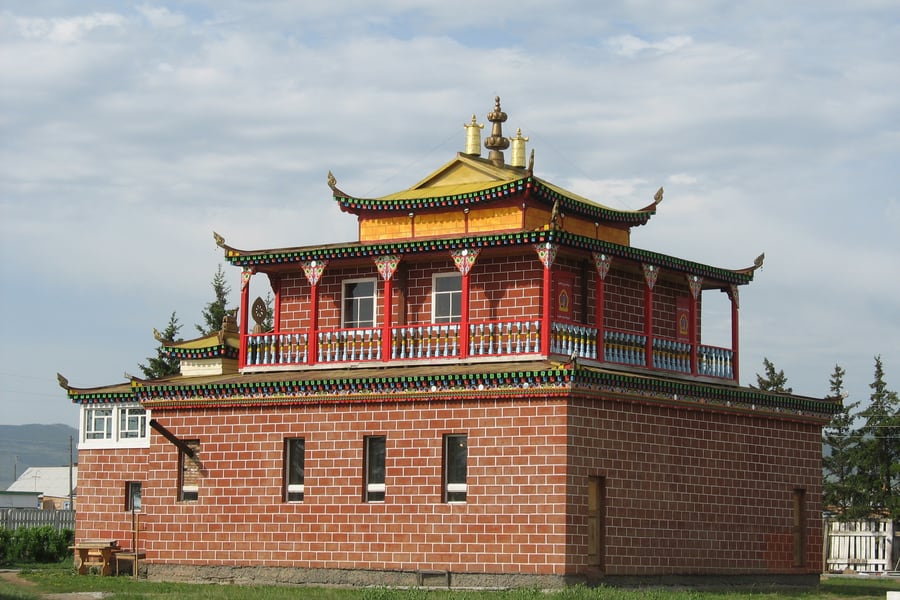 Mayyskiyysergeyy / Wikimedia Commons · CC BY-SA 4.0 · cropped
Ivolginsky Datsan
The centre of Buddhism in Russia, and a monastery Stalin allowed: it opened in 1945 as the only Buddhist institution permitted in the USSR. Its strangest possession is a body. Khambo Lama Itigelov died mid-prayer in the lotus position in 1927; monks exhumed him thirty years later, found no decay, and quietly reburied him. He was raised again on 11 September 2002 before twelve witnesses, and he is still there.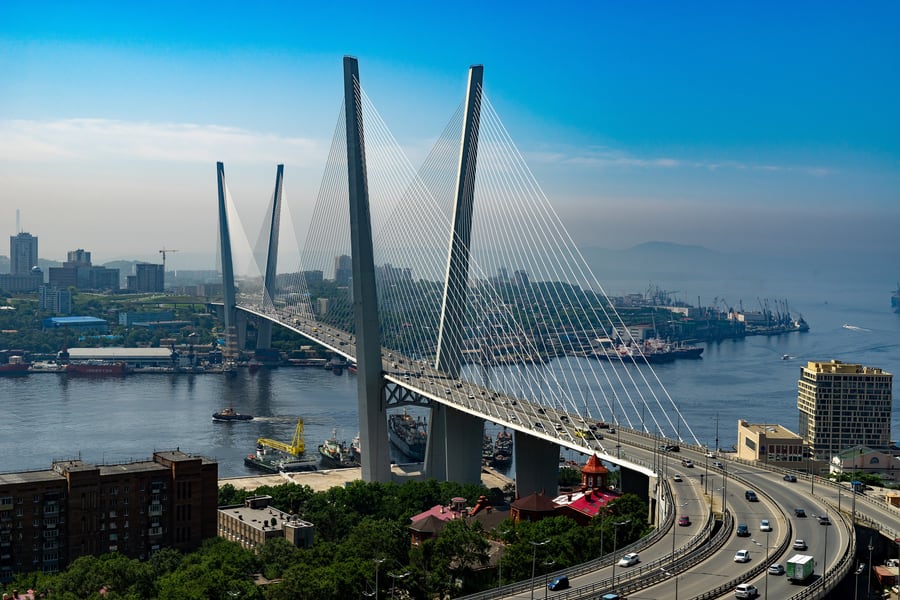 Takuya ASADA / Wikimedia Commons · CC BY 2.0 · cropped
Vladivostok
A steep, salty naval city wrapped around the Golden Horn, which the cable-stayed Zolotoy Bridge has spanned since 2012. On the station platform stands the stele every passenger photographs, put up in 1996 under a double-headed eagle and marked 9288 — though the line itself is measured at 9,289 km, so the famous number is a kilometre shy of the distance you have actually covered. Nobody minds.Where to Sleep
On the train, your berth is your bed — one of the two, four or many bunks in your carriage, made up with bedding handed out by the car attendant. Choosing your class (SV, kupe or platskart) is choosing your accommodation for the nights between stops, so pick with the sleeping in mind: a lower berth in a two- or four-berth compartment is the most restful.
Off the train, where you overnight depends on how you break the journey:
- Cities (Moscow, Yekaterinburg, Irkutsk, Vladivostok) — a full range from hostels to grand hotels; the old railway hotels near the stations are convenient for early departures.
- Lake Baikal — trade a city hotel for a lakeside guesthouse in Listvyanka or a homestay on Olkhon Island for a night or two by the water.
- Homestays & guesthouses — across Siberia these are often the warmest, best-value option, and a window into local life.
Book city hotels and the popular Baikal guesthouses ahead in summer, when the whole route is busy.
Questions or corrections
Planning this trip and stuck on something, or spotted a time, fare or detail that has changed? Send us a message about Trans-Siberian Railway. We read every one, and we update this page when something has changed.