Sortavala to Ruskeala
Красный / Wikimedia Commons · CC BY-SA 4.0 · cropped
- DistanceAbout 40 km
- DurationAbout 1 hour
- Best seasonYear-round
Introduction
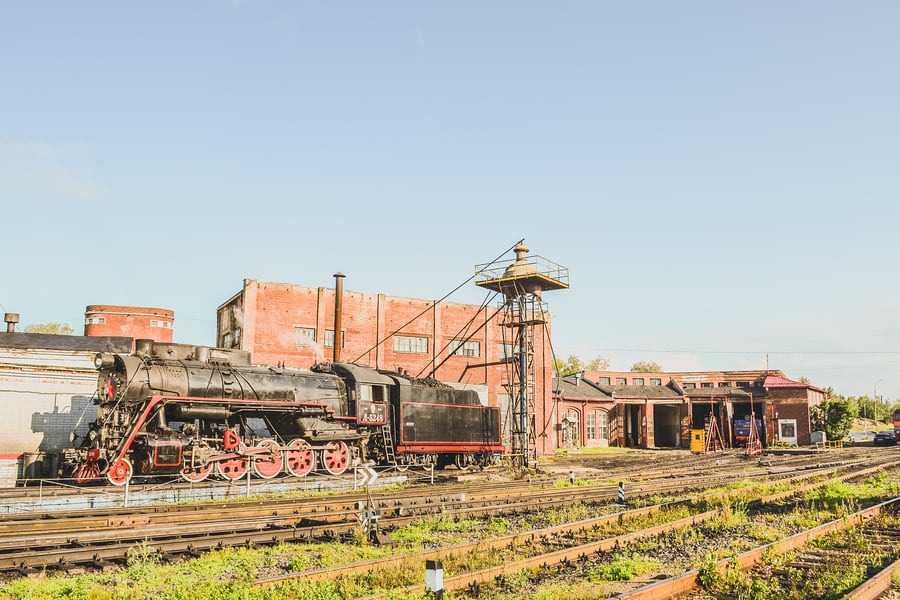
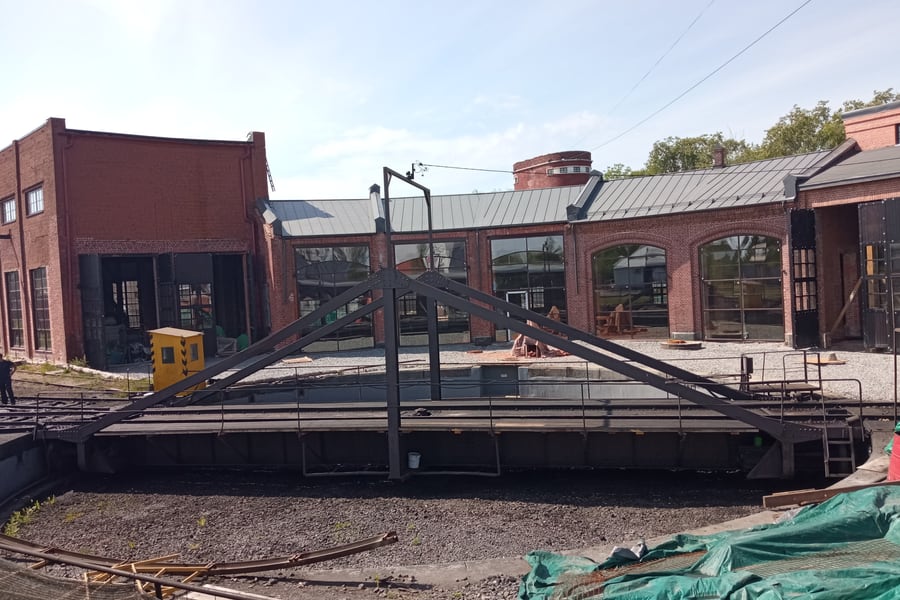
Sortavala sits on a bay of Lake Ladoga, four hours north of St Petersburg, and until 1940 it was Finnish. Its centre is a town of Finnish architects — Uno Ullberg, Jac. Ahrenberg, the Helsinki practice that gave the world Eliel Saarinen — and its station, opened in November 1893 as Serdobol on the Karelian Railway from Vyborg to Joensuu, still has the fan-shaped engine shed and the turntable that were built to look after steam.
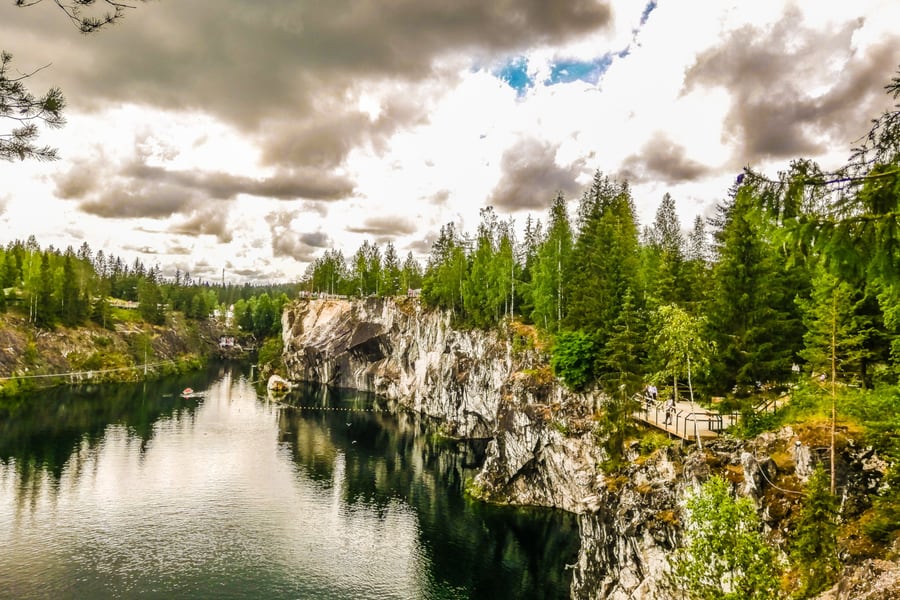
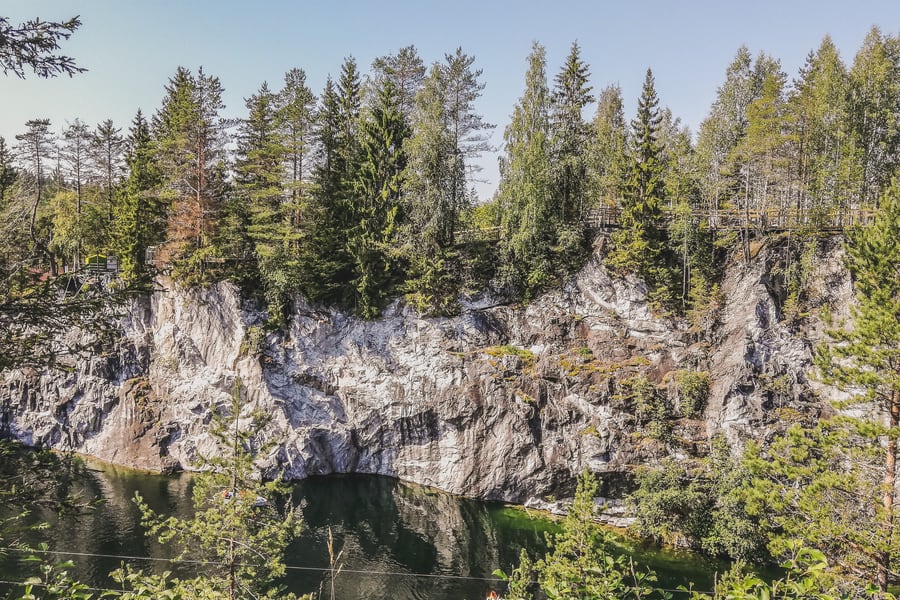
Thirty kilometres north, at the end of a branch laid in the 1890s to serve a marble quarry, is the reason anyone builds a railway here at all. Ruskeala marble faced St Isaac's Cathedral in St Petersburg, floored the Kazan Cathedral and framed the windows of the Marble Palace. The quarry flooded, the works closed in the early 1990s, and what was left — a canyon of grey-and-white stone 460 metres long with clear green water at the bottom of it — opened as a park in 2005.
On 1 June 2019 Russian Railways put the two back together. The Ruskeala Express runs from Sortavala to the park and back behind a Soviet steam locomotive, in five carriages dressed as a train of about 1900, and it does it every day. That last part is the unusual bit: Russia ran its last scheduled steam passenger service in 1986, on a line not far from here, and this is the only daily steam-hauled train in the country today. The journey takes an hour, the locomotive is turned on a turntable at the far end in front of whoever wants to watch, and the whole thing is timed to meet the train from St Petersburg.
The Journey
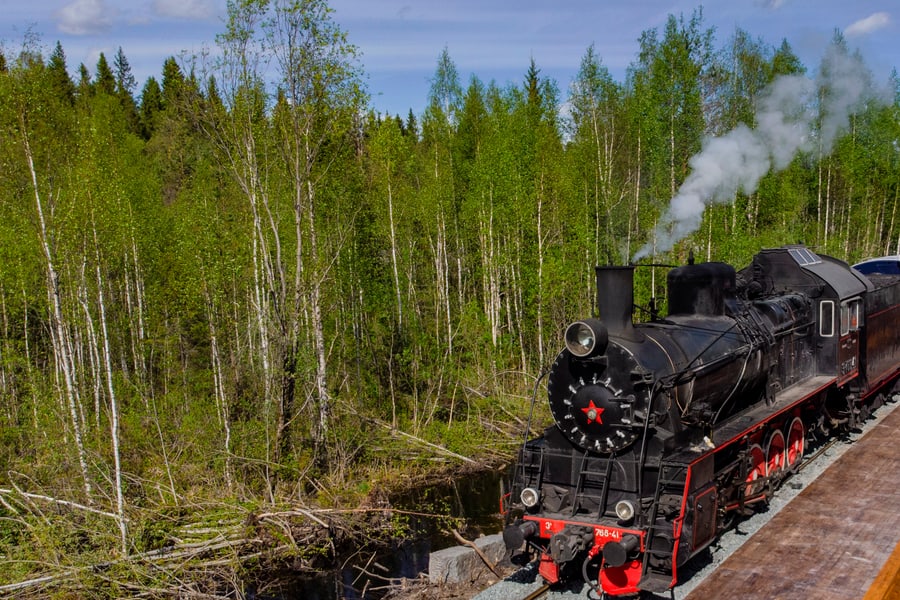
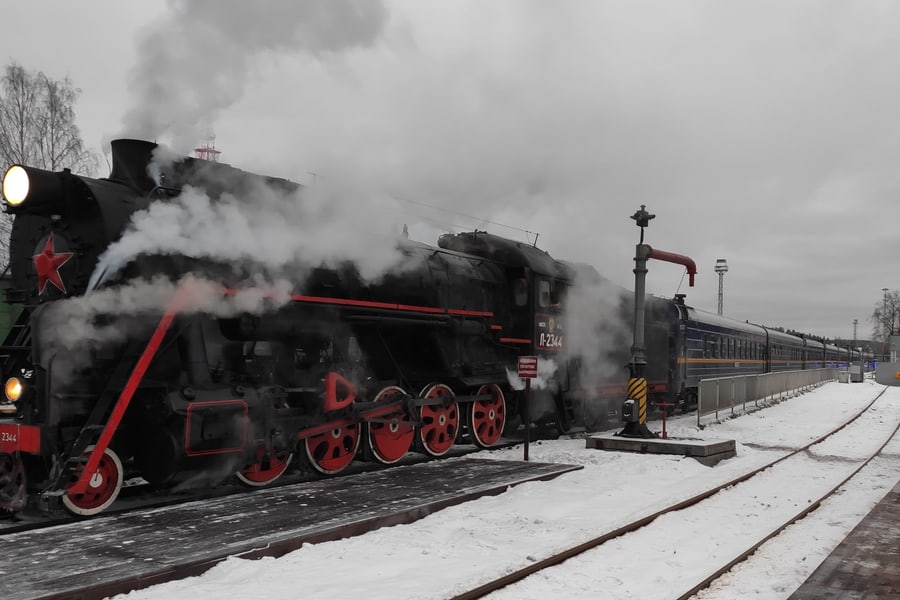
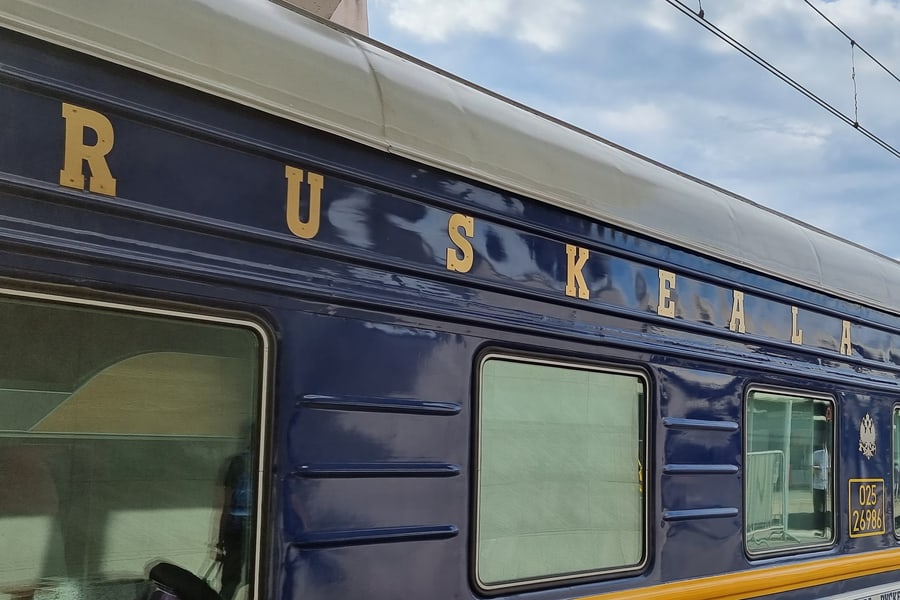
The train is waiting on the through platform at Sortavala when the Lastochka from St Petersburg pulls in, and the two are the same size on purpose: four compartment cars with 172 seats, plus a restaurant car, which is exactly the seating capacity of the electric train that feeds it. The carriages are painted deep blue with RUSKEALA EXPRESS in gold along the side, the interiors were rebuilt at the Voronezh carriage works in the style of about 1900, and the staff are dressed to match. At the head is whatever is in steam that week: the locomotives used on this train are Soviet classes Л, ЛВ, Э, СО, П36 and Су, which between them cover the ten-coupled freight engines of the 1940s and the big green express locomotives that followed them.
Out of town on the causeway
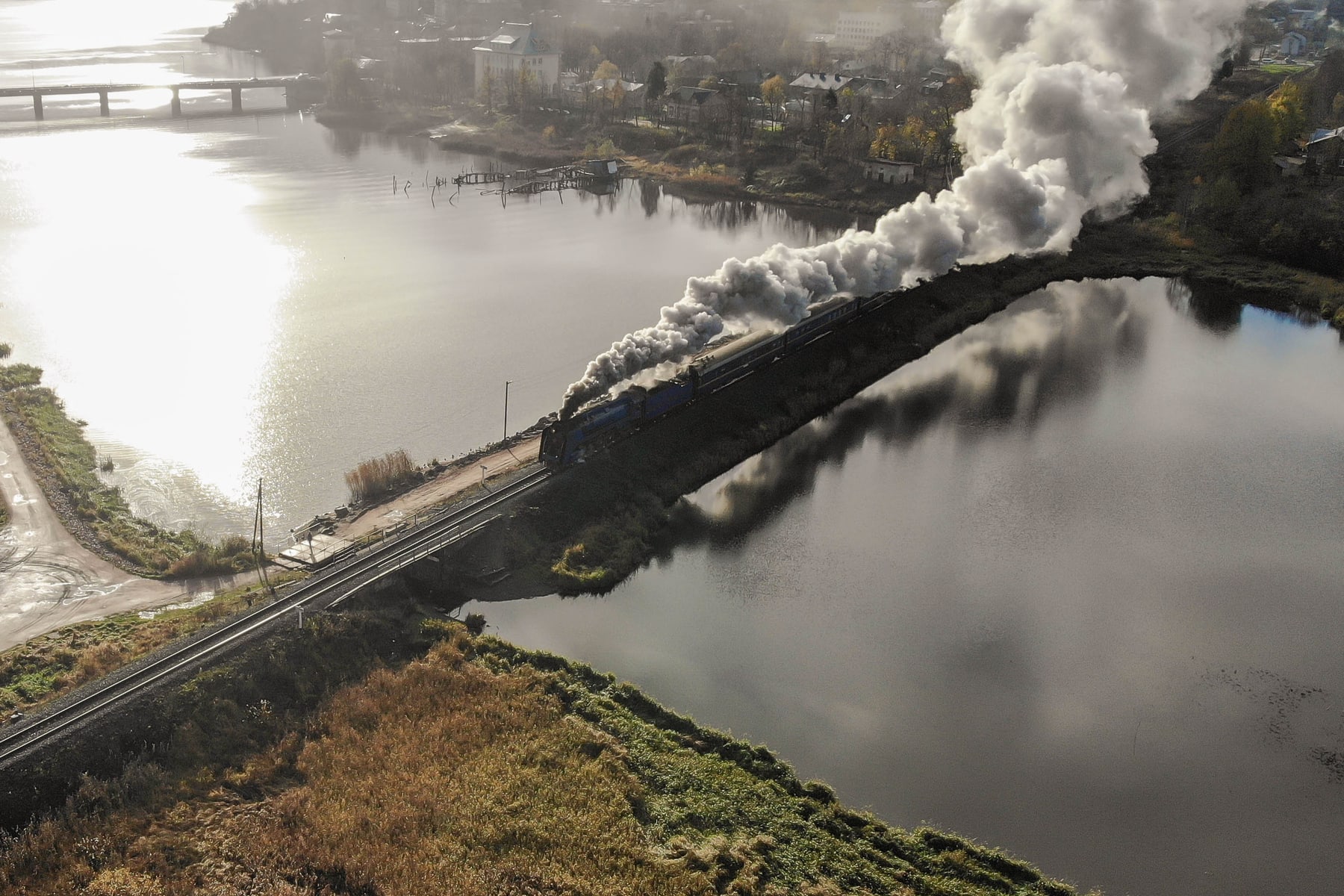
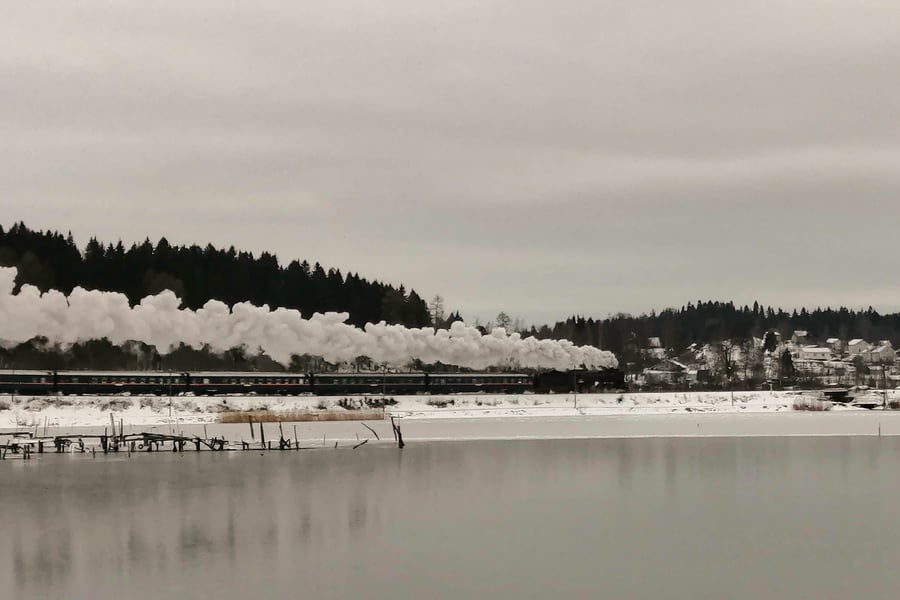
Sortavala's historic centre is cut in two by the Vakkolahti, an inlet of Lake Ladoga, and the railway leaves across the neck of it — a low embankment with water on both sides, the road bridge upstream and the town on the right. It is the photograph everyone takes of this train, because the exhaust hangs over the bay in still weather and the whole train is visible at once. A minute later the line crosses Lenin Street on the level, under the windows of the old girls' gymnasium, and then it is into forest.
The long way round to a place thirty kilometres away
The park is 30 km north of Sortavala as the crow flies, but the railway takes about forty to get there, because there is no direct line. Sortavala stands at kilometre 258.84 of the old Karelian Railway; the train runs out along it through Helylä and Kaalamo to the junction at Matkaselkä, kilometre 295.5, where the branch to the marble quarry trails in. That branch was laid in the 1890s, two years after the first Matkaselkä station opened, and it was built to carry stone, not passengers. Nearly 2.5 kilometres of it had to be relaid before a steam train could use it again.
The turntable at the end
Ruskeala Mountain Park station is a dead end in birch forest, a timber platform in the trees. Beyond the buffers is a turntable, opened on 26 December 2020, and it is the reason the train now needs one locomotive rather than two: before it existed an engine had to be provided at each end. Turning it — and watering it, and cleaning the fire — happens in the open where passengers can stand and watch, which the railway decided early on was part of the attraction rather than a delay. The park gates are a few minutes' walk from the platform.
Along the route
 Dinamik / Wikimedia Commons · CC BY-SA 4.0 · cropped
Sortavala and its roundhouse
The train is prepared in a fan-shaped shed with a turntable in front of it, built with the line and still in use. There is an Эр 788-81 on a plinth by the station throat, put there in 2015, four years before anyone thought of running steam here again.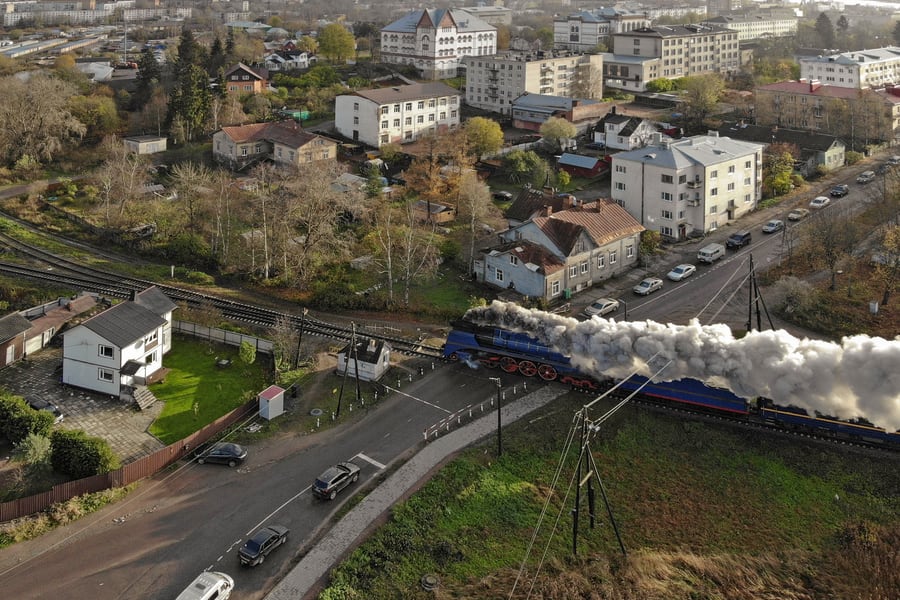 Красный / Wikimedia Commons · CC BY-SA 4.0 · cropped
The level crossing on Lenin Street
A minute out of the station the line crosses the main street on the flat, between the houses, with the old girls' gymnasium behind. A steam locomotive crossing a town street at walking pace is the part of this train the town itself turns out for.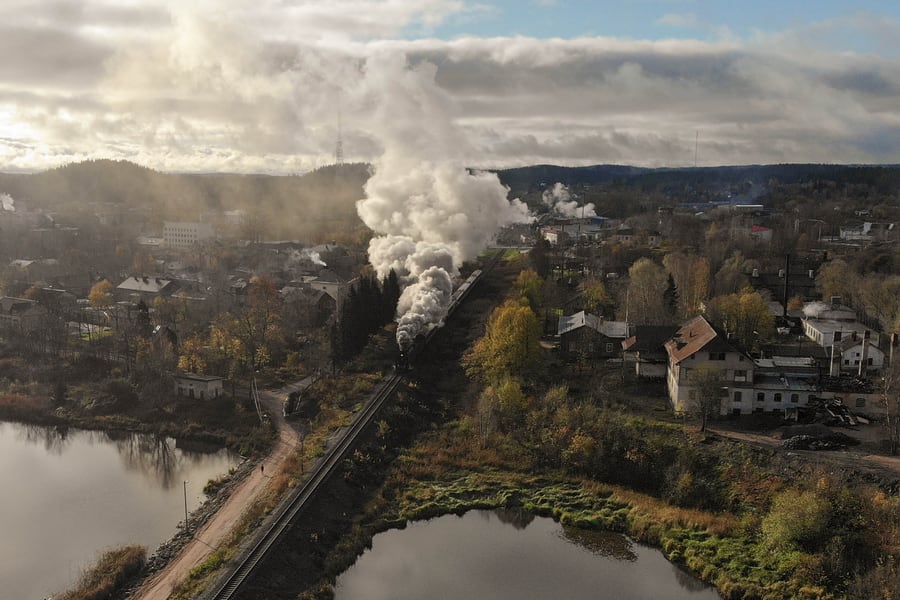 Красный / Wikimedia Commons · CC BY-SA 4.0 · cropped
Over the Vakkolahti
The causeway across the inlet that splits Sortavala in two — water on both sides, the road bridge upstream, and the only stretch of the run where the whole train is in one frame. Sit on the left going north.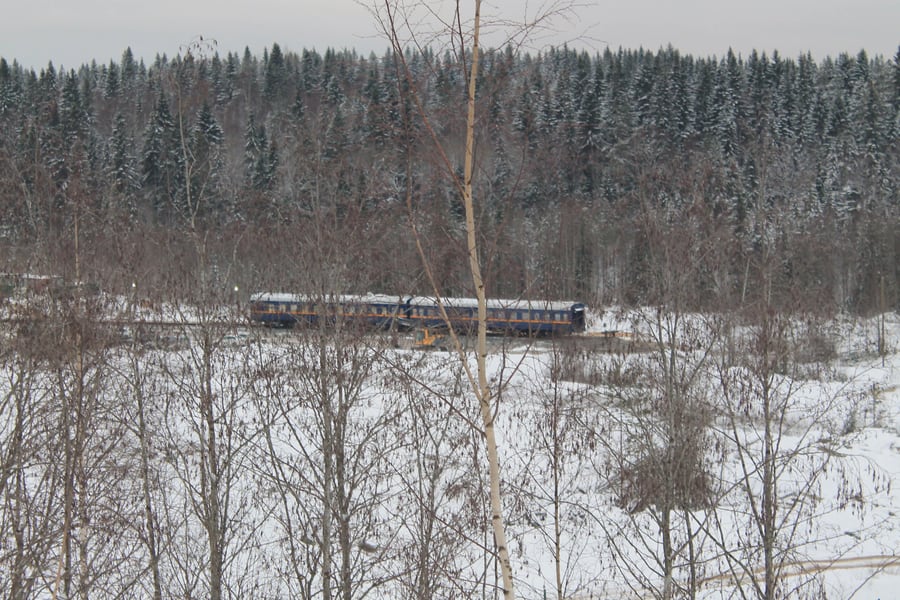 SadPetzl / Wikimedia Commons · CC BY-SA 4.0 · cropped
The end of the branch
Ruskeala Mountain Park station is a timber platform in the forest with a turntable beyond the buffers, opened in December 2020. Before it existed the train needed a locomotive at each end.A bit of history
Culture & experiences along the way
 Wikimedia Commons · CC0
The restaurant car
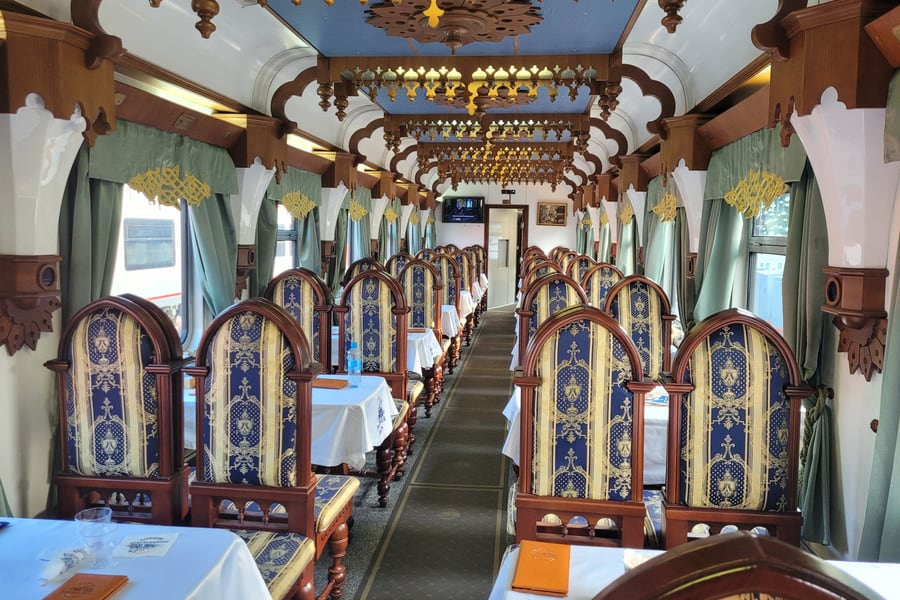
Carved woodwork, a painted ceiling and lamps on the tables — the fifth vehicle in the formation is a full restaurant car, and on an hour-long run that is the point of it rather than a convenience. It is open to everyone on the train, not to a class.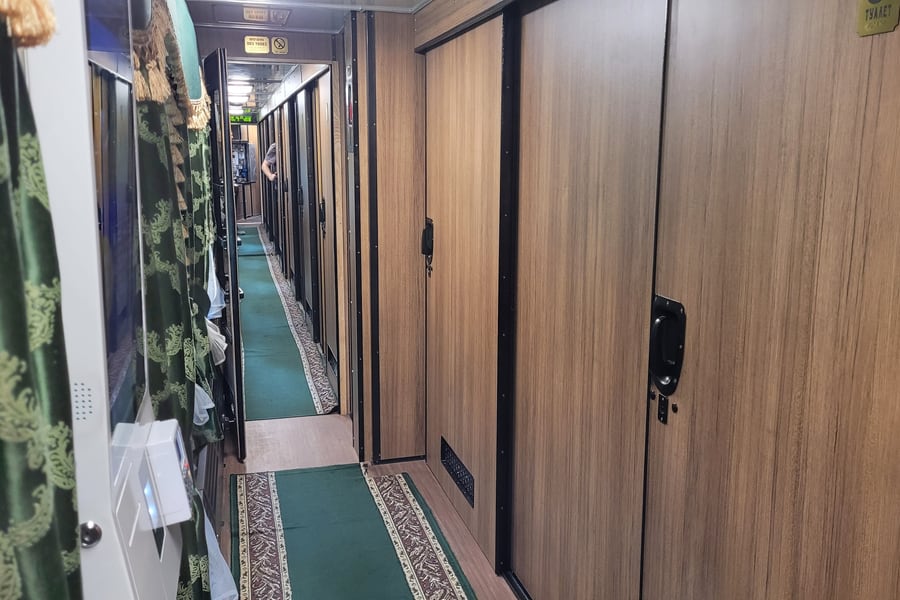 Wikimedia Commons · CC0
Four compartment cars, 172 seats
Green carpet, brass, a corridor of polished doors: the seating cars are laid out as compartments in the style of about 1900 and the staff are dressed to match. The number is deliberate — 172 is exactly what the Lastochka from St Petersburg brings.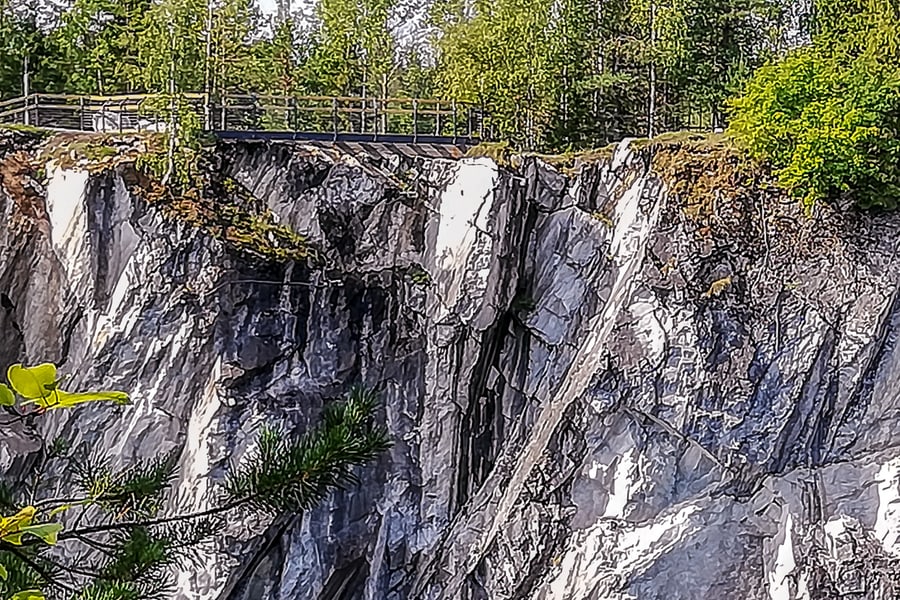 Александровы АГ / Wikimedia Commons · CC BY-SA 4.0 · cropped
The marble that built St Petersburg
Quarrying began here in 1765. Ruskeala stone faces St Isaac's Cathedral — Auguste de Montferrand came to the quarry himself to choose it — floors the Kazan Cathedral, frames the windows of the Marble Palace, and in the twentieth century lined two stations of the Leningrad metro.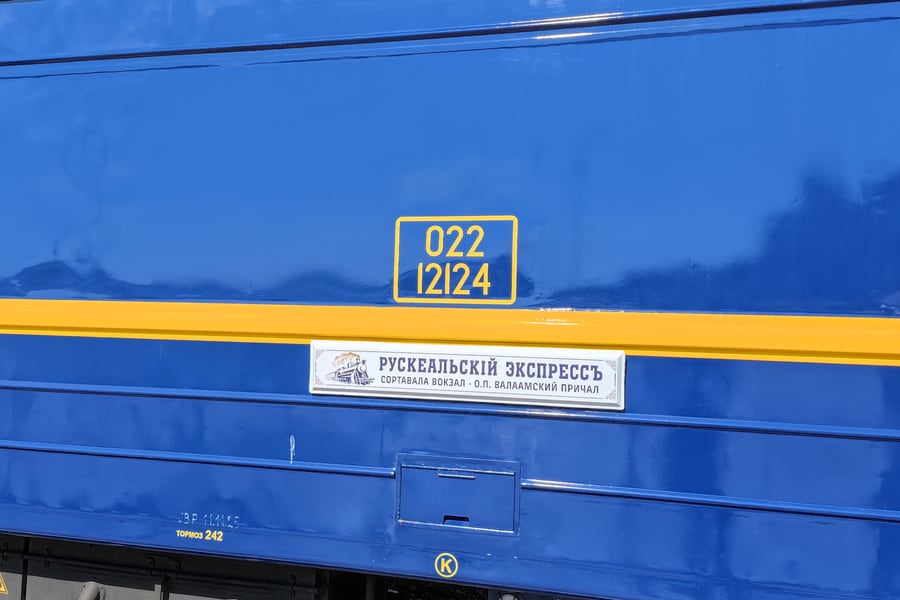 Avsolov / Wikimedia Commons · CC BY-SA 4.0 · cropped
The other steam train from Sortavala
From the same station, in the shipping season, train 7003 runs to the Valaam pier as the Ladoga Seal — a railbus on weekdays, and at weekends a tourist set with an open-sided observation car behind the little 9П-201. It started on 3 June 2023.Timetables
⚠️ We cannot give you the Ruskeala Express's own departure times, and we would rather say so than invent them. Russian Railways runs this train and sells its seats, and RZD's booking system cannot be reached from outside Russia — every one of its domains times out from here, and the Ruskeala platform is not carried by any of the other national booking engines that reach into the shared CIS reservation system. What is on record, and what the park's own website confirms, is the shape of the service rather than its clock.
It runs every day. The journey takes about one hour in each direction, at an average of 40–60 km/h. It is numbered as a scheduled long-distance train — the numbers 921/922, 923/924 and 925/926 have all been used — and, crucially, it is timed to connect with the Lastochka from St Petersburg, so the times below are the ones you actually plan a day around.
St Petersburg to Sortavala and back
These are real departures, swept on two dates two months apart (September and November 2026) and the same on both to the minute, except for the late Lastochka, which gains five minutes in the winter timetable. Times are Moscow time, which is the whole country's railway time.
| Train | From | Departs | Arrives Sortavala | Journey | Runs |
|---|---|---|---|---|---|
| 821В Lastochka | St Petersburg-Finlyandsky | 06:15 | 10:20 | 4 h 05 | daily |
| 823В Lastochka | St Petersburg-Finlyandsky | 19:25 | 23:35 / 23:40 | 4 h 10 | daily |
| 038М | St Petersburg-Ladozhsky | 00:44 | 08:25 | 7 h 41 | daily |
| 350А | St Petersburg-Ladozhsky | 17:05 | 21:37 | 4 h 32 | Wed, Fri |
| Train | Departs Sortavala | Arrives | Journey | Runs |
|---|---|---|---|---|
| 822В Lastochka | 05:30 | St Petersburg-Finlyandsky 09:31 | 4 h 01 | daily |
| 824В Lastochka | 18:38 | St Petersburg-Finlyandsky 22:39 | 4 h 01 | daily |
| 160А | 20:52 | St Petersburg-Ladozhsky 01:52 | 5 h 00 | daily |
The two overnight-hour trains are Moscow – Petrozavodsk workings passing through, and their numbers change with the timetable period — 038М in winter is 160В in summer — so quote the time, not the number, when you ask at a window. The day trip that works is 821В up and 824В back: into Sortavala at 10:20, out again at 18:38, which leaves eight hours for the hour up to Ruskeala, the park, and the hour back. The Lastochka runs on its own current as far as Kamennogorsk and is then hauled by a TEP70BS diesel — there are no wires north of there, and none at all at Sortavala.
⚠️ Check the retro train before you commit to the day. Seats are limited to the 172 the train carries, the connection is the thing that fills them, and neither the frequency within the day nor the seasonal pattern is something we can confirm from a source we can reach.
Long-distance times as of September 2026, from the Belarusian Railways booking engine, which queries the same CIS reservation system as RZD. Service pattern from the park operator's own site, ruskeala.ru (opens in a new tab), September 2026.
Tickets
The Ruskeala Express is a scheduled Russian Railways train, so a seat on it is an ordinary reserved ticket — bought at a station window, in RZD's app, or on its website, for a numbered place in one of the four compartment cars. There is no first and second class on the run: the whole train is seated, and the restaurant car is open to everybody in it. ⚠️ We quote no fare. RZD's booking system cannot be reached from outside Russia, so there is no live number for us to check, and printing an old one would be worse than printing none.
The alternative, and the one most visitors from outside Karelia actually use, is to buy the day whole. RZD's own tour company sells a one-day package out of St Petersburg — the Lastochka up, the retro train to the park, the park, and the evening train home — on fixed dates through the autumn and winter.
Things to do
A.Morgunovskaya / Wikimedia Commons · CC BY-SA 4.0 · croppedOne day to Ruskeala by retro train
From St Petersburg, on fixed dates
RZD's own tour company sells the whole day — the Lastochka up, the steam train to the park, the park, and the evening train home.
Book Experience (opens in a new tab, on rzdtour.com)via rzdtour.comRail Passes
No rail pass covers this journey, and none ever has. Interrail and Eurail both stop at Russia's western frontier: the Russian network has never been in either scheme, so a pass bought for a European trip is worth nothing at Sortavala and nothing on the branch to Ruskeala. There is no Karelian regional pass either, and the suburban season tickets sold by the North-West Suburban Passenger Company — the abonement and the summer «Дачный» — are valid only on its own elektrichka routes out of St Petersburg, which stop well short of here.
So every leg of this trip is bought as its own ticket: the Lastochka or the overnight train up from St Petersburg, the retro train from Sortavala to the park, and the same again in reverse. Russian Railways runs a loyalty scheme, РЖД Бонус, rather than a pass, and it is worth having only if you are going to be on Russian trains repeatedly; RZD Tour takes 5 per cent off its packaged day out for cardholders. For one visit, buy the four tickets and forget the schemes.
⚠️ The one thing to plan rather than price is the connection. The Ruskeala Express is timed to the Lastochka, its train is the same size as the Lastochka, and the seats go to whoever books first — so the ticket to secure first is the one from Sortavala to the park, not the one from the city.
As of September 2026.
Places to Visit
This is a short line with a large day at the end of it. The park itself will take three or four hours if you walk the rim and go underground, and Sortavala — a Finnish provincial town that the border moved away from — is worth the hours the train timetable gives you before and after. Lake Ladoga is the other thing on the doorstep: Valaam, the island monastery, leaves from the town pier and is a day of its own rather than an afternoon.
 Александровы АГ / Wikimedia Commons · CC BY-SA 4.0 · cropped
The Marble Canyon
The quarry the railway was built for: 460 metres long, up to 100 wide, and more than fifty metres from the rim down to water clear to 15–18 metres. Five pits were worked here from 1765, blasted out with black powder for marble in four colours, and by the 1840s the stone employed 800 people. A path runs right round the rim, and a zip line crosses the water for anyone who would rather not walk back.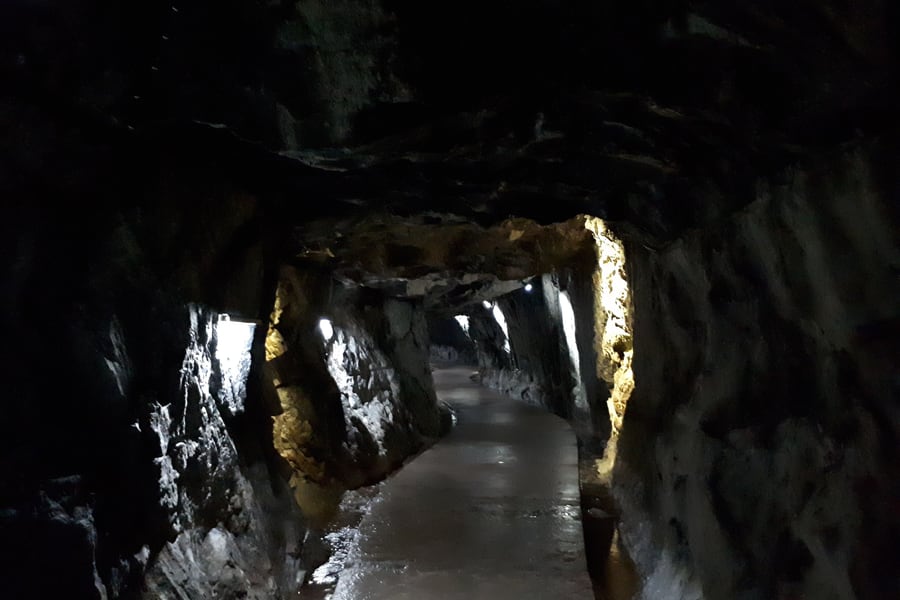 GAlexandrova / Wikimedia Commons · CC BY-SA 4.0 · cropped
Underground Ruskeala
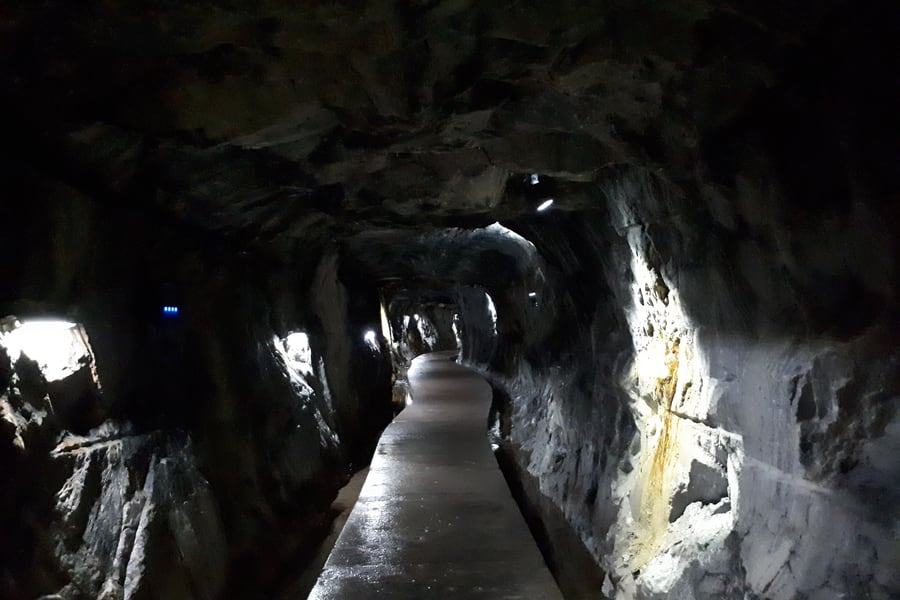
The walls are drilled through with galleries and shafts, kilometres of them, and a lit route now runs through part of the system. Most of the workings flooded after the Second World War and pumping them out was never possible, so what you walk is the dry upper level above a lake you can hear. Take a coat whatever the month: it is a rock cellar under a Karelian hill.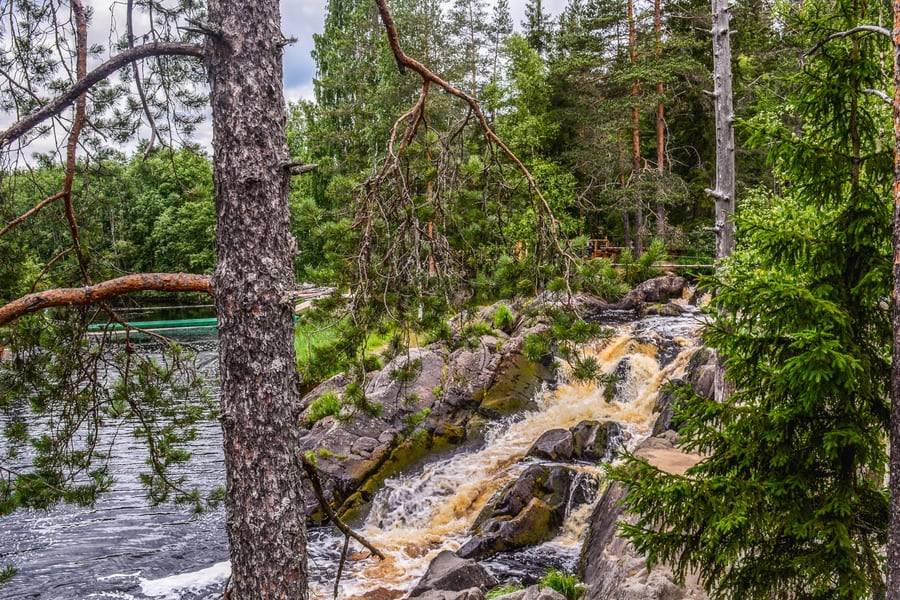 Александровы АГ / Wikimedia Commons · CC BY-SA 4.0 · cropped
The Ruskeala waterfalls
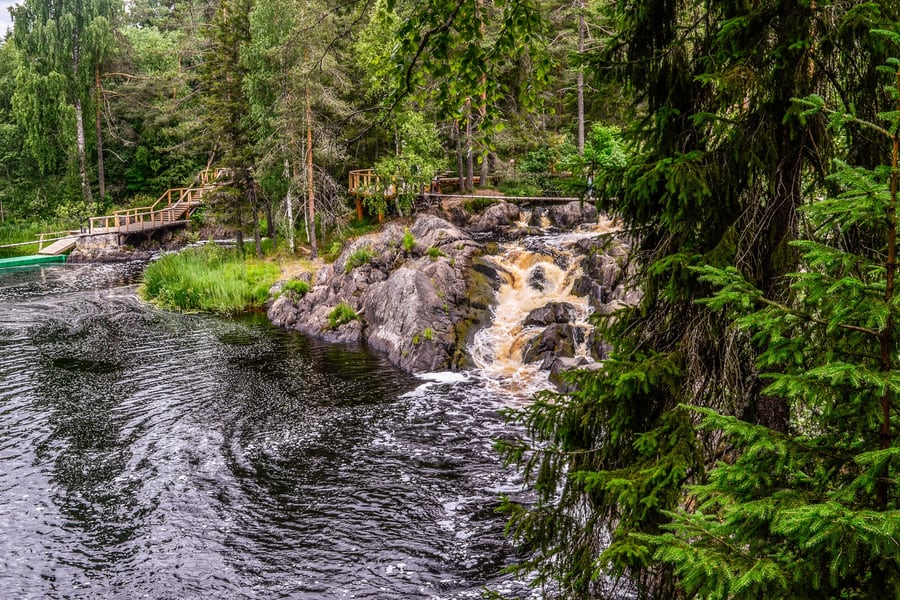
Four falls of three or four metres on the Tohmajoki, with a boardwalk and information boards along the bank. Their Finnish name is Ahinkoski, and Russians know them from the screen: they are the falls in The Dawns Here Are Quiet, filmed here in 1972, and a mock log cabin built for a later film is still standing in the water. Kayakers run them.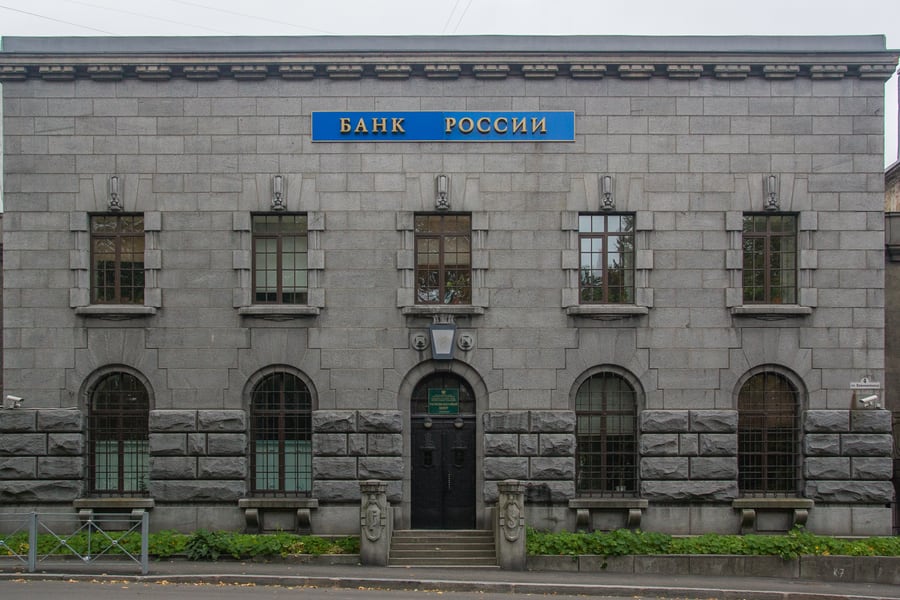 Denlab812 / Wikimedia Commons · CC BY-SA 3.0 · cropped
Sortavala in Finnish stone
About ninety buildings in the town centre are listed as having artistic value, most of them put up between 1900 and the 1930s by the best architects in Finland. The Bank of Finland on Väinämöinen Street is Uno Ullberg's, built in 1915 of granite quarried on the island of Riekkalansaari, and it still keeps its banking hall and its tiled stoves — one of them designed by Lars Sonck.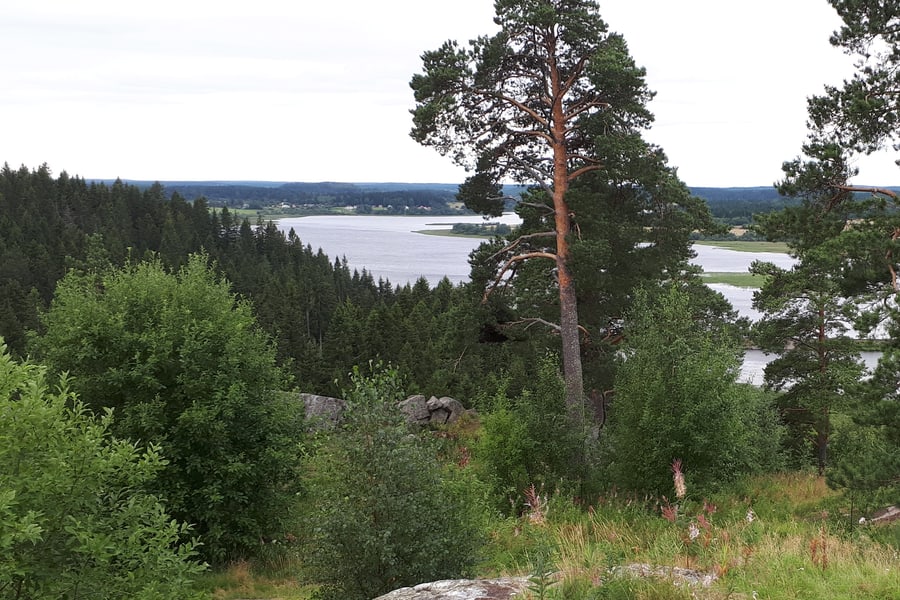 GAlexandrova / Wikimedia Commons · CC BY-SA 4.0 · cropped
The Paaso hillfort
A bare rock 79 metres high on the northern edge of town, a kilometre from where the Tohmajoki and the Helyulyanjoki meet, with a Karelian hillfort on top of it. There is almost nothing left to see of the fort itself; what you climb for is the view over Lake Ladoga, the lakes behind the town and the forest the train disappears into.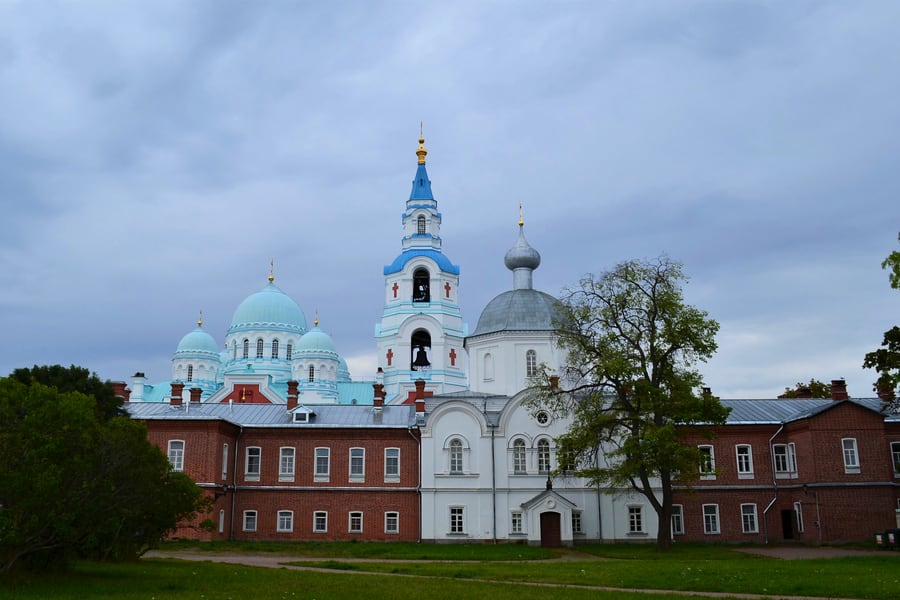 Lena Konstance / Wikimedia Commons · CC BY-SA 4.0 · cropped
Valaam
The monastery island, out in Lake Ladoga, and the reason Sortavala is Karelia's second tourist town after Petrozavodsk. Hydrofoils and small motor ships leave from the main pier and carry as much as a fifth of everyone who reaches the island. ⚠️ It is a full day, not an afternoon between trains — crossings depend on the weather and on the shipping season, which ends in the autumn.Where to Sleep
You can do this as a day out of St Petersburg and many people do, but the last train back leaves Sortavala at 18:38 and the town has eleven hotels — enough that staying the night turns a rushed day into an easy one, and lets you take the early Lastochka home instead of the evening one. Sortavala puts you a few minutes from the station; Ruskeala puts you at the park gates for the hour before the coaches arrive.
Where to stay
Piipun Piha
On the Ladoga shore, Sortavala
A hotel in a converted industrial building on the lake shore — the name is Finnish for "the yard with the chimney" — with its own restaurant and a yacht club next door.
Check Availability (opens in a new tab, on piipunpiha.ru)via piipunpiha.ruTsar Gory
On the Tohmajoki, by the marble canyon
A guest complex on the bank of the river a short way from the park gates, with hotel rooms, cabins, a campsite and a summer café.
Check Availability (opens in a new tab, on tsargory.ru)via tsargory.ruQuestions or corrections
Planning this trip and stuck on something, or spotted a time, fare or detail that has changed? Send us a message about Sortavala to Ruskeala. We read every one, and we update this page when something has changed.