Pechora to Vorkuta
Smile124 / Wikimedia Commons · CC BY-SA 4.0 · cropped
- Distance448 km
- Duration8 hours 11 minutes
- Best seasonYear-round; June to September for the white nights and the tundra colour
Introduction
Four hundred and forty-eight kilometres separate Pechora from Vorkuta, and there is no other way to cover them. This is the top of the Kotlas–Vorkuta railway, the last stretch of a line that was driven north through permafrost between 1937 and 1941 because the country needed coking coal and the Donbass had been lost. The train climbs no pass and crosses no frontier. What it does is take you out of the forest and leave you, eight hours later, in a city a hundred and fifty kilometres inside the Arctic Circle that exists for one reason and makes no secret of it.
The scenery changes by subtraction. Leaving Pechora in the small hours you are in ordinary taiga — spruce, birch, small rivers, halts of four or five houses. By Inta, a hundred and eighty kilometres on, the Subpolar Urals are standing on the eastern skyline, with the highest ground in the whole range behind them. Somewhere north of Abez the trees give up, and the last two hours cross open tundra that is rust and mustard for three weeks in September and white for most of the rest of the year. The halts stop being villages and start being names: Sivaya Maska, Pesets, Khanovey, Yun-Yaga.
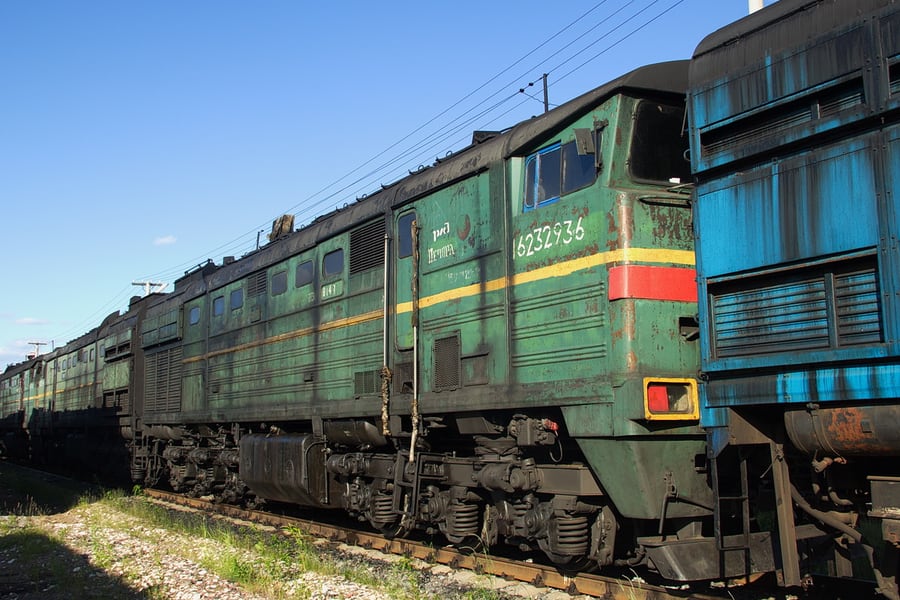
It is a working railway and it looks like one. Coal trains share the track, the locomotives are twin-unit diesels older than most of the people riding behind them, and nobody on board is a tourist. That is a large part of the appeal. The line was built by prisoners with barrows and picks, the first train ran out of Pechora on 26 December 1941, and everything that has happened in this corner of Europe since has arrived and departed along it.
The Journey
The through trains for Vorkuta have been running for most of a day by the time they reach Pechora — they start in Moscow, or in Adler, Anapa and Novorossiysk on the Black Sea — and they stand here for the best part of an hour, longer than anywhere else on the run. Whatever brought you to Pechora, this is where the northern half of the journey begins.
The first two hours are flat and green. The line runs north-east across the Pechora lowland through Synya, Yanyu and Kosyu, calling at halts that are a platform, a crossing keeper's house and a stand of spruce. At kilometre 138 it crosses the Kozhim, and that is the first hint of what is happening: the Kozhim comes down out of the Subpolar Urals, and on a clear morning the mountains are already visible to the east. Behind them is the highest ground in the whole Ural range — Narodnaya at 1,895 metres, and the far more striking Manaraga at 1,662, a ridge broken into five or seven rock towers that the Nenets read as a bear's front paw.
Inta, and the end of the trees
Inta is the only real town between the two ends, and the train stands there nineteen minutes. It was founded in 1940 as a base for designing coal mines, became a town in 1954, and its water tower is visible from a long way out: fifty-four and a half metres of red and yellow brick with a five-pointed star on the spire. North of Inta the country begins to lose its cover. Spruce gives way to larch, larch to willow scrub, and by Abez — kilometre 279, and still just south of the Arctic Circle at 66°31' north — there is nothing on the horizon at all.
Abez is a name worth knowing before you pass it. The village was founded in 1942 as a station on the new railway, and from 1949 it held a division of Mineralny camp set aside for political prisoners who were too ill or too old to work. Its cemetery, three and three-quarter hectares on the edge of the settlement, was recognised as a memorial in 1999, and a monument to the Lithuanian prisoners buried there was put up in 1990. Several hundred metres of tundra is all you will see from the window, which is roughly the point.
Across the Circle
Beyond Abez the train runs onto open tundra and stays there. Sivaya Maska at kilometre 320, Seida at 374 — the last large station before the branch, where the Labytnangi trains reverse — and Chum at 382, where that branch turns east for the Urals and the Ob. Three of the halts in between are technical stops where no ticket is sold.
The last hour is the best of it. Khanovey, eleven minutes; Yun-Yaga, which shares its name with the Yunyaginsky opencast — opened in July 2000, and still the only open-pit coal mine anywhere above the Arctic Circle; and then the bridge over the Vorkuta river itself, close to the mouth of the Yunyakha. That is the water the geologist Georgy Chernov was walking up in the summer of 1930 when he found high-calorie coking coal in the bank — the find that put a railway, twenty-nine mine shafts and a city on ground where nothing had stood before.
What the line cost
The Kotlas–Vorkuta railway was begun in 1937 and finished in the last week of 1941, and it was built by Gulag labour — at this end, brigades from Vorkutlag, working with a barrow, a pick, a sledgehammer and a spade. To get it open at all, steelwork already fabricated for the Palace of Soviets in Moscow — and one of the bridges over the Moscow–Volga canal — was taken apart and shipped to Komi.
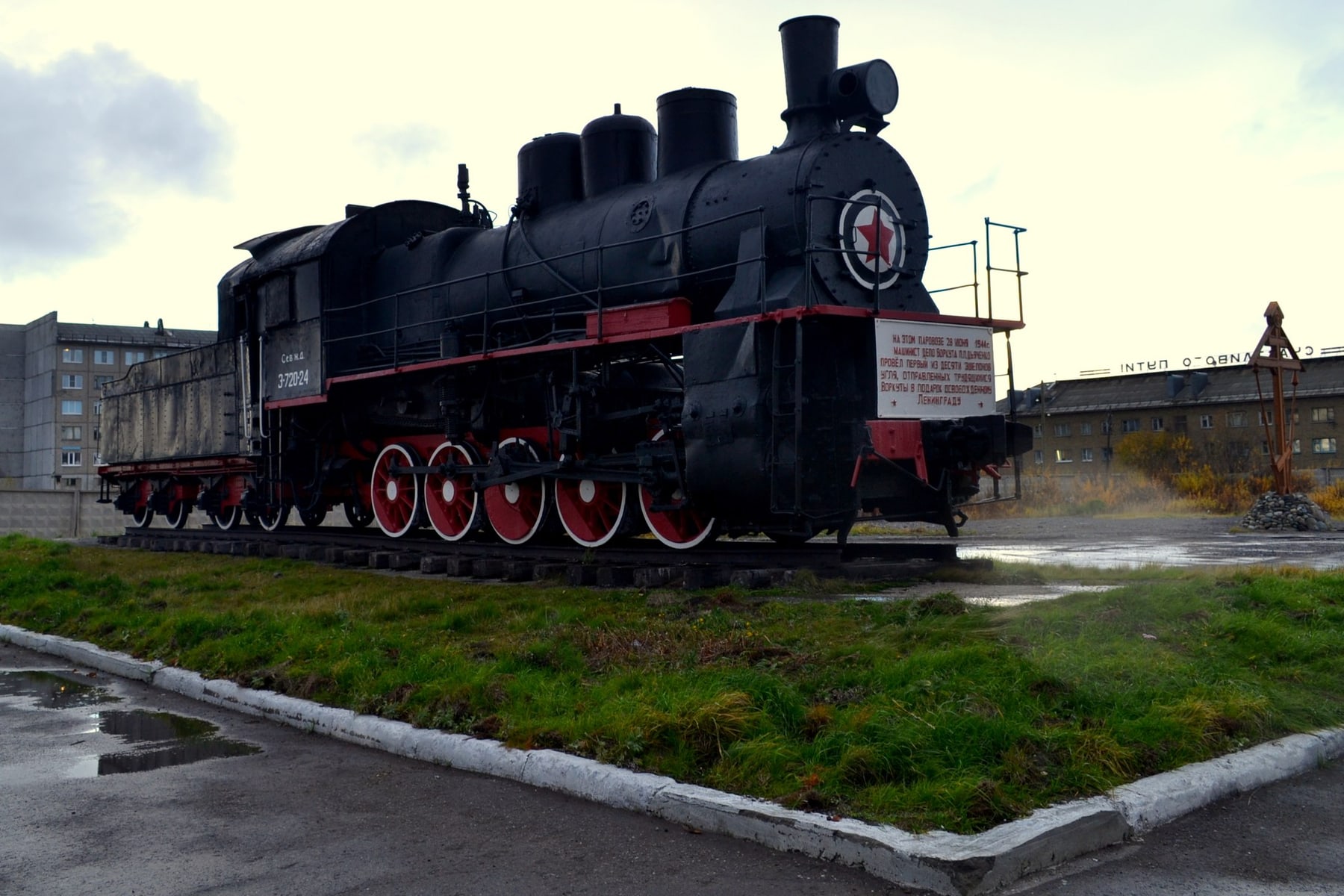
It opened unfinished. There were no semaphores on the first trains, so drivers ran on the light of the station duty officers' kerosene lanterns, and railwaymen of the period said the track walked under a train and called it the living railway. The first working train left Pechora for Vorkuta behind an Ov-class locomotive, number 5381, on 26 December 1941. Twenty-nine shafts were sunk during the war and twelve of them brought into production, and more than seven million tonnes of coking coal went south over this track. The locomotive on the plinth outside Vorkuta station, Em 720-24, is there for a single day's work: on 28 June 1944 a Vorkuta driver took it out with the first of ten trainloads of coal mined above plan and sent by the town to a Leningrad that had just been relieved. The plaque on its running board still says so.
Along the route
 mpozdeev / Wikimedia Commons · CC BY 2.0 · cropped
Out of the Pechora basin
The train leaves the river it is named after and spends its first two hours in flat taiga, calling at halts of a few houses each. Pechora stands where the Northern Railway crosses the river, 588 km north-east of Syktyvkar and 42 to 64 metres above the sea.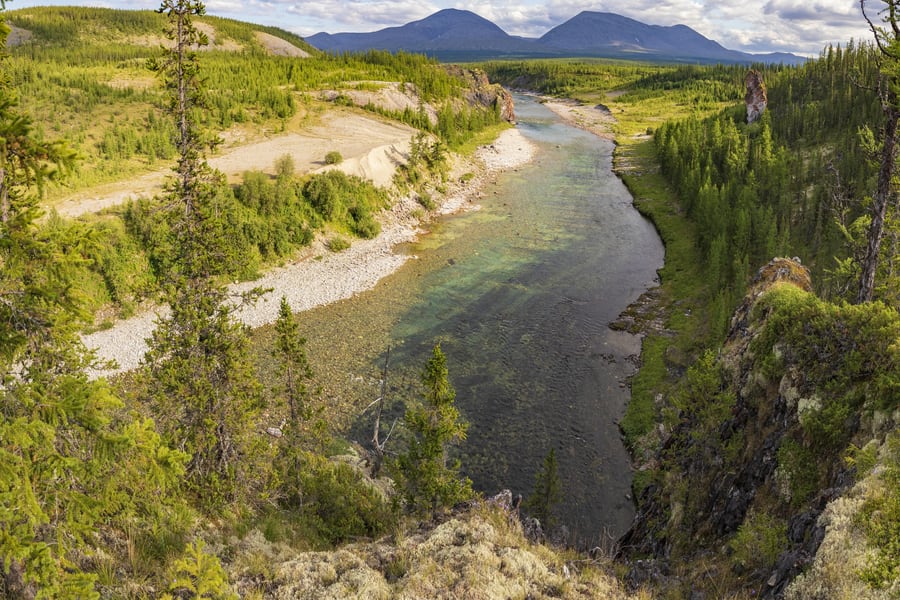 RDA-Inta / Wikimedia Commons · CC BY-SA 4.0 · cropped
Kozhim, and the mountains
At kilometre 138 the line crosses the Kozhim, the river that leads into Yugyd Va. From here to Inta the Subpolar Urals are visible to the east on a clear day, and they carry the highest ground in the whole range.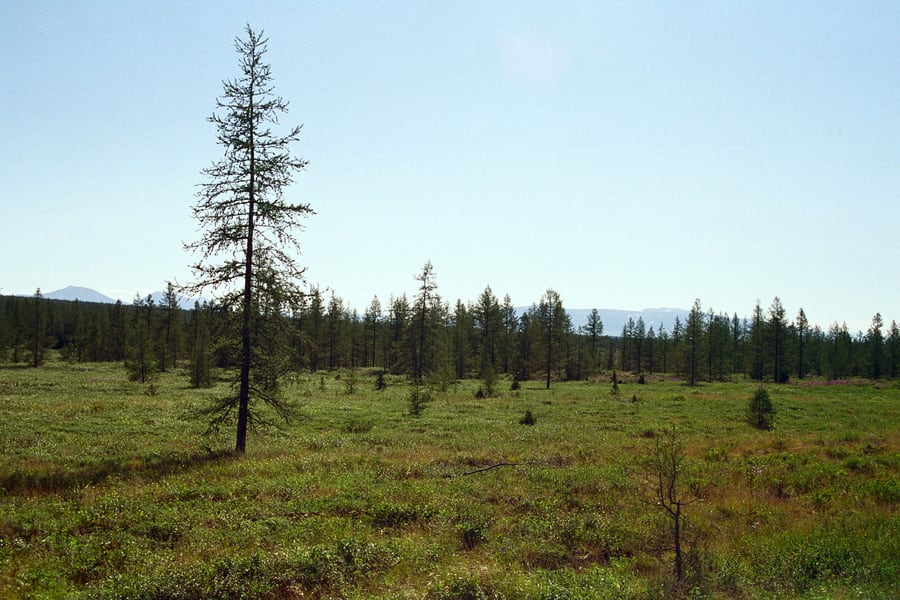 Vsatinet / Wikimedia Commons · CC BY-SA 4.0 · cropped
Where the trees give out
Between Inta and Abez the spruce thins to scattered larch and then to nothing. It is not a line you can see on a map, but from the window it takes about an hour, and afterwards nothing taller than a willow grows beside the track.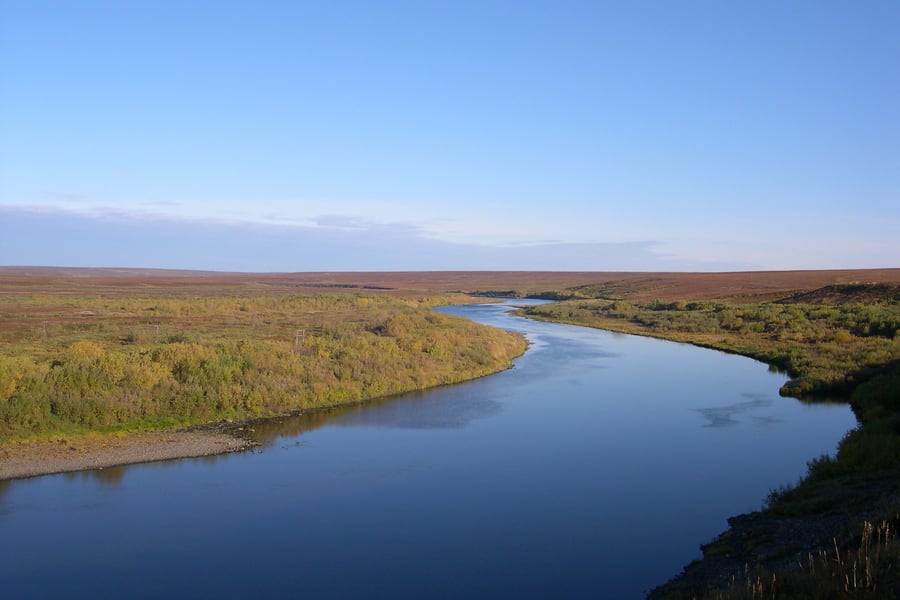 APL / Wikimedia Commons · CC BY-SA 3.0 · cropped
The last river
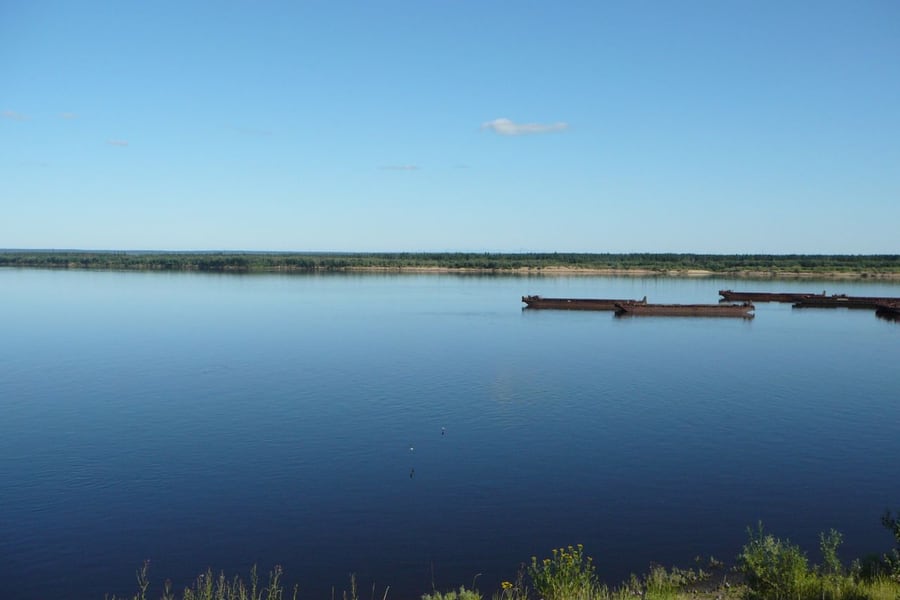
Twelve kilometres short of the terminus the train crosses the Vorkuta itself, close to where the Yunyakha joins it. This is the water G. A. Chernov was walking up in 1930 when he found the coal that put the railway here.A bit of history
Culture & experiences along the way
 BLOG / Wikimedia Commons · CC BY-SA 4.0 · cropped
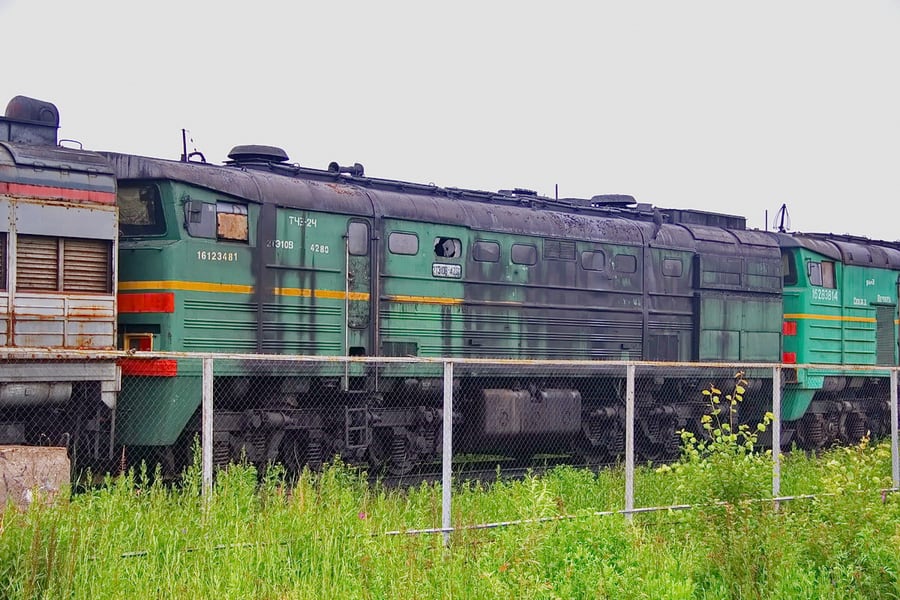
Listen for the 2TE10s
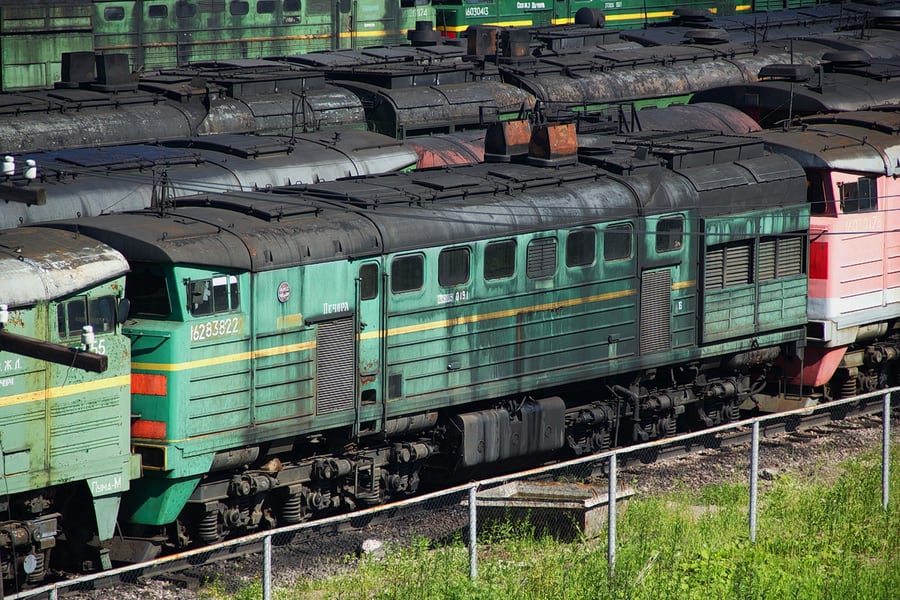
Pechora and Vorkuta both keep depots full of 2TE10s — twin-unit diesels built in Voroshilovgrad, permanently coupled, and loud enough that you hear one working long before you see it. They are the sound of this railway, and on a still night at a halt you can follow a freight for ten minutes after it has gone.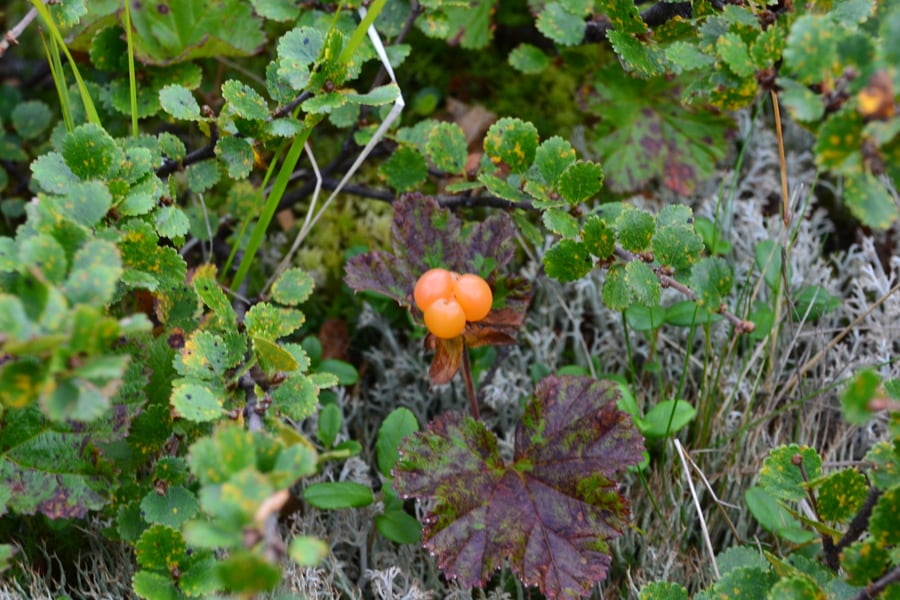 J. Metselaar & M. Grishchenko / Wikimedia Commons · CC BY-SA 4.0 · cropped
Cloudberries
The tundra's one reliable crop is the moroshka — cloudberry — which ripens amber in late July and is sold in buckets at station gates the length of the line. It is eaten fresh, boiled into a thin jam, or steeped in spirit, and it is the thing a Komi household will put in front of a visitor first.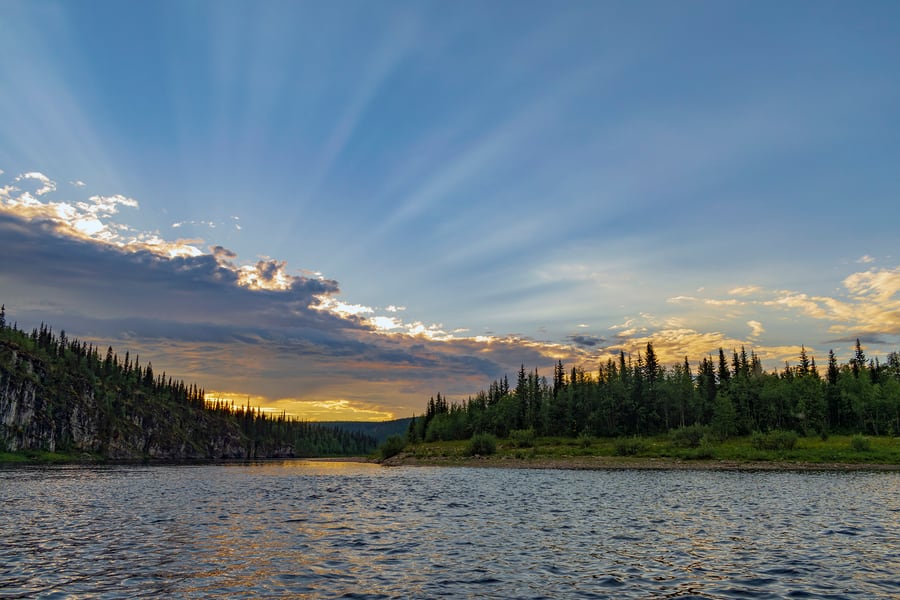 Попусик / Wikimedia Commons · CC BY-SA 4.0 · cropped
A night that is not dark
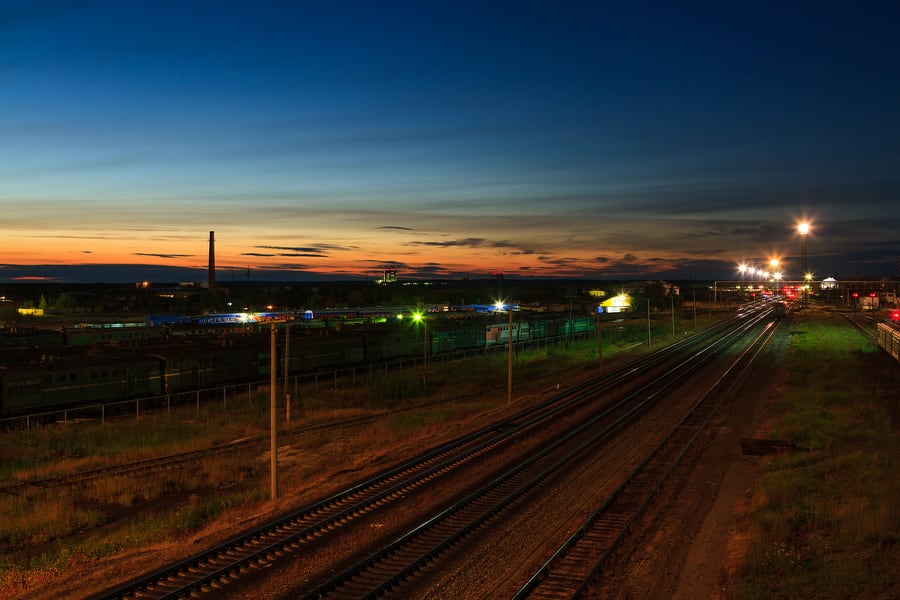
Vorkuta has forty-six days of polar day, from 30 May to 14 July, and eleven days of polar night in the middle of December. Between the two, in late August, the whole journey runs through a dusk that lasts from midnight until it is morning again.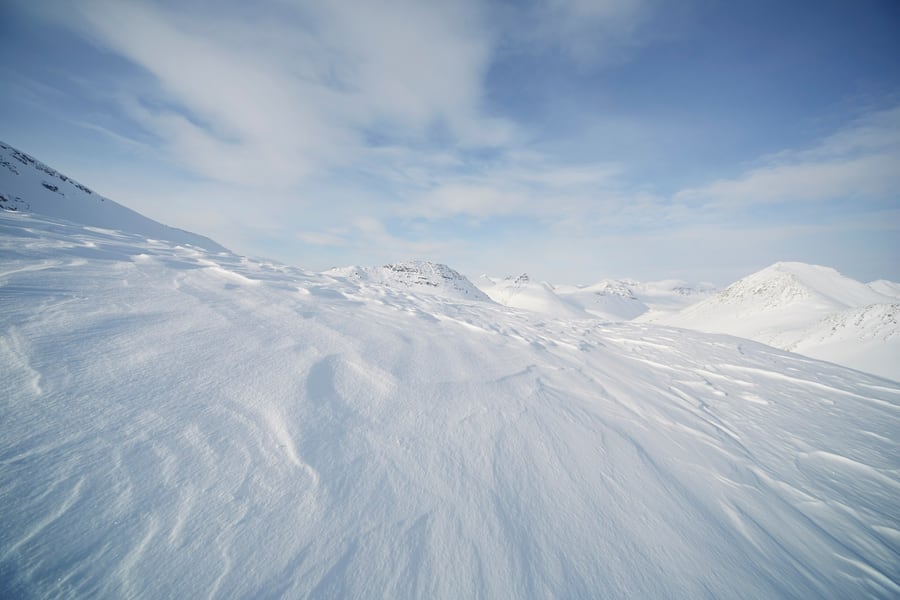 Aysa t / Wikimedia Commons · CC BY-SA 4.0 · cropped
Eight months of winter
The frost-free season at Vorkuta is about seventy days. Winter runs eight months, the mean for the year is −5.3 °C, and December 1978 recorded −52 °C. Snow drifts are the reason the line is fenced and the reason the timetable holds up in February at all.Timetables
There is no local train between Pechora and Vorkuta. Everything that runs is a long-distance working passing through, which sounds like a limitation and is not: two of them are daily in each direction, and a third comes up most evenings from the Black Sea. Pechora, Vorkuta and everything between keep Moscow time, so the clock in the table is the clock on the platform.
The fastest train is 042В, the one Russian Railways names Vorkuta; its southbound half is 041М. It runs the 448 kilometres in eight hours eleven with twelve intermediate calls. 376Я / 375Я is slower and stops twice as often, which is the better choice if you want to see the line rather than get to the end of it.
| Direction | Train | Depart | Arrive | Journey | Runs |
|---|---|---|---|---|---|
| Pechora → Vorkuta | 376Я | 02:41 | 12:43 | 10 h 02 | Daily |
| Pechora → Vorkuta | 042В Vorkuta | 06:14 | 14:25 | 8 h 11 | Daily |
| Pechora → Vorkuta | 310С / 312С | 22:31 | 06:50 (+1) | 8 h 19 | Most days |
| Vorkuta → Pechora | 309С / 311Я | 12:05 | 20:48 | 8 h 43 | Most days |
| Vorkuta → Pechora | 041М Vorkuta | 16:50 | 00:51 (+1) | 8 h 01 | Daily |
| Vorkuta → Pechora | 375Я | 18:50 | 04:27 (+1) | 9 h 37 | Daily |
The 3xx pairs are the through trains to and from Adler, Anapa and Novorossiysk — three or four days from the Black Sea to the Arctic. Which of them turns up depends on the date; the times at Pechora and Vorkuta barely move.
042В does not always leave Pechora at 06:14. On some dates it is booked out at 04:53 and stands longer further up the line; the arrival at Vorkuta is 14:25 either way. Check the date you actually want.
Where 376Я stops, northbound
Twenty-three intermediate calls, of which these are the ones worth knowing. Kilometres are counted from Pechora.
| Station | km | Arrive | Stop |
|---|---|---|---|
| Pechora | 0 | — | depart 02:41 |
| Kosyu | 102 | 04:24 | 1 min |
| Kozhim | 138 | 04:55 | 1 min |
| Inta-1 | 180 | 05:44 | 19 min |
| Abez | 279 | 08:02 | 3 min |
| Sivaya Maska | 320 | 09:08 | 5 min |
| Seida | 374 | 10:40 | 4 min |
| Chum | 382 | 10:55 | 1 min |
| Khanovey | 417 | 11:46 | 11 min |
| Yun-Yaga | 436 | 12:21 | 3 min |
| Vorkuta | 448 | 12:43 | — |
Three of the halts between Sivaya Maska and Seida — Pernashor, Shor and Pyshor — are technical stops where no ticket is sold and nobody gets off.
Times as of September 2026, swept over eight consecutive dates in both directions plus a November control, because each of these trains runs to more than one schedule variant and a single date makes a daily service look like an alternate-day one. Tickets go on sale about ninety days ahead, and a date past that horizon returns an empty board — which is not the same thing as no train. Check before you travel at rasp.yandex.ru (opens in a new tab).
Tickets
Every seat and every berth is reserved and sold against a named passenger, so buy before you turn up at the station. All three classes run on this line: ordinary seated coaches, open-plan platskart with bunks, and four-berth kupe. For the daylight run north a seat is plenty; for either of the overnight workings south, book a berth.
Fares move with demand and with how far ahead you book — the same train can be a third dearer five days later — so the figures below are the lowest published for each class in September 2026, in roubles. Bring the passport you booked with: it is checked at the coach door, and the conductor holds your ticket until shortly before your station.
Book your tickets
Seated, or platskart
The two cheap ways to do it
A seat is enough for a run that starts at breakfast and ends mid-afternoon; platskart buys an open-plan bunk and room for a rucksack.
Book Tickets (opens in a new tab, on rasp.yandex.ru)via rasp.yandex.ruKupe
Four-berth compartment
The only class on the train with a door you can shut, and the one to book on the overnight workings in either direction.
Book Tickets (opens in a new tab, on rasp.yandex.ru)via rasp.yandex.ruRail Passes
No rail pass covers this journey. Interrail and Eurail are a 33-country scheme and Russia is not one of the 33 — it appears nowhere in the pass network's own list of participating railway companies, so a pass bought in Europe is worth nothing on this line, and there is no through service from the nearest pass territory in any case.
There is no domestic equivalent to fall back on. The national operator runs a loyalty scheme and sells occasional return discounts rather than a period ticket, so a week of unlimited travel over this railway is not a product that exists.
It would make no difference here anyway. Every place on every train is individually reserved, so a pass holder would still be buying a reservation for a specific departure, and the walk-up fare for a seat from Pechora to Vorkuta is low enough that the arithmetic never becomes interesting. Buy a point-to-point ticket. Checked September 2026.
Places to Visit
This is a line with two towns on it and a great deal of nothing in between, and the nothing is the attraction. The two ends are worth a day each; the middle is worth a week if you are equipped for it, because Kozhim and Inta are the doors into the largest national park in Russia and the highest mountains in the Urals stand behind them.
Nothing here is set up for visitors. There are no ticket offices for the park at the stations, no transfers waiting, and outside Pechora, Inta and Vorkuta almost nowhere publishes a room. Plan around the train, not around the place.
 k0k00rt / Wikimedia Commons · CC BY-SA 3.0 · cropped
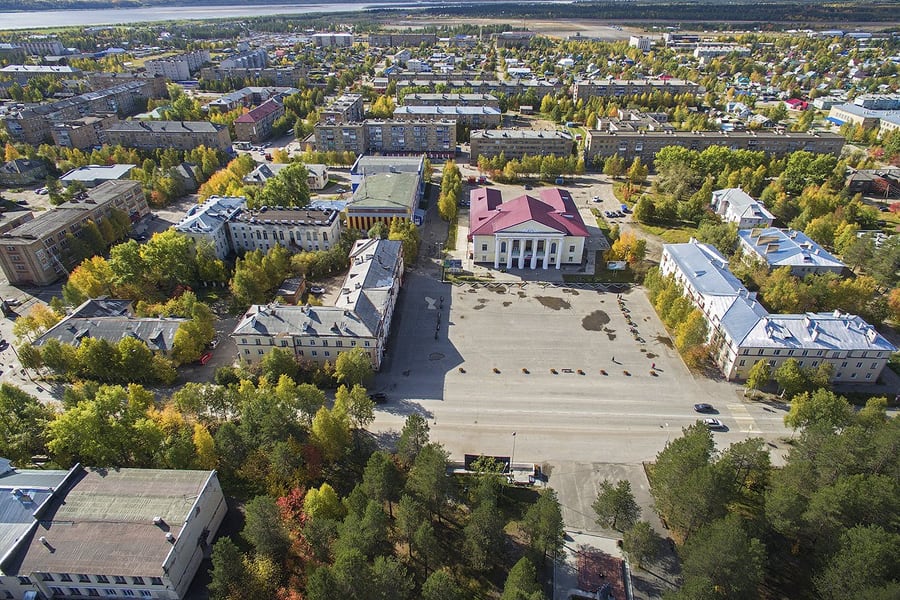
Pechora
A town that exists because two things met here: the river and the railway. Pechora was put together in 1949 out of the settlement at the station and the settlement at the Kanin river port, and it calls itself the energy capital of the Komi Republic. Both northbound trains leave in the small hours, so it is also the obvious place to spend the night before one.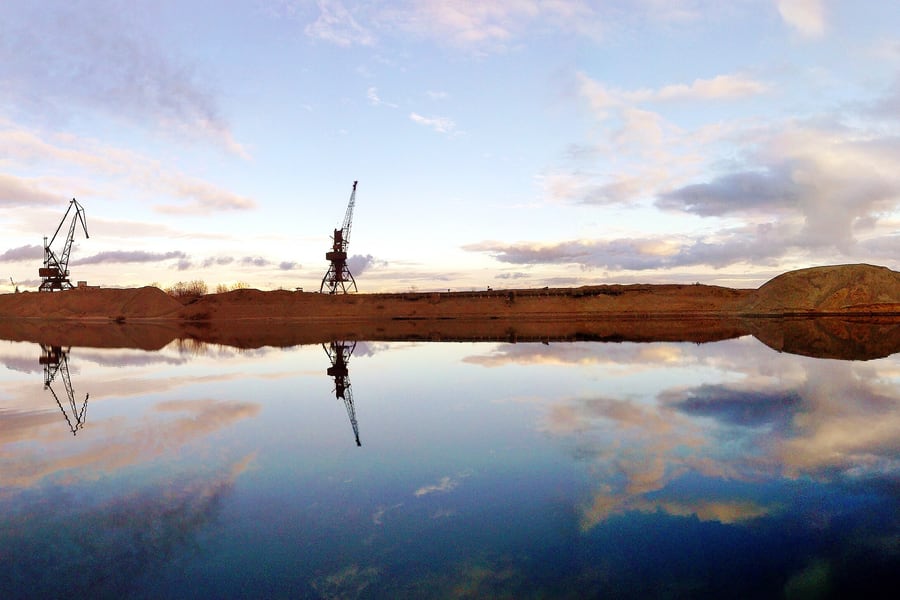 Andri@no 73 / Wikimedia Commons · CC BY 3.0 · cropped
The river port
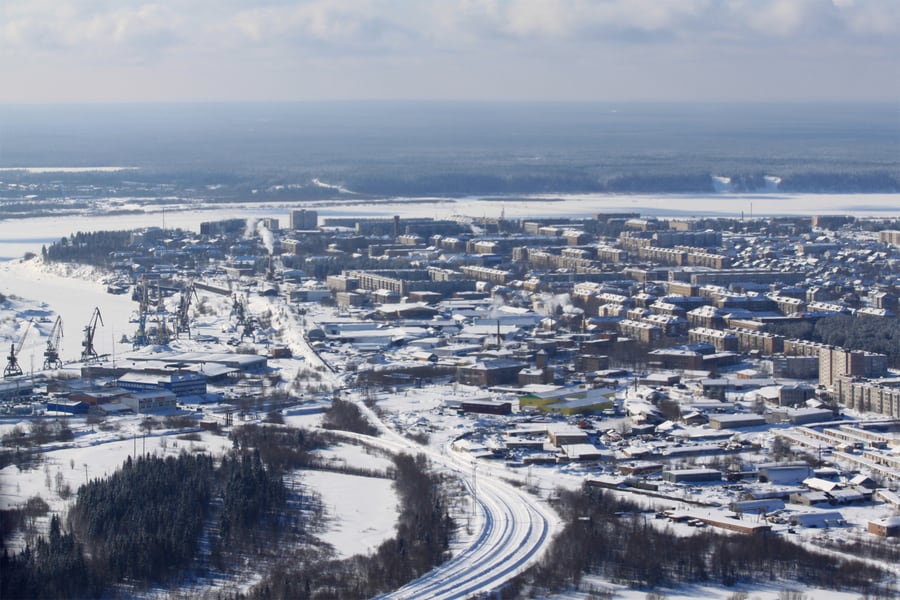
Half of Pechora is the railway; the other half is the water. The town was assembled in 1949 out of the settlement at the station and the settlement at the Kanin river port, and the cranes still stand over the basin. Snow covers the ground here from about 26 October to 10 May — 192 days of it in an average year — so the port's season is the short half.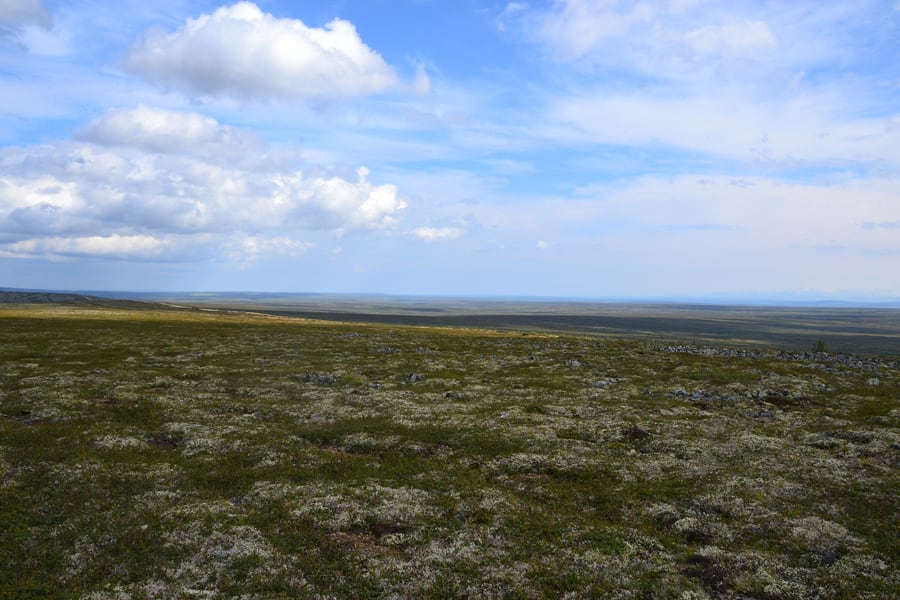 J. Metselaar & M. Grishchenko / Wikimedia Commons · CC BY-SA 4.0 · cropped
Yugyd Va National Park
At 1.89 million hectares this is the largest national park in Russia, and with the Pechoro-Ilych reserve to the south it makes up the UNESCO World Heritage site called the Virgin Komi Forests — the last stand of primary boreal forest in northern Europe. It runs nearly 300 km and holds more than 800 lakes. Kozhim station, at kilometre 138, is the way in from this railway.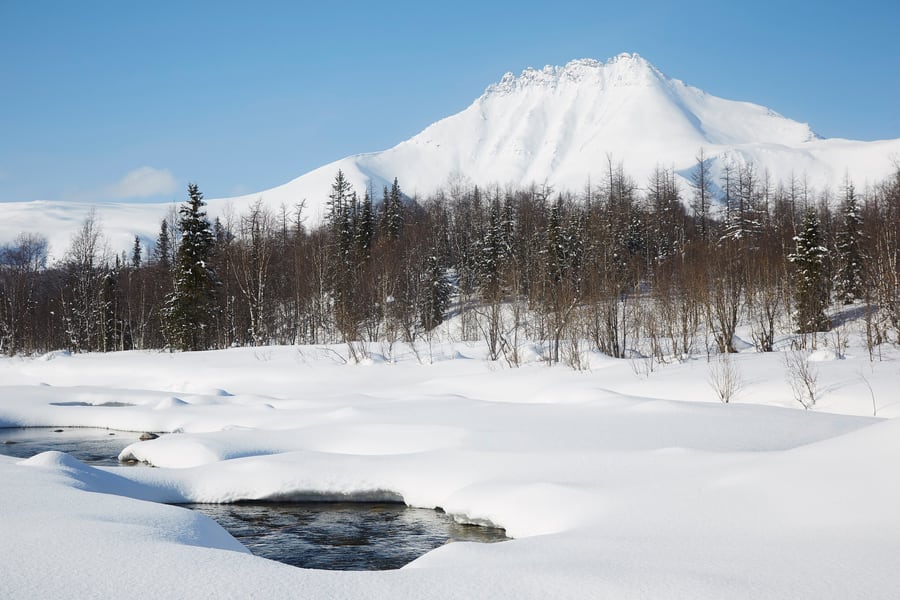 Aysa t / Wikimedia Commons · CC BY-SA 4.0 · cropped
The Subpolar Urals
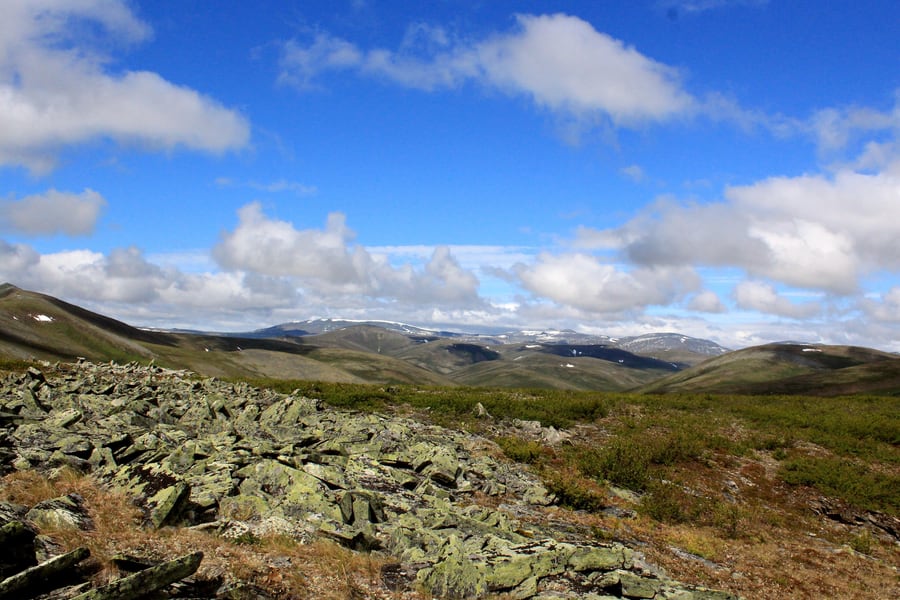
The highest ground in the Urals is east of Inta, inside the park: Narodnaya at 1,895 m and, more striking, Manaraga at 1,662 m, a ridge broken into five to seven rock towers. Nenets read it as a bear's front paw and that is what the name means; in Komi it is Sizimyura, the seven-headed. Until 1927 it was taken to be the highest mountain in the range.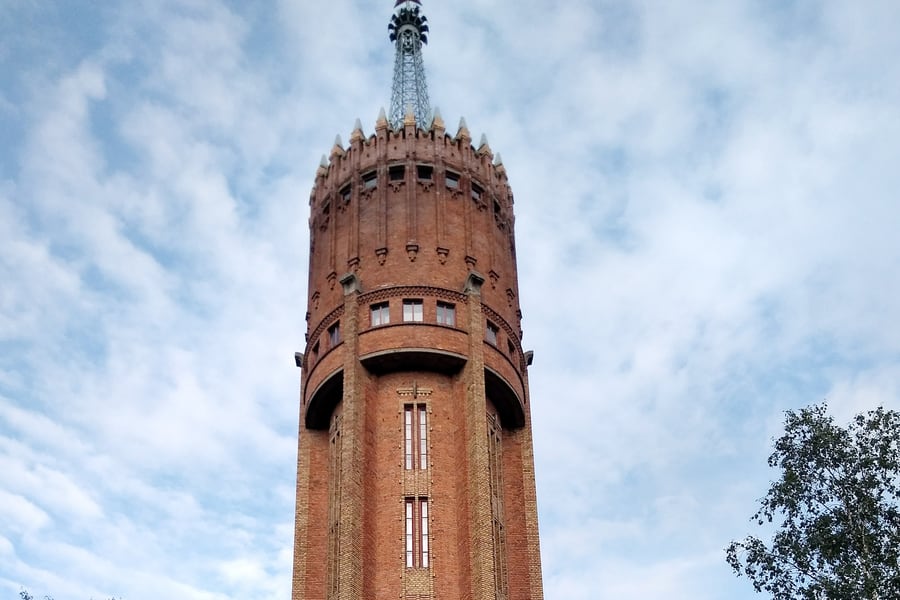 Lilit 74 / Wikimedia Commons · CC BY-SA 4.0 · cropped
Inta's water tower
Fifty-four and a half metres of red and yellow brick with a red star on the spire, put up in 1954 to hold the town's water and visible from everywhere in it. The design was sketched by Artur Tamvelius, an Estonian Swede serving a sentence in the camp that built it, and for years it was the tallest building in the country standing on permafrost. Two floors of it are now a museum of the political repressions.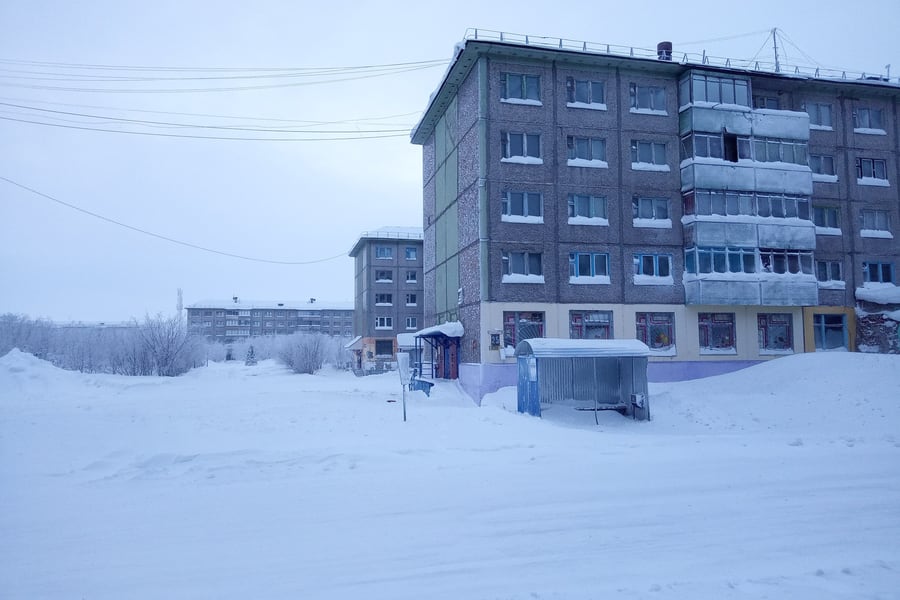 Лапоть / Wikimedia Commons · CC0 · cropped
Vorkuta
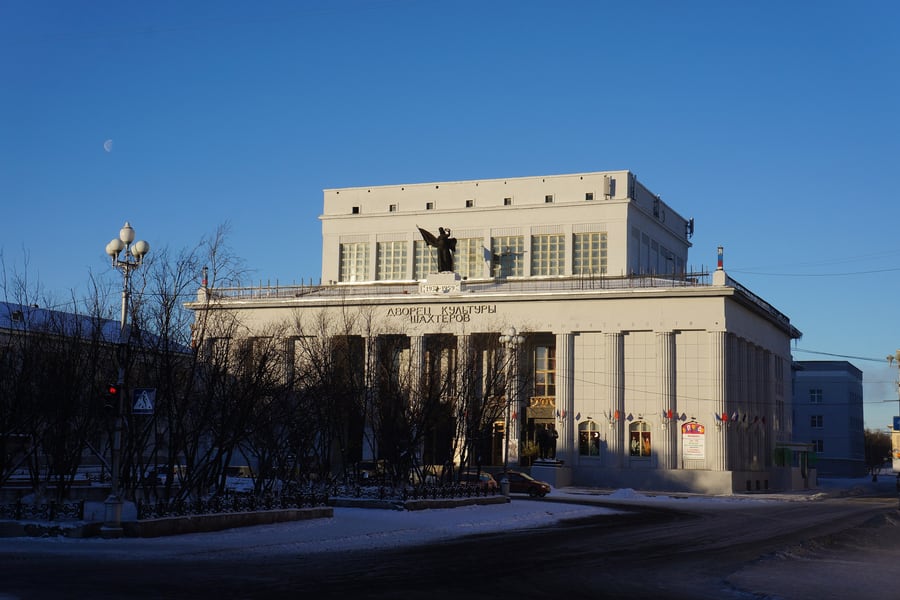
The city sits in the middle of a ring of mining settlements, and the ring is emptying: as the pits closed, whole streets of flats were left standing with the windows out. Zapolyarny, a few kilometres from the centre, is what that looks like in January. It is a hard, strange and genuinely memorable place, and nowhere else in Europe is quite like it.Where to Sleep
Three towns on this line have hotels that take a booking directly, and they are conveniently spaced: Pechora at the start, Inta at roughly the halfway point, and Vorkuta at the end. All three are a short taxi ride from their station, which matters at Pechora, where the two northbound trains leave at twenty to three and a quarter past six in the morning.
Everything between them is a different proposition. Abez, Sivaya Maska, Seida and Chum are settlements of a few dozen to a few hundred people, several of them railway posts rather than villages, and none of them publishes rooms online. Walkers heading into Yugyd Va from Kozhim or Inta carry a tent and arrange the rest by telephone before they travel. The park boundary is some 80 km south-west of Inta and 100 km east of Pechora, so getting off the train is the beginning of the approach rather than the end of it.
Where to stay
Apartament-Otel Inta
Inta, twelve rooms
The one hotel at the halfway point that takes bookings directly, with twelve rooms from standard to two-room business suite.
Check Availability (opens in a new tab, on hotelinta.ru)via hotelinta.ruGostinitsa Gornyak
Central Vorkuta, Mira Street
The municipal hotel of the coal city, a few minutes from the square and about ten from the station.
Check Availability (opens in a new tab, on hotel-gornyak.ucoz.ru)via hotel-gornyak.ucoz.ruQuestions or corrections
Planning this trip and stuck on something, or spotted a time, fare or detail that has changed? Send us a message about Pechora to Vorkuta. We read every one, and we update this page when something has changed.