St Petersburg to Vyborg
Neu-Zwei / Wikimedia Commons · CC BY-SA 4.0 · cropped
- Distance130 km
- Duration1 h 12 min
- Best seasonYear-round
Introduction
Finland built this railway. Between 1867 and 1870 the autonomous Grand Duchy laid a line from Riihimäki, north of Helsinki, to the edge of the Russian capital, and built a terminus there to receive it — the Finlyandsky vokzal, the Finland Station, designed by Swedish architects and opened in 1870. For seventy years it was Finnish State Railways property in the middle of St Petersburg, and the trains that used it ran to Viipuri, the Grand Duchy's second city, and on to Helsinki.
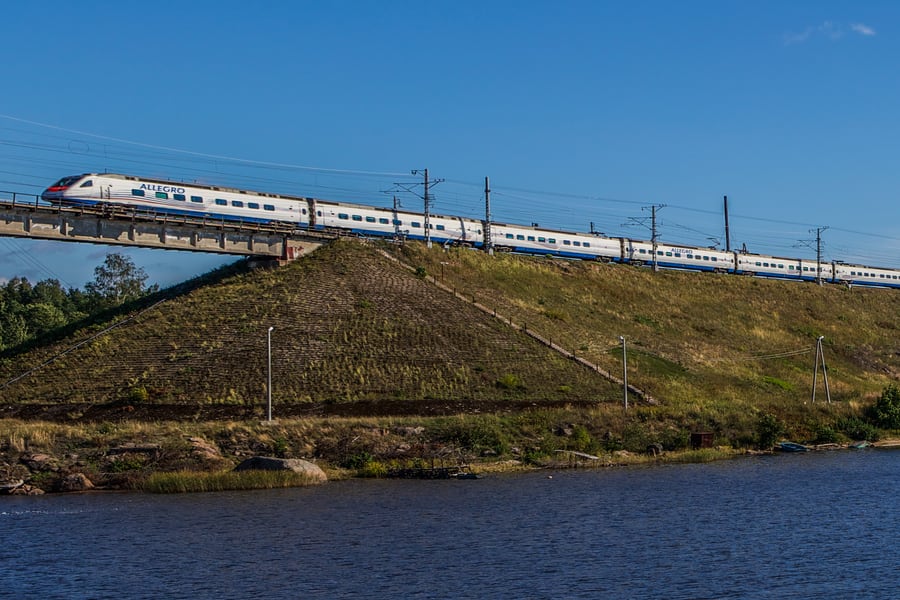
Everything about that arrangement is gone except the track. Viipuri became Vyborg when the Karelian Isthmus was ceded to the Soviet Union during the Second World War; the border now runs 38 km north of the town; the through service to Helsinki, the Allegro, ran from 2010 until it was stopped in 2022. What is left is the Russian stump of a Finnish main line: 130 kilometres of it, from the Finland Station to a town built around a Swedish castle, worked by red suburban electric trains at a flat regional fare.
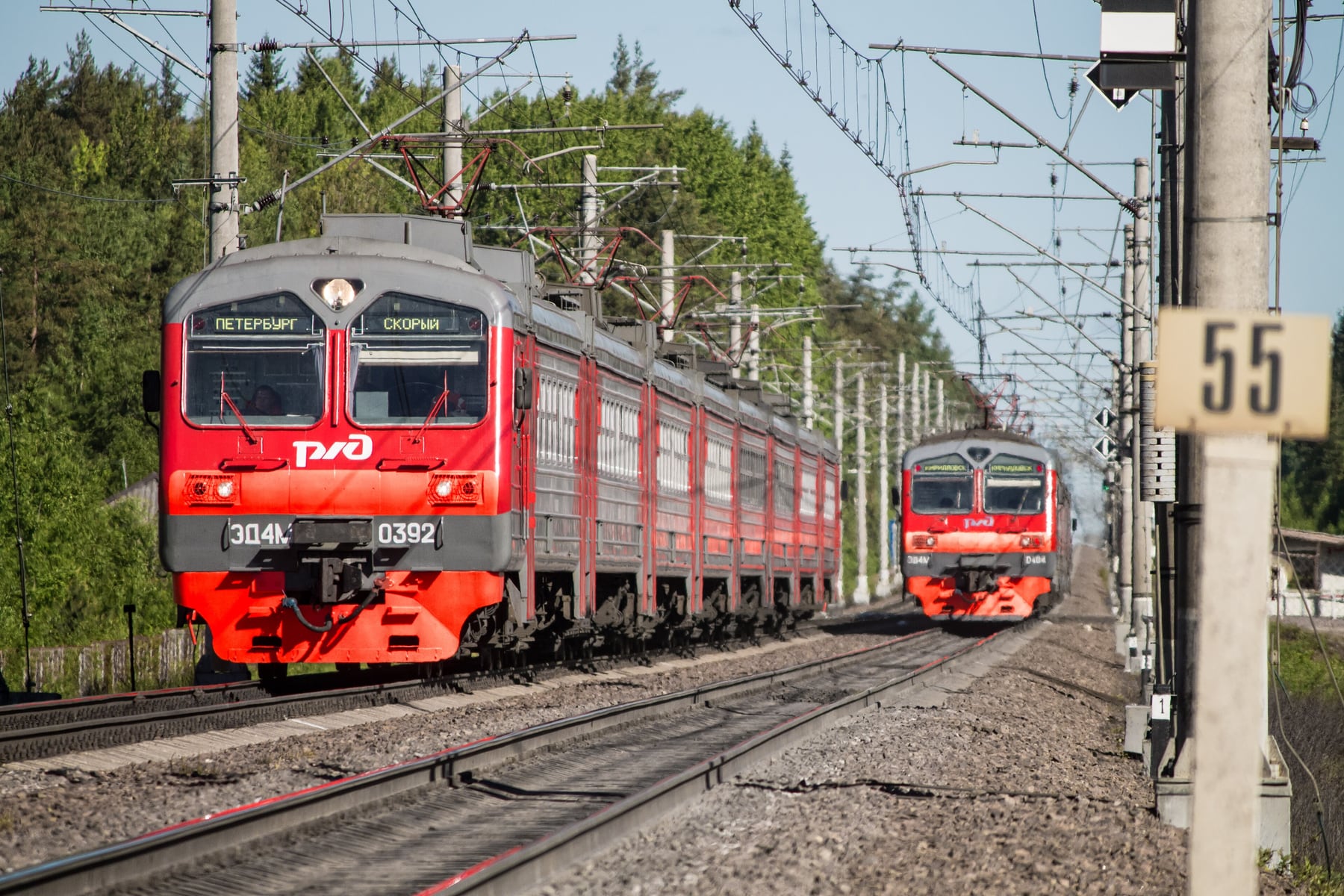
It is a very good hour and a bit. The Lastochka — RZD's Siemens-built swallow — leaves Finlyandsky, clears the northern suburbs at Udelnaya and then runs almost without stopping through the birch and pine of the Karelian Isthmus, calling only at Zelenogorsk, Roshchino and Kannelyarvi before the bay opens out at Vyborg. The slower elektrichka takes the same line at half the speed and stops everywhere, which is the better way to see it. Either way you arrive on a platform whose signs still point one way to St Petersburg and the other to Helsinki.
The Journey
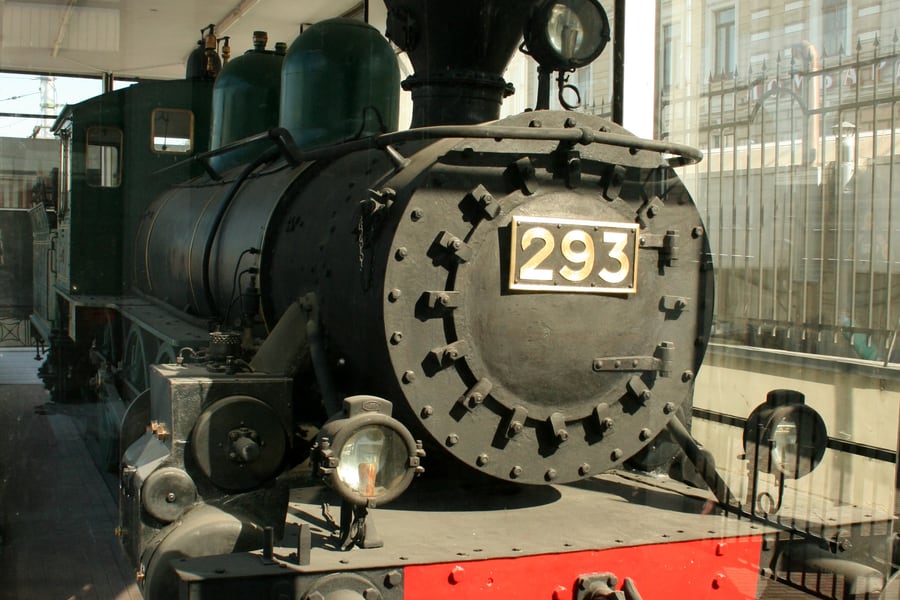
The departure is the historical part. Finlyandsky vokzal was built by another country's railway: Finnish State Railways owned and ran it until early 1918, when the last train left for Finland carrying the station's own staff and equipment. Parked on a platform behind glass is the reason most Russians know the building — locomotive 293, on which Lenin twice crossed the border in 1917, driven by the Finnish engineer Hugo Jalava.
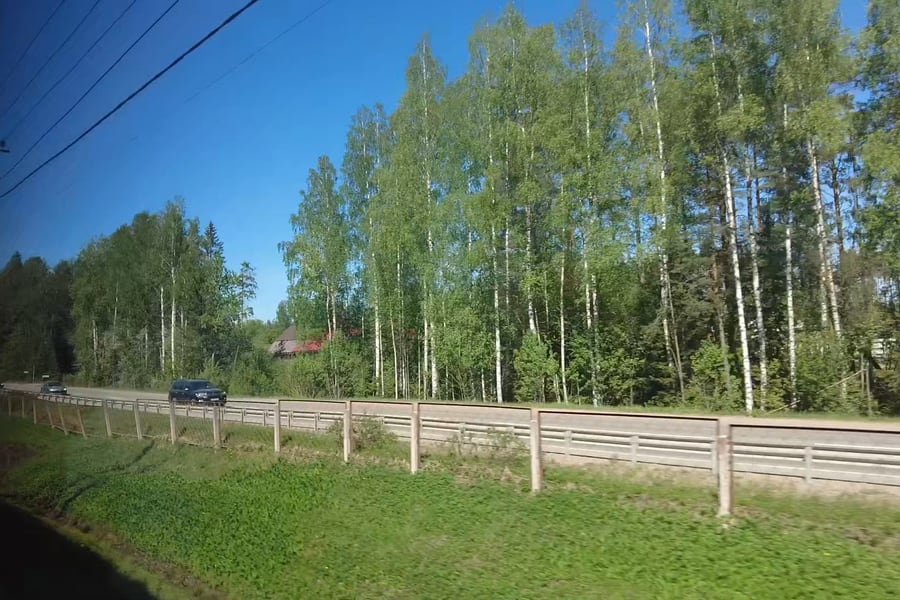
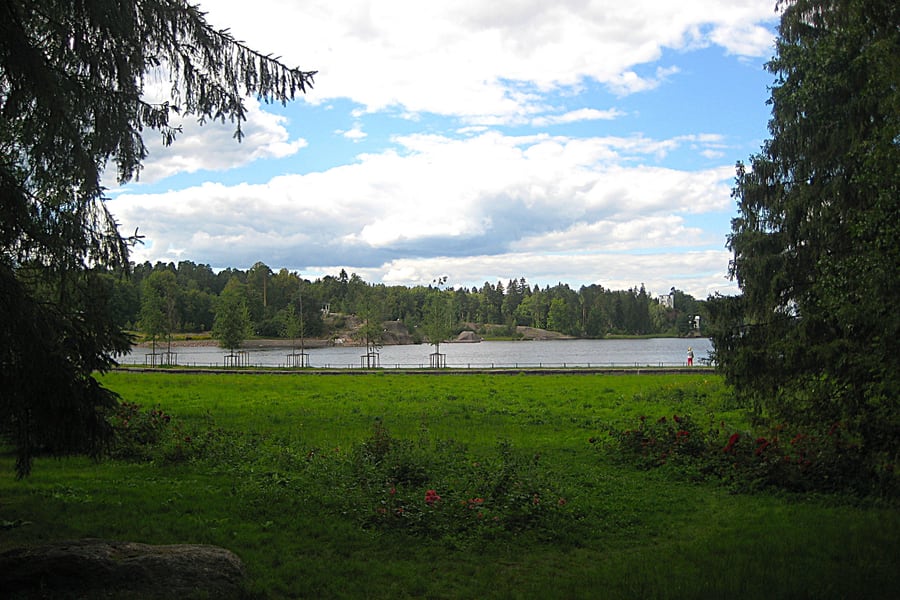
Out of the throat the line runs through Vyborgskaya and Udelnaya, and by the time it reaches Beloostrov — where Russian customs stood from 1870 to 1939, because Finland was a separate customs territory — the city has finished. From there to Vyborg the railway runs through the Karelian Isthmus: sandy soil, birch, Scots pine, lakes just out of sight, and dachas among the trees for the whole distance. It is a landscape of small wooden stations with Finnish names underneath the Russian ones.
The stops that are left
The Lastochka calls four times in 130 km. Zelenogorsk was Terijoki, the isthmus's grand seaside resort, and still has Josef Stenbäck's granite Lutheran church of 1908 a short walk from the platform. Roshchino was Raivola, an ironworking village from 1800 where the poet Edith Södergran grew up. Kannelyarvi keeps its Finnish name outright and is little more than an island platform and a grain elevator in the trees.
Arriving
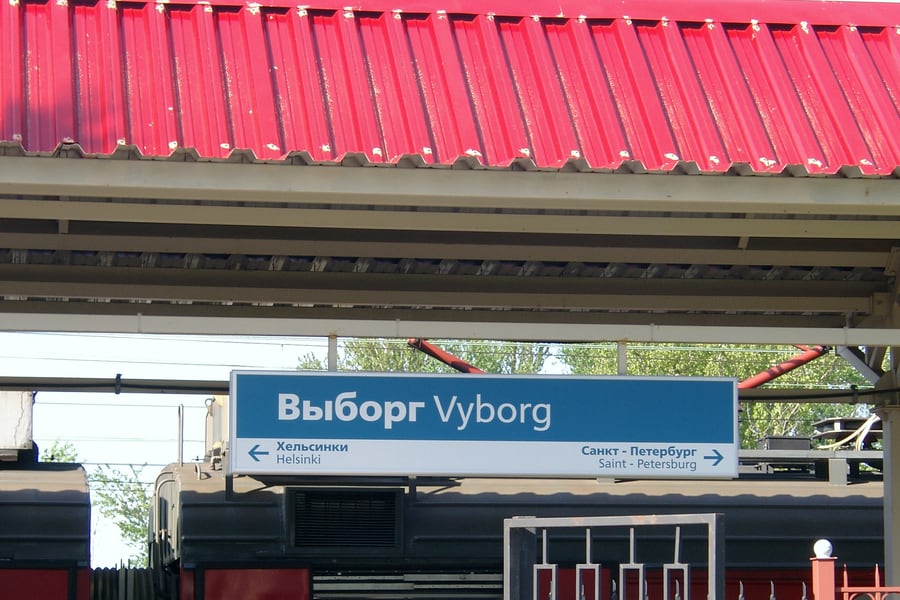
Vyborg's station is the third on the site. The first was wooden, opened with the line in 1869; the second was the granite one of 1913 by Eliel Saarinen and Herman Gesellius, the architects of Helsinki Central, right down to a pair of sculpted bears flanking the door. It was destroyed in the war except for the baggage hall, and the present building is a Soviet replacement. What survives of the older order is smaller and stranger: platform signs that give distances in two directions, one of which is a city in another country that no train has reached since 2022.
Along the route
 Florstein / Wikimedia Commons · CC BY-SA 4.0 · cropped
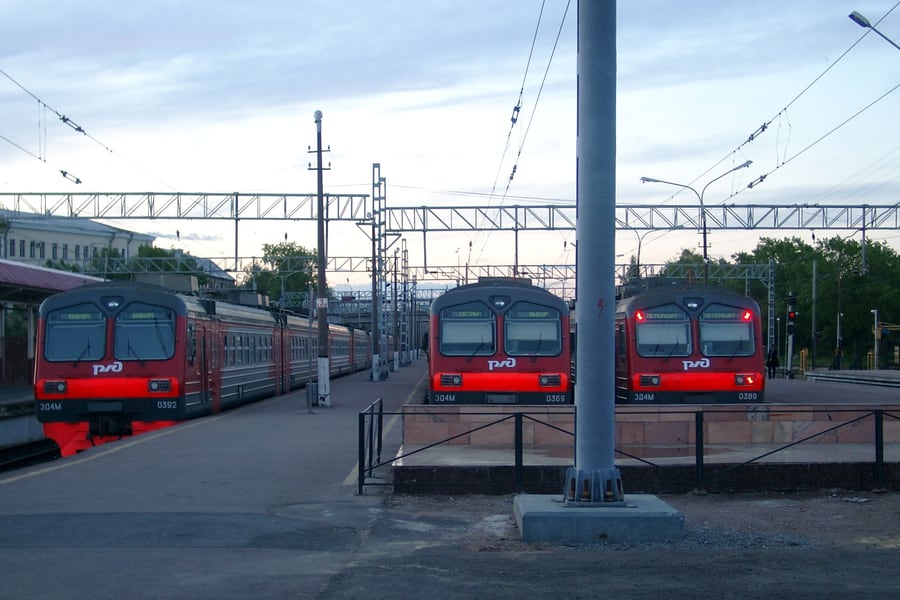
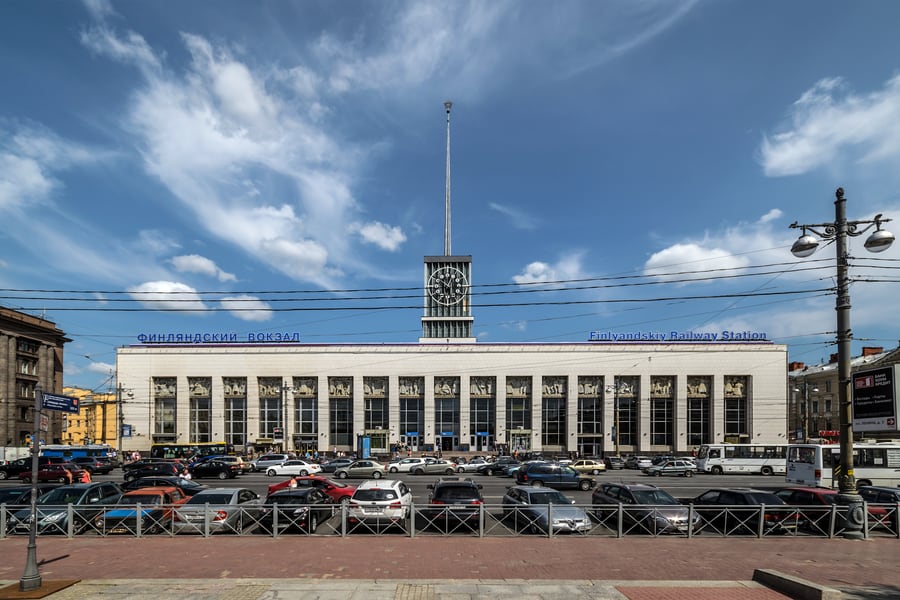
Finlyandsky vokzal
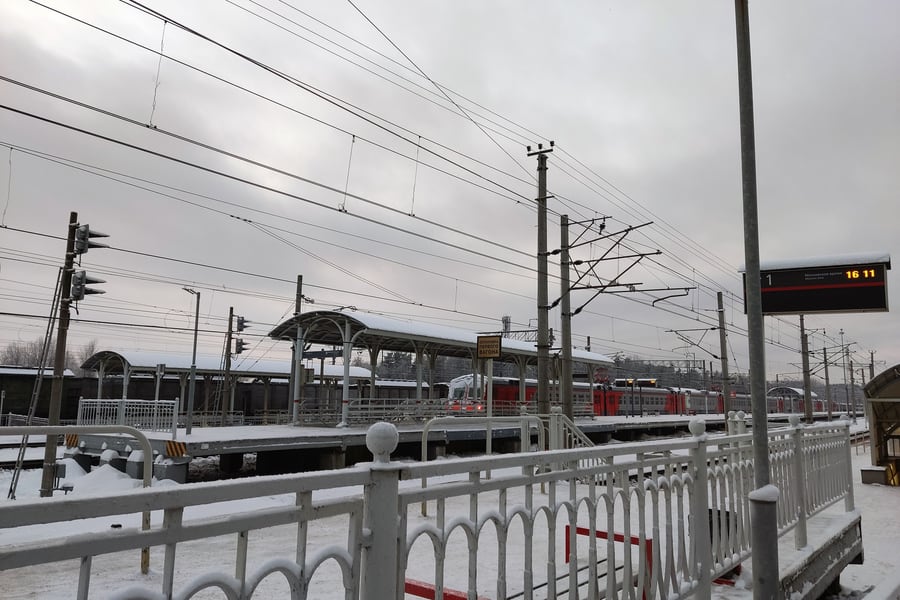
The terminus another country built. Finnish State Railways opened it in 1870 to receive its own line from Riihimäki and ran it until 1918, when the last train left for Finland with the staff aboard. Trains for Vyborg still go from here.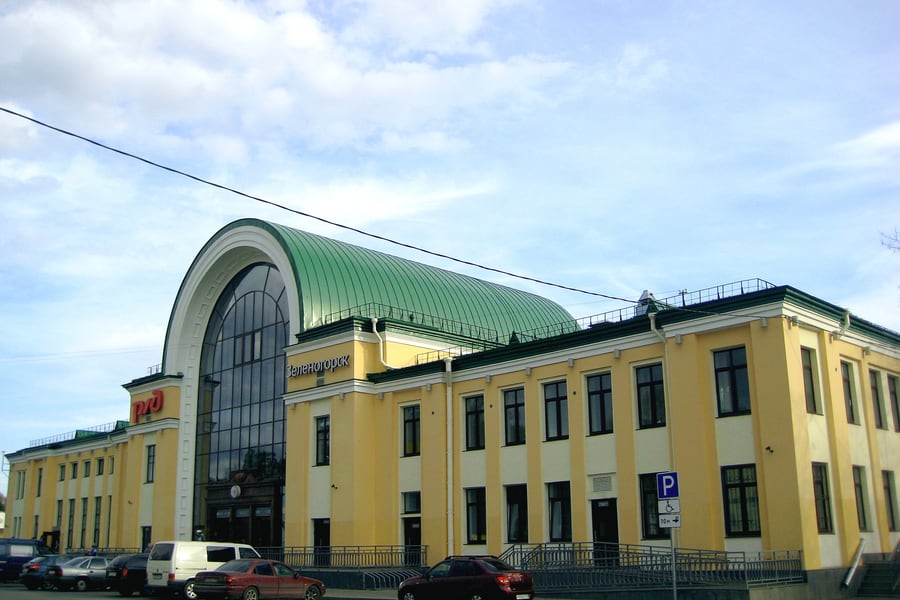 GAlexandrova / Wikimedia Commons · CC BY-SA 4.0 · cropped
Zelenogorsk, once Terijoki
Thirty minutes out, the first stop that is not a suburb. Terijoki was the grand seaside resort of the isthmus before 1940, and Zelenogorsk still has the beach, the pines and Josef Stenbäck's granite Lutheran church of 1908.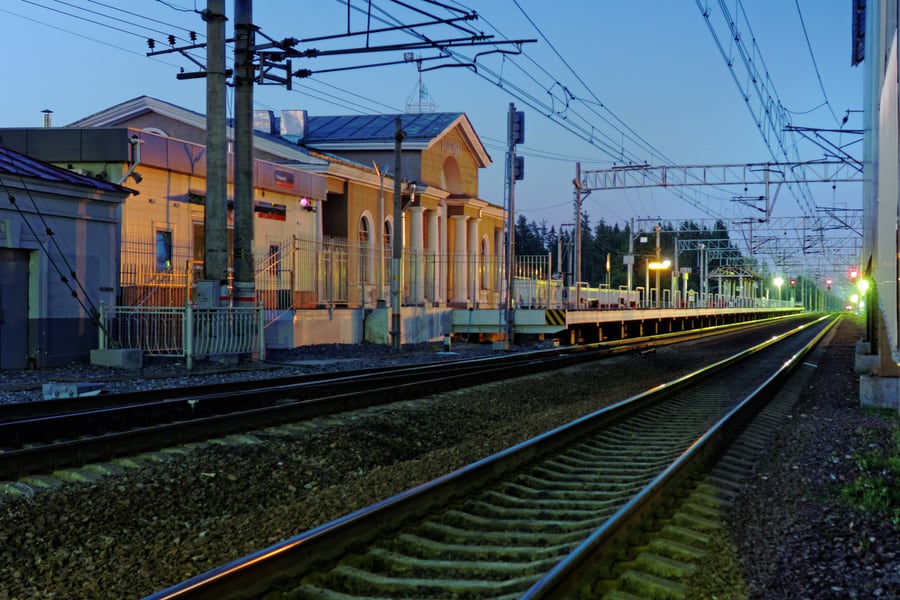 Victoria pershukova / Wikimedia Commons · CC BY-SA 4.0 · cropped
Roshchino, once Raivola
An ironworking village from 1800, and the place where the poet Edith Södergran grew up and wrote — her family moved here when she was a few months old. The yellow wooden station building is the sort the whole line used to have.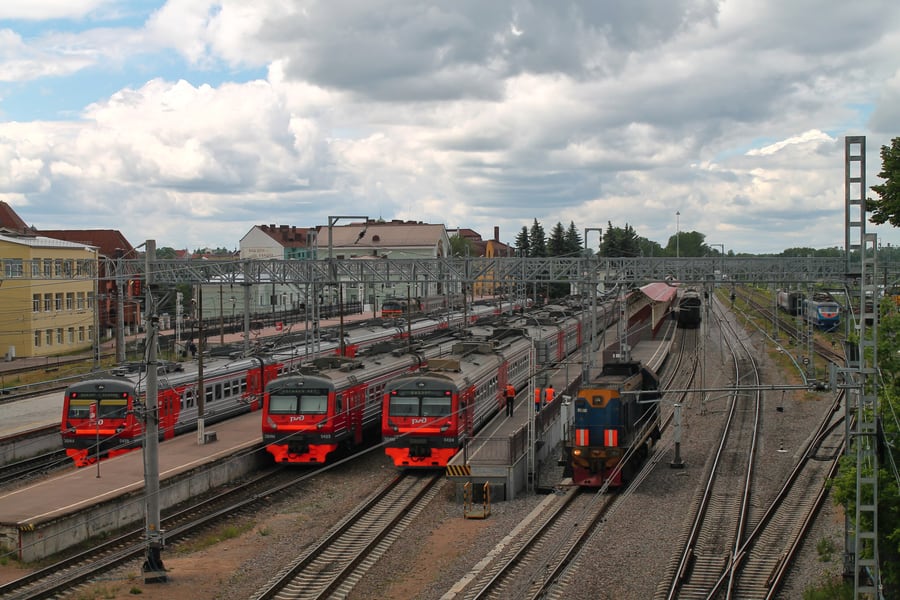 Neu-Zwei / Wikimedia Commons · CC BY-SA 4.0 · cropped
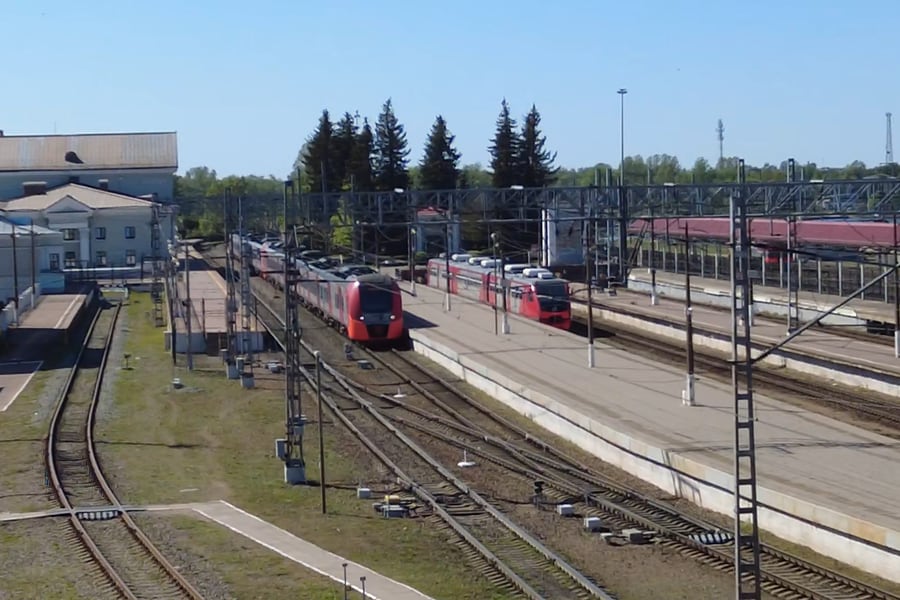
Vyborg, the buffer stop
The train runs in past the sheds and stops. Local services do carry on beyond — two a day to Kamennogorsk, two to Buslovskaya on the Finnish border — but Buslovskaya is where they end, because nothing crosses.A bit of history
Culture & experiences along the way
 Максим Хлопов / Wikimedia Commons · CC BY-SA 4.0 · cropped
Locomotive 293
On a platform at the Finland Station, behind glass, stands the engine on which Lenin twice crossed into Finland in 1917, driven by Hugo Jalava. Finland gave the locomotive to the Soviet Union in 1957 and it has stood here ever since — a Finnish machine, kept as a Russian relic, at the terminus Finland built. Sergey A. Demidov / Wikimedia Commons · CC BY 4.0 · cropped
The Vyborg kringle
A spiced wheat pretzel — nutmeg, caraway, marjoram, clove, cardamom — baked here since the Franciscans of the fourteenth-century friary kept the recipe to themselves. It earned the town the nickname Kringle City, and it is still baked and sold here, wrapped in paper and eaten walking.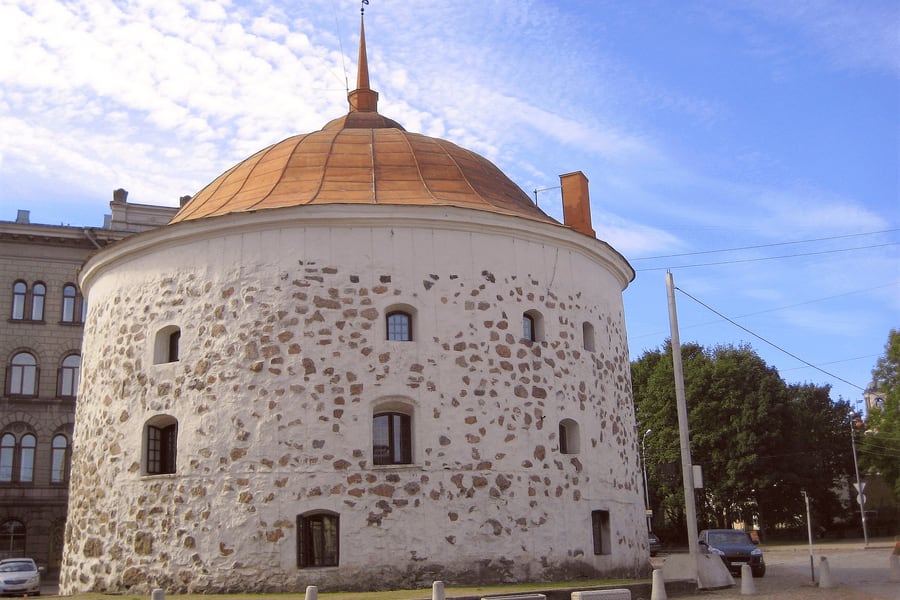 GAlexandrova / Wikimedia Commons · CC BY-SA 4.0 · cropped
Dinner in a gun tower
The Round Tower on the market square was built in 1547–1550 on the orders of Gustav I of Sweden as part of the town wall, and has since been an arsenal, a prison and a warehouse. It is now a restaurant, so the way to see the inside is to eat in it.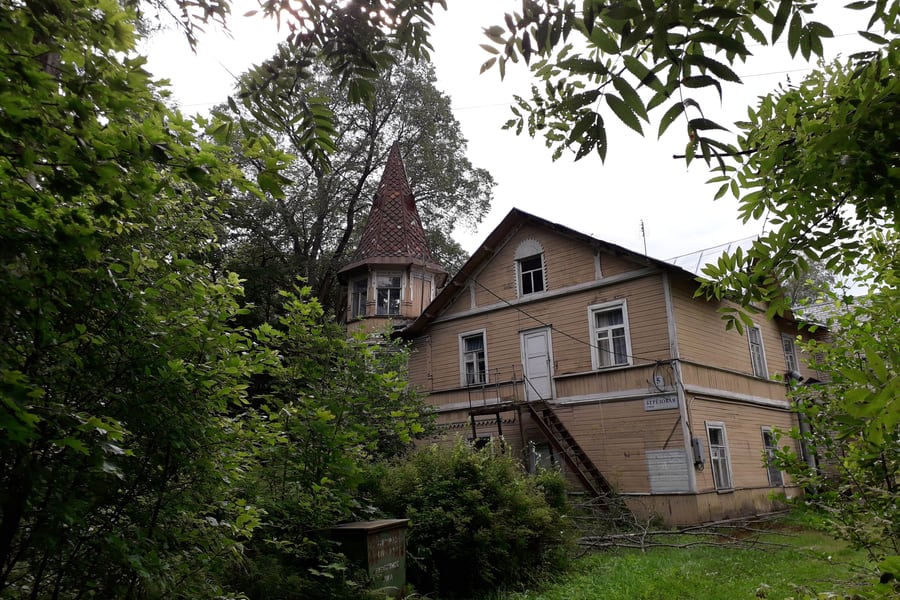 Autumn55 / Wikimedia Commons · CC BY-SA 4.0 · cropped
The dacha coast
The isthmus was Petersburg's summer quarter, and the railway is what made it one. Wooden villas with towers and glazed verandas still stand among the pines at Zelenogorsk and Roshchino — some restored, some visibly not — and you see them from the train all the way to Kannelyarvi.Timetables
This is a turn-up-and-go railway. AO "North-West Suburban Passenger Company" (SZPPK) runs 20–25 trains a day each way between St Petersburg-Finlyandsky and Vyborg, of which 10–14 are Lastochkas; the rest are ordinary elektrichki. The pattern holds through the year, with two or three extra Lastochkas added at weekends.
All times are Moscow time, taken from the operator's own board and correct as of September 2026.
St Petersburg (Finlyandsky) → Vyborg
| Train | Type | Departs | Arrives | Journey |
|---|---|---|---|---|
| 6107 | Elektrichka, all stations | 06:40 | 08:52 | 2 h 12 |
| 7901 | Lastochka | 07:55 | 09:07 | 1 h 12 |
| 7903 | Lastochka | 09:20 | 10:32 | 1 h 12 |
| 7907 | Lastochka | 11:25 | 12:37 | 1 h 12 |
| 7913 | Lastochka | 13:50 | 15:02 | 1 h 12 |
| 7917 | Lastochka | 15:40 | 16:52 | 1 h 12 |
| 7921 | Lastochka | 18:09 | 19:21 | 1 h 12 |
| 7925 | Lastochka | 20:47 | 21:59 | 1 h 12 |
| 6187 | Elektrichka, all stations | 22:24 | 00:34 | 2 h 10 |
Vyborg → St Petersburg (Finlyandsky)
| Train | Type | Departs | Arrives | Journey |
|---|---|---|---|---|
| 7102 | Elektrichka, all stations | 05:00 | 07:10 | 2 h 10 |
| 7902 | Lastochka | 06:55 | 08:12 | 1 h 17 |
| 7904 | Lastochka | 09:28 | 10:40 | 1 h 12 |
| 7908 | Lastochka | 11:05 | 12:17 | 1 h 12 |
| 7910 | Lastochka | 13:07 | 14:19 | 1 h 12 |
| 7918 | Lastochka | 17:08 | 18:20 | 1 h 12 |
| 7922 | Lastochka | 18:50 | 20:05 | 1 h 15 |
| 7926 | Lastochka | 22:17 | 23:29 | 1 h 12 |
Those are a representative selection, not the whole book — there are more of both kinds in between, particularly in the middle of the day.
The Lastochka stops at Udelnaya, Zelenogorsk, Roshchino and Kannelyarvi, and nowhere else; the 17:01 (train 7919) adds Kirillovskoye. The all-stations elektrichka takes almost exactly twice as long because it calls at every platform on the isthmus, which is the point of taking it. There is no reservation on either: buy, board, sit down.
⚠️ Check before you travel. Suburban timetables here are revised seasonally and at short notice. The live board, by station and date, is on the operator's own site: ppk-piter.ru (opens in a new tab).
Tickets
The fare is the ordinary suburban tariff, and it is low: ₽314 end to end on an elektrichka and ₽353 on a Lastochka, both as of September 2026. There is no class, no seat reservation and no supplement — the Lastochka simply costs 39 roubles more and gets you there in half the time. Animals travel for ₽78.
Buy at a window or a self-service terminal at either end, or in the operator's app before you board, and keep the ticket — the busier stations on this line are gated. Regular travellers use season tickets, which SZPPK sells by days, by dates and by number of journeys; for a single visit to Vyborg they are not worth the arithmetic.
Book your tickets
Lastochka ticket
Finlyandsky ↔ Vyborg, 1 h 12 min
The fast option: a flat suburban fare on the Siemens-built swallow, with no reservation and no allocated seat.
Book Tickets (opens in a new tab, on ppk-piter.ru)via ppk-piter.ruAll-stations ticket
The ordinary elektrichka, 2 h 10 min
The same 130 kilometres at half the speed and every platform on the isthmus, for 39 roubles less.
Book Tickets (opens in a new tab, on ppk-piter.ru)via ppk-piter.ruRail Passes
No pass covers this line, and buying one would be beside the point. Interrail and Eurail do not extend to Russia at all, so the European passes are simply not in play here.
Nor is there anything for a pass to save. This is a suburban service at a regionally regulated tariff: ₽314 for the 130 kilometres on an ordinary train, ₽353 on a Lastochka. There is no class to upgrade into, no reservation to make and no supplement to pay, and a return trip costs less than a museum ticket at the far end.
The one thing worth planning is the timetable rather than the ticket. Lastochkas cluster in the morning and the evening, so an out-and-back day works best on the 07:55 or 09:20 from Finlyandsky with the 18:50 or 20:44 home — and the slow all-stations elektrichka is the better ride in one direction if you have the time for it.
Checked September 2026.
Places to Visit
Almost everything worth stopping for is at the far end, and most of it is within twenty minutes' walk of Vyborg station. The town is small, compact and built on rock, so the castle, the market square and the bay are one continuous walk rather than three separate outings; only Mon Repos sits apart, north of the centre on Tverdysh island, and that is a bus ride or a long stroll.
The one place worth breaking the journey for on the way is Zelenogorsk, about half an hour out of St Petersburg, which has the Gulf of Finland at the end of its main street and a Lutheran church that spent half a century as a cinema. Trains are frequent enough in both directions that getting off costs you an hour, not a day.
 Александровы АГ / Wikimedia Commons · CC BY-SA 4.0 · cropped
Vyborg Castle
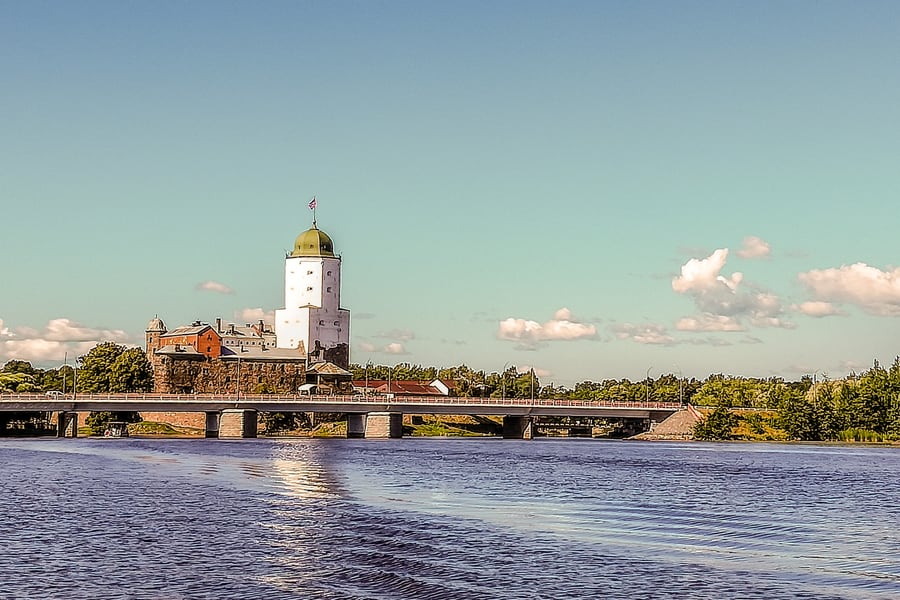
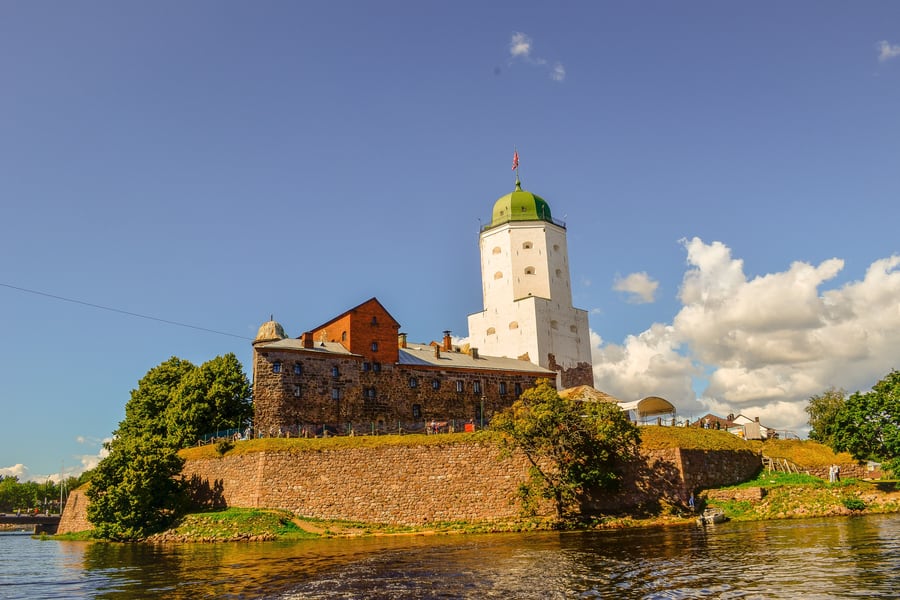
The Swedes built it on an islet in 1293, on a site where excavation in the 1980s found a Karelian fort already standing. For three centuries it was the Swedish realm's forward position against Novgorod and Moscow, and its white tower — St Olaf's — is still the thing you see first from the water, from the train and from most of the town. The castle now holds the regional museum, and the tower can be climbed.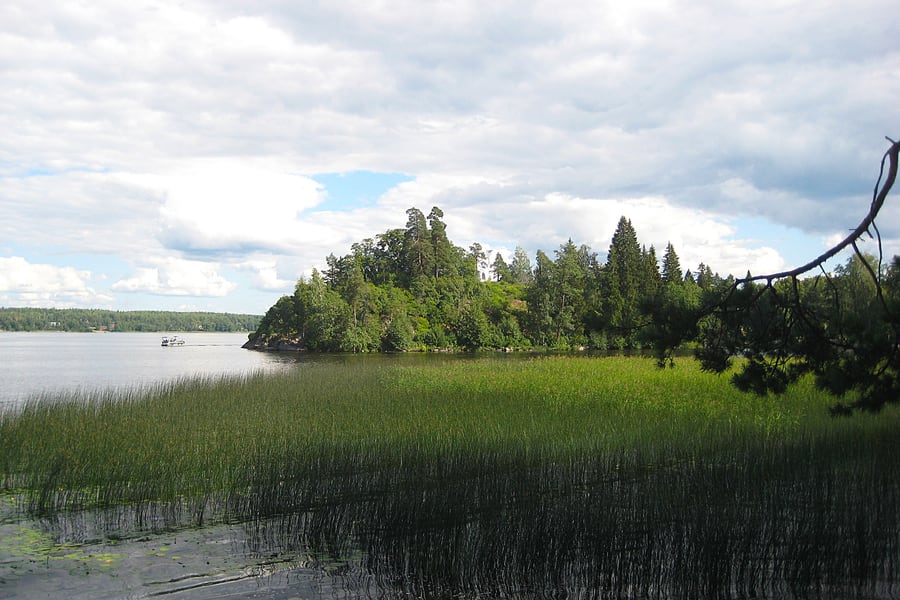 Александровы АГ / Wikimedia Commons · CC BY-SA 4.0 · cropped
Mon Repos
An English landscape park of about 180 hectares on the rocky island north of the town, laid out from 1788 by Baron Ludwig Heinrich von Nicolay and held by his descendants until 1944. It is a park made of what was already there: glacial boulders, pine, granite cliffs dropping into the bay, and wooden pavilions placed where the view is. Allow half a day, and go on foot along the shore rather than straight to the house.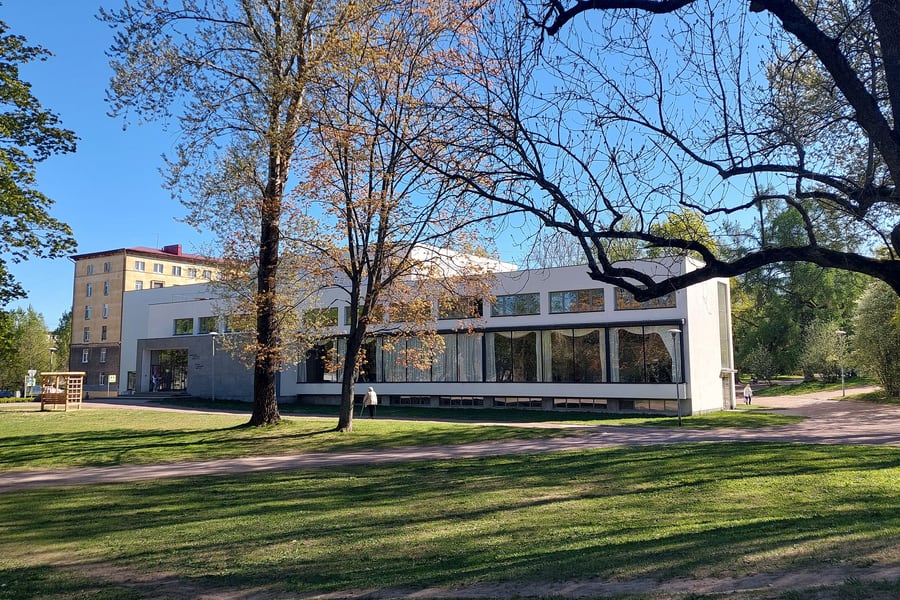 Sergey A. Demidov / Wikimedia Commons · CC BY 4.0 · cropped
The Alvar Aalto Library
Aino and Alvar Aalto won the competition in 1927 and the building opened in 1935, while Vyborg was Finland's second city. Deep cylindrical skylights spread daylight over the desks without glare, the auditorium ceiling undulates in timber for the acoustics, and the centre of the plan is a stepped sunken reading well. A two-decade international restoration finished in 2013; it is a working public library again.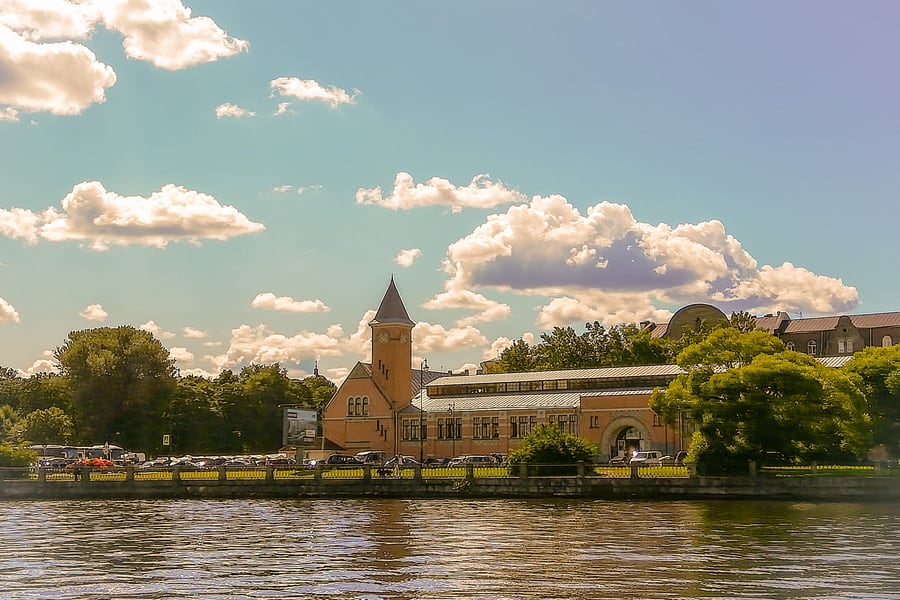 Александровы АГ / Wikimedia Commons · CC BY-SA 4.0 · cropped
The market hall
Built in 1904–05 to a design by Karl Hård af Segerstad, who went on to build the Hakaniemi market hall in Helsinki, and opened in 1906 on ground cleared by demolishing the town wall. It is still a market: fish, berries, cheese, smoked things and the local pretzel, under one long National Romantic roof with a clock tower on the end.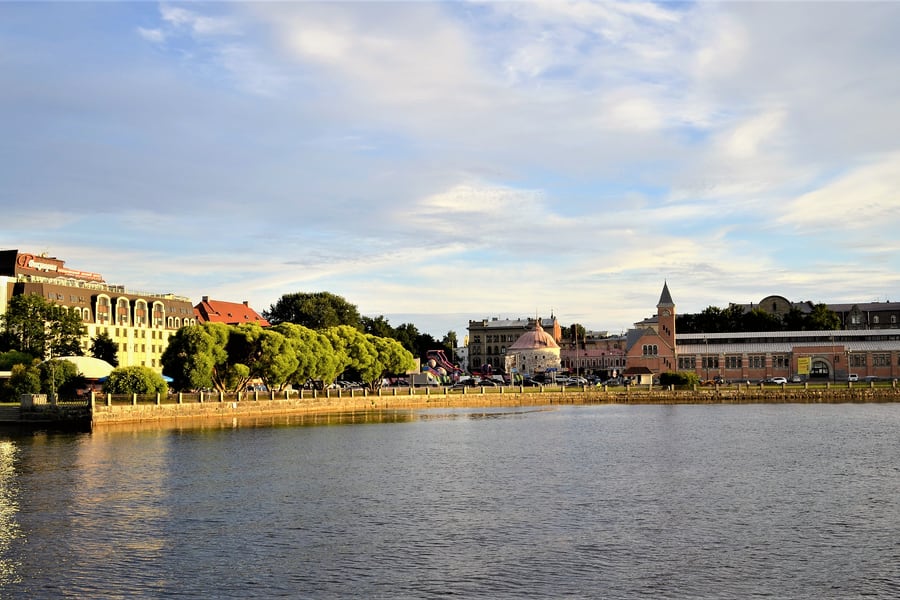 GAlexandrova / Wikimedia Commons · CC BY-SA 4.0 · cropped
Zashchitnaya Bay
Vyborg is a town on an inlet, and the walk round the water is how the pieces fit together — castle on one side, old town on the other, boats in between and the road out to Mon Repos crossing at the top. It takes about an hour at a stroll and it is the best thing to do with the hour before your train.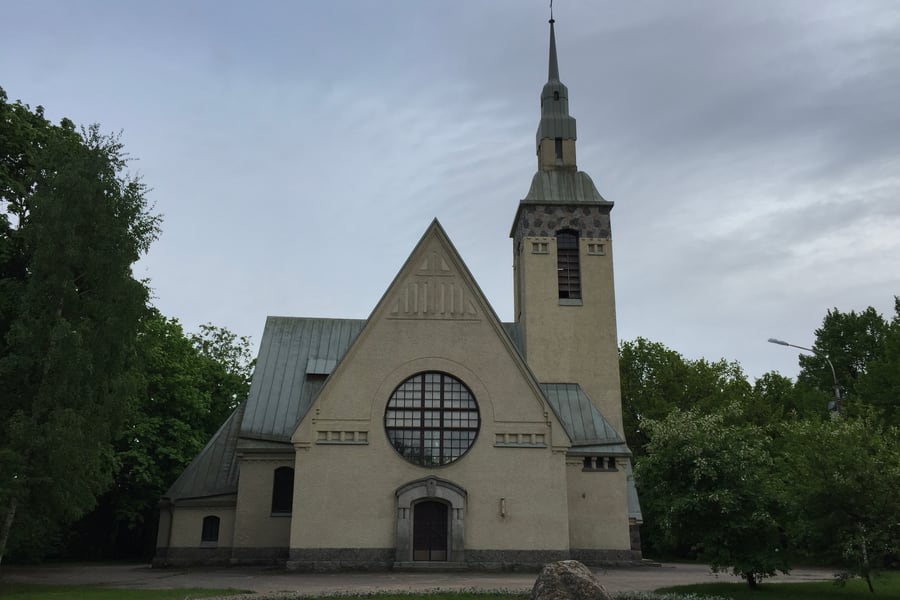 Dor Shabashewitz / Wikimedia Commons · CC BY 4.0 · cropped
Zelenogorsk's Lutheran church
Josef Stenbäck built it at Terijoki in 1907–08 for a Finnish parish founded four years earlier. The belfry came down in 1940, the church closed in May 1944 and became the Pobeda cinema; the parish was re-founded in 1990 and the building was fully restored in 2001–02, tower and all. There is a small Finnish cemetery beside it and concerts inside.Where to Sleep
Most people do this as a day out from St Petersburg and sleep there, which is the sensible plan: the last train back leaves Vyborg at 22:17 and the city has every kind of bed. Vyborg itself is worth a night only if you want the old town without the coach parties — early morning and late evening are when the granite and the water do their best work.
If you do stay, stay in the middle. The town is small enough that the two hotels below are both within a few minutes' walk of the station, the castle and the bay, so nothing needs a taxi. Neither is a resort; both are ordinary working hotels with restaurants, which in Vyborg is what there is.
Where to stay
Druzhba
On the Salakkalahti waterfront
A 102-room hotel on the bay in the middle of town, a few minutes from the station, with a restaurant and rooms facing the castle.
Check Availability (opens in a new tab, on druvbg.ru)via druvbg.ruLetuchaya Mysh
"The Bat", in the old town
Twenty-one rooms three minutes' walk from the station and five from the castle, with its own restaurant and early breakfasts from 06:30.
Check Availability (opens in a new tab, on bathotel.ru)via bathotel.ruQuestions or corrections
Planning this trip and stuck on something, or spotted a time, fare or detail that has changed? Send us a message about St Petersburg to Vyborg. We read every one, and we update this page when something has changed.