Baikal–Amur Mainline
I13Robin / Wikimedia Commons · CC BY 4.0 · cropped
- Distance4,287 km
- Duration~4 days
- Best seasonYear-round
Introduction
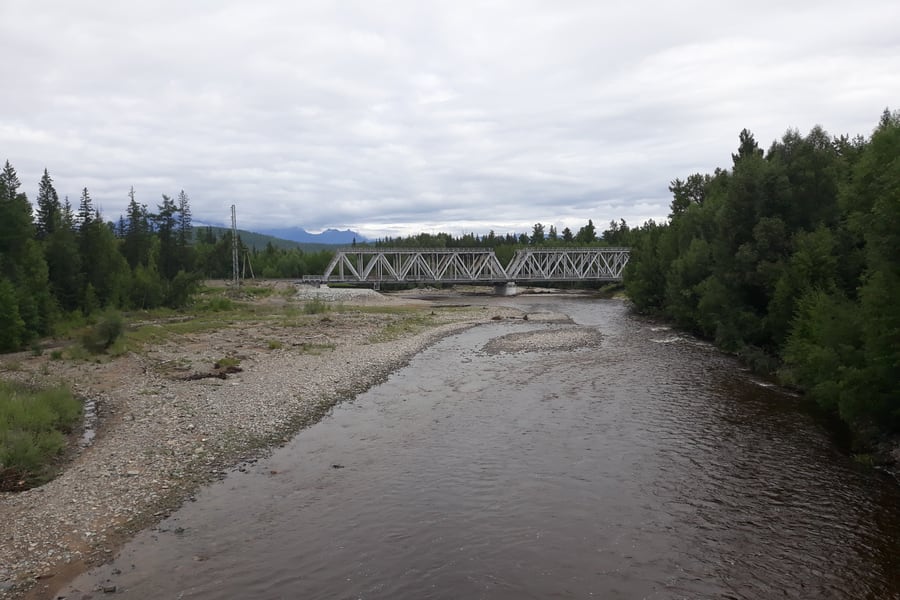
There are two railways across Siberia. The famous one runs close to the Chinese border and has been carrying passengers since 1916. The other one runs 600 to 770 kilometres north of it, through country that the first line was routed to avoid: 4,287 kilometres from Tayshet to the Pacific at Sovetskaya Gavan, over seven mountain ranges, across eleven big rivers and more than 3,500 smaller watercourses, on 2,230 bridges, and for most of its length over permafrost. This is the Baikal–Amur Mainline — the BAM.
It took fifty-two years and two entirely different Soviet Unions to build. The first decree was signed in April 1932 and the work was handed to the secret police that October; by 1938 more than 150,000 prisoners of the Bamlag camps were on it. In January 1942 the State Defence Committee had the finished rails between Bam and Tynda lifted and shipped west to build a supply line behind Stalingrad. The railway was started again in 1974 as an all-Union Komsomol project, with volunteers recruited by the trainload and a new town for every construction brigade. The golden link went down at Kuanda on 1 October 1984, the last 54 kilometres over the Severomuysky range were handed over in 1989, and the tunnel that finally got trains through that range opened in 2003.
What you ride today is a working freight railway with a handful of passenger trains threaded through it. There is no single train from end to end. You go in three legs, with a night in Tynda in the middle, and it takes about four days.
The Journey
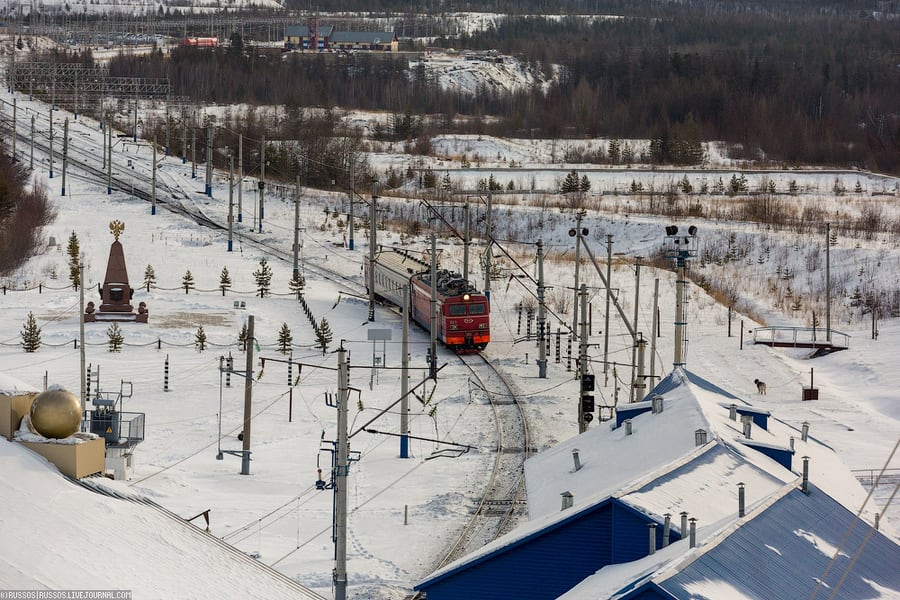
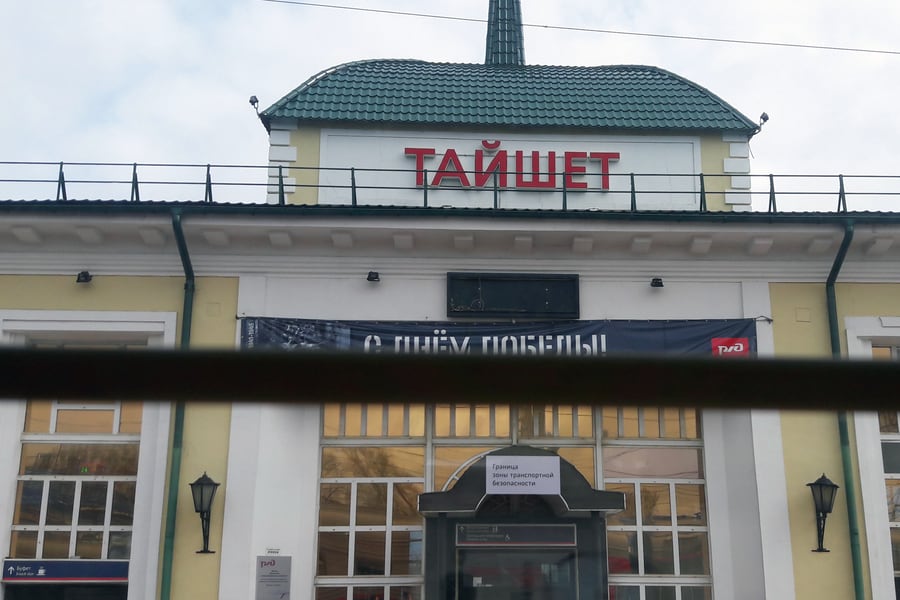
The BAM leaves the Trans-Siberian at Tayshet, a junction town of wooden houses and a yellow station with its name in red letters on the roof. Nothing announces the divergence. The line turns north-east into the taiga, double-tracked and electrified, and stays that way as far as Bratsk, where it crosses the Angara on the dam of one of the largest hydroelectric schemes in the world, and Ust-Kut, where it meets the Lena at the river port that supplies most of Yakutia. This first 680 kilometres is the old part: it was built between 1938 and 1958, largely by prisoners, and it was already there when the Komsomol arrived.
Over the Baikal range
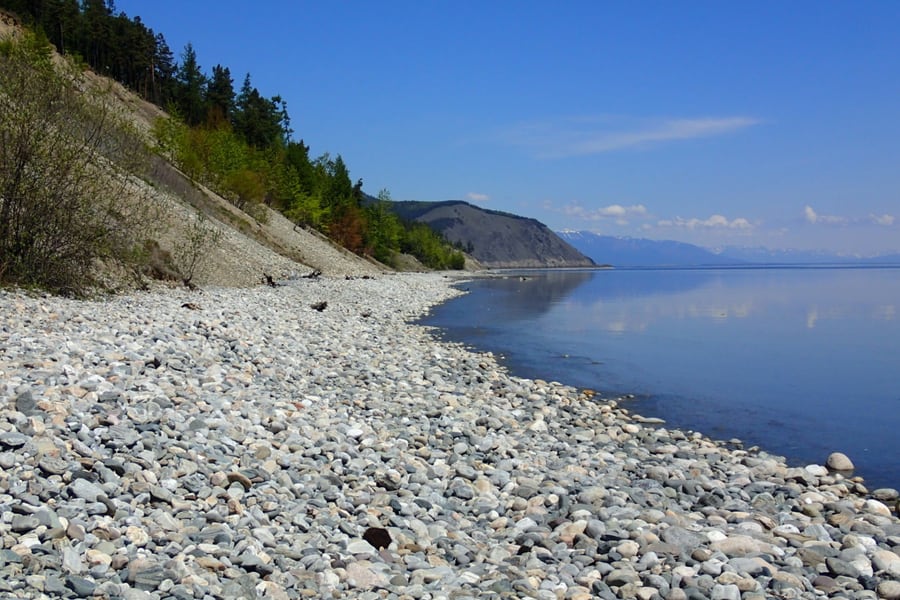
Past Ust-Kut the country closes in. The train climbs through Kirenga and Ulkan to the 6,685-metre Baikal tunnel under the Baikal range, and comes out on the far side above the northern tip of the lake. For the next hour the water is on your right — a grey-blue inland sea with nothing on the far shore — before the line drops to Nizhneangarsk and runs into Severobaikalsk, the biggest town on the western BAM and a 59-minute stop. This is the one place on the journey where a scheduled halt is long enough to leave the platform properly.
The Severomuysky range
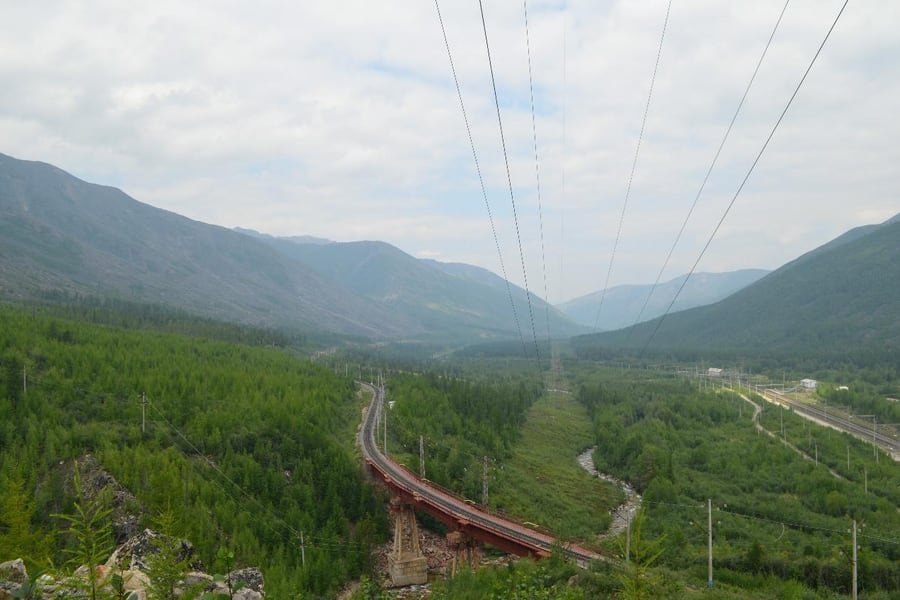
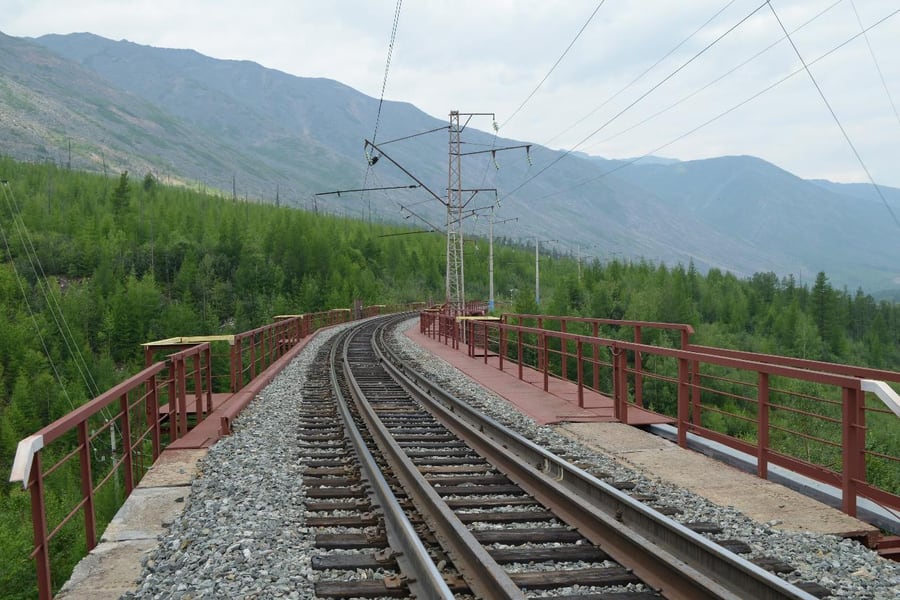
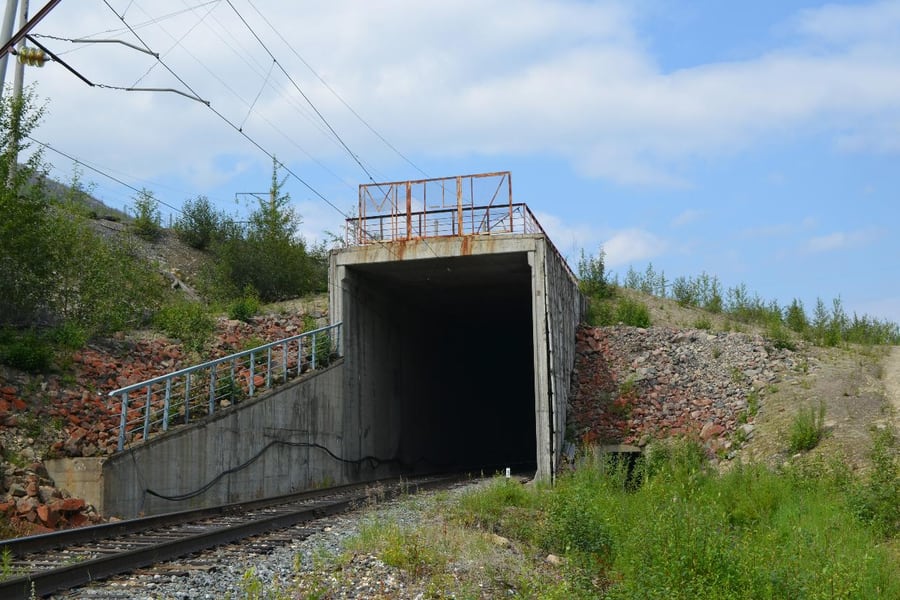
East of Baikal comes the piece of railway that took twenty-six years. The Severomuysky tunnel is 15,343 metres long, the longest in Russia, and it was only brought into permanent service on 5 December 2003. Before that, trains crossed the range on a detour: first a 24.6-kilometre climb with gradients of 40 ‰, so steep that passengers were taken over the pass by bus, and from 1989 a 64-kilometre serpentine of viaducts and two spiral tunnels, worked at 20 km/h with a banking engine and the risk of avalanches. The tunnel cut the crossing from 57 kilometres to 23, and from two hours to twenty-five minutes. The bypass is still in place, and the train still uses it when the tunnel is shut.
Where the wires end
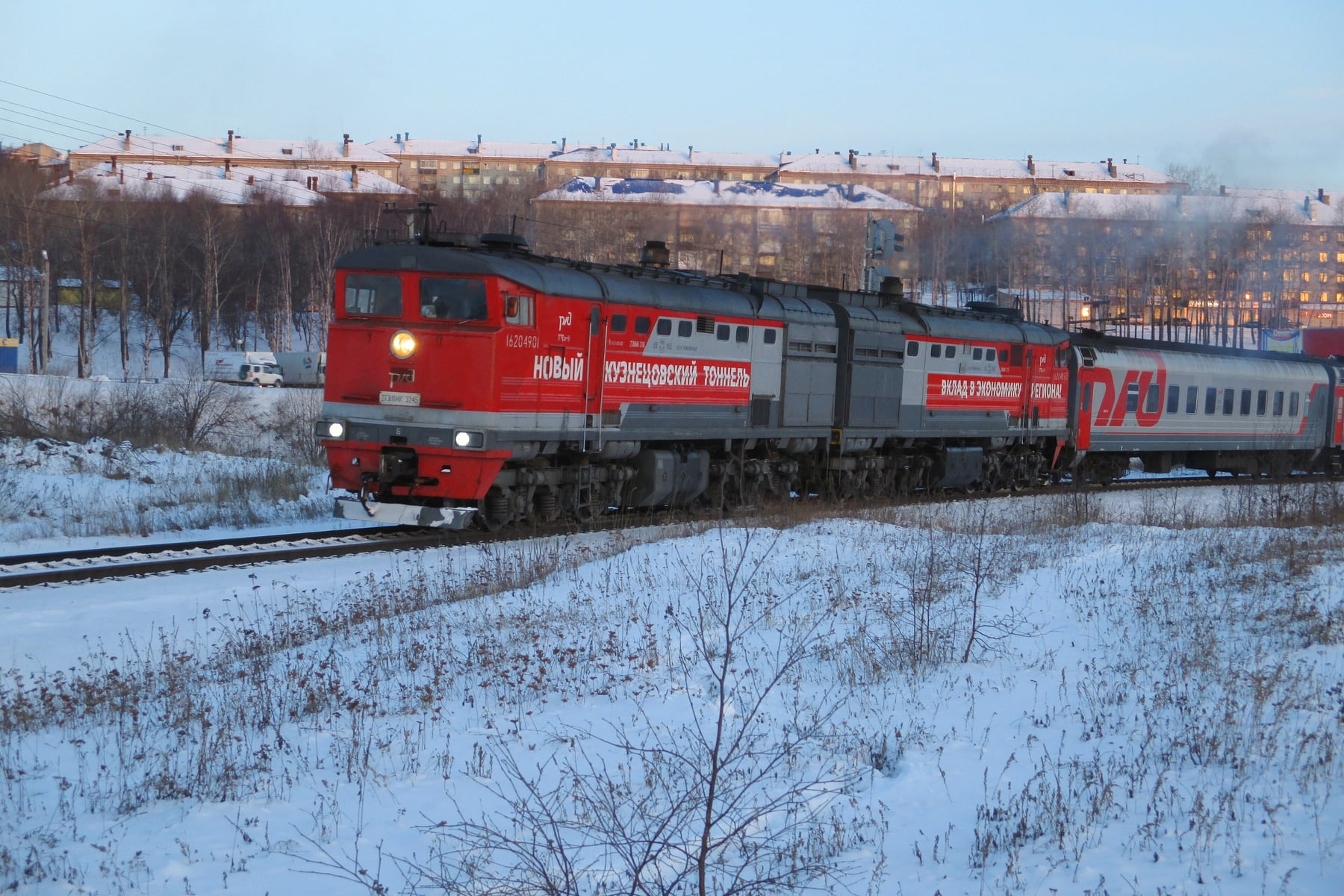
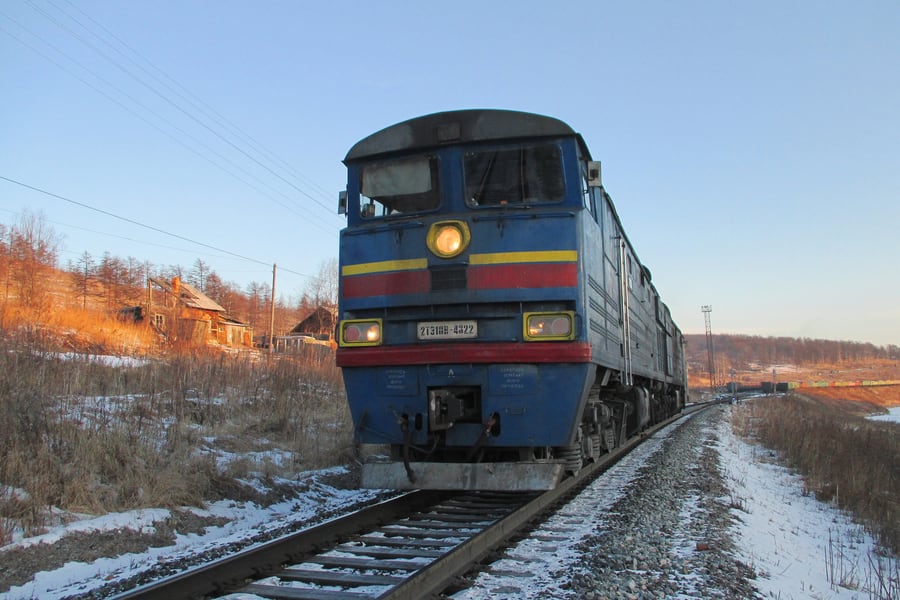
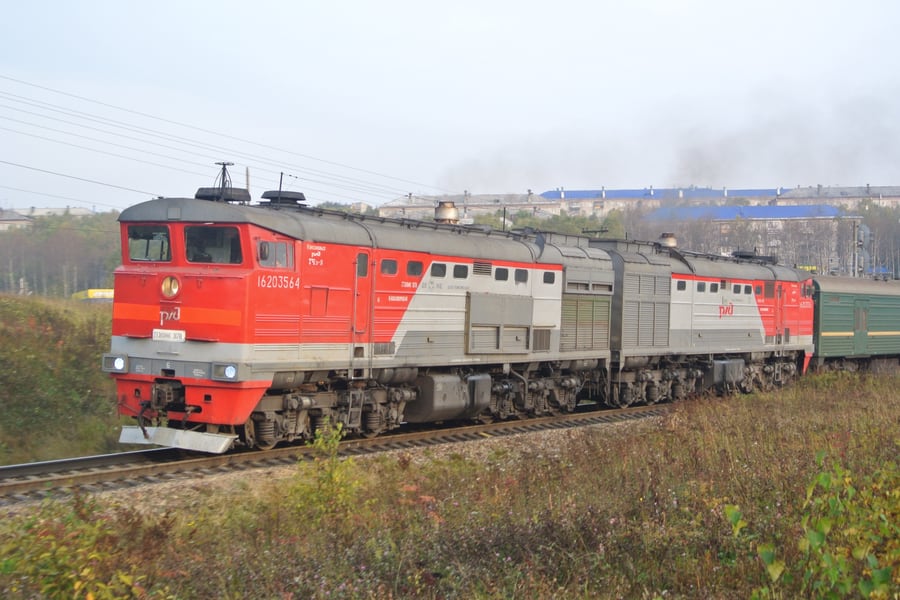
At Taksimo the catenary stops. Everything east of here is diesel: TEP70BS locomotives on the passenger trains, twin- and triple-section 2TE10 and 3TE10MK machines on the coal and containers. The line crosses the Vitim at Kuanda, threads the 1,981-metre Kodar tunnel and comes down into the Chara basin, where the Kodar range stands up in granite walls over a valley with a sand desert in it. Novaya Chara station, with its yurt-shaped roof, is a 55-minute stop at two in the morning; people get off anyway. Beyond it the railway climbs again to the Muruinsky pass at 1,323 metres, its highest point, where the gradients are steep enough that trains are double-headed and their loads capped, before dropping through Khani towards Tynda.
Tynda and the eastern arm
Tynda is the middle of the railway and the end of the first leg. Trains from the west arrive just before one in the morning; the train east leaves at 16:42 the same day, so you get sixteen hours in the BAM's capital whether you want them or not. The eastern arm is the loneliest part of the line — thirty-seven hours with a call every twenty minutes or so, at halts named for the men and brigades who built them: Pervoprokhodtsy, "the pioneers"; Imeni Generala Milko; Moskovsky Komsomolets. There are long dwells at Verkhnezeysk (37 minutes), Fevralsk (42) and Novy Urgal (35), where the platform becomes a market. The line crosses the Bureya and the Amgun, comes down the Amgun valley to Postyshevo, and finally reaches the Amur at Komsomolsk-on-Amur at 06:43 on the second morning.
Beyond Komsomolsk one more train carries on over the Sikhote-Alin through the 3,890-metre Kuznetsovsky tunnel to the coast, and stops at Vanino, where the cranes and the Sakhalin ferry are, and at Sovetskaya Gavan-Sortirovochnaya, which is where the Baikal–Amur Mainline ends.
Along the route
 MikSed / Wikimedia Commons · CC BY-SA 4.0 · cropped
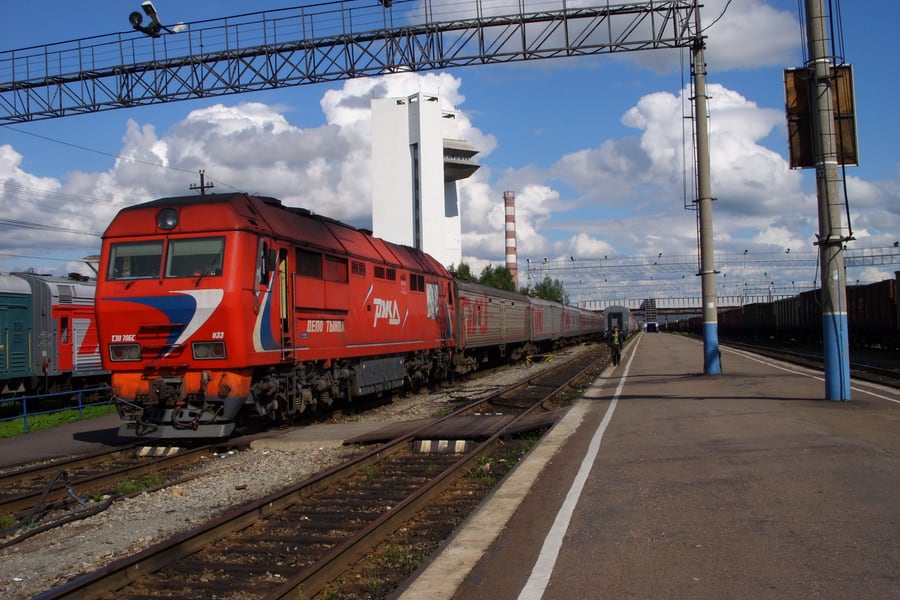
Tayshet, kilometre zero
The BAM begins where it leaves the Trans-Siberian, on a platform in a small Irkutsk-oblast junction town. Nothing marks it. The trains that come out of the north here have been running for two days.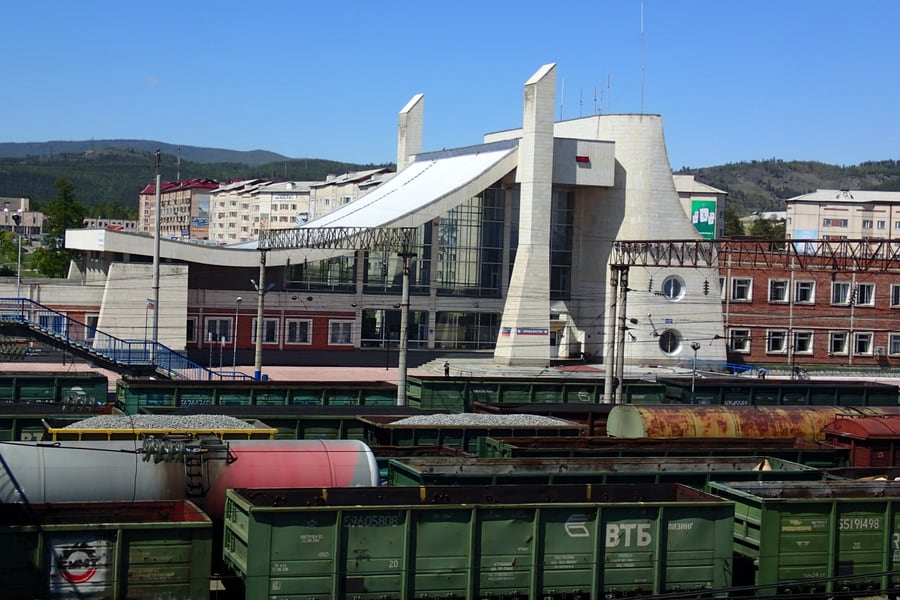 Raki_Man / Wikimedia Commons · CC BY 3.0 · cropped
Severobaikalsk and the top of the lake
A town built for the railway on Baikal's northern shore, and the line's longest scheduled stop — 59 minutes westbound, long enough to walk out of the station and look at the water.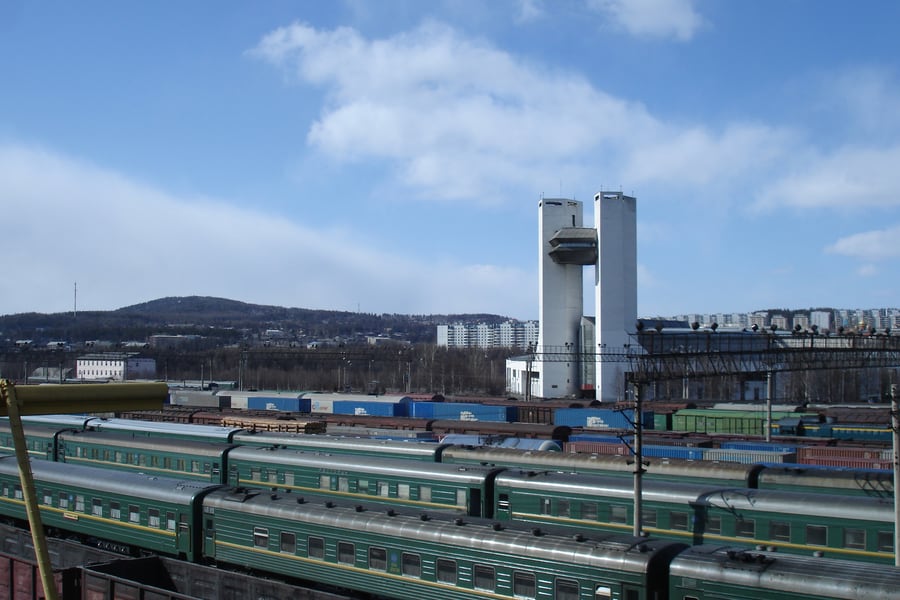 Glucke / Wikimedia Commons · CC BY-SA 3.0 · cropped
Tynda, the capital of the BAM
The hinge of the whole railway: west to Tayshet, east to Komsomolsk, north to Yakutia. A gold-prospectors' staging post in 1917, a city of sixteen-storey blocks by 1986.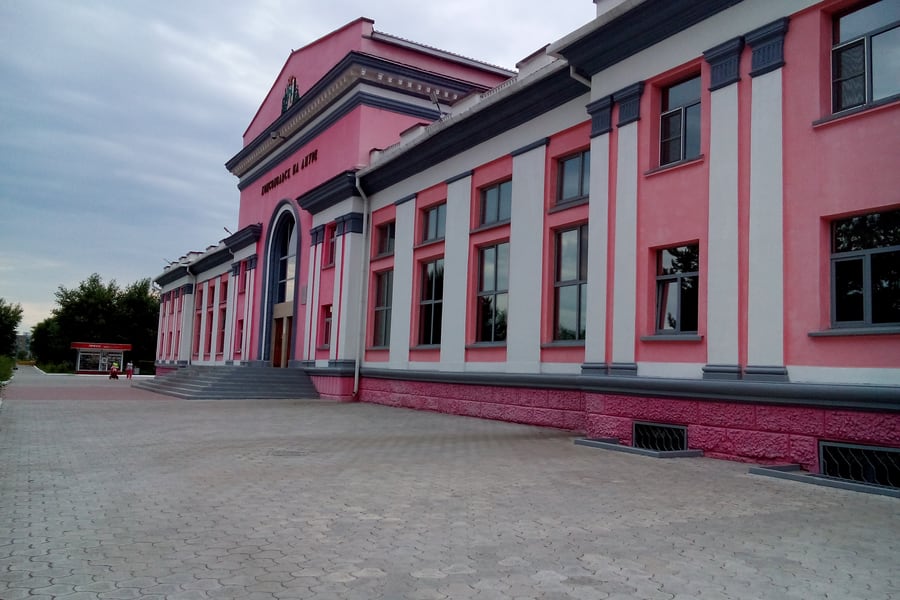 Maxton / Wikimedia Commons · CC BY-SA 3.0 · cropped
Komsomolsk-on-Amur
The eastern arm ends at a city that was itself a Komsomol project, fifty years earlier. The train crosses the Amur to reach it and arrives at 06:43, in the dark for half the year.A bit of history
Culture & experiences along the way
 Krol:k / Wikimedia Commons · CC BY-SA 3.0 · cropped
A station for every republic
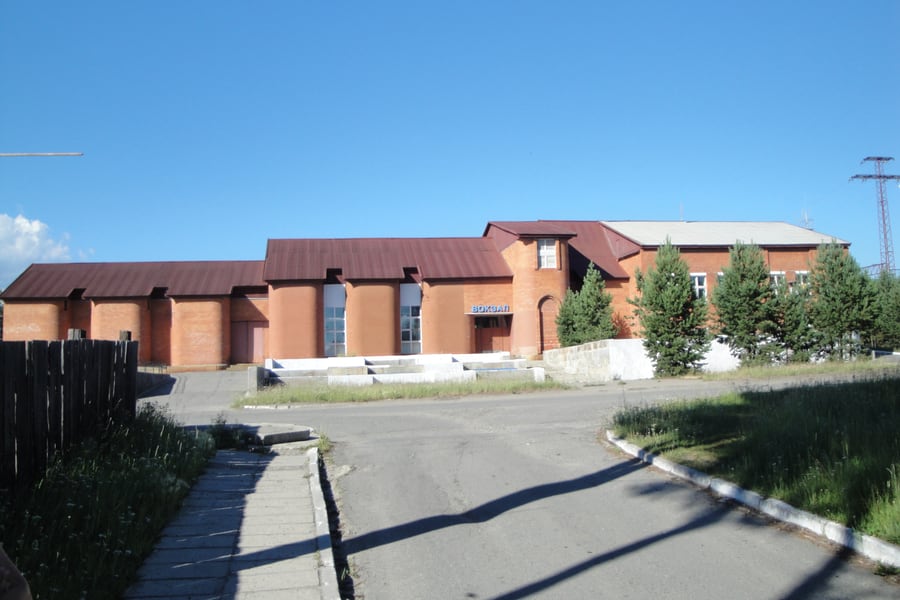
Each BAM town was built by a different corner of the Soviet Union, and the stations still say so. Kichera, at kilometre 1127, was put up from 1981 by a team from the Tallinstroy trust to an Estonian design; Novaya Chara was built by Kazakhs, and its roof is a stylised yurt with reliefs of Kazakh life inside.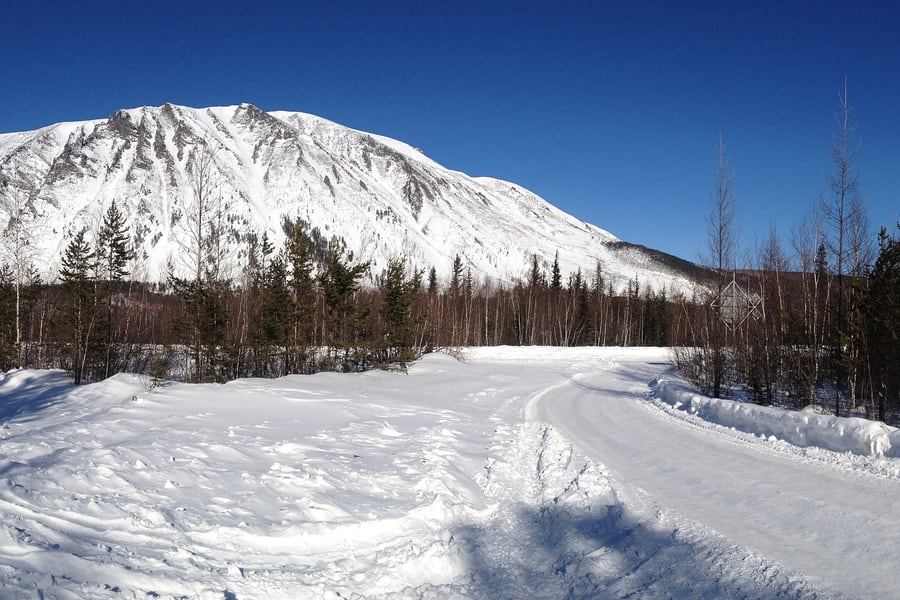 Pavel Gurenchuk / Wikimedia Commons · CC BY 3.0 · cropped
Hot water at Goudzhekit
Twenty-five kilometres from Severobaikalsk, a borehole sunk for drinking water found something hotter, and there are now open-air pools and a small ski slope in the trees. The railway has its own halt there: the Severobaikalsk–Kirenga local calls at Goudzhekit on Wednesdays and Saturdays. © Vyacheslav Argenberg / http://www.vascoplanet.com/ · CC BY 4.0 · cropped
Smoked omul at the top of the lake
Omul is Baikal's own whitefish, hot-smoked to a deep gold and sold wrapped in paper on the platforms at Severobaikalsk and Nizhneangarsk. Eat it warm with black bread, standing up, in the hour the train gives you.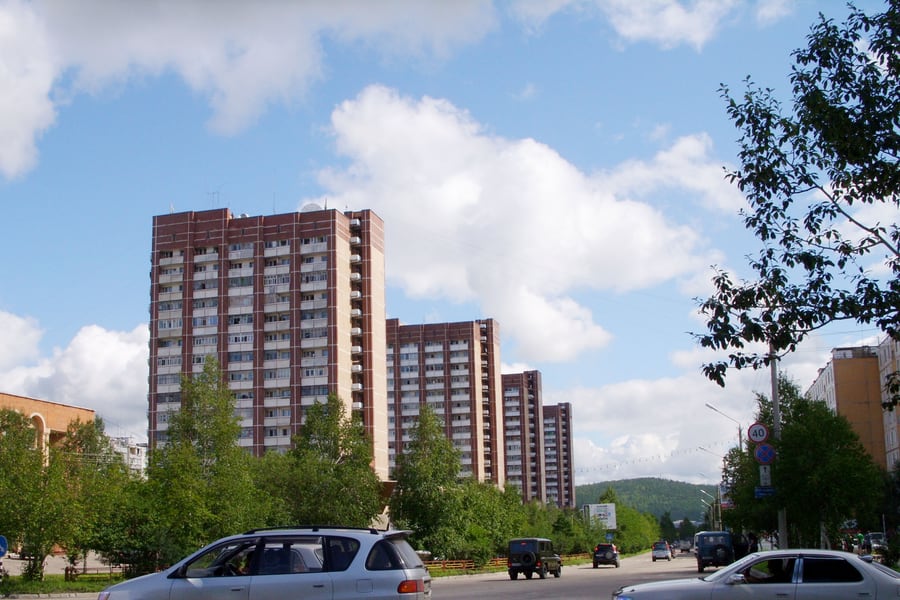 LxAndrew / Wikimedia Commons · CC BY-SA 3.0 · cropped
A city the railway invented
Tynda was a village of 180 people in 1924. The BAM made it "the capital of the BAM", and the builders who came from every republic stayed: nine-storey blocks went up from 1984 and four sixteen-storey towers in 1986, for years the tallest buildings in Amur Oblast.Timetables
No train runs the whole BAM. The line is worked in two halves that meet at Tynda, and a third train carries the last stretch from Komsomolsk-on-Amur to the Pacific. All three run every day, and all three are sleeper trains — there is nothing to sit up in.
The four legs
| Leg | Train | Departs | Arrives | Journey | Runs |
|---|---|---|---|---|---|
| Tayshet → Tynda | 097С Kislovodsk – Tynda (odd dates) · 112Н Novosibirsk – Tynda (even) | 01:37 | 00:57, third night | 46 h 20 | daily |
| Tynda → Tayshet | 097Э Tynda – Kislovodsk (odd dates) · 375Э Neryungri – Novosibirsk (even) | 12:53 | 10:39, third morning | 46 h 46 | daily |
| Tynda → Komsomolsk-on-Amur | 364Э | 16:42 | 06:43, second morning | 37 h 01 | daily |
| Komsomolsk-on-Amur → Tynda | 363Э | 18:51 | 06:46, second morning | 36 h 55 | daily |
All times are local, and the BAM crosses three time zones: Tayshet and Severobaikalsk keep Moscow +5, Tynda and Novaya Chara Moscow +6, Novy Urgal and Komsomolsk Moscow +7.
Where the westbound train calls
Times below are for the 12:53 out of Tynda, the leg most people ride first.
| Station | Arrive | Depart | Stop |
|---|---|---|---|
| Tynda | — | 12:53 | — |
| Khani | 23:02 | 23:14 | 12 min |
| Novaya Chara | 02:04 | 02:59 | 55 min |
| Taksimo | 06:30 | 07:20 | 50 min |
| Novy Uoyan | 11:24 | 11:34 | 10 min |
| Severobaikalsk | 14:25 | 15:24 | 59 min |
| Kirenga | 18:15 | 18:23 | 8 min |
| Lena (Ust-Kut) | 21:26 | 21:56 | 30 min |
| Vikhorevka (for Bratsk) | 05:46 | 06:11 | 25 min |
| Tayshet | 10:39 | — | — |
On to the Pacific
Train 351Э Vladivostok – Sovetskaya Gavan leaves Komsomolsk-on-Amur at 19:01 every day, reaches Vanino at 08:24 and finishes at Sovetskaya Gavan-Sortirovochnaya at 08:50 — 13 hours 49 minutes for the last 500 kilometres, over the Sikhote-Alin and through the Kuznetsovsky tunnel in the dark.
Local trains
Between the long-distance workings the BAM has its own suburban services. On the western half they are run by AO «Baikal Suburban Passenger Company», which publishes a station board for every stop on the line; around Tynda they belong to AO «Express Primorye». These are the trains that serve the halts the sleepers run past — Goudzhekit for the hot springs, Kunerma, Dipkun, Yuktali — and they run on a few days a week rather than daily.
Times as of September 2026, taken from the booking system of Belarusian Railways (opens in a new tab), which searches the shared CIS reservation system and so returns Russian domestic trains; local services from AO «Baikal Suburban Passenger Company» (opens in a new tab) and AO «Express Primorye» (opens in a new tab). Russian Railways reschedules in late May and early December, so check before you travel.
Tickets
Every long-distance train on the BAM is reservation-only: you buy a numbered berth, not a seat on a train. The booking system offers two classes on these workings — platskart, the open sleeping car, and kupe, four-berth compartments with a door. Bedding is included and there is boiling water at the end of every carriage. On the eastern arm, where there is one train a day and thirty-seven hours between Tynda and Komsomolsk, the summer departures do fill.
Tickets are sold by Russian Railways at any station ticket office and through its own app, and by the shared CIS reservation system that the other post-Soviet railways sell into. We quote no fare: Russian sleeper prices move with demand and with the season, and Russian Railways' own site cannot currently be reached from outside the country, so there is no live number we can check.
Rail Passes
No rail pass covers the BAM. Interrail and Eurail both stop at Russia's western border and have never included the Russian network, so neither is worth considering for this journey — there is nothing to buy and nothing to validate.
Russian Railways runs its own loyalty and travel-card products instead, and the shared CIS reservation system applies a separate inter-state tariff to journeys that cross a border. Neither helps here: the BAM is entirely domestic, and every leg of it is a reserved berth bought as a single ticket for a single train. Buy each leg separately, in the order you mean to travel them, and leave enough margin at Tynda — the eastbound connection is a sixteen-hour wait, and if you miss it the next one is a day later.
As of September 2026.
Places to Visit
The BAM was built to open country nobody lived in, and it succeeded only in patches. Between the towns there are hundreds of kilometres of larch, bog and rock with a single track through them, and the places worth stopping for are the ones where the railway put a station next to something extraordinary — a lake, a mountain range, a desert — and then more or less left it alone.
Two practical notes. The Chara Sands and the Kodar are inside a national park and the Kodar in particular is serious mountain country, so go with a guide and tell the rescue service where you are going. And plan around the timetable rather than against it: with one train a day in each direction, getting off means at least twenty-four hours in the place you got off at.
 A. L. (loading) / Wikimedia Commons · CC BY-SA 4.0 · cropped
The northern shore of Baikal
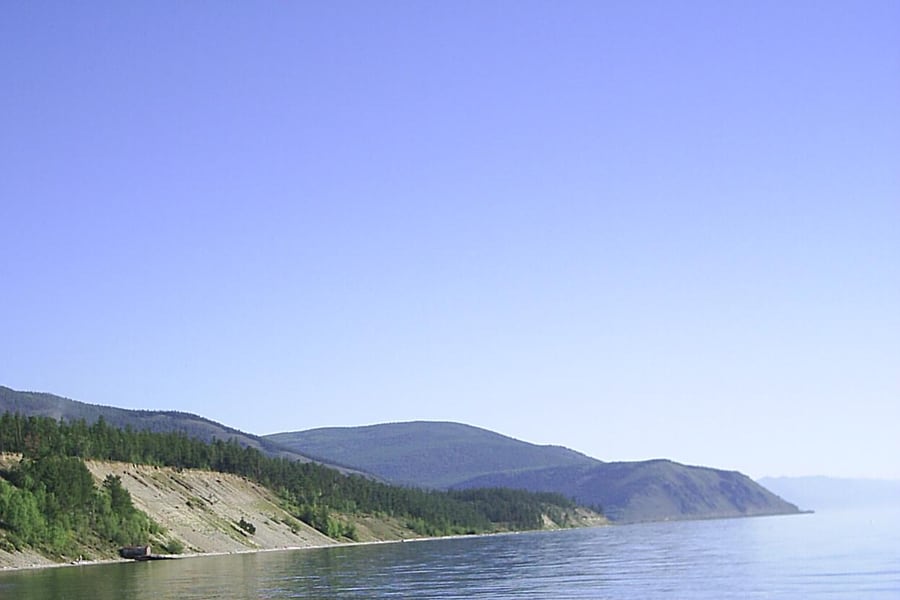
The lake the railway was routed around is at its emptiest here. Severobaikalsk sits on a shelf above the water with a shingle beach below the town, and the line runs along the shore for the best part of an hour between the Baikal tunnel and Nizhneangarsk. The 59 minutes a westbound train stands at the platform is enough to get down to the water and back, and the hour of daylight it buys you is the best of the whole ride.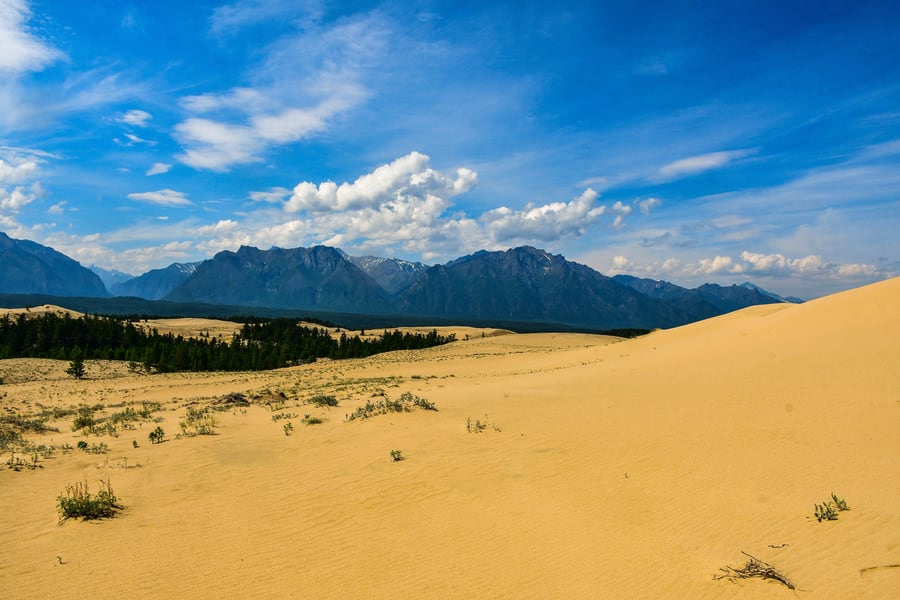 Catauggie / Wikimedia Commons · CC BY-SA 4.0 · cropped
The Chara Sands
A desert in the permafrost: 30 km² of quartz dunes, nine kilometres long and up to four wide, with individual dunes 150–170 m long and up to 80 m high. It lies nine kilometres north-west of Novaya Chara station, in the Chara basin under the Kodar range, and it is a federally protected geological monument inside Kodar National Park. Larch taiga and bog on every side, and sand in the middle.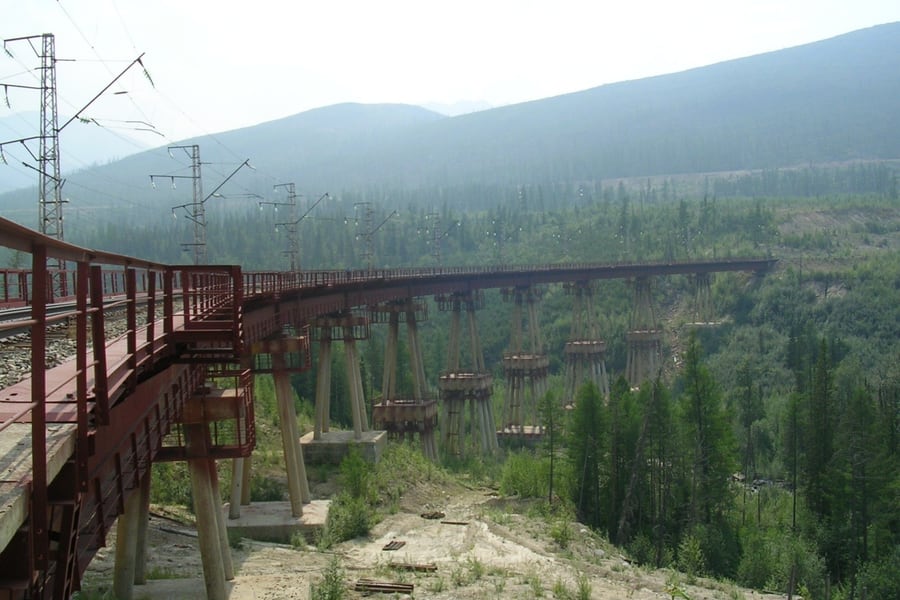 Lupus-sapiens / Wikimedia Commons · CC BY-SA 3.0 · cropped
The Devil's Bridge
A 360-metre viaduct on a sharp curve on a gradient, carried on two-tier piers over the Itykit valley — the best-known structure on the 64 km bypass that trains used before the tunnel opened. They crawled over it at 20 km/h under the avalanche slopes, and needed a banking engine on the climbs. The bypass is still there, and still used when the tunnel is closed.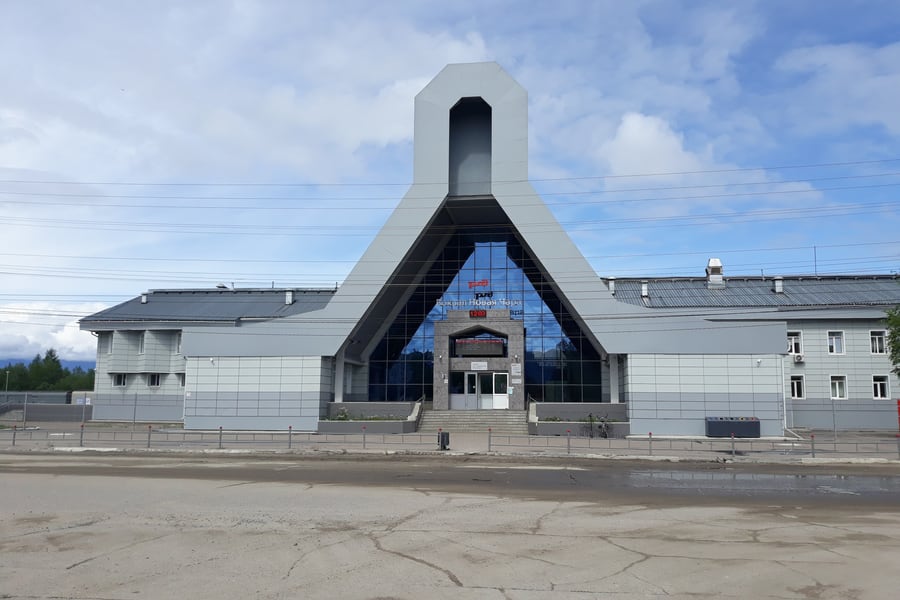 Legioner2016 / Wikimedia Commons · CC BY-SA 4.0 · cropped
Novaya Chara station
The single best building on the railway. Kazakh builders raised it to a design by the Kazgiprograd institute: a long, low station stretched along the platform with a steep central roof meant to read as a yurt, and bas-reliefs of Kazakh life inside. It is 4,000 kilometres from Kazakhstan, in a valley of larch and permafrost, and it is the reason many people get off here at all.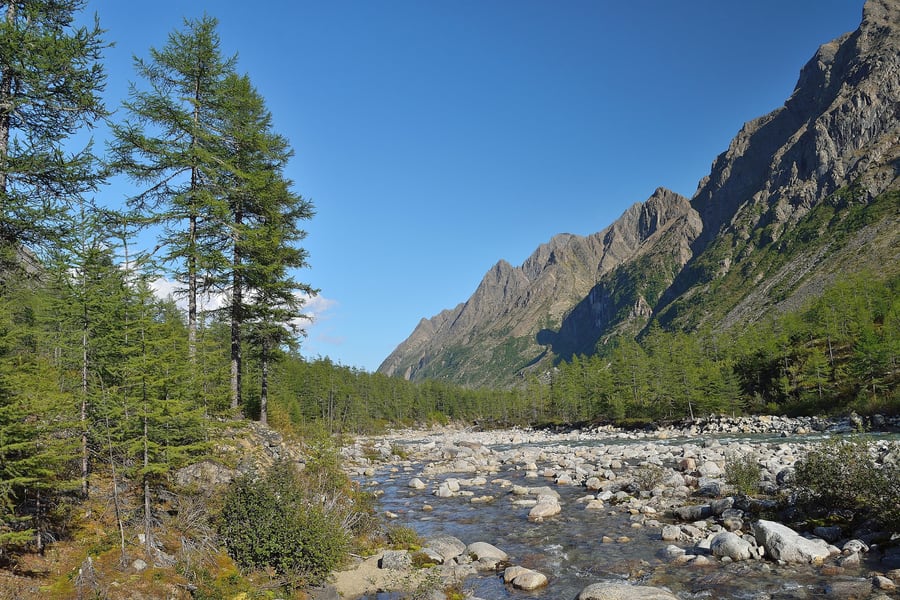 Veteran hiker / Wikimedia Commons · CC BY-SA 4.0 · cropped
The Kodar range
Granite walls and hanging valleys above the Chara basin, and the only glaciers in Transbaikalia. The Sredny Sakukan river comes down out of them past the sands, and the gorge behind is walkable from Novaya Chara in a long day. This is high, cold, unforgiving country: go with someone who knows it, and register with the local rescue service before you start.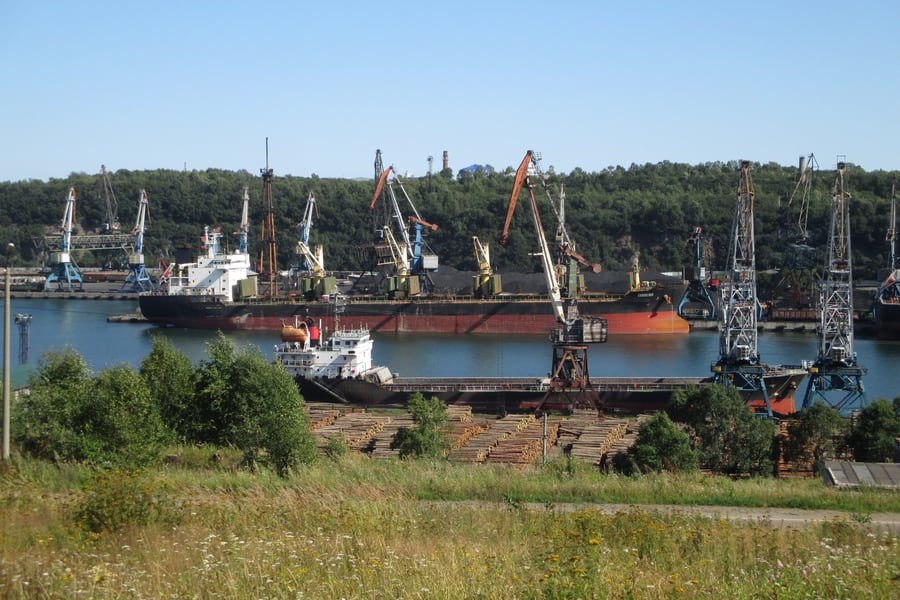 I13Robin / Wikimedia Commons · CC BY 4.0 · cropped
Vanino and the Pacific
The whole point of the railway, from the freight's side: a deep-water port on the Tatar Strait, about 500 km closer to Tayshet than Vladivostok is. Cranes, coal, timber and the ferry to Sakhalin. Train 351 runs down here from Komsomolsk overnight and finishes at Sovetskaya Gavan-Sortirovochnaya at 08:50, which is as far east as the BAM goes.Where to Sleep
Most of this journey's nights are spent on the train, in a berth you have already paid for — two between Tayshet and Tynda, two more between Tynda and Komsomolsk, one on the run down to the Pacific. The nights that need booking are the ones at the joints: Severobaikalsk if you break the western leg to see the lake, Tynda between the two halves, and Komsomolsk-on-Amur at the end.
Severobaikalsk and Komsomolsk both have places that take bookings directly. Tynda is harder — we could not find a hotel there with a working website of its own, so arrange it through your ticket agent rather than leaving it to the sixteen hours you have between trains.
Where to stay
Baikalskaya Rezidentsiya
North Baikal, 4 km from Severobaikalsk
A seventeen-suite lodge on the Severobaikalsk–Baikalskoye road, on the shore at the top of the lake.
Check Availability (opens in a new tab, on baikalresidence.ru)via baikalresidence.ruHotel Voskhod
Komsomolsk-on-Amur, Prospekt Pervostroiteley
Opened in 1972 for the city's thirtieth birthday and refitted in 2006, a short walk from the centre of Komsomolsk.
Check Availability (opens in a new tab, on hotel-voskhod.ru)via hotel-voskhod.ruQuestions or corrections
Planning this trip and stuck on something, or spotted a time, fare or detail that has changed? Send us a message about Baikal–Amur Mainline. We read every one, and we update this page when something has changed.