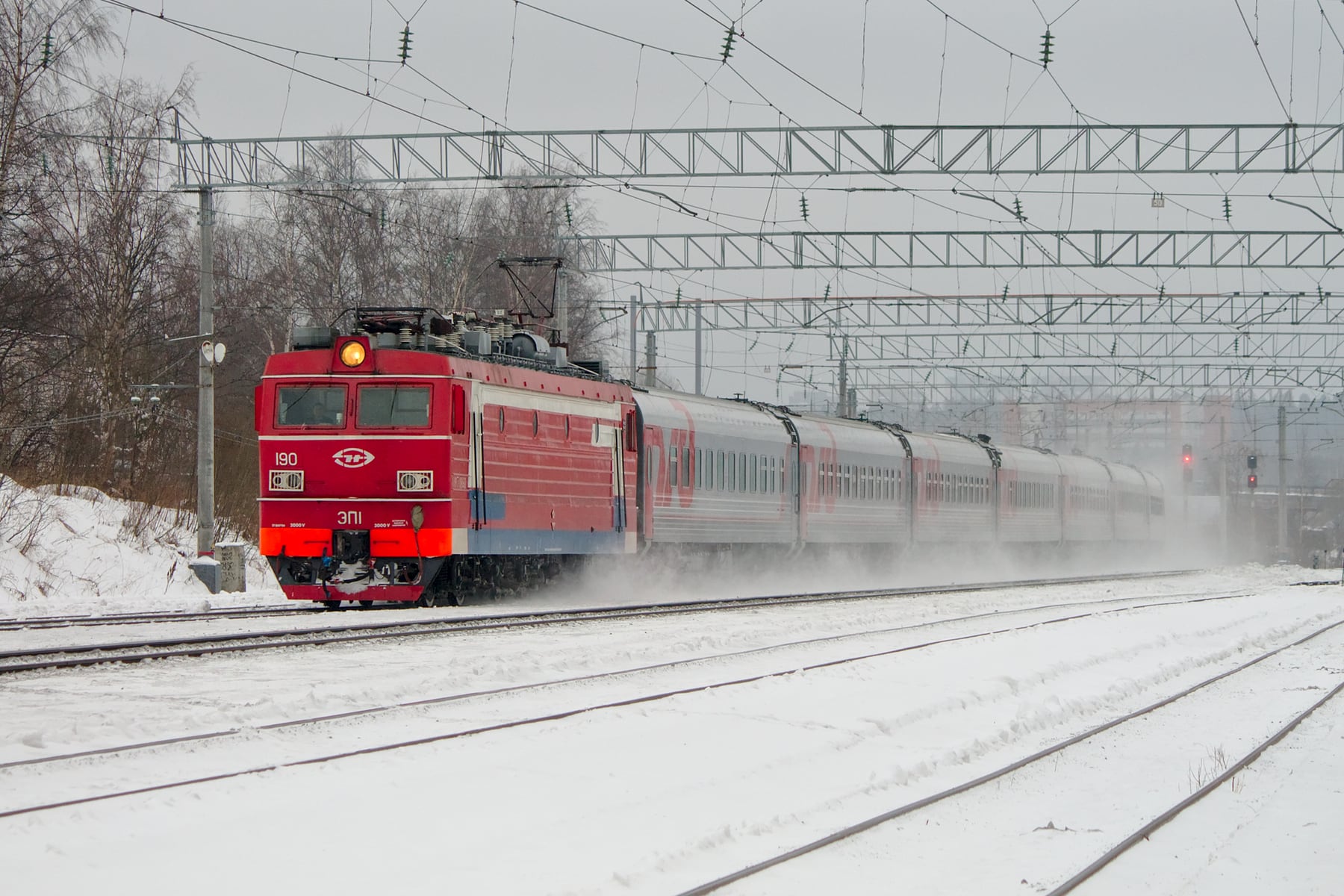
St Petersburg to Murmansk
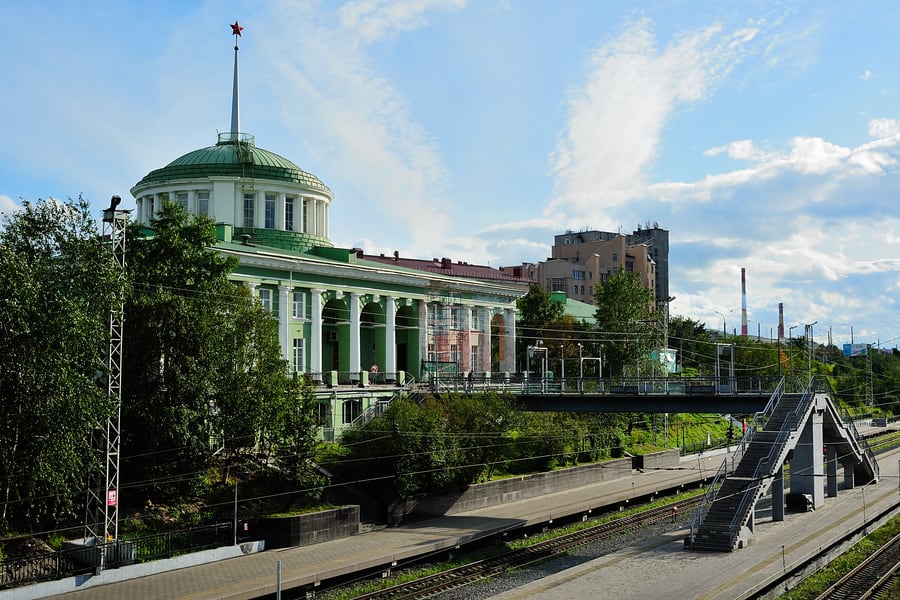
Neu-Zwei / Wikimedia Commons · CC BY-SA 4.0 · cropped
- Distance1,439 km
- Duration24–26 hours
- Best seasonYear-round
Introduction
The train leaves St Petersburg's Ladozhsky station and does not stop being interesting for a day. It crosses the Svir between two of Europe's largest lakes, runs the length of Karelia past the White Sea canal, meets the White Sea itself at Belomorsk, and somewhere around two in the afternoon calls at a village station called Polyarny Krug — the Arctic Circle. After that the forest gives up, the Khibiny stand along the eastern horizon, and the last two hours run beside the Kola inlet to a city that was the final one founded in the Russian Empire.
Murmansk is the largest city anywhere north of the Arctic Circle, and the reason it exists is the railway underneath you. In 1915 Russia's Baltic and Black Sea ports were both shut by the war and the only way to take delivery of allied munitions was an ice-free coast nobody had yet reached by land. The line was driven 1,053 kilometres through bog and granite in twenty months by a workforce that at times numbered 170,000, and the town at the end of it was named Romanov-on-Murman four months before the dynasty it was named for fell.
Two trains a day make the run in each direction, and they are not the same journey. The Arktika is the through working from Moscow, twenty-six hours from St Petersburg, with open-plan platskart as well as compartments and a long daylight morning in Karelia. The other is a double-deck sleeper that leaves late, sleeps you through the Karelian forest and gives you the Arctic in daylight instead. Both arrive with the whole north still ahead of them.
The Journey
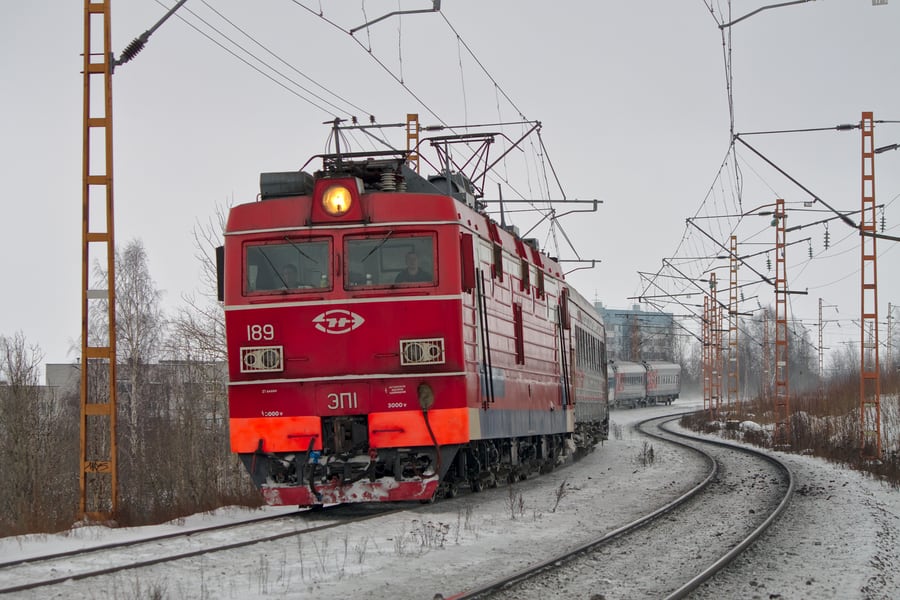
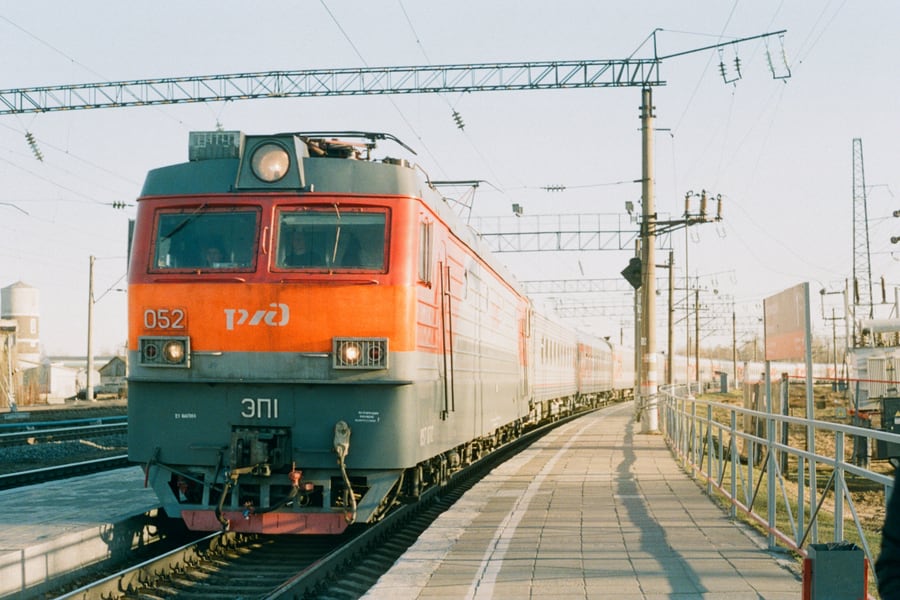
Ladozhsky is St Petersburg's newest terminus and its only through station, and everything for the north leaves from it. The train is electrically hauled the whole way — usually an EP1, a six-axle passenger machine in red and grey, and on the Arktika it has already been running for nine hours from Moscow by the time it draws in.
The first two hours are Leningrad Oblast: Volkhovstroy at km 114, where the line from Vologda comes in, then Lodeynoye Pole, where Peter the Great founded the Olonets shipyard in 1702 and where, a year later, the first ship of the Baltic Fleet was launched — the 28-gun frigate Shtandart. At km 280 the train stops at Svir for a booked thirty-four minutes — the longest halt anywhere south of the Arctic Circle, and the place where the locomotive changes. The Svir is the river that drains Lake Onega into Lake Ladoga, and the railway crosses it on a steel lift bridge whose towers are visible from the platform.
Through Karelia
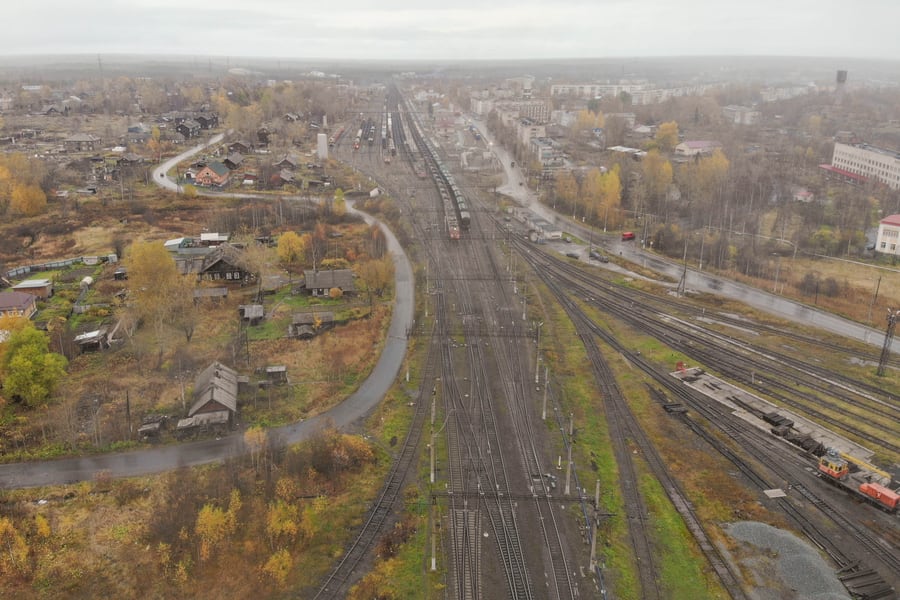
Petrozavodsk, at km 395, is the capital of the Republic of Karelia and the biggest place between the two ends. From here to the White Sea the train runs along the spine of the republic: Kondopoga, then Medvezhya Gora at km 550, where the White Sea–Baltic Canal begins its climb over the watershed, then Segezha and Nadvoitsy, where the canal and the railway run together for a while. The country outside is lake, bog, birch and pine, in that order, for four hundred kilometres.
Belomorsk, km 774, is where the canal reaches salt water, and the first sight of the White Sea. The station was called Soroka when the railway arrived. Fifty kilometres further, Kem gets a quarter of an hour — long enough to notice that the town is the jumping-off point for the Solovetsky Islands, whose ferries leave from the harbour at Rabocheostrovsk twelve kilometres away.
Across the line
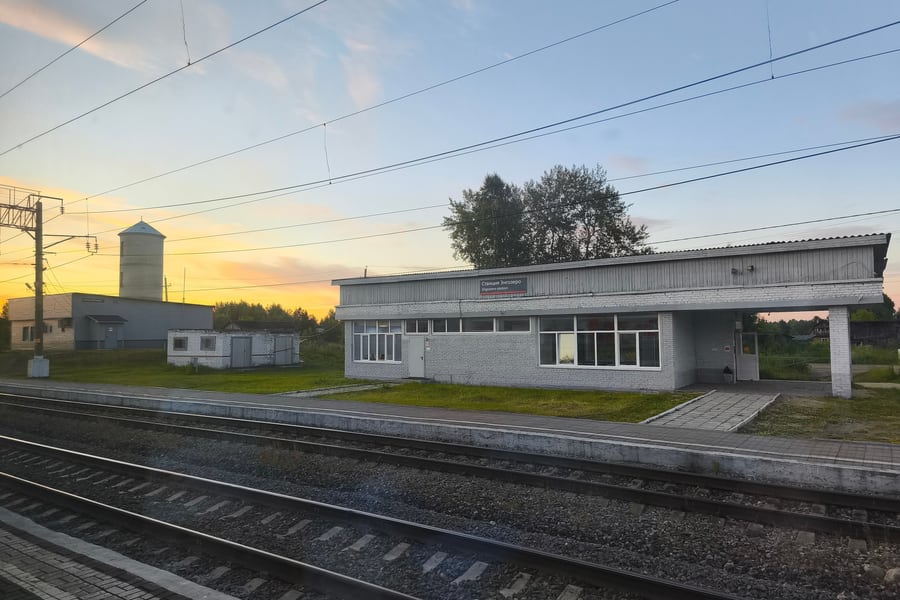
North of Kem the stops thin out and the names get stranger. Kuzema, Engozero, Ambarny, Loukhi, Chupa — sidings in the forest with a platform and a nameboard, most of them built as construction camps in 1916 and never quite abandoned. At km 1,049 the overnight train calls at Polyarny Krug, and unless you have looked at the map you will not know why the handful of passengers on the platform are photographing a signpost. This is the Arctic Circle. On the sleeper it happens at about 14:17, in daylight; on the Arktika the train passes here in the small hours and does not stop.
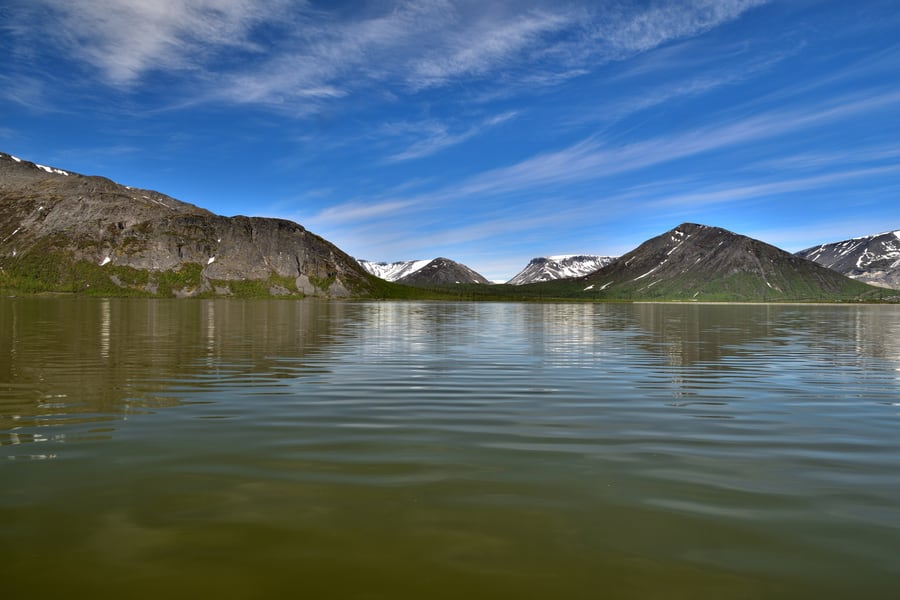
The last stretch is the best of it. Kandalaksha, km 1,162, sits at the head of its own gulf of the White Sea with a timber station in Karelian red and green. Then the line climbs away from the coast into the Kola Peninsula proper: Polyarnye Zori, Afrikanda, Apatity at km 1,254 with the Khibiny massif filling the windows on the right, and Imandra — a halt on the shore of a lake ninety kilometres long, with the mountains rising straight out of the far side. Past Olenegorsk the trees shrink to scrub and then to tundra, the line swings west to meet the Kola inlet, and the last twenty minutes run along the water into Murmansk, past the ice-free port that the whole railway was built to reach.
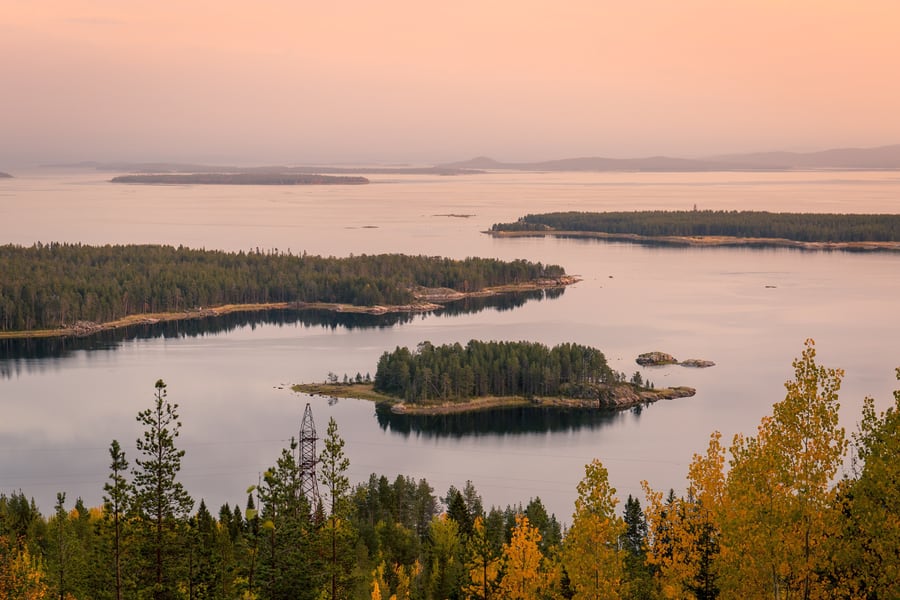
Along the route
 Alexxx1979 / Wikimedia Commons · CC BY-SA 4.0 · cropped
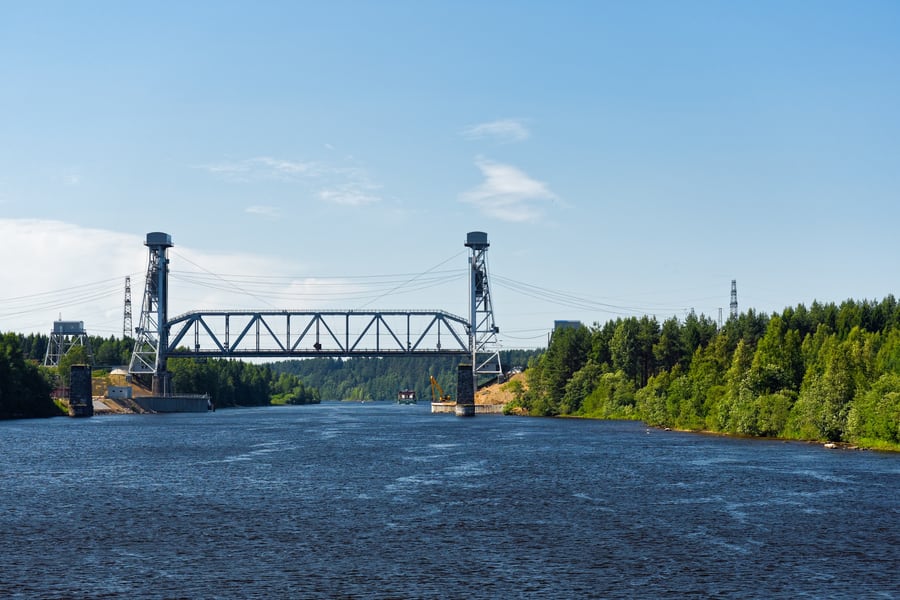
The thirty-four minutes at Svir
At km 280 the train stands still longer than anywhere else on the run while the locomotive is changed. The Svir drains Lake Onega into Lake Ladoga, and the railway crosses it on a steel lift bridge whose towers you can see from the platform.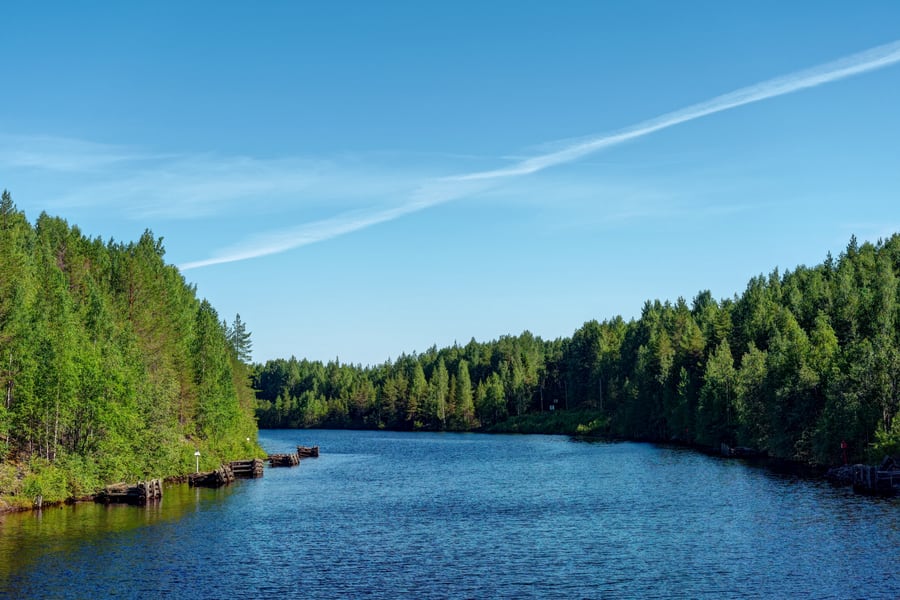 Alexxx1979 / Wikimedia Commons · CC BY-SA 4.0 · cropped
Where the canal joins the line
From Medvezhya Gora at km 550 the White Sea–Baltic Canal climbs the watershed beside the railway, and the two run together to Belomorsk. Gulag prisoners dug it almost entirely by hand in twenty months; it opened in August 1933, and official records put the dead at 12,300.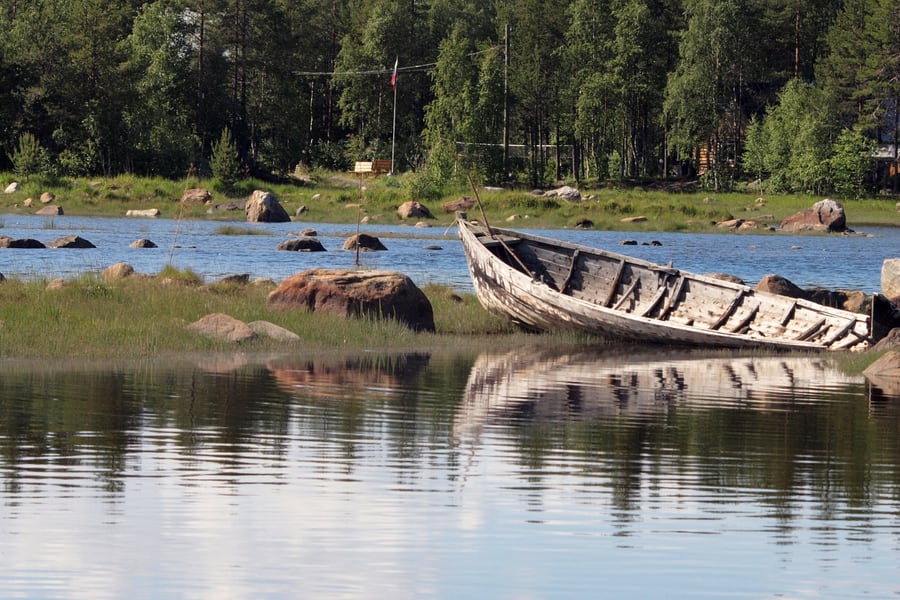 Digr / Wikimedia Commons · CC BY-SA 4.0 · cropped
Polyarny Krug, km 1,049
A station named Arctic Circle, because that is what it stands on. The overnight train calls here at 14:17 for one minute. East of the platform lies the Polyarny Krug reserve, a protected stretch of the sub-Arctic White Sea shore.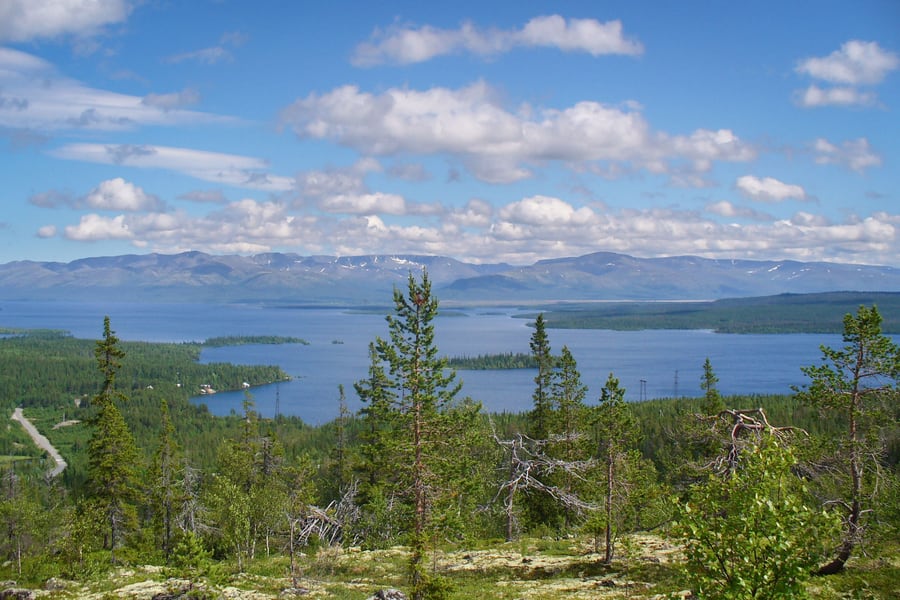 Pablol1987 / Wikimedia Commons · CC BY-SA 3.0 · cropped
Imandra and the mountains
Past Apatity the line runs the length of Lake Imandra with the Khibiny rising straight out of the far shore. The halt called Imandra is a nameboard on a brick wall; what it is there for is the view, and northbound you get it at about half past six in the evening.A bit of history
Culture & experiences along the way
 Mikhail (Vokabre) Shcherbakov / Wikimedia Commons · CC BY-SA 2.0 · cropped
A train with a name
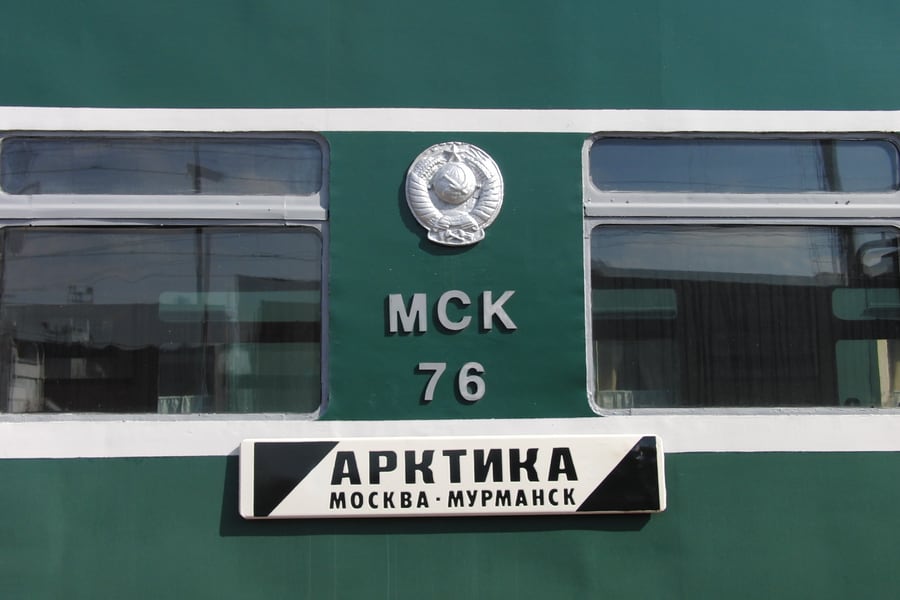
015/016 is the Arktika, Moscow to Murmansk, and Russian railways still hang the name on the side of the carriage on an enamel board with the route beneath it. It is a firmenny train — the grade above ordinary, with its own staff, its own livery and a restaurant car.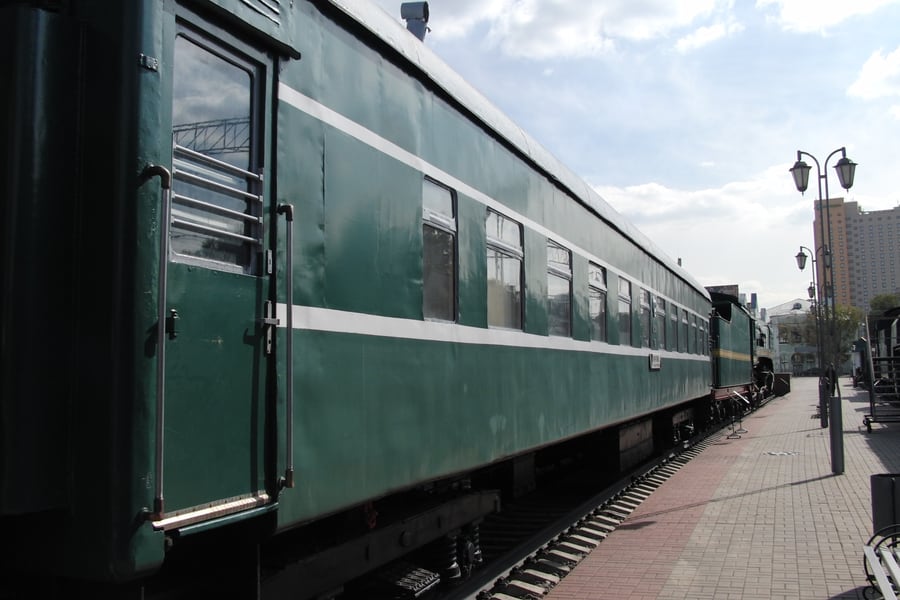 Mikhail (Vokabre) Shcherbakov / Wikimedia Commons · CC BY-SA 2.0 · cropped
Platskart, kupe and SV
Russian sleeping cars come in three grades and the Arktika carries all three: open-plan platskart, where the berths are open to the aisle and there are no doors, four-berth kupe compartments, and two-berth SV. Twenty-six hours is long enough that the difference stops being academic.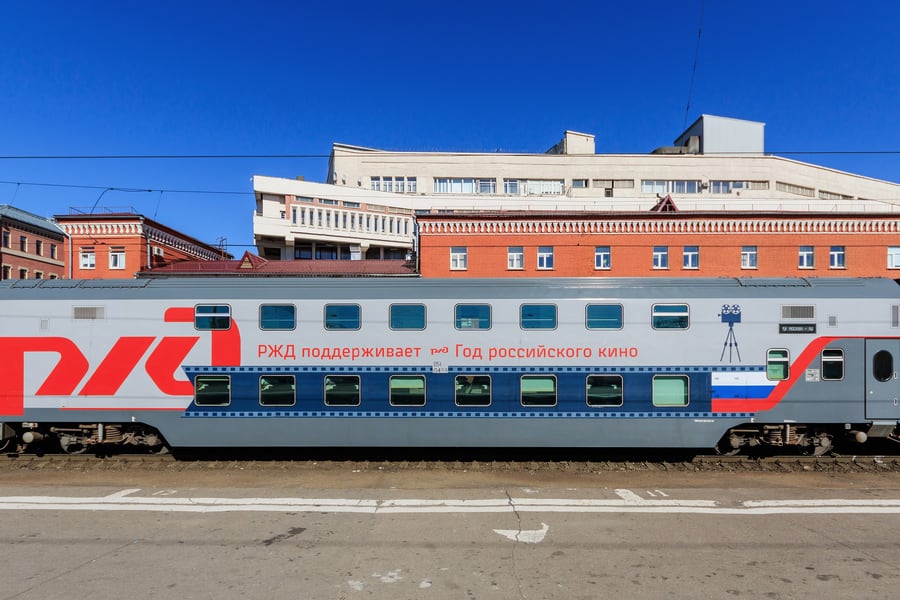 A.Savin, Wikipedia · Free Art License · cropped
The double-decker
011/012 is bi-level, one of the Tver-built double-deck sleepers Russian Railways has been putting on its longer overnight runs. It carries compartments only, more than 250 berths in a train, and the upper deck is the one to ask for — you sit above the line of the lineside trees.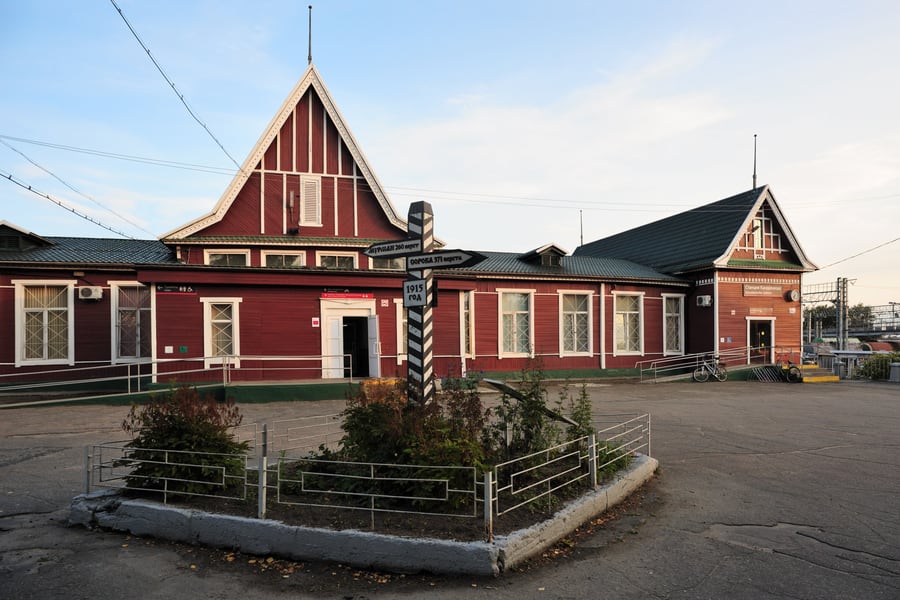 Vsatinet / Wikimedia Commons · CC BY-SA 4.0 · cropped
Stations in Karelian timber
Kandalaksha has kept the kind of station the line was given when it was new: a long low building in red boards with green barge-boards and steep gables, the Finnish-Karelian manner that runs all the way down this coast. Twelve minutes northbound is enough to walk round it.Timetables
Two trains a day run each way, every day of the year, and both do the whole distance overnight. All times are local, and St Petersburg, Petrozavodsk and Murmansk are all on Moscow time, so nothing on this page needs converting.
Northbound, from St Petersburg Ladozhsky
| Train | Depart | Arrive Murmansk | Journey | Runs |
|---|---|---|---|---|
| 016А Arktika | 10:10 | 12:10 next day | 26 h 00 | Daily |
| 012А | 21:24 | 21:23 next day | 23 h 59 | Daily |
Southbound, from Murmansk
| Train | Depart | Arrive St Petersburg Ladozhsky | Journey | Runs |
|---|---|---|---|---|
| 011А | 10:10 | 10:09 next day | 23 h 59 | Daily |
| 015А Arktika | 19:30 | 21:49 next day | 26 h 19 | Daily |
015/016 is the Arktika, and it does not start here: it is the Moscow – Murmansk train, which leaves Moscow Oktyabrsky just before one in the morning and stands at Ladozhsky for the best part of an hour before going on north. That is why it is the slower of the two — it takes the longer booked stops, including thirty minutes at Petrozavodsk and thirty-four minutes at Svir.
011/012 is the St Petersburg train, it is a double-decker, and it is a full hour quicker for having fewer and shorter stops. It is also the one that crosses the Arctic Circle in daylight: the northbound working calls at Polyarny Krug at 14:17 and reaches the Khibiny at Imandra just before half past six in the evening, while the Arktika does both in the dark.
Useful intermediate times
These are the northbound calls on the 012А long enough to get off the train, with distance from St Petersburg:
| Station | km | Arrive | Stop |
|---|---|---|---|
| Svir | 280 | 01:13 | 34 min |
| Petrozavodsk | 395 | 03:20 | 5 min |
| Belomorsk | 774 | 09:43 | 3 min |
| Kem | 829 | 10:39 | 15 min |
| Polyarny Krug | 1,049 | 14:17 | 1 min |
| Kandalaksha | 1,162 | 16:11 | 12 min |
| Apatity-1 | 1,254 | 17:51 | 10 min |
| Murmansk | 1,439 | 21:23 | — |
Times as of September 2026, taken from the operator's booking system and checked in both directions on four separate dates between September and November 2026. Booking opens about ninety days ahead; a date beyond that horizon simply returns nothing, which is not the same as the train not running. Confirm before you travel at tutu.ru (opens in a new tab).
Tickets
Every berth on both trains is reserved and sold by name, so buy before you go. The Arktika offers three kinds of accommodation — open-plan platskart, four-berth kupe compartments and two-berth SV — while the double-decker sells kupe only, with 250-odd berths a train rather than the Arktika's few dozen in each class.
Fares move with demand and with how far ahead you book, and the two trains are not priced alike: the double-decker undercuts the Arktika on compartments and the Arktika undercuts it on nothing except platskart, which the double-decker does not carry. The cards below give the lowest published figure for each class at the time of writing. Note that SV is not a small premium over kupe on this route — it is several times the price.
Book your tickets
Neu-Zwei / Wikimedia Commons · CC BY-SA 4.0 · croppedThe Arktika, 015/016
Platskart, kupe or SV
The Moscow through train, twenty-six hours from St Petersburg, and the only one of the two that carries open-plan platskart.
Book Tickets (opens in a new tab, on tutu.ru)via tutu.ruA.Savin, Wikipedia · Free Art License · croppedThe double-decker, 011/012
Four-berth compartments only
An hour quicker, a late departure, and the Arctic Circle crossed in daylight rather than in the dark.
Book Tickets (opens in a new tab, on tutu.ru)via tutu.ruRail Passes
No rail pass covers this journey. Interrail and Eurail are a 33-country scheme, and Russia is not one of the 33 — it does not appear anywhere in the pass network's own list of participating railway companies, so a pass bought in Europe is worth nothing north of the border. The nearest pass territory is Finland, and its network does not connect to this one by any through service.
There is no Russian substitute worth chasing either. The national operator sells loyalty points and occasional round-trip discounts rather than a period pass, and none of it is a pass in the Interrail sense — you cannot buy a week of unlimited travel on this railway.
For this journey it would make no difference in any case. Every berth on both trains is individually reserved, so a pass would still leave you buying a reservation for the specific train you wanted, and the walk-up fare for a compartment is modest by the standards of a 1,439-kilometre overnight run. Buy a point-to-point ticket. Checked September 2026.
Places to Visit
This is a line worth breaking. Both trains run daily in both directions, so a stop anywhere on the list below costs you exactly twenty-four hours, and the stations that matter — Petrozavodsk, Belomorsk, Kem, Kandalaksha, Apatity — all have a town attached rather than a platform in the forest. Two World Heritage Sites sit within reach of intermediate stops, and neither of them is reachable any other sensible way.
 Semenov.m7 / Wikimedia Commons · CC0 · cropped
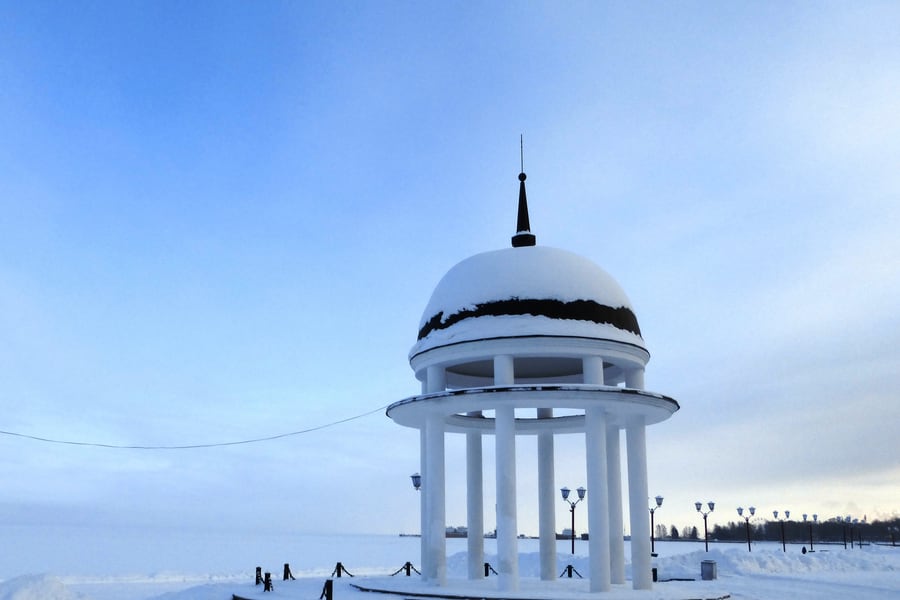
Petrozavodsk and the Onega shore
Karelia's capital, strung for 27 kilometres along the western shore of Lake Onega, and founded in 1703 as an iron foundry casting cannon and anchors for Peter the Great's Baltic Fleet. The lakeside embankment is the length of the city and is lined with modern sculpture; from the harbour at the end of it, hydrofoils run to Kizhi, the island of eighteenth-century wooden churches that is a World Heritage Site in its own right. Semenov.m7 / Wikimedia Commons · CC BY-SA 4.0 · cropped
The White Sea petroglyphs
Carved into the granite of the Vyg river between seven and four thousand years ago and inscribed by UNESCO in July 2021. The White Sea cluster is eleven sites and more than 3,400 figures — hunters and their quarry, boats under sail, tools, and lines of human and animal footprints walking across the rock. The main group at Zalavruga is a short drive from the station and has a boardwalk over it.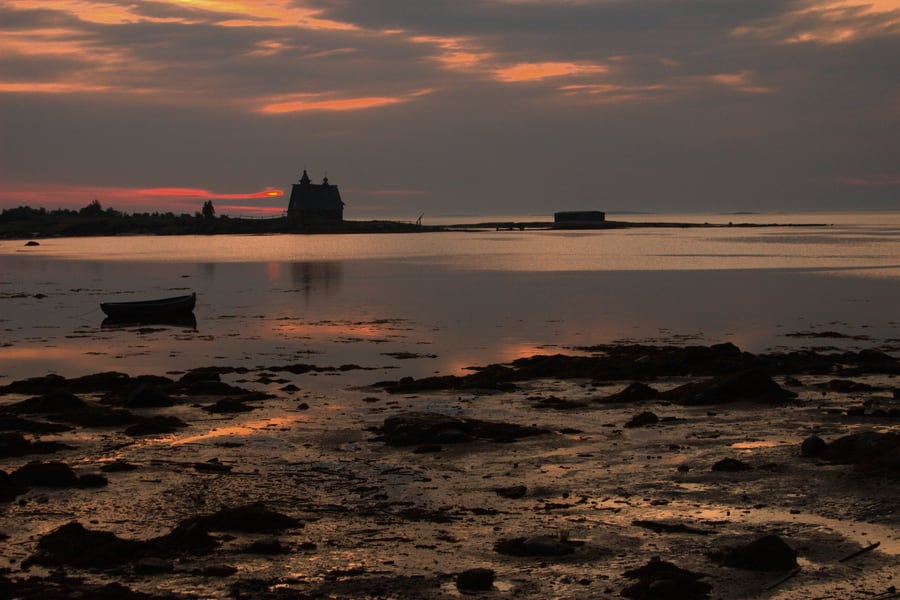 Daniel Beilinson / Wikimedia Commons · CC BY-SA 2.0 · cropped
The Solovetsky Islands
An archipelago in the White Sea, reached by boat from Rabocheostrovsk twelve kilometres from Kem station. The monastery was founded in 1436 and by the end of the sixteenth century was one of the wealthiest landowners in Russia; in 1923 it became the first camp of the Gulag. The islands were inscribed by UNESCO in 1992. ⚠️ This is a two-day trip at least — crossings depend on the weather and stop with the ice.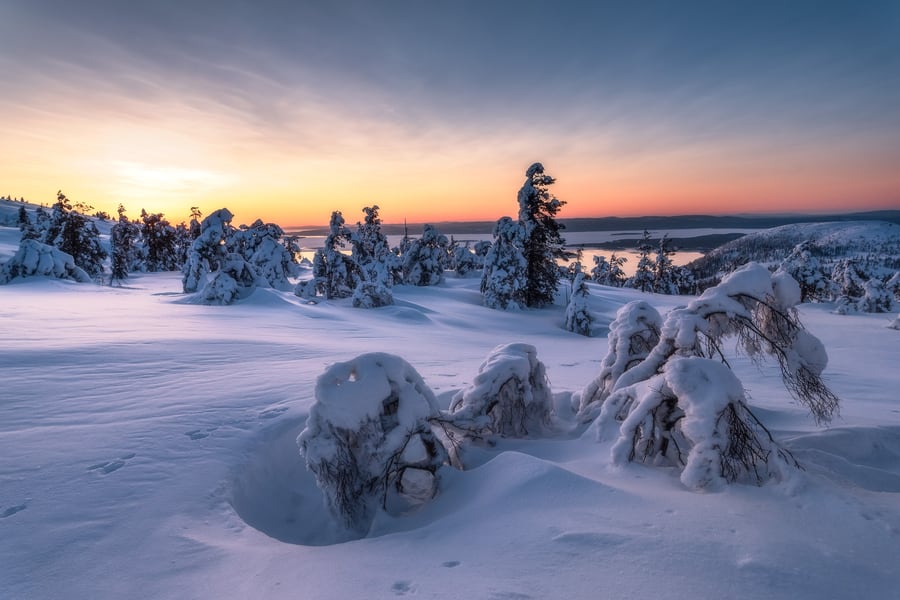 Andrei Baskevich / Wikimedia Commons · CC BY-SA 4.0 · cropped
The Kandalaksha reserve
A zapovednik — a strict reserve — of 705 square kilometres and more than 550 islands, three-quarters of it sea, created in 1932 to protect the common eider and a Ramsar wetland since 1976. It is Russia's main breeding ground for the Atlantic grey seal. ⚠️ Most of it is closed: a handful of marked ecotourist routes open from May to October, and each needs a permit arranged in advance through the office in the town.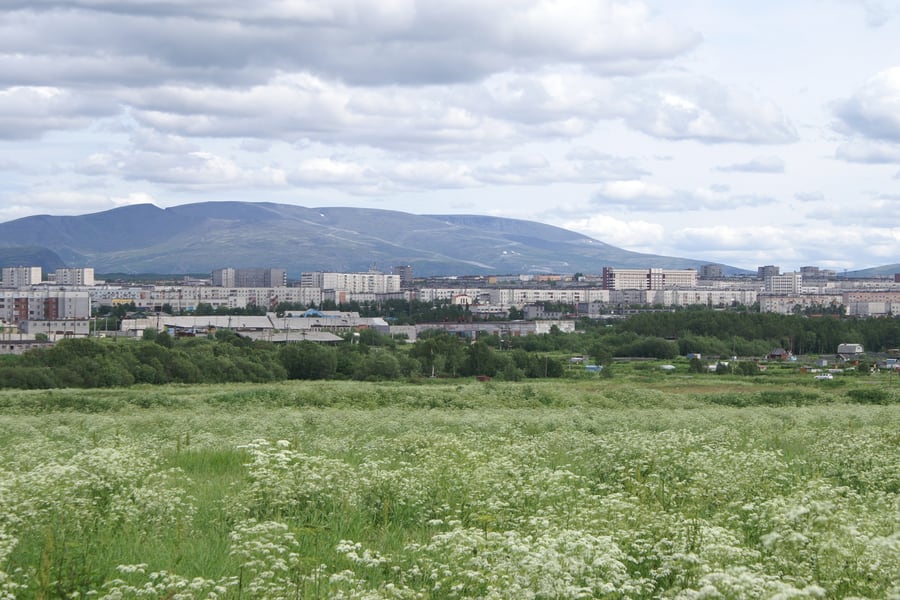 Skvodo / Wikimedia Commons · CC BY-SA 3.0 · cropped
The Khibiny
The highest mountains on the Kola Peninsula and the reason Apatity exists: a horseshoe of plateau summits around 1,300 square kilometres, topping out at Yudychvumchorr, 1,201 metres, drained by deep canyons and covered in alpine tundra. They are also one of the richest mineral localities on earth: about 500 minerals have been identified in the massif, roughly a hundred of them first described here and 110 found nowhere else.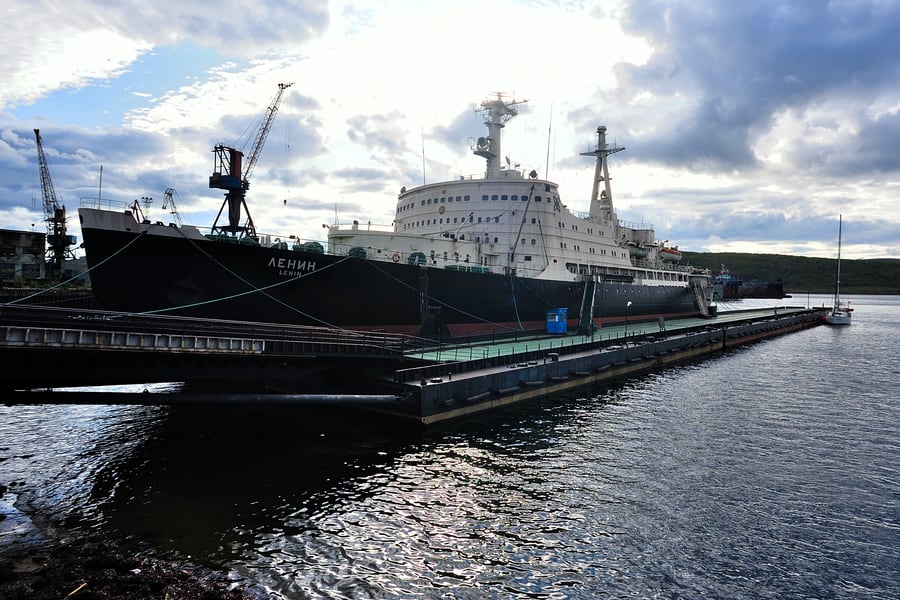 Vsatinet / Wikimedia Commons · CC BY-SA 4.0 · cropped
The icebreaker Lenin
Launched in 1957 and in service from 1959, the first nuclear-powered icebreaker in the world and the first nuclear-powered surface ship of any kind. In five seasons from 1960 she covered more than 157,000 kilometres, some 120,000 of them through ice. She was retired in 1989 with her hull worn thin by it, and has been a museum ship on the Murmansk waterfront since the conversion finished in 2005.Where to Sleep
The train is the bed for one of the two nights, so what you need is somewhere at each end and, if you break the run, somewhere in the middle. All three below are in the city centre and a short ride from the station — and in Murmansk, a short walk.
Where to stay
Hotel Moskva
Ploshchad Alexandra Nevskogo, St Petersburg
On the square at the end of Nevsky Prospekt with rooms over the Neva, one metro stop from the Ladozhsky departure platform.
Check Availability (opens in a new tab, on hotel-moscow.ru)via hotel-moscow.ruHotel Karelia & Spa
On the Onega shore, Petrozavodsk
A lakeside hotel of 123 rooms, every one with its own balcony over the water or the city, with a Karelian kitchen and a spa.
Check Availability (opens in a new tab, on karelia-hotel.ru)via karelia-hotel.ruAZIMUT City Hotel Murmansk
Five Corners Square, Murmansk
In the tallest building north of the Arctic Circle, on the city's central square, with the Kola inlet from the upper windows.
Check Availability (opens in a new tab, on azimuthotels.com)via azimuthotels.comQuestions or corrections
Planning this trip and stuck on something, or spotted a time, fare or detail that has changed? Send us a message about St Petersburg to Murmansk. We read every one, and we update this page when something has changed.