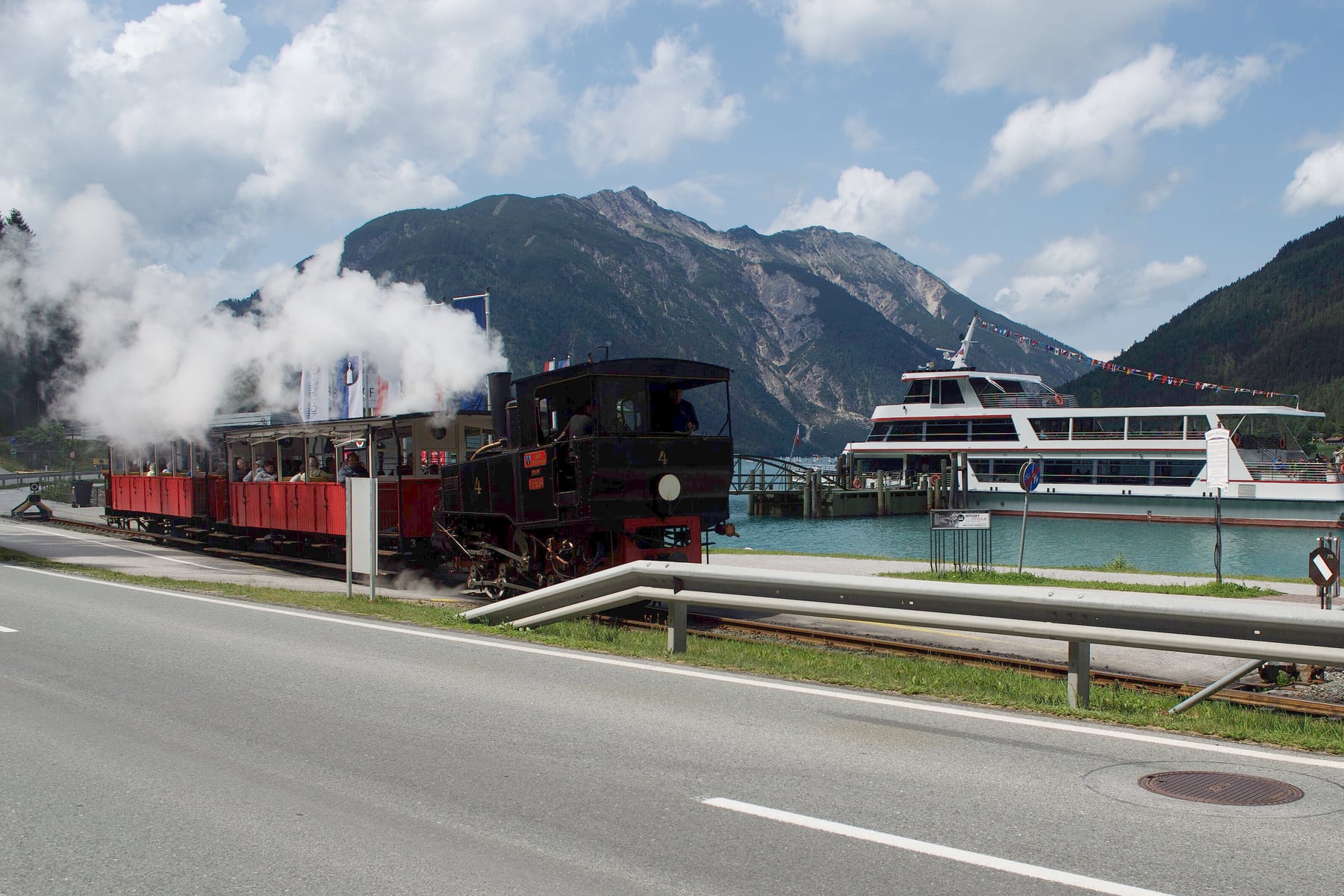
Achenseebahn
Phil Richards / Wikimedia Commons · CC BY-SA 4.0 · cropped
- Distance6.76 km
- Duration50 minutes up, 42 down
- Best season1 May – 24 October 2026; three trains a day each way, six in July and August
Introduction
For its first twenty-seven years the Achenseebahn stopped four hundred metres short of the lake, and that was the point.
The Benedictines of Fiecht owned the Achensee and ran its steamers, and when a railway up from the Inn valley was proposed in 1886 they backed it on one condition: the terminus was not to be built at the landing stage. So the trains of 1889 stopped at Seespitz, and the passengers' luggage and the goods went the last stretch to the boats on a separate little line of the monastery's, pushed by hand and paid for separately. It took the Austrian army to close the gap: in 1916 it laid proper track through to the quay, and the railway's own trains have run to the water's edge since 1929.
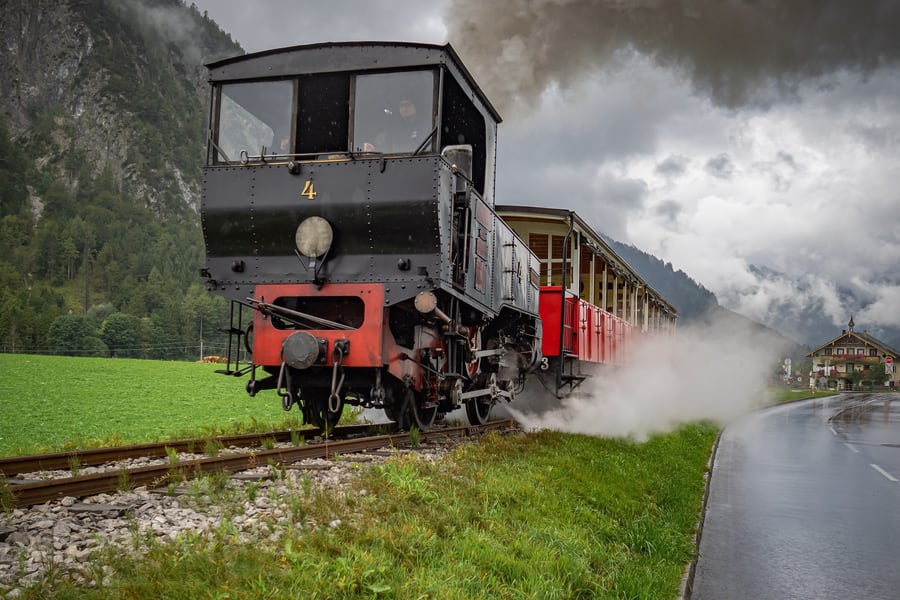
What climbs up to that quay is, in the operator's words, Europe's oldest rack railway worked only by steam. The four engines built for it at Floridsdorf in Vienna in 1889 are all in service — Theodor, Hermann, Georg and Hannah. From Jenbach the engine pushes two coaches up a Riggenbach rack at up to 160 per thousand. At Eben, at the top of the rack, it runs round its train and pulls it across the plateau to the lake. The whole line is 6.76 kilometres and takes fifty minutes.
It nearly stopped for good. The company went bankrupt in March 2020; a new one owned by the Land Tirol, the Zillertal railway and the municipalities of Jenbach, Eben and Achenkirch took it over, and steam came back on 29 April 2022.
The Journey
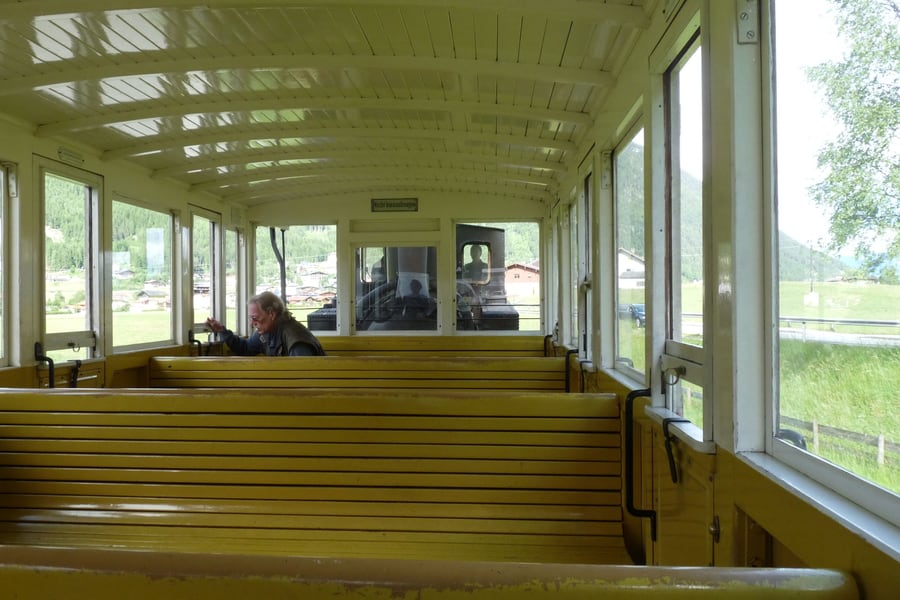
The Achenseebahn leaves from its own platforms on the east side of Jenbach station, reached through the underpass to platform 1. A train is short: normally one closed coach and one open summer coach, each seating fifty-five on wooden benches with a standing platform at the end, and the conductor reaches the compartments from a running board along the outside. The engine is coupled at the downhill end, below the coaches, and it stays there all the way up the mountain.
Up the rack to Eben
For the first 175 metres the train runs on its wheels alone. Then the rack begins: a Riggenbach ladder rack laid in the middle of the track for about 3.5 kilometres. The average gradient up this section is 130 per thousand and the steepest is 160, and the engine works hard, pushing its coaches up past the houses and gardens at the top of Jenbach and the halt at Burgeck into forest. Behind and below, the view opens over the Inn valley.
The line is single track. Halfway up, at Fischl, there is a passing loop of about 300 metres with Riggenbach rack switches, begun in 2011, where two trains can cross on the mountain. The rack ends at Eben, about 35 minutes from Jenbach, under the tall red spire of the church of St Notburga. Here the engine runs round the train, couples on at the other end, and from now on it pulls.
Across the plateau to the lake
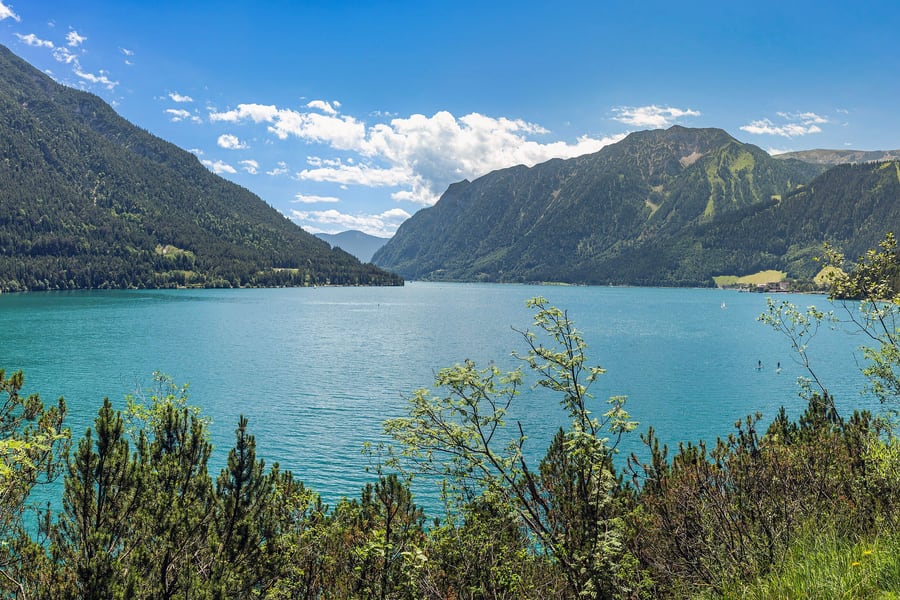
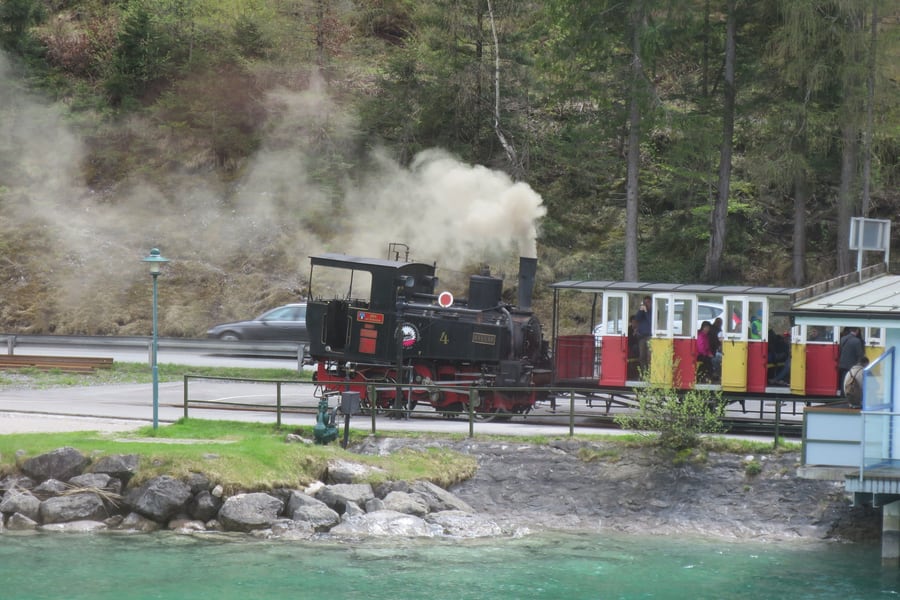
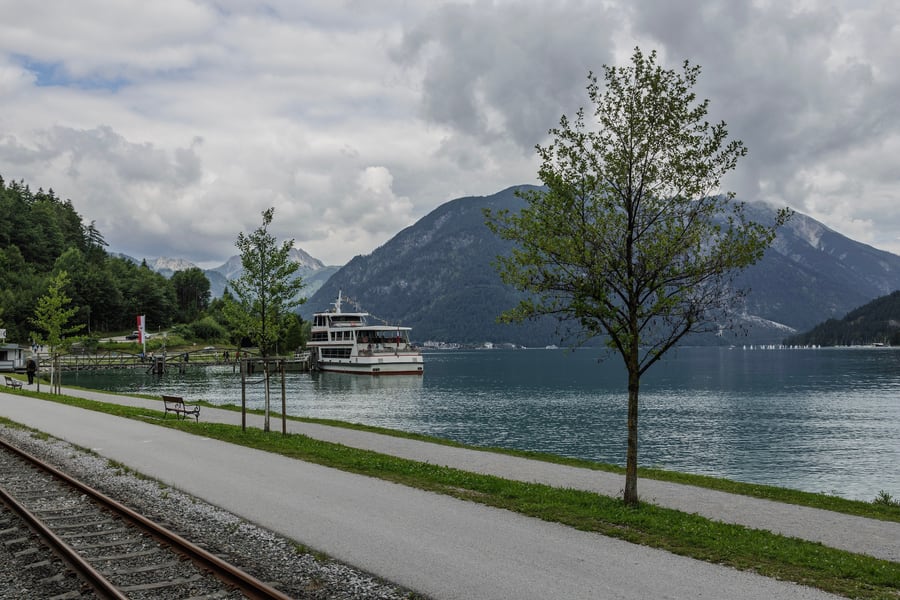
From Eben the line is an ordinary adhesion railway on a gentle fall, past Maurach and the Maurach Mitte stop, opened in 2012 a few minutes from the Rofan cable car and the Museumswelt, to Seespitz at the southern tip of the Achensee. The last stretch runs along the shore beside the road. The Achensee is the largest lake in Tyrol, 133 metres at its deepest and clear enough to see ten metres down, with the Karwendel on its west side and the Brandenberg Alps on its east. The boats of the Achensee Schifffahrt wait at the quay at Seespitz.
Coming down, the train reverses the process: pulled to Eben, then the engine runs round again so that it is below the coaches for the descent of the rack. Down takes about 42 minutes.
The engines
All four locomotives were built for the opening by the Wiener Lokomotivfabrik Floridsdorf in 1888 and 1889: small black tank engines with red frames, each working both on the rack and on adhesion track. They are No. 1 Theodor, No. 2 Hermann, No. 3 Georg and No. 4 Hannah. They burn coal; the company looked at converting them to oil and decided against it. No. 4 was stripped for parts after the Second World War and rebuilt over many years from what was left, and No. 1 was badly damaged when the engine shed in Jenbach burned in 2008 and rebuilt in 2009. In 2010, for the first time since 1930, all four were available. The coaches are as old as the line: the four open summer cars were built in Graz in 1889, and the two closed ones were assembled in 1903 and 1907 from coaches bought from the Gaisbergbahn at Salzburg. Every November to April the engines are taken apart in the Jenbach workshop, checked and rebuilt, so that all of them are ready to steam on 1 May.
What it carried
The line was built quickly — eight months, by the Berlin firm Soenderop with some three hundred workers, many of them Italian — and freight, above all timber from the forests round the lake, was once its main business. When the Tiroler Wasserkraftwerke built the Achensee power station in the late 1920s the railway carried the materials, and since 1927 the lake has mostly drained south through the station's turbines in Jenbach, 380 metres below, rather than north into the Isar. There is no goods traffic now: the two surviving wagons are used only by the railway itself.
In 1978, a year before the concession was due to expire, a committee of Jenbach residents formed under the name Rettet die Achenseebahn — save the Achenseebahn — and the line was kept. The same fight came back in 2020, and the railway has been on Austria's list of protected monuments since 2022.
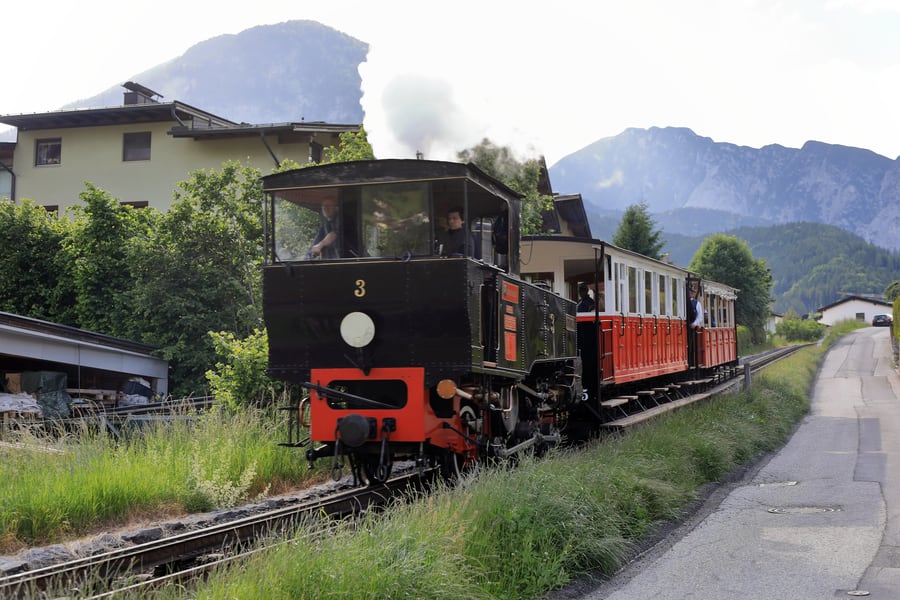
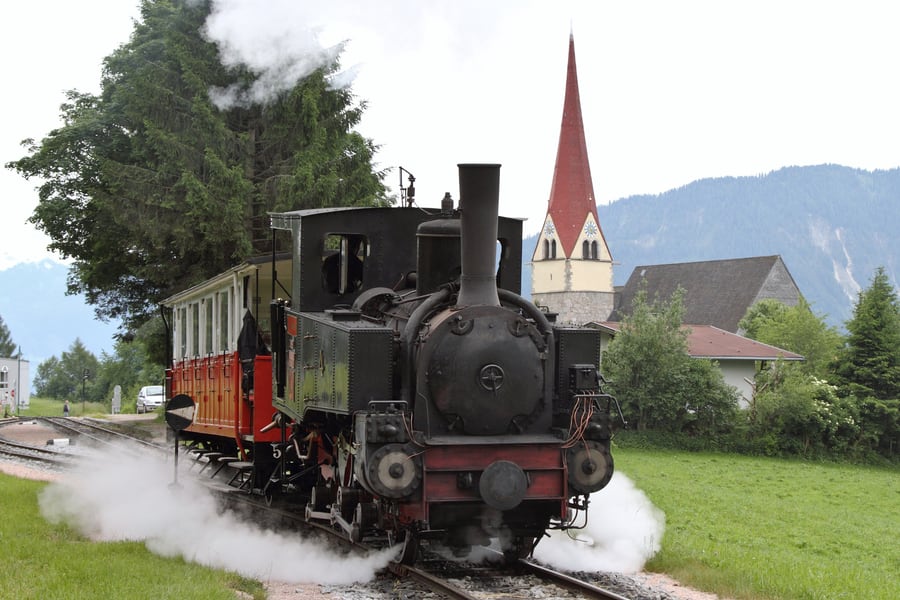
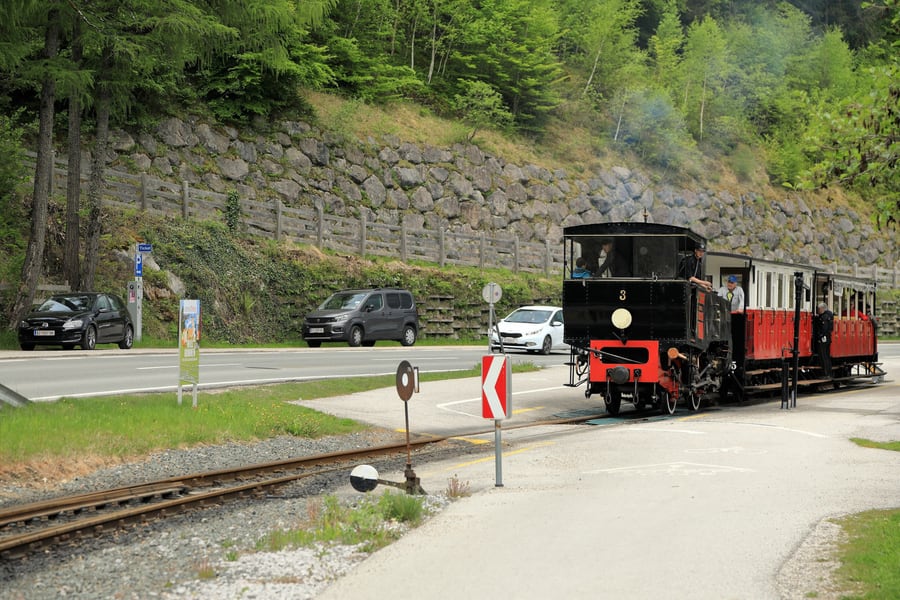
Along the route
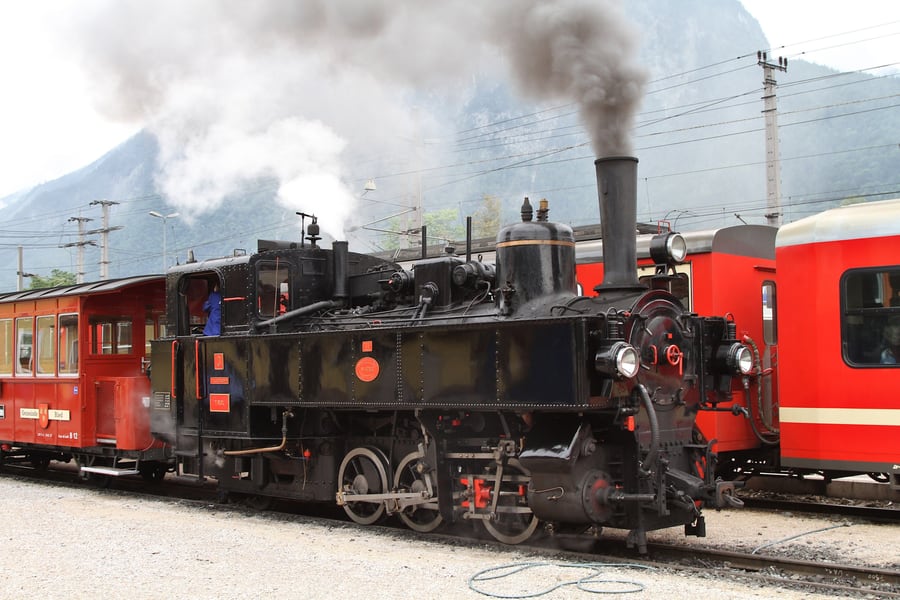 Herbert Ortner / Wikimedia Commons · CC BY 4.0
Three gauges at Jenbach
The operator calls Jenbach a three-gauge station. ÖBB's standard-gauge main line runs through it, the Zillertalbahn's 760 mm trains start here, and the Achenseebahn's metre gauge leaves from the east side of the station building, by platform 1.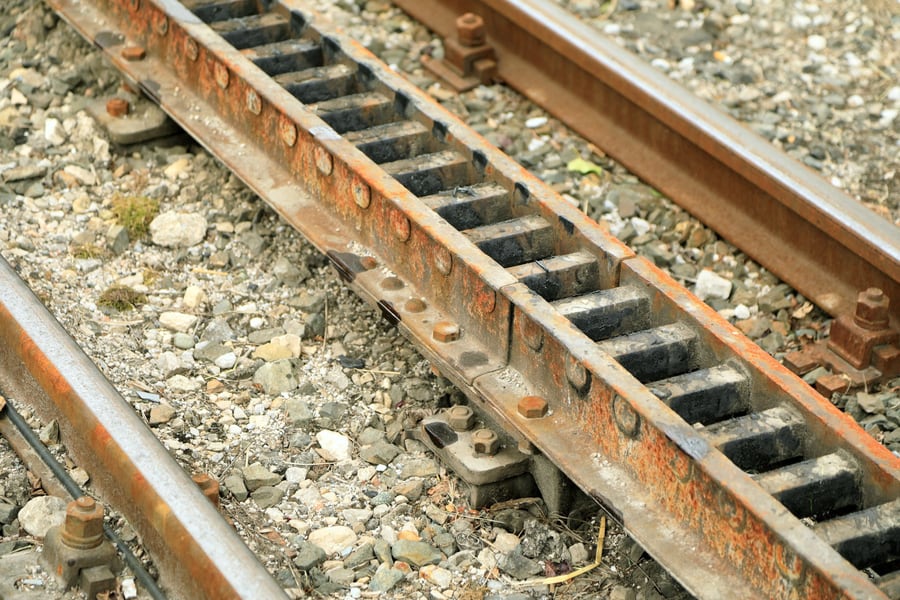 Falk2 / Wikimedia Commons · CC BY-SA 4.0
A ladder to climb
From just outside Jenbach station to Eben the train climbs on a Riggenbach rack, a steel ladder laid between the rails. The steepest pitch is 160 per thousand, and the engine always sits below the coaches, pushing.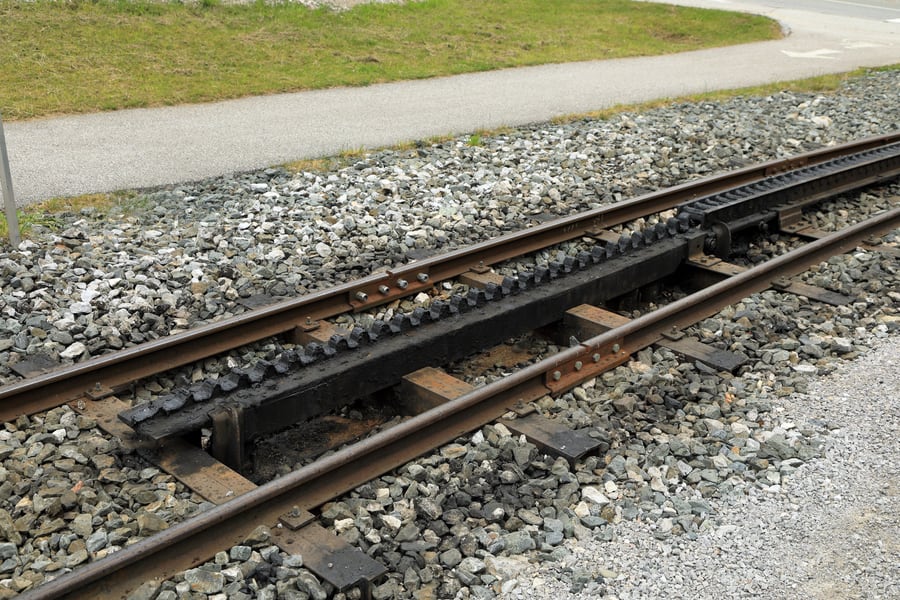 Falk2 / Wikimedia Commons · CC BY-SA 4.0
Changing ends at Eben
The rack stops at Eben. The engine that pushed the train up the mountain runs round it here and pulls it across the plateau to the lake, so the rest of the journey is ordinary adhesion railway on a gentle fall.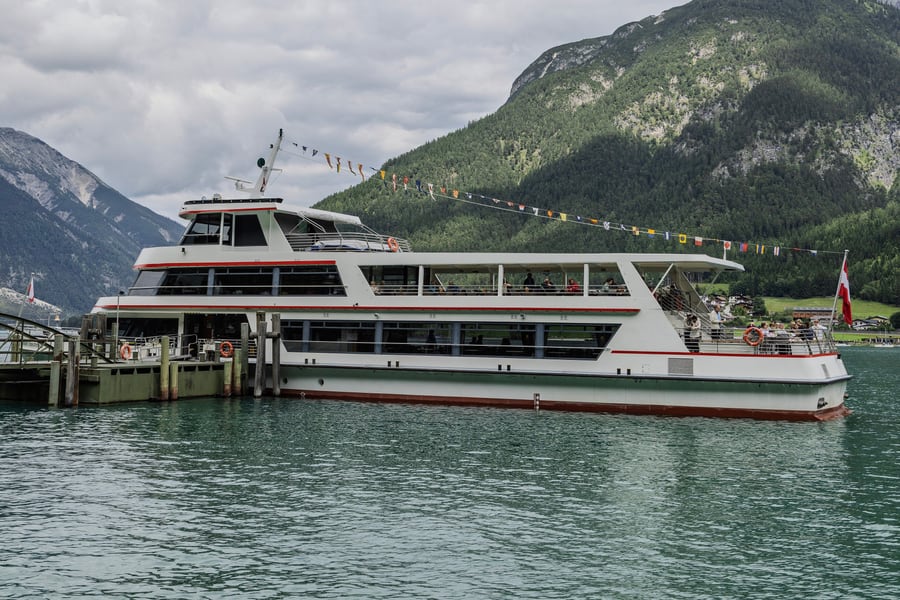 The wub / Wikimedia Commons · CC BY-SA 4.0
The quay at Seespitz
Where the line ends today the boats of the Achensee Schifffahrt tie up beside the buffers. Getting the track to this spot, the last four hundred metres, took the railway forty years.A bit of history
Culture & experiences along the way
 The wub / Wikimedia Commons · CC BY-SA 4.0
Train and boat
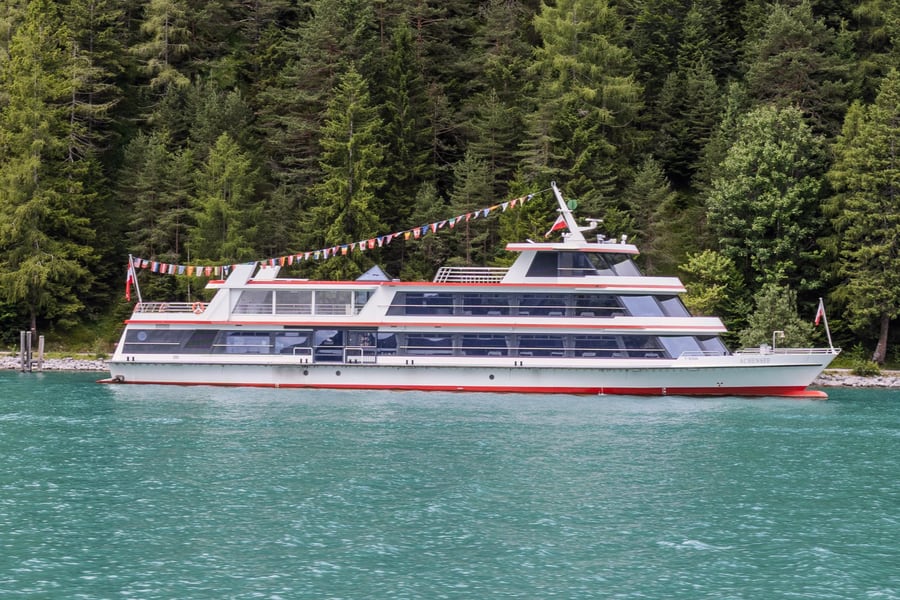
The combined ticket adds the lake boats, which leave from beside the buffers at Seespitz and call at Pertisau, Gaisalm, Achenseehof, Buchau and Scholastika at the far end, under the Karwendel.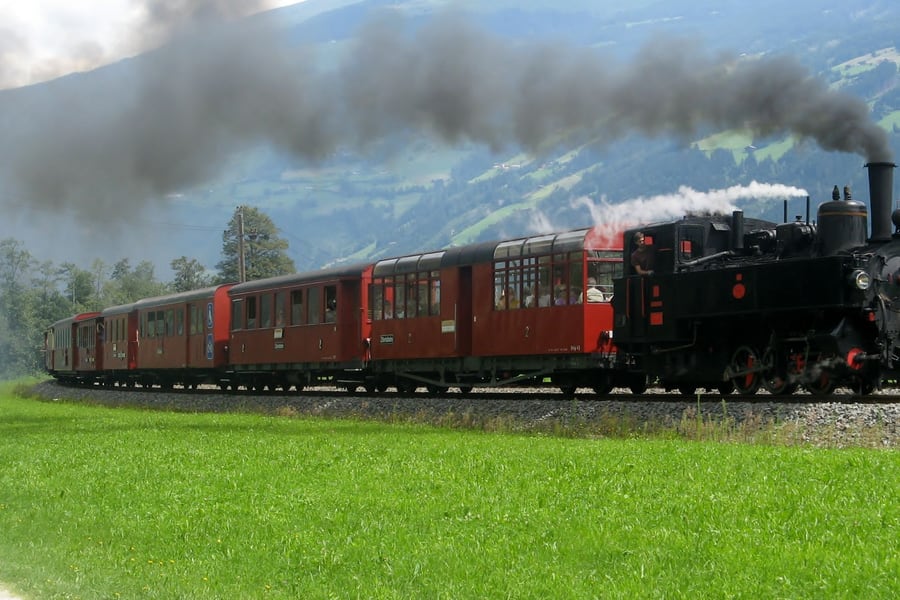 CrabbyPatrick / Wikimedia Commons · CC BY 3.0 · cropped
Two steam railways, one ticket
The Dampfkombiticket covers the Achenseebahn and the Zillertalbahn's steam train up the Zillertal from the same station at Jenbach, valid for two days from issue.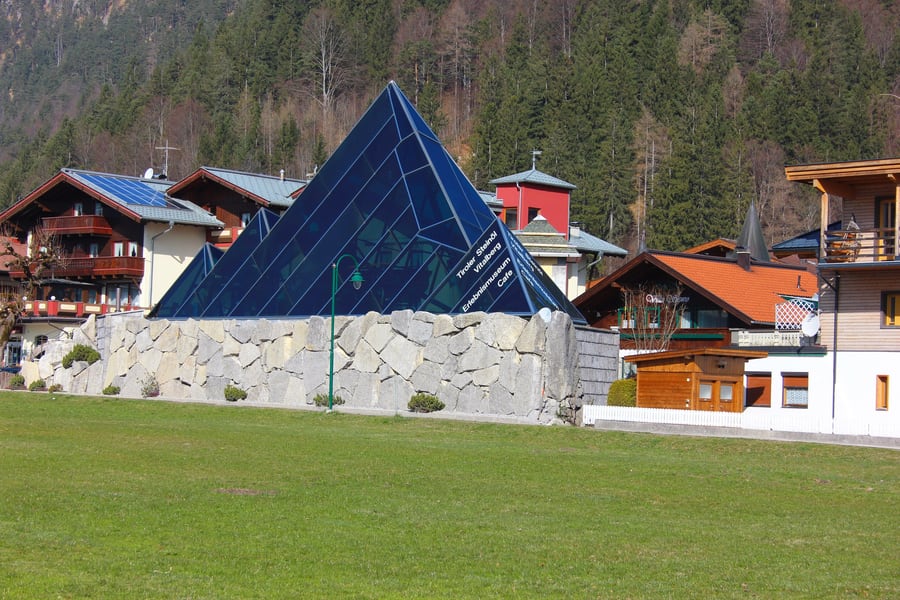 Usien / Wikimedia Commons · CC BY-SA 3.0
Tiroler Steinöl
A black, pungent oil distilled from shale found above Pertisau in 1902 and in the Bächental in 1908, still mined there by the same family. The Vitalberg in Pertisau is its museum, café and shop.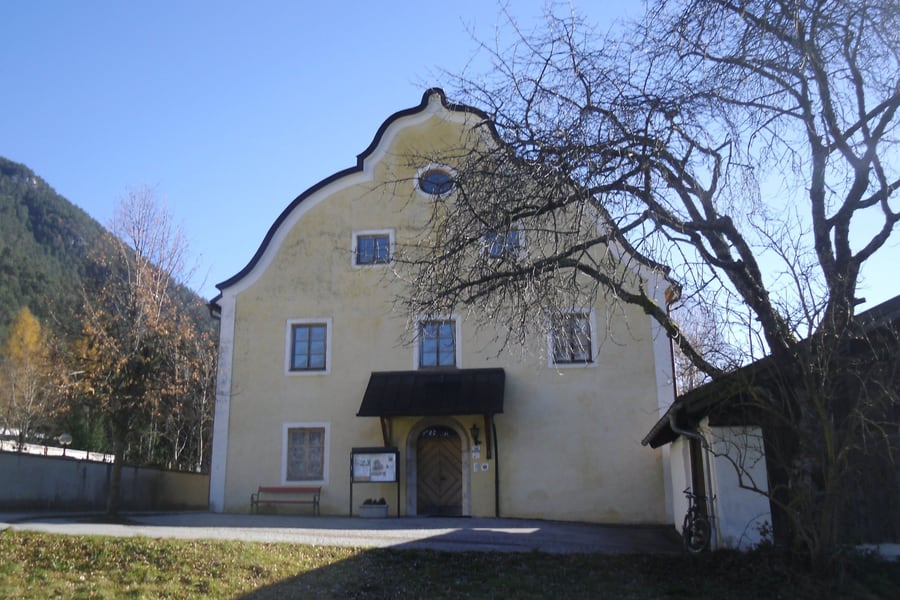 Alletto / Wikimedia Commons · CC BY-SA 3.0 AT · cropped
The Notburga Museum
In the old rectory beside the church at Eben, the story of Notburga of Rattenberg, the maid who became patron saint of servants and farmers, with the oldest documents of her cult, Baroque art and processional pieces.Timetables
The Achenseebahn runs for one season a year, to a fixed timetable. In 2026 the season is 1 May to 24 October, and the timetable changes twice: a quieter pattern in spring and autumn, and a fuller one from 4 July to 30 August. Some trains run only between Eben and Seespitz — the Panoramazug, on the level section by the lake — and are marked below.
Spring and autumn — 1 May to 3 July, 31 August to 24 October 2026
Up to the lake:
| Jenbach | Burgeck | Eben | Maurach | Maurach Mitte | Seespitz |
|---|---|---|---|---|---|
| 11:00 | 11:07 | 11:35 | 11:38 | 11:40 | 11:50 |
| 13:30 | 13:37 | 14:05 | 14:08 | 14:10 | 14:20 |
| — | — | 15:15 ● | 15:25 | 15:30 | 15:40 |
Down to Jenbach:
| Seespitz | Maurach Mitte | Maurach | Eben | Burgeck | Jenbach |
|---|---|---|---|---|---|
| 12:10 | 12:18 | 12:21 | 12:25 | 12:43 | 12:52 |
| 14:35 | 14:45 | 14:50 | 15:00 ● | — | — |
| 16:35 | 16:43 | 16:46 | 16:50 | 17:08 | 17:17 |
High summer — 4 July to 30 August 2026
Up to the lake:
| Jenbach | Burgeck | Eben | Maurach | Maurach Mitte | Seespitz |
|---|---|---|---|---|---|
| 10:06 | 10:13 | 10:41 | 10:44 | 10:46 | 10:56 |
| 10:53 | 11:00 | 11:28 | 11:30 | 11:33 | 11:43 |
| 12:13 | 12:20 | 12:48 | 12:51 | 12:55 | 13:05 |
| — | — | 13:55 ● | 14:00 | 14:05 | 14:15 |
| 13:35 | 13:42 | 14:10 | 14:13 | 14:15 | 14:25 |
| — | — | 16:10 ● | 16:15 | 16:20 | 16:30 |
Down to Jenbach:
| Seespitz | Maurach Mitte | Maurach | Eben | Burgeck | Jenbach |
|---|---|---|---|---|---|
| 11:11 | 11:21 | 11:24 | 11:28 | 11:46 | 11:53 |
| 12:31 | 12:41 | 12:44 | 12:48 | 13:06 | 13:13 |
| 13:20 | 13:30 | 13:35 | 13:40 ● | — | — |
| 14:30 | 14:40 | 14:43 | 14:47 | 15:03 | 15:12 |
| 15:35 | 15:45 | 15:50 | 15:55 ● | — | — |
| 16:45 | 16:53 | 16:56 | 17:00 | 17:18 | 17:27 |
● Panoramazug — starts or ends at Eben and does not run on the rack.
The last train down to Jenbach leaves Seespitz at 16:35 in spring and autumn, and at 16:45 in high summer. In spring and autumn that leaves about four and three-quarter hours at the lake after the 11:00 up, or a little over two after the 13:30.
Book ahead in summer
The operator warns that many trains are well booked and some already sold out, and asks travellers to check that seats are free on their chosen train before they buy. Tickets are sold online and at Jenbach station; reservations as such are taken only for groups of ten or more.
Jenbach is on ÖBB's main line between Innsbruck and Kufstein, with regional and long-distance trains from Innsbruck, Salzburg, Vienna and Munich, and the Zillertalbahn ends at the same station.
Times as of October 2026, from the Achenseebahn's own timetable (opens in a new tab).
Tickets
Tickets are sold in the Achenseebahn's online shop and at its station in Jenbach, and one price list covers the whole 2026 season. There are no classes. Children under six travel free; children from 7 to 15 pay about half. A family ticket for two adults and two children costs €120 return, and on Saturdays from 13:30 two parents and their children can ride any section for €37 — sold only on the spot, with limited places.
Dogs travel for €11 a journey, leashed and muzzled; bicycles cost €16 a journey. Anyone driving to Jenbach can park in the station multi-storey for €2 a day with a train ticket, by giving the car's registration when buying. Read from the operator in October 2026; prices include VAT and run to 24 October 2026.
Book your tickets
Jenbach – Seespitz return
€47.50 adult · €24 child 7–15 · €35.50 single
The whole line both ways, about fifty minutes up and forty down.
Book Tickets (opens in a new tab, on Achenseebahn)via AchenseebahnTrain and boat
€72 adult · €34.50 child 7–15
The railway and the Achensee boats on one ticket.
Book Tickets (opens in a new tab, on Achenseebahn)via AchenseebahnPanoramazug, Seespitz – Eben
€17 return · €12.50 single
Just the level section along the plateau, in the open coaches.
Book Tickets (opens in a new tab, on Achenseebahn)via AchenseebahnDampfkombiticket
Achenseebahn and Zillertalbahn, valid two days
A return on each of Jenbach's two steam railways.
Book Tickets (opens in a new tab, on Achenseebahn)via AchenseebahnRail Passes
No rail pass covers the Achenseebahn. Interrail names it in its list of Austrian trains not covered by the pass, and the conditions of the KlimaTicket Ö, Austria's annual all-network ticket, leave out nostalgia, tourist and rack railways. Everyone pays the operator's fare.
A pass still gets you to the start. ÖBB's regional and long-distance trains to Jenbach are covered by an Interrail Austria Pass or a Global Pass, and regional trains need no reservation. For this trip alone a pass is not worth buying; it pays only when Jenbach is one stop on a longer journey through Austria. At the lake end, the regional buses round the Achensee are free with the Gästekarte Achensee, the region's guest card.
Checked October 2026 against Interrail's table of railway companies (opens in a new tab), the KlimaTicket Ö conditions (opens in a new tab) and the Achenseebahn (opens in a new tab).
Places to Visit
The railway has six stops, but a day here is really a day on and around the lake, with the Inn valley below. These six are two places near Jenbach worth an extra day, the village at the top of the rack, the cable car at Maurach, and two places the boat reaches from Seespitz.
 böhringer friedrich / Wikimedia Commons · CC BY-SA 2.5
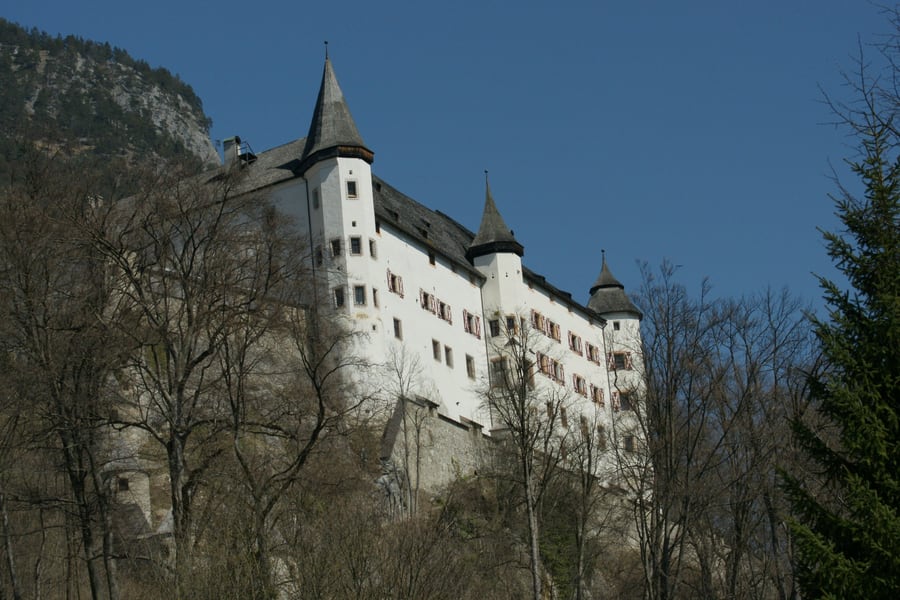
Schloss Tratzberg
A hunting lodge of the Emperor Maximilian burned in 1492, and he traded the ruin to the Tänzl family, silver-mine owners, who began the present castle in 1500. The Fuggers furnished much of what survives, including the painted courtyard. The Enzenberg counts have owned and lived in it since 1847, and it is open for tours.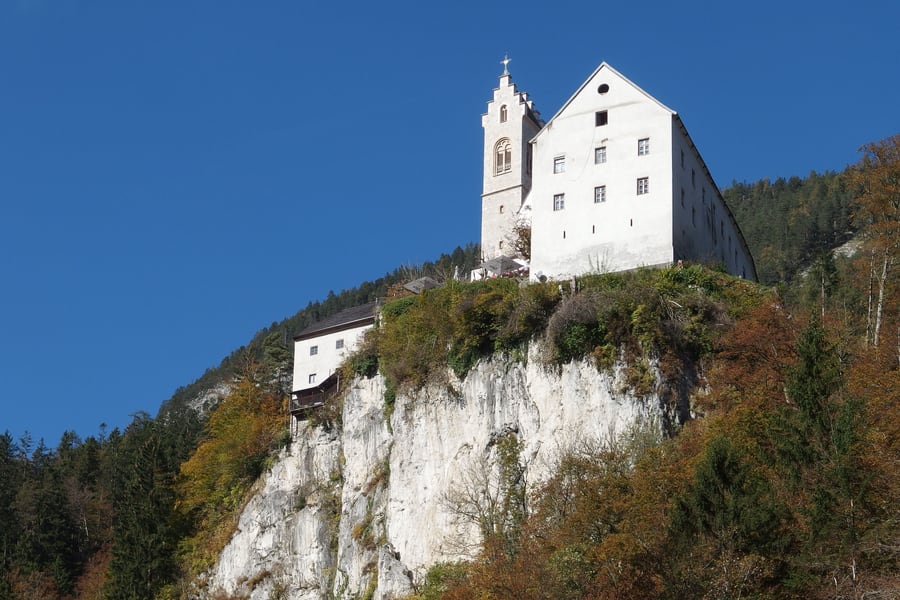 Hermann Hammer / Wikimedia Commons · CC0 · cropped
St. Georgenberg and the Wolfsklamm
A Benedictine abbey on a rock above the Stallental, founded in 1138 and the oldest in Tyrol. After a fire in 1705 the monks moved down to Fiecht, which is the monastery that owned the Achensee when the railway came; they returned in 2019. The way up from Stans is the Wolfsklamm, about an hour on wooden walkways and steps cut into the gorge.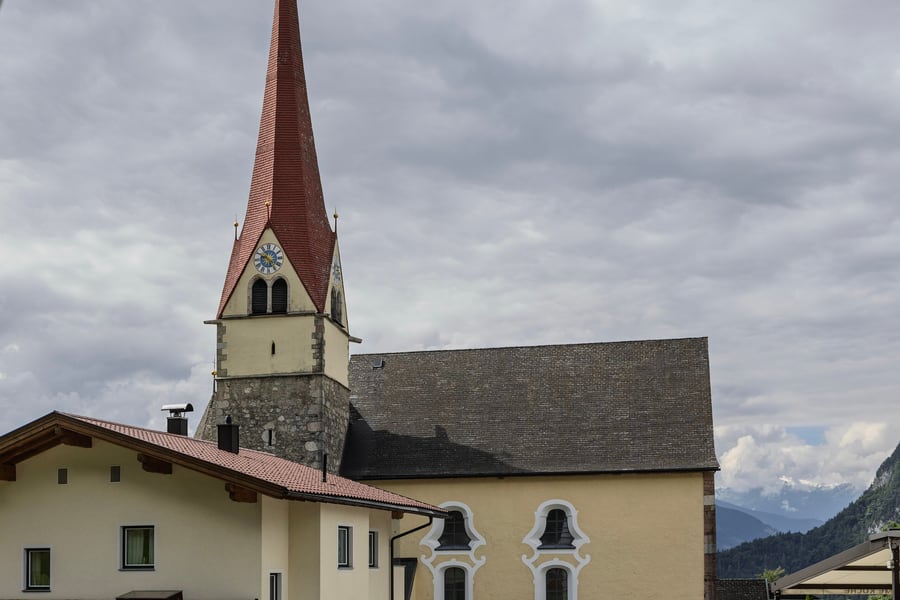 The wub / Wikimedia Commons · CC BY-SA 4.0 · cropped
Eben
Notburga of Rattenberg, a maid, died in 1313. At her own wish her body was laid on a cart drawn by two oxen, which took it across the Inn to Eben. Her bones were raised in 1718, and since the present church was consecrated in 1738 her skeleton has stood behind glass on the high altar in gold-embroidered robes.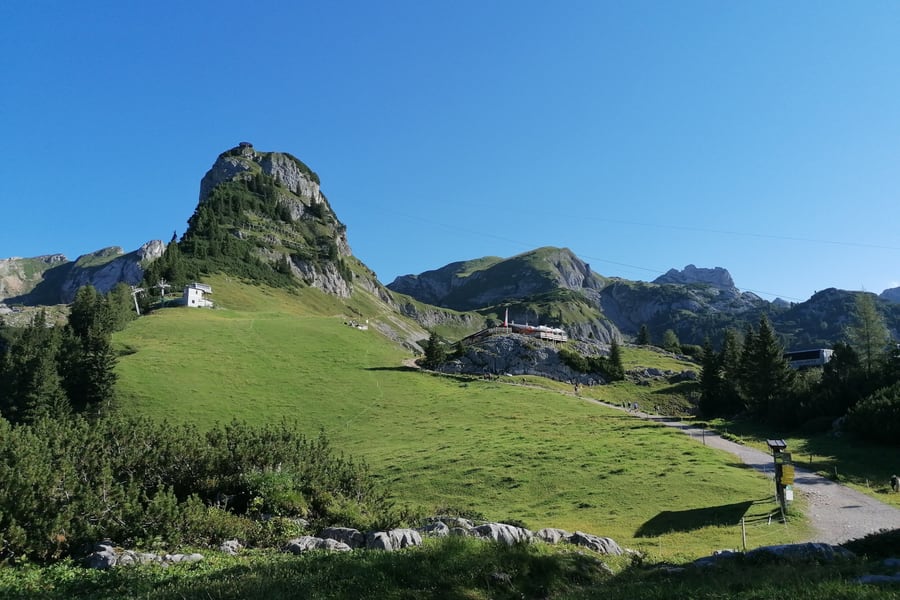 Ironbernietyrol / Wikimedia Commons · CC BY-SA 4.0 · cropped
Maurach and the Rofan
The Maurach Mitte stop opened in 2012 for the Rofan cable car, a few minutes' walk away. Running since 1959, it climbs 851 metres over 2,230 to a plateau under the Gschöllkopf, where the Erfurter Hütte and the Mauritzalm wait at the top.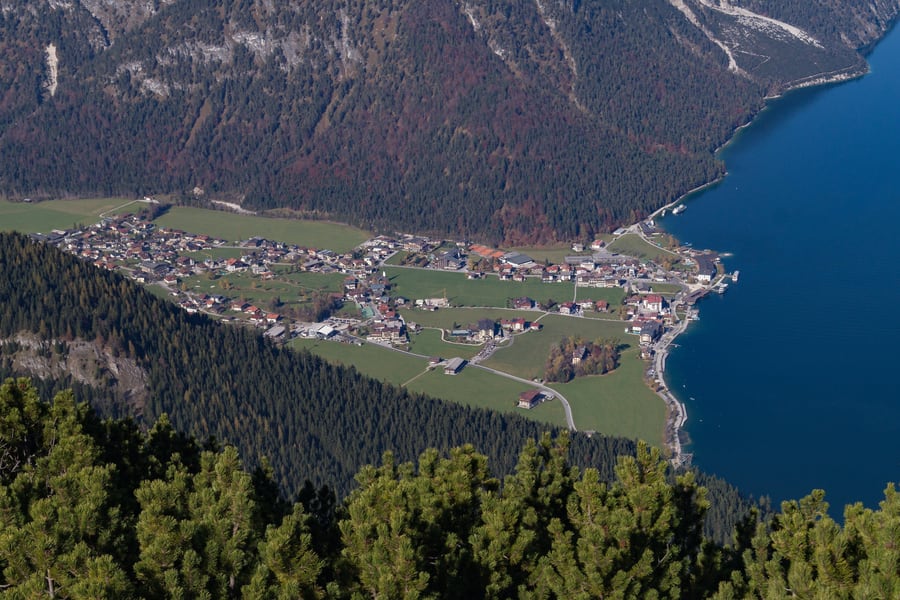 HerrAdams / Wikimedia Commons · CC BY-SA 4.0
Pertisau
A village of about 700 people on the west shore of the lake, and with Maurach the centre of the lake's tourism. The Emperor Maximilian had a hunting and fishing lodge built here; its site is now the Fürstenhaus hotel. The Karwendel rises straight behind it.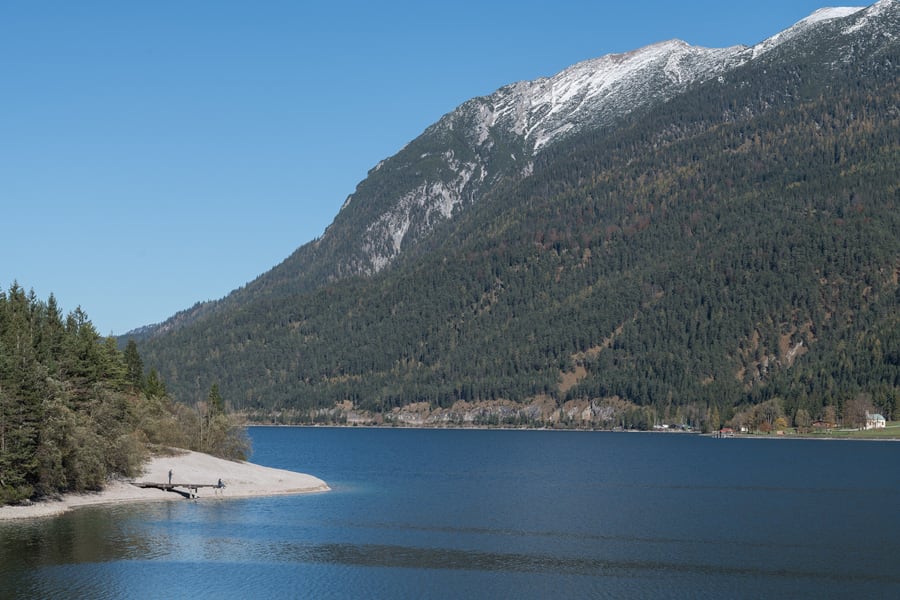 DXR / Wikimedia Commons · CC BY-SA 4.0
Gaisalm
An inn on the west shore at 938 metres, with no road to it. It is reached by the lake boat, or on foot along a narrow shore path from Pertisau to the south or Scholastika to the north.Where to Sleep
There are two natural places to stay: down in Jenbach, where the trains from Innsbruck, Munich and Vienna arrive and the Achenseebahn starts, or up by the water, a boat ride from the end of the line.
Where to stay
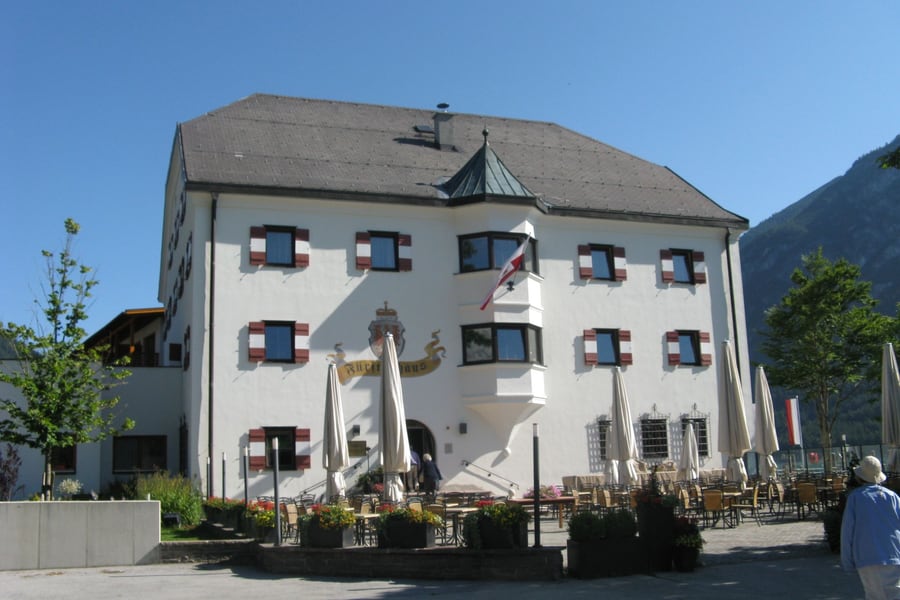 GDelhey / Wikimedia Commons · CC BY-SA 3.0 · cropped
aja Fürstenhaus am Achensee
On the lakeshore at Pertisau
On the site of the Emperor Maximilian's hunting and fishing lodge, with the lake at the door. Almost every room has a balcony looking out at either the water or the Karwendel, and there are indoor and outdoor pools.
Check Availability (opens in a new tab, on aja-hotels.com)via aja-hotels.comHotel Jenbacher Hof
In the centre of Jenbach
A family-run hotel in the middle of Jenbach, where the train starts, with rooms and breakfast, a bar and a wellness area.
Check Availability (opens in a new tab, on jenbacherhof.at)via jenbacherhof.atQuestions or corrections
Planning this trip and stuck on something, or spotted a time, fare or detail that has changed? Send us a message about Achenseebahn. We read every one, and we update this page when something has changed.