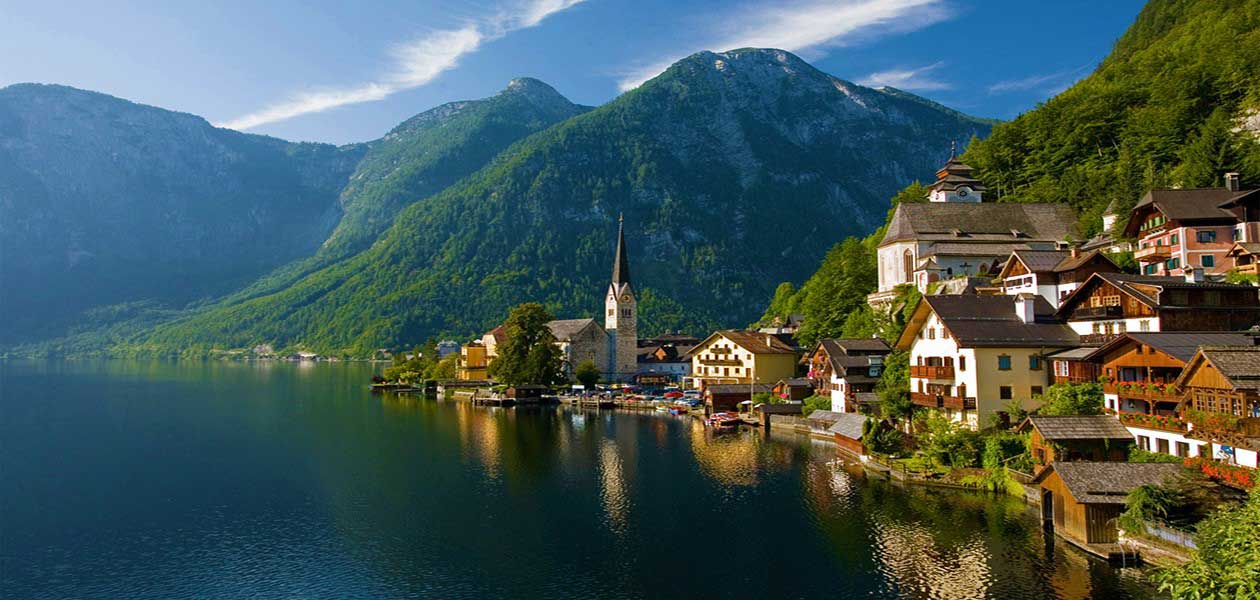
Austria
Austria is a landlocked federation of nine states lying across the Eastern Alps, with about 9.2 million people in 83,879 square kilometres and eight neighbouring countries — Germany, the Czech Republic, Slovakia, Hungary, Slovenia, Italy, Switzerland and Liechtenstein. Vienna, out in the flat east, is both the capital and the most populous state; the further west the country goes the higher it climbs, until Tyrol and Vorarlberg are almost entirely mountain.
That geography is the reason Austria matters to railway history. Austrian engineers worked out how to take a standard-gauge railway over a mountain range before anyone else had managed it, and the network that grew from that is still the point: ÖBB runs frequent, punctual trains through passes and tunnels that were engineering firsts in their day, and they are ordinary scheduled services on ordinary tickets rather than tourist specials. Add the private and narrow-gauge lines that survive up the mountain valleys, and Austria is a country you can see properly without ever renting a car.
Rail journeys in Austria
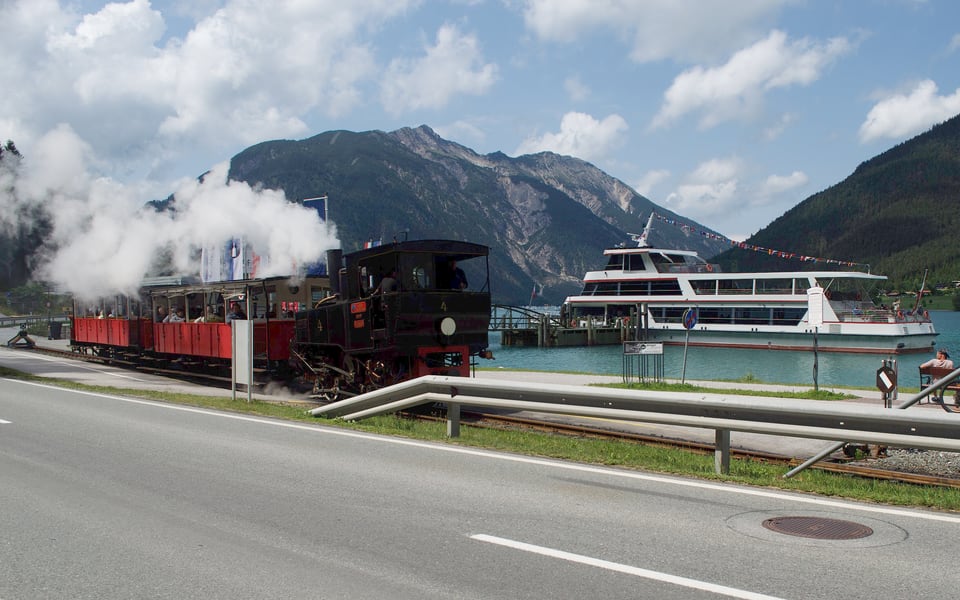
Achenseebahn
Europe's oldest rack railway worked only by steam, pushing up from the Inn valley to Tyrol's largest lake since 1889.
View journey →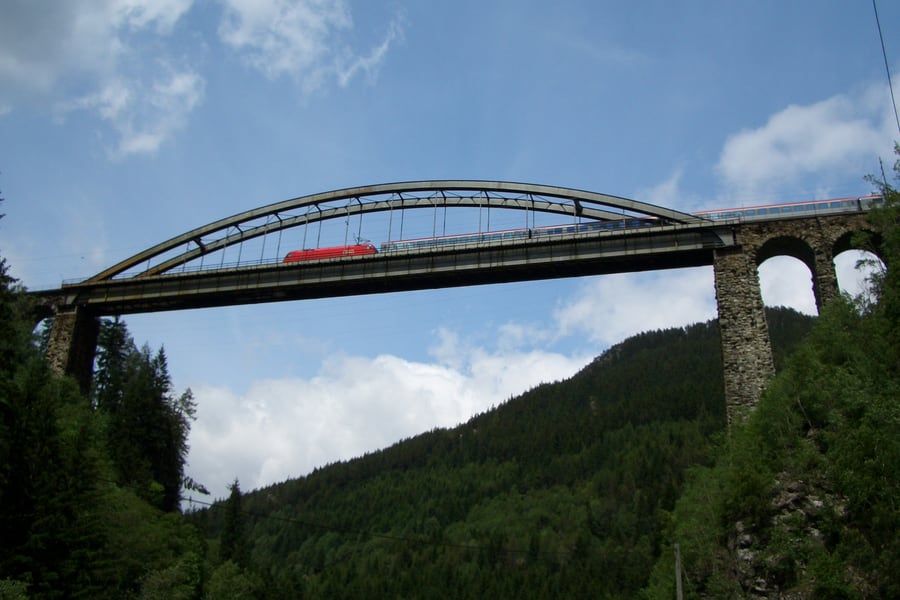
Arlberg Railway
Austria's hard western crossing — 136 km over a 1,311 m summit and through a ten-kilometre tunnel that took four years and ninety-two lives.
View journey →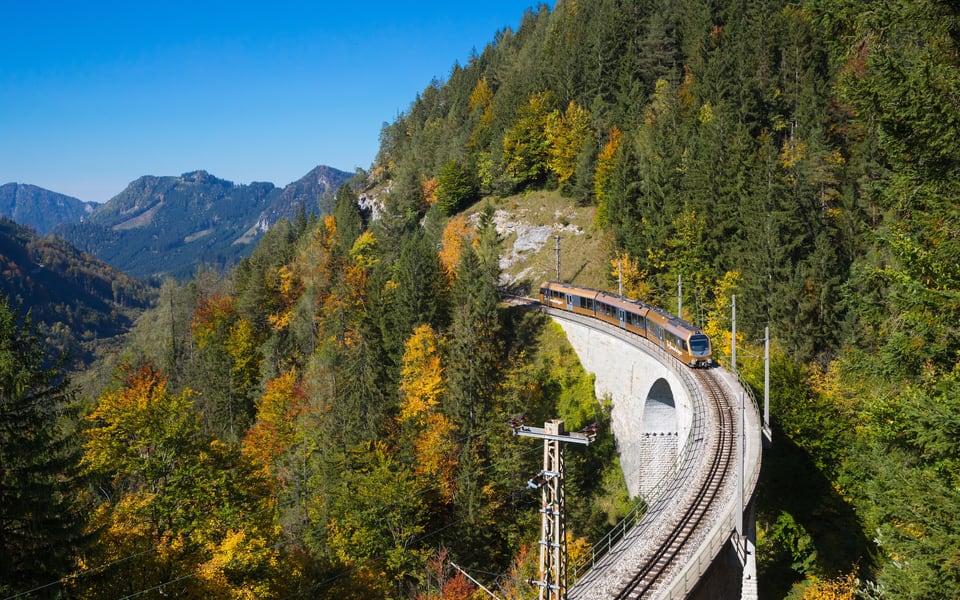
Mariazellerbahn
So crowded within a few years that it stopped advertising, the line to Mariazell went electric in 1911. One of its 1911 engines still hauls a weekend train.
View journey →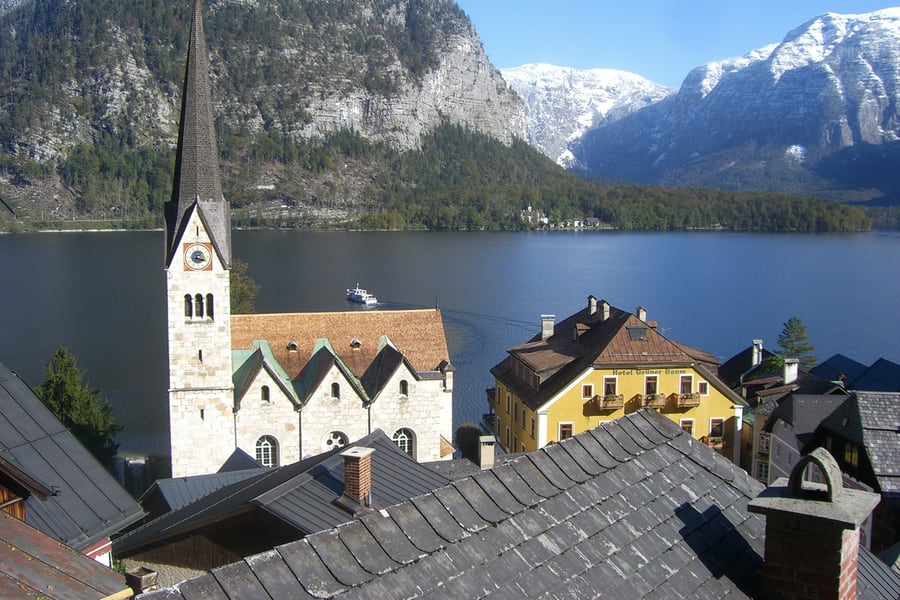
Salzburg to Hallstatt
The prettiest way to the prettiest village in Austria — two trains, and a station on the wrong side of the lake, so you arrive by boat.
View journey →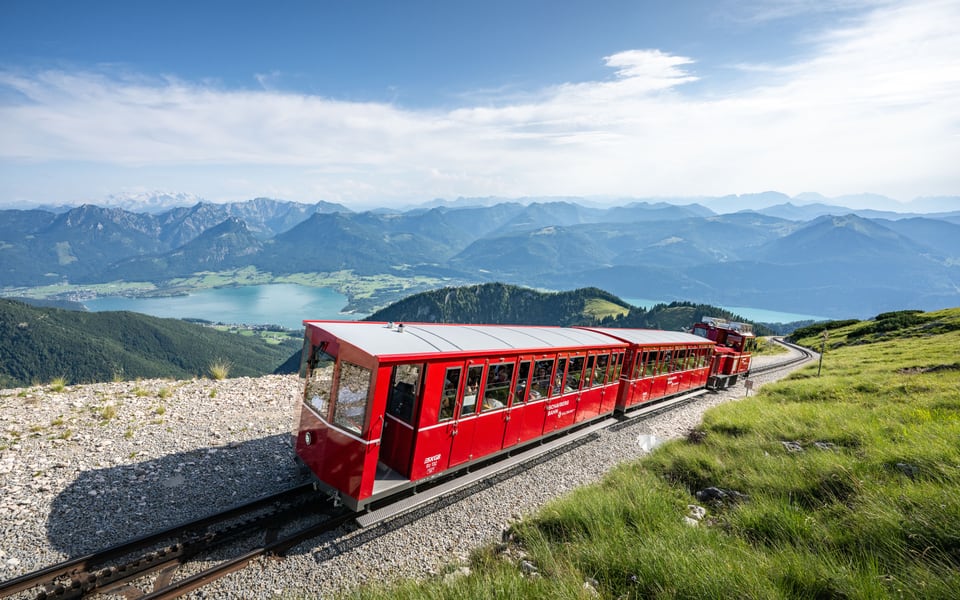
Schafbergbahn
Before the railway, St. Wolfgang carried its visitors up the Schafberg in chairs. Since 1893 Austria's steepest rack railway has made the climb instead.
View journey →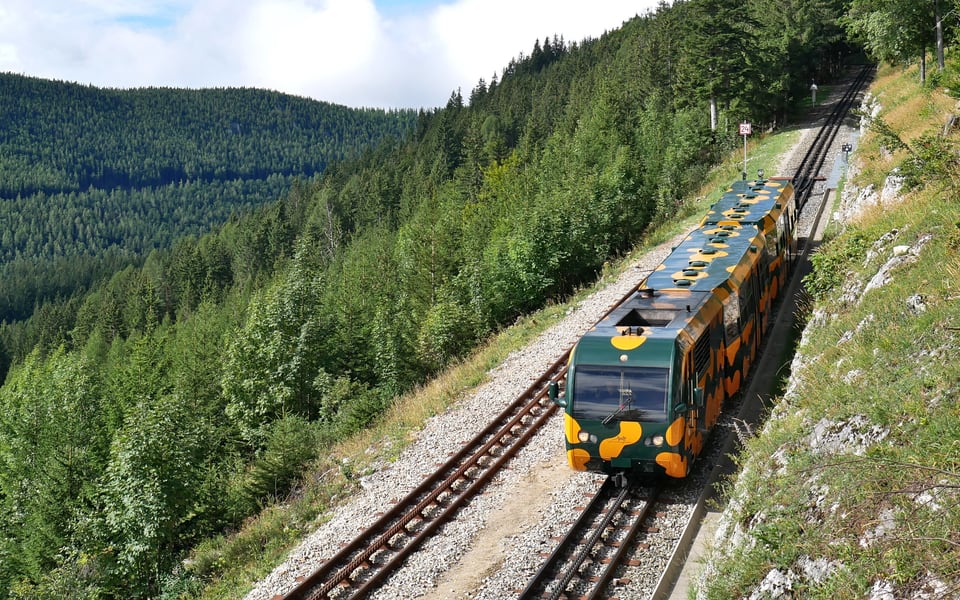
Schneebergbahn
The Schneeberg's limestone waters Vienna and leaves its own plateau dry. Since 1897 a rack railway has climbed it to Austria's highest station.
View journey →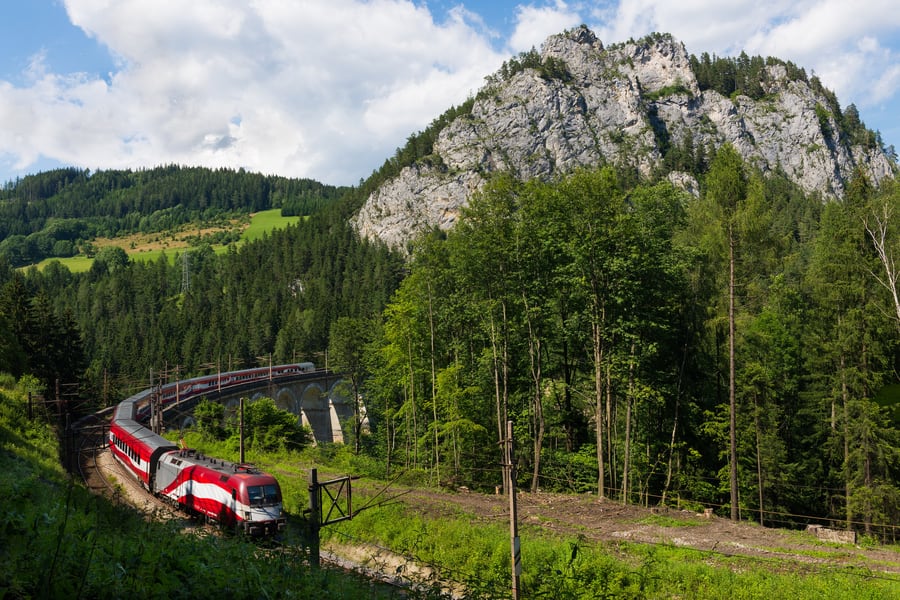
Semmering Railway
The world's first mountain railway, and the first ever made a UNESCO site — 41 km of 1850s stone viaducts still carrying ordinary trains.
View journey →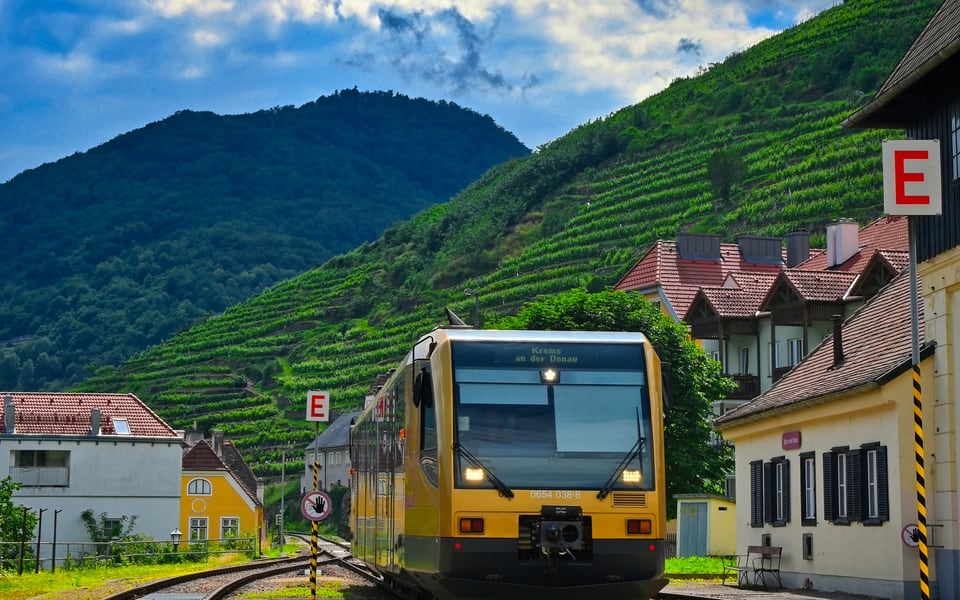
Wachaubahn
Through the Wachau's vineyards on a line that is itself part of the World Heritage listing, protected since 1998 and worked by golden railcars.
View journey →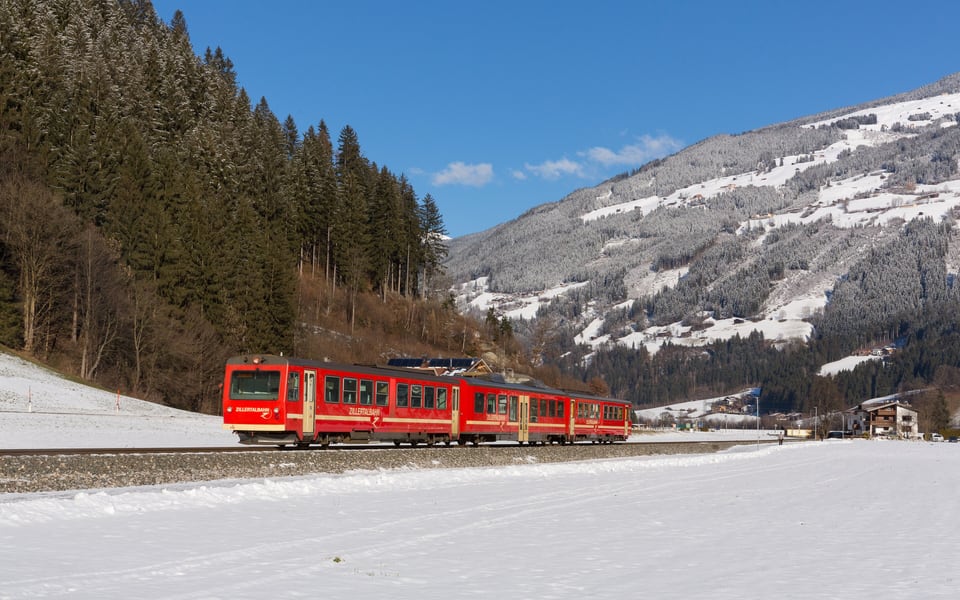
Zillertalbahn
A working valley railway with 3.6 million passengers a year, every half hour up the Zillertal — and on summer midweek days, a steam train among them.
View journey →Good to know
What are Austria's best rail journeys?
The Semmering Railway is the one that matters — Europe's first standard-gauge mountain railway, built 1848–1854, and in 1998 the first railway in the world to become a UNESCO World Heritage Site. It is 41 km of stone viaducts over an Alpine pass, an hour from Vienna, ridden on a normal ticket. The Arlberg Railway is its harder western twin — a ten-kilometre tunnel that cost 92 lives — and Salzburg to Hallstatt threads the Salzkammergut lakes to a village you can only reach by boat. Beyond them, the Schneebergbahn rack railway climbs from Puchberg to Hochschneeberg at 1,800 m — the highest railway station in the country.
Is the Semmering Railway a special tourist train?
No — and that is the best thing about it. The Semmering Railway is a normal working main line. Regular ÖBB regional (REX) trains run over it, and so do the Railjets between Vienna and Graz, so you ride a World Heritage Site on an ordinary ticket for a few euros. There is no heritage train, no excursion fare and nothing to book.
Do I need to book Austrian trains in advance?
For regional and most scenic services you can simply buy a ticket and board. For long-distance ÖBB Railjet trains, booking ahead usually gets a cheaper fare and an optional seat reservation. Eurail and Interrail passes are valid on ÖBB.
When is the best time to visit Austria by rail?
Late spring to early autumn (May–October) for green mountains and hiking — and it is the season for the Semmering's Bahnwanderweg, the trail that follows the viaducts on foot. December to March gives you snow and the Christmas markets. July and August are the busiest.