Arlberg Railway
Siegele Roland / Wikimedia Commons · Public domain
- Distance136.7 km · standard gauge
- DurationAbout 2½ hours, Innsbruck–Bludenz
- Best seasonYear-round · Dec–Apr for the ski traffic
Introduction
Thirty years after Ghega proved a railway could cross a mountain at the Semmering, Austria went and did the hard one.
The Arlbergbahn runs 136.7 kilometres from Innsbruck to Bludenz, over a summit at 1,311 metres, and it exists because the western province of Vorarlberg was otherwise cut off from the rest of the country by a wall of rock. Building started on 20 June 1880 and finished on 21 September 1884, under a planning director named Julius Lott.
Ninety-two men died doing it.
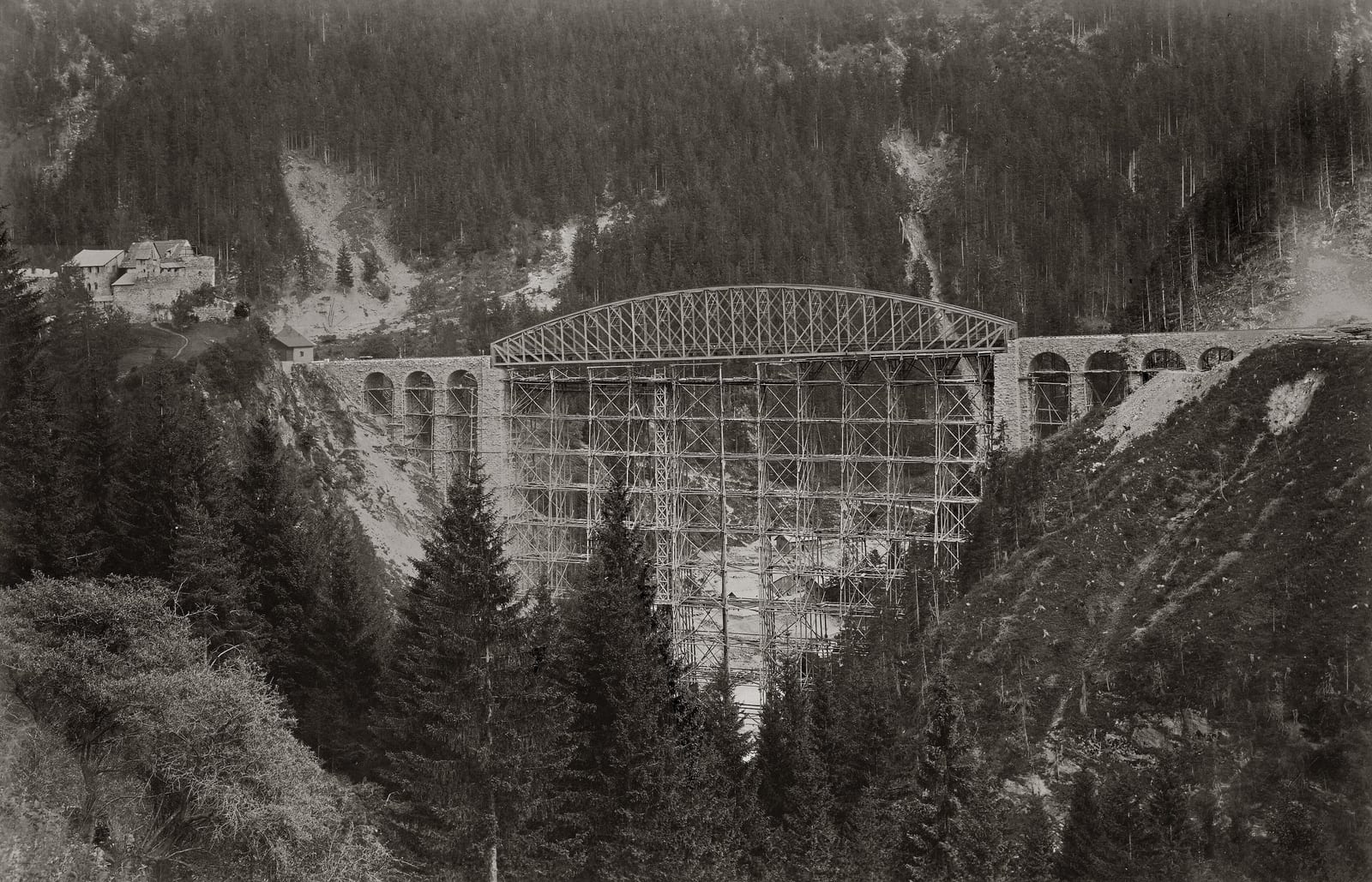
That number matters, and it is why this line reads differently from the Semmering. Nobody recorded what the Semmering cost in lives — the figure simply doesn't exist. The Arlberg's does. Ninety-two, in four years, mostly inside a ten-kilometre tunnel driven through a mountain with hand tools and blasting powder, in the dark, in the 1880s.
The tunnel is still the point of the whole thing. It opened at 10.22 km, single track, and was doubled later. Then — and this is a detail that tells you something about modern Austria — in 2001 they made it longer, to 10,650 metres, because St. Anton am Arlberg was moving its station for the World Ski Championships. A Victorian tunnel, extended to accommodate a downhill race.
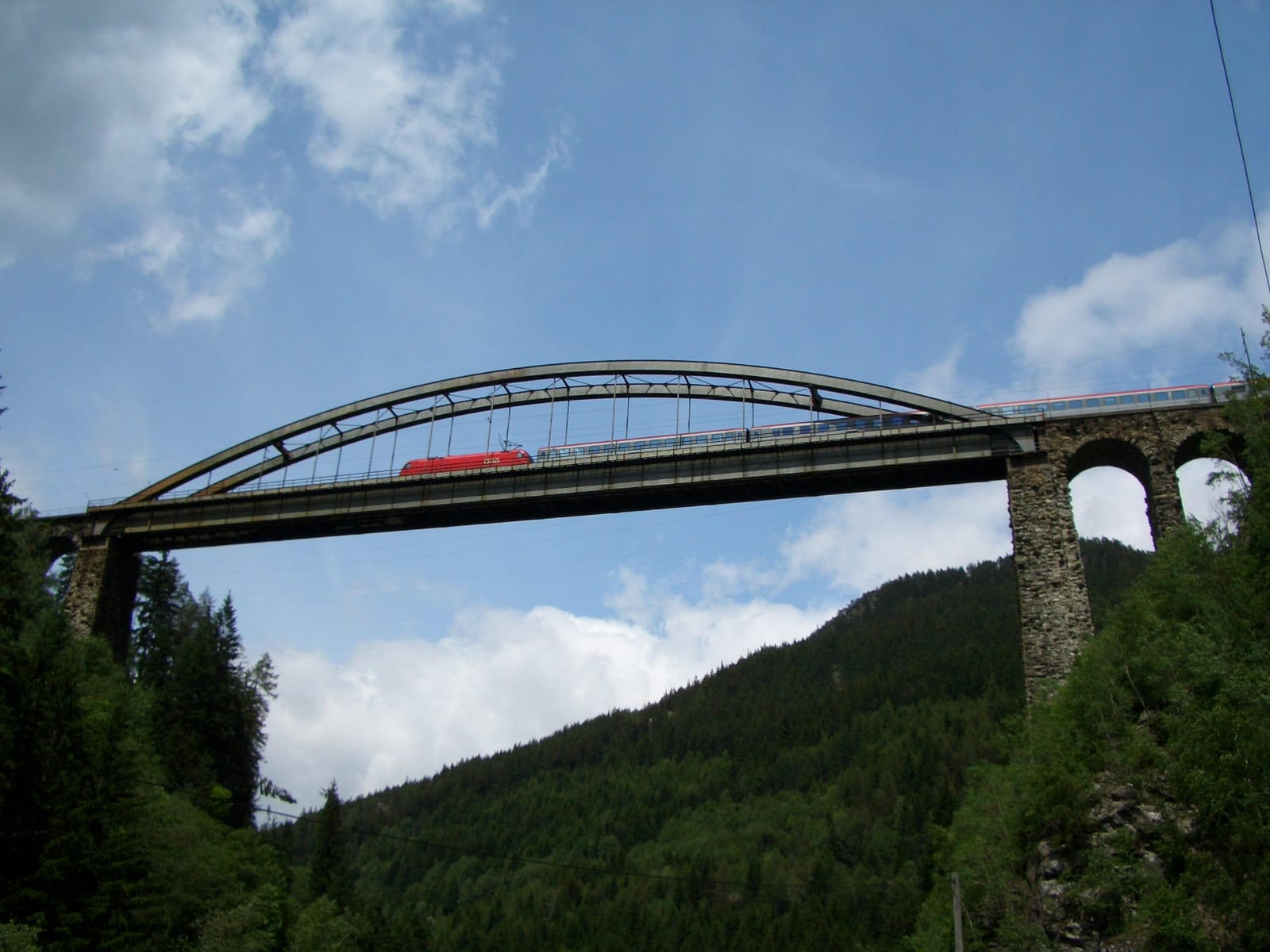
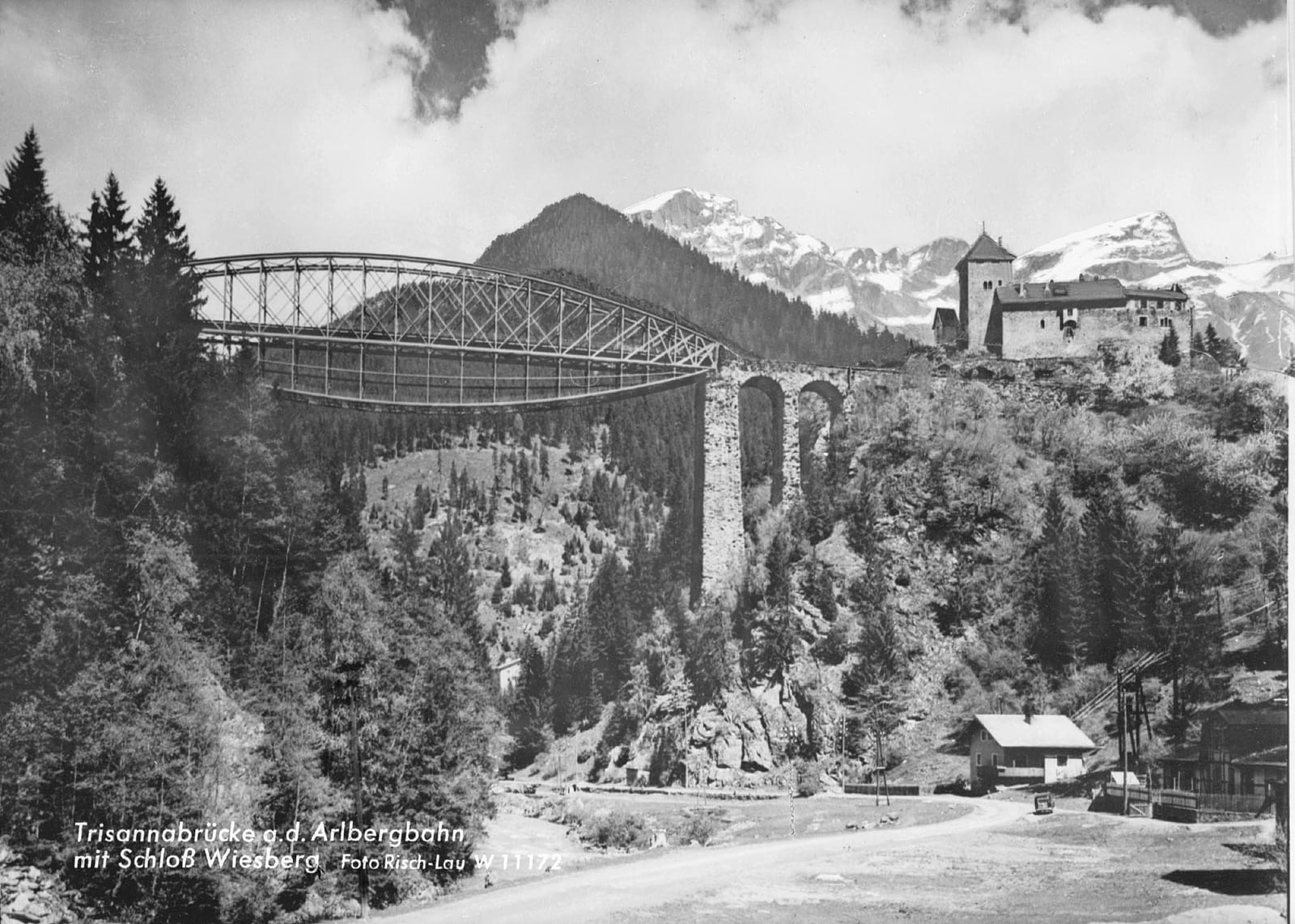
The line's famous picture is the Trisanna bridge: a single arch thrown across a gorge, with the castle of Wiesberg on the hillside above it. Photograph it, by all means. But know what you are photographing — the bridge is from 1964. The 1884 original is gone, replaced on the same spot, and almost everything written about this line lets you assume otherwise. What survives from Lott's day is the setting, the alignment, and the tunnel.
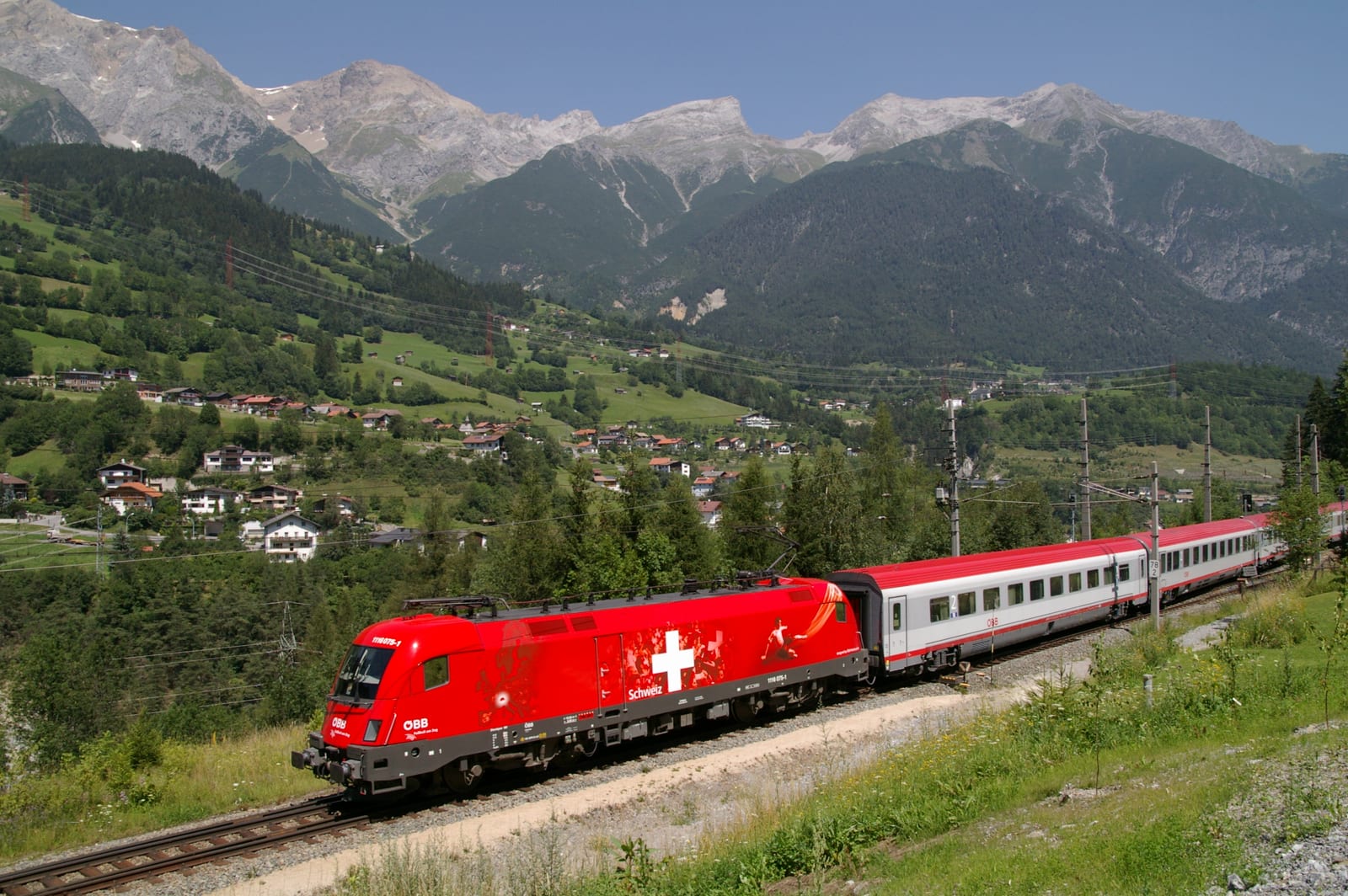
Then the Alps got electrified — the tunnel in 1924, the ramps in 1925 — and the Arlbergbahn settled into what it still is: not a heritage line, not a tourist attraction, but the way west. Railjets run it. So do the ski trains, packed from December with people and their gear.
It is the workaday twin of the Semmering: less decorated, less celebrated, no UNESCO plaque — and considerably more brutal in what it cost. Ride them both, in that order, and you have the whole story of what it took to get Austria over its own mountains.
The Journey
Innsbruck is a good place to start a railway journey — a city wedged into the Inn valley with mountains standing over the rooftops, close enough that you can see the snow from the platform.
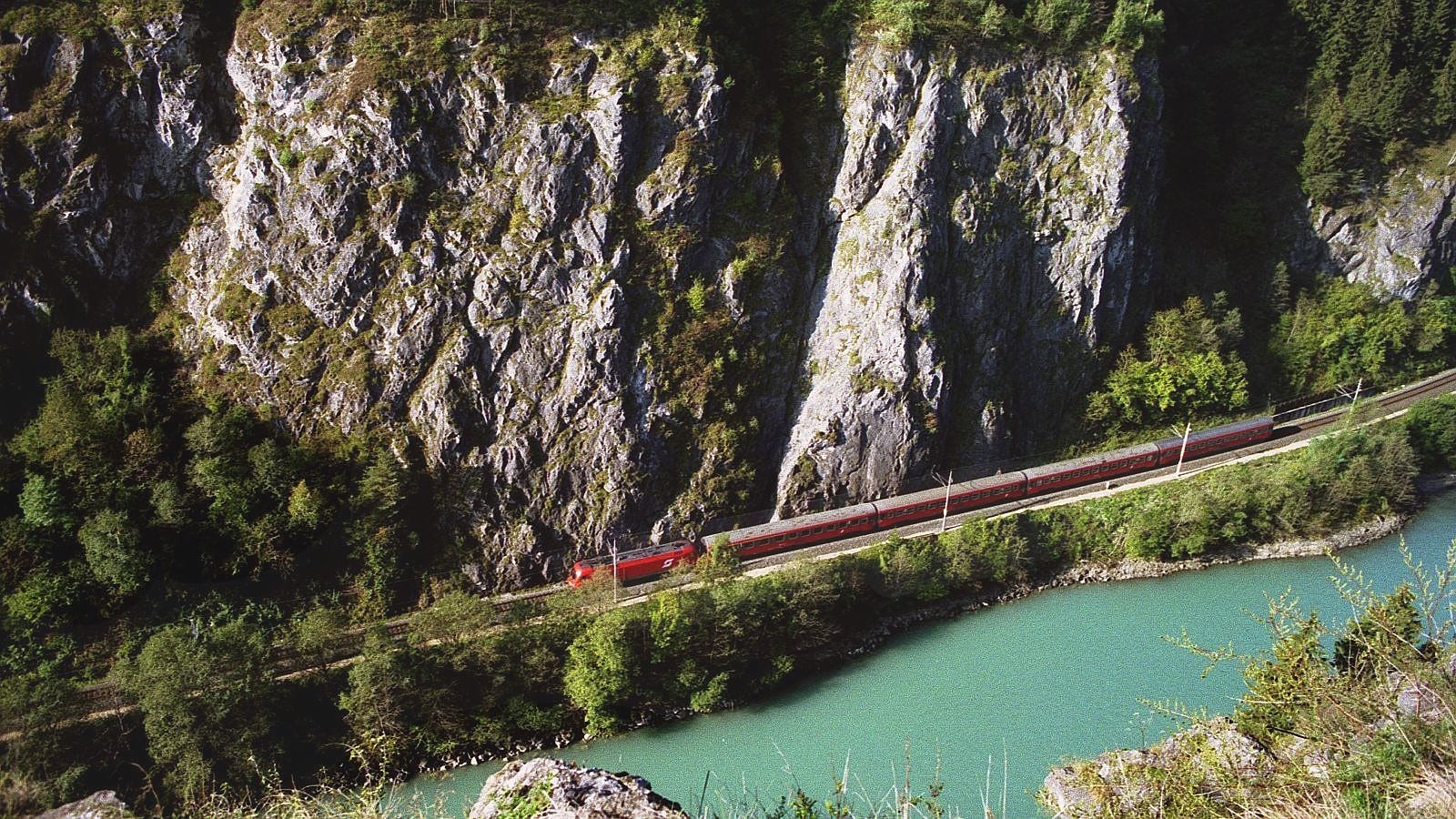
The line goes west, up the Inn, and for a while it is easy: a wide valley, villages, farmland, the river alongside. Imst-Pitztal. Then the valley narrows and the character changes. The railway climbs onto a ledge above the water and stays there, rock overhead and green river below, and this stretch — the Inn gorge — is the loveliest part of the whole line and goes on for a satisfying length of time. Sit on the right leaving Innsbruck.
At Landeck-Zams the mountains take over properly, and shortly after comes the moment everyone waits for. The train swings out over the Trisanna gorge on a single steel arch, 87 metres above the bottom, with Schloss Wiesberg on the hill above it. It lasts a few seconds. It is on every postcard of this railway that has ever been printed — and, as above, the arch you are riding on was put there in 1964, not by Lott's men.
Then the climb. The western ramp works at up to 3.4 per cent — about 1 in 29, which is genuinely steep for a main line — and the train grinds up through St. Anton am Arlberg, which in winter is less a station than a mass migration of skis.
And then it goes dark for a long time.
The Arlberg Tunnel is 10.65 kilometres now and there is nothing whatever to see. But this is the part worth being awake for, because it is the whole reason the railway exists and it is where the ninety-two died. Four years of hand-drilling and blasting, from both ends, hoping to meet. They met. You cross their work in the time it takes to read this page, and then you are out the other side at Langen am Arlberg, in a different province.
Vorarlberg feels different immediately. The Klostertal drops away west towards Bludenz, the villages look subtly more Swiss than Tyrolean, the accent shifts, and the border is not far. This is what the tunnel was for: not a scenic route, but a country stitching its western end onto itself.
Bludenz at the bottom. About two and a half hours from Innsbruck.
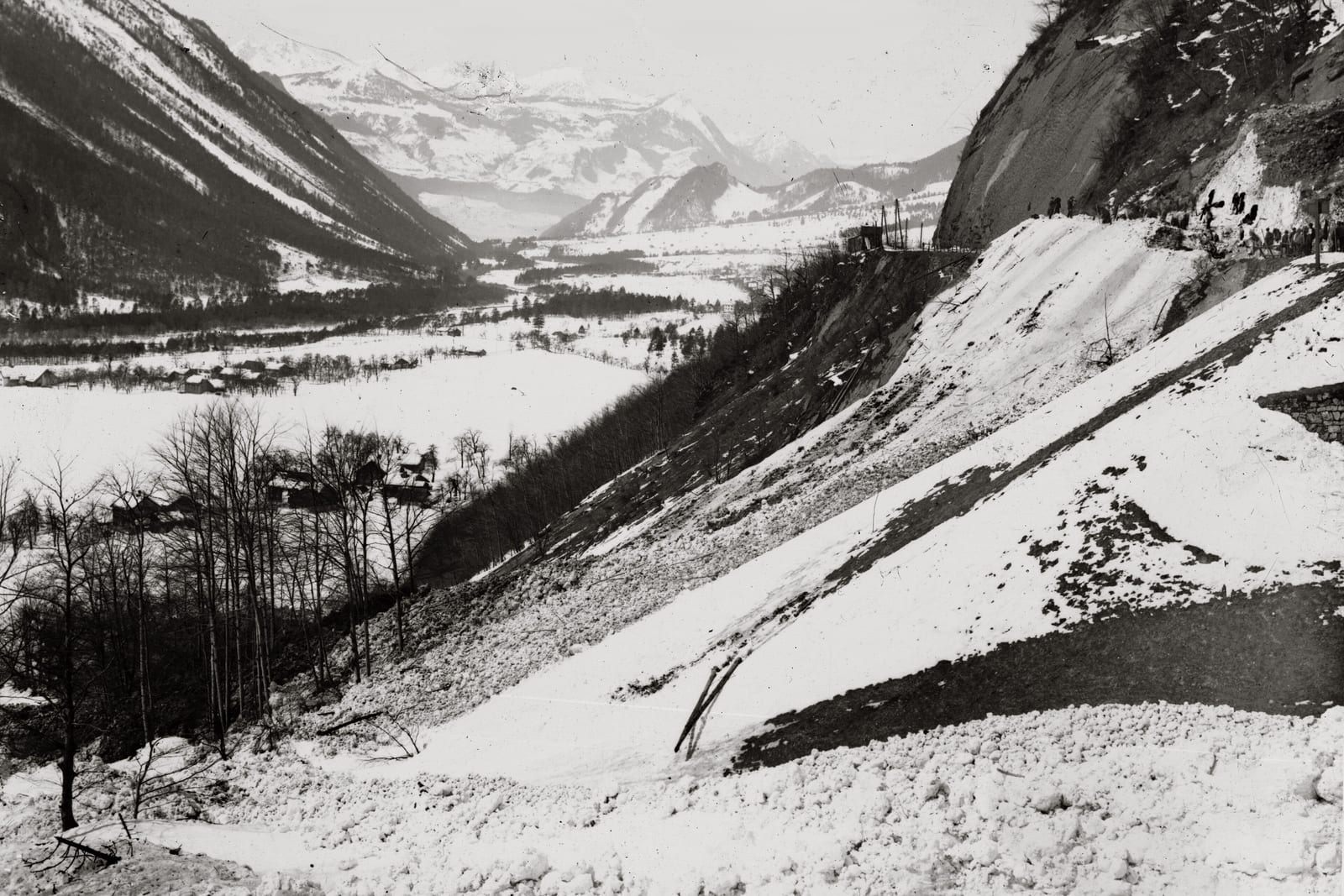
Go in winter if you want to understand it. The Klostertal under snow — steep, white, avalanche-country, the line clinging to the side of it — explains in about thirty seconds why they went under the mountain instead of over, and why it cost what it cost.
Along the route
Carl Alfred Czichna / Wikimedia Commons · Public domainNinety-two men
The Semmering's death toll was never recorded. The Arlberg's was: 92 lives between 1880 and 1884, boring a ten-kilometre tunnel through a mountain by hand and blasting powder. It is worth knowing before you sit through it without looking up.Foto: Sammlung Risch-Lau, Vorarlberger Landesbibliothek / Wikimedia Commons · CC BY 4.0The bridge that isn't the bridge
The Trisanna crossing is the line's famous picture — a single arch flung across a gorge, with Schloss Wiesberg on the hill above. But the span you photograph is from 1964. The original of 1884 is gone; only the setting is unchanged.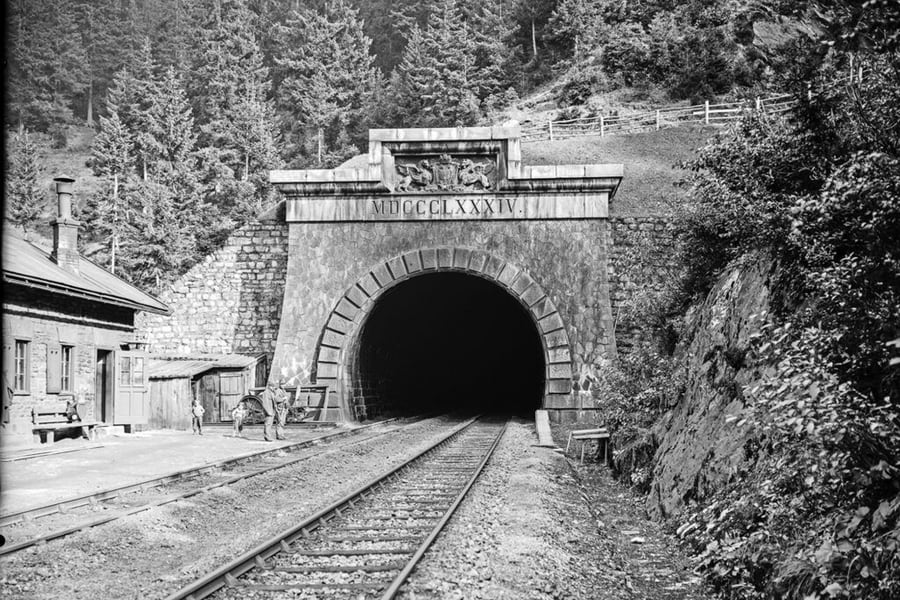 Unknown author / Wikimedia Commons · Public domain · cropped
A tunnel that keeps growing
The Arlberg Tunnel opened at 10.22 km, single track, later doubled. Then in 2001 they lengthened it — to 10,650 m — because St. Anton's station was moved for the World Ski Championships. A Victorian tunnel, extended for a downhill race.A bit of history
Culture & experiences along the way
OhneEisen / Wikimedia Commons · CC BY 4.0The Inn gorge
West of Imst the valley narrows and the railway runs on a ledge above green water with the rock overhead. It is the prettiest stretch of the line and it lasts a long time. Sit on the right leaving Innsbruck.Josef Saurwein / Wikimedia Commons · CC BY-SA 2.0 DESkis on the luggage rack
St. Anton is on this line, so from December the Arlbergbahn fills with skiers and their gear — this is a working ski train as much as a scenic one, and in season the carriages have a particular smell and a particular noise.Sammlung Glasplatten Klostertal, Vorarlberger Landesbibliothek / Wikimedia Commons · CC BY 4.0The Vorarlberg side
Come out of the tunnel at Langen and you are in a different Austria — the Klostertal drops away west towards Bludenz, the accents change, and Switzerland is close. The line was built precisely because that side of the mountain was otherwise unreachable.Timetables
Like the Semmering, this is a main line, not an excursion. You ride whatever ÖBB is running.
How it works:
| Detail | What to expect |
|---|---|
| The line | Innsbruck ⇄ Bludenz · 136.7 km · standard gauge |
| Summit | 1,311 m at km 104 |
| The tunnel | 10.65 km (opened at 10.22 km; lengthened in 2001) |
| Ruling gradient | 3.4% on the western ramp · 2.6% on the eastern |
| Journey time | About 2½ hours end to end |
| Trains | ÖBB Railjet and regional services, all day |
Good to know:
- Sit on the right leaving Innsbruck for the Inn gorge and the Trisanna crossing. Left, coming the other way.
- The Trisanna bridge goes by fast. It is a few seconds, on a curve, shortly after Landeck-Zams. Have the camera ready or just look at it — the second is better.
- The regional trains are better than the Railjet for scenery: slower, more stops, and you can break the journey at Landeck or St. Anton.
- Innsbruck to St. Anton is the good half. If you don't need Bludenz, that's the ride: the gorge, the bridge, the climb, about ninety minutes.
- Winter is the season, and the problem. The line is at its most dramatic under snow, and it is also when the ski trains fill it — St. Anton is on this railway. Reserve if you're on a Railjet in season.
- Don't expect anything in the tunnel. Ten and a half kilometres of nothing to look at. It is still the most important part of the line.
Tickets
There is nothing special to buy. The Arlbergbahn is an ordinary ÖBB main line, so an ordinary ticket rides it — Innsbruck to Bludenz for the whole crossing in about two and a half hours, or Innsbruck to St. Anton for the good half: the Inn gorge, the Trisanna bridge and the climb to the tunnel mouth in ninety minutes, without the ten kilometres of darkness. Eurail and Interrail are valid, and Railjet reservations are optional.
Two things worth planning. Reserve in ski season: from December, St. Anton fills these trains with people and equipment, and a Railjet without a reservation in February means standing. And the regional is the better ride — slower, more stops, and it lets you get off at Landeck or St. Anton and pick up a later one.
Book your tickets
An ordinary ÖBB ticket
Innsbruck–Bludenz, about two and a half hours
A point-to-point fare covers the whole crossing, and rail passes are valid.
Book Tickets (opens in a new tab, on ÖBB)via ÖBBInnsbruck–St. Anton
The short version, about ninety minutes
The good half only — the gorge, the bridge and the climb, on a cheap regional fare.
Book Tickets (opens in a new tab, on ÖBB)via ÖBBRail Passes
Interrail passes are valid. Interrail's table of railway companies lists ÖBB's regional trains, InterCity and Railjet as included in Austria, so the Arlberg line is covered by an Interrail Austria Pass or a Global Pass. Reservations on ÖBB's InterCity and Railjet trains are optional and cost €3; reserve in the ski season, when the trains fill.
For this journey alone, a pass is not worth buying. Innsbruck to Bludenz is an ordinary ÖBB fare. A pass pays when the Arlberg is one day of a longer trip through the Alps.
Checked October 2026 against interrail.com (opens in a new tab), Interrail's Austria page (opens in a new tab) and its reservation fees (opens in a new tab).
Places to Visit
The Arlberg is a working line through two very different provinces, and the stops are the reason to break it.
One practical warning: the good places are spread thin. Innsbruck to Bludenz takes about two and a half hours, so getting off properly means a night somewhere rather than an afternoon — and between December and April, booking that night a long way ahead.
 Wilfredor / Wikimedia Commons · CC0 · cropped
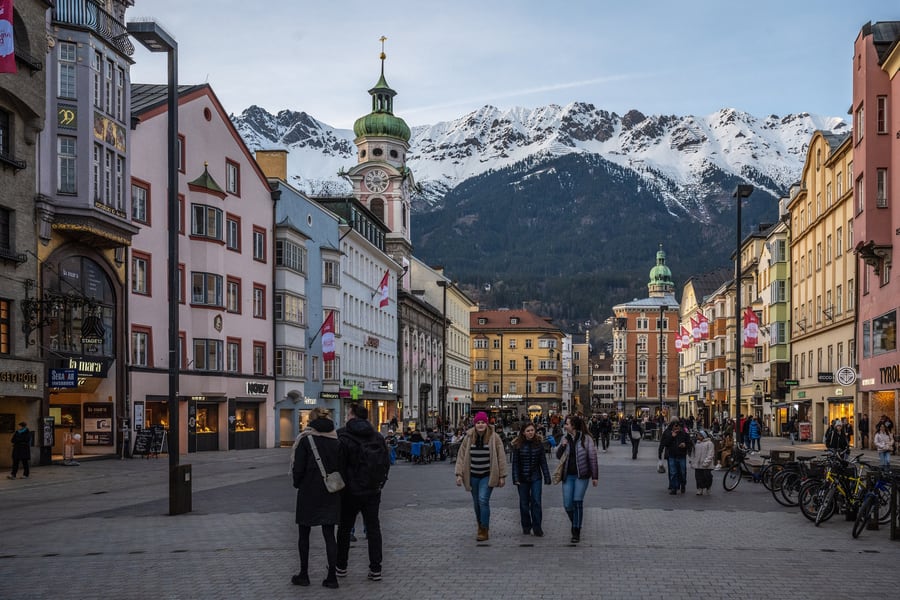
Innsbruck
The Tyrolean capital and the eastern end of the line, wedged between the Nordkette and the Inn. It has hosted the Winter Olympics twice, in 1964 and again in 1976 — the second time at three years' notice, after Denver's voters refused to pay for them. The old town is the postcard; the setting is the real thing. Zaha Hadid's Hungerburgbahn climbs out of the city centre to meet the Nordkettenbahn, running since 1928, which lifts you to Seegrube at 1,905 m.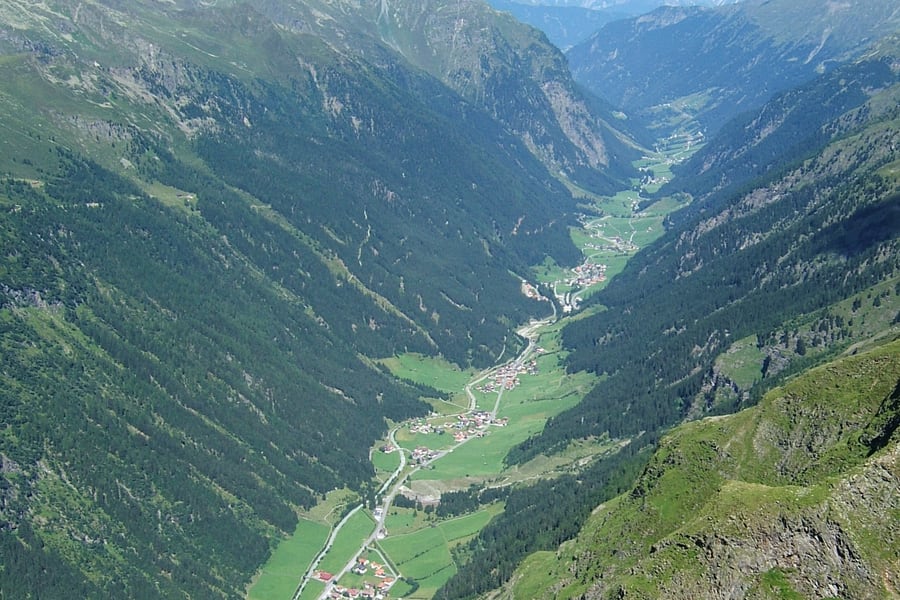 Cactus26 / Wikimedia Commons · CC BY 2.5 · cropped
Imst and the Pitztal
The point where the Inn valley tightens and the mountains turn serious. Imst sits at 828 m, holds its Schemenlaufen carnival only once every four years — it is on UNESCO's intangible cultural heritage list — and is where Hermann Gmeiner founded the first SOS Children's Village in 1949. South of the town the Pitztal runs deep into the Ötztal Alps towards a glacier and the Wildspitze, at 3,770 m the second highest mountain in Austria.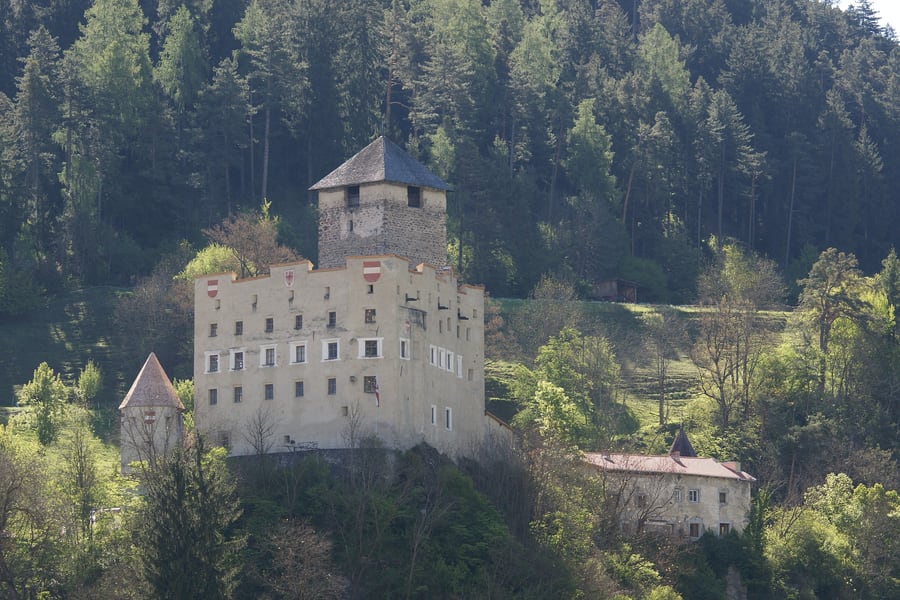 Asurnipal / Wikimedia Commons · CC BY-SA 4.0 · cropped
Landeck
Not a beauty in itself, but the junction — and the place to get off if you want the Trisanna bridge from the ground rather than through a window. Schloss Landeck was raised as a Tyrolean court castle in the last quarter of the 13th century and first appears in the record in 1296, on a rock between the valley wall and the deep-cut Inn. The town bought it in 1942 and it has held the district museum since the early 1970s.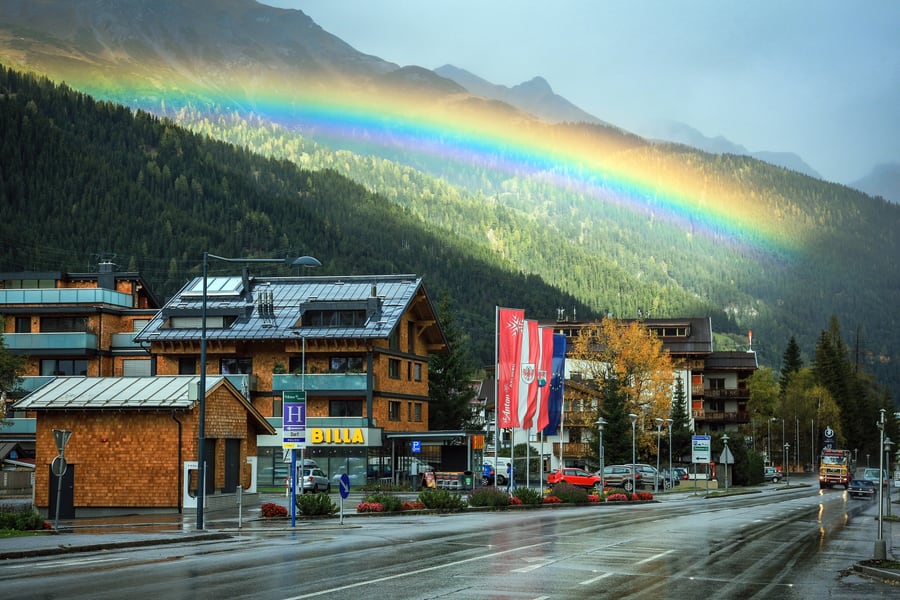 Roy Egloff / Wikimedia Commons · CC BY-SA 4.0 · cropped
St. Anton am Arlberg
The reason half your fellow passengers are here: one of the great Alpine resorts, at 1,304 m, with the main line running through the middle of it. Hannes Schneider taught the Arlberg technique here and made the place famous; the Nazis took his ski school in 1938 and he left for America. The station was moved for the 2001 World Ski Championships, which is also why the tunnel got longer. Summer is quieter, cheaper and full of walkers.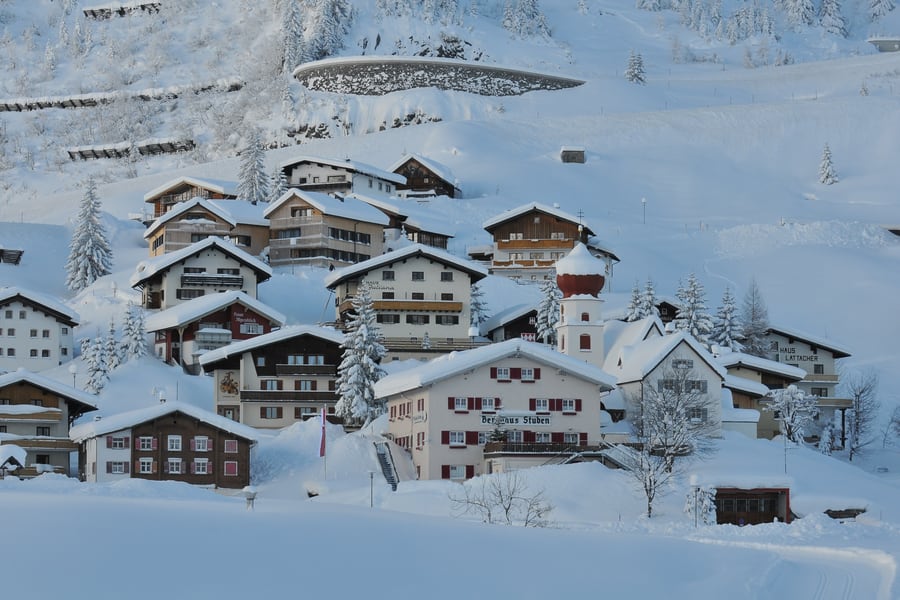 böhringer friedrich / Wikimedia Commons · CC BY-SA 3.0 AT · cropped
Langen and Stuben am Arlberg
Langen is the western tunnel mouth and the head of the Klostertal — a small place with an outsized view of what the railway had to deal with. It is also the station for Stuben, a hamlet of dark timber houses under the Flexenpass three kilometres up the road, and the birthplace of Hannes Schneider on 24 June 1890. The road pass above it is precisely what the tunnel below was built to make unnecessary.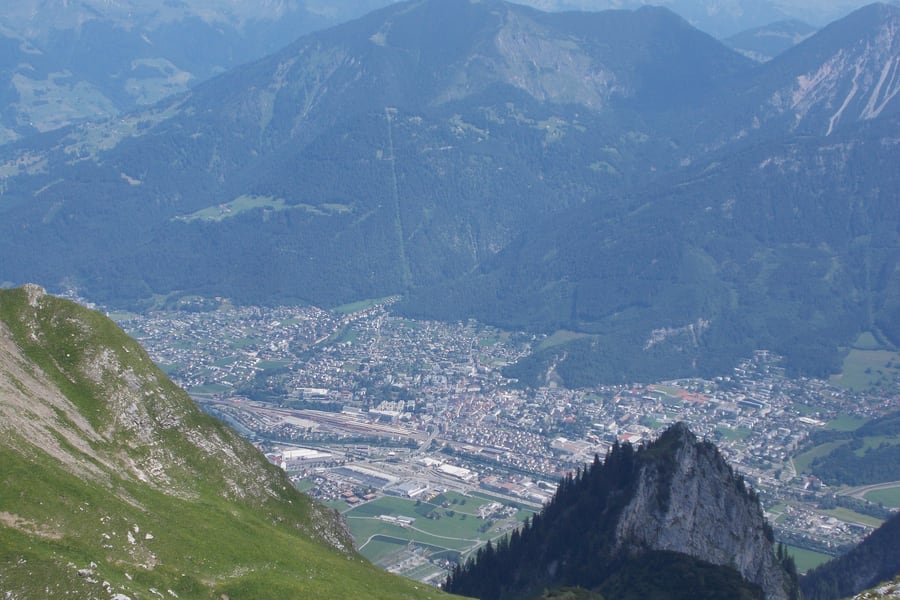 32-Fuß-Freak / Wikimedia Commons · CC BY-SA 4.0 · cropped
Bludenz
They call it the five-valley town and they mean it: the Walgau, the Brandnertal, the Großes Walsertal, the Montafon and the Klostertal — the last being the one your train has just come down — all meet here at 588 m. The Montafon runs south towards the Silvretta and is one of Austria's best walking valleys. The town also smells faintly of chocolate: Milka is made in a factory beside the river.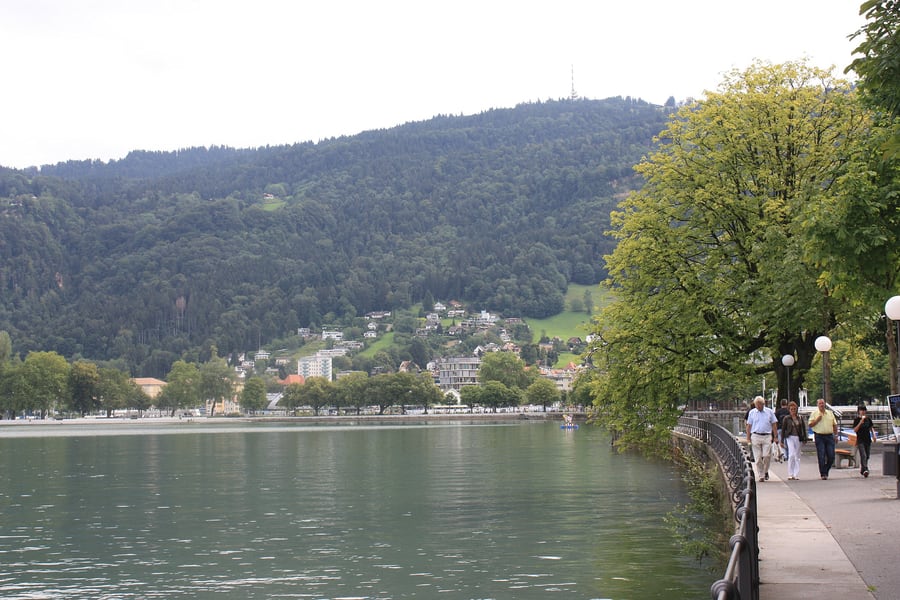 Dguendel / Wikimedia Commons · CC BY 3.0 · cropped
Bregenz and Lake Constance
The line carries on past Bludenz to Feldkirch, Bregenz and the Swiss border, and Vorarlberg is the piece of Austria most people miss. Bregenz sits on Lake Constance where the Romans put Brigantium and the headquarters of their lake fleet. Its Martinsturm carries what is reckoned to be the largest onion dome in central Europe, and every July and August the Bregenz Festival stages opera on a floating stage in front of 7,000 seats.Where to Sleep
The Arlberg is two and a half hours end to end, so you don't have to sleep on it at all — but it runs between two very different places, and which end you pick changes the trip.
Innsbruck is the obvious base and the better city: a compact baroque old town with the Nordkette standing directly over it, a proper range of hotels from design places to student-priced guesthouses, and enough going on to justify a couple of nights either side of the ride. Everything is walkable from the Hauptbahnhof.
St. Anton am Arlberg, up at the tunnel mouth, is the opposite proposition. In winter it is one of the great Alpine ski towns and priced accordingly — book months out, and expect to pay. In summer the same hotels are cheap, half-empty and surrounded by superb walking, which is the version we'd recommend if the railway rather than the skiing is why you came.
Bludenz, at the Vorarlberg end, is an underrated place to stop: a real, lived-in old town rather than a resort, cheaper than either of the above, and sitting at the mouth of five valleys — so if you want to do something after the railway, this is the end to be at.
Two practical notes:
- Don't stay at Langen am Arlberg unless you have a specific reason. It's the tunnel mouth, and not much else.
- In ski season, everything on this line is expensive and full. December to April, the Arlberg is one of the busiest corners of Austria. If your trip is about the railway, come in September or October: the trains are empty, the Klostertal is turning, and the hotels will be glad to see you.
If you're doing the Semmering as well — and you should — note that they are at opposite ends of the country, about five hours apart by train. That is a perfectly good day's travel in Austria, and most of it is scenic too.
Questions or corrections
Planning this trip and stuck on something, or spotted a time, fare or detail that has changed? Send us a message about Arlberg Railway. We read every one, and we update this page when something has changed.