Schneebergbahn
Herbert Ortner / Wikimedia Commons · CC BY 4.0
- Distance9.85 km
- Duration40 minutes by Salamander, about 90 by steam
- Best season1 May – 1 November 2026, daily
Introduction
The Schneeberg is the mountain that waters Vienna, and it has no water of its own at the top.
Rain and snowmelt sink straight into its limestone, run through the rock and come out as springs at its foot. In 1873, after four years of building, the city finished its first mountain-spring pipeline from the Schneeberg and the Rax, and Vienna still drinks that water today. The slopes are a protected catchment, looked after by the city's own foresters. The same rock that feeds the springs leaves the plateau dry. Water for the steam engines used to come up by goods train, to tanks at the passing loops, and a water main reached the summit station only at the end of 2003.
The railway has been climbing it since 1897. It runs 9.85 kilometres from Puchberg, at 577 metres, to Hochschneeberg at 1,800 metres, climbing 1,227 metres on an Abt rack and metre-gauge track, with gradients of up to 19.7 per cent. The operator calls the summit station the highest railway station in Austria. The line opened in two stages that year, to Baumgartner on 1 June and to the top on 25 September, and its concession of 1895 named its destination as a hotel still to be built there. The hotel, designed by Fellner & Helmer, opened in June 1898.
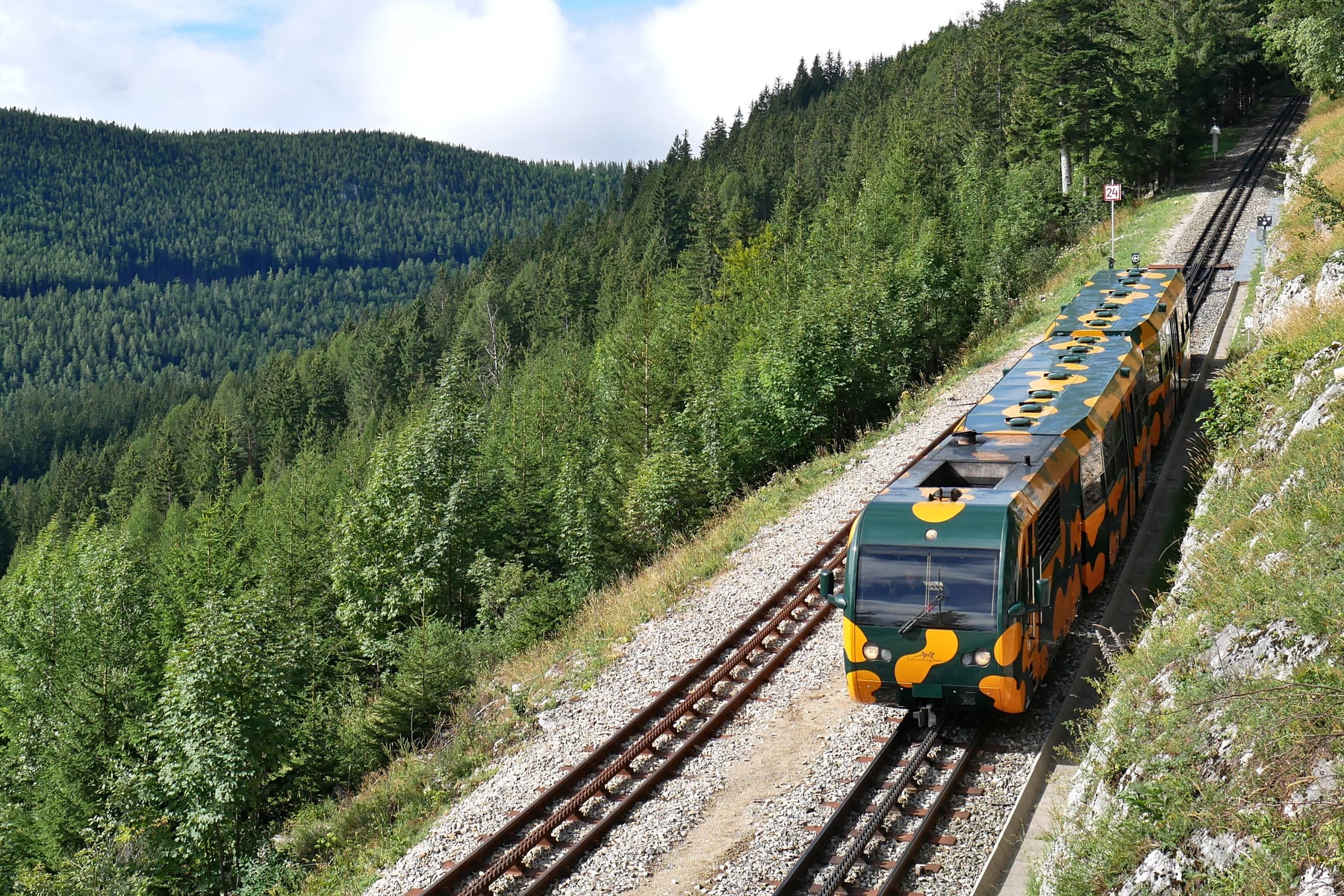
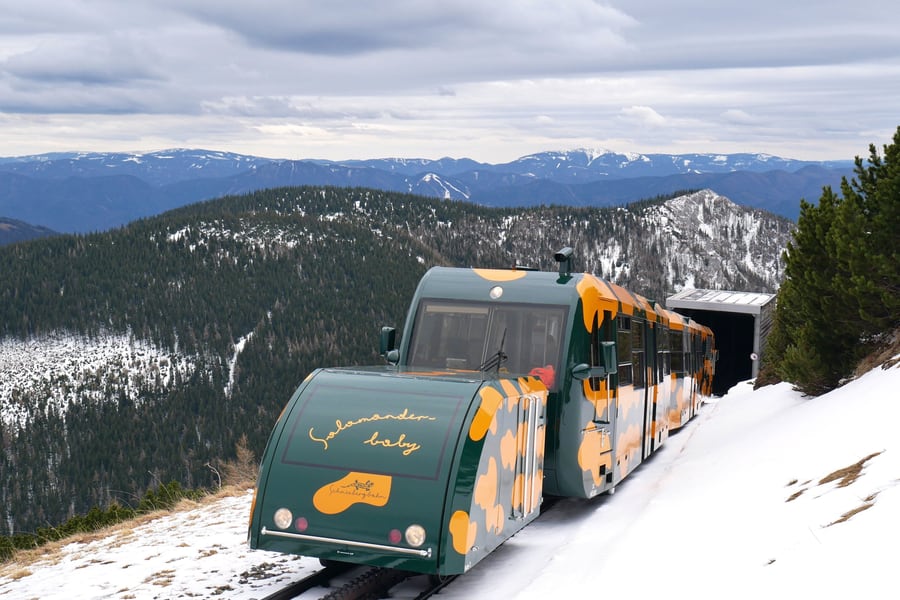
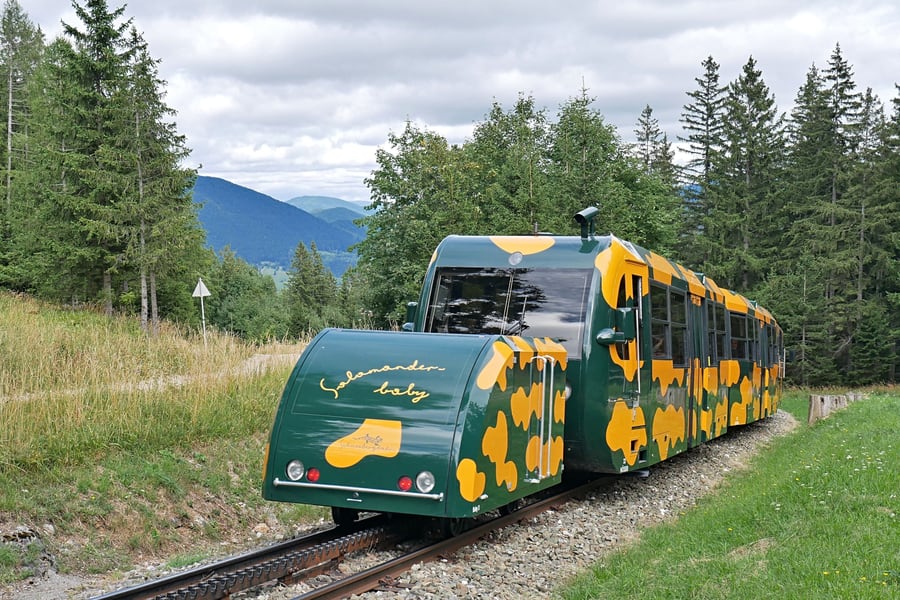
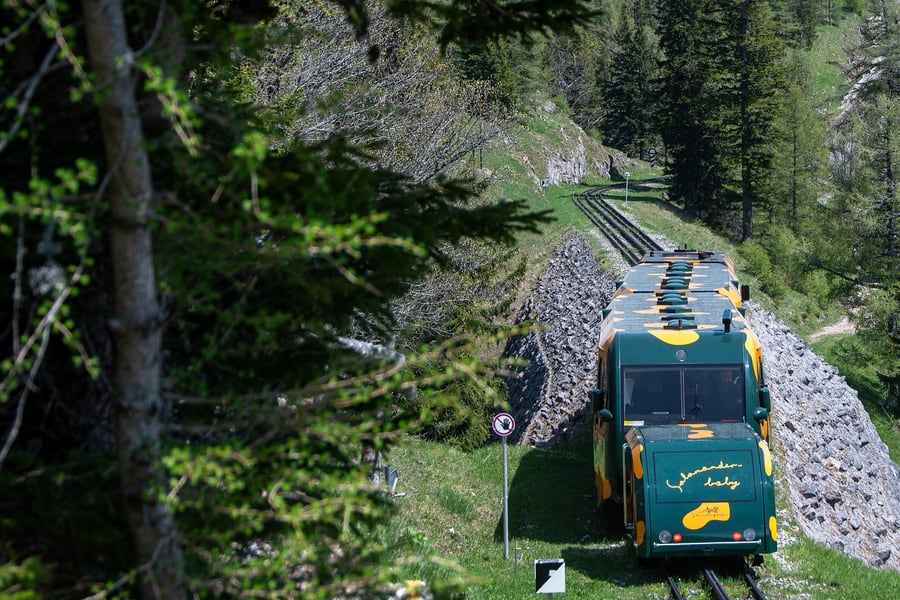
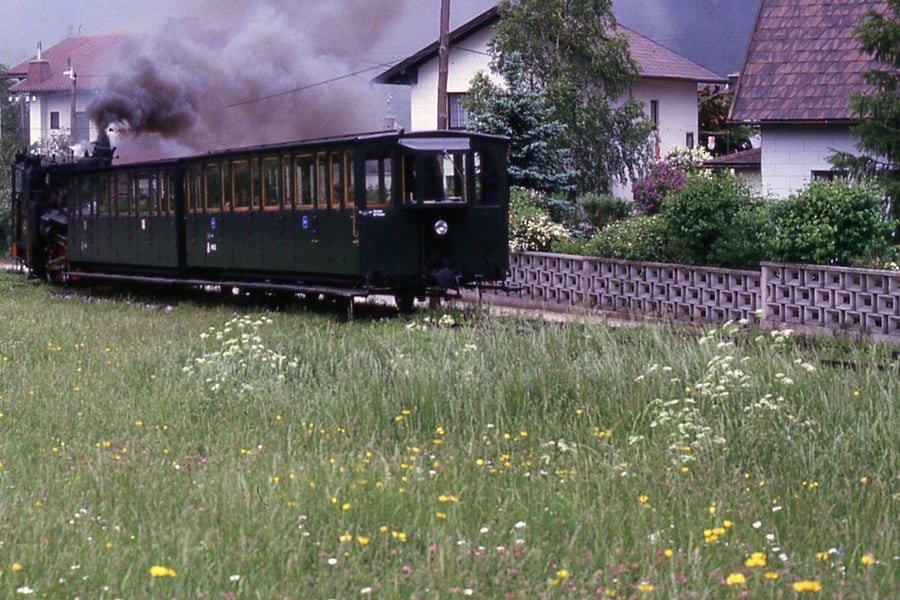
Since 1999 the work has been done by the Salamanders, diesel rack trains in a dark green livery splashed with yellow, which take about forty minutes to the top. Two of the original steam engines, built by Krauss in 1897 and 1900, still run on a few Sundays a year and take about an hour and a half over the same climb.
The Journey
The rack railway starts beside the ÖBB station at Puchberg am Schneeberg, at the end of the branch from Wiener Neustadt. Its own station stands beside the Kurpark pond, with the Tourismusportal next door, opened in 2015, which holds the railway's shop and its exhibition on the imperial Schneeberg.
A Salamander is a set of three: a diesel rack locomotive, an intermediate car and a driving car, 119 seats in all. On the way up it pushes a small goods wagon ahead of it, the Salamander-Baby, which carries prams, wheelchairs and goods, and on the way down it pulls it. The train never goes faster than 19.5 km/h.
The climb
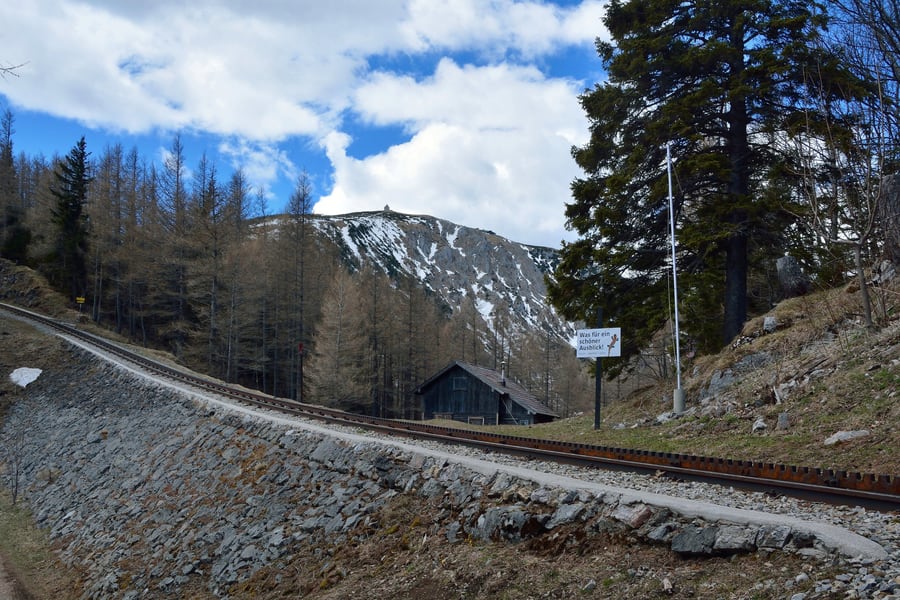
The line is single track, with three passing loops. Four minutes out it stops at Hengsttal, and then climbs through forest to Hengsthütte, 1,012 metres up, sixteen minutes from the valley. Half an hour after leaving Puchberg it reaches Baumgartner at 1,322 metres. Above it the line works along the mountainside through two tunnels, 177 and 202 metres long, and comes out onto the open plateau for the last stretch to Hochschneeberg, forty minutes from the start.
The gradient reaches 197 per thousand. The rack is the Abt system, two toothed bars side by side, laid the whole way because the engines drive only through their cogwheels.
At the top
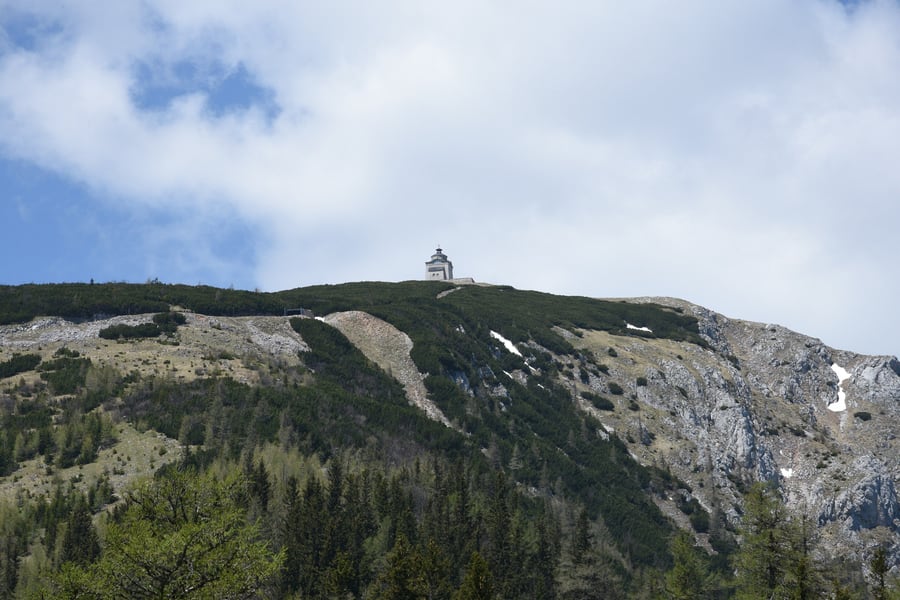
The summit station, opened in 2009, is built onto the side of the Berghaus Hochschneeberg, the hotel that the railway's builders had to put up as part of the contract and that opened in 1898. A few minutes' walk away is the Elisabethkirchlein, which Franz Joseph commissioned in 1901 in memory of the Empress Elisabeth. The Emperor rode up on 18 June 1902 to see the church and the hotel.
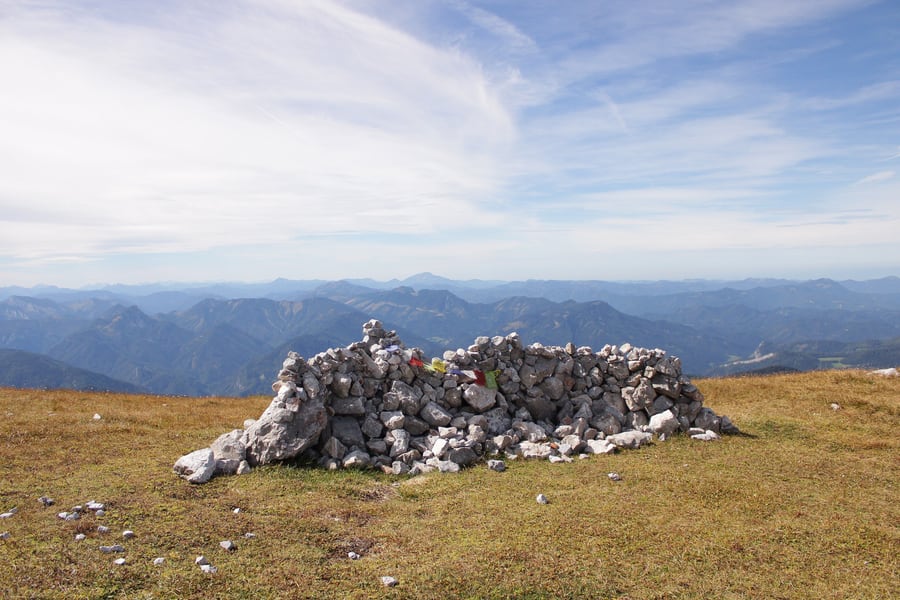
From here the plateau opens out. On a clear day the view runs over the Puchberg basin to the Neusiedler See and the Hungarian plain, over the Rax and deep into Styria. The summit itself, the Klosterwappen at 2,076 metres, is the highest point in Lower Austria and an hour or more on foot, past the Damböckhaus to the Fischerhütte. A marked path follows the railway all the way back down to Puchberg in about three hours.
The engines
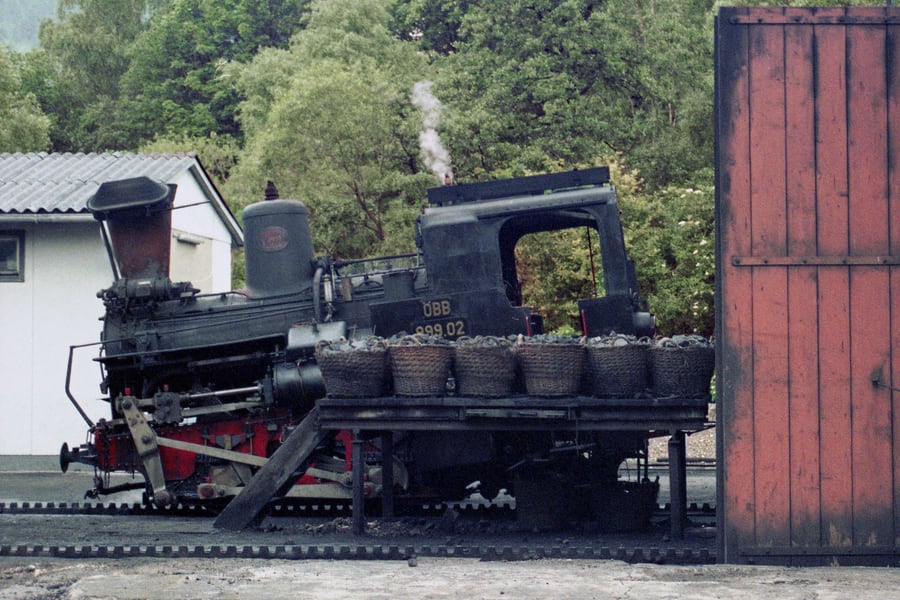
Five steam engines were built for the line by Krauss, and two are still in working order: 999.02 of 1897 and 999.05 of 1900. Each pushes two original coaches of 50 seats, at no more than 10 km/h uphill, and carries 1,200 kilograms of water and 700 of coal. A third, 999.01 Kaiserstein, stands as a monument outside Puchberg station.
The Salamanders arrived in 1999 and first ran on 24 July that year, after the design was unveiled in December 1998. They took over the everyday trains, and steam has been kept for the nostalgia Sundays ever since.
Who has owned it
The line was built by the contractor Leo Arnoldi and worked from 1899 by the Vienna–Aspang Railway, whose main shareholder was a Belgian railway company. The state railways took over the running in 1937, the Deutsche Reichsbahn in 1938, and in 1940 the line was nationalised without compensation to its shareholders. The Austrian Federal Railways ran it from 1947 to 1996. Since 1 January 1997 it has been worked by the Niederösterreichische Schneebergbahn, owned by NÖVOG and ÖBB, and since 2012 the track itself has belonged to NÖVOG, the State of Lower Austria's transport company.
Along the route
 Haering Juergen / Wikimedia Commons · CC BY-SA 4.0
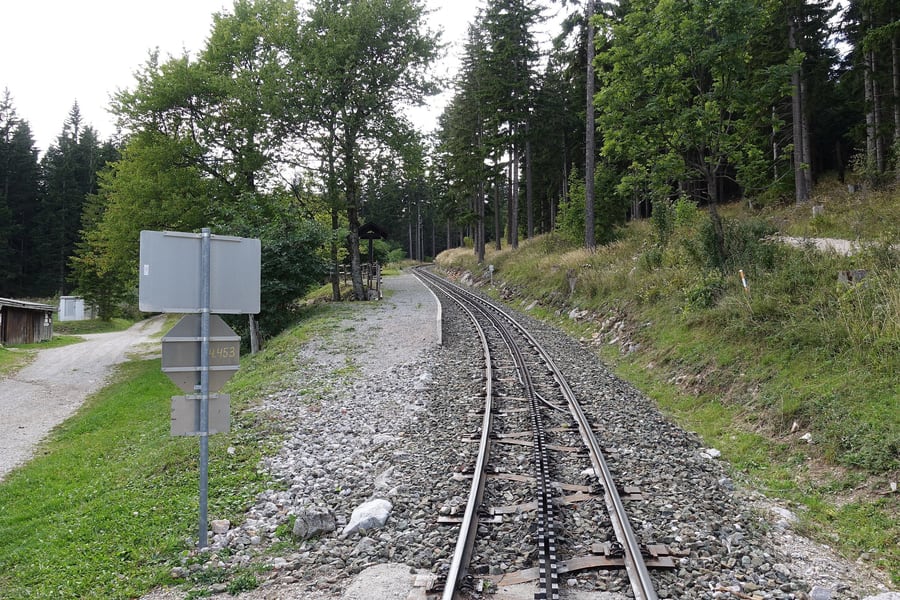
Hengsthütte
Sixteen minutes up, at 1,012 metres, a mountain inn with its own halt, known for schnapps distilled from mountain pine and stone pine. Walkers can ride up here after 14:30 for €9.50 and walk on.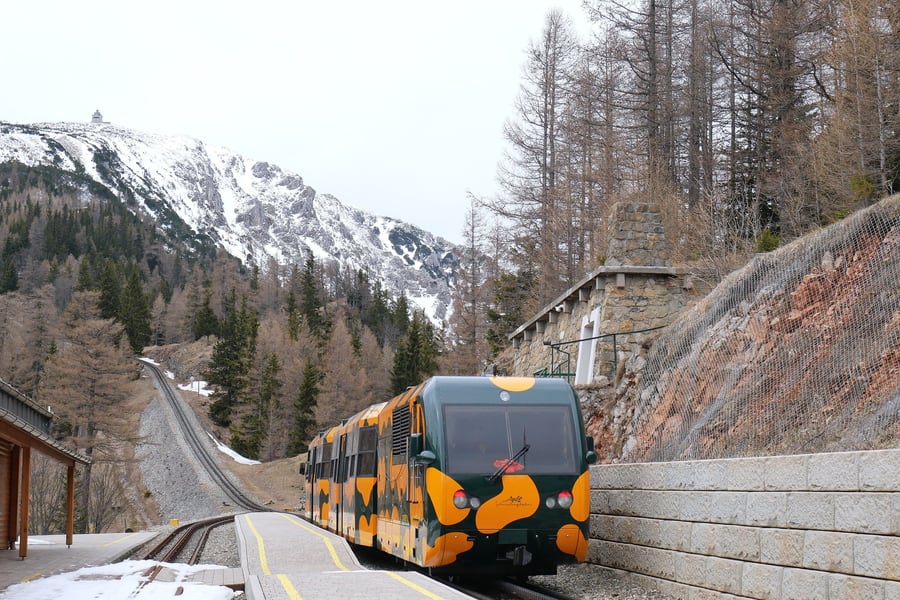 Herbert Ortner / Wikimedia Commons · CC BY 4.0
Baumgartner
At 1,322 metres, the station takes its name from an inn Georg Baumgartner opened in 1839. It grew into the mountain's largest hut, until pressure from the water authority closed it in 1980; it was demolished in 1982.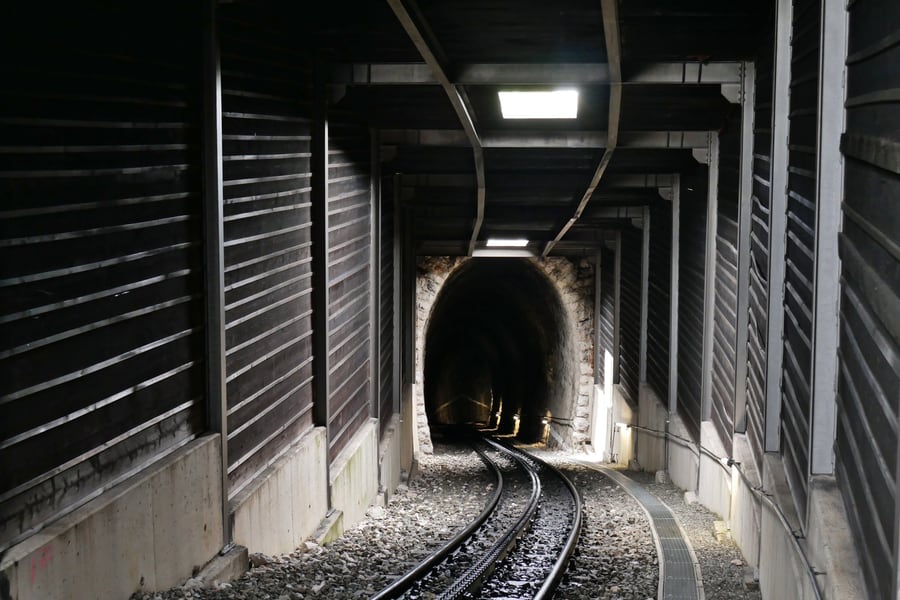 Herbert Ortner / Wikimedia Commons · CC BY 4.0
Two tunnels
Above Baumgartner the line works along the mountainside through two tunnels, 177 and 202 metres long. Their mouths are lengthened by covered galleries built out over the track.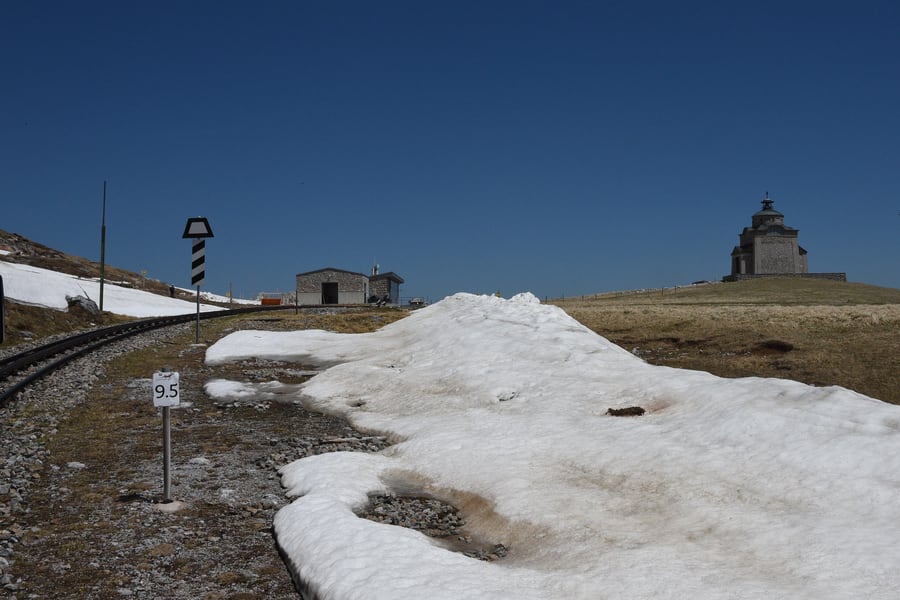 Arths-at / Wikimedia Commons · CC BY-SA 4.0
Onto the plateau
The last stretch runs out over open pasture above the trees, where snow can lie into June, and the Elisabethkirchlein comes into view before the summit station at 1,800 metres.A bit of history
Culture & experiences along the way
 Michael Weininger / Wikimedia Commons · CC BY-SA 4.0 · cropped
The 1897 engine, on steam days
Two of the original Krauss engines still work: 999.02 of 1897 and 999.05 of 1900. Each pushes two old coaches up the mountain at no more than 10 km/h, taking about an hour and a half, on eight days in 2026. Here 999.02 takes on coal at Puchberg in 1981.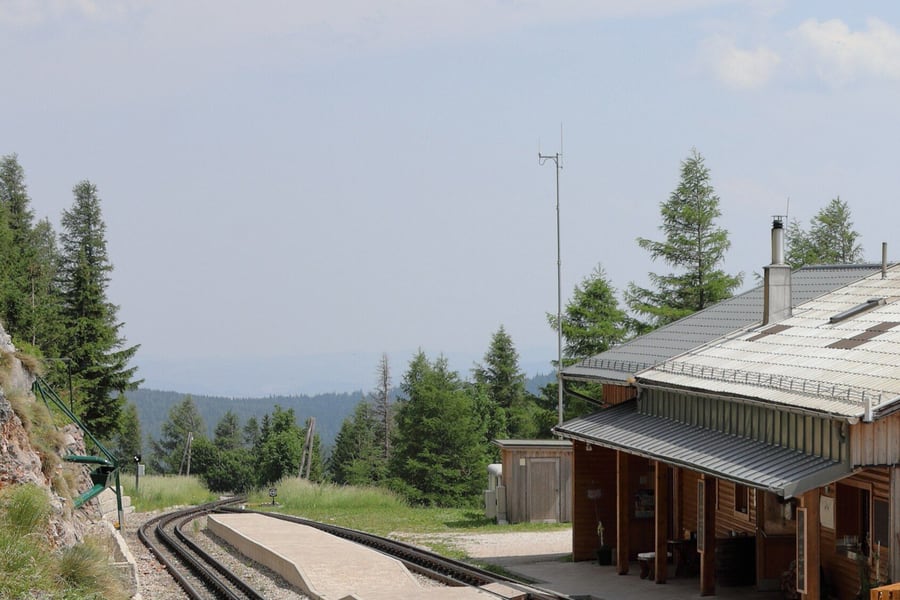 Foto: C.Stadler/Bwag / Wikimedia Commons · CC BY-SA 4.0 · cropped
Schneebergbuchteln at Baumgartner
The hut at Baumgartner station is where to try the Schneeberg Buchteln, baked yeast buns filled with powidl, a thick plum butter, and with apricot jam. It opens daily with the railway, with a long view from its big, sunny terrace.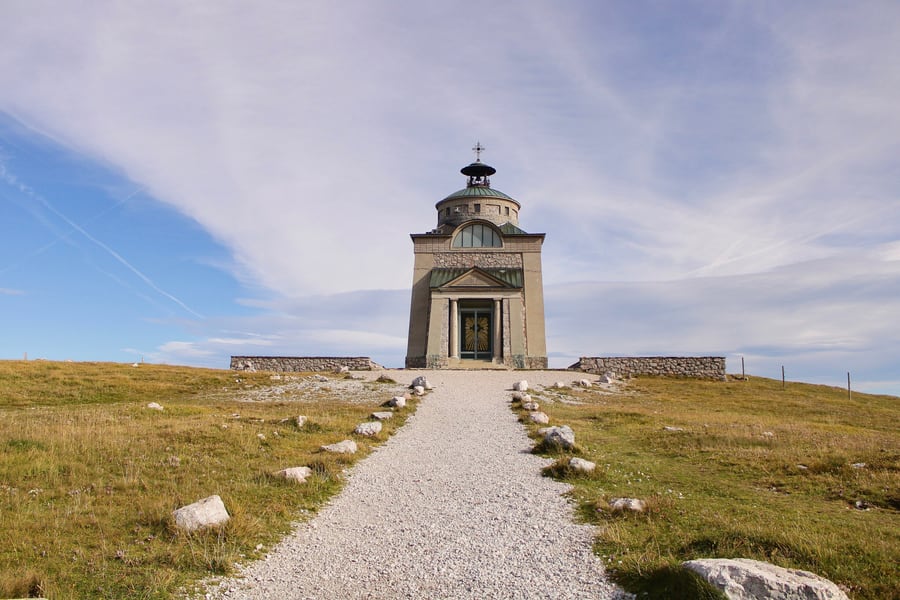 Sandra Huberius / Wikimedia Commons · CC BY-SA 4.0
The Empress's church
Franz Joseph commissioned the Elisabethkirchlein in 1901 in memory of the Empress Elisabeth. It is built in the Jugendstil from the Schneeberg's own stone, a few minutes from the summit station, and mountain masses, baptisms and weddings are still held there.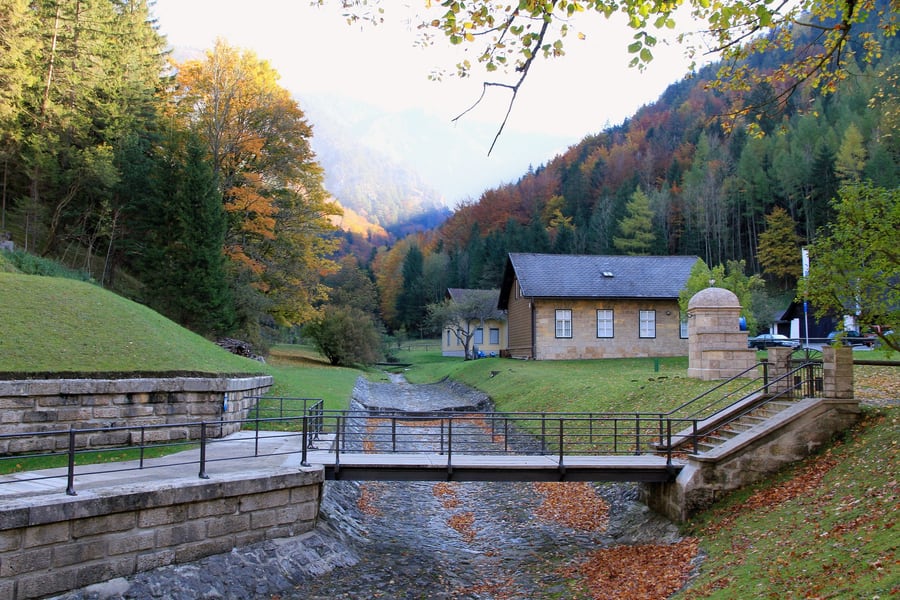 Foto: C.Stadler/Bwag / Wikimedia Commons · CC BY-SA 3.0
Where Vienna's water begins
At Kaiserbrunn, in the Höllental at the foot of the mountain, the house of the first water supervisor is a museum of Vienna's water supply, with plans, pictures and films. The visit ends at the Kaiserbrunn spring itself. Weekends and holidays, May to early November.Timetables
The 2026 season to the summit runs daily from 1 May to 1 November. The timetable is built around five fixed trains each way; when demand calls for it, more run in between, as often as every half hour. Bad weather can cut the service short or stop it, and the operator's webshop shows the day's trains.
Salamander trains — 1 May to 1 November 2026
Up to the summit:
| Puchberg | Hengsttal | Hengsthütte | Baumgartner | Hochschneeberg |
|---|---|---|---|---|
| 09:00 | 09:04 | 09:16 | 09:30 | 09:40 |
| 10:30 | 10:34 | 10:46 | 11:00 | 11:10 |
| 12:00 | 12:04 | 12:16 | 12:30 | 12:40 |
| 14:30 | 14:34 | 14:46 | 15:00 | 15:10 |
| 16:00 | 16:04 | 16:16 | 16:30 | 16:40 |
Down to Puchberg:
| Hochschneeberg | Baumgartner | Hengsthütte | Hengsttal | Puchberg |
|---|---|---|---|---|
| 09:45 | 09:57 | 10:06 | 10:18 | 10:23 |
| 11:15 | 11:27 | 11:36 | 11:48 | 11:53 |
| 13:45 | 13:57 | 14:06 | 14:18 | 14:23 |
| 15:15 | 15:27 | 15:36 | 15:48 | 15:53 |
| 16:45 | 16:57 | 17:06 | 17:18 | 17:23 |
The last train down leaves the summit at 16:45. Seats are limited, and the operator recommends buying online, where a ticket is booked to a particular train.
Nostalgia steam trains
The steam train runs on some Sundays outside July and August, and on 1 May: in 2026 on 1, 17 and 31 May, 14 June, 13 and 27 September, and 11 and 25 October. It leaves Puchberg at 10:50 and reaches the summit at 12:21, about an hour and a half. It comes down at 15:47, back in Puchberg at 16:47. Dogs are not carried on the steam train.
After the season
From 5 to 15 November 2026, Thursday to Sunday, the Goldener Herbst trains run as far as Baumgartner, six a day between 09:00 and 15:00, and passengers can hop off at Hengsthütte. On 5 and 6 December there are Advent trains to Hengsthütte, leaving Puchberg at 09:30, 11:00, 13:00, 15:30 and 17:00, and on Christmas Eve trains run to Hengsthütte again. The 2027 dates are not yet published.
Getting to Puchberg
ÖBB regional trains run to Puchberg from Wiener Neustadt every hour, in about 47 minutes, and Wiener Neustadt is half an hour from Vienna. The 06:55 from Wien Hauptbahnhof, changing at Wiener Neustadt into the 07:37, arrives at Puchberg at 08:24, in time for the first train up. On Saturdays, Sundays and holidays a through train leaves Wien Hauptbahnhof at 08:38 and reaches Puchberg at 10:24.
Times as of October 2026, from the Schneebergbahn's timetable (opens in a new tab) and ÖBB's journey planner.
Tickets
Tickets are sold in the Niederösterreich Bahnen webshop and on the spot in Puchberg, and each is booked to a train. There are no classes; the fare depends on the season, with a higher price from July to September. A Basis ticket can be rebooked for €7, or half refunded up to five days before; a Flex ticket costs €3.50 more and can be rebooked free until an hour before the train. The steam train costs €12.50 extra each way.
Children from 6 to 14 pay the child fare, and under-6s ride free on a lap. Seniors from 65, groups of twenty and holders of several local cards pay a reduced fare; Vienna City Card holders get a discount too. Dogs pay their own fare and must be leashed and muzzled. Read from the operator in October 2026.
Book your tickets
Puchberg – Hochschneeberg return
€45 adult · €21.50 child 6–14 · €49 July to September
Up and down the whole line on a Salamander, booked to a train.
Book Tickets (opens in a new tab, on Schneebergbahn)via SchneebergbahnNostalgia steam train
The return fare plus €12.50 each way
The 1897 or 1900 engine both ways, on the eight steam days of the season.
Book Tickets (opens in a new tab, on Schneebergbahn)via Schneebergbahn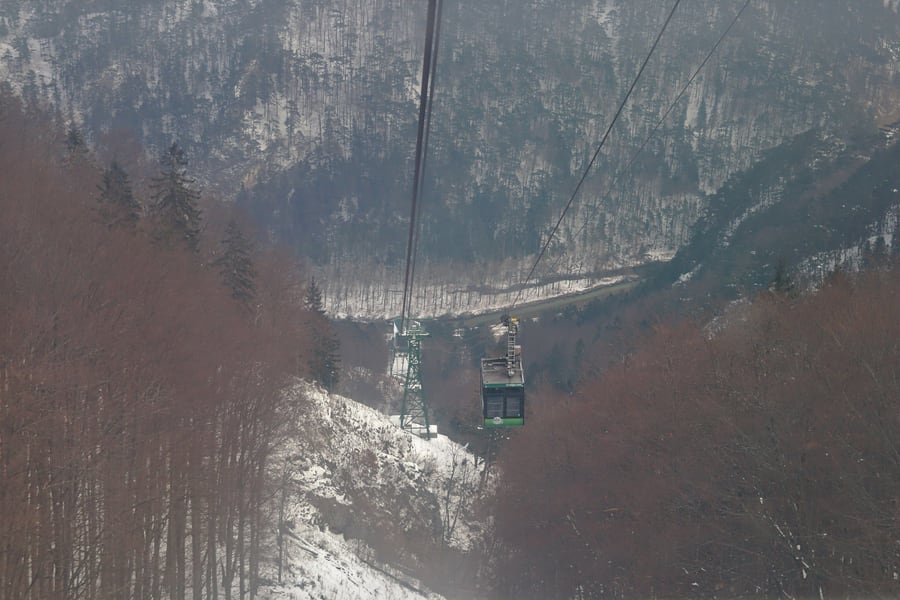
Schneeberg-Rax Kombiticket
€65 adult · €35 child
A return on the Schneebergbahn and one on the Rax-Seilbahn, valid for two years.
Book Tickets (opens in a new tab, on Schneebergbahn)via SchneebergbahnEarly-Bird ticket down
€10.50 one way
For walkers who climb on foot, a ride down from the summit or Baumgartner before noon.
Book Tickets (opens in a new tab, on Schneebergbahn)via SchneebergbahnRail Passes
No rail pass covers the Schneebergbahn. Interrail lists it by name among the Austrian lines its passes are not valid on, and the KlimaTicket, Austria's annual all-network ticket, names it among the services it does not cover. Everyone buys a Schneebergbahn ticket.
A pass still gets you to the foot of the mountain. The ÖBB regional trains from Vienna and Wiener Neustadt to Puchberg are covered by an Interrail Austria Pass or a Global Pass, with no reservation needed, and by the KlimaTicket. For this trip alone a pass is not worth buying. The card that does help is the Niederösterreich-CARD, the province's sightseeing pass, which includes one free return trip on the Salamander trains per season.
Checked October 2026 against Interrail's table of railway companies (opens in a new tab), the KlimaTicket's validity page (opens in a new tab) and the Schneebergbahn's fares page (opens in a new tab).
Places to Visit
The Schneeberg is the highest mountain in Lower Austria, and a day here can reach well beyond the summit station. These five are the town at the foot of the line, the plateau and the true summit above it, the cable car up the neighbouring Rax, and the city where you change trains on the way.
 Steindy / Wikimedia Commons · CC BY-SA 2.0 de
Puchberg am Schneeberg
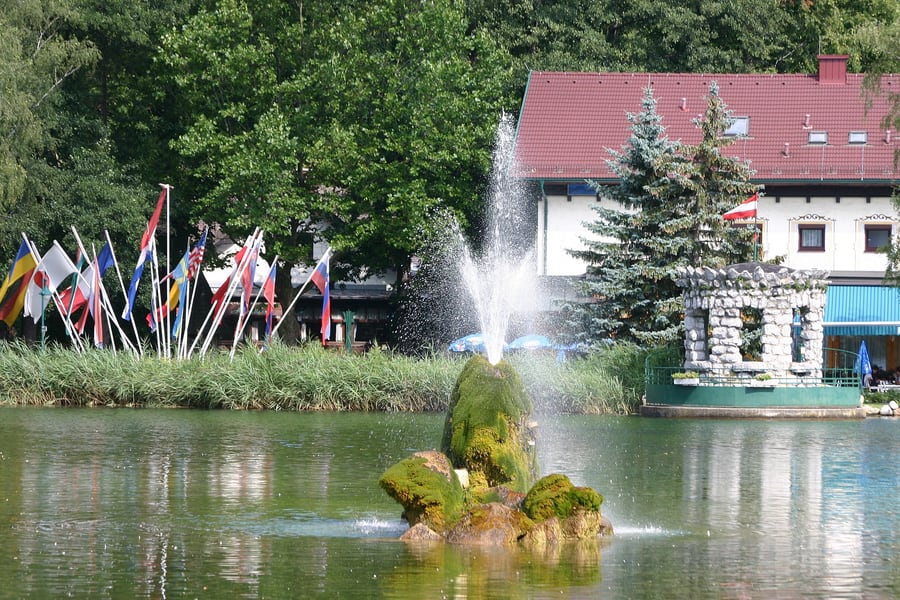
The spa village at the foot of the line. The pond in the Kurpark, beside the station, was dug out when the railway needed earth to level the station site, and in summer a band plays a spa concert in the pavilion every Sunday. The village also has the ruins of a castle built around 1200.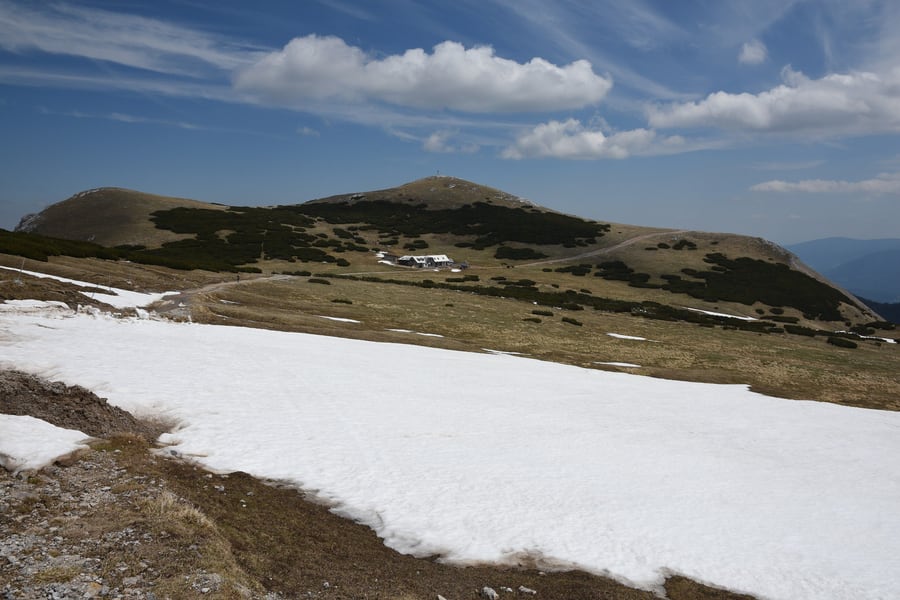 Arths-at / Wikimedia Commons · CC BY-SA 4.0
The plateau and the Damböckhaus
A walk across the high pasture of the plateau brings you to the Damböckhaus at 1,810 metres, built by Puchberg's herdsmen in 1872 with money from the Viennese silk manufacturer Johann Damböck. It lies on the way to the summit cross, serves hut food and cakes while the railway runs, and takes guests overnight.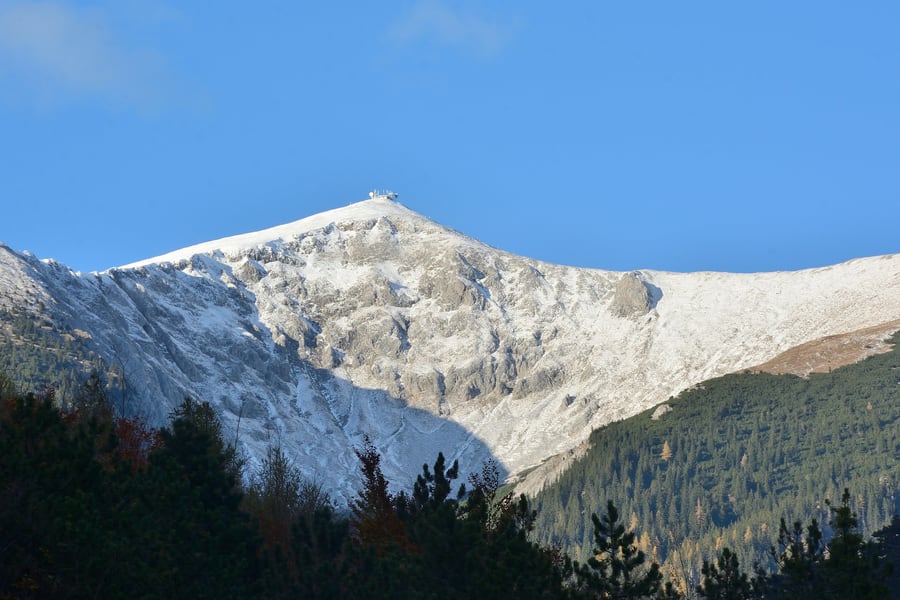 Herzi Pinki / Wikimedia Commons · CC BY-SA 4.0 · cropped
The Klosterwappen and the Fischerhütte
The true summit, at 2,076 metres the highest point in Lower Austria. A few steps from it is the Fischerhütte, at 2,049 metres the state's highest mountain hut, known for its Blunzenpalatschinken, pancakes filled with black pudding. From the summit station it is 60 brisk or 80 easy minutes on foot. It has beds for the night, booked in advance.Paul Korecky / Wikimedia Commons · CC BY-SA 2.0The Rax-Seilbahn
At Hirschwang, near Reichenau an der Rax, Austria's first passenger cable car opened in 1926 and turns a hundred this year. It takes eight minutes to the Rax plateau at 1,547 metres; its first summer cabins had a railing in place of walls. The Schneeberg-Rax Kombiticket covers both mountains.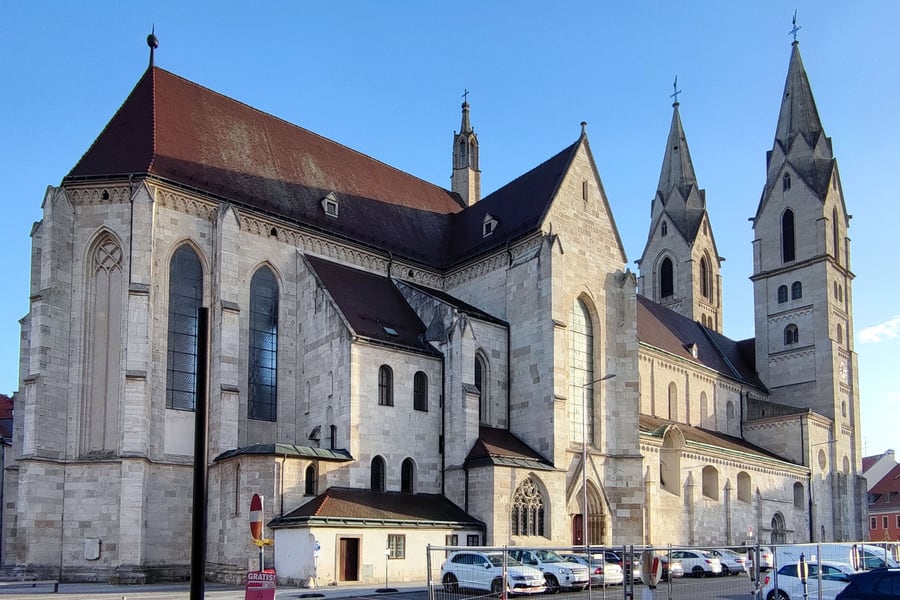 Helmlechner / Wikimedia Commons · CC0
Wiener Neustadt
The city where the branch to Puchberg leaves the main line. Its cathedral, late Romanesque at its core, was dedicated as a parish church in 1279 and was the seat of a bishop from 1468 to 1785. The regional trains to Puchberg leave its main station every hour.Where to Sleep
Stay at the top, in the hotel the railway was built to reach, and you have the plateau to yourself once the last train has gone down; or stay in Puchberg, beside the valley station.
Where to stay
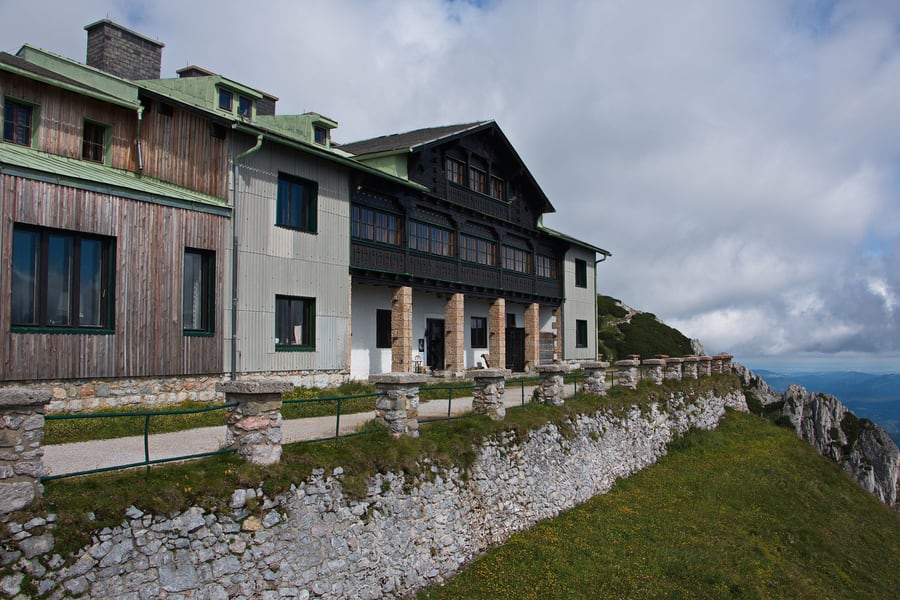 Kstipek / Wikimedia Commons · CC BY-SA 4.0
Berghaus Hochschneeberg
At the summit station, open late April to late October
Built for the railway in 1898 to designs by the theatre architects Fellner & Helmer, with 55 beds and an exhibition on the Schneeberg around 1900.
Check Availability (opens in a new tab, on berghaushochschneeberg.at)via berghaushochschneeberg.at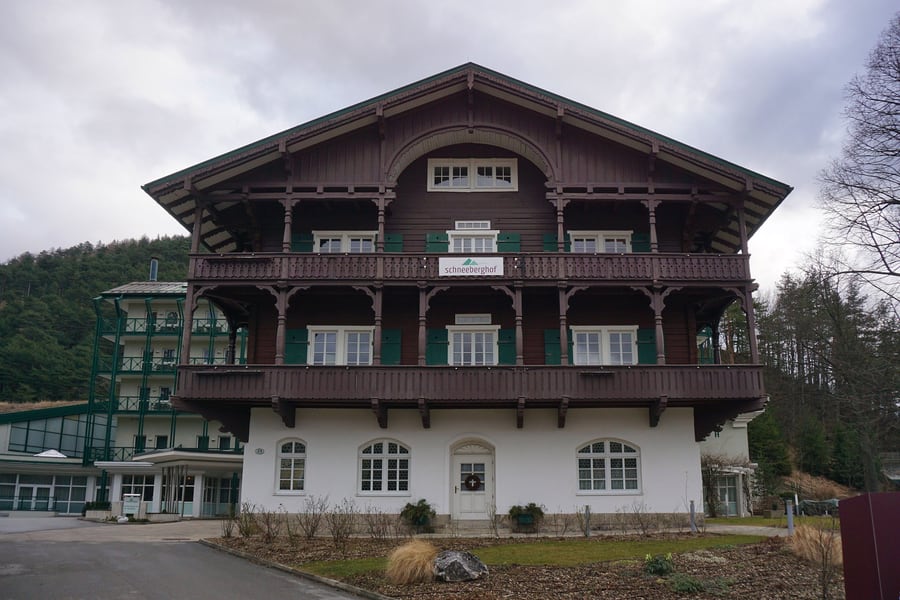 Simon Legner / Wikimedia Commons · CC BY-SA 4.0
Hotel Schneeberghof
In Puchberg, at the foot of the line
A chalet-style hotel with an indoor pool and saunas, and 80 kilometres of marked walks starting at its door.
Check Availability (opens in a new tab, on schneeberghof.at)via schneeberghof.atQuestions or corrections
Planning this trip and stuck on something, or spotted a time, fare or detail that has changed? Send us a message about Schneebergbahn. We read every one, and we update this page when something has changed.