Salzburg to Hallstatt
User: Goisern at wikivoyage shared / Wikimedia Commons · CC BY-SA 3.0
- DistanceSalzburg–Hallstatt · change at Attnang-Puchheim
- DurationAbout 2h35, plus the boat
- Best seasonMay–Oct · shoulder season to avoid the crush
Introduction
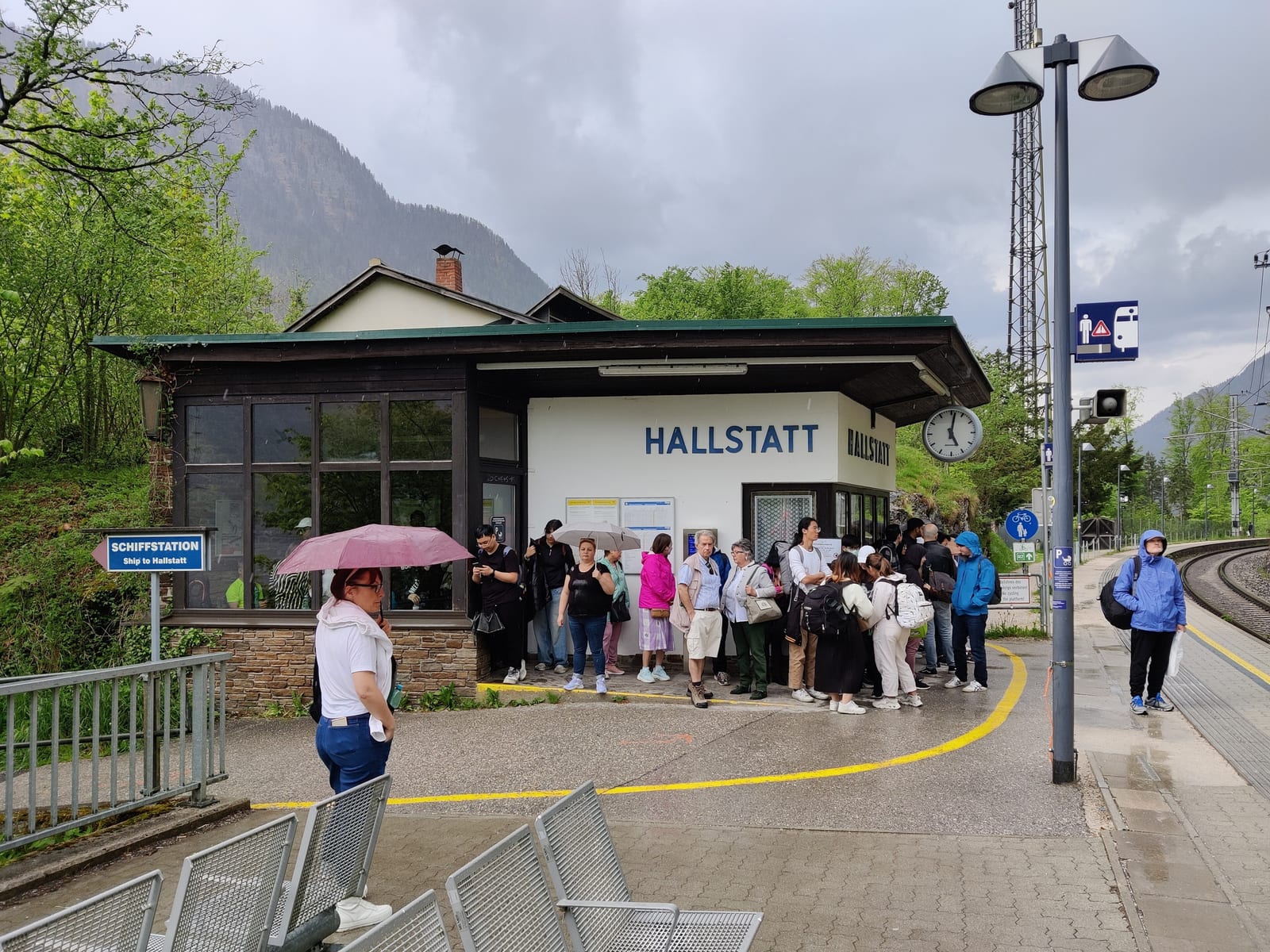
Hallstatt station is not in Hallstatt.
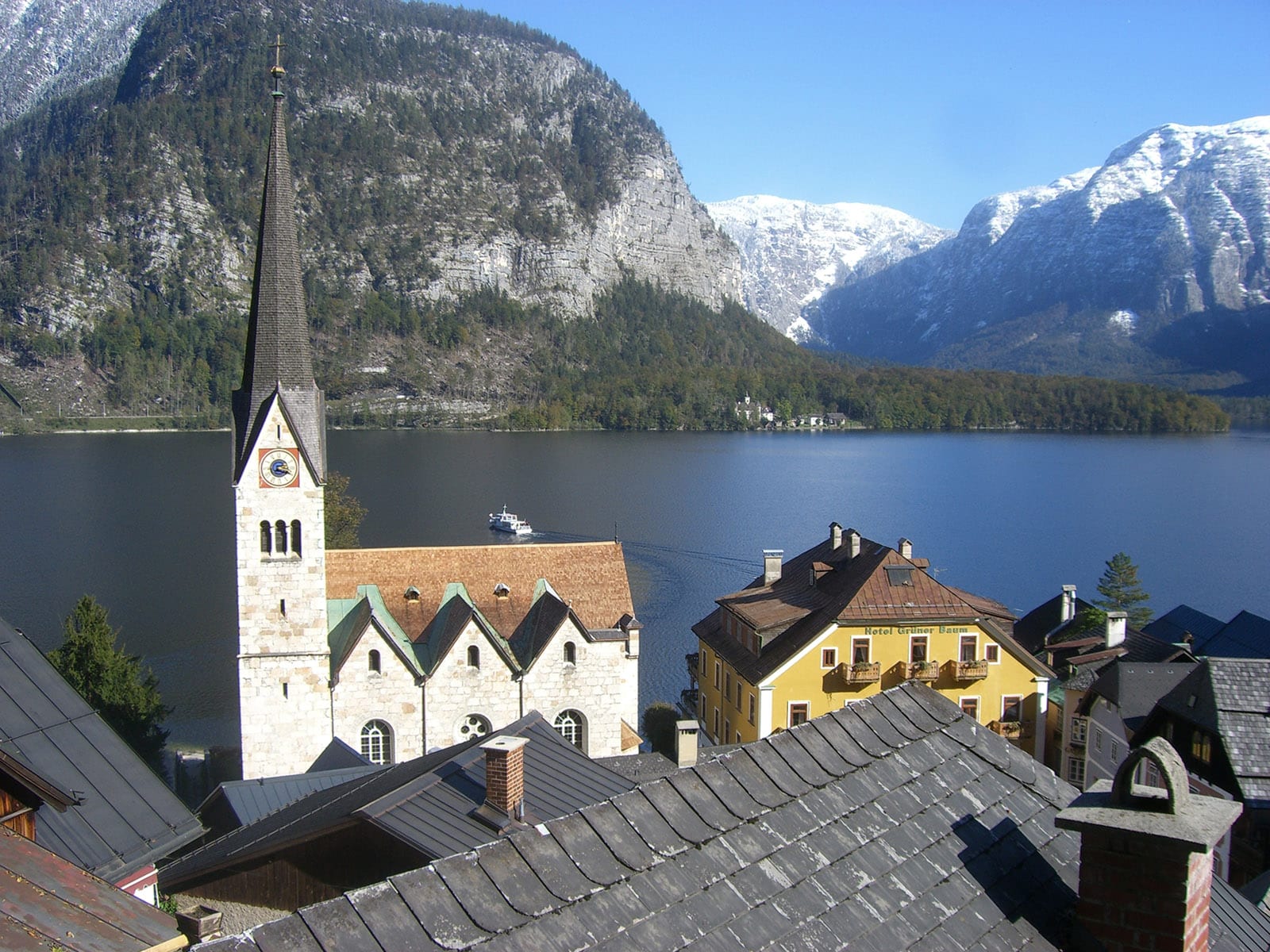
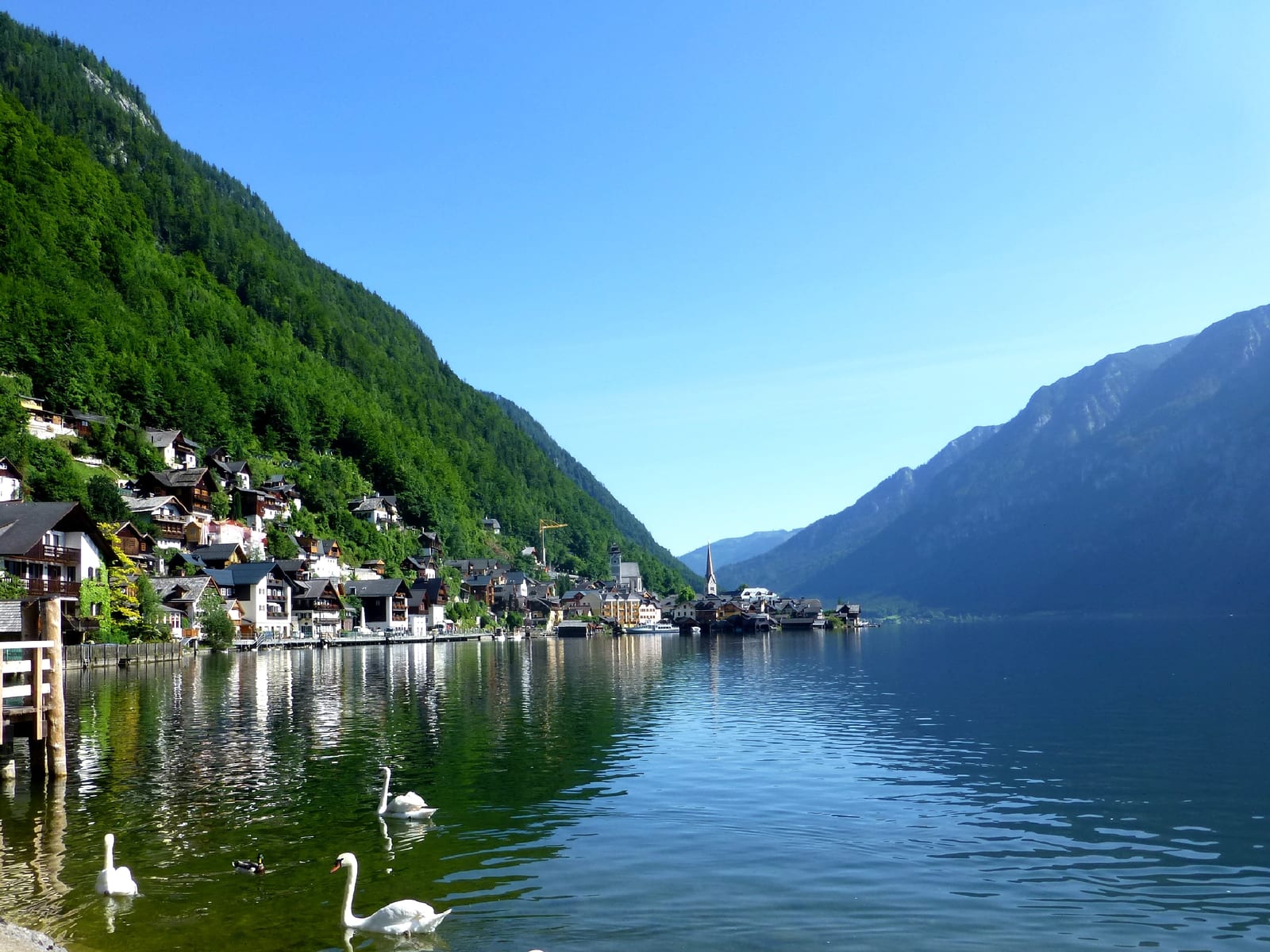
That is the whole story, and nobody tells you until you are standing at it. The railway runs along the eastern shore of the Hallstättersee. The village — the one on every screensaver, wedged between a cliff and the water with its spire reflected in the lake — is on the western shore. There is a lake in the way.
So you get off the train at a hut. There is a platform, a single track, a small building, and a path down to the water. And then a boat comes over from the village to collect you, takes about ten minutes, and lands you on the waterfront in the middle of the most photographed place in Austria.
It is the best arrival in the country, and it is entirely accidental. The line was laid where the valley had room for it, which was the other side.
Getting there is straightforward and pretty. From Salzburg it is about two hours thirty-five, roughly hourly, with one change: 47 minutes to Attnang-Puchheim on a fast intercity, then an hour and a bit on a single-car regional down the Salzkammergutbahn — 171 kilometres of single track, opened in 1877, threading the lake district past Gmunden on the Traunsee and Bad Ischl, where the Habsburgs spent their summers.
Now the honest part, because you should know it before you book.
Hallstatt has about 760 residents and over a million visitors a year. On a peak day, up to ten thousand people come through lanes built for a few hundred. The village has tried barriers at the viewpoints, restrictions on tour buses, and — briefly, and famously — a fence put up specifically to block the view everyone photographs, which was taken down again after the world laughed at it. It has become the textbook case of what happens when a real place goes viral. None of that is the villagers' fault, and none of it is helped by pretending otherwise.
The fix is simple: go in spring or autumn, or take the first train and leave on the last. Out of season, Hallstatt is exactly what it looks like — a village on a green lake under a mountain, with the oldest continuously working salt mine in the world above it, UNESCO-listed since 1997, quiet enough to hear the water.
And you'll still arrive by boat, which no amount of crowding can spoil.
The Journey
Salzburg Hauptbahnhof, and the first leg is the dull one: 47 minutes east on a fast intercity — a Railjet, or one of the double-deck Westbahn trains — through flat, green, unremarkable Upper Austria to a junction called Attnang-Puchheim.
Attnang-Puchheim is nobody's destination. It is a place where lines cross, and you will spend somewhere between five and fifteen minutes on its platform. But it is also where the trip changes character: you get off an intercity and onto a single-car regional, and the Salzkammergutbahn begins.
The Salzkammergut is Austria's lake district, and the line was built through it in 1877 — 171 kilometres of single track, which is why the train ambles. It is not in a hurry and neither, at this point, are you.
Gmunden first, on the Traunsee, where the line runs down the western shore of a big, dark, mountain-ringed lake. Then Bad Ischl — the spa town where the Habsburgs took their summers, and which has the comfortable, slightly stagey air of a place that was once where the empire went on holiday. Then Bad Goisern, and the valley tightens, and the water appears again.
This last stretch is the good one. From Bad Goisern the railway runs the eastern shore of the Hallstättersee: a narrow ledge between the water and the rock, the lake grey-green below, the Dachstein massif somewhere above the cloud. And across the water, small and white and impossibly picturesque, you can see the village.
You cannot get to it. That is the joke.
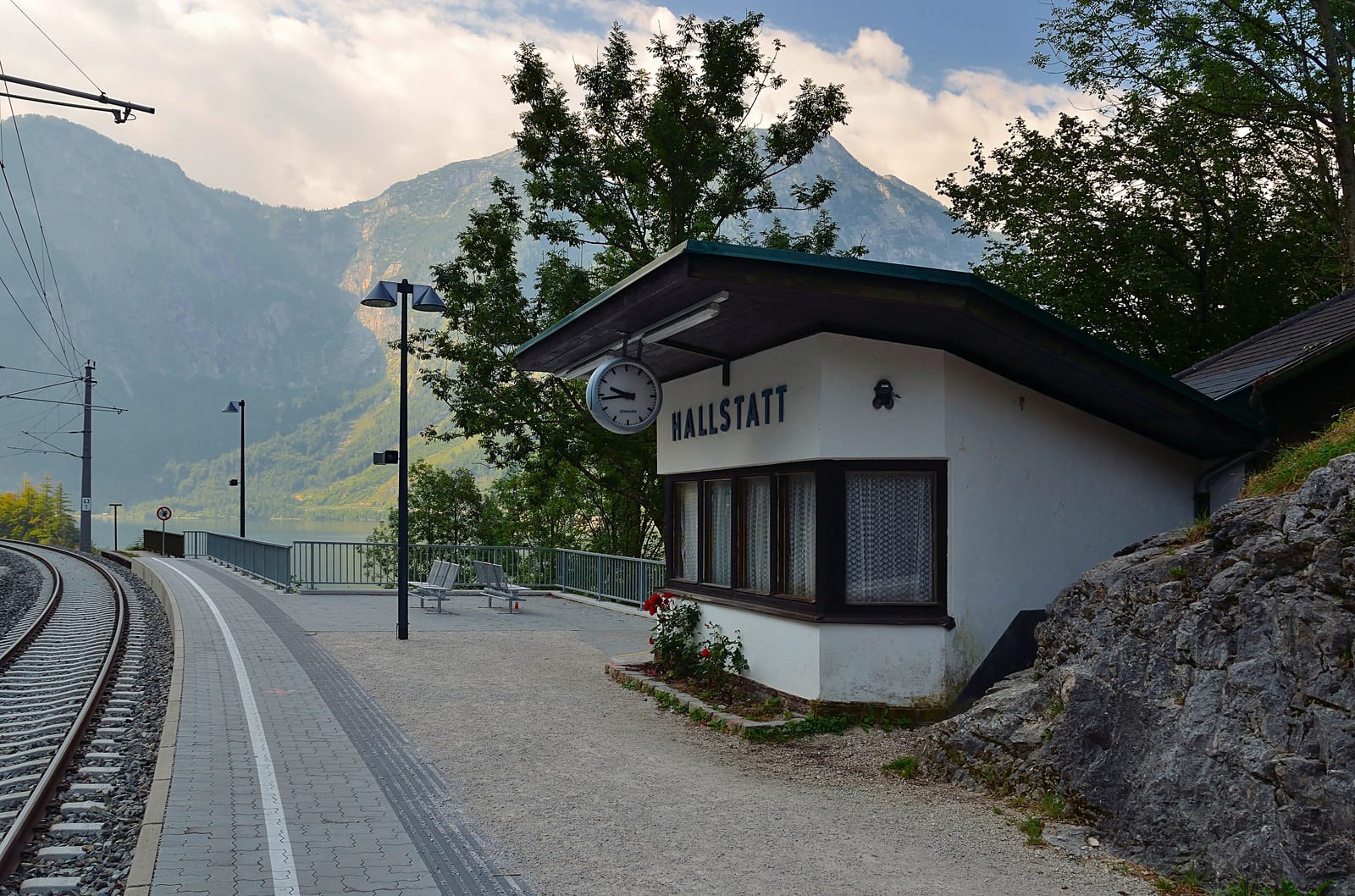
Hallstatt station is a hut. There is a platform, a single track, a small building and a path down to a jetty. No town, no shops, no taxi rank — the village is a kilometre away across open water. So you walk down to the lake and wait, and a boat comes over to fetch you.
The crossing takes about ten minutes. It is run by Hallstattschifffahrt, it costs a few euros, you pay at the jetty, and it is reported to meet most train arrivals — though it is not ÖBB's boat and not on your ticket, so check the sailings against your train.
And then the thing everyone comes for happens, and it turns out to be genuinely worth it: you come across the lake towards Hallstatt, at water level, with the spire and the stacked houses and the cliff rising straight up behind them, and the whole village arranges itself in front of you exactly as it does in the photograph. Except you are moving, and it is real, and you got here by accident of railway engineering.
Nobody planned that arrival. It is the best one in Austria.
Along the route
Herzi Pinki / Wikimedia Commons · CC BY-SA 3.0The station is on the wrong side
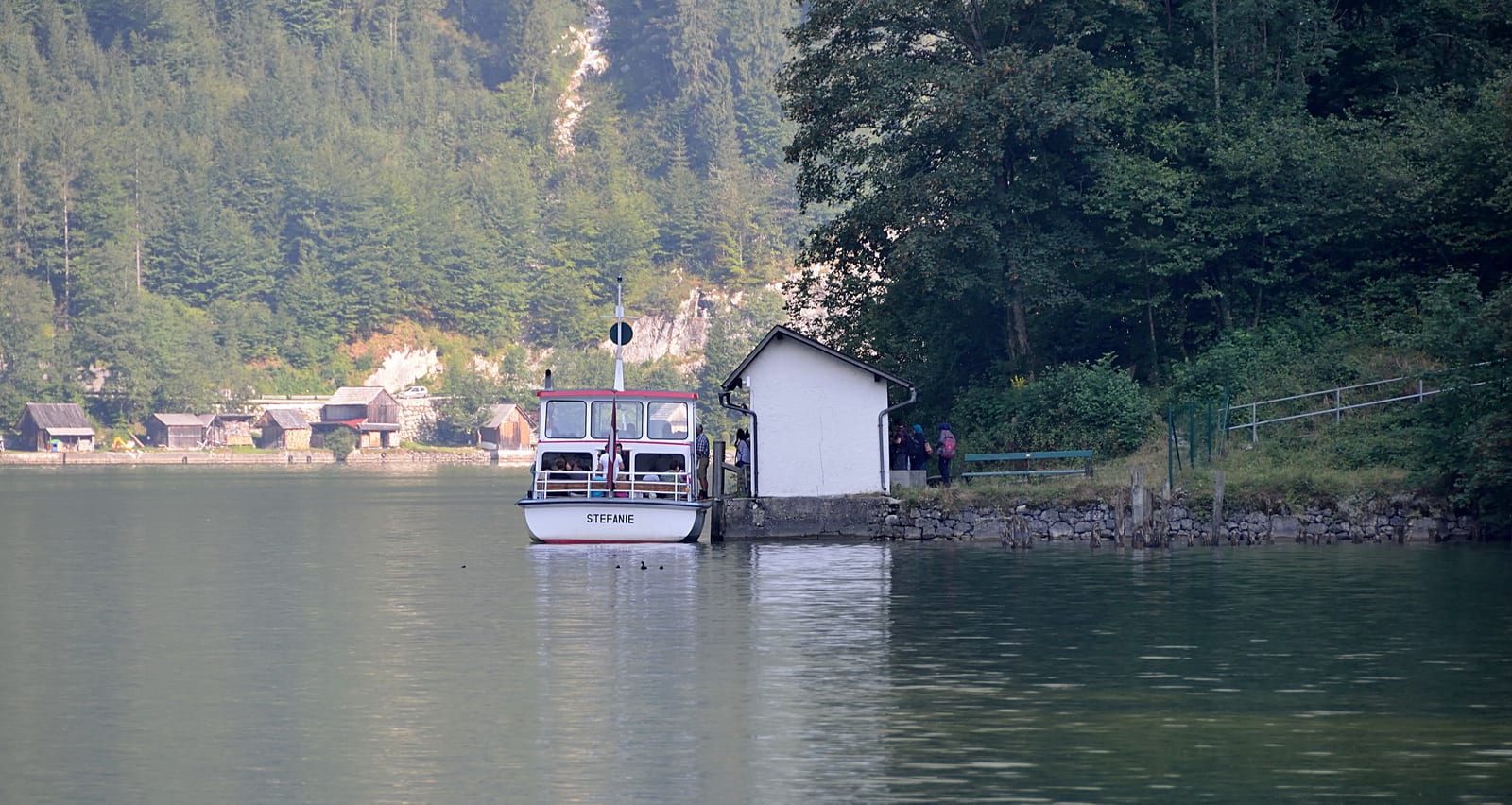
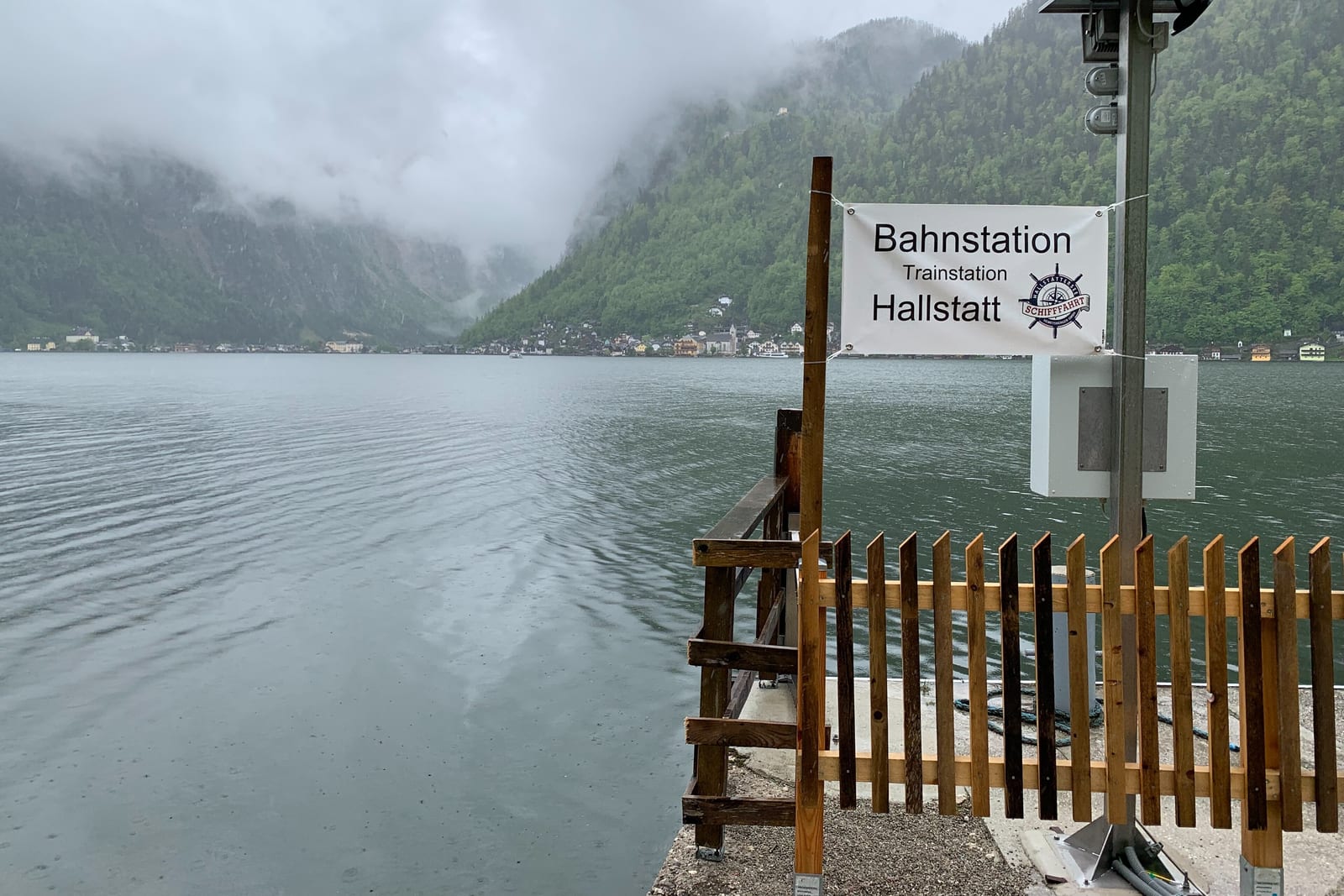
Hallstatt station is not in Hallstatt. It is a hut on the far shore of the lake, and the village is across the water — so the last leg of the journey is by boat. It is the best arrival in Austria, and it is an accident.Hiroki Ogawa / Wikimedia Commons · CC BY 3.0A single track through the Salzkammergut
The Salzkammergutbahn is 171 km of single track, opened in 1877, running the lakes from Attnang-Puchheim southwards. From Obertraun to Bad Goisern it takes the eastern shore of the Hallstättersee — which is precisely why the station ended up opposite the village.Simon Legner / Wikimedia Commons · CC BY-SA 4.0Come out of season
Hallstatt is one of the most photographed villages on earth and it is a small place. In summer the crush is real and the locals are understandably tired of it. Go in spring or autumn, and it is the place you were promised.A bit of history
Culture & experiences along the way
Herzi Pinki / Wikimedia Commons · CC BY-SA 3.0Changing at Attnang-Puchheim
Nobody's idea of a destination: a junction in Upper Austria where you cross the platform and swap a fast intercity for a single-car regional. It is also where the trip stops being transport and starts being a railway journey.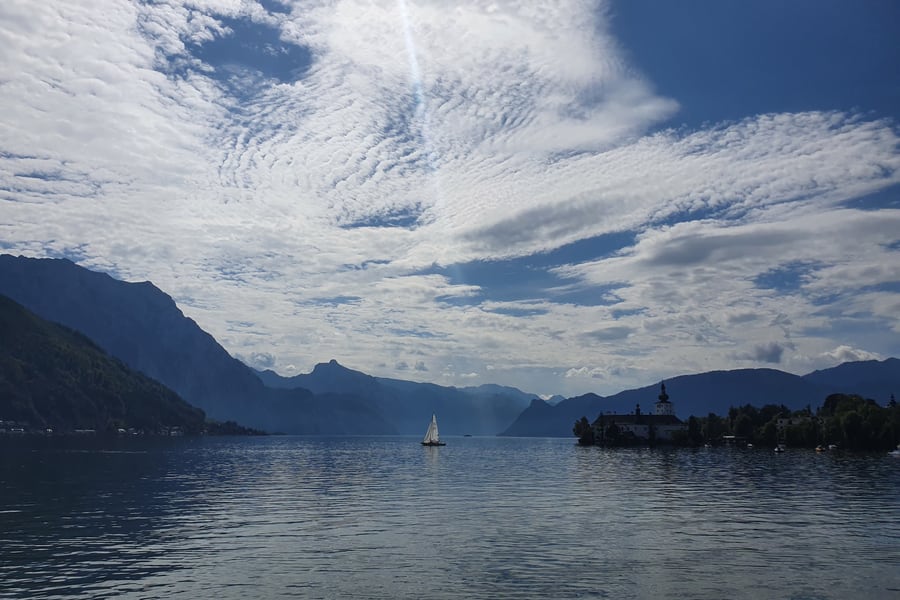 Malephi / Wikimedia Commons · CC BY-SA 4.0 · cropped
The lakes, one after another
Past Attnang the line threads the Salzkammergut — the Traunsee at Gmunden, then Bad Ischl, where the Habsburgs summered, then Bad Goisern and the Hallstättersee. It is an hour and a half of Austria being relentlessly, almost comically, pretty.Robot8A / Wikimedia Commons · CC BY-SA 4.0Waiting at the jetty
You get off at a hut, walk a few metres to the water, and wait. The boat comes over from the village. There is nothing else here — no shop, no taxi, no road worth the name — and the whole thing feels like the end of a much longer journey than it was.Timetables
Two trains and a boat, roughly hourly through the day. Nothing needs booking.
How it works:
| Leg | Detail |
|---|---|
| Salzburg Hbf → Attnang-Puchheim | ~47 min · Railjet or Westbahn |
| Change | Attnang-Puchheim — cross the platform, 5–15 min |
| Attnang-Puchheim → Hallstatt | 1h16 or 1h39 · ÖBB regional / REX |
| Total | About 2h35, roughly hourly |
| Hallstatt station → the village | By boat, ~10 min, separate ticket |
Good to know:
- The station is across the lake from the village. This is the single most important thing on this page. You finish by boat. There is nothing at the station — no shop, no taxi, no road worth the name.
- The boat is not ÖBB's and not on your ticket. It's run by Hallstattschifffahrt, costs a few euros, and you pay at the jetty. It is widely reported to meet the trains, but check the sailings against your service — especially for the last one back.
- Sit on the right after Bad Goisern for the lake.
- Don't cut the connection fine at Attnang-Puchheim. It's a simple platform change, but the regional onwards is not frequent, and missing it costs you an hour.
- First train out, last train back. If you must come in summer, this is how you see Hallstatt rather than the back of somebody's head. The day-trip coaches arrive mid-morning and leave late afternoon.
- Shoulder season is a different village. May, early June, late September, October. Same lake, same boat, a fraction of the people.
- You can carry on. The line continues past Hallstatt to Obertraun (for the Dachstein caves) and on to Bad Aussee and Stainach-Irdning — worth knowing if you'd rather keep going than turn round.
Tickets
There are two things to buy, and only one of them is a train ticket. An ordinary ÖBB ticket covers both legs and the change at Attnang-Puchheim, roughly hourly, about 2h35, and rail passes are valid. Book the Railjet leg a few days ahead for a cheaper fare, or just turn up: the regional half costs the same whenever you buy it.
⚠️ The boat is separate and your train ticket does not cover it. Hallstattschifffahrt runs the ten-minute crossing from the station jetty to the village, paid at the quayside, so bring a few euros in coins. Check the last sailing before committing to the last train — the boat is the weak link in the chain, it is not run by the railway, and if it has stopped for the night you are on the wrong side of a lake.
Book your tickets
Salzburg – Hallstatt
Two trains and a boat
An ordinary ÖBB ticket, roughly hourly, about 2h35 with the change at Attnang-Puchheim. Rail passes are valid. ⚠️ The boat across the lake is separate and not covered by your train ticket — pay at the quayside.
Book Tickets (opens in a new tab, on ÖBB)via ÖBBThe lake boat
Hallstatt station to the village
Run by Hallstattschifffahrt, about ten minutes, a few euros, bought at the jetty. It is reported to meet most train arrivals, but check the sailing times against your train — this is the one connection on the trip that isn't ÖBB's problem.
Book Tickets (opens in a new tab, on Hallstattschifffahrt)via HallstattschifffahrtRail Passes
Interrail passes are valid on the train. Interrail's table of railway companies lists ÖBB's Railjets and regional trains as included in Austria, so both legs, with the change at Attnang-Puchheim, are covered by an Interrail Austria Pass or a Global Pass. A Railjet reservation is optional and costs €3.
The boat to Hallstatt is not covered. The crossing from the station to the village is paid at the quayside, pass or no pass.
For this journey alone, a pass is not worth buying. A pass pays when Hallstatt is one day of a longer trip through Austria.
Checked October 2026 against interrail.com (opens in a new tab), Interrail's Austria page (opens in a new tab) and its reservation fees (opens in a new tab).
Places to Visit
The line runs through Austria's lake district, and Hallstatt is only the most famous stop on it. Several of the others are better, precisely because nobody Instagrams them.
Whatever else you do, do not treat this as a day trip that ends at Hallstatt and turns straight round. The lakes north of the village are the reason to buy the ticket, and the stations south of it are where the crowds finally stop.
 Clemens Stockner / Wikimedia Commons · CC BY-SA 4.0 · cropped
Salzburg
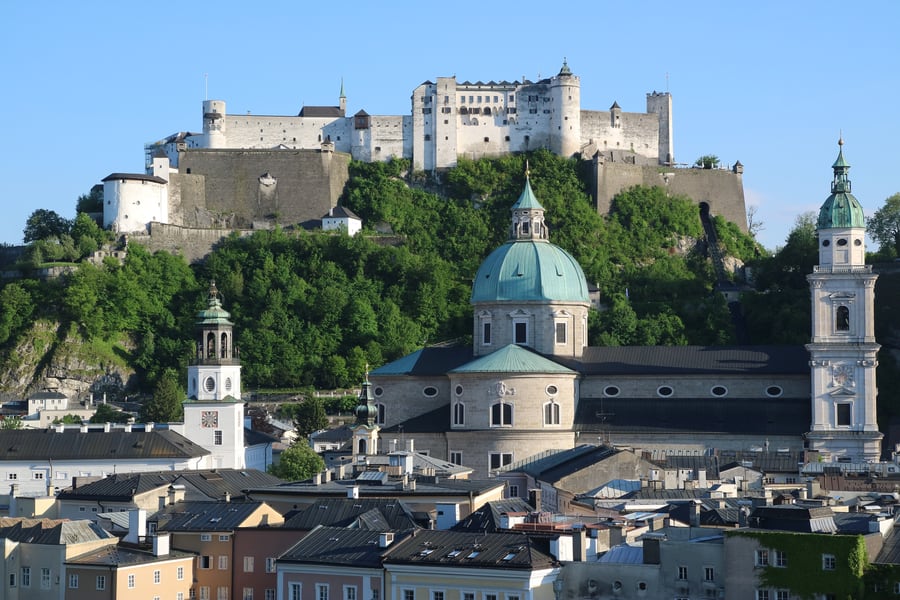
Mozart, the fortress, the baroque old town and the Sound of Music industry — worth two days before you go anywhere. Hohensalzburg was begun in 1077 and is among the best-preserved castles in Europe, and the historic centre has been UNESCO-listed since 1996. One footnote for a railway site: the fortress is supplied by the Reisszug, a goods cable railway first documented in 1515 and probably the oldest still working anywhere. You cannot ride it.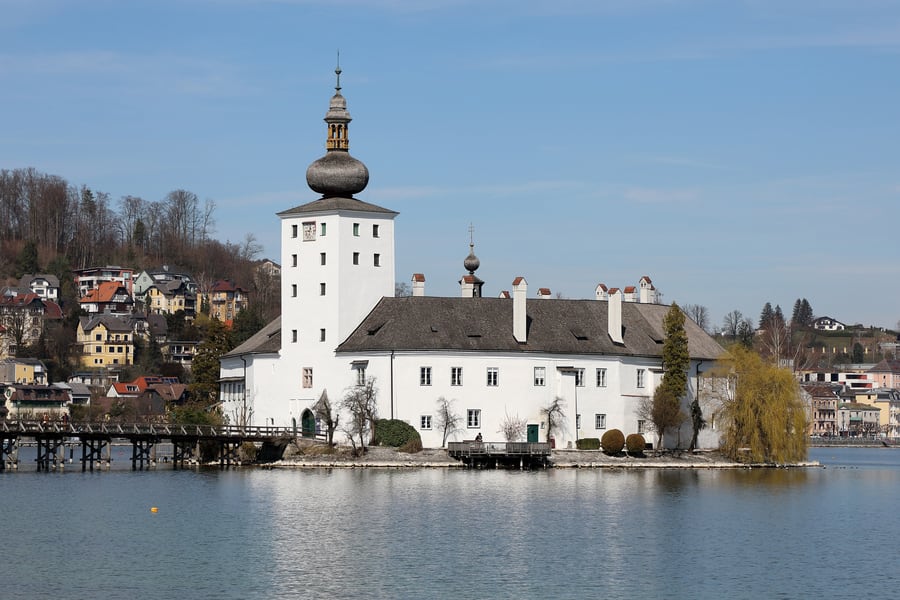 Foto: C.Stadler/Bwag / Wikimedia Commons · CC BY-SA 4.0 · cropped
Gmunden
The first proper lake, and almost nobody gets off here — which is their mistake. The Traunsee is 191 m deep, the deepest lake lying wholly inside Austria, with the Traunstein standing over the far shore. Schloss Ort sits on its own island at the end of a long wooden footbridge: the lake castle was rebuilt after a fire in 1626, the land castle went up in 1634, and a television series made both famous in the 1990s.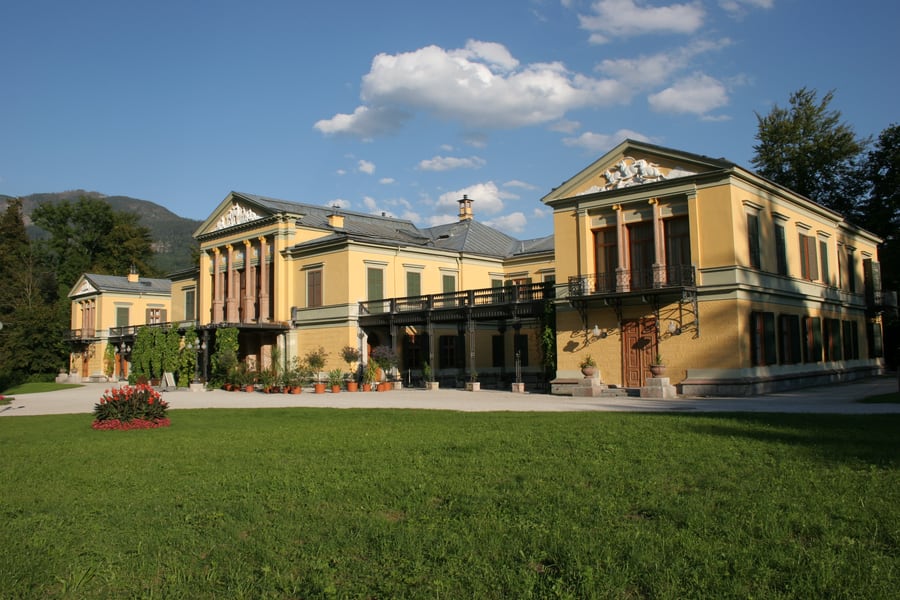 Sigmunds / Wikimedia Commons · CC BY-SA 3.0 · cropped
Bad Ischl
The Habsburg summer resort, and still faintly imperial. Franz Joseph was given the Kaiservilla as a wedding present by his mother in 1854 and called it heaven on earth. He came back nearly every summer for sixty years — and on 28 July 1914 he signed the declaration of war on Serbia inside it, left the next day and never returned. Konditorei Zauner has been selling cake since 1832. The town was European Capital of Culture in 2024.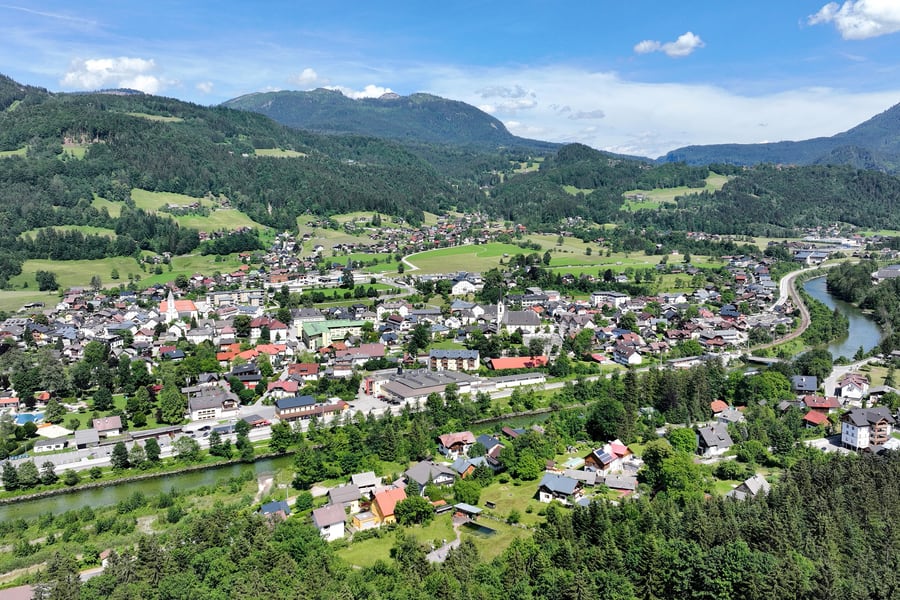 Foto: C.Stadler/Bwag / Wikimedia Commons · CC BY-SA 4.0 · cropped
Bad Goisern
A working valley town at 500 m, just short of the lake, and the natural base for walking if Hallstatt's crowds are not what you came for. It has been a spa since 1931 and was allowed to put the Bad in its name in 1955. Its other export goes on your feet: the Goiserer, a heavy nailed mountain boot made here, which is still the byword in Austria for a properly serious walking shoe.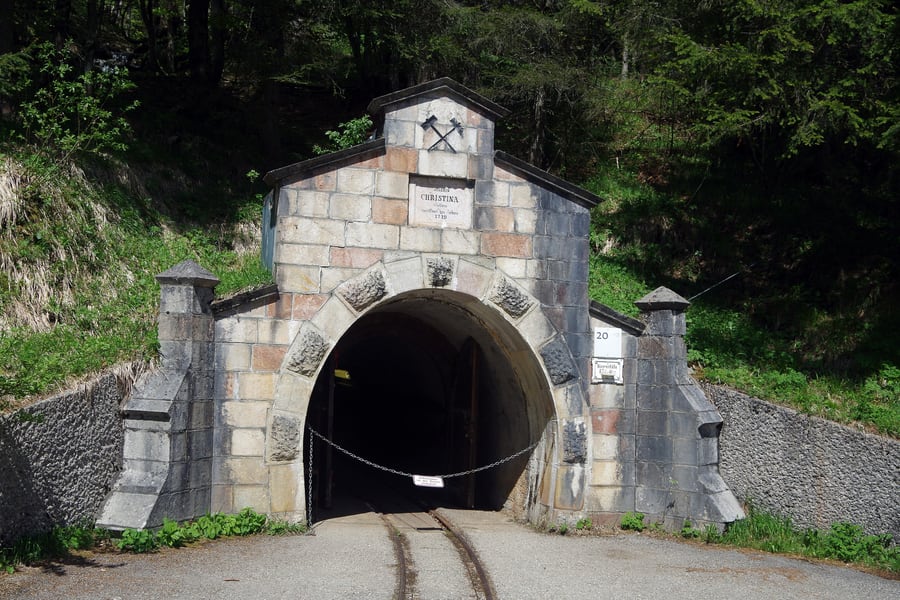 Balou46 / Wikimedia Commons · CC BY-SA 4.0 · cropped
The Hallstatt salt mine
The reason there is a village here at all. Salt has been cut out of this mountain since the Bronze Age, and the workings gave their name to the Hallstatt culture of 800–450 BC; the operator calls it the oldest salt mine in the world. A funicular lifts you from the village to the Christina adit, and the tour runs down wooden miners' slides to an underground salt lake. It has been shut since 2025 for a rebuild — check before you plan a day around it.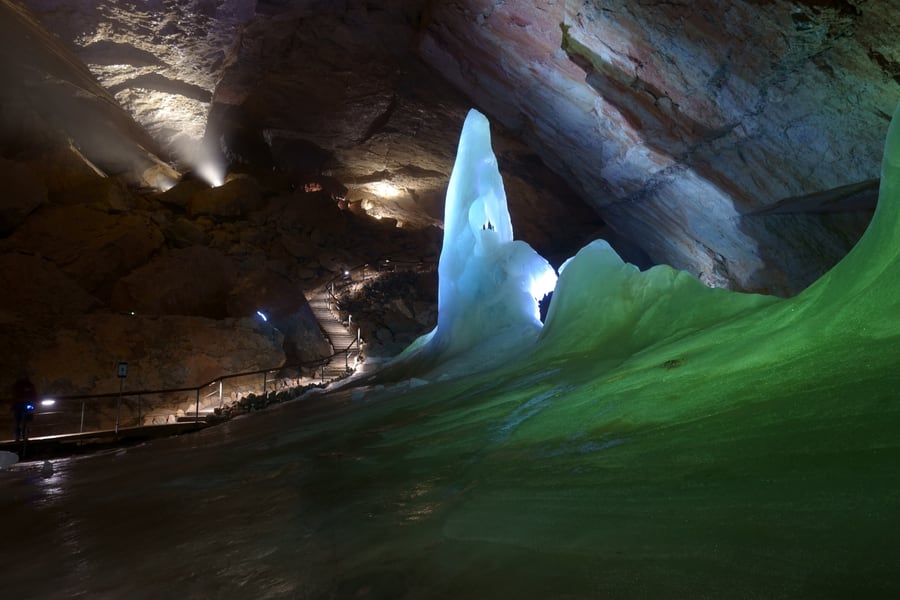 Tigerente / Wikimedia Commons · CC BY-SA 4.0 · cropped
Obertraun and the Dachstein caves
The next station along, a great deal calmer than Hallstatt, and the way in to the Dachstein. The Giant Ice Cave is at 1,455 m, reached by the Krippenstein cable car and a walk up from the Schönbergalm. It was forced in 1910 and opened to visitors in 1912; the show route covers about 800 m in an hour, past ice domes named for Parsifal and Tristan. The Mammoth Cave is next door. Take a coat.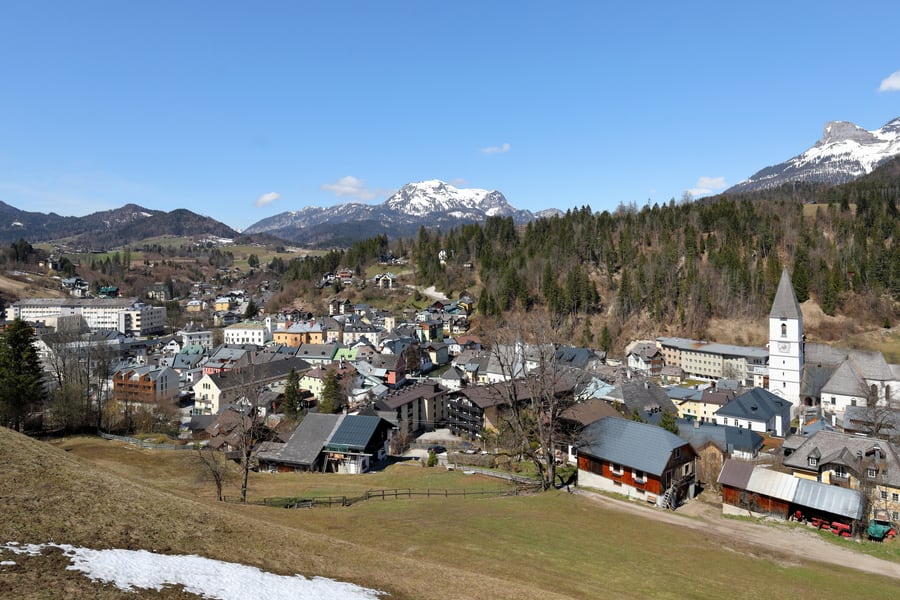 Foto: C.Stadler/Bwag / Wikimedia Commons · CC BY-SA 4.0 · cropped
Bad Aussee
Carry on south and the line crosses into Styria through more lakes and fewer people. Bad Aussee is a spa town at 659 m which claims to be the geographical middle of Austria, and has a stone in the centre of town to prove it. On the last weekend in May it builds sculptures out of daffodil heads and floats them through the streets. If Hallstatt has exhausted you, this is the escape route.Where to Sleep
This is where the trip is won or lost.
Hallstatt itself has very few beds — it is a village of around 760 people — and roughly a million visitors a year would like one of them. So the rooms are expensive, they book out months ahead, and in summer you are competing with the entire internet. If you want to stay in Hallstatt, book early and pay up.
And it is worth it, for one reason: the village empties in the evening. The day-trippers and the coaches leave in the late afternoon, and what's left is a small, quiet, extraordinarily beautiful place on a black lake with the lights coming on. People who only ever see Hallstatt between eleven and four have not really seen it.
If you can't get a room, or won't pay for one, the alternatives are genuinely good:
- Obertraun, one stop further along the line, is the sensible choice — quieter, cheaper, on the lake, at the foot of the Dachstein cable car, and about five minutes from Hallstatt by train.
- Bad Goisern and Bad Ischl, back up the valley, are ordinary Austrian towns with ordinary Austrian prices and plenty of rooms. Both are on the railway.
- Salzburg works as a base for a day trip — 2h35 each way is a long day, but people do it, and the first train out is the right one.
Two practical warnings. First, check the last boat before you plan a late dinner in the village and a train back: the crossing is not run by ÖBB and stops earlier than you'd like. Second, if you are staying in the village, you will be arriving with luggage on a small boat — pack accordingly. There is no road bridge, and there is no car to meet you.
Questions or corrections
Planning this trip and stuck on something, or spotted a time, fare or detail that has changed? Send us a message about Salzburg to Hallstatt. We read every one, and we update this page when something has changed.