Zillertalbahn
Liberaler Humanist / Wikimedia Commons · CC BY-SA 3.0
- Distance32 km
- Duration50 minutes; about 1 hour 30 minutes by steam
- Best seasonAll year, every half hour; steam Tuesday to Thursday, June to September
Introduction
The Zillertalbahn carries about 3.6 million passengers a year. Some 13,300 of them ride the steam train.
The railway was the valley's own idea. In the 1890s the road up the Zillertal still ran through marshland, and a traveller bound for Mayrhofen had to spend a night in Zell am Ziller on the way. The mayors of the valley formed a railway committee, settled on a narrow gauge to keep the cost down, and in December 1899 founded a company to build it from the main line at Jenbach. The first trains ran to Fügen a year later, and the line reached Mayrhofen in July 1902. The valley's municipalities still own most of the company today.
For most of the twentieth century steam simply ran the trains. That changed in June 1991, when the line went over to a regular timetable with trains at fixed intervals: the steam trains were taken out of it and became a slow, nostalgic train of their own, with fewer stops and their own fares. Since December 2008 the ordinary trains have run every half hour all day.
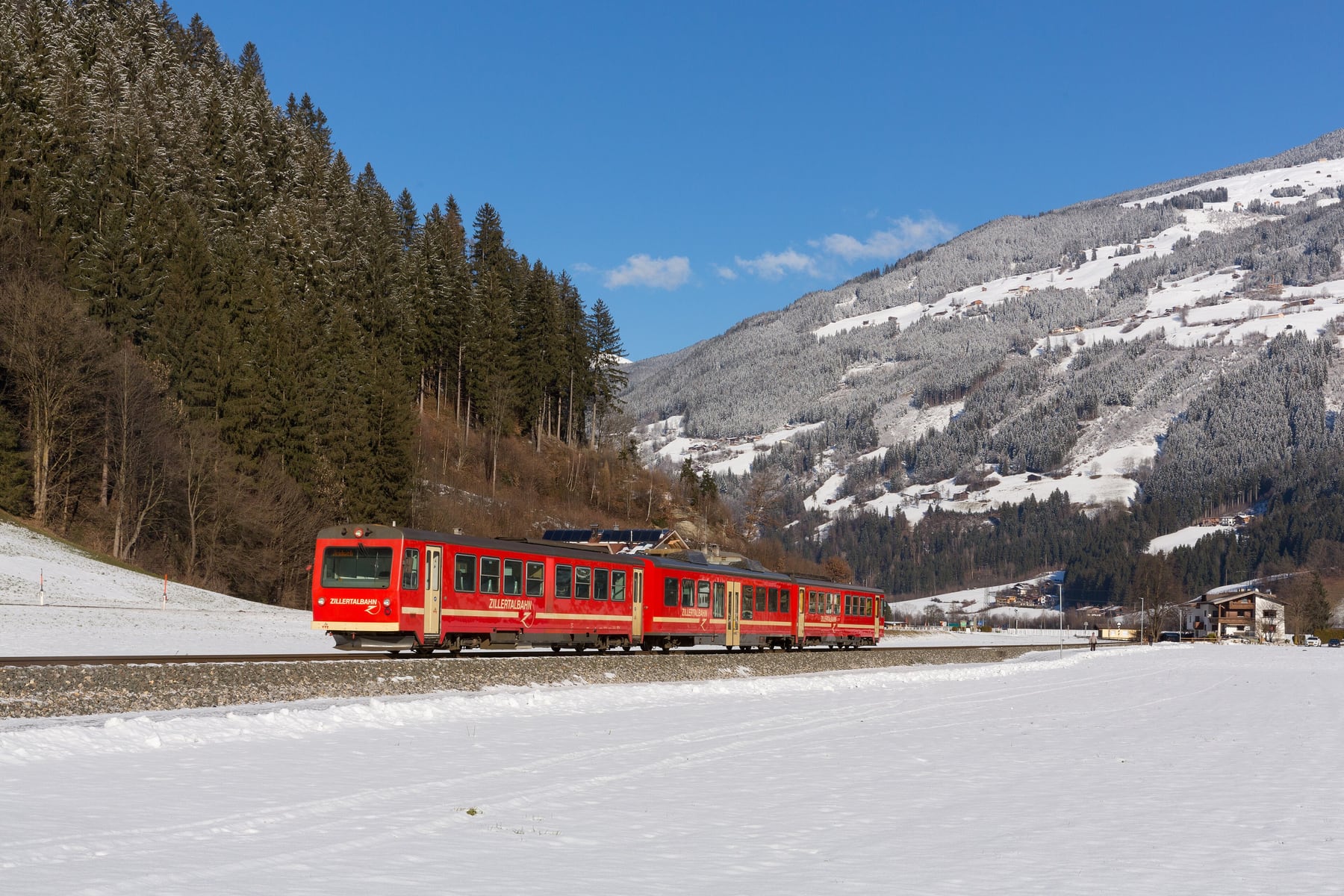
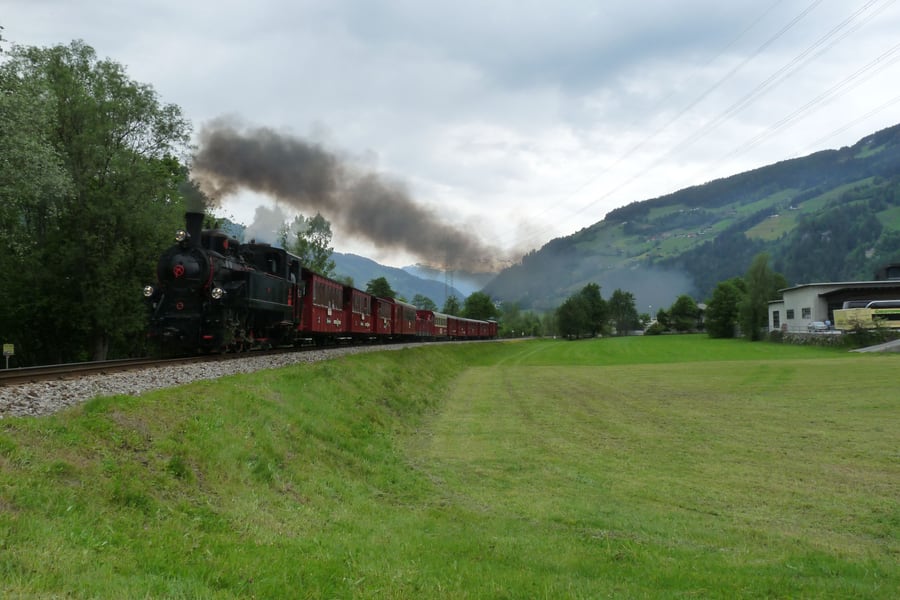
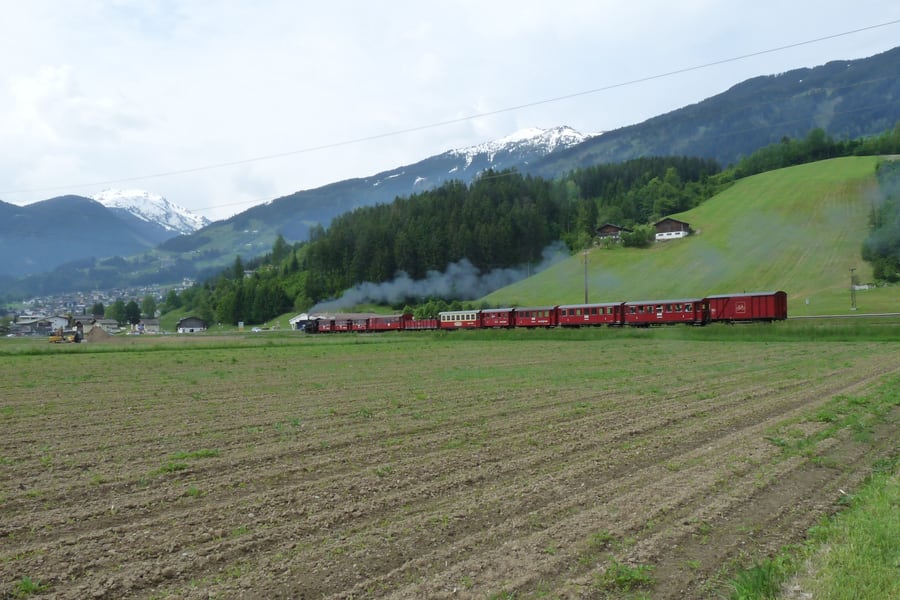
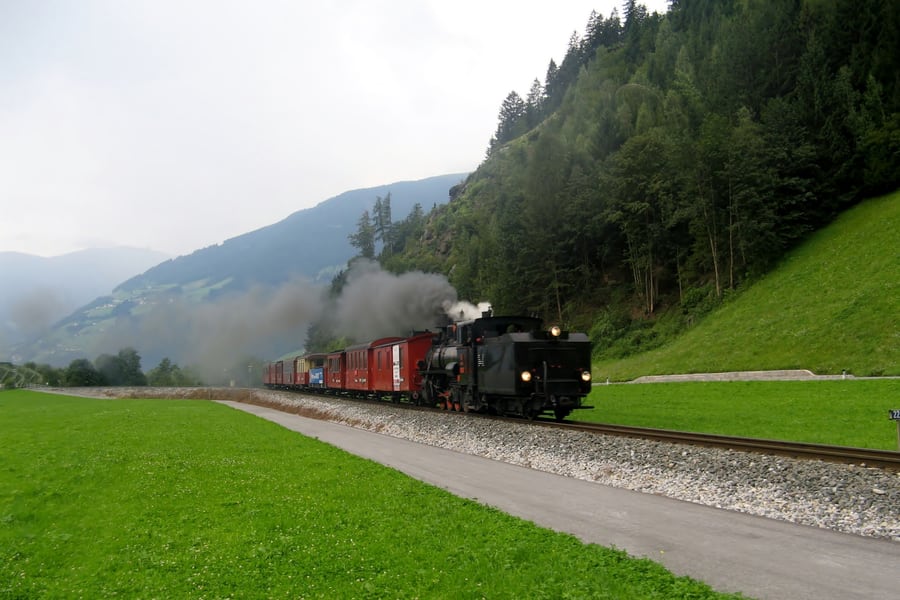
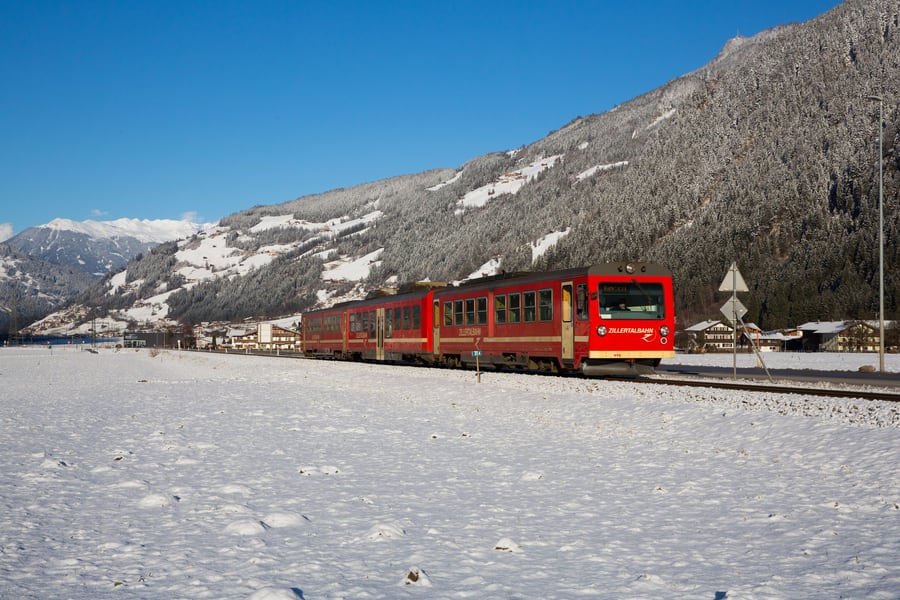
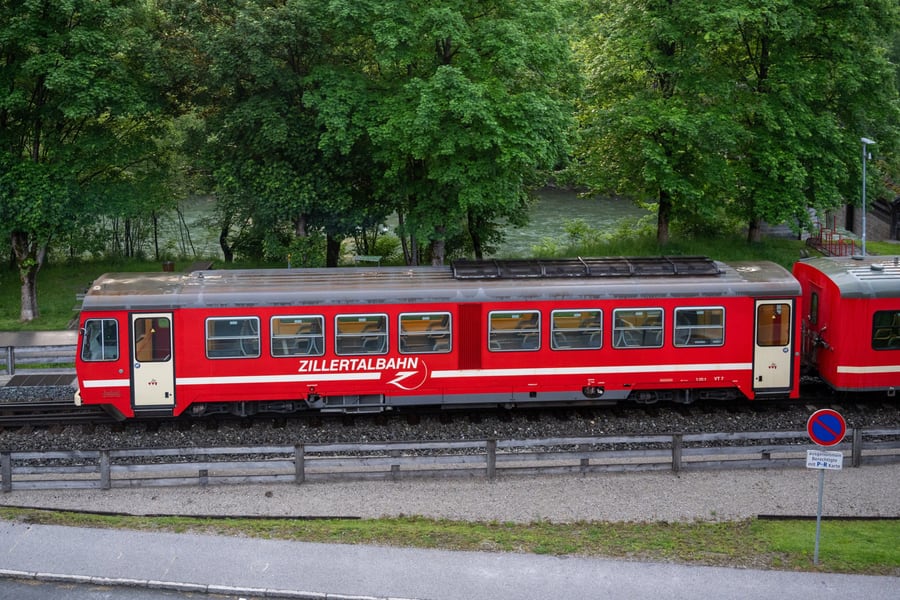
So there are two railways on the one track. The everyday one is a 32-kilometre line on a 760-millimetre gauge, worked by red diesel railcars and push-pull trains from half past six in the morning until eight at night, carrying school pupils, commuters, skiers and walkers. The other runs on Tuesdays, Wednesdays and Thursdays in summer: a steam engine at the head of wooden-seated coaches, some of them more than 120 years old, taking an hour and a half over a journey the railcars make in fifty minutes.
The Journey
The Zillertalbahn starts from its own platforms at Jenbach, the station the operator describes by its three gauges: ÖBB's standard-gauge main line between Innsbruck and Kufstein, the Zillertalbahn's 760 millimetres, and the metre-gauge rack trains of the Achenseebahn. The narrow-gauge trains cross the Inn, turn south at Rotholz and enter the Zillertal at Strass.
Up the valley
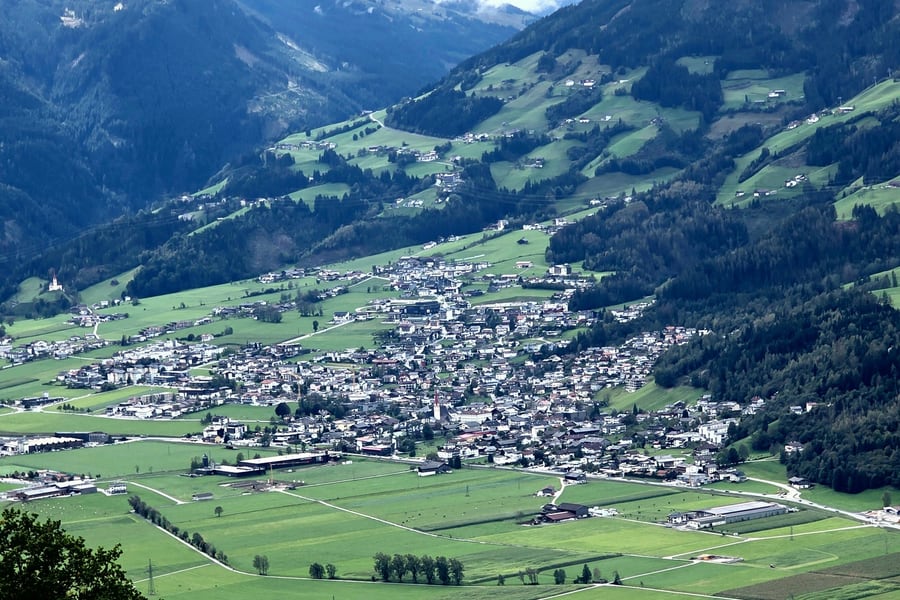
The Zillertal is wide and flat at the bottom, and the line keeps to its floor all the way, between the Ziller, the main road and a chain of villages, with the mountains rising steeply on either side. Many of the stops are request halts. Long sections are now double track, and the half-hourly trains pass each other on the move rather than waiting in stations. At Fügen-Hart, one of the three staffed stations, the sawmill takes in the logs that the railway's freight trains bring up from Jenbach. Kaltenbach-Stumm has the road running between its station building and its platform, which passengers cross at a zebra crossing.
Beyond Aschau the line crosses the Ziller on an iron truss bridge of about 1900, now a protected monument, and reaches Zell am Ziller, whose station was rebuilt in 2025. It passes the brewery and runs on past the request stop at Laimach, home of the singers who carried "Silent Night" abroad, to Ramsau-Hippach, and ends at Mayrhofen, in a station rebuilt in 1968, under the mountains at the head of the valley. Buses leave from outside for the Tux valley and the Hintertux Glacier, and in summer for the Schlegeis reservoir.
The trains
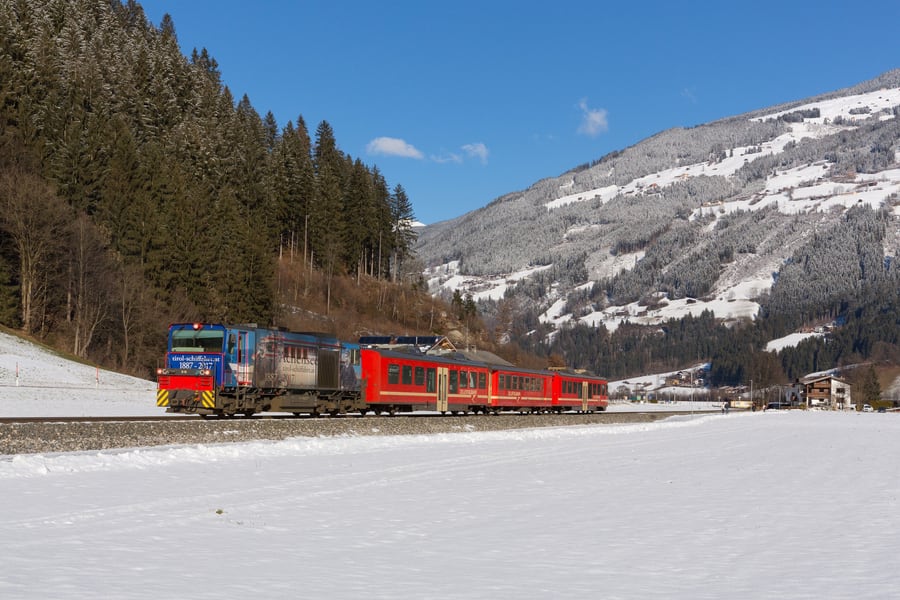
Every everyday train is wheelchair accessible and carries a conductor. They are either diesel railcars or push-pull trains hauled by a diesel locomotive, and they are second class only. Between them they burn some 900,000 litres of diesel a year, and the operator plans to replace them with battery hybrid trains, charged partly from new overhead wires.
The steam train is hauled by one of three engines: No. 3; No. 4, the former Yugoslav 83-076, on loan to the line since 1994; and No. 5 Gerlos, built in 1930. Its coaches have wooden seats. For private charters the railway also has a buffet car, the Zillertaler Alpenstube, a barrel car, and the Kristallwaggon, fitted with 62,000 Swarovski crystals.
Along the route
 Herbert Ortner / Wikimedia Commons · CC BY 3.0
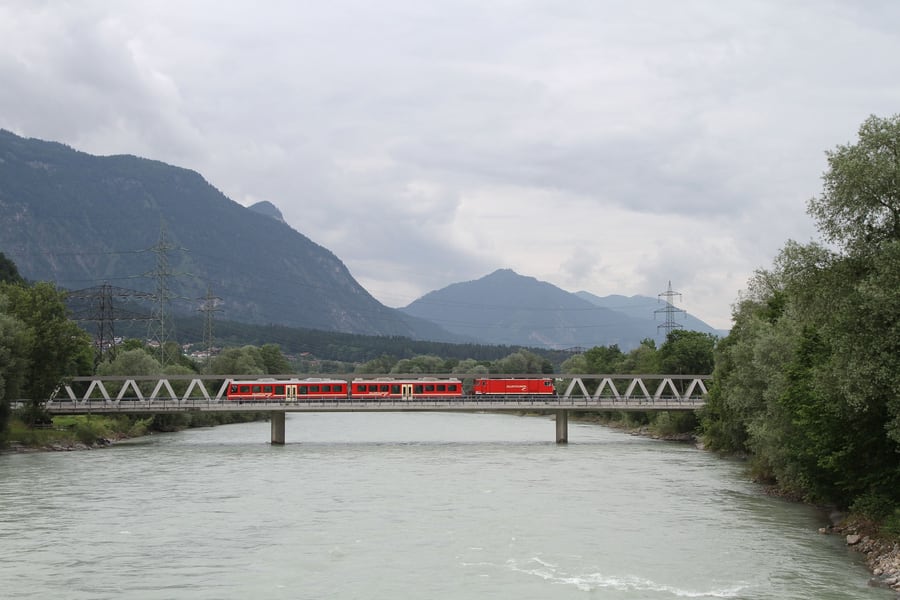
Across the Inn
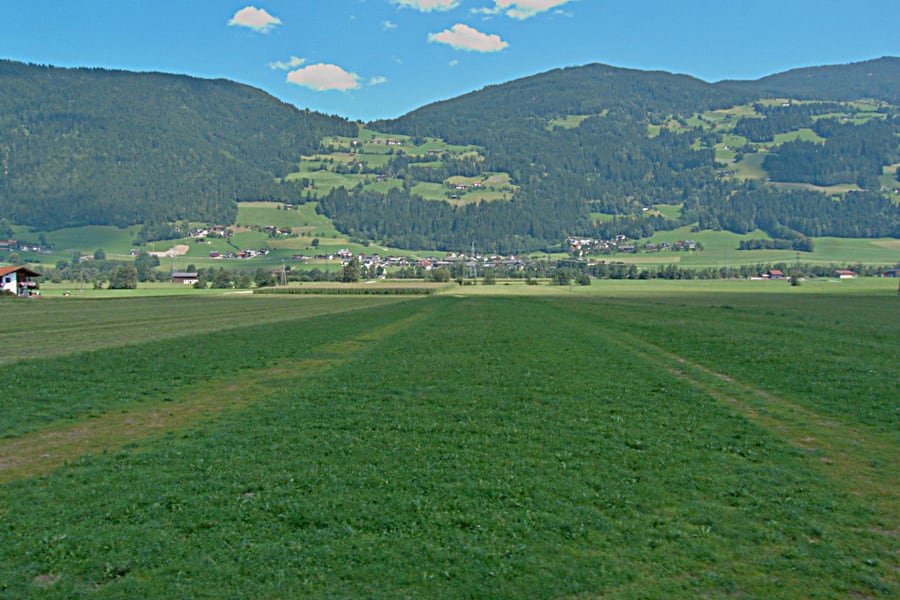
Out of Jenbach the trains cross the Inn and turn south at Rotholz into the Zillertal. From here to Mayrhofen the line runs up the wide, flat valley floor, between the river, the road and a string of villages.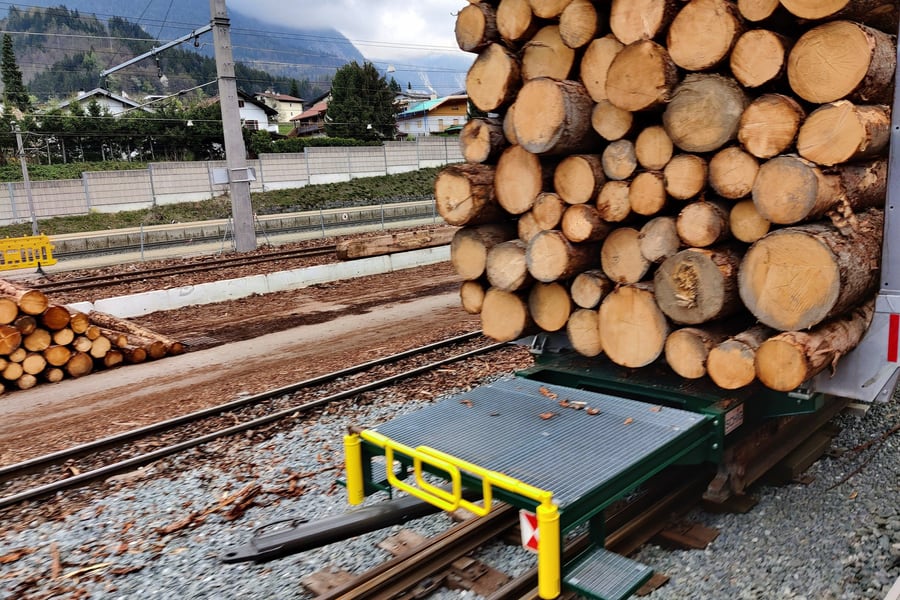 Simon Legner / Wikimedia Commons · CC BY-SA 4.0 · cropped
Timber on the narrow gauge
At Jenbach, logs are loaded onto the railway's own wagons for the sawmill at Fügen: 84,000 tonnes of them in 2025. The freight trains run in fixed paths between the half-hourly passenger trains.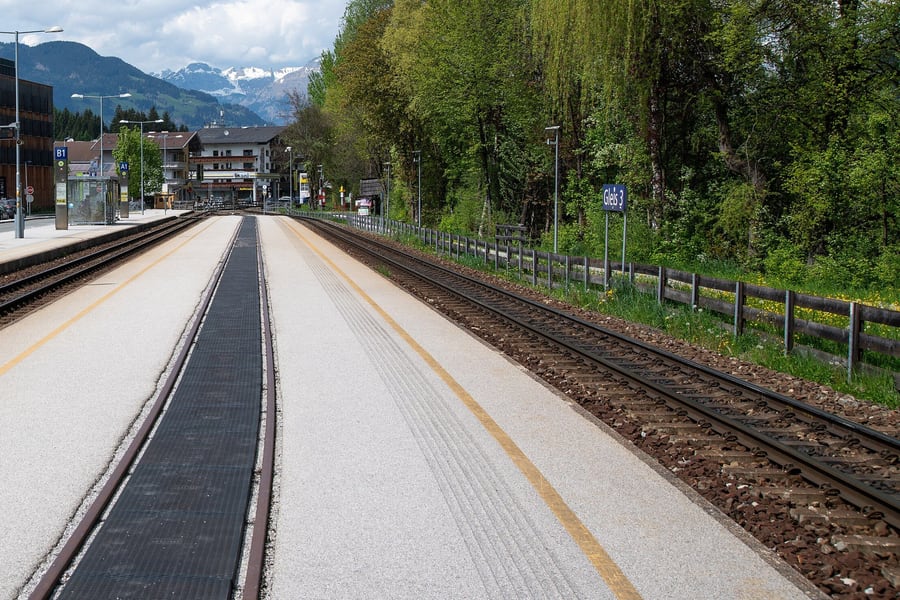 Linie29 / Wikimedia Commons · CC BY-SA 4.0 · cropped
A track in the platform
At Kaltenbach-Stumm, rebuilt in 2014, the road runs between the station building and the trains, and a third track is set into the middle of the island platform, used only for specials or a late steam train.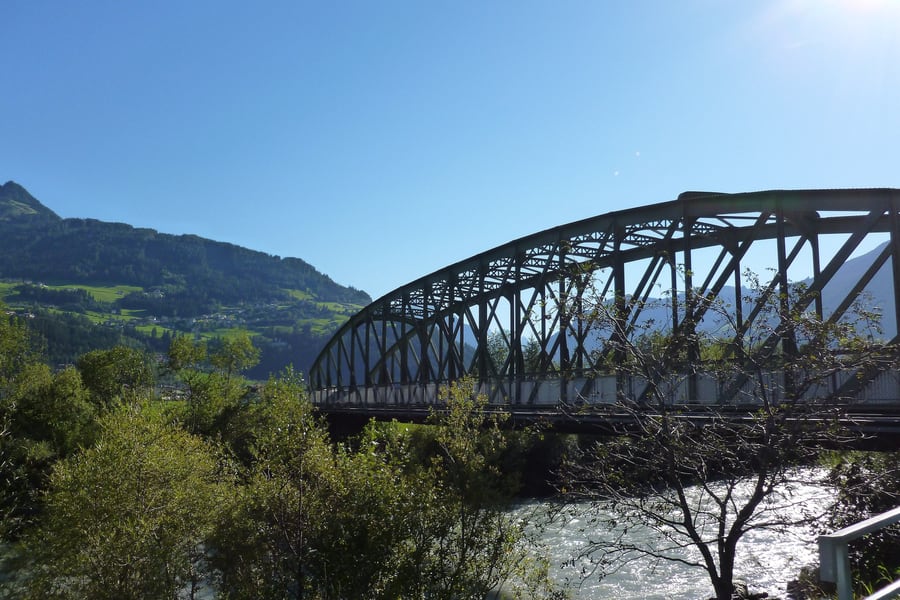 Ladysusan292 / Wikimedia Commons · CC BY-SA 3.0 AT · cropped
The bridge at Zell
Just short of Zell am Ziller the line crosses the Ziller on a riveted iron truss bridge, 50 metres long, built with the railway around 1900 and now a protected monument.A bit of history
Culture & experiences along the way
 Geisler Martin / Wikimedia Commons · CC BY-SA 3.0 · cropped
The singers who carried Silent Night
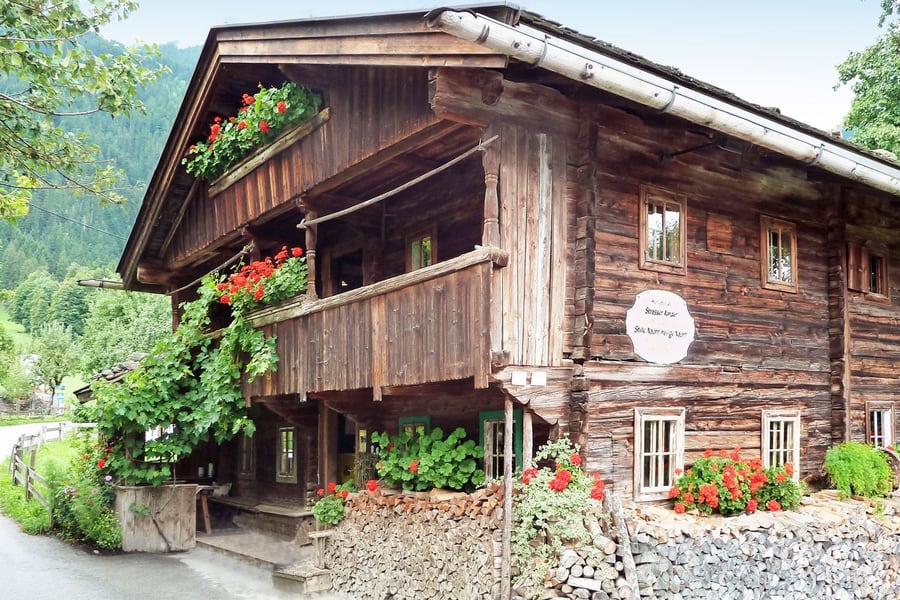
Singing families from this valley took "Silent Night" out into the world. The Strasser siblings of Laimach, glove-sellers, sang it at Leipzig in the early 1830s; their house still stands in Laimach, which has its own request stop. The Rainers of Fügen are said to have sung it for the emperor and the tsar in Fügen's castle in 1822. Benreis / Wikimedia Commons · CC BY-SA 4.0
From hay milk to cheese
At the Erlebnissennerei in Mayrhofen, a show farm and show dairy follow the milk of the valley's mountain farmers into cheese and yoghurt, with a tasting. The valley's sharpest cheese is Graukas, Tyrol's almost fat-free sour-milk cheese, which goes into dumplings and Krapfen. The operator sells a combined steam train and dairy ticket.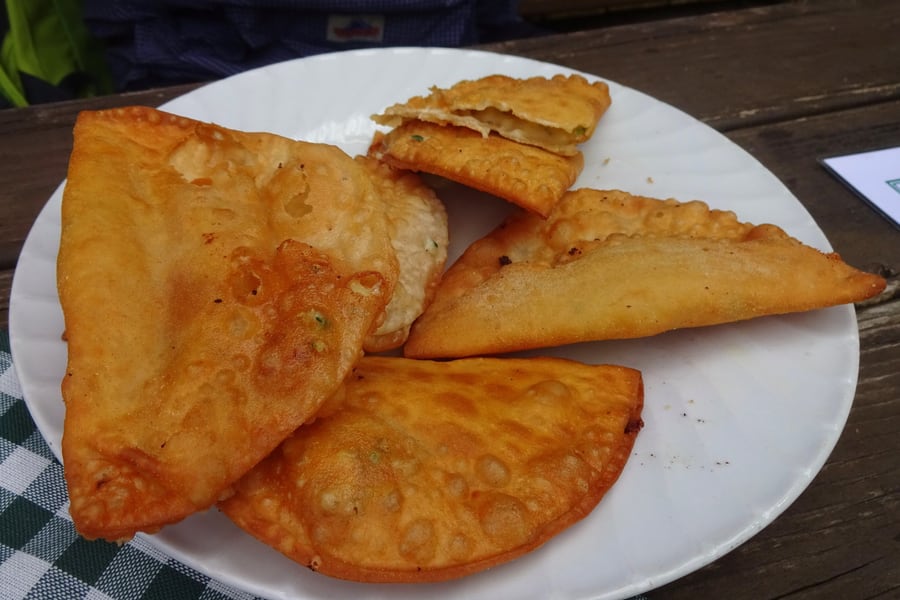 Benreis / Wikimedia Commons · CC BY-SA 4.0
Zillertaler Krapfen
The valley's own farmhouse dish: thin rye-and-milk pastry folded over potato, grey cheese and curd, sealed like a pasty and fried. It began as a Zillertal dish and is now made all over Tyrol, and turns up at festivals and Christmas markets.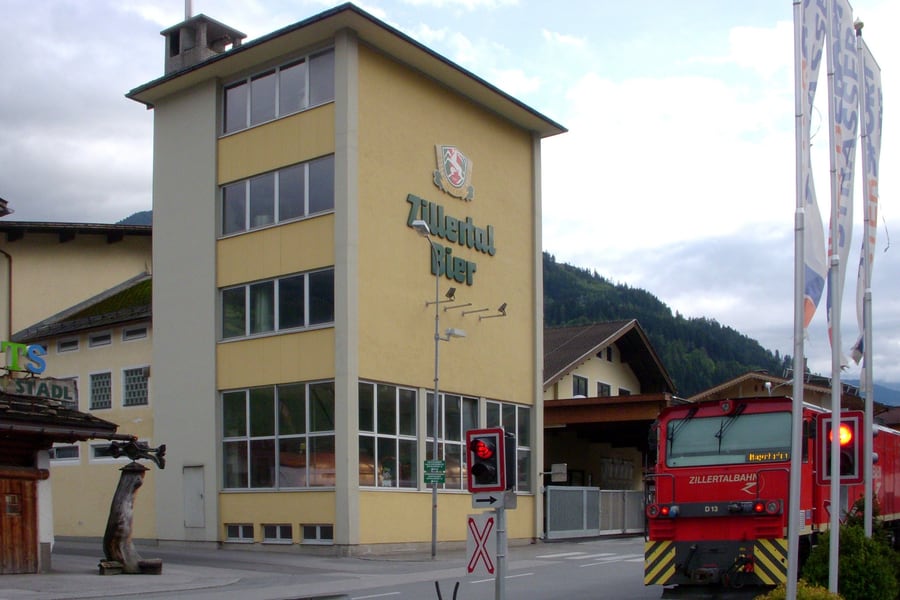 Holger.Ellgaard / Wikimedia Commons · CC BY 3.0
Zillertal Bier and the Gauder
The brewery beside the line in Zell am Ziller celebrated 525 years in 2025 and calls itself Tyrol's oldest private brewery; its BrauKunstHaus can be visited without booking. The Gauderfest is thought to be about as old: Zell's spring festival on the first weekend of May, with Austria's largest costume parade.Timetables
The Zillertalbahn runs every day, all year, about every half hour. The trains take 50 minutes from Jenbach to Mayrhofen, and stop on request at the smaller halts.
Jenbach to Mayrhofen
| Jenbach | Mayrhofen |
|---|---|
| 06:28 | 07:20 |
| 06:50 | 07:45 |
| 07:46 | 08:39 |
| 08:09, then every 30 minutes at :09 and :39 | 08:59, then :29 and :59 |
| 19:09 (last of the half-hourly trains) | 19:59 |
| 20:05 (last train) | 20:55 |
Mayrhofen to Jenbach
| Mayrhofen | Jenbach |
|---|---|
| 05:44 (first train) | 06:35 |
| 06:08 | 07:02 |
| 06:33 | 07:25 |
| 07:32 | 08:21 |
| 08:17, then every 30 minutes at :17 and :47 | 09:08, then :38 and :08 |
| 18:17 | 19:08 |
| 19:10 | 20:00 |
| 19:47 (last train) | 20:36 |
The steam train
In 2026 the steam train ran from 2 June to 24 September, on Tuesdays, Wednesdays and Thursdays, once each way: from Jenbach at 10:42, arriving in Mayrhofen at 12:14, and back from Mayrhofen at 13:33, arriving in Jenbach at 15:02. It calls at ten of the stops on the way. The 2027 dates had not been published when this page was checked.
Getting to Jenbach
Jenbach is on the main line between Innsbruck and Kufstein, and Railjets and regional trains stop there; the Zillertalbahn's timetable is set to connect with ÖBB's.
Times as of October 2026, from the Zillertalbahn's timetable (opens in a new tab) valid from 14 June to 12 December 2026, checked against ÖBB's journey planner. The times from 13 December 2026 had not been published.
Tickets
The everyday trains are part of the Tyrol transport association, the VVT, and are priced by its zones. A single from Jenbach to Mayrhofen covers seven zones and costs €11; children from six to fourteen pay €5.50, and up to four children under six travel free with each adult. Tickets are sold by the VVT app and online shop, at ticket machines, at the staffed stations in Jenbach, Fügen-Hart and Mayrhofen, and by the conductor on every train.
The steam train has its own fares, and VVT tickets are not valid on it: €25 single or €35.20 return from Jenbach to Mayrhofen, half for children from six to fifteen, a little less from Kaltenbach. The combined tickets, with the show dairy, the brewery or the Achenseebahn, are sold at the Welcome Center in Jenbach, at the staffed stations and on the train. Fares as of October 2026.
Book your tickets
Jenbach – Mayrhofen, single
€11 adult · €5.50 child 6–14 · regular trains
A seven-zone ticket of the Tyrol transport association, also sold on board.
Book Tickets (opens in a new tab, on VVT)via VVTSteam train, Jenbach – Mayrhofen
€25 single · €35.20 return · child 6–15 half
The steam train's own fare; regional tickets are not valid on it.
Book Tickets (opens in a new tab, on Zillertalbahn)via ZillertalbahnSteam train and show dairy
€40.70 single · €49.20 return
The steam train to Mayrhofen with entry to the Erlebnissennerei and its tasting.
Book Tickets (opens in a new tab, on Zillertalbahn)via ZillertalbahnDampfkombiticket
Zillertalbahn and Achenseebahn, valid two days
A return on each of Jenbach's two steam railways.
Book Tickets (opens in a new tab, on Zillertalbahn)via ZillertalbahnRail Passes
Interrail and Eurail do not cover the Zillertalbahn. It is listed by name among the Austrian trains the pass is not valid on, so pass holders buy an ordinary €11 ticket from Jenbach. The pass does cover ÖBB's trains to Jenbach.
The KlimaTicket Österreich does cover it. Austria's annual all-network ticket is valid on all scheduled public transport, and the Zillertalbahn's everyday trains are part of the Tyrol transport association; the regional KlimaTicket Tirol is valid too. Neither covers the steam train, which falls under the ticket's exclusion of nostalgia and tourist trains.
For this line alone a pass is not worth buying: the whole trip costs €11 each way. A pass pays only when the Zillertal is one stop on a longer journey through Austria.
Checked October 2026 against Interrail's table of railway companies (opens in a new tab), the KlimaTicket Ö conditions (opens in a new tab) and the VVT's fares (opens in a new tab).
Places to Visit
The Zillertal is a valley of villages rather than sights, and the best of it is reached by getting off the train and going up. These six run from the lower valley to the glaciers at its head, three of them by bus from the stations at Zell am Ziller and Mayrhofen.
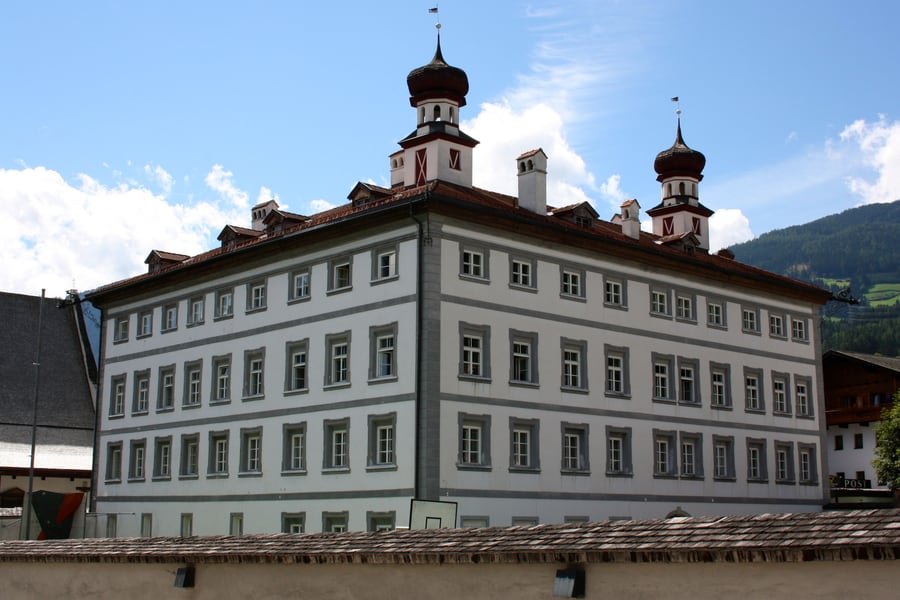 Funke / Wikimedia Commons · CC BY-SA 3.0
Fügen and its castle
Fügen lies across the Ziller from the station at Hart. Its castle began as a tower house of about 1550 and took its Baroque form around 1700. The Rainer singers, who helped spread "Silent Night", came from Fügen, and the local history museum tells their story; it opens on Tuesday to Friday afternoons from Christmas to Easter and from June to October.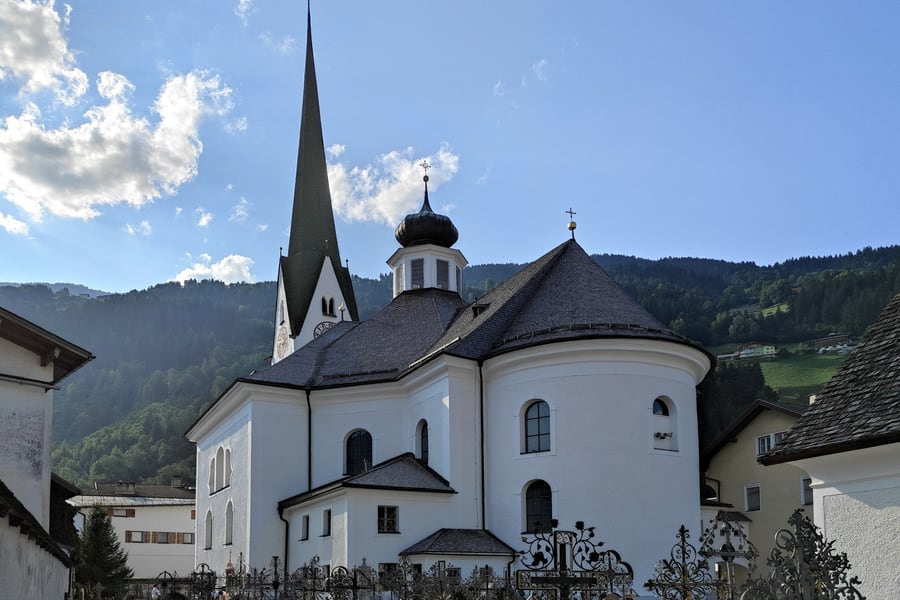 H.Helmlechner / Wikimedia Commons · CC BY-SA 4.0 · cropped
Zell am Ziller
Home of the brewery and the Gauderfest, and the seat of a deanery since 1674. Its parish church of St Vitus is a Baroque centrepiece of 1772 to 1778, an octagon under a dome painted by Franz Anton Zeiller, attached to a Gothic tower kept from the earlier church. It stands in the centre of the village, ringed by its graveyard.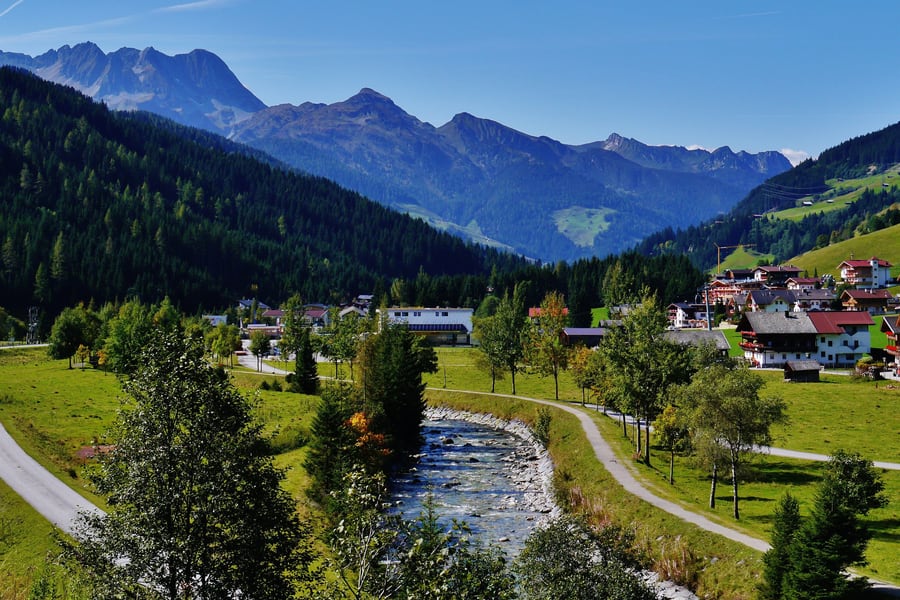 Zairon / Wikimedia Commons · CC BY-SA 4.0 · cropped
Gerlos and the pass
Gerlos strings its hamlets along a side valley that climbs east from Zell, on a floor about 1,200 metres up. For centuries its pass was the main way from Tyrol into Salzburg, and a railway over it was once planned; a through road came only in 1962 and 1964, with the Durlaßboden reservoir above the village, where people swim in summer. In winter it is part of the Zillertal Arena ski area.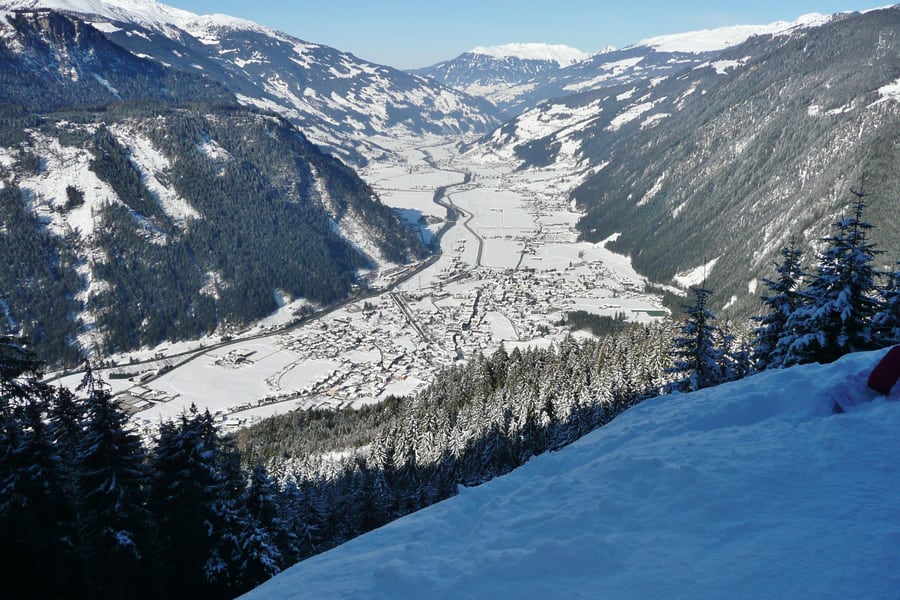 qwesy qwesy / Wikimedia Commons · CC BY 3.0 · cropped
Mayrhofen and the Ahorn
The end of the line is one of Tyrol's great resorts, built up after the Penken and Ahorn cable cars opened in 1954 and 1969. The Ahornbahn's cabins hold 160 people each. In summer the mountains above are walking country; in winter Mayrhofen is a gateway to the Zillertal 3000 ski area. It counts some 1.3 million overnight stays a year, more than anywhere in Tyrol but one.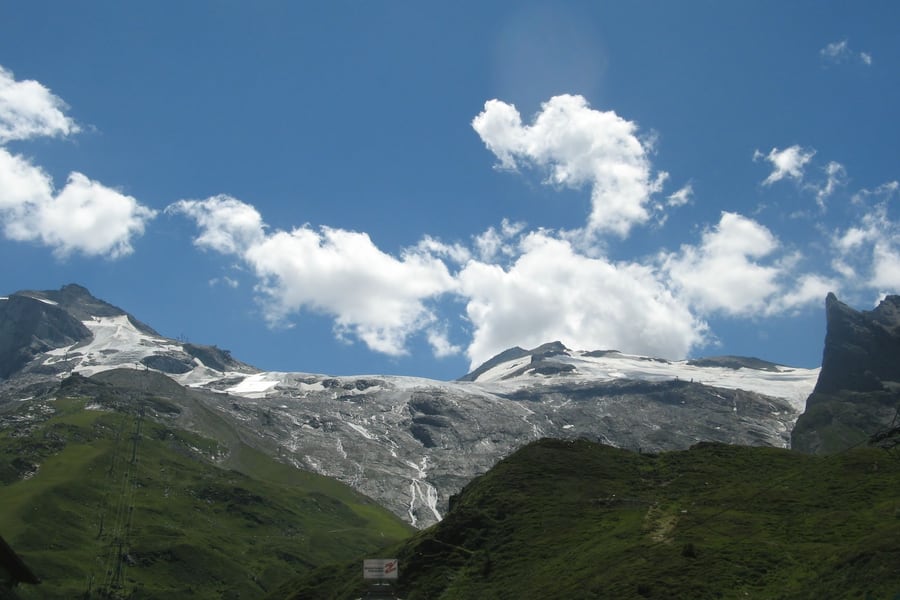 CrabbyPatrick / Wikimedia Commons · CC BY 3.0 · cropped
The Hintertux Glacier
At the head of the Tux valley, lifts climb onto the Tuxer Ferner, to 3,250 metres under the Olperer. Skiing runs from early autumn to late spring. For years it never stopped at all, but since 2023 the glacier has had a summer break, two months long in 2025. The bus from Mayrhofen station runs about every half hour.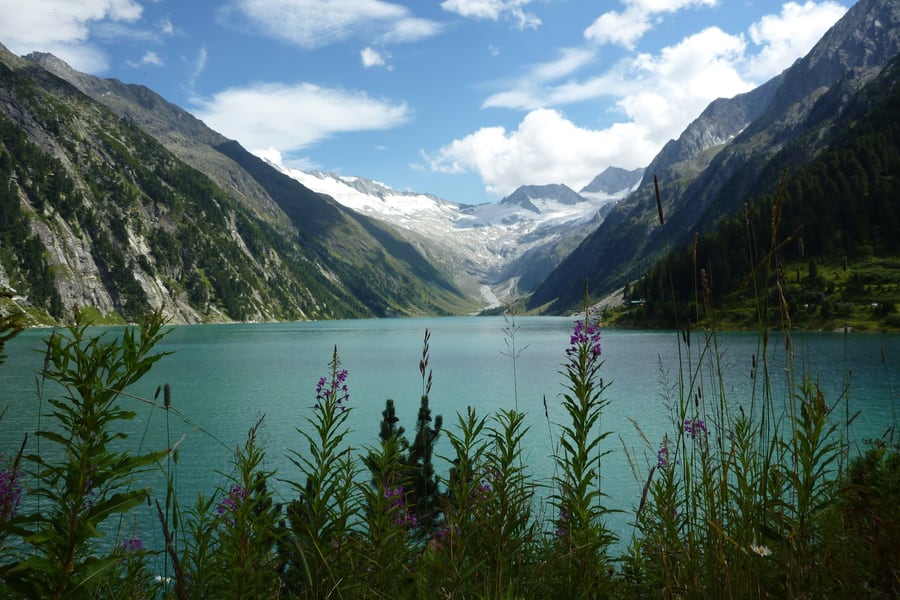 Thommynator / Wikimedia Commons · CC BY-SA 3.0 · cropped
The Schlegeis reservoir
A turquoise reservoir 1,782 metres up at the head of the Schlegeisgrund, under the glaciers of the Zillertal Alps, held back by an arched dam begun in 1965. In 2026 the bus ran from 30 May to 4 October, taking about an hour; a toll is charged on the last stretch. The water drops through a 7.8-kilometre tunnel to the Roßhag power station, part of the most powerful group of storage power stations in Austria.Where to Sleep
Mayrhofen, at the end of the line, is the obvious base, with the cable cars and buses into the mountains. Zell am Ziller, about ten minutes back down the valley, is the quieter choice, with the brewery and the church on its doorstep.
Where to stay
 Jacquesverlaeken / Wikimedia Commons · CC BY-SA 4.0 · cropped
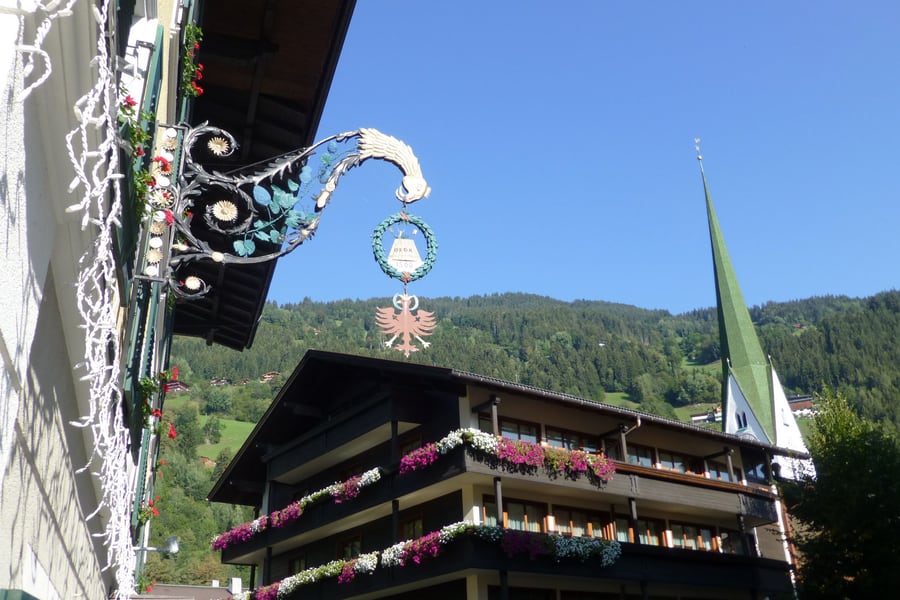
Hotel & Gasthof Bräu
In Zell am Ziller
The brewing family's inn, run with the brewery for generations, with historic Bräu Stuben, a garden and an indoor and outdoor pool.
Check Availability (opens in a new tab, on hotel-braeu.at)via hotel-braeu.at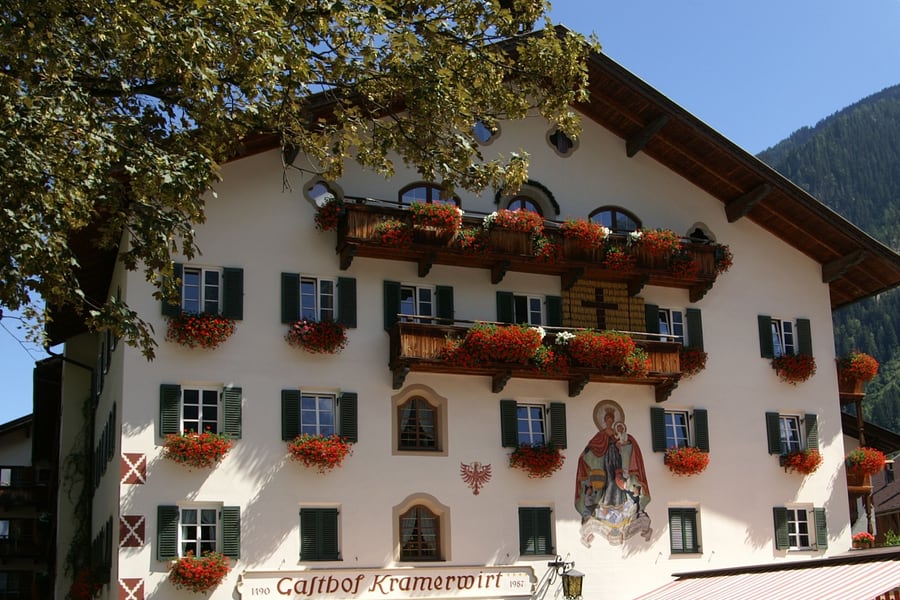 böhringer friedrich / Wikimedia Commons · CC BY-SA 2.5 · cropped
Alpenhotel Kramerwirt
Am Marienbrunnen, Mayrhofen
An inn its owners trace back more than 300 years, with a painted façade, rooms and family suites in Tyrolean style, and a terrace in front.
Check Availability (opens in a new tab, on kramerwirt.at)via kramerwirt.atQuestions or corrections
Planning this trip and stuck on something, or spotted a time, fare or detail that has changed? Send us a message about Zillertalbahn. We read every one, and we update this page when something has changed.