Tren Al Ándalus
CFA1877 / Wikimedia Commons · CC BY-SA 4.0
- DistanceSeville–Málaga (via Andalusia)
- Duration7 days / 6 nights
- Best seasonSpring & autumn
Introduction
In 1929, the Compagnie Internationale des Wagons-Lits — the company behind the Orient Express — built a set of sleeping cars in France for a particular kind of passenger. They were used by the British royal family, carrying them between Calais and the French Riviera in the manner to which they were accustomed.
Those carriages did not end up in a museum. They ended up in Andalusia, and you can still sleep in them.
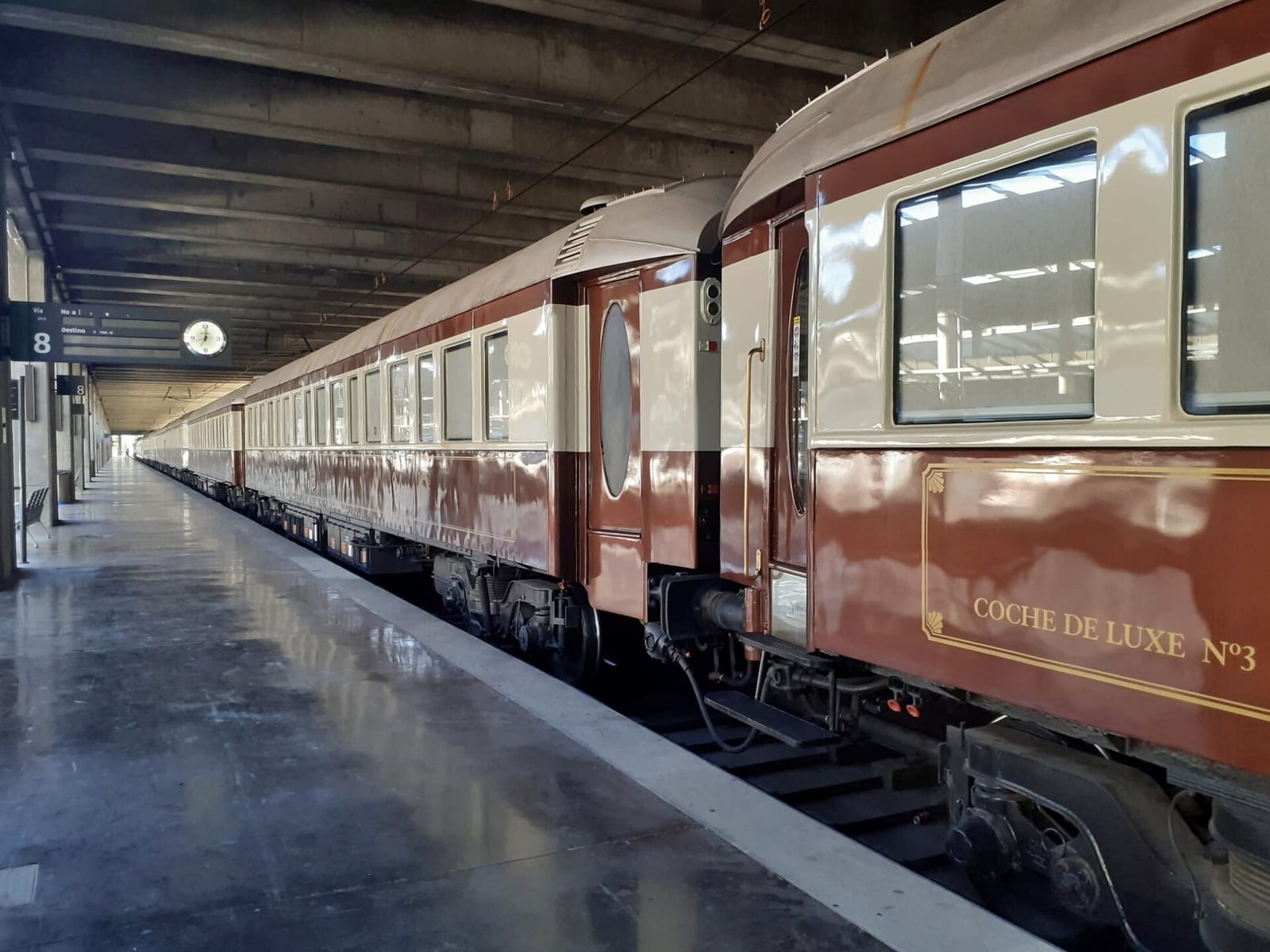
The Tren Al Ándalus has been running since 1983, when it launched as the Al-Andalus Expreso, and it remains one of the most beautiful trains in the world: five 1929 Wagons-Lits sleepers, two dining cars, a bar car and a lounge car, all restored in Belle Époque style — marquetry, brass, soft lamplight and white linen. It carries at most 64 guests.
What it does with them is a slow, greedy, seven-day tour of the Spanish south. Andalusia was al-Andalus for nearly eight centuries, and what that left behind — the Alhambra, the Mezquita, the Giralda — is arguably the finest Islamic architecture in Europe. Between the monuments come sherry in Jerez, seafood in Cádiz, olive groves in Jaén and a gorge at Ronda. The train ambles through it all at the pace of a good lunch, which is precisely the idea.
The Journey
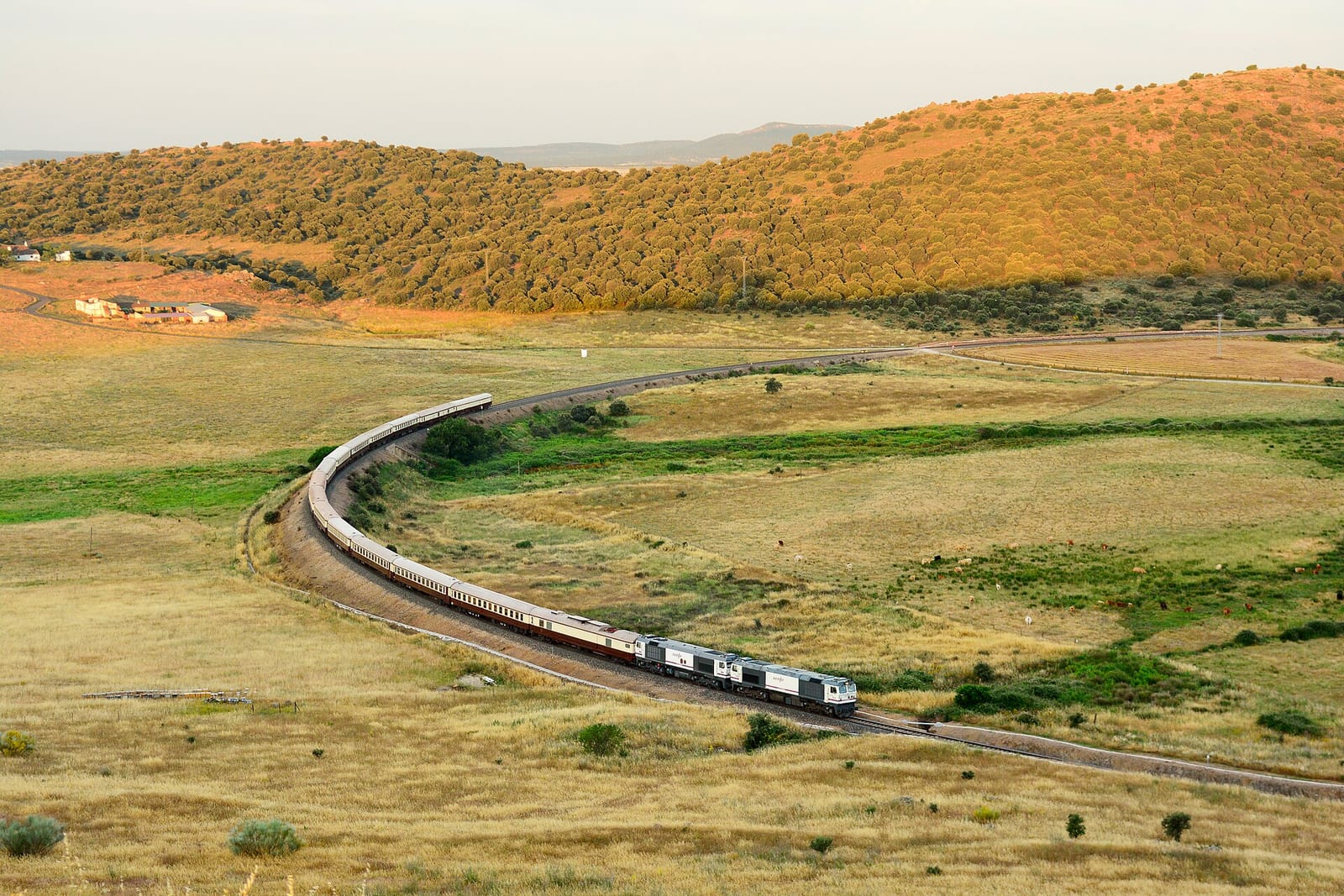
The classic itinerary runs Seville to Málaga — or the reverse — over seven days and six nights, looping through the provinces of Cádiz, Granada, Jaén and Córdoba. Unlike the mountain railways of the north, this is a train on Spain's broad Iberian gauge, and it does not hurry.
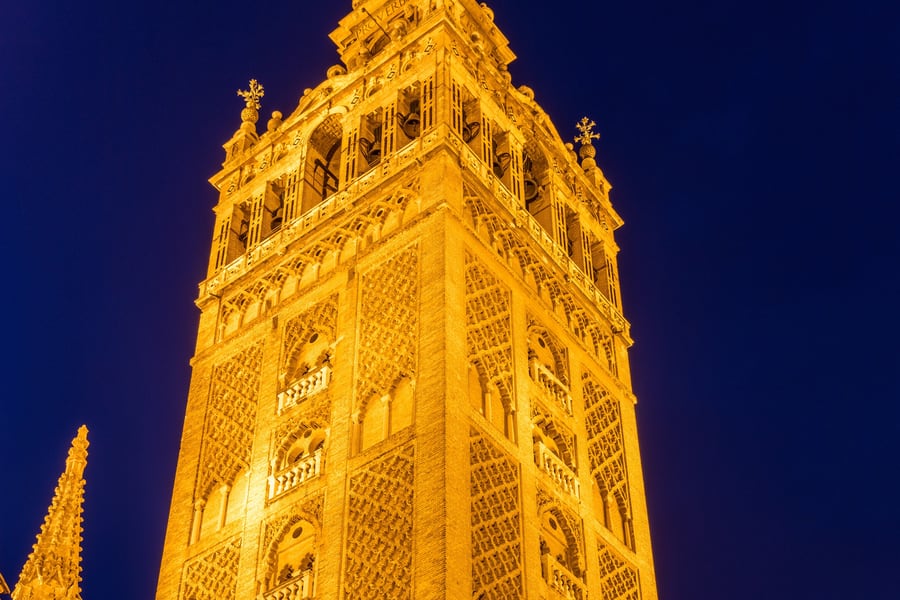
It begins in Seville, a city of orange trees and tiled patios, where the Giralda — a minaret with a cathedral grown around it — sums up the whole region in one building. Then the train drops south to Jerez de la Frontera, which gave the world sherry and a school of dancing horses, and on to Cádiz, possibly the oldest continuously inhabited city in western Europe, standing on its spit of land almost surrounded by the Atlantic.
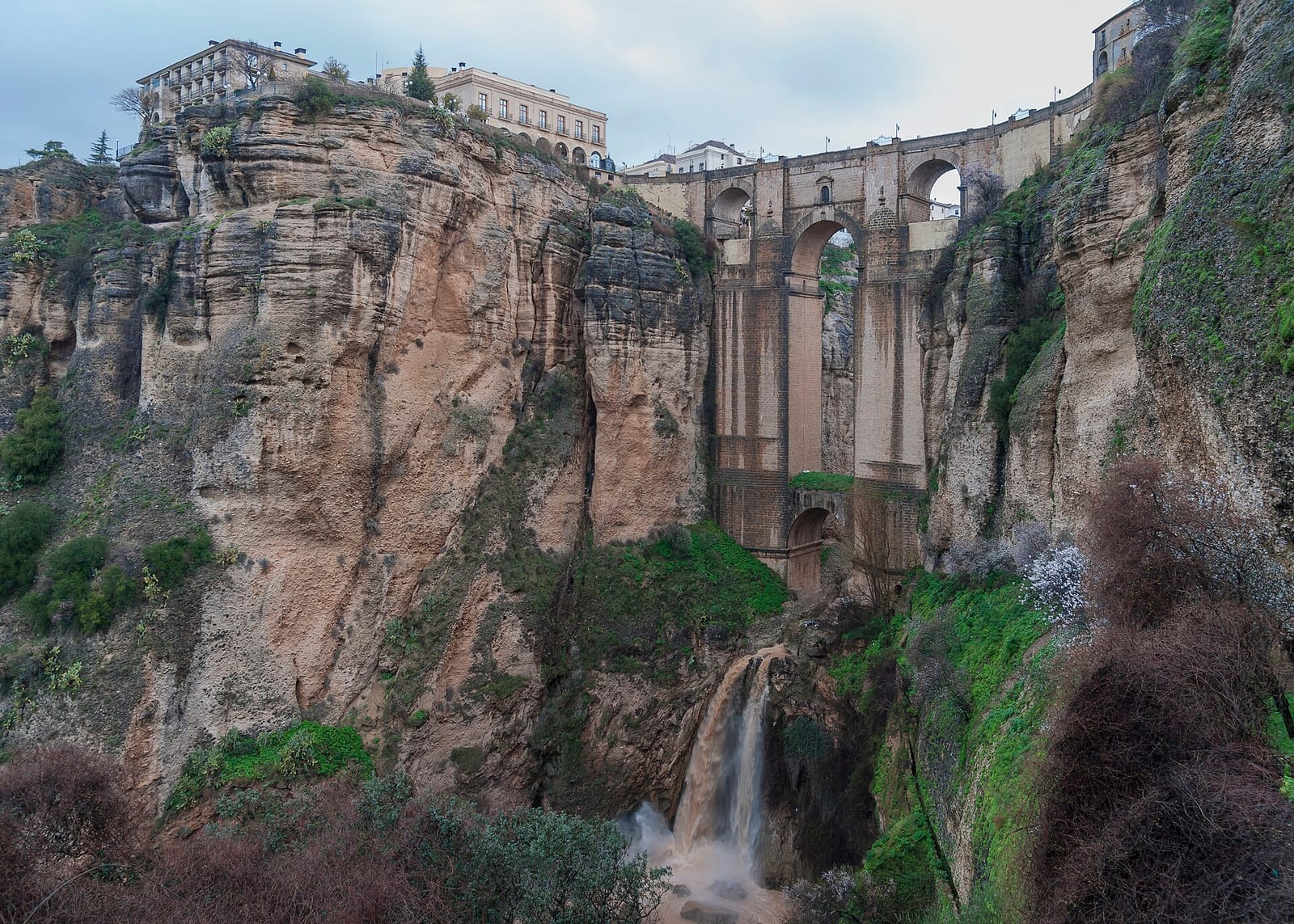
Turning inland, the line climbs into the hills of the pueblos blancos and reaches Ronda, split clean in two by the Tajo, a gorge a hundred metres deep, with the Puente Nuevo flung across it. It is the sort of place that looks invented.
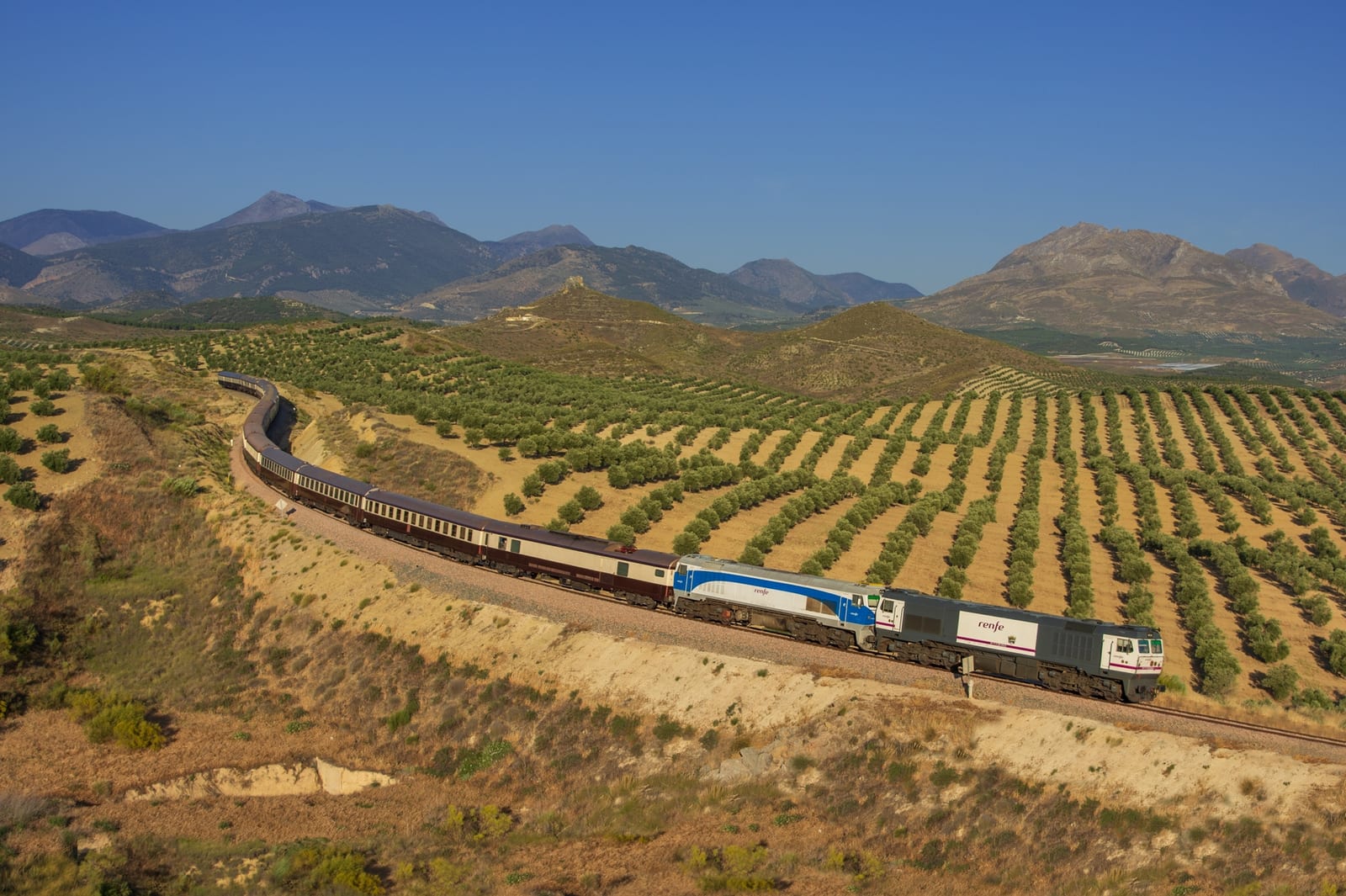
East to Granada, and the reason many people come at all: the Alhambra, a fortress-palace of courtyards, water channels and carved stucco so fine it looks like lace, with the Sierra Nevada behind it. Then north into Jaén, where the train runs for hours through an ocean of olive trees — Spain produces more olive oil than anywhere on earth, and most of it starts here — to the Renaissance twin towns of Úbeda and Baeza.
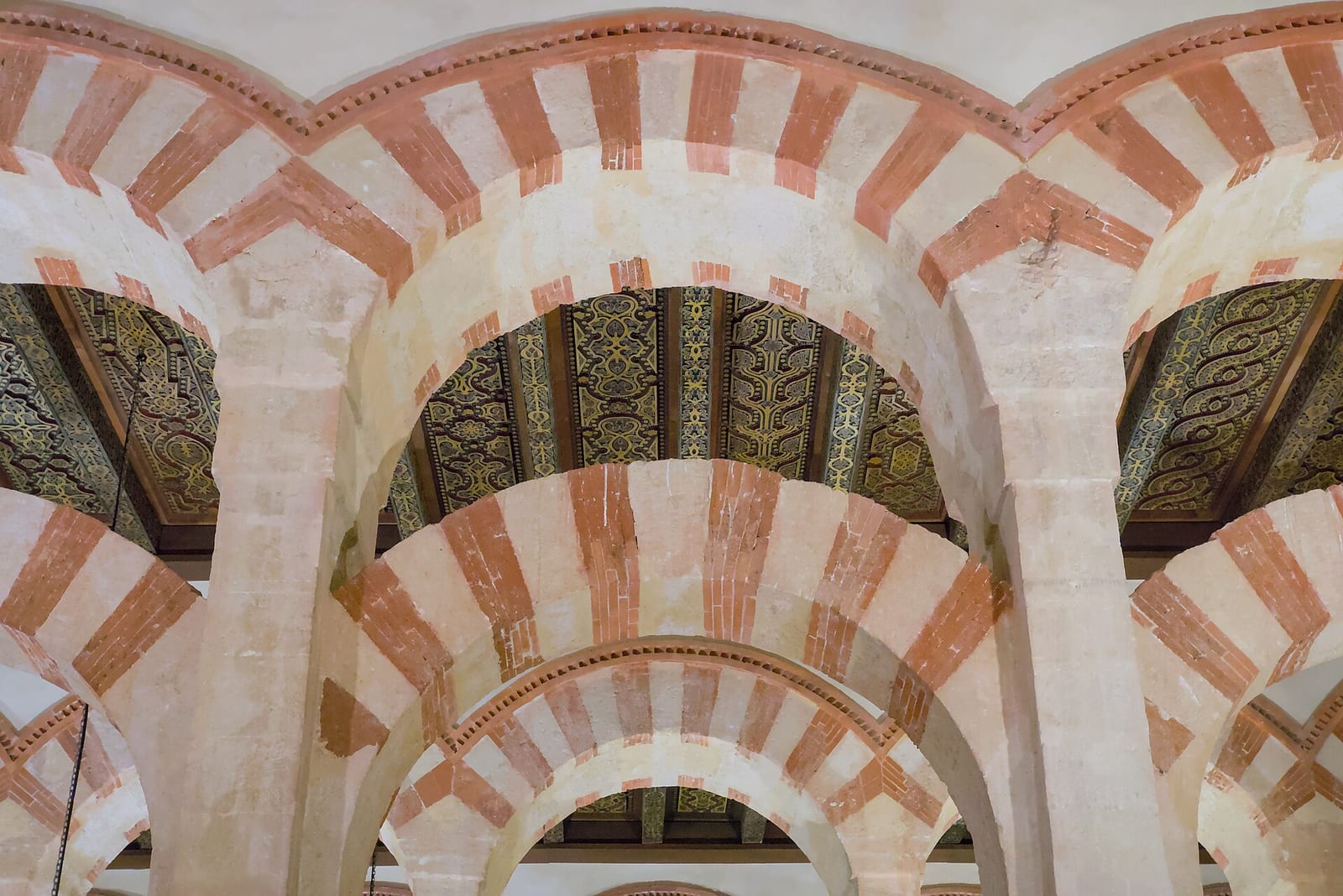
Córdoba brings the journey's other masterpiece: the Mezquita, a forest of eight hundred columns under red-and-white striped arches, a mosque with a cathedral standing improbably in the middle of it. The run finishes down at Málaga on the Mediterranean — Picasso's city, and a good place to sit still after a week of wonders.
Throughout, the pattern is the same as the great hotel trains everywhere: short hops by rail, long days out with guides, and the train waiting each evening with the bar car lit.
Along the route
CFA1877 / Wikimedia Commons · CC BY-SA 4.0Carriages fit for a king
Five of the sleeping cars were built in France in 1929 by the Compagnie Internationale des Wagons-Lits — the Orient Express company — and were used by the British royal family for the run between Calais and the French Riviera. You sleep in them.Mgimelfarb / Wikimedia Commons · CC BY-SA 4.0The Moorish south
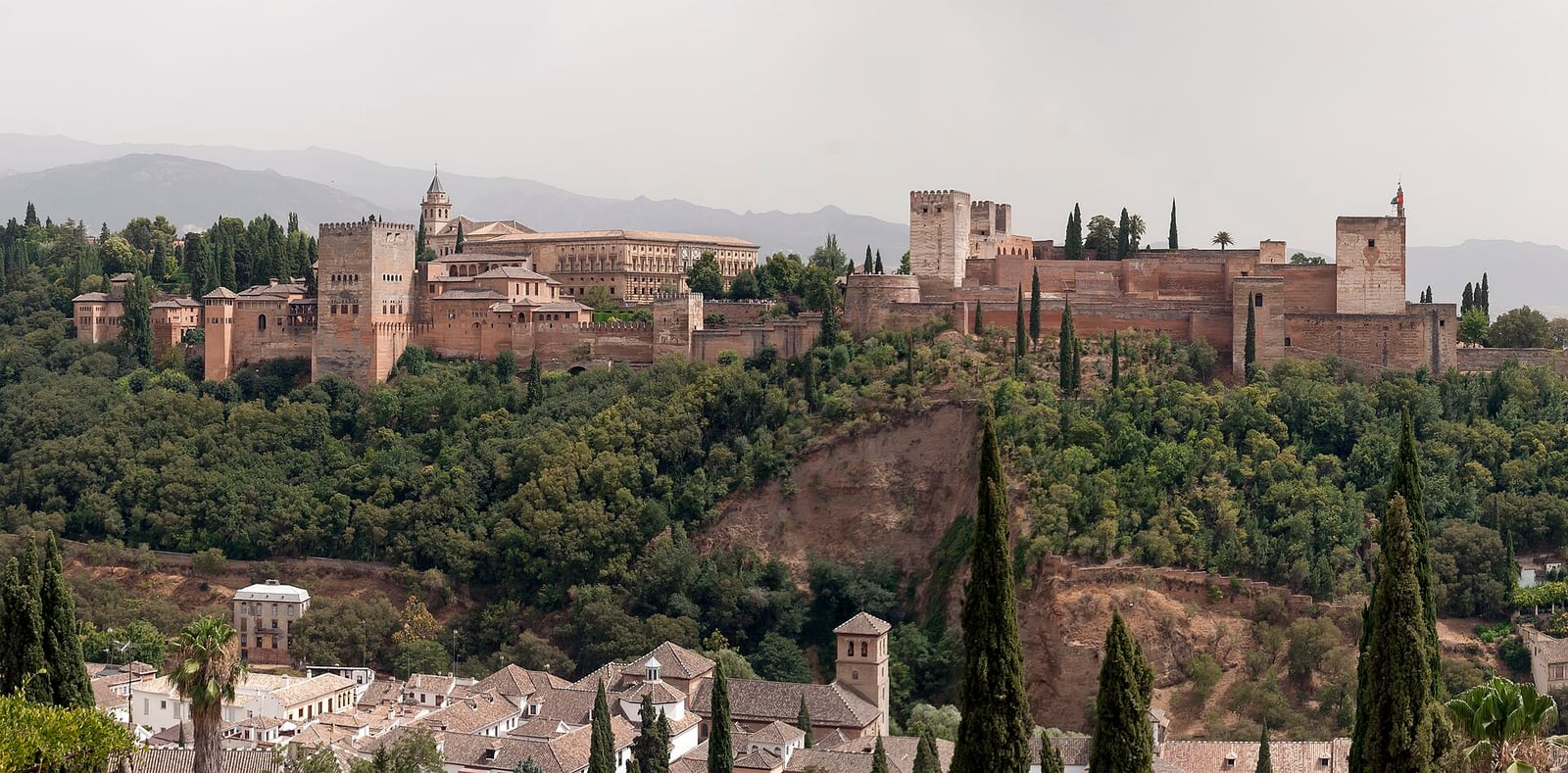
Andalusia was al-Andalus for nearly eight centuries, and the train is a tour of what that left behind — the Alhambra at Granada, the Mezquita at Córdoba, the Giralda at Seville: arguably the finest Islamic architecture in Europe.Nelso Silva / Wikimedia Commons · CC BY-SA 2.0A Belle Époque lounge
Beyond the sleepers there are two dining cars, a bar car and a lounge car for cards and conversation — restored in Belle Époque style, with marquetry, brass and lamplight. The bar stays open as long as somebody is still talking.A bit of history
Culture & experiences along the way
José Ignacio Esnarriaga San José / Wikimedia Commons · CC BY 4.0Andalusian table
Two dining cars and a kitchen car turn out the food of the south — Iberian ham, Cádiz seafood, Córdoba's salmorejo, olive oil from the Jaén groves the train rolls through, and the sherry of Jerez straight from the barrel.Photo by CEphoto, Uwe Aranas / Wikimedia Commons · CC BY-SA 3.0Ronda and the white towns
Ronda sits astride a 100-metre gorge, its two halves joined by the Puente Nuevo, and it is the grandest of the pueblos blancos — the whitewashed towns scattered across the hills of Cádiz and Málaga.Benjamin Smith / Wikimedia Commons · CC BY-SA 4.0Sherry and horses in Jerez
Jerez de la Frontera gave the world sherry and a famous school of dancing horses — a morning of bodegas and Andalusian horsemanship, and the reason the train's bar car is rather well stocked.Timetables
Like El Transcantábrico, the Al Ándalus is an all-inclusive package with fixed departures, run by Renfe Viajeros — not a train you can buy a seat on at the station. Departures run on set dates in spring and autumn (roughly April–June and September–October), deliberately avoiding the ferocious Andalusian summer.
| Detail | What to expect |
|---|---|
| Route | Seville ⇄ Málaga, both directions |
| Duration | 7 days / 6 nights |
| Provinces | Cádiz, Granada, Jaén, Córdoba |
| Guests | Up to 64 |
| Gauge | Iberian broad gauge (1,668 mm) |
| Consist | 7 sleeping cars, 2 dining cars, bar car, lounge car, kitchen car |
Good to know:
- The season matters more here than anywhere. Andalusia in July and August is punishing — Seville and Córdoba regularly clear 40°C — so the train runs in spring and autumn, and those are the months you want.
- Nights are spent stationary. The train parks up, so you sleep in silence rather than to the sound of the rails.
- Days are excursion-led — rail distances are short; the substance of each day is the guided visit (the Alhambra, the Mezquita, a sherry bodega).
- Everything is included — meals, wines, excursions, entries and guides.
- The Alhambra needs its slot — entry is capped and timed, and handled for you, which is a quiet advantage of going this way.
Season and dates as of 2026. Confirm the dated departure calendar with the operator — see the Tickets section below.
Tickets
The Al Ándalus is booked as a package through Renfe's luxury trains department, and the fare covers the week: the cabin, every meal, the wines, all the excursions and guides, and the entries. There is one itinerary — seven days and six nights between Seville and Málaga, through Cádiz, Granada, Jaén and Córdoba — and it runs in both directions, which is worth checking against your flights, because the same places come in a different order. Fares are seasonal, so Renfe holds the live price.
Book well ahead: sixty-four places, a short spring and autumn season, and a train people cross the world for. And know what the cabins are. These are 1929 carriages, beautifully restored but compact by modern hotel standards — square metres traded for the fact that a king slept here.
Book your tickets
Andalusia · 7 days
Seville ⇄ Málaga, six nights aboard
All meals, wines, excursions and guides included, through five Andalusian provinces.
Book Tickets (opens in a new tab, on Renfe)via RenfeRenfe luxury trains
The wider fleet
El Transcantábrico Gran Lujo, the Costa Verde Express and El Expreso de La Robla.
Book Tickets (opens in a new tab, on Renfe)via RenfeRail Passes
No rail pass covers the Al Ándalus. Interrail's table of railway companies names RENFE Luxury trains among the trains excluded in Spain. The train is sold only as a week-long package through Renfe.
A pass can still bring you to Seville or Málaga. RENFE's AVE and other long-distance trains are included in Spain, with a compulsory reservation from €10 in second class on the AVE.
Checked October 2026 against interrail.com (opens in a new tab) and its reservation fees (opens in a new tab).
Places to Visit
Andalusia is the reason for the train, and the week is essentially a greatest-hits tour of the Spanish south.
- Seville — orange trees, tiled patios, and the Giralda: a twelfth-century minaret with an enormous Gothic cathedral built around it. The Real Alcázar next door is a working royal palace and one of the loveliest buildings in Spain.
- Jerez de la Frontera — the home of sherry, where the barrels are stacked in cathedral-cool bodegas, and of the Royal Andalusian School of Equestrian Art and its dancing horses.
- Cádiz — founded by the Phoenicians and possibly the oldest continuously inhabited city in western Europe, nearly surrounded by Atlantic, with a golden-domed cathedral and superb fried fish.
- Ronda — the grandest of the white towns, cut in half by the Tajo gorge and joined by the eighteenth-century Puente Nuevo. Hemingway and Orson Welles both loved it, and it shows.
- Granada — the Alhambra: courtyards, fountains, and stucco carved as finely as lace, with the Sierra Nevada as a backdrop. Below it the Albaicín, a Moorish quarter of white lanes best seen from the Mirador de San Nicolás at sunset.
- Úbeda & Baeza — twin Renaissance towns in Jaén, honey-coloured and UNESCO-listed, marooned in a sea of olive trees.
- Córdoba — the Mezquita-Catedral, eight hundred columns beneath red-and-white arches, and a cathedral dropped into the middle of it. Once the capital of al-Andalus and the largest city in Europe.
- Málaga — the Mediterranean finish: Picasso's birthplace, a Roman theatre, a Moorish citadel and a beach to lie on afterwards.
 Diego Delso, delso.photo, License CC BY-SA · Wikimedia Commons · cropped
The Giralda
Seville's bell tower started life as the minaret of the Almohad great mosque, and when the cathedral was built around it the Christians simply set a Renaissance belfry on top — which is why the proportions are so strange and so satisfying. Inside there are ramps instead of stairs, built wide enough to ride a horse to the top. Listed by UNESCO since 1987, along with the Alcázar next door.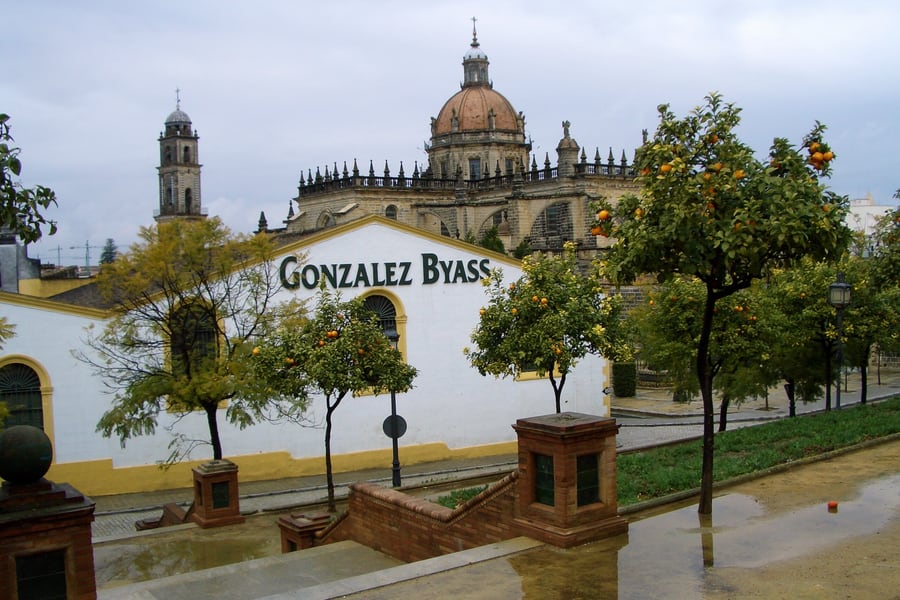 Diego Delso, delso.photo, License CC BY-SA · Wikimedia Commons · cropped
A sherry bodega
González Byass was founded in 1835 by Manuel María González, later joined by his English agent Robert Blake Byass, and it is the house behind Tío Pepe. The cellars are kept deliberately cool and dim, butts stacked in long rows under high roofs, and the walk between them comes out with the cathedral standing just beyond the wall. Jerez is also home to the Royal Andalusian School of Equestrian Art.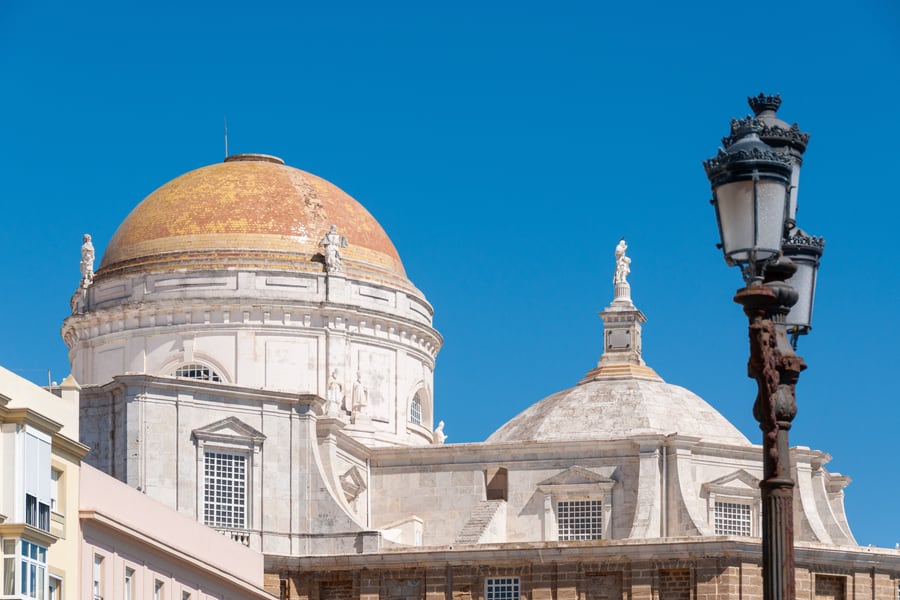 fraganda / Wikimedia Commons · CC BY-SA 2.0 · cropped
Cádiz cathedral
Built between 1722 and 1838 — long enough that it changed mind on the way up and finished Neoclassical over a Baroque start — and paid for out of the American trade, which earned it the nickname the Cathedral of the Americas. The yellow-tiled dome is what you pick out first from the water. Cádiz is nearly ringed by Atlantic, and the fried fish lives up to its reputation.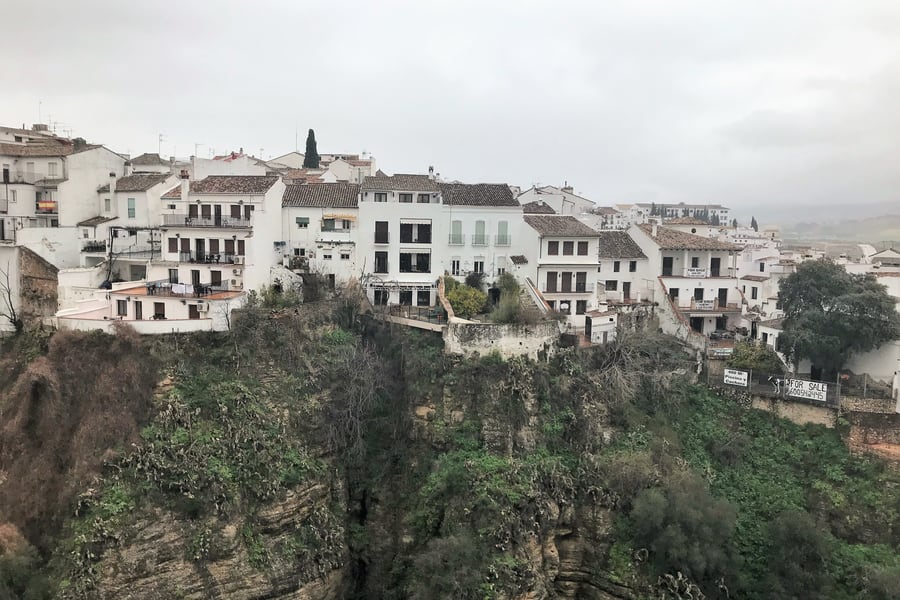 Mervat / Wikimedia Commons · CC BY-SA 4.0 · cropped
Ronda's gorge rim
Ronda straddles El Tajo, a gorge 120 metres deep, with the Puente Nuevo thrown across it — started in 1759 and not finished until 1793, thirty-four years later. Everyone photographs the bridge. The better view is along the rim itself, where you see how little there is between the whitewashed balconies and the drop, and how the town simply stops at the edge.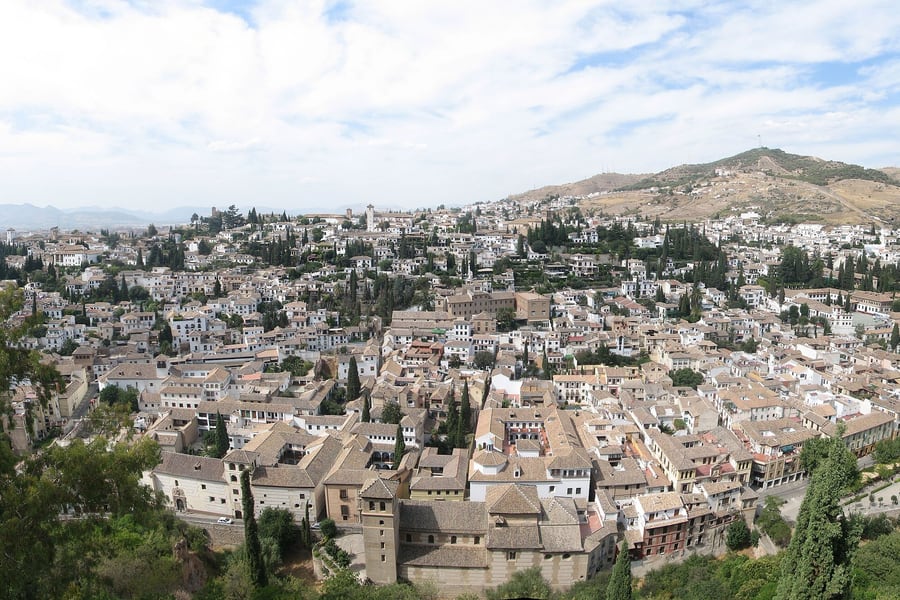 Mateusz.Kwasnicki / Wikimedia Commons · CC BY 3.0 · cropped
The Albaicín
The Moorish quarter on the hill opposite the Alhambra, which has largely kept the Nasrid street plan it had between the thirteenth and fifteenth centuries — blind walls, stepped lanes, and cármenes, the walled houses with gardens hidden behind them. It joined the World Heritage listing in 1994 as an extension of the Alhambra. Everybody climbs to the Mirador de San Nicolás at sunset, and it earns the crowd.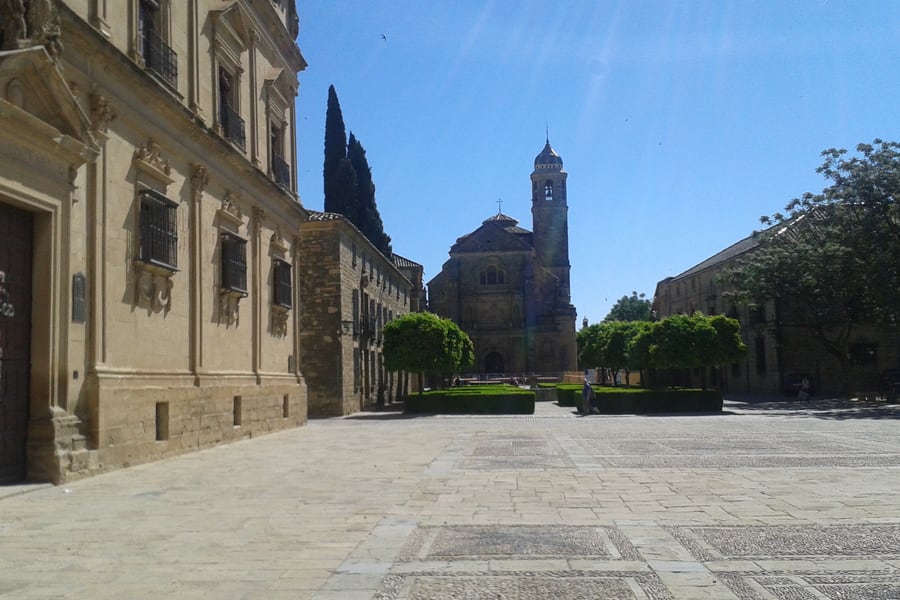 Axel Cotón Gutiérrez / Wikimedia Commons · CC BY-SA 4.0 · cropped
Úbeda and Baeza
Two small towns a few kilometres apart that came into serious money in the early sixteenth century, spent it on Renaissance palaces and churches, and then stopped — which is precisely why they still look like this. UNESCO listed both historic centres together in 2003. Úbeda's Plaza Vázquez de Molina is the set piece, honey-coloured and usually near-empty, marooned in olive trees.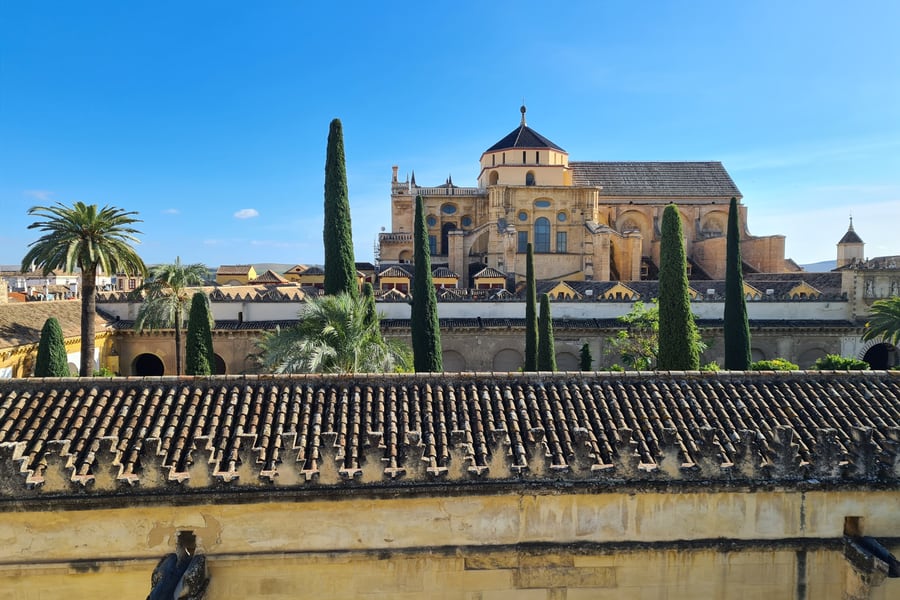 Macarrones / Wikimedia Commons · CC BY-SA 4.0 · cropped
The Mezquita from outside
Everyone photographs the forest of red-and-white arches inside. Far fewer walk the outside, where the long fortified walls, the sealed gates and the orange-tree courtyard show how the Mezquita-Catedral actually sits in its city — a cathedral raised out of the middle of a great mosque, its bell tower built over the old minaret. The Roman bridge is a few minutes' walk downhill.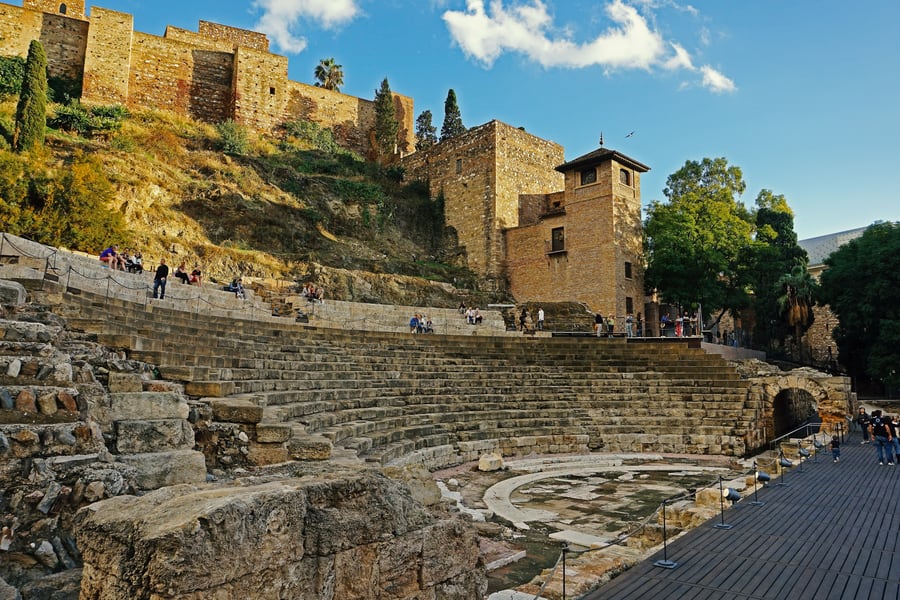 Johannes Schwanbeck / Wikimedia Commons · CC BY-SA 2.0 · cropped
The Alcazaba and Roman theatre
The Alcazaba, begun in the eleventh century and rebuilt repeatedly until the fourteenth, is among the best-preserved fortresses of its kind in Spain, and a walled corridor still climbs from it to the Gibralfaro castle above. At its entrance lie the remains of a Roman theatre of the first century AD — the two of them stacked on one hillside. Picasso was born a few streets away.Where to Sleep
For six of the seven nights you sleep in a 1929 Wagons-Lits sleeping car, in a cabin with its own bathroom, parked quietly in a station somewhere in Andalusia. It is worth being clear-eyed about this: these are historic carriages, exquisitely restored but compact by the standards of a modern hotel suite. Nobody rides the Al Ándalus for the square metres. They ride it because the room has a pedigree.
The nights at either end are yours to arrange.
- Seville — stay in Santa Cruz, the old Jewish quarter, a maze of whitewashed lanes and hidden patios right beside the cathedral and the Alcázar. Atmospheric, central, and busy — book ahead.
- Málaga — the other end: a relaxed, sunny city with a good old town, and the easiest airport in Andalusia if you're flying home.
- Granada or Córdoba — both reward an extra night of their own if you can spare it, particularly Granada, where the Alhambra deserves more than one visit and the Albaicín is at its best after dark.
Two timing notes. Avoid high summer — inland Andalusia in July and August is brutal, which is why the train runs in spring and autumn. And Semana Santa (Holy Week) and Seville's Feria de Abril transform the city and fill every room for miles: wonderful if you plan for them, painful if you don't.
Questions or corrections
Planning this trip and stuck on something, or spotted a time, fare or detail that has changed? Send us a message about Tren Al Ándalus. We read every one, and we update this page when something has changed.