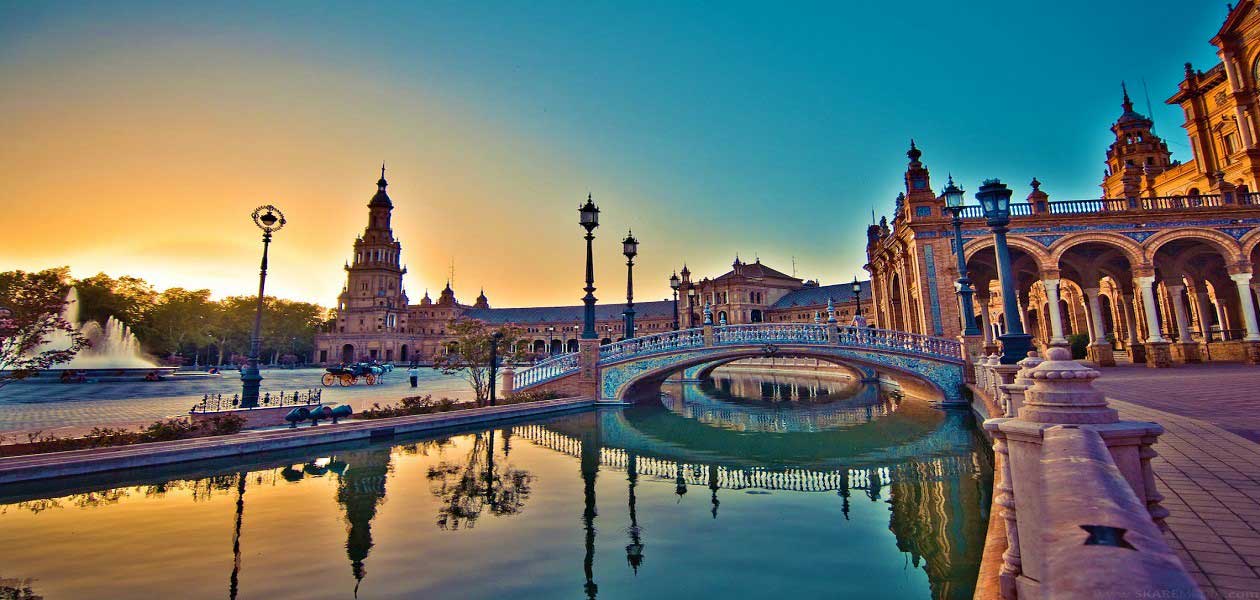
Spain
Carlos Delgado / Wikimedia Commons · CC BY-SA 4.0 · cropped
Spain runs one of the finest railways in Europe. Renfe's AVE high-speed trains cross the country at up to 300 km/h — Madrid to Seville or Barcelona in around 2½ hours — on a network second only to China's in length. But Spain's real gift to the railway traveller is its fleet of luxury tourist trains, which are less transport than a rolling hotel.
Along the green northern coast, El Transcantábrico takes eight unhurried days to work its way from the Basque Country to Galicia on a metre-gauge line. In the south, the Tren Al Ándalus tours Andalusia in carriages that once carried the British royal family to the French Riviera. Between them lie Mallorca's vintage Sóller railway, the Pyrenean rack lines and the AVE — a country you can ride in almost any style you like.
Rail journeys in Spain
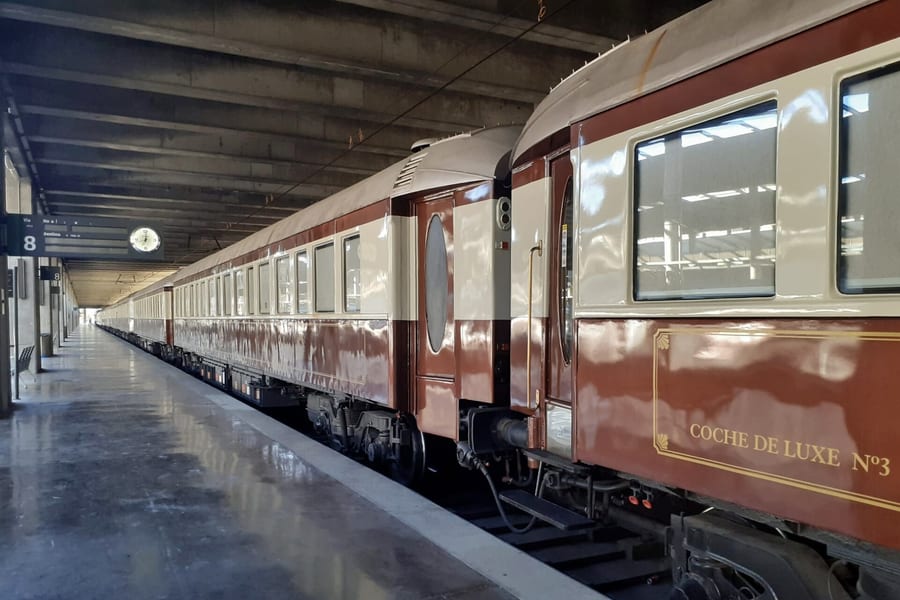
Tren Al Ándalus
Andalusia at walking pace in carriages fit for a king — a hotel train whose 1929 Wagons-Lits sleepers once carried the British royal family to the Riviera.
View journey →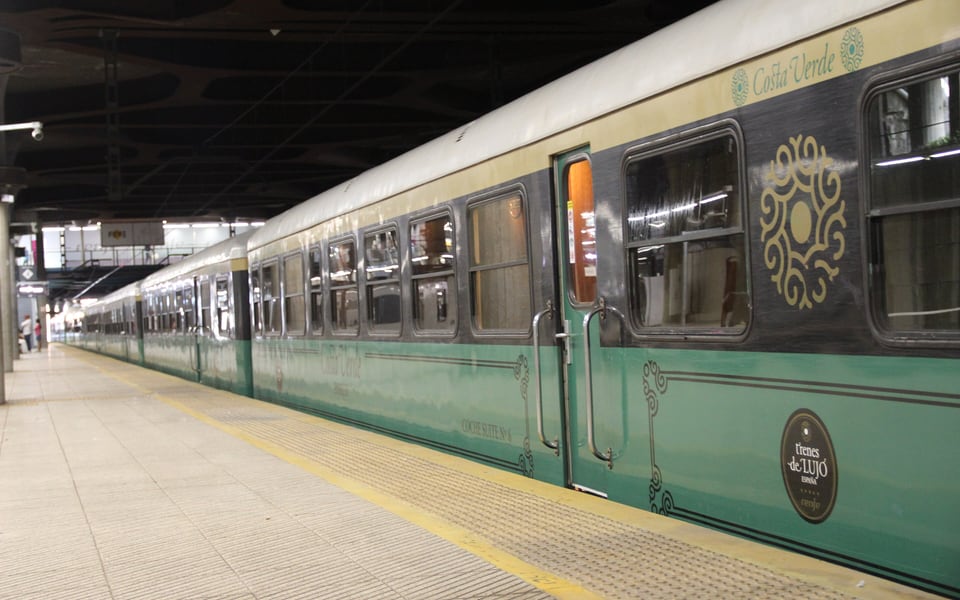
Costa Verde Express — nothing about it is old except the styling
Six days along the metre-gauge north coast in a hotel train that sells the golden age of rail — and was built in the year 2000.
View journey →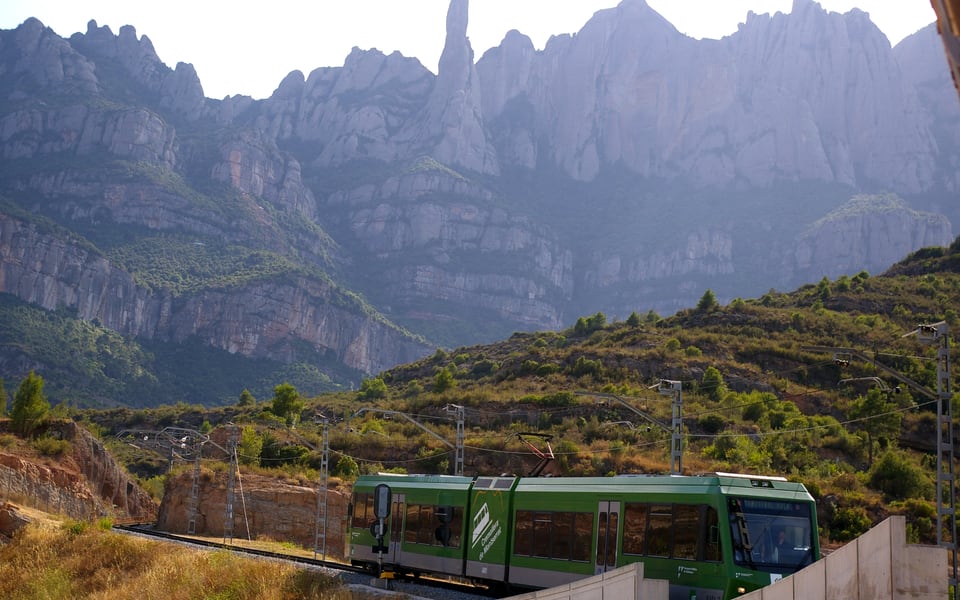
The Montserrat Rack Railway — the line that was taken away and put back
A rack railway to the monastery of Montserrat, lifted in 1957 and built again on the old alignment — fifteen minutes into a skyline of stone needles.
View journey →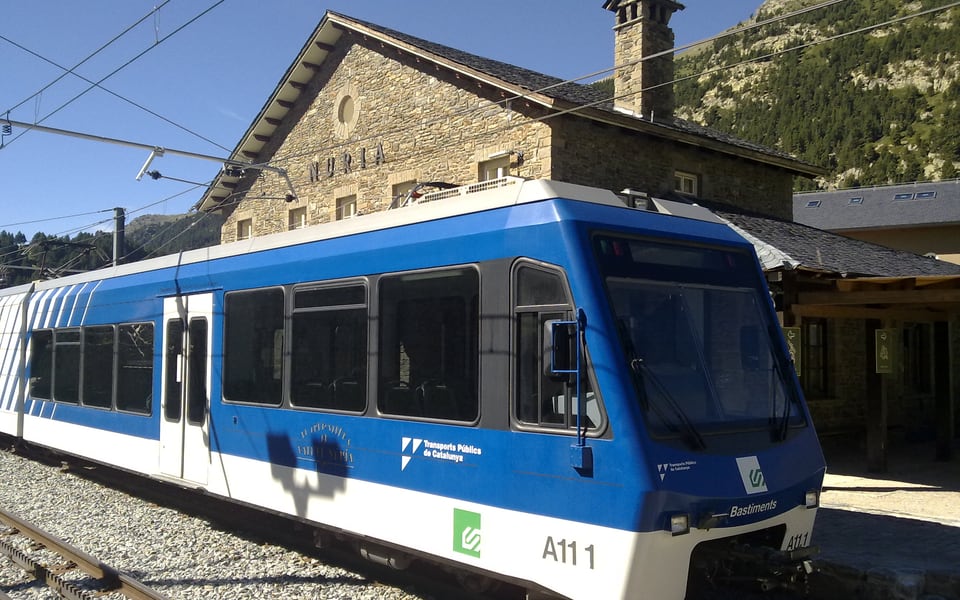
The Núria Rack Railway — the valley with no road
At Queralbs the road runs out. The basilica, the lake and the ski area above it are reached by one rack railway and nothing else, every day of the year.
View journey →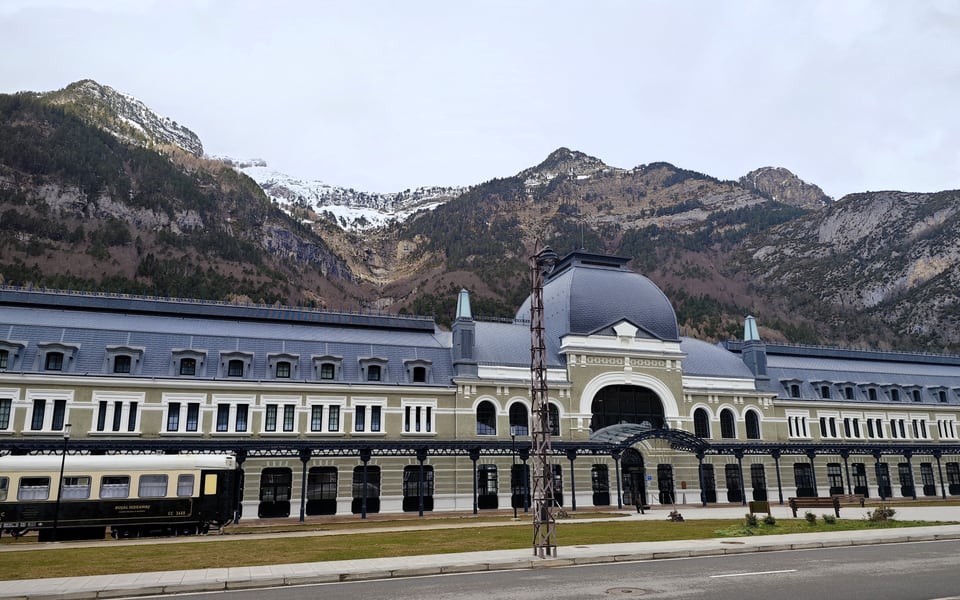
El Canfranero — the train to a station that is now a hotel
Two trains a day climb the Aragón to a village at 1,195 metres, where the line stops at a quarter-kilometre 1928 frontier palace that is now a hotel.
View journey →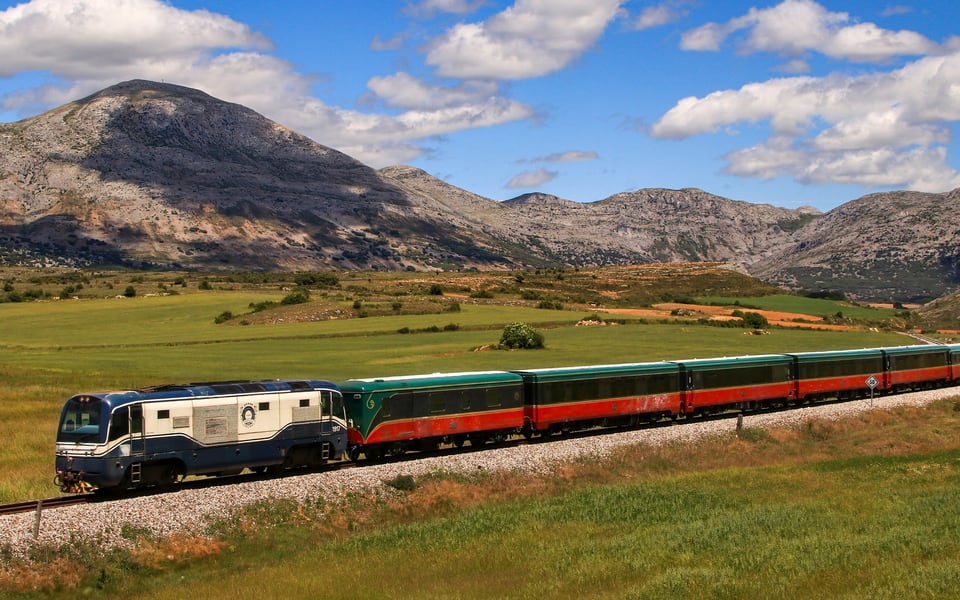
Expreso de La Robla — the train that was built as a classroom
Three days between Bilbao and León on the 1894 coal railway, in a narrow-gauge hotel train once sold as a Romanesque workshop with a diploma at the end.
View journey →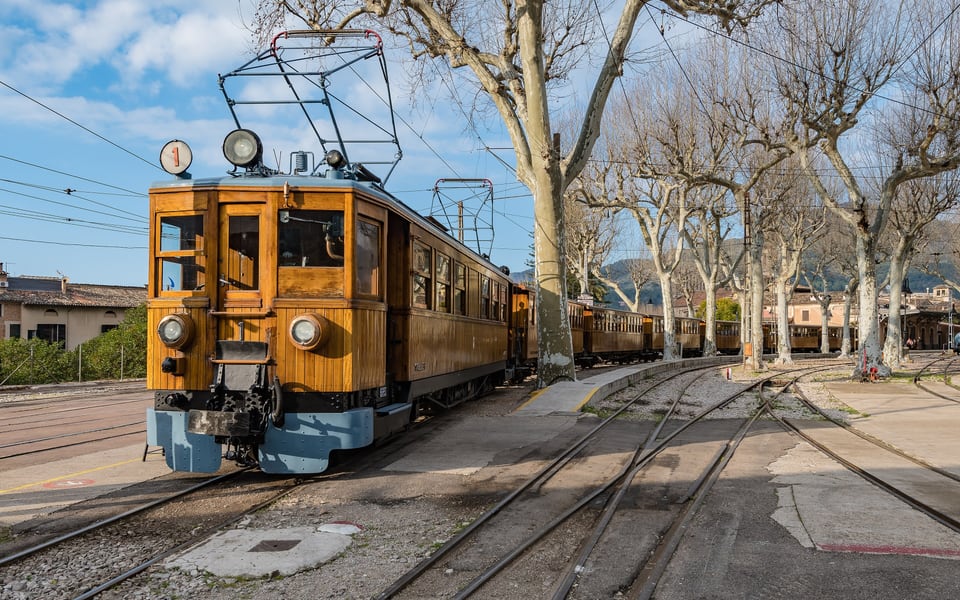
Ferrocarril de Sóller — the railway a town bought for itself
A wooden electric train of 1929 bores through the Serra d'Alfàbia to a Mallorcan valley of orange groves, where a 1913 tramcar waits to finish the trip.
View journey →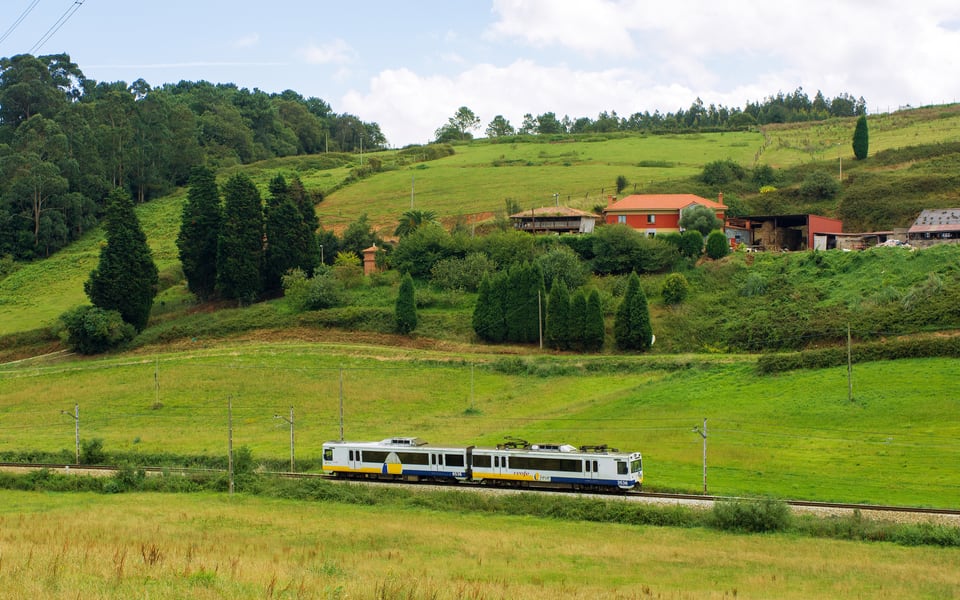
Ferrol to Santander — the railway nobody had measured
Five hundred and thirty kilometres of single metre-gauge track along the whole Cantabrian coast, two trains a day, and ninety stops in the first half alone.
View journey →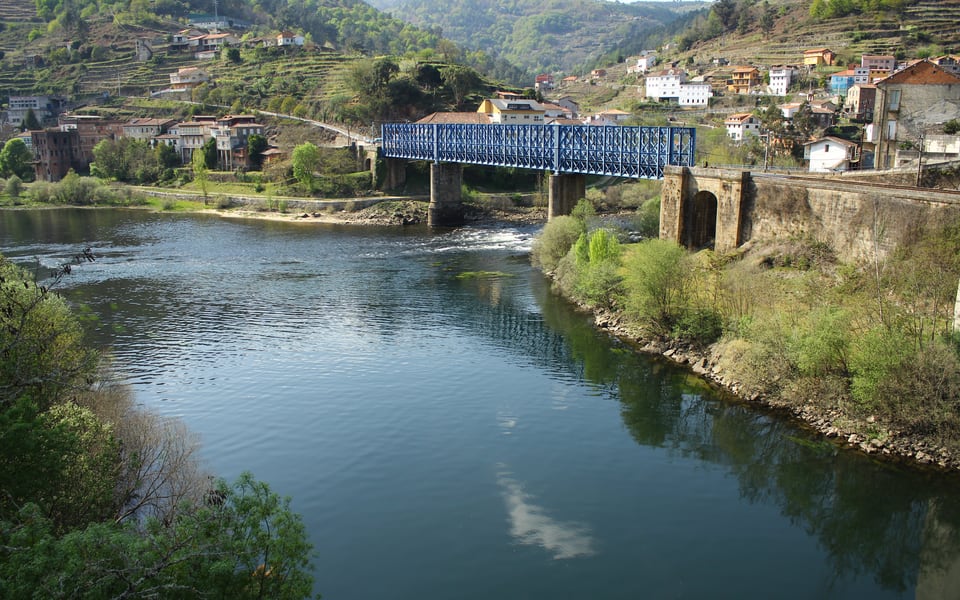
Galaico Expreso — the museum sent its exhibits back to work
Four carriages that had not carried a passenger for fifteen years, back on the main line since July 2026, through the gorges of the Ribeira Sacra.
View journey →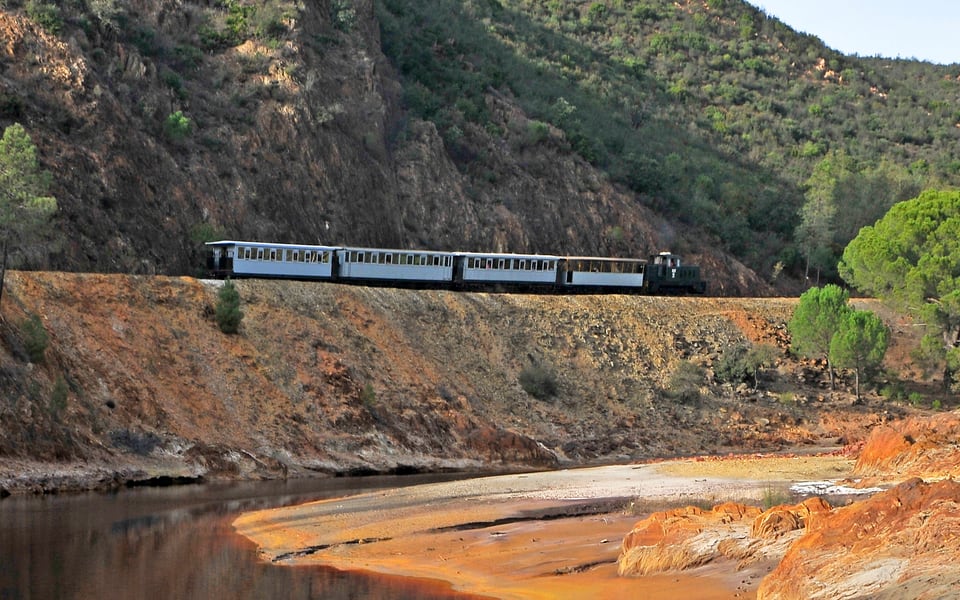
The Río Tinto Mining Railway — the ground that stands in for Mars
Twenty-two kilometres along a river the colour of rust, on a copper railway through a valley so acid that NASA treats it as a rehearsal for Mars.
View journey →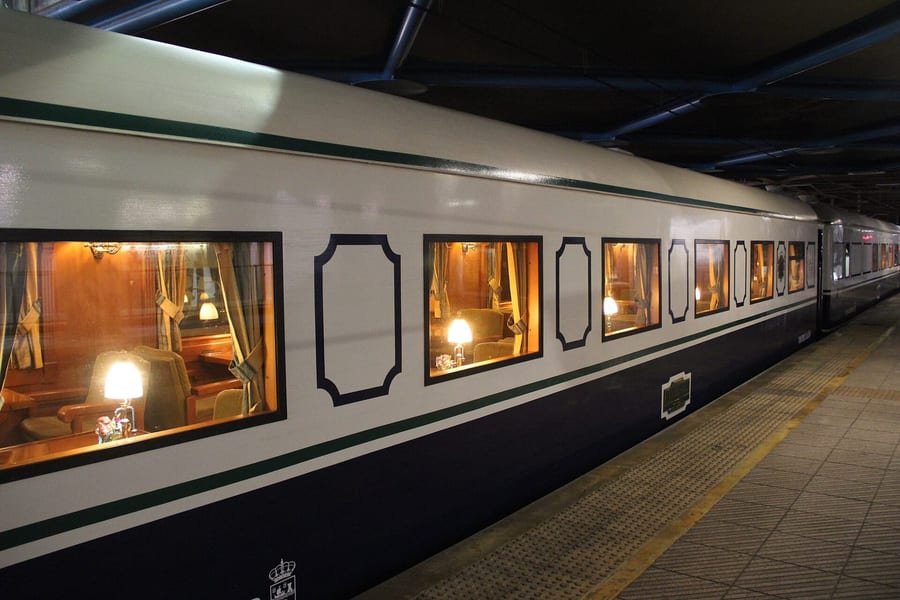
El Transcantábrico
Eight unhurried days along the wild green coast of northern Spain — a metre-gauge hotel on rails with 1923 Pullman dining cars, ending at Santiago.
View journey →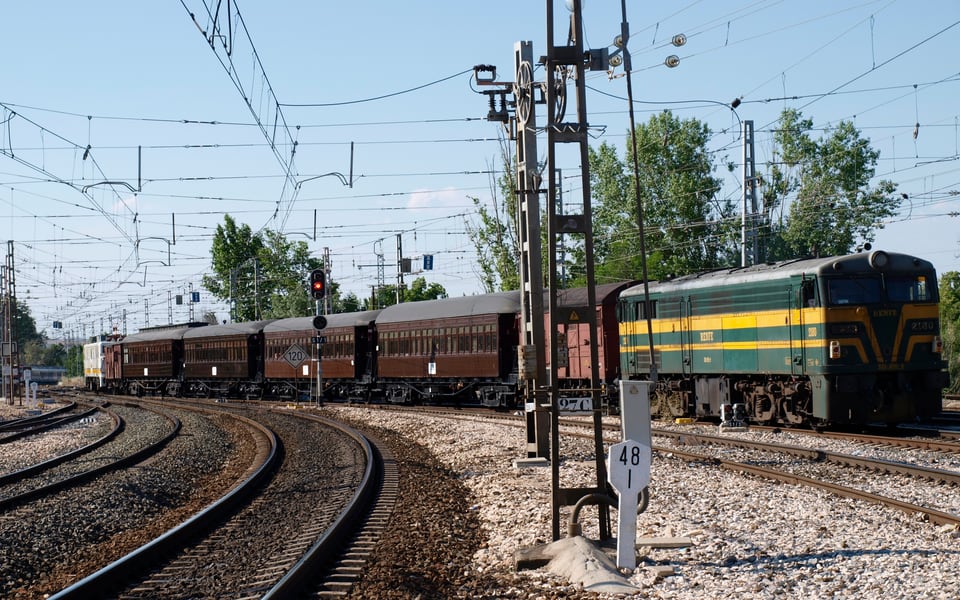
The Tren de la Fresa — the carriages that Westerns saved
Forty-nine kilometres to Aranjuez on the oldest railway in the region, in wooden carriages saved from the cutter's torch by Spain's Western film industry.
View journey →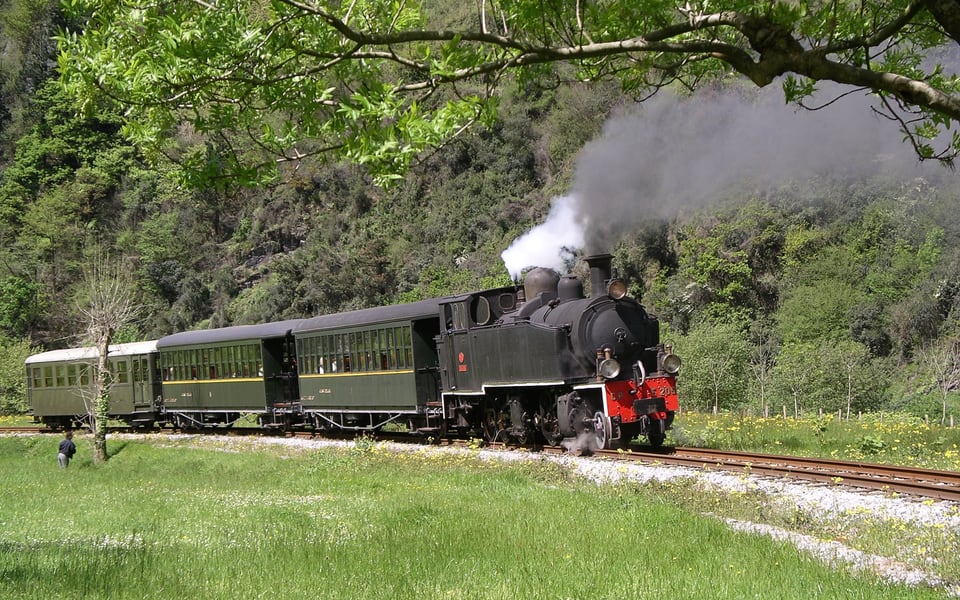
Tren de Vapor de Azpeitia — the electric pioneer that now runs on coal
Five surviving kilometres of Spain's first 1,500-volt railway, worked by a steam locomotive built in Manchester in 1898 — older than the line it runs on.
View journey →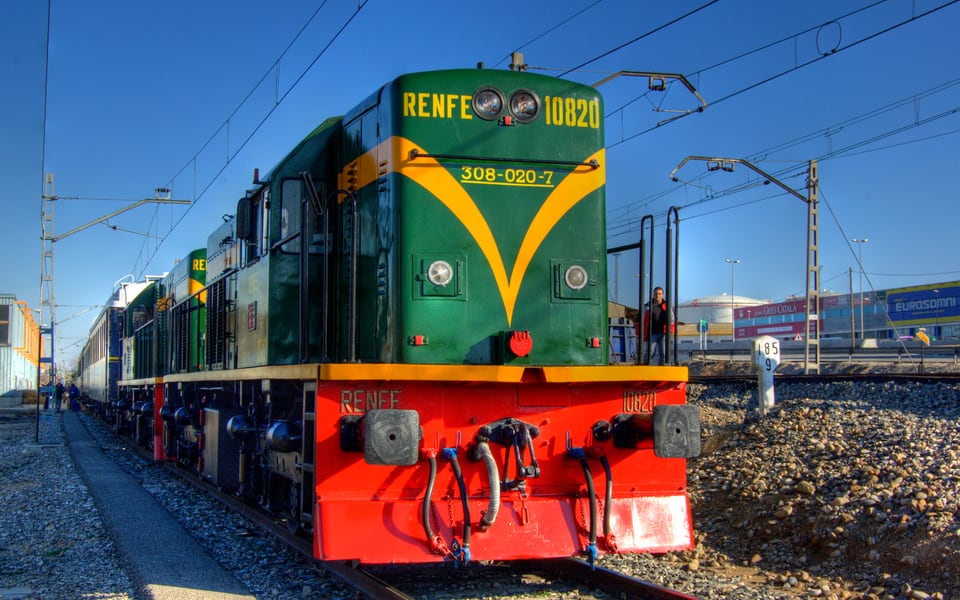
Tren dels Llacs — the line its passengers refused to lose
Four reservoirs, forty tunnels and seventy-five bridges in eighty-nine kilometres, worked on summer Saturdays by 1960s diesels and carriages of 1968.
View journey →Good to know
Is Spain easy to explore by train?
Very. Renfe's AVE high-speed network links Madrid to Seville, Barcelona, Valencia, Málaga and beyond in a few hours, with Madrid as the natural hub. Regional and Cercanías trains fill in the rest, and a separate metre-gauge network threads the green northern coast — the line the Transcantábrico uses.
Do I need to book Spanish trains in advance?
For AVE and other long-distance trains, yes — seats are reserved and early fares are much cheaper. Regional trains are turn-up-and-go. The luxury tourist trains are a different thing entirely: they are all-inclusive multi-day packages booked months ahead through Renfe, not tickets you buy at a station.
When is the best time to visit Spain by rail?
Spring (April–June) and autumn (September–October) are ideal. Inland summers are fierce — Seville and Córdoba regularly pass 40°C — while the green north is mild but wetter. The luxury tourist trains run a defined season from roughly spring to autumn rather than year-round.
What are Spain's best scenic railways?
Two stand out, and they could hardly be more different: El Transcantábrico along the wild Atlantic coast of "Green Spain", and the Belle Époque Tren Al Ándalus through Andalusia. Beyond them, Mallorca's 1912 wooden Sóller railway, the Tren dels Llacs into the Catalan Pre-Pyrenees, and the Cremallera rack railway up to Núria are all a delight.